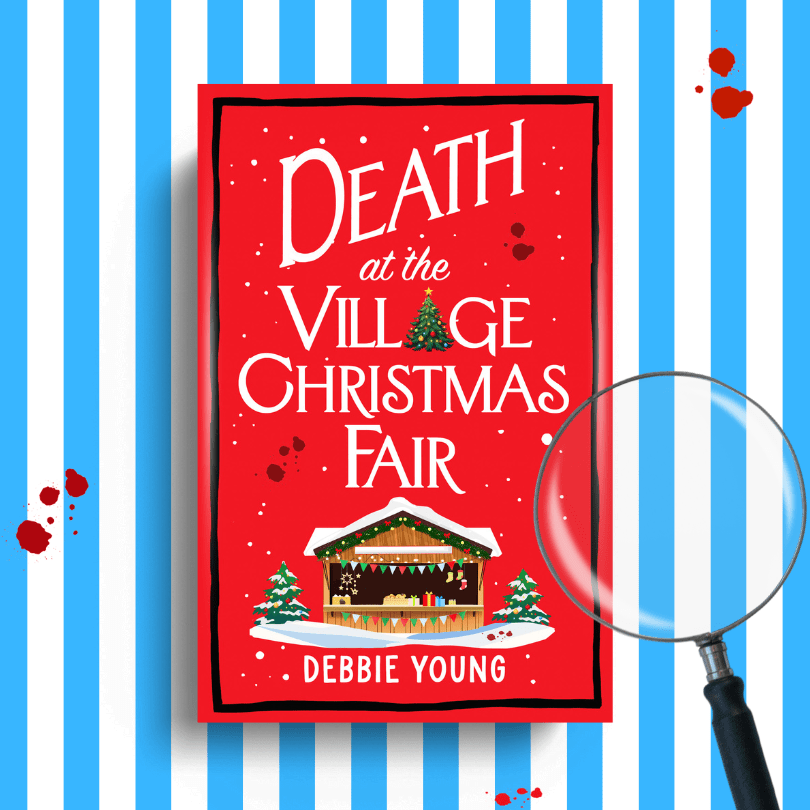
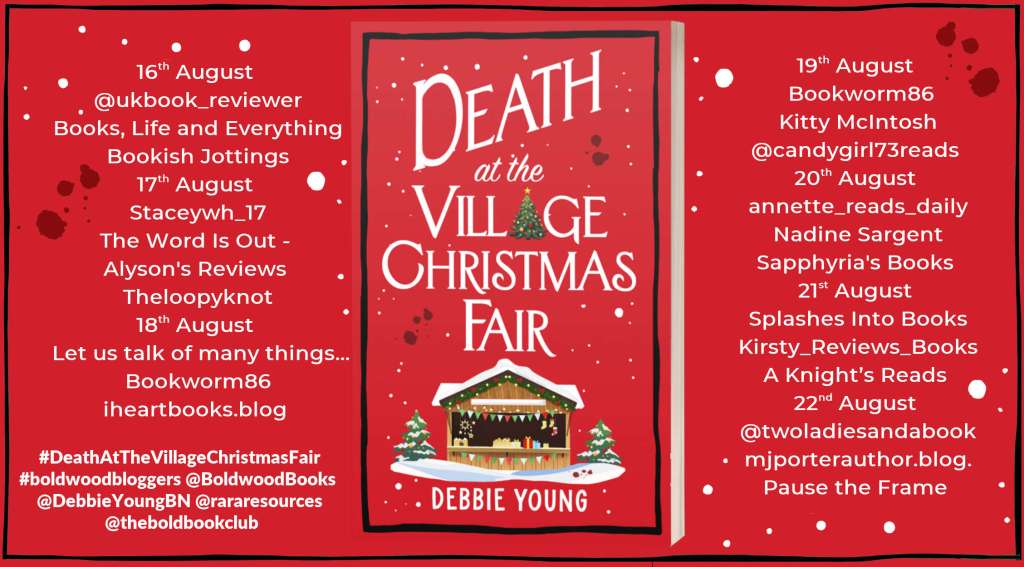
It’s been a busy year for Alice Carroll, with her Curiosity Shop opening for business, and not one but two murders shaking things up in her quaint Cotswold village. She’s looking forward to her first countryside Christmas, complete with traditional Christmas Fair and Santa Run.
But her hopes for innocent festive fun are thwarted when one of the Santa Runners steals something from her mum’s knitting stall. His festive outfit makes him hard to spot, until he’s found fatally injured outside the village hall with the stolen item.
Despite what the police say, Alice suspects there’s more to his murder than meets the eye. She’s determined to solve the mystery – including why, once more, a stranger thought something from her Curiosity Shop was worth killing for.
With the help of her charming neighbour Robert Praed, can Alice find the killer before the bells ring out this Christmas?
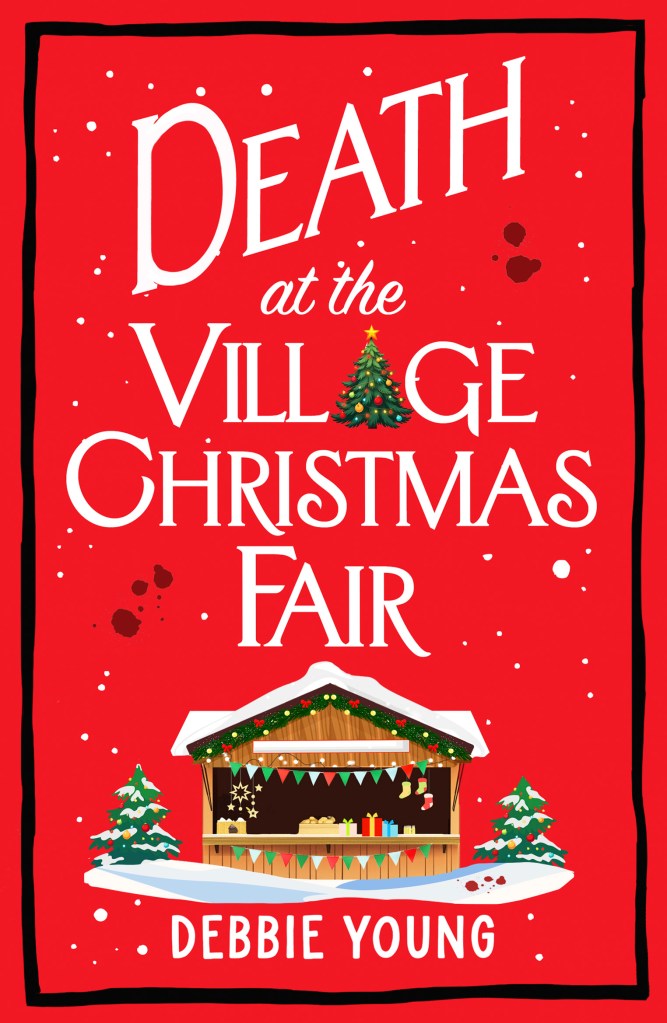
Death at the Village Christmas Fair is the third book in the Cotswold Curiosity Shop Mysteries by Debbie Young. I’ve read the previous title in the series.
Our main character, Alice, is gearing up for a quiet Christmas with her new beau and her mum, until a Santa is discovered, wounded on the school playing field, and Alice immediately suspects foul-play. From here, the storyline moves fairly quickly (it takes a while to get to the actual ‘death’ at the Village Christmas Fair, but the same happened in the previous book, so readers will be used to this), as we follow Alice and Robert as they endeavour to determine why the man met his death. They also have to convince the police the man’s death was indeed murder.
This is an engaging, light-read, stuffed with Christmas events and activities, in a picturesque location. The author does an excellent job of portraying a village gearing up for Christmas.
Meet the author
Debbie Young is the much-loved author of the Sophie Sayers and St Brides cosy crime mysteries. She lives in a Cotswold village, where she runs the local literary festival, and has worked at Westonbirt School, both of which provide inspiration for her writing.
When a wary rock star and a cynical reporter fake date to bury a scandalous rumor, will true love be exposed as the real story?
Nick: I do my best songwriting while playing my guitar on the fire escape. Unfortunately, my in-bed-at-ten next-door neighbor, Maddie, is not a fan of my music. She clambers out on the fire escape to yell at me about making “noise.” In bunny slippers, no less. But then she trips and falls into my arms.
That photo of Maddie plastered all over me hits the papers, just as my dream recording company wants to sign my band. Which is a problem, because an obsessed fan is claiming that I’m her boyfriend and now the media is blowing up that I’m two-timing them both. Good-bye recording contract, unless….
Maddie: I’m supposed to cover the story. Not be the story! But when Nick begs me to fake date, I can’t resist the chance to be Nick’s girlfriend—even if fake—the opposite of my life as a city desk reporter. But my ex said I’m a terrible kisser, and there’s no way I want Mr. Hot Rock Star saying the same thing. Hence, clause 11 in our contract: There will be absolutely no physical contact.
Nick: When Maddie receives a threatening photo of the two of us with an X over her face, my desire to protect her suddenly feels all too real. It’s either a troll or her undercover investigation has been compromised. With both our careers at stake, is breaking up the only way to keep Maddie safe?
Kathy Strobos is an award-winning author living in New York City with her husband and two children, amid a growing collection of books, toys, and dollhouses. She took a break from working as a lawyer to write romantic comedies full-time and get in shape. She is still working on getting in shape.
Born and raised in Manhattan, she loves writing about New York City and her smart heroines who live and fall in love there, amidst its vibrant energy and the aroma of homemade chocolate chip cookies. She is the award-winning author of: A Scavenger Hunt for Hearts, Partner Pursuit, Is This for Real?, Caper Crush, My Book Boyfriend, Love Is an Artand My Secret Snowflake.
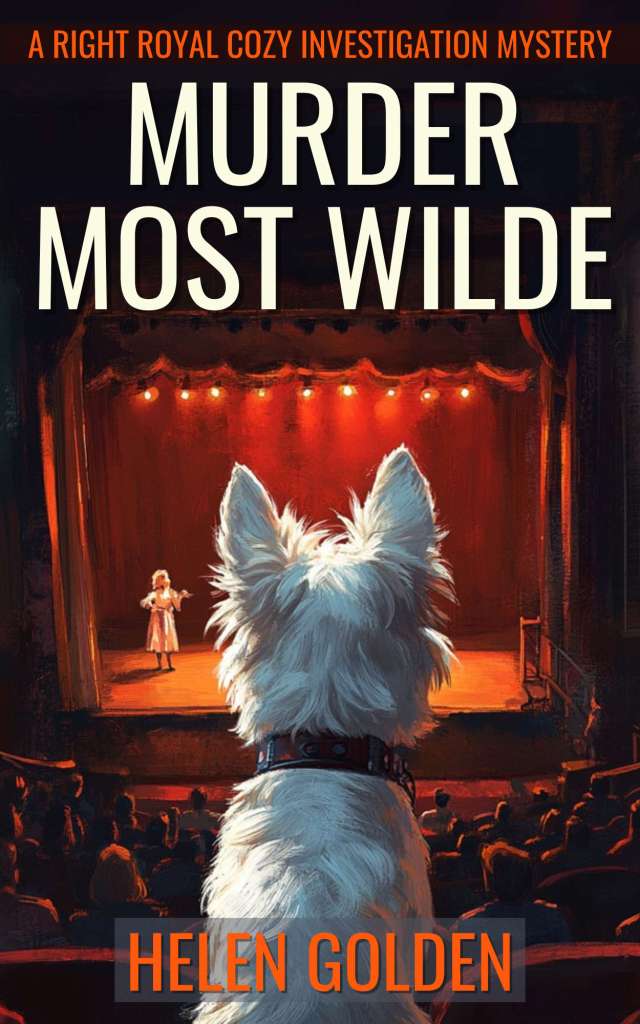
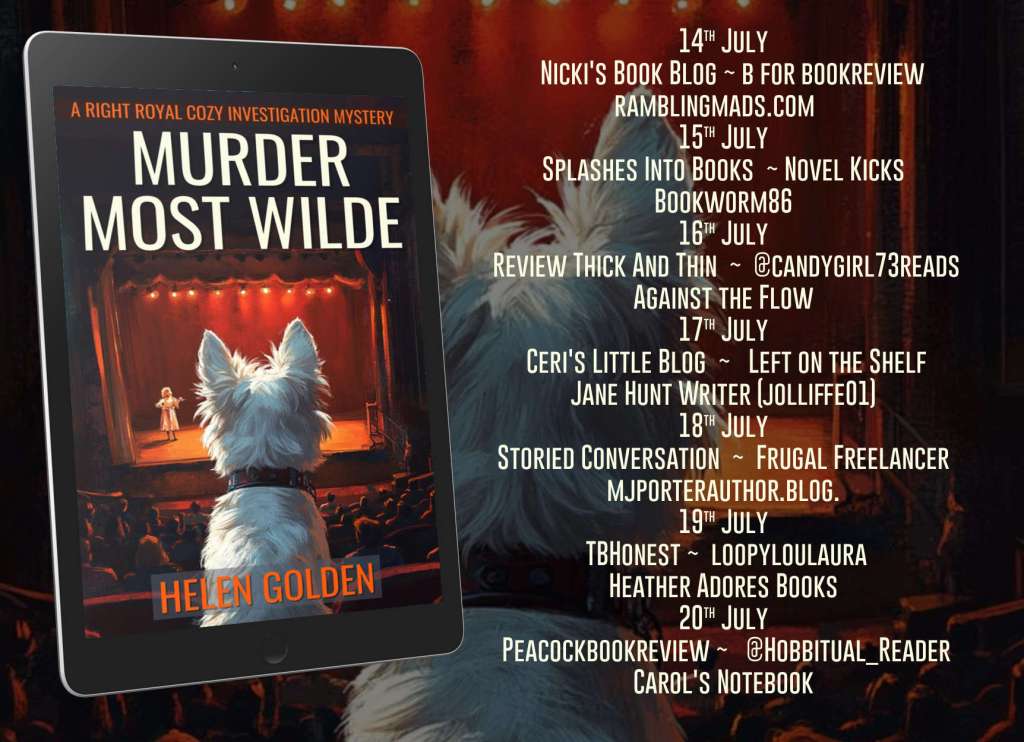
I’m delighted to welcome a returning Helen Golden to the blog with her new book, Murder Most Wilde. #bookreview #cosymystery #blogtour #avidreader
Here’s the blurb
In the world of amateur theatre, the drama isn’t all onstage…
Tragedy Strikes the Windstanton Players
Popular local actor, Noel Ashworth, who collapsed during the rehearsal of Oscar Wilde’s classic comedy, The Importance of Being Earnest, was pronounced dead at the scene. As shock ripples through Windstanton’s tight-knit amateur theatre group, the Fenshire Police are looking at them as suspects.
I can’t let Perry’s acting debut end in disaster! With the cast spooked and the local police under-resourced, Bea—along with Perry, Rich, Simon, and her trusty Westie, Daisy must shift through the cast’s petty jealousies and diva behaviour to unmask the killer before they strike again.
When the show must go on…will everyone make it to opening night?
Murder Most Wilde is the latest installment in Helen Golden’s Right Royal Investigation mystery series. I’ve read all the books in the series so far, including all the short stories. Lady Bea and Perry, our amateur detectives, are both fab characters, even if, these days, they do have a large collection of professionals on hand to help out.
This time, we return to Windstanton, after our brief holiday in Portugal. We’ve been hearing about Perry’s debut on the stage for a few books now, and he’s so excited to be cast in The Importance of Being Earnest. But of course, not everything goes to plan, and he and Bea find themselves once more investigating a suspicious death.
New readers will not be disappointed if they dip their toe into this series. It’s always reliably good (that might sound boring, but it’s a compliment). The mysteries are enjoyable to unravel, and it’s always a race to see if I’ll solve it before the characters do (not very often).
Check out my reviews for the other books in this fabulous series.
Helen Golden spins mysteries that are charmingly British, delightfully deadly, and served with a twist of humour.
With quirky characters, clever red herrings, and plots that keep the pages turning, she’s the author of the much-loved A Right Royal Cozy Investigation series, following Lady Beatrice and her friends—including one clever little dog—as they uncover secrets hidden in country houses and royal palaces. Her new historical mystery series, The Duchess of Stortford Mysteries, is set in Victorian England and introduces an equally curious sleuth from Lady Beatrice’s own family tree—where murders are solved over cups of tea, whispered gossip, and overheard conversations in drawing rooms and grand estates.
Helen lives in a quintessential English village in Lincolnshire with her husband, stepdaughter, and a menagerie of pets—including a dog, several cats, a tortoise, and far too many fish.
If you love clever puzzles, charming settings, and sleuths with spark, her books are waiting for you.
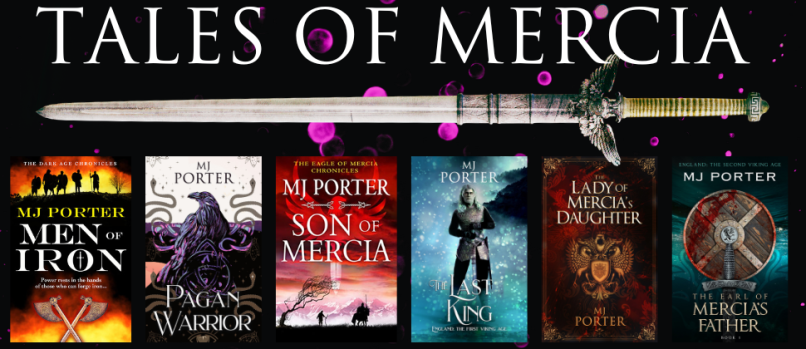
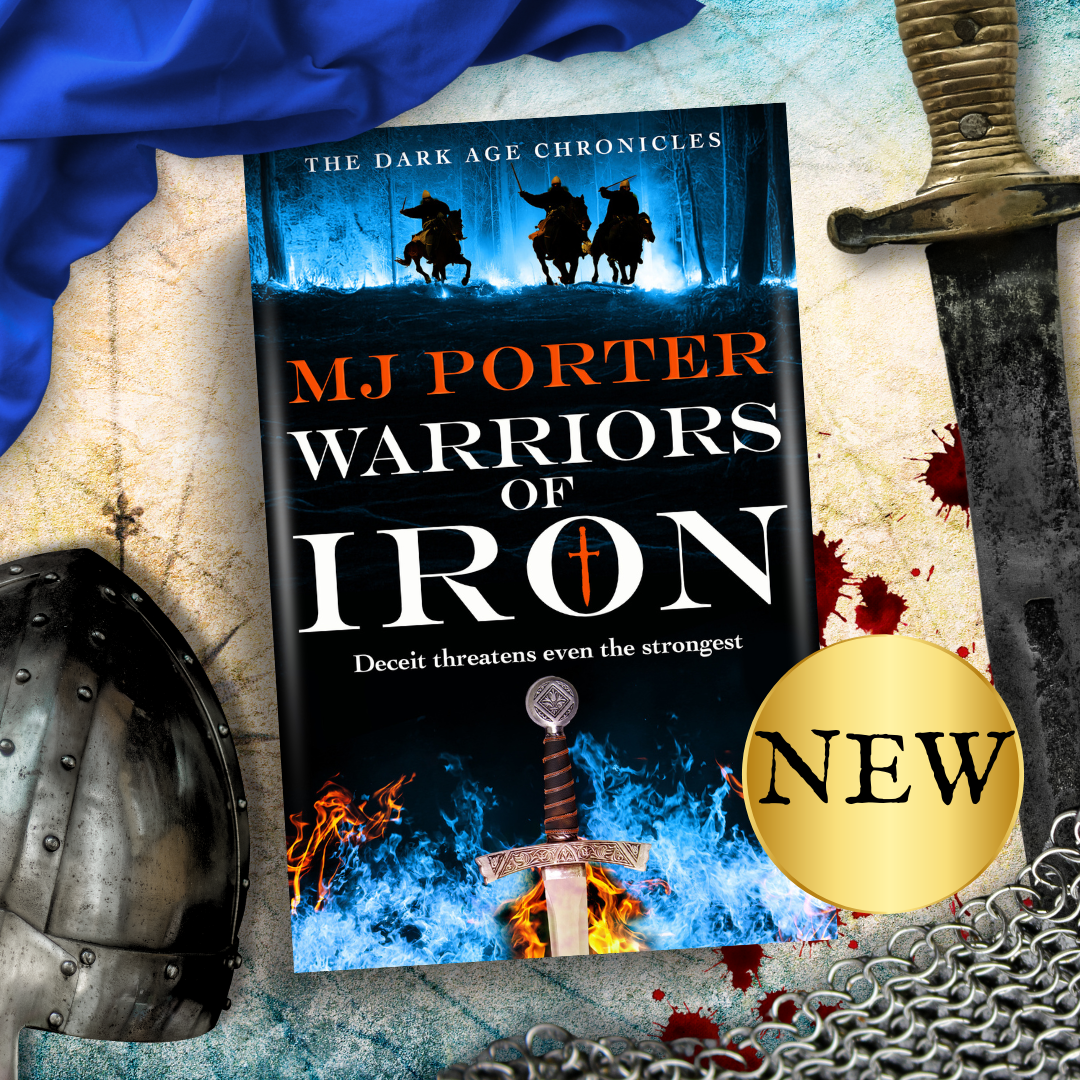
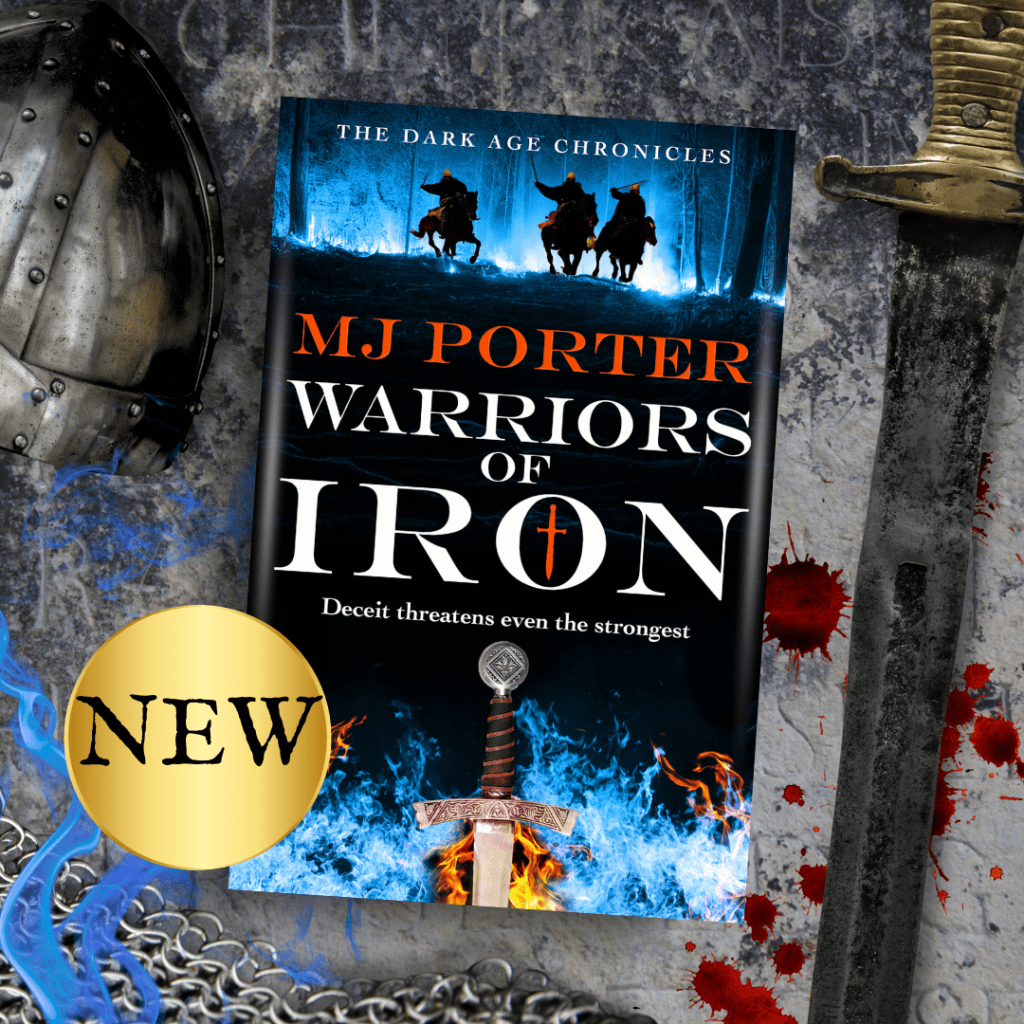
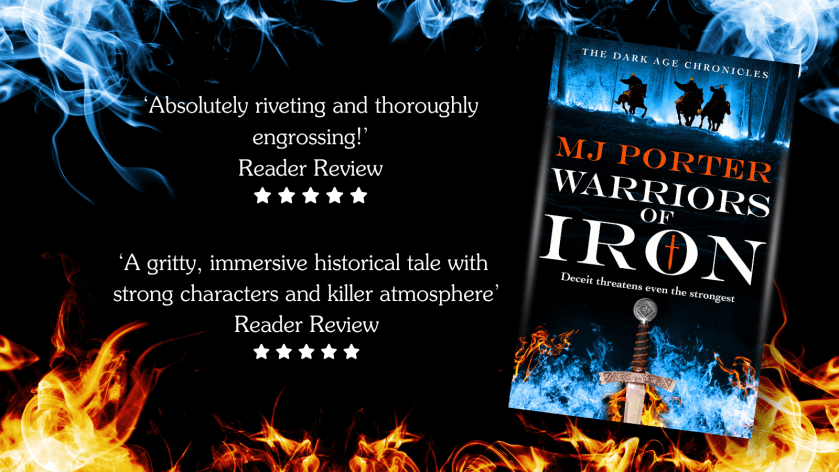
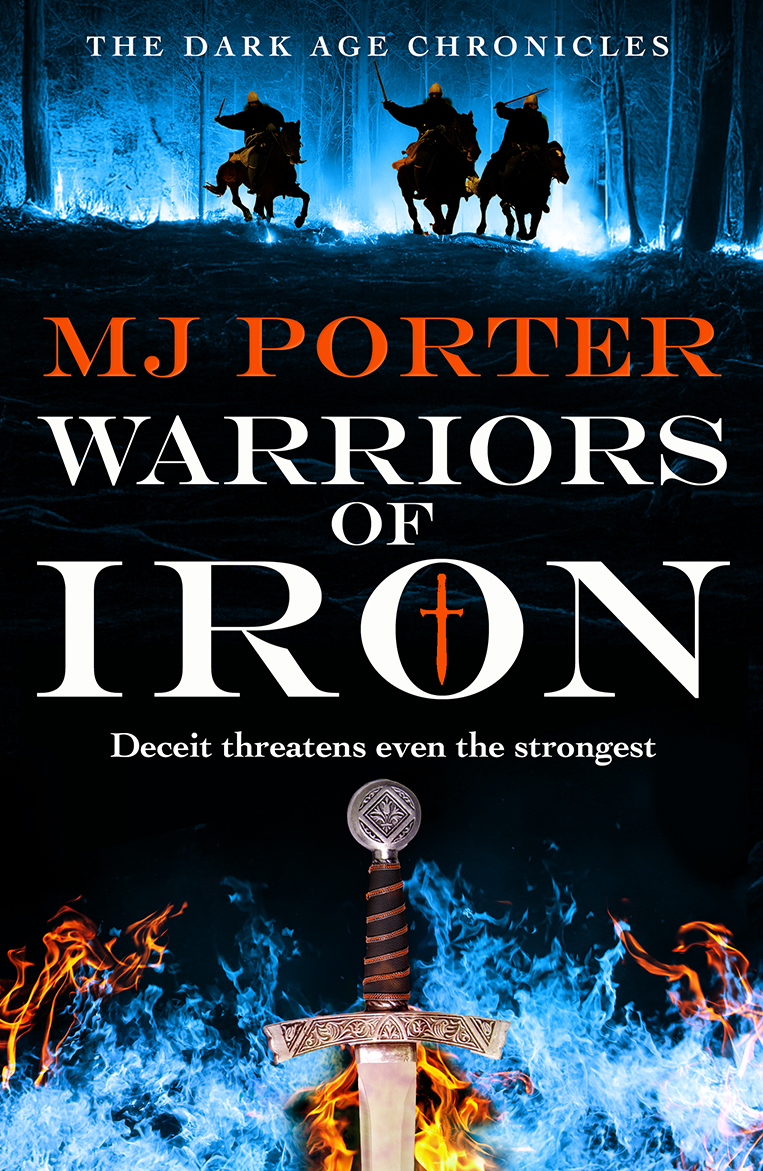
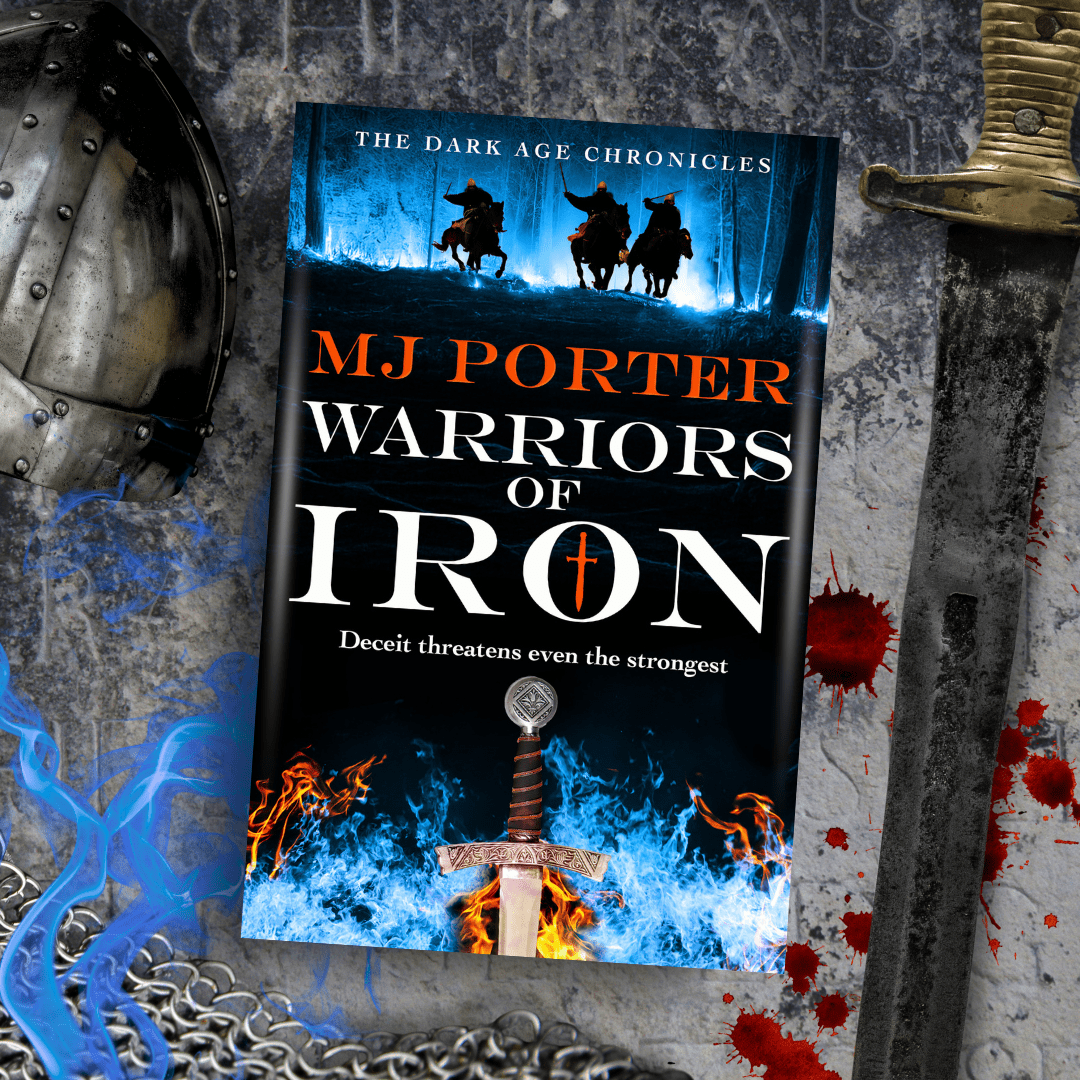
It’s happy release day to Warriors of Iron, the second book in the Dark Age Chronicles Trilogy. I’m sharing some photos from my visit to Sutton Hoo #newrelease #MenOfIron #WarriorsOfIron #histfic
Sutton Hoo
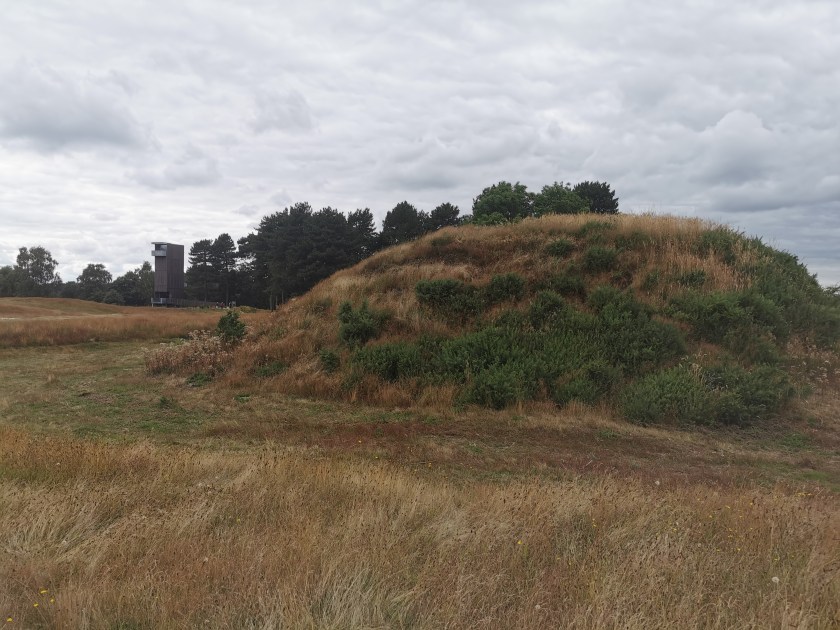
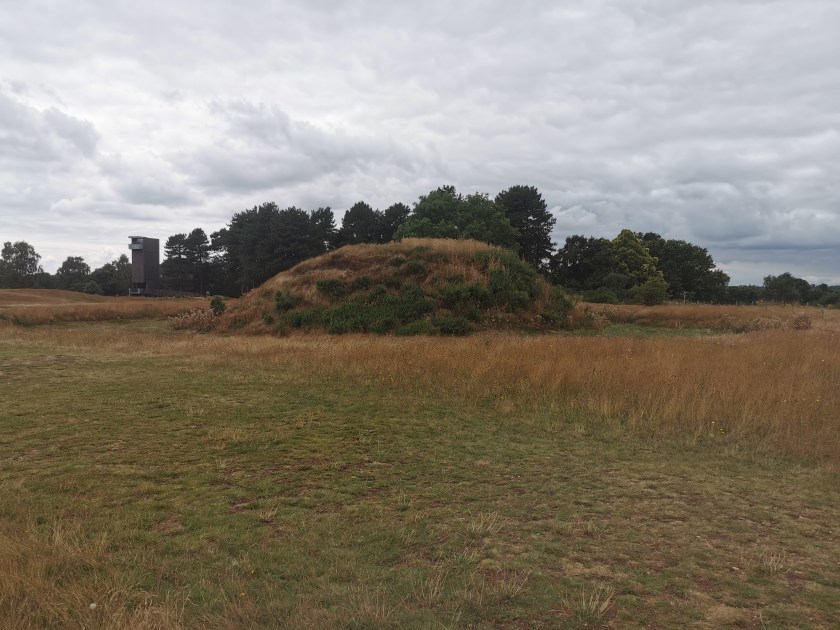
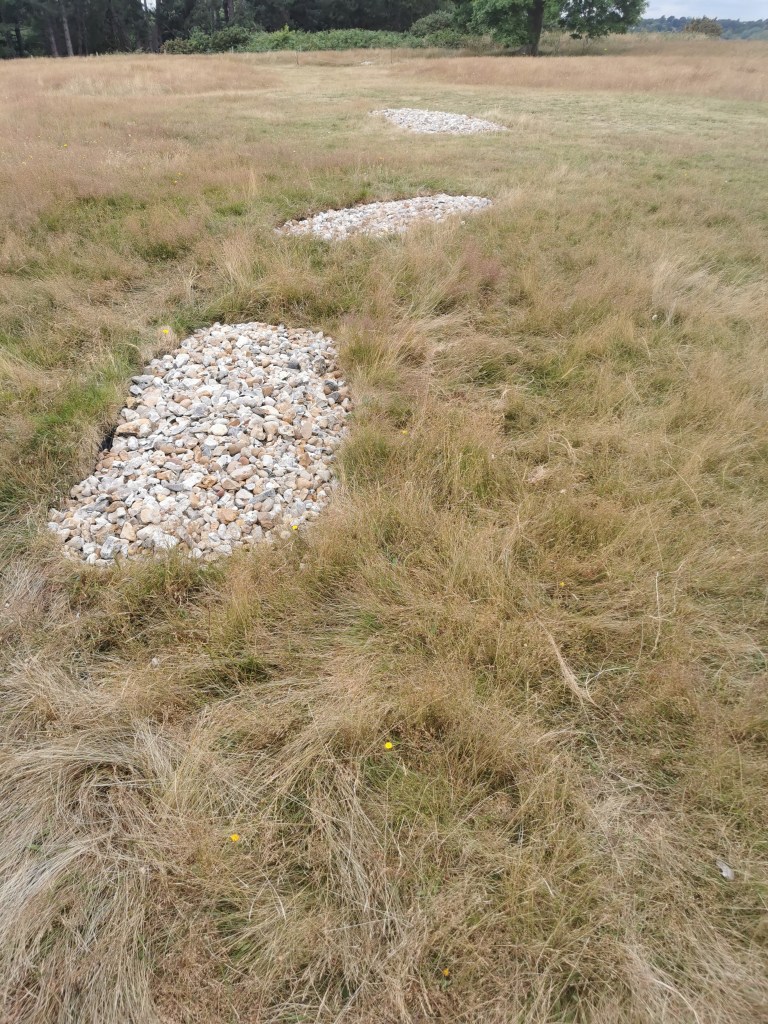
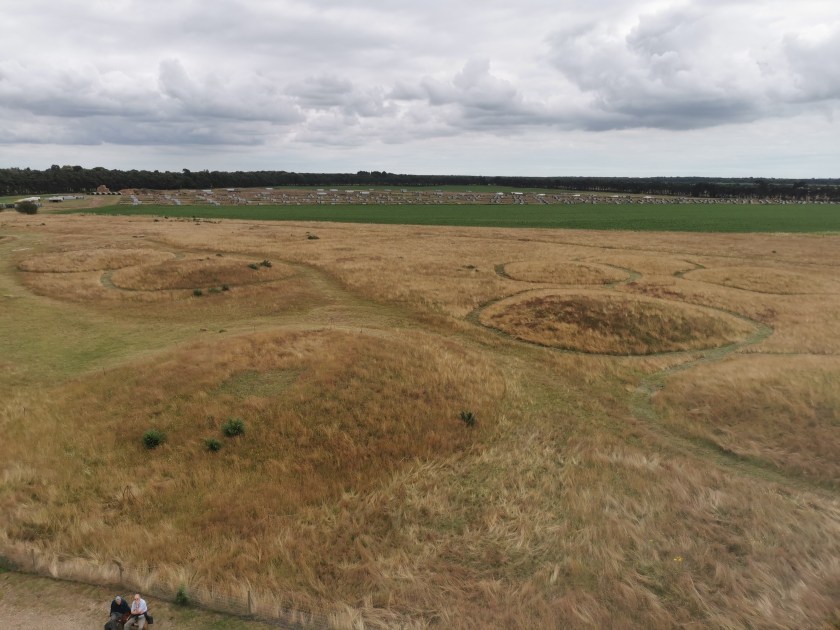
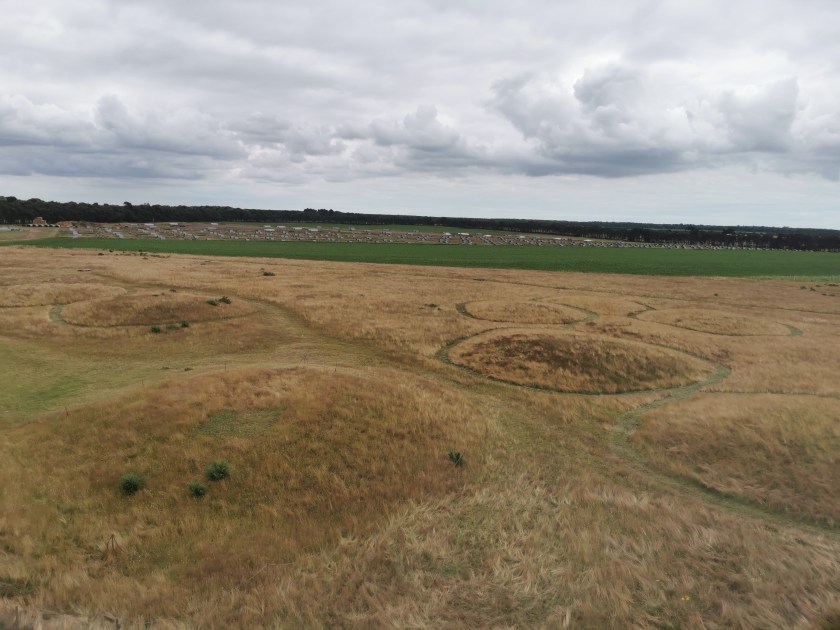
As part of my research for the trilogy, I visited Sutton Hoo in July 2024. While it was a fascinating place to visit (see the images below of the surviving grave mounds), it was actually something else my Canadian guide told me that resonated with me for the series. It was that while this area gets a lot of interest, a further gravesite has also been found under where the car park for the visitor centre is now. This gravesite contained thirty-six graves (I think I’ve got the figures correct), twenty-nine of which were burials while the rest were cremations. The car park burials are believed to date to between 510 and c.600, and so before the Sutton Hoo burial of such fame. Fourteen of the graves were warrior graves, buried with shield and spear.
You might wonder why that intrigued me so much, and you’d be correct to do so. But, of course, I wanted to write the series before the advent of what we know as Saxon England, and this was therefore where I needed to be researching. The ‘shiny’ helmet and sword (reconstructions, I know), have a strange allure for us as we live in a time where we don’t need such things (hopefully), but did the earlier warriors have the same? This trip to Sutton Hoo certainly influenced the way I wrote about Wærmund and his fellow warriors. And the trip to the Norfolk Broads reminded me of how pesky bugs can be, and how much they like to nibble me. I came straight home and added that to the storyline. It always pays to remember the little elements that make characters feel very real to readers.
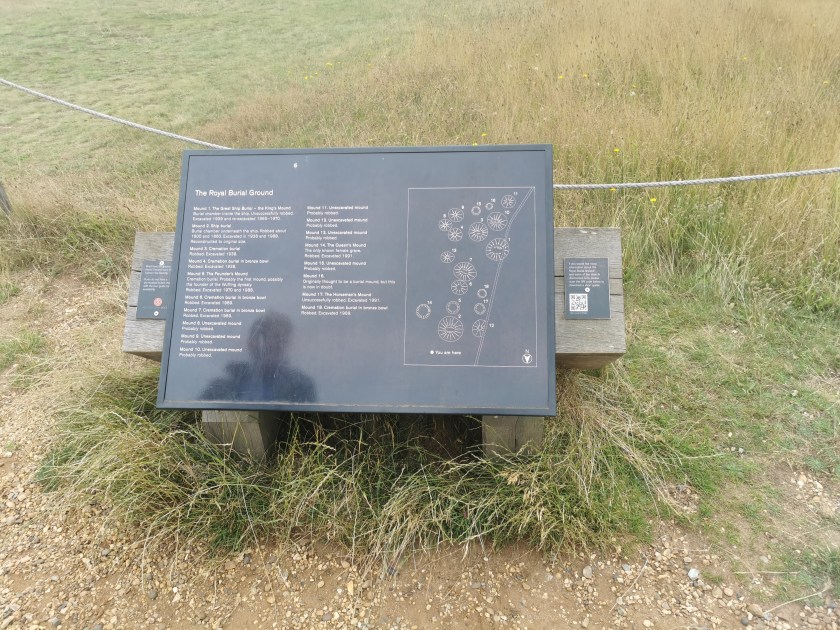
Board showing the burial mounds at Sutton Hoo
View of one of the burial mounds
View of one of the burial mounds from a distance
One of the other burials
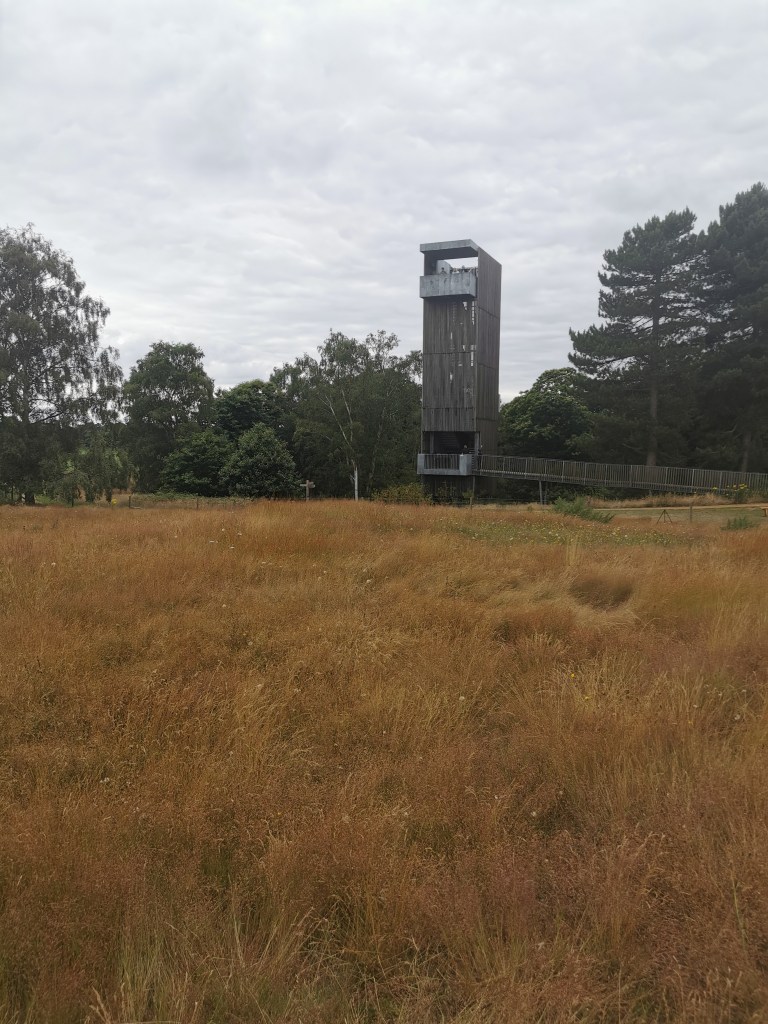
View from the viewing platform
Another view from the viewing platform
The viewing platform over the Sutton Hoo Burial Mounds
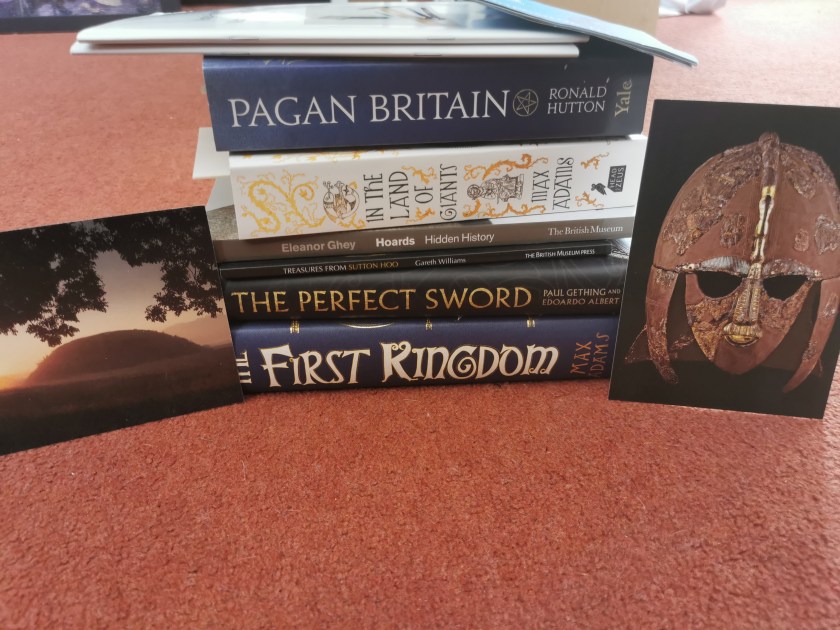
Research photo dump with the Sutton Hoo Helmet and image of the burial mounds
Curious about the trilogy? Check out my blog for more details below
A princess with a scandalous secret. A duke desperate for a wealthy bride. A debutante torn between duty and passion.
Newly widowed Princess Adelheid Kinsky thought she was free—until she learns of her abusive late husband’s final betrayal. The son she believed dead, the illegitimate child of a forbidden love, still lives. To secure his future, she must marry within a month—without revealing the truth. Her best prospect? The Duke of Hartland, a notorious rake drowning in debt.
Meanwhile, Hartland sets his sights on Olivia Fontenoy, an heiress whose fortune could solve all his problems. But innocent Olivia dreams of music, not marriage, and seizes the chance to perform in disguise at the King’s Theatre—unwittingly ensnaring everyone she knows in scandal.
As deception and desire collide, Olivia finds herself drawn to Hartland’s closest friend, the quiet yet passionate Marquess of Lewiston—a man who offers her something far more profound than mere security. And for Adelheid, an unexpected alliance may hold the key to her dreams.
With a surprising ending worthy of grand opera, The Soprano’s Daring Duke is a sweeping Regency tale of love, risk, and the courage to defy expectations.
The Soprano’s Daring Duke is a Regency romance with a difference. It starts with a bang as we’re introduced to Adelheid at her husband’s deathbed, where she reacts, not with grief, but rather delight, until the terms of his will reveal her dilemma.
Olivia is our second female lead, who, awkward and too tall, and not at all the Regency ideal wife, longs for something other than marriage, but is being pushed into the marriage market by her mother. The scene is set, and all the reader need do is wait for our male lead to appear with his own Regency problems and dilemmas.
This is the second of Susanna Dunlap’s Regency novels I’ve read and it will delight fans of the genre while placing our main players in situations a little different to those we might expect, and all with a delightful ring of authenticity and dilemma.
Susanne Dunlap is the award-winning author of over a dozen historical novels, as well as an Author Accelerator Certified Book Coach in fiction, nonfiction, and memoir. Her love of history began in academia with a PhD in music history from Yale. Her novel THE PORTRAITIST won first prize in its category in the 2022 Eric Hoffer Book Awards, and was a finalist in the CIBA Goethe Awards and the Foreword Indies Awards. THE ADORED ONE: A NOVEL OF LILLIAN LORRAINE AND FLORENZ ZIEGFELD, won first place in its category in the 2023 CIBA Goethe Awards for Late Historical Fiction. Today, she lives, coaches, and writes in beautiful Biddeford, Maine.
During Britannia’s tribal age only the strongest prevail…
Britain AD541
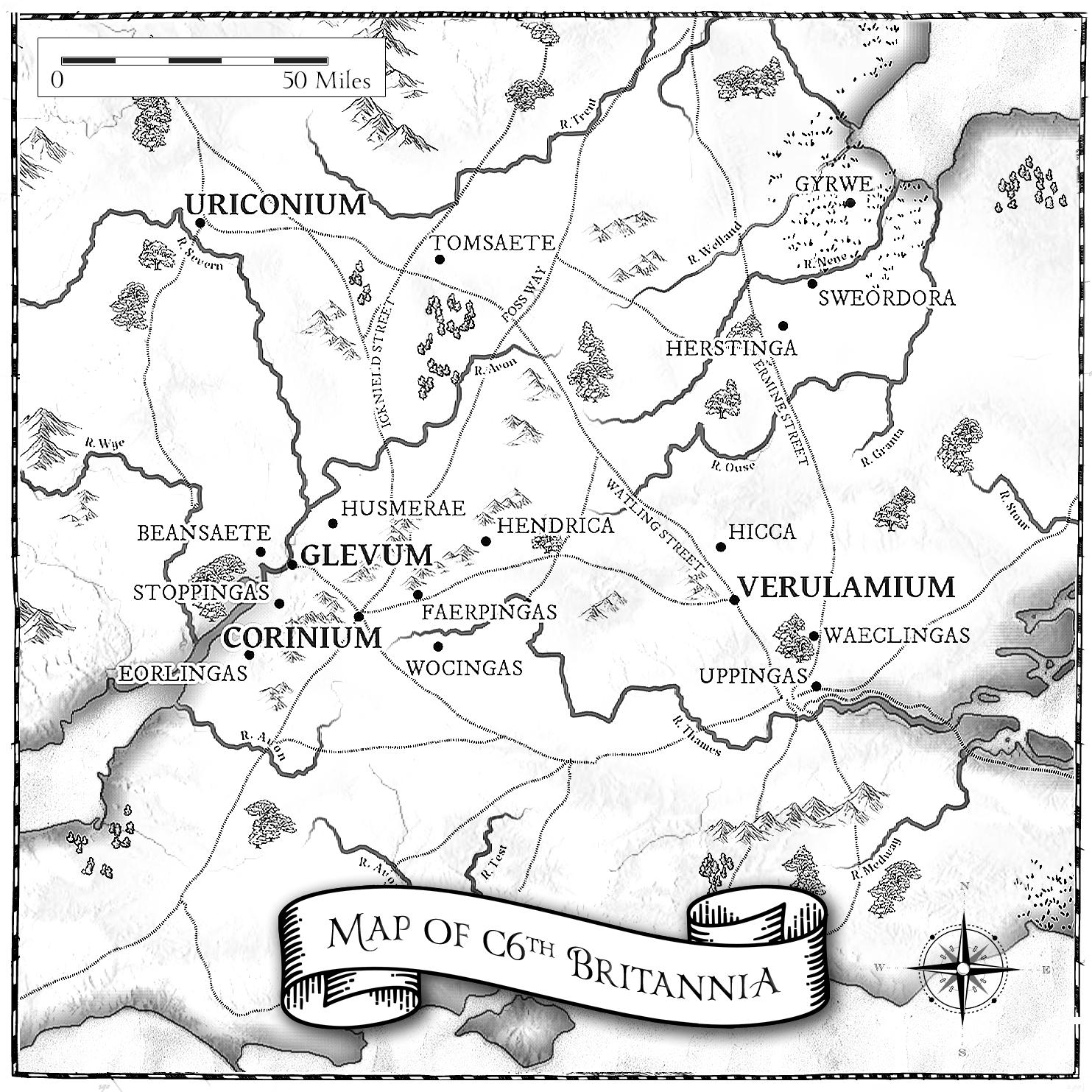
Seeress Meddi has been restored to her rightful position of influence within the Eorlingas tribe. But a heavy cloud hangs over the tribe’s survival with the escape of the treacherous Elen who seeks to exact a bloody vengeance following Meddi’s reinstatement and her downfall.
Meddi knows Elen will return to settle the blood feud and the tribe must be ready to face this deadly threat with iron. They must toil day and night to harness the power of the lost magiks to make the weapons needed to overpower Elen.
Meanwhile, Wærmund, a warrior of Saxon descent, has escaped his enforced captivity and vows vengeance against his captors. He too hungers for the promise of sharp blades and travels West to find those who can fashion iron into blades sharp enough to kill. But when a lone woman befriends the band of warriors, promising him even more than that, he’s beguiled by her tale of deceit amongst her own tribe, so reminiscent of his own.
Unbeknown, Meddi and Wærmund share a common enemy and one who is just as belligerent as they are…
Curious about the trilogy? Check out my blog post for more details below
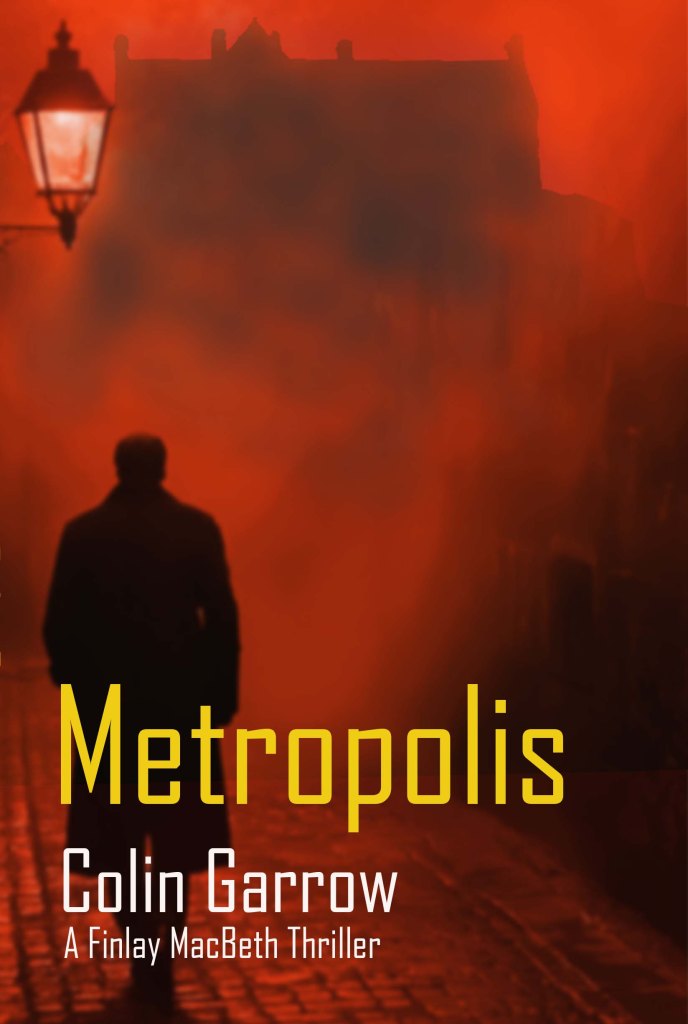
Edinburgh, 1936. People are disappearing. The police are clueless. Can Finlay MacBeth track down the perpetrator before someone else goes missing?
Haunted by his recent past, Professor Finlay MacBeth returns to his home town to take up a new post at the university. Within hours, his reputation for solving the occasional murder prompts the police to ask for his help. Four men—seemingly unconnected—have vanished into thin air. MacBeth must find whatever it is that links the men before the kidnapper strikes again.
But the police aren’t the only ones interested in MacBeth’s activities, and the amateur sleuth soon discovers that finding the missing men is the least of his problems…
In this thriller series set in Edinburgh, Metropolis is book #1 in the Finlay MacBeth Thriller series.
Colin Garrow grew up in a former mining town in Northumberland. He has worked in a plethora of professions including taxi driver, antiques dealer, drama facilitator, theatre director and fish processor, and has occasionally masqueraded as a pirate.
He has published more than thirty books, and his short stories have appeared in several literary mags, most recently in Witcraft, and Flash Fiction North. Colin lives in a humble cottage in Northeast Scotland where he writes novels, stories, poems and the occasional song.
He also plays several musical instruments and makes rather nice vegan cakes.
Evy Miller thinks a summer with her grandparents in sleepy Dorset will be painfully dull. Her suspicions are confirmed when Juby, a wild-haired, lanky old man, strolls through her grandparents’ doorway. At first, she thinks he’s nothing more than an odd duck who charms her grandmother and annoys her grandfather. The last thing she expects is to become his companion on visits to the small village of Rouklye, whose entire population was evicted during WWII. She has no idea that the reason for Juby’s visits will become a defining moment in her life and change her understanding of history and her own family forever.
MICHAEL LAWRENCE has written and published a great many books, but he’s done a few other too. For instance, after leaving art school he began training as a graphic designer in a London studio before morphing into a photographer. As a photographer he took pictures for advertising agencies, publishers and newspapers, of pop stars and politicians, of fashion models and underwear, and many other kinds of people and things besides. He also worked in a travelling circus for a little while, and has been an antiques dealer, co-owned two art galleries, and made hundreds of paintings, drawings and experimental digital images. One of his private joys is recording songs (many of which he’s written) under the alias Aldous U.
As a writer he’s won the odd award, had books translated into twenty or so languages (one of which – ‘Young Dracula’ – was the inspiration for five BBC-TV series), has shuffled onto stages at literary festivals, and been interviewed on TV and radio. ‘There’s more,’ he says, ‘but I don’t want to bore you. There’s a lot of me in the Rainey novels, but I’m not saying which bits.’
Here in the UK we are very lucky to have quite a few Roman sites to explore, which is very helpful when writing a story set during that era. The Romans were here for nearly 400 years, so they have left a lot of traces behind. My story SHADOWS IN THE SPRING features a legionary as the villain, so I had to do some research regarding the occupying legions that were present in the Britannia of AD 80. Therefore, it was natural for me to visit the town of Caerleon, which is fairly close to where I live.
Caerleon was called Isca by the Romans after the name of the river that flows through it, which is now the Usk. Around AD 75 they built a fortress there in order to keep the local Silures tribe under control. They’d been difficult to subdue and it needed a strong military presence. The Silures must have been a real thorn in the Romans’ side as Isca was one of only three permanent legionary bases in Britain at the time. (The others were at Chester/Deva and York/Eboracum).
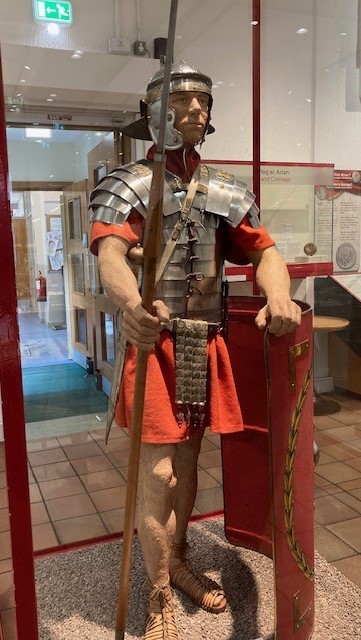
The legion assigned to build it was the Legio II Augusta – or Second Augustan Legion. This legion had formed a part of the force that invaded Britain in AD 43 and they had remained ever since. They were originally stationed at Exeter, but later sent to Isca when the Silures proved troublesome. Part of a legionary’s job was to build forts, ramparts, ditches and roads, and they must have had to work very hard. The outline of the Isca fortress can still be seen in the town today, and it is vast. To begin with, the barracks and other buildings would have been constructed mostly of timber, with the buildings surrounded by a ditch and earth bank topped by a palisade. I would have been impressive and presumably intimidating to the locals. It housed upwards of 5,000 men, quite a sizeable force.
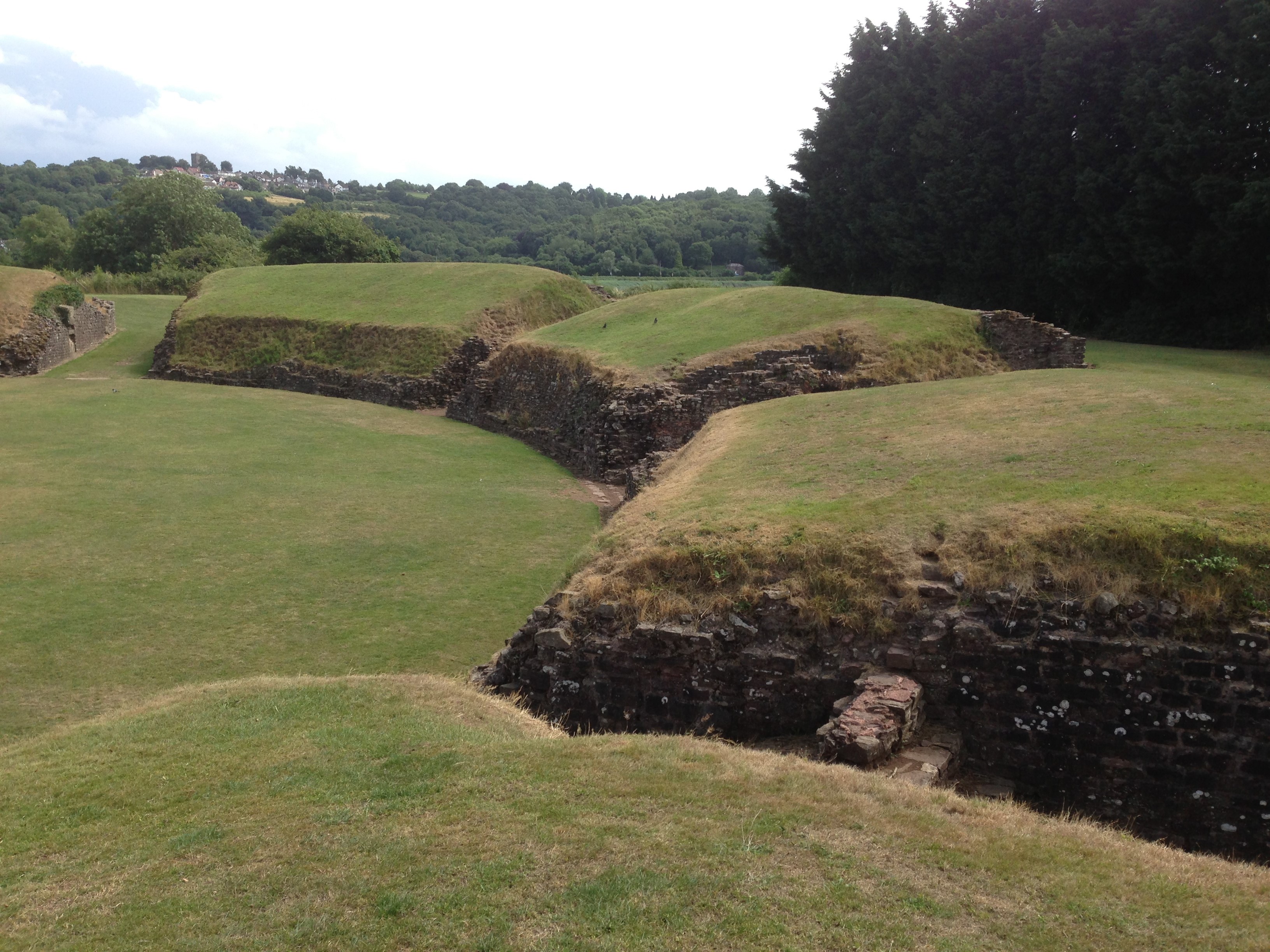
The barracksThe amphitheatre
As with other forts, a civilian settlement grew up around it (a so-called vicus) and buildings like a bath complex were added for both legionaries and civilians to enjoy. The legionaries would have enjoyed this ‘taste of home’ as I’m sure life in Wales was very different to what at least some of them were used to. Imagine coming from sunny Italy or Spain to a cold, windy and rainy Britannia – probably a shock to the system! It was also dangerous, what with skirmishes and illnesses making life expectancy short, so to be able to relax and enjoy some leisure time at the baths was greatly appreciated.
SHADOWS IN THE SPRING is set in AD 80, which was ten years before the amphitheatre at Isca was built just outside the fort. It’s still there today, albeit mostly consisting of turf now. It’s an impressive place that would have seated about 6,000 people on wooden tiers built on a stone base. No doubt the spectators enjoyed all sorts of events, like gladiatorial games and executions of criminals. It was also used for military training. I loved standing in the middle of the arena – once covered in sand – and imagining what it must have been like to perform there.
There are two museums in Caerleon – one that shows what’s left of the baths and tells their story, and one with Roman artefacts. Both were very useful to me and I really enjoyed my visit to the picturesque town. It’s a bit off the beaten track, but if you ever find yourself nearby, I would definitely recommend that you take a look – you won’t regret it!
Here’s the blurb
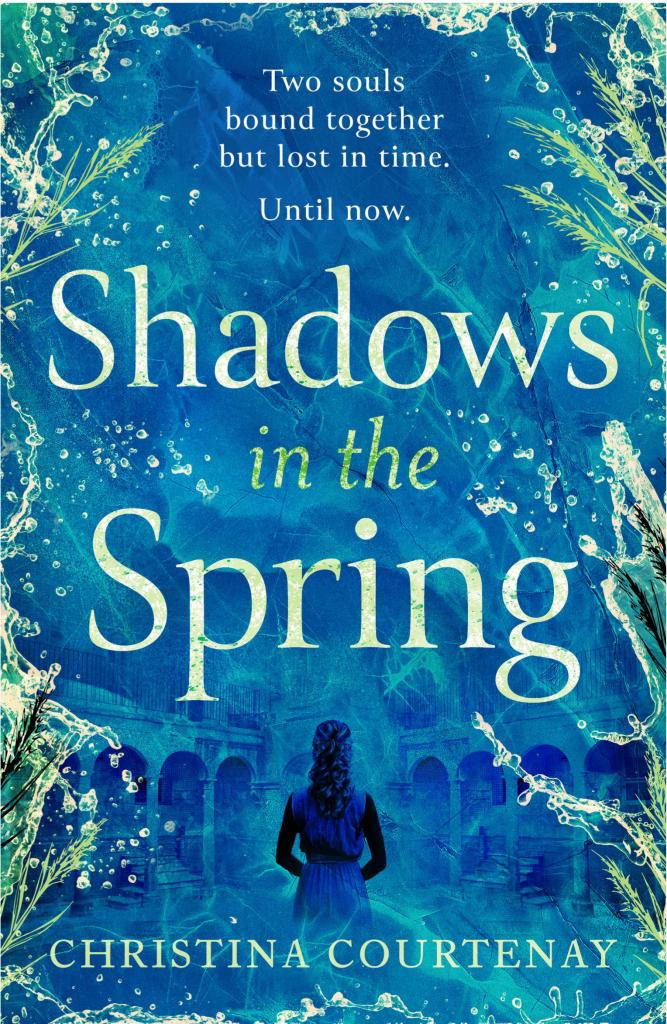
Two souls bound together but lost in time. Until now.
AD 80
Duro of the Iceni tribe escaped life as an enslaved gladiator and is now finally home in Britannia with one thing on his mind: vengeance. For 20 years he has sought the Roman legionary who destroyed his family. What he didn’t expect was Gisel: a fierce Germanic woman with long white-blonde hair, forced into slavery by the Romans. Hypnotised by her spirit and her beauty, Duro frees Gisel and slowly tries to win her trust as they work together to complete his quest.
Present Day
Mackenna Jackson returns to Bath with a broken heart, thanks to rockstar Blue Daniels. Luckily she can still count on Blue’s former bandmate Jonah Miller as a listening ear. But Jonah has secretly been fighting stronger feelings, drawn to Mac’s quiet confidence and gorgeous white-blonde hair. As they explore the area, memories they can’t quite explain flood them both.
Is the spark between Mac and Jonah in fact a sign of something much deeper – a love enduring through millennia – or can it all be an illusion?
Christina Courtenay writes historical romance, time slip/dual time and time travel stories, and lives in Herefordshire (near the Welsh border) in the UK. Although born in England, she has a Swedish mother and was brought up in Sweden – hence her abiding interest in the Vikings. Christina is a Vice President and former Chair and of the UK’s Romantic Novelists’ Association and has won several awards, including the RoNA for Best Historical Romantic Novel twice with Highland Storms (2012) and The Gilded Fan (2014) and the RNA Fantasy Romantic Novel of the year 2021 with Echoes of the Runes. SHADOWS IN THE SPRING (dual time historical romance published by Headline Review 24th April 2025) is her latest novel. Christina is a keen amateur genealogist and loves history and archaeology (the armchair variety).
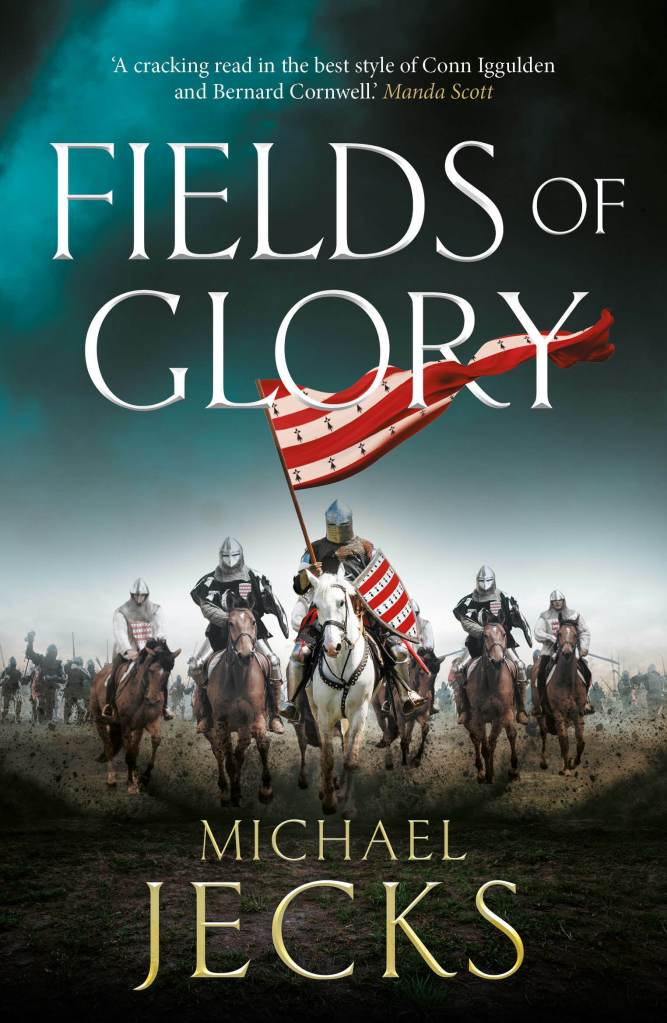
1346. France. King Edward III is restless. Despite earlier victories the French crown remains intact. Determined to bring France under his own rule, Edward has devised a new plan of attack – one which he believes will finally bring the French army to its knees: a final, cataclysmic battle …
Berenger Fripper, Vintener of a pox-ridden mob of sixteen who make up the Vintaine of Sir John de Sully, storms the beaches of Normandy to bring victory to their king. But the French are nowhere to be seen…
And so Berenger leads his Vintaine through France and onward to battle – the Battle of Crécy – one which will both bond and break his men and be a decisive turning point in the Hundred Years’ War.
Fields of Glory by Michael Jecks is a novel about the Hundred Years’ War in all its bloody glory. Featuring an ensemble cast of characters, every person has their own story to tell, hidden behind the veneer of bloody war, and the demands of an intolerant king, who appears to preach reconciliation with the French but finds every excuse to change his mind.
I can’t say any of this ragtag collection of men is particularly endearing. Sir John cares more for his horse than his men, while King Edward and the Prince of Wales are just as thoughtless regarding the lives they’re destroying. This makes it a very realistic portrayal, if not for the faint-hearted. Indeed, if seeking some semblance of empathy between the characters, we must look to the men of the Vintaine, and not those who command them.
A blood-drenched traipse through France will bring our characters the opportunity to earn battle booty, if only they can live through it. Fields of Glory is a must-read for fans of the genre and those interested in the Hundred Years’ War.
Meet the author
Studied actuarial science, then became a computer salesman for 13 years- after the 13th company folded, he turned to writing.
He’s the author of 50 novels, 6 novellas, 4 collaborative books and short stories. His tales are inspired by history and legends, but are all grounded in real life and real people, what motivates them, and why they turn to violence.
Founder of Medieval Murderers, he has served on the committees of: Historical Writers’ Association, CWA and Detection Club. He has judged the Debut Dagger, Ian Fleming Steel Dagger and other prizes, as well as serving as Dagger liaison officer and CWA Chair. He has taught writing at Swanwick and Evesham, and tutored for the Royal Literary Fund. He now runs South West Writers in Devon.
His work has been celebrated by Visconti and Conway Stewart pens; 2014 he was International Guest of Honour at the Bloody Words festival in Toronto, and Grand Master of the first parade in the New Orleans Mardi Gras.








































 MJ Porter