A deadly feast, a mobster restaurant and a family get-together with fatal results.
Savour the spicy tang of dark and twisted tales in Pass the Cyanide, a follow-up to the award-winning collection of culinary mysteries, Add Cyanide to Taste.
From an old friend hiding a deadly secret to a ravenous house with an appetite for friends, Špiljak masterfully blends the allure of food and the thrill of mystery. Each story is a rich and satisfying serving of crime, with a twist that will leave you wanting more.
A must-read for fans of culinary noir and foodies who love a pinch of danger with their suspense. All recipes included are cyanide-free.
Pass the Cyanide is a fabulous collection of short stories with a foodie twist. Some of them are very weird, some of them not so weird, all of them are enjoyable reads (even if murder is often on the mind). All of them involve food in one way or another. I particularly enjoyed Seventeen Minutes, the tale of a wife who is a little bit fed up with her husband, and The Secret Sauce, which grapples with that familiar problem of just what some chefs are desperate to keep hidden from their audience, while Sweet Darkness, with its PTA meeting vibes made me chuckle, as ‘revenge goes wrong.’
A really enjoyable collection of short stories sure to delight fans of mysteries.
Meet the author
Karmen Špiljak is a Slovenian-Belgian writer of suspense, horror and speculative fiction.Her short fiction has been awarded and anthologised. Her short story collection, Add Cyanide to Taste, won the 2022 IndieReader Discovery award for best short stories/Fiction. She lives in Belgrade with her husband, two mischievous cats and an undefined number of literary characters. Find out more on http://www.karmenspiljak.com
For over a decade, the Lancasters were celebrity royalty, with millions tuning in every week to watch their reality show, Living with the Lancasters.
But then an old video emerges of one of their legendary parties. Suddenly, they’re in the spotlight for all the wrong reasons: witnesses swore they’d seen missing teenager Bradley Wilcox leaving the Lancaster family home on the night of the party, but the video tells a different story
Now true crime investigator and YouTuber Tom Isaac is on the case. He’s determined to find out what really happened to Bradley – he just needs to read between the Lancasters’ lies . . .
Because when the cameras are always rolling, it won’t be long until someone cracks.
_
For fans of Murder in the Family and The Club, Clickbait is told through mixed media, from video transcripts to diary entries, capturing a unique and addictive commentary on ruthless ambition and the dark side of fame.
L.C. North studied psychology at university before pursuing a career in Public Relations. Her first book club thriller – The Ugly Truth – combines her love of psychology and her fascination with the celebrities in the public eye. Her second novel, Clickbait, delves into the world of reality TV and the dichotomy between real and fake. When she’s not writing, she co-hosts the crime thriller podcast, In Suspense. L.C. North lives on the Suffolk borders with her family and also writes psychological suspense novels under the name of Lauren North. Readers can follow her on Twitter and Instagram as @Lauren_C_North, and Facebook as @LaurenNorthAuthor

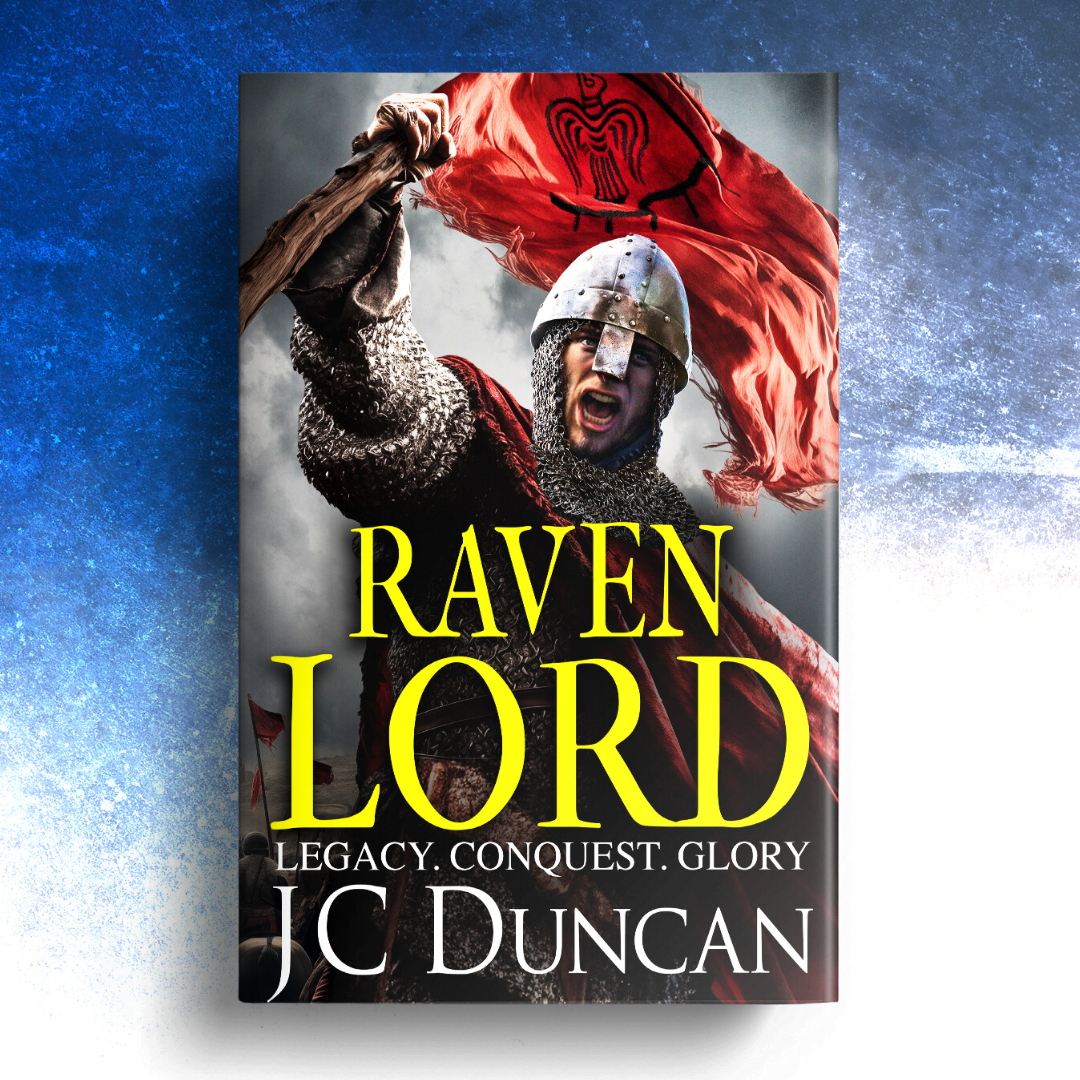
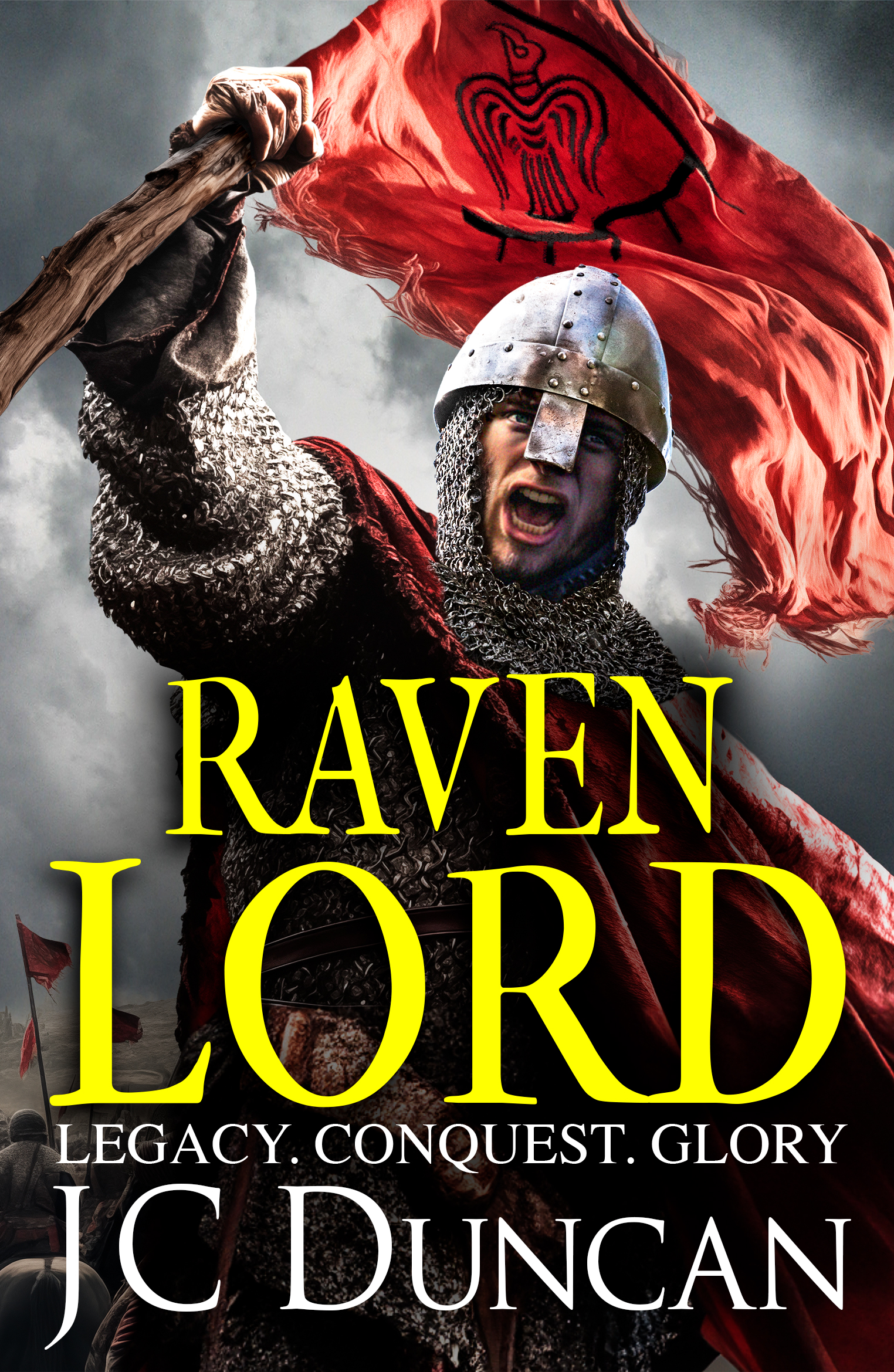
Prince. Mercenary. Exile. The lost throne of Norway must be won in foreign lands.
1030 AD
Some men are gifted a crown. Others have to fight to claim it.
Exiled from Norway, Harald Sigurdsson, brother to murdered King Olaf, must battle mercilessly for survival in the lands of the Kievan Rus.
His brother’s legacy gifts him a warband of hardened warriors and entry to the court of Prince Yaroslav the Wise. By his wits, sword and skill in battle, Harald must learn not just to survive but to triumph.
He fights for glory, for fame, and to regain his family’s battle-stolen throne. But his greatest challenge may not come from battlefield foes but from those who stand by his side.
The first instalment in a remarkable story of an exiled boy’s incredible journey to become Harald Hardrada; The Hard Ruler and The Last Viking.
Harald Sigurdsson, who we know more often as Harald Hardrada, is a historical individual who is ‘on my radar’ as it were for my The Earls of Mercia series. So far, he’s only had the odd mention because I’m still 20 years from the events of 1066 at Stamford Bridge, but never fear, for JC Duncan is telling Harald’s story from the events that see his half-brother, Olaf, later St Olaf, cut down at the Battle of Stiklestad in 1030.
Adopting a narrator style for the book, we see Harald trying to regroup after his brother’s defeat and murder. He seeks somewhere for him and what remains of his brother’s warriors to retreat to, and the tale is told through the eyes of the fictional Eric, who has seen it all and now, as an old man, wants to share his stories of Harald with an appreciative audience back in Norway.
This is very much a story of Harald’s time in the lands of the Rus and the overwhelming odds he often faces in battle as he rises through the ranks to serve Prince Yaraslov. We also see him struggling with the clash of cultures – the more sophisticated and complex ideals of the Rus flummoxing a man more used to seeing warriors have a bloody good fight.
Harald quickly earns himself an enemy, one who bedevils him at various points throughout the story and who I’m sure will continue to do so as the young man tries to discover who he is while learning to command his warriors.
This is an epic tale, with elements burbling away in the background that will continue to develop in later books. Using a narrator enables the tale to skip over some of the more mundane aspects of Harald’s story, ensuring the reader is constantly faced with some new dilemma for Harald to surmount or fail. However, failure is never really an option. After all, he is a Hard-ruler, and many of his decisions may stun the reader as the body count increases.
JC Duncan’s Harald is indeed a hard man, unhappy making mistakes or being embarrassed, determined to build his reputation, even while bidding his time, determined that one day he’ll claim back his brother’s lost kingdom of Norway. He is perhaps too naïve and a little too sure of himself on occasion, and these very real character traits lend themselves to an engaging retelling. However, this isn’t a quick read. There’s much to absorb as you, alongside the character, embark on a very real journey to the land of the Rus and encounter their enemies and allies, the knowledge that our narrator still lives, the only hope for Harald’s success.
An engrossing tale of Harald Hardrada’s early years, brimming with historical detail and brave daring do. This is the story of a man who will become a legend, told lovingly through the eyes of one of his loyal followers and sure to delight readers.
Meet the author
J. C. Duncan is a well-reviewed historical fiction author and amateur bladesmith, with a passion for Vikings.
A twenty-year-old cold case unearths dark secrets in the scorching-hot destination thriller from Emily Freud.
Twenty years ago, Mari vanished while backpacking through Thailand with her boyfriend, Luke. He was accused of murder, but has always insisted he’s innocent. Besides, her body was never found.
Now, he’s finally ready to talk. And filmmaker Cassidy Chambers wants to be the one to uncover what really happened, back then, in the dark of the jungle.
But as she delves deeper into the past, Cassidy begins to fear what lies ahead, and the secrets buried along the way.
Emily Freud is the author of My Best Friend’s Secret and What She Left Behind. She has worked on Emmy and BAFTA award winning television series including Educating Yorkshire and First Dates. Emily lives in North London, with her husband and two children. She is currently working on her next novel.
Gritta, Appel, and Efi managed to survive the Black Death, only to find that they are in desperate need of money. With limited options and lots of obstacles, they band together to become alewives – brewing and selling ale in the free Alsatian town of Colmar. But when an elderly neighbor is discovered dead in her house, the alewives cannot convince the sheriff and the town council that her death wasn’t an accident, it was murder. As the body count piles up, the ale flows and mystery is afoot!
Set in the tumultuous years after the most devastating pandemic the world has ever experienced, The Alewives is a playful romp through a dark time, when society was reeling from loss and a grieving population attempted to return to normal, proving that with the bonds of love, friendship, and humor, the human spirit will always continue to shine.
* * * * * A short, sharp, snappy, hugely entertaining, medieval mystery that portrays the realities of life at the time, with just the right amount of humour to make it thoroughly entertaining. A well-deserved 5/5 from me! – MJ Porter, author of Cragside and The Erdington Mysteries
* * * *.* ‘The Alewives’ is laid out with great compassion, insight and humour and the reader comes to care for these people! The strong and growing working relationship and friendship of the three ale wives in question and round which the action evolves is moving and profound. we are left hoping that good times – and further adventures – are just around the corner! – The Historical Fiction Company
You can see above that I’ve already read and reviewed The Alewives. (You can find my original review here) You’ll also see that I adored it! What you won’t know is that of late, I’m growing my interest in audio books, and I couldn’t resist this one.
While the storyline is amazing, told with just the right amount of humour, historical detail, intrigue, and the reality of the era, the narration adds a whole new dimension to the tale. Ella Lynch is fabulous in bringing the wonderful ‘real’ characters of Grita, Efi and Appel to life, as well as Colmar, and the collection of bumbling and ineffectual male characters.
This story will make you chuckle, make you grimace, make you growl at the unfairness of their lives, and also entirely draw you in to the mystery.
A fabulous mystery. I’ve read it, and I’ve listened to, and I recommend you do the same.
Meet the author
Although she spent many years of her life as a journalist, independent fashion designer, and overworked tech employee, there have always been two consistent loves in Elizabeth R. Andersen’s life: writing and history. She finally decided to put them both together and discovered her true love.
Elizabeth lives in the Seattle area with her young son and energetic husky. On the weekends she usually hikes in the stunning Cascade mountains to hide from people and dream up new plotlines and characters.
– Join Elizabeth’s monthly newsletter and receive the first two chapters of The Scribe for free. Sign up at https://www.elizabethrandersen.com
– Find photos of hikes and daily author life at Elizabeth’s Instagram: @elizabethrandersen
– Follow Elizabeth on Twitter for nerdy medieval history facts: @E_R_A_writes
My name is Ella Lynch, I am an experienced British audiobook narrator and nature-loving treasure seeker on an ever-evolving journey of connection and expansion through the art of storytelling.
I am an empathetic, married mum of 1, a member of the LGBTQIA+ community and a mental health advocate. My lived experiences inform my art, helping me deeply connect with the intentions behind words and relay them intuitively to the listener.
I gained a triple distinction in my (BTEC) National Diploma in Performing Arts from Truro College, and have been working as a professional audiobook narrator since 2018. In this time I have narrated over 100 audiobooks, voiced numerous healthcare explainer videos for the NHS, provided VO for children’s animated audiobooks and even dubbed a Russian commercial!
I have a particular passion and flair for Magical Realism, Literary Fiction and LGBTQIA+ Romance and Comedy, and as a voracious reader myself I absolutely thrive on bringing all words, across multiple genres, to life for listeners.
When I’m not in my booth you will likely find me walking my dog on the beach, paddleboarding an estuary, exploring the UK in my self-built campervan, playing boardgames and cooking up delicious plant-based feasts for my family. A vegan of over 20 years, I love crochet, painting, fires, swimming and hoola-hooping as well as meditating, practicing Reiki and EFT tapping and deep, heart-felt connection.
Uncovering a web of conspiracy that intertwines past and present, can Lady Beatrice and DCI Richard Fitzwilliam catch a killer and unveil the truth of her husband’s death at long last?
BREAKING NEWS Second Senior Police Officer Dies Within a Week
A senior officer from the Protection and Investigations (Royal) Services died unexpectedly yesterday. His death comes hot on the heels of Detective Inspector Ethan Preece (43) from City Police, who died of a suspected heart attack last week. Although he’s not yet been named, the dead officer was a greatly respected public figure, who had served in policing for over thirty years. A PaIRS spokesperson has confirmed that ‘neither men’s death is being treated as suspicious at this time’.
With the senior PaIRS officer dead, so is any hope of reopening the inquiry into Lady Beatrice’s husband’s accident fifteen years ago. Unless, of course, there is something that links the two men to the earl’s fatal car crash?
Can she and Fitzwilliam, along with their friends, work together to unravel the mystery and catch a killer before the truth is buried forever?
I Spy With My Little Die is the sixth book in the Right Royal Cozy Investigation Mystery Series. I have read ALL the previous novels, including the prequel, which has to be read at a certain point in the series, and the author’s free short story about how some of the characters first met. You guessed it, I love this series, and this new instalment doesn’t disappoint.
There has been a long-running mystery burbling away in the background of the previous books. In I Spy With My Little Die, we finally get our answers – I’m not moaning – I’ve adored how the author has woven this other element through the stories – but it does feel as though it’s the right time to GET SOME ANSWERS. And the answers we get are well worth the wait.
As with any series, the characters grow on the reader. Lady Bea, Perry, Simon and Fitzwilliam have all had their moments throughout the earlier books, and in this one, it’s really Fitzwilliam who gets his chance to shine – which, again, is good and about time. There is much less of the ‘stately home as a background element’ to this book. Much of the action takes place in London, and much of it in offices, and there is a bit more of a police-procedural feel to this one, but don’t let that put you off. Fitzwilliam really does have an intriguing murder to solve, and while we, the reader, might be more clued in than Fitzwilliam, leading to a few ‘don’t do that moments,’ it really does only add to the enjoyment.
The plotting is tight, and the story moves quickly towards our long-awaited conclusion. While I’m not one to put my star marking on the blog, I assure you this is a 5/5.
If you’ve not yet read any of the Right Royal Cosy mystery books but you love contemporary cosy mysteries, then I urge you to give the first book in the series a chance. I assure you, you’ll soon be hooked and surging towards this sixth book. And despite how pleased I am to finally have some answers, I’m also delighted that the series will continue. I think there’s a lot more for Lady Bea, Fitzwilliam, Perry, Simon and one little white terrier to uncover.
Check out my reviews for previous books in the series
Hello. I’m Helen Golden. I write British contemporary cozy whodunnits with a hint of humour. I live in small village in Lincolnshire in the UK with my husband, my step-daughter, her two cats, our two dogs, sometimes my step-son, and our tortoise.
I used to work in senior management, but after my recent job came to a natural end I had the opportunity to follow my dreams and start writing. It’s very early in my life as an author, but so far I’m loving it.
It’s crazy busy at our house, so when I’m writing I retreat to our caravan (an impulsive lockdown purchase) which is mostly parked on our drive. When I really need total peace and quiet, I take it to a lovely site about 15 minutes away and hide there until my family runs out of food or clean clothes
A challenger filled with vengeance. A kingdom’s fate at stake.
Sven the Boar is Jarl of Ribe once more. He and Charles try to settle into their new lives, but trouble and treachery are never too far away.
Tormented by recent events, Charles struggles to adapt to life amongst the heathens that mock his Christian God and the arrival of a priest from the south only makes things worse.
Meanwhile, Sven is burdened with the responsibilities of being Jarl again and protecting his grandson from those hunting him.
When forced into an alliance with King Horik’s nephew who is raising an army to challenge his uncle for the throne of Denmark, Sven makes an important decision.
As the threat of war becomes real, Sven rides to fight a battle that will change the destiny of Denmark.
But whilst he fights, will Charles remain safe or are other games in play that threaten him?
Loki’s Deceit is book 2 in the Charlemagne’s Cross Series. Check out my review for Odin’s Betrayal. Do you need to have read book 1? Probably, but I’m always happy to read books out of order, and you will certainly enjoy it if you do jump in now.
Loki’s Deceit begins almost immediately after the catastrophic events of Odin’s Betrayal. Charles and his grandfather, Sven, are still uncomfortable around one another, and neither of them is happy to find themselves in Ribe – Sven because he doesn’t relish being jarl once more, and Charles because he’s far from home and with no fellow Christians for friends.
We also have a few new points of view for Loki’s Deceit, that of Hildegard and that of Gerold. They add some of the richer background elements to the story, filling in the gaps for how the events of book 1 came about, for this is really a tale of impending war amongst the Danish jarls and their king, even while Charles and Sven battle their inner turmoils. Not only is their war, but conspiracy abounds wherever Sven and Charles turn. There are many characters that we shouldn’t trust and which Sven and Charles should also be mindful of, all bound up with their combined unease anyway. The settlement of Ribe is filled with men, women, and children who don’t like Charles at all or, indeed, his grandfather, the mighty Sven the Boar. There are many keen to take Sven’s position, and there are many who would welcome that.
For me, this felt very much as though this was more Sven’s story than Charles’. Not that we don’t get just as much Charles as Sven, but Sven is the warrior who will be forced to fight for his survival and that of his fellow warriors, while Charles is still not sure what he’s fighting for, although he is prepared to fight.
As with Odin’s Betrayal, the action continues until the last page, and I am looking forward to book 3.
Loki’s Deceit is a tale of loyalty, ambition, family, politics and religious divide, sure to appeal to fans of the era and historical fiction in general. It’s fabulous to read a series set (almost) entirely in Denmark.
Meet the author
Donovan Cook is the author of the well-received Ormstunga Saga series which combines fast-paced narrative with meticulously researched history of the Viking world, and is inspired by his interest in Norse Mythology
Social media influencer Crystabel Hughes is determined her wedding to Giles Preston Smythe will be the talk of the town. No matter the cost or the upset, nothing will stop this wedding!
A cheating groom…
But for Alexi Ellis and the rest of the staff at Hopgood Hall, Crystabel’s demands are becoming increasingly extreme. And when Alexi spots the groom getting up close and personal with one of the bridesmaids, she fears trouble is only a bouquet toss away.
A killer bride caught red-handed?
And Alexi’s fears are confirmed when the groom is found dead on the night before the wedding, stabbed through the heart – the person holding the dagger. his beloved bride-to be Crystabel.
Hopgood Hall doesn’t need any more bad press, but the race is on to find the killer and close the case before Crystable live streams her dilemma.
Can Alexi, Jack and Cosmo find out why Giles was killed? And, more importantly, can they stop the killer before they strike again?
Perfect for fans of Faith Martin, Frances Evesham and Emma Davies.
A Marriage to Murder For is the third book in the Hopgood Hall Murder Mysteries. You don’t need to have read the two previous books, but if you are planning on doing so, there are some spoilers for the earlier books.
This time, our intrepid duo find themselves with a murdered groom on their hands in what seems to be an open and shut case, but which of course, proves to be anything but.
The series has so far tackled celebrity chefs, and this time moves to ‘influencer’ territory with a televised wedding. But all is not paradise between the couple, and as the story evolves, there are many, many secrets to uncover.
I really enjoy this series of books. Alexis and Jack work well together, and the author offers a tight and well-constructed story – with just enough hints for the reader to ‘almost’ know what’s happening, but still with a mighty ‘big reveal’ in the closing moments.
A thoroughly enjoyable, tightly-plotted and enjoyable cosy mystery.
Evie Hunter has written a great many successful regency romances as Wendy Soliman and is now redirecting her talents to produce dark gritty thrillers for Boldwood. For the past twenty years she has lived the life of a nomad, roaming the world on interesting forms of transport, but has now settled back in the UK.
Welcome to my release day post for Protector of Mercia. I’m going to talk about the kings who preceded all the chaos of the series.
Readers of the Eagle of Mercia Chronicles will have encountered the names of kings Coenwulf and Coelwulf, although the kings in the first book, Son of Mercia, ruled after both Coenwulf and Coelwulf. But, having written about Coelwulf II in the Mercian Ninth Century books – which feature an older, and wiser Icel, I was eager to return to an equally unsettled period in Mercia’s history. And this, helped by the fact that Icel would just have been old enough at this period to be involved, very much helped set the scene. However, the aftermath of the reigns of these two men, brothers, are very much at the heart of political affairs during the Eagle of Mercia Chronicles.
So, who were Coenwulf and Coelwulf or Ceolwulf?
Coenwulf, the first and only of his name, was king of Mercia from 796 until his death in 821. He claimed descent, not from the previous king Offa (of Offa’s Dyke fame), and his son, but instead from Pybba, who is believed to have been the father of both Kings Penda and Eowa (read about them in my Gods and Kings trilogy) who ruled in the seventh century. You might have heard of Penda. Although the connection isn’t sound, he is often referenced when talking about the Staffordshire Hoard.
It does seem as though the crisis of the late 820s/830s and the slow decline of Mercian power have overshadowed all that King Coenwulf achieved, not helped by the fact that his son, who was to succeed him, died before his father (if he existed at all), so that on Coenwulf’s death, the kingship passed to his brother, Coelwulf, and he in turn was overthrown at some point in 823-826. The brother kings seem to have shared another brother as well, who may have been king of Kent, after Mercia annexed the kingdom to its own domain.
But Coenwulf was a successful ruler. He claimed the kingship after the death of Offa’s son, Ecgfrith, not long after his father’s death, (Offa is said to have been keen to eliminate all rivals to the kingship which is why, when his son died, the kingship had to pass to a more obscure branch of the ruling line), and while he suffered reverses in Kent and the kingdom of the East Angles, he does seem to have exercised control in both places, and was also aggressive against the Welsh kingdoms throughout his reign. Mercia, at this time, was NOT confined to the current English Midlands, it was a much vaster kingdom although it’s firm boundaries are difficult to establish.
Map design by Flintlock Covers
While the Anglo-Saxon Chronicle is sparse about our brother kings, that didn’t stop the later Norman writers, embellishing the story of them. But first, what do we hear about these kings from the Anglo-Saxon Chronicle?
‘Ceolwulf, king of Mercia, ravaged over the inhabitants of Kent as far as the Marsh, and [they] captured Præn, their king, and led him bound into Mercia.’ 796 [798[ (A)
´Here Coenwulf, king of Mercia, passed away, and Coelwulf succeeded to the kingdom.’ 819 [821] (A)
´Here Ceolwulf was deprived of his kingdom.’ 821 [823] (A)
´And the same year King Egbert and King Beornwulf fought at Ellendynm and Egbert took the victory; and a great slaughter was made there…. And that year the East Angles killed Beornwulf, king of the Mercians.’ 823 [825[ (A)
´Here Ludeca, king of Mercia, was killed, and his 5 ealdormen with him, and Wiglaf succeeded to the kingdom.’ 825 [827] (A)
´Here Wiglaf obtained the kingdom of Mercia again.’ 828 [830] (A)
Henry of Huntingdon, one of the Anglo-Norman author, writes of Cenwulf, our Coenwulf

‘Not long afterwards, Cenwulf, king of Mercia, beating and ravaging his way through the Kentish province, captured their king Præn, who could not match his strength and was lurking in the coverts and isolated places, and victoriously took him back in chains.’ p.259
Coenwulf’s brother, Coelwulf, succeeded him, but not for long, until he was usurped. Henry of Huntingdon in summarising affairs in Mercia adds.
‘Cenwulf reigned peacefully for twenty-six years, and died the common death.
Ceolwulf possessed the kingdom for three years, which the fierce Beornwulf then wrested from him.’ p.271
The Chronicle of John of Worcester adds similar details.
‘[821] Ceolwulf, king of the Mercians, was driven from his kingdom, and Beornwulf was raised to the kingship.’p241
There is some confusion regarding children born to either brother, and indeed, much that is known of that later Coelwulf II stems from the fact he shared a name with one of the two brothers, and as such, his connection with that ruling family can be supposed by experts in the field (not me). It appears that Coenwulf had a son and a daughter, the daughter well known as an abbess at a local nunnery, and possibly, two wives. King Coelwulf is known to have had one daughter, Ælflæd, who married Wigmund, the son of King Wiglaf. But there is a distinct lack of information regarding these individuals. We don’t know when the usurped King Coelwulf died. We don’t know when his daughter died, for certain, and obviously, other children are unknown.
The Chronicle of John of Worcester, another Anglo-Norman writer, informs us that.
‘[819] St Cenwulf, king of the Mercians, after a life devoted to good deeds, passed over to the eternal blessedness which is in heaven, and left his 7-year-old son St Kenelm heir of his realm. But when a few months had passed, by the treachery of his own sister Cwenthryth, whose cruel spirit had been roused by an awful lust for power, he was secretly done to death with cruel outrage by Æscberht, his most bloodthirsty tutor, in the shade of a thorn tree in a deserted wood. But he who was slain with heaven alone as witness, was later revealed by heaven’s witness through a column of light. Kenelm’s head was cut off, milk-white in the beauty and innocence of birth, and from it a milky dove with golden wings soared to heaven. After his happy martyrdom, Ceolwulf received the kingdom of the Mercians.’ P239-241
Henry of Huntington adds. ‘At Winchcombe you will read of the secret martyrdom of Kenelm. He was the son of Cenwulf, the Mercia king, who died in the year of grace 819, having reigned for twenty-four years. The martyrdom of his son Kenelm was revealed from heaven to Pope Silvester II at Rome.’p691
However, Coenwulf and Coelwulf I do seem to have enjoyed military successes. Coelwulf’s attacks on Wales are mentioned in the Annales Cambriae.
‘818 Cenwulf [Coenwulf] devastated the Dyfed regio.
822 The fortress of Degannwy is destroyed by the Saxons and they took the kingdom of Powys into their own control.’ p48
The Anglo-Saxon Chronicle is not helpful about the reigns of either brother, other than referencing their accession and either death or deposing. We don’t know the date that Coelwulf I died, although he clearly lived after being deposed.
Increasingly, scholarship is looking at Mercia during this period – if the answers can’t be found in the surviving written sources they can be found elsewhere. When King Alfred began his revival in education, many of the scholars he turned to were Mercians, highlighting Mercia’s accomplishments in all spheres – and the correlation has been made that the same happened in Mercia after the end of Northumbria’s Golden Age. There is also a wealth of Mercian sculpture dated to this period which hints at the power and influence of the kingdom, perhaps even of artistic centres at the heart of certain designs.
This doesn’t yet help us truly appreciate the power these kings could wield – so often overshadowed by what happened after their reigns, but it certainly shows we should be wary of accepting this absence in the written sources as indicative of their failure. Indeed, we should be wary of any Wessex-centred source from later in the same century (the Anglo-Saxon Chronicle) that might not only suffer from Wessex-bias, but may also reveal a desire to overshadow Mercia in order to proclaim Wessex’s kings as the more powerful. This is something that is certainly at the heart of the revival in interest in the descendant of these two kings, King Coelwulf II, or Mercia’s last king, written about as a ‘foolish king’s thegn’ in the Anglo-Saxon Chronicle but clearly very far from being that.
It’s intriguing to realise that our Norman writers only had access to much the same information that we do in order to offer an account of what was happening in Mercia at this time. But they do seem to have enjoyed embellishing the words of the Anglo-Saxon Chronicle, and while arguments are often made that they may have had access to local sources not written about in the Anglo-Saxon Chronicle, especially for John of Worcester, who wrote at one of the most important Mercian centres, until their words can be entirely unpicked, we must be wary of using their additions as historical ‘fact,’ in much the same way that we need to be wary of the Anglo-Saxon Chronicle(s).
Quotations are taken from the following translations. Darlington, R.R. & McGurk, P. ed. The Chronicle of John of Worcester Volume II The Annals from 450 to 1066(Clarendon Press, 1995). Greenway, D. ed. and trans. Historia Anglorum, The History of the English People, Henry of Huntingdon, (Clarendon Press, 1996. Morris’ translation of Nennius and the Welsh Annals and Swanton’s The Anglo-Saxon Chronicles.
If you’ve not yet started The Eagle of Mercia Chronicles, then check out this introduction to the series.
Sign up to my monthly newsletter to learn more about my writing journey, new releases and special offers, and receive a free short story collection featuring many stories of Saxon England.
Today is the day, book 5 in The Eagle of Mercia Chronicles is released into the wild.
Here’s the blurb:
A deathbed oath leaves the lives of two infants hanging in the balance.
Tamworth AD833 After successfully rescuing her husband from the Island of Sheppey, Icel hears the deathbed confession of Lady Cynehild which leaves him questioning what he knows about his past, as well as his future.
In the unenviable position of being oath sworn to protect their two atheling sons when Lord Coenwulf is punished and banished for his treason against the Mercian ruler, King Wiglaf, Icel is once more torn between his oaths and the secret he knows.
When the two children are kidnapped, Icel, good to his word, and fearing for their safety, pursues their abductors into the dangerous Northern lands, fearing to discover who is behind the audacious attempt on their lives: the queen, the king’s son, or even Lady Ælflæd, a friend to him in the past, but now wed to the king’s son and aunt to the two abandoned children.
Alone in the Northern lands, Icel finds himself facing his worse fears. Can he rescue the children from their captor, or will he fail and lose his life in the process?
Read all about Protector of Mercia over on my publisher’s Facebook account.
Protector of Mercia is on blog tour. My thanks to Rachel at Rachel’s Random Resources for organising and all the hosts for taking part. I will add the links each day.
Check out the reviews below. I’ll be updating as the blog tour progresses.