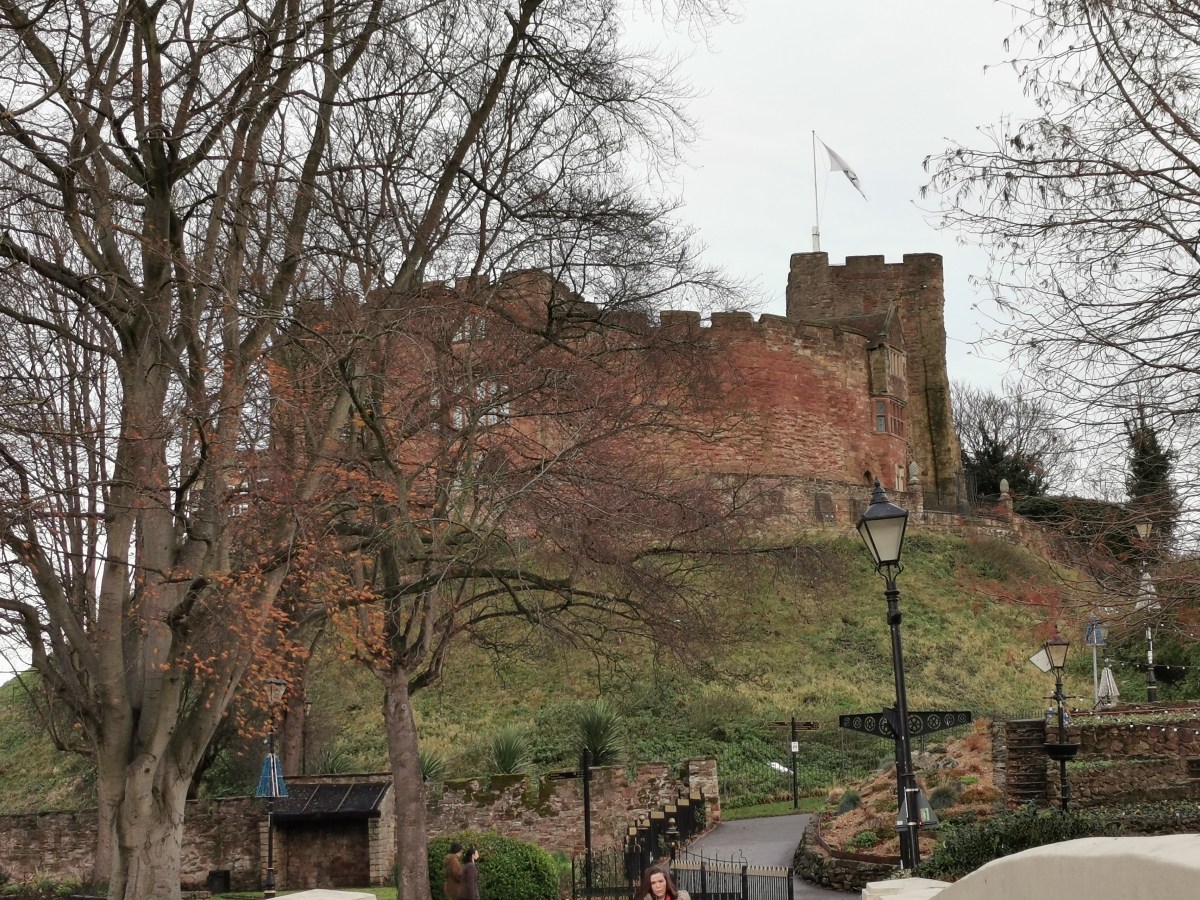

What languages were being spoken in Post-Roman Britain? #newrelease #MenOfIron #WarriorsOfIron #histfic
What languages were being spoken in Post-Roman Britain?
As with everything to do with this period of the ‘Dark Ages,’ much was in flux. It’s believed that many languages were spoken by the inhabitants of the island of Britain. From the native Brythonic (also often termed British) who would have spoken a version of Welsh, to the Latin of the Christians, the Old Norse (or even older versions of Old Norse) being spoken by those emigrating to Britannia, as well as Pictish, and potentially other languages as well.
Our only written source commonly believed to be from this period, that of Gildas’ On The Ruin of Britain, was written in Latin, but then, he’s said to have been an educated Christian, raised in the ways of both Rome and Christianity. If he spoke Latin on a day to day basis, I’m unsure. I know scholars complain about his grasp of the written Latin language being somewhat convoluted, but whether that’s due to him, or the way his writings have been transmitted to us through the years, I’m unsure.
How then might these people have communicated with one another if so many different languages were being spoken? There must have been translators who could facilitate trade between the tribes. It would be amazing to discover one of these individuals in the archaeological record, but it seems unlikely.
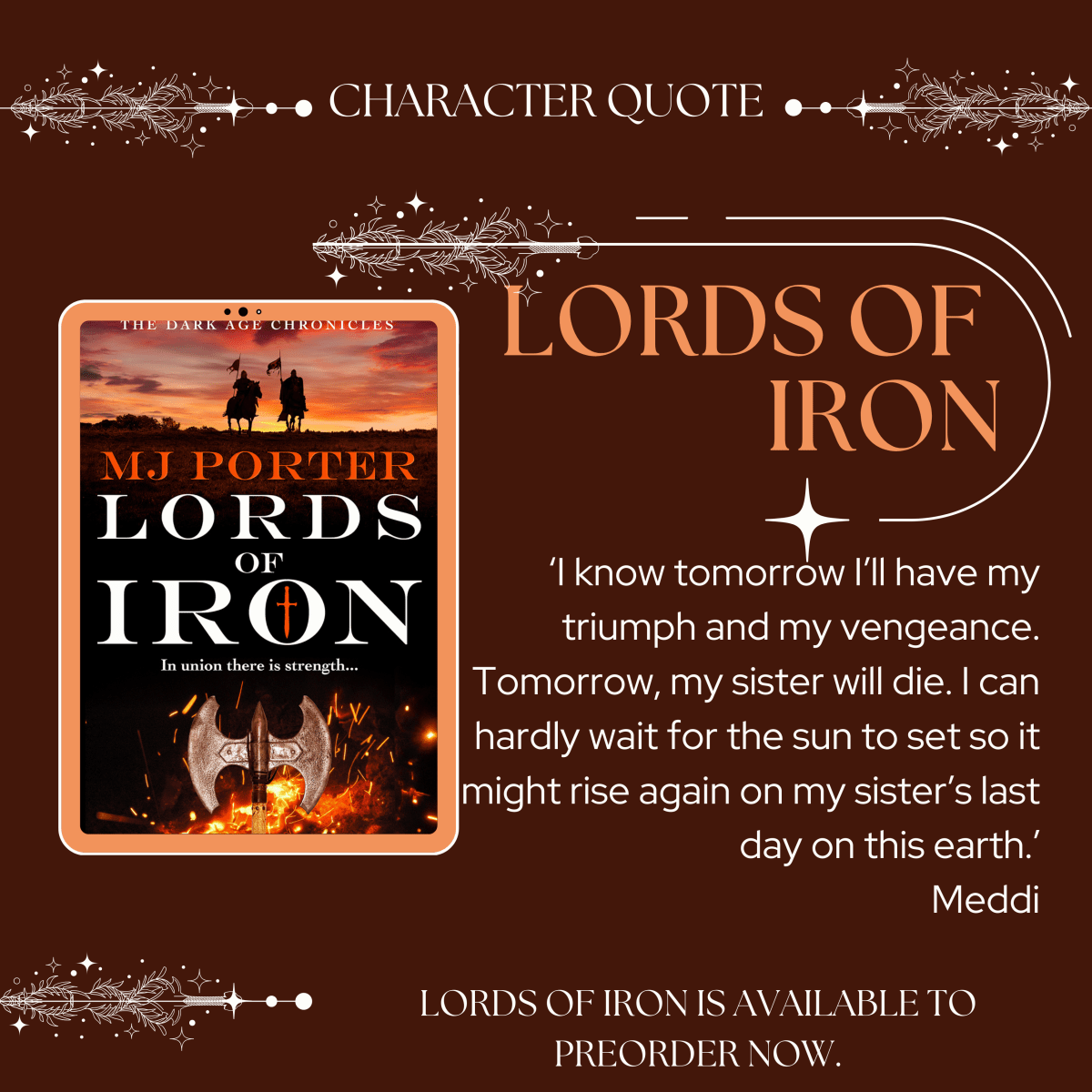
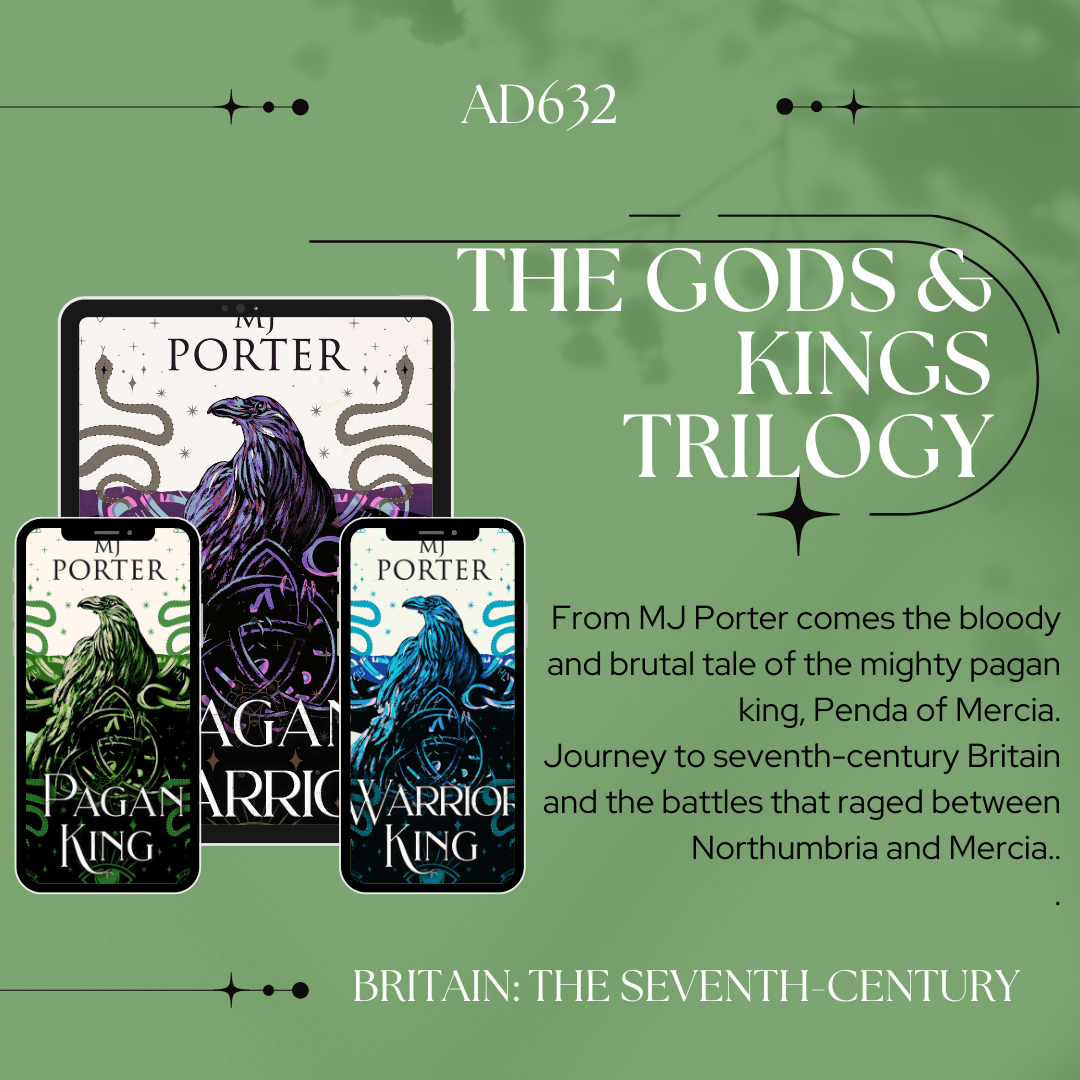
I’ve worked hard to find names for my characters which feel authentic for the period. The Eorlingas have Brythonic names, Meddi has been shortened from Meddiwysti for fear it was impossible to pronounce, whereas Wærmund and his warriors, while having names that feel very Saxon, are, I hope, ones I’ve not used before, and according to the resource I used, are deemed as ‘early’ Saxon names. Other characters also have Latin names, and some have slightly made-up Latinised names i.e. Terricus who was named after one of my readers, who wanted to be a warrior, but became a blacksmith instead. I think he’s still one of my readers:)
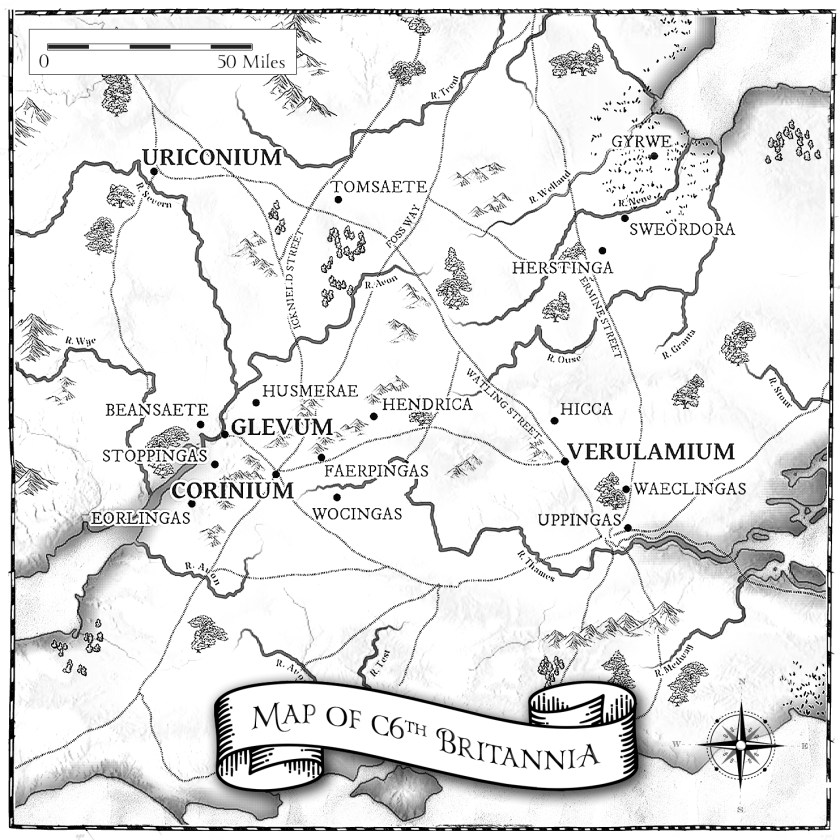
I’ve also used different names for the settlements, again to reflect the mix in language. The Eorlingas, Gyrwe and other tribal names are from the Tribal Hidage a contentious (later and difficult to date) source but one believed to document the very small tribal affiliations that might have existed at this time. Uriconium/Viriconium has its Latin name, although I used a version of the name I found that’s not the most commonly used one. Corinium (Cirencester), Glevum (Gloucester) and Verulamium (St Albans) have their Roman-era names. The River Severn, has its Old Welsh name, Habren, and so, as I was writing the trilogy I was being mindful of reflecting the hodgepodge of names and languages my characters might have known and heard being spoken.
It also added to the drama to make it difficult for my characters to easily communicate with one another.
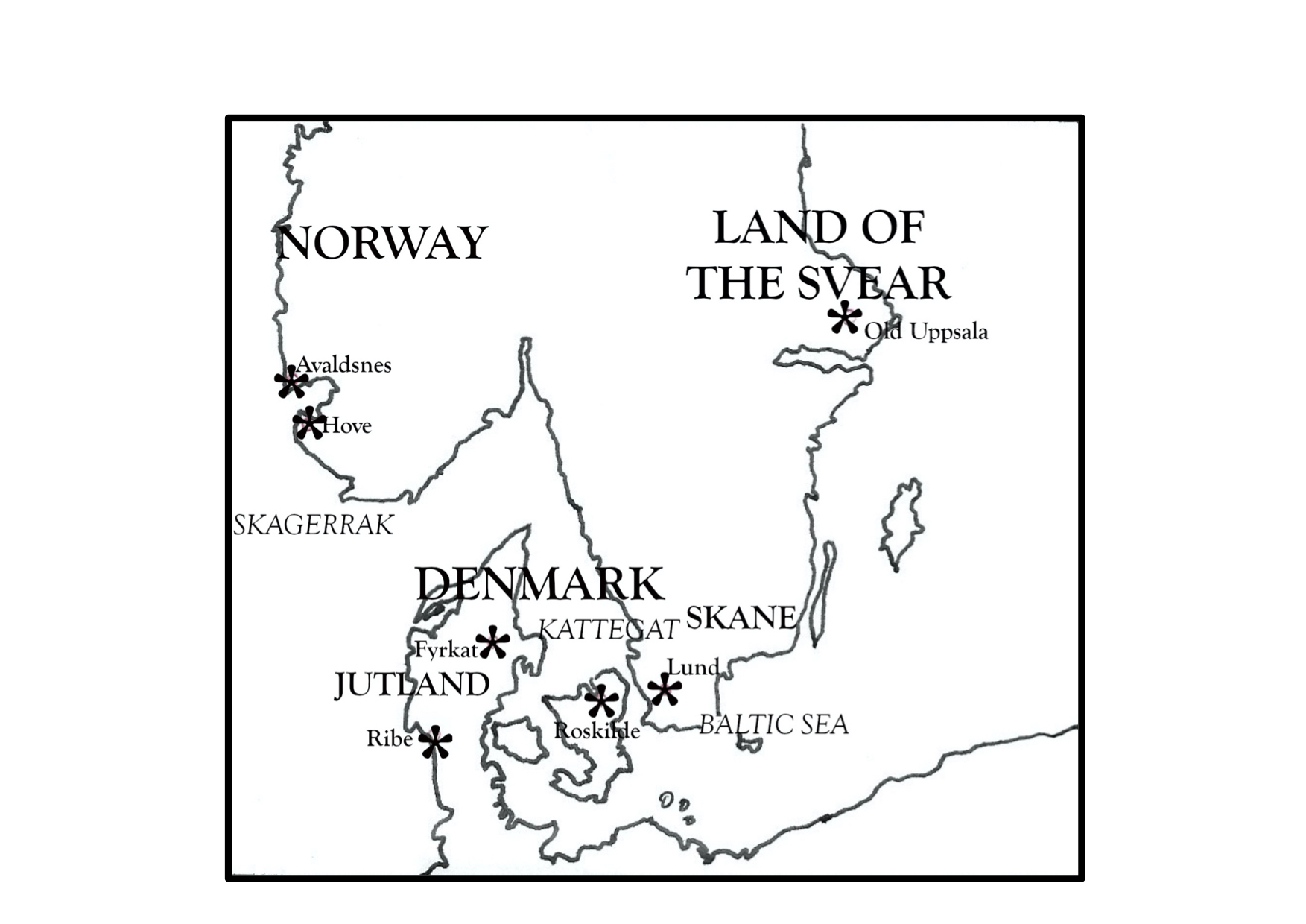
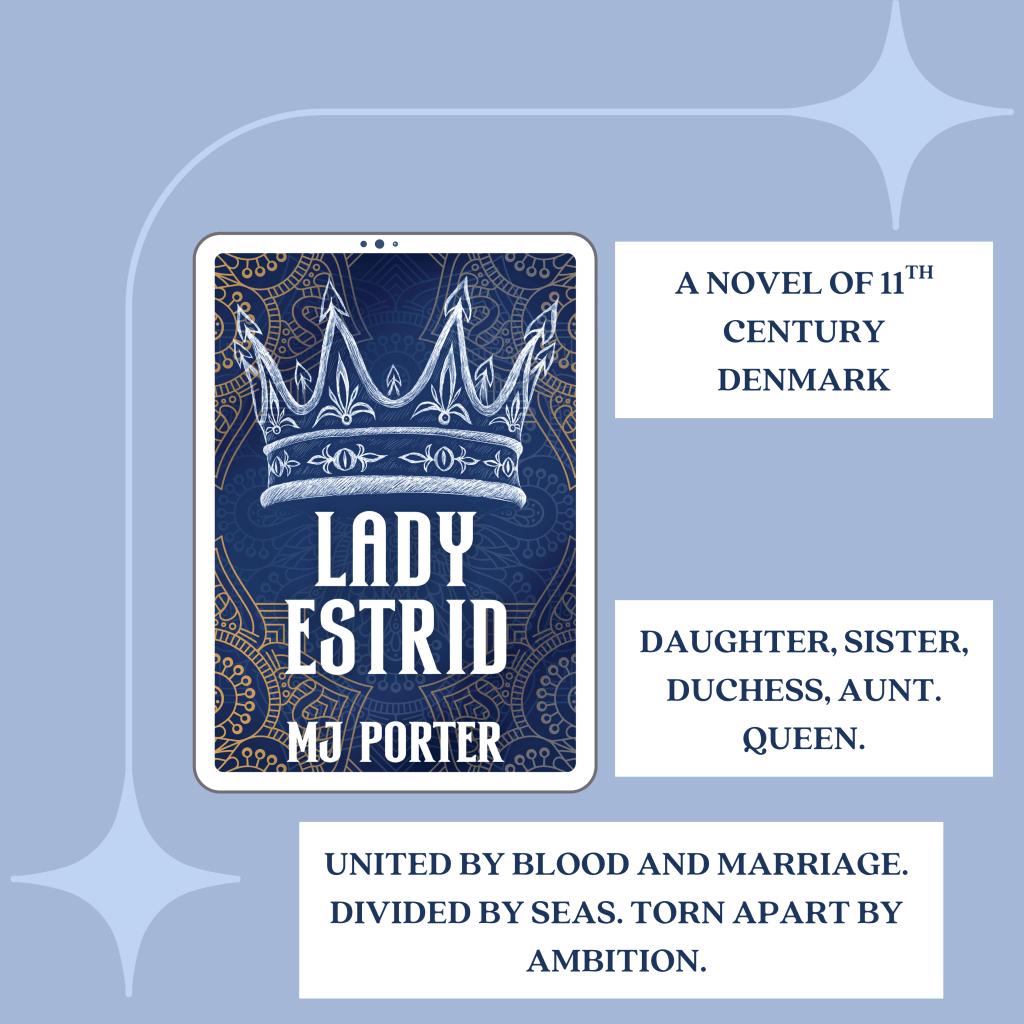
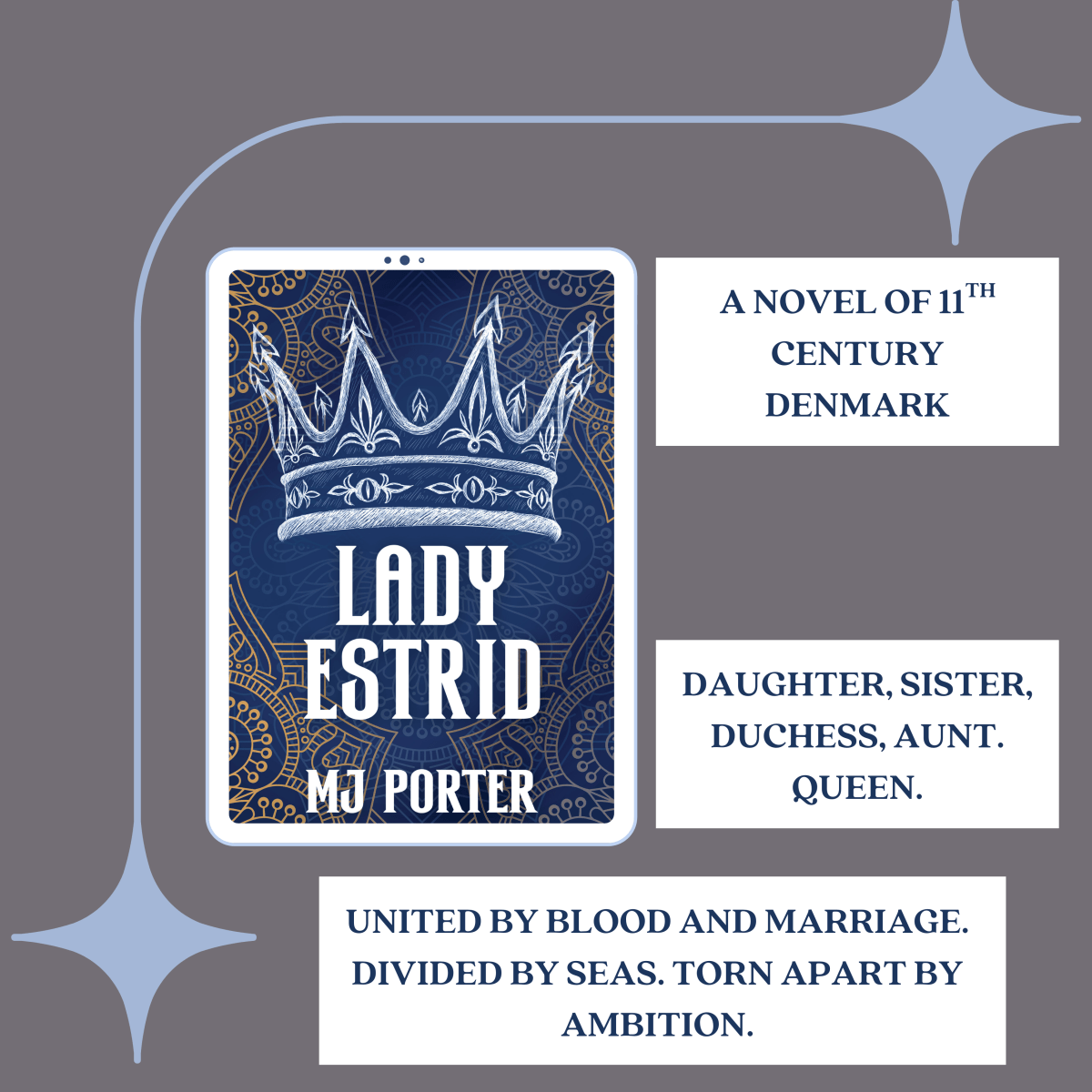
The physical and political setting for Lady Estrid, a novel of eleventh century Denmark #histfic #lostwomenofhistory
Lady Estrid is set in Denmark, as well as in wider Scandinavia and England, during the eleventh century. But it’s events in Denmark, Norway and Sweden that inspired me to write about Lady Estrid, although, of course, I couldn’t do it without including England.
Denmark, at this time, is really starting to cohere into what we might think of as a coherent kingdom. I’m not an expert on what comes before, but The House of Gorm, into which Lady Estrid is born, has ruled Denmark for a couple of decades (through her grandfather, Gorm, and father, Swein Forkbeard), but a lasting peace hasn’t necessarily been achieved. The family are portrayed as conquerors, coming into what would become Denmark, and imposing themselves over an unruly elite. The number of intermarriages between families in (what we call today) Norway, Sweden and Denmark offers a landscape that is riddled with double-crossing and the potential for mischief and war against a backdrop of uncertainty in Denmark. You can find family trees for Lady Estrid here.
And what a cast of characters I had to play with – King Swein of Denmark, his two sons, his daughters, and the men they marry, and the sons and daughters they birth, and of course, his wife as well. It seems that not only was she married to Swein, she was also the wife of the king of Sweden before his death, and might even have been pursued by Olaf Tryggvason. (There are arguments about her actual identity, but not about her marital history.)
And into all this steps Lady Estrid, who, like similar royal women, has the advantage of living a much longer life than many of her male family members. She is someone who would have lived through turbulent times, and I always find that overriding viewpoint, just too good to ignore, because it gives an author so much scope to play with. Yes, I might know what ultimately happens, but when you weave the story of Lady Estrid, and what is, and isn’t known about her, around bigger events, in Denmark, Norway, Sweden and England, it makes for both a complex and a simple story. The people she met along the way are perhaps better known than she is herself, but that’s just a means of adding context to a much longer narrative than can often be explored when writing about Swein, or Cnut, or Harald or Harthacnut or Svein (yes, another one) or Beorn.
I’m resharing an interview I gave when I’d finished writing Lady Estrid, a novel of eleventh century Denmark #histfic #writingadvice #authorinterview
Why did you decide to write about Lady Estrid?
Lady Estrid has been a character that’s long fascinated me. She crops up as a ‘bit part’ character in another series I write, but as time has gone on, I’ve realised that she offers a lot more than I’ve been allowing her so far. And so, I hope at a suitable point in the other series, I decided to explore Lady Estrid for herself. It involves stepping away from my comfort zone of pre-Conquest England in the eleventh century, and allows me to write about Scandinavia at this time period, which has always been a huge area of interest for me.
I’ve written a few long story arcs before, but only two other books which cover such a huge amount of time (about four decades). Such a project allows me to focus on the bigger picture and to put historical characters into a much wider story-arc than writing just about them would allow.
By necessity, Lady Estrid must be a strong woman, able to manipulate the politics taking place around her. I think that there’s a huge and growing interest in such women, and of course, Denmark (and Scandinavia as a whole) at this time, isn’t something that I believe has been tackled before, potentially because of the lack of English Language books about the era.
What drew you towards the Early Medieval era in which you set your book?
I’m fascinated by everything pre-1066 in England, but also wider afield. It’s impossible to tell the story of just one of these later countries, inhabited by Northmen or Norsemen, without looking to what’s happening elsewhere. These characters didn’t abide by our current national boundaries.
What were the challenges you faced in researching this period of history and were there any unexpected surprises?
The biggest problem with writing about this time period is the sources. I’m not as familiar with the Saga material and the works of Adam of Bremen and Saxon Gramaticus, as I’d like to be. As such, I rely much more on secondary sources than I might when writing about the Early English period. And of course, it’s a period where written sources are quite scarce anyway. Not only is it difficult to ‘find’ Lady Estrid, but, as you might have noticed, many of the character share the same names – there are no ends of Swein/Svein/Sven’s and equally, just as many Gytha’s and Gunnhild’s.
I was surprised by just how little the women of the Danish royal family are mentioned in any secondary sources. I’ve recently been on a book buying spree, and even in a new monograph on Cnut, Lady Estrith is only cited in the index seven times, and in a 798-page book, she has about 3 words!
What do you think is the most challenging aspect of writing Historical Fiction?
I think this depends on how much history you want to put in your book. I’ve just written three books in The Ninth Century Series, and while they’re historical in nature, much of the day-to-day activity is actually fighting and swearing. Lady Estrid has a much weightier content. It has a cast of many more people; they all have to be placed in the right time period and at the right events, and there is not as much information about any of them as I’d like there to be. Obviously, The Ninth Century Series was easier to write once the time period was set. Lady Estrid was an altogether different project. It took much longer, and was more frustrating because I was trying to ensure it didn’t conflict with previous stories I’ve written, which have a very ‘Early English’ basis.
What advice do you have for aspiring Historical Fiction authors?
Know the time period you’re writing about, and not just what happens during it, but also what happens both before, and after, and in neighbouring countries as well. And, be aware of what ‘might have happened’ if certain events – normally births, deaths or wars – hadn’t happened. Remember, your characters don’t have the benefit of hindsight that you have as a writer. Everything to them would have been immediate, imminent and happening to them. Don’t fall into the trap of presenting everything as a fait accompli.
And, be prepared to be frustrated. There’s always some niggly little fact that is just not mentioned anywhere. The decision then has to be made as to whether to ‘make it up’ or write around it, and readers will somehow always know if you make it up.
And on a final note, be prepared to do something a little bit ‘different,’ be bold, be creative, do whatever has to be done to engage an audience with the time period.
Meet the author, MJ Porter. Five Things You Don’t Know About Me.
I once had thirty-seven rabbits and forty-three gerbils. (I now have no pets at all. Not even a fish). My daughters do have five dogs between the two of them, however.
I dislike my middle name, even though two of my friends use it as their first name. I was given it in case I didn’t like my first name, but I do. Also, my Mum got in a lot of trouble for not naming me after members of the family.
When I was a teenager, I worked in a local music shop, and as a result, I have a unique and detailed knowledge of the music scene during the early 1990s, as revealed to me when I recently watched an episode of Top of the Pops 2 for 1990. I knew the words to almost every song. (The music shop was called Tudor Tunes. Even when I was a teenager, I couldn’t get away from history.) I’ve just googled the shop, and discovered it shut a long time ago. Ah, I’m traumatised.
When I was much younger, I had my picture taken for the local paper wearing a NASA astronaut’s helmet. They had to put a bit of paper in the catch so it didn’t seal me in.
I almost didn’t study history at GCSE, A Level or as a degree. I changed my mind every time, causing many people a lot of problems. I’m not sure I’d get away with it any more. I decided to study history at GCSE rather than Drama after visiting my great-grandfather’s grave, who fought in the First World War. While one of the lucky ones who came home to his family, he died in 1924 from injuries sustained during the war. It made me really angry to think my lovely Grandad grew up without his Dad (he would have been 4 when his Dad died) because of the war, and I wanted to find out why! Admittedly, I’m not a huge fan of 20th-century history, because it’s so complicated. There are too many names to keep track of.
My last two bunny friends. Cor, they did love carrot tops.Yep, that’s me in there. Perhaps I was destined to go to space, or as a reader said, ‘to have my head in the clouds.’
Who was Lady Estrid, and why did I write about her life? #histfic #TheEleventhCentury #England #Denmark #non-fiction
Lady Estrid, or Edith or even Margaret, daughter of King Swein Forkbeard of Denmark (and briefly England) is one of those beguiling characters who lived through momentous change.
I’ve long been drawn to her, and used her as a ‘bit’ part character in my The Earls of Mercia series, but I wanted to dedicate both more time to Lady Estrid, and also to Denmark. Even when I’ve written about Cnut, who was king of England and Denmark, much of the action has taken place in England. There’s simply not enough ‘space’ to fit everything in.
Lady Estrid, like similar royal women (Queen Eadgifu of England and Lady Elfrida in the tenth century), had the advantage of living a much longer life than many of her male family members (check out the family trees here). She was the ‘glue’ that held together the narrative of what was happening in Denmark. And because of her vast family, it also allowed me to weave the story of not just Denmark, but also Norway, Sweden, England, and Normandy, into the narrative.
She was the daughter of a king, the sister of three kings, the aunt of four kings, the mother of one king, and in time, the grandmother of three further kings.
Having written about Queen Eadgifu, Lady Elfrida, and King Edward the Elder’s daughters (in tenth century England), I wanted a new ‘woman’ to bring to life. I could have chosen Queen Emma, or even Queen Edith of England, but their stories are more well-known. I’ve long been fascinated by the Scandinavian countries during the Viking Age, and Lady Estrid was just too good a character to leave in her ‘bit’ part without adding anything further.
For all Lady Estrid’s claims as mother, aunt, sister and daughter, there’s very little that can be said about her, not even the order of her three marriages, if they occurred, can be confirmed. It’s only possible to say that her marriage to Jarl Úlfr took place because of the survival of her children. It’s the lack of ‘hard facts’ about her, and the potential to weave a story that includes so many of the other well-known women and men of the period, that made Lady Estrid so irresistible. When stories focus on Earl Godwine, or King Cnut, or even on King Harald Hardrada, it’s possible to lose sight of the bigger picture, and Lady Estrid certainly provides the potential to show the overarching events that occurred from AD1013-1050 within Denmark and England.
On the 1100th anniversary of King Athelstan’s coronation #histfic #OnThisDayInHistory #non-fiction
Who was Athelstan?
He was the oldest son of Edward the Elder, but who was his mother?
It’s been suggested his mother might have been Mercian, and this also made him acceptable for the Mercians to declare him as king- but it’s impossible to determine more about her. We don’t even know her name, although it’s suggested that it was Ecgwynn. She was soon replaced, either because of her death or because Edward, on becoming king of Wessex, needed to cement his position through marriage with a powerful ealdormanic family. Lady Ælfflæd was Edward’s second wife.
Later discussions abound about Athelstan’s suitability to become king of Wessex, with many casting doubt on the union, but it is evident that Alfred believed the union was a lawful one, and his grandson would one day become king, although of where, we don’t know.
Equally, we don’t actually know when Edward’s second marriage occurred, was it before or after his father’s death?
Athelstan’s early life
Athelstan and his younger half-brother, Ælfweard, who we must assume was the oldest son born to Edward and his second wife, begin to attest charters in 901 both as filius regis although Ælfweard is named above Athelstan despite being younger.
Athelstan attests eleven of his father’s charters (Sawyer, P.H. (ed.), Anglo-Saxon charters: An annotated list and bibliography, rev. Kelly, S.E., Rushforth, R., (2022). http://www.esawyer.org.uk/ S365, S366, S371, S375, S376, S377, S378, S379, S381, S382, S383), Ælfweard only eight, but again, the number is still small and so may not be representative – in 901, Athelstan witnesses 2 charters, but Ælfweard only one.
Only three of the eleven charters that Athelstan witnesses under his father are deemed to be authentic, and only one of those witnessed by Ælfweard and Athelstan together which is dated to 901, when they were both young children. This would have been very early in Edward’s reign, when his cousin, Æthelwold, was still alive and contesting the rulership of Wessex, something that wasn’t resolved until the decisive Battle of the Holme, in either 901 or 902. Edward may have wanted to labour the point that he was the father to two potential male heirs, or æthelings. (His brother, Æthelweard is also termed filius regis, and so Edward might have been highlighting that if something did befall him, he had a brother who could also succeed him, as opposed to two young children.)
However, there is a large gap in the charter evidence for Edward the Elder in the middle of his reign, and so it is difficult to track any developments.
But with all that said, I don’t find Athelstan’s charter witnessing very helpful when trying to determine his place at the Wessex royal court at this time, his position as a young man or even how he got on with his father’s second wife (as well as his third wife) and her many, many children, who would bedevil him when he became king.
Was Athelstan raised in Mercia by his aunt and uncle?
The fact Athelstan was declared king of Mercia does seem to corroborate a statement made by William of Malmesbury, in the later Gesta Regum Anglorum, or The History of the English Kings, that Athelstan was raised in Mercia by his aunt and uncle, alongside his full birth sister, who may have been called Edith.
Or, it could be that his mother was Mercian. It’s frustratingly difficult to find explanations when events are merely told us as supposed ‘fact,’ and William of Malmesbury’s assertion has been little questioned, other than by historian David Dumville, even though it dates to two centuries after the events. It seems to be the ‘easy’ explanation as to why Athelstan became king of Mercia after his father’s death.
What was happening in Wessex?
Ælfweard, his younger half-brother, was declared king, until his death, 16 days after his father.
How did Athelstan become king of Wessex?
So, once he was chosen as Mercia’s king, how did he then become king of Wessex on the death of Ælfweard so soon after that of Edward?
This period is as equally hazy as what happened to make Athelstan king of Mercia.
But, after Ælfweard’s death, there is another son of Edward’s second marriage who could have become king, Edwin. As could the sons of Edward’s third wife, Lady Eadgifu, who were very young at the time, perhaps no more than one and three years old.
Why Athelstan was chosen is difficult to rationalise, especially if the Wessex witan were so uneasy with him. Some suggest he reached an agreement with Lady Eadgifu (his father’s third wife) that her sons would be his heirs. Others think there was a period of unease where Wessex was kingless. We have no explanation for Edwin being overlooked, and certainly, it seems he went on to cause his older half-brother problems. We have reports of Edwin’s death in 933 – apparently from drowning, but it seems likely, it was some sort of rebellion against his half brother, the king. The Gesta Abbatum S. Bertini Sithiensium, reports his burial by his cousin in Flanders.
I find this period quite interesting as by now, another Eadgifu, a half sister of Athelstan, who had been married to King Charles III of the West Franks, might have been in Wessex. She had a young son, Louis, but Charles had been usurped and imprisoned and certainly Louis was at the Wessex court when his grandfather died. It’s possible Eadgifu was as well. Would she not have supported her full brother against Athelstan claiming the kingship? Equally, we don’t know if Edwin’s mother was still alive. It is all very perplexing.
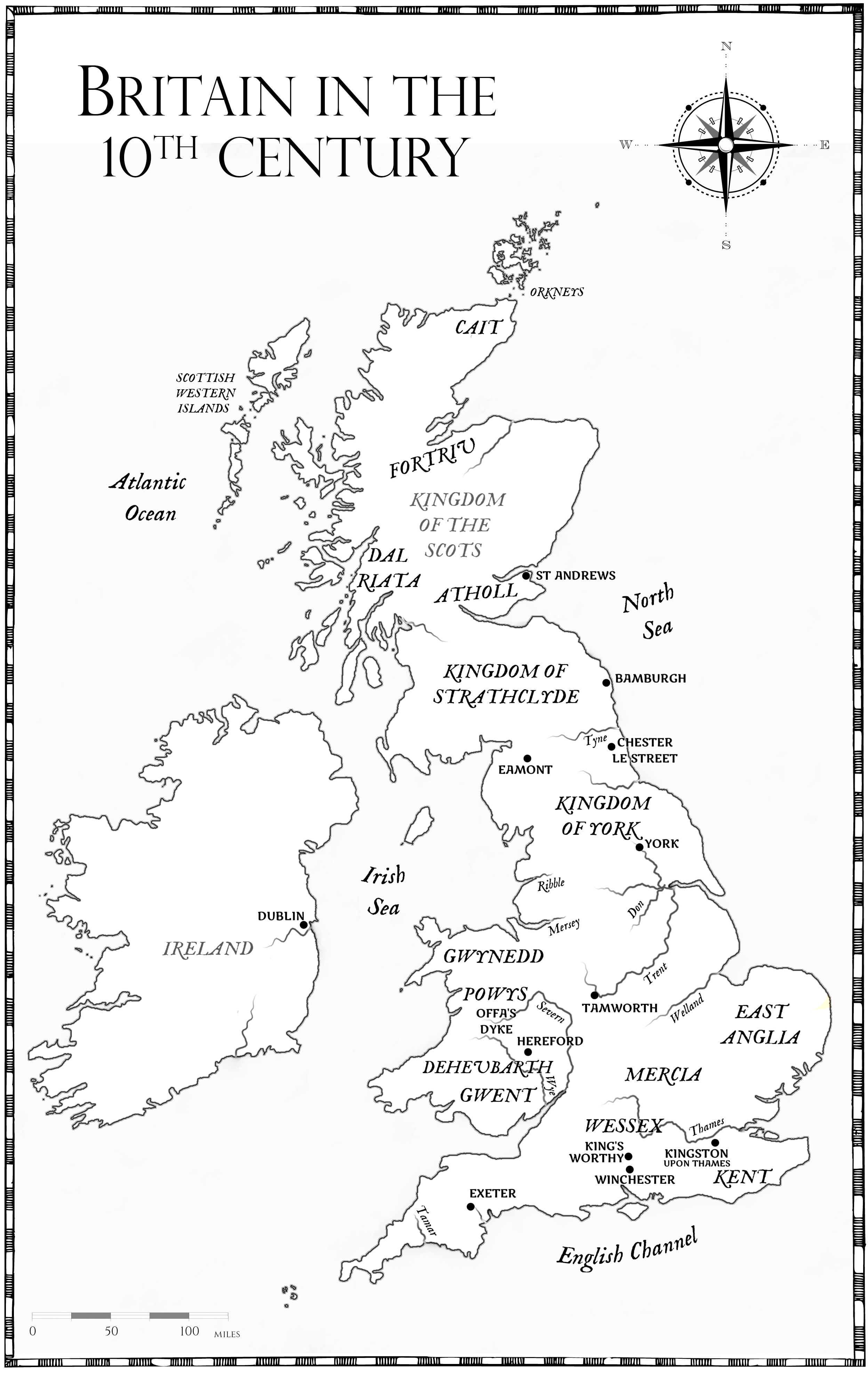
What we do know is that Athelstan underwent his coronation in September 925, so over a year after his father’s and half-brother’s death. The coronation took place at Kingston upon Thames. This delay has been interpreted as showing he met resistance in Wessex to his rule, but it might not have been that unusual. His father’s coronation was not immediate, although, admittedly, his father was faced with the rebellion of Æthelwold, his cousin and the surviving son of Alfred’s older brother, Æthelred I. Alfred and his brother seem to have reached an accord about the succession before Æthelred I’s death, and Alfred then rode roughshod over it.
A coronation with a crown?
There is some discussion about whether the surviving Coronation ordo (ceremony) was devised for Athelstan or not, but he was crowned with a crown and not a helmet, as earlier kings had been. We have a famous image of Athelstan, (we only have two contemporary/near-contemporary images of the tenth century kings) presenting a book to St Cuthbert, and in this image, he is shown wearing a crown. This was a departure from earlier ceremonies.
Frontispiece of Bede’s Life of St Cuthbert, showing King Æthelstan (924–39) presenting a copy of the book to the saint himself. Public domain, via Wikimedia Commons
For more suggestions, and my fictional recreation of how Athelstan became king of Mercia, Wessex and the English, do check out my books, Kingmaker (the story of Lady Eadgifu), and King of Kings (which begins with the coronation of King Athelstan on 4th September 925).
Anglo-Saxon Chronicle quotations from M Swanton, The Anglo-Saxon Chronicles.
Check out the Brunanburh Series page on my blog for more information.
It’s the first day of the blog tour for Warriors of Iron, the second book in the Dark Age Chronicles Trilogy. I’m sharing a recording of me ‘trying’ to say the character names correctly #newrelease #MenOfIron #WarriorsOfIron #histfic
I’m sharing a post about the inspiration for The Secret Sauce to celebrate release day #histfic #historicalmystery
Why The Secret Sauce?
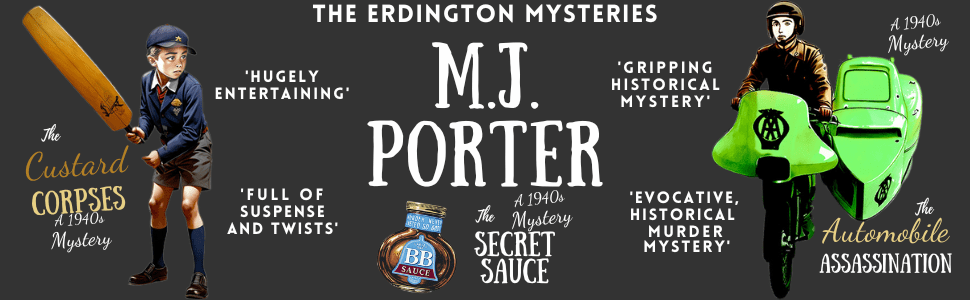
As fans of my historical mysteries set in Erdington, Birmingham (UK), will know, I always like to pick a ‘quirky’ hook for my stories. The Secret Sauce is no different. For those who don’t know, HP Sauce was made for many, many decades at Aston in Birmingham (it isn’t any more). As a child, I drove past the sign below at least monthly, if not more often. Initially, I hoped to call this book The Body in the Beans (what a great title), but alas, HP didn’t make baked beans in the 1940s. As such, I had to have a little rethink. I thought the idea was too good to forget. And so, The Secret Sauce has as its Birmingham-specific hook; brown sauce, which, for the purposes of the story, I’ve renamed BB Sauce (you need to read the book to find out what that stands for).
Image from Birmingham Museum, taken by my sisterImage from Birmingham Museum, taken by my sister
However, HP Sauce is a brown, fruity sauce, with a fascinating history, and, I believe, a recipe that remains a ‘secret.’ It started life at the end of the nineteenth century, and through fair means or foul, ended up in the hands of the owners of the Midlands Vinegar Company. It survived the uncertainties of both world wars, although sourcing the ingredients was often challenging. The True Story of HP Sauce, produced in 1985, states that advertising for HP Sauce was stopped during the Second World War because it was so difficult to get a bottle. There was also a bomb shelter beneath the factory during WW2. The Ultimate HP Sauce Lover’s Guide mainly contains recipes. I have been ‘forced’ to try HP Sauce, as I’d never had it before. It reminds me a little bit of Branston Pickle:) I don’t think I’m a fan, but I suspect it’s probably a bit like Marmite – you love it, or hate it.
Just like the Bird’s Custard Factory, which was the inspiration for The Custard Corpses, HP Sauce was a Birmingham staple. In fact, I suspect, for many locals, HP Sauce is more well-known, whether fondly or not (because it could stink), than the custard factory.
If you look at the cover for The Secret Sauce, you’ll notice, as with the other books in the series, that I’ve made some changes to the ‘brand.’ One of the changes was to make the BB Sauce bottle bulbous, a stark contrast to the elongated one of HP Sauce. I also added another Birmingham staple to the BB Sauce bottle by opting for colours inspired by Aston Villa Football Club’s kit. Why did I do this? Well, a reader shared some photos of my books and beside them was an Aston Villa programme. It was too good an opportunity to miss, as after all, the two would have been located in Aston.
Trinity Road Stand, Aston Villa Football Club, taken by my brother
Here’s the blurb
Birmingham, England, November 1944.
Chief Inspector Mason of Erdington Police Station is summoned to a suspicious death at the BB Sauce factory in Aston on a wet Monday morning in late November 1944.
Greeted by his enthusiastic sergeant, O’Rourke, Sam Mason finds himself plunged into a challenging investigation to discover how Harry Armstrong met his death in a vat containing BB Sauce – a scene that threatens to put him off BB Sauce on his bacon sandwiches for the rest of his life.
Together with Sergeant O’Rourke, Mason follows a trail of seemingly unrelated events until something becomes very clear. The death of Harry Armstrong was certainly murder, and might well be connected to the tragedy unfolding at nearby RAF Fauld. While the uncertainty of war continues, Mason and O’Rourke find themselves seeking answers from the War Office and the Admiralty, as they track down the person who murdered their victim in such an unlikely way.
Join Mason and O’Rourke for the third book in the quirky, historical mystery series, as they once more attempt to solve the impossible in 1940s Erdington.
All 3 hardbacks in the Erdington Mystery series in a row.
I’m super excited to share the cover for The Secret Sauce, the third book in The Erdington Mysteries #histfic #historicalmystery
Listen to me read the beginning of Chapter 1
Here’s the blurb
Birmingham, England, November 1944.
Chief Inspector Mason of Erdington Police Station is summoned to a suspicious death at the BB Sauce factory in Aston on a wet Monday morning in late November 1944.
Greeted by his enthusiastic sergeant, O’Rourke, Sam Mason finds himself plunged into a challenging investigation to discover how Harry Armstrong met his death in a vat containing BB Sauce – a scene that threatens to put him off BB Sauce on his bacon sandwiches for the rest of his life.
Together with Sergeant O’Rourke, Mason follows a trail of seemingly unrelated events until something becomes very clear. The death of Harry Armstrong was certainly murder, and might well be connected to the tragedy unfolding at nearby RAF Fauld. While the uncertainty of war continues, Mason and O’Rourke find themselves seeking answers from the War Office and the Admiralty, as they track down the person who murdered their victim in such an unlikely way.
Join Mason and O’Rourke for the third book in the quirky, historical mystery series, as they once more attempt to solve the impossible in 1940s Erdington.