Athelstan, widely regarded as the first king of the ‘English’ or the first king of England, is one of the main characters in King of Kings. And indeed, the book opens with Athelstan undergoing his coronation. Before his reign, the ruling House of Wessex hadn’t been proclaimed as England’s kings. King Alfred (879-899), Athelstan’s grandfather, was termed the king of the Angles and Saxons (in a charter from 889 known as S346[I]). His son, Edward the Elder, was the king of the Anglo-Saxons, and whether this meant Wessex and Mercia combined has been much debated. But Athelstan was king of the English, (and this certainly included Wessex and Mercia, and parts of the Danelaw that had been reclaimed) and in a departure from earlier custom, was consecrated not with a warrior-helm, but instead with a crown.
Debate still rages as to whether the coronation ordo that has survived was written for Athelstan, his father, or even his nephew (Edgar (959-975), and indeed, whether it included provision for the king’s wife to be consecrated beside him, but for King of Kings, I made use of what is known about the service and reimagined the ceremony for my readers. I hope you enjoy it. Read on for a short extract.
‘This means that only a year after my father’s untimely death, the kingdoms of Mercia, those parts of the East Anglian kingdom that my father lately reclaimed, Wessex and Kent, are reunited again under one ruler. The Saxons, or rather, the English, have just one king. And this is my moment of divine glory, when, before the men and women of the Mercian and Wessex witan, I’ll be proclaimed as king over all.
A prayer is intoned by the archbishop of Canterbury, Athelm, appealing to God to endow me with the qualities of the Old Testament kings: Abraham, Moses, Joshua, David and Solomon. As such, I must be faithful, meek, and full of fortitude and humility while also possessing wisdom. I hope I’ll live up to these lofty expectations.
I’m anointed with the holy oil and then given a thick gold ring with a flashing ruby to prove that I accept my role as protector of the one true faith. A finely balanced sword is placed in my hands, the work of a master blacksmith, with which I’m to defend widows and orphans and through which I can restore things left desolated by my foes, and my foes are the Norse.’
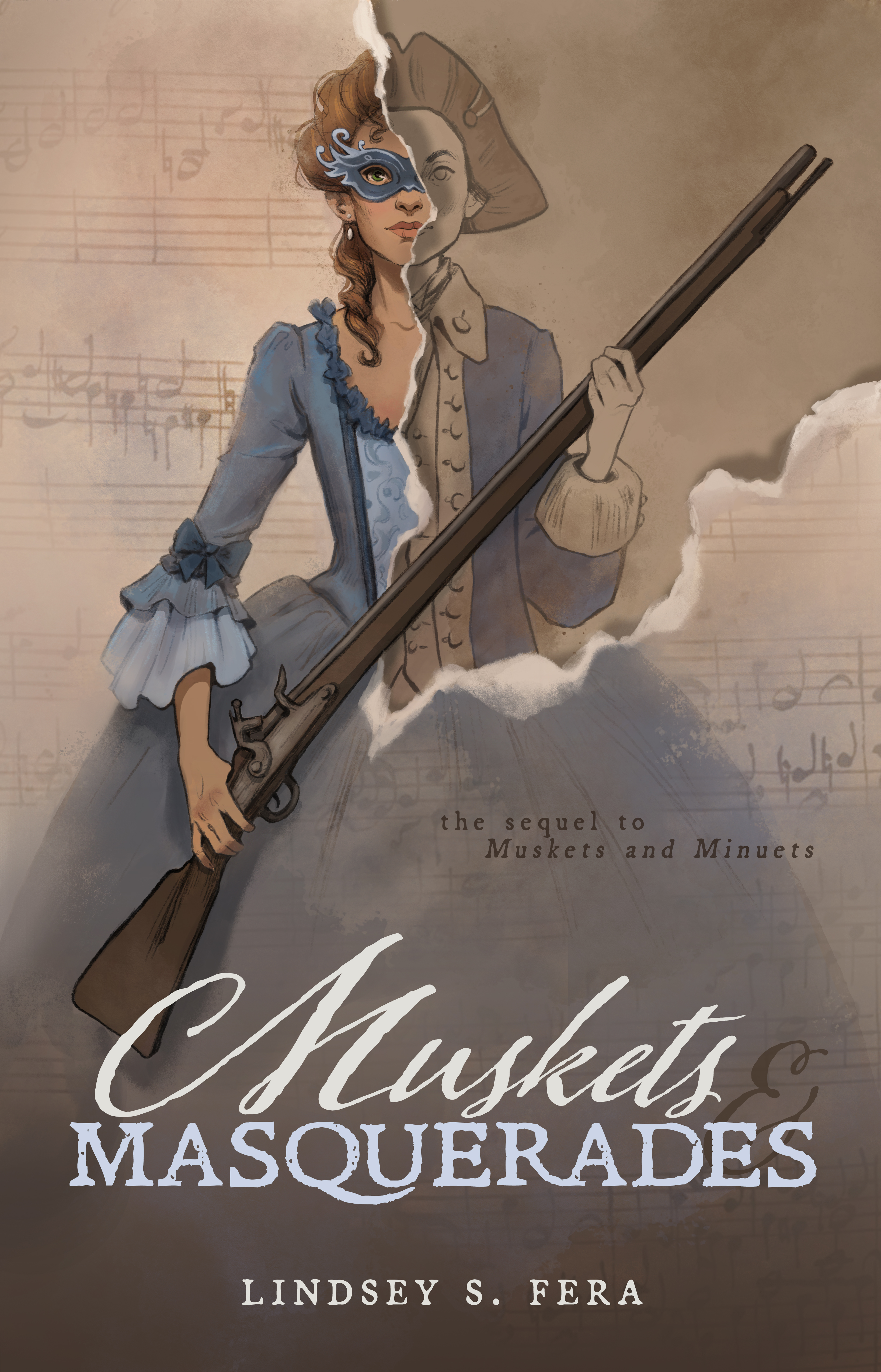
I’m delighted to welcome Lindsey S. Fera to the blog with an excerpt from her new book, Muskets and Masquerades.
His throat thick with melancholy, Jack leaned against an old cherry tree. It had been months since he allowed himself to feel sorrow, to remember the pain endured aboard HMS Lively. The laudanum had numbed everything, but was no longer a part of his life, thanks to Quinnapin, and five grueling days of sickness and agony. Now, he must relearn to feel.
The cherry tree’s welcoming shade reminded him of the Howletts’ ancient oak. Perhaps Mary and Henry occupied that space this very moment, laughing and climbing the tree’s thick, wide branches. Hopefully they did, for now with a proclamation of independence, war was certain to persist, and perhaps rage on for years to come. These will not be easy times.
Mr. Greeves, Hancock’s assistant, approached with steadfast step. “Mr. Perkins—you’re required, sir.”
Jack followed the assistant and reentered the stuffy meetinghouse.
“There he is, and looking a bit flushed, I must say,” John Adams said with a nod of approval. “The color in your cheeks does improve your complexion. We were quite astounded when first we saw you, looking so thin and pale.” Adams regarded Jefferson. “I’ve known this lad since he graduated Harvard and became my law apprentice. Indeed, he learned well; we’re now partners.”
“And I’m grateful to you, sir,” Jack replied. “My imprisonment upon HMS Lively did me quite the disservice, but I’m recovering well. My leg grows stronger each day.”
“So I’ve heard, Mr. Perkins,” Jefferson remarked. “We’re right heartily glad for your return to Congress. Pray, what do you think of the declaration?”
Jack beamed. “’Tis a marvel, sir. Better written than any good man here could’ve done—and each gentleman present is more than capable of conjuring such profound sentiments, but to put it to writing is quite the task. ’Tis been an honor to be part of such a moment, sir.”
“And your moment will come, too, Mr. Perkins. We still hope to court France. They would prove a most powerful ally,” Adams added.
Father rested a hand on Jack’s shoulder. “I couldn’t have said it better, Mr. Jefferson. I’m most pleased by your fine, diligent work. Have we each signed the parchment yet?”
John Adams eyed the meetinghouse door. “We’re awaiting Dr. Franklin. He went to the necessary.”
As Adams finished speaking, the meetinghouse door opened, and in stepped Dr. Franklin. A glint of sunlight reflected off his large patch of receding hairline, which yielded to long, greying hair. Franklin peered at the room from over the edge of round spectacles. “Shall we sign again, gentlemen?”
The men clamored about the room, surrounding Mr. Hancock at his desk. Jack joined his father and John Adams. He’d met Mr. Hancock several times when living in Boston. It had been at Hancock’s grand manor that George was bequeathed a sum of money from an old life insurance policy held by George’s natural father, Captain Bixby; Bixby had been contracted by Hancock’s late uncle. A night I’ll never forget; and I’m certain, neither will George. The annual sum had allowed his cousin to purchase the Black Water Inn in Portsmouth.
Mr. Hancock dipped a white quill into the inkwell and scraped off the excess black ink. He scratched a flamboyant signature, quite largely, onto the parchment. “Is it substantial enough to match the one sent to King George?”
The gentlemen laughed, and each took their turn signing the page. When it came to Jack, he hesitated, and met the eyes of those in the room.
“Gentlemen, I wish to speak on things I’ve contemplated since the creation of this document.”
“Go on, Perkins,” Franklin said, though a few others, Congressmen from the southern colonies, groaned.
“’Tis a privilege to sign such a document, but ’twas equally an honor to fight. I was there at Concord, and likewise present at Bunker Hill. I stand before you today, gentlemen, not as a vessel of Congress, quick to sign my name, but as a militiaman who fought the British on each of those fateful days. The people of Massachusetts have been fighting since 1770.” Jack’s throat clogged, but he composed himself. “’Tis been six long years for the people of Massachusetts, and I pray the rest of these alleged united states partake in the fight that has solely been ours. New-England has long been the head of Dr. Franklin’s famed serpent, and I’m overjoyed to see the other colonies join with us as the body.”
Jack dipped the quill in ink and signed his name. “This is for each man who remains on the front lines of battle, each man who has fought, and each man whose injury or death has been the cost of this document. This is for Bunker Hill.” Though he spoke the word man, he envisioned Annalisa, the woman who fought and survived Bunker Hill, the woman who’d traveled with him in the name of Congress and had lost her life. For Annalisa, he signed.
The gentlemen clapped.
“Hear, hear, Perkins.”
“Huzzah!”
Adams rapped his cane. “For Bunker Hill.”
Mr. Hancock nodded. “For Bunker Hill, Mr. Perkins.”
When the last signature was upon the parchment, Jack addressed Congress once more. “Now, we must all hang together, gentlemen.”
Dr. Franklin chuckled, landing a hand upon Jack’s shoulder. “Indeed, young Mr. Perkins, we must all hang together, for if we do not, we’ll all hang separately.”
Here’s the blurb
Jack and Annalisa are married only five months when, enroute to France, a shipwreck separates them. On different shores, each believes the other dead. But when Annalisa learns Jack is alive, she returns to America and discovers much has changed. After a betrayal, she flees town as her alter ego, Benjamin Cavendish, and joins the Continental Army.
Unbeknownst to Annalisa, Jack has also joined the Continentals, harboring shameful secrets from his days in mourning. Against the backdrop of war with Britain, façades mount between Jack and Annalisa, and the merry minuet of their adolescence dissolves into a masquerade of deceit, one which threatens to part them forever.
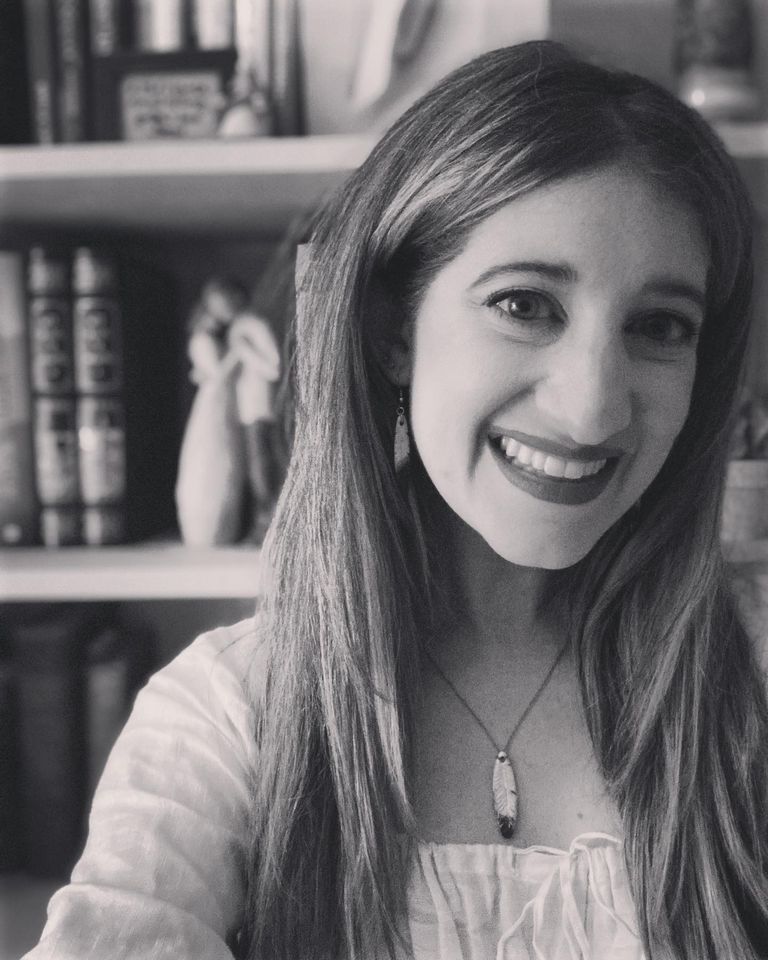
LINDSEY S. FERA is a born and bred New Englander, hailing from the North Shore of Boston. As a member of the Topsfield Historical Society and the Historical Novel Society, she forged her love for writing with her intrigue for colonial America by writing her debut novel, Muskets & Minuets, a planned trilogy.
When she’s not attending historical reenactments or spouting off facts about Boston, she’s nursing patients back to health. Muskets & Masquerades is her sophomore novel.
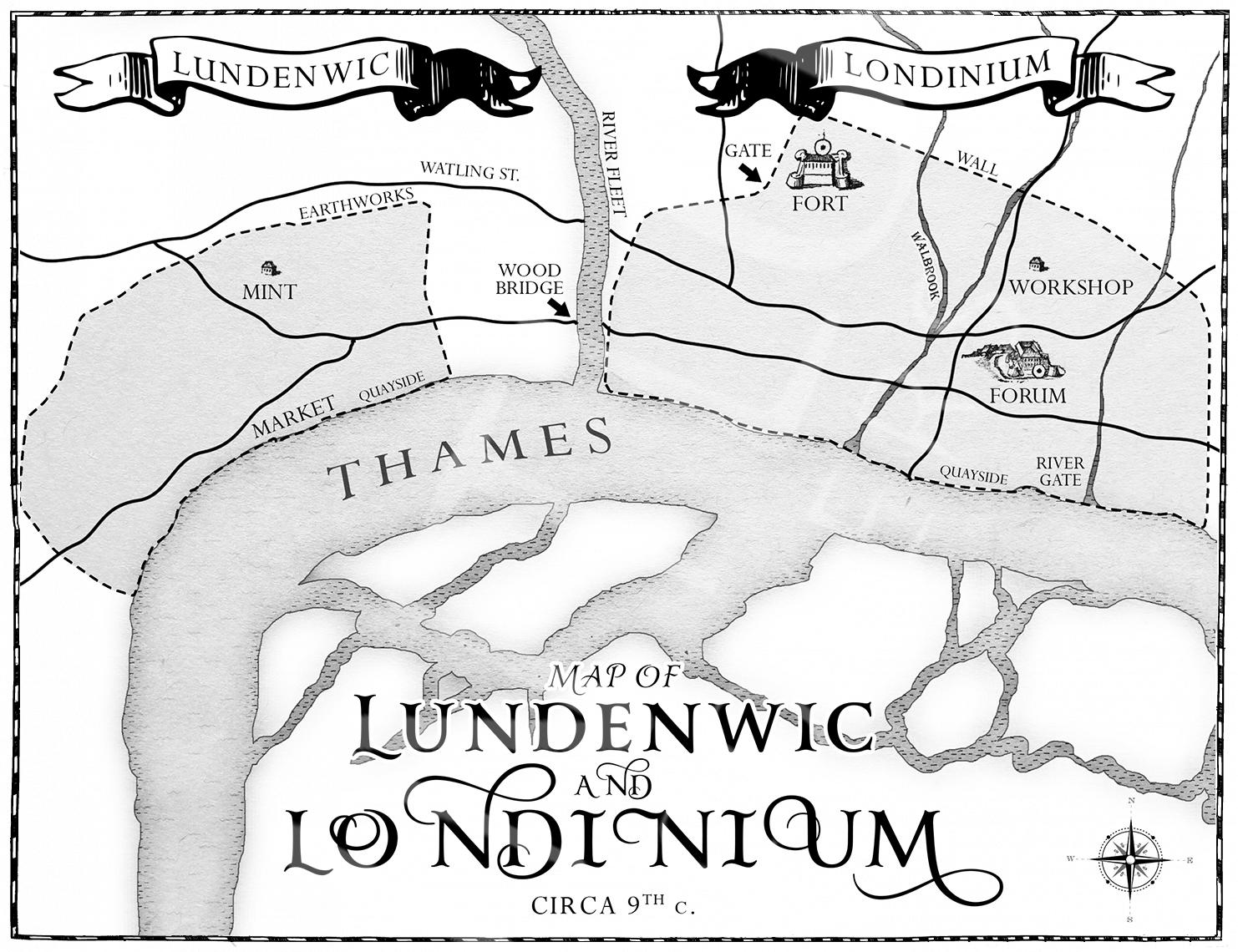
In Eagle of Mercia, young Icel and his allies are busily guarding the River Thames against a potential Viking raider attack. The Viking raiders certainly made use of the many rivers running through England at the time (and throughout the British Isles), but the river was also significant as a very definitive and solid boundary between the Saxon kingdoms of Wessex and Mercia, which to the west, where the River Thames doesn’t flow, was continued by the earthworks known as the Wansdyke.
London, now the capital of the United Kingdom, wasn’t always as important as we might assume, and indeed, it wasn’t ever the capital of Wessex or Mercia. These two kingdoms fought most fiercely over the settlement. It wasn’t even overly important to the Romans, either. And this is why I’ve perhaps been remiss in not truly considering its significance. As rivers have changed their course over the years, so has the River Thames. And what’s most fascinating about the River Thames is that, seemingly for long periods during the Saxon era, it wasn’t navigable, as we might expect it to have been.
Map of Early England by Flintlock Covers
‘During this period, as perhaps as other times, there may well have been a division between use of the Thames in its today reach and use of it above the tidal head. Paleoenvironmental evidence suggests that a relative drop in river levels during the Roman period meant that the tidal head was perhaps as low as Londinium itself, but that it (and thereby the range of easy navigability) generally moved upstream during the Anglo-Saxon period. This trend was not, however, uniform, and there were also brief periods (such as the late tenth to eleventh centuries) when the tidal reach shifted back downstream again.’ p. 271
It seems then, that when considering London, or Londinium/Lundenwic/Londonia, we also need to be mindful of the era in the Saxon period that we’re writing about. For the first Viking age,
‘A combination of the seasonal (and presumably climatic) unreliability of riverine travel and the need on many occasions to travel upstream cannot have made it easy for the Vikings to use the Thames for shock offensives… and there is no clear example of a Viking force travelling by water up the Thames further than Fulham.’ p.278
Clues to how passable the River Thames might have been can be traced.
‘Without the construction of bridges, the river would have been impassable except by ferry, from its estuary as far as the lowest fording point, perhaps as low as Halliford near Shepperton, and between the various fording points. Even where the middle and upper stretches could be forded, such crossings were not guaranteed to be easy. Lechlade and Cricklade, two potentially treacherous upper Thames crossings, severely affected by flooding in winter were named Old English (ge)lad ‘difficult river crossing.’ p.279
As with all things, we should be wary of assuming that current conditions would have been prevalent in the past. The River Thames certainly falls into that category. So while, yes, it was certainly a decisive boundary between the Saxon kingdoms of Wessex and Mercia, on occasion, it wouldn’t have been as decisive as at others. This, I find fascinating, and just another of those ‘facts’ travellers to the Saxon era should be wary about. While we know (hopefully not a spoiler) that London was attacked in the 840s and 850s, prior to this, it might well have been impossible for the Viking raiders to attack in the way they were used to. This, perhaps, accounts for why they chose more coastal locations, such as the Isle of Sh.
Map by Flintlock Covers for Wolf of Mercia
(Quotes taken from Beyond the Burghal Hidage by Baker and Brookes)
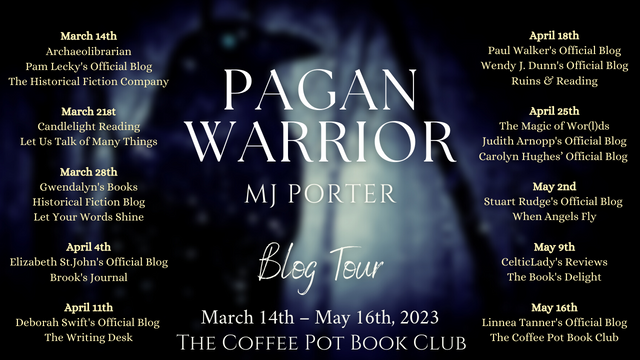
I’m really excited to share the details of the Pagan Warrior blog tour with The Coffee Pot Book Club.
Pagan Warrior is the story of the battle of Hædfeld, fought in the seventh century between the Northumbrians, and you got it, the Mercians – or rather, Cadwallon of Gwynedd but with Penda of Mercia as his firm ally. You can find more details here.
I might have written this book many years ago, but it’s had a refresh, and is now available in audio, narrated by the fabulous, Matt Coles, as is the second book, Pagan King. Warrior King will be coming later this year in audio.
You can follow the blog tour, and I’ll be sharing posts here as well. A quick shout out to thank all the blog hosts and Cathie at The Coffee Pot Book Club for organising.
And, the post that perhaps gave me the most fear to begin will but which was fun when I remembered all the little details, five fun facts about writing the trilogy.
For March 21st check out a post about two of the royal residences of Bernicia at the time, Bamburgh and Ad Gefrin (Yeavering). (There are lots of photos, thank you to Helen Hollick for uploading them all).
Finally free of Catherine of Aragon, Henry VIII, is now married to Anne Boleyn and eagerly awaiting the birth of his son. In a court still reeling from the royal divorce and growing public resentment against church reform, Henry must negotiate widespread resentment toward Anne. He places all his hopes in a son to cement his Tudor blood line, but his dreams are shattered when Anne is delivered of a daughter.
Burying his disappointment, Henry focuses on getting her with child again, but their marriage is volatile and as Henry faces personal bereavement, and discord at court, Anne’s enemies are gathering. When the queen miscarries of a son, and Henry suffers a life-threatening accident, his need for an heir becomes critical. Waiting in the wings is Jane Seymour, a lady-in-waiting who offers the king comfort and respite from Anne’s fiery passions.
But, when Anne falls foul of her former ally, Thomas Cromwell, and the king is persuaded he has been made a cuckold, Henry strikes out and the queen falls beneath the executioner’s sword, taking key players in Henry’s household with her.
Jane Seymour, stepping up to replace the fallen queen, quickly becomes pregnant. Delighted with his dull but fertile wife, Henry’s spirits rise even further when the prince is born safely. At last, Henry has all he desires but even as he celebrates, fate is preparing to deliver one more staggering blow.
Henry, the once perfect Renaissance prince, is now a damaged middle-aged man, disappointed in those around him but most of all in himself. As the king’s optimism diminishes, his intractability increases, and the wounded lion begins to roar.
Buy Links
This title is available to read on #KindleUnlimited.
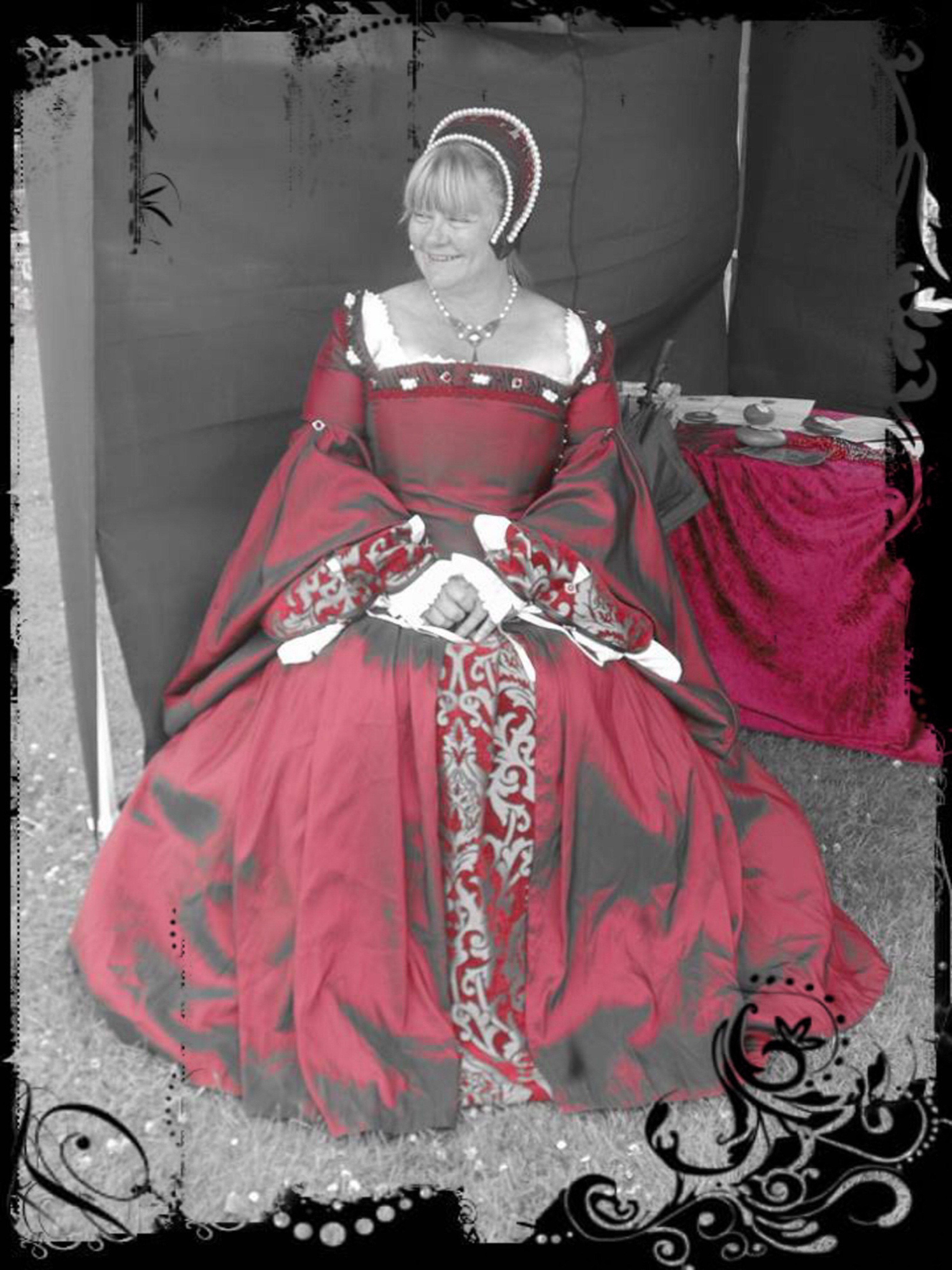
When Judith Arnopp began to write professionally there was no question as to which genre to choose. A lifelong history enthusiast and avid reader, Judith holds an honours degree in English and Creative writing, and a Masters in Medieval Studies, both from the University of Wales, Lampeter.
Judith writes both fiction and non-fiction, working full-time from her home overlooking Cardigan Bay in Wales where she crafts novels based in the Medieval and Tudor period. Her main focus is on the perspective of historical women from all roles of life, prostitutes to queens, but she has recently turned her attention to Henry VIII himself.
Her novels include:
A Matter of Conscience: Henry VIII, the Aragon Years. (Book one of The Henrician Chronicle)
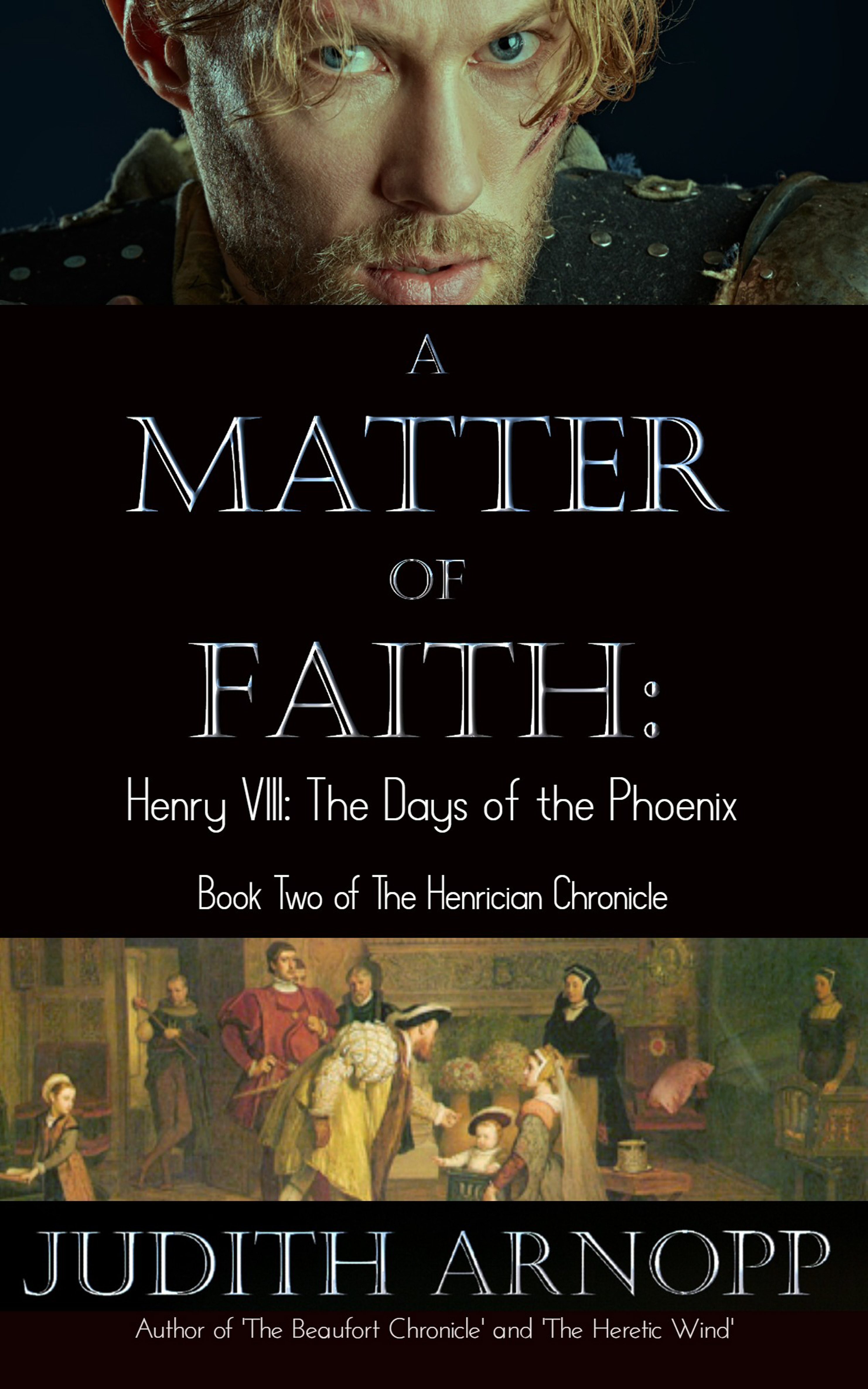
A Matter of Faith: Henry VIII, the years of the Phoenix (Book Two of The Henrician Chronicle)
The Beaufort Bride: (Book one of The Beaufort Chronicle)
The Beaufort Woman: (Book two of The Beaufort Chronicle)
The Kings Mother: (Book three of The Beaufort Chronicle)
The Heretic Wind: the life of Mary Tudor, Queen of England
A Song of Sixpence: The story of Elizabeth of York
Intractable Heart: The story of Katheryn Parr
The Kiss of the Concubine: A story of Anne Boleyn
Sisters of Arden: on the pilgrimage of Grace
The Winchester Goose: at the court of Henry VIII
The Song of Heledd:
The Forest Dwellers
Peaceweaver
Her non-fiction articles feature in various historical anthologies and magazines and an illustrated non-fiction book, How to Dress like a Tudor will be published by Pen & Sword in 2023.
I’m really excited to share the details of the Pagan Warrior blog tour with The Coffee Pot Book Club.
Pagan Warrior is the story of the battle of Hædfeld, fought in the seventh century between the Northumbrians, and you got it, the Mercians – or rather, Cadwallon of Gwynedd but with Penda of Mercia as his firm ally. You can find more details here.
I might have written this book many years ago, but it’s had a refresh, and is now available in audio, narrated by the fabulous, Matt Coles, as is the second book, Pagan King. Warrior King will be coming later this year in audio.
You can follow the blog tour, and I’ll be sharing posts here as well. A quick shout out to thank all the blog hosts and Cathie at The Coffee Pot Book Club for organising.
For April 25th, check out a post about Penda of Mercia.
And, the post that perhaps gave me the most fear to begin will but which was fun when I remembered all the little details, five fun facts about writing the trilogy.
For March 21st check out a post about two of the royal residences of Bernicia at the time, Bamburgh and Ad Gefrin (Yeavering). (There are lots of photos, thank you to Helen Hollick for uploading them all).
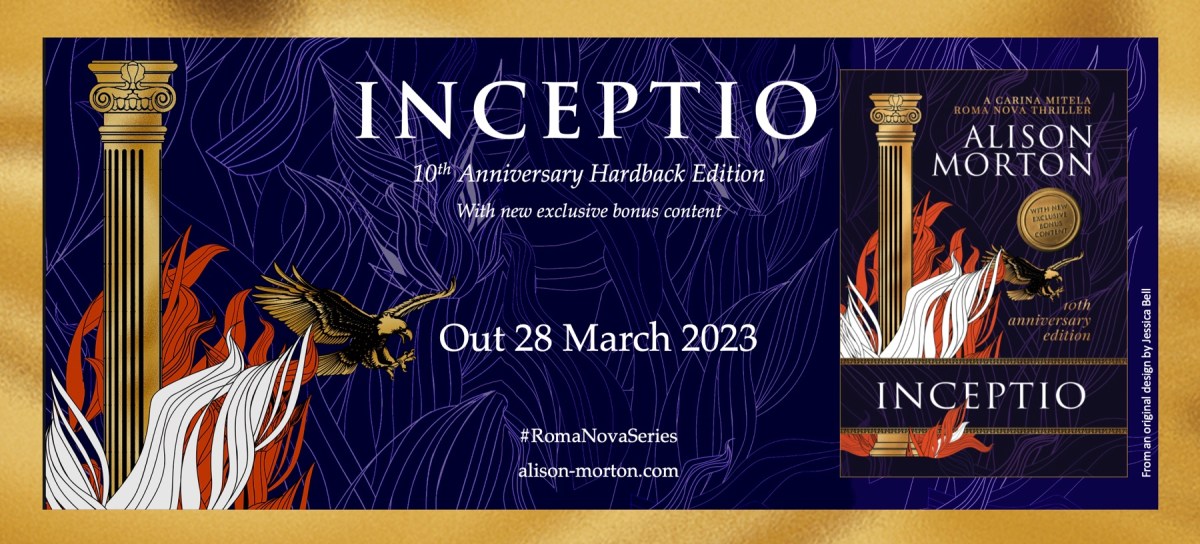
Today, I’m delighted to welcome Alison Morton to the blog to celebrate the 10th Anniversary edition of INCEPTIO.
Why Roman alternative history?
An avid reader of spy, thriller and crime stories from childhood and a life-long devotee of all things Roman, I yearned to write a Roman thriller with a true-hearted heroine imbued with Roman virtue but a tendency to go off-piste. Lindsey Davis does this beautifully with Flavia Albia, Falco’s daughter and to a certain extent with Helena Justina, Falco’s wife. However, I wanted women to run this New Rome. Yes, I had also read a lot of science fiction including wonderful stories by Anne McCaffery where women were equal if not leading their society. But I didn’t want to write space opera.
There was only one solution: I stayed on Planet Earth and brought my Roman stories up to the 21st century.
A fascination with the ‘what if’ idea
Perhaps it’s something all kids speculate about: suppose I have the wrong parents, suppose I’m really a lost princess, what if I could fly, what if we were all rich? Later, as a student of history, I was always fascinated by the possibilities of the tiniest thing turning the huge wheel of history – “For want of a nail,” and so on. Then I learnt about the ‘butterfly of doom’ where one butterfly flapping its wings cascaded events in a different direction.
When I produced my first manuscript, I didn’t know I was writing in a genre called alternative history (“althist” for short). I was inspired by Robert Harris’s Fatherland, a tense, shocking and beautifully written thriller with a heart-wrenching ‘secret’. Twisting history was allowed and used by acclaimed writers such as Michael Chabon and Kingsley Amis as well as Harris!
Of course, a thriller must be exciting, intriguing and full of emotional punch, but althist stories have their own ‘rules’. The most important are to identify the moment where history as we know it veers off onto a different path forever, and to weave into the story to show how the alternative timeline has developed since that point of divergence.
Why Roman alternative history?
‘Rome’ lasted 1229 years in the West, which time span would take us back to AD 794 from today. It changed from a tiny community of tribal farmers to a confident military and trading empire boasting high culture, diversity, power, engineering and rule of law, eventually dwindling to a miserable rump kneeling before barbarians.
Rome had the dark side of all ancient and later cultures: slavery, rampant corruption, patriarchalism and scant regard for disabled and poor people. But Rome gave us systems, values, including civic-mindedness, cultural and engineering genius and literacy that are still firmly embedded in our psyches today. So it shrieked “explore me” very loudly!
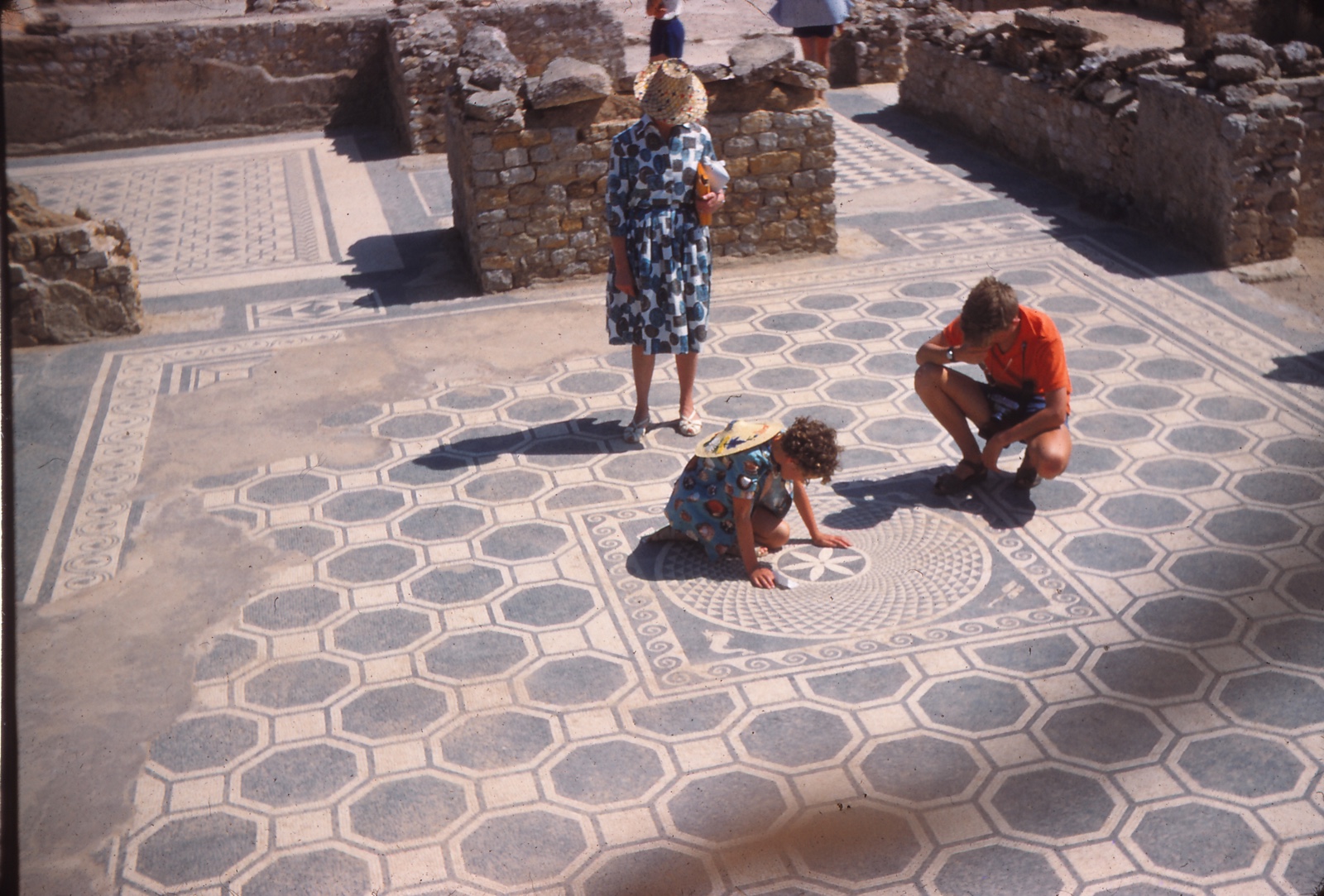
It goes back to a mosaic in Spain Standing on the beautiful floors in Ampurias, I asked my father, “What would it be like if Roman ladies were in charge, instead of the men?” Maybe it was the fierce sun boiling my brain, maybe early feminism peeping out or maybe just a precocious kid asking a smartarse question. But clever man and senior ‘Roman nut’, my father replied, “What do you think it would be like?”
Alison, age 11, and her mosaic
That childish vision grew and grew. When I was older, I realised I had to put in some proper research. The dissolution of the Roman Empire is fascinating and full of ‘what if’ and natural conflict:
The senatorial families at the end of the 4th century fiercely defended their tradition of worshipping the Roman gods despite ever encroaching Christianity. Led by former urban prefect of Rome and consul Quintus Aurelius Symmachus, they pleaded for religious tolerance, but by late 394 AD Emperor Theodosius made any pagan practice, even dropping a pinch of incense on a family altar in a private home, into a capital offence.
In its last fifty to seventy years the Western Roman Empire was dissolving into small enclaves, client states, cut off regions – the Domain of Soissons is one example.
Many former Roman territories retained their Roman administrative systems into the seventh and eighth centuries. Could one remote colony last even longer, say centuries?
Switching from a male Roman ethos to a feminist-lite one
I wanted a strong female character who drove the story, but not a harsh, excluding one, hence my heroine has some very human faults and characteristics. There was and perhaps still is a distinct lack of stories where two women have conversations beyond social or fashion issues and are not dependent on the male characters as wife, girlfriend, colleague. I use a technique called gender mirroring where I reverse the behaviour of the characters of a typical spy or action thriller. Think Jane Reacher or Jamie Bond in modern terms. A fascinating writing exercise!
So, I had to exercise the brain and apply some historical logic for Roma Nova. As the men defended the tiny new state of Roma Nova women worked in the fields, traded, sat on the council and managed the families. Consider the dynamic of only a few hundred men at the front especially during the Great Migrations. They simply ran out of male fighters to defend Roma Nova, so sisters and daughters from these pioneer families had to put on armour and heft weapons to defend their homeland and their way of life.
Fighting danger side-by-side with brothers and fathers reinforced women’s status and roles. And they never allowed the incursion of monotheistic paternalistic religions. In this way, women developed leadership roles in all parts of Roma Novan life over the next sixteen centuries.
Pulling in my own history
I served six years in the UK forces with active assignments all over the NATO area and beyond. It never occurred to me that women couldn’t serve in the military. I loved it! In the forces, you are only as good as your last job and you are promoted only on merit; both appealing ideas. Thus, my heroines serve in the elite forces in Roma Nova which fits in neatly with the traditional Roman military mindset.
Building the world
For credible alternative history (not Inglourious Basterds!), there is no easy ride such as making everything up. You need to research as thoroughly as for standard historical fiction, especially around the point in time when the timeline splits and leaves the standard one. For Roma Nova this was AD 395.
The twin guidelines of alternative history writing are plausibility and internal consistency. No country, real or imagined, can survive without a functioning government, an economic, social and political system, food, law and order and income. The basic skills of historical fiction writing apply in the same way: ability to research, respect for known facts (up to the point of divergence), a sense of historical setting, the avoidance of the information dump, and keeping speech, clothes and manners both consistent with and in the world you are describing. For example, in AD395, solidinot aurei, sestertii or denarii were coins used in the late empire, so Roma Nova Internet banking and credit cards in the 21st century are denoted in solidi.
The sources problem
Much of the historical record is missing from the late fourth century, the springboard for my book world. This complicates research. The big problem of records from antiquity is that they tend to contain the actions and thoughts of the elite and usually only of men. Symmachus, whom I mentioned above, was not only the urban prefect of Rome at one time but also a noted writer in a wide circle of intellectuals. Just under a dozen books of his letters and official dispatches have survived. Such fragments combined with finds from archaeological digs and the physical remains on the landscape help researchers build up a picture of life at the time. I’m always dropping into the British Museum, buying new books and searching online. It’s very much a case of putting the different pieces of a jigsaw together then filling in the gaps intelligently and with historical logic.
“It’s about Roman blood, survival and money. Mostly yours.”
In an alternative New York, Karen Brown is running for her life. She makes a snap decision to flee to Roma Nova – her dead mother’s homeland, the last remnant of the Roman Empire in the 21st century. But can Karen tough it out in such an alien culture? And with a crazy killer determined to terminate her for a very personal reason?
Stifled by the protective cocoon of her Roma Novan family, deceived by her new lover, she propels herself into a dangerous mission. But then the killer sets a trap – she must sacrifice herself for another – and she sees no escape.
A thriller laced with romance and coming of age, this first in series is Roman fiction brought into the 21st century through the lens of alternative history and driven by a female protagonist with heart and courage.
This 10th Anniversary hardback edition includes bonus content: Three character ‘conversations’, two short stories and the story behind INCEPTIO.
Buy links:
INCEPTIO 10th Anniversary special edition hardback:
Alison Morton writes award-winning thrillers featuring tough but compassionate heroines. Her ten-book Roma Nova series is set in an imaginary European country where a remnant of the ancient Roman Empire has survived into the 21stcentury and is ruled by women who face conspiracy, revolution and heartache but with a sharp line in dialogue. INCEPTIO starts the adventure…
She blends her fascination for Ancient Rome with six years’ military service and a life of reading historical, crime and thriller fiction. On the way, she collected a BA in modern languages and an MA in history.
Six full-length Roma Nova novels, including INCEPTIO, have won the BRAG Medallion, the prestigious award for indie fiction. SUCCESSIO, AURELIA and INSURRECTIO were selected as Historical Novel Society’s Indie Editor’s Choices. AURELIA was a finalist in the 2016 HNS Indie Award. The Bookseller selected SUCCESSIO as Editor’s Choice in its inaugural indie review. The Historical Novel Society recently selected JULIA PRIMA, the first Foundation story set in the 4thcentury, the accolade of Editors’ Choice.
Alison lives in Poitou in France, the home of Mélisende, the heroine of her two contemporary thrillers, Double Identityand Double Pursuit. Oh, and she’s writing the next Roma Nova story.
I’m really excited to share the details of the Pagan Warrior blog tour with The Coffee Pot Book Club.
Pagan Warrior is the story of the battle of Hædfeld, fought in the seventh century between the Northumbrians, and you got it, the Mercians – or rather, Cadwallon of Gwynedd but with Penda of Mercia as his firm ally. You can find more details here.
I might have written this book many years ago, but it’s had a refresh, and is now available in audio, narrated by the fabulous, Matt Coles, as is the second book, Pagan King. Warrior King will be coming later this year in audio.
You can follow the blog tour, and I’ll be sharing posts here as well. A quick shout out to thank all the blog hosts and Cathie at The Coffee Pot Book Club for organising.
For April 18th, I answered Paul Walker’s questions on his blog
And, the post that perhaps gave me the most fear to begin will but which was fun when I remembered all the little details, five fun facts about writing the trilogy.
For March 21st check out a post about two of the royal residences of Bernicia at the time, Bamburgh and Ad Gefrin (Yeavering). (There are lots of photos, thank you to Helen Hollick for uploading them all).
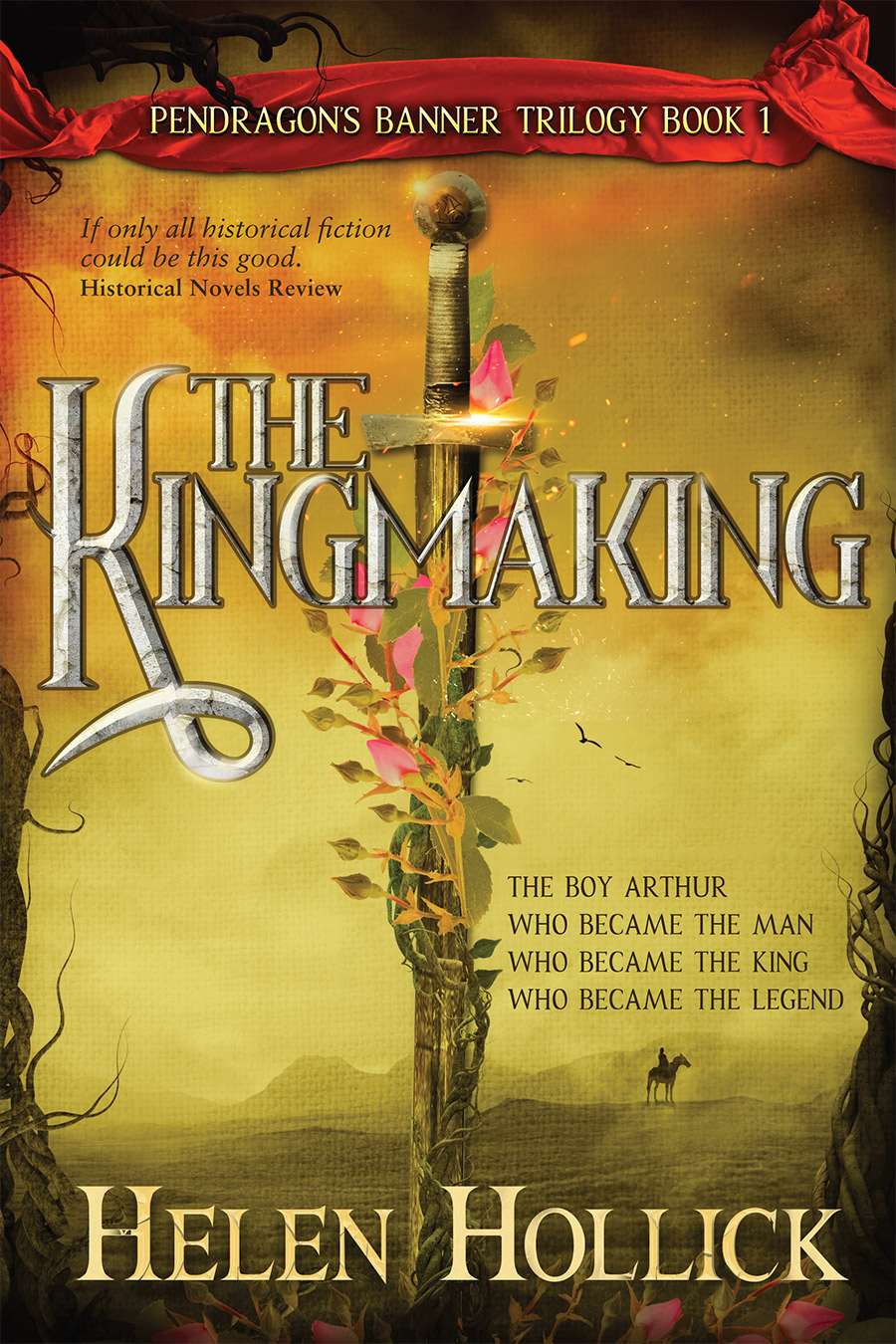
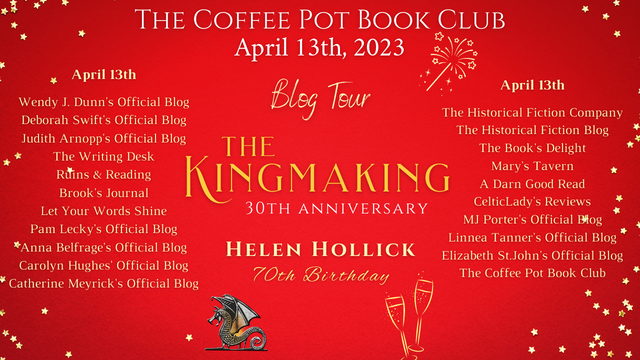
The Kingmaking -New Editions for 2023 (sadly, this edition is not available in USA/Canada)
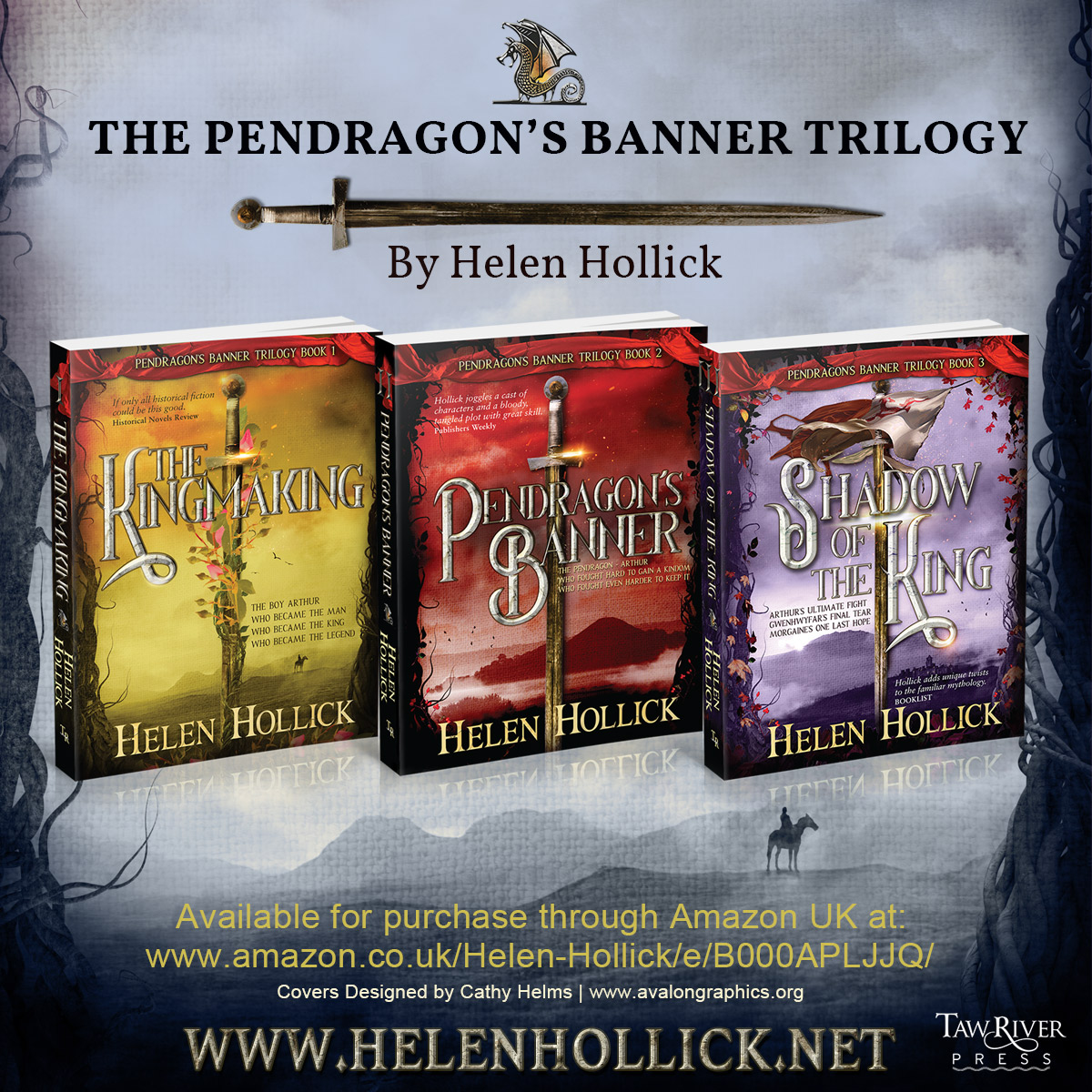
The Kingmaking: Book One Pendragon’s Banner: Book Two Shadow of the King: Book Three
Here’s the blurb
The Boy Who became a Man: Who became a King: Who became a Legend… KING ARTHUR There is no Merlin, no sword in the stone, and no Lancelot. Instead, the man who became our most enduring hero.
All knew the oath of allegiance: ‘To you, lord, I give my sword and shield, my heart and soul. To you, my Lord Pendragon, I give my life, to command as you will.’
This is the tale of Arthur made flesh and bone. Of the shaping of the man who became the legendary king; a man with dreams, ambitions and human flaws. A man, a warlord, who united the collapsing province of post-Roman Britain, who held the heart of the love of his life, Gwenhwyfar – and who emerged as the most enduring hero of all time.
A different telling of the later Medieval tales. This is the story of King Arthur as it might have really happened…
“If only all historical fiction could be this good.” Historical Novels Review
“… Juggles a large cast of characters and a bloody, tangled plot with great skill. ” Publishers Weekly
“Hollick’s writing is one of the best I’ve come across – her descriptions are so vivid it seems as if there’s a movie screen in front of you, playing out the scenes.” Passages To The Past “Hollick adds her own unique twists and turns to the familiar mythology” Booklist “Uniquely compelling… bound to have a lasting and resounding impact on Arthurian literature.” Books Magazine
(contains scenes of an adult nature)
Buy Links:
The Kingmaking is available to read on #KindleUnlimited.
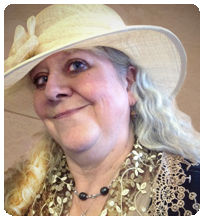
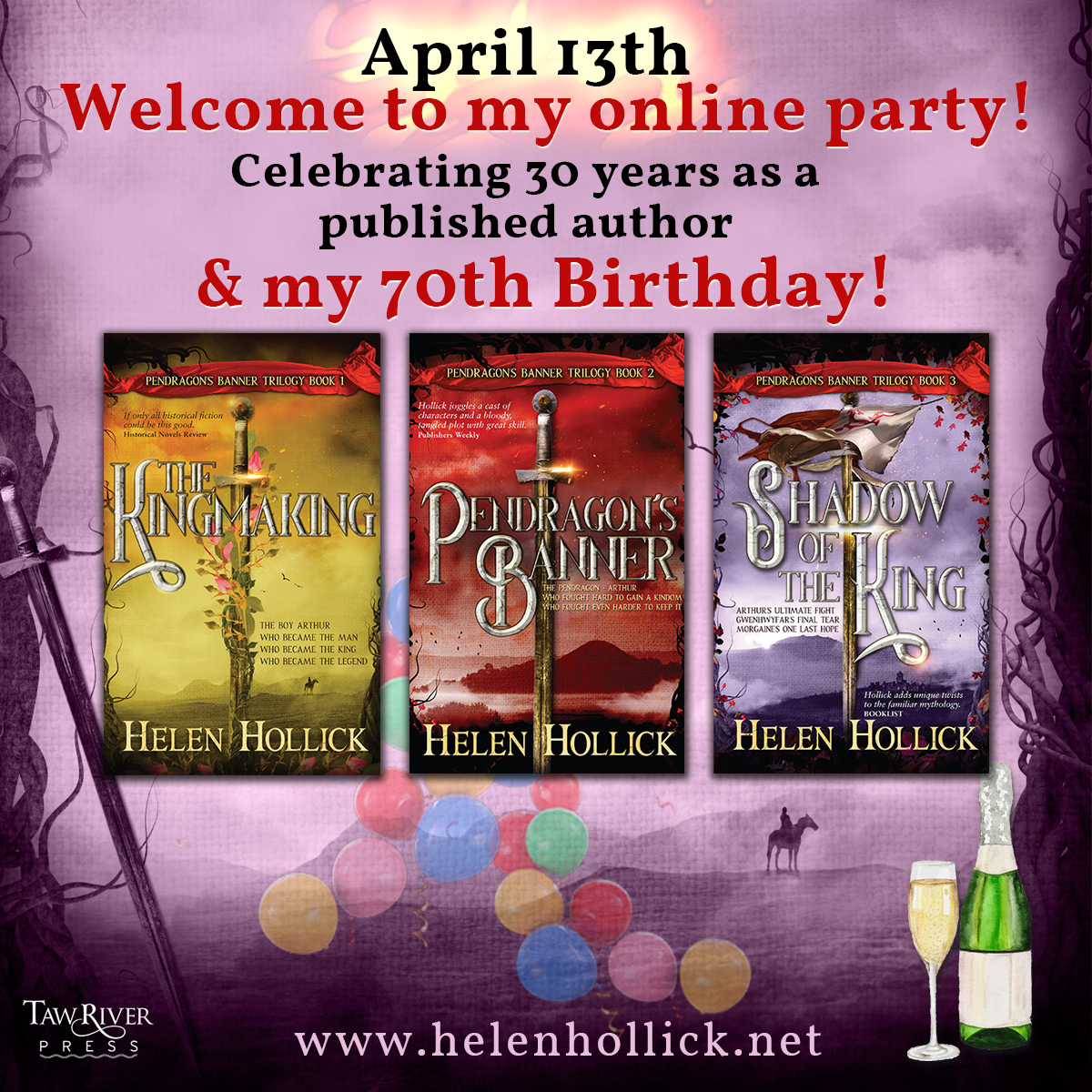
Helen is celebrating her 70th birthday and thirty years as a published author. Her Pendragon’s Banner Trilogy, a fifth-century version of the Arthurian legend, was accepted for traditional publication in April 1993 by William Heinemann (Random House UK) a week after her 40th birthday. The Trilogy has been widely acclaimed since then – and gone through several different editions.
Helen moved from Random House UK in 2006 and went ‘Indie’, now in 2023 to celebrate she has brought out her own fabulous new editions! (The Trilogy is published mainstream by Sourcebooks Inc in USA/Canada. The publisher was offered the new cover designs for free, but declined.)
Helen became a USA Today Bestseller with her historical novel, The Forever Queen (titled A Hollow Crown in the UK)with the sequel, Harold the King (US: I Am The Chosen King) being novels that explore the events that led to the Battle of Hastings in 1066.
She writes a nautical adventure/fantasy Pirates of the Caribbean series, The Sea Witch Voyages and has also branched out into the quick read novella, ‘Cosy Mystery’ genre with her Jan Christopher Murder Mysteries, set in the 1970s, with the first in the series, A Mirror Murder incorporating her, often hilarious, memories of working as a library assistant.
Her non-fiction books are Pirates: Truth and Talesand Life of A Smuggler. She lives with her family in an eighteenth-century farmhouse in North Devon with a variety of pets and horses.
I’m really excited to share the details of the Pagan Warrior blog tour with The Coffee Pot Book Club.
Pagan Warrior is the story of the battle of Hædfeld, fought in the seventh century between the Northumbrians, and you got it, the Mercians – or rather, Cadwallon of Gwynedd but with Penda of Mercia as his firm ally. You can find more details here.
I might have written this book many years ago, but it’s had a refresh, and is now available in audio, narrated by the fabulous, Matt Coles, as is the second book, Pagan King. Warrior King will be coming later this year in audio.
You can follow the blog tour, and I’ll be sharing posts here as well. A quick shout out to thank all the blog hosts and Cathie at The Coffee Pot Book Club for organising.
For April 11th, read a guest post about how we know, what we know, about the seventh century.
And, the post that perhaps gave me the most fear to begin will but which was fun when I remembered all the little details, five fun facts about writing the trilogy.
For March 21st check out a post about two of the royal residences of Bernicia at the time, Bamburgh and Ad Gefrin (Yeavering). (There are lots of photos, thank you to Helen Hollick for uploading them all).











 MJ Porter