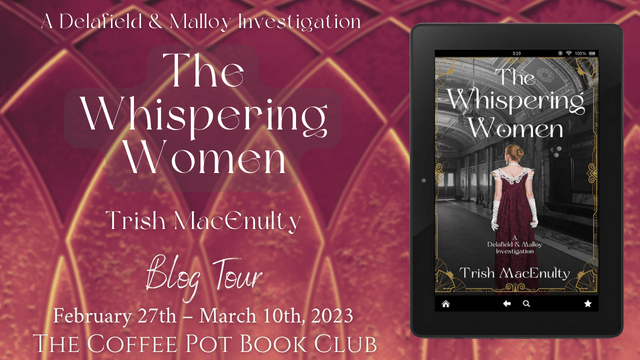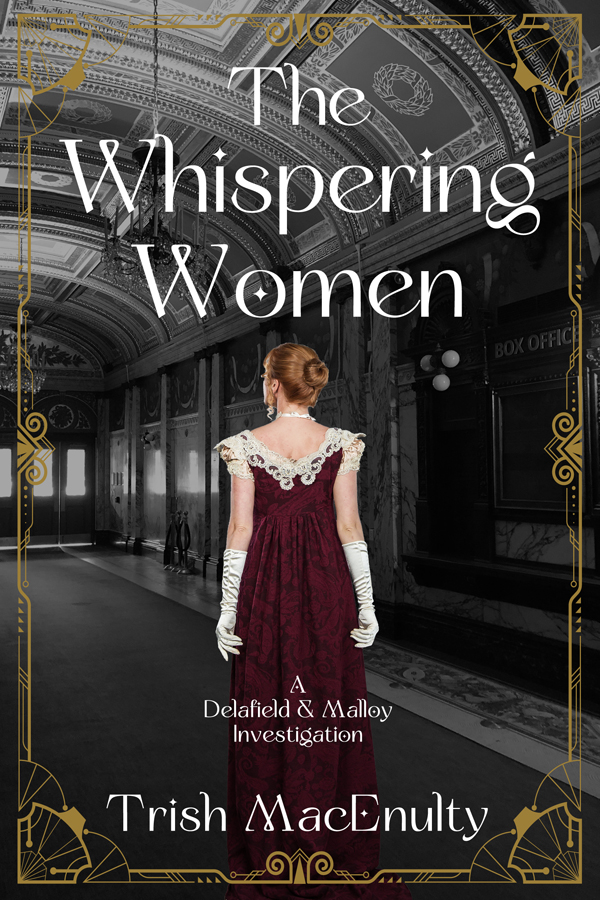
Trish MacEnulty is talking about The Whispering Women #historicalfiction #historicalmysteries #BlogTour #TheCoffeePotBookClub #BlogPost

I’m delighted to welcome Trish MacEnulty to the blog with a guest post about her books.

Lesbians in the Early 20th Century — Branded as Deviants and Sometimes Jailed!

In my series, the Delafield & Malloy Investigations, one of my main characters — Ellen Malloy, an Irish immigrant — is a lesbian. As soon as she appeared on the page, she let me know in no uncertain terms that the expectation of marriage was the main reason she had left Ireland to become a servant for a wealthy family in Manhattan. Well, that didn’t work out either, but eventually she found her way and fell in love with a suffragist. 

What would life be like for a lesbian in New York in 1913? I had no idea. The lives of gay men and the indignities they suffered in the late 19th and early 20th centuries has been widely documented — Oscar Wilde made sure of that! All the while, lesbians unobtrusively managed to find love and companionship in spite of the fact that their existence was rarely acknowledged. 

In her fascinating academic tome, A Novel Approach to Lesbian History, Linda Garber writes “The historical records, if they exist at all, frustrate as often as they inform. Spotty, written by men, open to multiple interpretations—traces of a recognizably lesbian past run aground on the rocky shoals of the history of sexuality itself.” (3)

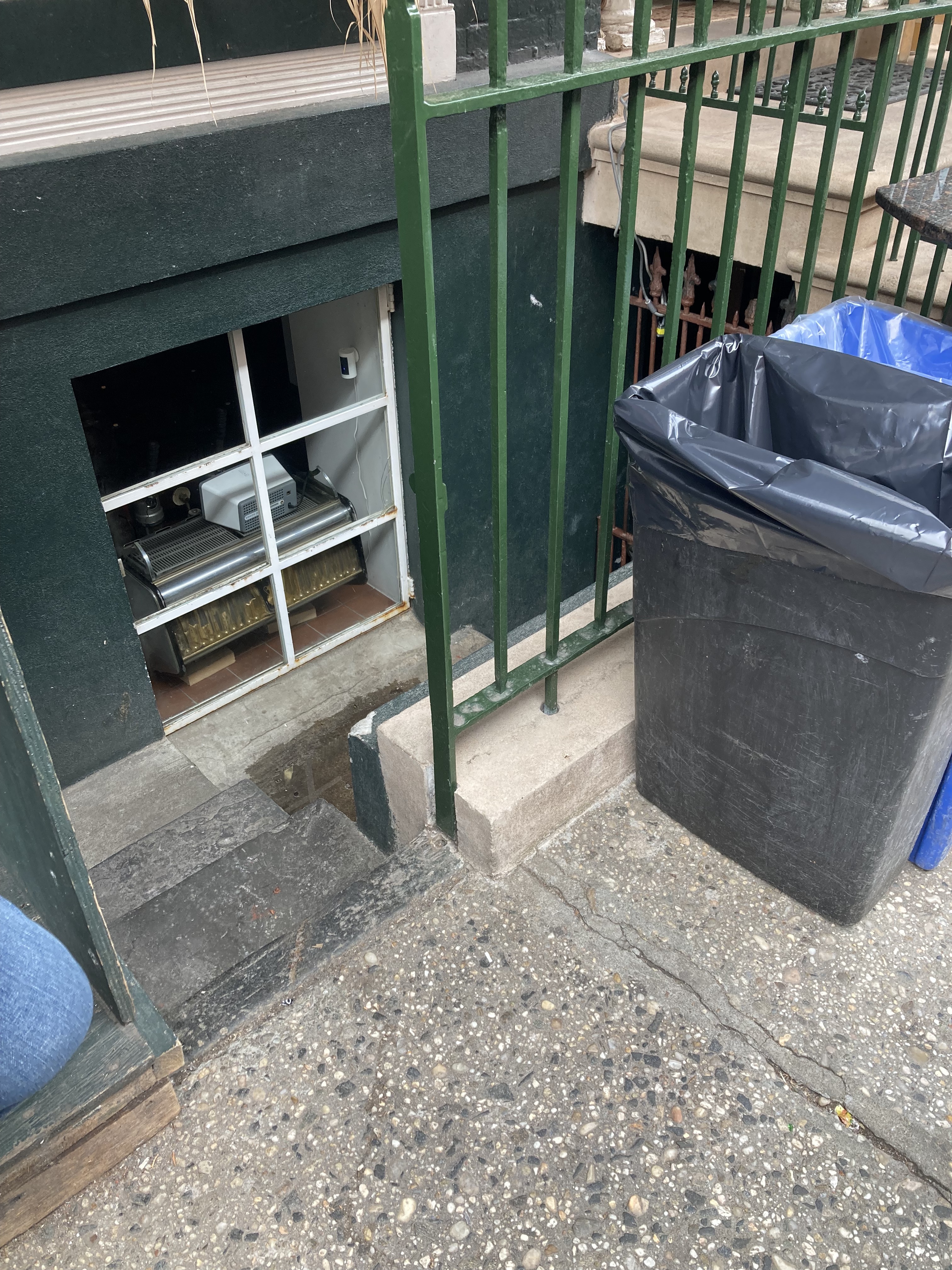
Fortunately, in the early 20th Century, the Bohemians of Greenwich Village had the freedom to live ‘unconventional’ lifestyles somewhat openly. In the Village, tea rooms provided space for women to meet each other away from the disapproving eye of society. On a recent tour of Greenwich Village with the Bowery Boys, I was shown one of the basement entrances for a former tea room. In those days, according to legend, it bore a sign that read, “Men are admitted but not welcome.”

Picture of basement, photo by me

Of course, the police knew about these places. In her autobiography, Mary Sullivan, one of the first police matrons to do actual police work, wrote, “A few tearooms run by women with a fondness for college girl patronage really were a menace…”

She added, “One of the most difficult types of degenerate with whom we have to deal is the woman with homosexual tendencies.” The police department received a complaint about “indecent literature” on sale in one of the tea rooms and a proprietess who “tried to entice girl students from a nearby college.” So Sullivan and one of her female colleagues set out to entrap the proprietess.

They visited the tea room, and the other police woman accepted a date from the proprietess, a woman named Billie. After trying to kiss the woman while on their date, Billie was arrested and then convicted of “disorderly conduct and distributing obscene literature.” She was sentenced to six months in the workhouse. Her tea room was closed. (Interestingly, this is the same scenario which happened later to activist Eve Adams; it may be the stories are conflated.)

Sullivan didn’t think jailing women with “homosexual tendencies” was the solution, however. “There is no doubt in my mind that they should be treated primarily as medical and psychiatric cases, though we still have to learn about the method of treatment.” Well, we all know where that eventually led: the horrors of conversion therapy!

picture of Sullivan’s book, photo by me

Not all lesbians kept quiet or hid their preferences. Polish-born Eve Adams arrived in New York in 1912 when she was twenty years old. In 1925, she wrote and published a book called Lesbian Love “for private circulation only.” Two years later she was arrested for obscenity and disorderly conduct and deported. 

There’s an excellent book about Adams, titled The Daring Life and Dangerous Times of Eve Adams by Jonathan Ned Katz. In 1912, according to Katz, the term lesbian did not always signify a sexual relationship between women. It could simply refer to a community of women. For example, a women’s college newspaper in Maryland was called the Lesbian Herald. From everything I’ve read, the common term, at the time, for gays and lesbians was “invert.” 

With this and other research in hand, I felt I could do justice to Ellen’s story in her quest for love and fulfillment. This scene is the moment Ellen first sees the women with whom she later falls in love in The Whispering Women as she is looking through the window of a teahouse in Greenwich Village: 

“The tables were occupied by women of various ages and classes who seemed engrossed in conversations. One woman in particular caught her eye. She looked to be in her late twenties, big boned with a narrow face, an affable smile, and big brown eyes under thick eyebrows. Ellen could tell by her tailored gray jacket she had money, but she wasn’t showy. A strand of pearls hung carelessly around her neck. A feeling swept over Ellen like a dull ache — the kind of ache you don’t want to stop. The woman laughed at something her companion said. Ellen swiveled her head to look at the companion. Small, blond, and delicately holding her tea cup. When the woman with the pearls got up to get some more tea, Ellen saw the blond woman glance out the window and wave a handkerchief. Curiously, Ellen looked around. Two men stood across the street, smoking cigarettes with their eyes fixed on the window of the tea shop. Police, Ellen knew immediately.”

Thank you for sharing such a fascinating post. Good luck with your series.

Blurb:

“Richly drawn characters, the vibrant historical setting, and a suspenseful mystery create a strong current that pulls readers into this delightful novel. But it’s the women’s issues—as relevant today as they were in the early 1900s—that will linger long after the last page.”

— Donna S. Meredith, The Southern Literary Review

Can two women get the lowdown on high society?

“Two powerless young women must navigate a soul-crushing class system and find the levers of power they wield when they combine their strengths. These women may have been taught to whisper, but when their time comes, they will roar.”

– 5 Star Amazon Review

Louisa Delafield and Ellen Malloy didn’t ask to be thrown together to bring the truth to light. But after Ellen witnesses the death of a fellow servant during an illegal abortion, Louisa, a society columnist, vows to help her find the truth and turn her journalistic talent to a greater purpose.

Together, these unlikely allies battle to get the truth out, and to avenge the wrongful death of a friend.

What will our heroes do when their closest allies and those they trust turn out to be the very forces working to keep their story in the dark? They’ll face an abortionist, a sex trafficking ring, and a corrupt system determined to keep the truth at bay.

“If you like historical fiction and if you like mysteries, this one is for you!”

– 5 Star Amazon Review

Was change possible in 1913?

To find out, read THE WHISPERING WOMEN today!

Buy Links: 

The books in this series are available to read on Kindle Unlimited.

Universal Link:  

Amazon UKAmazon US:  Amazon CAAmazon AU

Barnes and Noble

Meet the author

Trish MacEnulty is a bestselling novelist. In addition to her historical fiction, she has published novels, a short story collection, and a memoir. A former Professor of English, she currently lives in Florida with her husband, two dogs, and one cat. She writes book reviews and feature articles for the Historical Novel Review. She loves reading, writing, walking with her dogs, streaming historical series, cooking, and dancing. 

Connect with Trish

WebsiteTwitterFacebookInstagram

Book BubAmazon Author PageGoodreads

Follow The Whispering Women blog tour with The Coffee Pot Book Club

MJ Porter went to Gloucester, and it didn’t rain

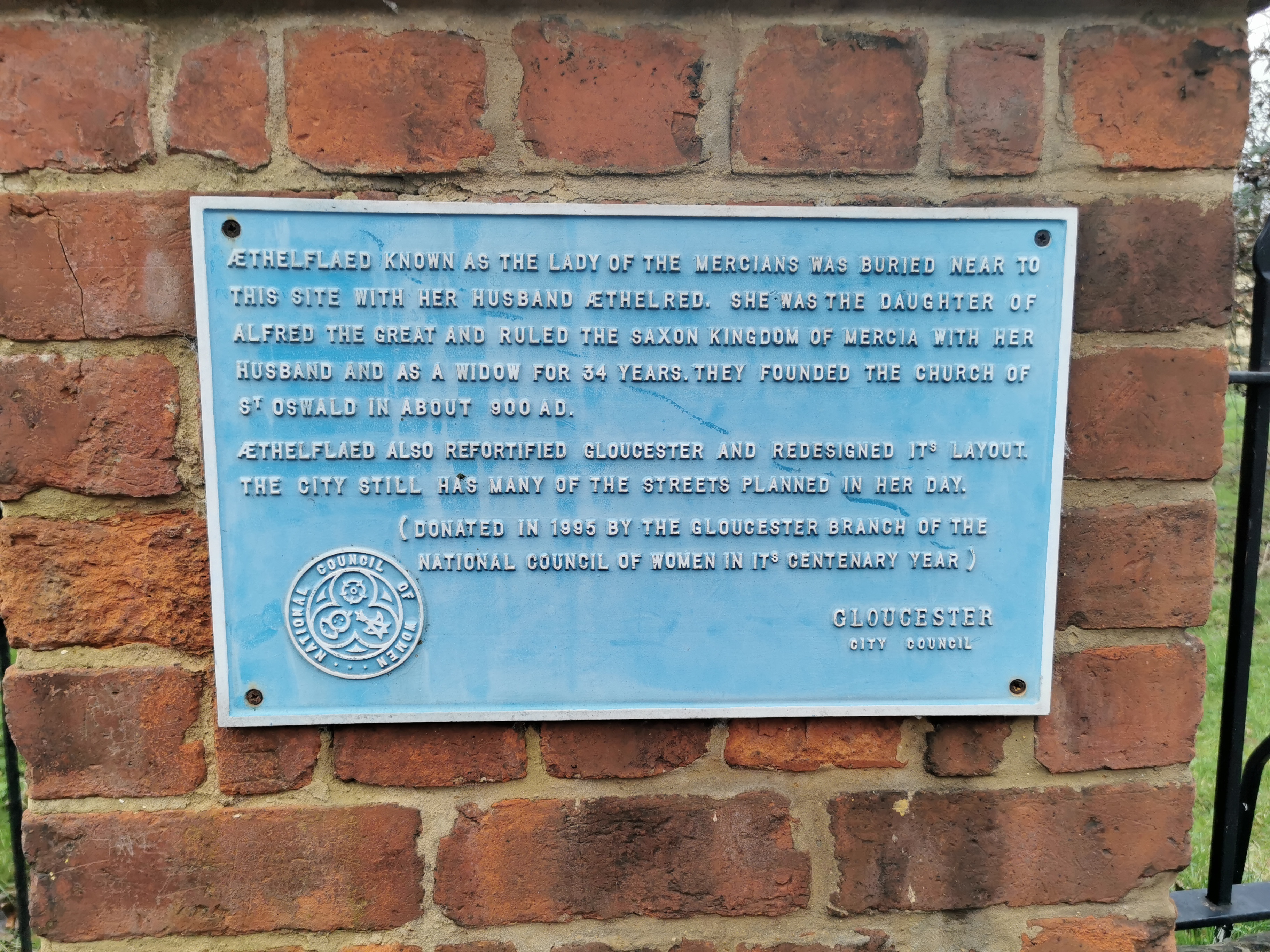
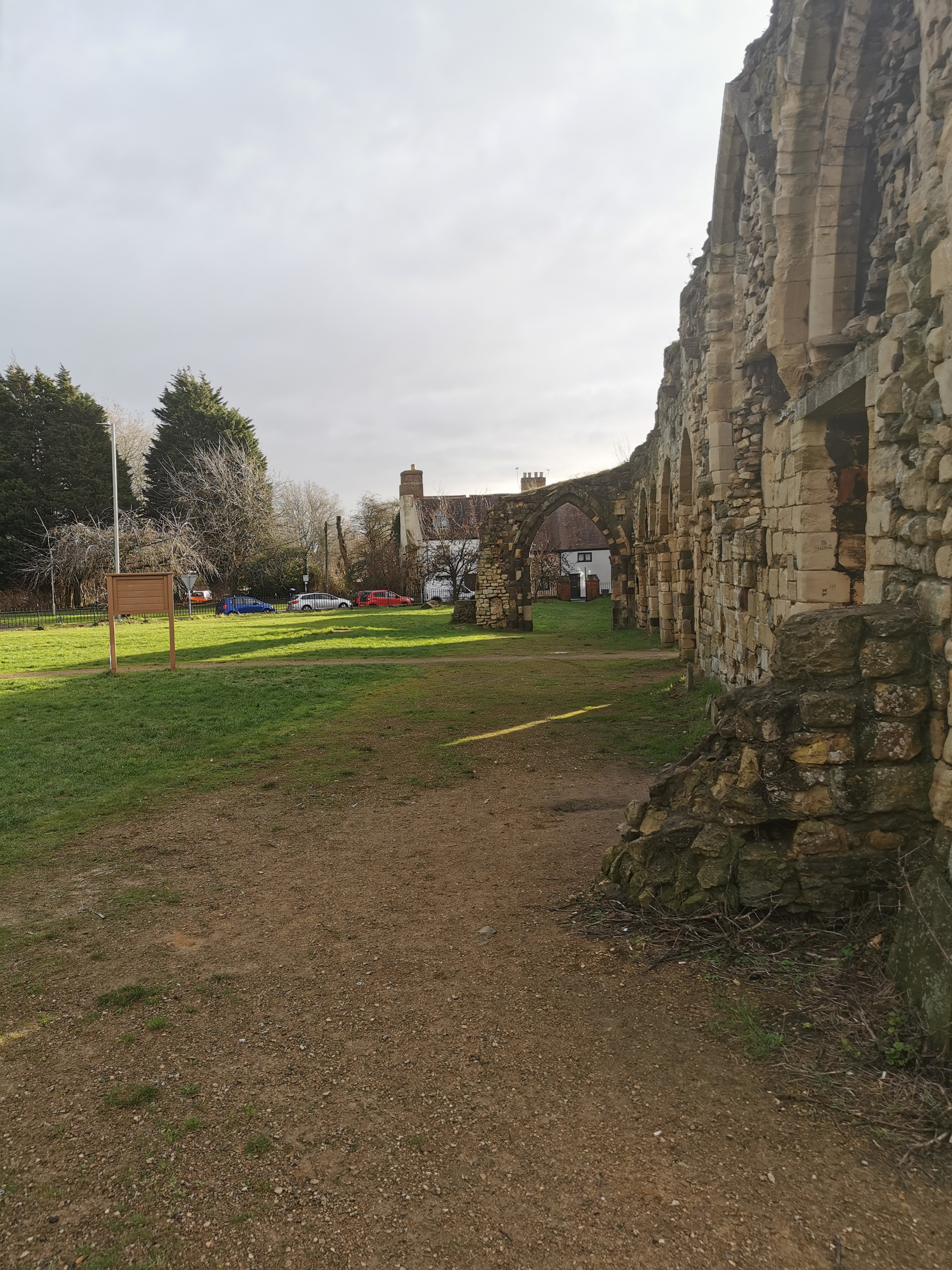
Why, I hear you cry? Well, I was on the trail of the Lady of Mercia, Æthelflæd, and her daughter Ælfwynn. Æthelflæd and her husband were buried in Gloucester, at St Oswald’s Priory, and I’m always writing about Gloucester, and Kingsholm, so I thought it was time I actually visited. Not that St Oswald Priory survives as anything more than a ruin these days.

The plaque telling visitors all about the ruins (I do love an old plaque. They just add to the story of a ruin).
Part of the ruins, with Gloucester Cathedral in the background.
Trying to capture as much of the ruin as possible in one photo.
View of the cathedral through the ruin (a pity about the garden shed)

I also visited the Cathedral, and really wish I’d done a bit more research about what they offer, as I didn’t factor in all the fabulous tours they do, including one up the tower to get a view of Gloucester. Maybe next time. But, I did find this delightful pearl, which must remind us all to make sure our notes are up to the task at hand.

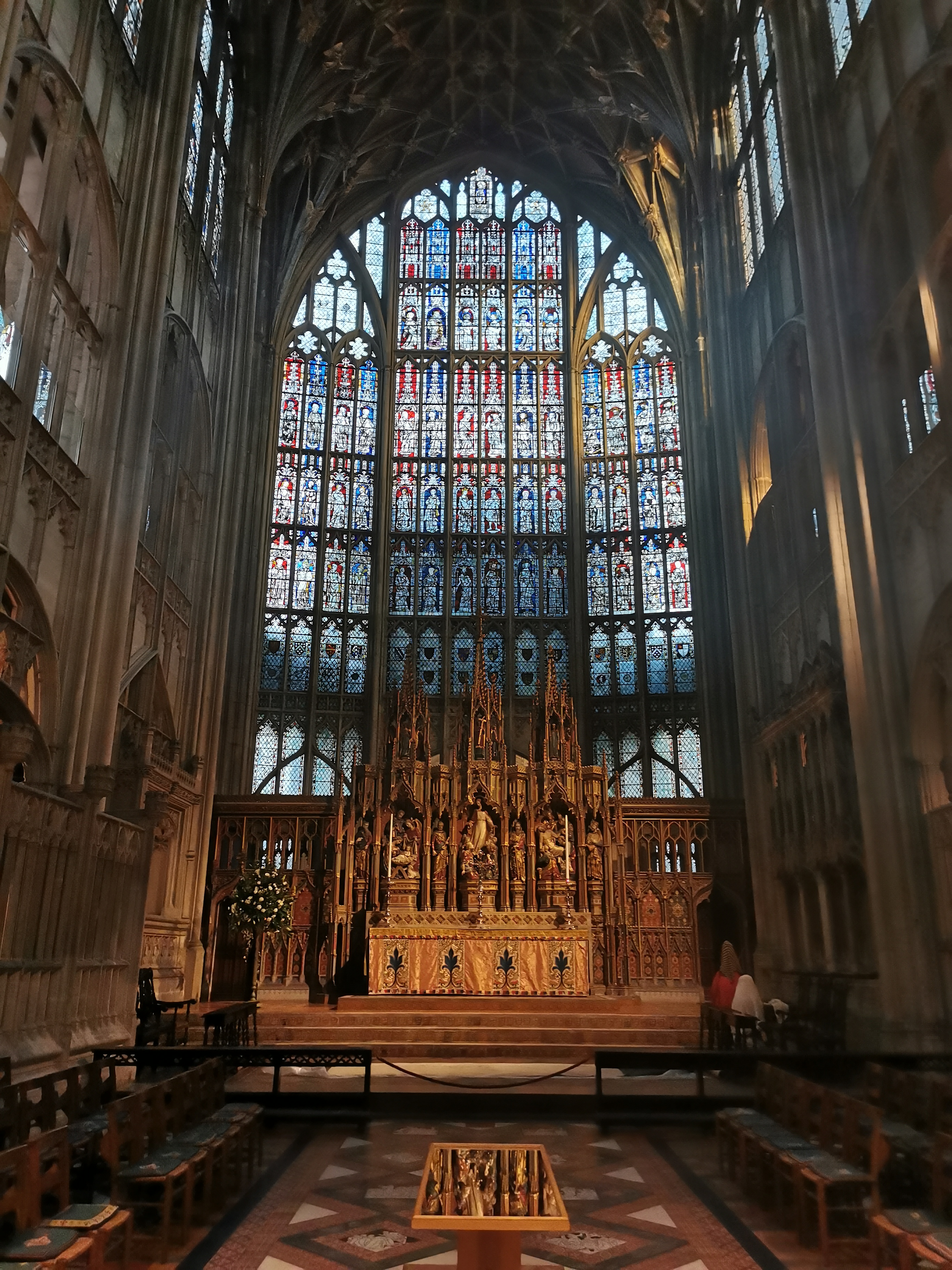
The great window in Gloucester Cathedral

Can you imagine trying to put all those pieces back together after they took them down during WW2? Wow. Well done to those who accomplished the task. If you’re not sure of scale, it’s as big as a tennis court.

But to return to the priory. For those who know their history of the period, we might wonder why we have a St Oswald in Gloucester, which would have been very much in the heart of Mercia. Oswald, of course, was a king of Northumbria, a most Christian king, killed in battle against the might of the famous pagan king, Penda. The story goes that after his death, a band of brave Northumbrians retrieved their dead king, and returned him to Northumbria, where he was buried and revered. Why then would a Northumbrian saint, killed in the seventh century, become so closely associated with the Mercian ruling family?

I find this fascinating, and indeed, some years ago, attended a conference where I asked this question. The answer was enlightening. The Mercians, still facing the threat of the Viking raiders, needed a rallying cry. They needed a sainted figure whose cult they could effectively ‘steal’ or align with themselves, or so I was told, and St Oswald was that man, or rather that body, and so they stole him away from Bardney and took his to Gloucester, where his cult continued, and where Lady Æthelflæd and her husband, Ethelred, were later buried.

I’ve written about Oswald while he was alive, and of course, I’ve written about Mercia, Gloucester, Kingsholm, and Lady Ælfwynn. It was inspiring to finally see where the church once was, even if little remains of it, at least something does remain.

books2read.com/PaganWarrior

books2read.com/u/31RBva

books2read.com/TheLadyMercia

King of Kings, has a number of main characters. Meet Owain, the king of Strathclyde.

My new book, King of Kings, is a multi-viewpoint novel telling the story of events in Britain from 925-934. I thought it would be good to share details of the historical people my main characters are based on.

Owain of Strathclyde is perhaps the most difficult character in King of Kings to find in the historical record. Indeed, his place in the story is contested by historians, as we don’t know if the scribe of the Anglo-Saxon Chronicle of the time meant Owain of Strathclyde, or an Owain of one of the Welsh kingdoms. I decided to adopt the Owain of Strathclyde, but who exactly was he, and what was Strathclyde?

The kingdom of Strathclyde is also known by another name, that of Cumbria, and there is confusion in the sources and amongst historians about where it is and what it was. Alex Woolf suggests that by the events of 927, Strathclyde/Cumbria encompassed, ‘most of part of Lanarkshire, Dunbartonshire, Renfrewshire, Stirlingshire, Peebleshire, West and Mid-Lothian, eastern Dumfriesshire and Cumberland.’ (Woolf, A. From Pictland to Alba, 789-1070, Edinburgh University Press, 2007) p.155)

So who then were it’s kings? This again is far from as easy to state as might be thought. It’s believed that Owain of Strathclyde, succeeded his father, Donald II, to become king of Strathclyde, and in turn was succeeded by his son.

In 924, we are told that ‘the king of the Strathclyde Britons and all the Strathclyde Britons,’ (Swanton p.104) joined the king of Wessex, Edward the Elder’s alliance by the Anglo-Saxon Chronicle, but Owain isn’t named. Indeed, and as said above, when we do get mention of Owain in the Anglo-Saxon Chronicle, he’s named as ‘king of Gwent,’ (Swanton, M. trans and edit The Anglo-Saxon Chronicles, (Orion Publishing Group, 2000) p.107) even though there was no Welsh king of Gwent named as Owain at the time. It’s therefore difficult to get a feel for who he was, and what he did, but that didn’t mean I couldn’t include him in King of Kings. If anything, it made it all the more intriguing.

Map design by Shaun at Flintlock Covers

Preorder King of Kings

(released 10th February 2023)

books2read.com/King-of-Kings

Meet the Characters from King of Kings

Athelstan, king of the English

Constantin, king of the Scots

Hywel, king of the West Welsh

Ealdred, king of Bamburgh

Lady Eadgifu, wife of Edward the Elder

Happy release day to King of Kings #histfic

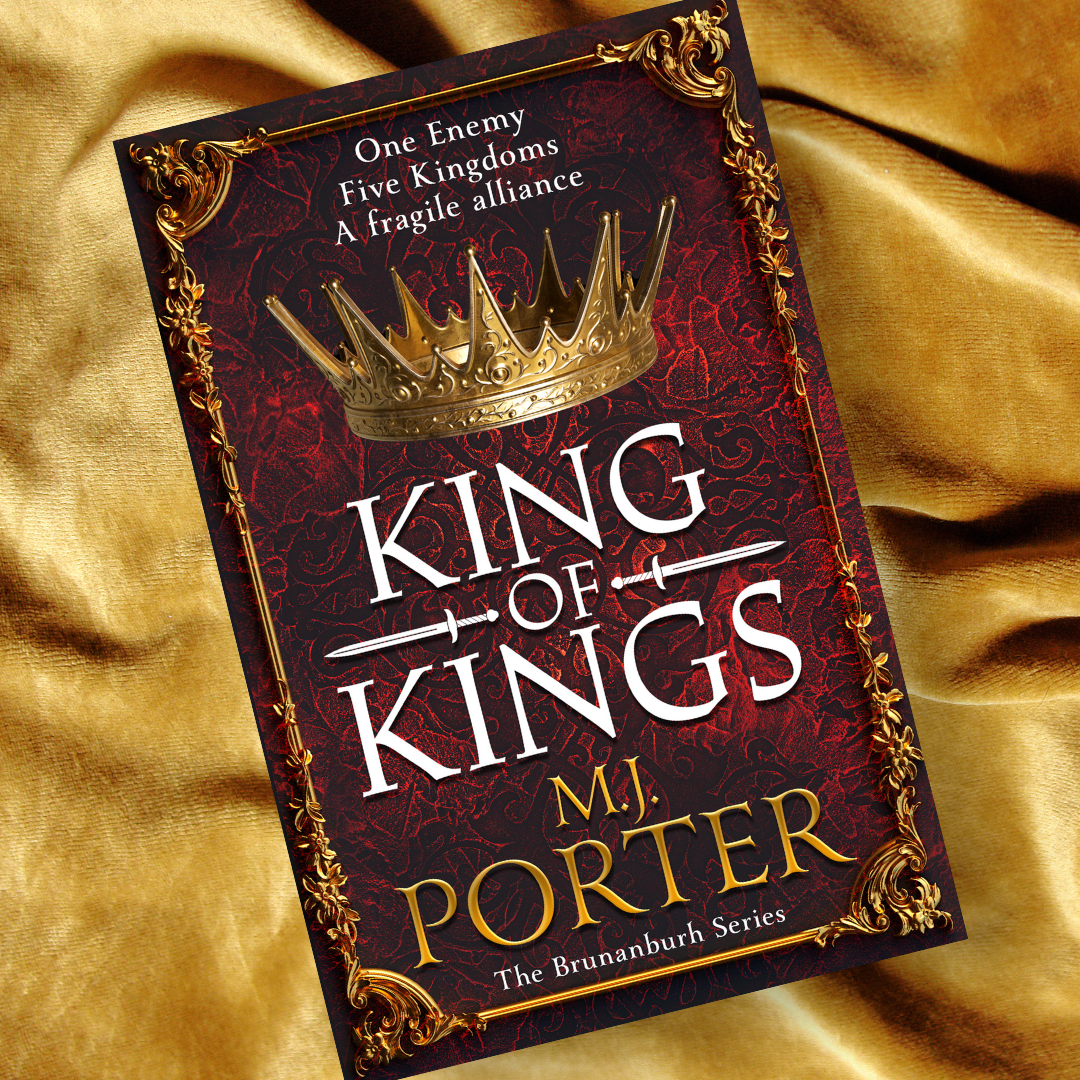
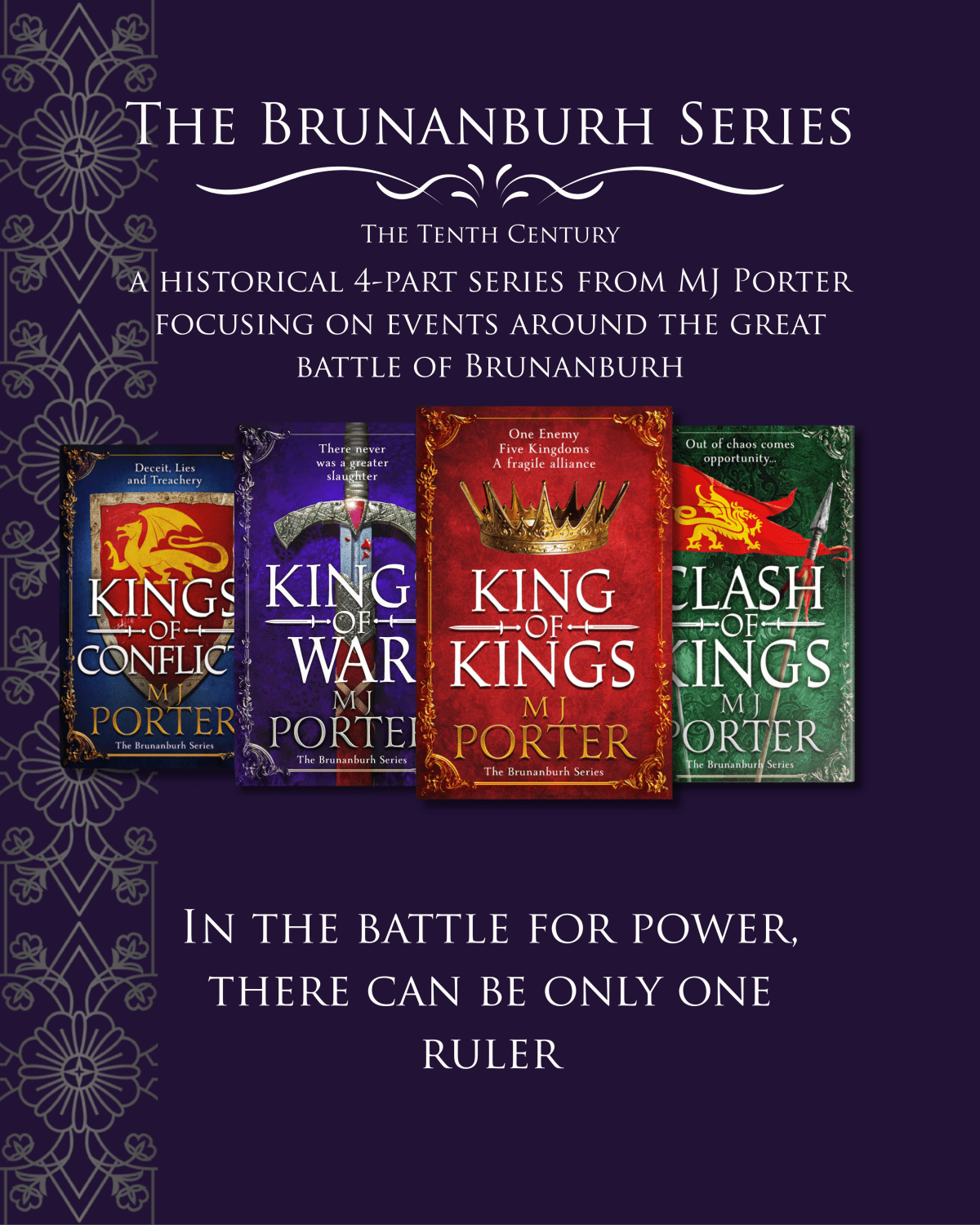
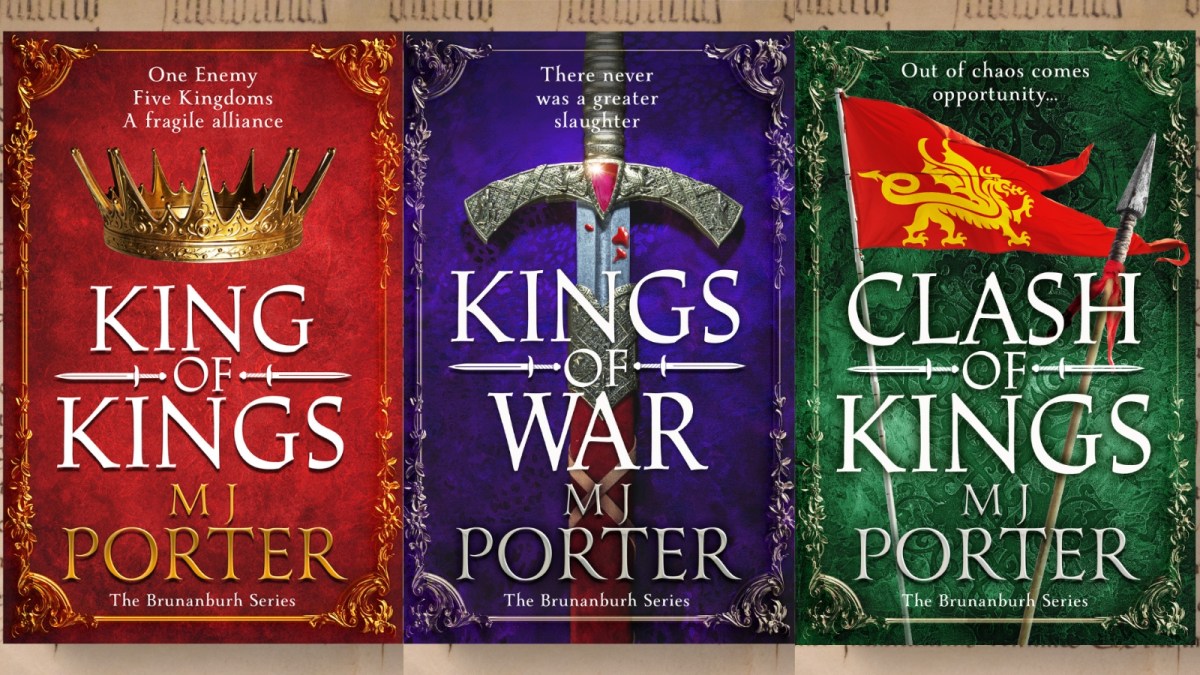
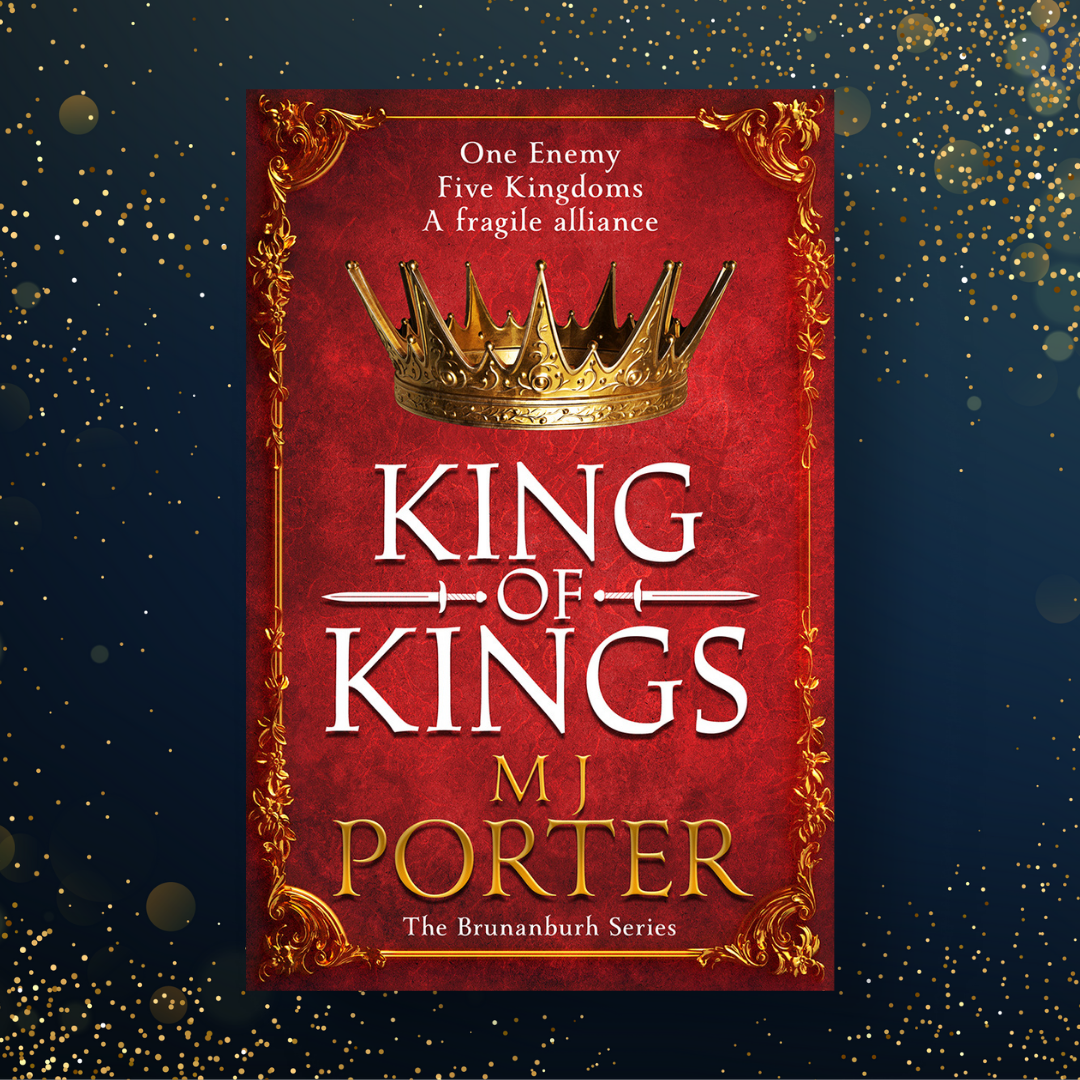
I’m so excited about the release today of King of Kings. This story, the first part in the retelling of the greatest battle on British soil that many have never heard of, Brunanburh, has been long in the making. Building on the original series, begun in 2014, King of Kings is entirely reworked, and it’s so much better:) (I honestly can’t believe how much better it is.)

Here’s the blurb

‘An epic tale of the birth of a nation. Truly mesmerising. Game of Thrones meets The Last Kingdom’ – Gordon Doherty

In the battle for power, there can be only one ruler.

AD925

Athelstan is the king of the English, uniting the petty kingdoms of Wessex, Mercia, the Danish-held Five Boroughs and York following the sudden death of his father, King Edward. 

His vision is to unite the realms of the Scots and the Welsh in a peace accord that will protect their borders from the marauding threat of the Norse Vikings.

Whilst seemingly craving peace and demanding loyalty with an imperium over every kingdom, Athelstan could dream of a much bigger prize.

But danger and betrayal surround his best intentions, namely from his overlooked stepbrother, Edwin, who conspires and vies for what he deems is his rightful place as England’s king. 

As ever, powerful men who wish to rule do not wish to be ruled, and Constantin of the Scots, Owain of Strathclyde, and Ealdred of Bamburgh plot their revenge against the upstart English king, using any means necessary.

An epic story of kingsmanship that will set in motion the pivotal, bloody Battle of Brunanburh where allies have to be chosen wisely…

books2read.com/King-of-Kings

(available in ebook, paperback, hardback and audio, narrated by the wonderful Matt Coles).

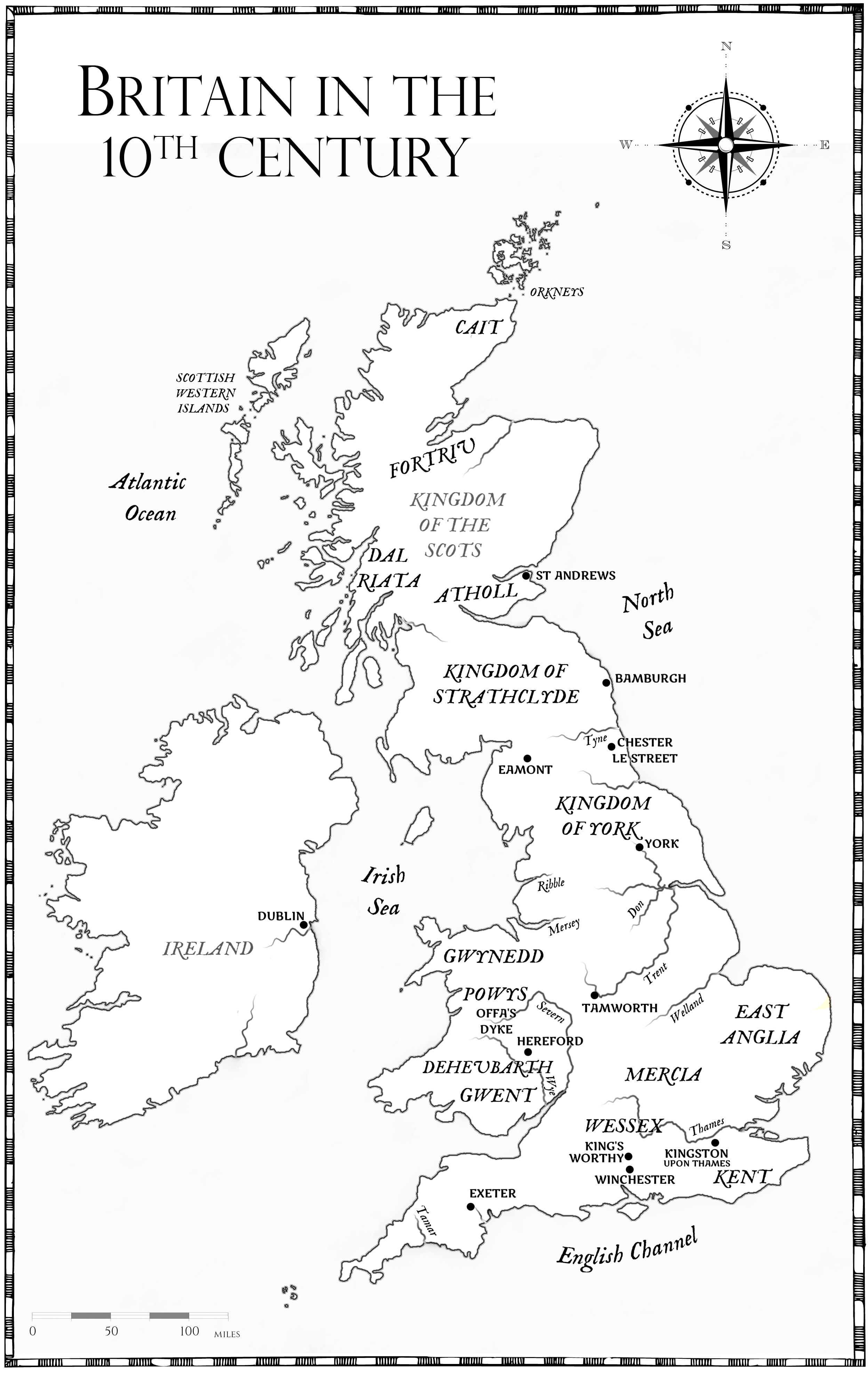
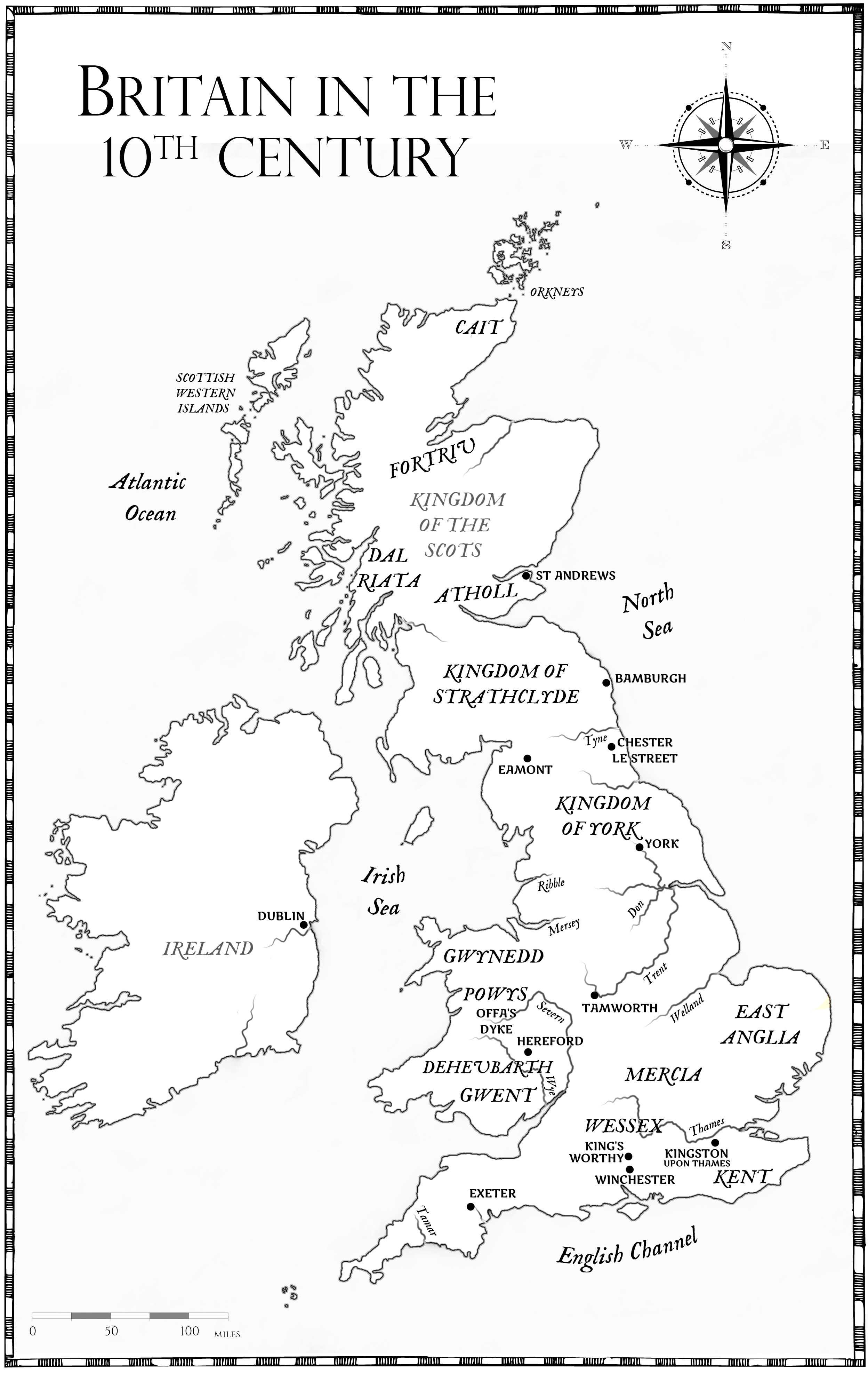
King of Kings. with its five kingdoms, and one alliance, might need some explanation. To help my readers understand who everyone is, and importantly, where everyone is, King of Kings has a map and a genealogical table, as well as a cast of characters.

Map designed by Shaun at Flintlock Covers

And because the family of King Alfred is so important to the story, I also have a genealogical table to share with my readers.

Design by Boldwood Books

I’ve written some brief introductions for the main cast of characters.

King Athelstan of the English

King Constantin of the Scots

King Hywel of the West Welsh

King Owain of Strathclyde

King Ealdred of Bamburgh

Lady Eadgifu of Wessex


Follow the blog tour with Rachel’s Random Resources

Bookish Jottings

Amy McElroy

David’s Book Blurg

Colin Garrow Blog

Beyond the Books

Ruins and Reading

Diary of a Wannabe Writer

The Magic of War(l)ds

Nerd Girl Loves Books


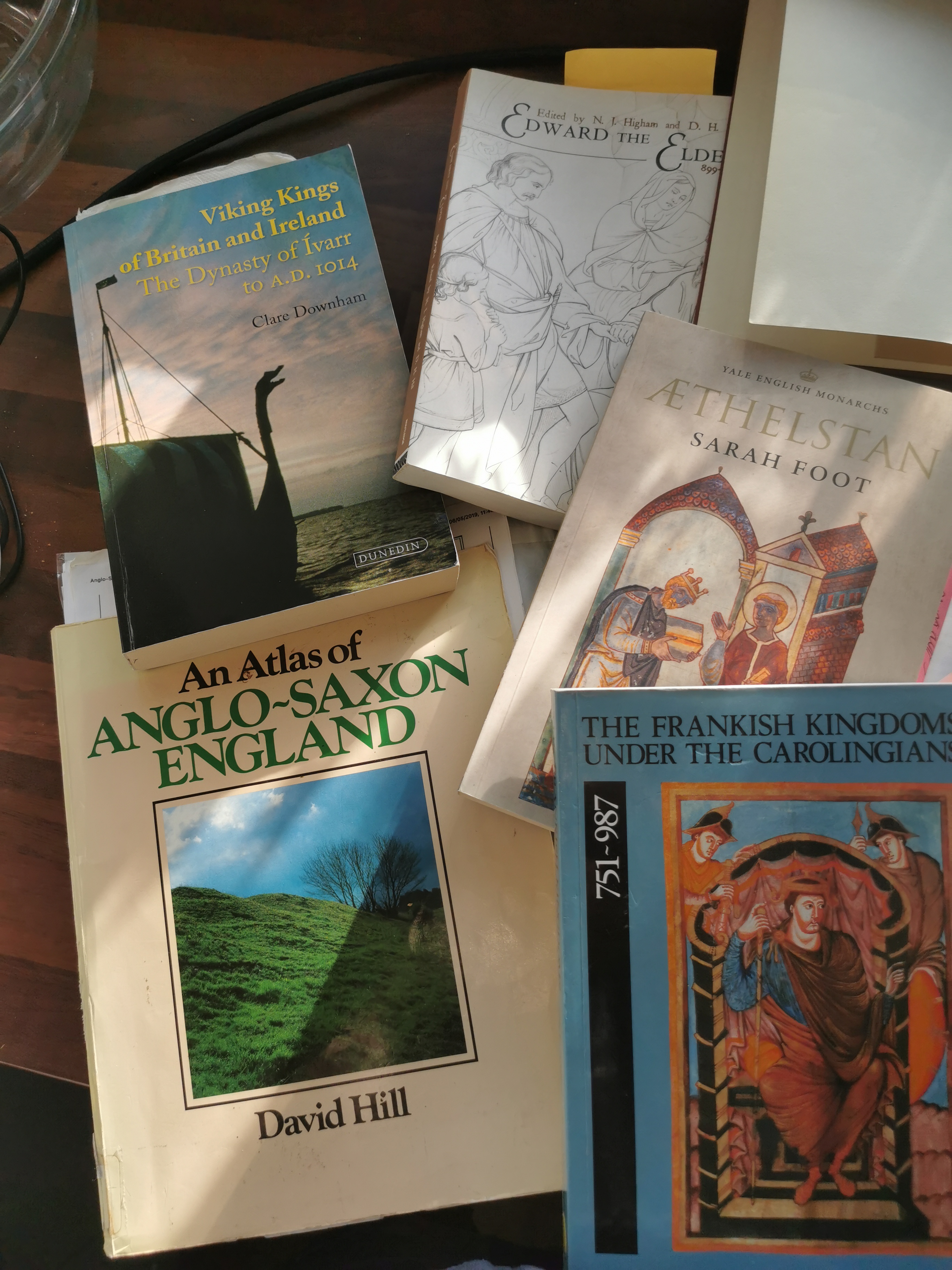
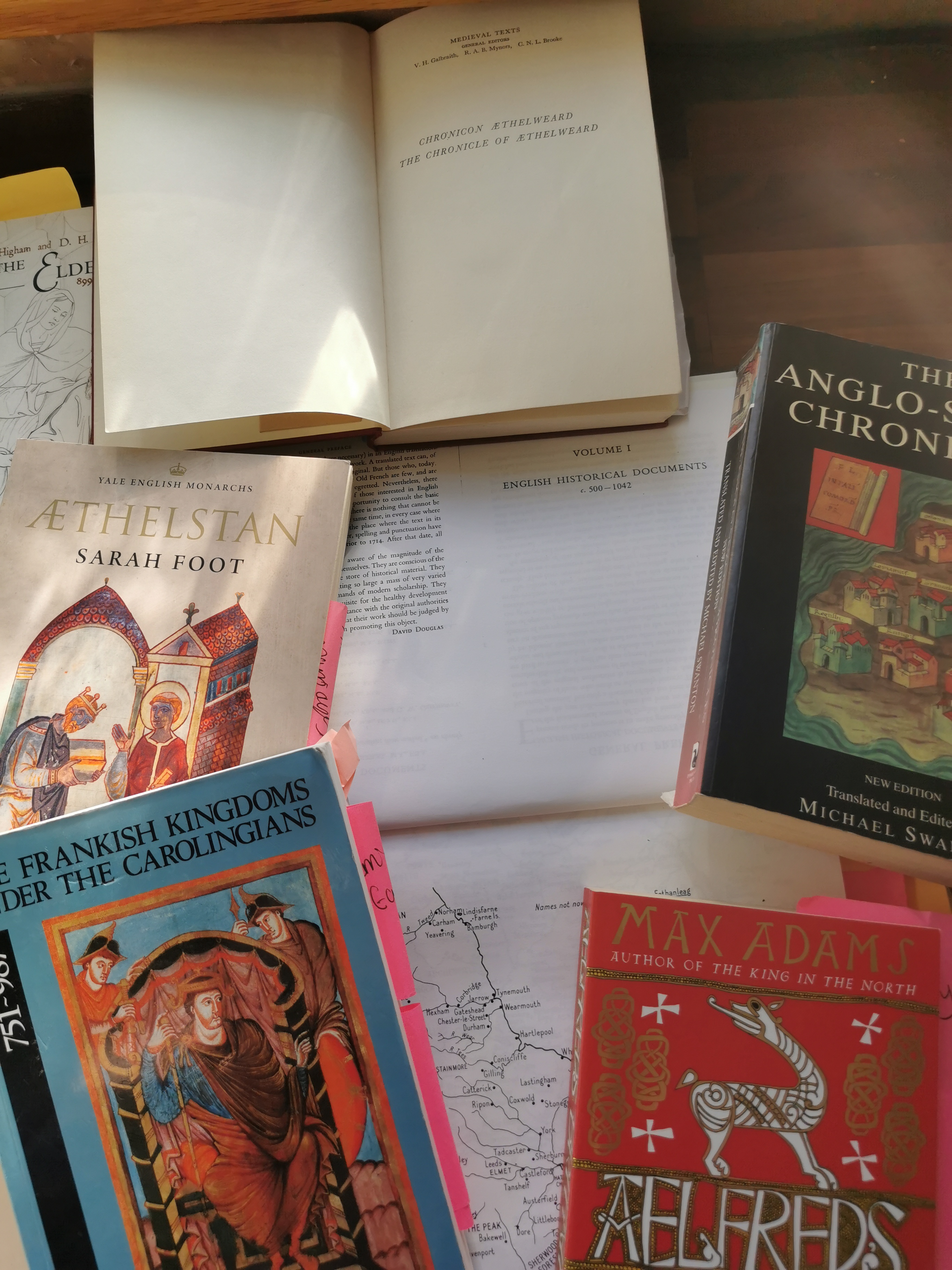
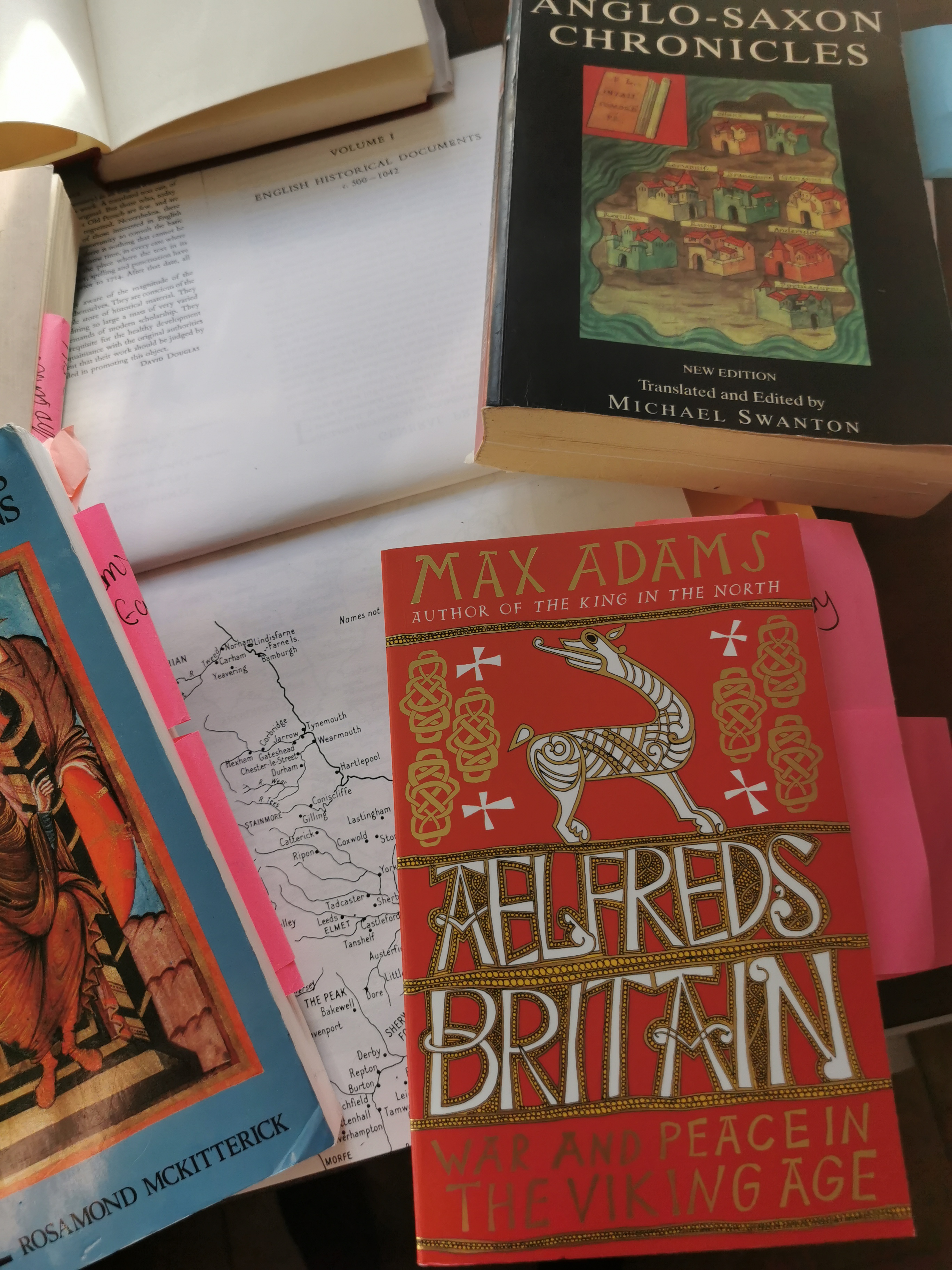
And for those who are falling in love with the period as much as I am, I wanted to share some non-fiction recommendations, and cautions.

There is no one book that will adequately cover this period (that was one of the reasons that I fictionalised it) but these books (see photos below), along with Dr. Kari Maund’s The Welsh Kings, which I have in ebook, will give you a good grounding of events in Britain and Ireland. So, these are

Alfred’s Britain by Max Adams

Athelstan by Sarah Foot

The Anglo-Saxon Chronicles ed and trans. Michael Swanton (other versions available – I like the formatting of this one -with the different recensions)

The Welsh Kings by Kari Maund

An Atlas of Anglo-Saxon England by David Hill (don’t be put off by the fact this book is from the 1970s – it is invaluable)

From Pictland to Alba 789-1070 by Alex Woolf

Viking Kings of Britain and Ireland by Claire Downham

English Historical Documents ed and trans by Dorothy Whitelock

The Frankish Kingdom under the Carolingians by R McKitterick

Edward the Elder ed. Higham and Hill (not a narrative account, but historians writing papers about their area of interest and expertise).

There are also two very important online resources.

PASE (The Prospography of Anglo-Saxon England)

Electronic Sawyer

King of Kings, has a number of main characters. Meet Lady Eadgifu. #histfic #nonfiction #Brunanburh

King of Kings has a number of characters, and some might be surprised to find Lady Eadgifu amongst them, but she was an incredibly important historical character, and I couldn’t leave her out of the narrative set at the English court.

Lady Eadgifu was the third wife of Edward the Elder (r.899-924), king of the Anglo-Saxons. Edward the Elder was the father of King Athelstan, and a whole host of daughters, as well as five sons. Lady Eadgifu would, it seems, have been young when she married the aging Edward the Elder, and that meant that she long outlived him, and also, that her three children (possibly four, but I’ve opted for three) were young when their father died. And two of these children were sons, Edmund (born c.921) and Eadred (born c.923). Her daughter, Eadburh, is thought to have been the oldest of the three children, born c.919.

While Lady Eadgifu, from what’s known (and it isn’t much, as there are few surviving charters from the end of Edward’s reign) perhaps had little role to play while her husband lived, other than wife and mother to the king’s children, following his death, she became increasingly significant. She was the daughter of an ealdorman, who perhaps died just before her birth, and her family are said to have had connections with Kent. Indeed, it’s often stated that she brought her husband Kent with their union. By that, what’s often meant, is the loyalty of the Kentish people. Remember, at this time, we’re still just before the creation of ‘England’ as we would now recognise it.

Sadly, very little is known about Lady Eadgifu (and she’s not alone in this – many of the royal women ‘disappear’ at points in the historical record, and on occasion, are entirely lost.) We know about a land dispute she was involved in, and also much more information for after Athelstan’s reign.

Indeed, it has been said that

‘Nor is it surprising that Eadgifu, as the consort of the previous king, served little role in her stepson’s court.[i]

[i] Firth, M. and Schilling, C. ‘The Lonely Afterlives of Early English Queens’, in Nephilologus September 2022, https://doi.org/10.1007/s11061-022-09739-4p.7

However, Barbara Yorke believes that,

‘the enhanced position [of Lady Eadgifu] may also have been developed specifically for the widowed Eadgifu as part of an alliance with her stepson Æthelstan [Athelstan] in which she supported his position and he recognised her sons as his heirs.’[i]


[i] Yorke, B. ‘The Women in Edgar’s Life,’ in Edgar, King of the English, 959-975 Scragg, D. ed (The Boydell Press, 2008), p.146


And it is this option that I’ve decided to explore in King of Kings. Lady Eadgifu was wife to a king. She would have known her worth, even when faced with a stepson as the king of the English, and another stepson, and stepdaughters, who perhaps didn’t share any love for their, potentially, younger stepmother. Will Lady Eadgifu work with or against Athelstan? Read on to find out.
Map design by Shaun at Flintlock Covers

books2read.com/King-of-Kings

Meet Owain, king of Strathclyde

Meet Athelstan, king of the English

Meet Constantin, king of the Scots

Meet Hywel, king of the West Welsh

Meet Ealdred, king of Bamburgh

Check out the Brunanburh Series Page

Posts

Meet Ealdred, King of Bamburgh, from King of Kings (The Brunanburh Series).

Who was Ealdred of Bamburgh?

King of Kings has a number of characters, and King Ealdred, or Lord Ealdred of Bamburgh is one of them. But who was he, and what was the independent kingdom of Bamburgh?

Now, I think we all ‘think’ we know about Bebbanburg (Bamburgh) thanks to Uhtred of Bebbanburg, Bernard Cornwell’s creation. But events in Bamburgh are complex and not easy to understand, even for someone who might think they know the period quite well.

What was Bamburgh?

So what was Bamburgh? Bamburgh is traditionally associated with the kingdom of Bernicia – the far northern Saxon kingdom, which was particularly prominent during the seventh century, so three hundred years before the events of King of Kings, and which was joined to the kingdom of Deira to form Northumbria. Check out my Gods and Kings trilogy for the some of the events of this period.

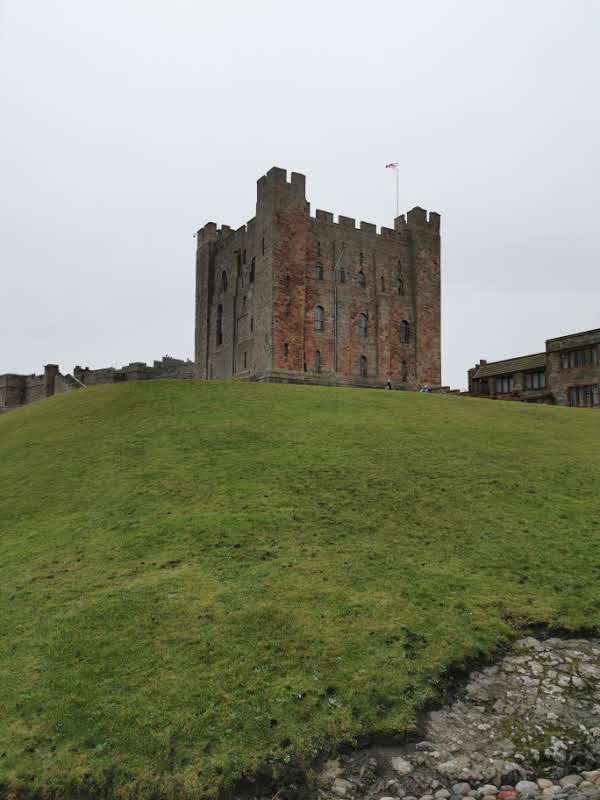
The iconic castle that stands today is a later building, the oldest part, the keep, dating to the end of the Saxon period, while much of what we see today is the later work of Lord Armstrong (who built Cragside), when he significantly repaired the remains. Indeed, the family still own Bamburgh Castle, although not Cragside, which is a National Trust property. (I’ve written a 1930s mystery set at Cragside).

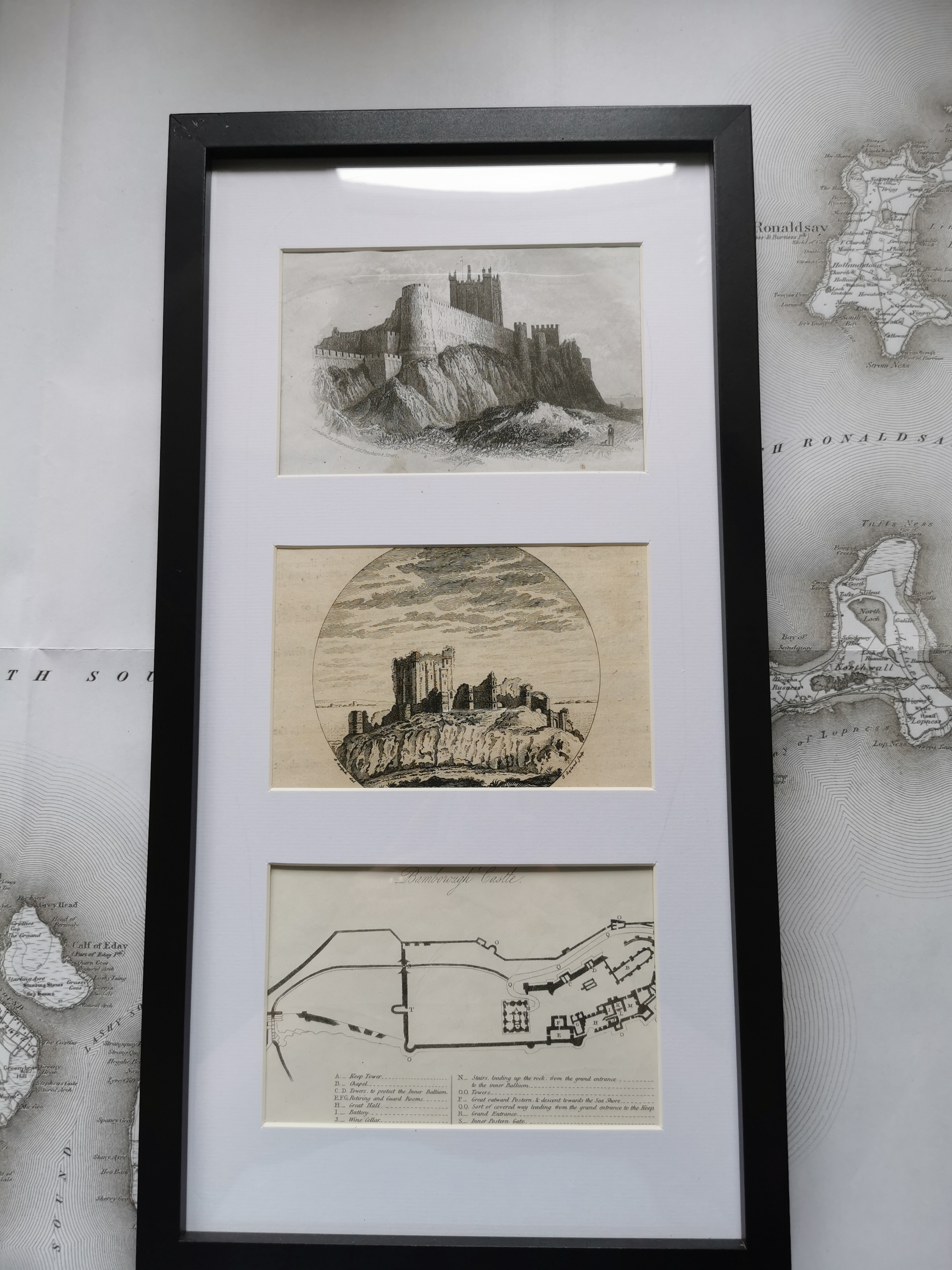
Bamburgh is slightly unusual in that there are old images of the castle before the 19th century work of Armstrong. I enjoy collecting these antique prints. We often find such buildings falling into ruin, not being ruined and the rebuilt.

Antique prints of Bamburgh Castle

And Bamburgh Castle and its environs are stuffed with archaeology. There were some very famous archaeological investigations undertaken in the 1960s, and there’s now a dedicated team unearthing the treasures hidden beneath the current building. You can follow the teams work at Bamburgh Research Project’s Blog. You might know about Bamburgh because of the seventh century bones discovered in the Bole Hole, and there’s a great book about this, Warrior by Edoardo Albert and Paul Gething – available from all good book sellers. You can also learn about where these bones now lie by checking out Bamburgh Bones.

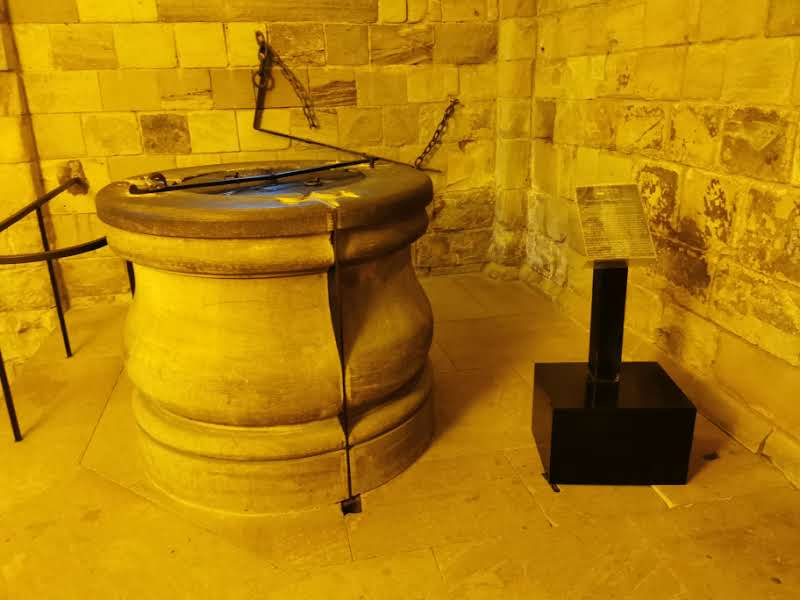
The well

The Tenth Century at Bamburgh

But, all this is before the events of the tenth-century (or after), as fascinating as it is. So, what was happening in the tenth-century? The easiest way I can describe this is that while York, and much of the Saxon kingdom of Northumbria was inundated with the Norse (Viking raiders if you will), Bamburgh was a bastion against this influx, wedged between the growing might of the kingdom of the Scots, ruled by Constantin, and the constantly changing affairs of York, and its string of Norse rulers, often associated with Dublin as well.

Ealdred’s father, Eadwulf is somewhat better attested, with the Annals of Ulster naming him as ‘king of the Saxons of the north.’ He died in c.913 and then Ealdred seems to have had a difficult time of it, his gaze more likely to turn to the Scots kingdom than the known Saxon rulers based in Mercia and Wessex when he was threatened by the Norse Viking raiders.

However, he joined an alliance with Edward the Elder, king of the Anglo-Saxons, in 920 (corrected from 924).

‘And then the king of Scots and all the nation of Scots chose him as father and lord; and [so also did] Reginald and Eadwulf’s sons and all those who live in Northumbria, both English and Danish and Norwegians and others; and also the king of the Strathclyde Britons and all the Strathclyde Britons.’

(Swanton, M. trans and edit The Anglo-Saxon Chronicles, (Orion Publishing Group, 2000 p.104 (A text )

This then takes us to the beginning of King of Kings. Will Ealdred continue his alliance with the new king of the Anglo-Saxons, or will he look elsewhere, especially now that the Viking raider, Sihtric, is lord of York/Jorvik?

What about Uhtred of Bebbanburg?

As to Uhtred himself, of The Last Kingdom fame, he’s even more shadowy than Ealdred, and for that reason, doesn’t feature at all in King of Kings, although there is an ealdorman Uhtred who will appear in subsequent books.

Map design by Shaun at Flintlock Covers
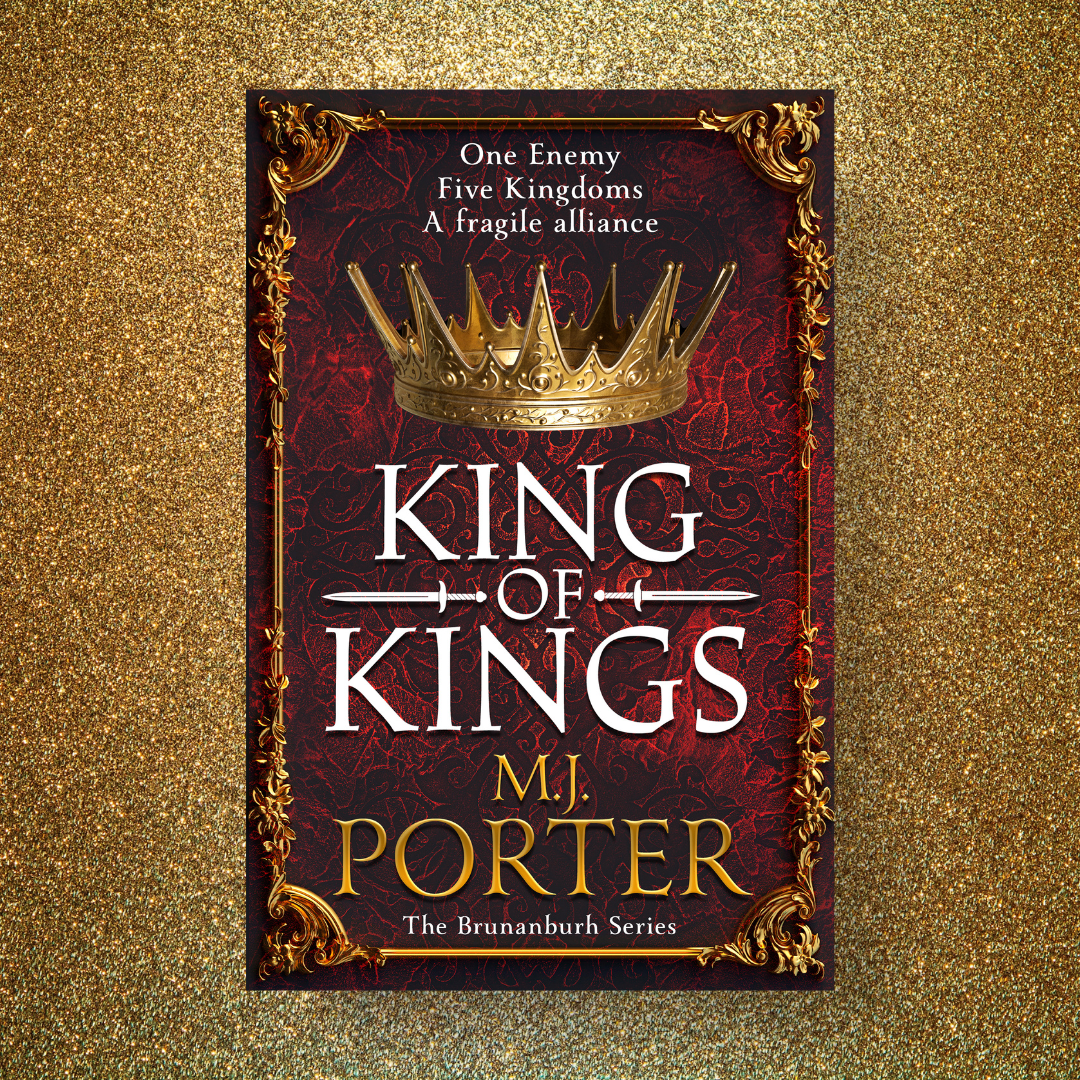
King of Kings cover on a black and glittery background.

books2read.com/King-of-Kings

Meet the other historical characters from King of Kings and the Brunanburh Series

Meet Hywel, the king of the West Welsh

Meet Constantin, the king of the Scots

Meet Athelstan, the king of the English

Meet Lady Eadgifu, queen of the Anglo-Saxons

Meet Owain, the king of Strathclyde

King of Kings, has a number of main characters. Meet Hywel, the king of the West Welsh.

My new book, King of Kings, is a multi-viewpoint novel telling the story of events in Britain from 925-934. I thought it would be good to share details of the historical people my main characters are based on.

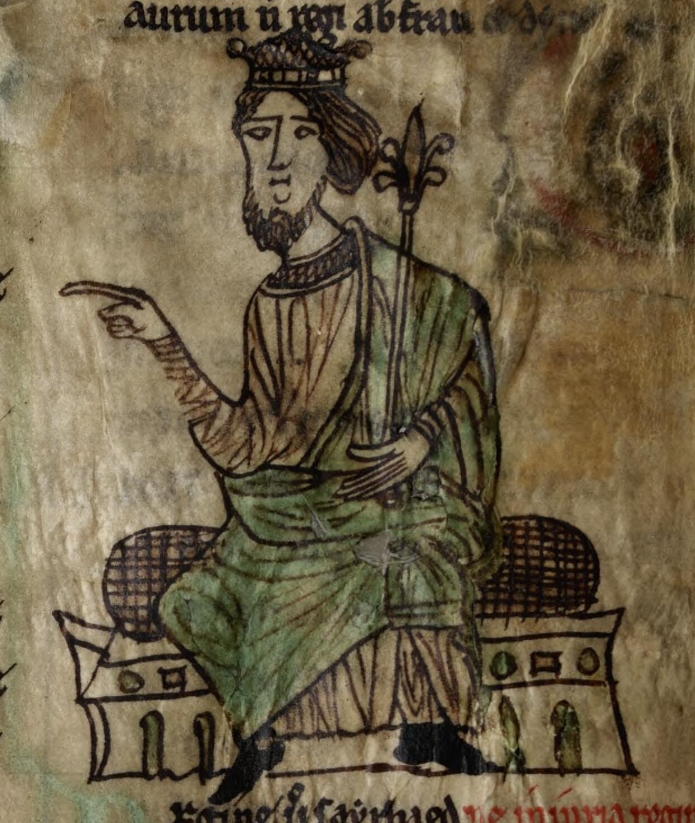
My portrayal of Hywel, better known as Hywel Dda (which autocorrect is determined should say Dad), and which means ‘good’ (a unique epithet in Wales), is of course, fictional, but who was the historical Hywel? Firstly, it should be noted that this epithet is a later invention, not assigned to Hywel until at least the twelfth century, and perhaps, as Dr. Kari Maund has commented in The Welsh Kings: Warriors, Warlords and Princes, a reflection of border events at that period rather than the earlier tenth century. (Dr Maund was one of my university lecturers, so she knows her stuff).

By Unknown author – This image is available from the National Library of WalesYou can view this image in its original context on the NLW Catalogue, CC0, https://commons.wikimedia.org/w/index.php?curid=41427788

Hywel has no date of birth recorded, and indeed, like Constantin of the Scots, he seems to have ruled for a long time providing much-needed consistency. Hywel ap Cadell was the grandson of the famous Rhodri Mawr, who’d united the kingdoms of the Welsh during his rule. But, this unity fragmented on Rhodri’s death.

To begin with, Hywel ruled Dehuebarth, probably with his brother, Clydog, (who may have been the younger brother) after the death of their father in c.911. He, his brother, and his cousin, Idwal of Gwynedd, submitted to the English king, Edward the Elder in the late 910s.

‘and the kings of Wales: Hywel and Clydog and Idwal and all the race of the Welsh, sought him as their lord [Edward]’. ASC A 922 corrected to 918 (Swanton, M. trans and edit The Anglo-Saxon Chronicles, (Orion Publishing Group, 2000)p.103-4)

Not long after, Clydog died, leaving Hywel as ruler of Dehuebarth. Hywel had also married Elen, the daughter of Llywarch and niece of Rhydderch, the last king of Dyfed, and he was able to use this alliance to eventually claim Dyfed as well.

Hywel’s believed to have been highly educated, and some historians suggest he was particularly fascinated with King Alfred, and all he’d achieved and was therefore keen to emulate many of his actions. This could also be why his name came to be associated with the codification of laws in later traditions. What fascinates me most about Hywel is his decision to ally closely with King Athelstan which will be explored in King of Kings. Certainly, he is a intriguing figure in early tenth-century Britain, and not just because we know he made a pilgrimage to Rome in 928, and still managed to return back to his kingdom and continue ruling it.

Map design by Shaun at Flintlock Covers

Preorder King of Kings

(released 10th February 2023)

books2read.com/King-of-Kings

Meet Ealdred, the king of Bamburgh

Meet Constantin, the king of the Scots

Meet Athelstan, the king of the English

Meet Eadgifu, queen of the Anglo-Saxons

Meet Owain, king of Strathclyde

King of Kings, has a number of main characters. Meet Constantin, the king of the Scots.

My new book, King of Kings, is a multi-viewpoint novel telling the story of events in Britain from 925-934. I thought it would be good to share details of the historical people my character are based on.

My portrayal of Constantin, the king of the Scots, is of course fictional in King of Kings, but he is based on a historical individual, Constantin (e) II, so who exactly was he?

Constantin is a fascinating character. Again, and as with Athelstan, his exact date of birth is unknown, but it must have been, at the latest, by 877/8, when his short-reigned father died.
By 900, Constantin was the king of the Scots (we think – there is some confusion about this). This wasn’t yet quite Scotland, but it was getting there. The ancient kingdoms of Cait, Fortriu, Atholl and Dal Riata, were ruled by one king, Constantin. But, he hadn’t succeeded his father, Aed, but rather a man named Domnall II, his cousin. At this time there were two rival dynasties and they strictly alternated the kingship.

Affairs in the kingdom of the Scots often intermingled with those of the independent kingdom of Bamburgh, Strathclyde, and of course, the Norse, or Viking raiders, if you will. Indeed, the entry recording Constantin’s death in the Annals of Ulster, reads as though there was often strife.

Constantinus son of Ed held the kingdom for xl years in whose third year the Northmen plundered Dunkeld and all Albania. In the following year the Northmen were slain in Strath Erenn…And the battle of Tinemore happened in his xviii year between Constantin and Ragnall and the Scotti had the victory. And the battle of Dun Brunde in his xxxiiii year.’ (Alex Woolf, From Pictland to Scotland, 789-1070,p.126)

Constantin, ruling for decades, and I mean decades, seems to have brought much needed stability to the kingdom, as affairs there very much mirrored the emerging ‘England’ to the south.

‘Constantin’s reign has increasingly come to be see as one of the most significant in the history of Scotland. Not only was it very long, at least forty years, but it was also the period during which conflict and diplomatic relations between a kingdom recognisably ancestral to Scotland and one recognisably ancestral to England first occurred.’ (Alex Woolf, From Pictland to Scotland, 789-1070, p.128)

Constantin allied with the rulers of Bamburgh, and York, and also, on occasion, both Æthelflæd of Mercia and Edward the Elder, after her death. But, he seems to have been quite flexible in his thinking, and was prepared to pick and choice as he saw fit.

By the beginning of King of Kings, Constantin would have been in his mid-forties, and he was still to rule for many years to come, and he was certainly a more than adequate counterpart to Athelstan, king of the English, no doubt helped by his sons and grandsons, as his reign continued.

Map design by Shaun at Flintlock Covers

Preorder King of Kings

(released 10th February 2023)

books2read.com/King-of-Kings

Meet Athelstan, the king of the English

Meet Hywel, the king of the West Welsh

Meet Ealdred, the king of Bamburgh

Meet Lady Eadgifu, queen of the Anglo-Saxons

Meet Owain, the king of Strathclyde

King of Kings, has a number of main characters. Meet Athelstan, the King of the English. #nonfiction #fiction

Athelstan is one of the main characters in my new book, King of Kings, a multiple point of view story, recounting affairs in Britain from 925-934.

Based on a historical person, my portrayal of him, is of course, fictitious, but there are many details known about him. However, we don’t know for sure who his mother was, it’s believed she might have been called Ecgwynn, and we don’t know, for certain, the name of his sister, but it’s believed she might have been named Edith. What is known is that his father was Edward, the son of King Alfred, and known to us today as Edward the Elder. Athelstan is also rare in that he is one of only two Saxon kings for who a contemporary image is available. (The other is Edgar, who would have been his step-nephew)
Edward the Elder
Edward the Elder – MS Royal 14 B VI.jpg
Miniature d’Édouard l’Ancien dans une généalogie royale du XIVe siècle. WikiCommons

It must be supposed that Athelstan was born sometime in the late 890s. And according to a later source, that written by William of Malmesbury in the 1100s (so over two hundred years later), Athelstan was raised at the court of his aunt, Æthelflæd of Mercia. David Dumville has questioned the truth of this, but to many, this has simply become accepted as fact.

‘he [Alfred] arranged for the boy’s education at the court of his daughter, Æthelflæd and Æthelred his son in law, where he was brought up with great care by his aunt and the eminent ealdorman for the throne that seemed to await him.’[i]


[i] Mynors, R.A.B. ed and trans, completed by Thomson, R.M. and Winterbottom, M. Gesta Regvm AnglorvmThe History of the English Kings, William of Malmesbury, (Clarendon Press, 1998), p.211 Book II.133

Æthelflæd image
Æthelflæd as depicted in the cartulary of Abingdon Abbey (British Library Cotton MS Claudius B VI, f.14).
https://commons.wikimedia.org/wiki/File:Æthelflæd_as_depicted_in_the_cartulary_of_Abingdon_Abbey.png
AnonymousUnknown author, Public domain, via Wikimedia Commons

Why then might this have happened? Edward became king on the death of his father, Alfred, and either remarried at that time, or just before. Edward’s second wife (if indeed, he was actually married to Athelstan’s mother, which again, some doubt), Lady Ælfflæd is believed to have been the daughter of an ealdorman and produced a hefty number of children for Edward. Perhaps then, Athelstan and his unnamed sister, were an unwelcome reminder of the king’s first wife, or perhaps, as has been suggested, Alfred intended for Athelstan to succeed in Mercia after the death of Æthelflæd, and her husband, Æthelred, for that union produced one child, a daughter named Ælfwynn.

There is an acknowledged dearth of information surrounding King Edward the Elder’s rule of Wessex. He’s acknowledged as the king of the Anglo-Saxons. His father had been the king of Wessex. Historians normally use the surviving charters to unpick the political machinations of the Saxon kings, but for Edward, there’s a twenty year gap between the beginning and end of his reign, where almost no known genuine charters have survived. What isn’t known for sure, is how much control, if any, he had in Mercia. Was Mercia subservient to Wessex or was it ruled independently? It’s impossible to tell. And this makes it difficult to determine what Athelstan might have been doing, and also what his father’s intentions were towards him.

Frontispiece of Bede’s Life of St Cuthbert, showing King Æthelstan (924–39) presenting a copy of the book to the saint himself. 29.2 x 20cm (11 1/2 x 7 7/8″). Originally from MS 183, f.1v at Corpus Christi College, Cambridge. (Wikimedia Commons)

What is known is that following the death of King Edward in 924, Athelstan was acknowledged as the king of Mercia; his stepbrother, Ælfweard was proclaimed king in Wessex. As with all events at this time, it shouldn’t be assumed that just because this is what happened, this is what was always intended.

‘Here King Edward died at Farndon in Mercia; and very soon, 16 days after, his son Ælfweard died at Oxford; and their bodies lie at Winchester. And Athelstan was chosen as king by the Mercians and consecrated at Kingston.’[i]


[i] Swanton, M. trans and edit The Anglo-Saxon Chronicles, (Orion Publishing Group, 2000), D text p.105

But, if Athelstan was raised in Mercia, it’s highly likely he was a warrior from a young age, helping the Mercians defeat the Viking raiders who still had control of the Danish Five Boroughs of Lincoln, Nottingham, Derby, Nottingham and Leicester.

And the events of 924 are where King of Kings begins, and so I will leave him there. By now, he would have been perhaps thirty years old, give or take a few years. What sort of man was he? What sort of king might he be? Do please read King of Kings to find out. And, if this intrigues you, then do please have a look at Sarah Foot’s wonderful monograph on him, Athelstan, from Yale Publishing.

Design by Boldwood Books

Preorder King of Kings now

(released 20th February 2023)

books2read.com/King-of-Kings

Meet Hywel, king of the West Welsh

Meet Constantin, king of the Scots

Meet Lady Eadgifu, queen of the Anglo-Saxons

Meet Ealdred, king of Bamburgh

Meet Owain, king of Strathclyde

Book review for Educating the Tudors by Amy McElroy #non-fiction

Here’s the blurb

Education during the Tudor era was a privilege and took many forms including schools, colleges and apprenticeships. Those responsible for delivering education came from a variety of backgrounds from the humble parish priest to the most famed poet-laureates of the day. Curriculums varied according to wealth, gender and geography. The wealthy could afford the very best of tutors and could study as much or as little as they chose whilst the poorer members of society could only grasp at opportunities in the hopes of providing themselves with a better future. 

The Tudors were educated during a time when the Renaissance was sweeping across Europe and Henry VIII became known as a Renaissance Prince but what did his education consist of? Who were his tutors? How did his education differ to that of his elder brother, Prince Arthur and how did Henry’s education change upon the death of his brother? There is no doubt Henry was provided with an excellent education, particularly in comparison to his sisters, Margaret and Mary. Henry’s own education would go on to influence his decisions of tutors for his own children. Who had the privilege of teaching Henry’s children and did they dare to use corporal punishment? 

Educating the Tudors seeks to answer all of these questions, delving into the education of all classes, the subjects they studied, educational establishment and those who taught them.

Purchase Link

Pen and Sword Books

My Review

Educating the Tudors by Amy McElroy is a fascinating and thorough examination of the state of education for all during the Tudor era, following developments due to the Renaissance and the Reformation, as well as the introduction of the printing press. Not content with researching the tutors of the royal children from Arthur to Edward, Amy has also examined education for all levels of society as well as what would have been taught. With an eye for the difference between class, sex and wealth, Amy has examined what education was, and how it was undertaken, as well as the titans who were making use of their interest in learning to advance learning for all, making use of the printing press, even as they sought to catch the eye of the reigning monarch.

And this isn’t just book-learning, but also the paths of apprenticeships, as well as how people became lawyers, and just what effect the Reformation did have on an education system that was so heavily reliant on priests and had to be radically rethought when the monasteries, and later, chantries were closed.

I was fascinated by the subject matter, and learned so much from reading this book – indeed, even things I’ve read about before suddenly made a lot more sense.

An absorbing and well-researched book, which is sure to fascinate all those interested in the Tudors, as well as the development of education in England.

(I found the subject matter absolutely fascinating, especially as I’ve personally been researching the education of the children of King Alfred. I was struck by the similarities, despite the six hundred plus year distance between the two eras. I’m sure I won’t be alone in that – I hope:) And there’s a another link between the Tudors and the Saxons, as it was the renewed interest in learning that is responsible for many of the surviving Saxon text we now have, including the Anglo-Saxon Chronicle.)

My thanks to the author, the publisher and Netgalley for my review copy, but my hardback is in the post as well:)

Meet the Author

Amy my was born and bred in Liverpool before moving to the Midlands to study Criminal Justice eventually becoming a civil servant. She has long been interested in history, reading as much and as often as she could. Her writing journey began with her blog, sharing thoughts on books she had read, before developing to writing reviews for Aspects of History magazine and culminating in her own book.

Connect with Amy

Blog

Twitter