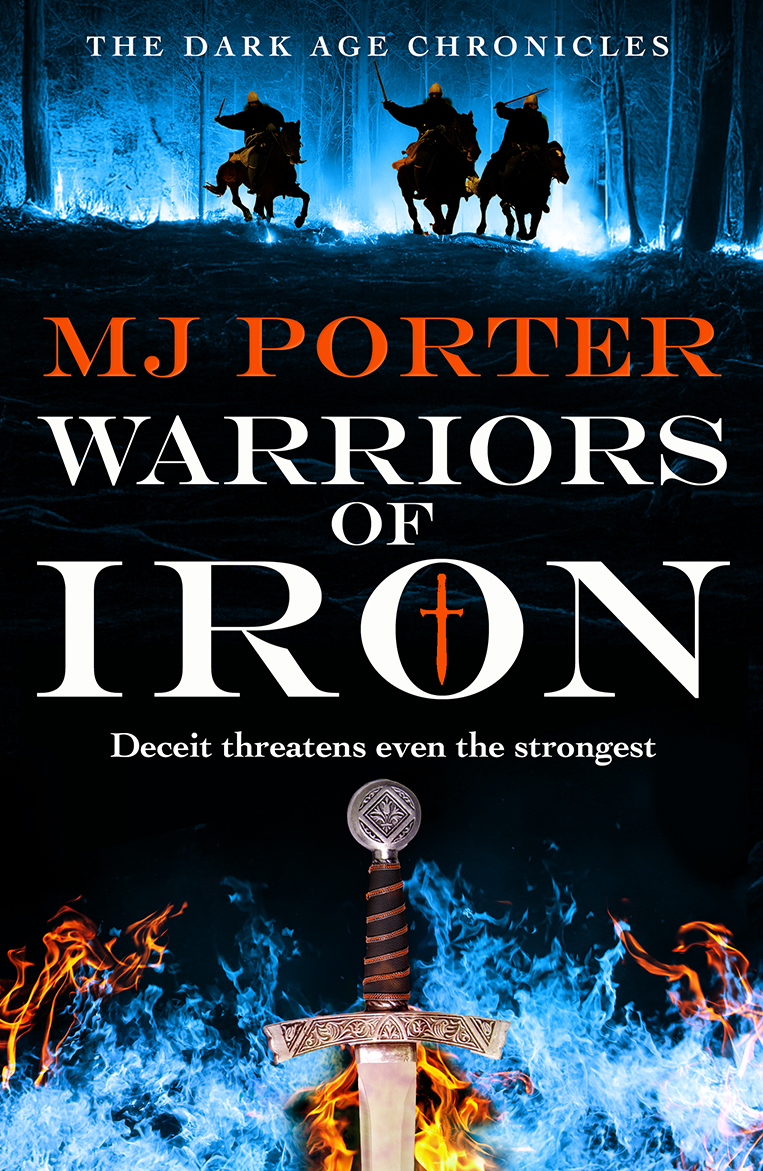
Continuing the epic historical adventure series from Richard Cullen, featuring The Black Lion…
Stripped of his birthright, Estienne Wace seeks to prove his worth in the deserts of Outremer!
Egypt 1219AD.
Abandoning the safety of England for the perilous shores of the Levant, Estienne Wace is thrust into the turmoil of the Fifth Crusade. Burning with righteous purpose, he is determined to reclaim the Holy Land in the name of Christ.
War rages along the banks of the Nile as a crusading army besieges the Saracen city of Damietta, certain that the price they pay in blood will return the glory and treasures they crave. But as the Black Lion roars, and the siege grinds on, Estienne’s unwavering faith is tested more and more by the grim reality of this brutal conflict.
As the siege turns on a knife edge, Estienne finds himself thrust upon a journey across the merciless desert. Stripped of everything, and forced into a dangerous alliance, he will grapple with the true meaning of faith, honour, and the price of salvation, in a land where nothing is as he once believed.
Perfect for the fans of Bernard Cornwell, Ben Kane and Conn Iggulden.
Crusade by Richard Cullen continues the story of Estienne Wace as he decides to join the Fifth Crusade. You can taste the heat and the sand in this one as he steps foot in the Holy Land.
It’s a very busy story. Estienne, quickly realising the rhetoric he’s been told regarding the Holy Land isn’t quite as it seems, begins to question his place there, even as he interacts with people from the local area who call it home. His understanding would perhaps seem a little too ‘modern’ if not for our new POV, that of one of the enemy. Kashta adds a new dynamic to the tale, even though his chapters are only occasionally inserted into Estienne’s tale. But he also comes to question whether the war is worth the cost.
It takes Estienne a long time to see beyond the heat and the sand and appreciate the beauty of the landscape and the people who live there. He certainly has a rough time, as Kashta, his new enemy, dogs his every step as do a few others who would rather see Estienne dead.
The story flows well, and I enjoyed the depiction of the landscape and people. I also appreciated the frank portrayal of the Fifth Crusade and the bickering and infighting between those supposedly in charge of it all. Having recently watched the first series of Rogue Heroes, I could see Egypt and its vast sand and dunes.
I’m curious to see what will happen to Estienne next. Perhaps he needs an easier time of it in the third book:)
Check out my review for Rebellion, the first book in the series.
Meet the author
Richard Cullen is a writer of historical adventure and epic fantasy. Previously published by Head of Zeus and Orbit Books, his new historical adventure series for Boldwood, Chronicles of the Black Lion, set in thirteenth-century England, will launch in October 2024.
Bestselling author Nicola Cornick’s brand-new heart-breaking historical tale of unforgettable courage, hidden secrets and lasting love, perfect for fans of Barbara Erskine, Philippa Gregory and Christina Courtenay.
1715: With the country on the brink of rebellion, Dorothy Forster’s life at Bamburgh Hall is ruled by the men in her life – her feckless brothers stirring up trouble at court, her elderly father with his dangerous secrets and the man she loves who the world seems determined to keep her apart from. As tensions grow, Dorothy finds herself caught between the warring factions, danger everywhere. Then Dorothy discovers her family are the keepers of the legendary Rose, the talisman both sides believe will guarantee them victory in this deadly conflict. Now Dorothy will have to risk everything to keep the Rose safe; the fate of the country and the men she loves rests in her hands.
Present Day: Hannah Armstrong has returned home to Bamburgh Hall for work but when she discovers that her stepmother Diana has been keeping worrying secrets, her focus shifts to getting to the truth. Their family home once belonged to heroic Dorothy Forster, whose portrait graces the walls and whose spirit lingers in her home, but soon Hannah learns that there was much more to this formidable woman. Because Dorothy left behind a mysterious legacy and it’s not long before Hannah realises it’s one people are willing to kill for. Now Hannah is in a race against time to unravel the secrets of the past before danger arrives at their door.
Two women divided by time but bound by a centuries’ old mystery. Bestseller Nicola Cornick is back with a brand-new thrilling adventure, a heartbreaking love story and the unforgettable story of how the courage of one woman can save a family and even save a nation.
The Secrets of the Rose is a dual-timeline novel set in the present day and 1715, and much more importantly, it’s located about 10 minutes from where I live. Just like when someone writes a historical novel featuring one of ‘my’ historical characters, I felt a little uneasy about it all. Thankfully, I needn’t have worried, and that allowed me to enjoy the story and local scenery very much.
Dorothy Forster is a local legend to the area and someone I’ve heard quite a bit about. It was lovely to put some ‘flesh’ on those stories and see her come to life as a real person. While the story has some slightly mystical qualities, it was still very enjoyable.
As always, I prefer the historical timelines to the modern-day ones, but Hannah was an engaging character with a lot going on in her life. I appreciated the parallels between the two main characters. The conclusions for both of our characters are thrilling and swept me along with them.
A delightful, easy read, I devoured in a couple of sittings.
(If you want to see some photos of Bamburgh then check out my blog post here).
Nicola Cornick is a historian and author who works as a researcher and guide for the National Trust in one of the most beautiful 17th century houses in England. She writes dual time novels that illustrate her love of history, mystery and the supernatural, and focus on women from the footnotes of history. Her books have appeared in over twenty five languages, sold over half a million copies worldwide and been described as “perfect for Outlander fans.” Nicola also gives writing and history talks, works as a consultant for TV and radio, and is a trustee of the Wantage Literary Festival and the Friends of Lydiard Park.
144 AD. Alaric Hengistson, leader of the Ravensworn, revels in his many fear-fuelled names whispered in the hearth flames. Cunning in battle, a ruthless war lord. He sleeps sound in the knowledge that he has been chosen by the Gods for a higher purpose – to rise up against the tyranny of an Empire.
For years he has thwarted Rome’s attempts to gain control over the land that has long resisted them. His land. Germania. However the rules are changing, and new deals are struck between the conquering Roman legions and the feuding Germanic tribes. Deals that could prove Alaric’s downfall.
As the eagles march with the wolves, together hunting the Raven, Alaric must prove his legend or watch his Ravensworn burn in flames.
Raven is a fun, violent, action-packed epic set in Germania in the second century AD.
Alaric is very far from being any hero. Yes, he might be prepared to stand apart from the might of the Roman Empire, but he doesn’t care who he tramples on along the way. Sometimes, he’s almost likeable, but a lot of the time, he’s just a single man, making slightly dodgy decisions, often based on his rage and fury and trying to live with the consequences. Alaric is proud of his reputation, but of course, it means he has far more enemies than allies, as becomes clear as the plotline develops. Alaric also suffers in that he believes the accolades he receives and even revels in them, even though, as the reader discovers, much of it is down to blind luck and not any great skill.
Unlike many Roman-era books, Raven contains very little ‘Roman.’ Rather, the story is that of an outsider looking in and understanding how the Roman Empire works—perhaps better than the Romans did! It’s also filled with betrayal and violence.
It’s great to read a book that merges the Roman world and that of tribal Germania and have it told from the viewpoint of those tribes. I look forward to reading more about the rogue, Alaric.
Meet the author
Adam Lofthouse is the author of action-packed historical thrillers. His brand new series for Boldwood, ‘Enemies of Rome’, will focus on the boundaries at the edge of the Roman Empire. The first book Raven, will be published in February 2025.
I’m delighted to welcome Nitin Nanji and his book, Lalji’s Nairobi, to the blog with an excerpt.
Excerpt 1
The next morning brought an early visitor to their door in the shape of the village Sarpanch, Thakorbhai. The Sarpanch was the elected head of the village and led the Panchayat. His role was to officiate over disputes, collect fines and enforce the law with the help of the police.
Thakorbhai was a large man with short legs and a bull neck. He sported a moustache that was long and curled upwards at the ends, like two cobras poised to strike. When he sat on a chair, he folded his legs under him and they disappeared under his enormous belly. The children of the village were thrown into fits of giggles at this sight as he looked like an overgrown hen sprawled over her eggs. For that reason, he was also known unkindly as ‘Murgiben’ (mother hen).
He invited himself into the yard and sat down on Parshottam’s charpoy. He had come about the story going around that Parshottam’s son was to head out to Africa. He knew Parshottam had been making inquiries about the next meeting of the Panchayat and thought the two matters may well be connected.
“You are right, I was hoping to have the matter considered at the Panchayat,” said Parshottam before calling out for Lalji to join them. Rambai appeared with a tumbler of salted buttermilk for the Sarpanch and joined in the chorus calling for Lalji.
“What does the boy say?” inquired Thakorbhai.
“He hasn’t made up his mind. See, I was thinking with the lack of prospects here after the famines and with the tax situation….”
“You leave the tax situation to me, Parshottam,” bellowed Thakorbhai. “We need to know if the boy is willing to go and take his chances!”
At that instance, both Lalji and Naran appeared. They paid their respects to the Sarpanch by bowing to him and gesturing to touch his feet hidden under his belly.
“So, what’s your decision young man?” he inquired of Lalji. “Are you ready to cross the big ocean and arrive at the opposite shore to start a new life, away from your family?”
Lalji seated himself down in a squatting position and looked straight at the Sarpanch. Without hesitation announced, “Yes, I willl be taking the vaan and see what destiny has in store for me. It is my role as the eldest son.”
“Shabhash (well said), my boy! That’s the right answer.” The cobras parted to reveal pink gums.
“The son of Dhiraj will be accompanying him, so as he is not alone,” interjected Parshottam.
Thakorbhai waved the idea away as being of no consequence. He told Parshottam his son was in a different league from many and he was supportive of the idea. He mentioned others had considered it before but no son of the village had made the journey.
“The reasons are many but the fact is no one has had the strength of character to take the step. If I was twenty years younger, I would have given the same answer as Lalji here,” he said.
Turning to Lalji he asked, “Would you lead a group of three others from here to go with you?”
Lalji was taken aback by the question, having never considered himself as taking on such responsibility. He didn’t feel unable to lead, but he wanted to know whom the Sarpanch had in his mind.
“It would be you as their leader with Nizar the hardware merchant’s son, and Ramji the eldest son of Karsan the builder. Then there’s that idle son of Dhiraj your father has been talking about.”
“But I hardly know them. Will they follow my wishes?” inquired Lalji.
“Leave that to me. I have spoken to Karsan and Noormohammed about that and they have both pledged their sons will do as you say. They have been waiting for such an opportunity for a long time to get their sons to Africa. They are good boys and want to succeed for their families. They need sound advice and guidance from someone who is mature and responsible. None of them are capable of it on their own. They all need to be led by someone sensible and smart.”
“But I am eighteen and I think they are older,” responded Lalji. The words seem to stop the Sarpanch in his tracks momentarily. He retorted dismissively, “Arre! When I was your age, I ran both the shop and farmed the land. And I did the accounts for my elder brothers. Ability trumps age!”
Having gulped the buttermilk in one long action with his head tossed back. Then he got up briskly to leave, adding, “I hear you have an Arab sea master in mind, Parshottam. For my part, I will speak to my contacts in Porbander to find out who they should contact in Africa. I suggest you start putting together enough food and grains for the journey for him.” The two cobras were drowned in buttermilk.
Book Trailer
Here’s the blurb
British Gujarat, 1905.
Despairing of the social injustices and crippling taxes under the British Raj, Lalji, 19, flees to British East Africa hoping to build a better life using his natural business skills and acumen. But he soon finds unexpected dangers in his new home- turbulent politics and war with German East Africa- as well as some surprising opportunities. A combination of luck, coincidence, and his flair for commerce lead to early success.
Then, just as he is at his most vulnerable, a new threat emerges from where he least expects: from within his own family.
Can Lalji beat overwhelming odds to fulfill his hopes and ambitions?
A story about survival, faith, ability, humanity, and a deep desire to succeed.
The ebook will be free to download on Kindle from February 4th – 8th
This title is available to read on #KindleUnlimited
Meet the Author
Historical novelist of Indian parentage, born and raised in Kenya, educated in England, writing about India and East Africa under the British Empire.
Nitin has come to writing his debut novel after retiring as a doctor. Born in Kenya before its independence he came to England at the age of fifteen. His parentage is Indian, his grandfather having moved during the British Raj from Gujarat in India to Colonial East Africa as an economic migrant.
‘Lalji’s Nairobi’ is set in the early part of the last century, inspired by the stories of Indian migrants who settled in East Africa. A ‘rags to riches’ story of the experiences of Lalji as a determined young businessman who grapples with the challenges of living in the new colony.
Within the backdrop of a racist administration, Nitin immerses the reader into the times and norms of colonial society and shows how Lalji achieves rapid success despite difficult odds, leading a team of four compatriots from his village.
The novel is well-researched and retains the undertones of the era. Nitin’s intimate knowledge of the three cultures of the colony (British, Indian, and African) succeeds in making this an enjoyable and authentic read.
‘Lalji’s Nairobi’ is now an award-winning novel that recently won acclaim from the prestigious New Generation Indie Book Awards as a ‘Finalist’. It also earned Five Stars and the ‘Highly Recommended’ award of excellence from The Historical Fiction Company, which has recently also awarded the book with a silver medal in the Blixen Africa Category.
I’m delighted to welcome Mercedes Rochelle to the blog with an excerpt from The Accursed King.
MURDER OF THE DUKE OF ORLÉANS
It was St. Clement’s day, 23 November. Isabeau of Bavaria, the Queen of France was ill and in mourning for her twelfth child, who died at birth ten days before. Louis hoped to cheer her up by arranging a supper at her Hôtel Barbette in the Rue du Temple. A merry party gathered, with all the most fashionable cavaliers and dames, who diverted the queen with pleasantries and songs of love. Despite herself, Isabeau smiled and engaged in a little wordplay, trying to forget her unhappiness for a few hours.
Around nine o’clock, a messenger was admitted. Louis recognized him; his name was Courteheuse, one of the king’s valets. He bowed to the queen and then turned to the duke who was sitting beside her.
“Monsieur le Duc d’Orléans, I come from his Majesty. He requests your presence at once at St. Pol to discuss most urgent business.”
“Ah, Madame la Reine, I must go.” Kissing the queen’s hand, Louis rose immediately.
Outside the room, two of his squires waited for him. “The king commands,” the duke said, reaching for his black furred cloak. “We must go quickly.” Not pausing for an answer, Louis made his way outside and waited while his squires brought up one horse for the both of them and his own palfrey. He looked up, noticing the sky was overcast. It was very dark and the streets were already deserted.
“There you are. Good. Let us go.” He mounted and started off at a fast walk, his squires behind him. Three valets carrying torches followed, but they were on foot and had trouble keeping up. The buildings were shuttered for the night and only an occasional sliver of light from barred windows lit the street. Louis didn’t mind. As they rode down the Rue Vielle du Temple, he was fiddling with his gloves and humming to himself.
They came to a place where the road widened around a well in the centre. Without warning eight muffled men sprung out from the shadows and ran at him. Thinking they were thieves, Louis shouted, “I am the Duke of Orléans!”
“That’s who we are looking for,” yelled one of them, and struck with an axe, severing Louis’s bridle hand. The duke shrieked, and another man slammed an axe into the back of his head. They pulled Louis from his horse and a third axe cleft his skull to the teeth, spilling his brains over the frozen paving stones.
The squires’ horse sidestepped, shied and bolted. The valets carrying the torches stopped when they reached the opening and two of them turned away and ran. The third dashed forward, pushing aside one of the attackers and threw himself onto the duke, not realizing he was too late. He vainly tried to protect his master but found himself in dire trouble, for by now the murderers were stabbing again and again with their daggers.
“Murder! Murder!” shrieked a witness from a window overhead.
“Shut up, you damned woman!” yelled one of the murderers. “Shut up!”
Frightened for a moment, the woman withdrew. The attackers heaved the valet aside and dragged the mangled duke over to the well, propping him up against the stones. His head lolled to one side. They picked up the still-burning torch and brought it closer to make sure he was truly dead.
At that moment, a burly man in a red hood came out of the house across the street, known as the Hôtel de l’Image de Notre Dame. He raised an axe one more time and brought it down on the duke’s head. “Give me that torch,” he growled. “Let’s go! He’s dead.”
The murderers were interrupted by a clatter at the end of the street; the squires, having gained control of their horse returned with the duke’s palfrey. They assumed he had fallen off.
The man in the red hood stepped forward. “Be gone! Or you shall share his fate.” He pointed to the dead man.
Terrified, they turned and fled, crying out, “Murder! Murder!”
Their task finished, the red-hooded man threw his torch into the Hôtel, setting it on fire. They all fled down the Rue des Blancs Manteaux, scattering caltrops on the ground to deter anyone from giving chase. At the same time, the woman started screaming “Murder” again, and the poor valet lay on the ground, crying, “My master! My Lord!” Soon his voice failed and he, too, was gone.
Here’s the blurb for The Usurper King
From Outlaw to Usurper, Henry Bolingbroke fought one rebellion after another.
First, he led his own uprising. Then he captured a forsaken king. Henry had no intention of taking the crown for himself; it was given to him by popular acclaim. Alas, it didn’t take long to realize that that having the kingship was much less rewarding than striving for it. Only three months after his coronation, Henry IV had to face a rebellion led by Richard’s disgruntled favorites. Repressive measures led to more discontent. His own supporters turned against him, demanding more than he could give. The haughty Percies precipitated the Battle of Shrewsbury which nearly cost him the throne—and his life.
To make matters worse, even after Richard II’s funeral, the deposed monarch was rumored to be in Scotland, planning his return. The king just wouldn’t stay down and malcontents wanted him back.
The day Henry IV could finally declare he had vanquished his enemies, he threw it all away with an infamous deed. No English king had executed an archbishop before. And divine judgment was quick to follow. Many thought he was struck with leprosy—God’s greatest punishment for sinners. From that point on, Henry’s health was cursed and he fought doggedly on as his body continued to betray him—reducing this once great warrior to an invalid.
Fortunately for England, his heir was ready and eager to take over. But Henry wasn’t willing to relinquish what he had worked so hard to preserve. No one was going to take away his royal prerogative—not even Prince Hal. But Henry didn’t count on Hal’s dauntless nature, which threatened to tear the royal family apart.
These titles are available to read on #KindleUnlimited
Meet the Author
Mercedes Rochelle is an ardent lover of medieval history, and has channeled this interest into fiction writing. Her first four books cover eleventh-century Britain and events surrounding the Norman Conquest of England. The next series is called “The Plantagenet Legacy” and begins with the reign of Richard II.
She also writes a blog: www.HistoricalBritainBlog.com to explore the history behind the story. Born in St. Louis, MO, she received by BA in Literature at the Univ. of Missouri St.Louis in 1979 then moved to New York in 1982 while in her mid-20s to “see the world”. The search hasn’t ended!
Today she lives in Sergeantsville, NJ with her husband in a log home they had built themselves.
I’m delighted to welcome E.j. McKenna and her new book, No Good Deeds, to the blog with an excerpt.
Excerpt
“You know what I want beyond all else in this world? Four walls and a roof. All my own. Don’t even need another room.” She gave an embarrassed laugh. “I know it’s simple, but I ain’t never had that. It’d be out of town, but not too far out, maybe close to a river, I dunno. I’d be a Bounty Hunter or a Trapper or somethin’, to pay any costs I have. And I’d live off the land, all quiet like.”
Blurb
Annie Schaeffer is no stranger to violence. Born of an outlaw father, she was sold to a traveling show at the age of six, now finally escaping as an adult.
On the run and wounded, she finds an unlikely ally In Nathan Healey – a member of the Needham Boys gang.
As she earns her place among the outlaws, Annie’s survival hinges on her lethal skills and growing bond with Nathan.
Nate’s moral compass shifts with his circumstances, especially when those he loves are involved. Upon meeting Annie, he finds himself drawn to a woman determined to live differently to the expectations others place upon her; to live freely and fairly. The way he has always wanted.
Annie’s quest for independence takes a dark turn as the gang begins to collapse. Betrayal runs deep, and the cost of trust is high.
No Good Deeds is a gripping tale of resilience and retribution in the untamed West, where loyalty is fleeting and justice is won at the barrel of a gun. Annie Schaeffer’s story is one of fierce determination, as she battles her past and the outlaws who seek to control her fate.
E.J. McKennais a freelance writer in the UK with a great interest in American History, and a degree in English and American Literature with Creative Writing from the University of Kent.
At the end of 2023, she co-created a creative writing app for people of all ages to improve their writing skills in a fun, relaxed environment.
Born and raised in the UK, but a lover of traveling, she has a fascination with all social history across different countries and cultures. One of her favourite historical periods is the Victorian era, especially with United States history.
“The juxtaposition between the established countries of Europe, and the new world of America is fascinating to me. So many people trying to survive harsh frontier life, while trying to continue the uptight decorum of Victorian society.”
A huge advocate for feminism and human equity, her writing centres around determined female protagonists in traditionally male roles, tackling the perceptions of women in history. Her strong female protagonists go out of their way to change their society’s expectations for the fairer.
I’m delighted to welcome Helen Hollick and her book, Harold The King (UK)/ I Am The Chosen King (USA/Canada), to the blog.
Blurb
First published in 2000 – Celebrating a Silver Anniversary!
The events that led to the Battle of Hastings and the Norman Conquest of England in 1066 – told from the English point of view.
Two men. One crown.
England, 1044. Harold Godwinesson, a young, respected earl, falls in love with an ordinary but beautiful woman. In Normandy, William, the bastard son of a duke, falls in love with power.
In 1066 England falls vulnerable to the fate of these two men: one, chosen to be a king, the other, determined to take, by force, what he desires. Risking his life to defend his kingdom from foreign invasion, Harold II led his army into the great Battle of Hastings in October 1066 with all the honour and dignity that history remembers of its fallen heroes.
In this beautifully crafted tale, USA Today bestselling author Helen Hollick sets aside the propaganda of the Norman Conquest and brings to life the English version of the story of the man who was the last Anglo-Saxon king, revealing his tender love, determination and proud loyalty, all to be shattered by the desire for a crown – by one who had no right to wear it.
Praise for Helen Hollick
“Helen Hollick has it all! She tells a great story, gets her history right, and writes consistently readable books”
~ Bernard Cornwell
“A novel of enormous emotional power”
~ Elizabeth Chadwick
“Thanks to Hollick’s masterful storytelling, Harold’s nobility and heroism enthral to the point of engendering hope for a different ending…Joggles a cast of characters and a bloody, tangled plot with great skill”
~ Publisher’s Weekly
“Don’t miss Helen Hollick’s colourful recreation of the events leading up to the Norman Conquest.”
~ Daily Mail
“An epic re-telling of the Norman Conquest”
~ The Lady
“If only all historical fiction could be this good”
This title is available on #KindleUnlimited, except in US & Canada
Meet the Author
First accepted for traditional publication in 1993, Helen became a USA Today Bestseller with her historical novel, The Forever Queen (titled A Hollow Crown in the UK) with the sequel, Harold the King (US: I Am The Chosen King) being novels that explore the events that led to the Battle of Hastings in 1066. Her Pendragon’s Banner Trilogy is a fifth-century version of the Arthurian legend, and she writes a nautical adventure/supernatural series, The Sea Witch Voyages. She has also branched out into the quick read novella, ‘Cosy Mystery’ genre with her Jan Christopher Mysteries, set in the 1970s, with the first in the series, A Mirror Murder incorporating her, often hilarious, memories of working as a library assistant. The fifth in the series, A Memory Of Murder, was published in May 2024.
Her non-fiction books are Pirates: Truth and Tales and Life of A Smuggler. She is currently writing about the ghosts of North Devon, and Jamaica Gold for her Sea Witch Voyages.
Recognised by her stylish hats, Helen tries to attend book-related events as a chance to meet her readers and social-media followers, but her ‘wonky eyesight’ as she describes her condition of Glaucoma, and severe arthritis is now a little prohibitive for travel.
She lives with her family in an eighteenth-century farmhouse in North Devon with their dogs and cats, while on the farm there are showjumper horses, fat Exmoor ponies, an elderly Welsh pony, geese, ducks and hens. And several resident ghosts.
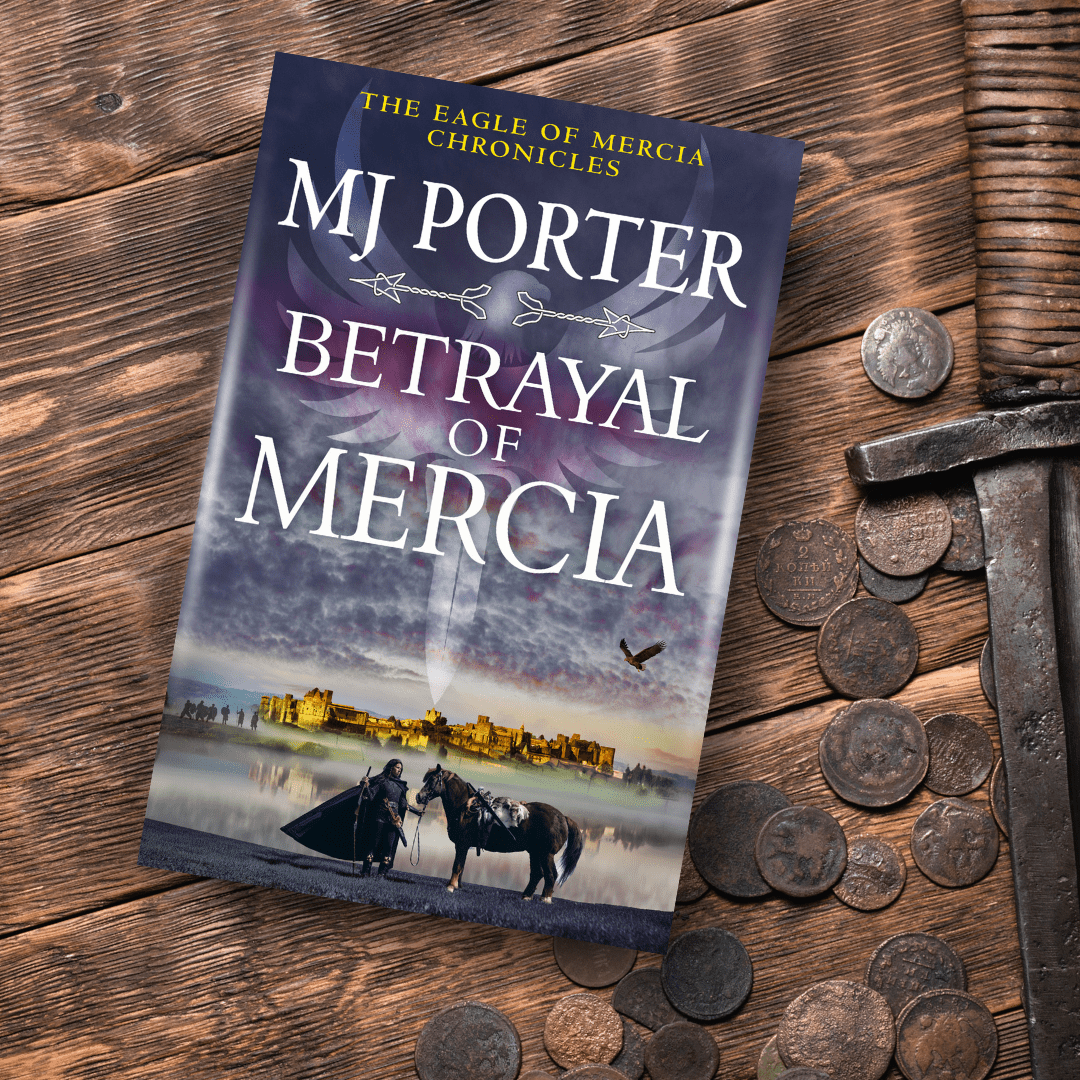
A King in crisis, a Queen on trial, a Kingdom’s survival hangs in the balance.
Londonia, AD835 The deadly conspiracy against the children of Ealdorman Coenwulf is to be resolved. Those involved have been unmasked and arrested. But will justice prevail?
While the court convenes to determine the conspirator’s fate, King Wiglaf’s position is precarious. His wife, Queen Cynethryth, has been implicated in the plot and while Wiglaf must remain impartial, enemies of the Mercia still conspire to prevent the full truth from ever being known.
As Merica weeps from the betrayal of those close to the King, the greedy eyes of Lord Æthelwulf, King Ecgberht of Wessex’s son, pivot once more towards Mercia. He will stop at nothing to accomplish his goal of ending Mercia’s ruling bloodline.
Mercia once more stands poised to be invaded, but this time not by the Viking raiders they so fear.
Can Icel and his fellow warriors’ triumph as Mercia once more faces betrayal from within?
An action packed, thrilling historical adventure perfect for the fans of Bernard Cornwell and Matthew Harffy
Here’s the purchase link (ebook, paperback, hardback and audio)
Throughout the series I’ve taken young Icel to some interesting locations, and that means I’ve had to make use of many maps which are recreations of the era, because, alas, we have none from the period. Both maps I’ve had made are relevant to Betrayal of Mercia which largely takes place in London, or Londonia, or Londinium and Lundenwic.
The map of Lundenwic and Londinium, shortened in the books to Londonia, a term more accurately applied to the eighth century and not the ninth, is much simplified and largely shows locations relevant to me and which I need to remember when writing the books. Although, I must confess, I did forget about it in the drafting process and when I found it, I was relieved to discover I hadn’t made THAT many mistakes.
The most important elements to understand are that ‘London’ as we know it didn’t exist at this time. Instead, there were two very distinctive settlements, and they were seperated by the River Fleet, one of London’s ‘lost’ rivers because it’s now subterranean. I think, for me, not being very familiar with London as it is today actually helped. Rather than trying to orientate myself as to what’s there now, I can work the other way round. I sort of know what was and wasn’t there in the ninth century, and then I can try and work out what’s there now:) Honestly, it makes sense to me.
It also helps to remember that despite London now being the capital of England, it wasn’t in the ninth century. Far from it, in fact. There are many good books on London in it’s earliest manifestations. If you’re interested, they are very worth checking out.
I also have a map of England at this time. This is to help readers (and me) try and get an idea of what settlements were and weren’t there at the time. As I’ve learned, it can be far too easy to just assume the longevity of a location, and then discover it wasn’t there at all, was bigger or even, much smaller than it is now. One of those locations is Wall, close to Lichfield, which was very important during the Roman occupation of Britain, but is now little more than ruins. And it’s far from alone in that.
A King in crisis, a Queen on trial, a Kingdom’s survival hangs in the balance.
Londonia, AD835 The deadly conspiracy against the children of Ealdorman Coenwulf is to be resolved. Those involved have been unmasked and arrested. But will justice prevail?
While the court convenes to determine the conspirator’s fate, King Wiglaf’s position is precarious. His wife, Queen Cynethryth, has been implicated in the plot and while Wiglaf must remain impartial, enemies of the Mercia still conspire to prevent the full truth from ever being known.
As Merica weeps from the betrayal of those close to the King, the greedy eyes of Lord Æthelwulf, King Ecgberht of Wessex’s son, pivot once more towards Mercia. He will stop at nothing to accomplish his goal of ending Mercia’s ruling bloodline.
Mercia once more stands poised to be invaded, but this time not by the Viking raiders they so fear.
Can Icel and his fellow warriors’ triumph as Mercia once more faces betrayal from within?
An action packed, thrilling historical adventure perfect for the fans of Bernard Cornwell and Matthew Harffy
Here’s the purchase link (ebook, paperback, hardback and audio)
In Betrayal of Mercia, the seventh book in the Eagle of Mercia Chronicles featuring young Icel, I’ve done something that I don’t ‘think’ anyone else has done before. I’ve staged a criminal trial, making Betrayal part court-room drama and part action-thriller (you know Icel is always going to end up in a fight at some point). However, there are odd things about Saxon England that we have no information about – one of them is how often people actually went to church once Christianised, another is exactly how the law was enacted.
This might seem like an odd thing to say. Everyone knows there are surviving law codes from the era, especially from the eleventh century, with the inspiring names of Æthelred I or Cnut II, and indeed, the earliest law code dates back to Ine, in the seventh century, from which we can glean such titles as Wealas or foreigner, but applied to the Welsh, who had different wergild payments and punishment from the Saxons. But, there has long been an argument about how much these law codes reflect practise as opposed to an ideal. And some of the elements we ‘think we know’ turn out to be on much less steady ground. And, at the heart of all this is a problem with our current perceptions of ‘right,’ ‘wrong,’ and ‘justice.’ We ‘appear’ to look at these elements of our current legal system in a way very different to the era.
When studying what records we do have, we’re greeted with some interesting terms. ‘Thereafter there would be no friendship,’ appears in a charter detailing a land dispute in the later tenth century – between Wynflæd and Leofwine (S1454 from 990 to 992). In this, despite whoever was in the wrong or the right, the decision was made which was something of a compromise – both injured parties had to make concessions. No one truly ‘won’, even though Wynflæd had many who would speak on her behalf, including the king’s mother, and the Archbishop of York, and had appealed directly to the king, Æthelred II, for assistance, only for Leofwine to refuse to attend his summons saying that royal appeals couldn’t precede a regional judgement on the matter.
In the famous case of Lady Eadgifu of Wessex (recorded in charter S1211), the mother of Kings Edmund and Eadwig (who features in the Brunanburh series), her landholdings at Cooling required the intervention of her husband, stepson, son and grandson, in a long-running debacle which was never really resolved until her grandson intervened close to the end of her life. Even though she appears to have held the ‘landboc’ – the title deed for the land – and was a highly regarded member of the royal family, this wasn’t enough to stop counterclaims. In the end, she assigned the land to the Christ Church religious community, and that way, no one actually benefitted apart from the church.
These cases both refer to land disputes, which are one of the larger areas of document survival, along with wills. But what about crimes visited against the king’s mund (both his physical person and his physical kingdom)? Here, we’re again confronted with little knowledge. We know of ealdormen being banished (under Æthelred II) and this attests to another element of the practise of law which is perhaps surprising. There does seem to have been an aversion to capital punishment (as Rabin details in his book mentioned below). And there was also a concern that the right sentence was handed to individuals – it was as bad to incorrectly punish as it was to have committed the crime.
In trying to stage a trial set in the Saxon period (which I now realise was a bit bonkers), I’ve relied heavily on a very short book, Crime and Punishment in Anglo-Saxon England by Andrew Rabin, and also his translations of the Old English Legal Writings by (Archbishop) Wulfstan (from the 1000s), from which I’ve determined how many oath-helpers people must have based on the Mercian Wergild listed within the source documents. This suggests the value placed on individuals – the king, of course, being at the top. Each individual had a wergild value and equally, each individual had a required value for the number of oath-helpers who would stand as surety for them if asked to detail what they had ‘seen and heard’ in a trial situation. The implication being that those who needed the least oath-helpers were more trustworthy than those who needed many – so a king might need no one, after all, he was the king, whereas a warrior might need a few, and a ‘normal’ person might need many.
This feels like a very different world to the one we ‘know,’ where transgressions are punished by custodial sentences and fines and where the burden of proof rests on the shoulders of those prosecuting the alleged offenders.
It has certainly been an interesting experiment, and one I hope readers will enjoy, and more importantly, one which I’ve managed to convey largely ‘correctly.’
A King in crisis, a Queen on trial, a Kingdom’s survival hangs in the balance.
Londonia, AD835 The deadly conspiracy against the children of Ealdorman Coenwulf is to be resolved. Those involved have been unmasked and arrested. But will justice prevail?
While the court convenes to determine the conspirator’s fate, King Wiglaf’s position is precarious. His wife, Queen Cynethryth, has been implicated in the plot and while Wiglaf must remain impartial, enemies of the Mercia still conspire to prevent the full truth from ever being known.
As Merica weeps from the betrayal of those close to the King, the greedy eyes of Lord Æthelwulf, King Ecgberht of Wessex’s son, pivot once more towards Mercia. He will stop at nothing to accomplish his goal of ending Mercia’s ruling bloodline.
Mercia once more stands poised to be invaded, but this time not by the Viking raiders they so fear.
Can Icel and his fellow warriors’ triumph as Mercia once more faces betrayal from within?
An action packed, thrilling historical adventure perfect for the fans of Bernard Cornwell and Matthew Harffy
Here’s the purchase link (ebook, paperback, large print, hardback and audio)
There is a scene in Betrayal of Mercia where our favourite healer, Wynflæd, speaks to young Icel about her experiences of ‘bad queens,’ referencing three women in almost living memory deemed as ‘bad’, certainly many years after their deaths, if not quite by the 830s, when the scene takes place. These women were the wife of King Offa, his daughter, Eadburh, and the daughter of King Coenwulf (796-821), Cwenthryth. Indeed, this collection of bad queens, especially the sister of Queen Cynethryth, have been cited as the reason why Wessex was so slow to adopt the term. But, was everything as it appears, or are these reputations a later tradition?
The daughter of King Offa (757-796), Eadburh was married to the king of the West Saxons, Beorhtric. In the words of the later Asser, who wrote at the end of the 890s, she’s accused of poisoning her husband to death while trying to actually poison one of his disloyal followers. Interestingly, the man who became king after Beorhtric was King Ecgberht of Wessex, who features in the Icel stories, and in turn, it was his grandson who commissioned Asser to write his life which tarnishes the reputation of Eadburh.
Cynethryth, the wife of King Offa, was a powerful woman in her own right, and the only preconquest queen known to have minted coin showing her own name. In later centuries, her name became associated with the murder of a king of the East Angles, and she was involved in a long-running land dispute with the archbishop of Canterbury.
Cwenthryth, the daughter of King Coenwulf, became associated with the murder of her brother, Cynehelm/Kenelm. The later, Anglo-Norman histories inform that.
‘At Winchcombe you will read of the secret martyrdom of Kenelm. He was the son of Cenwulf, [Coenwulf] the Mercia king, who died in the year of grace 819, having reigned for twenty-four years. The martyrdom of his son Kenelm was revealed from heaven to Pope Silvester II at Rome.’p691 Henry, Archdeacon of Huntingdon, Historia Anglorum, The History of the English People
While The Chronicle of John of Worcester extends this recording for the year, ‘[819] St Cenwulf, king of the Mercians, after a life devoted to good deeds, passed over to the eternal blessedness which is in heaven, and left his 7-year-old son St Kenelm heir of his realm. But when a few months had passed, by the treachery of his own sister Cwenthryth, whose cruel spirit had been roused by an awful lust for power, he was secretly done to death with cruel outrage by Æscberht, his most bloodthirsty tutor, in the shade of a thorn tree in a deserted wood.’ P239-241
Winchcombe Nunnery was founded by Cwenthryth’s father, and the family were therefore invested in the religious establishment, although whether enough to kill one of their own to have him venerated as a saint, does seem doubtful. The identity of St Kenelm is very much contested, although it is believed that Cynehelm did live, and died before his father, which led to Coelwulf, the first of his name, and Coenwulf’s brother, becoming King of Mercia when his brother died..
This is the scene from Betrayal, where Wynflæd shares the gory knowledge she knows, and perhaps, hints at her approval for such strong-minded women that they could become associated with such dark deeds.
‘Mercia hasn’t fared well with the women wed to their kings.’ A soft cackle. ‘Or the children born between a king and a queen. Wigmund’s merely the most current of many disappointments. Lord Coenwulf there, his father became king because his brother’s daughter killed her brother.’
‘I thought that was a lie,’ I countered.
‘That’s how King Coenwulf had it reported. It was all true though. I didn’t witness it, but I know of others who did.’
‘What, watched her kill her brother?’
‘No, witnessed the king speak of it, to a select few. And before her, Offa’s wife also had blood on her hands, as did Offa’s sister.’
I shuddered at the thought. ‘Why?’
‘A woman must live by her wits, and safeguard her future, for fear she’ll be locked up tight in a nunnery, with no means of engaging with the world at large. Think of Lady Cynehild.’ Wynflæd met my searching gaze then. ‘She remarried, and meddled where she shouldn’t have done. Admittedly, she stopped far short of murdering anyone.’
‘So, the king should have expected this then?’ I was astounded.
‘Maybe. He married her.’ Wynflæd cackled softly. ‘A man may wed a woman for her title, and lands. A woman may divorce a man. But better to have him dead, and then take his place. A grieving woman will have the sympathy of others. A widow has more freedom than a wife.’
‘You almost sound like you approve.’
‘I do not,’ she countered, but her eyes glittered.
Wynflæd is a stalwart of the series, and I was recently inspired to write a short story from her point of view regarding Mercia’s alleged ‘bad queens.’ If you’d like to read it, sign up for my newsletter and I’ll send you a link to download the story. And, you automatically receive a free short story collection as well.
A huge thank you to all the book bloggers and Rachel at Rachel’s Random Resources for organising. Some of these amazing people have been with Young Icel throughout the entire series, and I am so grateful they are so keen to read, they sign up for the blog tour:)