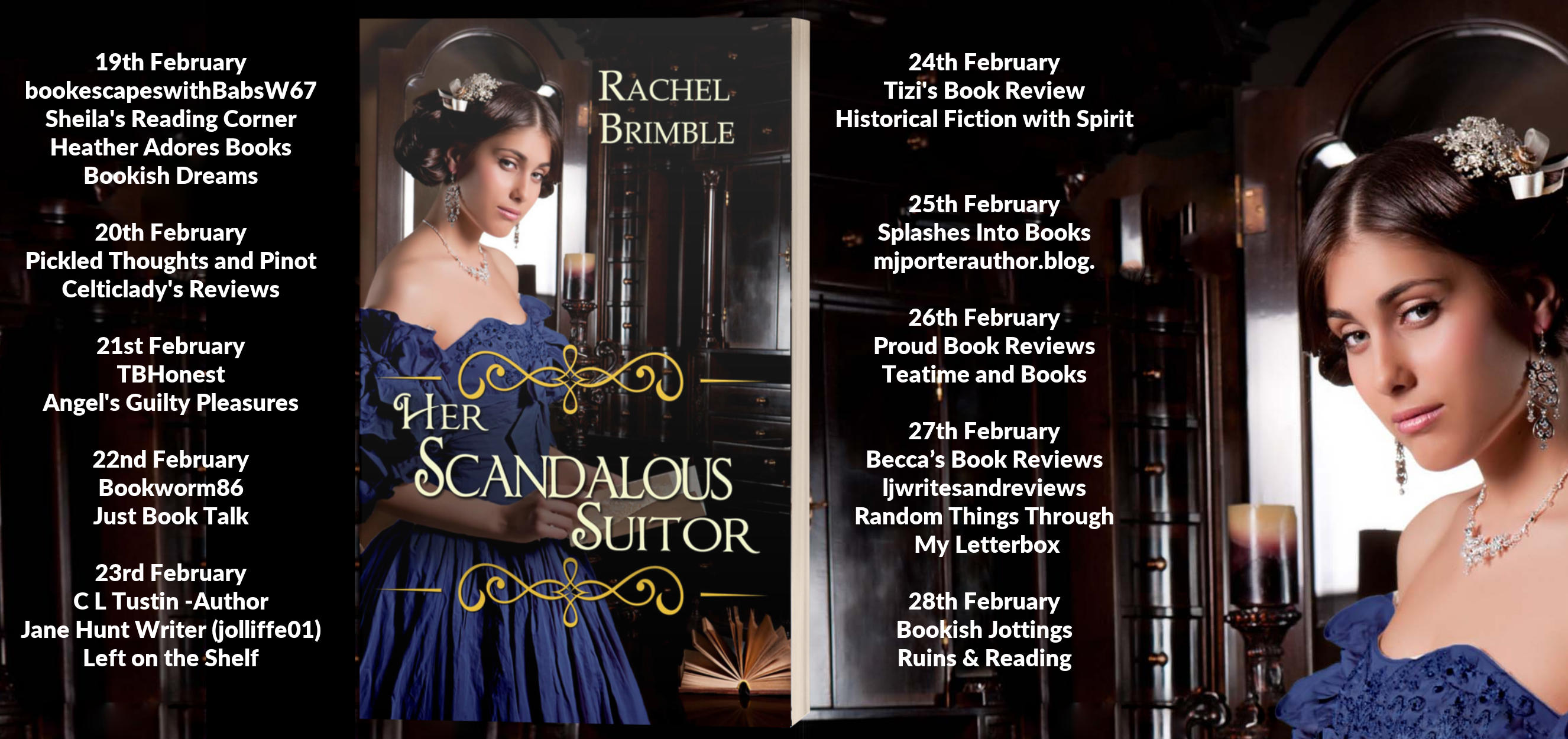
‘Angelica had always known her lack of high birth, fortune or influence debarred her from being presented as an eligible young woman worthy of marriage. To cap it all, being an actress assured she was utterly beyond the pale of respectability.’
Nightly at the Covent Garden Theatre in London, an enchanting actress is wowing the crowds with her affecting portrayal of Ophelia. Preyed on by rakes and opportunistic young bucks, feted by dukes and earls, even the Prince Regent himself, Angelica Leigh is a sensation.
But in Regency England, beauty and talent are not enough to be considered marriage material, so when the eminently eligible Lord Charles Latimer sets his heart on Angelica, his uncle is sent to intervene.
As a highly respected, hard-working and wealthy lawmaker, The Honourable Ivor Asprey, is himself seen as desirable husband material, but widowed with an eleven-year-old daughter Elinor, he has forsaken all thoughts of romance. Lord Latimer’s mother, the Duchess of Arlington, despairs of her son, despite being reassured by Ivor that his infatuation with the actress will pass. But there is something about Angelica Leigh that demands attention, and even the austere and upstanding Mr Asprey isn’t immune to her charms.
Sunday Times bestselling author Jane Dunn brings the Regency period irresistibly to life. Perfect for fans of Jane Austen. Janice Hadlow, Gill Hornby, and anyone with a Bridgerton-shaped hole in their lives.
A Scandalous Match returns us to Jane Dunn’s wonderful reimagining of Regency England. Our heroine this time is Angelica, our hero Ivor. Both of them are very different characters. The chemistry between them takes some time to develop, but when it does, it is quite explosive.
A Scandalous Match contains all the elements of a Regency romance we would expect, including the stubborn heroine and equally stubborn hero, their failure to speak plainly, and the reach of society that endeavours to keep them apart. But, as with Jane’s previous books, there is the fascinating element of ‘other’ in there as well. The servants aren’t faceless and nameless. The conventions of the times are laid bare, and the peripheral characters also ‘buck’ against the trends we might expect. It all adds a delicious quantity to the books, which I adore, from the ‘cant’ of the servants to the slightly risqué relationship of Angelica’s mother and her ‘keeper.’ I also adore how the obsession with horses is constantly explored, just as in today’s day and age, we might brag about our high-end cars.
Another thrilling and enthralling read. Readers of Regency Romance, and romance in general, will delight in travelling to Jane’s Regency England.
Jane Dunn is an historian and biographer and the author of seven acclaimed biographies, including Daphne du Maurier and her Sisters and the Sunday Times and NYT bestseller, Elizabeth & Mary: Cousins, Rivals, Queens. She comes to Boldwood with her first fiction outing – a trilogy of novels set in the Regency period, the first of which is to be published in January 2023. She lives in Berkshire with her husband, the linguist Nicholas Ostler.
Cocktails, chaos, and an unexpected twist. Can Perry and his hens unveil the truth before time runs out?
Death at Prestigious Hotel and Spa, Chasingham House
We are hearing reports that a young woman has been found dead at Chasingham House, the exclusive venue in the Cotswolds. She has not been named, and the cause of death is unknown at this time. This will no doubt cast a cloud over the bachelor weekend being hosted there by Lady Beatrice (36), the Countess of Rossex, for her business partner Perry Juke (34) ahead of his wedding to bestselling author and celebrity chef Simon Lattimore (40). Also staying at Chasingham House are top models Camile Redmaine (35) and Mel Parks (35), who are celebrating newly-single Cammy’s birthday with a group of friends.
When one of the birthday girls is found dead in her room, it’s clear Bea plans for her, Perry, and their friends to chill around the pool, have a few treatments, and generally relax, seem to have gone down the drain. When the local police are quick to dismiss the death as an accident, Bea is determined to help investigate anyway, along with the rest of Perry’s party.
Can Perry and his hens catch the killer before the weekend is over and the trail goes cold?
A Cocktail to Die For is a fabulous addition to the Right Royal Cozy Mystery series.
Taking us away from any of the more usual ‘royal’ residences, we are in the Cotswolds, attending Perry’s stag do. But of course, our intrepid gang don’t seem to be able to go anywhere without someone turning up dead.
Bea, Perry and Adler try to solve the mystery of who and how our victim might have been murdered while contending with an officious and ineffectual local detective.
As always, these stories are well-plotted and engaging. While a few of the main characters might be missing from this tale, Adler as a main character more than compensates. It’s also reassuring to know that now the ‘big’ mystery has been solved which has rumbled through many of the previous books, this series has still go ‘legs’, and I hope there will be many more books.
Thoroughly enjoyable and highly recommended.
Check out my reviews for the other books in this fabulous series.

Hello. I’m Helen Golden. I write British contemporary cozy whodunnits with a hint of humour. I live in small village in Lincolnshire in the UK with my husband, my step-daughter, her two cats, our two dogs, sometimes my step-son, and our tortoise.
I used to work in senior management, but after my recent job came to a natural end I had the opportunity to follow my dreams and start writing. It’s very early in my life as an author, but so far I’m loving it.
It’s crazy busy at our house, so when I’m writing I retreat to our caravan (an impulsive lockdown purchase) which is mostly parked on our drive. When I really need total peace and quiet, I take it to a lovely site about 15 minutes away and hide there until my family runs out of food or clean clothes
In 2023, I set myself the task of reading 52 books, or one book a week, but I smashed that, reading/listening to more than double that number. So, what have I been reading?
I’ve taken part in many blog tours, and I also read a lot of fellow Boldwood Books authors, but I also have my favourites that I return to time and time again. I don’t show star ratings on my blog, and that’s intentional. You can always see what I’ve been reading over on Goodreads, where I do tend to give star ratings.
Fantasy
Fantasy was one of my first loves, but I read surprisingly little of it now. Aside from my relisten of all the Terry Pratchett Discworld audiobooks (which I’m loving – I listened to 20 books in the series – and discovered the joy of slowing down the narrator as opposed to speeding them up), I also read the wonderful short story collection, A Stroke of the Pen. I’ve also read Mark Lawrence’s, The Book That Wouldn’t Burn, and indulged in the fabulous Advent of Winter, a short story a day throughout Advent. I think this might sway my reading for 2024, as well as Spread, another short story anthology which contained a host of fabulous writers. And, Steve Jones’ Call Time, which I really enjoyed. His main character is a real ass, but it’s intentional, although I think perhaps some people don’t realise that. It’s worth persisting with, and all those of a ‘certain’ age will love the retro mentions.
Historical Fantasy
I indulged in a little bit of historical fantasy, Theodore Brun’s new book, A Savage Moon, which was excellent, and the anthology, Alternate Endings, which I found really enjoyable.
Mystery
I’ve been reading more and more contemporary mysteries, 23 in total. I have a couple of favourite series, that by Helen Golden, and also a series set in contemporary Italy by TA Williams, as well as some other series I’ve discovered, most notably that by EV Hunter. I read the first book in Kate Wells farming mystery series, and How Not to Murder Your Ex by Katie Marsh. I also read Pass the Cyanide, a foodie short story collection. The Cozy Craft Mystery series by Mille Ravensworth has also been delightful – short, sharp and snappy. I’m also continuing to read Debbie Young’s series – both the Sophie Sayers series and the St Bride’s series.
What I’m really enjoying is working out how the authors ‘tell’ their stories – a good mystery is liberally interspersed with ‘tells’ which the reader only realises as the mystery resolves. There’s a lot to be learned from that for historical fiction, although I did find myself veering towards a bit of a mystery in one of the books I’ve written this year, entirely by accident:)
Historical Mystery
Historical mystery, both cozy and a little more not cozy, is one of my favourite genres. I’ve read 18 historical mysteries – The Alewives by Elizabeth R Andersen on audio which is fabulous, the Iris Woodmore series by Michelle Salter, the new Sarah Hawkswood – I do love this series, and the Fiona Figg and Kitty Lane Mysteries by Kelly Oliver. I’ve recently discovered Helen Hollick’s 1970s mystery series, which I’m adoring for all the little details she’s added which really place it in the early 1970s. The notes show that Helen has spent much time arguing with her former classmates over some of those details, and that shows a real desire to ‘get it right,’ which I appreciate. When I was writing my historical mysteries, my Dad was so helpful in offering advice including reminding me that there would have been steam trains in the 1940s. I also really enjoyed Colin Garrow’s historical mystery, Red Snow, set in and around the Newcastle area.
Historical
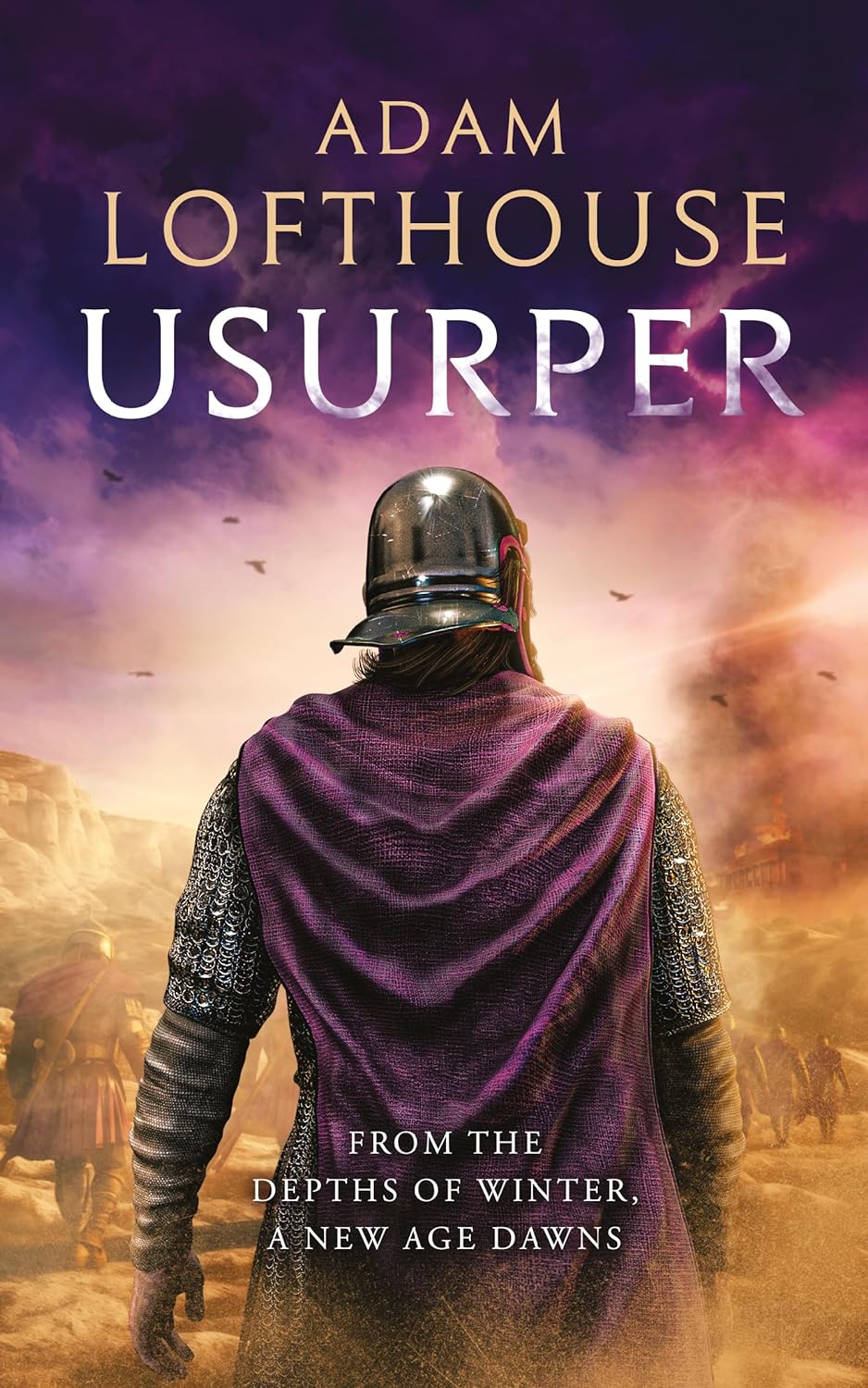
I read quite a bit of historical – 17 titles. I veered from Renaissance Italy, with Kelly Evans’, Turning The World to Stone to the Roman Empire in the BC years, with both Robert M Kidd and SJA Turney. I’ve already listed a couple of my books of the year over on the Aspects of History website, which included JC Duncan’s Warrior Prince, Donovan Cook’s Odin’s Betrayal and Jane Dunn’s The Marriage Season. I also discovered Melissa Addey’s Roman series, which I’m adoring – such a fabulous idea to tell the tale of the Colesseum when it was being used. And Robert Kidd’s To Kill A Consul, set in the third century BC. I’ve only managed one SJA Turney book this year, which I’m annoyed about. I’m desperate to read his latest Damned Emperor series, but need to find the time. I discovered Gordon Doherty‘s, Legionary series, which I want to read more of, as I started with book 9. I also read the new Dan Jones, and found it very bleak, hopefully, intentionally so, and fellow Boldwood author Peter Gibbons Saxon series. As well as Cathie Dunn’s Ascent. So, I read a fair bit set in and around my era, and also some more distant time periods.
Other Genres
I’ve read a little outside these genres, completing Evie Hunter’s gangland series set in Birmingham, and again, being inspired by the way she tells her story. It was extremely compelling, especially as every character was just horrible and self-involved. I read a couple of historical romances, the odd thriller, and also other tales I might not usually pick up. That is the joy of being a blog host. I can’t say I ever regret my decisions, and it is great to read so widely.
Audio Books
Aside from the new Discworld recordings, I also listened to a couple of other audiobooks. The Alewives by Elizabeth R Andersen is fabulous. I also listened to a historical romance, which I really enjoyed and a short story collection. I am growing my audiobook library and have loads to listen to but need to find the time. I did try an audiobook while on holiday in Scotland, but it was so bloody miserable and bleak, I never listened to the end. I also listened to my own audiobooks, and would like to thank Matt Coles and Sean Barrett for their endeavours this year.
Top Five (okay, Six) Books of the Year – a jumble of genres – the books I enjoyed the most – I’m quite surprised by my selections
I find that reading for me is very much a ‘mood’ thing. I love to find new series which I can devour, but equally, some of my most cherished authors might not get read in any given year if I’m just not feeling ‘it.’ I don’t want to ruin them by trying to read against where my enjoyment is taking me.
From the Ashes by Melissa Addey – such a fabulous idea and so cleverly woven with historical events in first century Rome.
The Marriage Season by Jane Dunn – a delightful Regency romance, but with a twist, which fans of Haden from The Last King series will appreciate.
How Not To Murder Your Ex by Katie Marsh – not my usual thing but very, very funny and a cleverly woven together tale/mystery. I devoured this title in a day and a half.
The Advent of Winter by various authors, organised by Dom McDermott – a really inspiring collection of fantasy short stories. I will be reading more from many of these authors. I’ve not yet reviewed this book but I highly rate it.
A Stroke of the Pen by Terry Pratchett – a delight to read some of his earliest tales, especially when I’ve spent much of the last two years listening to the two collections of audiobooks – the older recordings, and the new ones. I can see where many of his ideas came from. As someone who also writes short stories before embarking on longer tales, it was a real eye opener.
The Book That Wouldn’t Burn by Mark Lawrence – as usual, he blew my mind with his storytelling. It took me about a month to be able to write a coherent review for this fabulous story. I’m looking forward to book 2 in the trilogy in 2024.
Looking Forward
2024 will see the sequel to Mark Lawrence’s The Book That Wouldn’t Burn (image below – I know Mark wanted to do a ‘proper’ cover reveal, but it has snuck out, and as he seems okish with that, I have included it), as well as Elizabeth R Andersen’s The Alewives two, Sleight of Hand. I will also, at some point, run out of Discworld audiobooks. My plan then is to listen to the Deverry series by Katharine Kerr – I have read all the books but want to listen again – and also the PERN novels by Anne McCaffrey. I’m also looking forward to discovering new books through blogging, and keeping up with the historical and cosy mystery series I already read. And, finding time to read Caracalia by SJA Turney. (I’ve just looked it up and see he also has a new book out next year – Agricola:Invader – that will be going on my TBR as well.) I will set myself the same target of 52 books, and see how I get on with that. So, here’s to another great year of reading, and listening ahead.
Hello readers. I had to share this because The Alewives is such a fantastic read. Do please snap it up. (Over night it’s been riding very high in the UK top 100 overall chart which is AMAZING). I’ve read the book and listened to the audio, and if you know me by now, that is very rare! So, yes, my love for this story is very genuine.
Here’s the blurb
Colmar, 1353 CE
Gritta, Appel, and Efi managed to survive the Black Death, only to find that they are in desperate need of money. With limited options and lots of obstacles, they band together to become alewives – brewing and selling ale in the free Alsatian town of Colmar. But when an elderly neighbor is discovered dead in her house, the alewives cannot convince the sheriff and the town council that her death wasn’t an accident, it was murder. As the body count piles up, the ale flows and mystery is afoot!
Set in the tumultuous years after the most devastating pandemic the world has ever experienced, The Alewives is a playful romp through a dark time, when society was reeling from loss and a grieving population attempted to return to normal, proving that with the bonds of love, friendship, and humor, the human spirit will always continue to shine.
The Alewives is a fantastically well-written murder mystery set in the immediate aftermath of the Black Death, with delightful characters and a sinister murderer and thief, at the heart of all the problems. Set in the tannery area of Colmar, something smells bad.
The three main characters of Gritta, Appel, and Efi are all glorious creations – Grita with her useless husband and horde of children (she had 12, you see), Appel with her mysterious nighttime activities, and young Efi, who has the sense of a young kid goat at the beginning of the tale.
This story is immersive and filled with just enough tension and humour to make even a story about those who survived the Black Death an absolute delight to read. The humour is well constructed, the antics of the three women, acting a little outside the ‘law’ in a deeply patriarchal society that doesn’t allow women to brew their own ale for profit, artfully created, and even the Friar, Wikerus, is a sympathetic character, in the end. The three women are put upon. Society is against them, as is the sheriff (all the male characters are dismissive of the women, but they get on with it, doing all they can to circumnavigate the obstacles placed in their path), and the church, and just about everyone else, but they triumph.
The mystery itself is really well constructed, as are the red herrings. I didn’t know who the culprit(s) (no spoilers here) were until the big reveal.
A short, sharp, snappy, hugely entertaining, medieval mystery that portrays the realities of life at the time, with just the right amount of humour to make it thoroughly entertaining. A well-deserved 5/5 from me!
Meet the Author
Elizabeth R. Andersen’s debut novel, The Scribe, launched in July of 2021. Although she spent many years of her life as a journalist, independent fashion designer, and overworked tech employee, there have always been two consistent loves in her life: writing and history. She finally decided to do something about this and put them both together.
Elizabeth lives in the Seattle area with her long-suffering husband and young son. On the weekends she usually hikes in the stunning Cascade mountains to hide from people and dream up new plotlines and characters.
– Join Elizabeth’s monthly newsletter and receive the first two chapters of The Scribe for free. Sign up at https://www.elizabethrandersen.com
– Find photos of hikes and daily author life at Elizabeth’s Instagram: @elizabethrandersen
– Follow Elizabeth on Twitter for nerdy medieval history facts: @E_R_A_writes
Vilified by history, Caterina Sforza learned early that her life was not her own. Married at age ten, she was a pawn in the ever-changing political environment of Renaissance Italy.
Resigned to her life as a fifteenth-century wife, Caterina adapted to the role she was expected to play: raising and educating her children, helping the poor in her new home, and turning a blind eye to her husband’s increasingly shameful behaviour. But Fate had other plans for her, and soon Caterina’s path would be plagued by murder, betrayal, and heartbreak.
“Could I write all, the world would turn to stone.”
Buy Links:
This title is available to read on #KindleUnlimited.
Turning the World to Stone follows the life of young Caterina Sforza through her marriage to the nephew of the current pope. It is a story of the city-states of Italy, told through the eyes of one girl as she becomes a young woman in a world where family names are important.
Her husband, chosen for her by her father, is not at all a dashing figure of early Renaissance Italy but rather a bit of a fool who thinks more of himself than he should, relying on his relationship with the pope until the pope’s death plunges him, and his ever-growing family into strife, which his wife, Caterina, is unprepared to accept.
This is a story of its time when women were ruled by their fathers and then their husbands, expected to do little more than breed and look pretty. Still, Caterina has other plans and, while saddled with a useless and politically inept husband, can make much of her birth family to ensure the survival of her and her children.
It is an engaging tale, sure to delight fans of stories concerning the forgotten women of history and those interested in Italian history.
Meet the author
Born in Canada of Scottish extraction, Kelly Evans graduated in History and English then moved to England where she worked in the financial sector. While in London Kelly continued her studies in history, concentrating on Medieval History, and travelled extensively through Eastern and Western Europe.
Kelly is now back in Canada with her husband Max and a rescue cat. She writes full-time, focussing on illuminating little-known women in history with fascinating stories. When not working on her novels, Kelly writes Described Video scripts for visually impaired individuals, plays oboe, and enjoys old sci-fi movies.
The History Quill Convention has been running for a few years now, and in February 2024 it’s back, as a weekend-long convention (so shorter than others), focusing on two main themes, The Craft of Historical Fiction (3rd Feb) and The Business of Historical Fiction (4th Feb)- two topics that are very relevant to today’s author. I’ll be talking on day 2 with fellow authors, about different pathways in publishing, popping on my ‘indie’ head and my ‘traditionally published’ head.
If this sounds like your sort of thing, then check out the Convention webpage using this (affiliate) link, and do it before the Early Bird Discount runs out. Tickets are for each day so if only one topic interests you, you only attend that one day,
I really enjoy The History Quill Conventions – it’s always good to learn ‘new’ things, and sometimes, just to hear that what you’re doing is ‘right.’
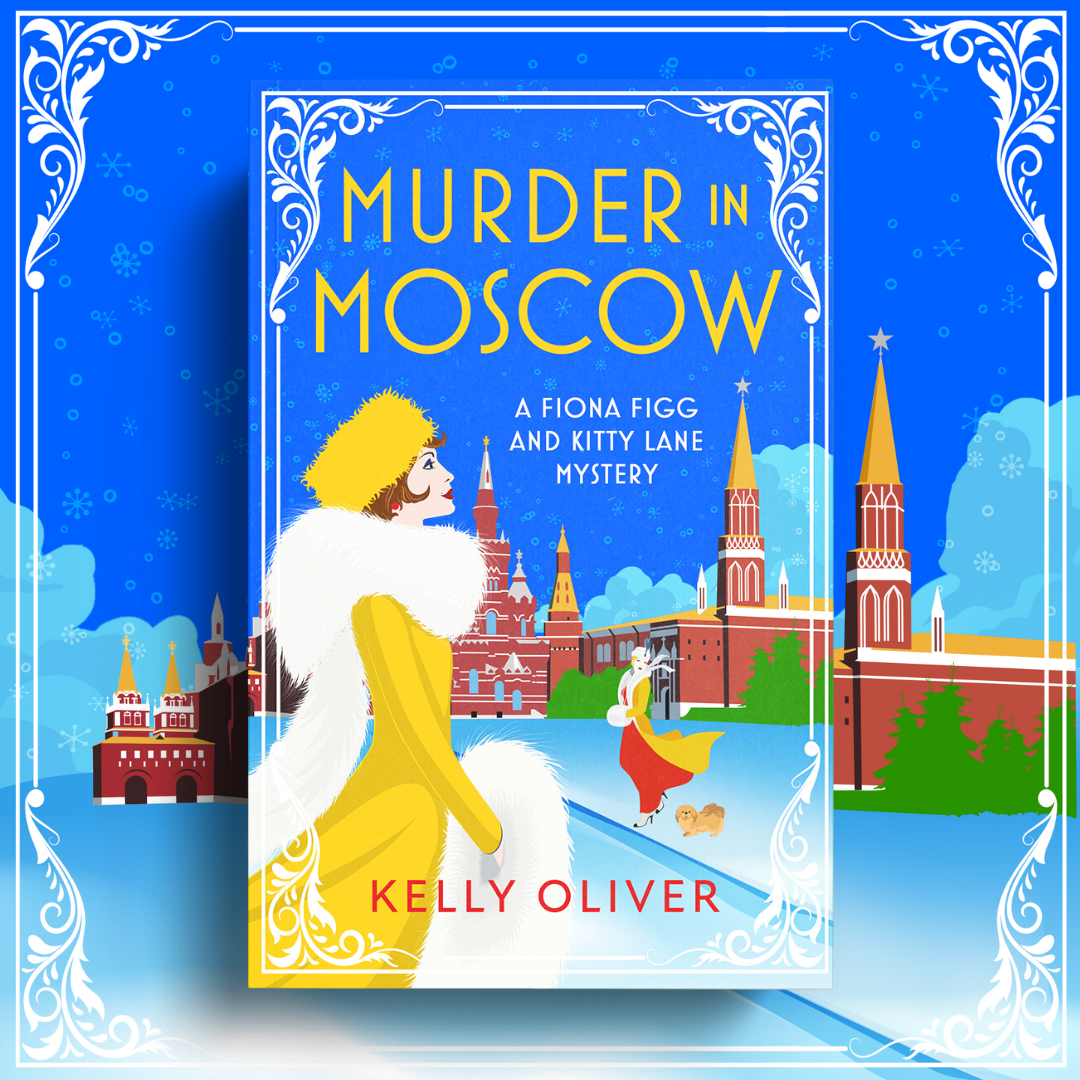
Saddle up for this first class historical mystery, perfect for fans of Helena Dixon and Verity Bright.
London, 1918
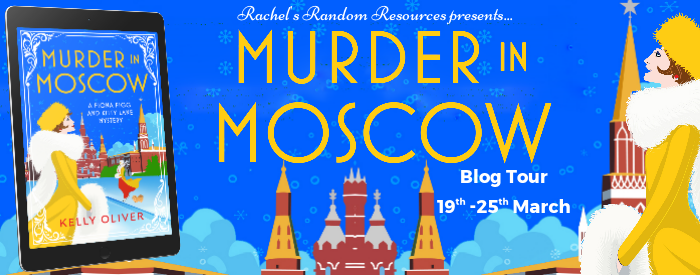
Fiona Figg finds herself back in Old Blighty saddled with shuffling papers for the war office. Then a mysterious card arrives, inviting her to a fancy house party at Mentmore Castle. This year’s Ascot-themed do will play host to a stable of animal defense advocates, and Fiona is tasked with infiltrating the activists and uncovering possible anti-war activity.
Disguised as the Lady Tabitha Kenworthy, Fiona is more than ready for the “mane” event, but the odds are against her when both her arch nemesis, dark-horse Fredrick Fredricks, and would-be fiancé Lieutenant Archie Somersby arrive unexpectedly and “stirrup” her plans. And when a horse doctor thuds to the floor in the next guest room, Fiona finds herself investigating a mysterious poisoning with some very hairy clues.
Can Fiona overcome the hurdles and solve both cases, or will she be pipped to the post and put out to pasture by the killer?
This is the fourth book in the Fiona Figg and Kitty Lane Mystery Books I’ve read. I confess, what I really enjoyed about book 3, Mayhem in the Mountains, was Fiona’s lack of dressing up in costume and, therefore, no mention of her favourite fake moustache. So I was somewhat alarmed when, only a few chapters in, Fiona was once more masquerading in one of her many costumes. However, I needn’t have feared. Kitty has not forgotten about her costumes, and she certainly puts them to good use in Arsenic at Ascot, but much of the time, Fiona is either herself or Lady Tabitha. Not that I object to her masquerading, but I’d much rather hear about her favourite wig than her suitcase full of fake moustaches and beards.
Fiona has been grounded in Arsenic at Ascot. Somewhat depressed and out of sorts at finding herself once more a ‘mere’ file clerk, all is doom and gloom and complaints about washing up after the codebreakers when she’s summoned by none other than her boss and told to don one of her many costumes. What ensues is a, at times, somewhat uncomfortable look at the world of vivisectionists and antivivisectionists and the use animals were put to during the war. As Fiona has no clear idea about what she thinks about either side of the argument, the exploration into what we now think of as animal cruelty is somewhat distressing, although it’s never laboured. And readers will be quite astounded at some of the experiments, which, according to the end notes, are based on natural experiments of the time.
While all this is happening, Fiona is once more caught in the love triangle between Archie and Frederick Fredericks and has a hole to climb out of with Archie, thanks to Kitty Lane. It will not stop her from solving who killed the latest body she’s found at a country estate.
As with the Fiona Figg and Kitty Lane books, the mysteries and conspiracies are well thought out, and the conclusion is satisfying. I also enjoy knowing this is not the last of the series, as book 5 gets a great set-up in the final chapters.
If you enjoy historical mysteries with a dash of humour and a little frisson of romance, then the Fiona Figg and Kitty Lane books are sure to appeal to you, with their knowledge of the ‘of their time’ investigative techniques, all combined with the intrigue of our spies, Archie and Fredericks and dotted with either real historical characters or creations based on them—a delightful mystery.
Kelly Oliver is the award-winning, bestselling author of three mysteries series: The Jessica James Mysteries, The Pet Detective Mysteries, and the historical cozies The Fiona Figg Mysteries, set in WW1. She is also the Distinguished Professor of Philosophy at Vanderbilt University and lives in Nashville, Tennessee.
Green thumbs beware. Plants are beautiful, peaceful, abundant, and life-sustaining. But what if something sinister took root in the soil, awakening to unleash slashing thorns, squeezing vines, or haunting greenery that lured you in? Perhaps blooms on distant planets could claim your heart, hitch a ride to Earth on a meteor, or simply poison you with their essence. Imagine a world where scientists produced our own demise in a lab, set spores free to infect, even bred ferns to be our friends only to witness the privilege perverted. When faced with botanical terror, will humanity fight to survive, or will they curl and wither like leaves in the fall? Read ten speculative tales ripe with dangerous flora to find out.
Spread is a collection of short stories all with a theme of deadly fauna. If this doesn’t sound like your sort of thing, then rest assured, it’s not really mine either, but these tales are all really good reads – I thoroughly enjoyed all of them even if some of them made me feel a bit itchy.
The tales are so well constructed, drawing you into a whole new world quickly, and packing a great deal of punch. Some of them are quite eerie. Some of them will have you shouting, ‘No, don’t do it,’ and others slowly reveal themselves and become creepy unexpectedly. They range from tales set on different planets to those set on an Earth slowly being consumed by deadly fauna, or being set upon by alien fauna, but not all of them can be quite so easily categorised. All of the tales are well worth reading.
In future, I will be eyeing up the plants around my house with a wary glance. Genuinely, it is an excellent collection of short stories, I’m so pleased I decided to read them.
A deadly feast, a mobster restaurant and a family get-together with fatal results.
Savour the spicy tang of dark and twisted tales in Pass the Cyanide, a follow-up to the award-winning collection of culinary mysteries, Add Cyanide to Taste.
From an old friend hiding a deadly secret to a ravenous house with an appetite for friends, Špiljak masterfully blends the allure of food and the thrill of mystery. Each story is a rich and satisfying serving of crime, with a twist that will leave you wanting more.
A must-read for fans of culinary noir and foodies who love a pinch of danger with their suspense. All recipes included are cyanide-free.
Pass the Cyanide is a fabulous collection of short stories with a foodie twist. Some of them are very weird, some of them not so weird, all of them are enjoyable reads (even if murder is often on the mind). All of them involve food in one way or another. I particularly enjoyed Seventeen Minutes, the tale of a wife who is a little bit fed up with her husband, and The Secret Sauce, which grapples with that familiar problem of just what some chefs are desperate to keep hidden from their audience, while Sweet Darkness, with its PTA meeting vibes made me chuckle, as ‘revenge goes wrong.’
A really enjoyable collection of short stories sure to delight fans of mysteries.
Meet the author
Karmen Špiljak is a Slovenian-Belgian writer of suspense, horror and speculative fiction.Her short fiction has been awarded and anthologised. Her short story collection, Add Cyanide to Taste, won the 2022 IndieReader Discovery award for best short stories/Fiction. She lives in Belgrade with her husband, two mischievous cats and an undefined number of literary characters. Find out more on http://www.karmenspiljak.com
217 BC. The Gauls are restless. Where is the wealth, plunder and lands they were promised? Hannibal’s army has become little more than a burden to be fed and quartered … as welcome as a plague of locusts. Assassination plots abound as Hannibal is driven to take desperate measures to evade the assassin’s knife.
If Hannibal is to appease the Gauls he must act fast. The invasion of Italia must not be delayed – his very life depends on it – but as that winter of winters fades into memory he is faced with a stark choice. Should he strike east towards the plains of Umbria and face consul Gnaeus Servilius Geminus’ legions holed up inside the unassailable walls of Ariminum? Or strike westwards into the plunder-rich lands of Etruria?
Consul Gaius Flaminius’ legions guard the western approaches. If any man can fire the bellies of Gauls with loathing it’s Flaminius. But there is one other whose blood runs cold at the mention of the name. Flaminius ordered the brutal murder of Sphax’s parents and Sphax has sworn a sacred oath to seek revenge. Can Hannibal trust the leader of his Numidian cavalry, or will this blood feud cloud his judgement? Sooner or later Sphax will have to face his inner demons.
This is my second adventure with Robert M Kidd and Sphax. As with book 3, this outing is action-packed, from wading through boggy ground to fighting Roman legionaries. The narrative takes us through Etruria alongside Sphax and his loyal warriors, and there is a great deal of death as Hannibal takes a huge risk with his army, one that Sphax is not at all happy with. Forced to encourage from the rear, there is very little that Sphax does not see. His ingenuity saves his life and those of his warriors.
But this book isn’t just about this crazy march through swamp lands. No, this is the story of the lead-up to a mighty battle between the Romans and those under Hannibal’s command, which sees Sphax not only riding through much of Etruria but also forced on board a ship as well. And all the time, burbling away in the background, are the events that have brought him to this moment in time where he’s desperate to avenge the deaths of his parents.
I really like Sphax. I enjoy the fact that he’s an intelligent character, but not one who knows everything. He’s often distant from the main fighting force, although he’s trusted by his uncle to undertake difficult tasks. The depiction of Hannibal, enigmatic and stubborn, but also wise and clever means that Sphax can never know everything his uncle is thinking. Perhaps it’s better that he doesn’t.
The final battle scene is well evoked. It’s a blood bath, but the reader doesn’t see all of it as it takes place beside a mist-shrouded lake.
Not knowing this period at all well, I couldn’t be sure of what the ending would bring, other than in a very vague way. Will Sphax triumph? Will he gain his vengeance? Will he live to fight another battle? The map was a great help.
A thrilling read, and trek, through a time and a place that I don’t know at all well, but which I found really well depicted and thoroughly enjoyable. (On a side note, thank you for explaining what ‘running with the wind’ means on board the ship).
Check out my review for Book 3 in the series here.
Meet the author
I’ve always read widely and been fascinated by ancient cultures – especially those of Greece, Phoenicia and Carthage. But my reason for writing the first novel in The Histories of Sphax series may sound strange to readers: I really wanted to set the record straight, to write about Hannibal’s war with Rome from Carthage’s perspective.
When Cato the Censor demanded that ‘Carthage must be destroyed,’ Rome did just that. In 146 BC, after a three year siege, Carthage was raised to the ground, its surviving citizens sold into slavery and the fields where this once magnificent city had stood, ploughed by oxen. Carthage was erased from history.
That’s why I’m a novelist on a mission! I want to set the historical record straight. Our entire history of Hannibal’s wars with Rome is nothing short of propaganda, written by Greeks and Romans for their Roman clients. It intrigues me that Hannibal took two Greek scholars and historians with him on campaign, yet their histories of Rome’s deadliest war have never seen the light of day.
My hero, Sphax the Numidian, tells a different story!
When I’m not waging war with my pen, I like to indulge my passion for travel and hill walking, and like my hero, I too love horses. I live in Pembrokeshire, West Wales.
Giveaway to Win the next book in The Histories of Sphax series to be dedicated to you (Open INT)
The next book in The Histories of Sphax series will be dedicated to the winner, and will be acknowledged on the inside page book title.
*Terms and Conditions –Worldwide entries welcome. Please enter using the Rafflecopter box below. The winner will be selected at random via Rafflecopter from all valid entries and will be notified by Twitter and/or email. If no response is received within 7 days then Rachel’s Random Resources reserves the right to select an alternative winner. Open to all entrants aged 18 or over. Any personal data given as part of the competition entry is used for this purpose only and will not be shared with third parties, with the exception of the winners’ information. This will passed to the giveaway organiser and used only for fulfilment of the prize, after which time Rachel’s Random Resources will delete the data. I am not responsible for despatch or delivery of the prize.