Author of Saxon historical fiction and non-fiction, 20th-century historical mysteries, and Norse-inspired historical romantasy. Book reviewer and blog host.
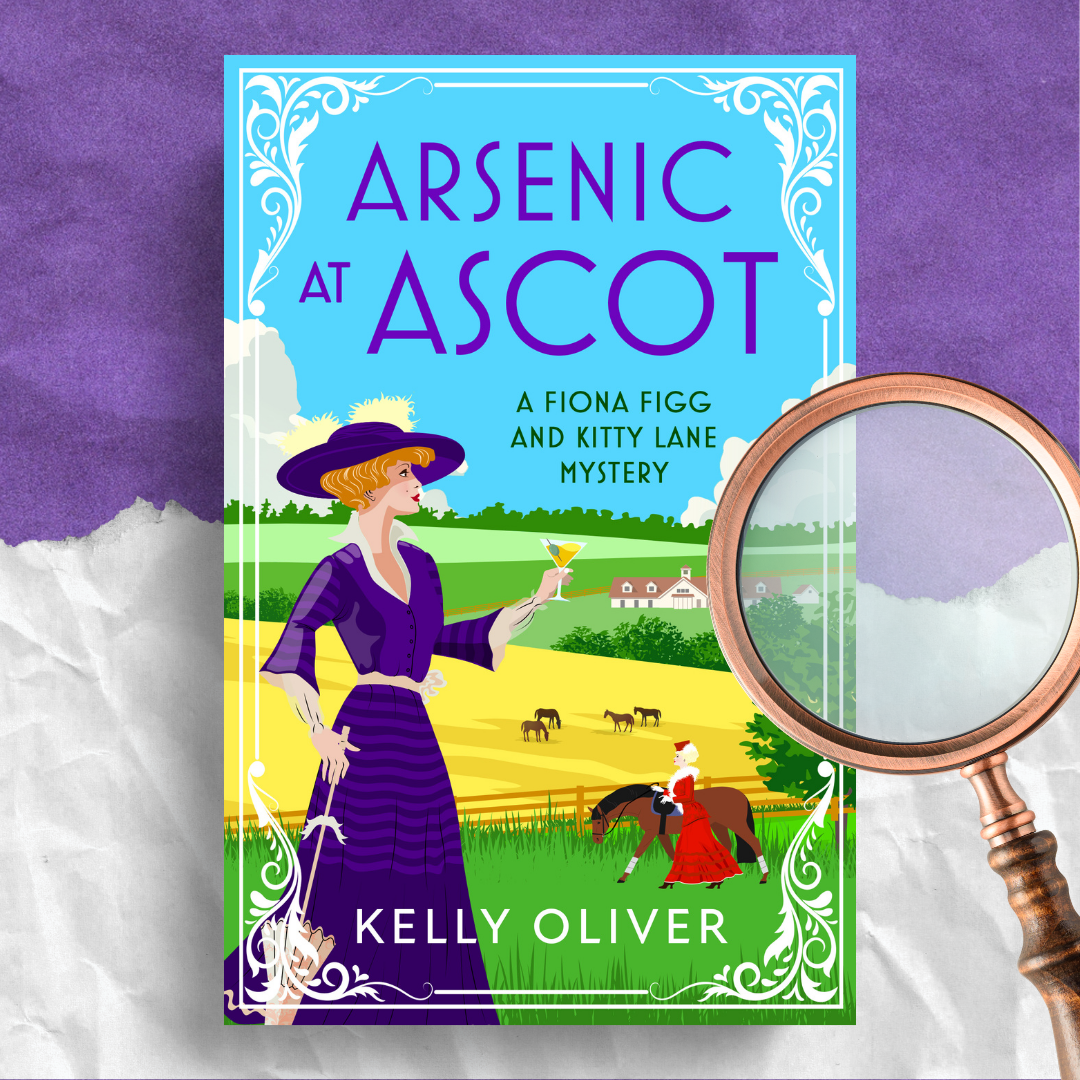
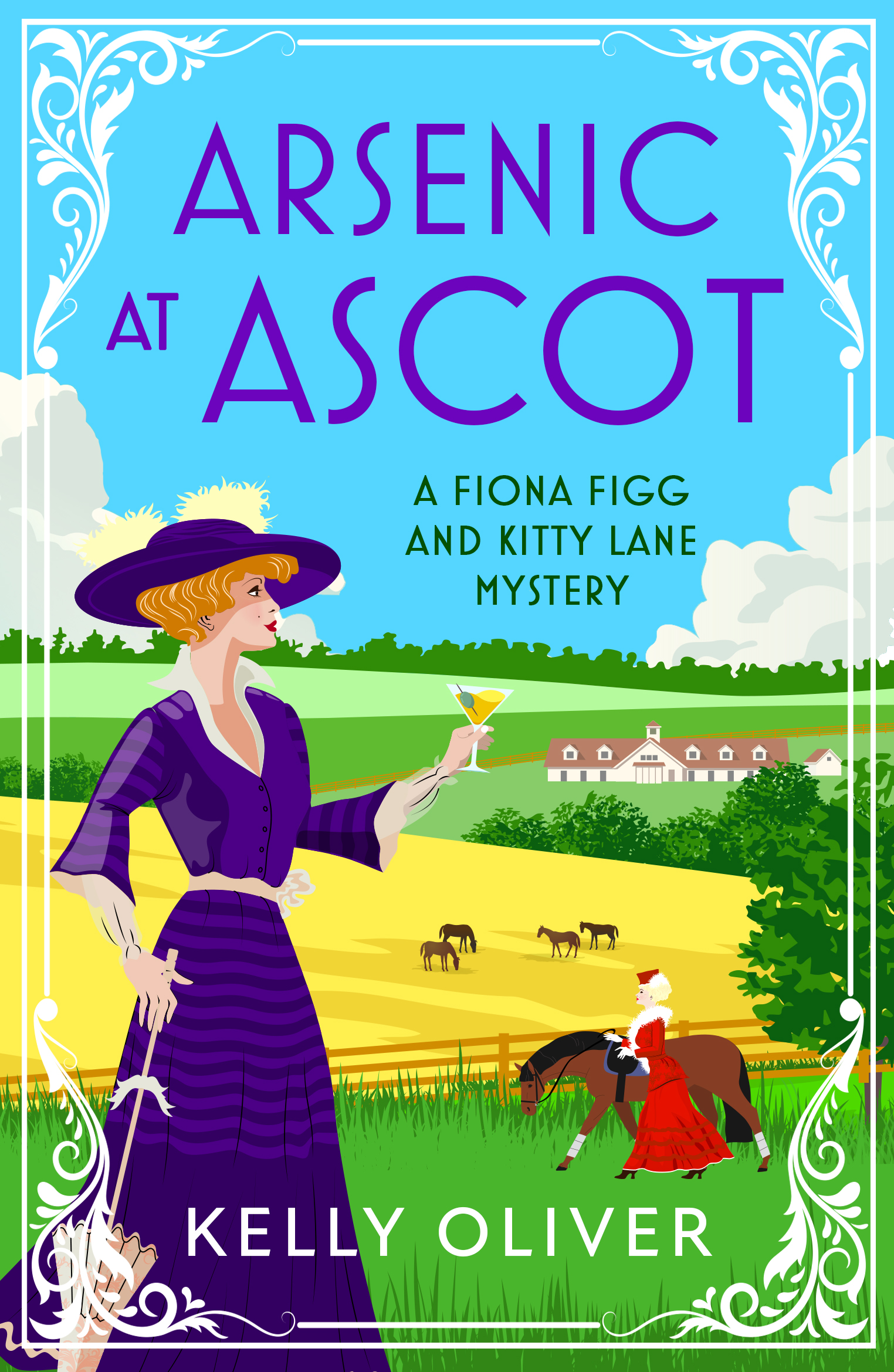
Saddle up for this first class historical mystery, perfect for fans of Helena Dixon and Verity Bright.
London, 1918
Fiona Figg finds herself back in Old Blighty saddled with shuffling papers for the war office. Then a mysterious card arrives, inviting her to a fancy house party at Mentmore Castle. This year’s Ascot-themed do will play host to a stable of animal defense advocates, and Fiona is tasked with infiltrating the activists and uncovering possible anti-war activity.
Disguised as the Lady Tabitha Kenworthy, Fiona is more than ready for the “mane” event, but the odds are against her when both her arch nemesis, dark-horse Fredrick Fredricks, and would-be fiancé Lieutenant Archie Somersby arrive unexpectedly and “stirrup” her plans. And when a horse doctor thuds to the floor in the next guest room, Fiona finds herself investigating a mysterious poisoning with some very hairy clues.
Can Fiona overcome the hurdles and solve both cases, or will she be pipped to the post and put out to pasture by the killer?
This is the fourth book in the Fiona Figg and Kitty Lane Mystery Books I’ve read. I confess, what I really enjoyed about book 3, Mayhem in the Mountains, was Fiona’s lack of dressing up in costume and, therefore, no mention of her favourite fake moustache. So I was somewhat alarmed when, only a few chapters in, Fiona was once more masquerading in one of her many costumes. However, I needn’t have feared. Kitty has not forgotten about her costumes, and she certainly puts them to good use in Arsenic at Ascot, but much of the time, Fiona is either herself or Lady Tabitha. Not that I object to her masquerading, but I’d much rather hear about her favourite wig than her suitcase full of fake moustaches and beards.
Fiona has been grounded in Arsenic at Ascot. Somewhat depressed and out of sorts at finding herself once more a ‘mere’ file clerk, all is doom and gloom and complaints about washing up after the codebreakers when she’s summoned by none other than her boss and told to don one of her many costumes. What ensues is a, at times, somewhat uncomfortable look at the world of vivisectionists and antivivisectionists and the use animals were put to during the war. As Fiona has no clear idea about what she thinks about either side of the argument, the exploration into what we now think of as animal cruelty is somewhat distressing, although it’s never laboured. And readers will be quite astounded at some of the experiments, which, according to the end notes, are based on natural experiments of the time.
While all this is happening, Fiona is once more caught in the love triangle between Archie and Frederick Fredericks and has a hole to climb out of with Archie, thanks to Kitty Lane. It will not stop her from solving who killed the latest body she’s found at a country estate.
As with the Fiona Figg and Kitty Lane books, the mysteries and conspiracies are well thought out, and the conclusion is satisfying. I also enjoy knowing this is not the last of the series, as book 5 gets a great set-up in the final chapters.
If you enjoy historical mysteries with a dash of humour and a little frisson of romance, then the Fiona Figg and Kitty Lane books are sure to appeal to you, with their knowledge of the ‘of their time’ investigative techniques, all combined with the intrigue of our spies, Archie and Fredericks and dotted with either real historical characters or creations based on them—a delightful mystery.
Kelly Oliver is the award-winning, bestselling author of three mysteries series: The Jessica James Mysteries, The Pet Detective Mysteries, and the historical cozies The Fiona Figg Mysteries, set in WW1. She is also the Distinguished Professor of Philosophy at Vanderbilt University and lives in Nashville, Tennessee.
On the 27th October 939, the death of Athelstan, the first king of the English, at Gloucester. The symmetry of the death of King Athelstan and King Alfred, his grandfather, is noted in the Anglo-Saxon Chronicle A text, ‘40 years all but a day after King Alfred passed away’.[i]
[i] Swanton, M. ed. and trans. The Anglo-Saxon Chronicles, (Orion Publishing Group, 2000), p.110
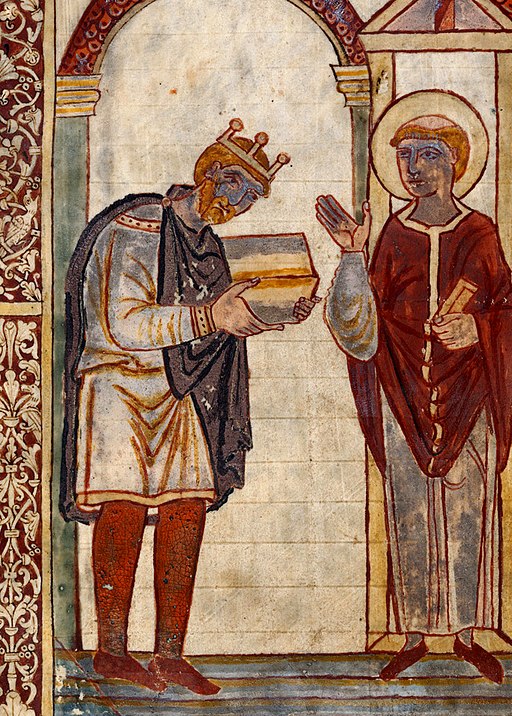
We don’t know for sure who Athelstan’s mother was, it’s believed she might have been called Ecgwynn. We don’t know, for certain, the name of his full sister, but it’s believed she might have been named Edith or Ecgwynn after her mother. What is known is that his father was Edward, the son of King Alfred, and known to us today as Edward the Elder. Athelstan is rare in that he is one of only two Saxon kings for whom a contemporary image is available. (The other is Edgar, who would have been his nephew)
It must be supposed that Athelstan was born sometime in the late 890s. And according to a later source written by William of Malmesbury in the 1100s (so over two hundred years later), was raised at the court of his aunt, Æthelflæd of Mercia. David Dumville has questioned the truth of this, but to many, this has simply become accepted as fact.
‘he [Alfred] arranged for the boy’s education at the court of his daughter, Æthelflæd and Æthelred his son in law, where he was brought up with great care by his aunt and the eminent ealdorman for the throne that seemed to await him.’[i]
[i] Mynors, R.A.B. ed and trans, completed by Thomson, R.M. and Winterbottom, M. Gesta Regvm Anglorvm, The History of the English Kings, William of Malmesbury, (Clarendon Press, 1998), p.211 Book II.133
Why then might this have happened? Edward became king on the death of his father, Alfred, and either remarried at that time, or just before. Edward’s second wife (if indeed, he was actually married to Athelstan’s mother, which again, some doubt), Lady Ælfflæd is believed to have been the daughter of an ealdorman and produced a hefty number of children for Edward. Perhaps then, Athelstan and his unnamed sister, were an unwelcome reminder of the king’s first wife, or perhaps, as has been suggested, Alfred intended for Athelstan to succeed in Mercia after the death of Æthelflæd, and her husband, Æthelred, for that union produced one child, a daughter named Ælfwynn.
Frontispiece of Bede’s Life of St Cuthbert, showing King Æthelstan (924–39) presenting a copy of the book to the saint himself. 29.2 x 20cm (11 1/2 x 7 7/8″). Originally from MS 183, f.1v at Corpus Christi College, Cambridge. (Wikimedia Commons)
What is known is that following the death of King Edward in 924, Athelstan was acknowledged as the king of Mercia; his half-brother, Ælfweard was proclaimed king in Wessex for a very short period.
‘Here King Edward died at Farndon in Mercia; and very soon, 16 days after, his son Ælfweard died at Oxford; and their bodies lie at Winchester. And Athelstan was chosen as king by the Mercians and consecrated at Kingston.’[i]
[i] Swanton, M. trans and edit The Anglo-Saxon Chronicles, (Orion Publishing Group, 2000), D text p.105
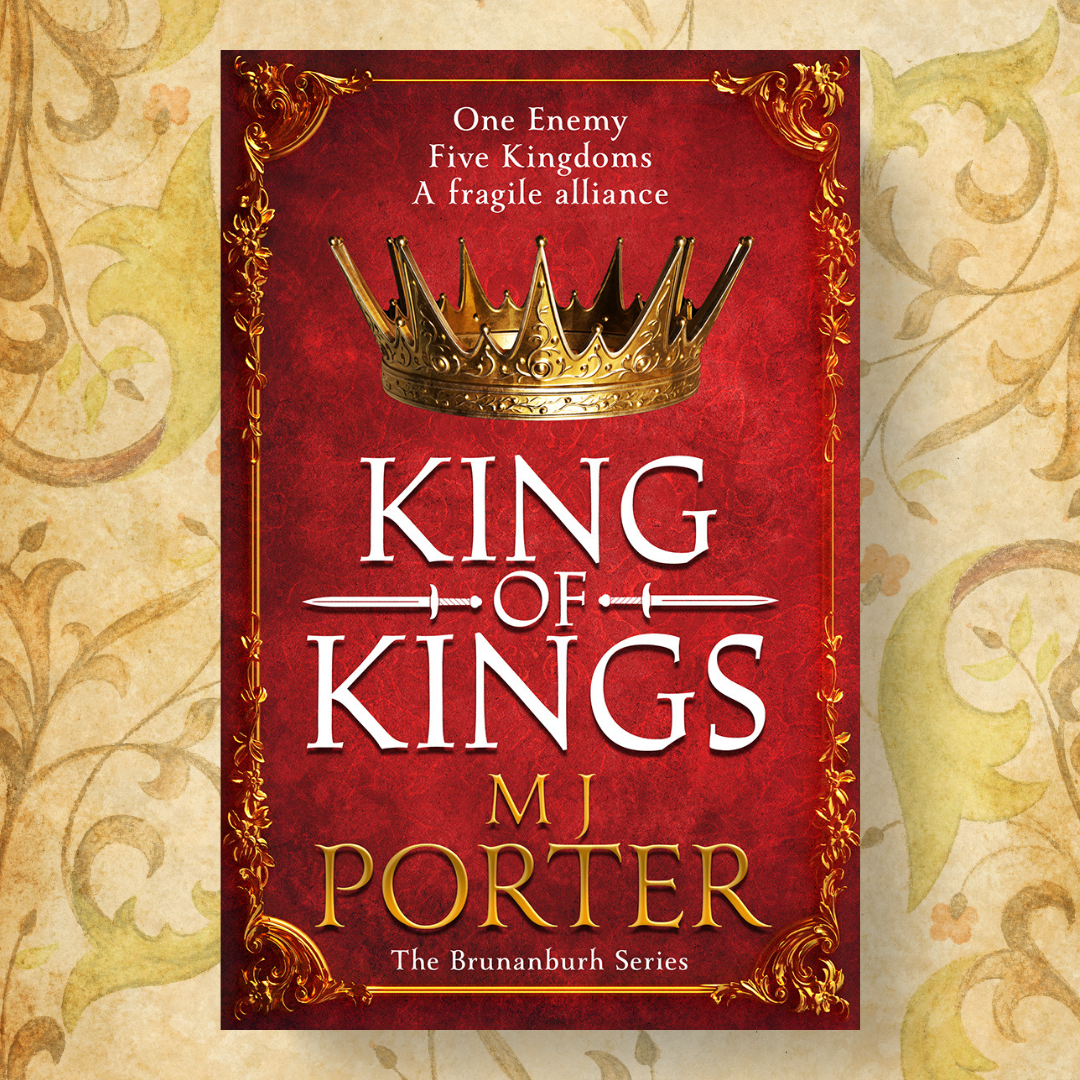
Design by Boldwood Books
But Ælfweard’s reign was short-lived and Athelstan was eventually proclaimed king of Wessex, as well as Mercia, and then, in time, as the king of the English, although his acceptance by the Wessex witan has been seen as very grudgingly given.
Whatever the exact details of the beginning of his kingship, Athelstan was consecrated in September 925, and the words of the ceremony are believed to survive (there is an argument as to whether the ceremony was written for his father or for him), and during the ceremony Athelstan was proclaimed as king not with the placement of a warrior helm on his head, but instead, with a crown, the first known occurrence of this in England.
Here’s my reimagining of the ceremony in King of Kings,
Athelstan, Kingston upon Thames, September AD925
‘This means that only a year after my father’s untimely death, the kingdoms of Mercia, those parts of the East Anglian kingdom that my father lately reclaimed, Wessex and Kent, are reunited again under one ruler. The Saxons, or rather, the English, have just one king. And this is my moment of divine glory, when, before the men and women of the Mercian and Wessex witan, I’ll be proclaimed as king over all.
A prayer is intoned by the archbishop of Canterbury, Athelm, appealing to God to endow me with the qualities of the Old Testament kings: Abraham, Moses, Joshua, David and Solomon. As such, I must be faithful, meek, and full of fortitude and humility while also possessing wisdom. I hope I’ll live up to these lofty expectations.
I’m anointed with the holy oil and then given a thick gold ring with a flashing ruby to prove that I accept my role as protector of the one true faith. A finely balanced sword is placed in my hands, the work of a master blacksmith, with which I’m to defend widows and orphans and through which I can restore things left desolated by my foes, and my foes are the Norse.
Further, I’m given a golden sceptre, fashioned from gold as mellow as the sunset, with which to protect the Holy Church, and a silver rod to help me understand how to soothe the righteous and terrify the reprobate, help any who stray from the Church’s teachings and welcome back any who have fallen outside the laws of the Church.
With each item added to my person, I feel the weight of kingship settle on me more fully. I may have been the king of Mercia for over a year now, the king of Wessex and Kent for slightly less time, but this is the confirmation of all I’ve done before and all I’ll be in the future.
It’s a responsibility I’m gratified to take, but a responsibility all the same. From this day forward, every decision I make, no matter how trivial, will impact someone I now rule over.
*******
And I? I’m the king, as my archbishop, Athelm of Canterbury, proclaims to rousing cheers from all within the heavily decorated church at Kingston upon Thames, a place just inside the boundaries of Wessex but not far from Mercia. It’s festooned with bright flowers and all the wealth this church owns. Gold and silver glitter from every recess, reflecting the glow of the hundreds of candles.
I’m more than my father, Edward, was and I’m more than my grandfather, Alfred, was. I’m the king of a people, not a petty kingdom, or two petty kingdoms, with Kent and the kingdom of the East Angles attached.
It’s done. I’m the anointed king of the English, the first to own such a title. I’ll protect my united kingdom, and with God’s wishes, I’ll extend its boundaries yet further, clawing back the land from the Five Boroughs and bringing the kingdom of the Northumbrians, and even the independent realm of Bamburgh, under my command.’
And Athelstan’s life is one of vast events. His reach extended far beyond the confines of England, or even the British Isles, his step-sisters making political unions in East and West Frankia, and his nephew becoming king of the West Franks. But he is perhaps best known for his victory at Brunanburh, over a coalition of the Scots and the Dublin Norse, and it is the tale of this great battle, and the events both before and afterwards, that I retell in the Brunanburh Series.
His death, on 27th October 939, can arguably be stated to have reset the gains made after Brunanburh, and set the creation of ‘England’ back, as his much younger step-brother battled to hold onto his brother’s gains, but for now, it is Athelstan and his triumphs which much be remembered, and not what happened after his untimely death.
Prince. Mercenary. Exile. The lost throne of Norway must be won in foreign lands.
1030 AD
Some men are gifted a crown. Others have to fight to claim it.
Exiled from Norway, Harald Sigurdsson, brother to murdered King Olaf, must battle mercilessly for survival in the lands of the Kievan Rus.
His brother’s legacy gifts him a warband of hardened warriors and entry to the court of Prince Yaroslav the Wise. By his wits, sword and skill in battle, Harald must learn not just to survive but to triumph.
He fights for glory, for fame, and to regain his family’s battle-stolen throne. But his greatest challenge may not come from battlefield foes but from those who stand by his side.
The first instalment in a remarkable story of an exiled boy’s incredible journey to become Harald Hardrada; The Hard Ruler and The Last Viking.
Harald Sigurdsson, who we know more often as Harald Hardrada, is a historical individual who is ‘on my radar’ as it were for my The Earls of Mercia series. So far, he’s only had the odd mention because I’m still 20 years from the events of 1066 at Stamford Bridge, but never fear, for JC Duncan is telling Harald’s story from the events that see his half-brother, Olaf, later St Olaf, cut down at the Battle of Stiklestad in 1030.
Adopting a narrator style for the book, we see Harald trying to regroup after his brother’s defeat and murder. He seeks somewhere for him and what remains of his brother’s warriors to retreat to, and the tale is told through the eyes of the fictional Eric, who has seen it all and now, as an old man, wants to share his stories of Harald with an appreciative audience back in Norway.
This is very much a story of Harald’s time in the lands of the Rus and the overwhelming odds he often faces in battle as he rises through the ranks to serve Prince Yaraslov. We also see him struggling with the clash of cultures – the more sophisticated and complex ideals of the Rus flummoxing a man more used to seeing warriors have a bloody good fight.
Harald quickly earns himself an enemy, one who bedevils him at various points throughout the story and who I’m sure will continue to do so as the young man tries to discover who he is while learning to command his warriors.
This is an epic tale, with elements burbling away in the background that will continue to develop in later books. Using a narrator enables the tale to skip over some of the more mundane aspects of Harald’s story, ensuring the reader is constantly faced with some new dilemma for Harald to surmount or fail. However, failure is never really an option. After all, he is a Hard-ruler, and many of his decisions may stun the reader as the body count increases.
JC Duncan’s Harald is indeed a hard man, unhappy making mistakes or being embarrassed, determined to build his reputation, even while bidding his time, determined that one day he’ll claim back his brother’s lost kingdom of Norway. He is perhaps too naïve and a little too sure of himself on occasion, and these very real character traits lend themselves to an engaging retelling. However, this isn’t a quick read. There’s much to absorb as you, alongside the character, embark on a very real journey to the land of the Rus and encounter their enemies and allies, the knowledge that our narrator still lives, the only hope for Harald’s success.
An engrossing tale of Harald Hardrada’s early years, brimming with historical detail and brave daring do. This is the story of a man who will become a legend, told lovingly through the eyes of one of his loyal followers and sure to delight readers.
Meet the author
J. C. Duncan is a well-reviewed historical fiction author and amateur bladesmith, with a passion for Vikings.
NEW YORK,1900: A captivating cozy crime novel set on-board the maiden voyage of the S.S. Minneapolis, featuring series character Flora Maguire. Perfect for fans of Downton Abbey.
Young governess Flora Maguire is on her way home from America on the maiden voyage of the S.S. Minneapolis with her young charge Eddy, Viscount Trent, when she discovers a dead body.
Unconvinced when the death is pronounced an accident, Flora starts asking questions, but following threats, a near drowning and a second murder, the hunt is on for a killer. Time is running out as the Minneapolis approaches the English coast.
Will Flora be able to protect Eddy, as well as herself?
Is her burgeoning relationship with the handsome Bunny Harrington only a shipboard dalliance, or something more? And what secrets must Flora keep in order to stay safe?
Death on Board is a historical mystery set onboard a transatlantic crossing in the year 1900.
Our main character, Flora, is a governess escorting her young charge home to begin school. Unsure of herself, as her employer has purchased her a First Class ticket, Flora avoids meeting many of them until the unexpected death of a member of her table, whose body she’s unfortunate to discover early one morning.
What ensues is a twisted tale of secrets and half-truths as Flora finds herself drawn into the reason behind the man’s death, proclaimed as an accident, but which Flora sees in a very different light. She mingles with all those on board, from the snooty upper-class dam and her companion to the actress seeking a new life in England, as well as the handsome Bunny, and his motorcar, Matilda, as she attempts to get to the bottom of the mystery surrounding the murder.
Death on Board is stuffed with period details, and the mystery itself is well-constructed, with a very satisfying resolution. Fiona is a fantastic creation, as is Bunny, and while I’m not unconvinced they wouldn’t have sunk the ship with the quantity of tea consumed, I thoroughly enjoyed it, and look forward to reading more of the series.
I know I shared that many of my audiobooks are now available on Spotify, well now it’s even better for Premium Subscribers in the UK and Australia, as you can listen to up to 15 hours of audiobooks each month, included in your subscription. That’s enough hours to listen to any of my audios in their entirety. (I have been a premium subscriber for more years than I care to remember – we have a family subscription which is great until one of us forgets their log-in and logs-in using the wrong persons details:).
I know it’s all quite new at the moment, and therefore, not all of the titles are included – I’ve also noticed that not all of my titles are showing under my profile, and I’m trying to correct this. But, you can find all of my audios from Boldwood Books on Spotify, as well as Warrior King. But you will need to search for Son of Mercia, Wolf of Mercia, Kings of War and Warrior King separately until I can get them attached to my profile.
I understand that Spotify US will be following soon.
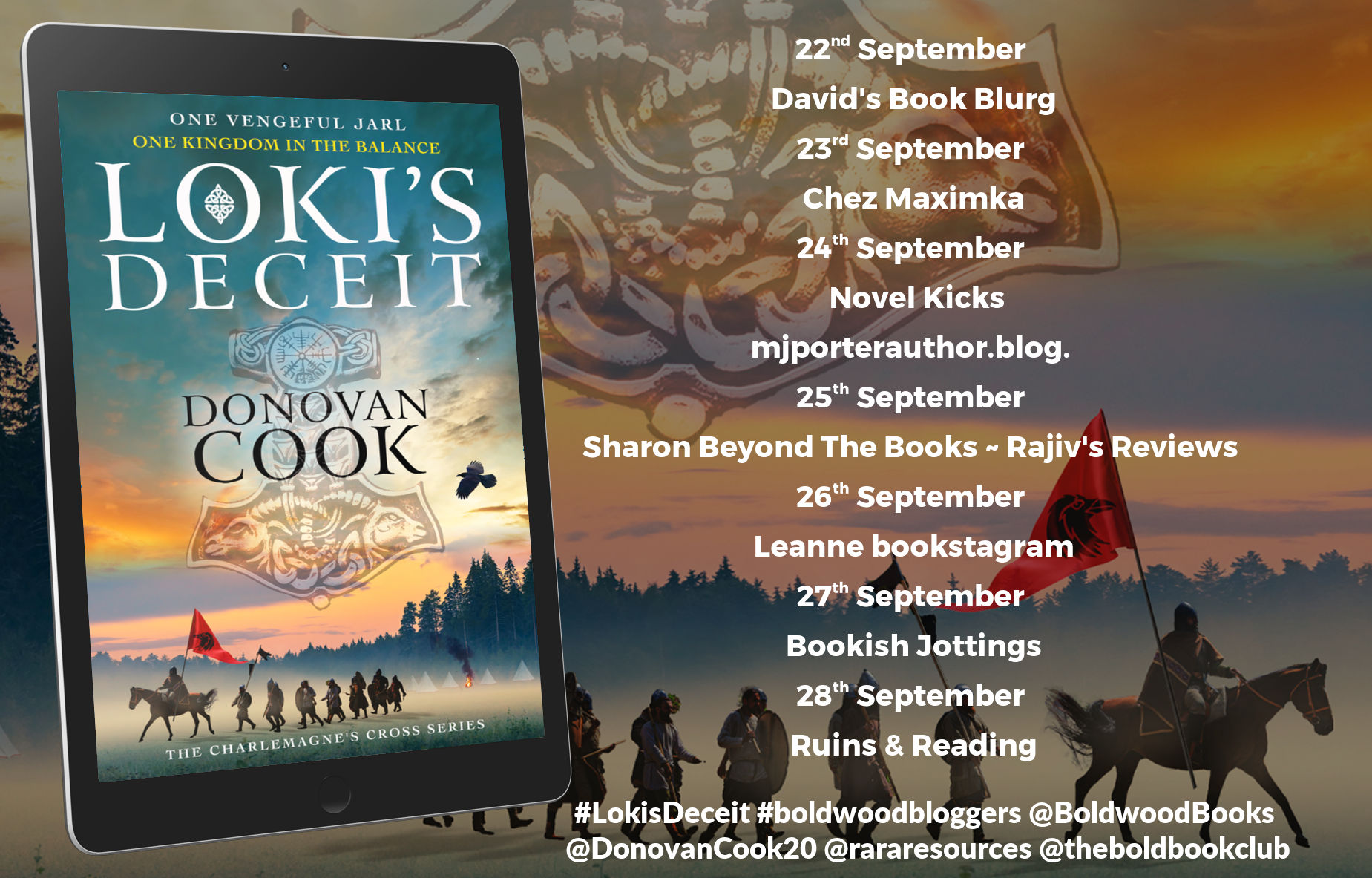
A challenger filled with vengeance. A kingdom’s fate at stake.
Sven the Boar is Jarl of Ribe once more. He and Charles try to settle into their new lives, but trouble and treachery are never too far away.
Tormented by recent events, Charles struggles to adapt to life amongst the heathens that mock his Christian God and the arrival of a priest from the south only makes things worse.
Meanwhile, Sven is burdened with the responsibilities of being Jarl again and protecting his grandson from those hunting him.
When forced into an alliance with King Horik’s nephew who is raising an army to challenge his uncle for the throne of Denmark, Sven makes an important decision.
As the threat of war becomes real, Sven rides to fight a battle that will change the destiny of Denmark.
But whilst he fights, will Charles remain safe or are other games in play that threaten him?
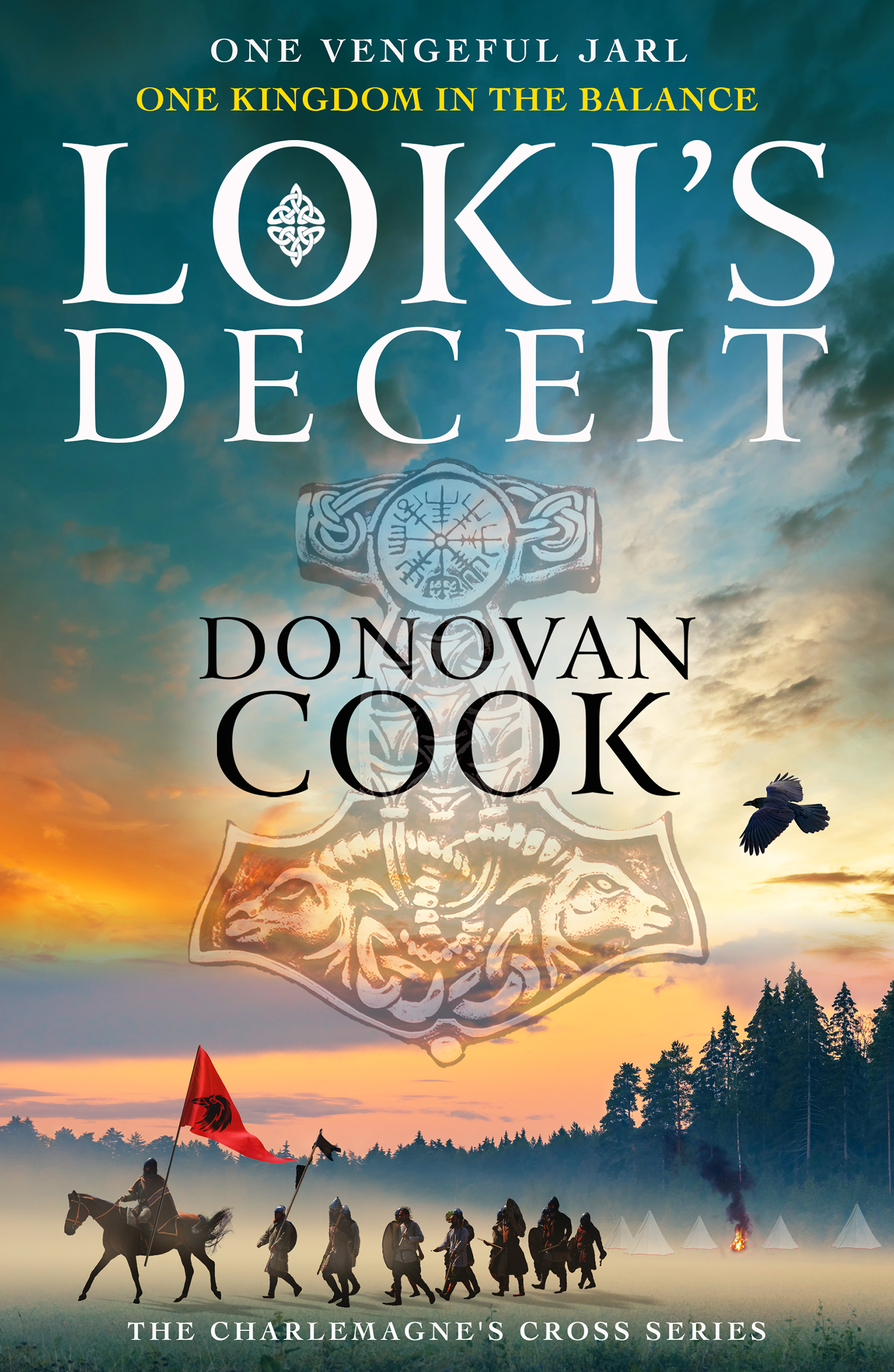
Loki’s Deceit is book 2 in the Charlemagne’s Cross Series. Check out my review for Odin’s Betrayal. Do you need to have read book 1? Probably, but I’m always happy to read books out of order, and you will certainly enjoy it if you do jump in now.
Loki’s Deceit begins almost immediately after the catastrophic events of Odin’s Betrayal. Charles and his grandfather, Sven, are still uncomfortable around one another, and neither of them is happy to find themselves in Ribe – Sven because he doesn’t relish being jarl once more, and Charles because he’s far from home and with no fellow Christians for friends.
We also have a few new points of view for Loki’s Deceit, that of Hildegard and that of Gerold. They add some of the richer background elements to the story, filling in the gaps for how the events of book 1 came about, for this is really a tale of impending war amongst the Danish jarls and their king, even while Charles and Sven battle their inner turmoils. Not only is their war, but conspiracy abounds wherever Sven and Charles turn. There are many characters that we shouldn’t trust and which Sven and Charles should also be mindful of, all bound up with their combined unease anyway. The settlement of Ribe is filled with men, women, and children who don’t like Charles at all or, indeed, his grandfather, the mighty Sven the Boar. There are many keen to take Sven’s position, and there are many who would welcome that.
For me, this felt very much as though this was more Sven’s story than Charles’. Not that we don’t get just as much Charles as Sven, but Sven is the warrior who will be forced to fight for his survival and that of his fellow warriors, while Charles is still not sure what he’s fighting for, although he is prepared to fight.
As with Odin’s Betrayal, the action continues until the last page, and I am looking forward to book 3.
Loki’s Deceit is a tale of loyalty, ambition, family, politics and religious divide, sure to appeal to fans of the era and historical fiction in general. It’s fabulous to read a series set (almost) entirely in Denmark.
Meet the author
Donovan Cook is the author of the well-received Ormstunga Saga series which combines fast-paced narrative with meticulously researched history of the Viking world, and is inspired by his interest in Norse Mythology
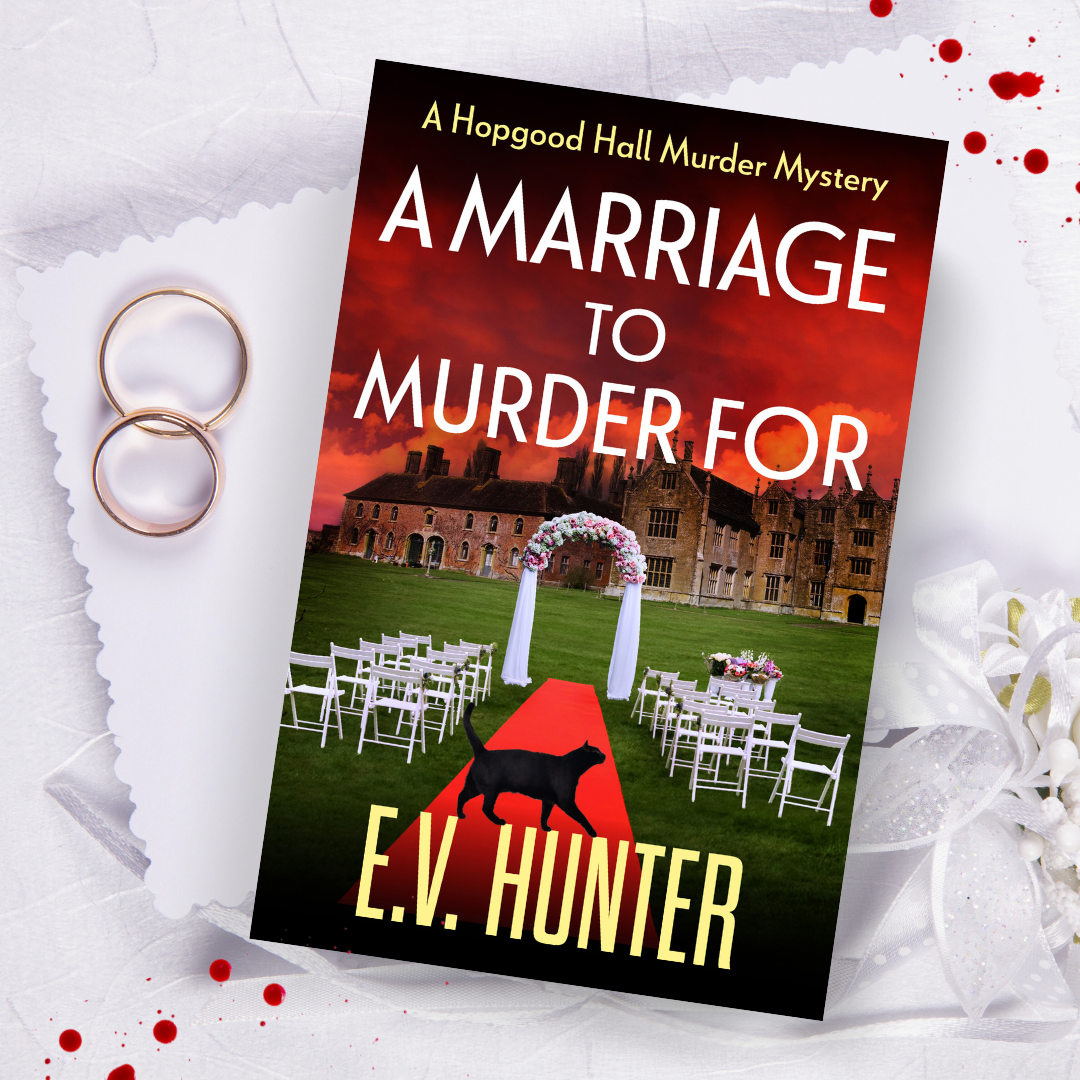
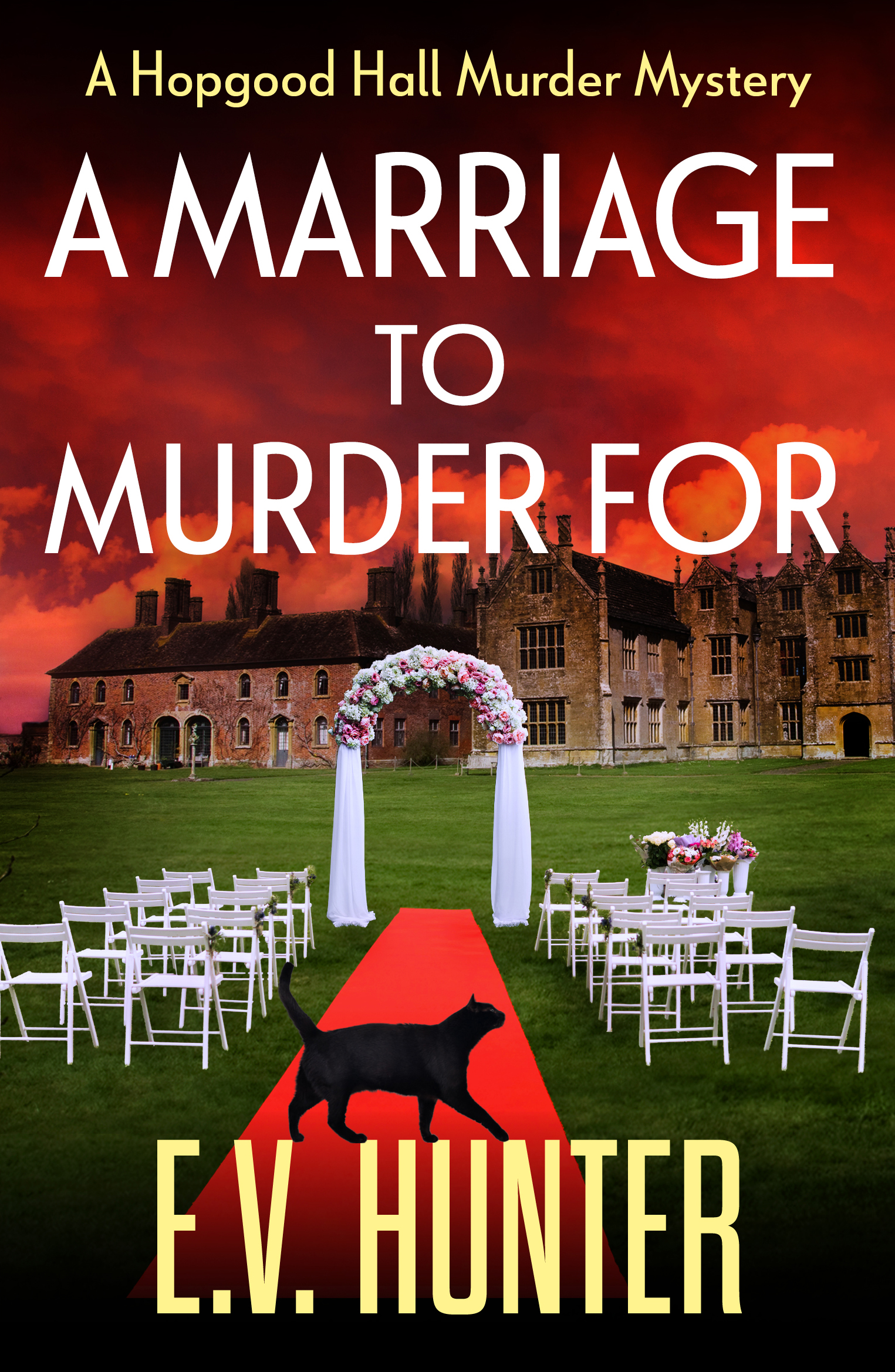
Social media influencer Crystabel Hughes is determined her wedding to Giles Preston Smythe will be the talk of the town. No matter the cost or the upset, nothing will stop this wedding!
A cheating groom…
But for Alexi Ellis and the rest of the staff at Hopgood Hall, Crystabel’s demands are becoming increasingly extreme. And when Alexi spots the groom getting up close and personal with one of the bridesmaids, she fears trouble is only a bouquet toss away.
A killer bride caught red-handed?
And Alexi’s fears are confirmed when the groom is found dead on the night before the wedding, stabbed through the heart – the person holding the dagger. his beloved bride-to be Crystabel.
Hopgood Hall doesn’t need any more bad press, but the race is on to find the killer and close the case before Crystable live streams her dilemma.
Can Alexi, Jack and Cosmo find out why Giles was killed? And, more importantly, can they stop the killer before they strike again?
Perfect for fans of Faith Martin, Frances Evesham and Emma Davies.
A Marriage to Murder For is the third book in the Hopgood Hall Murder Mysteries. You don’t need to have read the two previous books, but if you are planning on doing so, there are some spoilers for the earlier books.
This time, our intrepid duo find themselves with a murdered groom on their hands in what seems to be an open and shut case, but which of course, proves to be anything but.
The series has so far tackled celebrity chefs, and this time moves to ‘influencer’ territory with a televised wedding. But all is not paradise between the couple, and as the story evolves, there are many, many secrets to uncover.
I really enjoy this series of books. Alexis and Jack work well together, and the author offers a tight and well-constructed story – with just enough hints for the reader to ‘almost’ know what’s happening, but still with a mighty ‘big reveal’ in the closing moments.
A thoroughly enjoyable, tightly-plotted and enjoyable cosy mystery.
Evie Hunter has written a great many successful regency romances as Wendy Soliman and is now redirecting her talents to produce dark gritty thrillers for Boldwood. For the past twenty years she has lived the life of a nomad, roaming the world on interesting forms of transport, but has now settled back in the UK.
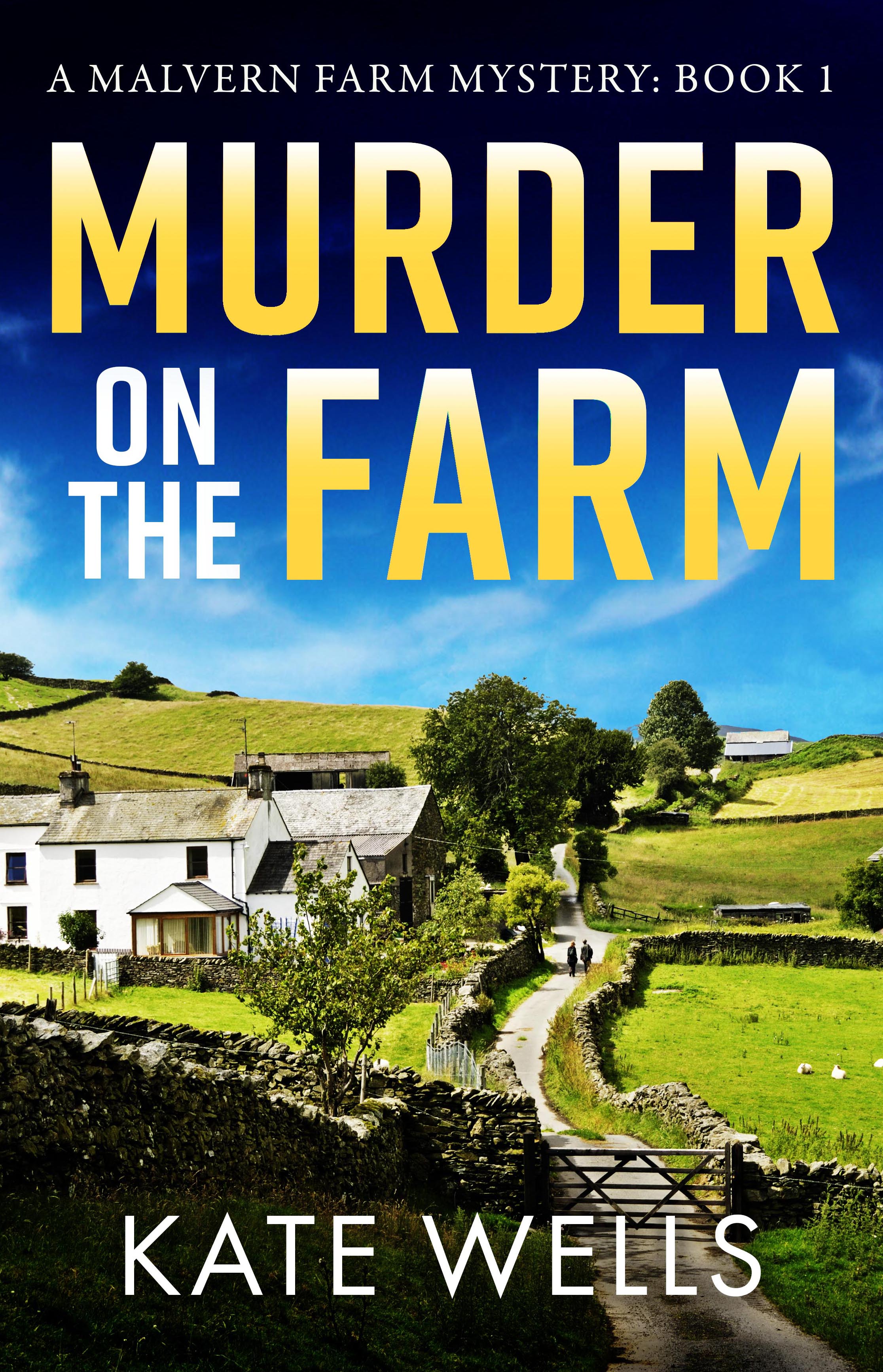
Lambing season always brings the unexpected… But no one expected murder
Jude Gray never thought she’d find herself widowed and running a working farm full-time, but here she is, living in the small Malvern village her husband Adam spent most of his life in.
After a particularly gruelling lambing season, she is looking forward to some time off, but there’s no rest for the wicked, especially when she finds the body of one of Adam’s oldest friends on her farm.
Unimpressed with the local constabulary’s efforts, Jude starts an investigation of her own. But as the body count rises, danger creeps ever closer to Malvern Farm.
A killer is on the prowl. And all that stands in their way is one woman – and her dog.
My Review
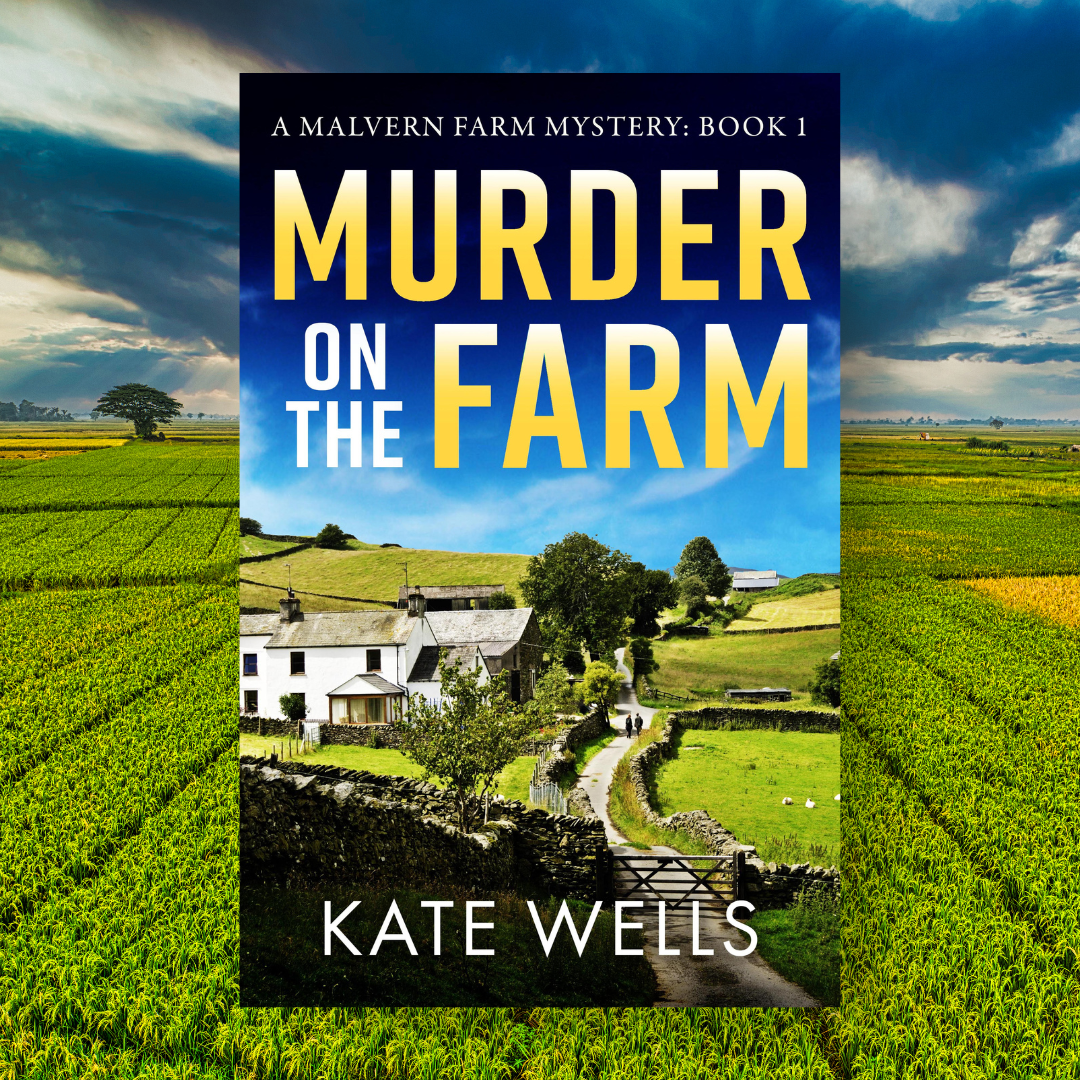
Murder on the Farm is a really intriguing contemporary mystery set in the Malvern Hills during an early lambing season.
What begins with a wedding ends in tragedy for our main character, Jude Gray, as much of what she thought to be true begins to unravel around her.
Jude and her sister are both great characters in the first book in this new series. I found myself completely caught up in the mystery and read it over a space of a few days. There’s some excellent misdirection, and as a reader, I was quite convinced that I knew who the culprit was, not once, but twice, only to be proved entirely wrong.
A fabulous start to a new contemporary mystery series, offering an assured and well-plotted tale against a majestic backdrop. I look forward to reading more.
Kate Wells is the author of a number of well-reviewed books for children, and is now writing a new cosy crime series set in the Malvern hills, inspired by the farm where she grew up.
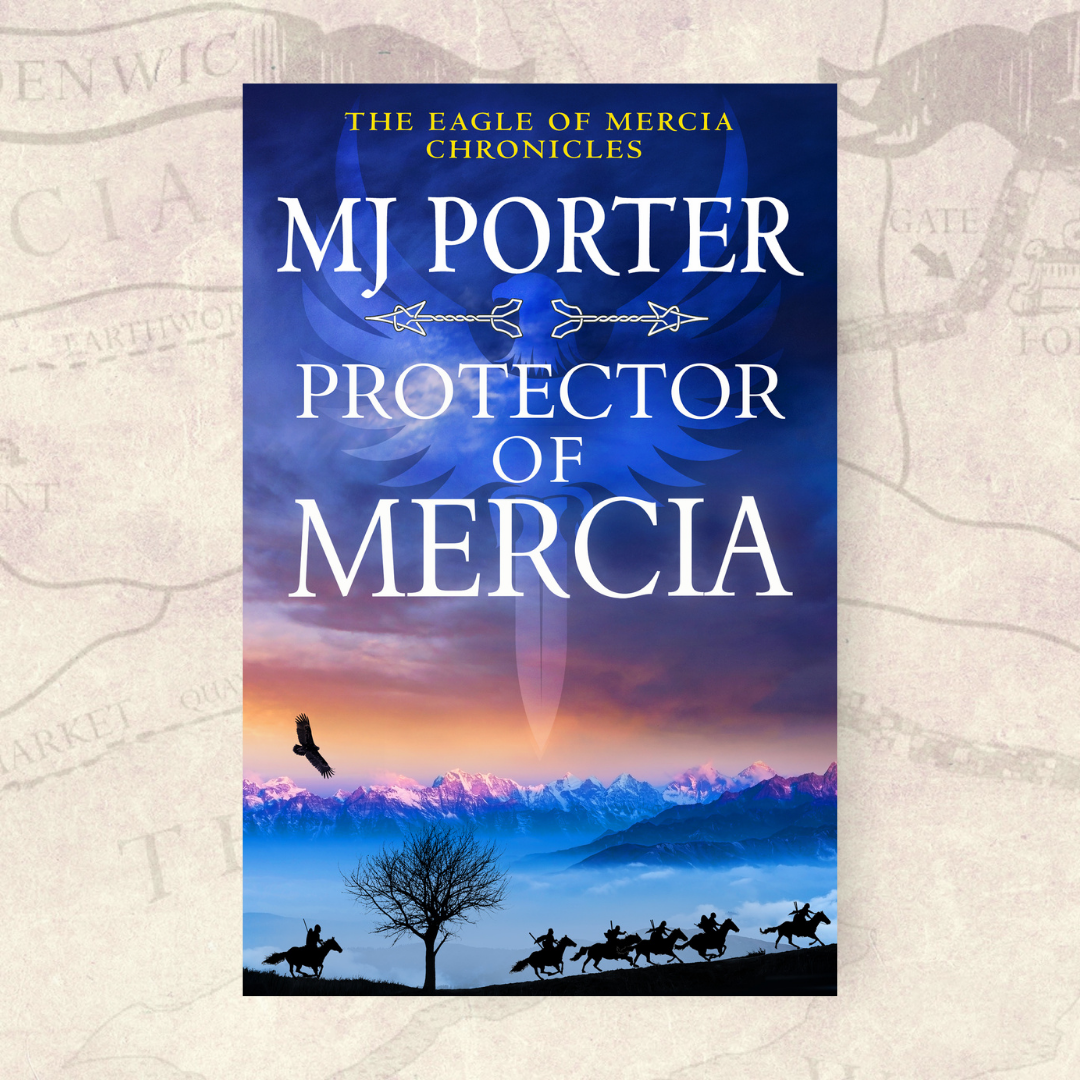
Welcome to my release day post for Protector of Mercia. I’m going to talk about the kings who preceded all the chaos of the series.
Readers of the Eagle of Mercia Chronicles will have encountered the names of kings Coenwulf and Coelwulf, although the kings in the first book, Son of Mercia, ruled after both Coenwulf and Coelwulf. But, having written about Coelwulf II in the Mercian Ninth Century books – which feature an older, and wiser Icel, I was eager to return to an equally unsettled period in Mercia’s history. And this, helped by the fact that Icel would just have been old enough at this period to be involved, very much helped set the scene. However, the aftermath of the reigns of these two men, brothers, are very much at the heart of political affairs during the Eagle of Mercia Chronicles.
So, who were Coenwulf and Coelwulf or Ceolwulf?
Coenwulf, the first and only of his name, was king of Mercia from 796 until his death in 821. He claimed descent, not from the previous king Offa (of Offa’s Dyke fame), and his son, but instead from Pybba, who is believed to have been the father of both Kings Penda and Eowa (read about them in my Gods and Kings trilogy) who ruled in the seventh century. You might have heard of Penda. Although the connection isn’t sound, he is often referenced when talking about the Staffordshire Hoard.
It does seem as though the crisis of the late 820s/830s and the slow decline of Mercian power have overshadowed all that King Coenwulf achieved, not helped by the fact that his son, who was to succeed him, died before his father (if he existed at all), so that on Coenwulf’s death, the kingship passed to his brother, Coelwulf, and he in turn was overthrown at some point in 823-826. The brother kings seem to have shared another brother as well, who may have been king of Kent, after Mercia annexed the kingdom to its own domain.
But Coenwulf was a successful ruler. He claimed the kingship after the death of Offa’s son, Ecgfrith, not long after his father’s death, (Offa is said to have been keen to eliminate all rivals to the kingship which is why, when his son died, the kingship had to pass to a more obscure branch of the ruling line), and while he suffered reverses in Kent and the kingdom of the East Angles, he does seem to have exercised control in both places, and was also aggressive against the Welsh kingdoms throughout his reign. Mercia, at this time, was NOT confined to the current English Midlands, it was a much vaster kingdom although it’s firm boundaries are difficult to establish.
Map design by Flintlock Covers
While the Anglo-Saxon Chronicle is sparse about our brother kings, that didn’t stop the later Norman writers, embellishing the story of them. But first, what do we hear about these kings from the Anglo-Saxon Chronicle?
‘Ceolwulf, king of Mercia, ravaged over the inhabitants of Kent as far as the Marsh, and [they] captured Præn, their king, and led him bound into Mercia.’ 796 [798[ (A)
´Here Coenwulf, king of Mercia, passed away, and Coelwulf succeeded to the kingdom.’ 819 [821] (A)
´Here Ceolwulf was deprived of his kingdom.’ 821 [823] (A)
´And the same year King Egbert and King Beornwulf fought at Ellendynm and Egbert took the victory; and a great slaughter was made there…. And that year the East Angles killed Beornwulf, king of the Mercians.’ 823 [825[ (A)
´Here Ludeca, king of Mercia, was killed, and his 5 ealdormen with him, and Wiglaf succeeded to the kingdom.’ 825 [827] (A)
´Here Wiglaf obtained the kingdom of Mercia again.’ 828 [830] (A)
Henry of Huntingdon, one of the Anglo-Norman author, writes of Cenwulf, our Coenwulf
‘Not long afterwards, Cenwulf, king of Mercia, beating and ravaging his way through the Kentish province, captured their king Præn, who could not match his strength and was lurking in the coverts and isolated places, and victoriously took him back in chains.’ p.259
Coenwulf’s brother, Coelwulf, succeeded him, but not for long, until he was usurped. Henry of Huntingdon in summarising affairs in Mercia adds.
‘Cenwulf reigned peacefully for twenty-six years, and died the common death.
Ceolwulf possessed the kingdom for three years, which the fierce Beornwulf then wrested from him.’ p.271
The Chronicle of John of Worcester adds similar details.
‘[821] Ceolwulf, king of the Mercians, was driven from his kingdom, and Beornwulf was raised to the kingship.’p241
There is some confusion regarding children born to either brother, and indeed, much that is known of that later Coelwulf II stems from the fact he shared a name with one of the two brothers, and as such, his connection with that ruling family can be supposed by experts in the field (not me). It appears that Coenwulf had a son and a daughter, the daughter well known as an abbess at a local nunnery, and possibly, two wives. King Coelwulf is known to have had one daughter, Ælflæd, who married Wigmund, the son of King Wiglaf. But there is a distinct lack of information regarding these individuals. We don’t know when the usurped King Coelwulf died. We don’t know when his daughter died, for certain, and obviously, other children are unknown.
The Chronicle of John of Worcester, another Anglo-Norman writer, informs us that.
‘[819] St Cenwulf, king of the Mercians, after a life devoted to good deeds, passed over to the eternal blessedness which is in heaven, and left his 7-year-old son St Kenelm heir of his realm. But when a few months had passed, by the treachery of his own sister Cwenthryth, whose cruel spirit had been roused by an awful lust for power, he was secretly done to death with cruel outrage by Æscberht, his most bloodthirsty tutor, in the shade of a thorn tree in a deserted wood. But he who was slain with heaven alone as witness, was later revealed by heaven’s witness through a column of light. Kenelm’s head was cut off, milk-white in the beauty and innocence of birth, and from it a milky dove with golden wings soared to heaven. After his happy martyrdom, Ceolwulf received the kingdom of the Mercians.’ P239-241
Henry of Huntington adds. ‘At Winchcombe you will read of the secret martyrdom of Kenelm. He was the son of Cenwulf, the Mercia king, who died in the year of grace 819, having reigned for twenty-four years. The martyrdom of his son Kenelm was revealed from heaven to Pope Silvester II at Rome.’p691
However, Coenwulf and Coelwulf I do seem to have enjoyed military successes. Coelwulf’s attacks on Wales are mentioned in the Annales Cambriae.
‘818 Cenwulf [Coenwulf] devastated the Dyfed regio.
822 The fortress of Degannwy is destroyed by the Saxons and they took the kingdom of Powys into their own control.’ p48
The Anglo-Saxon Chronicle is not helpful about the reigns of either brother, other than referencing their accession and either death or deposing. We don’t know the date that Coelwulf I died, although he clearly lived after being deposed.
Increasingly, scholarship is looking at Mercia during this period – if the answers can’t be found in the surviving written sources they can be found elsewhere. When King Alfred began his revival in education, many of the scholars he turned to were Mercians, highlighting Mercia’s accomplishments in all spheres – and the correlation has been made that the same happened in Mercia after the end of Northumbria’s Golden Age. There is also a wealth of Mercian sculpture dated to this period which hints at the power and influence of the kingdom, perhaps even of artistic centres at the heart of certain designs.
This doesn’t yet help us truly appreciate the power these kings could wield – so often overshadowed by what happened after their reigns, but it certainly shows we should be wary of accepting this absence in the written sources as indicative of their failure. Indeed, we should be wary of any Wessex-centred source from later in the same century (the Anglo-Saxon Chronicle) that might not only suffer from Wessex-bias, but may also reveal a desire to overshadow Mercia in order to proclaim Wessex’s kings as the more powerful. This is something that is certainly at the heart of the revival in interest in the descendant of these two kings, King Coelwulf II, or Mercia’s last king, written about as a ‘foolish king’s thegn’ in the Anglo-Saxon Chronicle but clearly very far from being that.
It’s intriguing to realise that our Norman writers only had access to much the same information that we do in order to offer an account of what was happening in Mercia at this time. But they do seem to have enjoyed embellishing the words of the Anglo-Saxon Chronicle, and while arguments are often made that they may have had access to local sources not written about in the Anglo-Saxon Chronicle, especially for John of Worcester, who wrote at one of the most important Mercian centres, until their words can be entirely unpicked, we must be wary of using their additions as historical ‘fact,’ in much the same way that we need to be wary of the Anglo-Saxon Chronicle(s).
Quotations are taken from the following translations. Darlington, R.R. & McGurk, P. ed. The Chronicle of John of Worcester Volume II The Annals from 450 to 1066(Clarendon Press, 1995). Greenway, D. ed. and trans. Historia Anglorum, The History of the English People, Henry of Huntingdon, (Clarendon Press, 1996. Morris’ translation of Nennius and the Welsh Annals and Swanton’s The Anglo-Saxon Chronicles.
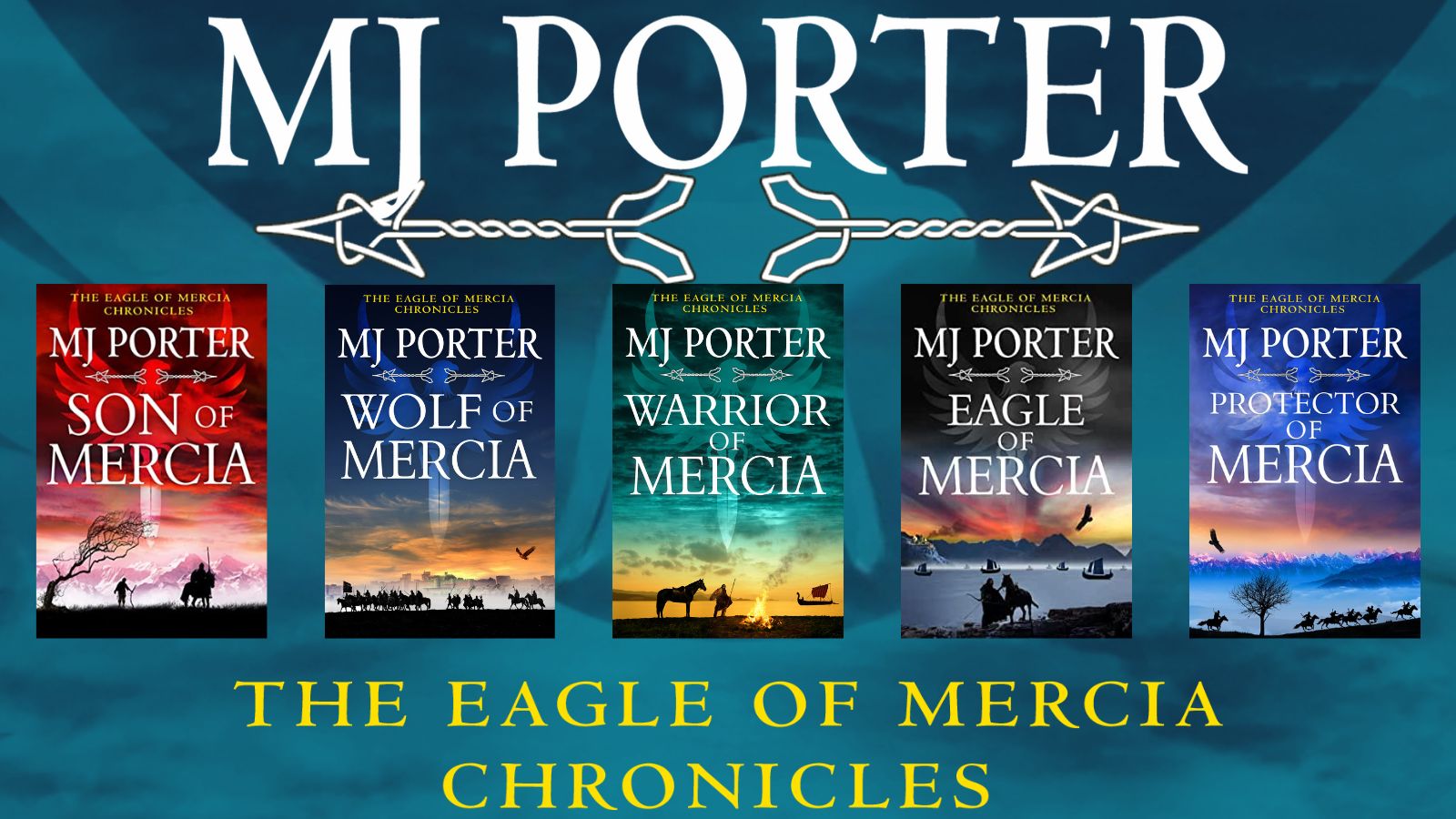
If you’ve not yet started The Eagle of Mercia Chronicles, then check out this introduction to the series.
Sign up to my monthly newsletter to learn more about my writing journey, new releases and special offers, and receive a free short story collection featuring many stories of Saxon England.
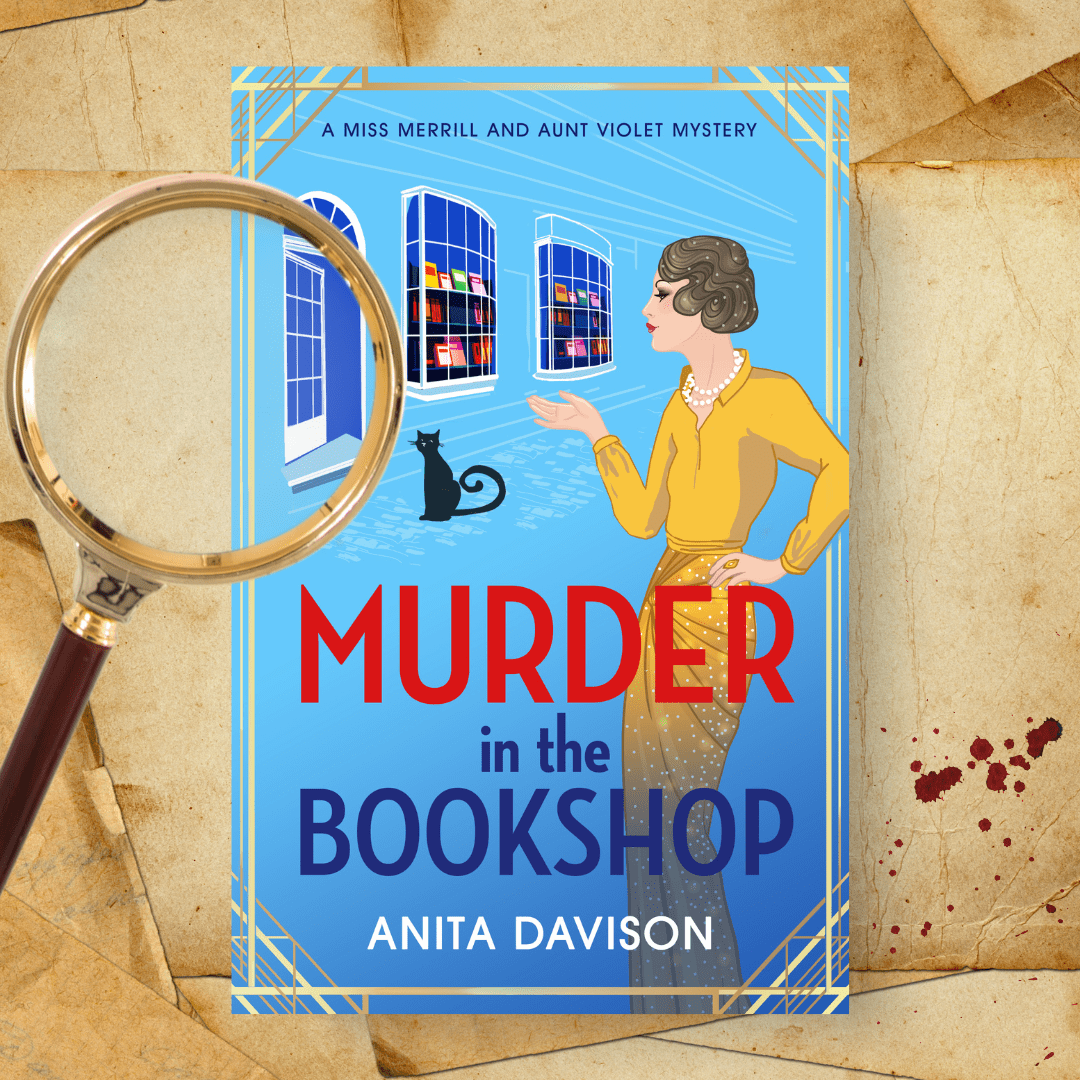
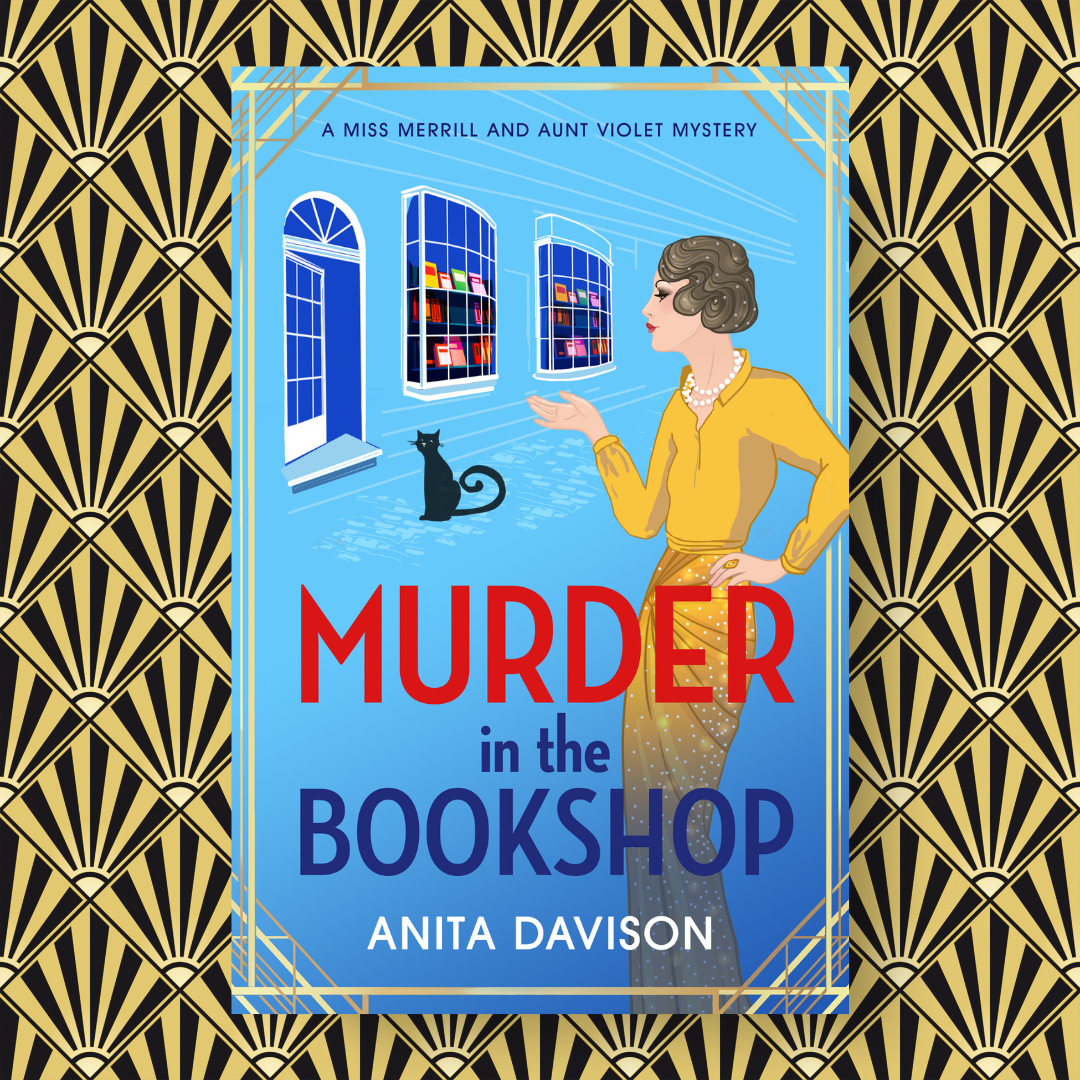
1915, London: Working in the dusty bookshop that her Aunt Violet mysteriously inherited, Hannah Merrill is accustomed to finding twists in every tale. But discovering her beloved best friend Lily-Anne – with a paperknife through her heart – in the middle of the bookshop, is not a plotline she saw coming.
The case is anything but textbook. With the discovery of a coded German message, and Hannah’s instinct that Lily-Anne’s husband is keeping secrets, she determines to get to the bottom of it.
She can’t do it alone though. To crack this case, Hannah will need to enlist the help of her outrageous, opinionated, only-occasionally-objectionable Aunt Violet.
They think they’re making progress until one of their chief suspects is found dead. And Hannah realises that she is herself now in the murderer’s sights. Will the final chapter be the ending of a killer… or just a killer ending?
A totally addictive, WW1-set cozy mystery, perfect for fans of Verity Bright, T.E. Kinsey, and Agatha Christie.
My Review
Murder in the Bookshop is a cosy historical fiction story set in 1915 in London, England.
Well grounded in the events of the day – the Great War hasn’t been as easy to win as all believed – there are fears of bombs being dropped by the Germans via Zeppelin – the realities of the war are starting to make themselves known with food shortages – this is a really well-envisioned study of the period. Added to which, we have a Murder in the Bookshop.
Our main character is Hannah, who having lost her fiance during the war, now lives with her aunt and helps her run a bookshop. She’s a fiesty character, very much a woman of her day. Aunt Violet is a suffragette and that’s just the beginning of the scandals that surround her. Hannah’s mother wants her to marry, but Hannah isn’t at all interested in doing what her mother wants, and indeed, her mother never actually makes an appearance in the story – which is probably for the best.
Instead, Hannah finds herself determined to discover the culprit behind the murder, and this forces her to come to terms with some truths she’s never known about her friends.
What follows is a really well-constructed story of murder, conspiracy, suspicion and indeed, some peril for our main characters as well.
I read this book in about 2 sittings. I thoroughly enjoyed the setting, the mystery and the resolution, which I didn’t guess at all.
A fabulous war-time mystery sure to thrill fans of the historical mystery genre.
Meet the author
Anita Davison is the author of the successful Flora Maguire historical mystery series. Previously published by Aria, she is writing a new cosy mystery series for Boldwood, the first title of which, Murder in the Bookshop, will be published in August 2023.