SHE STRUGGLES AGAINST HER ENEMIES. BUT STILL, THEY STAND IN HER WAY. In 14th century England, Meg of St. Michael’s Mead endures a life of abuse and isolation due to her birth deformity. After witnessing a shocking birth, Meg discovers her true purpose: to become England’s first licensed female physician and provide compassionate care to women.
To achieve her goal, Meg seeks the tutelage of William of Oxford, a gruff surgeon who agrees to mentor her. But there’s a catch. She must keep a secret—William and his son Gerard are performing illegal human dissections—and she must assist them. As Gerard and Meg work together, their feelings for each other deepen.
Amidst a civil war, Meg makes an enemy of the Queen, who accuses her of treason. Forced to flee to Montpellier, France, Meg tries to enter medical school, only to be met with resistance. She is told to marry, stay at home, and please her husband. Meg refuses to conform. When a deadly epidemic breaks out in Montpellier, Meg has one last chance to prove herself, but at the risk of losing Gerard.
A story of one woman’s courage and persistence, this captivating tale follows Meg’s arduous journey of overcoming prejudice and adversity as she battles societal expectations amidst the specter of a lethal epidemic.
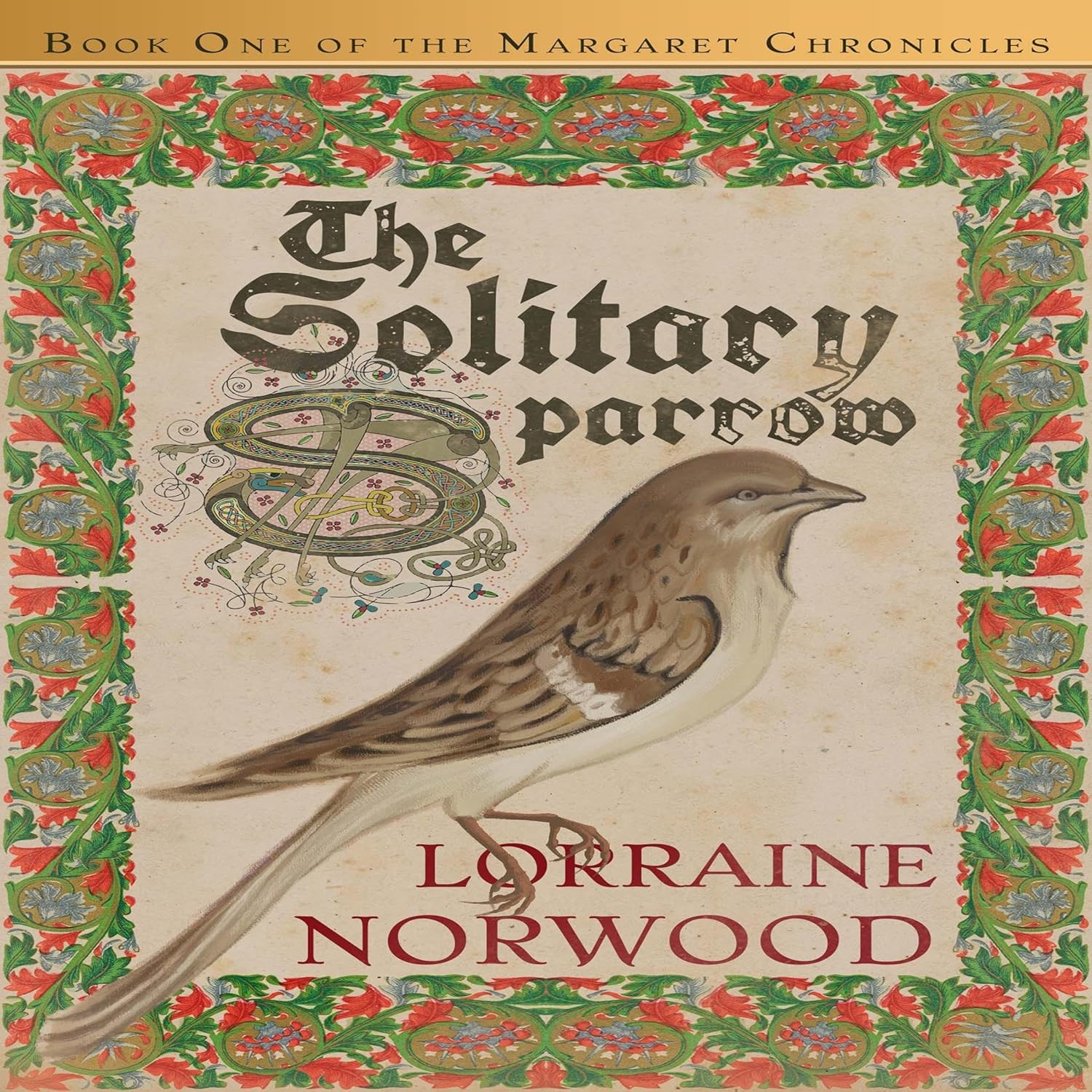
The Solitary Sparrow by Lorraine Norwood and narrated by Tracy Russell is a wonderfully atmospheric story of the fourteenth century, following Meg as she attempts to fulfil her hopes and dreams following a difficult childhood.
It does not shy away from describing some quite graphic medical conditions, but voiced by our narrator, the reader can only be enthralled and absolutely fascinated, as events unfold for Meg. Indeed, I was hooked by the end of the first chapter.
It’s such a fascinating story, stuffed with medical knowledge of the era and sure to enthrall readers, even if the topics are not always the most pleasant. An absolute delight.
Meet the author
Lorraine Norwood was a professional journalist for over 20 years, working in print and television journalism. Her lifelong interest in archaeology led her to change careers at midlife and earn a master’s degree in medieval archaeology from the University of York in York, England. When she returned to the U.S., she worked in archaeology and historic preservation for a number of years but is now happily writing full-time. She has participated in excavations in the UK including many in York, her favorite city. The Solitary Sparrow is her first novel, the first in a series titled The Margaret Chronicles. She is working on the sequel, A Pelican in the Wilderness. The series is set in 14th century England and France. Lorraine is a member of the Women’s Fiction Writers Association and the Historical Novel Society. She is a certified book coach and a developmental editor and loves mentoring new writers. She lives with an old Lab who follows her everywhere and a grumpy old cat who doesn’t care what the human does as long as he has food in his bowl. Lorraine lives in the Blue Ridge Mountains of North Carolina.
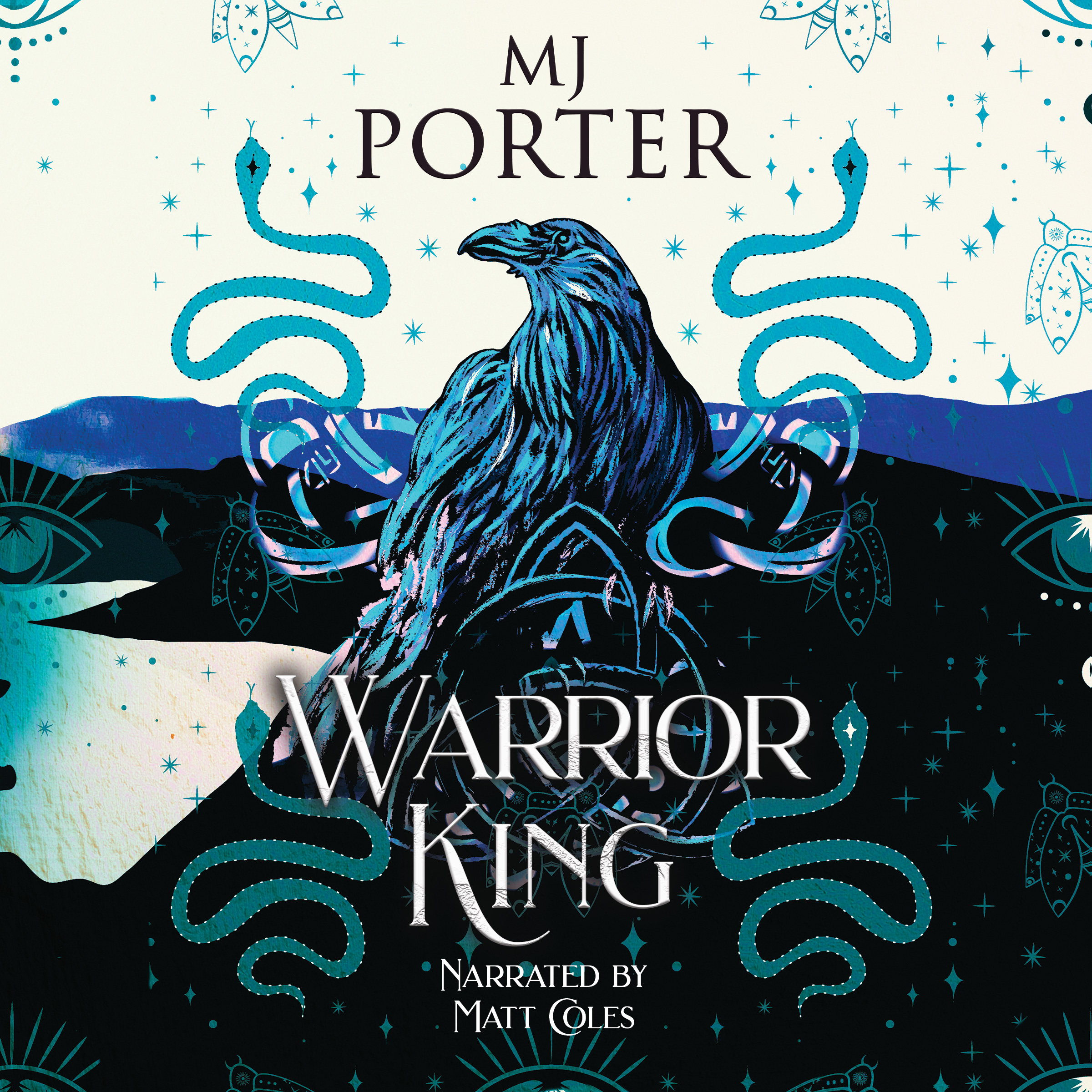
Warrior King is now live on many audio channels, and slowly making its way onto more and more. Right now, I know it’s available on Spotify, Kobo, Nook, Chirp, Scribd, Bingebooks. Other platforms will be coming live in the coming days and weeks.
Warrior King sample, narrated by the fabulous Matt Coles
With Warrior King, the trilogy, Gods and Kings, is now complete in audio and readers can enjoy listening and reading to the tale of Penda, Mercia and the events of the middle of the seventh century in Saxon England. I hope you’ll enjoy, and I want to say huge thanks to Matt Coles who had this trilogy thrust upon him when a previous narrator was unable to continue, and has done an amazing job of bringing the era to life. When he narrates, I hear my characters as I first visualised them. It’s an amazing experience.
If you’d like a code to download Warrior King from Spotify, please send me an email, and tell me why you want to listen, and I’ll send you a code and instructions about how to use them, or find me on one of my social channels – perhaps not Facebook as I get a bit lost with messages on there.
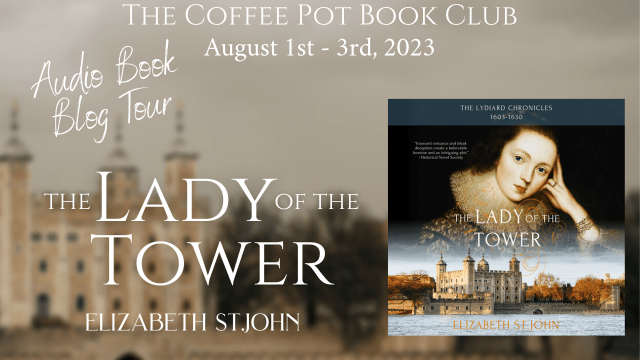
Elizabeth St John is sharing a snippet – written and audio – of her fab book, The Lady of the Tower. Enjoy.
Chapter Nine
Lydiard Park
I drew a deep, shuddering breath, my hand on my breast, feeling the posie ring concealed beneath.
“I can’t bear it, Anne. I can’t live this way any longer.” I slumped into a chair, such a paralyzing emptiness overwhelming me that my tears were frozen. Although the afternoon sun warmed my chamber, my hands were icy cold. I had hidden my emotions for so long that only hollowness remained, and the loss of Theo’s letters slammed the door shut on my soul. I hated the thought of Joan and Barbara reading his precious words, spitefully laughing over his declarations of love and his promises for our future. I did not care of their opinions of me, for I did not respect their morality, but to consider their envious suppositions tainted his writings disturbed me beyond words.
“Lucy, they are so terribly jealous of your happiness. It is horrible. I tried to stop them from forcing the lock on your box. I tried to prevent them from removing Theo’s letters. I am so sorry I could not intervene.” Anne’s white face was pinched, her cheeks streaked with tears.
“It’s not your fault, Anne. Don’t distress yourself more. I do not know what I have ever done to deserve this treatment from them, but it has been this way since I was a child, and it appears it will never cease.”
I looked around the familiar room, my sanctuary at Lydiard. The polished chestnut paneling glowed in the afternoon sun, and the vase of yellow roses on the chest emanated a heady fragrance that promised the long summer days ahead. Through the diamond-paned window shimmered the green parkland, where an ancient cypress tree marked the boundary of the bowling green and offered a shady resting place. All were loved by me with a passion that had sustained me during my exile at Battersey, and they became my refuge when I returned. Now they taunted me with an oppressive familiarity. I longed to be stripped of all the layers of family and emotions binding me to this place and to be free of the jealous web threatening now to strangle me.
“Anne, I need your help.”
She lifted her head eagerly, her sweet expression expectant.
“Of course, Lucy, of course. I will tell John of Joan’s cruel accusations. He will not believe her.”
“No, leave John from this for now. He will not understand the woman’s jealous heart that steers these resentful actions. No, it is something different that I ask of you.”
“Anything, for I cannot bear to see you be the object of your sister’s envy this way.”
“You leave for Guernsey to visit your father next week. I would come with you.”
“Elizabeth St John has brought the Stuart Court vividly to life. She weaves together the known facts of Lucy’s life with colourful scenes of fictional imagination, drawing on innocent romance and bleak deception to create a believable heroine and an intriguing plot.” Historic Novel Society Book Review
“The Lady of the Tower is a beautifully produced novel with a well-crafted story that will keep you both engaged and entertained. A joy to read. Thank you for sharing your world with us.”
Writers Digest 24th Annual Book Awards
London, 1609. When Lucy St.John, a beautiful highborn orphan at the court of King James, is seduced by the Earl of Suffolk, she never imagines the powerful enemy she creates in his beloved sister, the Countess of Rochester. Or that her own sister Barbara would betray her and force Lucy to leave the court in disgrace. Spirited, educated, and skilled in medicine and precious remedies, Lucy fights her way back into society, and through an unexpected love match, becomes mistress of the Tower of London.
Living inside the walls of the infamous prison, she defies plague, political intrigues and tragic executions to tend to aristocratic prisoners and criminals alike. Now married into the immensely powerful Villiers family, Barbara unites with the king’s favorite, the Duke of Buckingham, to raise the fortunes of Lucy and her family to dizzying heights. But with great wealth comes treachery, leaving Lucy to fight for her survival—and her honor—in a world of deceit and debauchery.
Elizabeth St.John’s critically acclaimed debut novel tells the true story of her ancestress Lucy through her family’s surviving diaries, letters, and court papers. Lucy’s personal friendships with historical figures such as Sir Walter Raleigh and the Stuart kings brings a unique perspective to the history of seventeenth century England.
Buy Links:
The ebook is available to read on Kindle Unlimited.
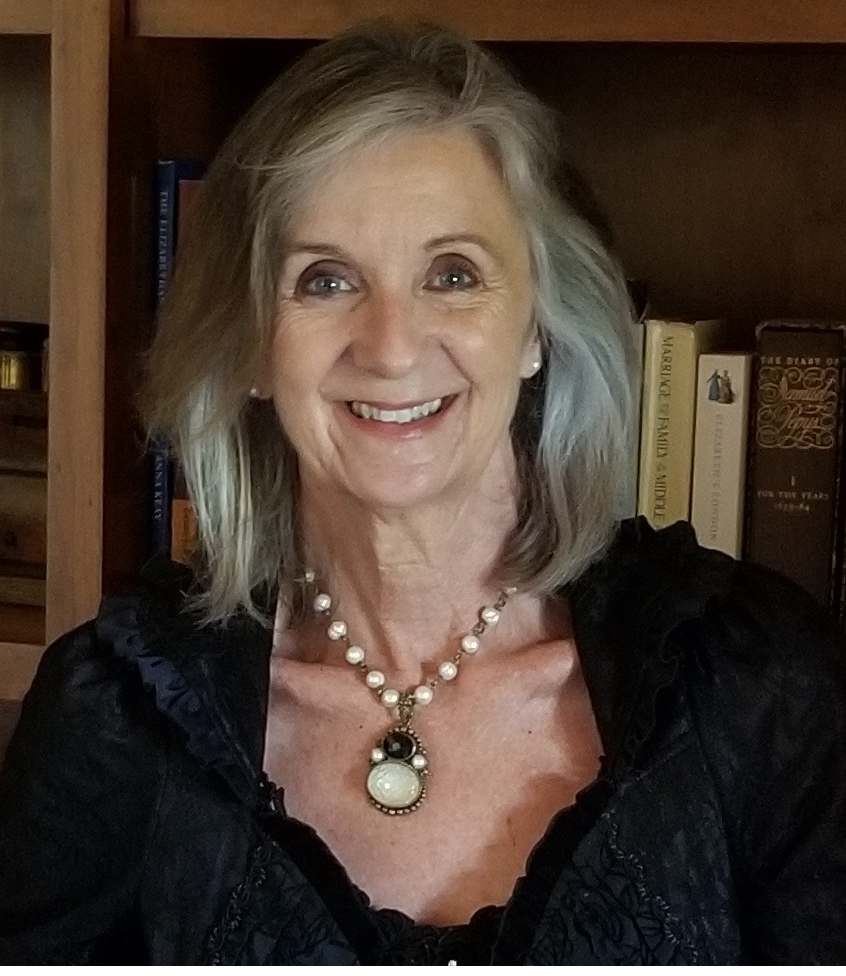
Elizabeth St.John’s critically acclaimed historical fiction novels tell the stories of her ancestors: extraordinary women whose intriguing kinship with England’s kings and queens brings an intimately unique perspective to Medieval, Tudor, and Stuart times.
Inspired by family archives and residences from Lydiard Park to the Tower of London, Elizabeth spends much of her time exploring ancestral portraits, diaries, and lost gardens. And encountering the occasional ghost. But that’s another story.
Living between California, England, and the past, Elizabeth is the International Ambassador for The Friends of Lydiard Park, an English charity dedicated to conserving and enhancing this beautiful centuries-old country house and park. As a curator for The Lydiard Archives, she is constantly looking for an undiscovered treasure to inspire her next novel.
Elizabeth’s books include her trilogy, The Lydiard Chronicles, set in 17th Century England during the Civil War, and her newest release, The Godmother’s Secret, which explores the medieval mystery of the missing Princes in the Tower of London.
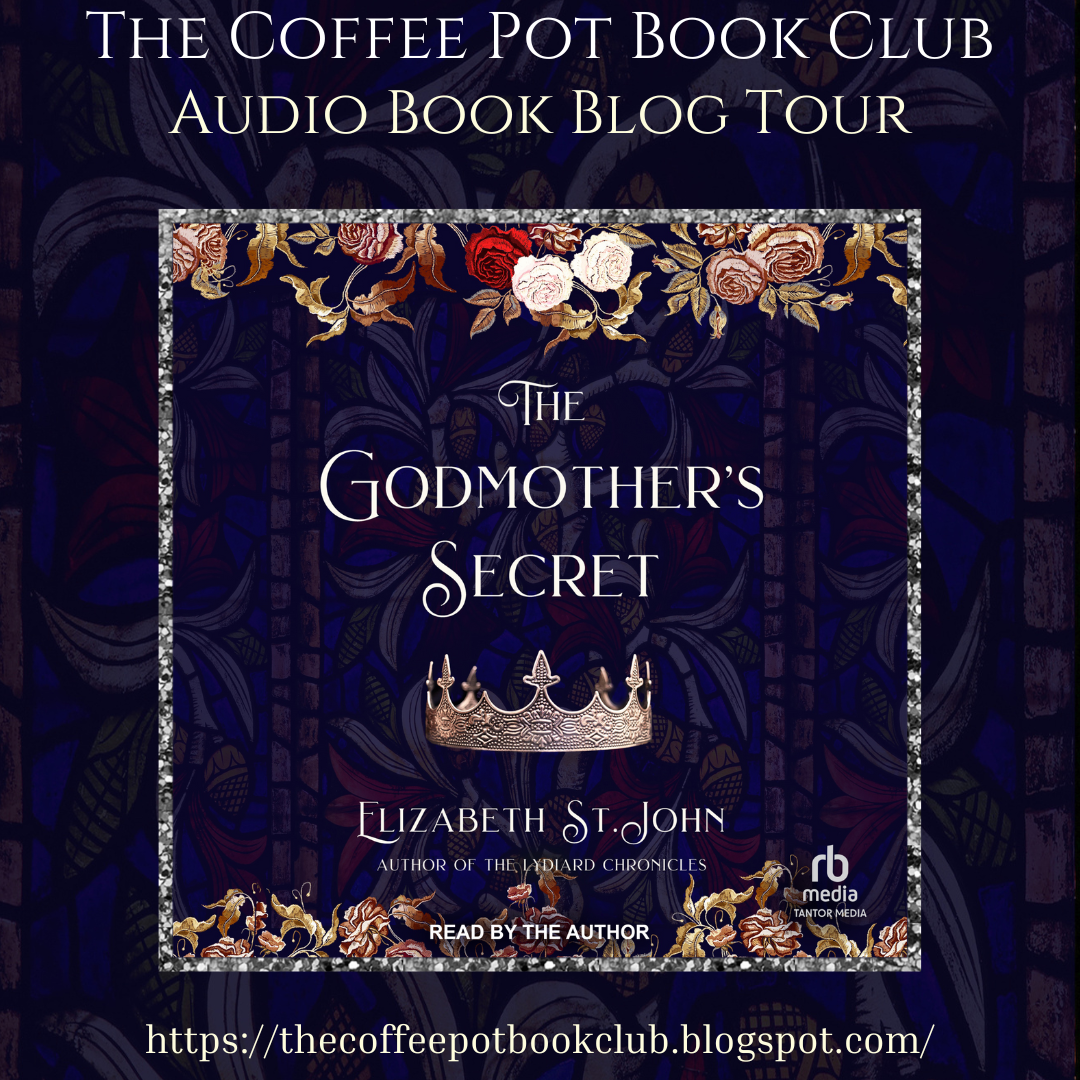
I’m delighted to welcome Elizabeth St. John and her new audiobook, The Godmother’s Secret to the blog, with a snippet to read, and to listen to:)
Spring 1483 | Stony Stratford
“Go to Ned’s chamber, Lady Scrope. You can see for yourself—there, upstairs, with the guard on the door.” Gloucester nods across the mud-rutted stable yard of the Rose and Crown in Stony Stratford. “’Struth, but this is a piss-poor place for the King of England to spend the night. But directly on the London road.” He glances at Harry. “I believe you are right. Lord Rivers is preparing for a speedy departure.”
“And that he will have,” responds Harry. “But perhaps not in the direction he planned.” He gestures at me impatiently. “Go now to the king.”
I dismount and walk cautiously up the broken wooden stairs to the outer gallery. Harry’s ranting increased on the brief ride from Northampton, his cursing against the Woodvilles unbearable. I just want to hold Ned, comfort him and give him courage to face the days ahead. The poor boy has lost his father. The rest is men’s talk.
The guard is sleepy, his air distracted.
“I am Lady Scrope. Godmother to King Edward.”
He just stares ahead.
“Let me pass.”
Reluctantly, he moves to one side.
My precious boy stands in the middle of the room, quite alone. He cries in surprise and runs into my arms. Ned’s thin frame is trembling like a stricken rabbit. He is now my king, but he is also my boy, a mere twelve-year-old lad guarded and alone in his chamber in this dilapidated inn.
“My father.” His voice cracks like a broken reed. “Oh, Lady Scrope, I did not get to say good-bye to him.”
“Hush. Hush, my Ned.” His baby name slips out naturally. I hug him for the longest time, feeling his tense shoulders gradually lower. I can feel him struggling not to cry, and I must help him gather his emotions. I hold him at arm’s length to look into his eyes. “Be brave, my darling, take courage. You must be strong, be true to your destiny.”
“But not yet, Lady Scrope. I’m not ready yet.” His eyes well with tears again. My heart breaks.
“Listen to me,” I say fiercely. “Just as Arthur pulled the sword from the stone, kingship has been thrust upon you.”
He looks at me, his head tilted. “And he didn’t even know he would be king.”
I knew I’d capture his imagination. “No, he didn’t. And look how brave he was.”
Ned childishly scrubs his face, a crimson flush on his fair skin. “Our favourite story. Do you think I could be a great king like Arthur?”
“Yes, my darling. Yes. For you have been schooled well in chivalry, Ned. Your father and Lord Rivers have prepared you since your birth for this moment, although it has indeed come too quickly.” I gently wipe a tear from his smooth cheek. “And you have me, Lord Scrope, and your mother, Dickon, and your sisters, your family who loves you so very much, to help you.”
Ned lifts his chin, sucks in a deep shuddering breath. I free the crucifix from my purse and fold it into his palms, pressing his hands around the precious relic.
“From your father, to my care.” I stroke the blond hair that tufts from his damp forehead in the way it has grown since he was four years old. “So you would know he is always with you, Ned. And that he entrusts me with your well-being.”
“An extremely well-written book with depth and complexity to the main characters. The author says she wanted to write a book about family love and tolerance, and a woman’s loyalty and courage. She has done so. This is the best book I’ve read in ages!”
The Ricardian Bulletin, Richard III Society
“The authenticity and historical research displayed within this story is immense and exquisite. Ms. St. John is sure to be a newfound favorite for fans of not only this fractious time in English history, but of all historical fans who adore rich, immersive prose.” Historical Fiction Company 2022 Book of the Year
“A very enjoyable read. The historical veracity is impeccable, and Elysabeth is a likeable, admirable character who faces interesting dilemmas with love and courage.” Historical Novel Society
If you knew the fate of the Princes in the Tower, would you tell? Or forever keep the secret?
May 1483: The Tower of London. When King Edward IV dies and Lady Elysabeth Scrope delivers her young godson, Edward V, into the Tower of London to prepare for his coronation, she is engulfed in political turmoil. Within months, the prince and his brother have disappeared, Richard III is declared king, and Elysabeth’s sister Margaret Beaufort conspires with her son Henry Tudor to invade England and claim the throne.
Desperate to protect her godson, Elysabeth battles the intrigue, betrayal, and power of the last medieval court, defying her Yorkist husband and her Lancastrian sister under her godmother’s sacred oath to keep Prince Edward safe. Bound by blood and rent by honour, Elysabeth is torn between King Richard and Margaret Beaufort, knowing that if her loyalty is questioned, she is in peril of losing everything—including her life.
Were the princes murdered by their uncle, Richard III? Did Margaret Beaufort mastermind their disappearance to usher in the Tudor dynasty? Or did the young boys vanish for their own safety? Of anyone at the royal court, Elysabeth has the most to lose–and the most to gain–by keeping secret the fate of the Princes in the Tower.
Inspired by England’s most enduring historical mystery, Elizabeth St.John blends her family history with known facts and centuries of speculation to create an intriguing story about what happened to the Princes in the Tower.
Elizabeth St.John’s critically acclaimed historical fiction novels tell the stories of her ancestors: extraordinary women whose intriguing kinship with England’s kings and queens brings an intimately unique perspective to Medieval, Tudor, and Stuart times.
Inspired by family archives and residences from Lydiard Park to the Tower of London, Elizabeth spends much of her time exploring ancestral portraits, diaries, and lost gardens. And encountering the occasional ghost. But that’s another story.
Living between California, England, and the past, Elizabeth is the International Ambassador for The Friends of Lydiard Park, an English charity dedicated to conserving and enhancing this beautiful centuries-old country house and park. As a curator for The Lydiard Archives, she is constantly looking for an undiscovered treasure to inspire her next novel.
Elizabeth’s books include her trilogy, The Lydiard Chronicles, set in 17th Century England during the Civil War, and her newest release, The Godmother’s Secret, which explores the medieval mystery of the missing Princes in the Tower of London.
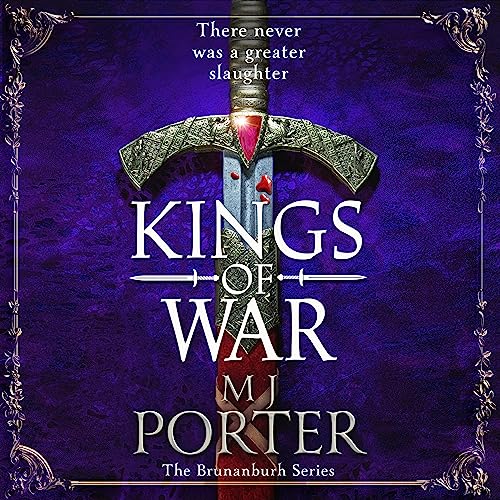
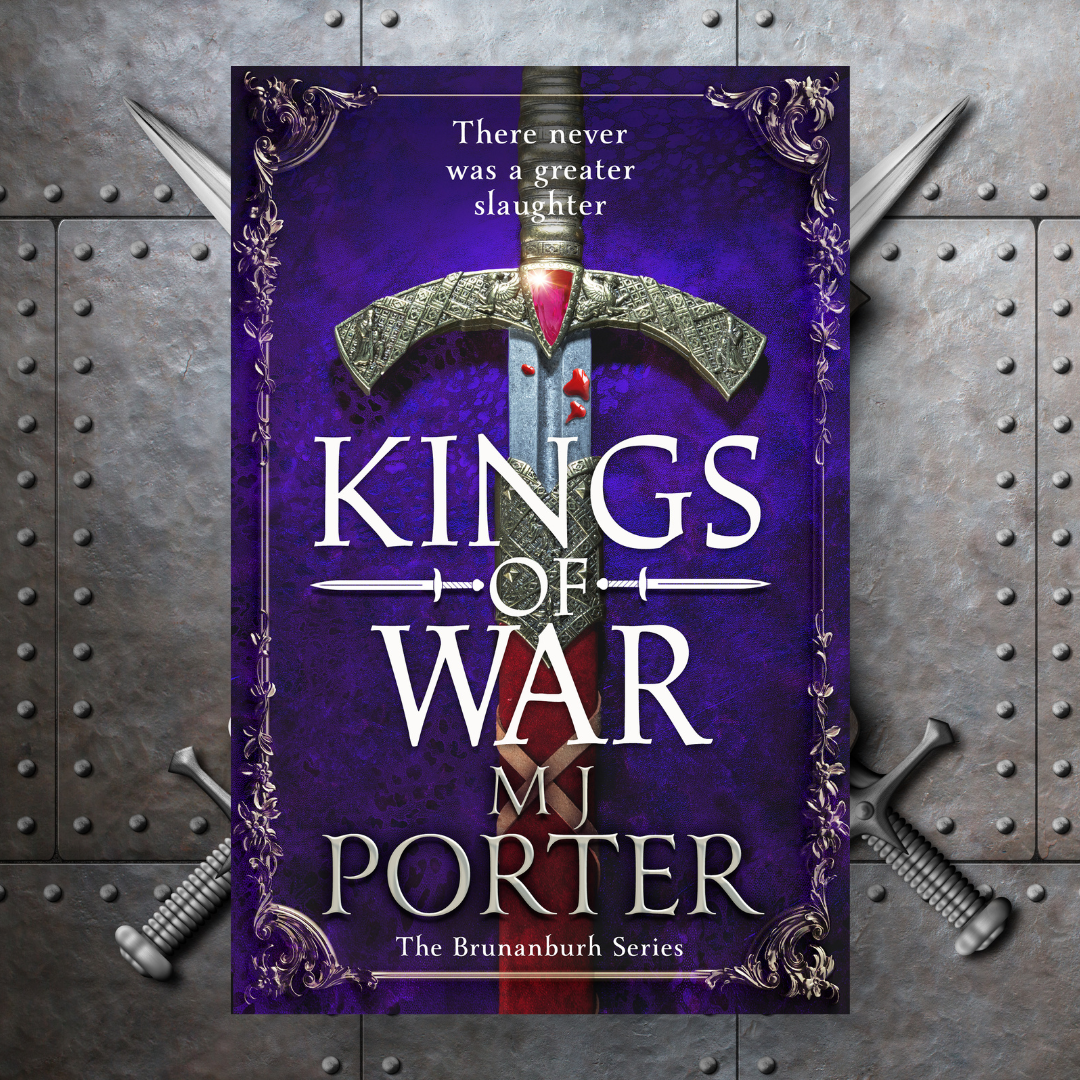
Kings of War, the sequel to King of Kings, is now available in audio, narrated by the fabulous Matt Coles. This is the story of the battle of Brunanburh fought in 937. (Check out my post on where exactly Brunanburh was fought).
Here’s the blurb:
Can the King of the Scots and the Dublin Norse triumph against a united England?
AD934
King Athelstan of the English has been successful in uniting the many kingdoms of Britain against one enemy, the Viking raiders.
But men who are kings don’t wish to be ruled.
Constantin, King of the Scots, rebelled against the Imperium and was forcibly brought to bend the knee to Athelstan and England at Cirencester.
His son Ildulb seeks bloody vengeance from Athelstan following the battle at Cait and the death of his son.
Olaf Gothfrithson, king of the Dublin Norse, having asserted his power following his father’s death has his sights set on reclaiming Jorvik.
Can the united might of the Scots and the violence of the Dublin Norse, descendants of the infamous Viking raiders, bring King Athelstan and his vision of the united Saxon English to her knees?
An epic story of kingsmanship that will result in the pivotal, bloody Battle of Brunanburh, where only one side can be victorious.
Today I’m delighted to welcome Faith L Justice to the blog with a post about the way she researched in order to write Dawn Empress.
Q. How Far Could a Roman Army March in a Day and Did They Wear Socks with Their Sandals?
A: 37 miles and “Yes”—Details in the post!
My mission is to tell interesting stories about little-known, but important women, while entertaining the reader. Because I write biographical historical fiction, historical accuracy is extremely important to me. For every novel, I must answer hundreds of questions like those posed in the title, so I do a tremendous amount of research beyond the facts of births, deaths, wars, etc. The sights, smells, sounds, and descriptions of clothes, food, housing, and transportation helps the reader experience a kind of time travel as they immerse themselves in a past culture. Personally, I find research the most fun part of writing my books. I get to learn new stuff, visit interesting places, and share my passions with readers.
I ran across the empresses who are the subjects of my three-book series The Theodosian Women when I researched my first novel set in the early fifth century. Pulcheria (Dawn Empress) took over the Eastern Roman court at the tender age of fifteen and ruled as regent for her under-age brother Theodosius II. Placidia (Twilight Empress) ruled over the fading Western Empire for her under-age son Valentinian III. Athenais (work in progress), a pagan philosopher/poet married the “Most Christian Emperor” Theodosius II. These women fascinated me. I wanted to tell their stories, but I had a lot of research work to do.
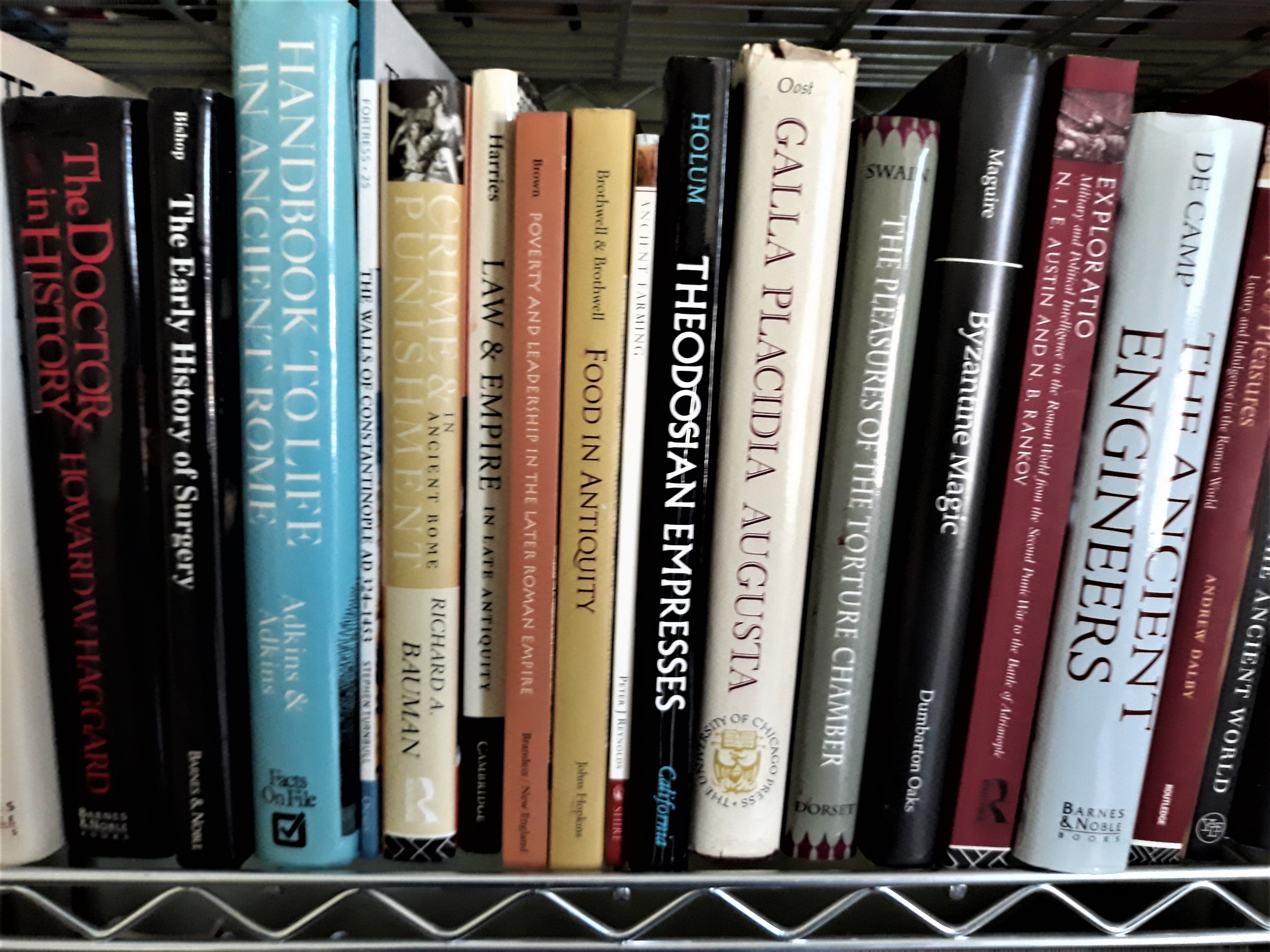
This was hampered by the times. The fifth century experienced great turmoil as barbarians invaded the Roman Empire sacking cities, disrupting education and culture, and destroying records. This left only fragments of primary sources for future historians to ponder. Archaeology filled in some of the blanks, but there was lots of room for my imagination. My print resources consisted of translated copies of primary sources, general histories by well-respected historians, and a couple of obscure biographies. I still remember the unmitigated joy I felt when I found a used copy of Galla Placidia Augusta: A Biographical Essay by Stewart Irvin Oost and plunked down my money. I wrote Pulcheria’s story later when Kenneth G. Holum’s Theodosian Empresses: Women and Imperial Dominion in Late Antiquity was generally available. I’ve provided research bibliographies for each of my novels on my website but here’s a visual sample of my research book shelves.
My first drafts are usually “white room” versions concentrating on the plot derived from the histories. I spend my second draft answering pesky questions about food, clothing, health, religion, architecture, art, technology, trade, and natural disasters—anything that adds color and context to my character’s lives. These details mostly come from specialized books and academic articles. The Handbook to Life in Ancient Rome (part of the Oxford Facts on File series) is a good place to start, but I couldn’t write with confidence without the academic articles I find at JSTOR (free with a library card) and Academia.edu.
Research has changed enormously in the past twenty-five years, making it much easier for the casual scholar. For my first two novels, I had to haunt the research branch of the New York Public Librarylooking up academic articles in dusty indices. About half of the journals seemed to be missing when I searched for them in the stacks. Now with a library card and a computer, anyone can access thousands of academic journals and presentations. I have over 300 titles in my miscellaneous research file alone.
The coolest new tool I’ve found is an interactive website called Orbis the Stanford Geospatial Network Model of the Roman World. Created and maintained by Stanford University, Orbis provides travel data in the Roman Empire. I fill in the details and it tells me how long it would take an army to march from Constantinople to Aquileia in January: 26.5 days, covering 1588 km (987 miles) at 60 km (37 miles) per day. Do I have a post rider carrying an important message from Rome to Toulouse in October? How about a trader moving exotic animals from Alexandria to Rome during the summer? No more looking up obscure modes of transportation, determining distance on Google Maps, and hand calculating. Magic!
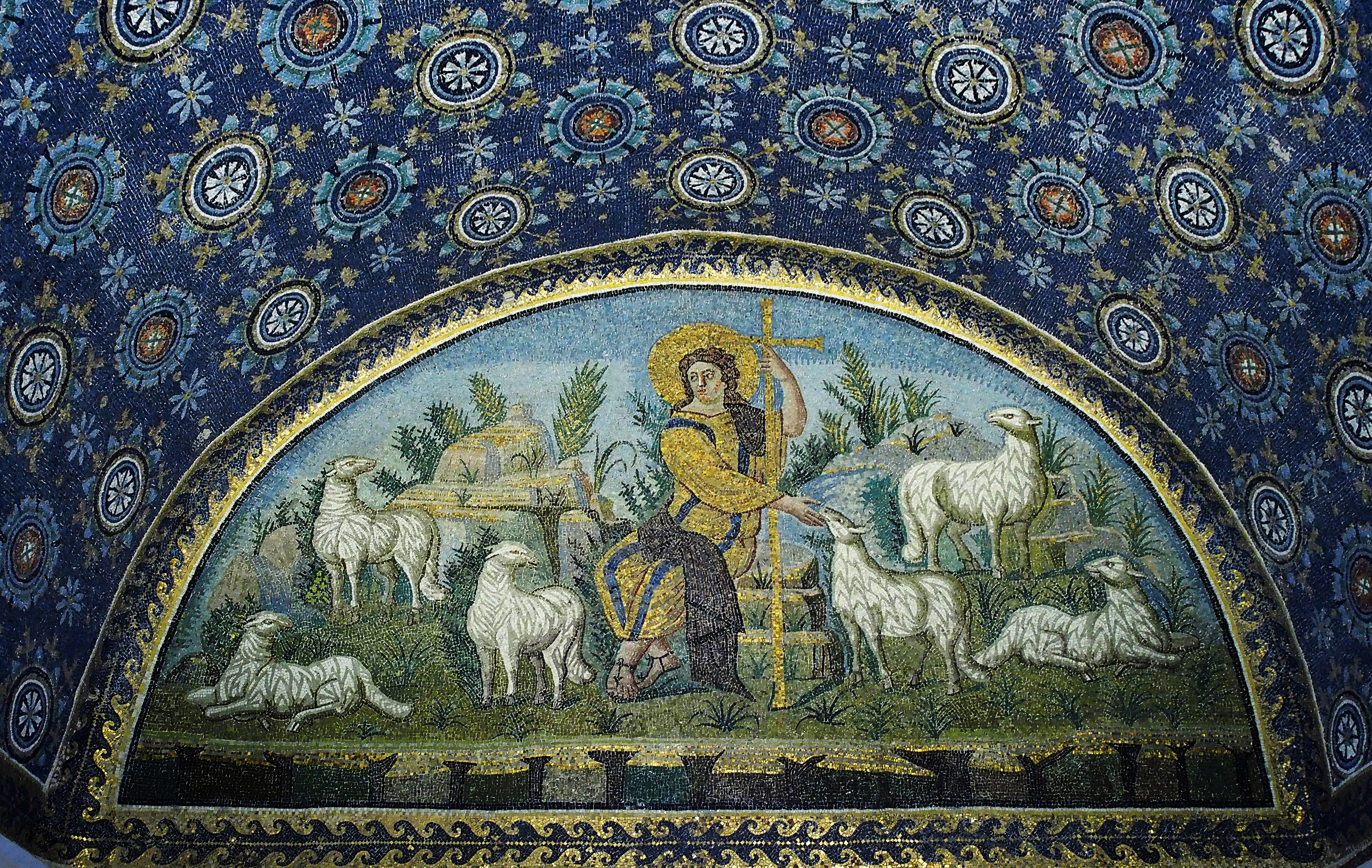
My all-time favorite research technique is the site visit. I have a dozen books on Constantinople and Ravenna with gorgeous pictures and incredible diagrams, but nothing beats walking the famed walls that lasted a thousand years, feeling the weather change when a storm blows in across the Black Sea, or seeing surviving frescoes and mosaics in fifth century buildings. I took the picture of this stunning mosaic in the Mausoleum of Galla Placidia in Ravenna, Italy.
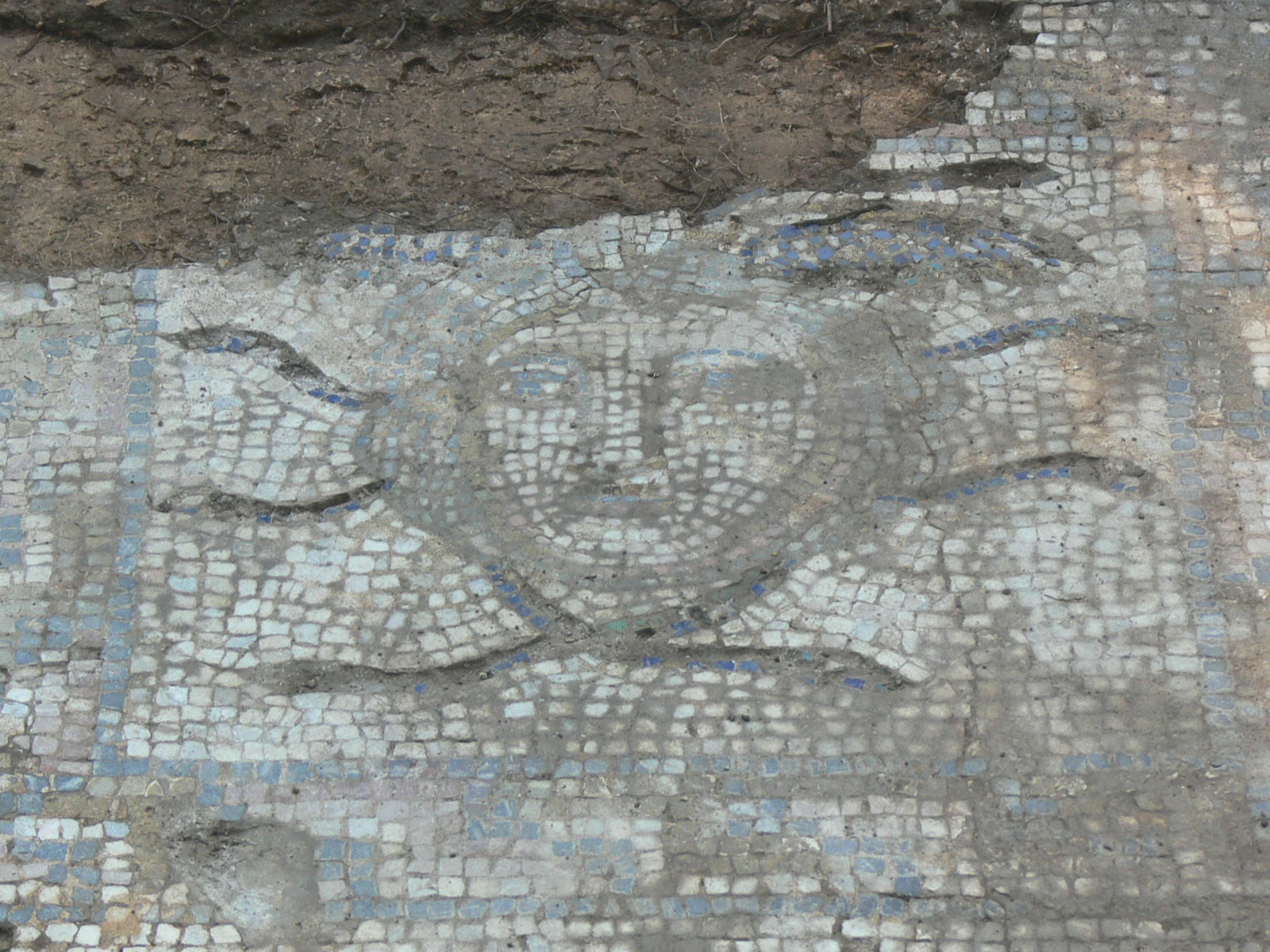
I also do hands-on history by volunteering at archaeological digs. While working on Hadrian’s Wall in the UK, I got to visit the Vindolanda Roman Fort and see rare correspondence of a young Roman soldier asking his mother to send him knitted socks for the winter, among many other everyday artifacts, such as a doll, grocery lists, and a birthday party invitation written by the wife of the commander. In Tuscany, I helped uncover and preserve a mosaic of Medusa (pictured below) at a dig of a first century Roman villa. All this fuels a sense of awe and respect for these ordinary people who are long gone, but still very human in their needs, which I hope comes through in my writing.
Museums come in a close second for favorite personal research. We have world-class ones here in New York. I studied 5C Roman clothing, coins, art, and jewelry at the Metropolitan Museum of Art, giving me a motherlode of detail to enrich my stories. If this pandemic we’re living through has any upside, it’s that museums around the world have made their collections available online. We can now virtually visit special exhibitions, search collections, and order previously inaccessible images and books. But I’m looking forward to going back in person.
So that’s my research process—lots of reading and note taking, punctuated with museum trips, site visits, and archaeology digs (a.k.a. vacations). After living vicariously in the fifth century for twenty-five years, I have an extensive personal library, but I want to give a hearty shout out to all the research librarians who helped me over the years. For accuracy, I trust “Ask A Librarian” over a chat room on the internet any day. Support your local libraries. They are national treasures!
On a final note, my sincere thanks to MJ Porter for hosting me on this blog tour. It’s always a privilege to meet new readers. If any of you have questions about my research process or my books, feel free to get in touch through my website or other social media. I love to hear from people. Stay safe out there!
Thank you so much for sharing. A pleasure to have you on the blog. Note for UK readers, JSTOR offers some free articles, and others can be purchased with a subscription package:)
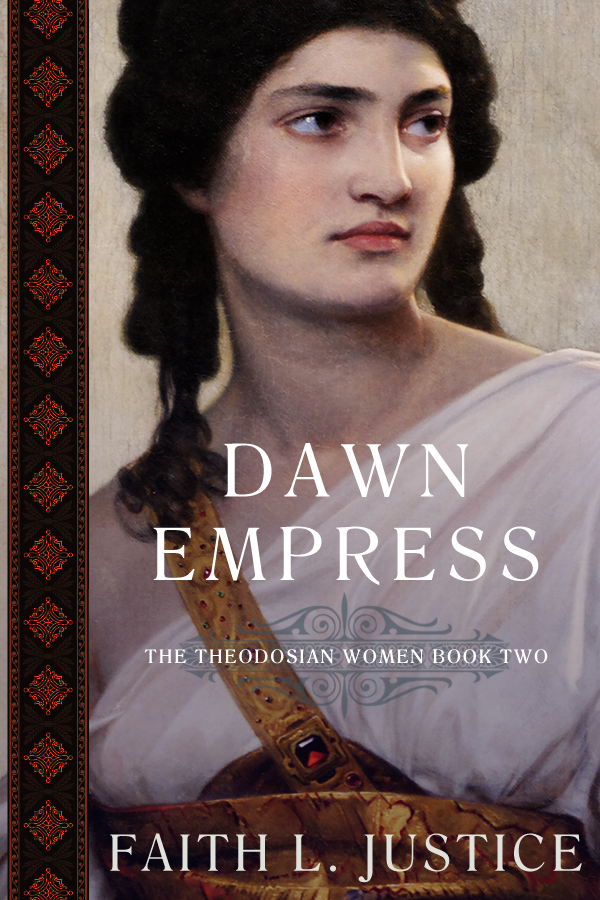
Here’s the blurb;
As Rome reels under barbarian assaults, a young girl must step up.
After the Emperor’s unexpected death, ambitious men eye the Eastern Roman throne occupied by seven-year-old Theodosius II. His older sister Pulcheria faces a stark choice: she must find allies and take control of the Eastern court or doom the imperial children to a life of obscurity—or worse. Beloved by the people and respected by the Church, Pulcheria forges her own path to power. Can her piety and steely will protect her brother from military assassins, heretic bishops, scheming eunuchs and—most insidious of all—a beautiful, intelligent bride? Or will she lose all in the trying?
Dawn Empress tells the little-known and remarkable story of Pulcheria Augusta, 5th century Empress of Eastern Rome. Her accomplishments rival those of Elizabeth I and Catherine the Great as she sets the stage for the dawn of the Byzantine Empire. Don’t miss this “gripping tale” (Kirkus Reviews); a “deftly written and impressively entertaining historical novel” (Midwest Book Reviews). Historical Novel Reviews calls Dawn Empress an “outstanding novel…highly recommended” and awarded it the coveted Editor’s Choice.
Faith L. Justice writes award-winning historical novels, short stories, and articles in Brooklyn, New York where she lives with her family and the requisite gaggle of cats. Her work has appeared in Salon.com, Writer’s Digest, The Copperfield Review, and many more publications. She is Chair of the New York City chapter of the Historical Novel Society, and Associate Editor for Space and Time Magazine. She co-founded a writer’s workshop many more years ago than she likes to admit. For fun, she digs in the dirt—her garden and various archaeological sites.
“Nona Grey’s story reaches its shattering conclusion in the third instalment of Book of the Ancestor.
THEY CAME AGAINST HER AS A CHILD. NOW THEY FACE THE WOMAN.
The ice is advancing, the Corridor narrowing, and the empire is under siege from the Scithrowl in the east and the Durns in the west. Everywhere, the emperor’s armies are in retreat.
Nona faces the final challenges that must be overcome if she is to become a full sister in the order of her choice. But it seems unlikely that Nona and her friends will have time to earn a nun’s habit before war is on their doorstep.
Even a warrior like Nona cannot hope to turn the tide of war.
The shiphearts offer strength that she might use to protect those she loves, but it’s a power that corrupts. A final battle is coming in which she will be torn between friends, unable to save them all. A battle in which her own demons will try to unmake her.
A battle in which hearts will be broken, lovers lost, thrones burned.
HOLY SISTER completes the Book of the Ancestor trilogy that began with RED SISTER and GREY SISTER. A ground-breaking series, it has established Mark Lawrence as one of the most exciting new voices in modern speculative fiction.”
Holy Sister is a satisfying conclusion to the Book of the Ancestor Trilogy. For other authors, I would have found that acceptable, but for Mark Lawrence, I confess, I was a bit disappointed.
As with the ending of the previous two trilogies, especially Jalan’s, I’m left wishing there had just been ‘more’.
The concurrent storylines are not without excitement, indeed from about 50-80% the storyline is extremely exciting, but to get there I had to wade through the first 35% and I didn’t enjoy it as much as I’d hoped I would. Yes, a year has passed since I read the previous book, and I had forgotten much, but even so, and especially considering the ‘summation’ at the beginning, I feel I should have been able to grab the characters and events far more quickly. For readers who can just plough on through all 3 books one after another, I’m sure this won’t be a problem but I’m far too impatient to have actually waited for the end of the trilogy.
And the eventual ending, well. It was somewhat anti-climatic.
If this was merely a coming of age story, then I would say the job had been accomplished very well, but it was always more than that, and sadly, Book 3 doesn’t quite do justice to the characters.
I appreciate that there are many who love this book – I’ve been seeing 5-star reviews flying around for Holy Sister for about 6 months. It might just be that, for me, the book suffers from too much hype, and so I would like to apologise to the author if my comments seem too harsh. It’s truly not the author’s fault when something gets blown out of all proportion.
The majority of people will love this book – and I’m excited for Mark Lawrence because that means he’ll get to write more and more books, and share his wonderful ideas with a wider and wider audience.
I think we will get to return to the world of the Book of the Ancestor, and I look forward to that. Perhaps then all my unanswered questions will find answers. Although I doubt it. Mark Lawrence is a sly old fox for a good reason!
Thank you to the publisher for sending me an E-Arc. I confess, there may have been a squeal of delight.
Holy Sister is released in the UK today in hardback, ebook and audiobook and you can purchase it here (other retailers are also available). I give it a 4/5;














 MJ Porter