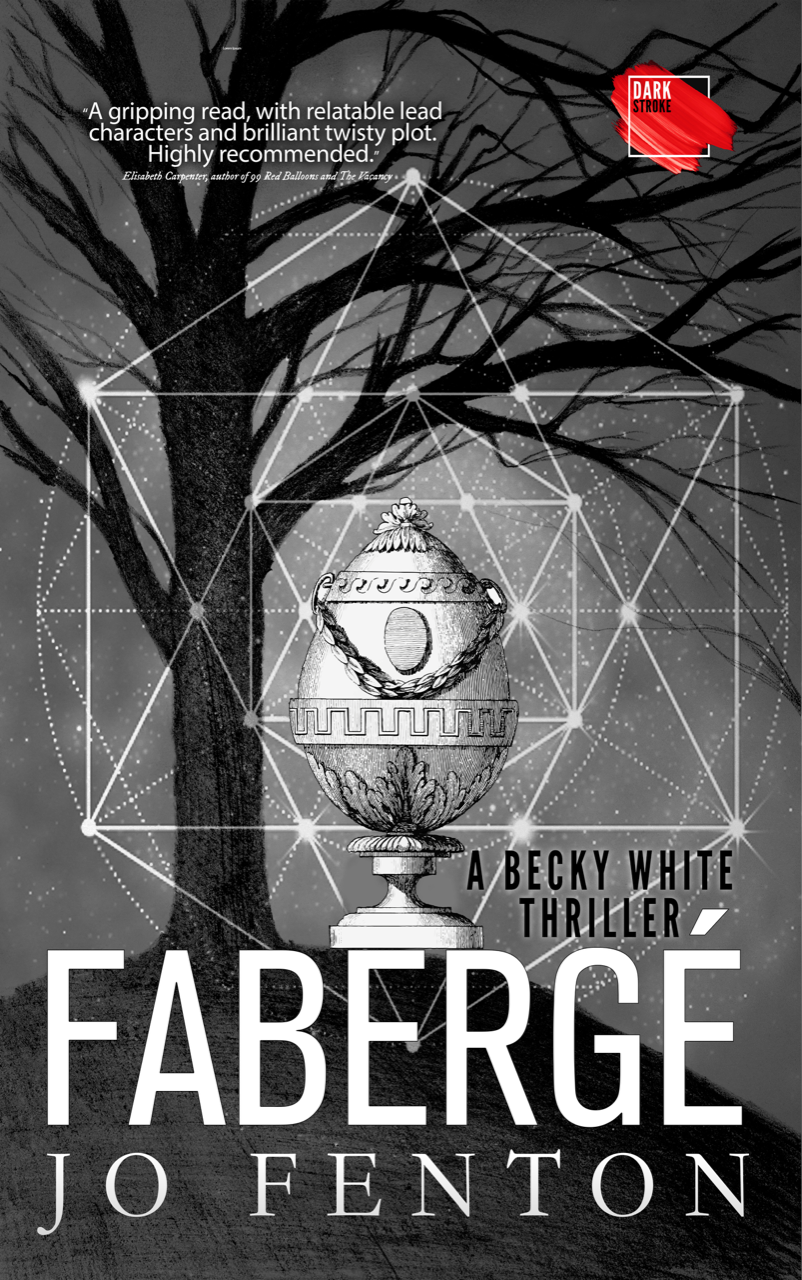
Manchester detective Becky White and her friends at the White Knight Detective Agency take on a case involving the theft of a multi-million-pound Fabergé egg.
Events quickly escalate, and they find themselves dealing with unscrupulous villains who will stop at nothing – not even at kidnapping or murder – to achieve their goals.
Can Becky solve the mystery before her hidden enemies catch up with her?
Faberge is the third book in the Becky White thrillers series. I was compelled to read it by the title. Faberge eggs are certainly something to conjure an image in my mind.
As it’s the first book in the series that I’ve read, it’s taken me a little while to get to know the characters and to work out what’s happening. That said, it’s well worth the effort, for this is a very twisty and tightly woven thriller set in the UK, in the cities of Manchester and Preston, with a brief trip to London.
All three of our main characters, Becky, Will and Joanne, have their backstories, which we could be forgiven for thinking were irrelevant, but they’re not. What seems to be a seemingly random chain of events begins to have more and more relevance. The tension ramps up in the book as it tumbles toward its conclusion. This does have a tight and twisty plot.
A novel that was worth sticking with, and I would recommend that new readers perhaps start with the first book in the series just to give them a firm grounding for the events in Faberge, although the book works very well on its own – once you’ve worked out who all the characters are.
A thrilling thriller.
Meet the Author
Jo Fenton grew up in Hertfordshire, UK. She devoured books from an early age, particularly enjoying adventure books, school stories and fantasy. She wanted to be a scientist from aged six after being given a wonderful book titled “Science Can Be Fun”. At eleven, she discovered Agatha Christie and Georgette Heyer, and now has an eclectic and much loved book collection cluttering her home office.
Jo combines an exciting career in Clinical Research with an equally exciting but very different career as a writer of psychological thrillers.
When not working, she runs (very slowly), and chats to lots of people. She lives in Manchester with her husband, youngest son, a Golden Retriever/Husky cross and a tankful of tropical fish. She is an active and enthusiastic member of two writing groups and a reading group.
Connect with Jo
I can be found at my website www.jofenton137.com or on Facebook, Twitter, Instagram and Pinterest (links below):
Giveaway to Win a Faberge mouse mat and notebook (Open to UK Only)
*Terms and Conditions –UK entries welcome. Please enter using the Rafflecopter box below. The winner will be selected at random via Rafflecopter from all valid entries and will be notified by Twitter and/or email. If no response is received within 7 days then Rachel’s Random Resources reserves the right to select an alternative winner. Open to all entrants aged 18 or over. Any personal data given as part of the competition entry is used for this purpose only and will not be shared with third parties, with the exception of the winners’ information. This will passed to the giveaway organiser and used only for fulfilment of the prize, after which time Rachel’s Random Resources will delete the data. I am not responsible for despatch or delivery of the prize.
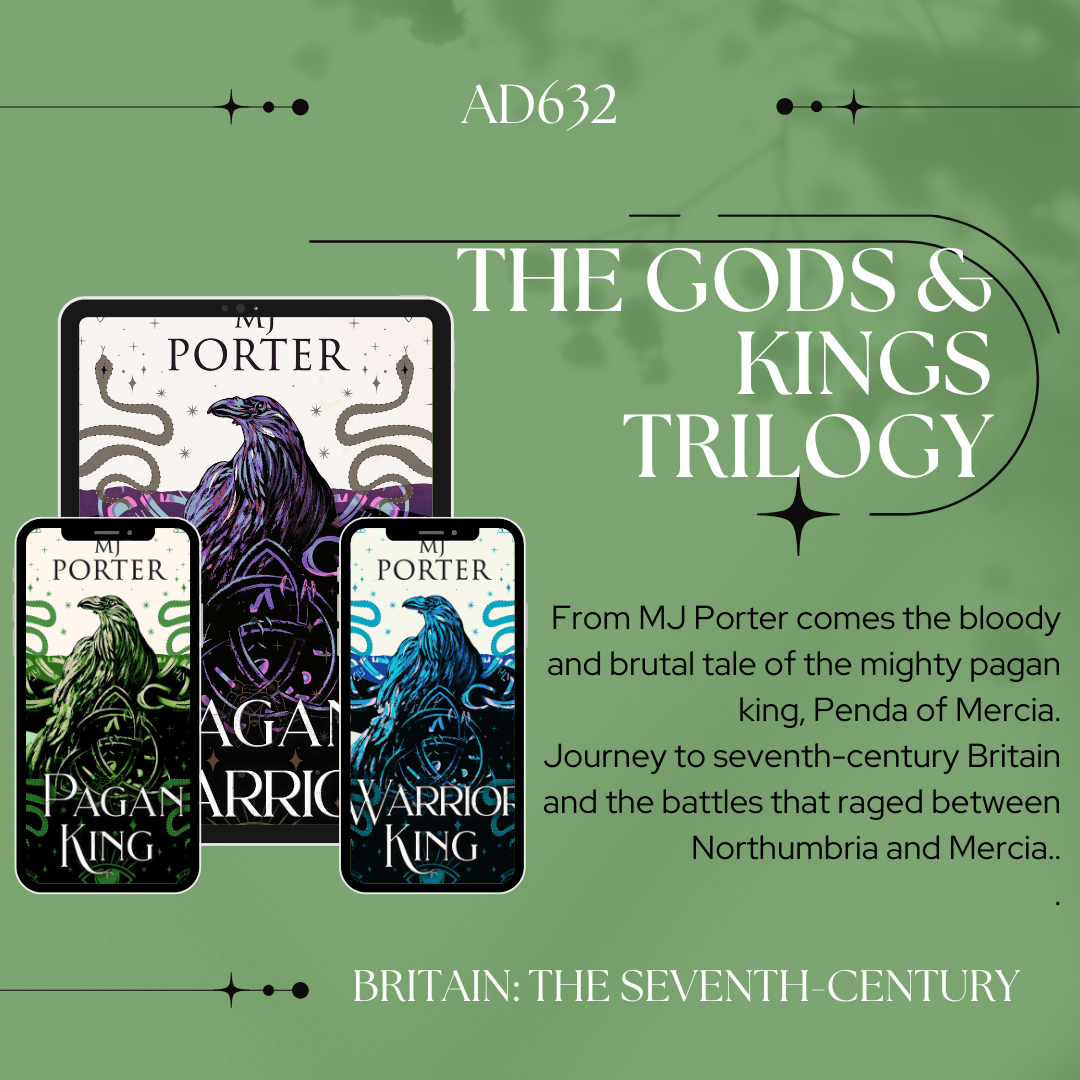
I’m really excited to share the details of the Pagan Warrior blog tour with The Coffee Pot Book Club.
Pagan Warrior is the story of the battle of Hædfeld, fought in the seventh century between the Northumbrians, and you got it, the Mercians – or rather, Cadwallon of Gwynedd but with Penda of Mercia as his firm ally. You can find more details here.
I might have written this book many years ago, but it’s had a refresh, and is now available in audio, narrated by the fabulous, Matt Coles, as is the second book, Pagan King. Warrior King will be coming later this year in audio. For this second week, 20th March-25th March, the ebook of Pagan King (book 2) is reduced globally to 99p/99c and equivalent. Follow the link below.
I’ve also, finally, managed to get book three, Warrior King, uploaded to all good ebook platforms, and they will be going live during this week. Kobo have so far won the competition. Use this link, which I will be updating, or try the one above, and hopefully, Warrior King will be linked to Pagan King as well. It means Warrior King is also available in hardcover from Amazon.
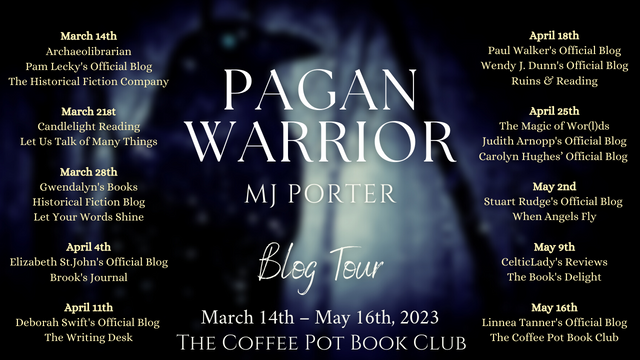
You can follow the blog tour, and I’ll be sharing posts here as well. A quick shout out to thank all the blog hosts and Cathie at The Coffee Pot Book Club for organising.
For today (March 21st) check out a post about two of the royal residences of Bernicia at the time, Bamburgh and Ad Gefrin (Yeavering). (There are lots of photos, thank you to Helen Hollick for uploading them all).
(I’m re-sharing an old post which I’ve amended slightly, and added some new graphics).
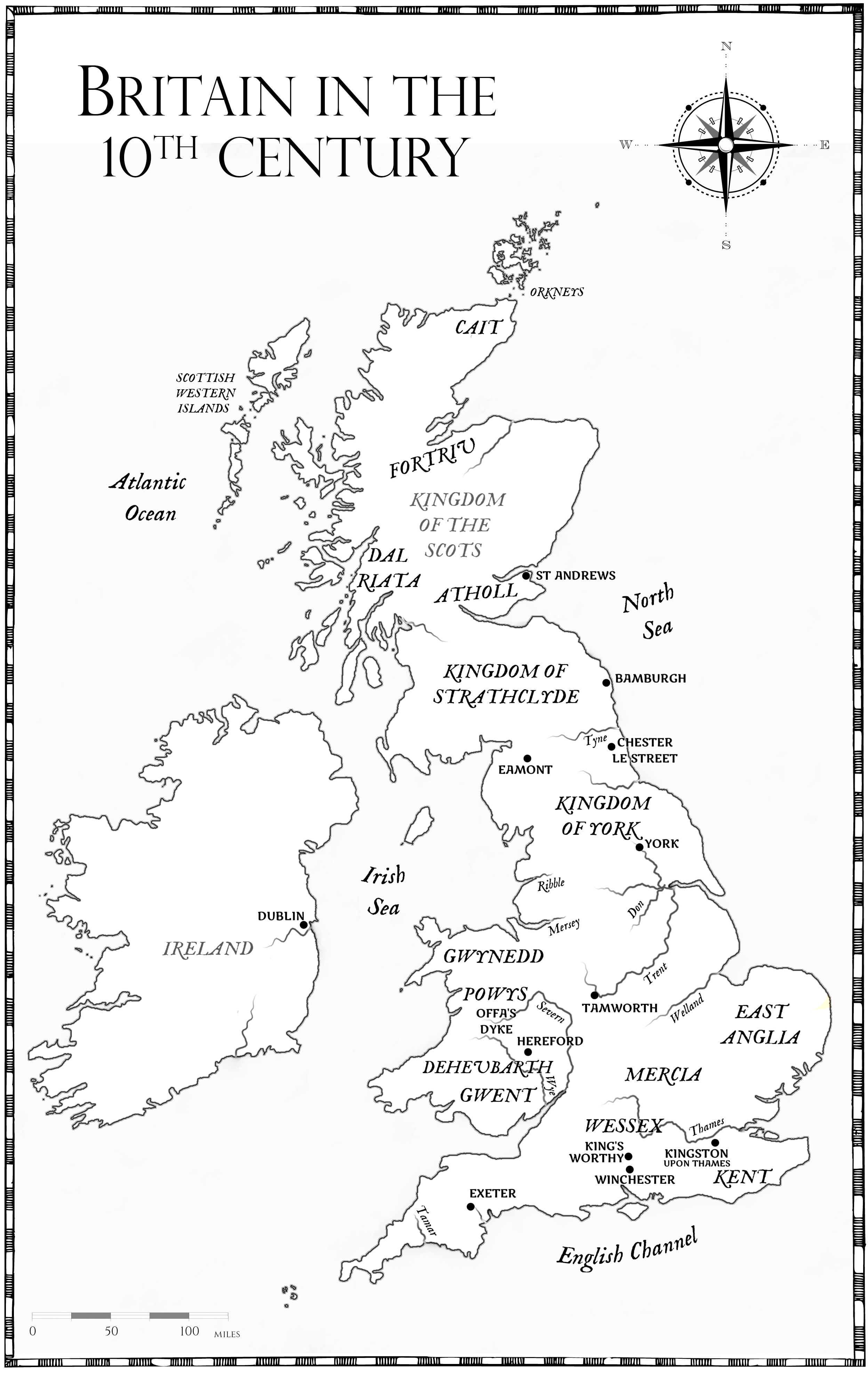
England, Wales, Scotland, the smaller kingdoms of Mercia, Wessex, Northumbria, East Anglia, Kent, Powys, Gwynedd, Dal Riada – for the uninitiated (including myself) the sheer number of kingdoms and kings that peopled the period in British history before 1066 can appear as a bewildering display of names, places, times and events, and perhaps never more so than when a historian is trying to sell a book and so makes a statement in their title that applies to that particular king.
Map designed by Flintlock Covers
Phrases such ‘the Golden Age of Northumbria’, ‘the Mercian hegemony’, ‘the rise of Wessex’, they all mask so many events that I find the phrases very unhelpful and perhaps worse, misleading.
I think that Athelstan and his younger half brother, Edmund, probably deserve their titles as Kings of the English. And it’s not just my opinion either. There was, according to Sarah Foot in her book on Athelstan, a concerted effort by the king and his bishops to have him stand apart from his predecessors – to be something ‘different’ to them. They named him king of the English, not king of Mercia (a post he held briefly before another of his younger brothers died) and not king of Wessex, for all that he was both of those things.
They changed his title, they crowned him with a crown, not a helmet. They wanted Athelstan to be something other than his grandfather, King Alfred, and his father, King Edward. It was a bold statement to make, and one they continued when Athelstan died too young and his half-brother, Edmund replaced him. He too was crowned using, it must be supposed, the same Coronation service. (For full details have a peek at Sarah Foot’s book on Athelstan – or read the first few chapters of King of Kings as the service appears in it as well).
So why the change? Essentially the old Saxon kingdoms, for all that they were preserved in the naming of the earls/ealdormens designations, had been swept aside by the Viking raiders. The old kingdoms had become a handy label to apply to certain geographic areas, and the kings of Wessex, whilst keen to hold onto their hereditary titles because of the permanence their own royal line had managed to acquire, were equally as keen to do away with regional boundaries. There was, it can’t be denied, a concerted and almost unrelenting urge to drive any Viking raider or Dane or Norwegian (the Norse) from British soil, and this is what Athelstan and then Edmund were tasked with doing.
Yet the idea of ‘English’ wasn’t a new concept. Why else would Bede have called his great piece of religious historical writing “The Ecclesiastical History of the English people’, if there hadn’t been a shared consciousness that the people in England, all be it in their separate kingdoms, didn’t have a shared heritage? Why the idea suddenly took flight under King Athelstan could be attributed to a new sense of confidence in Wessex and Mercia at the time. They were confident that they could beat the Viking raiders and they were convinced that England belonged to them.
Or perhaps it was more than that? The destruction wrought by the Viking raiders on the separate kingdoms must have been a stark reminder of just how insular the kingdoms had become, and the Viking raiders showed everyone just how easy it was to run roughshod over the individual kingdoms. Only in unity could the Saxon kingdoms of England survive another onslaught; only with unity could the Saxons hold onto their kingdoms they’d claimed about 500 years before.
It was a message that was learned quickly and taken to heart. Athelstan worked to reunite more of the Saxon kingdoms with the growing ‘England’, and he tried to do so by both diplomacy and through war. Yet, the Viking raiders hadn’t finished with England, and nor were they her only enemies. This also lies at the heart of Athelstan’s ‘masterplan’ his treaty of Eamont (if it truly happened – Benjamin Hudson in his Celtic Scotland is not convinced). Athelstan wanted to be a mighty king, but he also wanted England, and the wider Britain (also a concept already understood otherwise why else would that cantankerous monk – Gildas – have called his even earlier work than Bede’s “On the Ruin of Britain?”) to be united in their attempts to repel the Viking raiders. He was a man with a keen vision of the future and it was a vision that his brother continued, with slightly different direction and results.
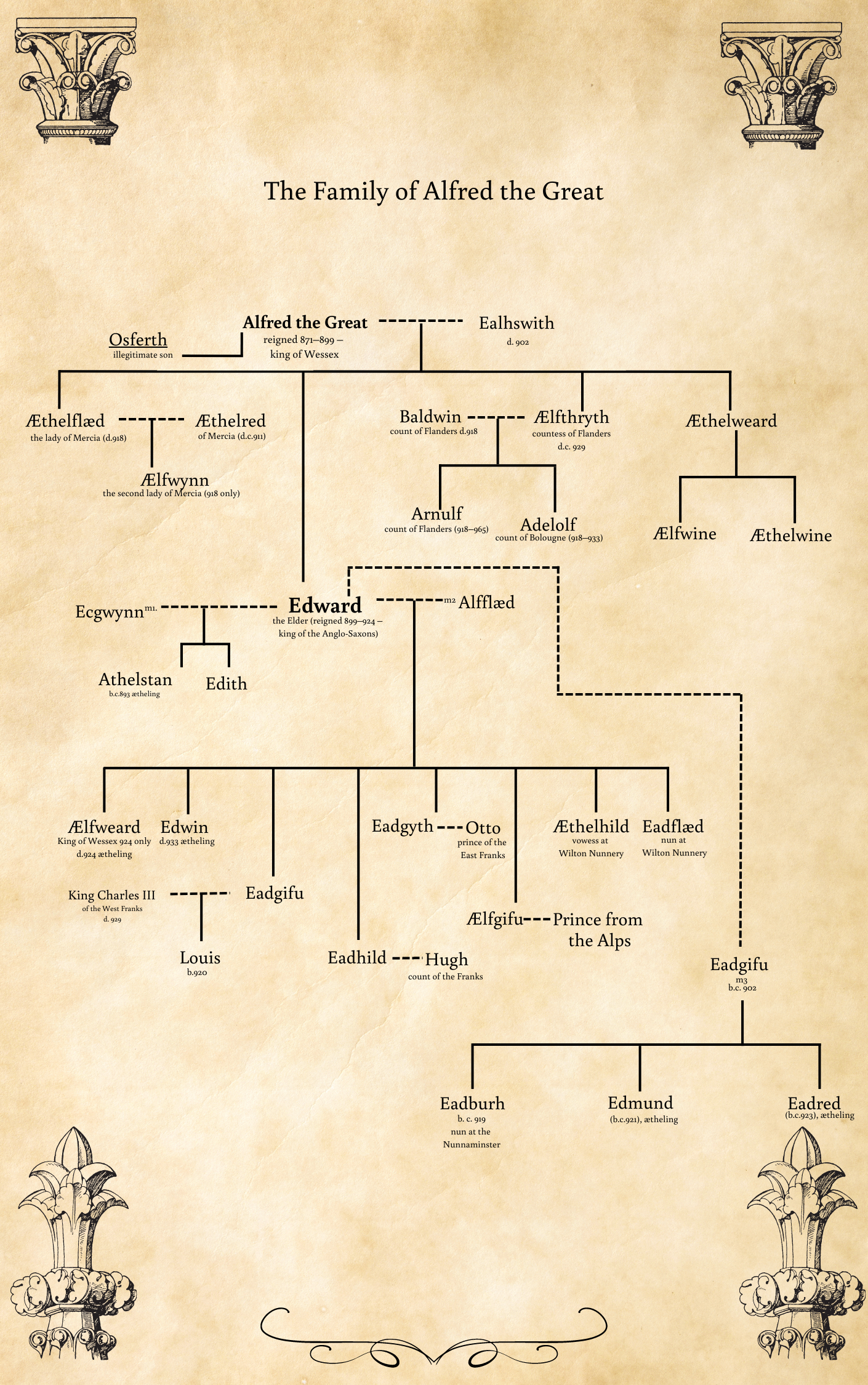
Family Tree designed by Boldwood Books
The ‘English Kings” saw safety in unity, and of course, an increase in the power they held went hand-in-hand with that.
Yet at no point during the Saxon period can it be said that the emergence of ‘England’ as we know it, was a given certainty. Throughout the period other great kings had tried to claim sovereignty over other kingdoms, but never with any permanence. The earlier, regional kings, were powerful within their own lifetimes and within their own regions. Few, if any, were able to pass on their patrimony complete upon their death. This was a time of personal kingship, and it was only under Athelstan and Edmund that the leap was taken away from this to a more permanent power base.
Not that it was a smooth transition and it did have the side-effect of allowing other men, those not related to the royal family, to evolve their own individual power bases in the old Saxon kingdoms. The ‘English’ kings had to do more than just rule their own kingdom, they had to rule their ealdormen and earls, their warriors, bishops and archbishops. The number of names of kings might start to deplete in the after math of Athelstan and Edmund’s kingship, but in their place spring up more and more powerful men, men that these English kings had to rely on.
Becoming King of the English was very much a mixed blessing, bringing with it new and greater responsibilities and more, it brought with it the need to expand personal government further, to have a greater persona to broadcast.
King Edgar the Peaceable of England (959-975) died a young man still, perhaps no older than thirty-two. He left two surviving sons, (one of his sons, Edmund, having died in 971 at a young age.) Neither of his surviving children was an adult and they both had different mothers. Edward, the child of a woman perhaps named as Æthelflæd, and Æthelred, the surviving child of Edgar and his queen, Elfrida, who had ruled at Edgar’s side for about a decade. Edward was probably no older than fifteen in 975, Æthelred perhaps as young as eight. While the kingdom of the English might well have endured years of peace, the same could not be said for the royal court.
The factionalism of the great Benedictine monastic reform movement has much to do with this. As part of the reform movement, a huge amount of land changed hands. As ever, religion was a mask for what was happening at a more basic level. It could just as easily be interpreted as a land grab. In the wake of the death of the king, ‘Attacks on church property were widespread. From York to Kent and Sussex, from the Severn valley to the Fens the death of Edgar was a signal to those who wished to recover property.’[1] Whether Edgar intended for his royal son, born to a consecrated mother and father to succeed after him or not might have been irrelevant when faced with two opposing parties – one supporting the older Edward and one Æthelred, both of whom had religious men as their supporters.
Essentially, both sons would have been too young to rule England. King Eadwig, their uncle, had hardly provided good and secure rule during his brief reign from 955-959, when he was no older than fifteen. But, there was no other choice unless note was made of the family of Ælfgifu, wife to Eadwig, and her collection of brothers, the most famous of whom was Æthelweard, an ealdorman who is thought to have written a Latin translation of the Anglo-Saxon Chronicle referred to as the Chronicon. The family claimed descent from Æthelred I (865-871), Alfred’s older brother.
Edward was chosen to rule with the support of one of these two powerful factions, and Edward’s coronation was conducted by Archbishop Dunstan. Yet some believed Æthelred should be king, no matter his young age, and Æthelred’s support was led by Ealdorman Ælfhere of Mercia. Ealdorman Ælfhere had gained his position under King Eadwig, and had remained powerful despite the seeming division of England back into its constituent parts of Mercia and Wessex in 958 and 959. Perhaps this then, might have been a solution – a division of England once more. Yet ‘questions of division or underkingship were replaced by a straightforward struggle for the throne of the entire kingdom.’[2]
Young Edward was murdered. What we don’t know, unlike with the murder of his grandfather (Edmund (939-946) was murdered by Liofa, possibly a thief), is who killed Edward, known as Edward the Martyr.
The A text of the Anglo Saxon Chronicle is the simplest version of the story for 978, ‘Here King Edward was killed.’[3]
The C text offers, ‘Here in this year King Edward was martyred, and his brother, the young ætheling Æthelred, succeeded to the kingdom; and he was consecrated as king the same year.’[4]
‘Here King Edward was killed in the evening-time in 18 March at Corfe passage; and they buried him at Wareham without any royal honours.’[5] The ASC E (979 for 978) text reads.
Elfrida was known to live close to Corfe, but the E version of the ASC is one of the youngest manuscripts to have survived, dated to about 1121, when it was written in one hand.[6] It is possible then, that the entry in the E version of the ASC had benefitted from some much later additions, thanks to the Saints lives which portrayed Elfrida as the murderer of her husband’s oldest son! It is the A version of the Anglo-Saxon Chronicle which is the more contemporary of our surviving sources.
It was openly acknowledged that Edward was killed, and in his place, Æthelred, at no more than perhaps twelve years of age, became king. This can only have been possible with support for Æthelred. Those backing Æthelred’s claim must have been strong enough to counter any other bid for the kingdom. It no doubt helps that there were few others who could legitimately claim the kingship for themselves. Had they turned to any latent claim presented by Ealdorman Æthelweard, who by now was possibly a man in his late thirties or forties (his death is believed to have taken place in about 998 when he stops attesting Æthelred’s charters), then his sons might not have been deemed acceptable to rule after him, having been born to a man not consecrated as king, and a woman who was certainly not regarded as a queen. This, then, would have merely delayed the inevitable question of the succession once more after Æthelweard’s death.
So, who killed Edward, or ordered his death? Did Elfrida, England’s first anointed queen, commit regicide in an attempt to win back the influence she unexpectedly lost on the death of her young husband, when her step-son was appointed as king?
There were certainly some who believed she had a hand in the murder of the young man.
The involvement of Elfrida directly in the murder of her step-son is ‘derived ultimately from the Passio Sancti Eadwardi Regis et Martyris, an account of Edward’s life, murder and miracles probably written in the 1070s by the Anglo-Norman hagiographer Goscelin and itself based partly on an earlier account of St Edward which may have been written at Shaftesbury in the early years of the eleventh century.’[7]
‘When a certain day was nearing evening, the illustrious and elected king came as we have said to the house where his much-loved brother dwelt with the queen, desiring the consolation of brotherly love; there came out to meet him, as was fitting, nobles and chief men, who stayed with the queen, his mother. They formed among them a wicked plan, for they possessed minds so accursed and such dark diabolical blindness that they did not fear to lay hands on the Lord’s anointed….The thegns then holding him, one drew him on the right towards him as if he wished to give him a kiss, but another seized roughly his left hand and also wounded him. And he shouted, so far as he could: ‘What are you doing – breaking my right arm?’ And suddenly leapt from the horse and died.’[8] So informs the Life of St Oswald written during the life of both Elfrida and Æthelred II, by Byrhtferth, although we will never know if they were aware of what was written. It does not specifically name Elfrida as responsible for the king’s murder.
Another near contemporary source. The Sermon of the Wolf to the English states that, Edward was betrayed and then killed, and afterwards burned and [Ethelred was driven out of his country].’[9] This dates from 1014, and therefore follows Æthelred’s loss of the kingdom to King Swein of Denmark. Again, it is not a contemporary source.
But later writers persisted with the story. Henry of Huntingdon, a Norman chronicler wrote. ‘It is said that his stepmother [Ælfthryth/Elfrida], that is the mother of King Æthelred, stabbed him [Edward] with a dagger while stretching out a cup to him.’[10] And so named Elfrida as the physical murderess.
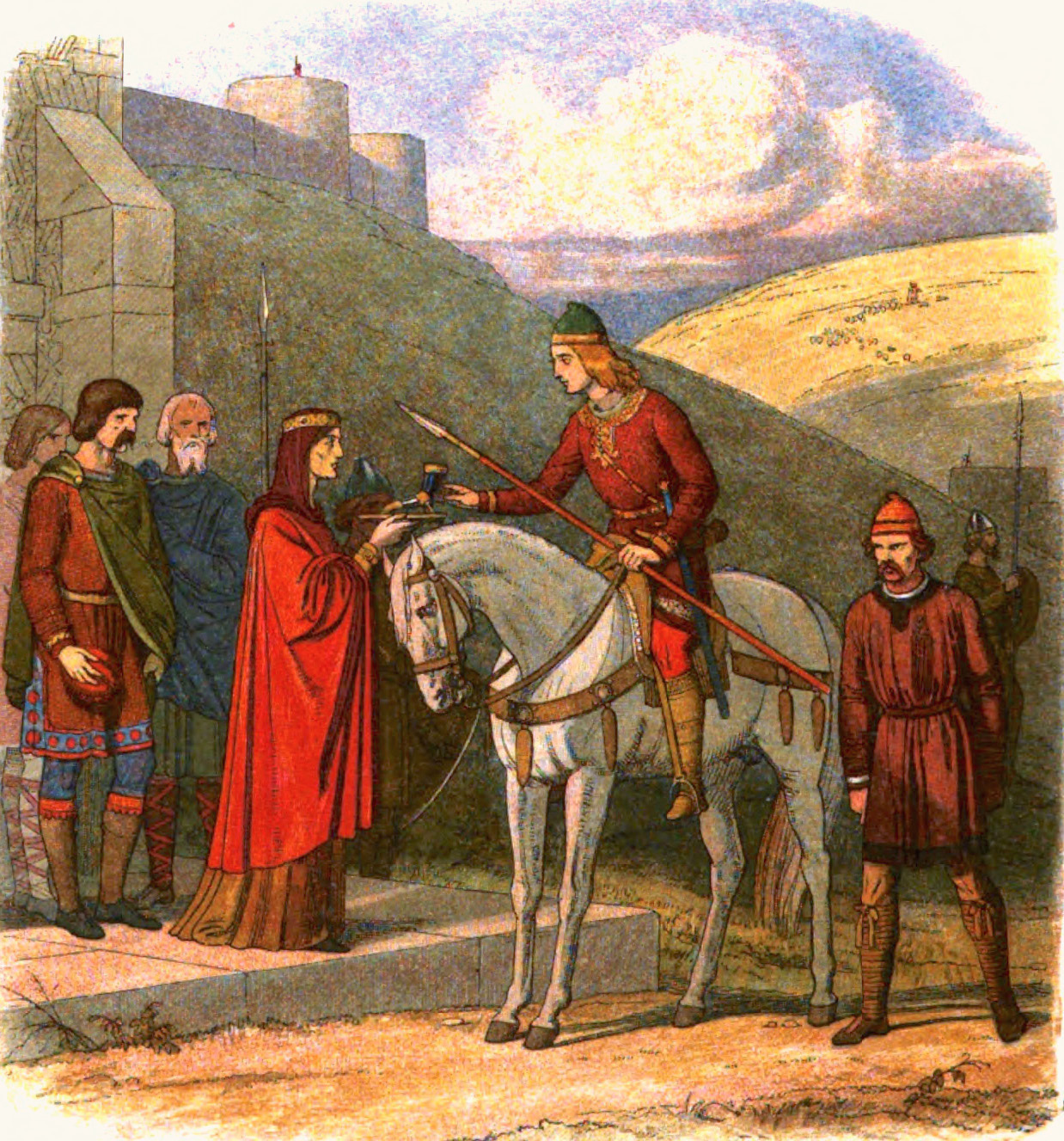
Edward the Martyr is offered a cup of mead by Ælfthryth, wife of Edgar James William Edmund Doyle, Public domain, via Wikimedia Commons (1864)
William of Malmesbury, another Norman writer, also associates Edward the Martyr’s murder with Elfrida, despite that fact that Edward treated his ‘stepmother with proper warmth of feeling….The woman however, with a stepmother’s hatred and a viper’s guile, in her anxiety that her son should also enjoy the title of king, laid plots against her stepson’s life…On his arrival, his stepmother, with a woman’s wiles, distracted his attention, and with a kiss of welcome offered him a drink. As he greedily drank it, she had him pierced with a dagger by one of her servants….Ælfthryth [Elfrida] fell from her pride of royalty into a dire repentance, such that for many years at Wherwell she clad her delicately nurtured limbs in haircloth.’[11]
It is perplexing to consider the alleged involvement of Elfrida in the death of her stepson with the cult of Edward the Martyr that subsequently developed. Indeed, it has been noted that in the will of Athelstan, Æthlered’s son who died in 1014, and who was raised by Elfrida, he makes a bequest to Shaftesbury to St Edward (where Edward was later buried). ‘And I give to the Holy Cross and St Edward at Shaftesbury the six pounds about which I have given directions to my brother Edmund.’[12]
This then seems more than a strange thing to do if the family were keen to dismiss the concerns that Elfrida was involved in the king’s murder. Neither, and despite the reports that Edward the Martyr was not a pleasant individual, has it been considered that the murder was carried out because ALL believed they would benefit from a new king. Edward the Martyr, in the written details about him, does not have a good reputation, as the Vita Oswaldi itself states.
‘Certain of the chief men of this land wished to elect as king the king’s elder son, Edward by name; some of the nobles wanted the younger because he appeared to all gentler in speech and deeds. The elder, in fact, inspired in all not only fear but even terror, for [he scrouged them] not only with words but truly with dire blows, and especially his own men dwelling with him.’[13]
At such a distance in time, it’s impossible to determine what happened. Dismissing the later saints lives and aspersions cast on Elfrida, by Adam of Bremen, Osbern of Canterbury, Florence of Worcester and Henry of Huntingdon (all Norman writers),[14] one thing is clear. Whatever had happened to pave the way for Æthelred to become king, it was accepted by the vast majority of the witan and the holy men. Sometimes, mention is made that Æthelred’s coronation was delayed, taking place on 4th May 979, maybe while negotiations took place, but this delay was perhaps not that unusual – there was a delay in Edward the Elder’s coronation, and also Athelstan’s. Was it a delay because Æthelred was unacceptable, or merely one of politic? Or is it merely a confusion with the date, 979 for 978, or something else? Was Æthelred considered too young in 978 to undergo coronation? Was he ill? Sometimes, we forget the frailties of our forebears, too keen to see political intrigue everywhere.
What can be said is, no matter the alleged involvement of the royal family in the murder of one of their own, the words of later chroniclers and those who may have written at the time but with an agenda to tarnish the name of the Wessex royal family, no one faced murder charges for what happened. The murder was acknowledged, but those responsible faced no penalty for it (as far as we know – certainly, none of the prime suspects fell from favour). Whatever led to the murder of Edward, his absorption into the royal line of saints (and there were many, many royal saints in the Wessex family in the tenth century – Edgar’s mother was regarded as saintly, as was his only daughter, Edith, after her death, and indeed, that daughter’s mother, Wulfthryth) it was those looking back at the return of the Viking raiders throughout the last two decades of the tenth century and the eleventh, which resulted in not one, not two, but three Viking kings claiming England for themselves, who thought to tarnish Æthelred’s already tainted reputation as a failed military commander by adding the charge of ‘complicit in the murder of his step-brother’ to the already, very long list of charges levelled against him. But of course, none of these were contemporary accounts.
And so, it seems, we might never know the truth of what befell Edward the Martyr, and certainly, there are no truly contemporary accounts to say Queen Elfrida either physically committed the murder, or ordered that it be carried out.
[7] Simon Keynes, The Diplomas of King Æthelred the Unready, p168
[8] D Whitelock, English Historical Documents p841-3 It is believed that this work was written at Ramsey from 995-1005, and so in the lifetime of Æthelred, and indeed, his mother.
[9] D Whitelock, English Historical Documents p857 although Æthelred’s name is not included all of the manuscript versions.
I’m really excited to share the details of the Pagan Warrior blog tour with The Coffee Pot Book Club.
Pagan Warrior is the story of the battle of Hædfeld, fought in the seventh century between the Northumbrians, and you got it, the Mercians – or rather, Cadwallon of Gwynedd but with Penda of Mercia as his firm ally. You can find more details here.
I might have written this book many years ago, but it’s had a refresh, and is now available in audio, narrated by the fabulous, Matt Coles, as is the second book, Pagan King. Warrior King will be coming later this year in audio. For this first week, 13th March-19th March, the ebook of Pagan Warrior is reduced globally. Follow the link below.
You can follow the blog tour, and I’ll be sharing posts here as well. A quick shout out to thank all the blog hosts and Cathie at The Coffee Pot Book Club for organising.
For today, March 14th, check out my author interview over on Archaeolibrarian.
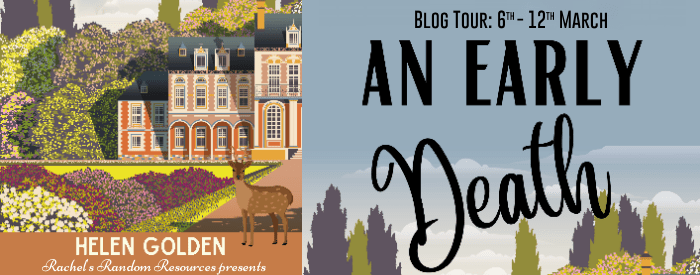
BREAKING NEWS Mystery Woman was in the Earl of Rossex’s car when it crashed
Reports are coming in that an unidentified woman was in the car that killed James Wilshire (24), the Earl of Rossex, when it crashed in Fenshire late on Tuesday evening and died from her injuries later in hospital. The police have not named the woman, but sources at Francis Court, where the earl lived with his wife Lady Beatrice (21) claim the dead woman was the wife of a member of staff.
The impertinence of the man! Who does this Detective Sergeant Richard Fitzwilliam think he is asking personal questions about the state of her marriage and insinuating that James was having an affair with the estate manager’s wife? Of course he wasn’t! She knew her husband and he wouldn’t do that to her. But what was James doing back in Fenshire on that fateful night when he’d told her he would be London? And why was Gill Sterling in the car with him when they barely knew each other? Unless, of course, she didn’t know her husband as well as she thought she did…
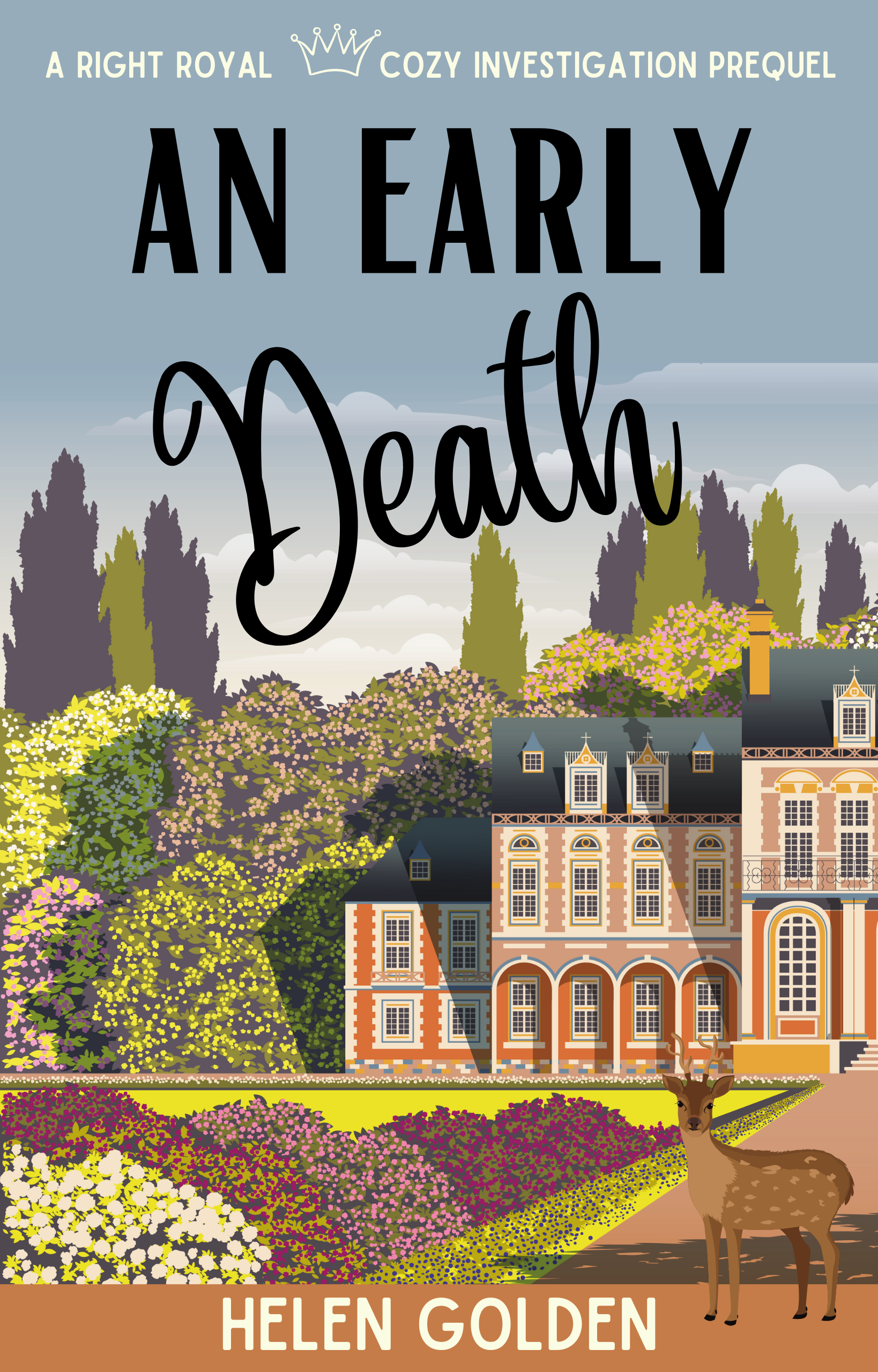
PLEASE NOTE: This is a prequel in the A Right Royal Cozy Investigation series and is not intended to be read as a standalone.
A Right Royal Cozy Investigation series is fast becoming one of my favourites, and An Early Death is a fabulous prequel novel, answering so many questions and leaving much more unanswered for those readers enjoying the series, which begins about a decade after the events of An Early Death.
I really, really can’t wait for the next book, A Dead Herring, which I hope might finally contain all the answers fans of the series are after.
The author makes it very clear the prequel shouldn’t be read until after reading the first three books in the series, and I echo this. Don’t spoil it for yourself:) Check out my reviews for the first three books below.
Hello. I’m Helen Golden. I write British contemporary cozy whodunnits with a hint of humour. I live in small village in Lincolnshire in the UK with my husband, my step-daughter, her two cats, our two dogs, sometimes my step-son, and our tortoise.
I used to work in senior management, but after my recent job came to a natural end I had the opportunity to follow my dreams and start writing. It’s very early in my life as an author, but so far I’m loving it.
It’s crazy busy at our house, so when I’m writing I retreat to our caravan (an impulsive lockdown purchase) which is mostly parked on our drive. When I really need total peace and quiet, I take it to a lovely site about 15 minutes away and hide there until my family runs out of food or clean clothes
I’m delighted to be reviewing Ascent by Cathie Dunn, #histfic #BookReview #Normandy
Here’s the blurb
A brutal Viking raid heralds the dawn of a new, powerful dynasty – the House of Normandy
Neustria, Kingdom of the West Franks AD 890
Fourteen-year-old Poppa’s life changes when Northmen land near Bayeux. Count Bérengar, her father, submits to them, and she is handfasted to Hrólfr, the Northmen’s heathen leader, as part of their agreement.
To her relief, Hrólfr leaves immediately in search of further conquest, only returning to claim her years later. In the face of retaliating Franks, they flee to East Anglia, where she gives birth to their son and daughter.
When Hrólfr and Poppa return to reclaim Bayeux, his new campaign strikes at the heart of Frankish power, and King Charles of the West Franks offers him a pact he cannot refuse. In exchange for vast tracts of land in Neustria, Hrólfr must convert to Christianity and accept marriage to Gisela, the king’s illegitimate daughter.
Poppa’s world shatters. She remains in Bayeux, with her daughter, Adela. When Gisela arrives one day, demanding she hand over Adela, to be raised in Rouen, Poppa’s patience is at an end. But Gisela makes for a dangerous enemy, and only one woman will survive their confrontation high up on the cliffs.
Will Poppa live to witness the dawn of a new era?
ASCENT is the first in a new series about the early women of the House of Normandy – women whose stories have been forgotten through time.
Until now!
Readers of Viking and medieval fiction will enjoy ASCENT, a fictional account of the life of Poppa of Bayeux, handfasted wife of Rollo the Viking.
Trigger warning: Loss of a child. Some battle and fighting scenes.
Ascent tells the story of how the Duchy of Normandy formed, through the eyes of both Poppa, wed to the man many of us will know as Rollo and Rollo himself.
This is a fascinating period, at the end of the ninth century and the beginning of the tenth, when the focus of the Viking raiders had shifted from just trying to plunder, kill and steal to wanting to find new homes for themselves. While some of the story takes places in England, the focus is on the West Frankish lands, and there are familiar names here, Charles III, the king of the West Franks, the most well-known of them all.
Poppa is a strong-willed woman, but her life isn’t without hardship and suffering. Rollo, or Hrolfr, is a Viking raider, but with an eye to the future and ambition to match it. The evolving story is well portrayed, focusing on several life-changing moments as the tale progresses as it covers their entire lives after meeting.
I feel the book really comes into its own from about halfway through, and I powered through the remainder of the story. Poppa and Hrolfr are both ambitious and strong-willed, with an eye to the future, and such ambition is well portrayed without us disliking either of them. Their friends and allies also provide moments of intense sorrow and triumph as Dunn weaves a tale of the era, bringing in far-flung places, such as Orkney, which were all closely interconnected to men and women of the sea.
Constructed using incredibly scarce surviving sources (I know, I’ve studied this period, and it is mind-glowingly confusing), Ascent, the first book in the stories of Normandy, is sure to appeal to those interested in tales of historically strong women, in the formation of Normandy and also in this turbulent period when the Viking raiders – or the Normans as they came to be known – claimed a toe-hold on Frankish soil which was to have far-reaching consequences. I look forward to book 2.
Meet the author
Cathie Dunn is an award-winning author of historical fiction, mystery, and romance. The focus of her historical fiction novels is on strong women through time.
Cathie has been writing for over twenty years. She studied Creative Writing online, with a focus on novel writing, which she also taught in the south of France. She loves researching for her novels, delving into history books, and visiting castles and historic sites. A voracious reader, primarily of historical fiction / romance, she often reviews books on her blog, Ruins & Reading.
Cathie is a member of the Historical Novel Society, the Richard III Society, and the Alliance of Independent Authors.
After many years in Scotland, Cathie now lives in south of France with her husband, and rescued Charlie Cat and Ellie Dog. Discover more about Cathie at http://www.cathiedunn.com!
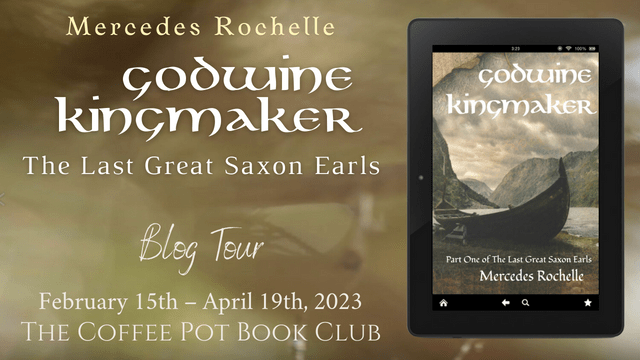
I can never miss an opportunity to ask a fellow Saxon author questions about why they write about the same period as me. My thanks to Mercedes for answering them.
What drew you to the character of Godwine and his wife and children?
While I was writing my first book, Heir To A Prophecy, I introduced my protagonist Walter into London on the day Godwine came back from exile. It was a plot device to introduce him to Harold Godwineson (Walter took out one of the Normans fleeing through the crowd). I didn’t know who Godwine was, but I couldn’t shake him loose! I went back fifty years and discovered a great story.
Naturally, very little is known about these historical characters, and I had two challenges that dovetailed nicely. Both had to do with not wanting to fall into that old predictable trap concerning characters. First of all, the love interest. There are so many love stories that seem formulaic. I didn’t want that same old theme: disliking each other first, then falling in love (and all the variations thereof). On the other hand, I understand that there needs to be some kind of stress in the romance to make a good story. It was obvious that Godwine had a happy marriage (or at least a productive one) since they had so many children. I was really intrigued by the discrepancy of their social status. Godwine was a commoner, and Gytha was a noble (or the Danish equivalent). At the same time, I had a hard time figuring out why Swegn, the firstborn, turned into such a bad egg. I don’t believe a character should be all good or all bad. People just aren’t like that. Even wicked characters act that way for a reason; sometimes they have good qualities that get buried under their more powerful bad qualities. Finally I had an inspiration: if Godwine’s marriage started out in anger, or stress (Gytha was given to him in marriage, but she didn’t have to go willingly), perhaps the firstborn would be neglected and unloved. That would explain his subsequent behaviour. It took some doing to make that work, but I’m happy with the result.
What part of your research did you enjoy the most?
I love research; I actually prefer the research to the writing. I knew I was going to like Godwine. What surprised me was how fascinated I was with Canute. He was an incredibly complicated character. From the angry king-to-be that cut the noses off his 200 hostages after England rejected him in favour of Aethelred the Unready, he eventually became a very successful monarch. Most of all, I loved the single combat between him and Edmund Ironside, where he cleverly talked himself out of getting flattened by convincing Edmund to split the kingdom between them. This may well be apocryphal, but that’s the challenge of writing about events 1000 years ago. We have more legends than “history” to work with, and the legends are so good they stick.
Was there a resource that was invaluable?
I hate to admit this because it makes me sound so old, but when I was writing Godwine Kingmaker there was no internet. Back then, I was living in St. Louis, MO—a very nice town but far from the libraries I needed. If the book wasn’t in the card catalogue, it might as well not even exist. So, like any warm-blooded researcher who didn’t have a family to take care of, I pulled up stakes and moved to New York. The day I discovered the New York Public Library my life changed forever. I found authors I never knew about, and finally got my hands on my first copy of Edward A. Freeman’s “History of the Norman Conquest of England”. I thought I had gone to heaven! In six volumes he wrote about every aspect of Anglo-Saxon England I could possibly think of. (These days Freeman is somewhat out of fashion, but he’s still my go-to when I need to look something up; he has never failed me yet.) Copy machines were available for ten cents a page, but as much as I needed to copy, I’d be better off buying the books—if I could find them. No such luck until a couple of years later, when I went on a book-buying trip to England and discovered Hay-on-Wye. A breakthrough! Those were the days (the late ’80s) when old used hardbacks were still easy to find, and I discovered my very own set of Freeman which I gleefully brought home. That was the original basis of all my research. Those books are still my most precious possession, though now you can find them online (scanned, of course).
Did you learn anything that surprised you while writing the trilogy?
Back to Canute again. While delving into Harold’s relationship with Edith Swan-neck in THE SONS OF GODWINE, again I wanted to avoid the usual romantic formulas. First of all, I had to decide whether Edith was a luscious young thing or an attractive widow; both possibilities were referred to in the histories. By lucky chance, I stumbled across Canute’s Law Code of 1020, designed to smooth relations between the Danes and the Saxons. One section dealt with heriot (essentially an inheritance tax), not a new concept. But I found a reference to protecting widows. Canute gave a widow twelve months to pay her husband’s heriot. But she had to remain unmarried or she would lose both her morning-gift and all possessions from her former husband. If some unscrupulous man coveted her inheritance and forced her to marry him, all the possessions would pass on to the nearest kinsman. The king would lose the heriot tax if this were to happen, so it was also written into Canute’s law that a widow should never be forced to marry a man she dislikes. After all, the Crown had much to lose. So I decided to make Edith a recent widow trying to evade the attentions of an unwelcome suitor, while she and Harold conducted their relationship.
What is your personal opinion? Do you believe that William the Conqueror was justified in claiming England? Do you believe he had been promised it?
Apparently the whole justification came down to King Edward the Confessor’s promise to William when the duke visited England during Godwine’s exile. I think we can negate the assertion that Edward felt some sort of gratitude for having been sheltered there during his exile. When Edward left Normandy in 1041, William was only 13 years old and Edward was 38. With that age gap, it seems unlikely that the two of them would have developed a close relationship, so any alleged gratitude Edward might have owed probably belonged to William’s father Robert, dead by 1035.
Now, during Godwine’s exile in 1051, it’s far from certain that William even visited England. Some historians thought he would have been too busy putting down rebellions to leave his country even for a short time. If William did visit England and if Edward offered him the crown at this point, it’s curious why he would have done so. The king knew that it was up to the Witan to decide the succession. However, considering his antagonism toward the Godwines (he even put the queen in a nunnery while Godwine was in exile), perhaps he made this alleged promise out of spite.
However, it’s my belief that the blame can be placed upon Robert of Jumièges, former Archbishop of Canterbury and arch-enemy of Earl Godwine. Robert is one of the Normans who fled from London once it was clear that Godwine was back in control. He’s almost certainly the one who kidnapped the hostages, Godwine’s son Wulfnoth and grandson Hakon, and brought them to Normandy. In my interpretation, Jumièges acted on his own when he told William that Edward declared him heir to the English throne, and here are the hostages to guarantee his promise. What a great revenge on Godwine and all of England for kicking him out! Why wouldn’t William believe such an opportune offer?
Who is your personal favourite member of the House of Godwine?
When all is said and done, Earl Godwine still holds his place as my favourite. If it weren’t for him, there would be no Harold Godwineson Last Anglo-Saxon King. I think he helped smooth the relations between the conquering Danish king and his unhappy countrymen, then moved on to staunchly defend the Saxons against the hated Normans. His rise to power was unprecedented, and I think his fall was tragic, though not in the way we usually think of as a tragedy. Having sacrificed so much for the wrong son, he had nothing left to live for as he watched Harold take his place in the hearts of his people.
As you know, I write about the Earls of Mercia. What opinion did you form of the rivals to the House of Godwine while researching and writing your books?
I wondered if you’d ask that question! Of course, by the late Anglo-Saxon period, I think the Mercian earls had lost much of their lustre. Old Earl Leofric certainly held his own against Earl Godwine (with the help of Earl Siward of Northumbria). It seems the odds were against Leofric as Godwine’s sons were granted their own earldoms, shifting the balance of power in Godwine’s favour. At this stage, I always thought of them as bitter, unhappy competitors who could never regain their former glory. After King Edward died, Harold tried to join forces with the grandsons of Leofric, Edwin and Morcar, but I don’t think their association was ever successful. William the Conqueror certainly put an end to that.
Thank you for answering my questions with such insight. I hope you enjoy the blog tour.
Here’s the blurb:
They showed so much promise. What happened to the Godwines? How did they lose their grip? Who was this Godwine anyway, first Earl of Wessex and known as the Kingmaker? Was he an unscrupulous schemer, using King and Witan to gain power? Or was he the greatest of all Saxon Earls, protector of the English against the hated Normans? The answer depends on who you ask.
He was befriended by the Danes, raised up by Canute the Great, given an Earldom and a wife from the highest Danish ranks. He sired nine children, among them four Earls, a Queen and a future King. Along with his power came a struggle to keep his enemies at bay, and Godwine’s best efforts were brought down by the misdeeds of his eldest son Swegn.
Although he became father-in-law to a reluctant Edward the Confessor, his fortunes dwindled as the Normans gained prominence at court. Driven into exile, Godwine regathered his forces and came back even stronger, only to discover that his second son Harold was destined to surpass him in renown and glory.
Mercedes Rochelle is an ardent lover of medieval history, and has channeled this interest into fiction writing. She believes that good Historical Fiction, or Faction as it’s coming to be known, is an excellent way to introduce the subject to curious readers. She also writes a blog: HistoricalBritainBlog.com to explore the history behind the story.
Born in St. Louis, MO, she received by BA in Literature at the Univ. of Missouri St.Louis in 1979 then moved to New York in 1982 while in her mid-20s to “see the world”. The search hasn’t ended!
Today she lives in Sergeantsville, NJ with her husband in a log home they had built themselves.
I’m aware that there’s been a bit of a delay in getting everything shipshape over on Amazon, but everything is now where it should be – the ebook, paperback, audio, and hardback, all linked together. Whoo hoo. You can find them with the link below, which also includes other retailers, with links to the large print version.
So, I thought it would be the perfect opportunity to share a few things with you that have happened since release.
As I can’t upload the video here, I’ve done my ‘unboxing’ video and popped it over on TikTok – which I’m trying to learn. You can find it here. The paperback looks amazing:) It’s very smart and the family tree and map are also included. If you’re on TikTok give me a follow, as I’m looking for more content to help me get to grips with it.
I’m also going to share a link for the audiobook, read by the fabulous Matt Coles, which you can also find here, on my website, not my blog. (I can’t upload videos to my blog – who knew).
And, if you missed my blog post yesterday on Historia, you can read it here. It’s an introduction, quite a swift one, into what was happening in the Saxon kingdoms just before the events of King of Kings. And, it’s got some amazing images to go with it. I’m always in awe of someone who knows how all the rules work regarding sharing images on the web. Thank you. (I’ve just been trying to work some of this out for myself, with British Library images – it made my head hurt).
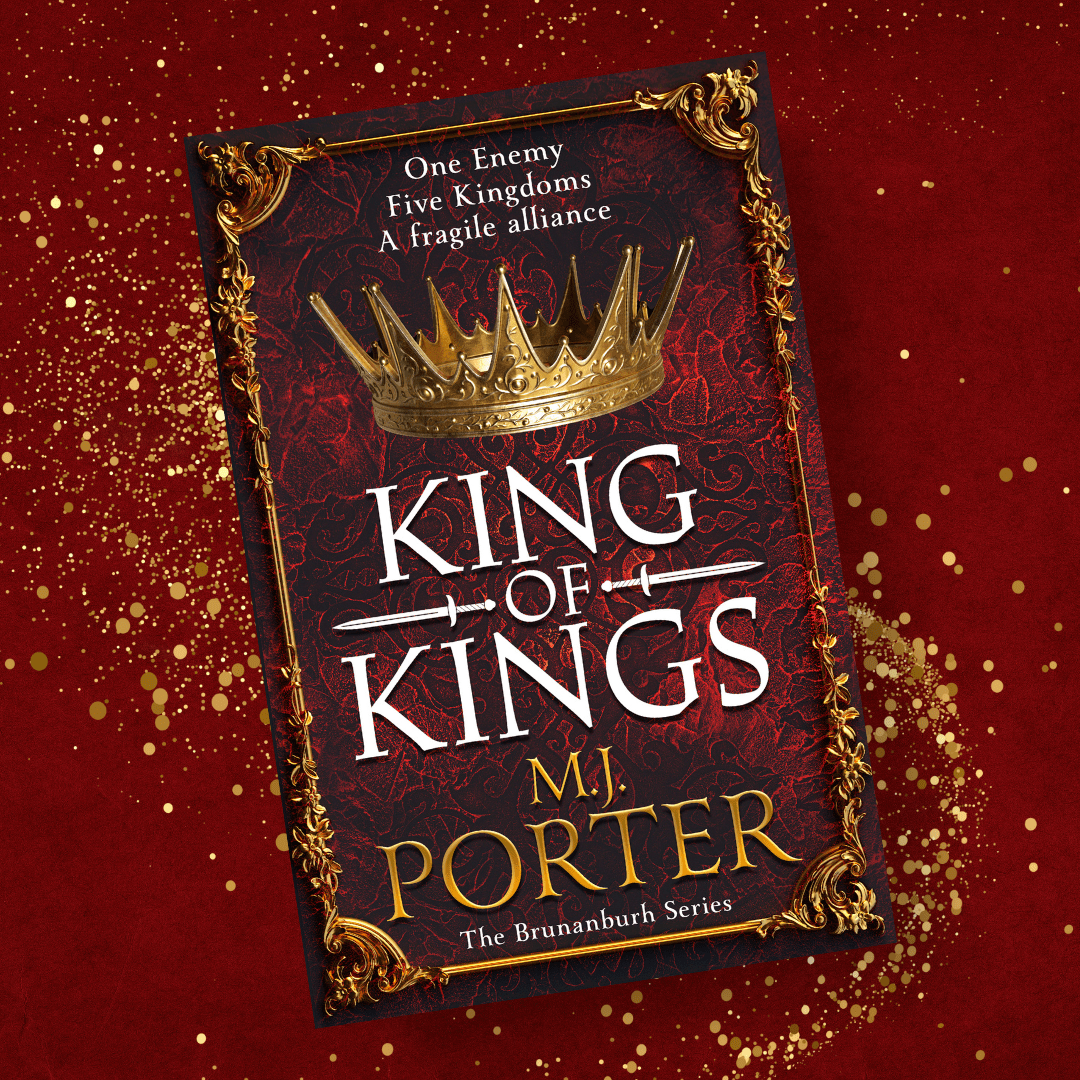
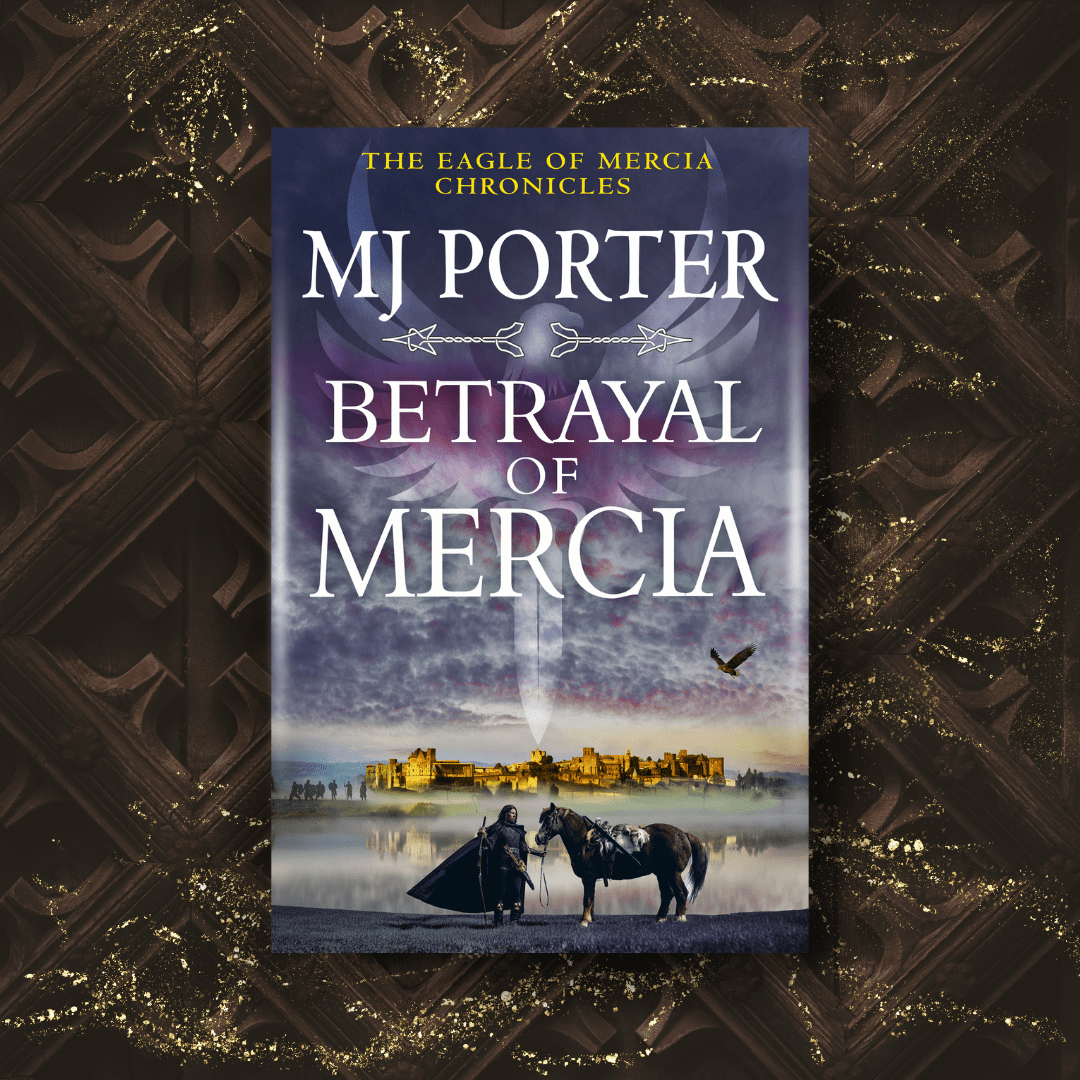
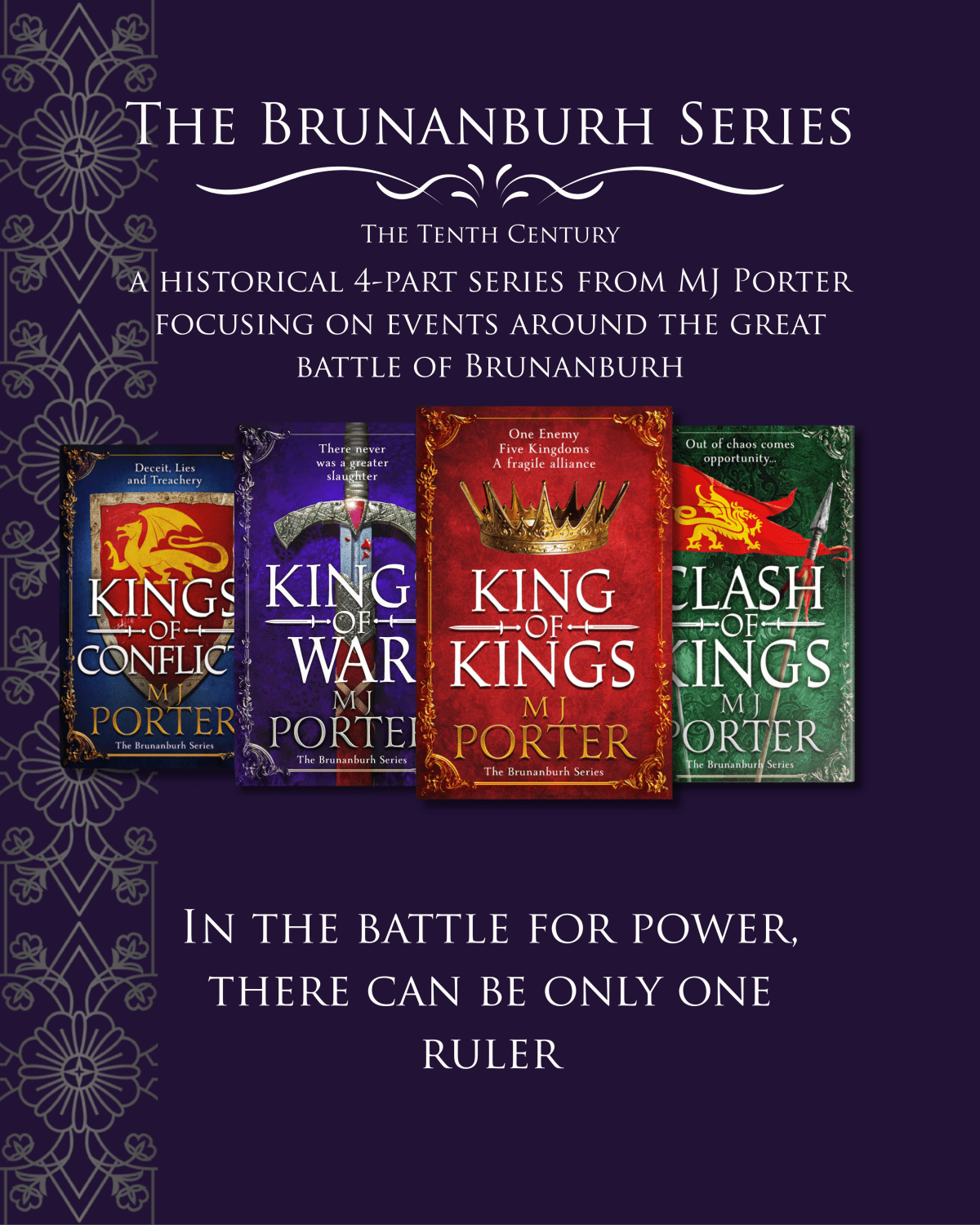
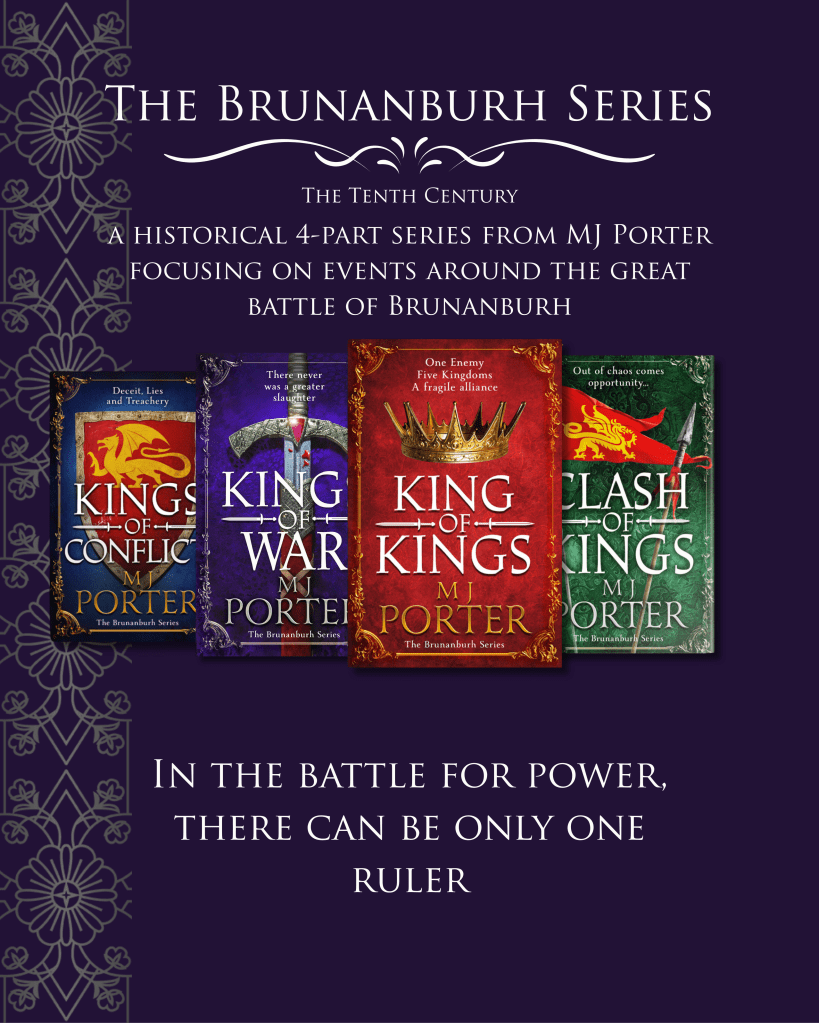
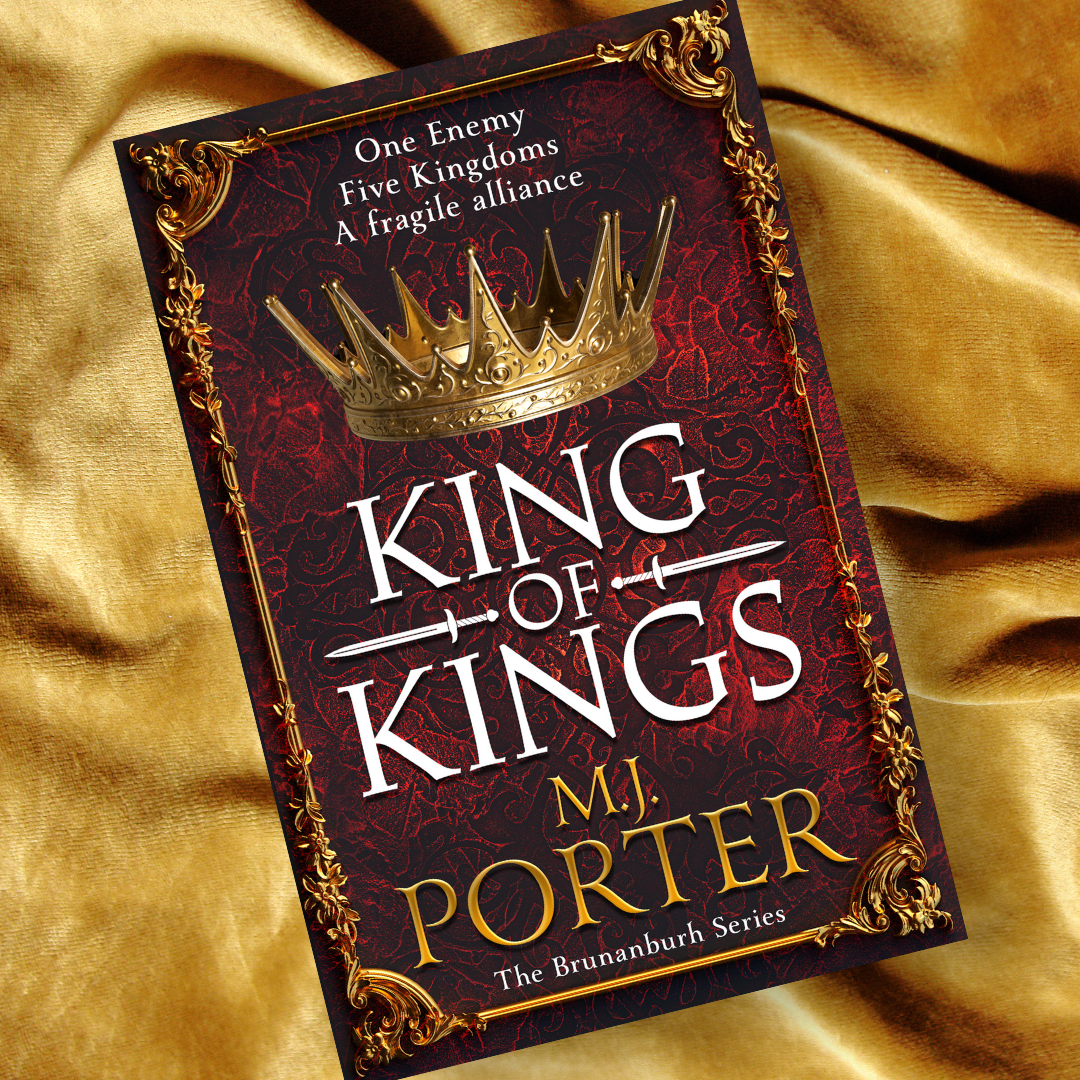
My new book, King of Kings, is a multi-viewpoint novel telling the story of events in Britain from 925-934. I thought it would be good to share details of the historical people my main characters are based on.
Owain of Strathclyde is perhaps the most difficult character in King of Kings to find in the historical record. Indeed, his place in the story is contested by historians, as we don’t know if the scribe of the Anglo-Saxon Chronicle of the time meant Owain of Strathclyde, or an Owain of one of the Welsh kingdoms. I decided to adopt the Owain of Strathclyde, but who exactly was he, and what was Strathclyde?
The kingdom of Strathclyde is also known by another name, that of Cumbria, and there is confusion in the sources and amongst historians about where it is and what it was. Alex Woolf suggests that by the events of 927, Strathclyde/Cumbria encompassed, ‘most of part of Lanarkshire, Dunbartonshire, Renfrewshire, Stirlingshire, Peebleshire, West and Mid-Lothian, eastern Dumfriesshire and Cumberland.’ (Woolf, A. From Pictland to Alba, 789-1070, Edinburgh University Press, 2007) p.155)
So who then were it’s kings? This again is far from as easy to state as might be thought. It’s believed that Owain of Strathclyde, succeeded his father, Donald II, to become king of Strathclyde, and in turn was succeeded by his son.
In 924, we are told that ‘the king of the Strathclyde Britons and all the Strathclyde Britons,’ (Swanton p.104) joined the king of Wessex, Edward the Elder’s alliance by the Anglo-Saxon Chronicle, but Owain isn’t named. Indeed, and as said above, when we do get mention of Owain in the Anglo-Saxon Chronicle, he’s named as ‘king of Gwent,’ (Swanton, M. trans and edit The Anglo-Saxon Chronicles, (Orion Publishing Group, 2000) p.107) even though there was no Welsh king of Gwent named as Owain at the time. It’s therefore difficult to get a feel for who he was, and what he did, but that didn’t mean I couldn’t include him in King of Kings. If anything, it made it all the more intriguing.



















 MJ Porter