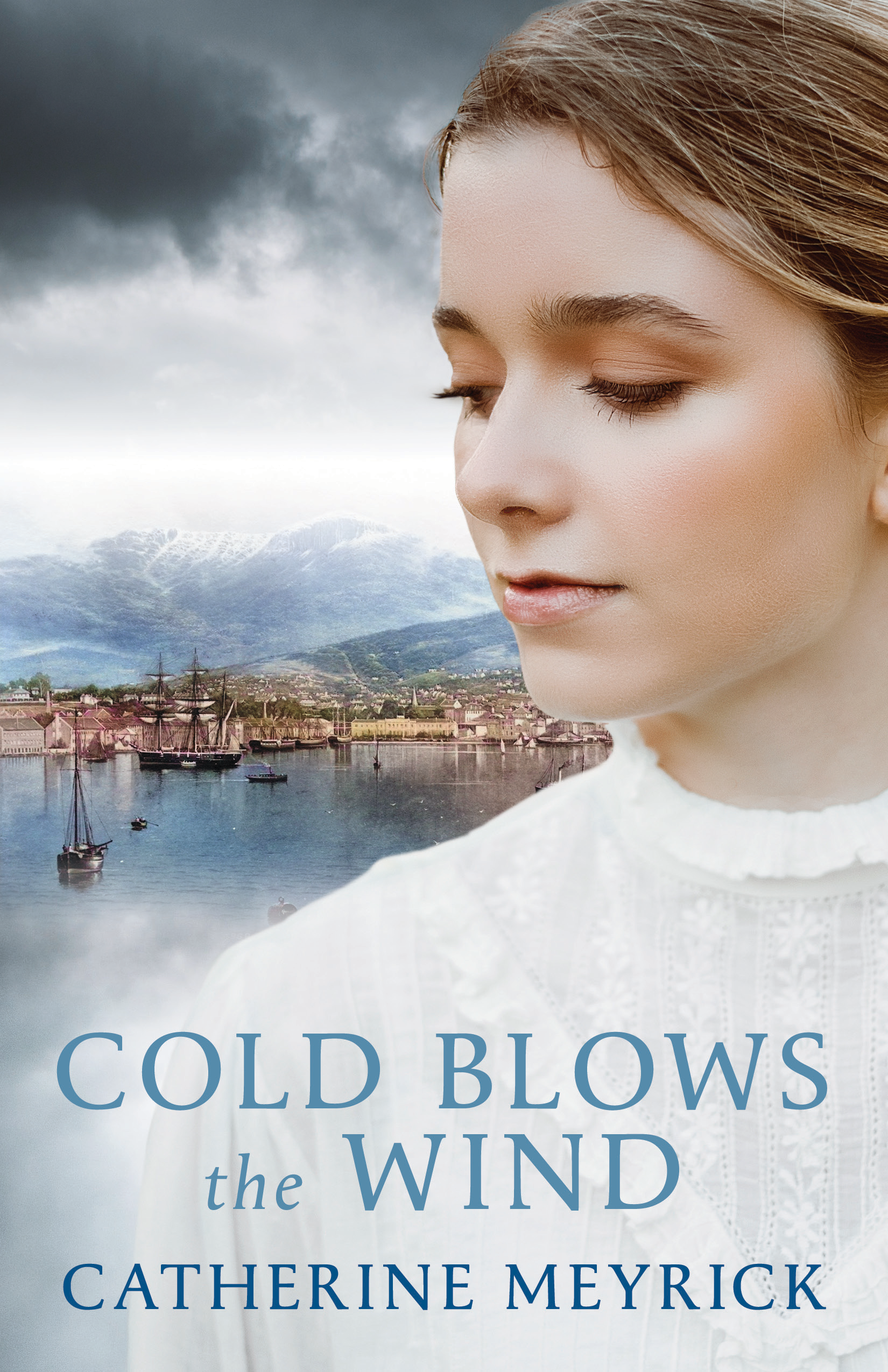
I’m delighted to feature Catherine Meyrick and her new book, Cold Blows the Wind on the blog today #blogtour

I’m delighted to sharan excerpt from Catherine Metric’s new book, Cold Blows the Wind.

The meal was served almost immediately, a hearty stew with bread and butter. The whole family sat close around the table on an assortment of stools, benches and chairs, Billy on Ellen’s knee. He fought to get the spoon from her as she tried to feed him. When she thought he had eaten enough, she surrendered the spoon. As much went into his hair and across his cheeks as into his mouth. He happily burbled away as he played with the spoon.

Harry was hoeing into the meal with as much relish as George and polished off the gravy with the bread. He swallowed the last of his bread and said, ‘That was delicious, Mrs Thompson, just like my grandmother used to make.’

Mary Ann stood and went to the stove, pouring water from the kettle into the teapot standing on the hob. Jane collected the empty plates and placed them beside the washing tub on the bench beneath the kitchen window.

Ellen lifted Billy off her lap and handed him to Alice. ‘There’s cake as well.’

‘Take a big slice, Harry,’ Dad said. ‘Ellen baked the cake specially for you.’

She brought the pound cake out of the pantry cupboard. It had turned out perfectly, a lovely golden brown on top, sprinkled with sugar.

‘Don’t be silly, Dad.’ Ellen concentrated on cutting the slices evenly, trying to ignore the heat rising up her neck. ‘I often make a cake on Sundays.’

Mary Ann, busy pouring the tea, snorted and tried to cover it with a cough.

Alice, holding Billy and attempting to wipe the remains of his meal from his hands and face, opened her mouth, ‘But …’ A jab in the ribs from Jane silenced her.

Mam sat back, warming her hands around her teacup. ‘So you’re staying with old Mrs Hennessy.’

‘Yes, on weekdays. I go up the mountain on Saturday afternoon, back by Sunday night.’

‘No time for play,’ Dad said.

‘No, unfortunately. I need to keep an eye on the old folk.’

‘I’ve seen you striding along towards the Huon Road on a Saturday.’ George stretched back in his chair. ‘Too fast for me to catch up. I’d started to wonder if you were avoiding me.’

Harry shook his head. ‘I need to be quick, don’t want to be climbing up the track in the dark.’

‘Summer is on its way, longer days.’ George put his empty teacup down. ‘Time for a beer, I think.’ He went to the sideboard and opened one of Harry’s bottles of beer. Glasses were passed to all but the younger girls, and, drinks in hand, the questioning began.

‘Where was your father from?’ Dad asked.

‘England.’

‘But where? It’s a big place.’

Harry shrugged. ‘Cheltenham I think it’s called, wherever that is.’

Dad nodded. ‘About eighty or so miles south of Stoke on Trent, where I was. Pretty place, from what I’ve heard.’

‘And, Mrs Thompson, are you from there too?’

Before Mam could answer, Dad said, ‘Beth here is English or Scottish depending on her fancy on the day.’

Mam rolled her eyes. ‘We moved around the border. My parents were Scottish, but I were sent here from Carlisle.’

His hazel eyes intent on Harry, Dad asked, ‘Now, young feller, what did you do in Perth?’

‘This and that. I’ll turn my hand to whatever makes a penny.’

Ellen frowned. Why was he being vague? Was he hiding something? Perhaps he had been in gaol. It might not be a problem, depending on his crime.

George clearly thought the same. ‘Ever been in gaol, Harry?’

Harry sat up in his chair, his mouth open, as if he was shocked by the suggestion. ‘No.’ He paused, frowning, perhaps trying to work out why he had been asked. ‘My grandfather had a farm. I worked on that for a few years,’ he finally said. ‘Then did a bit of wandering, joined a party exploring the interior, tried my hand at fishing.’

Ellen listened as he talked of the country he had travelled through—the scenery, the sheer rock walls, the great boulders in all manner of reds and browns, the floods, the wildflowers bursting into bloom as the waters receded. The way Harry described it all, it was as good as the stories Dad read out from the paper.

‘Later I worked on the East-West Telegraph line.’

Harry spoke of the heat and the sand, the scarcity of fresh water, the transport of logs by sea, hauling them ashore and through the coastal scrub to the route of the telegraph line, the raising of the poles and the stringing of the wires overhead, the cheering as the two lines, from Perth and from Adelaide, were finally joined at Eucla. Although, his descriptions were not as vivid as before, Ellen thought they seemed more real.

‘You didn’t think to come and visit your father when you were younger?’ Mam said.

‘It never crossed my mind. There was plenty to do in Western Australia.’

‘Your father said he was a shoemaker in England,’ Dad said.

‘Just like you.’ Ellen smiled at her father.

‘He didn’t do much of it in Western Australia. It was mostly fencing, shingle splitting, a bit of carpentry and hunting ducks and kangaroos.’

‘You must have been young when Mr Woods came here.’ Mam stared straight at him, a line between her brows.

Ellen wondered if she was concerned at the thought of a little boy left without his father or puzzling out his age.

Harry nodded. ‘I was.’ He added nothing more.

‘And your mother?’

‘Dead.’ His terse response brought an end to the interrogation.
Here’s the blurb

Hobart Town 1878 – a vibrant town drawing people from every corner of the earth where, with confidence and a flair for storytelling, a person can be whoever he or she wants. Almost.

Ellen Thompson is young, vivacious and unmarried, with a six-month-old baby. Despite her fierce attachment to her family, boisterous and unashamed of their convict origins, Ellen dreams of marriage and disappearing into the ranks of the respectable. Then she meets Harry Woods.

Harry, newly arrived in Hobart Town from Western Australia, has come to help his aging father, ‘the Old Man of the Mountain’ who for more than twenty years has guided climbers on Mount Wellington. Harry sees in Ellen a chance to remake his life.

But, in Hobart Town, the past is never far away, never truly forgotten. When the past collides with Ellen’s dreams, she is forced to confront everything in life a woman fears most.

Based on a period in the lives of the author’s great-great-grandparents, Sarah Ellen Thompson and Henry Watkins Woods, Cold Blows the Wind is not a romance but it is a story of love – a mother’s love for her children, a woman’s love for her family and, those most troublesome loves of all, for the men in her life. It is a story of the enduring strength of the human spirit.
Buy Links

Universal Link

Amazon UKAmazon USAmazon CAAmazon AU

Barnes and NobleWaterstones:   KoboApple:

Meet the author

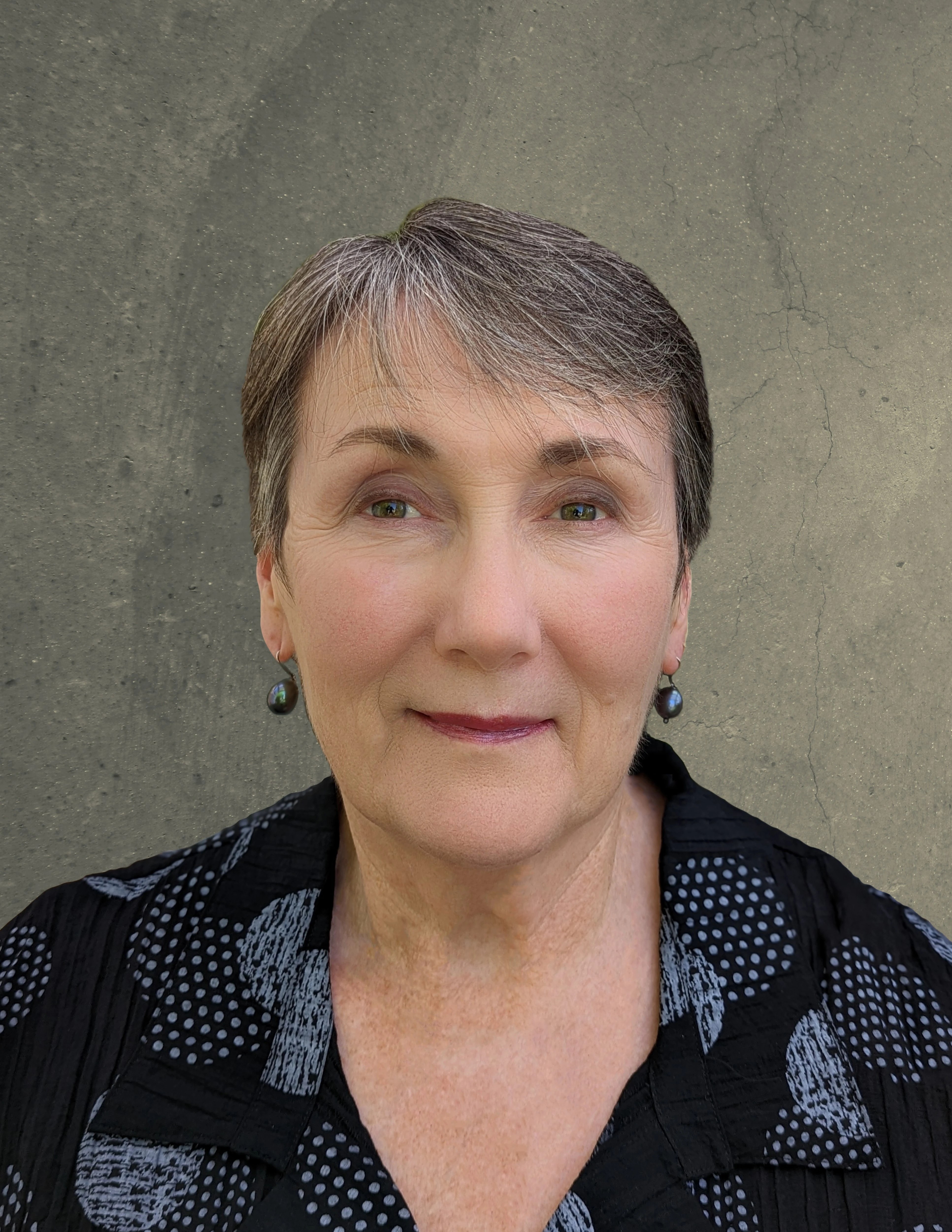
Catherine Meyrick is an Australian writer of romantic historical fiction. She lives in Melbourne but grew up in Ballarat, a large regional city steeped in history. Until recently she worked as a customer service librarian at her local library. She has a Master of Arts in history and is also an obsessive genealogist.

When she is not writing, reading and researching, Catherine enjoys gardening, the cinema and music of all sorts from early music and classical to folk and country & western. And, not least, taking photos of the family cat to post on Instagram.
Connect with Catherine

WebsiteTwitter

FacebookInstagramPinterest

Book BubAmazon Author PageGoodreads:
Follow the Cold Blows the Wind blog tour with The Coffee Pot Book Club

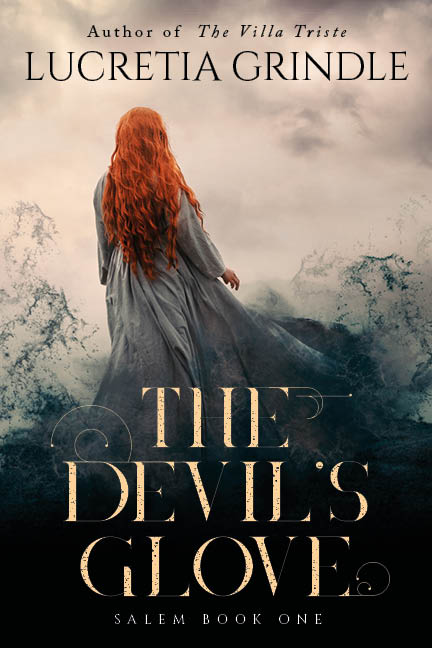
Today, I’m welcoming Lucretia Grindle to the blog with a fascinating post about the historical women in her new novel, The Devil’s Glove #blogtour

Guest Post by Lucretia Grindle on the Histroical Background to the Women in The Devil’s Glove

As I began to think about the Salem witchcraft trials, I was struck by what a distinctly female episode Salem was. Sure, you’ve got the Mathers, father and son, and the magistrates – all men. But this was a furor that was whipped up and powered by women, some of them very young women. And, while six men were executed (five hanged and one pressed to death) fourteen women were hanged. Because other women accused them. 

All of which led me to consider the roles women played in 17th century New England. As I began to contemplate The Devil’s Glove, I knew that my central character would be female, and so it seemed important to try to get past preconceptions and really understand the scope of possibility as well as the limitations on women’s lives in that time and place. What were they able to do, and not do? How did they fit, and not fit into the power structure of society? 

Salem certainly seemed a ‘fracture’; an incident when teen-aged girls, some of them orphaned, most of them servants and dependents – in other words those who would usually be the most un-empowered – wielded extraordinary power. A power they used to attack some of the most powerful female figures in the Massachusetts colony. Established and respected matrons like Rebecca Nurse. Women of wealth and social standing like Mary English. Women who would normally be politically untouchable, like the governor’s sister, Anne Phipps. What other ‘fractures’ might I find, if I went looking?

One of the greatest pleasures of writing history, and historical fiction in particular, is the way in which you begin thinking you know about something, only to discover facets of a world that are a complete surprise. So as I settled into archives and began to peel back layers, I was thrilled to find a complex and unexpected past peopled with an astonishing array of women. Resolve Hammond and her mother, Deliverance, are fictional characters. But the circumstances and possibilities of their lives are based on real women, some of whom appear in The Devil’s Glove, and many of whom will appear in the second and third books of the trilogy. These are a few of their stories.

Early in The Devil’s Glove we discover that Resolve and her mother spent the bloody years of King Philip’s war (1675-1678) sheltered among the tribe led by the female sachem, Ashawonks. This is based on a true episode. I placed the Hammonds with Ashawonks specifically, both because I wanted to bring her into the story and because she is Deliverance’s mentor, and her guide – the door through which Deliverance, and thus Resolve, enter the Native world. So, who was she? 

Female sachem, or saunkskwa of the Sakonnets, a tribe whose lands bordered the southern edge of the Plymouth settlement on Narragansett bay, Ashawonks was unique, not just because she was a women – there were several female sachems at the time – but because she became leader not via inheritance, but because of her formidable diplomatic skills. Her position would be challenged throughout her life, not only by the Anglo-Europeans who tried to push her off her lands, but also from within her own tribe. None of them succeeded. Instead, Ashawonks managed to walk a dangerous tightrope, keeping alliances – or at least relations – with Anglo-Europeans, while not openly alienating fellow sachems and tribes. She was especially close to the powerful militia commander, Benjamin Church, whom she often met and spoke with at length, using him as both a sounding board and conduit to The Powers that Were in Massachusetts. Thanks to skill, nerve, and an uncanny ability to read situations, Ashawonks  piloted her people, and those under her protection, through one of the most dangerous episodes in early American colonial history.

At about the same time Ashawonks was steering a course through a bloody war, another extraordinary woman gave birth to a daughter in Salem, Massachusetts. The daughter would become Mary English, who appears at the end of The Devil’s Glove and is a central to book II of the Salem trilogy. But it was her mother, Elinor Hollingworth, whose life suggested to me what the realistic possibilities might be for Deliverance Hammond. 

Elinor’s family arrived in Salem as part of The Great Migration, an influx of something in the area of 20,000 immigrants, primarily from the British Isles and mostly from England, who arrived in New England between approximately 1630 and 1640. At seventeen, Elinor married William Hollingworth, a sea captain and general all-round trader who wasn’t particularly good at either. His not very thrilling career came to an end when he went overboard and drowned, leaving Elinor with three small children and a mountain of debt. 

There were more eligible men than marriagable women drifting around New England at the time, and Elinor might well have re-married, as most widows did. But she wasn’t having any of it. Once was apparently enough. Instead, Elinor Hollingworth went to work. Petitioning the court to gain control of what was left of her husband’s business, she set about clearing his debts. 

In England at the time, women in naval cities like Bristol and Portsmouth were banding together to negotiate with the British Navy about pay and conditions while their husbands were at sea. Taking a leaf out of the same book, Elinor set herself up as a broker negotiating pay deals for working seamen in Salem, many of whom were illiterate, while taking a cut in return. She so successful that she rapidly became a sort of mini working seaman’s merchant bank.

 At the same time, Elinor saw an opportunity in the wives they left behind. Harnessing their domestic labor, inviting them to produce surplus butter, beer, biscuit, shirts, shoes and other supplies needed to outfit Salem’s growing merchant fleet, she became a ship’s chandler – the person captains went to for all the supplies they needed as soon as they knew they were going to sea. Within a few years, she not only paid off all of William’s accrued debt, but also acquired The Blue Parrot tavern, a seedy drinking den down on the waterfront that she made her headquarters.

Riding the tide of Salem’s exploding maritime trade, Elinor Hollingworth became so successful, and powerful, that when she was accused of witchcraft in 1672 by a neighbor she had annoyed, she merely shrugged it off, saying she was far too busy to be a witch. Twenty years later, her daughter tried essentially the same approach, with vastly different results. 

By then, Mary was married to Philip English, and they were the wealthiest tax payers in Salem, joint owners of a shipping empire that owned more than twenty vessels and included, among other things His and Hers warehouses. Mary received her warehouse from her mother as a wedding present. Elinor had not only made sure that her daughter was exceptionally well educated, she thought so much of her ability that she bypassed her son, and handed her entire business empire directly to her daughter. Philip English shared his mother in law’s esteem. Throughout their marriage, he and his wife owned their business jointly.

Along with the warehouses and the wharf and the ships, Mary and Philip English owned and inhabited a house in Salem so grand that it was known simply as The Great House. It had three stories, and housed not only their family, but also the shipping company’s counting house and a luxury goods shop which Mary oversaw and ran. And it was staffed by fifteen domestic servants, many of them indentured.

Indenture, the practice of contracting labor for a period of years in return for food and keep, and often passage to The New World was a relatively common practice, and part of the Englishes’ business. They arranged and brokered indenture contracts for a large number of, mostly young, people who came to New England from the island of Jersey. Many of them were single young women. One was called Judah White, and is Resolve’s best friend in The Devil’s Glove.

Indenture was not an easy life. You had little say over who you were indentured to, and there was no way out except to work out the years of the contract, or somehow find enough money to buy it out. But it was also a way for young men, and young women, from the lower classes to have a chance at starting a new life in The New World. For women in particular, this was otherwise close to impossible. Here was a way to take at least some of your destiny into your hands. Many made the leap, exhibiting an independence that defies common presumptions about women in the 17th century.

Ashawonks, Elinor, Mary and Judah are only some of the women I encountered while researching The Devil’s Glove. In each case, their circumstances and lives were unexpected. I hope you enjoy getting to know them as much as I did.

Here’s the blurb

Northern New England, summer, 1688.
Salem started here.

A suspicious death. A rumor of war. Whispers of witchcraft.

Perched on the brink of disaster, Resolve Hammond and her mother, Deliverance, struggle to survive in their isolated coastal village. They’re known as healers taught by the local tribes – and suspected of witchcraft by the local villagers.

Their precarious existence becomes even more chaotic when summoned to tend to a poisoned woman. As they uncover a web of dark secrets, rumors of war engulf the village, forcing the Hammonds to choose between loyalty to their native friends or the increasingly terrified settler community.

As Resolve is plagued by strange dreams, she questions everything she thought she knew – about her family, her closest friend, and even herself. If the truth comes to light, the repercussions will be felt far beyond the confines of this small settlement.

Based on meticulous research and inspired by the true story of the fear and suspicion that led to the Salem Witchcraft Trials, THE DEVIL’S GLOVE is a tale of betrayal, loyalty, and the power of secrets. Will Resolve be able to uncover the truth before the town tears itself apart, or will she become the next victim of the village’s dark and mysterious past?

Praise for The Devil’s Glove:

“From its opening lines this historical novel from Grindle (Villa Triste) grips with its rare blend of a powerfully evoked past, resonant characters, smart suspense, and prose touched with shivery poetry.” 

~ BookLife Reviews Editor’s Pick

Buy Links

This title is available to read on #KindleUnlimited.

Universal Link:  https://books2read.com/u/4EN58l

Amazon UKAmazon USAmazon CAAmazon AU

Meet the author

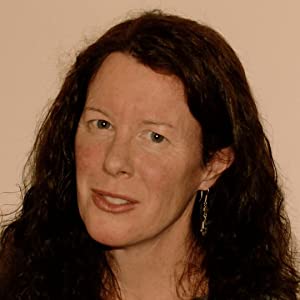
Lucretia Grindle grew up and went to school and university in England and the United States. After a brief career in journalism, she worked for The United States Equestrian Team organizing ‘kids and ponies,’ and for the Canadian Equestrian Team. For ten years, she produced and owned Three Day Event horses that competed at The World Games, The European Games and the Atlanta Olympics. In 1997, she packed a five mule train across 250 miles of what is now Grasslands National Park on the Saskatchewan/Montana border tracing the history of her mother’s family who descend from both the Sitting Bull Sioux and the first officers of the Canadian Mounties.

Returning to graduate school as a ‘mature student’, Lucretia completed an MA in Biography and Non-Fiction at The University of East Anglia where her work, FIREFLIES, won the Lorna Sage Prize. Specializing in the 19th century Canadian West, the Plains Tribes, and American Indigenous and Women’s History, she is currently finishing her PhD dissertation at The University of Maine. 

Lucretia is the author of the psychological thrillers, THE NIGHTSPINNERS, shortlisted for the Steel Dagger Award, and THE FACES of ANGELS, one of BBC FrontRow’s six best books of the year, shortlisted for the Edgar Award. Her historical fiction includes, THE VILLA TRISTE, a novel of the Italian Partisans in World War II, a finalist for the Gold Dagger Award, and THE LOST DAUGHTER, a fictionalized account of the Aldo Moro kidnapping. She has been fortunate enough to be awarded fellowships at The Hedgebrook Foundation, The Hawthornden Foundation, The Hambidge Foundation, The American Academy in Paris, and to be the Writer in Residence at The Wallace Stegner Foundation. A television drama based on her research and journey across Grasslands is currently in development. THE DEVIL’S GLOVE and the concluding books of THE SALEM TRILOGY are drawn from her research at The University of Maine where Lucretia is grateful to have been a fellow at the Canadian American Foundation. 

She and her husband, David Lutyens, live in Shropshire.

Connect with the author

WebsiteFacebookLinkedIn

InstagramAmazon Author PageGoodreads

Follow the blog tour for The Devil’s Glove with The Coffee Pot Book Club

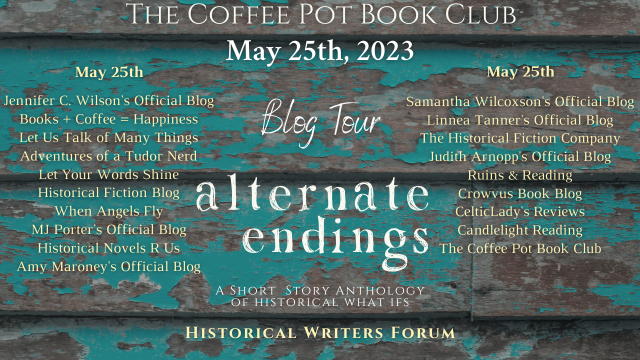
I’m delighted to welcome the Historical Writers Forum and their Alternate Endings – A Short Anthology of Historical What Ifs to the blog #HistoricalFiction #anthology #ShortStories #AlternateHistory #BlogTour #TheCoffeePotBookClub

Here’s the blurb

We all know the past is the past, but what if you could change history?

We asked eight historical authors to set aside the facts and rewrite the history they love. The results couldn’t be more tantalizing.

What if Julius Caesar never conquered Gaul?

What if Arthur Tudor lived and his little brother never became King Henry VIII?

What if Abigail Adams persuaded the Continental Congress in 1776 to give women the right to vote and to own property?

Dive in to our collection of eight short stories as we explore the alternate endings of events set in ancient Rome, Britain, the United States, and France.

An anthology of the Historical Writers Forum.

Buy Links:
This title is available to read on #KindleUnlimited.

Universal Link:  
Amazon UKAmazon USAmazon CAAmazon AU

Meet the authors

Samantha Wilcoxson

Samantha Wilcoxson is an author of emotive biographical fiction and strives to help readers connect with history’s unsung heroes. She also writes nonfiction for Pen & Sword History.

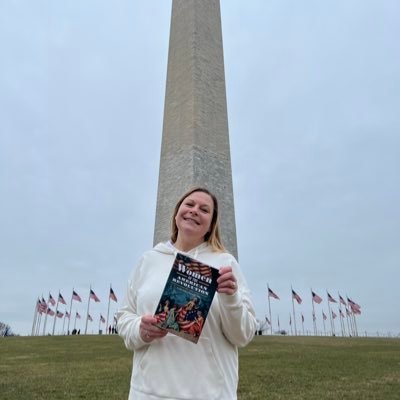
Samantha loves sharing trips to historic places with her family and spending time by the lake with a glass of wine. Her most recent work is Women of the American Revolution, which explores the lives of 18th century women, and she is currently working on a biography of James Alexander Hamilton.

Website

Sharon Bennett Connolly

Historian Sharon Bennett Connolly is the best-selling author of five non-fiction history books, with a new release coming soon.

A Fellow of the Royal Historical Society, Sharon has studied history academically and just for fun – and has even worked as a tour guide at a castle. She writes the popular history blog, http://www.historytheinterestingbits.com. 

Sharon regularly gives talks on women’s history; she is a feature writer for All About History magazine and her TV work includes Australian Television’s ‘Who Do You Think You Are?’

Website

Cathie Dunn

Cathie Dunn writes historical fiction, mystery, and romance. The focus of her historical fiction novels is on strong women through time.

She loves researching for her novels, delving into history books, and visiting castles and historic sites.

Cathie’s stories have garnered awards and praise from reviewers and readers for their authentic description of the past.

Website

Karen Heenan

As an only child, Karen Heenan learned early that boredom was the enemy. Shortly after she discovered perpetual motion, and has rarely been seen holding still since.

She lives in Lansdowne, PA, just outside Philadelphia, where she grows much of her own food and makes her own clothes. She is accompanied on her quest for self-sufficiency by a very patient husband and an ever-changing number of cats. 

One constant: she is always writing her next book.

Website

Salina B Baker

Salina Baker is a multiple award winning author and avid student of Colonial America and the American Revolution. 

Her lifelong passion for history and all things supernatural led her to write historical fantasy. Reading, extensive traveling and graveyard prowling with her husband keep that passion alive. 

Salina lives in Austin, Texas.

Website

Virginia Crow

Virginia Crow is an award-winning Scottish author who grew up in Orkney and now lives in Caithness.

Her favourite genres to write are fantasy and historical fiction, sometimes mixing the two together. Her academic passions are theology and history, her undergraduate degree in the former and her postgraduate degree in the latter, and aspects of these frequently appear within her writings.

When not writing, Virginia is usually to be found teaching music. She believes wholeheartedly in the power of music, especially as a tool of inspiration, and music is often playing when she writes. Her life is governed by two spaniels, Orlando and Jess, and she enjoys exploring the Caithness countryside with these canine sidekicks.

She loves cheese, music, and films, but hates mushrooms.

Website

Elizabeth K Corbett

Elizabeth K. Corbett is an author, book reviewer, and historian who has recently published a short story, “Marie Thérèse Remembers.” She is currently working on her debut novel, a gothic romance set in Jacksonian America.

When she is not writing, she teaches academic writing, something she is very passionate about. She believes in empowering students to express themselves and speak their truth through writing. Additionally, she is a women’s historian who studies the lives of women in eighteenth and nineteenth century North America. Mostly, she is fascinated by the lives of the lesser known women in history.

A resident of gorgeous coastal New Jersey, she takes inspiration from the local history to write her historical fiction. She is an avid reader who adores tea and coffee.

Website

Stephanie Churchill

After serving time as a corporate paralegal in Washington, D.C., then staying home to raise her children, Stephanie Churchill stumbled upon writing, a career path she never saw coming.

As a result of writing a long-winded review of the book Lionheart, Stephanie became fast friends with its New York Times best-selling author, Sharon Kay Penman, who uttered the fateful words, “Have you ever thought about writing?” 

Stephanie’s books are filled with action and romance, loyalty and betrayal. Her writing takes on a cadence that is sometimes literary, sometimes genre fiction, relying on deeply-drawn and complex characters while exploring the subtleties of imperfect people living in a gritty, sometimes dark world.

She lives in the Minneapolis area with her husband, two children, and two dogs while trying to survive the murderous intentions of a Minnesota winter.

Website

Michael Ross

Best selling author Michael Ross is a lover of history and great stories.

He’s a retired software engineer turned author, with three children and five grandchildren, living in Newton, Kansas with his wife of forty years. He was born in Lubbock, Texas, and still loves Texas.

Michael attended Rice University as an undergraduate, and Portland State University for his graduate degree. He has degrees in computer science, software engineering, and German. In his spare time, Michael loves to go fishing, riding horses, and play with his grandchildren, who are currently all under six years old. 

Website

Connect with Historical Writers Forum:

TwitterFacebook

Follow the Alternate Endings blog tour with The Coffee Pot Book Club

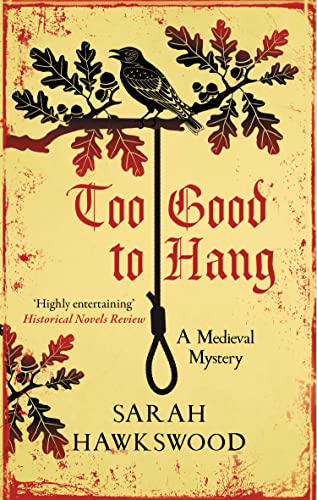
Happy release day to the new Bradecote and Catchpoll medieval mystery by Sarah Hawkswood, Too Good to Hang

Here’s the blurb

April, 1145. Thorgar the Ploughman is found by the bloodied body of Father Edmund, a village priest in Ripple, and is summarily hanged for being caught in the act, despite his pleas of innocence.

When his sister goes to Worcester to seek justice for Thorgar, the lord Sheriff sends Hugh Bradecote, with Serjeant Catchpoll and Underserjeant Walkelin, to discover the truth. They soon expose strong motives for placing the blame on the ploughman’s shoulders, some unpleasant secrets festering among the villagers, as well as the whisper of a treasure long lost and now rediscovered.

The shadow the noose casts is a long one, but the Sherrif’s men will need to plumb the darkness to uncover the true killer.

Purchase Link

https://amzn.to/3pGxUj3

My Review

A new Bradecote and Catchpoll (and Wakelin) medieval mystery is always a true delight, and Too Good To Hang is a fabulous addition to the series.

This time, our trio are called upon to determine the true culprit when an overzealous village has already hanged a man they deem to be responsible for the murder of the priest without trial or even, any real proof, other than the man’s unfortunate appearance at the side of the dead man.

What transpires, with careful investigation from Bradecote, Catchpoll and Wakelin, is that there is much more going on in the small settlement than first meets the eye. One of the village priests might well be dead, but there is a good reason for that and an even better reason to suspect almost everyone else within the settlement as well. And there’s not just the matter of the dead priest and the hanged man; there are also rumours of old treasure buried close by.

As ever, I love the way the mystery slowly resolves itself. Bradecote is lordly, Catchpoll is more world, and Wakelin is slowly becoming his own man. Added to this, there is a fine cast of strong women ruled by weak men, and the author highlights this in their interactions.

An absolute joy.

Thank you to Netgalley and the publisher for my review copy.

Check out my reviews for previous Bradecote & Catchpoll mysteries.

Wolf at the Door

A Taste for Killing

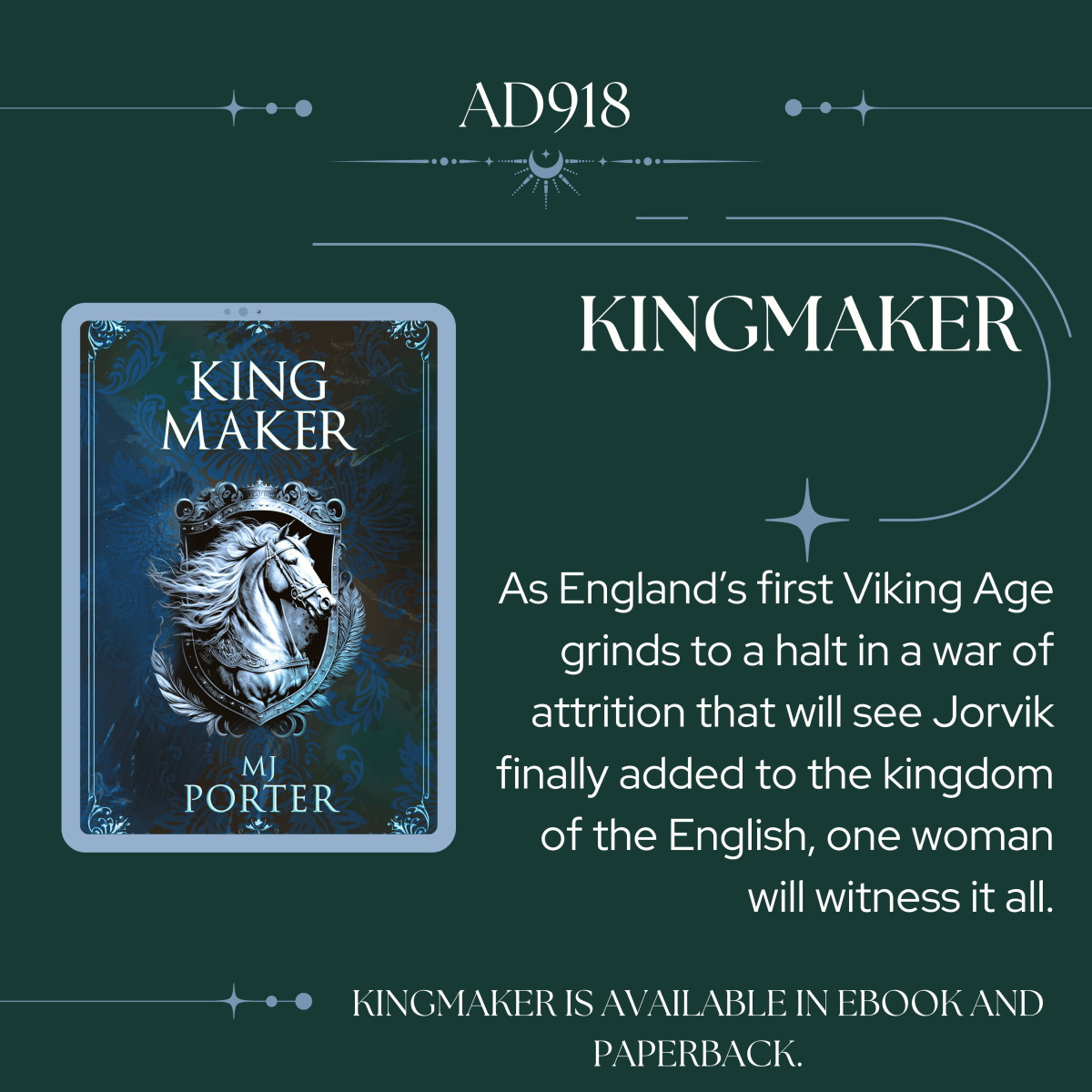
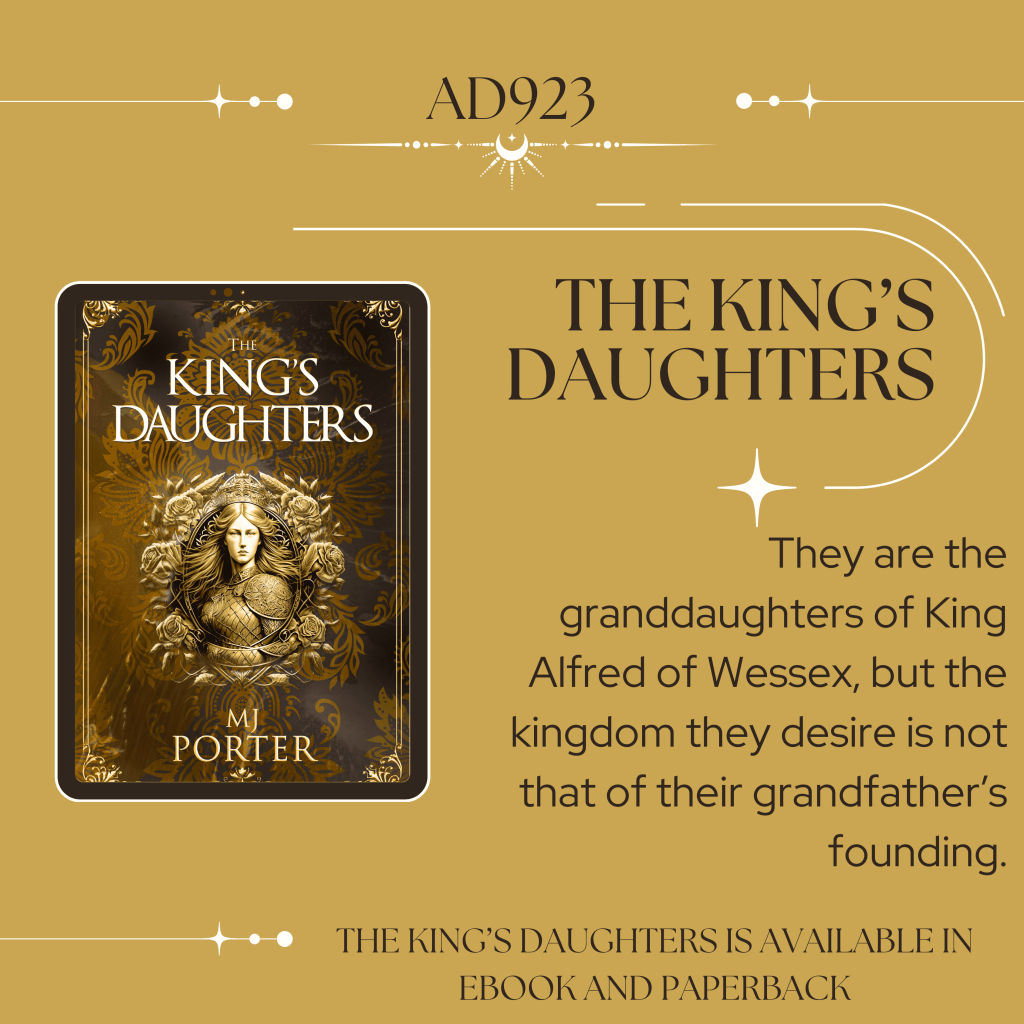
New covers for Kingmaker and The King’s Daughters #histfic #TheRoyalWomen

Earlier in the year, I shared new covers for The Lady of Mercia’s Daughter and A Conspiracy of Kings, and now I’m delighted to share the new covers for the remaining two books in The Tenth Century series, Kingmaker and The King’s Daughters.

These stories don’t follow Lady Ælfwynn as the first two books do, but she is mentioned in them. Rather, these two books focus on some of the other ‘lost’ women of the tenth century: the third wife of King Edward the Elder, and his many daughters.

I think they look fabulous. Thank you to Flintlock Covers for once more knowing what I want, even when I can’t find the words to describe it:)

Kingmaker

This is the tenth century in Early England between the reigns of Alfred the Great and Æthelred the Unready.
As England’s first Viking Age grinds to a halt in a war of attrition that will see Jorvik finally added to the kingdom of the English, one woman will witness it all.

Seventeen-year-old Eadgifu knows little about her new husband; he’s old, he only wants to marry her because she’s so wealthy, he already has ten children, and he’s Edward, King of Wessex. He also hopes to claim Mercia as his own.

That he’s the son of King Alfred, the man credited with saving Wessex from the Viking Raiders adds no mystique to him at all. Many say he’s handsome, but Eadgifu knows they speak of the man twenty years ago. Her mother won’t even allow her to be alone with him before their wedding.

But an old man will not live forever. The mother of his youngest sons can be more powerful than the wife of the king of Wessex, especially in the newly made kingdom of England where king’s lives are short and bloody, and war with the Viking Raiders is never far away.

Lady, wife, queen, mother, king’s mother, grandmother, ally, enemy, amenable and rebellious. 

Lost to the mists of time, this is Queen Eadgifu’s story, Kingmaker.

The King’s Daughters

Four women, all with impeccable pedigrees, and all desiring one thing. A kingdom of their own to rule.

They are the granddaughters of King Alfred of Wessex, but the kingdom they desire is not that of their grandfather’s founding.

These are the unknown stories of King Athelstan’s half-sisters, all wed into the royal families of East and West Frankia during the tenth century.

Eadgifu, the exiled queen of West Frankia, with her son’s kingdom claimed by another man, her husband imprisoned by yet another of his overmighty nobles.
Eadhild, wed to the son of the man who usurped her nephew’s kingdom, but with no heirs to her name.
Eadgyth, married to the legitimate heir of the king of East Frankia.
Ælfgifu, wed into the noble family of the Kingdom of Arles, one that sees West Frankia as an ally, not an enemy.

As tensions reach boiling point between East and West Frankia, between kingdoms and men who should be enemies, not allies, or allies, not enemies, the royal sisters of Wessex are thrust into a political maelstrom, pitted against each other and with only their royal brother, King Athelstan, as a mediator.

Posts

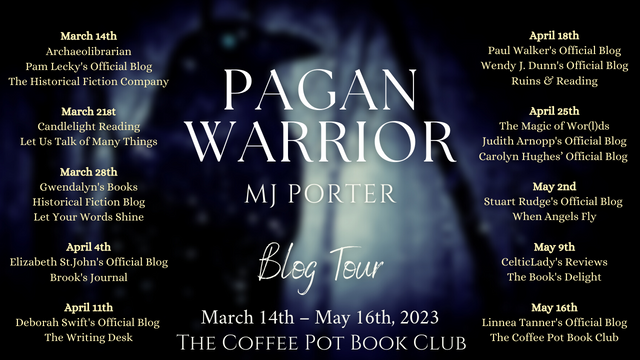
Pagan Warrior is on blog tour with The Coffee Pot Book Club #blogtour – check out the posts for the final day and enter the competition to win the paperbacks

It’s the final day of the Pagan Warrior blog tour with The Coffee Pot Book Club, and to celebrate I am running a competition to win a signed set of the trilogy in paperback.

To enter, either sign up for my newsletter here (and receive a free short story set after the events of the trilogy), or if you’ve already signed up, drop me a quick email (mjporterauthor@gmail.com), and let me know you want to enter the competition. I will post worldwide and the competition will run until May 19th 2023, at which point, I will contact the winner, and announce them (if they are happy for me to do so) on my social media channels. Good luck everyone.


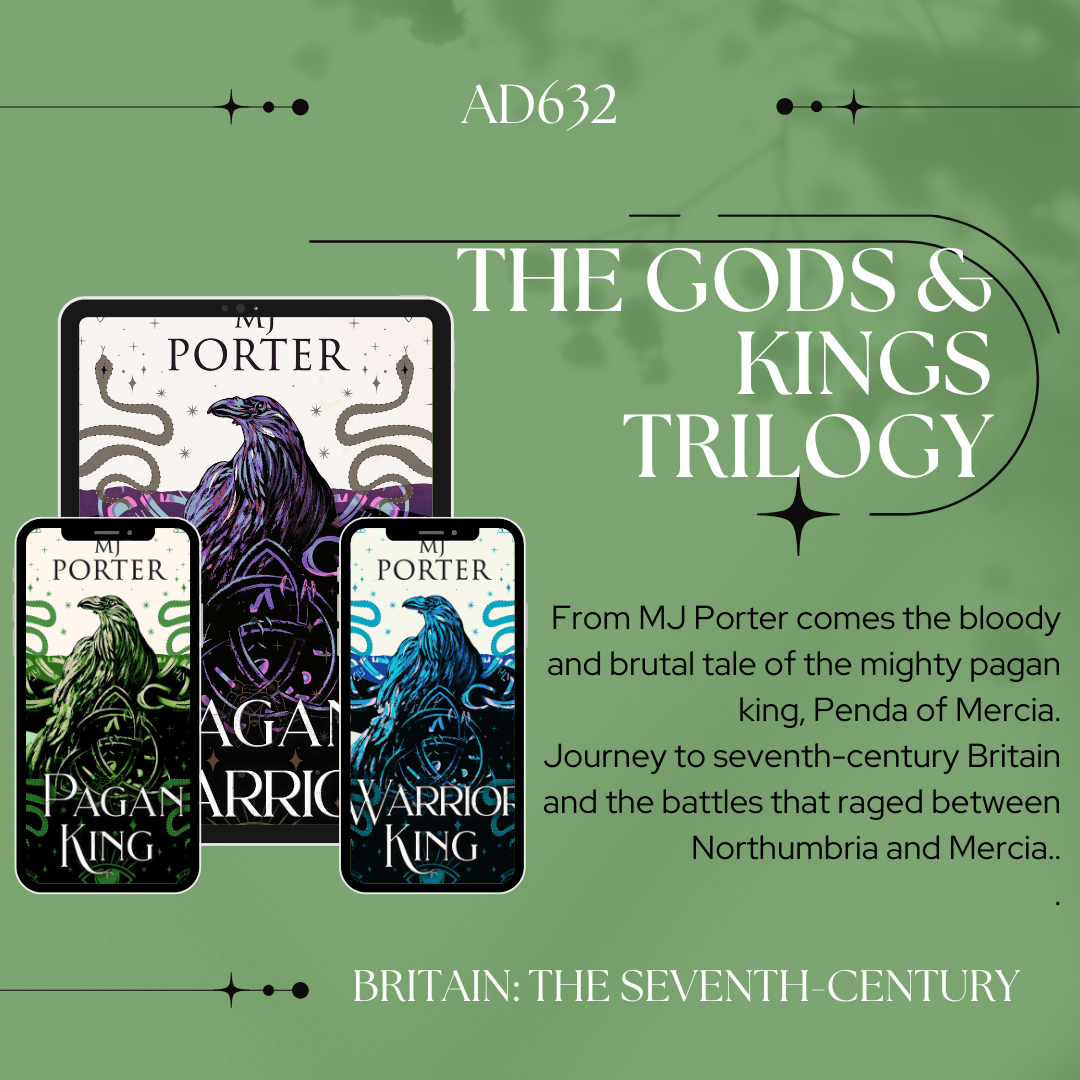
Pagan Warrior is the story of the battle of Hædfeld, fought in the seventh century between the Northumbrians, and you got it, the Mercians – or rather, Cadwallon of Gwynedd but with Penda of Mercia as his firm ally. You can find more details here.

A quick shout out to thank all the blog hosts and Cathie at The Coffee Pot Book Club for organising.

For May 16th, check out a review for Pagan Warrior on

Linnea Tanner’s Official Blog

and a guest post about Mercia’s legacy over on

The Coffee Pot Book Club

For May 9th, check out

The Book Delight

An excerpt on

The Celtic Lady Reviews

For May 2nd, check out the review on

Stuart Rudge’s Official Blog

And a guest post on who King Edwin of Northumbria was over on

When Angels Fly

For April 25th, check out a post about Penda of Mercia.

The Magic of Word(l)ds

Read an excerpt featuring Eowa, Penda’s brother on

Judith Arnopp’s Official Blog

And, read an excerpt featuring Penda on

Carolyn Hughes Official Blog

For April 18th, I answered Paul Walker’s questions on his blog

Paul Walker’s Official Blog

There’s an except over on Wendy J Dunn’s Official Blog featuring King Edwin

Wendy J Dunn’s Official Blog

And a fabulous review on Ruins and Readings

Ruins and Readings

For April 11th, read a guest post about how we know, what we know, about the seventh century.

Deborah Swift’s Official Blog

And a fabulous author interview over on

The Writing Desk

For April 4th, read an excerpt on

Elizabeth St John’s Official Blog

And read about warfare in the Saxon period on

Brook Allan’s Official Blog

For March 28th, check out a fabulous review on

https://gwendalynbooks.wordpress.com/2023/03/28/pagan-warrior/

A guest post about Mercia in the later eighth century on the Historical Fiction Blog.

https://historicalfictionblog.com/pagan-warrior-guest-post/

And, the post that perhaps gave me the most fear to begin will but which was fun when I remembered all the little details, five fun facts about writing the trilogy.

maryannbernal.blogspot.com

For March 21st check out a post about two of the royal residences of Bernicia at the time, Bamburgh and Ad Gefrin (Yeavering). (There are lots of photos, thank you to Helen Hollick for uploading them all).

Let Us Talk of Many Things

And a review from

Candlelight Reading

From March 14th, check out my author interview over on Archaeolibrarian.

Archaeolibrarian

I’m sharing an excerpt over on The Historical Fiction Company.

The Historical Fiction Company

I’ve written a piece about the historical background on Pam Lecky’s official blog.

Pam Lecky’s Official Blog

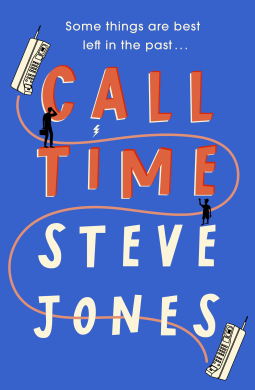
Happy Release Day to Steve Jones and his debut, Call Time. #fantasy #newrelease

Here’s the blurb

The enthralling debut novel from Channel 4 F1 presenter Steve Jones – it’s Sliding Doors meets High Fidelity

Bob Bloomfield is, in the words of his best friend’s wife, a ‘selfish, arrogant a*sehole’, who hasn’t spent a great deal of time making friends in his 49 years on earth.  

But what if he could change? What if Bob could stop the very thing that has made him the man he is, the death of his younger brother, Tom in 1986.

If he could save Tom, could he save himself? 

. . . And what if all it took was a phone call?

Purchase Link

https://amzn.to/42xyTjn

My Review

Call Time by Steve Jones is an entertaining and engaging read. I admit, I was a bit, ‘Oh another celebrity novel,” but I do love Steve Jones as a presenter, and the premise was interesting, so I thought, ‘Why not.’ And I’m so pleased I did.

Our main character, Bob, is not a pleasant individual. His best friend’s wife is correct when she labels him an arsehole, and for much of the first 40% of the book, the reader only knows about Bob ‘the arsehole.’ We don’t really know what makes him tick other than being a bit of a dick. But then, something changes, and from then on, the book is fast-paced and somewhat of a rollercoaster.

I really enjoyed the cultural nods to films I might have watched from the 80s, and while some might argue that the pretext of some of the ripples from changing the past is a bit flimsy, this is a story of redemption in the most unusual of ways. I don’t want to give anything away, so it’s quite hard to explain all the bits I liked, but yes, this is a book for fans of time-altering novels, and I think the last 20% of the novel is unexpected, and all the more enjoyable for that.

A fun novel that contends with that age-old issue of, ‘Would you change the past if you could?’ And if you did change the past, how might that change your present?

My thanks to Netgalley and the publisher for my review copy.

Meet the Author

Steve Jones’ first job was in a petrol station. It was also the first job he was fired from for putting diesel in Dai-The-Milk’s petrol truck.
From there he gained employment in a printing factory before setting off for distant shores to “find himself”. He subsequently found a mediocre career in modelling which thankfully segued into a fairly successful twenty year (to date) career in TV presenting. His cherished accomplishments: He was crowned Welsh Rear Of The year in 2002. His suitcase has come out first at the airport on no less than two occasions, and now, he has written Call Time. Which he very much hopes you will enjoy.

Pagan Warrior is on blog tour with The Coffee Pot Book Club #blogtour – check out the posts for day 9

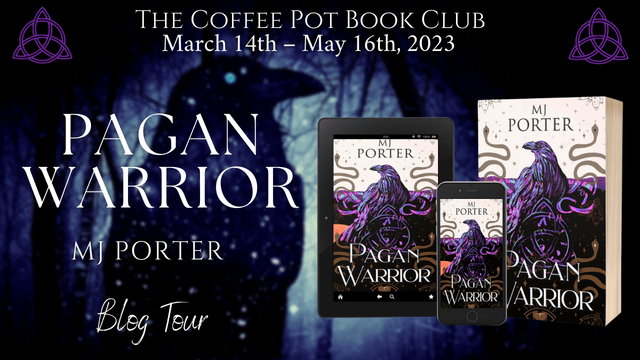
I’m really excited to share the details of the Pagan Warrior blog tour with The Coffee Pot Book Club.

Pagan Warrior is the story of the battle of Hædfeld, fought in the seventh century between the Northumbrians, and you got it, the Mercians – or rather, Cadwallon of Gwynedd but with Penda of Mercia as his firm ally. You can find more details here.

I might have written this book many years ago, but it’s had a refresh, and is now available in audio, narrated by the fabulous, Matt Coles, as is the second book, Pagan King. Warrior King will be coming later this year in audio.

Now that all three books have been ‘refreshed’ you can read in ebook or paperback, and the books are available from all good ebook/paperback sellers. Check out my latest tiktok video to see Warrior King in paperback:)

You can follow the blog tour, and I’ll be sharing posts here as well. A quick shout out to thank all the blog hosts and Cathie at The Coffee Pot Book Club for organising. Next Tuesday is the final day, and I’m going to be running a competition so pop back and see what’s happening.

For May 9th, check out

The Book Delight

An excerpt on

The Celtic Lady Reviews

For May 2nd, check out the review on

Stuart Rudge’s Official Blog

And a guest post on who King Edwin of Northumbria was over on

When Angels Fly

For April 25th, check out a post about Penda of Mercia.

The Magic of Word(l)ds

Read an excerpt featuring Eowa, Penda’s brother on

Judith Arnopp’s Official Blog

And, read an excerpt featuring Penda on

Carolyn Hughes Official Blog

For April 18th, I answered Paul Walker’s questions on his blog

Paul Walker’s Official Blog

There’s an except over on Wendy J Dunn’s Official Blog featuring King Edwin

Wendy J Dunn’s Official Blog

And a fabulous review on Ruins and Readings

Ruins and Readings

For April 11th, read a guest post about how we know, what we know, about the seventh century.

Deborah Swift’s Official Blog

And a fabulous author interview over on

The Writing Desk

For April 4th, read an excerpt on

Elizabeth St John’s Official Blog

And read about warfare in the Saxon period on

Brook Allan’s Official Blog

For March 28th, check out a fabulous review on

https://gwendalynbooks.wordpress.com/2023/03/28/pagan-warrior/

A guest post about Mercia in the later eighth century on the Historical Fiction Blog.

https://historicalfictionblog.com/pagan-warrior-guest-post/

And, the post that perhaps gave me the most fear to begin will but which was fun when I remembered all the little details, five fun facts about writing the trilogy.

maryannbernal.blogspot.com

For March 21st check out a post about two of the royal residences of Bernicia at the time, Bamburgh and Ad Gefrin (Yeavering). (There are lots of photos, thank you to Helen Hollick for uploading them all).

Let Us Talk of Many Things

And a review from

Candlelight Reading

From March 14th, check out my author interview over on Archaeolibrarian.

Archaeolibrarian

I’m sharing an excerpt over on The Historical Fiction Company.

The Historical Fiction Company

I’ve written a piece about the historical background on Pam Lecky’s official blog.

Pam Lecky’s Official Blog

King of Kings, and the coronation of England’s first king

Athelstan, widely regarded as the first king of the ‘English’ or the first king of England, is one of the main characters in King of Kings. And indeed, the book opens with Athelstan undergoing his coronation. Before his reign, the ruling House of Wessex hadn’t been proclaimed as England’s kings. King Alfred (879-899), Athelstan’s grandfather, was termed the king of the Angles and Saxons (in a charter from 889 known as S346[I]). His son, Edward the Elder, was the king of the Anglo-Saxons, and whether this meant Wessex and Mercia combined has been much debated. But Athelstan was king of the English, (and this certainly included Wessex and Mercia, and parts of the Danelaw that had been reclaimed) and in a departure from earlier custom, was consecrated not with a warrior-helm, but instead with a crown.

Debate still rages as to whether the coronation ordo that has survived was written for Athelstan, his father, or even his nephew (Edgar (959-975), and indeed, whether it included provision for the king’s wife to be consecrated beside him, but for King of Kings, I made use of what is known about the service and reimagined the ceremony for my readers. I hope you enjoy it. Read on for a short extract.

‘This means that only a year after my father’s untimely death, the kingdoms of Mercia, those parts of the East Anglian kingdom that my father lately reclaimed, Wessex and Kent, are reunited again under one ruler. The Saxons, or rather, the English, have just one king. And this is my moment of divine glory, when, before the men and women of the Mercian and Wessex witan, I’ll be proclaimed as king over all.

A prayer is intoned by the archbishop of Canterbury, Athelm, appealing to God to endow me with the qualities of the Old Testament kings: Abraham, Moses, Joshua, David and Solomon. As such, I must be faithful, meek, and full of fortitude and humility while also possessing wisdom. I hope I’ll live up to these lofty expectations.

I’m anointed with the holy oil and then given a thick gold ring with a flashing ruby to prove that I accept my role as protector of the one true faith. A finely balanced sword is placed in my hands, the work of a master blacksmith, with which I’m to defend widows and orphans and through which I can restore things left desolated by my foes, and my foes are the Norse.’


[i]  http://www.esawyer.org.uk/,

books2read.com/King-of-Kings

King of Kings is currently available with Prime Reading.

Map design by Flintlock Covers

The River Thames in the Saxon period

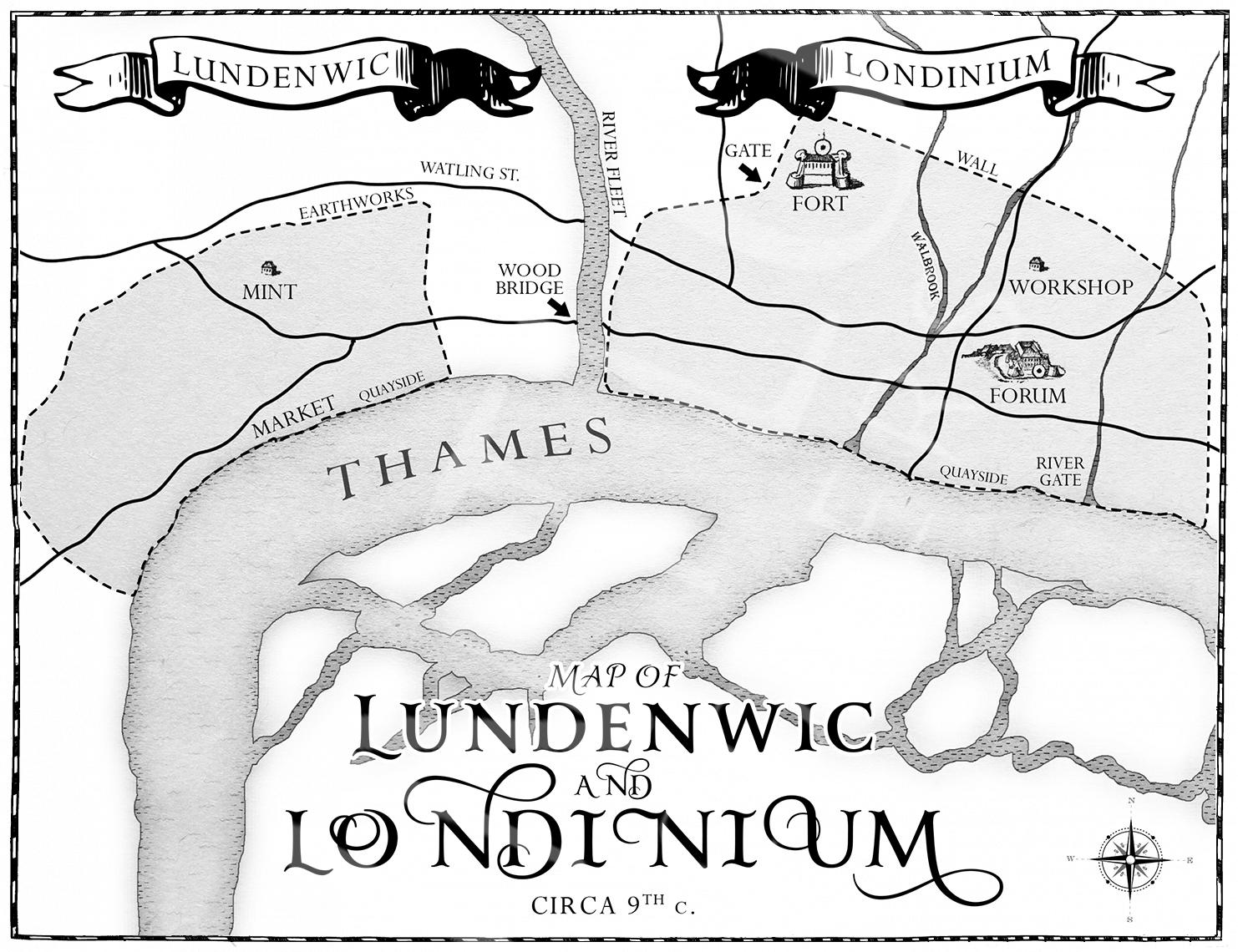
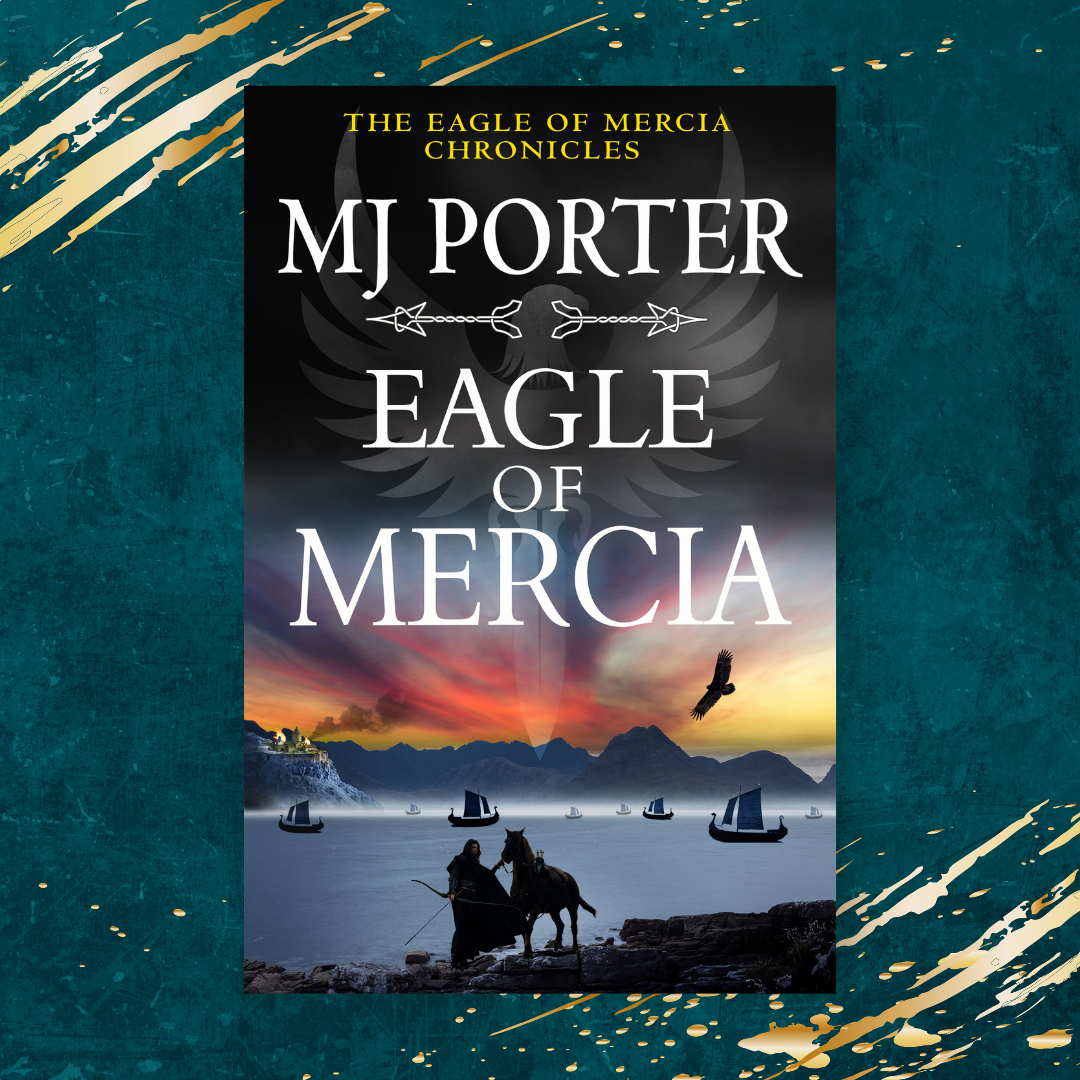
In Eagle of Mercia, young Icel and his allies are busily guarding the River Thames against a potential Viking raider attack. The Viking raiders certainly made use of the many rivers running through England at the time (and throughout the British Isles), but the river was also significant as a very definitive and solid boundary between the Saxon kingdoms of Wessex and Mercia, which to the west, where the River Thames doesn’t flow, was continued by the earthworks known as the Wansdyke.

London, now the capital of the United Kingdom, wasn’t always as important as we might assume, and indeed, it wasn’t ever the capital of Wessex or Mercia. These two kingdoms fought most fiercely over the settlement. It wasn’t even overly important to the Romans, either. And this is why I’ve perhaps been remiss in not truly considering its significance. As rivers have changed their course over the years, so has the River Thames. And what’s most fascinating about the River Thames is that, seemingly for long periods during the Saxon era, it wasn’t navigable, as we might expect it to have been. 

Map of Early England by Flintlock Covers

‘During this period, as perhaps as other times, there may well have been a division between use of the Thames in its today reach and use of it above the tidal head. Paleoenvironmental evidence suggests that a relative drop in river levels during the Roman period meant that the tidal head was perhaps as low as Londinium itself, but that it (and thereby the range of easy navigability) generally moved upstream during the Anglo-Saxon period. This trend was not, however, uniform, and there were also brief periods (such as the late tenth to eleventh centuries) when the tidal reach shifted back downstream again.’ p. 271

It seems then, that when considering London, or Londinium/Lundenwic/Londonia, we also need to be mindful of the era in the Saxon period that we’re writing about. For the first Viking age,

‘A combination of the seasonal (and presumably climatic) unreliability of riverine travel and  the need on many occasions to travel upstream cannot have made it easy for the Vikings to use the Thames for shock offensives… and there is no clear example of a Viking force travelling by water up the Thames further than Fulham.’ p.278

Clues to how passable the River Thames might have been can be traced.

‘Without the construction of bridges, the river would have been impassable except by ferry, from its estuary as far as the lowest fording point, perhaps as low as Halliford near Shepperton, and between the various fording points. Even where the middle and upper stretches could be forded, such crossings were not guaranteed to be easy. Lechlade and Cricklade, two potentially treacherous upper Thames crossings, severely affected by flooding in winter were named Old English (ge)lad ‘difficult river crossing.’ p.279

As with all things, we should be wary of assuming that current conditions would have been prevalent in the past. The River Thames certainly falls into that category. So while, yes, it was certainly a decisive boundary between the Saxon kingdoms of Wessex and Mercia, on occasion, it wouldn’t have been as decisive as at others. This, I find fascinating, and just another of those ‘facts’ travellers to the Saxon era should be wary about. While we know (hopefully not a spoiler) that London was attacked in the 840s and 850s, prior to this, it might well have been impossible for the Viking raiders to attack in the way they were used to. This, perhaps, accounts for why they chose more coastal locations, such as the Isle of Sh.

Map by Flintlock Covers for Wolf of Mercia

(Quotes taken from Beyond the Burghal Hidage by Baker and Brookes)

Read Eagle of Mercia now.

https://books2read.com/EagleofMercia