“As delicious as a Devon Cream Tea!” ~ author Elizabeth St John
“Every sentence pulls you back into the early 1970s… The Darling Buds of May, only not Kent, but Devon. The countryside itself is a character and Hollick imbues it with plenty of emotion” ~ author Alison Morton
***
Make hay while the sun shines? But what happens when a murder is discovered, and country life is disrupted?
Summer 1972. Young library assistant Jan Christopher and her fiancé, DS Lawrence Walker, are on holiday in North Devon. There are country walks and a day at the races to enjoy, along with Sunday lunch at the village pub, and the hay to help bring in for the neighbouring farmer.
But when a body is found the holiday plans are to change into an investigation of murder, hampered by a resting actor, a woman convinced she’s met a leprechaun and a scarecrow on walkabout…
Buy Links
This title is available to read on #KindleUnlimited.
First accepted for traditional publication in 1993, Helen became a USA Today Bestseller with her historical novel, THE FOREVER QUEEN (titled A HOLLOW CROWN in the UK) with the sequel, HAROLD THE KING (US: I AM THE CHOSEN KING) being novels that explore the events that led to the Battle of Hastings in 1066.
Her PENDRAGON’S BANNER TRILOGY is a fifth-century version of the Arthurian legend, and she writes a nautical adventure/fantasy series, THE SEA WITCH VOYAGES.
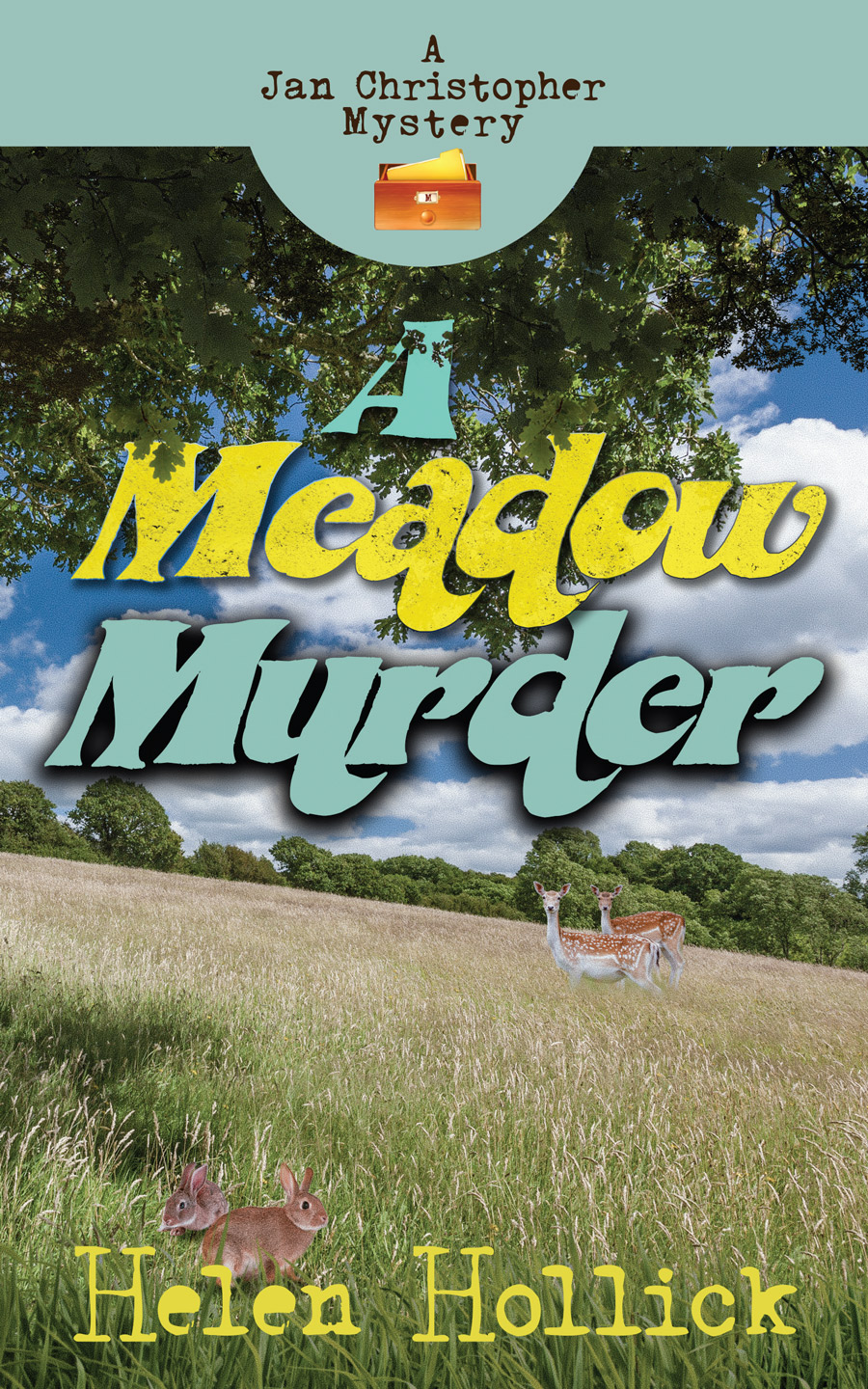
She has also branched out into the quick read novella, ‘Cosy Mystery’ genre with her JAN CHRISTOPHER MURDER MYSTERIES, set in the 1970s, with the first in the series, A MIRROR MURDER incorporating her, often hilarious, memories of working as a library assistant. The front cover of episode #4 A MEADOW MURDER is Helen’s actual hay meadow on her Devon farm.
Her non-fiction books are Pirates: Truth and Talesand Life of A Smuggler. She lives with her family in an eighteenth-century farmhouse in North Devon and occasionally gets time to write…
Why did I decide to tell the story of King Coelwulf II of Mercia?
The Last King is set in Mercia in the Ninth Century, one of the ancient kingdoms of England. Mercia, at that time, is perceived as being on the decline – no more the mighty King Penda of the seventh century (who I’ve written about in Pagan Warrior) or King Offa of the eighth century (who I do want to write about), but instead Wessex, on Mercia’s southern border, just waiting to pounce when Mercia is already weak and further destabilised by the Vikings of the Great Heathen Army. It seems inevitable that Mercia will be subsumed by Wessex.
Mercia’s king in the early 870’s was Burgred, brother by marriage to King Alfred and with King Alfred himself married to a Mercian, I think we can all decipher the intentions of the House of Wessex towards Mercia. This alliance seems to have been powerful, persuasive, and long lasting, until abruptly, Wessex gave up on Mercia, and refused to assist in the battle against the Vikings. It is this Mercia that Coelwulf lived in, and lived through.
The historical Coelwulf was allegedly a member of a family who had ruled as kings in the early 800’s. King Coelwulf II (as he was known) was accepted by the Mercians as their king. This is ‘proved’ by the few charters which survive from the time period, which are ‘witnessed’ by the three bishops of Mercia, and her ealdormen as well. In the past, these documents have been taken to show that all of the Mercian nobility bowed down before the Vikings and accepted them as their ‘overlords.’ This view is only now being challenged, and I’m enjoying challenging it.
Mercia, unlike the kingdoms of Northumbria and Wessex, had no one who wrote propaganda for her. Northumbria had the Venerable Bede, Wessex had the Anglo-Saxon Chronicle, but for Mercia, there is a dearth of information. Perhaps there was a record, it is hinted at in something known as the Mercian Register incorporated in one version of the Anglo-Saxon Chronicle, but it is presumed that much of the record was burned by the Vikings.
I’m thriving on looking at the possibilities for what might have happened in Mercia. There are surprising omissions in the Anglo-Saxon Chronicle, a few things that don’t make too much sense when you examine them further, and so ‘my’ version of the time period is a little bit different to anything people might read about in older books. It doesn’t make it right, but, and this is what is so appealing about the time period, it also doesn’t make it wrong.
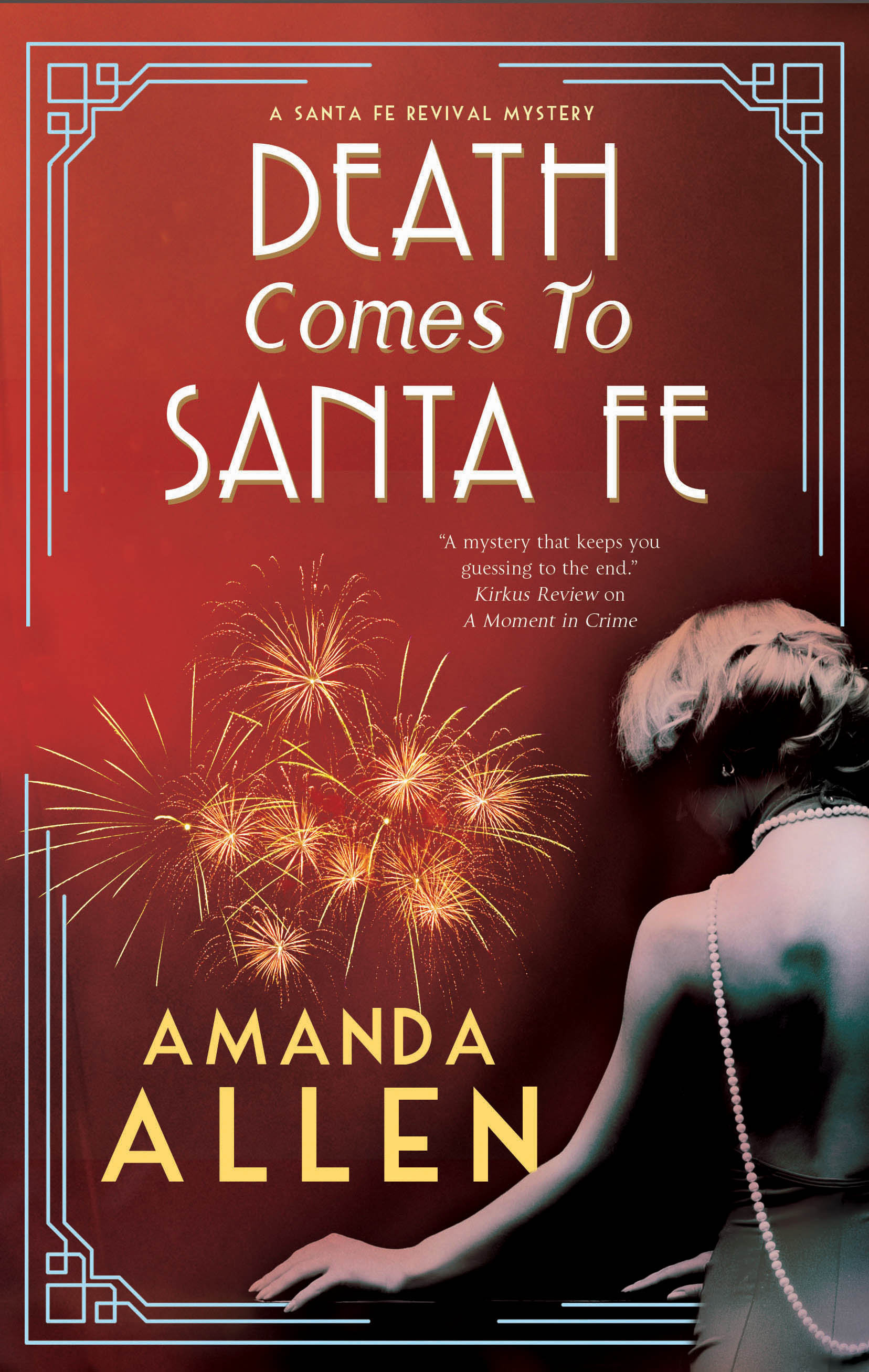
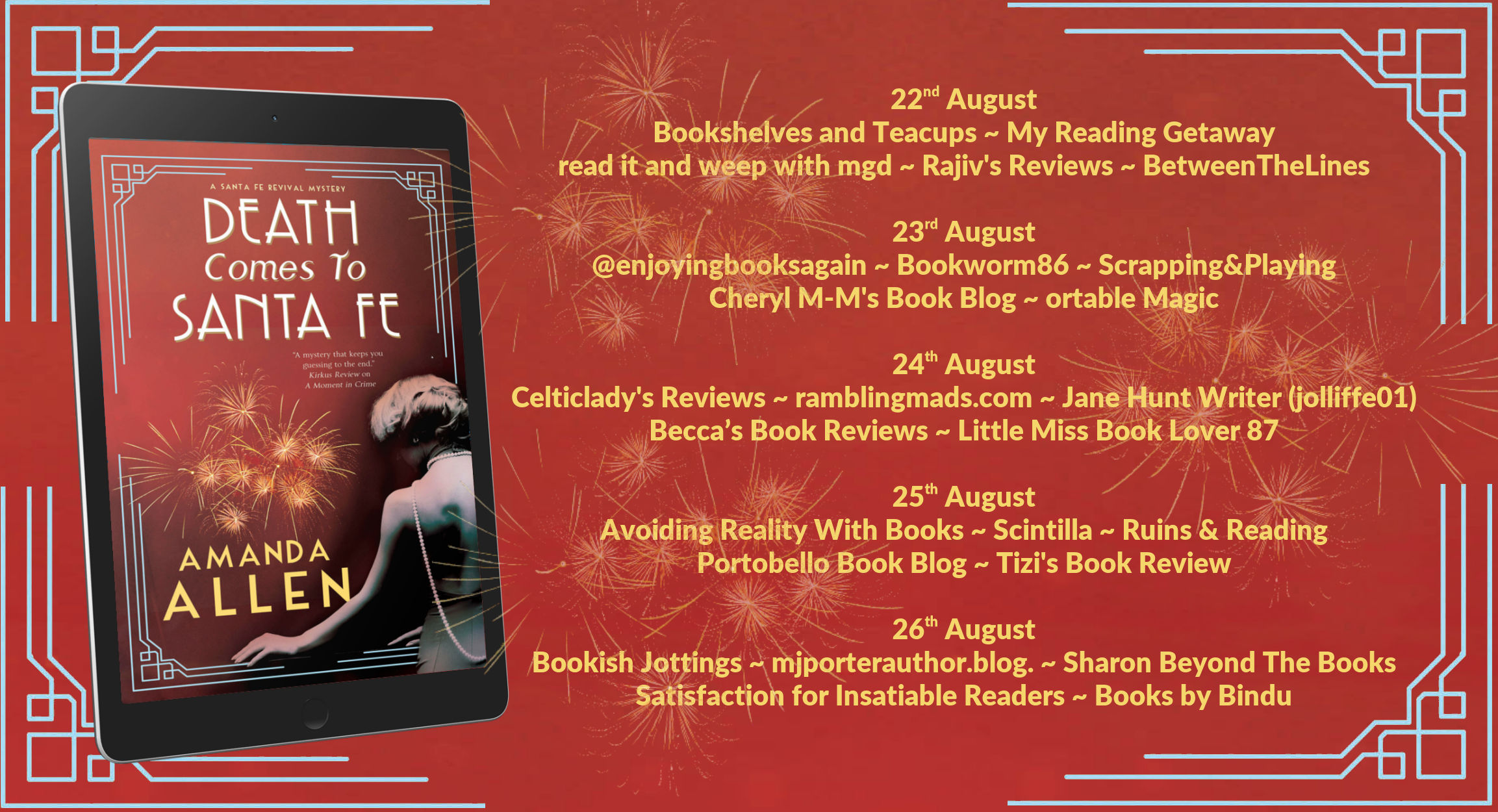
Former New York darling turned amateur sleuth Madeline Vaughn-Alwin is once again thrown into a colourful yet deadly web of secrets, lies and soirees to die for!
It’s the week of Fiesta in Santa Fe and Maddie is looking forward to enjoying the celebrations. But as ‘Old Man Gloom’ Zozobra goes up in flames, so too do Maddie’s hopes for a carefree life . . . Human remains are found in the dying embers of Zozobra, and then Maddie and her dashing beau Dr David Cole find a body washed up in the arroyo at the edge of town.
Soon identified as Ricardo Montoya, a wealthy businessman and head of one of the most affluent families in Santa Fe . . . the plot starts to thicken. While his beautiful wife Catalina and her complicated children seem less than heartbroken at his untimely demise, and with many disgruntled locals crawling out of the woodwork, Maddie is surrounded by suspects.
With the celebrations of Fiesta continuing around them, Maddie and her ‘Detection Posse’ get busy infiltrating the best parties and hobnobbing with old and new faces – but can they bring the murderer to justice before they strike again?
Death Comes to Santa Fe offers a detailed and descriptive view of life in Santa Fe in the 1920s, with its speakeasies, artists’ circle and of course, Fiesta. As the third book in a series, it took me a while to get into the novel and the characters, and it also took some time for our ‘body’ to appear. However, once the murder had actually occurred the flow of the novel improved, and the resolution of the mystery was well brought about, and it kept me guessing until the final ‘big reveal.’
Our main character, Maddie, is an interesting woman, if perhaps a bit too likely to wax lyrical about converting every view she sees into a painting. She divides her time between dancing, drinking, painting, and generally having a good time while slowly falling in love with Dr. David and determining to solve this new murder that’s rocked her town. The supporting cast is equally colourful and offers a lovely depth to the story.
A charming historical mystery stuffed with historical details.
Meet the author
Amanda wrote her first romance at the age of sixteen–a vast historical epic starring all her friends as the characters, written secretly during algebra class (and her parents wondered why math was not her strongest subject…)
She’s never since used algebra, but her books have been nominated for many awards, including the RITA Award, the Romantic Times BOOKReviews Reviewers’ Choice Award, the Booksellers Best, the National Readers Choice Award, and the Holt Medallion. She lives in Santa Fe with two rescue dogs, a wonderful husband, and far too many books and royal memorabilia collections.
When not writing or reading, she loves taking dance classes, collecting cheesy travel souvenirs, and watching the Food Network–even though she doesn’t cook.
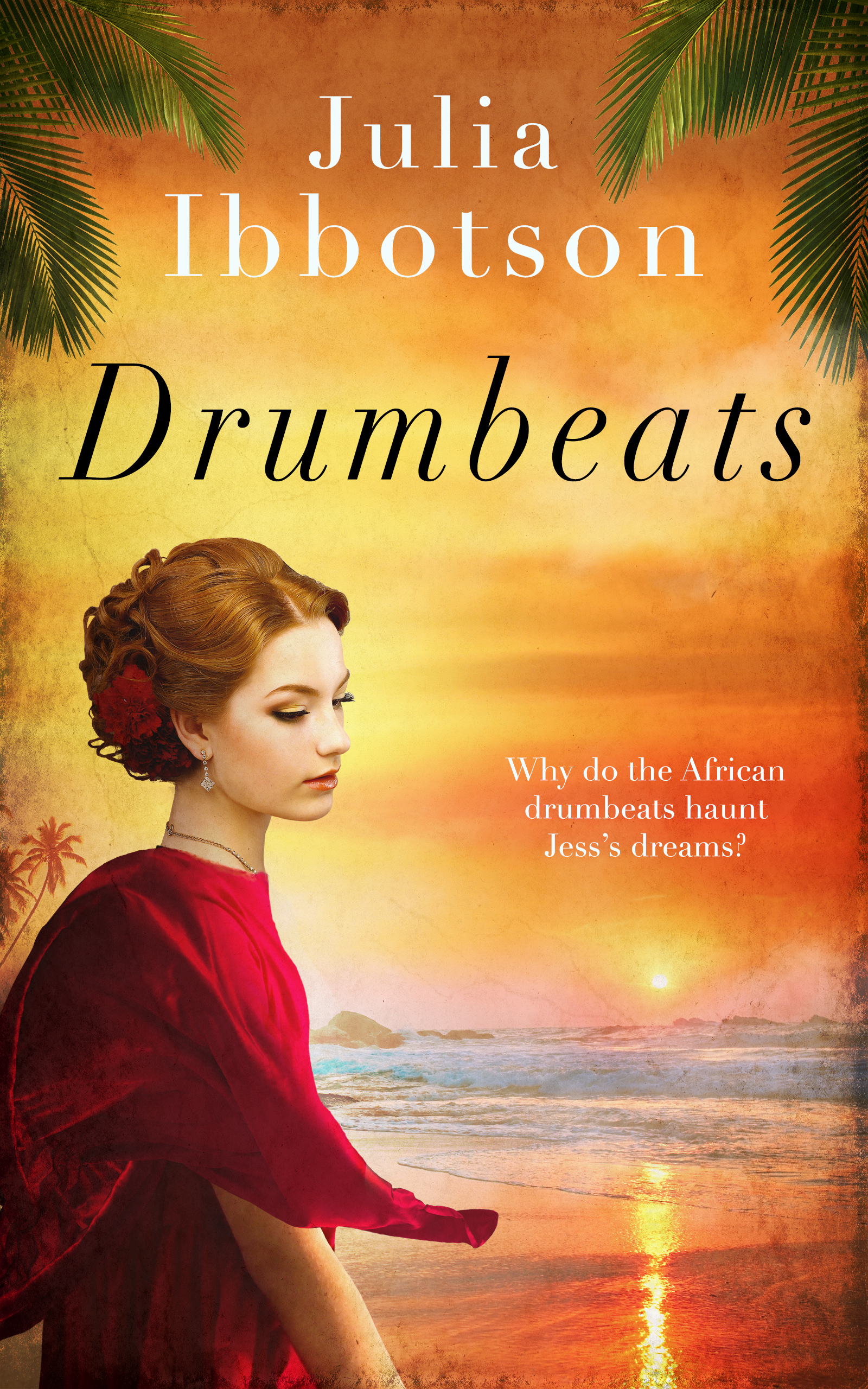
It’s 1965, and 18 year old Jess escapes her stifling English home for a gap year in Ghana, West Africa. But it’s a time of political turbulence across the region. Fighting to keep her young love who waits back in England, she’s thrown into the physical and emotional dangers of civil war, tragedy and the conflict of a disturbing new relationship. And why do the drumbeats haunt her dreams?
This is a rite of passage story which takes the reader hand in hand with Jess on her journey towards the complexities and mysteries of a disconcerting adult world.
This is the first novel in the acclaimed Drumbeats trilogy: Drumbeats, Walking in the Rain, Finding Jess.
For fans of Dinah Jefferies, Kate Morton, Rachel Hore, Jenny Ashcroft
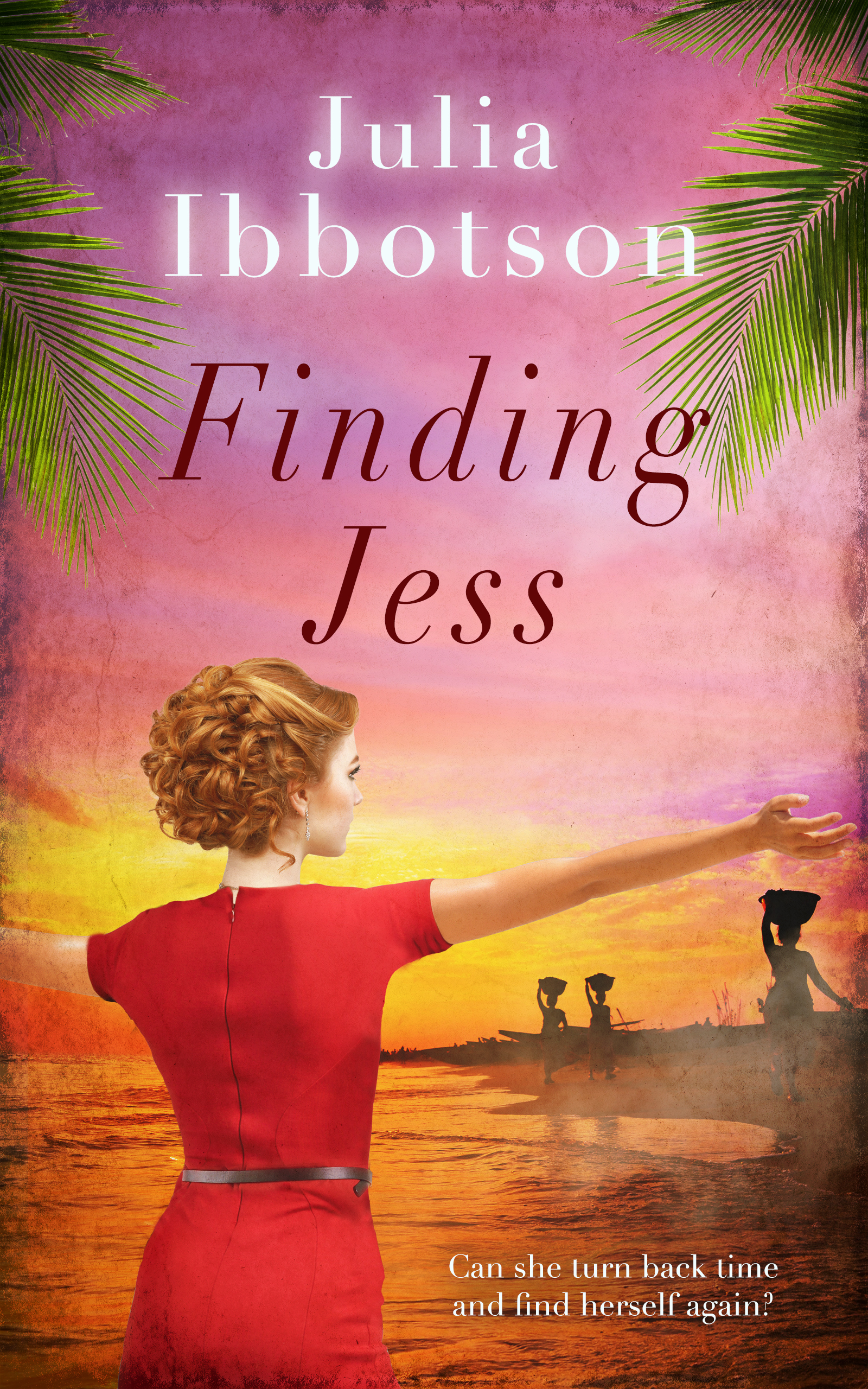
Jess happily marries the love of her life. She wants to feel safe, secure and loved. But gradually it becomes clear that her beloved husband is not the man she thought him to be.
She survived war and injury in Africa, but can she now survive the biggest challenge of her life?
On the brink of losing everything, and still haunted by her past and the Ghanaian drumbeats that haunt her life, Jess feels that she can no longer trust anyone but herself. Then she’s mysteriously sent a newspaper clipping of a temporary job in Ghana. Could this be her lifeline? Can she turn back time and find herself again? And what, exactly, will she find?
Finding Jess is a passionate study of love and betrayal – and one woman’s bid to reclaim her self-belief and trust. It’s a feel-good story of a woman’s strength and spirit rising above adversity.
Award-winning author Julia Ibbotson herself spent an exciting time in Ghana, West Africa, teaching and nursing (like Jess in her books), and always vowed to write about the country and its past. And so, the Drumbeats Trilogy was born. She’s also fascinated by history, especially by the medieval world, and concepts of time travel, and has written haunting time-slips of romance and mystery partly set in the Anglo-Saxon period. She studied English at Keele University, England, specialising in medieval language, literature and history, and has a PhD in linguistics. She wrote her first novel at age 10, but became a school teacher, then university lecturer and researcher. Her love of writing never left her and to date she’s written 9 books, with a 10th on the way. She’s a member of the Romantic Novelists Association, Society of Authors and the Historical Novel Society.
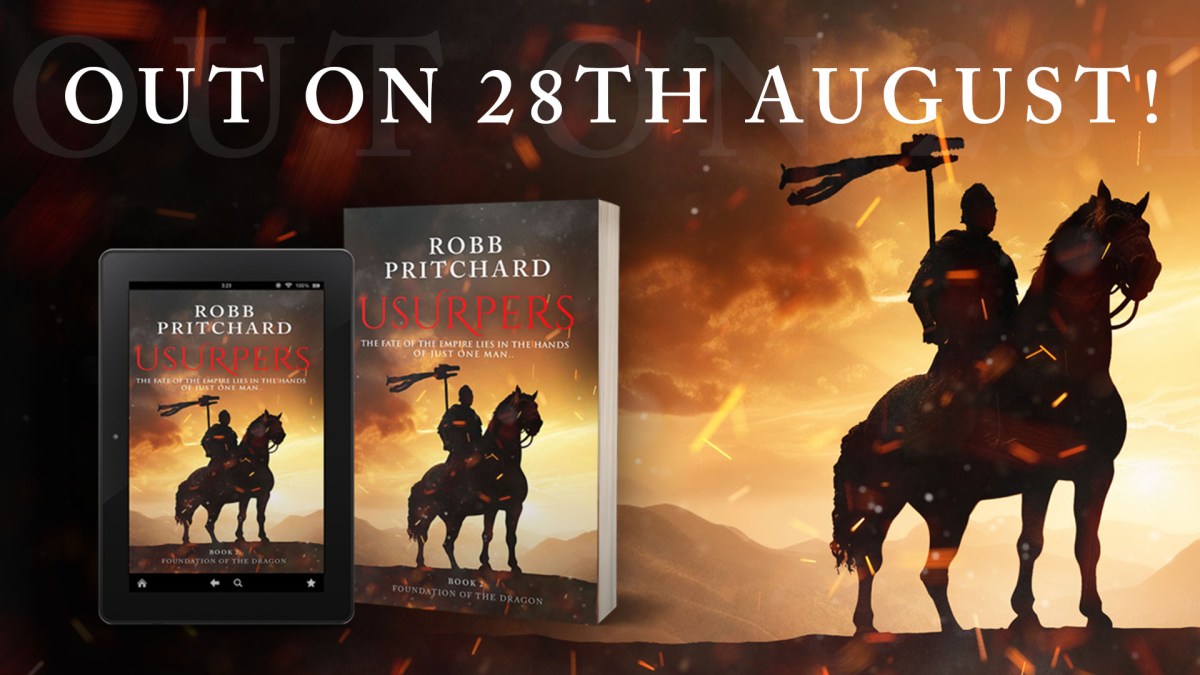
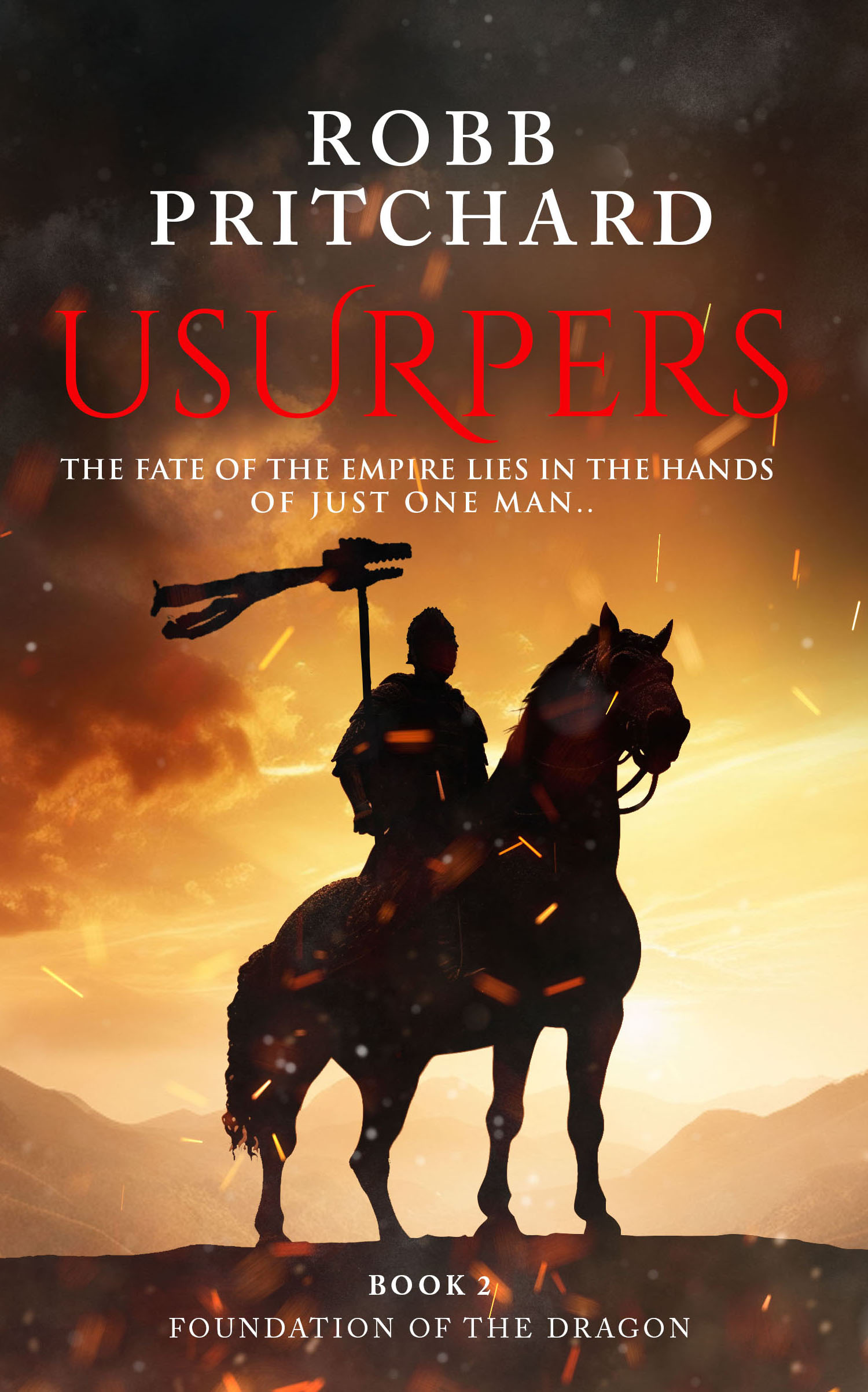
I’m really excited to share a fabulous blog post about his new book, Usurpers, from Robb Pritchard. I do love a story that uses ancient sources and historical ‘fact.’
Man and myth. Apart from King Arthur, of course, there is another man in British history who is known in myth just as much as the historical record. Immortalised as Macsen Wledig in one of Wales’ most important ancient works of literature, the Mabinogion, Magnus Maximus was also a real general, and later, a usurping emperor.
Relatively speaking, the three centuries of Roman rule in Britannia was a rather secure time for the Romanised inhabitants. After Boudica’s revolt in AD 61 the four provinces that divided the island enjoyed an extended period of peace, which it has rarely experienced in the subsequent 1700 years. But towards the end of the fourth century, the security of the social fabric was beginning to unravel. And Magnus played an important role in that.
In 367 Britannia was almost completely overrun by a horde of barbarians, a seemingly coordinated mix of Picts, Scotti and Saxons. It was only saved by the efforts of a General Theodosius, who was supported by his son and nephew, the future emperors Theodosius the Younger and Magnus Maximus. And thus, Magnus’ story in Britannia begins.
Some fifteen years later, the Elder Theodosius has been murdered by factions of either the court of Gratian, or the toddler emperor, the young son of Valentinian I. Theodosius has been raised to Eastern Emperor, but Magnus is languishing in Rome unable to use his military expertise to help the Empire recover after the crushing disaster of Adrianople, al lost battle against the Goths in which a good percentage of the Roman army was wiped out.
It wouldn’t have been much of a surprise for him to end at the end of an assassin’s blade, the same way as his uncle, but instead, he found himself promoted to the enviable position of Dux Britanniarum, in charge of bolstering the islands’ defences. Perhaps he was given the position to keep him safely away from the circles of power in the imperial cities of Rome, Trier and Milan where a former general with his reputation could be a threat, but it ended up leading to the opposite outcome. Instead of being kept busy in a distant province, he used his position to build support for himself over a couple of years, before launching a successful bid for the ‘purple’. He ruled the Western Empire from Trier for five years.
His reign, and life, ended on the 28th of August 388, ignominiously, in a roadside ditch somewhere in present-day Slovenia, but his connection to Wales still endures to this day. Several royal dynasties which came to prominence in the early medieval period claimed descent from him, finding both pride and authority in the connection to Rome. He was evidently popular enough in popular culture that people spoke about him around fires in their halls as when the Red Book of Hergest was written, some thousand years after his death, they wrote the Dream of Macsen Wledig about him.
For Book 2 of the Foundation of the Dragon series, this is the story I chose to write. But it wasn’t quite as easy as simply collecting all the known facts and weaving them onto a narrative. Magnus is equally well known, perhaps more so, from the Dream of Macsen Wledig, than as a real person, but the story bears no resemblance to the real one. With the resurgence of interest in Welsh culture and heritage, I wanted to include the Mabignion dream story.
How to connect the myth of Macsen Wledig of the Mabinogion with the factual Roman Dux Britanniarum and emperor into a coherent and believable story took quite a while, and a few failed attempts, but I think it turned out quite well. I am terribly self-critical when it comes to my writing, so a couple of weeks out from publication, I am as nervous as perhaps Magnus was as he sailed over to Gaul in 383.
Usurpers covers the period of Magnus’s life from outcast to the moment he is proclaimed as Augustus by the soldiers of Britannia. Book 3 will follow the story of his years ruling from Trier and the ill-fated war against his cousin. If all goes to plan, Book 4 will be about Vortigen in the years of upheaval during Rome’s withdrawal from Britannia, which should be out in the second half of 2024.
Usurpers, Book 2 of the Foundation of the Dragon series is out on the 28th of August. Pre-orders are available now.
I’m delighted to welcome Cindy Burkart Maynard to the blog, with an excerpt from her book, Esperanza’s Way.
Over the following months, the young woman and the old Master worked side by side, trying every treatment they could find. They rifled through Master Cohen’s books, desperate to fend off the invader overtaking Johanna’s body. They dressed the lumps with damp cloths infused with black nightshade. Esperanza created a poultice of nettle, mustard seed and moldy bread and laid it against the invading tumors.
Among his books, Master Cohen found an ancient Egyptian remedy – an ointment that combined bull bile, fly droppings, and ochre. They prepared gallons of marjoram tea and forced her to choke it down. They spooned a powerful mixture of heartsease, marigold, and yarrow into her mouth. Nothing worked. By the time the courtyard flowers drooped in their pots, and cold winds stripped the trees of their leaves Johanna’s condition had worsened to a critical stage. She thrashed back and forth on her pallet, insensible to anything but the pain that enveloped her.
“Please, husband,” she rasped. “Please end this torment. You must have something to release me from this agony.” Looking toward Esperanza standing at her bedside she begged. “Esperanza, you once killed a woman with belladonna. If you love me at all, please, please do the same for me.”
Esperanza lifted her eyes to Master Cohen’s. He squeezed his eyes closed and nodded almost imperceptibly, giving her tacit permission to end Johanna’s suffering.
Esperanza’s blood turned to ice in her veins.
Here’s the blurb
Motivated by the memory of her mother dying in her arms, Esperanza resolves that she will one day walk the halls of the Scola Medica at Salerno and train to become a healer. Fate brought Amika, a talented herbalist, into her life and helped Esperanza take her first steps toward gaining the knowledge that would fulfill her dream. Unfortunately, a tragic accident forced Esperanza to flee Amika’s home. Her journey toward finding the path to success is littered with stumbling blocks, some more difficult to avoid than she expected.
Cindy Burkart Maynard is passionate about history, and the natural world, a passion that adds rich detail and context to her historical fiction novels. Her characters come to life on the page as they portray what it was like to live in another time and place. She weaves compelling, dramatic stories based on strong characters facing daunting challenges. She has co-authored two nonfiction works about the Colorado Plateau and the Desert Southwest and contributed articles to Images and Colorado Life Magazines. She has been a Volunteer Naturalist for Boulder County for more than twenty years, and served as a Docent at the Sonora Arizona Desert Museum in Tucson, AZ.
Awards: Colorado Authors League Award Winner for Western Literature
Women Writing the West Award Finalist WILLA Literary Award finalist for soft cover fiction.
Readers’ Favorite Five Star Author Winner of the Marie M. Irvine award for Literary Excellence
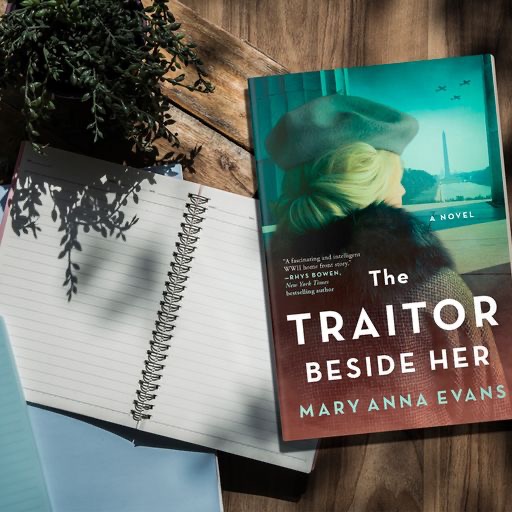
I’m delighted to welcome Mary Anna Evans to the blog with her new book, The Traitor Beside Her and a blog post about the book’s setting.
When You Need to Know A Whole Lot About Your Nation’s Capital, But What You Really Need to Know Is What it Was Like in 1944….
It’s no spoiler, based on my book’s cover, to say that The Traitor Beside Her is set in and around Washington, DC. Based on the woman’s clothing and the three possibly military-ish planes in the sky, and also based on the word “traitor,” it would be a safe bet for you to guess that it is set during World War II. And you’d be right!
Much of the action in The Traitor Beside Her takes place across the Potomac River from Washington, DC, in Arlington, Virginia, where a code breaking operation being done at a place called Arlington Hall paralleled the more widely known work being done across the Atlantic at Bletchley Park. However, my protagonist, Justine Byrne—she of the fetching hat and coat on the book cover—crosses the Potomac twice during the book, both times in the company of a man who is trying to woo her.
One of those dates is a traditional dinner date, during which Justine is wined and dined, all while packing heat in her white satin evening bag. But that is a story for another day. At the moment, I’m more focused on a more humble, everyday date, the kind of date you might go on during wartime when money was short and there was no sugar to go in the ice cream soda that a 1940s-era suitor might ordinarily have bought for a girl he was sweet on. For this humble date, Justine and the young man take an ordinary walk in an extraordinary setting.
Justine lives in a government-owned dormitory near where the Arlington Bridge crosses the Potomac, so she and her date take a short walk to the city, with the Lincoln Memorial as imposing sight in front of them. To write this scene, I had to first make sure that the Arlington Bridge was even there in 1944 (Spoiler Alert 1—it was), and that you could walk across it (Spoiler Alert 2—you could), and that it was lit if you needed to walk back after dark (Spoiler Alert 3—there were indeed lights).
The Lincoln Memorial was there, looking much like it does now, only a lot newer. The same could be said of the Lincoln Memorial Reflecting Pool, except there was a lot less pavement around it. These days, the pool is ringed with sidewalks, but not back then. There was just a narrow rim of pavement, presumably stone, at the edge of the pool. If Justine and her date want to walk around it, and they do, then they’ll be walking in the grass.
I thought this was all interesting information that was useful as the kind of background information that makes a historical novel feel real. But then I realized that it was also information that was important to my story. One of my characters uses a wheelchair. He can and absolutely does make his way through grass when he needs to do so. However, the lack of sidewalks making the Reflecting Pool easily accessible to him led me to another question. Was there a way to the pool in 1944 that didn’t involve a flight of stairs?
Well, the historical pictures that I could find didn’t tell me, and I still don’t know, but I acknowledged in the text that there were surely accessibility difficulties for that character in 1944, and I made sure that I did not put Jerry in a spot where he could not have been in that day and time. (Actually, I should say that I did not put him in a spot where he couldn’t easily have been in that day and time. Anybody who reads the climactic scene will see that Jerry always finds a way to do what needs doing.)
But if I told you what kind of trouble Jerry needed to get into in the climactic scene, I would need to give you Spoiler Alert 4, so I think I shall quit while I’m ahead.
Mary Anna
Thank you so much for sharing such a fabulous blog post.
Here’s the blurb
“Evans’s characters are vividly drawn, elevating this story and its revelations about women’s little-celebrated contributions to the war effort.”—Washington Post
“An exciting read with historical tidbits, a hint of danger, and a touch of romance.”—Kirkus Reviews
The Traitor Beside Heris an intricately plotted WWII espionage novel weaving together mystery, action, friendship, and a hint of romance perfect for fans ofThe Rose CodeandCode Name Helene.
Justine Byrne can’t trust the people working beside her. Arlington Hall, a former women’s college in Virginia has been taken over by the United States Army where hundreds of men and women work to decode countless pieces of communication coming from the Axis powers.
Justine works among them, handling the most sensitive secrets of World War II—but she isn’t there to decipher German codes—she’s there to find a traitor.
Justine keeps her guard up and her ears open, confiding only in her best friend, Georgette, a fluent speaker of Choctaw who is training to work as a code talker. Justine tries to befriend each suspect, believing that the key to finding the spy lies not in cryptography but in understanding how code breakers tick. When young women begin to go missing at Arlington Hall, her deadline for unraveling the web of secrets becomes urgent and one thing remains clear: a single secret in enemy hands could end thousands of lives.
“A fascinating and intelligent WWII home front story.” —Rhys Bowen,New York Timesbestselling author forThe Physicists’ Daughter
Mary Anna Evans is an award-winning author, a writing professor, and she holds degrees in physics and engineering, a background that, as it turns out, is ideal for writing her Justine Byrne series, which began withThe Physicists’ Daughter and continues with her new book, The Traitor Beside Her. She describes Justine as “a little bit Rosie-the-Riveter and a little bit Bletchley Park codebreaker.”
Mary Anna’s crime fiction has earned recognition that includes two Oklahoma Book Awards, the Will Rogers Medallion Awards Gold Medal, and the Benjamin Franklin Award, and she co-edited the Edgar-nominated Bloomsbury Handbook to Agatha Christie.
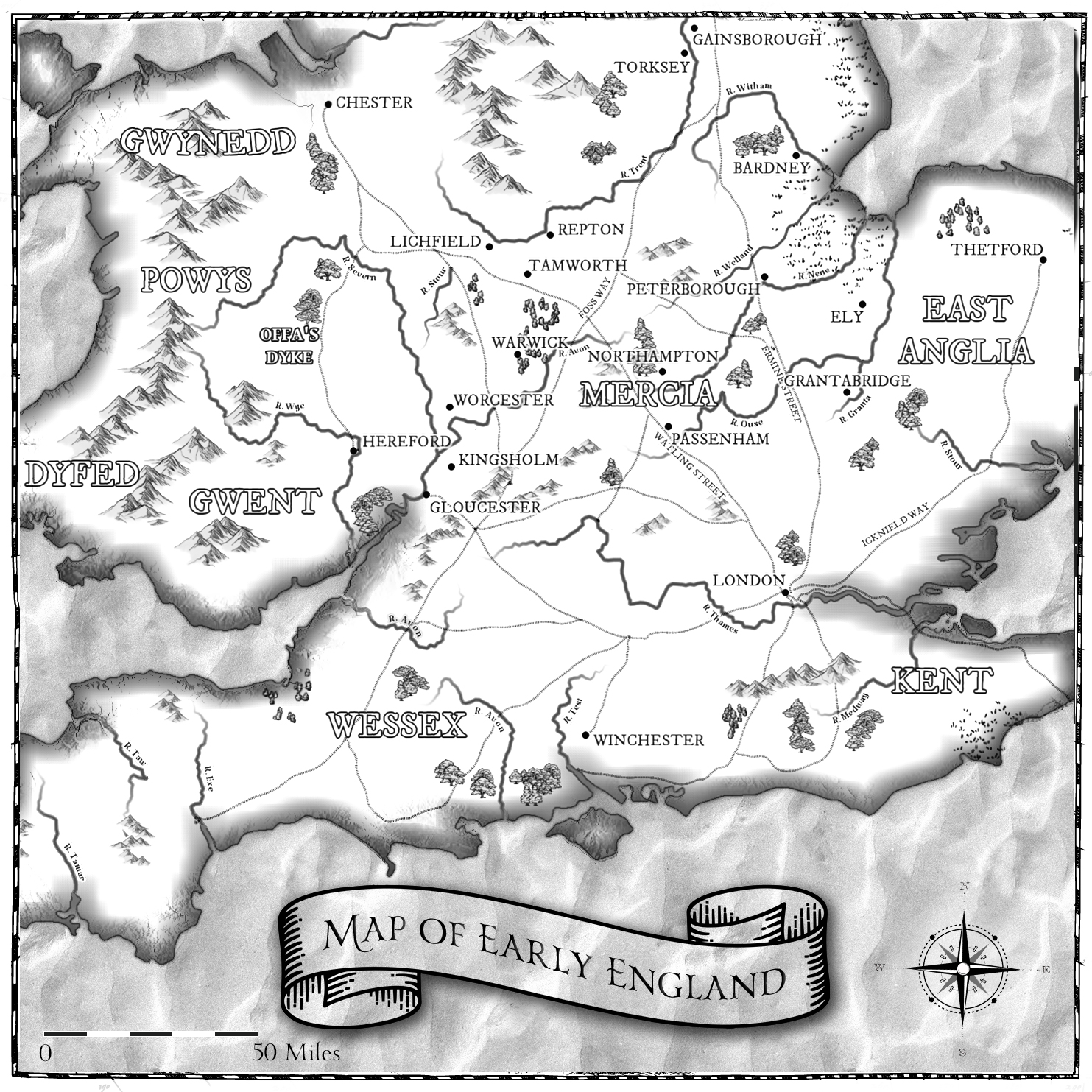
I write about the Saxon kingdom of Mercia a lot. I thought it had been entirely unintentional until now. But has it?
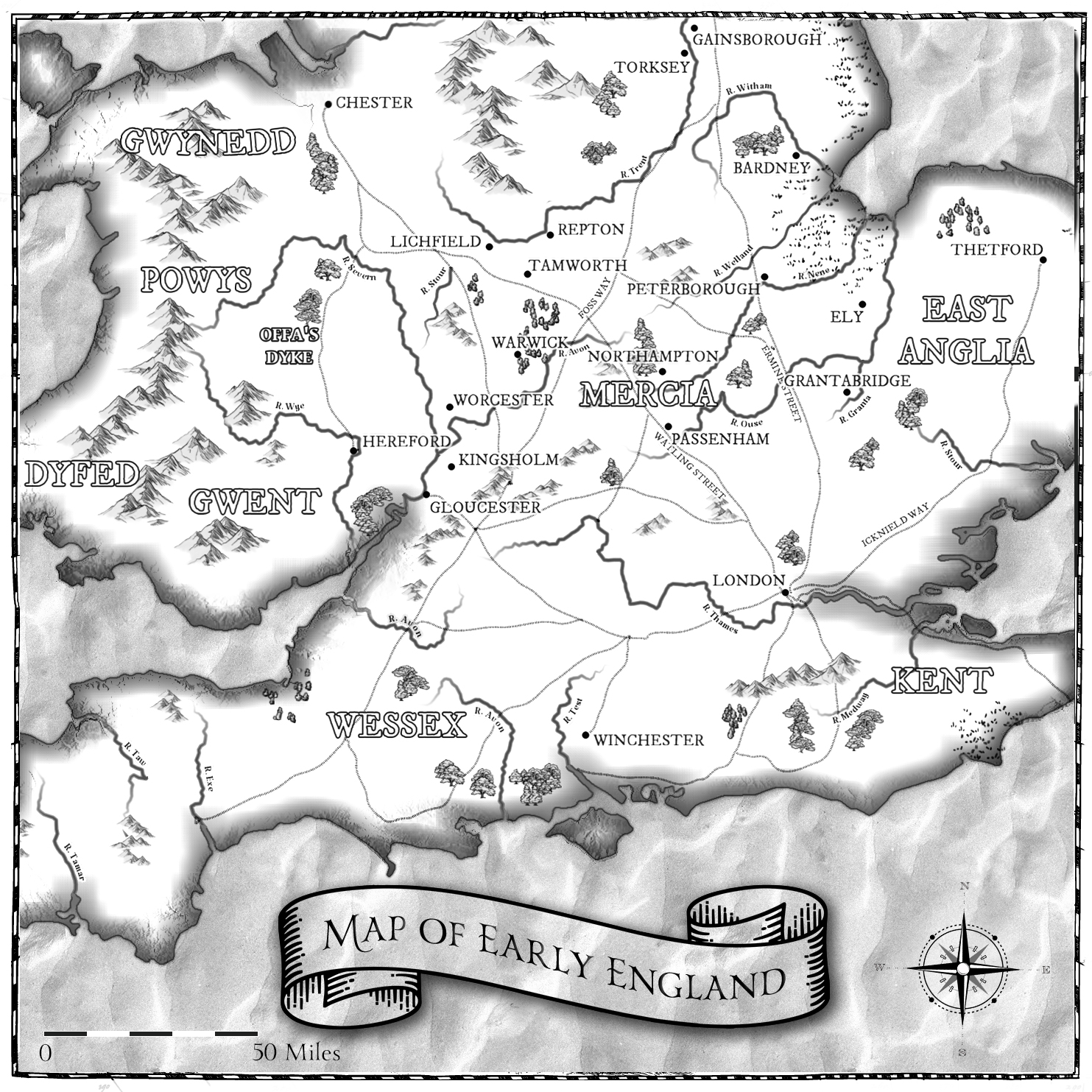
I grew up in an area that would one have been in Mercia. From a seemingly young age, I knew Mercia had once been a kingdom in its own right. I knew I lived in the centre of what had once been a mighty kingdom. The local church’s name, St Chad’s, was a dedication to a priest who converted the Mercians to Christianity. Tamworth, the next city along, was also a capital of Mercia (and where much of the Son of Mercia is set). Repton, a little further afield, a Mercian royal mausoleum, so when I went to university and began to study the period, I was, of course, drawn to that kingdom, to Mercia and to all it could offer me.
The Early English kingdom of Mercia is unfortunate in having no extant records surviving from the height of its power and reach. Northumbria has the works of the Venerable Bede and his Ecclesiastical History of the English People. Wessex has the Anglo-Saxon Chronicle (ASC) – a collection of nine extant ‘versions’ of the same chronicle but with some later regional bias. Mercia has none of these things – although one of the ASC’s may be more Mercian in tone than others. Mercia also has a collection of surviving charters, and also many, many sculptures, that can be dated to this era.
It’s believed that any Mercian annalistic records that existed were destroyed by the Raider Viking attacks that gained in intensity throughout the ninth century. This is highly possible. It means that we never truly ‘hear’ the story of Mercia. We hear a Northumbrian view of Mercia. And we hear a Wessex view on Mercia. What of Mercia itself? We also hear views of Mercia from Alcuin and his collection of letters from the later eighth century.
Students of Early England are taught very much in a set chronological pattern of the Golden Age of Northumbria in the seventh century, the Supremacy of Mercia in the eighth and then the slow but seemingly unstoppable expansion of Wessex to claim all of England under one kingship so that by the time we reach 1066, England as we know it today, exists and is ruled by one king. This glosses over the fact that these kingdoms all existed simultaneously. They all fought and argued amongst one another. They all had ambitions to rule much more of modern England than their kingdom borders necessitated.
And, of course, the joy of redressing the balance a little is never far from my mind. I aim to make sure that people know of Mercia and don’t just think of its growth, supremacy and decline, as though the kingdoms of Northumbria and Wessex were more to blame for what befell Mercia than its own kings and inhabitants.
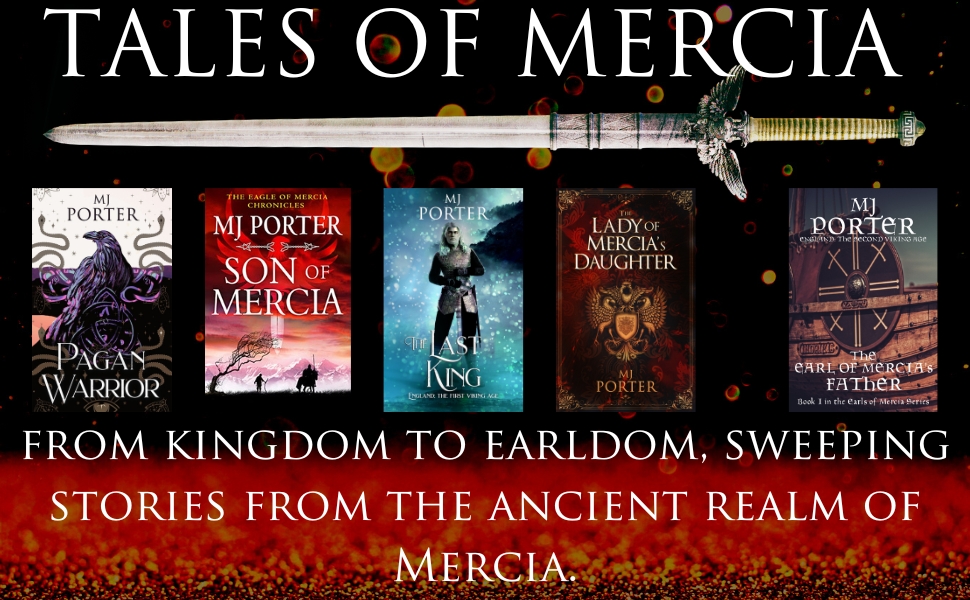
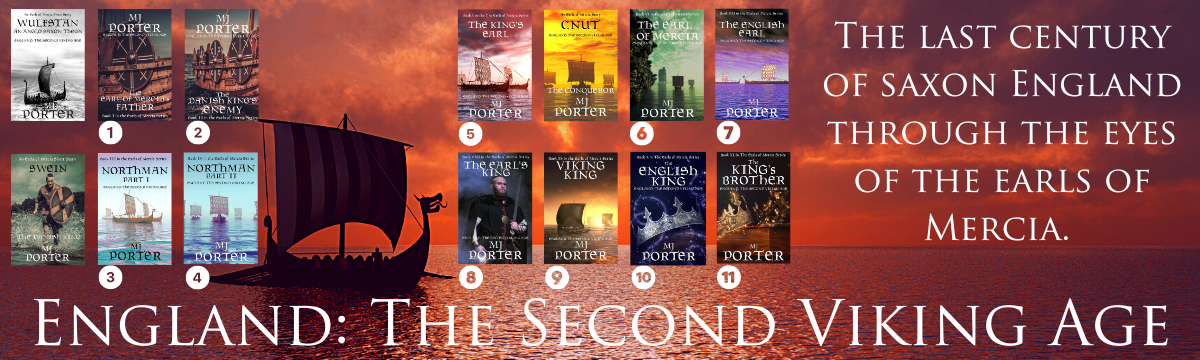
And so Mercia? What of Mercia during the Golden Age of Northumbria (the Gods and Kings trilogy)? What of Mercia through the decline of its supremacy (the Eagle of Mercia Chronicles), through the Viking Raider attacks and the growth of Wessex (the Mercian Ninth Century), after the death of Lady Æthelflæd (the Lady of Mercia’s Daughter) and what happened to Mercia during the final one hundred years of Saxon England (The Earls of Mercia series)?
What indeed? It’s not a small task, but it’s one I’ve set myself. And I’m far from finished with it. I have plans for more new titles, in time.
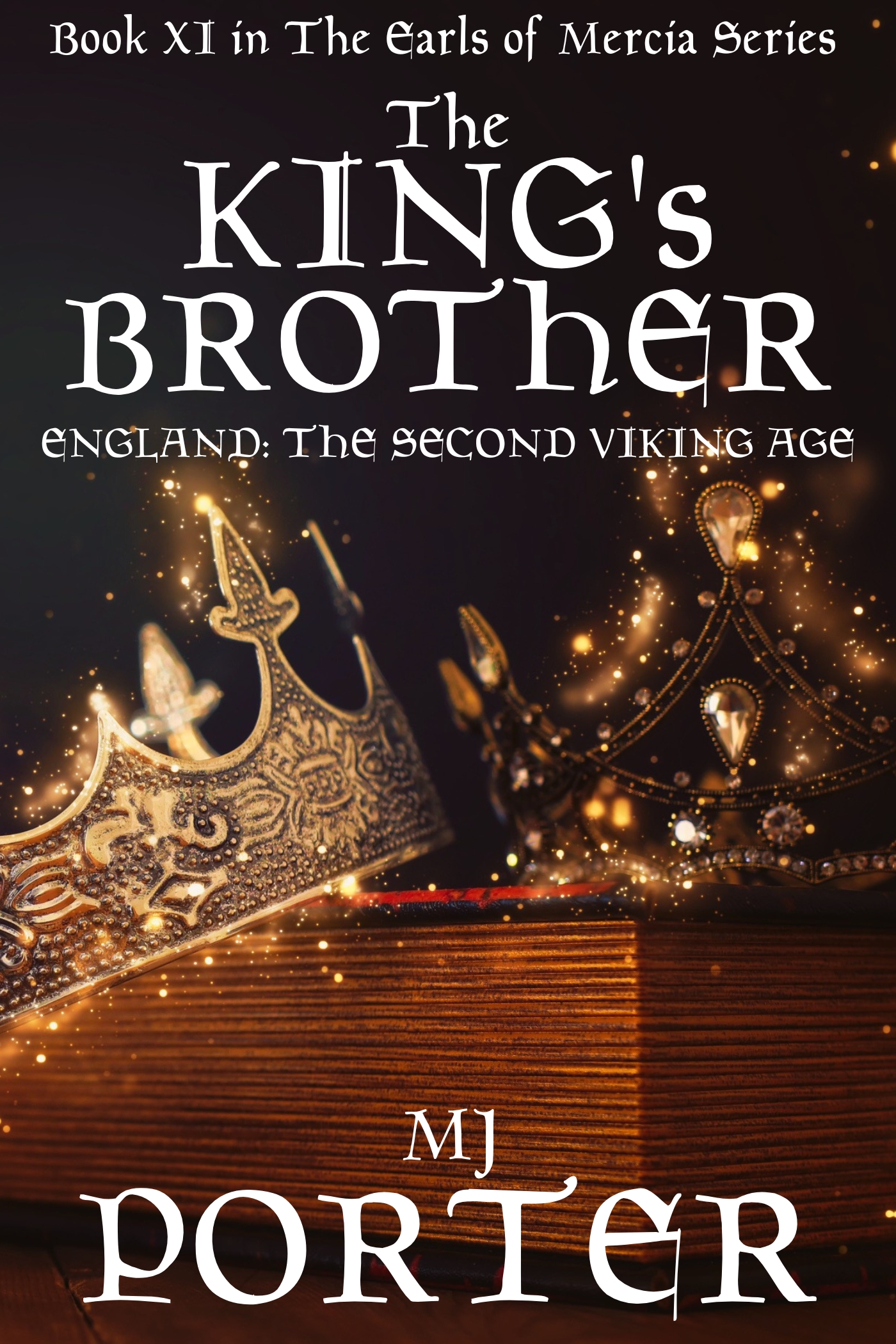
King Edward has married into the powerful House of Godwine, alongside making his wife’s brother, Sweyn Godwineson, Earl of Hereford. The House of Leofwine has received nothing, despite their continuing loyalty to the new king.
With the kingdom threatened by the pretensions of King Magnus of Norway, seeking to make good on the claim that he and Harthacnut agreed to inherit each other’s kingdoms should the other die first, King Edward is determined to build a ship army to counter anything his enemy might attempt.
But while the king’s eye is on external enemies, there are those closer to home determined to cause the king problems, most notably Sweyn Godwineson, who allies with the Welsh king responsible for the death of Eadwine Leofwineson, and then abducts the abbess of Leominster, refusing to give her up. With his sister as the king’s wife, Sweyn believes he can’t be touched until the church acts against him and he’s excommunicated and outlawed.
And Sweyn Godwineson hasn’t finished causing his king problems. When he returns to England without the king’s permission, desperate to recover his landed wealth and possessions, Sweyn finds more than just the House of Leofwine determined against his reinstatement.
Desperate men will take desperate actions, even the king’s brother.
‘The king has gifted more land to his wife,’ Lady Godgifu hissed to Earl Leofric as she strode from one end of their private quarters to another. He winced to hear the fury in her words.
‘She is his wife. It’s to be expected. He does no more than gift her the lands his mother held when she was queen.’
‘Is that right?’ his wife rounded on him, coming to an abrupt halt and rearing up before him. ‘It is merely the lands due to the queen, is it, just as the earls have lands due to them?’ Once more, Leofric grimaced to hear the fury in his wife’s words.
‘It is right, yes, and I’ve told you of the king’s reasons for making this marriage.’
‘Yes, you did, and with them, you implied that it would be a union worth nothing to the bloody Godwine family, and yet now, they have more landed possessions to laud over us and the other earls and their families.’
Leofric watched his wife, noting her flushed cheeks and how her lips were pursed as she once more paced from one end of the room to the other. All could hear the sound of her shoes over the wooden floorboards. All would hear, but whether they knew what it meant remained to be seen.
‘The king does us no disservice.’
‘And neither does he reward us for our loyalty,’ and here, his wife stabbed her chest forcefully with her finger. ‘Our loyalty and our desire to keep England united.’
‘The king must be seen to be caring towards his wife and any future children she must think to bear for him.’
‘But there are to be no children,’ Lady Godgifu all but shrieked, and now her face had bleached of all colour. ‘You’ve assured me,’ she almost spat.
‘And the king assured me. My dear, really, you must understand that this game the king is playing isn’t going to be concluded in a matter of months. He must be shown to be thinking of his wife’s future.’
‘Then he needs to do something to rein in that fat old Lady Gytha.’
Leofric recoiled at his wife’s harsh words, yet they were true. No one would deny them. Lady Gytha and her many, many years of childbearing had ensured the Godwine clan was huge. The House of Leofric was the very opposite, although his son, Ælfgar, was doing his best, alongside his wife, to ensure that the lack of children born to his father and mother was rectified in the next generation. Already they were the parents to three sons and a daughter.
‘What would you have me do?’ Earl Leofric capitulated. ‘The king can’t cast his wife aside so soon after the marriage. Neither can he purposefully withhold lands normally in the possession of the woman who is queen. Should he even attempt to do so, Earl Godwine will raise a stink at the witan.’
‘The king shouldn’t be fearful of that man,’ Godgifu sneered.
‘I don’t for one moment think he’s fearful of Earl Godwine. As I said, to ensure the earl and his family don’t suspect the king, he must do everything as he would, as though he knew there would be an heir at some point in the future.’
‘I don’t like it,’ Lady Godgifu finally swept onto the chair beside Leofric’s. ‘I don’t like it at all.’
‘And why, this morning, of them all, has it riled so much?’ Earl Leofric risked her wrath but knew the question needed asking.
‘Lady Gytha,’ Lady Godgifu began.
‘What of Lady Gytha?’ Leofric prodded when nothing further was forthcoming.
‘She, she,’ and here Lady Godgifu took a steadying breath and actually looked at her husband without the fury in her eyes. ‘She’s determined I’m only too aware of what her daughter has accomplished. She’s ensured word reached me of the queen’s latest acquisitions at Wantage and Lambourn.’
‘And they came as a surprise to you?’ Leofric felt safer now that Godgifu’s flash of fury had dissipated.
‘No, not really. I knew it would happen. It’s just the way that terrible woman has of making sure all know about her family and its wealth. She has no shame.’
Leofric found a grin on his face and chuckled gently.
‘Why should she be any different to her husband? He’s shameless in his grasping ways. He shows no remorse for those he tramples along the way. He’s almost without morals.’
‘It’s unseemly in a woman,’ Godgifu harrumphed unhappily, and Leofric laughed all the more.
‘So you wouldn’t do it given half a chance?’
‘I most certainly would not. There’s no need to gloat about my landed interests to anyone. I’m the earl of Mercia’s wife. I must have landed wealth, but I don’t need to vaunt about it.’ Godgifu settled herself, perching, Leofric couldn’t help thinking, like a hen over her egg. Not that he dared say that out loud.
‘She’s proud of her daughter. Think how foolish she’ll look when there’s no child and her grandson isn’t the next king of England.’
Lady Godgifu lapsed to silence, and then a slow grin spread over her face, returning to its normal pale colour. ‘It’ll be interesting to hear the excuses when they start in September,’ she murmured. ‘Provided the king hasn’t played us for fools. I don’t wish to have to contend with that family having a queen amongst them as well as a future king.’
Leofric nodded, pleased to have placated his wife, for all worry ran through his chest. The king had assured him that it was a means of curtailing the growing power of the House of Godwine, but Leofric couldn’t help thinking that his king was a wily man. Maybe he was merely placating the House of Leofwine for now. He gnawed on his lip and worked to restore his composure.
Can the Norse and the Scots exact their revenge over the mighty King Athelstan of the English?
AD937
After the slaughter field of Brunanburh, a defeated Olaf Gothfrithson of the Dublin Norse and Constantin of the Scots narrowly escaped with their lives. In their kingdoms, failure has left them demoralised and weak.
Olaf licks his wounds in Dublin, whilst Constantin and the Welsh kingdoms who defied King Athelstan, are once more forced to bend the knee. As Athelstan’s reputation grows stronger day by day, their need to exact revenge on the overmighty and triumphant Athelstan has never been greater.
Olaf sets his sights on reclaiming the lost kingdom of Jorvik only for tragedy to strike at the heart of England and a reluctant new King, Edmund steps into the fray.
While England mourns the death of their warrior king, her enemies gather on her borders and England stands alone against the might of the Norse, Welsh and Scots.
Can the new king be victorious and banish her enemies once and for all or will England, and its king lose all that’s been gained and succumb to a new pretender?
There’s no cover yet but I will share once I have it:)
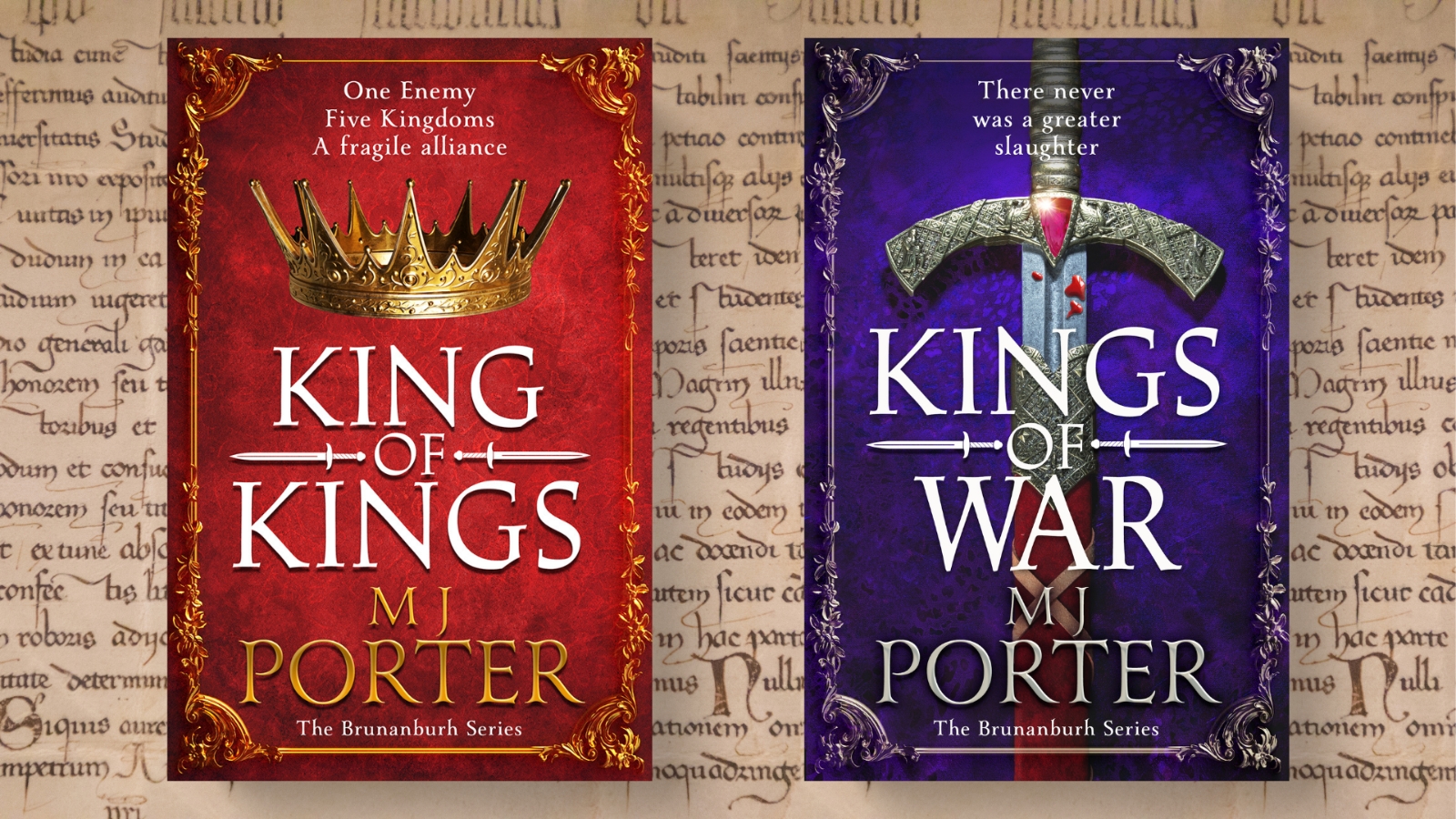
If you’ve not yet grabbed King of Kings and Kings of War then they are currently just 99p/£1.39 on Amazon UK and the equivalent worldwide. You can read about the series on my Brunanburh page.
I’m also asking my readers if they’d like to meet me virtually via a Zoom chat? If you think you might, then please complete the Google form. It’s just to see what readers would be interested in, their availability and timezones:) Nothing is set in stone yet.




















 MJ Porter