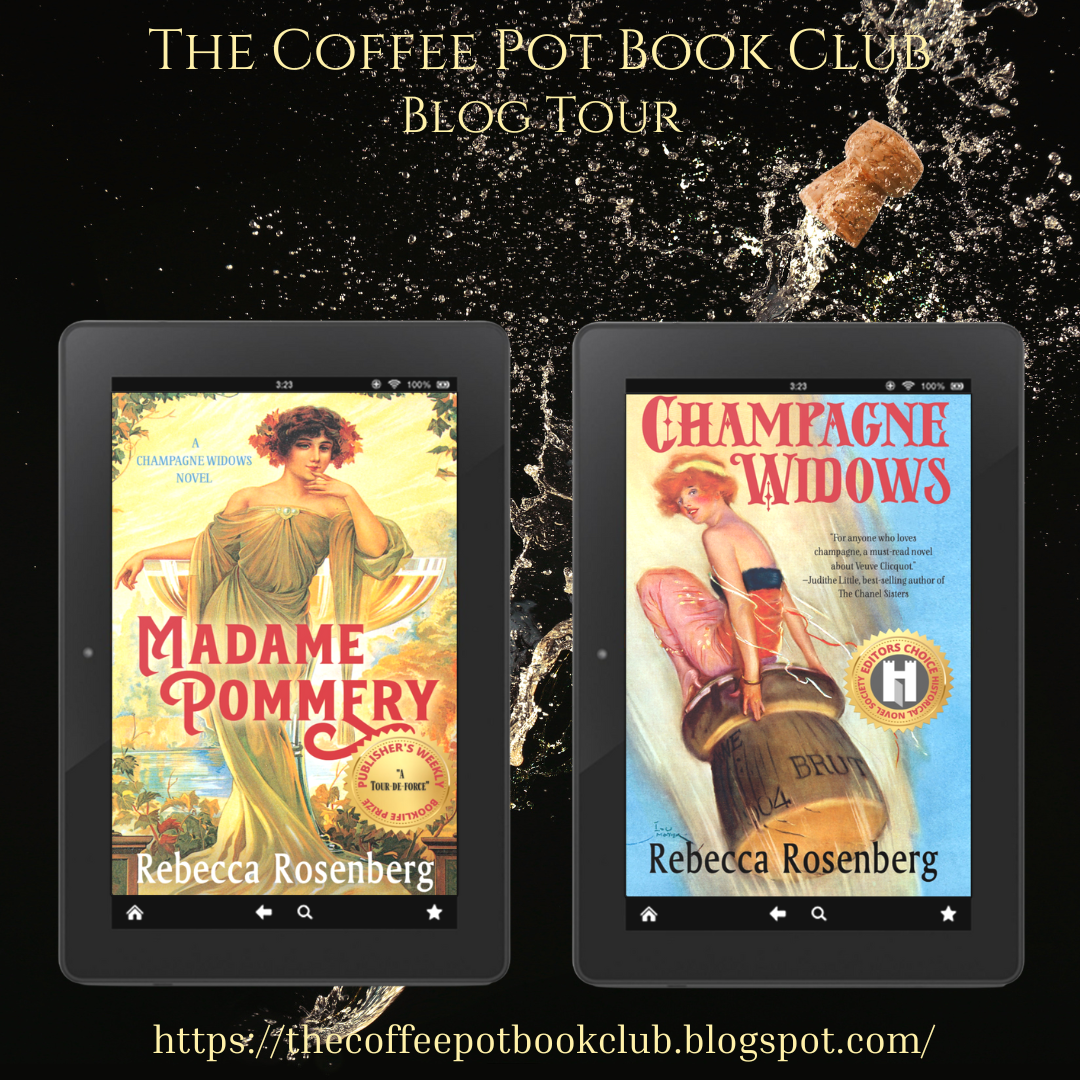

I’m delighted to welcome Julia Ibbotson to the blog with her book, Drumbeats #HistoricalFiction #Romance #Mystery #WomensFiction #BlogTour #TheCoffeePotBookClub #CPBC

I’m delighted to welcome Julia Ibbotson to the blog with her book, Drumbeats

Here’s the blurb

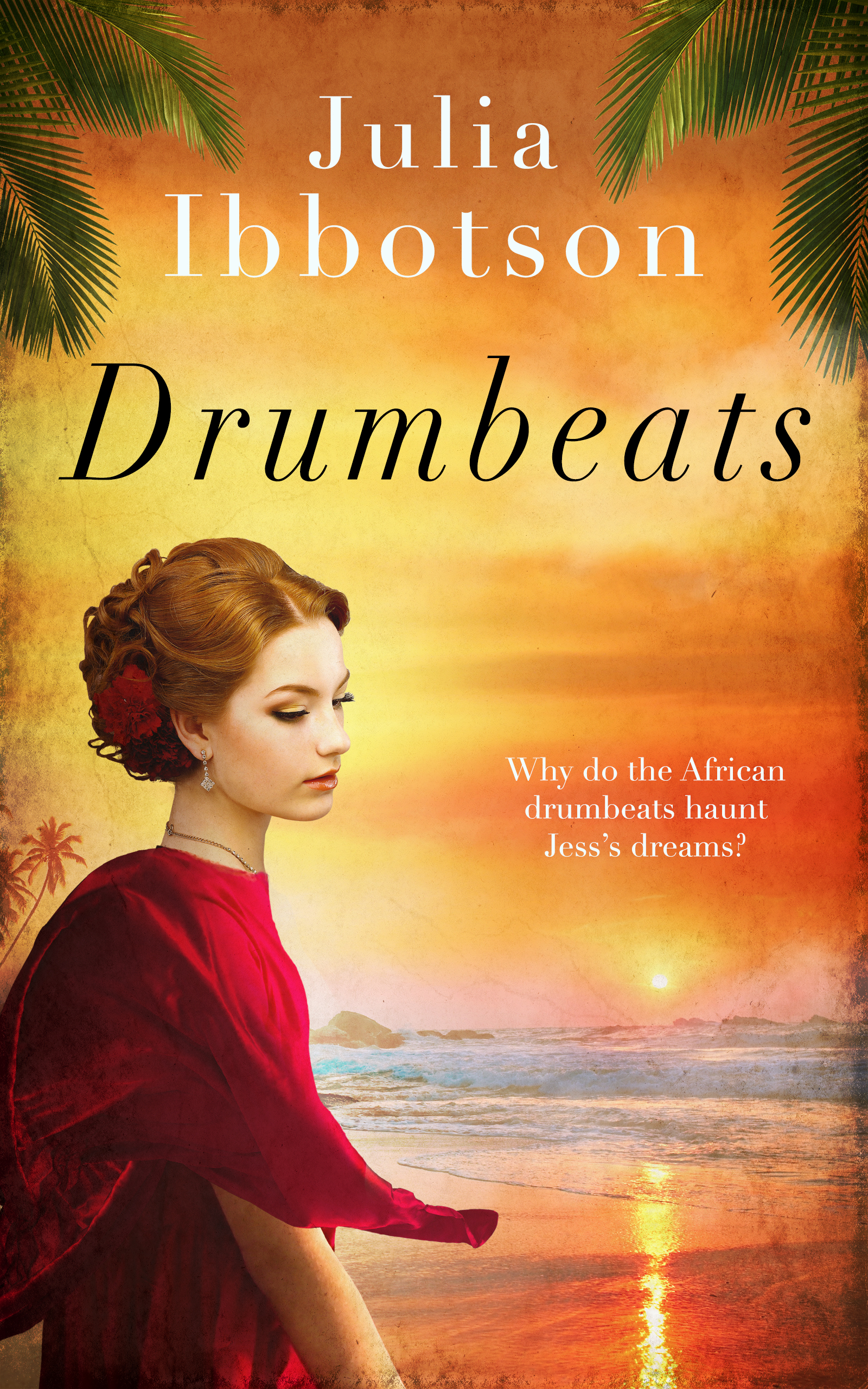
It’s 1965, and 18 year old Jess escapes her stifling English home for a gap year in Ghana, West Africa. But it’s a time of political turbulence across the region. Fighting to keep her young love who waits back in England, she’s thrown into the physical and emotional dangers of civil war, tragedy and the conflict of a disturbing new relationship. And why do the drumbeats haunt her dreams?

This is a rite of passage story which takes the reader hand in hand with Jess on her journey towards the complexities and mysteries of a disconcerting adult world.

This is the first novel in the acclaimed Drumbeats trilogy: DrumbeatsWalking in the RainFinding Jess.

For fans of Dinah Jefferies, Kate Morton, Rachel Hore, Jenny Ashcroft

Buy Links

This title is available to read on #KindleUnlimited.

Universal Link: https://books2read.com/Drumbeats1     

Meet the author

Award-winning author Julia Ibbotson herself spent an exciting time in Ghana, West Africa, teaching and nursing (like Jess in her books), and always vowed to write about the country and its past. And so, the Drumbeats Trilogy was born. She’s also fascinated by history, especially by the medieval world, and concepts of time travel, and has written haunting time-slips of romance and mystery partly set in the Anglo-Saxon period. 

She studied English at Keele University, England, specialising in medieval language, literature and history, and has a PhD in linguistics. She wrote her first novel at age 10, but became a school teacher, then university lecturer and researcher. Her love of writing never left her and to date she’s written 9 books, with a 10th on the way. 

Julia is a member of the Romantic Novelists Association, Society of Authors and the Historical Novel Society.

Connect with the author

Website:          Twitter:           

Facebook:       LinkedIn:        Instagram:       

Pinterest:         Amazon Author Page:             Goodreads:      
Follow the Drumbeats blog tour with the Coffee Pot Book Club

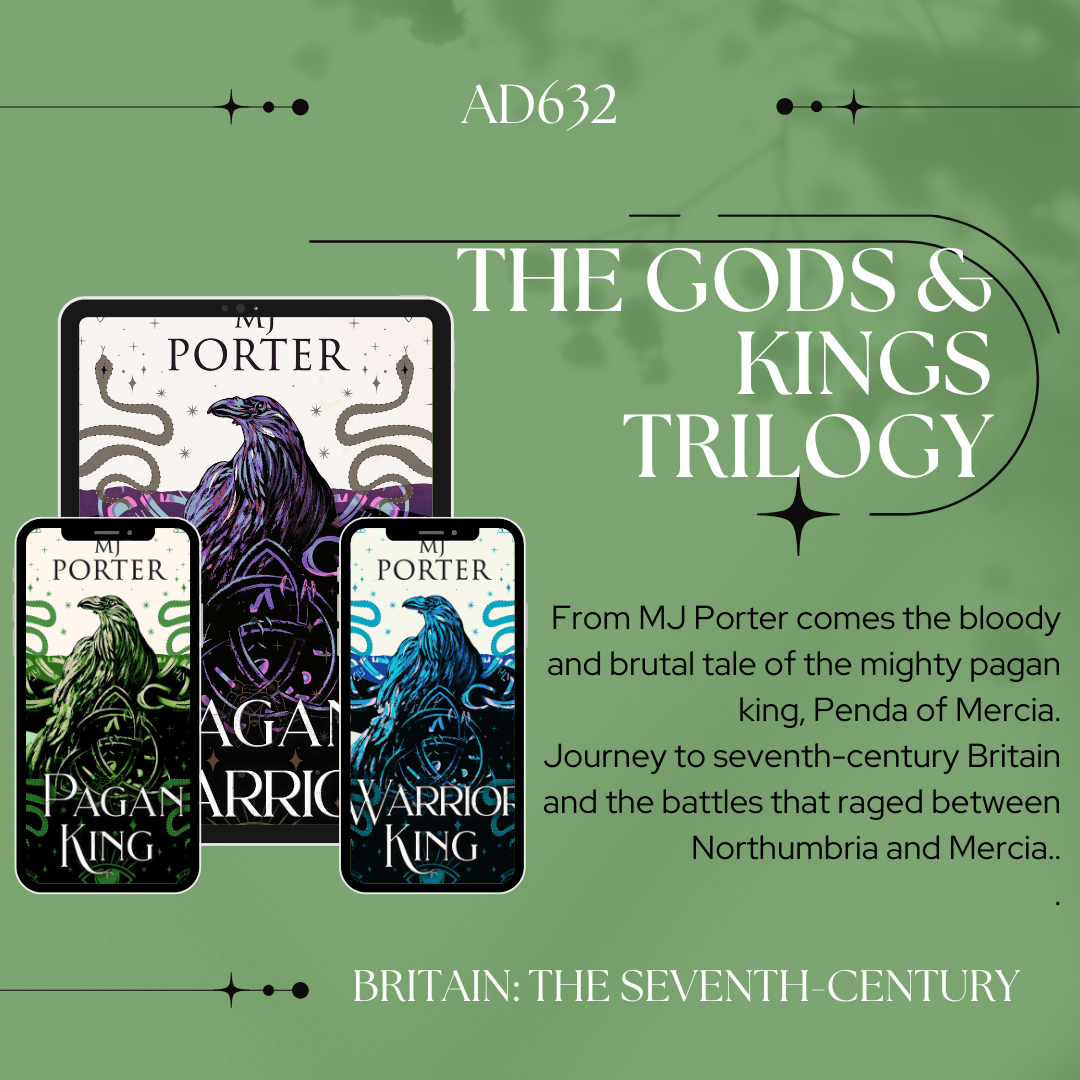
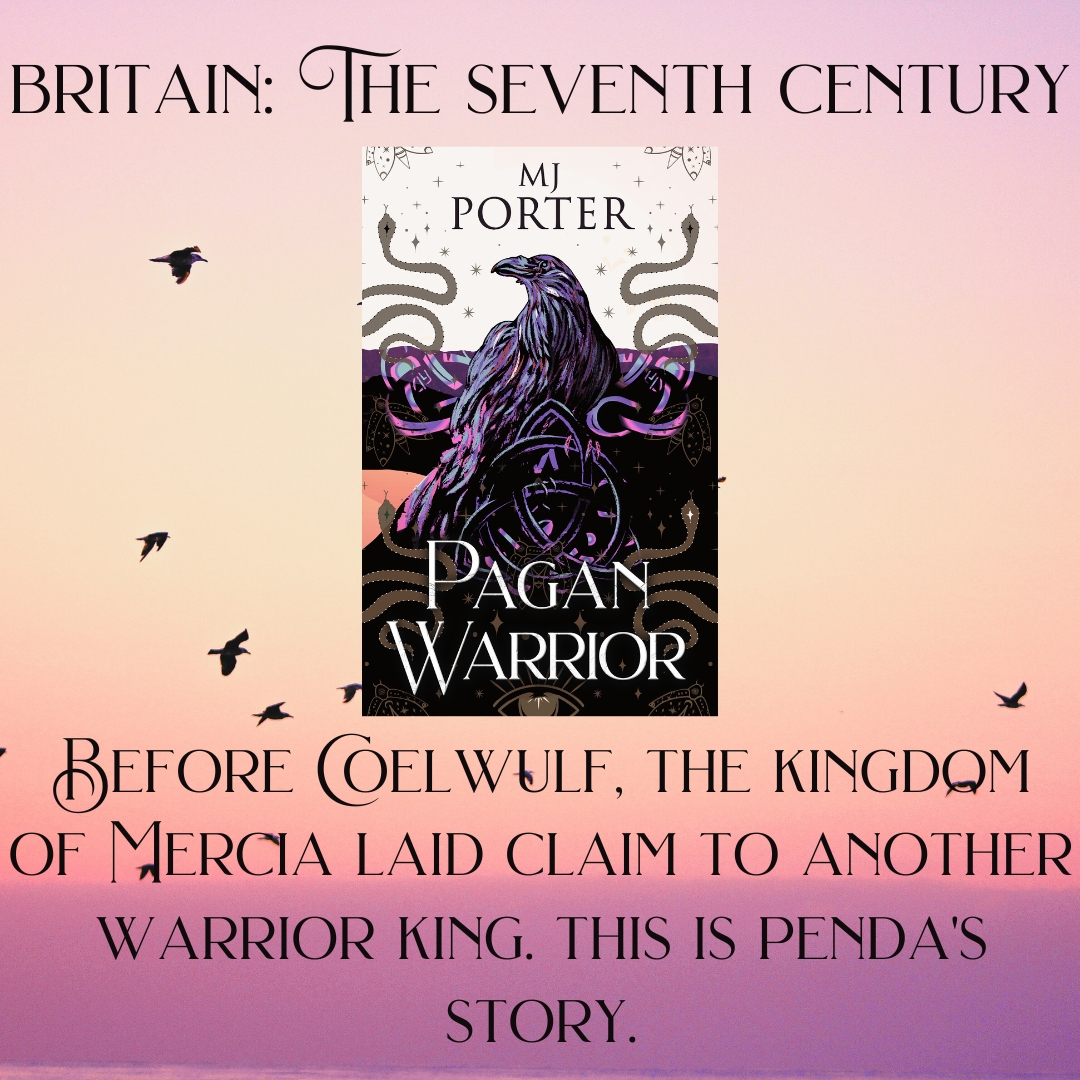
It’s the anniversary of the battle of Hædfeld, and I’m sharing a post about Britain in the Seventh Century

Here’s the blurb

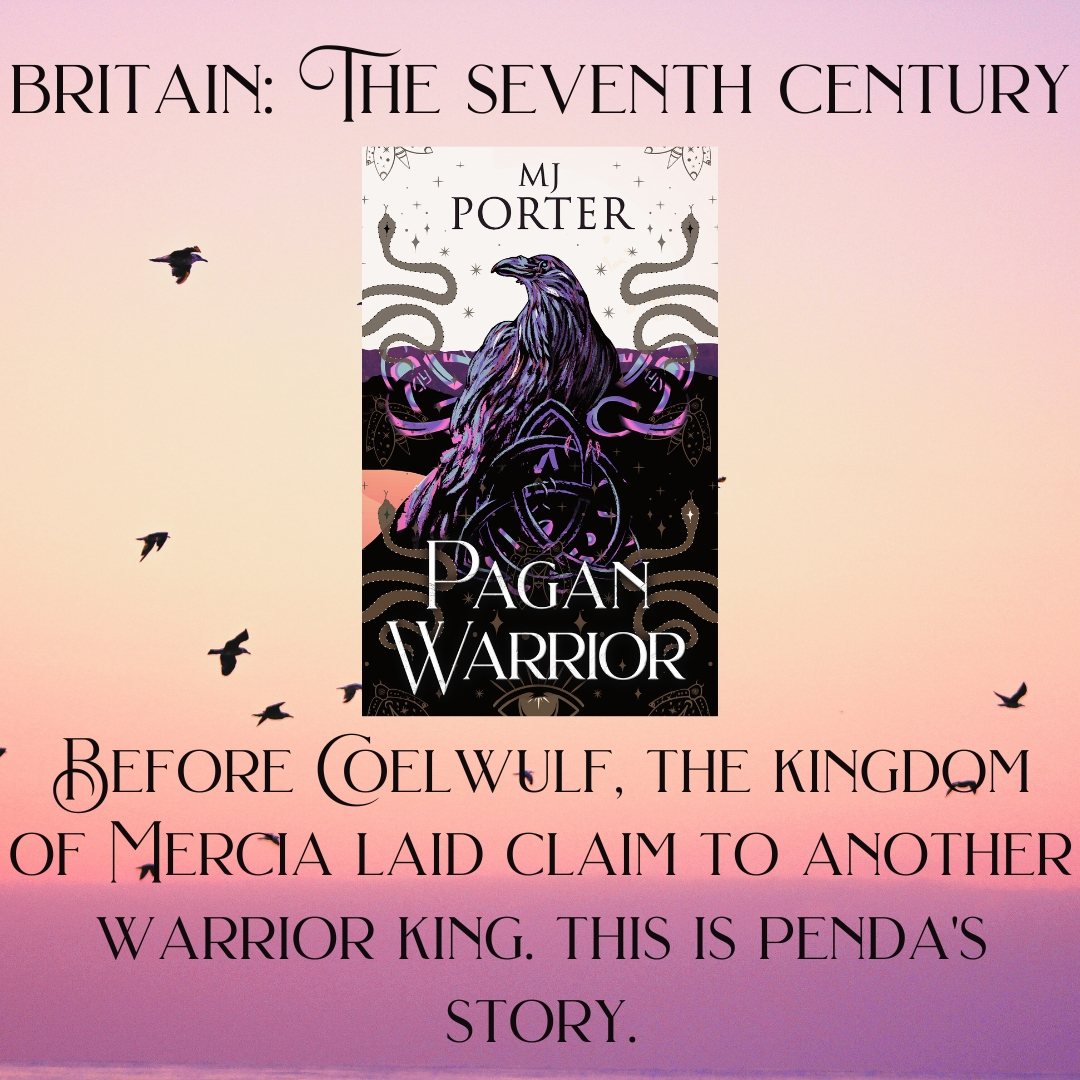
Britain. AD632.

Penda, a warrior of immense renown, has much to prove if he is to rule the Mercian kingdom of his dead father and prevent the neighbouring king of Northumbria from claiming it.

Unexpectedly allying with the British kings, Penda races to battle the alliance of the Northumbrian king, unsure if his brother stands with him or against him as they seek battle glory for themselves, and the right to rule gained through bloody conquest.

There will be a victor and a bloody loser, and a king will rise from the ashes of the great and terrible battle of Hædfeld.

books2read.com/PaganWarrior

(Nook readers, use code BNPWARRIOR75 to get 75% off the ebook cost)

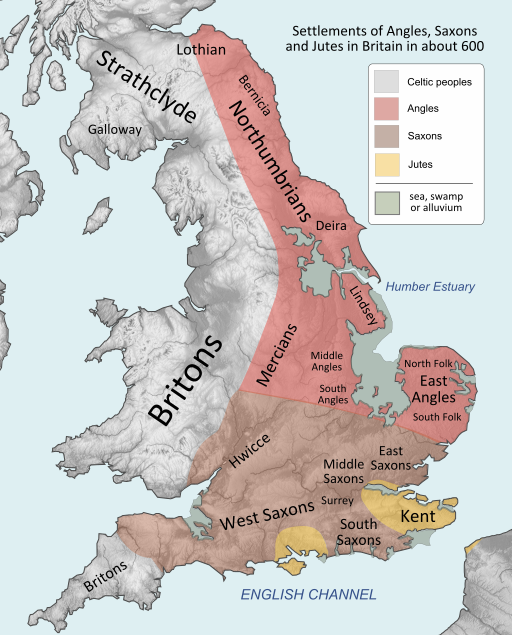
Britain in the Seventh Century – a patchwork of kingdoms

One of the hardest processes when writing about this very early period of Britain is to get an idea of what the kingdoms might have looked like and to explain this to the reader. The seventh century is often seen as the period when the Heptarchy, the seven very well-known kingdoms of the Saxon period, emerged and formed, ultimately derived from potentially very many much smaller kingdoms, the names of which are only rarely still known.

The Heptarchy consisted of the kingdoms of Northumbria (itself derived from the uniting of Deira and Bernicia), Mercia, the kingdom of the East Angles, Wessex, Sussex, Kent, and Essex. In later centuries, these kingdoms would merge until only four main kingdoms remained, and then, from the early middle of the tenth century, England emerged. But the battle of Hædfeld with which Pagan Warrior concludes was a British-wide battle set as this process was formalising in the seventh century, and there are yet more kingdoms that must be mentioned which didn’t form part of Saxon England.

Scotland didn’t yet exist, but Dal Riata, Pictland and Alt Clut (sometimes called Strathclyde) did. Wales didn’t exist, although the kingdoms of Gwynedd, Deheubarth, Ceredigion and Powys did, The kingdom of Dumnonia (modern-day Cornwall), was also in existence and very much not part of Saxon England. Indeed, these kingdoms are often termed British, as opposed to Saxon. As someone woeful at geography – I purposefully don’t adopt the names of places from this period because it confuses me – I’m only too well aware of how much I’m asking from my reader as it is without adding weird place names to already strange sounding personal names, and yet it was necessary to add a whole host of strange names, which often, have no relation to the current names of counties, let alone kingdoms.

All of these different kingdoms, we’re told, were involved in some way in the battle of Hædfeld. Some of the kingdoms joined the alliance, spear-headed by Cadwallon of Gwynedd, Edwin’s foster-brother. Others joined that of Edwin of Northumbria. Almost all of them took one side or another in the mighty battle of Hædfeld fought in 632 or 633 (there is some confusion about the exact date) between the two sides. To ensure my readers have some idea of who’s who, I’ve termed all of the character’s as being ‘of’ their kingdom, although I’m unsure if that’s actually how they might have been named.

I was surprised by how many individuals could be named from the seventh century, particularly for the build-up to the battle of Hædfeld. The cast is not Game of Thrones huge, but it was larger than I expected. Not just Penda of the Hwicce, only later could he be termed of Mercia, and Cadwallon of Gwynedd in the British ‘alliance’, but also Cloten of Deheubarth, Clydog of Ceredigion, Eiludd of Powys, Clemen of Dumnonia, Domnall Brecc of Dal Riata, Beli of Alt Clut and Eanfrith of Bernicia. While on the Northumbrian led alliance were Edwin of Northumbria, alongside his children, Osfrith and Eadfrith, as well as Eowa of the Hwicce, Osric of Deira – Edwin’s cousin, Cynegils of Wessex, Sigeberht of the East Angles and Oswald of Bernicia – Edwin’s nephew. At least, that’s how I stack the two sides as the battle is about to commence. In later periods, it is sometimes a struggle to find who was king of where and when that might have been, so to find so many characters, even if it can seem a little overwhelming, was fantastic and ensured that the British-wide battle of Hædfeld could be retold in Pagan Warrior with a nod to each of these kings, and the part they might, or might not, have played in the events that played out on that fateful day in October 632 or 633. 

Map of Britain in the 600s, User:Hel-hama, CC BY-SA 3.0 <http://creativecommons.org/licenses/by-sa/3.0/&gt;, via Wikimedia Commons


Sign up to my monthly newsletter to learn more about my writing journey, new releases and special offers, and receive a free short story collection featuring many stories of Saxon England.

I’m delighted to be sharing an excerpt from The Ghost of Greyson Hall by MK McClintock #HistoricalRomanceMystery #HistoricalMystery #BlogTour #TheCoffeePotBookClub #CPBC

I’m delighted to be sharing an excerpt from The Ghost of Greyson Hall by MK McClintock

A picture containing text, clipart

Description automatically generated

PROLOGUE

In the year of 1782, among the snow-dusted hills of Northumberland, Lady Grace Canterbury of Greyson Hall disappeared. 

Rumors abounded. She ran away with her Highland lover, leaving her husband and son behind. Others speculated on her declining health, claiming she’d gone away to die in solitude when the fever and pain overcame her body and mind. Those who knew her never believed the gossip and resolved through the years that ruffians kidnapped her at the command of her jealous husband.

No one ever learned the truth. Lady Canterbury vanished.

She’d left behind an infant son, who had barely found comfort in his mother’s arms. A fair-haired and handsome boy who resembled his mother in coloring, including the eyes, ice blue and startling cold if it had not been for the spray of thick, black lashes.

Before the birth, Lord Spencer Canterbury had shared with her how he longed for a fair-haired daughter who looked like her mother. However, when their son made his first appearance, she saw her husband’s joy in knowing it was a strong and healthy boy who would one day inherit the title and become master of their vast estate. 

How does such a lady vanish without leaving a remnant of evidence?

For more than a century, the truth remained a mystery. Lady Canterbury became a faded memory, a story to entertain and bewilder at celebrations and gatherings. For generations, speculation continued. Descendants of the family attempted to unravel the mystery of the eighteenth-century puzzle, alas to no avail. Few took the matter seriously—after all, it was long before their time—and the image of a graceful beauty with hair as pale as the risen moon and eyes the color of waves on the sea faded into history.

Excerpt from The Ghost of Greyson Hall copyright © MK McClintock

Here’s the blurb

Once a year, an ancient secret walks the corridors of Greyson Hall, a place shrouded in mystery and whispered legend.
When Devon Clayton inherited the stately mansion in England’s wild north from his uncle, he never imagined what secrets lurked within its walls, hidden for centuries. When his friends and brothers join him for the holiday, the British Agents and their families discover that their most unusual case will bring new meaning to Christmas spirit.

They must now unravel a century-old mystery if they are to break the curse and save a love that transcends time.

A long novella set in Northumberland in December 1782 and 1892.
Also Available:

  • Alaina Claiborne
  • Blackwood Crossing
  • Clayton’s Honor

Note: The British Agent series books are written to be read as stand-alone novels. However, they each have cross-over characters, meaning characters from each book will appear in the others. The only reading order is chronological, but each title can still be read as stand-alone.

Praise for the British Agent Series:
“Ms. McClintock succeeds in masterfully weaving both genres meticulously together until mystery lovers are sold on romance and romance lovers love the mystery!” 

—InD’Tale Magazine on Alaina Claiborne

“This book was perfectly-paced with mystery, romance, adventure, and so much more. I am definitely recommending that everyone who loves historical fiction in general read this book. I cannot wait to start reading the next book in this series.”
—Dreams Come True Through Reading on Blackwood Crossing

“MK McClintock has spun an enchanting tale deeply entrenched in the lands of Scotland and England that will leave you riveted to your chair until you turn the last page.” —My Life, One Story at a Time on Blackwood Crossing

Clayton’s Honor by MK McClintock is a clean historical romance that will keep your heart beating and your palms sweating. This is definitely a novel that is going on my ‘read again’ shelf! A really good and smooth read!” —Readers’ Favorite 

Buy Links: 
Universal Buy LinkBarnes & NobleBookBub

Meet the author

MK McClintock is an award-winning author who writes historical romantic fiction about chivalrous men and strong women who appreciate chivalry. Her stories of romance, mystery, and adventure sweep across the American West to the Victorian British Isles with places and times between and beyond. 

Her works include the following series: Montana Gallaghers, Crooked Creek, British Agents, Whitcomb Springs, and the stand-alone collection, A Home for Christmas. She is also the co-author of the McKenzie Sisters Mysteries.

MK enjoys a quiet life in the northern Rocky Mountains. Visit her online home at www.mkmcclintock.com, where you can learn more about her books, explore extras, and subscribe to receive news. 

Connect with the author

WebsiteFacebookInstagramPinterest

Book BubMailing ListAmazon Author Page

Follow The Ghost of Grayson Hall Blog Tour with the Coffee Pot Book Club

I’m delighted to be reviewing A Savage Moon by Theodore Brun #historicalfantasy #NewRelease

Here’s the blurb

Byzantium, 718AD
The great siege is over.
Crippled warrior, Erlan Aurvandil, is weary of war. But he must rally his strength to lead a band of misfit adventurers back to the North, to reclaim the stolen kingdom of his lover, Lilla Sviggarsdottir. For this, they need an army. To raise an army, they need gold.
Together they plot a daring heist to steal the Emperor’s tribute to his ally. Barely escaping with their lives, they voyage north, ready for the fight. But when fate strands them in a foreign land already riven by war, Erlan and Lilla are drawn inexorably into the web of a dark and gruesome foe.
As blades fall and shadows close in, only one thing for them is certain; a savage moon is rising. And it demands an ocean of blood.

Purchase Link

https://amzn.to/3PqH1NY

My Review

A Savage Moon is the fourth book in The Wanderer Chronicles. I’ve read book 1 (You can find the review here), but it was a while ago (2017), and so I can remember some elements of it, but not all of them. I do remember the character of Erlan, or Hakon as I knew him.

A Savage Moon feels very different from how I remember the first book – but this might be more to do with the complete culture shift – we’re no longer in Scandinavia, but Byzantium, and clearly Erlan has been put through the ringer since I last read about him. So I’m going to review this with no reference to the first book.

I love a story of the early eighth century, which takes the reader to complex times and places, all in great flux. 

Byzantium always feels extremely exotic and also well documented. The stories I’ve read set in Byzantium have a familiar feel, and A Savage Moon is as well-researched. The events that befall our collection of characters – there are three main POVs, Erlan, Lilla and Kataros – are really well portrayed. The first part of the book is very exciting for Erlan and Lilla, while Kataros finds his way to another major location, that of Rome, on the cusp of being claimed by the Lombards and increasingly becoming a Christian centre. Again, Rome is well documented, and I loved the recreation of it for this story. 

The author doesn’t stop there but takes us to Austrasia and Neustria, place names that might perplex but which are again enduring significant change as they become the kingdom known by the more familiar name of Frankia. Our characters’ journey is enormous, from Byzantium to Austrasia – a grand tour of Europe at this time.

Not just the locations are varied, but our three characters are all grappling with major life decisions. I really enjoyed the way the stories wound around one another and that there are many incidental characters encountered along the way who all add essential details to the narrative. The climactic reunion between the three, when it comes, because we all know IT IS coming, feels very natural. And I think the scene has been set for a fabulous book 5.

There are still some more fantastical elements to this story – it’s not all history, although we do encounter many ‘real’ historical figures – and the final encounter – A Savage Moon – builds towards a crescendo where the reader is never truly sure who will triumph in the dark woodlands. While the first action scene builds slowly, and as readers, we all wonder how they’ll triumph, the final action scene is the opposite, almost too sudden, too spur of the moment, and the reader can’t help but expect our stranded characters to fail. 

A Savage Moon is vast in scope, but the ending is personal and climactic, a tale of friendship, love, trust and, for one of the characters, renewal, set against a backdrop of almost indescribable savagery. It’s sure to appeal to fans of historical fiction and historical fantasy. 

Meet the author

Theodore Brun is author of the critically-acclaimed historical fiction series, THE WANDERER CHRONICLES.

He studied Dark Age archaeology at Cambridge and afterwards worked for several years in international arbitration law – first in London, then Moscow, Paris, and finally Hong Kong.

In 2010, with the germ of an idea for a novel in his head, he quit his legal job in Hong Kong, jumped on a bicycle and pedalled 10,685 miles across Asia and Europe to his home in Norfolk. There, he sat down in a spider-infested cottage to write the first volume in his epic historical fiction series, THE WANDERER CHRONICLES. Four years later, Corvus Atlantic published his debut novel, A Mighty Dawn. The sequel, A Sacred Storm, was released in June 2018.​ The third book in the series, A Burning Sea, was out in September 2020.


Theo is a third generation Viking immigrant, his Danish grandfather having settled in England in 1932. You might say Viking stories are in his blood. Yet it was only through the unlikely portal of Wagner’s Ring Cycle that he discovered the hoard of ancient Scandinavian and Germanic stories which underlie the works of authors like Tolkein, CS Lewis, George RR Martin, Neil Gaiman, Giles Kristian and Bernard Cornwell to name a few. It was this material that provided the inspiration for THE WANDERER CHRONICLES.​

Theo is married to Natasha. They live in London, together with their girls, Ella, Talitha & Colette, and a wild dog named Wilmo.

https://www.theodorebrun.com

Today, I’m excited to share my review for Helen Golden’s new cosy crime mystery, I Spy With My Little Die #blogtour

Here’s the blurb

Uncovering a web of conspiracy that intertwines past and present, can Lady Beatrice and DCI Richard Fitzwilliam catch a killer and unveil the truth of her husband’s death at long last?

BREAKING NEWS Second Senior Police Officer Dies Within a Week

A senior officer from the Protection and Investigations (Royal) Services died unexpectedly yesterday. His death comes hot on the heels of Detective Inspector Ethan Preece (43) from City Police, who died of a suspected heart attack last week. Although he’s not yet been named, the dead officer was a greatly respected public figure, who had served in policing for over thirty years. A PaIRS spokesperson has confirmed that ‘neither men’s death is being treated as suspicious at this time’.

 With the senior PaIRS officer dead, so is any hope of reopening the inquiry into Lady Beatrice’s husband’s accident fifteen years ago. Unless, of course, there is something that links the two men to the earl’s fatal car crash?

 Can she and Fitzwilliam, along with their friends, work together to unravel the mystery and catch a killer before the truth is buried forever?

Purchase Links

https://www.amazon.co.uk/Little-Right-Royal-Investigation-Mystery-ebook/dp/B0C2D19H1D/

https://www.amazon.com/Little-Right-Royal-Investigation-Mystery-ebook/dp/B0C2D19H1D/

My Review

I Spy With My Little Die is the sixth book in the Right Royal Cozy Investigation Mystery Series. I have read ALL the previous novels, including the prequel, which has to be read at a certain point in the series, and the author’s free short story about how some of the characters first met. You guessed it, I love this series, and this new instalment doesn’t disappoint.

There has been a long-running mystery burbling away in the background of the previous books. In I Spy With My Little Die, we finally get our answers – I’m not moaning – I’ve adored how the author has woven this other element through the stories – but it does feel as though it’s the right time to GET SOME ANSWERS. And the answers we get are well worth the wait.

As with any series, the characters grow on the reader. Lady Bea, Perry, Simon and Fitzwilliam have all had their moments throughout the earlier books, and in this one, it’s really Fitzwilliam who gets his chance to shine – which, again, is good and about time. There is much less of the ‘stately home as a background element’ to this book. Much of the action takes place in London, and much of it in offices, and there is a bit more of a police-procedural feel to this one, but don’t let that put you off. Fitzwilliam really does have an intriguing murder to solve, and while we, the reader, might be more clued in than Fitzwilliam, leading to a few ‘don’t do that moments,’ it really does only add to the enjoyment.

The plotting is tight, and the story moves quickly towards our long-awaited conclusion. While I’m not one to put my star marking on the blog, I assure you this is a 5/5.

If you’ve not yet read any of the Right Royal Cosy mystery books but you love contemporary cosy mysteries, then I urge you to give the first book in the series a chance. I assure you, you’ll soon be hooked and surging towards this sixth book. And despite how pleased I am to finally have some answers, I’m also delighted that the series will continue. I think there’s a lot more for Lady Bea, Fitzwilliam, Perry, Simon and one little white terrier to uncover.

Check out my reviews for previous books in the series

Spruced Up For Murder

For Richer For Deader

Not Mushroom For Death

An Early Death

A Dead Herring

Meet the author

Hello. I’m Helen Golden. I write British contemporary cozy whodunnits with a hint of humour. I live in small village in Lincolnshire in the UK with my husband, my step-daughter, her two cats, our two dogs, sometimes my step-son, and our tortoise.

I used to work in senior management, but after my recent job came to a natural end I had the opportunity to follow my dreams and start writing. It’s very early in my life as an author, but so far I’m loving it.

It’s crazy busy at our house, so when I’m writing I retreat to our caravan (an impulsive lockdown purchase) which is mostly parked on our drive. When I really need total peace and quiet, I take it to a lovely site about 15 minutes away and hide there until my family runs out of food or clean clothes

Connect with the author

Insta Facebook TikTok

A day trip to Jorvik Viking Museum and York Minster

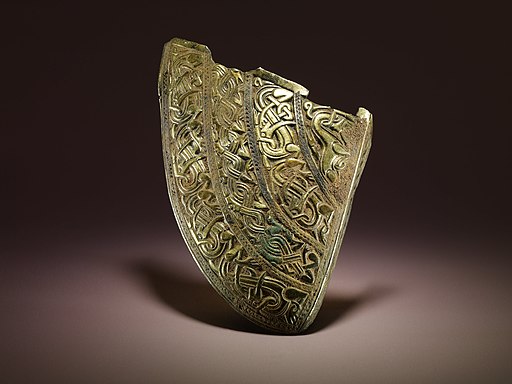
As a writer of tales set in Saxon England, and often, but not always, featuring Viking raiders, it’s a bit shocking that I’ve never visited Jorvik Viking Museum. I’ve been to York on only a handful of occasions. However, opportunity presented itself recently, and so I finally went – it helped that I wanted to see the Silverdale Hoard which is only on display for a few weeks more. (It looks much shinier in person than this image portrays it).

Portable Antiquities Scheme, CC BY-SA 2.0 https://creativecommons.org/licenses/by-sa/2.0, via Wikimedia Commons

Now, you can take photos inside Jorvik, but my phone was playing up and I couldn’t get the flash to turn off, and so I couldn’t take any of the exhibit itself, as you can’t use a flash. But, it was really a lot of fun – it is a bit of a shame that it’s in the dark – no doubt reinforcing the whole ‘Dark Ages’ ideal, which I can assure you, as quite a literal minded child, I genuinely took to mean it was always dark – and I didn’t appreciate the smell – but I did enjoy seeing all the reconstructions – including cats and dogs, oh, and rats – and learning about the excavations. There are some fab ideas to make the excavation accessible- the glass floor so visitors can see parts of the excavation (is it a mock up one or a proper one, I’m not sure). The staff are in period costume, and very knowledgeable – even if someone tried to say that King Athelstan wasn’t the king of all Britain, as his coins used to proclaim. (Read the Brunanburh series, people, for all the information about that claim).

And then, after my trip to Jorvik, and having spent quite some considerable coin in the gift shop – sadly the axe I really wanted was sold out – I took myself to York Minster.

I’ve only recently really started to appreciate church buildings for what they are. I’m not religious, and I’ve always been somewhat daunted about going inside, but these buildings, if you know where to look (and people point out the interesting bits) are a real, physical connection to the past. (If you’re not convinced, then do consider joining, or just attending one of the Society for Church Archaeology Zoom meetings – I have learned so much from these meetings). And York Minster has certainly realised this. While it is very famous for its many devastating fires, Blue Peter endeavours, and stained glass windows, (photos below), they’re also showing off the heritage of the building itself.

And of course, it was this part of the trip that I found fascinating. In the undercroft museum, they have some of the original Roman remains on view – the top left photo below is, I think, part of the drainage system. They’ve mapped the Roman settlement and the current cathedral, as well as the Saxon settlement, and the many phases of construction as well – cathedrals take hundreds of years to build – and throughout the undercroft, they have a running timeline, events not just in the UK, but also worldwide. While it might smell a bit damp down there, there is so much information on display, that I spent a long time just looking at everything.

But to return, ‘top-side’ again, and more in keeping with my Gods and Kings trilogy, and some of the other Saxon stories I’ve written, the Minster also has some lovely stained glass depicting the life of St Cuthbert and St Oswald – the two Northumbrian saints most associated with Bamburgh and Lindisfarne. They’re currently conserving the glass, so you can get a really good look at it. And, of course, St Cuthbert is shown, in the bottom right image, holding St Oswald’s head. This, I confess, occasioned quite a few amusing conversations from people looking at the glass, who unsurprisingly, have no idea why this image is depicted in glass. It is, very weird, after all – I didn’t tell them that ‘back in the day’ there were quite a few ‘heads of St Oswald’ claimed by rival monasteries and churches. And of course, St Oswald is also connected with Mercia, as Lady Æthelflæd and her husband took his remains from Bardney and had him reinterred in Gloucester. He got around in the afterlife, that’s for sure.

I did once ask a historian about this appropriation of a Northumbrian saint by the rulers of Mercia. I’m still not entirely convinced by the answer I received.

There were many highlights of the day, but I particularly liked getting my hands on this ‘Viking History Ruler,’ which matches my Rulers of England one.

And, because I’m a bit obsessed with Saxon coinage, I added two more reproductions to my collection.

My ‘real’ Saxon coin from the reign of Æthelred II of Northumbria 840-841, that I’ve had for a few years

And just to top my day off, I nipped into a fabulous second hand book shop and managed to swag three books that I’ve been using my local university library for – all with translations of Saxon charters – I appreciate it’s not everyone’s idea of fun, but it was so happenstance – I just glimpsed the covers as I was leaving – they were even marked on a ‘still to sort’ shelf. Go me!


Sign up to my monthly newsletter to learn more about my writing journey, new releases and special offers, and receive a free short story collection featuring many stories of Saxon England.

I’ve found an interview that King Coelwulf gave a few years ago to share with you:)

A few weeks ago, I was granted exclusive access to King Coelwulf.

A few weeks ago, I was granted exclusive access to King Coelwulf. Here’s what the enigmatic king of Mercia had to say.

King Coelwulf, thanks for allowing me entry into your stronghold at Northampton. It’s quite interesting to be at the heart of the Mercian defence against the Raiders. Now, can you tell me why people should want to read about you?

“Well, I’m not saying that they will. I mean, if they’re like me, then they probably don’t have time to be reading a story. I’ve got bodies to bury, Raiders to hunt down, and a kingdom to rule. I would tell anyone to spend their time more wisely than reading a book. That sort of thing is for the monks and the clerics, not warriors trying to defend a kingdom.”

Ah, well, in that case, thank you for finding the time to speak to me.

“I didn’t have much choice. Or rather, I was advised it would be a good use of my time, by my Aunt, Lady Cyneswith.”

Well, Lady Cyneswith is a wise woman, and I’m grateful that she’s encouraged you to speak to me.

“She is a highly intelligent woman. Braver than many men when it comes to the Raiders, and skilled when it comes to healing injuries of the body, as well as the mind.”

And her dogs have very interesting names, what was it again? Wiglaf and Berhtwulf, surely the names of old Mercian kings? Men who usurped the ruling line from your family?

“Oh really. I’d never realised. Funny, that.”

Ah, well, moving on, could you tell me about your books? I’m sure my readers would love to hear about it.

“Nothing to say really. Same old, same old. Raiders to evade, Raiders to find, Raiders to kill, a kingdom to keep whole. It’s a grand old bloody mess. I swear, I’ve barely managed to scrub the grime and body fluids from my sword and seax. Or rather, Wulfhere has. He’s a good lad. Quick on his feet. He’s one of my squires. Couldn’t do it without him.

That’s interesting that you should mention your squire, did you say? I wouldn’t have expected you to even know the lad’s name. After all, you are the king of Mercia, surely your squire is beneath you. Are there any more of your warriors you’d like to mention by name?

“Of course there are. I’d name them all if I had the time, which I don’t, just to make you aware. I’ve got to go to a crown-wearing ceremony shortly. But, I’ll mention a few, just to keep you happy. And you should know that no man is ever above knowing the names of those who serve him. Remember that. 

But, I’ll mention some of my warriors by name. If only because it’ll infuriate some of them. Edmund, he’s my right-hand man, a skilled warrior, missing an eye these days, but it’s not stopped him, not at all. His brother, Hereman. Well, where do I start? Hereman does things no one would consider, in the heat of battle, and he’s a lucky b……. man, sorry, he’s a lucky man. And then there’s Icel. He’s lived through more battles than any of the rest of my warriors. I almost pity the Raiders who come against him. None of them live for much longer. 

And Pybba. You know, he fights one handed now, and the Raiders seem to think he’s easy picking, but he’s not. Not at all. And, I can’t not mention Rudolf. He’s the youngest of my warriors, but his skill is phenomenal, not that you can tell him that. Cheeky b……, sorry cheeky young man. But, all of my warriors are good men, and we mourn them when they fall in battle, but more importantly, we avenge them all. All of them. No Raider should take the life of a Mercian without realising they’ve just ensured their own death.

Yes, I’ve heard that you avenge your men, with quite bloody means. And Edmund, there’s a suggestion that he’s a scop, a man who commits the deeds of the fallen to words? That fascinates me, as someone who also makes a living from using words.

“Well, Edmund has some small skills with words, but he honours our fallen warriors by weaving them into the song of my warriors. In fifty years, when we’re all dead and gone, our legend will live on, thanks to Edmund, and his words.

Can I ask you about Alfred, in Wessex? Have you met him? Do you think he’s doing a good job in keeping the Raiders out of Wessex?

“I’ve never met him. Couldn’t say either way. It’s not for me to comment on a fellow king. We’re all after the same thing. Kill the f……, sorry, kill the b……., sorry, kill the enemy. All of them, until Mercia is safe once more. And Wessex, if you’re from there.”

Well, it looks like you’re needed. Is that your crown?

“Yes, and now I need to go and perform some ceremonial task. It’ll take a long time, no doubt. Make sure you have an escort when you leave here. I wouldn’t put it passed the f……, sorry, the Raiders, to be keeping a keen eye on the bridge over the Nene. 

Thank you for your concern, and yes, I’ll make sure I do. Good luck with the new book.

“I don’t need luck. I just need to kill all the b……., sorry, Raiders. 

As you can tell, King Coelwulf was a very busy man. But I found him to be honourable and worthy of leading the Mercians against our persistent enemy. Long live the king.

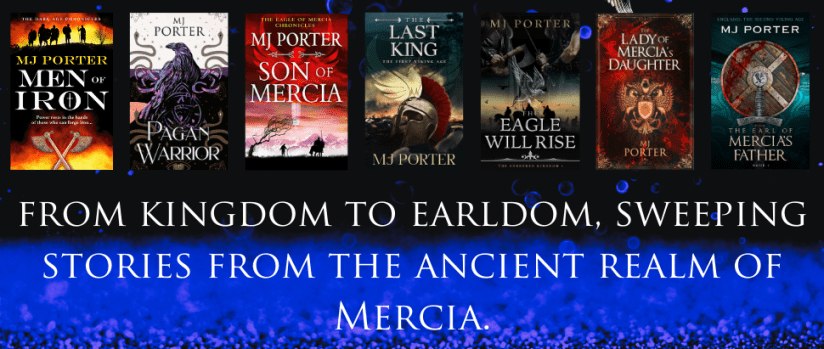
The Ninth Century Mercian series covers for all 9 books

Rudolf from The Last King/Mercian Ninth Century series gives an interview #TheLastKing

An interview with Rudolf

Ere, what you up to?

Oh, hello, I’m here to interview King Coelwulf about his latest book.

Really, I wouldn’t think he’d do that. He’ll make some excuse about having no time, or some such. Oh wait, did Lady Cyneswith set this up?

Yes, she did, and I’ve already spoken to her. But tell me, do you know the king? You seem to know who everyone is.

Of course I do. I’m Rudolf. His old squire, and now member of his warband. Why?

Would you like to talk to us about his latest book?

Well, I suppose I have the time. If you’re quick, and I don’t get caught. I’m supposed to be showing young Hiltiberht the ropes, and Haden can be a real handful.

Tell me, what’s King Coelwulf like? As a warrior?

Bloody lethal. You don’t want to be facing off against him. I’ve never seen anyone kill so quickly. And the moves he can do? I wish I had even half of his skill. I mean, he says I’m a good warrior and all, but I make up for my lack of skill with speed. And he doesn’t have that because he’s so bloody …. Um, because he doesn’t need to do that. Sometimes, I swear the enemy make it look so easy it’s as though they’re falling onto his seax or sword.

He’s quite good then?

Better than good. I’ve never seen anyone fight the way he does. Well, apart from Icel, and Edmund, and maybe Hereman. But, certainly, the Raiders stand no chance against him.

I hear he even camps in the woodlands and forests? It’s not really the sort of thing a king should do, is it?

Now, you see here. He was a warrior long before he was king. King Coelwulf only has one aim, to kill all the Raiders. To drive them from Mercia and make sure they don’t come back. He’s not into all that fancy clothes, and court etiquette, or sleeping in a bed of silk sheets. They’d be too damn cold, anyway. He’s told me. No, the king of Mercia is a damn warrior, and the only man capable of defeating the Raiders, and the Welsh, if it comes to it. 

And, have you read the new book?

Got no time for reading. I’m sure King Coelwulf told you that, and he’s right. I’d like a good night’s sleep without interruption more than I’d like to read a book. Maybe a scop could tell the tale. But, that would be Edmund and I’d have to listen to him tell the tale. He’s good, of course he’s good, but he probably wouldn’t mention me as much as I might like.

To all the young lads who do read the book, what would your advice be? How could they get into King Coelwulf’s warband?

Well, they should probably have joined it a while ago, and at the moment, there’s a few squires that need training up, so there’s no room, not for a while. So, I’d tell them to wait, and while they’re waiting, learn a few things, like how to clean saddles and seaxs. It’s a mucky job, but someone’s got to do it. And with King Coelwulf, you’ve got to earn his respect first. And then, well, once you’ve got it, you’ve got to keep it. A hard man, but a great man. Mercians should be pleased with their king. He’ll keep them safe, or he’ll die trying. You didn’t find the old king doing that. Far from it in fact. He’s scuttled off to Rome, or somewhere like that. Gone to pray for his soul. He’s got a lot to need forgiveness for, abandoning his kingdom like that.

Oh, sorry, I’ve got to go. 

And there you have it. A few words from Rudolf, King Coelwulf’s old squire. I hear he fights incredibly well, and offers some important advice for any would be members of the king’s warband.

The Ninth Century Mercian series covers for all 9 books

Posts

The Custard Corpses is now available from Kobo, Apple, Nook and other retailers, as well as Amazon

With a snazzy new cover, and with its sibling to arrive in the coming months, I’ve taken the decision to move The Custard Corpses to a wider audience in ebook format, so readers on Kobo, Apple, Nook and other retailers accessed via the Ingram distribution option, as well as Amazon, can now enjoy my twentieth-century mystery, set in the 1940s.

Here’s the blurb

A delicious 1940s mystery.

Birmingham, England, 1943.

While the whine of the air raid sirens might no longer be rousing him from bed every night, a two-decade-old unsolved murder case will ensure that Chief Inspector Mason of Erdington Police Station is about to suffer more sleepless nights.

Young Robert McFarlane’s body was found outside the local church hall on 30th September 1923. But, his cause of death was drowning, and he’d been missing for three days before his body was found. No one was ever arrested for the crime. No answers could ever be given to the grieving family. The unsolved case has haunted Mason ever since.

But, the chance discovery of another victim, with worrying parallels, sets Mason, and his constable, O’Rourke, on a journey that will take them back over twenty-five years, the chance to finally solve the case, while all around them the uncertainty of war continues, impossible to ignore.

books2read.com/TheCustardCorpses

Or you can buy paperback and hardback copies directly from me. Visit my SumUp store.

If you’ve not yet tried one of my ‘modern’ mysteries, then check out my series page on the blog to discover why I decided to write something so very different to everything I’ve ever written before.


Posts

I’m delighted to welcome The King’s Command by Rosemary Hayes to the blog #HistoricalFiction #Huguenots #LouisXIV #BlogTour #TheCoffeePotBookClub

I’m delighted to welcome Rosemary Hayes and her new novel, The King’s Command to the blog.

INSPIRATION AND RESEARCH FOR MY NOVEL ‘THE KING’S COMMAND’

Carving above French Church in London 

I’d always known that I had Huguenot ancestors but had not given it much thought until a cousin mentioned that they had been driven out of France for their religious beliefs. This sparked my interest and I decided to find out more. 

My ancestors – the facts

Many of those who try to trace their Huguenot roots find the process laborious and frustrating, coming across contradictions and going down blind alleys, but I was lucky. A lot is known about my Huguenot forebears, Lydia and Samuel La Fargue. They feature in the Annals of the Huguenot Society and some meticulous research was done on them by an Edwardian ancestor of mine, so I had a head start. 

I knew where they lived in France; in a small town in Gascony, not far from Bordeaux, originally called Castillon-sur-Dordogne and now called Castillon-la-Bataillie. I knew what they did (they were predominately lawyers, physicians and minor nobles) and that they were friends with other prominent Protestant families in the region with whom they inter married and socialised. In the baptism records of the time, it can also be seen that they were godparents to one another’s children. The Edwardian ancestor states that they lived just outside the town centre in ‘the pleasant faubourg’ and, although I found no evidence of this, it seems likely to be true. They also owned land in the plains South of the town.

So, they came from the bourgeoisie, were committed Huguenots, following the teachings of Calvin, and their own ancestors had fought against the Catholics in the sixteenth century Wars of Religion. 

I also knew that Lydia, Samuel, their surviving children and Lydia’s widowed mother left Castillon and fled to Geneva in 1690. And also, intriguingly, that Samuel returned alone to Castillon in 1692 where he died, aged 32, on the very day on which he converted to Catholicism.  He may, of course, have died from natural causes, but these were turbulent times, so who knows? I did discover from local documents that he had returned to try and reclaim forfeited property.

After his death Lydia, her children and her mother then left Geneva for London and settled in the pleasant village of Hammersmith where there was a small Huguenot community. Lydia’s only surviving child, Elias, became a Church of England vicar in Lincolnshire and is my direct ancestor.

Why did the Huguenots flee France? A brief background

The wars of religion between Protestants and Catholics raged in France during the second half of the 16th century where hatred ran deep, armies were raised and atrocities committed by both sides. These wars were finally brought to an end through the actions of King Henry IV. Henry, originally a Protestant, was a pragmatist. In a bid to unite the country he converted to Catholicism, reportedly saying “Paris is well worth a mass” and promulgated the Edict of Nantes (1598) which granted official tolerance to Protestantism,  and for eighty years or so the Huguenots thrived. 

Henry’s successors, however, were far less tolerant of the Huguenots, destroying their strongholds and breaking up their military organisation and when the young Louis XIV  finally took control of his throne in 1661, he vowed to make France a wholly Catholic country and wipe out the ‘false religion’ of Protestantism once and for all. During his reign, the Edict of Nantes, which had protected Huguenots for so long, was revoked and their lives became impossible.

Unless they denied their faith, they would forfeit their property, be unable to practise their professions or trades and their children would be forcibly removed from them to be brought up as Catholics. They were banned from holding gatherings, even in private, and their temples were destroyed. Yet they were not allowed to leave the country; the King did not want to lose the skills of these hardworking and successful people.

here destruction of Huguenot temple 

Hardly surprising then, that many converted and many fled despite the penalties if they were caught.

Huguenot women in prison 

The fiction

It has been an intriguing journey finding out about my ancestors and, more generally, about the circumstances which forced Huguenots like them to flee France. My book ‘The King’s Command’ is based, very loosely, on their experience. I have set the story in Castillon, called the main character Lydia (or Lidie, as she was known by her family) and her husband Samuel, but a lot of the other characters are fictional, as is the account of Samuel’s death and Lidie’s escape. I know nothing of the family’s actual escape to Geneva but night travelling was common. There were ‘Huguenot Trails’ known only to those within a trusted network, safe houses along the escape routes, false identities adopted and bribes paid. There were also plenty of financial rewards offered to those betraying Huguenots and to soldiers finding stowaways, with spies and informers everywhere, so any escape would have been fraught with danger.

In my story, I have made Lidie stay in Castillon and then escape not from nearby Bordeaux, which was heavily guarded, but from a little port called La Tremblade a good way up the West coast. Many Huguenots did escape from here and I used, as background, a contemporary account of one such escape, cranking up the tension as the family tried to avoid detection. 

To add to the tension, I made the King’s dragoons visit Castillon to try and force unconverted Huguenot households to abjure. I don’t know if this is true, but certainly there were plenty of reports of this happening in the region.

dragoon forcing Huguenot to sign abduration papers 

I also made Samuel die a violent death as a direct result of his association with Claude Brousson, a Protestant lawyer and preacher who fought tirelessly for justice for the Huguenots. Brousson had to flee for his life to Switzerland and then, very bravely, returned in secret to become part of the Church of the Desert, in the wild and mountainous region of the Cevennes, where he preached and gave succour to his fellow Protestants. He died a martyr and hero but he is largely forgotten now and I felt he merited some recognition.

In reality, once Lidie reached London, it seems that she led a very quiet and worthy life, centred on the French church in Hammersmith, but I decided to make her lively and vivacious with a strong character and a love of fashion and of the new silks being made in Spitalfields. I also invented for her a naughty surviving daughter, a new romance and another child from a (fictitious) second marriage. 

In her will, Lidie left the bulk of her estate to her son Elias and the rest to the French church in Hammersmith and the French poor of London. It seems that she was still relatively well off and it is known that she brought with her from France some family portraits (presumably taken out of their frames and rolled up), some small pieces of family silver and the La Fargue seal.

The Huguenots were hardworking and talented people and they integrated so seamlessly into their adopted countries that, generations on, it is easy to forget the circumstances which forced them to flee their native France in the 17thcentury. 

Thank you so much for sharing your fabulous post.

Here’s the blurb

16 year old Lidie Brunier has everything; looks, wealth, health and a charming suitor but there are dark clouds on the horizon. Lidie  and her family are committed Huguenots and Louis XIV has sworn to stamp out this ‘false religion’ and make France a wholly Catholic country. Gradually Lidie’s comfortable life starts to disintegrate as Huguenots are stripped of all rights and the King sends his brutal soldiers into their homes to force them to become Catholics. Others around her break under pressure but Lidie and her family refuse to convert. With spies everywhere and the ever present threat of violence, they struggle on. Then a shocking betrayal forces Lidie’s hand and her only option is to try and flee the country. A decision that brings unimaginable hardship, terror and tragedy and changes her life for ever.

‘One of the very best historical novels I have ever read’

Sandra Robinson, Huguenot Ancestry Expert

Buy Links: 

This title is available to read with #KindleUnlimited.

Universal Link

Amazon UKAmazon US

Amazon AUAmazon CA

Meet the author

Rosemary Hayes has written over fifty books for children and young adults. She writes  in different genres, from edgy teenage fiction (The Mark), historical fiction (The Blue Eyed Aborigine and Forgotten Footprints), middle grade fantasy (Loose Connections, The Stonekeeper’s Child and Break Out)  to chapter books for early readers and texts for picture books. Many of her books have won or been shortlisted for awards and several have been translated into different languages.

Rosemary has travelled widely but now lives in South Cambridgeshire. She has a background in publishing, having worked for Cambridge University Press before setting up her own company Anglia Young Books which she ran for some years. She has been a reader for a well-known authors’ advisory service and runs creative writing workshops for both children and adults.

Rosemary has recently turned her hand to adult fiction and her historical novel ‘The King’s Command’ is about the terror and tragedy suffered by the French Huguenots during the reign of Louis XIV.

Connect with the author

Website Twitter Amazon Author Page Goodreads 

Follow The King’s Command blog tour with The Coffee Pot Book Club