

I’m delighted to welcome Wendy J Dunn to the blog with her new book Shades of Yellow, and a guest post about the history behind the novel #ShadesOfYellow #Forgiveness #AmyRobsard #WomensFiction #DualTimeline #Romance #BlogTour #TheCoffeePotBookClub

I’m delighted to welcome Wendy J Dunn to the blog with her new book Shades of Yellow ShadesOfYellow #Forgiveness #AmyRobsard #WomensFiction #DualTimeline #Romance #BlogTour #TheCoffeePotBookClub

What is the history behind Shades of Yellow? 

There is a lot of history behind my novel — some of it expected and some of it more surprising. I always knew my character would be writing a novel about Amy Robsart. I love the Tudor period, so it made sense that my character would also share that love. It also made sense Lucy, as a breast cancer survivor, would also be drawn to the story of Amy Robsart. Some historians believe Amy Robsart had breast cancer, which led to the theory that her fall down a short flight of stairs resulted in a spontaneous spinal fracture because of bone metastasis. So, that meant I (and my character) had to research the life and times of Amy Robsart.

 Amy was the first wife of Robert Dudley, the man who came closest to marrying Elizabeth Tudor. Amy was born in 1532, and met Robert when he accompanied his father, John Dudley, then the Earl of Warwick to deal with the Kett rebellion in 1549. Amy came from a wealthy family with good bloodlines. More importantly, she was her father’s heir. She was also pretty, pretty enough to catch Robert Dudley’s eye. They were also almost the same age. Robert’s father probably wanted a better match for his son, but he also had other sons. Robert was also not his heir, so when Robert and Amy fell in love (and it appears they fell in love), their parents agreed to their marriage in 1550 when they were around eighteen. 

Amy married Robert while his father was solidifying his position as the actual power behind Edward VI’s throne. The first years of Robert and Amy’s marriage saw a fairly settled period for the Tudors. But then Edward VI died, and John Dudley failed to place Lady Jane Grey onto the throne. Mary Tudor claimed the crown, and Dudley soon lost his head at the Tower of London, and Mary imprisoned all his sons in the Tower. The following year, Lady Jane Grey and her husband Guildford were executed after another failed rebellion. For close to two years, Robert and his remaining brothers stayed in the Tower. His older brother died just days after their release. Another brother died while fighting in a war for Mary’s husband, Philip of Spain. By the time Elizabeth becomes Queen, Robert and Amy were living mostly separate lives. Robert and Elizabeth acted like lovers in the early years of Elizabeth’s reign – and caused a lot of scandal. The day after Elizabeth celebrated her twenty-seventh birthday, Amy was found dead at the bottom of a flight of stairs at Cumnor House, her neck broken. No one has ever solved the mystery of Amy Dudley’s death, and her husband Robert never escaped the suspicion that he organised her murder. 

 But most of my story takes place in 2010. While writing Shades of Yellow, I realised how long ago that now is. It was a different world in 2010. I ended up doing as much research about 2010 as I was doing about Amy’s life in Tudor times. I realised that Lucy’s life would have shaped her differently if she had been born around 1980 compared to 1996. She also would have had a few more life-changing options regarding her medical treatment if I had set the story in 2025.  

By the time I finished Shades of Yellow, I had realised, with surprise, that history informed the entirety of my novel.
Here’s the blurb

During her battle with illness, Lucy Ellis found solace in writing a novel about the mysterious death of Amy Robsart, the first wife of Robert Dudley, the man who came close to marrying Elizabeth I. As Lucy delves into Amy’s story, she also navigates the aftermath of her own experience that brought her close to death and the collapse of her marriage. 

After taking leave from her teaching job to complete her novel, Lucy falls ill again. Fearing she will die before she finishes her book, she flees to England to solve the mystery of Amy Robsart’s death. 

Can she find the strength to confront her past, forgive the man who broke her heart, and take control of her own destiny?

Who better to write about a betrayed woman than a woman betrayed?
Buy Link

https://books2read.com/u/mqPGgd

This title is available to read on #KindleUnlimited.

Meet the author

WENDY J. DUNN is a multi-award-winning Australian writer fascinated by Tudor history – so much so she was not surprised to discover a family connection to the Tudors, not long after the publication of Dear Heart, How Like You This, her first Anne Boleyn novel, which narrated the Anne Boleyn story through the eyes of Sir Thomas Wyatt, the elder. 

Her family tree reveals the intriguing fact that one of her ancestral families – possibly over three generations – had purchased land from both the Boleyn and Wyatt families to build up their holdings. It seems very likely Wendy’s ancestors knew the Wyatts and Boleyns personally.

Wendy gained her PhD in 2014 and tutors in writing at Swinburne University of Technology, Australia. She loves walking in the footsteps of the historical people she gives voice to in her books. 
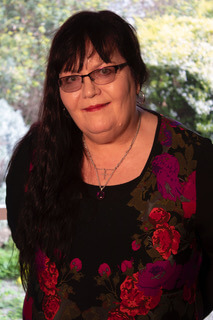
Author image for Wendy J Dunn

Connect with the Author

Follow the Shades of Yellow Blog Tour with The Coffee Pot Book Club

Posts

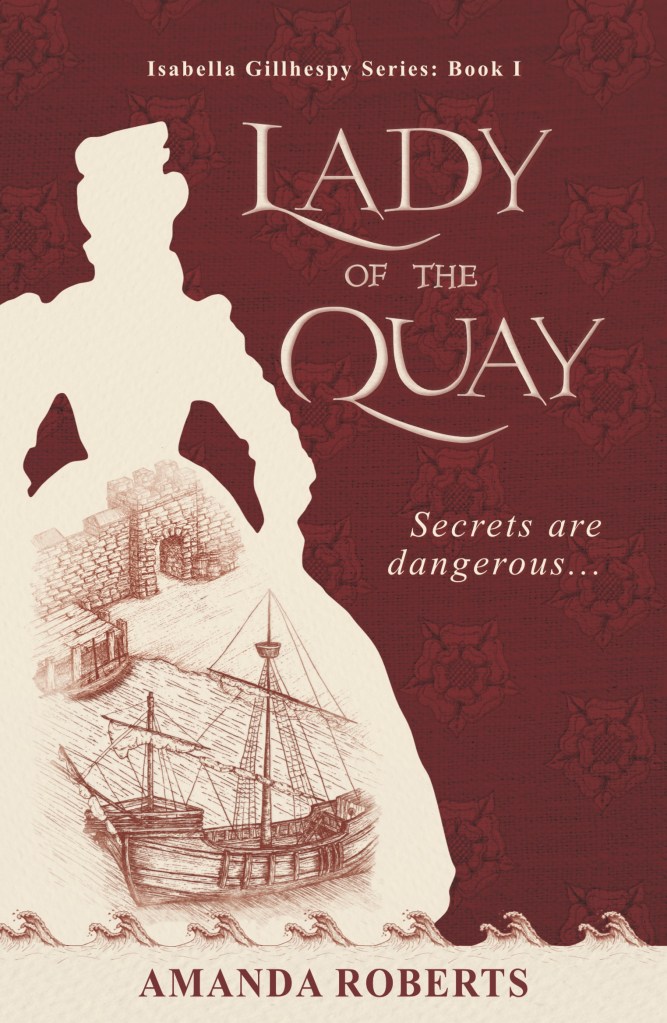
I’m delighted to welcome Amanda Roberts and her new book, Lady of the Quay, to the blog #LadyoftheQuay #Tudors #HistoricalFiction #HistoricalMystery #BlogTour #TheCoffeePotBookClub

I’m delighted to welcome Amanda Roberts and her new book, Lady of the Quay, Book 1 in the Isabella Gillhespy Series, to the blog with a snippet.

Snippet

‘Drink?’ I asked, gesturing towards the cabinet. He removed his hat, threw it onto a chair, and shook his head.

‘I’m here on business.’

That had never stopped him before. My heart had already sunk into my stomach, and his curt reply sent it plummeting to my feet. I had envisaged a cosy chat, me resting on my settle, him in his favourite chair, either side of the fire. A scene we had populated so many times in the past. But I already knew that was not going to happen. I did not sit down, but faced him, both of us standing somewhat awkwardly in the middle of the room.

‘Well?’ I challenged him to speak first. If we got the business out of the way we might be able to move on to resolve the more personal difficulties that stood between us, a wall as impenetrable as those surrounding Berwick. But like our town defences, every wall has its gates. I just needed to find Will’s gate.

Here’s the Blurb

Knowing she is innocent is easy … proving it is hard

1560, Berwick-upon-Tweed, northern England

Following the unexpected death of her father, a series of startling discoveries about the business she inherits forces Isabella Gillhespy to re-evaluate everything she understands about her past and expects from her future.

Facing financial ruin, let down by people on whom she thought she could rely, and suspected of crimes that threaten her freedom, Isabella struggles to prove her innocence.

But the stakes are even higher than she realises. In a town where tension between England and her Scottish neighbours is never far from the surface, it isn’t long before developments attract the interest of the highest authority in the land, Sir William Cecil, and soon Isabella is fighting, not just for her freedom, but her life. She must use her wits and trust her own instincts to survive.

Lady of the Quay introduces an enticing new heroine who refuses to be beaten, even as it becomes clear that her life will never be the same again.

From the author of the award-winning ‘The Woman in the Painting’.

Buy Link

Universal Link

This title is available to read on #KindleUnlimited

Meet the Author

Amanda Roberts has worked as an Editor in business-to-business magazines for over 30 years, specialising in out-of-home coffee, vending and foodservice/catering, including Editor of the global gastronomy title: ‘Revue internationale de la Chaîne des Rôtisseurs’.

She currently freelances, editing UK-based healthcare titles – HEFMA Pulse, Hospital Food + Service and Hospital Caterer. She is a member of the Society of Authors, the Historical Novel Society and West Oxfordshire Writers. She also volunteers for Tea Books (part of Age UK) to run a book club/reading group for elderly people in the community.

Connect with the Author

Follow the Lady of the Quay blog tour with The Coffee Pot Book Club

Posts

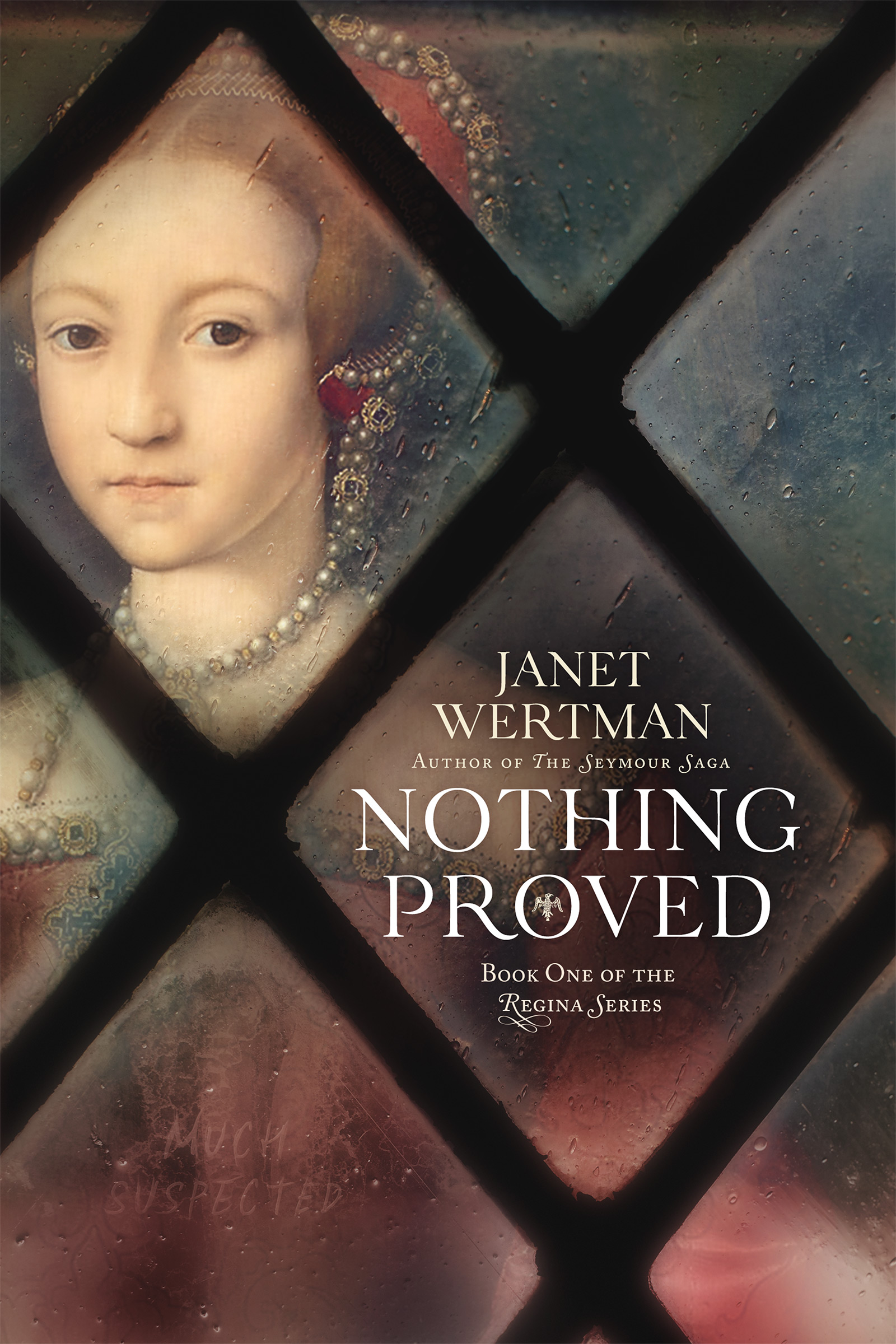
I’m delighted to welcome Janet Wertman and her new book, Nothing Proved, to the blog #HistoricalFiction #TudorFiction #ElizabethTudor #BlogTour #TheCoffeePotBookClub

I’m delighted to welcome Janet Wertman and her new book, Nothing Proved, to the blog with a guest post.

Guest Post

Thank you for having me on your blog to talk about my historical research, though I feel a little guilty given how much more information I have available to me than you do! The Tudor Era really marks the beginning of careful documentation of the historical record – and it’s all carefully indexed. The touch of a button opens the records of the Privy Council, writings of ambassadors, details of state trials. I can examine floorplans of castles and paintings of gardens long gone, I can watch videos of hawking parties and court dances, listen to period music played on antique instruments. But that much bounty can actually be overwhelming, so I focus my research in predictable thematic waves to get the narrative where it needs to be.  

As my very first step with a new story, I start with books, or rather, I have always started with books and I am working on a way to do so again. I lost some amazing volumes in the January fires – things like The Social History of Lighting, Lady Hoby’s Diary, Conyers Read’s two-volume biography of William Cecil, and a host of other biographies, all of which told slightly different versions of the history. That’s the toughest part about researching: the inconsistent reports, the unreliable biographers. Of course, that can also be a bit of a hall pass for an author!

Anyway, once I have an idea what my story will be, I start to assemble dates into a detailed timeline, cherry-picking the ones I intend to use or need to keep in mind, and jotting down notes. From that, I outline the actual novel, date-stamped to keep me honest. Then the writing, which sends me down mid-course rabbit holes for scene-level information: the where, the why, the time of day – and an understanding of the relevant political context: that’s where letters come in. Any letter will have something to recommend it, but ambassadors’ letters are usually a goldmine. When I was writing The Boy King, I happened upon one relating how Edward VI plucked a dead falcon as a warning to his Council…yes I used that. Did I know that a similar rumor once surrounded Charles V? Yes, but again, the source gave me a hall pass…

Beyond that comes the truly granular part of the research, taking me back to books and websites and everything in between. The descriptions of Elizabeth’s clothes and dresses were helped along by Queen Elizabeth’s Wardrobe Unlock’d, an amazing resource that assembles inventories of the Wardrobe of the Robes, descriptions of the royal artificers, the different fashion styles and fads, and so much more. Descriptions of small household furnishings were invented with reference to the New Year’s Gift Exchanges 1559-1603, another rabbit hole to mine. Of course, sometimes the warrens are empty. Back in The Path to Somerset, I needed to show Henry closeted at Oatlands after learning about Catherine Howard’s infidelities. I wanted to find the period equivalent of him sitting in his bathrobe eating ice cream from the tub. It was easy enough to find the sumptuary laws that justified a silk night robe with a black jennet lining…but apparently he would have been scooping whale blubber and that would have required too much explanation to use. Instead, I had to simply give him empty wine goblets and a tray of half-eaten food.

I will say, for the early part of Nothing Proved, I run into a bit of your problem (and the problem of any other writer of Saxon England): few sources that mention my main character, and none that really show her interacting with her closest friends…so my initial task was to cross-reference the official records of Elizabeth’s doings with those of the other people in her orbit and come up with the intersections that the story required.  I knew that Robert Dudley was keeper of Somerset House while it was in her use, I knew that William Cecil began to work for her just a month after a significant wedding they both would have attended, and so I was able to capture the depth of their respective relationships. In the end, big and small all come together. That is the beauty of research done right.

Here’s the Blurb

Danger lined her path, but destiny led her to glory…

Elizabeth Tudor learned resilience young. Declared illegitimate after the execution of her mother Anne Boleyn, she bore her precarious position with unshakable grace. But upon the death of her father, King Henry VIII, the vulnerable fourteen-year-old must learn to navigate a world of shifting loyalties, power plays, and betrayal.

After narrowly escaping entanglement in Thomas Seymour’s treason, Elizabeth rebuilds her reputation as the perfect Protestant princess – which puts her in mortal danger when her half-sister Mary becomes Queen and imposes Catholicism on a reluctant land. Elizabeth escapes execution, clawing her way from a Tower cell to exoneration. But even a semblance of favor comes with attempts to exclude her from the throne or steal her rights to it through a forced marriage. 

Elizabeth must outwit her enemies time and again to prove herself worthy of power. The making of one of history’s most iconic monarchs is a gripping tale of survival, fortune, and triumph.

Buy Link

Universal Link:

Meet the Author

By day, Janet Wertman is a freelance grantwriter for impactful nonprofits. By night, she writes critically acclaimed, character-driven historical fiction – indulging a passion for the Tudor era she had harbored since she was eight years old and her parents let her stay up late to watch The Six Wives of Henry VIII and Elizabeth R.

Her Seymour Saga trilogy (Jane the Quene, The Path to Somerset, The Boy King) took her deep into one of the era’s central families – and now her follow-up Regina series explores Elizabeth’s journey from bastard to icon.

Janet also runs a blog (www.janetwertman.com) where she posts interesting takes on the Tudors and what it’s like to write about them.

Connect with the Author

Follow the Nothing Proved blog tour with The Coffee Pot Book Club

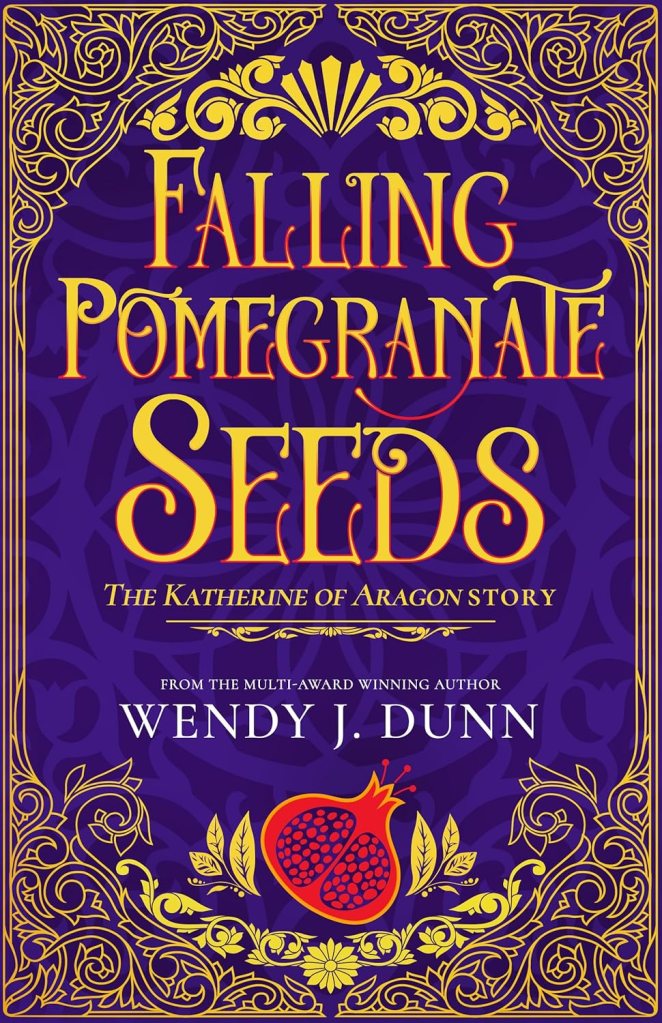
I’m delighted to welcome Wendy J.Dunn and her new book, Falling Pomegranate Seeds: The Katherine of Aragon Story, to the blog #HistoricalFiction #TudorFiction #KatherineOfAragon #Duology #BlogTour #TheCoffeePotBookClub

I’m delighted to welcome Wendy J.Dunn and her new book, Falling Pomegranate Seeds: The Katherine of Aragon Story, to the blog with a snippet.

Snippet

Furious, Ahmed bounded up from the cushions and stood over her. “Why doesn’t she write and tell me that now? My father writes to me but my mother, never.”

Beatriz bent towards him. “My prince, your father always writes a message from your mother.”

Sitting again beside her, Ahmed’s lower lip trembled. “A few words – that the king, my father, includes for her.”

Gathering her thoughts, Beatriz gazed at the book on her lap before eyeing Ahmed again. “Your mother would write if she was able. Do not fall into the mistake of believing what you see at Queen Isabel’s court is the same elsewhere. Dear prince, not all women know how to write.”

From The Duty of Daughters

Here’s the Blurb

In the Falling Pomegranate Seeds Duology, readers are transported to the rich historical tapestry of 15th and 16th-century Europe, where the lives of remarkable women unfold against the backdrop of political upheaval and personal struggles.

In the first book, beginning in 1490 Castile, Doña Beatriz Galindo, a passionate and respected scholar, serves as an advisor to Queen Isabel of Castile. Beatriz yearns for a life beyond the constraints imposed on women, desiring to control her own destiny. As she witnesses the Holy War led by Queen Isabel and her husband, King Ferdinand of Aragon, Beatriz dedicates herself to guiding Queen Isabel’s youngest child, Catalina of Aragon, on her own path. Beatriz’s role as a tutor and advisor becomes instrumental in shaping Catalina’s future as she prepares to become England’s queen.

Fast forward to the winter of 1539 in the second book, where María de Salinas, a dear friend and cousin of Catalina (now known as Katherine of Aragon), pens a heartfelt letter to her daughter, the Duchess of Suffolk. Unable to make the journey from her London home due to illness, María shares her life story, intricately woven with her experiences alongside Catalina. Their friendship has endured through exile and tumultuous times. María seeks to shed light for her daughter on the choices she has made in a story exploring themes of friendship, betrayal, hatred, and forgiveness. Through María’s narrative, the eternal question Will love ultimately triumph?

Buy Link

Universal Link

Meet the Author

Wendy J. Dunn is an award-winning Australian writer fascinated by Tudor history – so much so she was not surprised to discover a family connection to the Tudors, not long after the publication of her first Anne Boleyn novel, which narrated the Anne Boleyn story through the eyes of Sir Thomas Wyatt, the elder.

Her family tree reveals the intriguing fact that one of her ancestral families – possibly over three generations – had purchased land from both the Boleyn and Wyatt families to build up their own holdings. It seems very likely Wendy’s ancestors knew the Wyatts and Boleyns personally.

Connect with the Author

Follow the Falling Pomegranate Seeds blog tour with The Coffee Pot Book Club

Posts

I’m reviewing the fabulous Arden by GD Harper, an intriguing story of Shakespeare’s earliest years #blogtour #histfic #newrelease

Here’s the blurb

Alice Arden, idealistic and wealthy beauty, burnt at the stake for killing her husband, the former mayor of Faversham in Kent. But was she really the one responsible for the most scandalous murder of the sixteenth century?

William Shakespeare, England’s greatest playwright, born thirteen years after Alice’s execution. Why does his first-ever play, written about this murder, not bear his name?

This is a story of two people – one reviled, one revered – whose fates become linked in a tale of corruption, collusion and conspiracy. Based on historical documents and recently published academic research, Arden unveils shocking new evidence about the murder of Thomas Arden and reveals, for the first time, a remarkable new theory about Shakespeare’s early years.

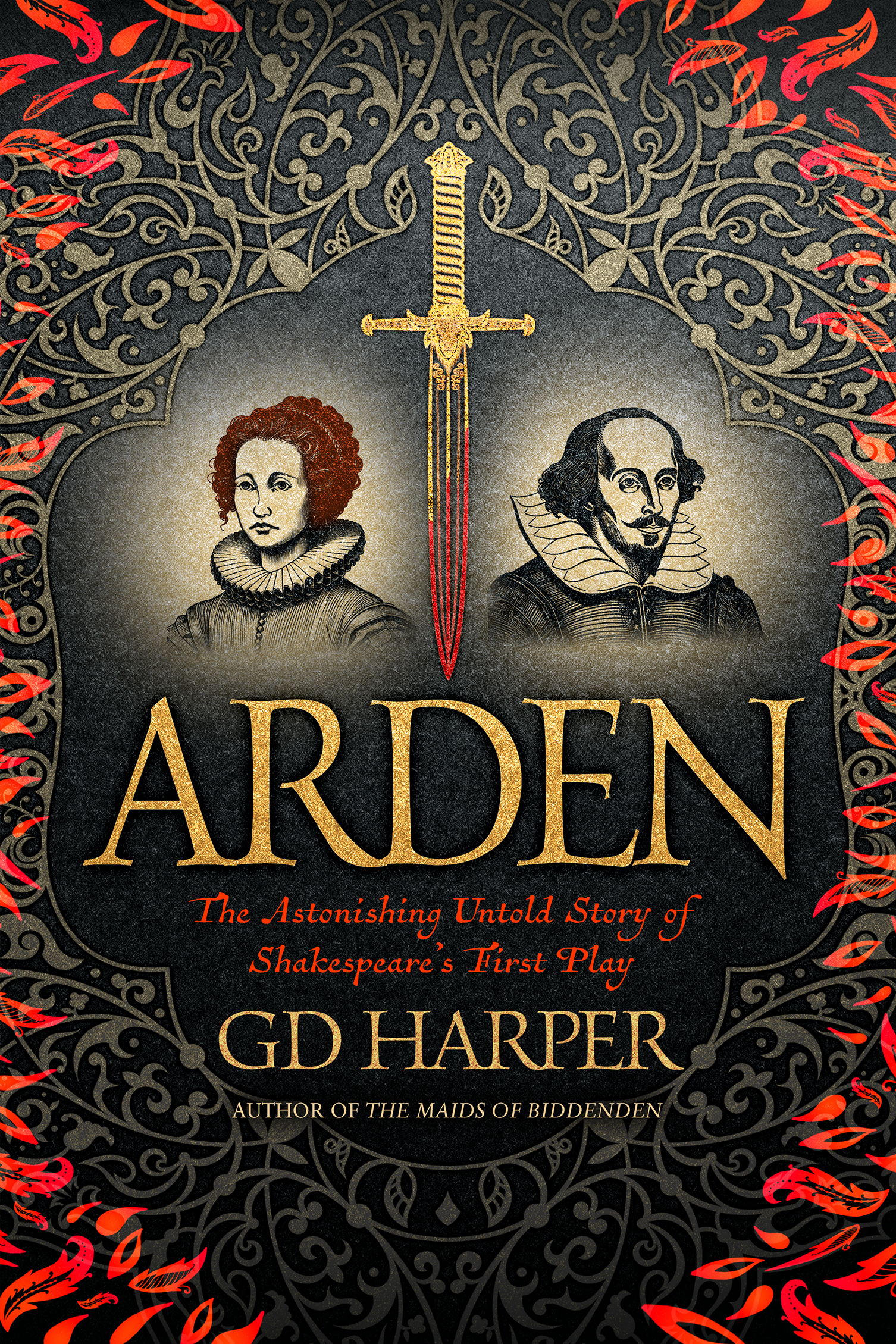
Book cover for Arden by GD Harper

Purchase Links

https://www.amazon.co.uk/Arden-astonishing-untold-story-Shakespeares-ebook/dp/B0DFBV9YSB

https://www.amazon.com/Arden-astonishing-untold-story-Shakespeares-ebook/dp/B0DFBV9YSB

My Review

Arden by GD Harper is a beautifully crafted tale of two individuals, separated by forty years, with the one entirely unaware of the other, that reimagines the hows, whats and ifs of Shakespeare’s earliest efforts to become a playwright and the story that ‘called’ to him to enable him to do so.

Offering us two points of view, that of Alice Arden, and Shakespeare himself, we travel through the years that lead to Alice’s crisis and see how Shakespeare was himself plagued by her story. To begin with, Alice is the most likeable character. Young, bright, and vivacious, she pulls the reader along through the years when Shakespeare is not at all the man we might expect him to be. His life is difficult (perhaps because he makes it so, to be honest), but soon his dreams of being an actor and writing plays becomes his driving force. At the same time, Alice’s life is blighted by her marriage to a man of ambition but no regard for the life of his wife, who is deeply unhappy. Shakespeare’s life improves as events rumble towards their awful conclusion for Alice. But he is still somewhat haunted by the tale of Alice Arden, and I adored how her final narrative is teased from those who have knowledge of it that isn’t known by all. It is horrific.

This was such an engaging narrative. I liked neither character at points, but they both had endearing qualities that made it a joy to read this fictionalised account of what might have been. 

It’s a fabulous story.

Check out my review for The Maids of Biddenden.

Meet the author

I have written four novels in the last eight years under the penname GD Harper. 

My last novel, The Maids of Biddenden, the imagined biography of real-life conjoined twins born in 12th-century Kent, was featured on BBC TV News and was the winner of the Next Generation Indie Book Awards in the historical fiction category, shortlisted for the 2022 Selfie Award at the London Book Fair, and shortlisted or longlisted for five other awards. 

It has over a thousand ratings on Amazon UK and Goodreads, with an average score of 4.3. Across the major Amazon markets, it reached number sixteen in overall paid-for e-book sales, number two in historical fiction and number one in medieval historical fiction. 

Author GD Harper
Blog banner for the Arden by GD Harper blog tour

I’m delighted to welcome KJ McGillick and her new book, Whispers Through The Canvas, to the blog #blogtour #newrelease #mystery

I always love to hear how authors research their historical characters and events. KJ McGillick shares how she researched for her new book, Whispers Through the Canvas.

Howard Dynasty 

To study the powerful Howard dynasty of Tudor England, I consulted a variety of digitized primary sources available online such as wills, letters, court records, and literary works from the era. Searching through these collections, I found references to key Howard figures like the poet Henry Howard, Earl of Surrey and his ill-fated relatives. Contemporary accounts provided glimpses into the scandals, romantic entanglements, and power dynamics playing out at the royal court and aristocratic estates. Family correspondence shed light on inheritance disputes among the duke’s children. Literary pieces like Surrey’s poems and writings by other Howards offered additional perspectives on their remarkable century – chronicling their ascent, arts patronage, and the perils their elite status invited.

Levina Teerlinc
To learn about Levina Teerlinc, one of the earliest professional female artists in Renaissance England, I turned to digitized primary sources and secondary analyses available online. High-resolution images of Teerlinc’s exquisite miniature portraits hosted by museums revealed her skill at capturing likenesses. I searched literature databases for any mentions of Teerlinc from writings of her era, finding scattered records confirming her lifelong court employment. While limited biographical details survive, historians have reconstructed some context about her Flemish origins and artistic training based on fragments of evidence. Scholarly articles also examined her pioneering role as an art tutor to noble pupils.

Witchcraft 16th Century

To investigate 16th century England’s witchcraft accusations and trials, I immersed myself in digitized primary sources and scholarly research available online. This allowed me to examine the social tensions, religious upheaval, and cultural forces behind the deadly persecution of alleged witches. I accessed sensationalized literature published during the witch-hunting frenzy, providing window into the paranoia around women supposedly consorting with the devil. Legal records and transcripts illuminated how flimsy the evidence used to condemn the accused often was – a person’s reputation, a death, or unexplained misfortune could prompt charges. Scholarly journal articles analyzed the complex sociopolitical tensions of the Reformation era that enabled witchcraft hysteria to take hold, from anxieties over female autonomy to ruling elite distrust of the peasantry.

16th century Occult Symbols 

To explore the fascinating world of occult symbols and their place in 16th century English society, I delved into a range of digitized primary source materials and secondary scholarship available online.

One key resource was literature databases containing published works from the era. I examined texts on astrology, alchemy, magic, and esoteric philosophies for insight into the symbolic languages and imagery employed by occult practitioners and their beliefs. Engravings and woodcuts accompanying these works provided a visual catalogue of seals, sigils, and emblems.

I also searched through digitized diaries, letters, and accounts of the time for references to the use of occult symbols and coded markings in both elite and folk traditions. Correspondence between royals, nobles, and scholars sometimes mentioned encrypted communications or arcane symbolic meanings.

Court records, witness depositions, and transcripts from witchcraft trials offered a window into societal suspicion surrounding the perceived nefarious use and misuse of symbols and markings associated with magic and the supernatural. The language and suspicions revealed in these documents shed light on prevailing attitudes.

Additionally, I consulted digitized archaeological reports, inventories of home goods, and material culture studies to trace actual artifacts and objects bearing occult symbols that survived from 16th century England – whether tools, talismans or architecture.

By synthesizing evidence from these various sources, I could begin mapping the complex cosmological, mystical, and coded symbolic vernacular of the Renaissance era and how it manifested in art, writings, personal practice, and dangerous accusations.

Intrigued? Here’s the blurb.

Here’s the blurb

Murder… Across The Fractured Corridors of Time.

Plunged into a centuries-old conspiracy, unconventional art historian Rowan Southeil must race against time to stop an ancient evil from rewriting history. When a young artist is murdered in a chilling echo of medieval violence, Rowan finds herself drawn to a seemingly unrelated clue – a 16th-century painting drenched in arcane symbols. Aided by the victim’s haunting presence, Rowan delves into the painting’s mysterious past, uncovering a dark conspiracy that stretches back generations.

Teaming up with the pragmatic Detective Lancaster, the intuitive Rowan follows a daring journey through time, from the storied halls of 16th-century Tudor London to the secretive 17th-century Vatican. As she awakens powerful elemental forces within herself, Rowan must decipher the painting’s secrets – and the connection to the medieval-style murder – before Lev Rubilov, a dark centuries-old occultist, can harness its magic to rewrite history and restore a twisted vision of the past.

For fans of genre-blending thrillers like A Discovery of Witches and Outlander, this captivating novel weaves together mystery, the supernatural, and high-stakes time travel in a race against the clock to stop an ancient evil. Whispers Through The Canvas is a crime story, filled with action and adventure, within a historical fantasy milieu. If you love kick-ass heroines who have a bit of life experience and walk on the wild side of magic, this book is for you.

Purchase Links

https://www.amazon.com/dp/B0CTHSC2H5/

https://www.amazon.co.uk/dp/B0CTHSC2H5/

Meet the author

From the bustling courtrooms of Atlanta to the vibrant tapestry of 16th-century England, Kathleen McGillick’s life and career have been a captivating blend of legal expertise, artistic passion, and a thirst for adventure.

Fueled by an undergraduate and graduate degree in nursing, Kathleen built a foundation of compassion and care. This dedication to service later led her to pursue a Juris Doctorate, allowing her to navigate the intricacies of the legal system for nearly three decades. Her courtroom experience now breathes life into the intricate details of her legal thrillers, ensuring every courtroom scene crackles with authenticity.

But Kathleen’s story doesn’t end there. A deep fascination with art history led her to delve into the world of renowned artists and captivating eras. Her particular passion for 16th-century British history allows her to transport readers to richly detailed historical settings, immersing them in the culture, politics, and societal nuances of the time.

Driven by an unwavering dedication to her craft, Kathleen has independently published eleven legal thrillers since 2018. Her commitment extends beyond solo creation, as she actively engages with the writing community, honing her skills through workshops and courses led by renowned authors.

And when she’s not crafting captivating narratives, Kathleen embarks on international journeys, soaking in diverse cultures and experiences that further enrich her writing. This global perspective adds another layer of depth and realism to her stories, allowing readers to connect with characters and settings that transcend geographical boundaries.

To delve deeper into Kathleen’s world and explore her captivating legal thrillers, visit her website at kjmcgillick.com.

Connect with the author

kjmcgillick.com 

https://www.goodreads.com/kmcgillick

https://www.facebook.com/KJMcGillickauthor/

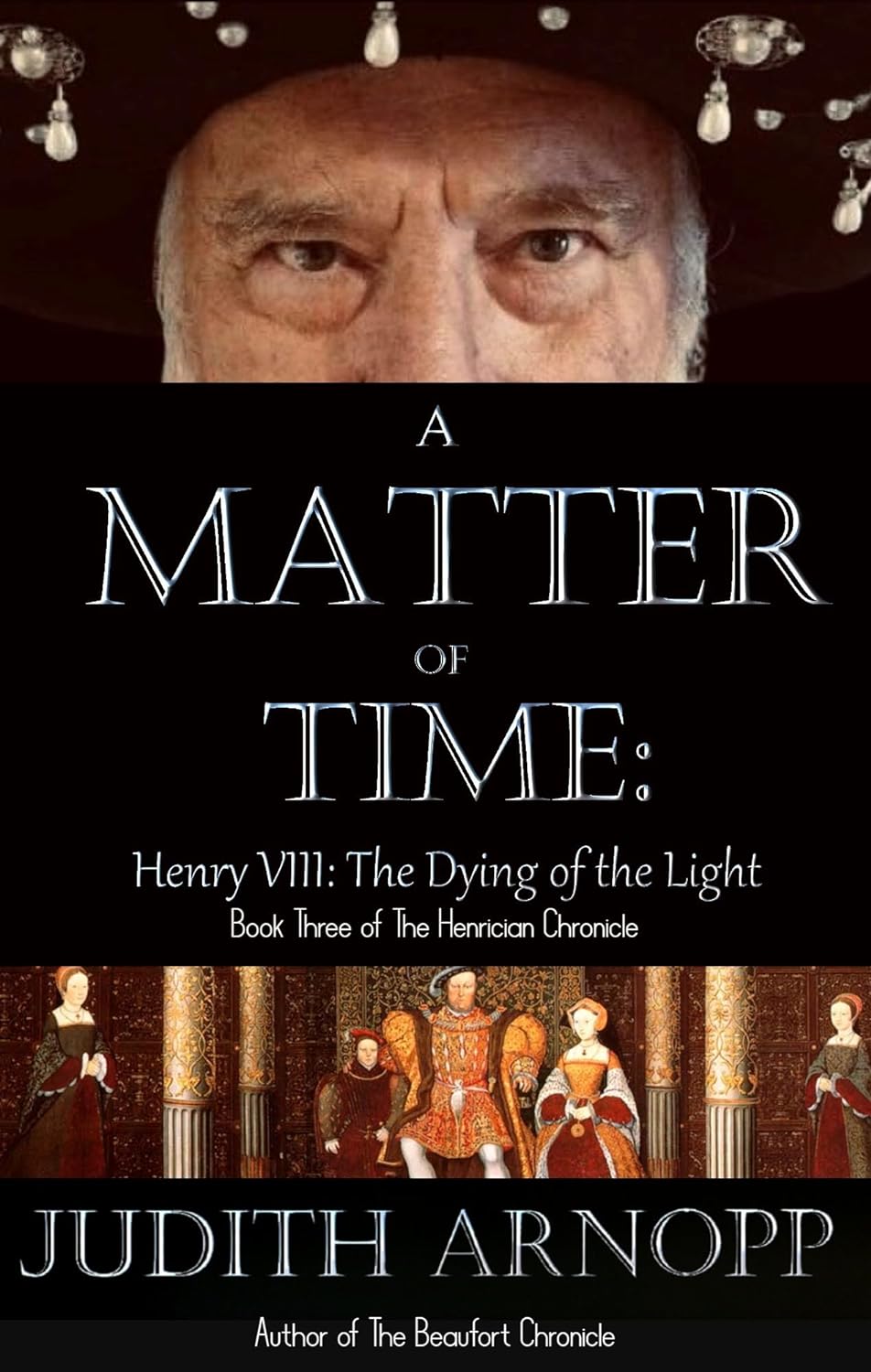
I’m delighted to welcome Judith Arnopp and her new book, A Matter of Time, to the blog #HistoricalFiction #Tudor #HenryVIII #NewRelease #BlogTour #CoffeePotBookClub

I’m delighted to welcome Judith Arnopp and her new book, A Matter of Time: Henry VIII, the Dying of the Light (Book Three), to the blog with a snippet.

Snippet: November 1541 Henry prepares for mass

It is good to be home, and my spirits remain high. I jest with my gentlemen as my beard, greyer now than gold, is trimmed, my nails clipped. I select a doublet of black with silver thread embellishing the cuffs, the slashes across the sleeves and chest revealing a fine silk shirt beneath.

My looking glass reflects a king, a man in his prime, a wise and honest man. As my dress sword is arranged at my hip, I take the gloves Denny is offering and tuck them into my girdle.

“Where is my psalter?” I ask, and it is instantly produced. I tuck it beneath my arm and make my way to the chapel, wondering as I go if Katherine will make it to Mass so early.

My mind is not on prayer this morning. I am feeling spry enough to go for a ride. Brandon has returned to court this week, perhaps we can ride out together as we used to, if he is feeling up to it. I often forget that he too grows old.

The sound of the choir greets me, their voices ascending to the dizzy heights of the blue and gold ceiling. Immediately, I feel contrition that my mind had strayed to sport rather than giving thanks to God for another day. Before I enter and take my seat, I rearrange my face into a pious expression. But as I sit down, I notice a folded slip of paper. I pick it up, look about the chapel to discover the author of the note, but when no man meets my eye, I unfold the message and … the world around me crumbles.

Here’s the blurb

With youth now far behind him, King Henry VIII has only produced one infant son and two bastard daughters. More sons are essential to secure the Tudor line and with his third wife, Jane Seymour dead, Henry hunts for a suitable replacement.

After the break from Rome, trouble is brewing with France and Scotland. Thomas Cromwell arranges a diplomatic marriage with the sister of the Duke of Cleves but when it comes to women, Henry is fastidious, and the new bride does not please him. The increasingly unpredictable king sets his sights instead upon Katherine Howard and instructs Cromwell to free him from the match with Cleves.

Failure to rid the king of his unloved wife could cost Cromwell his head.

Henry, now ailing and ageing, is invigorated by his flighty new bride but despite the favours he heaps upon her, he cannot win Katherine’s heart. A little over a year later, broken by her infidelity, she becomes the second of his wives to die on the scaffold, leaving Henry friendless and alone.

But his stout heart will not surrender and leaving his sixth wife, Katheryn Parr, installed as regent over England, Henry embarks on a final war to win back territories lost to the French more than a century before. Hungry for glory, the king is determined that the name Henry VIII will shine brighter and longer than that of his hero, Henry V.

Told from the king’s perspective, A Matter of Time: Henry VIII: the Dying of the Light shines a torch into the heart and mind of England’s most tyrannical king.

Buy Links

Meet the Author

A lifelong history enthusiast and avid reader, Judith holds a BA in English/Creative writing and an MA in Medieval Studies. She lives on the coast of West Wales where she writes both fiction and non-fiction. She is best known for her novels set in the Medieval and Tudor period, focusing on the perspective of historical women but recently she has been writing from the perspective of Henry VIII himself.

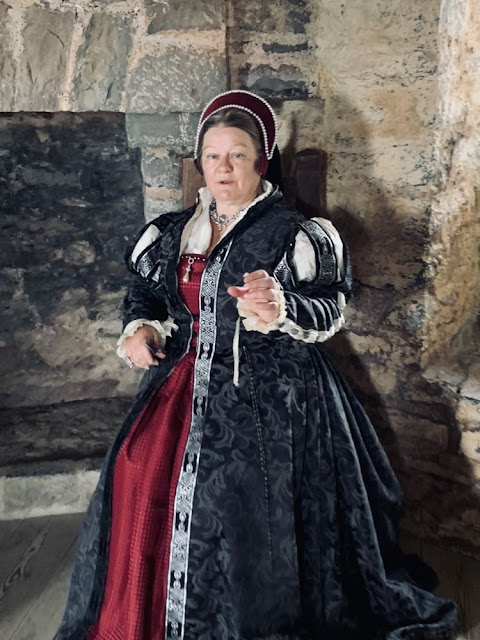
Judith is also a founder member of a re-enactment group called The Fyne Companye of Cambria which is when she began to experiment with sewing historical garments. She now makes clothes and accessories both for the group and others. She is not a professionally trained sewer but through trial, error and determination has learned how to make authentic looking, if not strictly historically accurate clothing. Her non-fiction book, How to Dress like a Tudor was published by Pen and Sword in 2023.

Her novels include:

  • A Song of Sixpence: the story of Elizabeth of York
  • The Beaufort Chronicle : the life of Lady Margaret Beaufort (three book series)
  • A Matter of Conscience: Henry VIII, the Aragon Years (Book One of The Henrician Chronicle)
  • A Matter of Faith: Henry VIII, the Days of the Phoenix (Book Two of The Henrician chronicle)
  • A Matter of Time: Henry VIII, the Dying of the Light (Book Three, Coming soon)
  • The Kiss of the Concubine: a story of Anne Boleyn
  • The Winchester Goose: at the court of Henry VIII
  • Intractable Heart: the story of Katheryn Parr
  • Sisters of Arden: on the Pilgrimage of Grace
  • The Heretic Wind: the life of Mary Tudor, Queen of England
  • Peaceweaver
  • The Forest Dwellers
  • The Song of Heledd

Previously published under the pen name – J M Ruddock.

  • The Book of Thornhold
  • A Daughter of Warwick: the story of Anne Neville, Queen of Richard III

Connect with the Author

Website: Blog: Bluesky: BookBub:

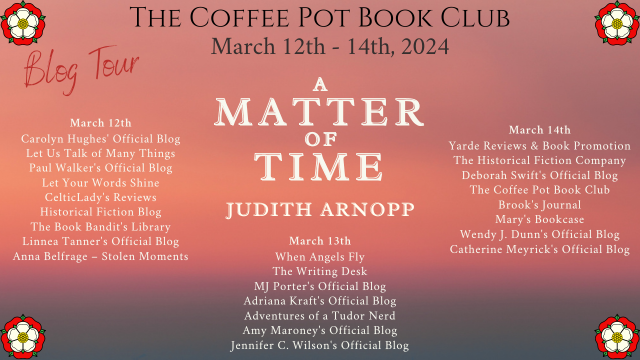
Follow the A Matter of Time blog tour with The Coffee Pot Book Club