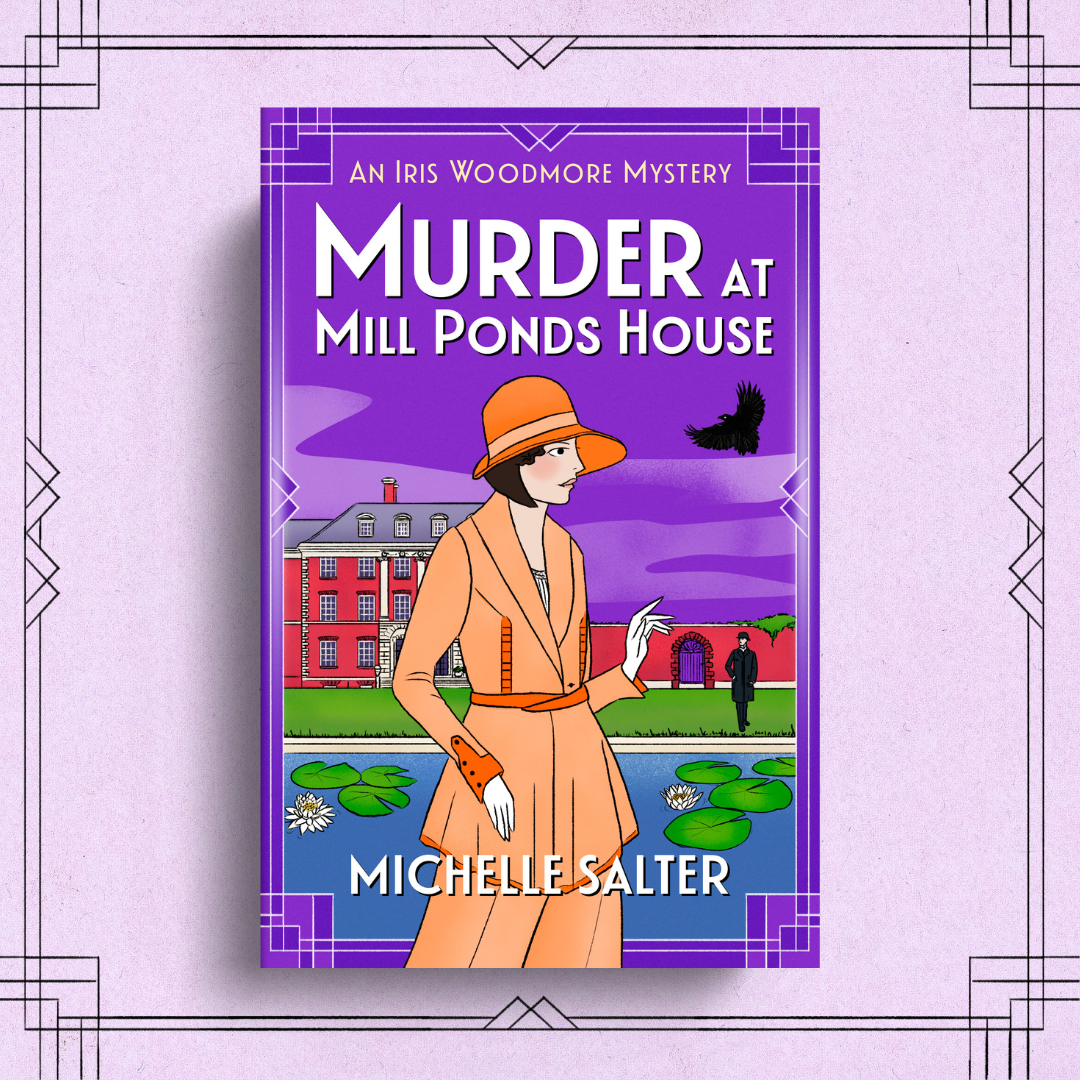


When Drew Hopgood’s brother, Frank dies whilst out climbing, it’s initially thought his death was simply a tragic accident. But when Frank’s much younger wife, Stella arrives at Hopgood Hall demanding half of Frank’s inheritance the Hopgoods and Alexi Ellis begin to suspect foul play…
Stella has no claim to Frank’s legacy, but she isn’t giving up easily. And with the reputation of Hopgood Hall still fragile, Alexi can’t afford to lose any more money because of Stella’s greed.
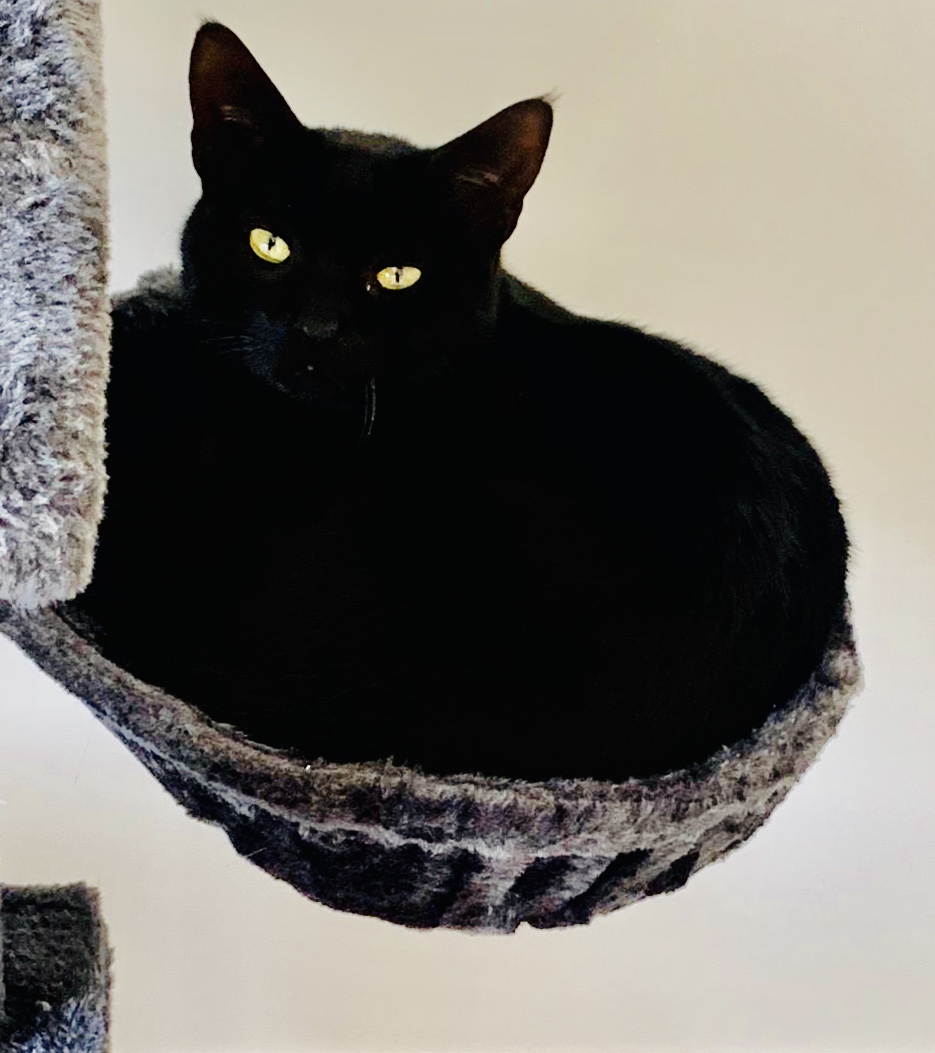
So Alexi, her partner Jack, and Cosmo of course, decide to dig deeper into Stella’s background. Just how did she meet Frank and were they really as in love as she claims?
As the trio investigate, they discover Stella has her own reasons for being back at Hopgood Hall. And rather than console the grieving widow, Alexi and Jack think they might need to look again at Frank’s tragic death – because rather than an accident this could have been a deadly fall – planned by his own wife!
A boutique hotel. A feral cat. A recipe for murder!
A gripping murder mystery, perfect for fans of Faith Martin, Frances Evesham and Emma Davies.
A Deadly Legacy is the sixth book in the Hopgood Hall Murder Mystery series, and I have read all six.
This latest book is perhaps the most enjoyable to date. It abounds with subterfuge that only Alexi and Jack can untangle with the aid of Cosmo and the new addition to the menagerie, both of whom have starring roles, as is only correct for our feline friend and his buddy.
Stella is such a well-depicted character that I hated her within moments of her appearing on the page:) I’ve not had that sort of reaction since the despicable teacher in HP – Delores Umbridge. I had to put the book down for a while. But, when I picked it up again, I was engrossed in the unfolding story of treachery and deceit.
A great new addition to the contemporary mystery series. I’m always excited to discover what Alexi, Jack and Cosmo will become embroiled in next.
Evie Hunter has written a great many successful regency romances as Wendy Soliman and is now redirecting her talents to produce dark gritty thrillers for Boldwood. For the past twenty years she has lived the life of a nomad, roaming the world on interesting forms of transport, but has now settled back in the UK.
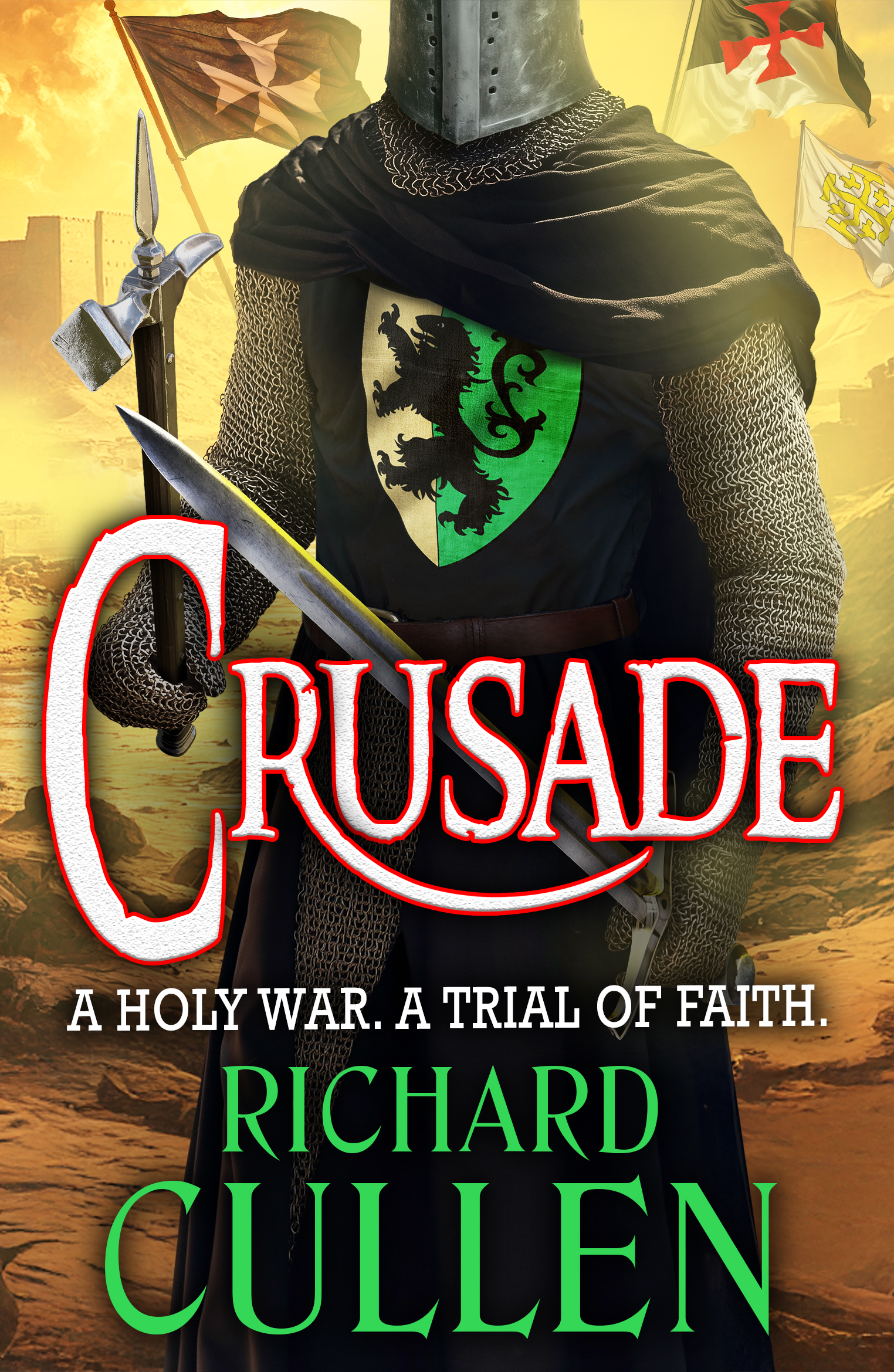
The greatest threat to the empire is not a foreign army, but the thirst for power at all costs.
1038 AD, Constantinople
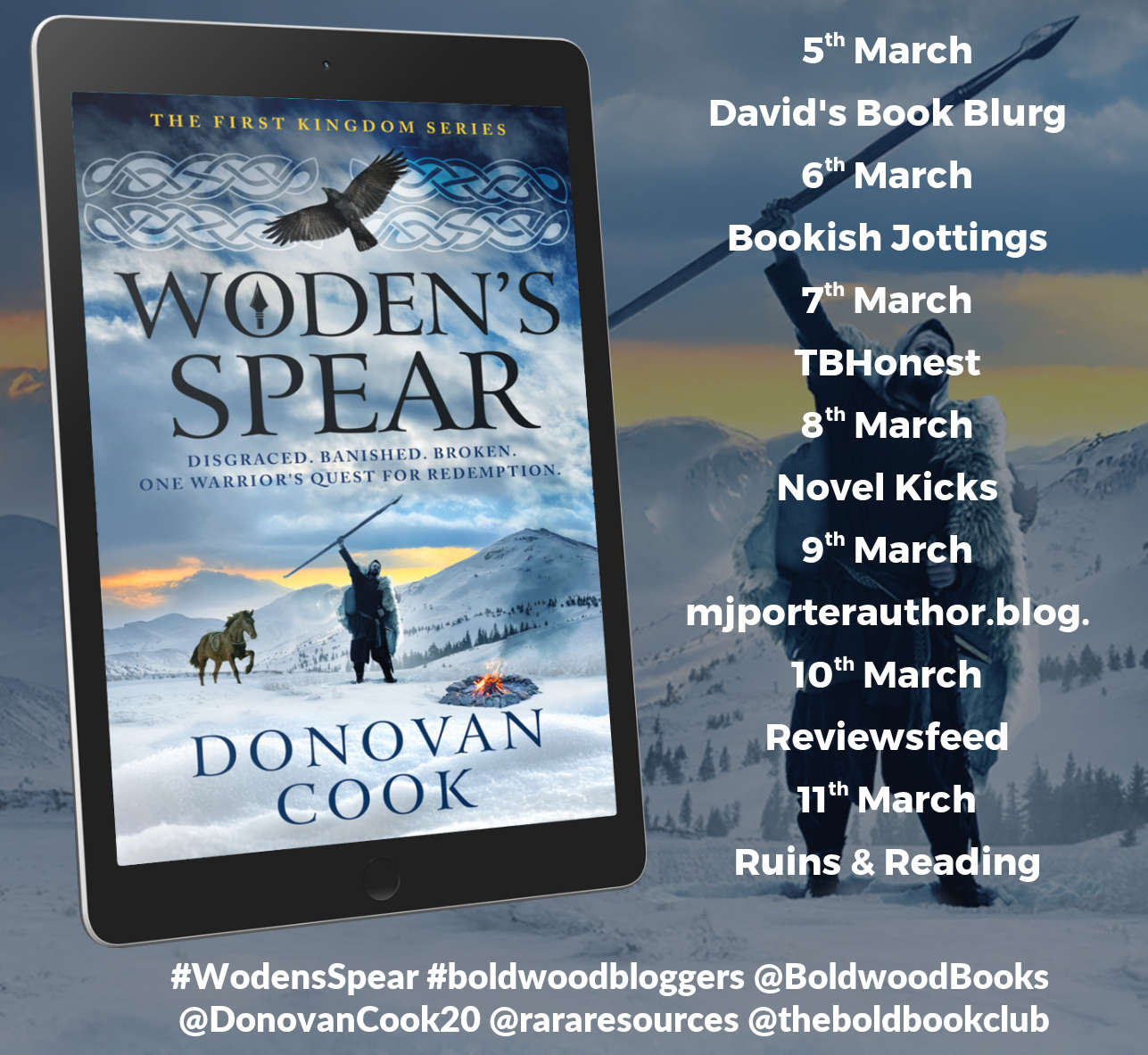
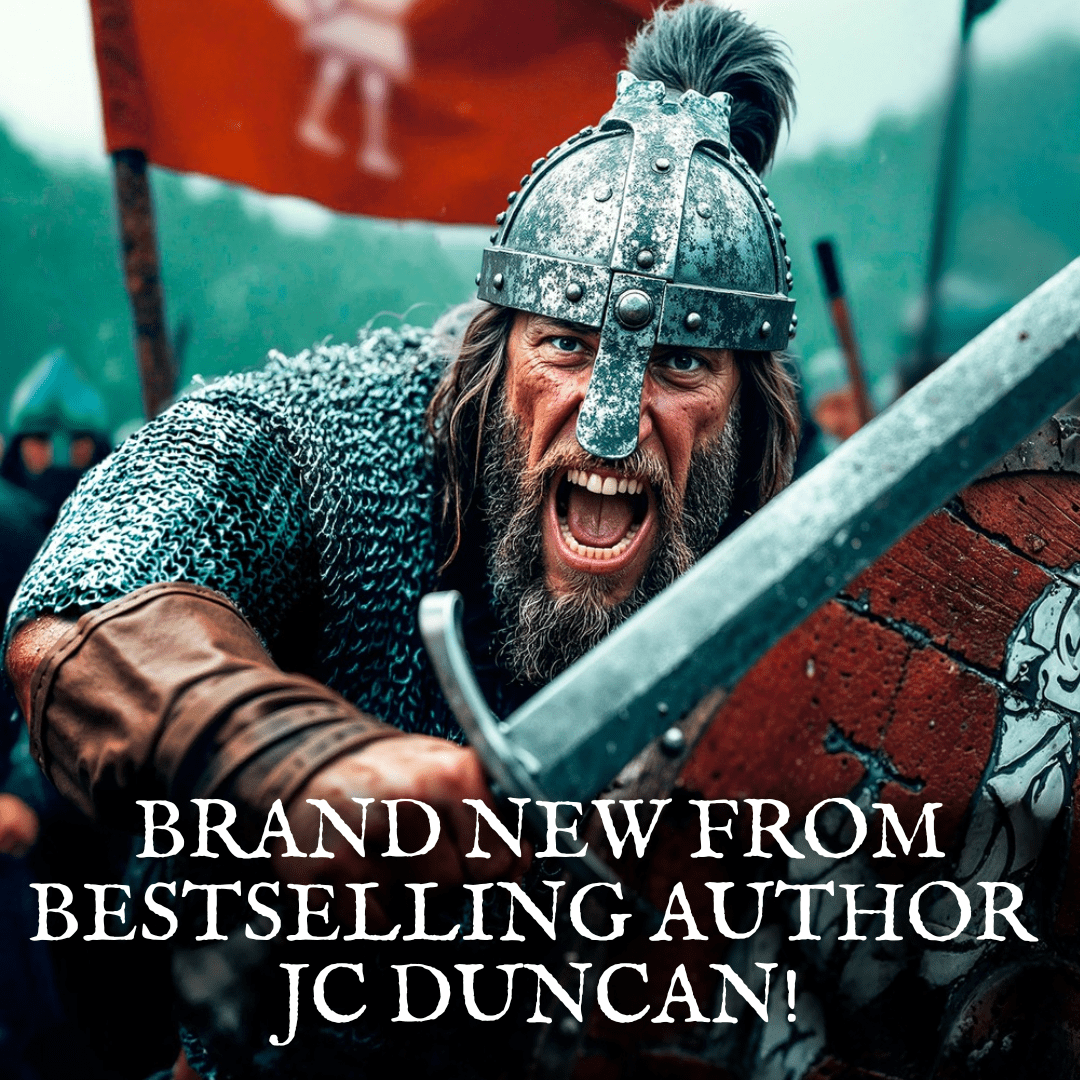
Harald Sigurdsson has risen through bravery and glory in battle to become the commander of the legendary Varangian guard, the oath-sworn protector of the Roman throne in Constantinople; The wielder of the emperor’s axe.
With the estranged Emperor and Empress consumed in a deadly palace war for sole control of the empire, Harald must somehow keep the peace. In a city where everything is taken by subterfuge, violence and deceit, what must an honourable man do to protect the empire from both its enemies and itself?
Harald might be forced to choose between his life and his oaths, to take a side or become an enemy of all, and watch, outcast, as the empire crumbles. Harald is a master of war, but victory in battle will no longer be enough.
The explosive next chapter in the extraordinary tale of Harald Hardrada
Emperor’s Axe is book three in JC Duncan’s epic retelling of Harald Hardrada’s life. I’ve read the first two books.
Emperor’s Axe sees our hero, Harald, still deeply embroiled in the court politics of the era, only this time, he does seem to have found himself an enemy that might just be his match, John, the Emperor’s brother. As such, he quickly finds himself and many of his men shipped off to fight a seemingly impossible offensive in Sicily and on the mainland of what is now Italy. The expedition’s leaders are ineffective, placed there because of politics and not skill. That’s never going to go down well with Harald, who has a thirst for action and brave daring-do. And it is up to our narrator, Eric the Follower, to intervene when allies threaten to become enemies.
Eric, narrating his tale fifty years later, has the benefit of hindsight and can gloss over some details, but he never shies away from being honest about Harald’s character. He might follow him, but always agree with him? That’s another thing entirely.
And indeed, Harald’s thirst for action and brave daring-do, as opposed to having a sound head for politics, leads him to the tumultuous concluding events of the novel, when he is finally allowed to return to Constantinople, and finds the Empress and Emperor in crisis.
JC Duncan never lets us forget that the Emperor and Empress rule over vast swathes of land. Neither can we forget that Harald has a goal in mind, reclaiming his dead brother’s kingship as soon as he’s able. This is a hugely entertaining novel, managing to encapsulate so much, including the Norman warriors as well as the Norsemen, and stuffed with detail. A fabulous read.
J. C. Duncan is a well-reviewed historical fiction author and amateur bladesmith, with a passion for Vikings. The first book in his fictional series about Harald Hardrada, the last great Viking leader, will be published by Boldwood in October 2023.
Welcome to the blog. I love hearing about author’s writing routines.
My approach to writing
I’m often asked about the process I follow when writing. It isn’t always the same, but the overall approach does tend to follow a similar route. Hopefully by breaking it down into bite sized chunks you’ll get the general idea of how I work – if it’s of interest to you.
The starting gun!
With my books being Murder Mysteries the catalyst for a new book is always the twist or what I refer to as the kernel of the book. When that idea arrives the whole process starts, with next the creation of new main characters and then the main plot; all manufactured to take the reader along a journey that arrives at the twist/kernel.
Thinking time.
In all, I probably spend 90% of the time I devote to the process when I’m working on a Carmichael book, simply thinking about the plot and working out in my head when I’ll introduce new characters, new clues and red herrings to my reader. As the book nears its conclusion my thoughts start to turn towards how the reader will be told who committed the crime, how they did it (if it’s not obvious) and why. This is a critical phase as it’s the time I decide how I’m going to pull together all the loose ends and the false trails I’ve laid in the previous chapters.
I may go for days or even weeks without writing, after the book has been started, but I’m almost always thinking about it.
When and where I write.
Peace and quiet are essential for me when I’m writing. Also being able to gaze aimlessly out of the window at the world while I write is key, too. For that reason, there are just two places I write from, my home office, or a quiet table overlooking our garden in my Norfolk bolt hole. Both are my creative heavens.
Writing sessions.
People are quite shocked when I tell them that I don’t write every day. They are equally surprised when I tell them that I rarely write more than 1000 words in one session: often as little as just 500.
I’m an early bird so I only write in the mornings. It’s my productive time. I can start as early as 5am when I have the urge to write, but by about 1pm I find I’ve had enough of tapping away on my keyboard – so I stop. I keep thinking about the story, though, and what I’ll be writing in the next writing session.
Time it takes to produce a book.
This varies, but on average it takes about 9 -12 months to write the first draft and about 3-6 months to check, proofread and generally hone the novel into its final shape.
Proof reading and checking.
This is a key stage in the writing process but, if I’m honest, the least interesting part of writing for me. But it’s essential. Apart from the obvious need to look for grammatical and spelling mistakes, this is a time for making subtle changes to the work to accomplish as good a novel as I can. I solicit help at this stage as I find a fresh pair of eyes invaluable. They always spot errors I’ve missed and may well continue to overlook, however many times I re-read the book.
When to stop.
This may seem a strange thing to include, but in my view it’s as important as any other stage. A book is the same as a painting or a piece of music. If you so desire, you can carry on forever rewording parts and finely modifying small details. However, there must come a point where you must tell yourself that you’ve polished and honed the work enough and it’s time to publish and let it out into the wide world. Having my next book starting to take over my thoughts is also an excellent sign for me to accept it’s now time to move on.
I hope you’ve found my mini summary of some interest. If not, it’s probably time for you to call time and move on from my ramblings 😊
Here’s the blurb
When the body of Doug Pritchard, an aging music journalist with a history of sensational scoops, is found face down in a dark roadside ditch, DCI Carmichael and his team embark on an investigation that takes them in several directions. What did Pritchard uncover? Did that secret bring about his violent demise? And do the tragic deaths of two local pop idols, twenty years before, have any relevance to his murder? As DCI Carmichael delves deeper into the case it becomes clear that, despite the outwardly close connections of the residents of the small hamlet of High Maudsey, neither long term friendships nor family ties should be taken at face value. This the tenth in his series of well-honed detective novels by Ian McFadyen featuring DCI Carmichael, leads the detective and his team through as many twists and turns as the quiet country lane where Doug Pritchard’s body was discovered As with all McFadyen’s Carmichael novels, this book is packed with a host of intriguing characters and an expertly crafted plot; and once again the author displays his skill as a writer in the great tradition of English crime novels.
Ian McFadyen was born in Liverpool and enjoyed a successful career in marketing before becoming a writer. He lives in Hertfordshire with his wife but spends a great deal of his time writing in his bolthole retreat on the Norfolk / Suffolk border. Blood Matters is the tenth in a series featuring DCI Carmichael.
When I came to the end of my Wartime in the Valleys series, I had to consider whether to carry on with the South Wales setting, where my mum had come from, or pick a different location for a new series. A couple of years before, I’d had an idea for a World War One series set in Littlehampton, at the luxury Beach Hotel, and now seemed like a good time to write it.
Why Littlehampton, a seaside town in West Sussex? Because that’s where I was brought up. I was born just up the coast in Worthing, which gets a couple of guest appearances in the series, including in Love and Loss at the Beach Hotel. We moved to Littlehampton when I was three. My dad had a café on Pier Road, opposite the River Arun, so I was often in that part of town, especially as a teenager when I worked as a waitress there. In the evenings, my friends and I would often go to the Butlin’s funfair, between the café and the beach.
The grass common, beyond Butlins, was huge, and taking pride of place on it was the magnificent Beach Hotel. I never stepped inside it, so when it came to writing the first book, I had no idea how it would have been set out. This is where a vivid imagination comes in handy. Looking at where the windows and doors were situated on the various photographs I found, I made a plan of my own version of the interior, which I still use now.
Downstairs, I’ve placed a smart foyer, a lounge for guests and a glorious ballroom. There’s a large dining room next door to a conservatory, both of which overlook the extensive garden. On the photographs, the left side of the hotel looks functional, so this is where I placed the staff rooms and quarters, including the kitchen, storerooms, scullery, stillroom and staff dining room,
The characters from the series are often by the beach, on the riverside, or in town. A combination of old photographs and my own memories enabled me to build up a distinct picture of what the town would have looked like then. Having visited Littlehampton many times since I left at eighteen, I am convinced that the town of my youth was much more like the town of World War One than the town of today, even though there had been many changes even by then.
Butlin’s funfair, which I mentioned earlier, wasn’t there in the time the series is set, but instead the area consisted of two rows of coastguards’ cottages, a windmill and the Casino Theatre. These were all dispensed with in the early 1930s, when Butlins was built. Next to this, the path used to run alongside the River Arun, but this was built up at the same time, so you could no longer walk to the water’s edge. The buildings have changed again in the last twenty years, and all that remains that my characters would recognise now is the old battery mound (from the Napoleonic Wars) and the pier (the place of many trysts in the novels).
Back then the quay, between Pier Road and River Road, was full of workshops and warehouses. Many of these were for shipbuilding. This is where Victor Perryman’s flying boat workshop, Humphrey Wilmot’s, was situated in Love and Loss at the Beach Hotel, though in real life it was called Hubert Williams. All of these have gone, as has the Britannia Public House. The green swing bridge at the end of River Road, occasionally crossed by my characters, has also gone. These were all still there in my youth, so I can at least picture them.
South Terrace, several long terraces of grand houses on the opposite side of the street to the hotel, is still there, almost in its entirety, I’m glad to say. This is where various day guests who visit the hotel live, including the rather prim and disapproving Lady Blackmore. Surrey Cottage, the home of Victor Perryman and his family, still sits at the eastern end of South Terrace, though it has now been separated into flats.
What of the hotel itself? Sadly, it sustained damage in the storm of 1987 and was pulled down in the early 1990s. In its place was built a much less elegant curve of flats called Beach Crescent. The only thing that still exists is part of the original garden wall. I’m just glad that, in my books, I’m able to bring the hotel back to life once more.
Aerial of Littlehampton around the time of the books. Beach Hotel is on the common towards the left
Here’s the blurb
Can true love win the day?
Hetty Affleck is working as a maid at the prestigious Beach Hotel in Littlehampton. Her beau, Lorcan, is away at war and has recently stopped replying to her letters but she is determined to keep her spirits up. When she meets wealthy shipbuilder’s son Victor Perryman, they pass the time of day and they both feel a connection but she can’t allow herself to think anything more of it – not only does she have Lorcan to think of, but she and Victor are divided by wealth and class.
Yet they meet again and Hetty is charmed and intrigued by Victor and his openness towards her. It becomes harder to ignore the attachment growing between them.
When Lorcan comes back on leave, Hetty is forced to face her true feelings. Who does she really love, and can that love conquer everything in its path?
Francesca has enjoyed writing since she was a child. Born in Worthing and brought up in Littlehampton in Sussex, she was largely influenced by a Welsh mother who loved to tell improvised stories. A history graduate and qualified teacher, she decided to turn her writing hobby into something more in 2006, when she joined a writing class.
Writing as both Francesca Capaldi and Francesca Burgess, she has had many short stories published in magazines in the UK and abroad, along with several pocket novels published by DC Thomson.
Her Welsh World War 1 sagas were inspired by the discovery of the war record of her great grandfather, a miner in South Wales. Heartbreak in the Valleys was a finalist in the Historical Romance category of the Romantic Novelists’ Association Awards (RoNAs) in 2021. Her latest series, The Beach Hotel, is set in her own childhood town, where her Italian father had a café on the riverside. The first in that series, A New Start at the Beach Hotel, won the Romantic Saga Award in the RoNAs in 2024.
Francesca is a member of the Romantic Novelists’ Association and the Society of Women Writers and Journalists. She currently lives on the North Downs in Kent with her family and a cat called Lando Calrission.
Have yourself a merry little fauxmance—with a dashing Santa who just might make it real.
Rosie Gonzalez isn’t having a wonderful Christmas time. Not when she’s at risk of losing her job as assistant manager of the Duchess—Victoria’s oldest boutique hotel. If she and her team can’t bring in more guests by the end of December, she’ll be let go. Adding to her stress is a calendar filled with family gatherings where her mom will inevitably nag her for still being single.
Drew Richardson isn’t faring much better. As if working alongside his ex at Northlife Fitness wasn’t bad enough, now she’s invited him to her December wedding. And since all his coworkers will be there, bailing isn’t an option. To get through it, he’ll need a plus-one for moral support.
So, when Rosie recruits him to play Santa for her hotel’s activities, he also proposes a fake-dating scheme to benefit them both. Just for the holidays—nothing more. But as things between them turn from nice to naughty, they’ll have to decide whether a real relationship could be the best Christmas gift of all.
Carla Luna writes contemporary romance with a dollop of humor and a pinch of spice. A former archaeologist, she still dreams of traveling to far-off places and channels that wanderlust into the settings of her stories. Her books have been called “escape reads,” ideal for perusing during a beachside vacation, a long flight, or a relaxing weekend at the lake. When she’s not writing, she spends her time reading, baking, and taking long walks while listening to pop culture podcasts. Though she has roots in Los Angeles and Vancouver Island, she currently resides in Wisconsin with her family and her feisty Siberian cat.
Afua is a promising acolyte of the Shanta Order, on the densely forested planet of Nuafri.
She volunteers to educate orphans – her lively ophanti – every ninth day. When one of her wards goes missing in a dangerous area full of sinkholes and deadly fauna, Afua knows the authorities won’t do anything about a single lost child.
Luckily for the orphan, Afua will.
She is armed only with her knowledge of wildlife, and implanted augmentations that can sometimes deter attacks. But she is not alone. The sentient, insect-like Dooga she has bonded with, named Akalie, will follow her anywhere, despite being heavily pregnant.
An unforgettable Amazofuturist adventure about compassion, courage, and finding your way in life.
Afua is a fabulous sci fi tale set in the Lost Solace universe. The reader is treated to a strange new world in dazzling glory, and to a strong-willed and determined main character in Afua.
While a novella length story, this is deeply engrossing and I was disappointed to reach the end. It certainly made me want to know more about the Lost Solace universe (I’ve read the first book. Check out my review here). Much is hinted at, and some things are made very clear to the reader. It really does feel as though I’ve stepped into a fully-formed and functioning location. It is enthralling, and not a little ‘weird.’
I thoroughly enjoyed Afua and look forward to reading more of the Lost Solace books.
About Karl Drinkwater
Karl Drinkwater writes dystopian space opera, dark suspense and diverse social fiction. If you want compelling stories and characters worth caring about, then you’re in the right place.
Karl lives in Scotland and owns two kilts. He has degrees in librarianship, literature and classics, but also studied astronomy and philosophy. Dolly the cat helps him finish books by sleeping on his lap so he can’t leave the desk. When he isn’t writing he loves music, nature, games and vegan cake.
Christoffer Petersen lives in a small forest in Jutland, in southern Denmark. He hasn’t always been Danish; in fact, he borrowed his pseudonym surname from his Danish wife, Jane. Chris writes all kinds of stories in different genres, but is best known for his crime books and thrillers set in Greenland.
While living in Greenland, Chris studied for a Master of Arts in Professional Writing from Falmouth University. Chris graduated with a distinction in 2015. He has been writing full-time since January 2018.
After learning of a suspicious attempt to burn down a beloved old pub, The Crooked Horse, Libby Sarjeant and her friend Fran reluctantly agree to investigate.
But when a local antiques dealer mysteriously disappears after apparently taking out his boat, it appears there are dark and sinister forces at play.
Can Libby and Fran uncover a connection between the fire and the missing man? And will unravelling a deadly case put them in terrible danger?
Lesley Cookman writes the Libby Sarjeant Murder Mysteries and the The Alexandrians, an Edwardian Mystery Series. She lives on the south east coast of England, and is a former model, actor, and journalist. Her four adult children are all musicians and writers.
Alice Arden, idealistic and wealthy beauty, burnt at the stake for killing her husband, the former mayor of Faversham in Kent. But was she really the one responsible for the most scandalous murder of the sixteenth century?
William Shakespeare, England’s greatest playwright, born thirteen years after Alice’s execution. Why does his first-ever play, written about this murder, not bear his name?
This is a story of two people – one reviled, one revered – whose fates become linked in a tale of corruption, collusion and conspiracy. Based on historical documents and recently published academic research, Arden unveils shocking new evidence about the murder of Thomas Arden and reveals, for the first time, a remarkable new theory about Shakespeare’s early years.
Arden by GD Harper is a beautifully crafted tale of two individuals, separated by forty years, with the one entirely unaware of the other, that reimagines the hows, whats and ifs of Shakespeare’s earliest efforts to become a playwright and the story that ‘called’ to him to enable him to do so.
Offering us two points of view, that of Alice Arden, and Shakespeare himself, we travel through the years that lead to Alice’s crisis and see how Shakespeare was himself plagued by her story. To begin with, Alice is the most likeable character. Young, bright, and vivacious, she pulls the reader along through the years when Shakespeare is not at all the man we might expect him to be. His life is difficult (perhaps because he makes it so, to be honest), but soon his dreams of being an actor and writing plays becomes his driving force. At the same time, Alice’s life is blighted by her marriage to a man of ambition but no regard for the life of his wife, who is deeply unhappy. Shakespeare’s life improves as events rumble towards their awful conclusion for Alice. But he is still somewhat haunted by the tale of Alice Arden, and I adored how her final narrative is teased from those who have knowledge of it that isn’t known by all. It is horrific.
This was such an engaging narrative. I liked neither character at points, but they both had endearing qualities that made it a joy to read this fictionalised account of what might have been.
I have written four novels in the last eight years under the penname GD Harper.
My last novel, The Maids of Biddenden, the imagined biography of real-life conjoined twins born in 12th-century Kent, was featured on BBC TV News and was the winner of the Next Generation Indie Book Awards in the historical fiction category, shortlisted for the 2022 Selfie Award at the London Book Fair, and shortlisted or longlisted for five other awards.
It has over a thousand ratings on Amazon UK and Goodreads, with an average score of 4.3. Across the major Amazon markets, it reached number sixteen in overall paid-for e-book sales, number two in historical fiction and number one in medieval historical fiction.
We regret to announce the tragic death of Phoebe Fredericks…
When crime novelist Phoebe opens the post and receives an invitation to her own funeral, she’s horrified. Not least because the date of her death is marked as tomorrow.
Deciding it’s nothing more than a prank from an enemy from her past, she determines to put it to the back of her mind.
But the next morning, when her completely infuriating postman (who likes to think himself her no.1 literary critic) rings her doorbell, a parcel of poisoned pen-nibs explodes in his face. Forced to confront the fact her correspondence is more RIP than RSVP, Phoeve realises someone must want her dead.
Together with the newly-formed Village Detectives – Juno, Mil and Felix – Phoebe resolves to find out who is behind the poison pen letters before they strike again and her fate is signed, sealed and delivered!
An totally hilarious, modern cozy crime mystery, from million-copy bestselling author Fiona Walker, perfect for fans of Richard Osman, Janet Evanovich and Janice Hallett.
The Poison Pen Letters is the second book in The Village Detective Series (or the VDs, as Juno somewhat unwittingly terms them). I’ve read book one and really enjoyed it. Book two is even stronger, perhaps because I know the characters, but also, I think because the plotting is even more secure. I genuinely had no idea who the real culprit was, which was fabulous.
Book 2 sees our intrepid foursome tackling the problem of who murdered the local postie on Phoebe’s doorstep with the use of a poison pen letter – a crime that, even though you know it’s coming at some point, is still quite shocking. While Pheobe’s husband is determined it’s someone outside the village from their past, Pheobe has other ideas. But of course, she is once more penning one of her crime novels (the little additions of that novel are delicious) and has no real time to focus on what’s happening. Juno is as outrageous as ever, and her mother is such a fun character as she dips in and out of the narrative, as does her creaky car.
The personalities of a small village are lovingly brought to life, and I appreciated all the N gauge model railway comments, as I once spent some time selling off a set. It was also good to see @VeryBritishProblems mentioned as part of the social media universe that makes up a large part of the novel.
The Poison Pen Letters is brimming with fabulous characters and a perplexing crime, and I thoroughly enjoyed it.
Meet the author
Fiona Walker is the million copy bestselling author of joyously funny romantic comedies. Most recently published by Head of Zeus, she will be turning to cozy crime for Boldwood. The first in her new Village Detectives series, The Art of Murder, will be published in May 2024.
Novels, ideas and the writing routine by Alice May
I’ve learned in the ten years that I have been writing, that there are many different stages involved in writing a novel. Each stage is different and, as a result, the routine changes accordingly. Writing my new novel, The Mid-life Trials of Annabeth Hope, involved the following stages.
Collecting my tools.
The initial phase of writing a book involves gathering ideas. Getting the right ingredients together, much as one might when baking a cake. A theme or a concept might strike me as interesting, and I’ll keep a mental note of interesting comments and character traits that I hear or see around me. At this point, I know that I will use these elements somewhere, but I’m not sure how, why or where.
Doing my research
Then comes the research stage. It is important to get this right. Making sure you use accurate information for those parts of your story that chime with reality is essential as this helps to build a bond of trust between writer and reader. Once you have the confidence of your reader, they will follow you wherever your story takes you as long as you remain within the boundaries of the reality you have set from the beginning.
Working the plot
Step three is plotting the story, making sure to hit the right story beats and include the tropes that readers expect, look forward to and find satisfying, whilst trying to add my own angle to them and avoid clichés. I used to write by the seat of my pants, but have learned over the years that an element of plotting saves time and the agony of running into a roadblock and having to start back at the beginning of a manuscript to rewrite the whole thing.
I often start to plot a story based around a particular character and situation. More often than not, though, another character pushes into the narrative and the story becomes more about them. It’s an experimental stage of trying different combinations out to see what has the capacity to sustain a plotline through to the end in a satisfying way. I can’t explain how I know something will work, I just recognise it when I see it.
Then comes the writing phase.
What precisely triggers the actual writing phase of a novel for me, I couldn’t say. I just know that it is time. All of the above ingredients for the story, the research and the plotting will have marinated sufficiently that I can dive in and write. This phase involves regular computer time; several hours a day if possible. I find early in the morning works best for me as I often wake up with the next part of the book already written in my head. I avoid looking at my phone or checking my emails until I have that new chunk of text wrangled onto the page, because social media and other outside influences will cause the words to disappear.
Of course, once the first draft is complete, then the delights of editing begin…
Life often gets in the way, which throws any form of routine I try to establish into chaos. The important thing to remember as a writer is to make sure that you are kind to yourself. We need to be mindful of deadlines looming, but we need to practice effective self-care. Working non-stop is counter-productive. Taking breaks and taking care of yourself are the keys to everything.
To all the writers out there, I wish you good luck.
Love
Alice
Here’s the blurb
Feisty country girl Annabeth Hope has sworn off men since her ex abandoned her. Juggling three resentful step-teens, a hyperactive toddler, a small holding, and a herd of rescued llamas, she has her hands full.
With the roof about to collapse on her crumbling New Forest home, she is desperate to find a way to hold her patchwork family together. The last thing she needs is an attractive distraction moving in next door.
Burnt-out, inner-city doctor Rick Mahon has left London and his medical career behind in a moment of professional crises. A malpractice lawsuit is on the horizon, and the cancel culture are snapping at his heels. His plan to stay under the radar is thrown off course when he meets his new neighbour and sparks start to fly.
Annabeth couldn’t be more different, but maybe they hold the key to each other’s happiness.
‘What more could we want from in life? Family, friends, llamas and hope… An excellent read.’ Jenny Kane, author of the best-selling Mill Grange Series.
A former GP surgery manager, school librarian and art teacher,Alice May is mum to four not-so-small children. She is married to the most patient man on the planet, and they live in the New Forest. Alice started writing in 2016 and she enjoyed playing with words so much that now she can’t stop. Alice writes as Alice May, Alice G May and A G May.