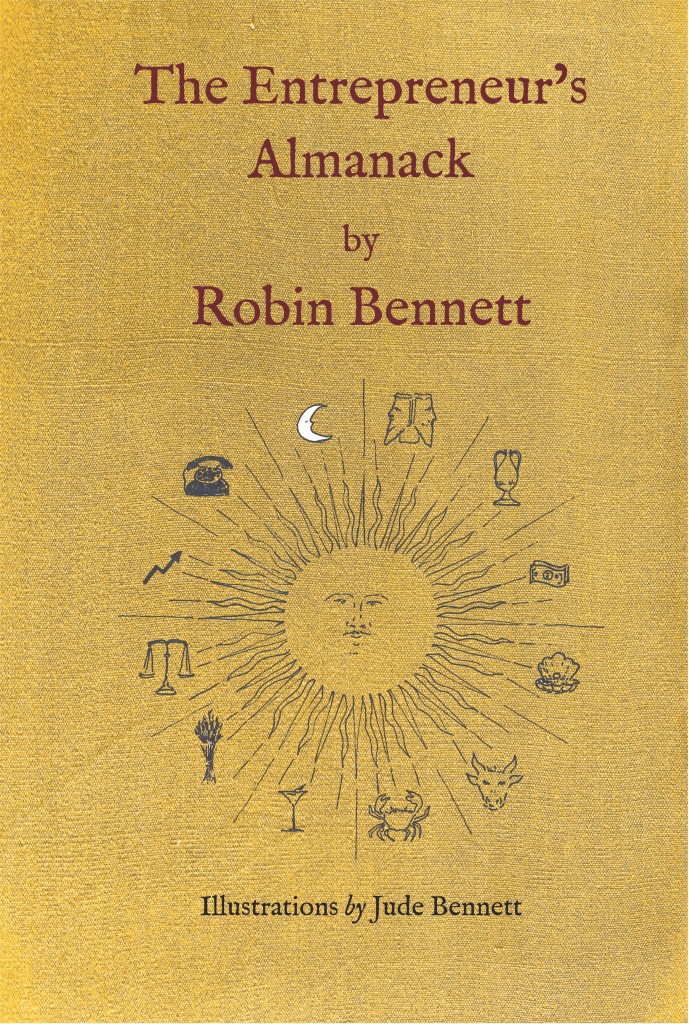
It’s cover reveal day for The Entrepreneur’s Almanack by Robin Bennett #newrelease #covereveal #entrepreneurship
Here’s the blurb
A new kind of yearbook has arrived for founders, dreamers, and doers. The Entrepreneur’s Almanack is a funny and deeply personal chronicle of what it feels like to start a business from scratch. This third in a series of short yearbooks celebrates the underrated art of entrepreneurship and a key aspect of the same: namely, success in business has more to do with intangibles than we care to admit.
The guesswork and the gut, divine providence, even dumb luck are all players and should be welcomed round the table, not ignored at the fringes.
The Entrepreneur’s Almanack is the cosmic crutch you never knew you needed in business, but shouldn’t be without.
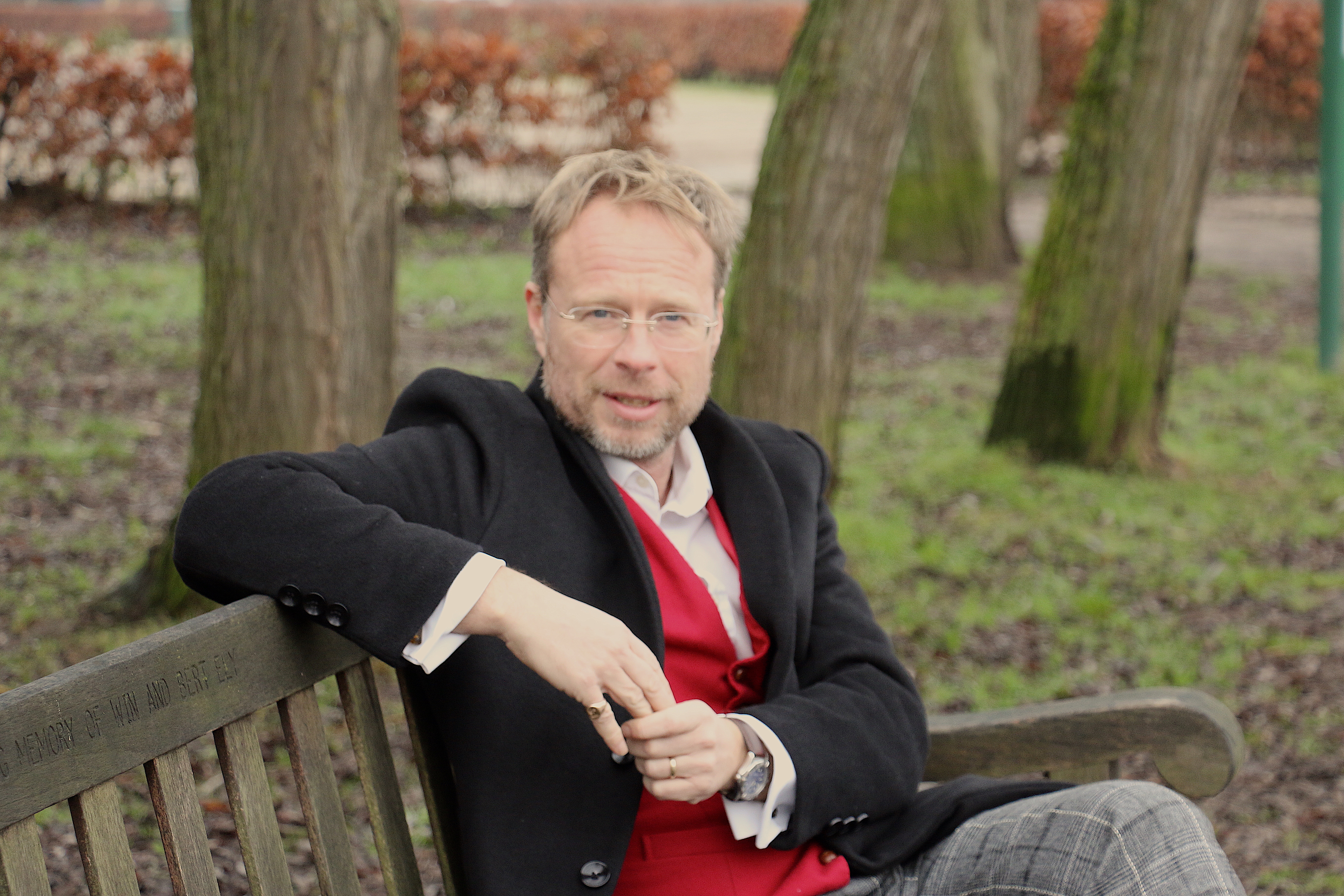
When Robin Bennett grew up he thought he wanted to be a cavalry officer until everyone else realised that putting him in charge of a tank was a very bad idea. He then became an assistant gravedigger in London. After that he had a career frantically starting businesses (everything from dog-sitting to cigars, tuition to translation)… until finally settling down to write improbable stories to keep his children from killing each other on long car journeys.
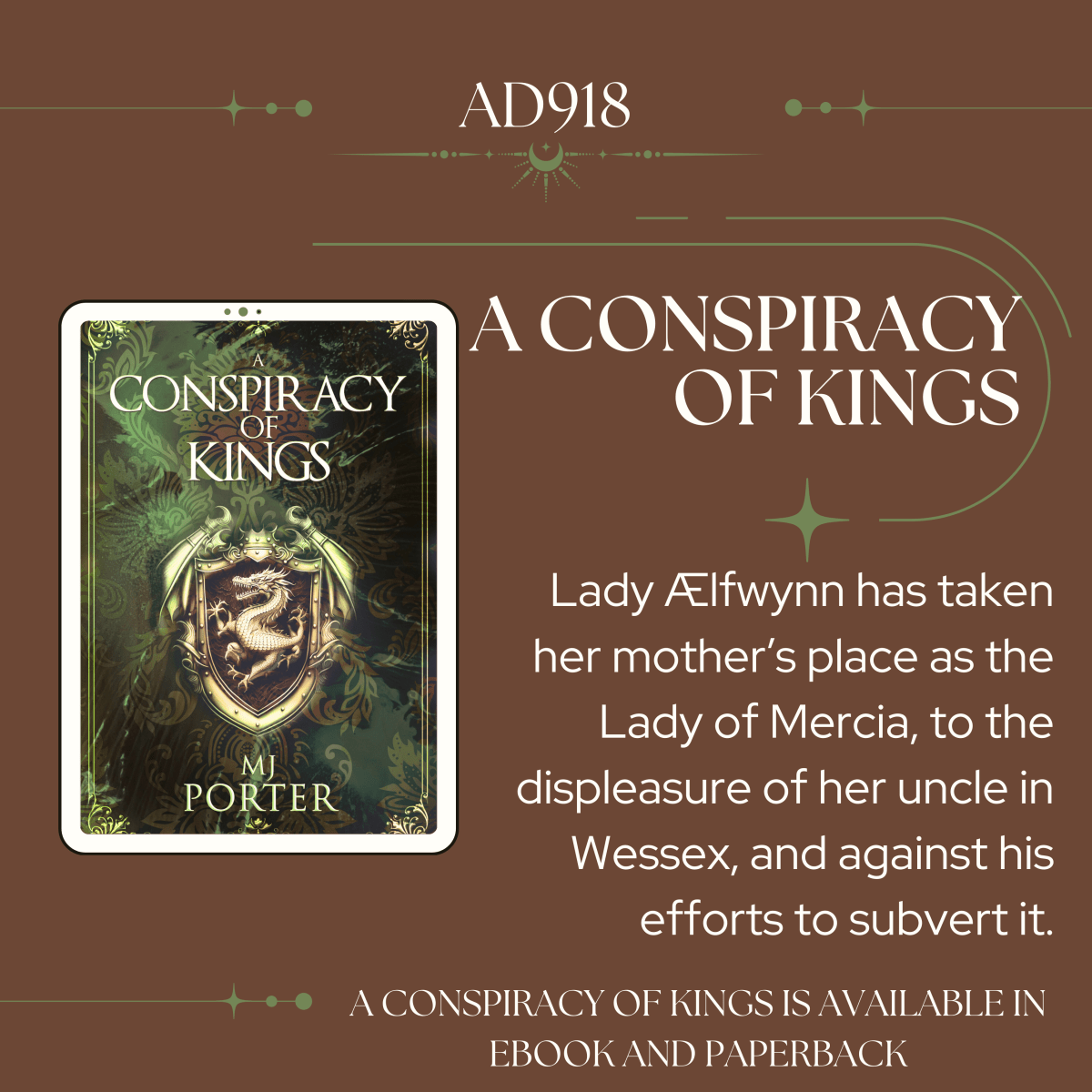
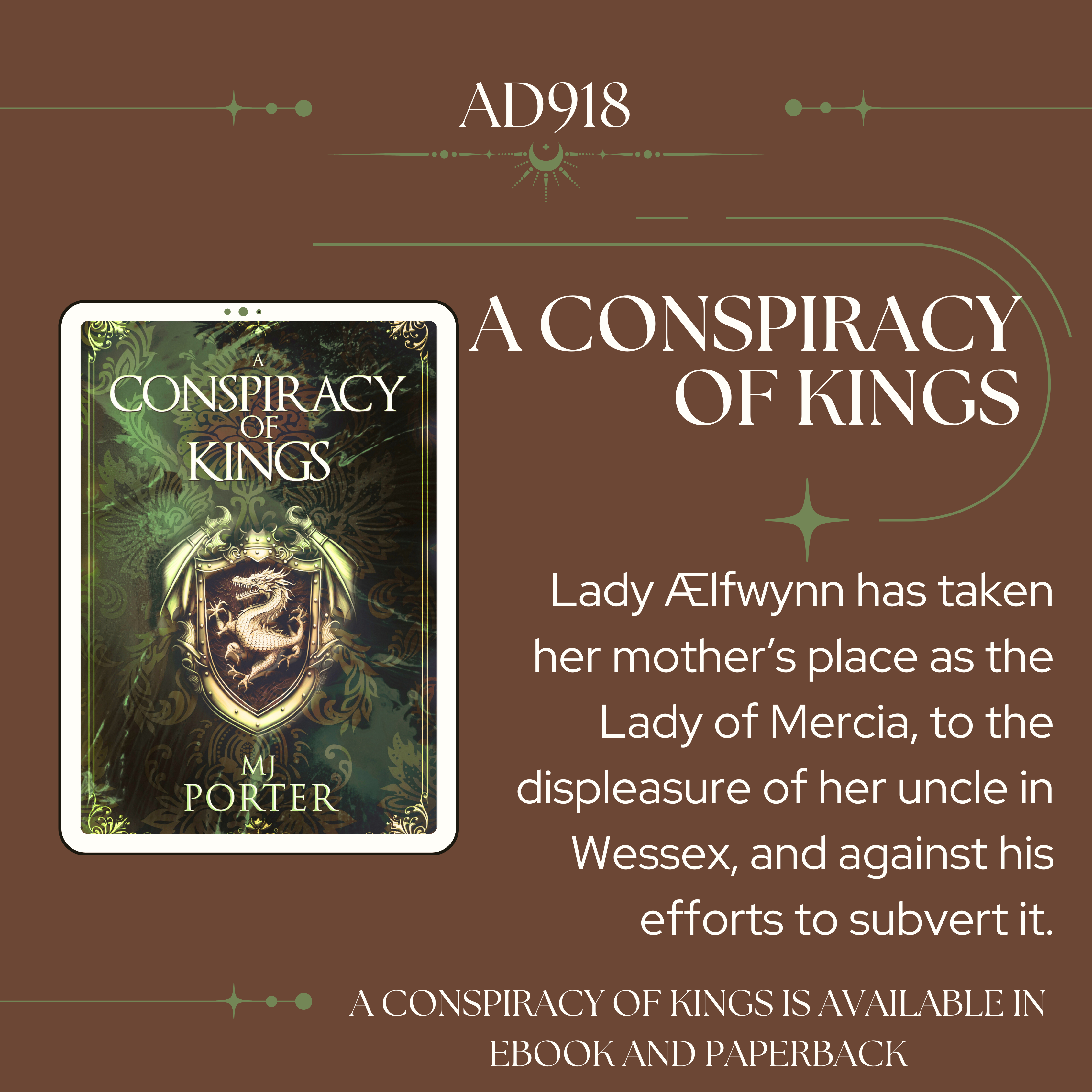
A Conspiracy of Kings – a little bit of history (may contain spoilers for my fictional recreation of Lady Ælfwynn
In the sequel to The Lady of Mercia’s Daughter, the story of Lady Ælfwynn continues. She is The Second Lady of Mercia, but everything isn’t as it seems. In the various recensions of The Anglo-Saxon Chronicles, an attempt can be made to piece together what befalls her.
The Anglo-Saxon Chronicle A version doesn’t mention Ælfwynn at all but instead has King Edward of Wessex/the Anglo-Saxons taking control of Tamworth as soon as his sister dies in June 918.
The Anglo-Saxon Chronicle E only mentions Lady Æthelflæd’s death in 918 and not what happens immediately after in Mercia. Lady Ælfwynn’s fate, however, is recorded in The Anglo-Saxon Chronicle C. We’re told that she was deprived of all power and ‘led into Wessex three weeks before Christmas.’ This entry is dated 919, although it’s normally taken to mean 918 due to a disparity between the dating in this part of The Anglo-Saxon Chronicle – known as the Mercian Register – where a new year starts in December as opposed to in the Winchester version of The Anglo-Saxon Chronicle where the new year starts in September.
These details are stark, offering nothing further. What then actually happened to Lady Ælfwynn? Was she deprived of her power? Was she deemed unsuitable to rule?
What adds to the confusion surrounding Lady Ælfwynn is that other than this reference in The Anglo-Saxon Chronicle, she doesn’t appear in any of the later sources. It’s as though she simply ceased to exist.
Two intriguing suggestions have been put forward to explain what happened to Lady Ælfwynn, both with some tenous corroboration.
Did she become a nun or, perhaps, a religious woman?
A later charter dated to 948 and promulgated by King Eadred is to an ‘Ælfwyn, a religious woman,’ and shows land being exchanged in Kent for two pounds of purest gold. (S535) There’s no indication that this Ælfwyn is related to our Ælfwynn or even to King Eadred. But, there remains the possibility that it might just have been the same woman, after all, Eadred would have been Ælfwynn’s cousin. Charter S535 survives in only one manuscript.
Alternatively, and based on a later source, Ramsey Abbey’s Book of Benefactors, we learn the following:
‘he [Athelstan Half-King] bestowed marriage upon a wife, one Ælfwynn by name, suitable for his marriage bed as much as by the nobility of her birth as by the grace of her unchurlish appearance. Afterwards she nursed and brought up with maternal devotion the glorious King Edgar, a tender boy as yet in the cradle. When Edgar afterwards attained the rule of all England, which was due to him by hereditary destiny, he was not ungrateful for the benefits he had received from his nurse. He bestowed on her, with regal munificence, the manor of Weston, which her son, the Ealdorman, afterwards granted to the church of Ramsey in perpetual alms for her soul, when his mother was taken from our midst in the natural course of events.’[i]
Which alternative is it?
There are only eight women named Ælfwynn listed in the Prosopography of Anglo-Saxon England (PASE), a fabulous online database. Of these, one is certainly Ælfwynn, the second lady of the Mercians, and one is undoubtedly the religious woman named in the charter from 948. (When the identification is not guaranteed, multiple entries are made in this invaluable online database). The other five women were alive much later than the known years Ælfwynn lived. One of the entries might possibly relate to her, but that’s all the information known about her.
And this is far from unusual for many of the women of the House of Wessex. Some women are ‘lost’ on the Continent. Some are ‘lost’ in England.
‘Were it not for the prologue to Æthelweard’s Latin translation of an Anglo-Saxon Chronicle, we would know of only six tenth-century royal daughters or sisters from early English sources and the names of only four of them. Three of these named ones are nuns or abbesses. Only Ælfwynn, the daughter of Æthelflæd and Æthelred of Mercia, and the two daughters of Edward/sisters of Athelstan who married Otto I and Sihtric of York, appear in the witness lists of charters, though Eadburh, daughter of Edward the Elder, is a grantee of a charter of her brother Athelstan.’[ii]
Reconstructing a ‘possible’ life for Lady Ælfwynn was the inspiration for both The Lady of Mercia’s Daughter and A Conspiracy of Kings, and the potential for family betrayal, politicking, and war with the Viking raiders was just too good an opportunity to miss.
[i] Edington, S and Others, Ramsey Abbey’s Book of Benefactors Part One: The Abbey’s Foundation, (Hakedes, 1998) pp.9-10
[ii] Stafford, P. Fathers and Daughters: The Case of Æthelred II in Writing, Kingship and Power in Anglo-Saxon England, (Cambridge University Press, 2018) p.142
Why did I write about Lady Eadgifu, the main character in Kingmaker? #histfic #authorinspiration
I don’t really know when I became a fan of historical fiction but I can take a good guess at who, and what, was to blame.
William Shakespeare and Macbeth.
When I was at school, we didn’t get ‘bogged’ down with grammar and spelling in English lessons, oh no, we studied stories, plays, words, and also the ‘motivation’ behind the use of those stories and those words. And it was Macbeth that first opened my eyes to the world of historical fiction.
Yes, Macbeth is a blood thirsty play, and it might be cursed, but more importantly, it’s based on Holinshed’s Chronicle of England, Scotland and Ireland.
Macbeth is nothing better than the first work of historical fiction that I truly read, and understood to be as such. And what a delight it was.
I remember less the story of Macbeth as presented by Shakespeare (aside from the three witches – “when shall we three meet again?” “well I can do next Wednesday,’ (thank you Terry Pratchett for that addition), than working out ‘fact’ from ‘fiction’ in his retelling of the story. And hence, my love of historical fiction was slowly born, and from that, stems my love of telling stories about ‘real’ people and the way that they lived their lives, looking at the wider events taking place, and trying to decide how these might, or might not, have influenced these people.
Shakespeare chose the story of a little-known ‘Scottish’ monarch for his historical fiction; my latest subject is the third wife of King Edward the Elder, again someone that few people have heard of, but whose relative, many years in the future, would have interacted with Macbeth, or rather with Mac Bethad mac Findlaích.
Lady Eadgifu, the Lady of Wessex, lived through a tumultuous time.
Many people studying Saxon England know of King Alfred (died AD899), and they know of his grandson, Æthelred II (born c.AD 968), known as ‘the unready’. But the intervening period is little known about, and that is a true shame.
Lady Eadgifu, just about singlehandedly fills this gap. Born sometime before c.AD903 (at the latest), her death occurred in c.AD964/6. As such, she probably missed Alfred by up to 4 years, and her grandson, King Æthelred by about the same margin.
But what she did witness was the emergence of ‘England’ and the ‘kingdom of the English’ as we know it. And it wasn’t a smooth process, and it was not always assured, and it was certainly never, at any point, guaranteed that England would emerge ‘whole’ from the First Viking Age.
And more importantly, rather than being one of the kings who ruled during this period, Lady Eadgifu was the king’s wife, the king’s mother, or even the king’s grandmother. She would have witnessed England as it expanded and contracted, she would have known what went before, and she would have hoped for what would come after her life. (I think in this, I was very much aware of my great-grandmother who lived throughout almost the entire twentieth century – just think what she would have witnessed).
Lady Eadgifu was simply too good a character to allow to lie dormant under the one event that might well be known about from the tenth century – the battle of Brunanburh. She does also appear in my Brunanburh Series.
So, for those fans of Bernard Cornwell’s ‘Uhtred’ and for those fans of Lady Elfrida at the end of the tenth century, I hope you will enjoy Lady Eadgifu. She was a woman, in a man’s world, and because she was a woman, she survived when men did not.
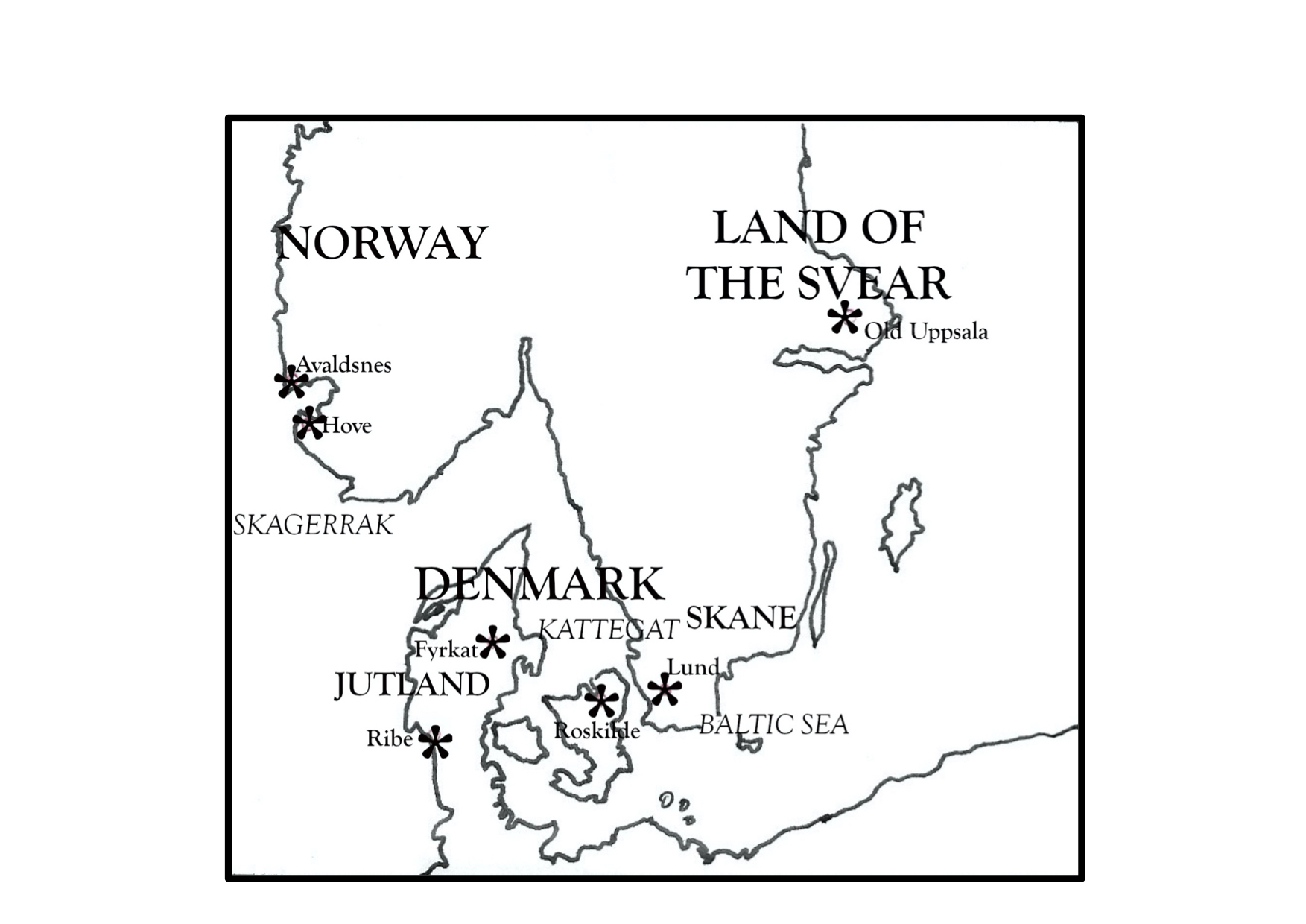
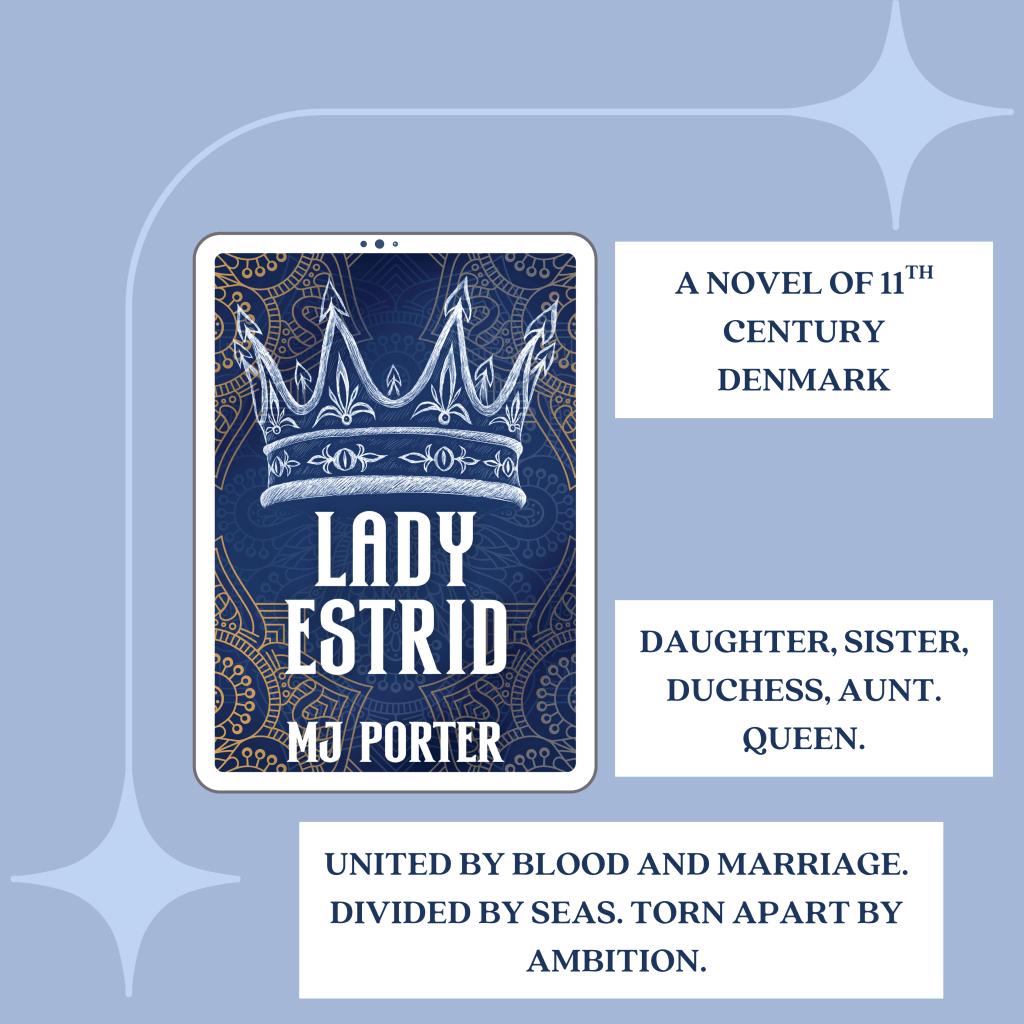
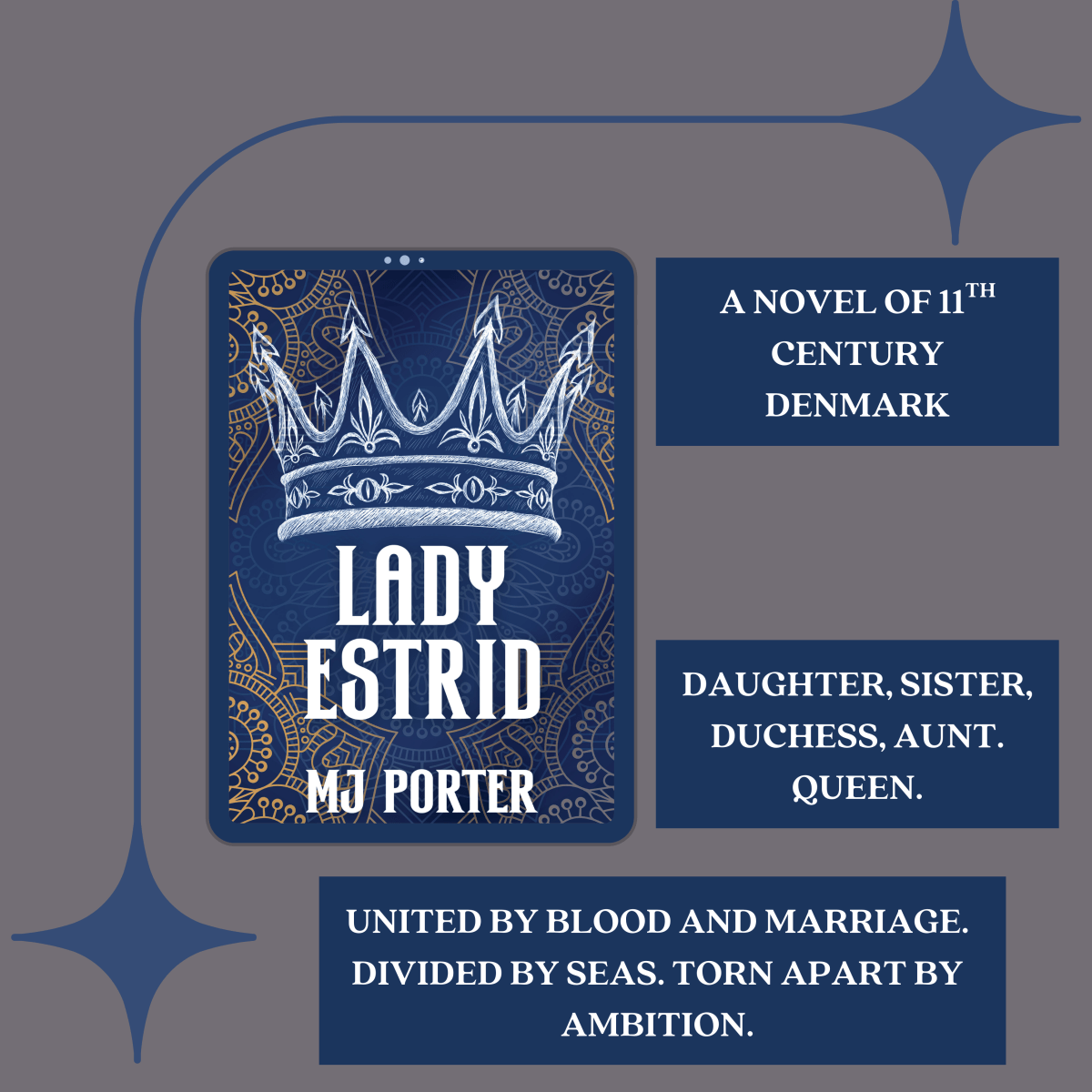
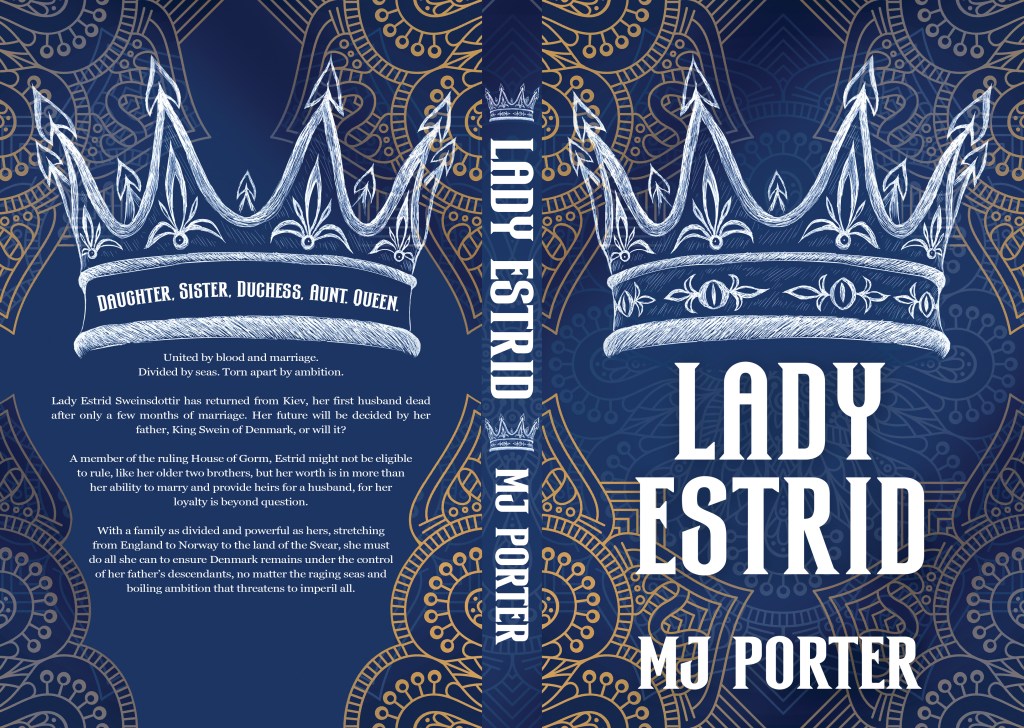
The physical and political setting for Lady Estrid, a novel of eleventh century Denmark #histfic #lostwomenofhistory
Lady Estrid is set in Denmark, as well as in wider Scandinavia and England, during the eleventh century. But it’s events in Denmark, Norway and Sweden that inspired me to write about Lady Estrid, although, of course, I couldn’t do it without including England.
Denmark, at this time, is really starting to cohere into what we might think of as a coherent kingdom. I’m not an expert on what comes before, but The House of Gorm, into which Lady Estrid is born, has ruled Denmark for a couple of decades (through her grandfather, Gorm, and father, Swein Forkbeard), but a lasting peace hasn’t necessarily been achieved. The family are portrayed as conquerors, coming into what would become Denmark, and imposing themselves over an unruly elite. The number of intermarriages between families in (what we call today) Norway, Sweden and Denmark offers a landscape that is riddled with double-crossing and the potential for mischief and war against a backdrop of uncertainty in Denmark. You can find family trees for Lady Estrid here.
And what a cast of characters I had to play with – King Swein of Denmark, his two sons, his daughters, and the men they marry, and the sons and daughters they birth, and of course, his wife as well. It seems that not only was she married to Swein, she was also the wife of the king of Sweden before his death, and might even have been pursued by Olaf Tryggvason. (There are arguments about her actual identity, but not about her marital history.)
And into all this steps Lady Estrid, who, like similar royal women, has the advantage of living a much longer life than many of her male family members. She is someone who would have lived through turbulent times, and I always find that overriding viewpoint, just too good to ignore, because it gives an author so much scope to play with. Yes, I might know what ultimately happens, but when you weave the story of Lady Estrid, and what is, and isn’t known about her, around bigger events, in Denmark, Norway, Sweden and England, it makes for both a complex and a simple story. The people she met along the way are perhaps better known than she is herself, but that’s just a means of adding context to a much longer narrative than can often be explored when writing about Swein, or Cnut, or Harald or Harthacnut or Svein (yes, another one) or Beorn.
Who was Lady Estrid, and why did I write about her life? #histfic #TheEleventhCentury #England #Denmark #non-fiction
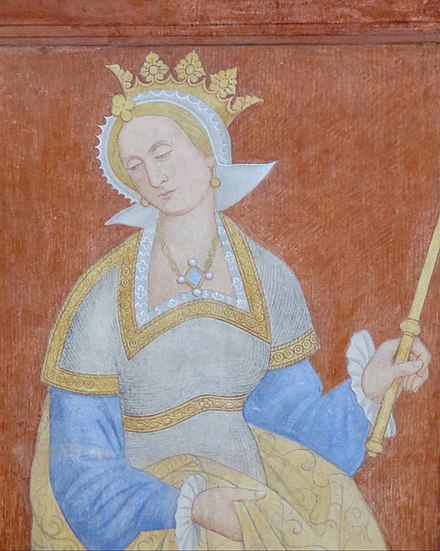
Lady Estrid, or Edith or even Margaret, daughter of King Swein Forkbeard of Denmark (and briefly England) is one of those beguiling characters who lived through momentous change.
I’ve long been drawn to her, and used her as a ‘bit’ part character in my The Earls of Mercia series, but I wanted to dedicate both more time to Lady Estrid, and also to Denmark. Even when I’ve written about Cnut, who was king of England and Denmark, much of the action has taken place in England. There’s simply not enough ‘space’ to fit everything in.
Lady Estrid, like similar royal women (Queen Eadgifu of England and Lady Elfrida in the tenth century), had the advantage of living a much longer life than many of her male family members (check out the family trees here). She was the ‘glue’ that held together the narrative of what was happening in Denmark. And because of her vast family, it also allowed me to weave the story of not just Denmark, but also Norway, Sweden, England, and Normandy, into the narrative.
She was the daughter of a king, the sister of three kings, the aunt of four kings, the mother of one king, and in time, the grandmother of three further kings.
Having written about Queen Eadgifu, Lady Elfrida, and King Edward the Elder’s daughters (in tenth century England), I wanted a new ‘woman’ to bring to life. I could have chosen Queen Emma, or even Queen Edith of England, but their stories are more well-known. I’ve long been fascinated by the Scandinavian countries during the Viking Age, and Lady Estrid was just too good a character to leave in her ‘bit’ part without adding anything further.
For all Lady Estrid’s claims as mother, aunt, sister and daughter, there’s very little that can be said about her, not even the order of her three marriages, if they occurred, can be confirmed. It’s only possible to say that her marriage to Jarl Úlfr took place because of the survival of her children. It’s the lack of ‘hard facts’ about her, and the potential to weave a story that includes so many of the other well-known women and men of the period, that made Lady Estrid so irresistible. When stories focus on Earl Godwine, or King Cnut, or even on King Harald Hardrada, it’s possible to lose sight of the bigger picture, and Lady Estrid certainly provides the potential to show the overarching events that occurred from AD1013-1050 within Denmark and England.
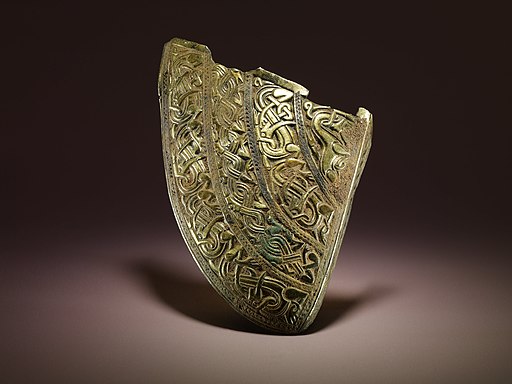
Thanks to some spectacular archaeological finds, we can visualise how a Saxon warrior might have looked. The reconstructions of the Sutton Hoo helm, and that found with the Staffordshire Horde (as well as a few others), present us with elaborate helmets crested with dyed-horse hair in a way very reminiscent of the Roman era. They glitter, and they seem to be festooned in gold and silver work, but whether these were actually worn in battle or not is debatable. Firstly, they would have made the kings or noblemen very noticeable to their enemy. Secondly, they were so valuable it’s impossible to consider the loss of one of them should they fall and their goods be taken by their enemy. Bad enough for their king and leader to die in battle, but to also lose such precious wealth as well seems unlikely. That said, of course, the Sutton Hoo helm was buried, and the fragments of the Staffordshire Hoard helmet were buried and lost. An image of the Staffordshire Helmet can be found here: https://www.stokemuseums.org.uk/pmag/collections/archaeology/the-staffordshire-hoard/
But there is another reason why these helmets might have existed, and that’s because they were for ceremonial purposes. Kings, before the reign of Athelstan (925-937) are not known to have undergone consecration with a crown but rather with a helmet. After all, they were warrior kings. Perhaps then, these survivals are more akin to that worn by a warrior-king when appearing before his people or for ceremonial reasons.
The cheek guard from the Staffordshire Hoard. Attribution below. Flickr user “Portable Antiquities Scheme”, CC BY 2.0 <https://creativecommons.org/licenses/by/2.0>, via Wikimedia Commons
What then might have been the more usual garb for a warrior of the Saxon era, which at nearly six hundred years is bound to offer some variations? Shield, spear, seax, sword and byrnie. We get a feel for these items and how valuable they were from wills that survive from the later Saxon era, hundreds of years after the events of Pagan Warrior. Ealdormen had horses, both saddled and unsaddled, shields, spears, swords, helmets, byrnies, seax, scabbards and spears. The will of Æthelmær, an ealdorman in the later tenth century, records that he’s granting his king, ‘four swords and eight horses, four with trappings and four without, and four helmets and four coats of mail and eight spears and eight shields,’[1] as part of his heriot, a contentious term for something that some argue was an eleventh-century development, and others argue, is merely reflecting earlier practice on the death of a man.
There would also have been thegns and king thegns, who had their own weapons, as well as the men of the fyrd, the free-men who could be called upon to perform military service each year, as and when required. It’s often assumed they would have been less well-armed, although this begs the question of whether kings and their warrior nobility were prepared to sacrifice those they relied on to provide them with food to gain more wealth. They might have found themselves with the money to pay for food but without the opportunity to do so.
There are very few representations of warriors, but the surviving strands of the Gododdin, a sixth-century lament to the fallen of Catraeth gives an idea of how these warrior men thought of one another. There is much talk of killing many enemies, drinking mead, and being mourned by those they leave behind.
Battle tactics from the period are impossible to determine fully. Before writing my books which are blood-filled and violent, I read a fascinating account, by a military historian, on how he thought the Battle of Hastings might have been won or lost. The overwhelming sense I came away from the book with was that local features, hillocks, streams, field boundaries even perhaps the path of a sheep track might well be the very thing that won or lost a battle for these opposing sides. The land that kings chose to go to war on was incredibly important,
When trying to reconstruct the battlefield for the battle of Hædfeld, which concludes Pagan Warrior, I encountered a problem that will be familiar to writers of the Saxon era. The place where the battle is believed to have taken place, on the south bank of the River Don (although this has been disputed and work continues to discover whether the other location could be the correct one), has been much changed by later developments. It was drained in the 1600s and therefore, it doesn’t look today as it would have done when the battle took place.
I had very little information to work on. The River Don, the River Idle, the River Ouse, the belief that the ground would have been marshy, and that many men fell in the battle. And the words of Bede in his Ecclesiastical History, ‘A great battle being fought in the plain that is called Heathfield.’[2] Much of the rest is my imagination.
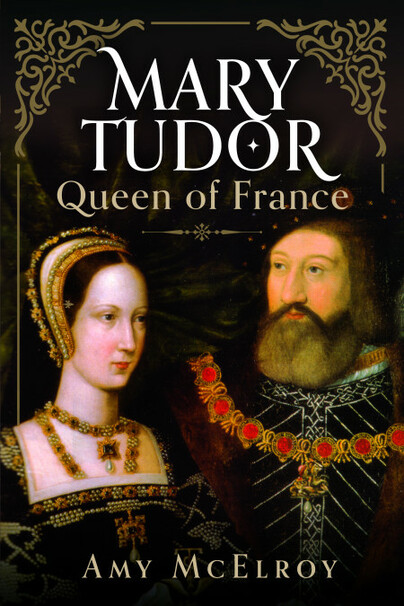
Mary Tudor, Henry VIII’s sister, lived a remarkable life. A princess, duchess and queen, she was known as the English Rose for her beauty. Mary Tudor, Queen of France, aims to explore the life of one of the few who stood up to Henry VIII and lived to tell the tale.
Henry VIII is well known, but his larger-than-life character often overshadows that of his sisters. Mary Tudor was born a princess, married a king and then a duke, and lived an extraordinary life. This book focuses on Mary’s life, her childhood, her relationship with Henry, her marriages and her relationship with her husbands.
Mary grew up in close proximity to Henry, becoming his favourite sister, and later, after her marriage to the French king, she married his best friend, Charles Brandon, 1st Duke of Suffolk. The events impacting the siblings will be reviewed to examine how they may have changed and shaped their relationship.
Mary Tudor by Amy McElroy is a fascinating biographical account of the life of Mary, Henry VIII’s sister, and not to be confused with his daughter.
The story is quite remarkable, and while I knew something about her, I didn’t know everything. The chapters, which follow her through the 3 marriage proposals she receives, which result in 2 marriages, are quite astounding. So much time and effort went into trying to wed her to Prince Charles (later Emperor Charles), and then all of a sudden, she married Louis XII of France. I found it most fascinating. If anything, her 2nd marriage seems almost anticlimatic, even though it evidently wasn’t at the time. And, with all we know about Henry and his marital difficulties, Mary appears to have been somewhat serene about everything. I imagine she perhaps had a happier life, if one often troubled by the terrible debt her brother placed upon her (families!).
I really appreciated the author’s desire to keep this narrative to Mary and not to her children and grandchildren. It seems fitting to have a title devoted exclusively to her.
A fine portrayal of Mary’s eventful, if short life, with a lovely writing style.
Meet the author
Amy was born and bred in Liverpool before moving to the Midlands to study criminal justice and eventually becoming a civil servant. She has long been interested in history, reading as much and as often as she could. Her writing journey began with her blog, sharing thoughts on books she had read before developing to writing reviews for Aspects of History. The Lives of Women in the Tudor Era is Amy’s second book. Her first, Educating the Tudors, focused on the educational opportunities of all classes, those who taught them and the pastimes enjoyed by all.
Back in the summer of 2011 (I think), I spent every evening when my children were in bed, trying to plot the possessions of the Earls of Mercia as revealed by the entries in Domesday Book (which I think is a totally normal thing to do).
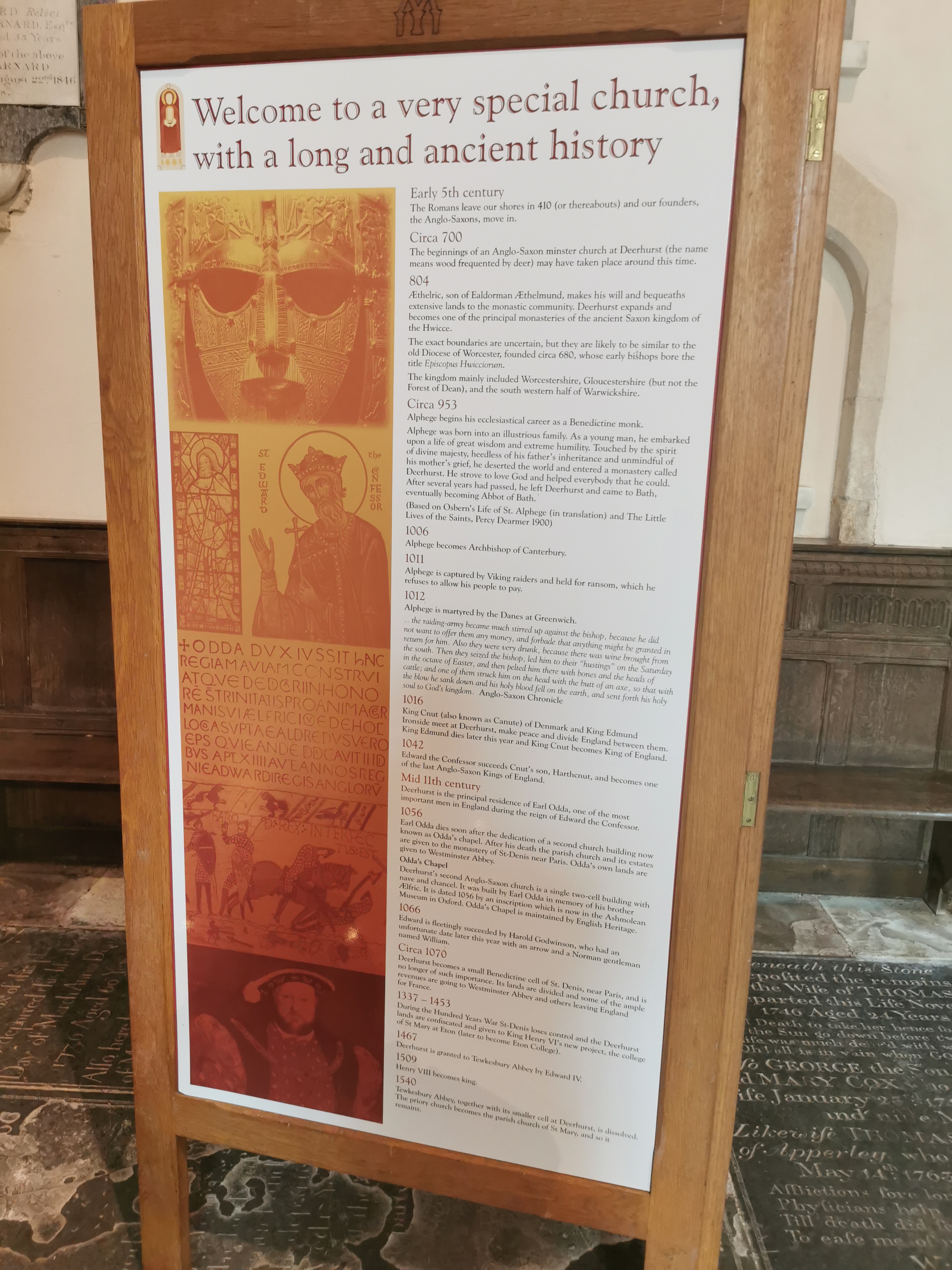
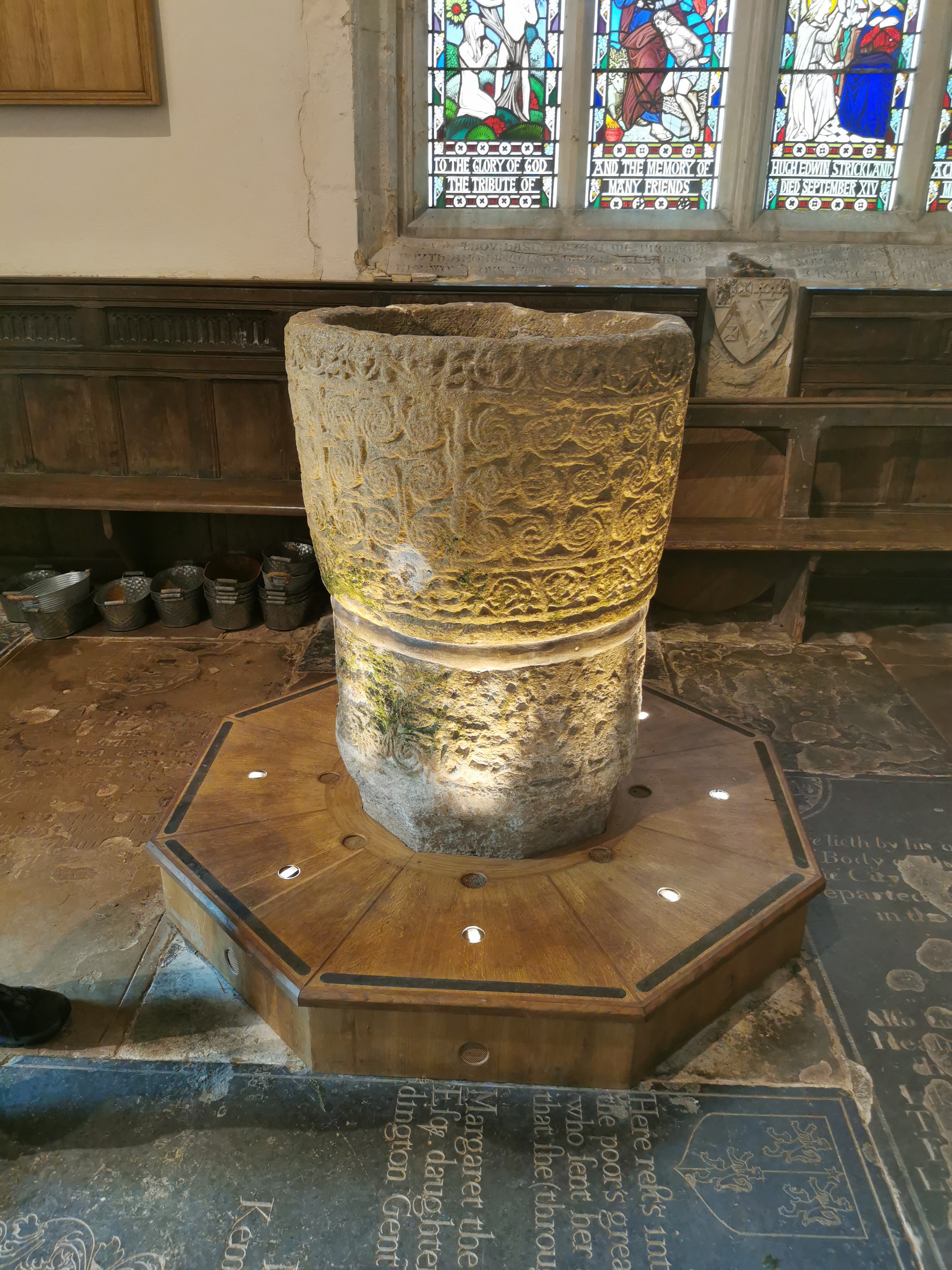
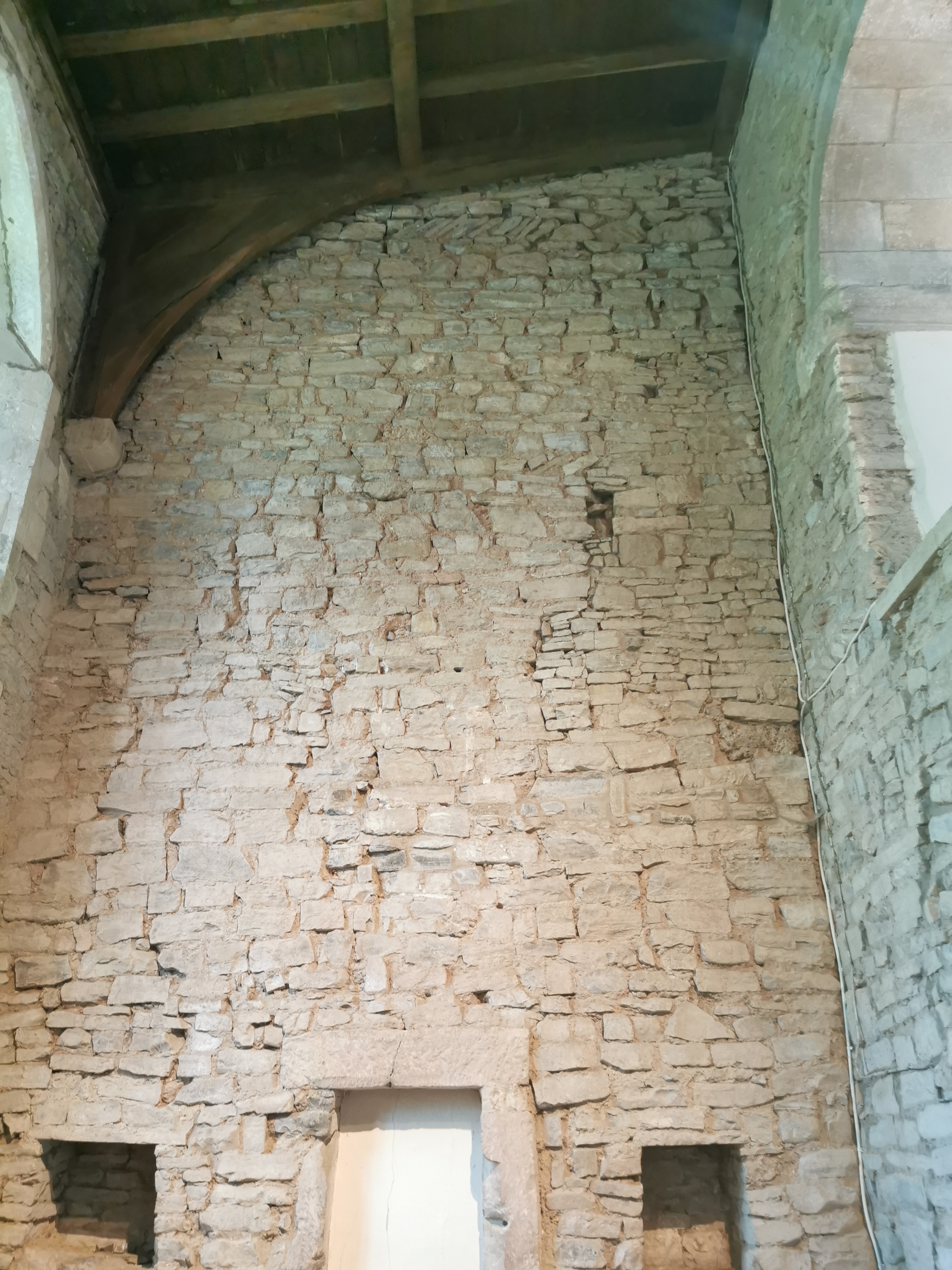
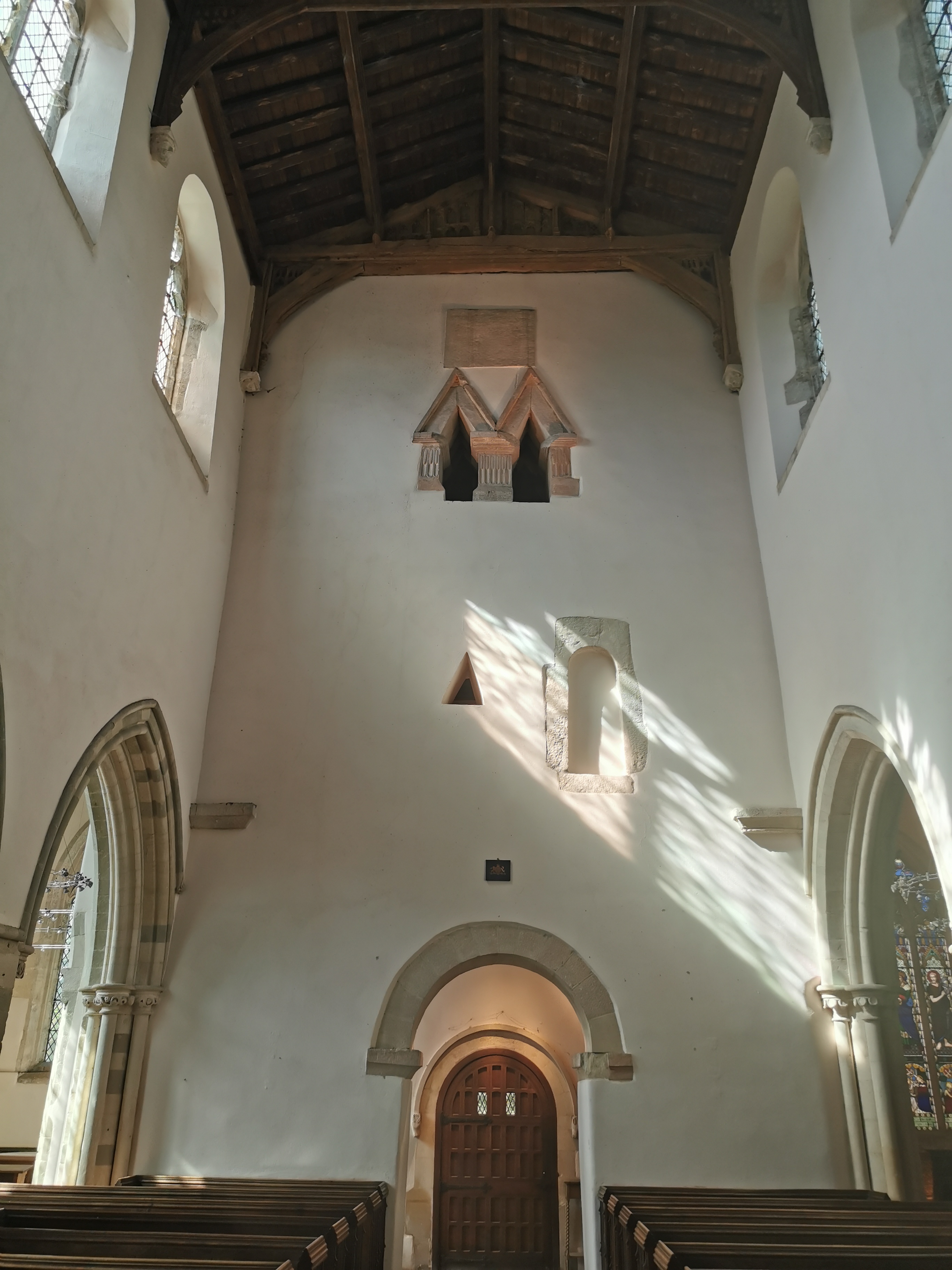
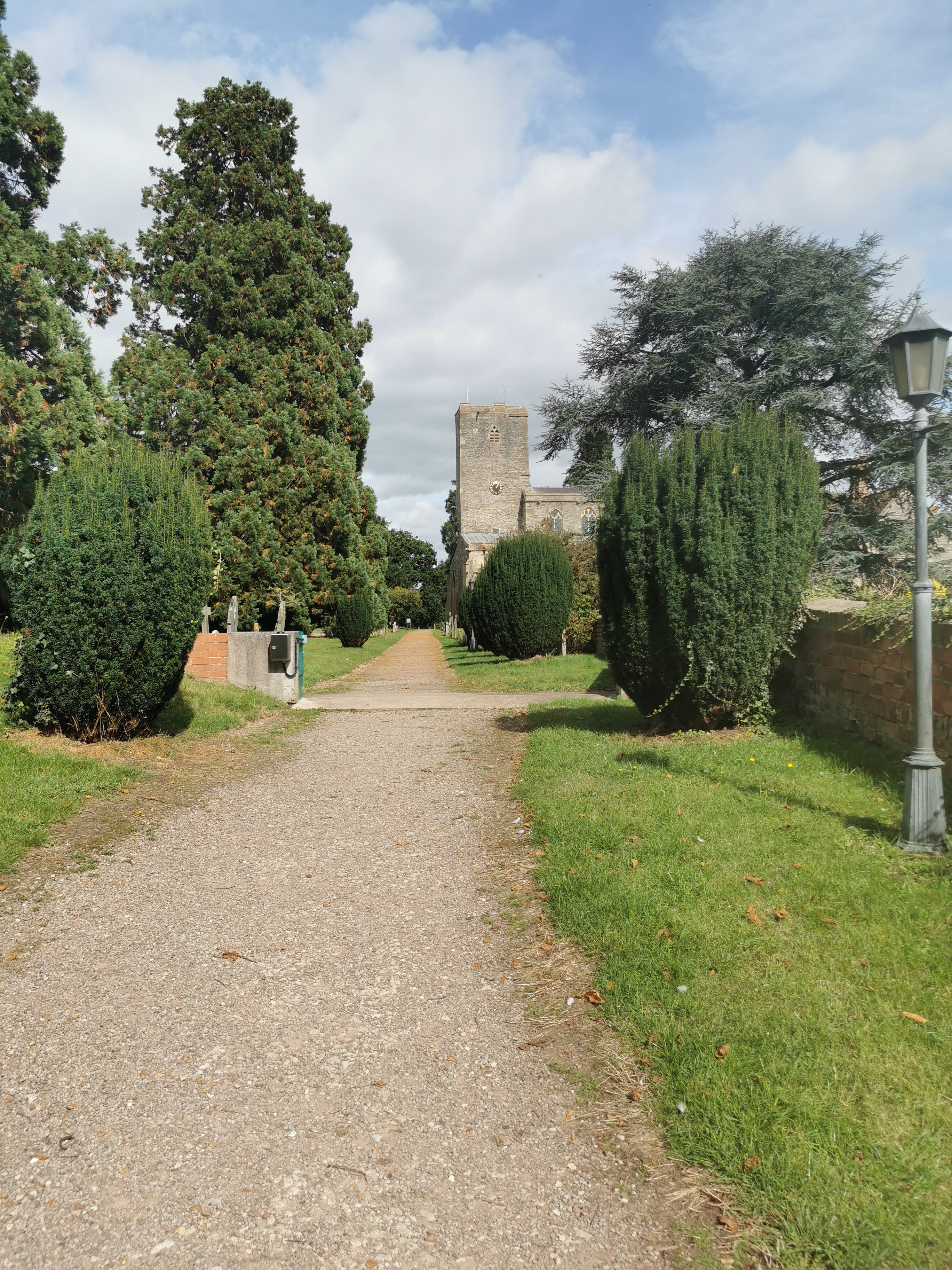
It was a tedious process, which could be achieved much more quickly these days with Google Maps, but it was what I had available to me. Somewhat frustrated with the process because by that period many of the possessions of the Earls of Mercia and their family were not located in the original area of the Hwicce (roughly Gloucestershire), and aware that Deerhurst (which is in Gloucestershire) has a long history back to the Saxon period, I eventually plonked by ealdorman, Leofwine, (of the Hwicce) close to that location, and indeed, readers of the books will know that I have his family burials there. But, I’d never actually visisted Deerhurst before. Until now.
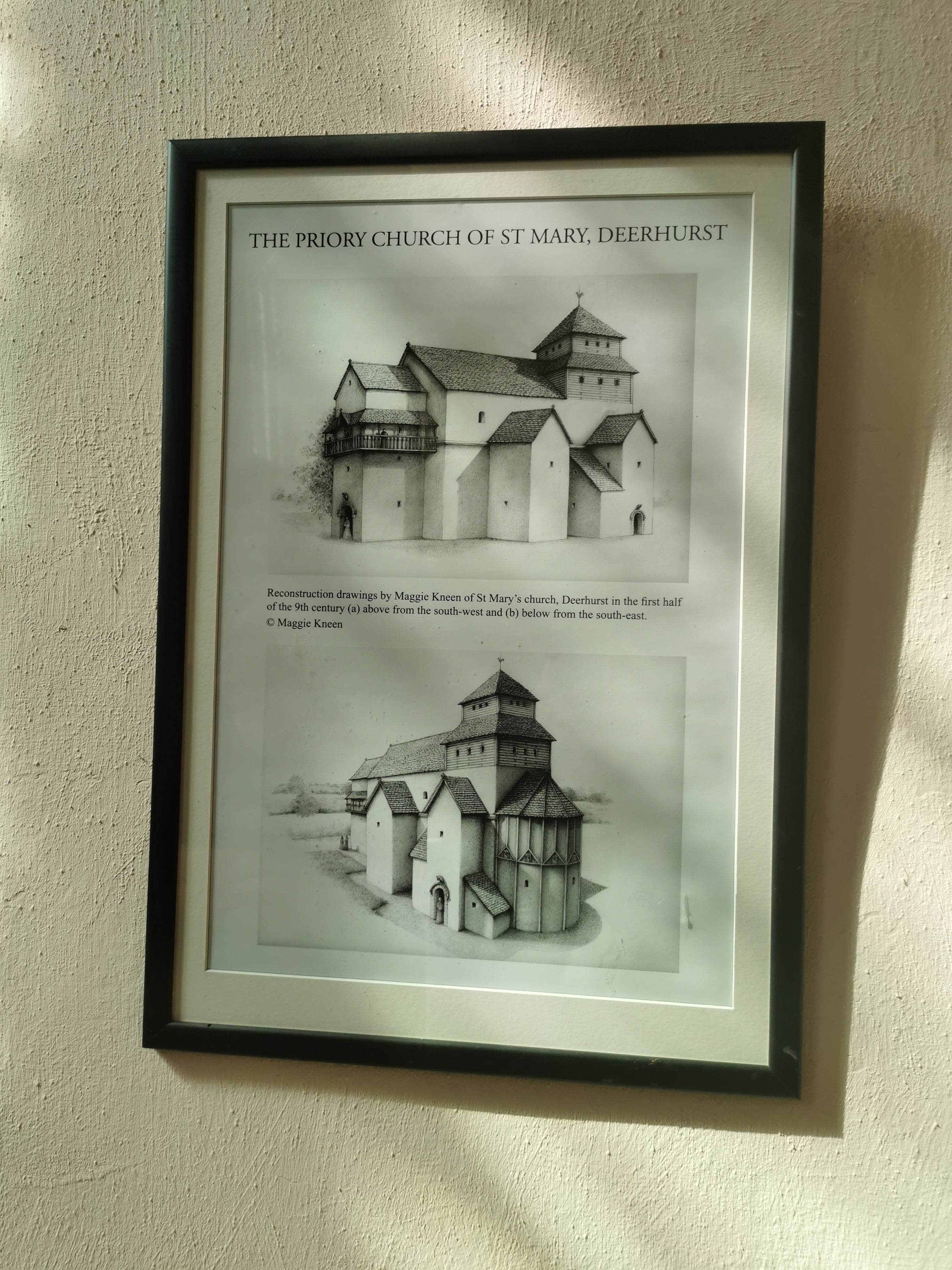
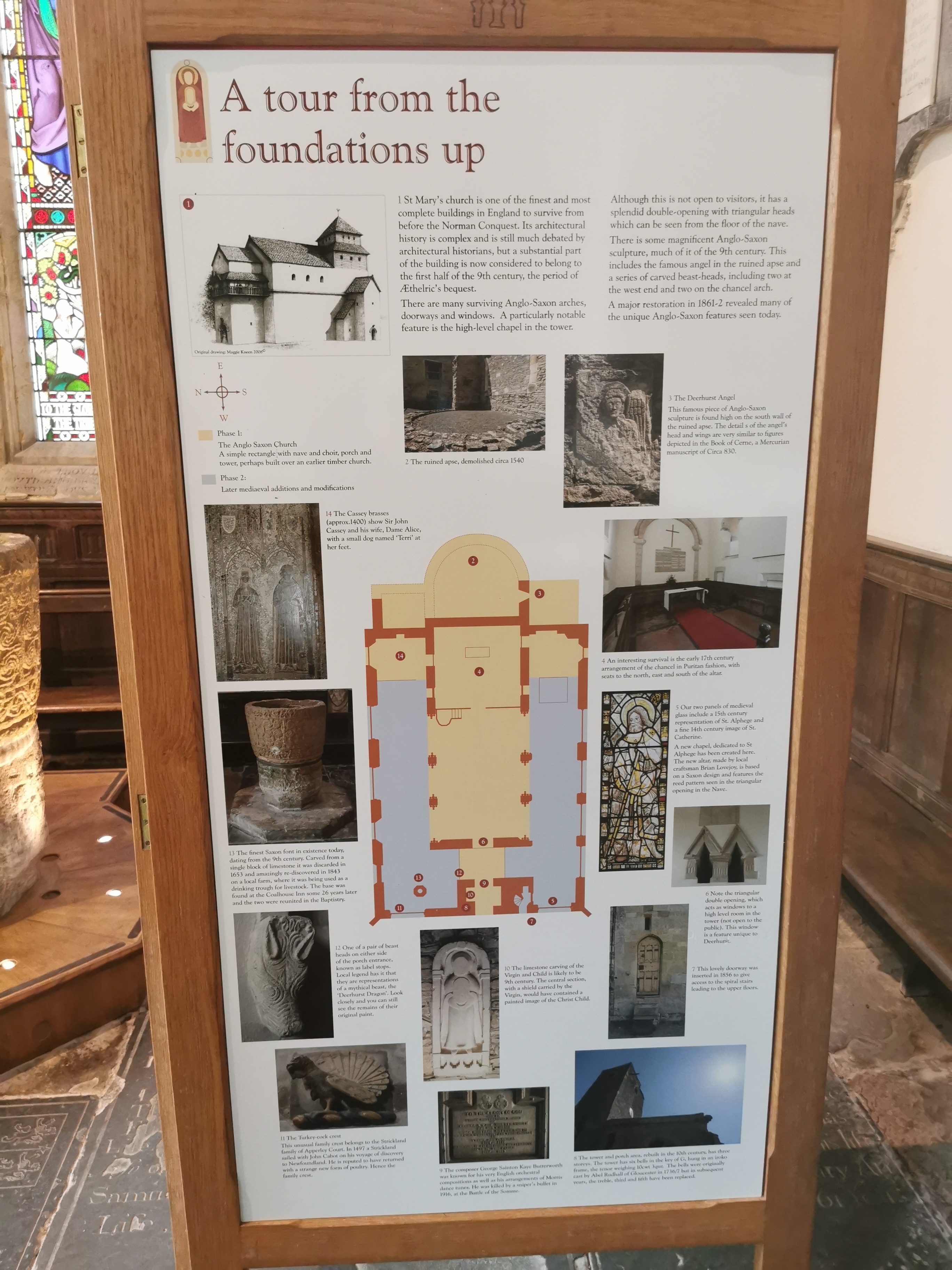
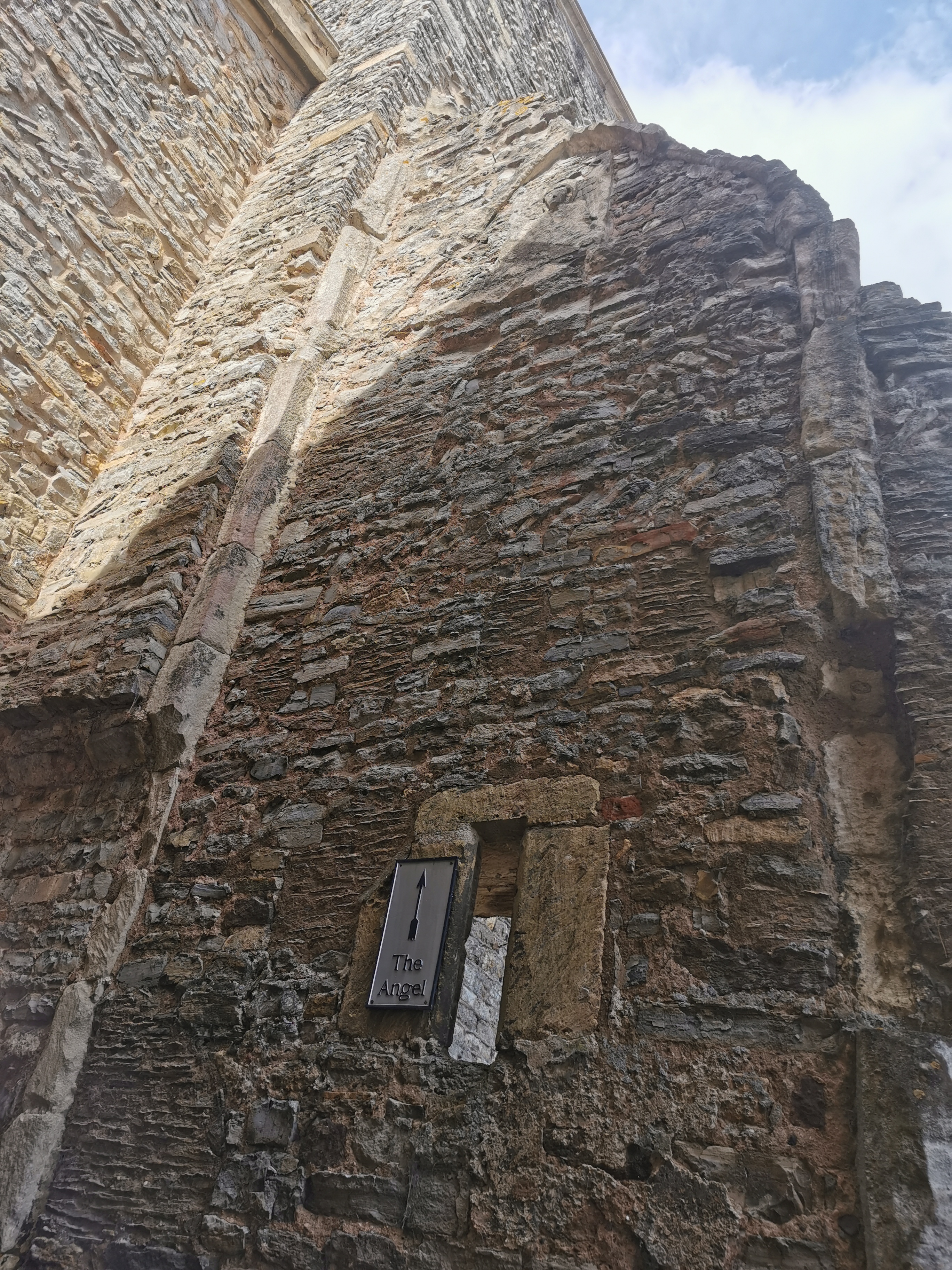
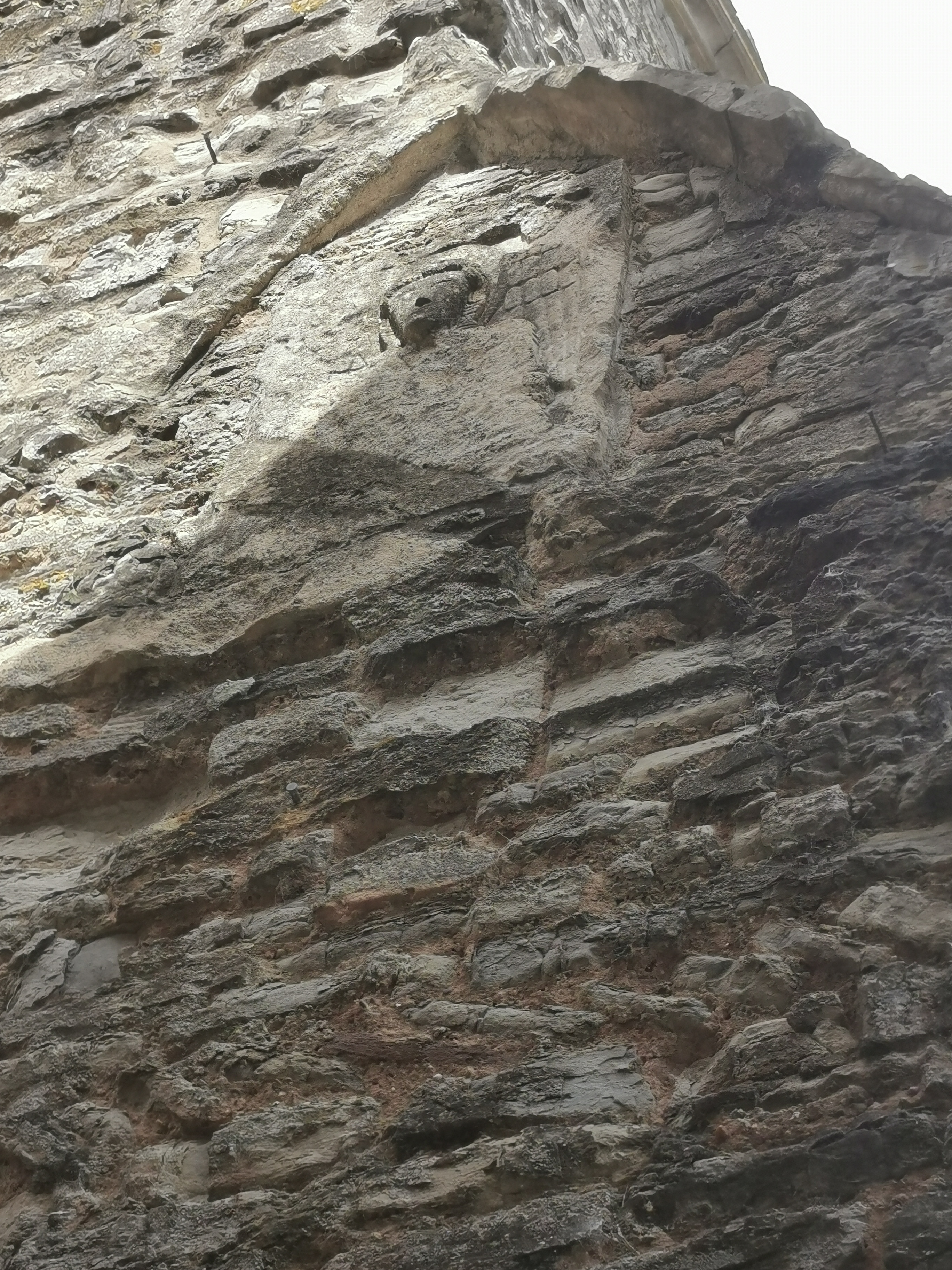
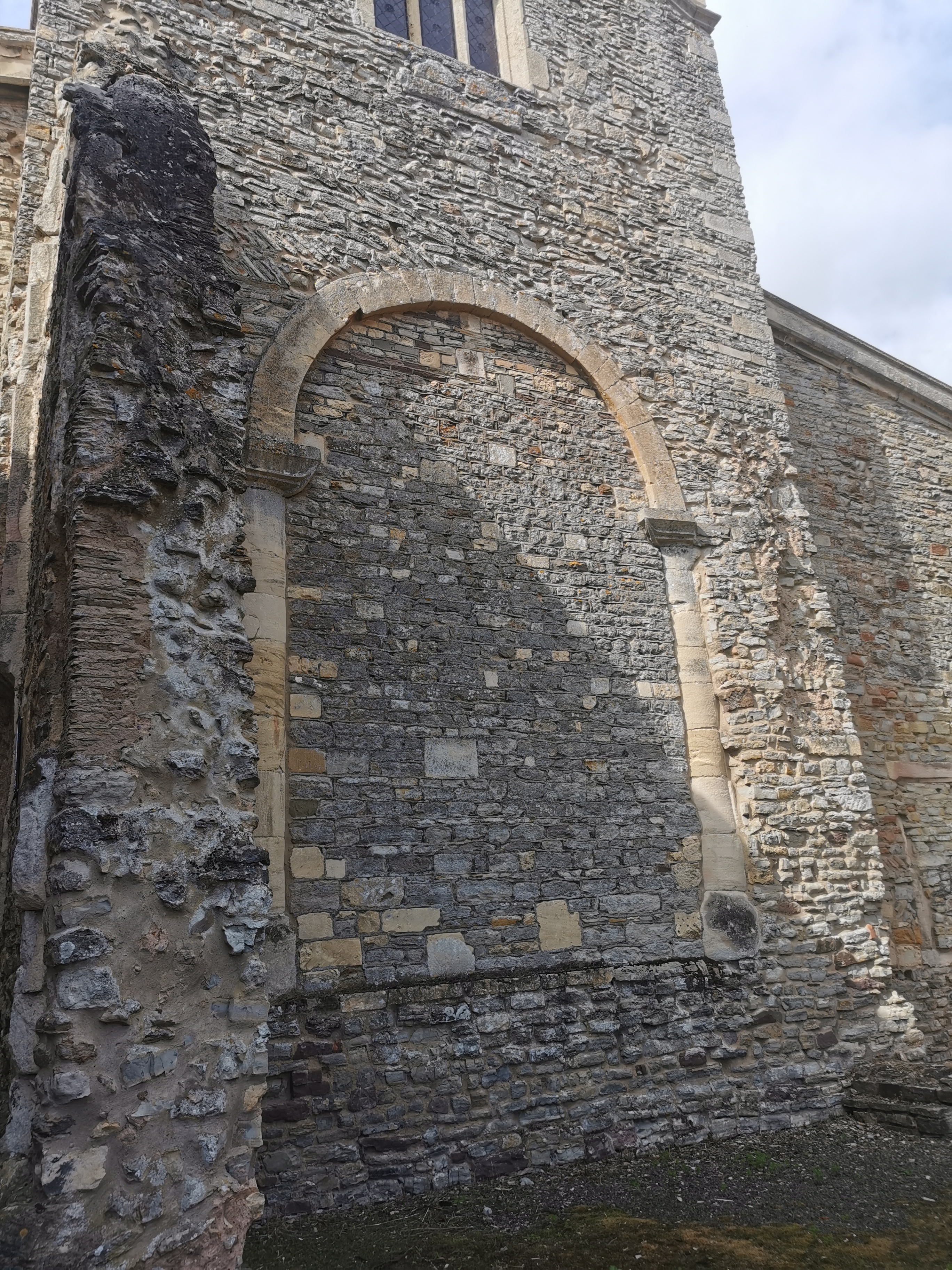
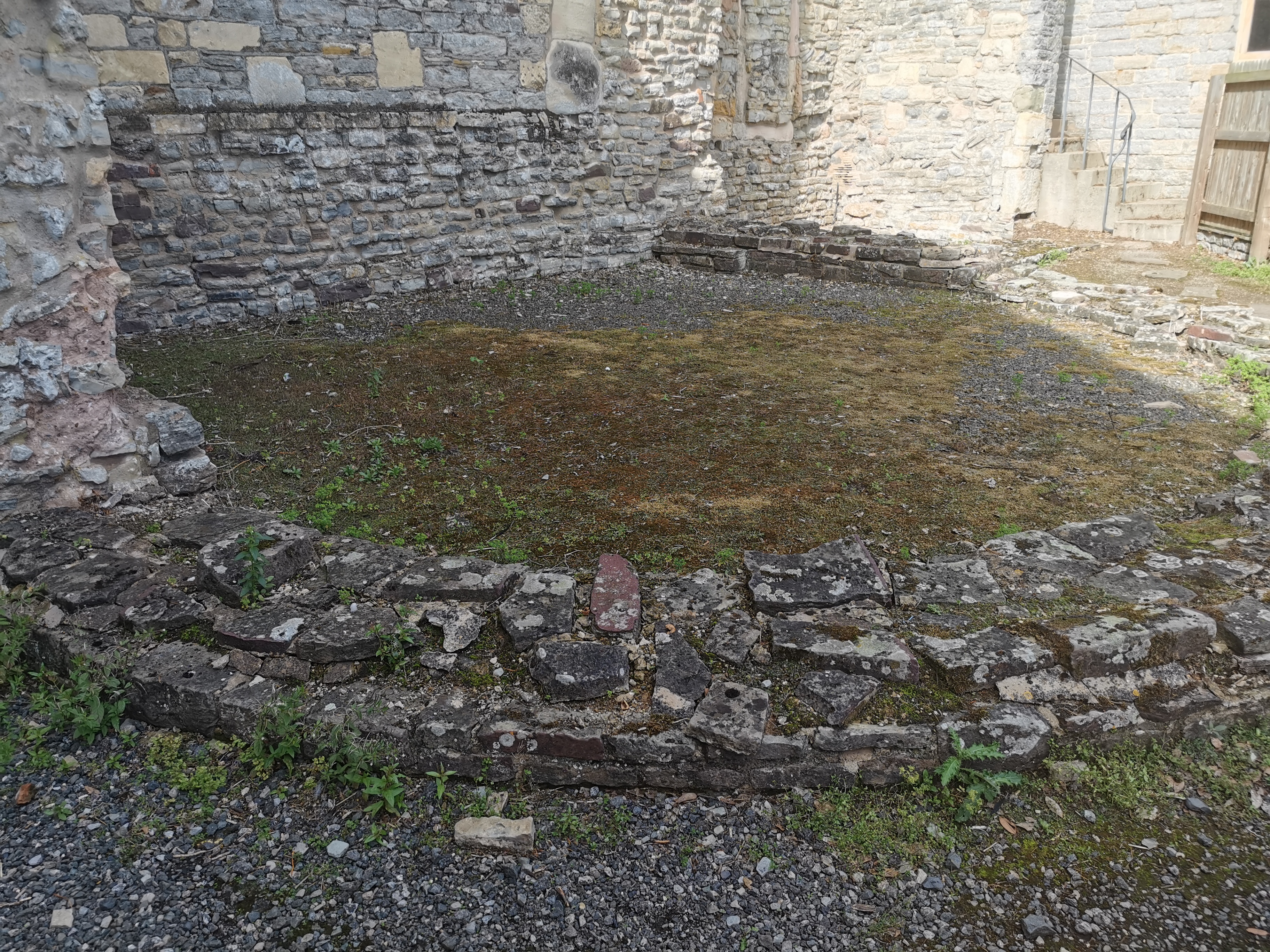
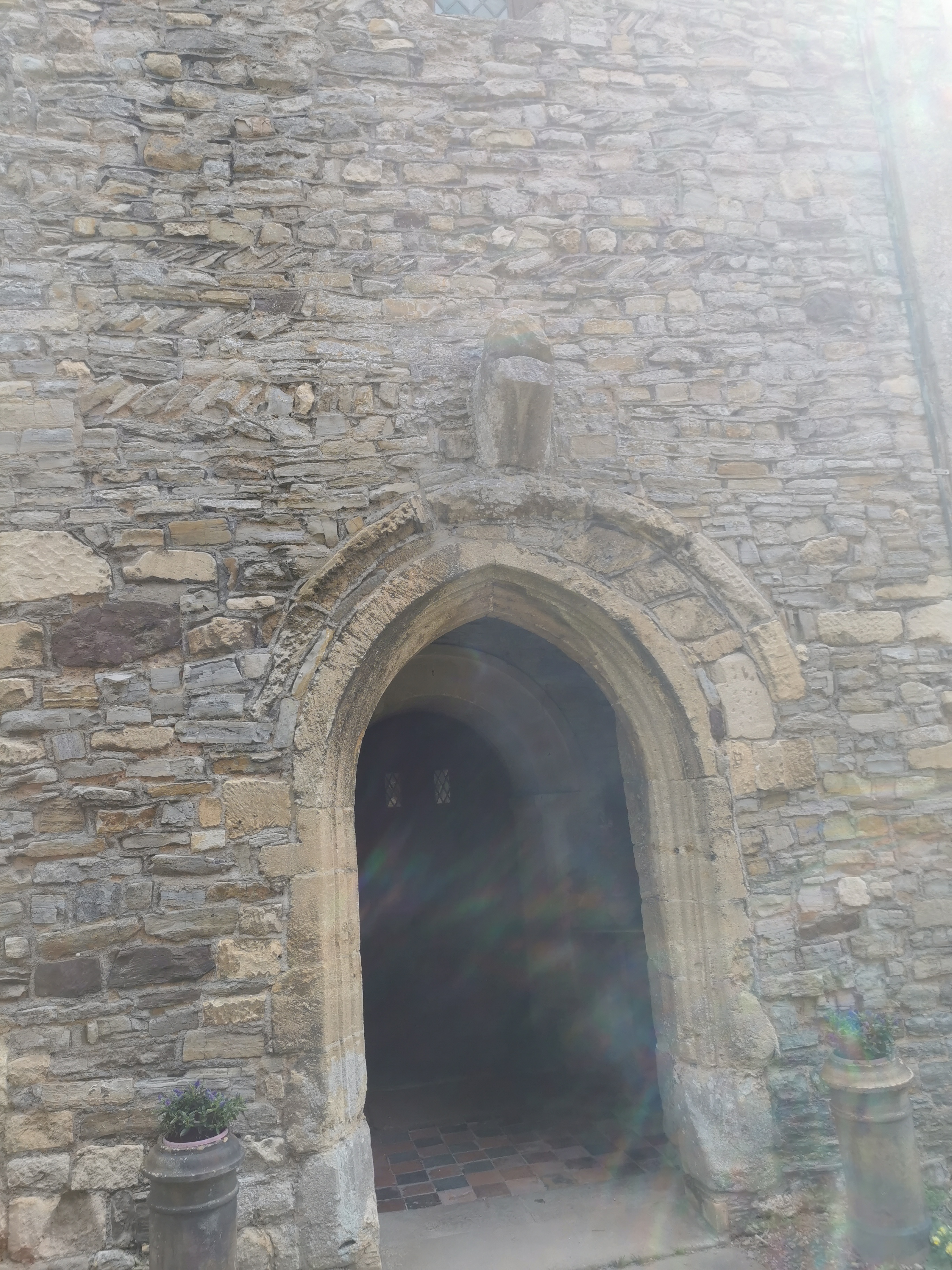
It is a beautiful location, and I’m sharing some photos from my visit, including The Angel, a surviving piece of Saxon sculpture, outside on the walls (my photos aren’t the best but it’s at a very awkward angle and quite high up the side of the building. You can find a much clearer image here https://www.flickr.com/photos/paulodykes/41119170111).
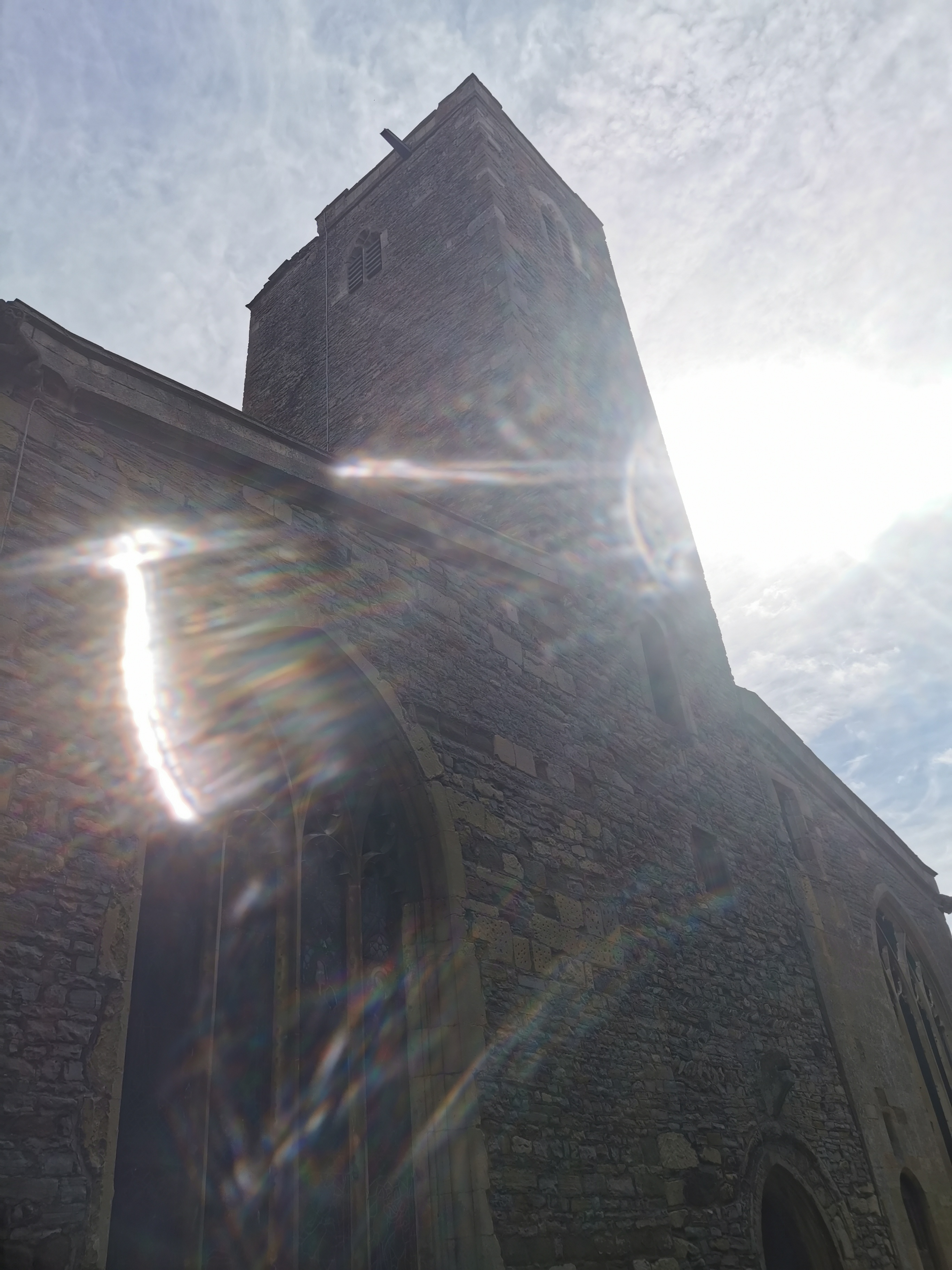
The font – not original to the church – but found in the 19th century and placed there. It is stunning.The AngelThe Angel (again)My camera lens is slightly smashed, and it’s usually fine unless it catches the sun – but sometimes the images are quite cool
Deerhurst hosts an annual lecture each year (indeed, it’s on 21st September 2024 this year), and is also open for visitors, for anyone else who fancies visiting. If you can’t make it, you can visit their website, and also order printed copies of the lectures, which I’ve done before now. https://deerhurstfriends.co.uk
And, just around the corner is Odda’s Chapel, another Saxon survivor. I will also share photos from Odda’s Chapel in a few days.
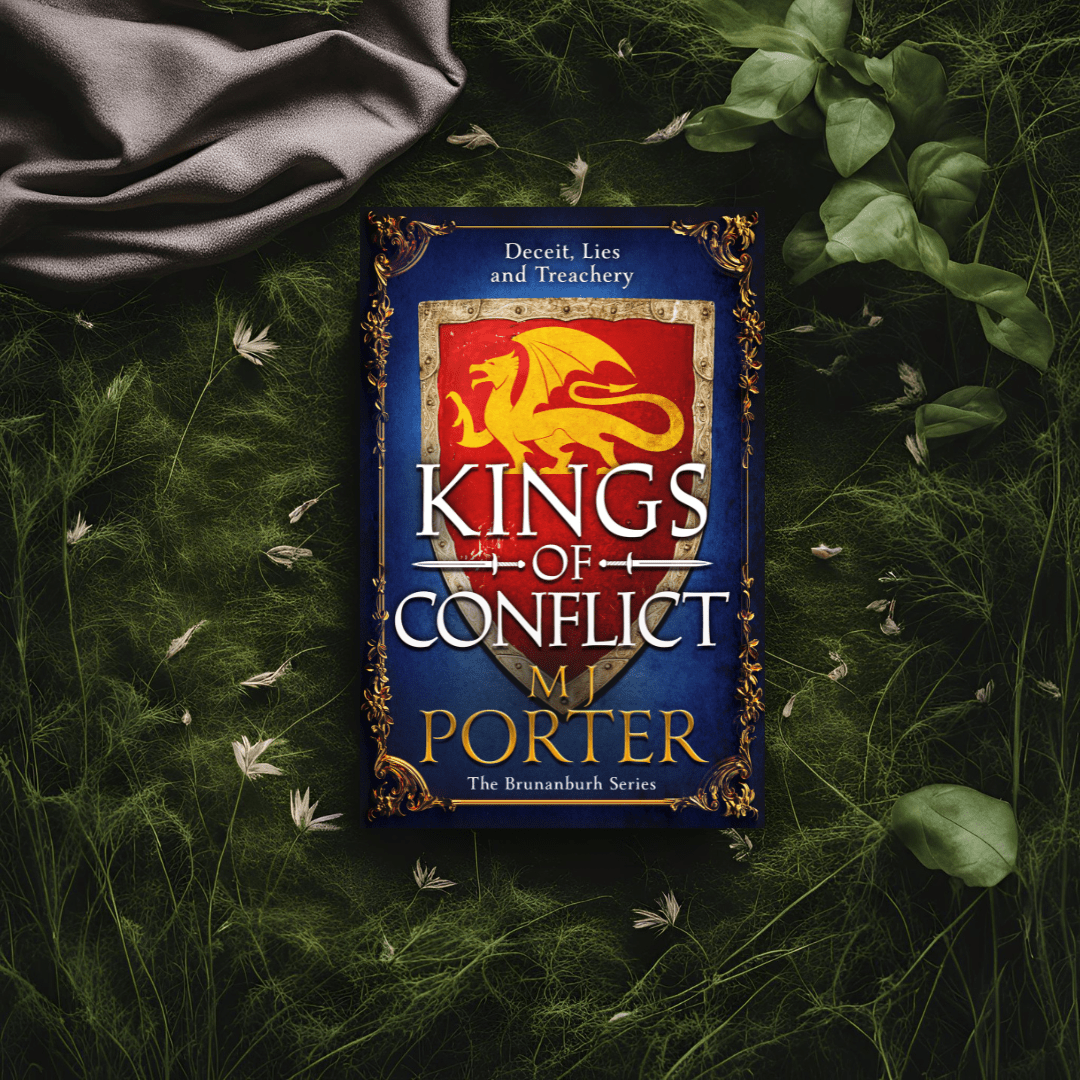
When I first wrote Kings of Conflict, I had very little idea what Jorvik at the time (the 930s/940s) might have looked like. I wrote an entire battle scene and then realised some of my assumptions were very, very wrong (I do this all the time. Don’t feel sorry for me. I should just do the research first instead of giving free rein to my imagination.) I got the fact the settlement was split in two by the River Ouse wrong (and who knew about the Foss). But, most tellingly, what I failed to understand was the true nature of York, from its Roman origins as Eboracum to the age of Jorvik, and most importantly by that I mean its Roman walls and what might, or might not have still been standing at this period.
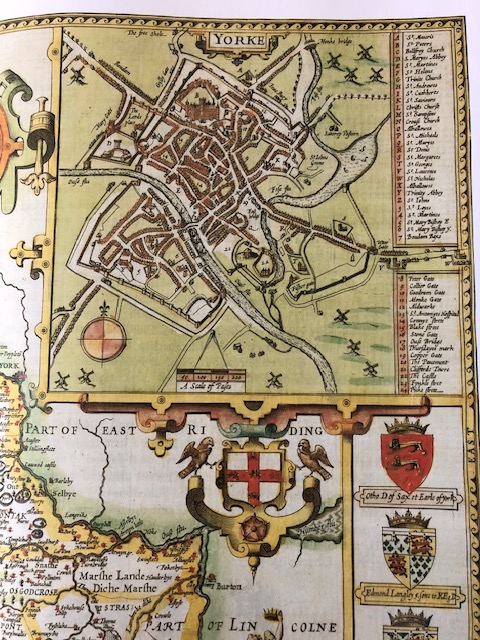
We don’t (yet) have time machines. We can’t visit York in the 940s, but if there is one thing York is famous for it’s the archaeology, and the Jorvik Viking Centre, which offers a recreation of what those streets on Coppergate might once have looked like, and also much else. And because Jorvik/York has benefitted from so much archaeological work, there are also a series of maps showing York at various times in its lifetime, alas out of print at this time, but which can be accessed via a good library (my thanks to the Great Northern Library at the Hancock museum in Newcastle – if you want to see it then let them know so they can have it ready for you, and make note of their opening hours) or the amalgamation of this work available in An Historical Map of York, available from all good book sellers. And if not, then my favourite ‘go-to’ for recreating this time period, the antiquarian maps by John Speed (which are also much prettier) can also offer some information.
York, from John Speed’s West Riding of Yorkshire map (own photo)
This is readily available and amalgamates the information from the actual Atlas.This is currently out of print – check out your local library or antiquarian library for a copy
Roman York
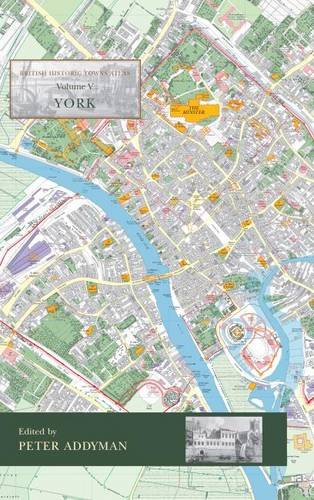
The British Historic Towns Atlas Volume V, York ed. Peter Addyman provides the following information about Eboracum-Roman York.
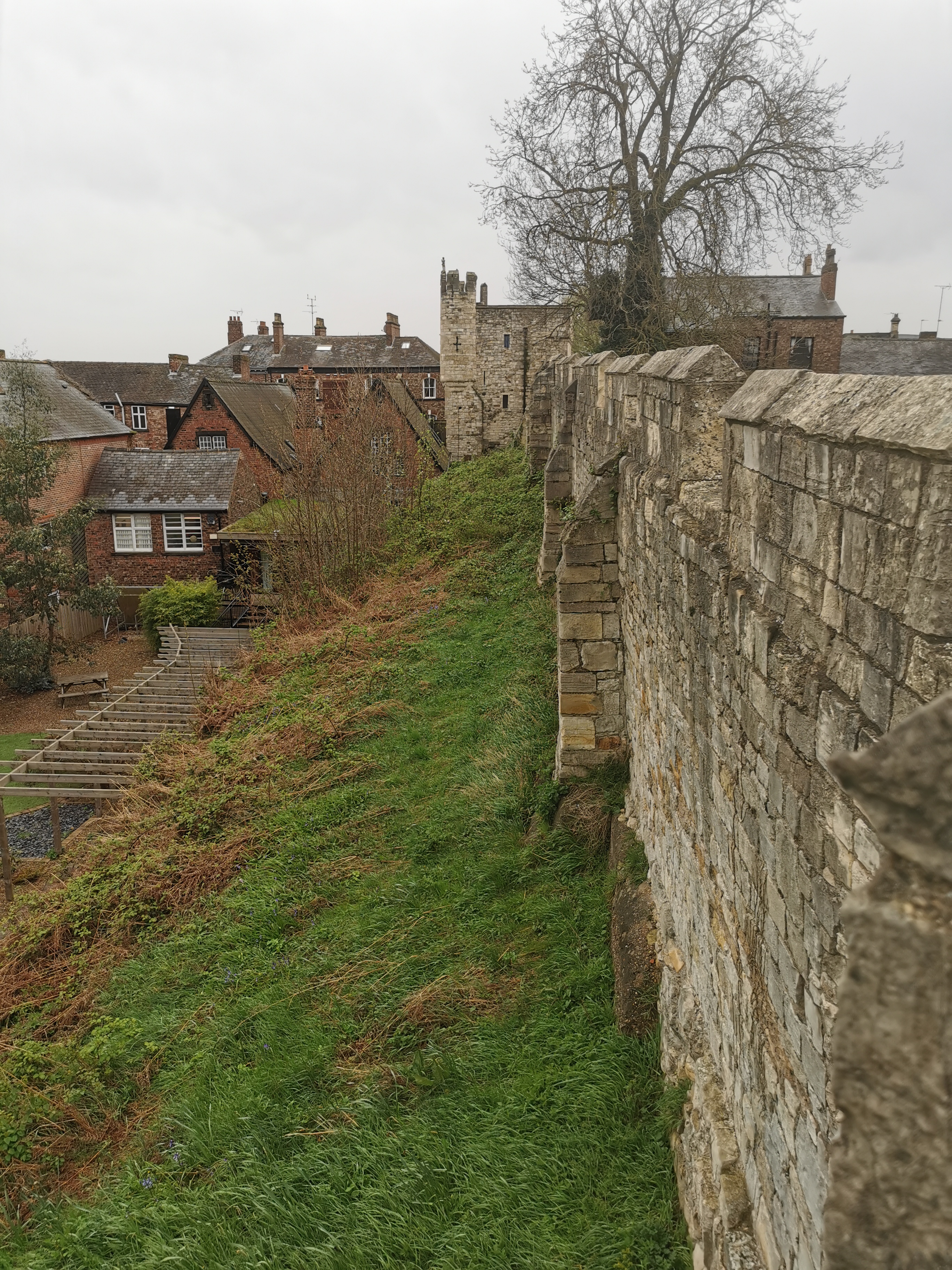
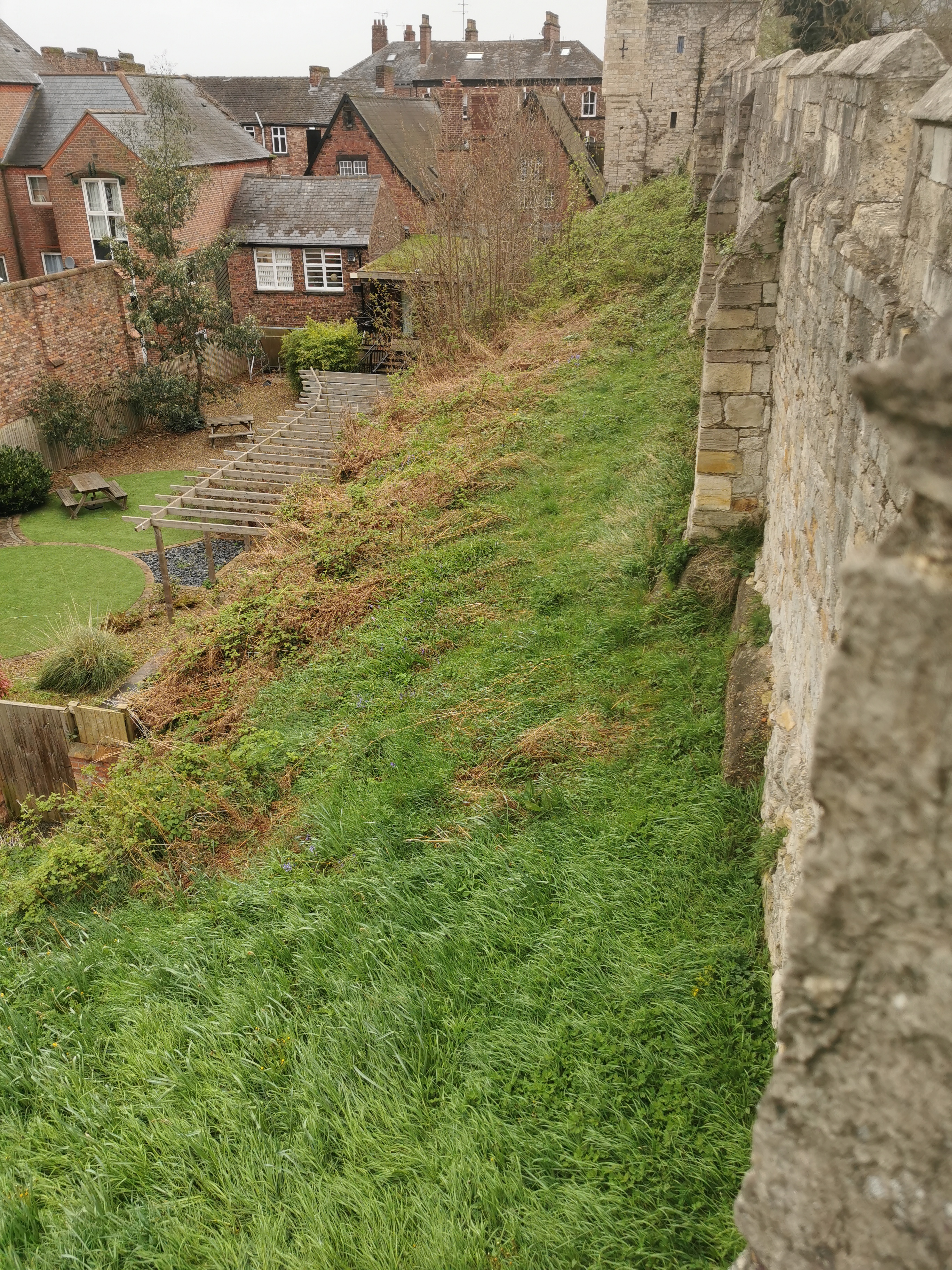
York’s surviving walls, not far from MicklegateI planned to take many more photos but my phone went flat and it was a suitably biblically wet day in York – which seems to happen every time I visit:)
It might have been occupied under Vettius Bolanus (69-71) but was truly founded under Emperor Vespasian (69-79). However, the ridge of the River Ouse was a routeway from the Neolithic onwards. This was in the territory of the Brigantes although the East Riding of Yorkshire was that of the Parisi. It is possible that Eboracum means ‘the place of the yew trees.’
The stone used in constructing the fortress was Magnesian Limestone from Tadcaster and Millstone Grit from Bramham Park (I love that they know this). To begin with the fortress had a ditch, rampart and timber structures and four gates, with the original towers up to 15 metres high. And here, there is the suggestion that to begin with, crossing the River Ouse (to get to the civilian settlement) was via ferry. The bridge can only be confirmed from the second century onwards. The Foss River was also tidal at this time and the banks sloped sharply. The rampart was widened from 20feet to about 42 feet during a second phase of occupation.
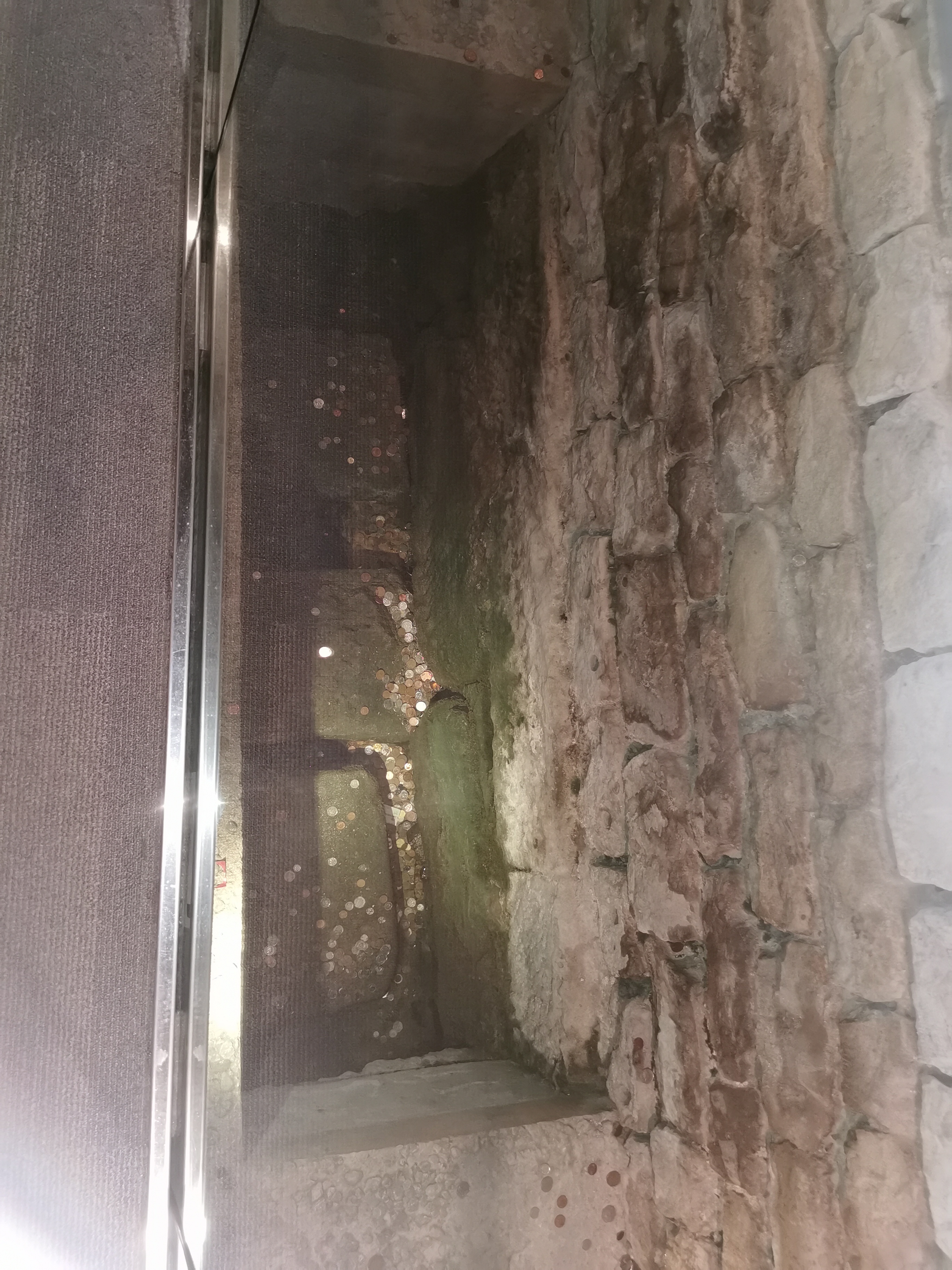
Some ‘old’ bits of Roman York (I think), from the museum in York Minster
The end of Roman York is impossible to pinpoint. Did it cease to exist? Certainly, the last documentary reference was in 314 when York’s bishop, Eborus, attended the Council of Arles, but as with so many of these Roman settlements in Britannia, what happened afterwards is more difficult to determine and we must turn to archaeology and not written records.
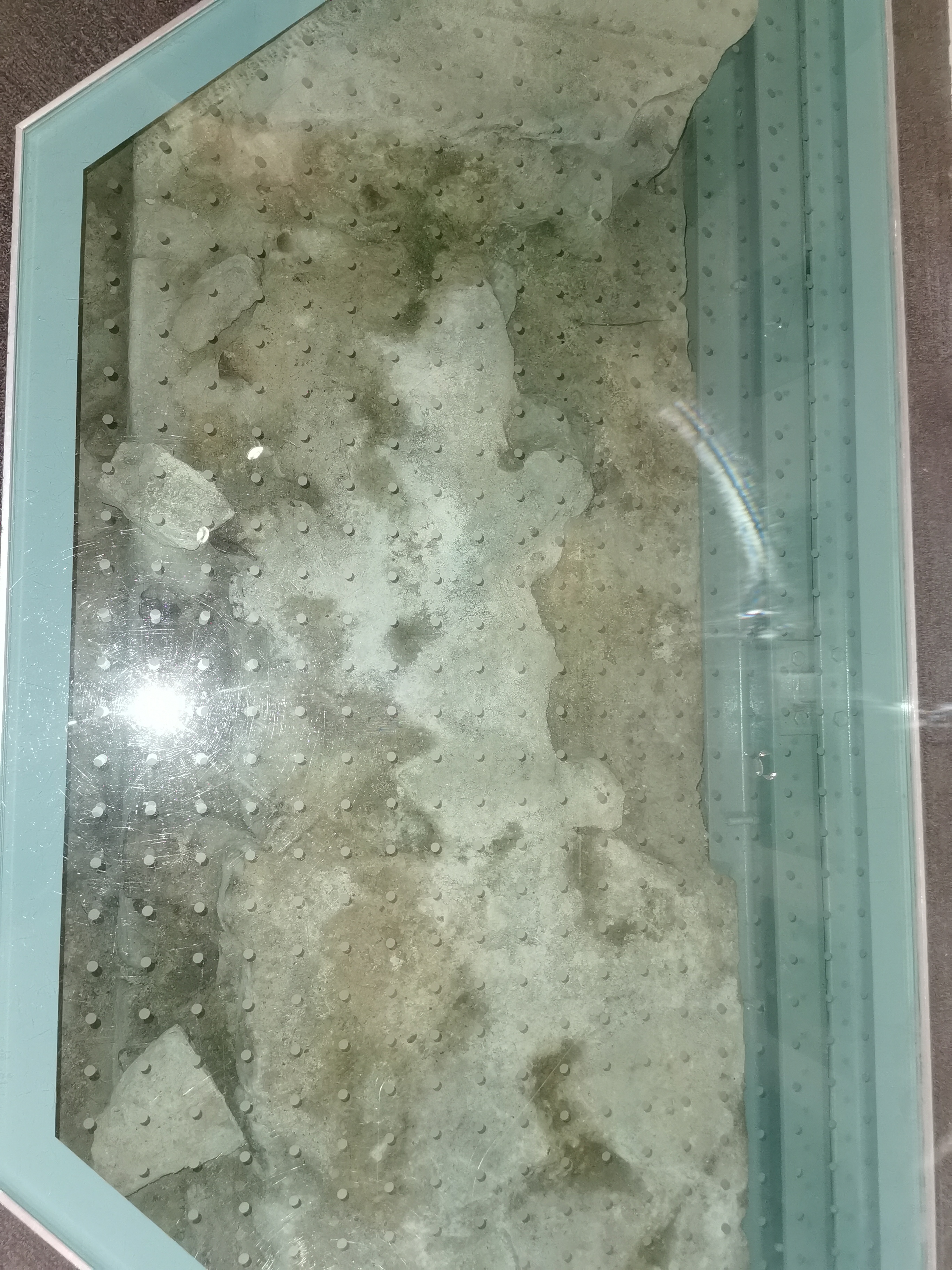
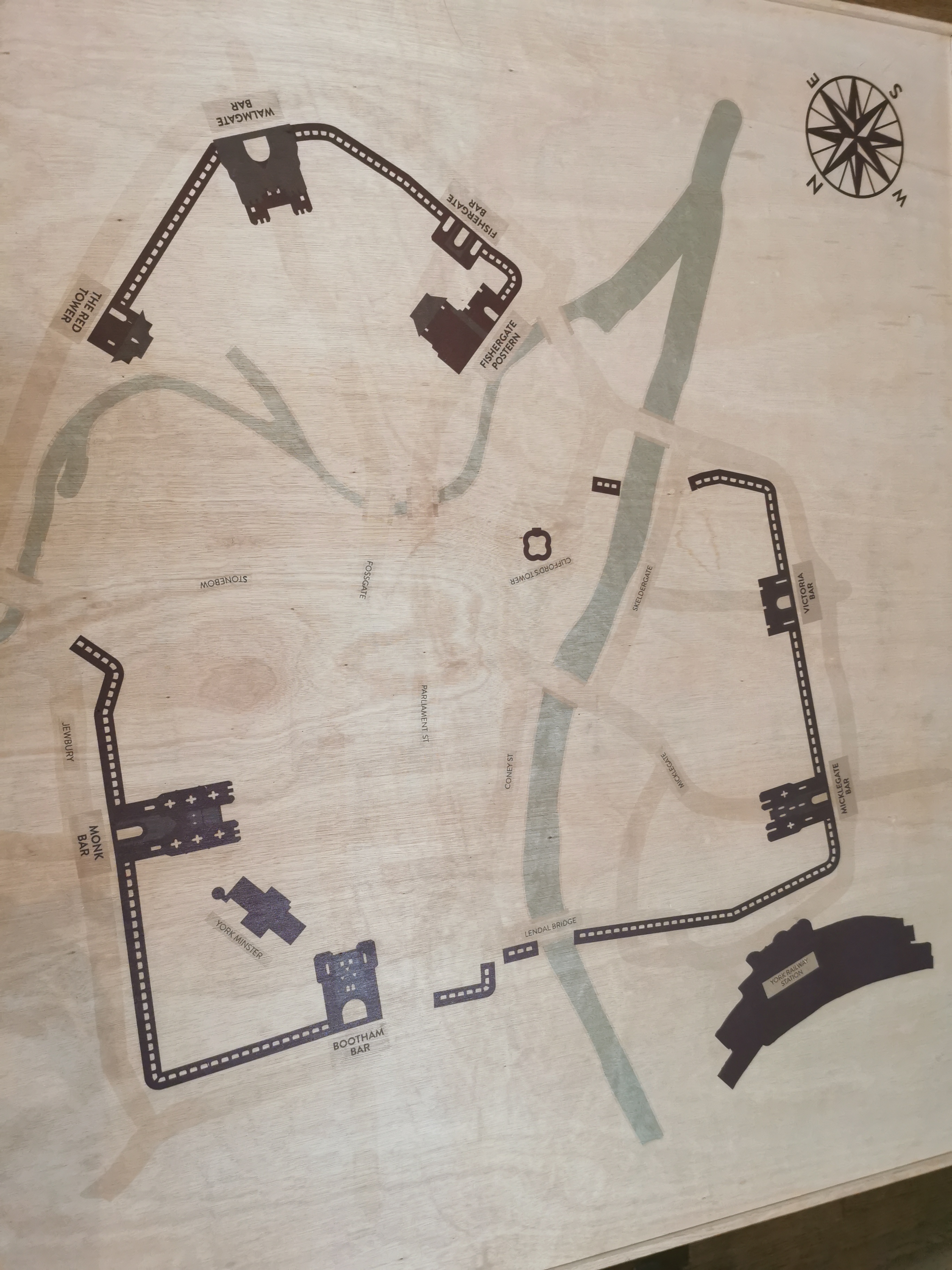
I think this is from the exhibition at Micklegate Bar but I could be wrong. It very clearly shows the two ‘halves’ of the walls.
I must admit, all of this information about Roman York makes me somewhat desperate to write a book about it:) (Don’t all groan).
Anglian York – Eoforwic
The creators of this series of maps make the point that this is the most speculative of the series. Put simply, they really don’t know what was happening.
What can be said is that the walls were renovated on the north west side of the fortress with a dry stone wall and cobbled sentry walk while the eastern ramparts were topped with a timble palisade wider than the Roman wall (if I’ve understood that correctly).
Eoforwic first enters the historical record as the place of baptism for Edwin in 627, the king of Northumbria (Deira and Bernicia combined).
‘…the king was baptised at Easter with all his chief men; that Easter was on 12 April. This was done in York, where earlier he had ordered a church to be built of wood.’ ASC E 626 p.25
The archbishopric began from 735, but Eoforwic was not densely settled at this period, although it does seem to have had many, many churches. This includes the Minster, St Michael-Le-Belfrey, Holy Trinity, St Peter the Little, St Martin, St Michael, and many more, all probably founded by 850.
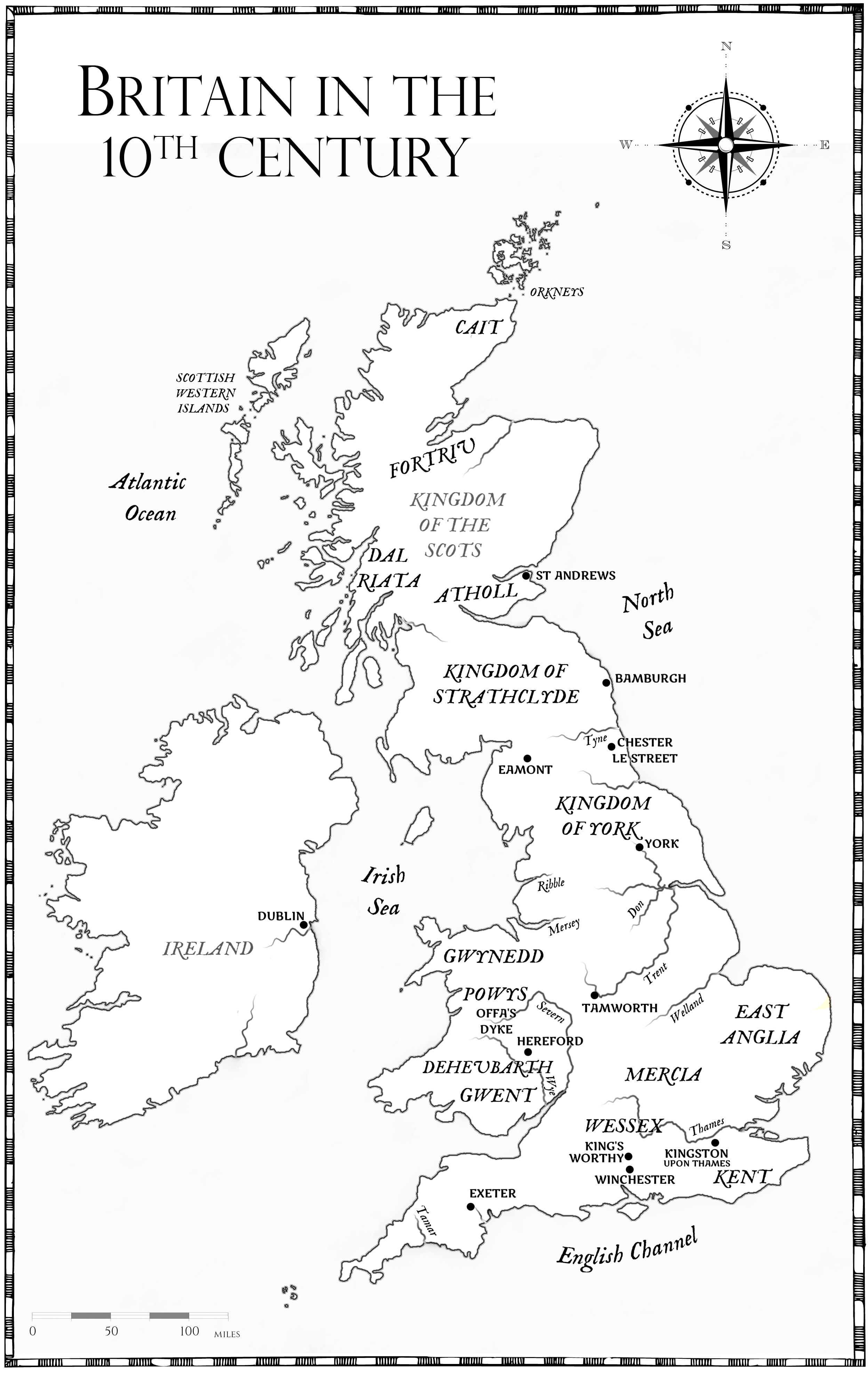
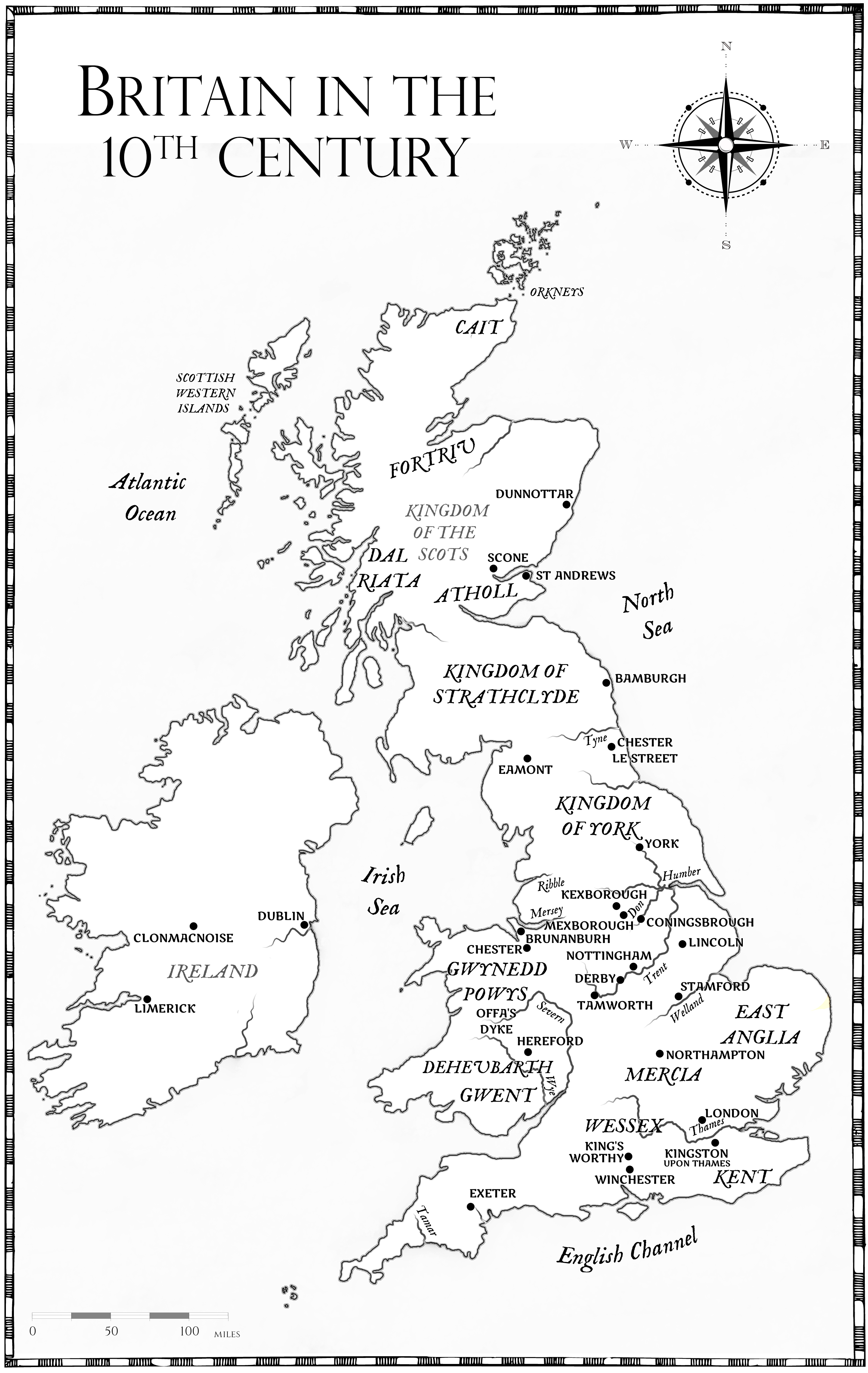
Map of Britain in the tenth century, showing York (map design by Flintlock Covers).
Viking York – Jorvik
It’s record that the first attack Viking attack on York occured on 1st November 866. The Northumbrians counter-attacked in 867 but this left York under Viking control.
‘Here the raiding-army went from East Anglia over the mouth of the Humber to York city in Northumbria;’ ASC A 867 corrected to 866 p.68 (from my preferred edition edited by Michael Swanton).
And here is where my notes become a little muddled between time periods. The British Historic Towns Atlas Volume V informs that the River Ouse at the time would have been tidal, and much wider than it is now and also with much steeper banks .
The late-eighth-century scholar Alcuin describes York as having high walls and lofty towers (he spent time in York). Asser (Alfred’s late-tenth-century biographer – although I’m curious as to how he’d know as I’m sure he was from one of the Welsh kingdoms and York was not under Alfred’s control) suggests that York’s walls were insecure and there is a suggestion that the Vikings restored the walls. Considering what we know about Asser and his ability to be less than honest, we might suspect this statement. Certainly, the remains of the walls were visible but whether they were defensible is unknown.
The walls survive to this day. To paraphrase from the Atlas, from the western corner of the Roman fortress to fifty metres along its south-west front, parallel to the river, the Roman wall is still visible above ground. Beyond this point, its six projecting interval towers and the Roman south/west gateway leading to the bridge over the Ouse have either been demolished to foundation level or been covered by organic-rich debris of post-Conquest date. The fortress’s south corner tower at Freasgate survives to fifteen foot. It is suggested that the south-west section of the civilian settlement might not have been included in the walled defences.
On the northern banks of the River Ouse, there were plots about 5.5m wide occupied by one or more structures (Coppergate/Ousegate/Pavement) with backyards running downslope towards the River Foss. Hungate also had similar plots. There might have been crossings over the rivers below St Mary Castlegate and Hungate. These rectangular structures of post and wattle had entrances front and back, with centrally arranged hearths and roofs made of turf, reeds or straw. Most settlement was below Coppergate, Ousegate, Pavement, Hungate and Walmgate areas.
Recreating Jorvik?
But what does all this mean when trying to recreate the time period? (Some will know that I’ve already ‘visited’ York earlier in the Brunanburh series, and without all this angst). It is frustrating that some aspects are so clearly defined and others aren’t. Where were the people living – especially the high status people? Where were the kings living? In King’s Square/Kuningesgard? And what’s this about the civilian defences never being completed to the south?
My overwhelming impression is that the remains of the actual Roman encampment (to the north of the Ouse) were in better condition than those to the south of the Ouse surrounding the civilian settlement (there are ‘proper’ terms for this – I’m not using them). But, these remains of the Roman wall at the fort seem to have largely been surrounding the religious centre under the control of the Archbishop of York, Wulfstan I. Were they any use to those in control of Jorvik? And what about the rivers? How navigable were they? Could they be easily blocked? How tidal is tidal? Did it raise and lower the water level by metres or centimetres?
Was there even a bridge over the River Ouse or did they need to use a boat to get across? Perhaps there was only one bridge over the Ouse, and only one over the River Foss.
Having this information to hand and making sense of it are two very different things. How would someone have gone about attacking York? Would they have taken ships, come on foot or tried to steal their way inside through the never completed walls? Who would have protected it? What would our erstwhile holy man, Archbishop Wulfstan have done? If the walls were standing, how many warriors would have needed to protect it?
You’ll have to read Conflict of Kings to see just what I did, and you can from 6th August 2024:)
While traveling on an overnight train from Barcelona to Madrid, my friends and I had an unexpected discovery when we got to our cabin.
Sheilds, Jim, Nicole, and I work our way down the carriages. We pass through the non-operative dining car to arrive at the entrance to our seated cabin. I slide open the door and am surprised to find the small compartment already full of people. It is a six-person sitting cabin and there are eight bodies already squeezed in. Not just any people, either.
They are gypsies.
There is an uncomfortable silence among everyone present who is not a gypsy before I speak.
“Um, is this your cabin?” I ask.
“Of course,” one gypsy replies.
I nod, turn, and shoo my companions back into the dining car.
“Are they in our cabin?” Sheilds asks.
“I don’t know. They say it is theirs,” I answer. “Are we sure we have the right wagon?”
“I am sure that is our cabin,” Sheilds declares. “They need to leave.”
She extends her arm and points towards the corridor that leads to our cabin. What? Sheilds expects me to go back and throw them out? Why me? Why do we not simplytake advantage of all this open space in the empty dining car for the trip? Nicole gives me an expectant look as well. Great. Now I must impress my future wife. I take a slow, deep breath. Surely Gypsies are not as dangerous as the German Mafia. I keep repeating this to myself as I walk back to the door of the cabin filled with the unwelcome, and unwashed, guests.
I slide open the door cautiously. Every pair of gypsy eyes in the room turn to me. I gulp.
“Excuse me. Do you have tickets for this cabin?” I firmly ask.
The gypsies disclose their complete surprise at being put on the spot for overtaking a cabin that is not theirs.
“We do not need tickets. We are gypsies.”
“We like this cabin.”
“We are gypsies, we mean you no harm,” one coyly remarks.
“I am sorry. If you do not have a ticket for this room, you need to get out,” I state, while standing at the door looking as menacing as I can as my knees are shaking.
Here’s the blurb
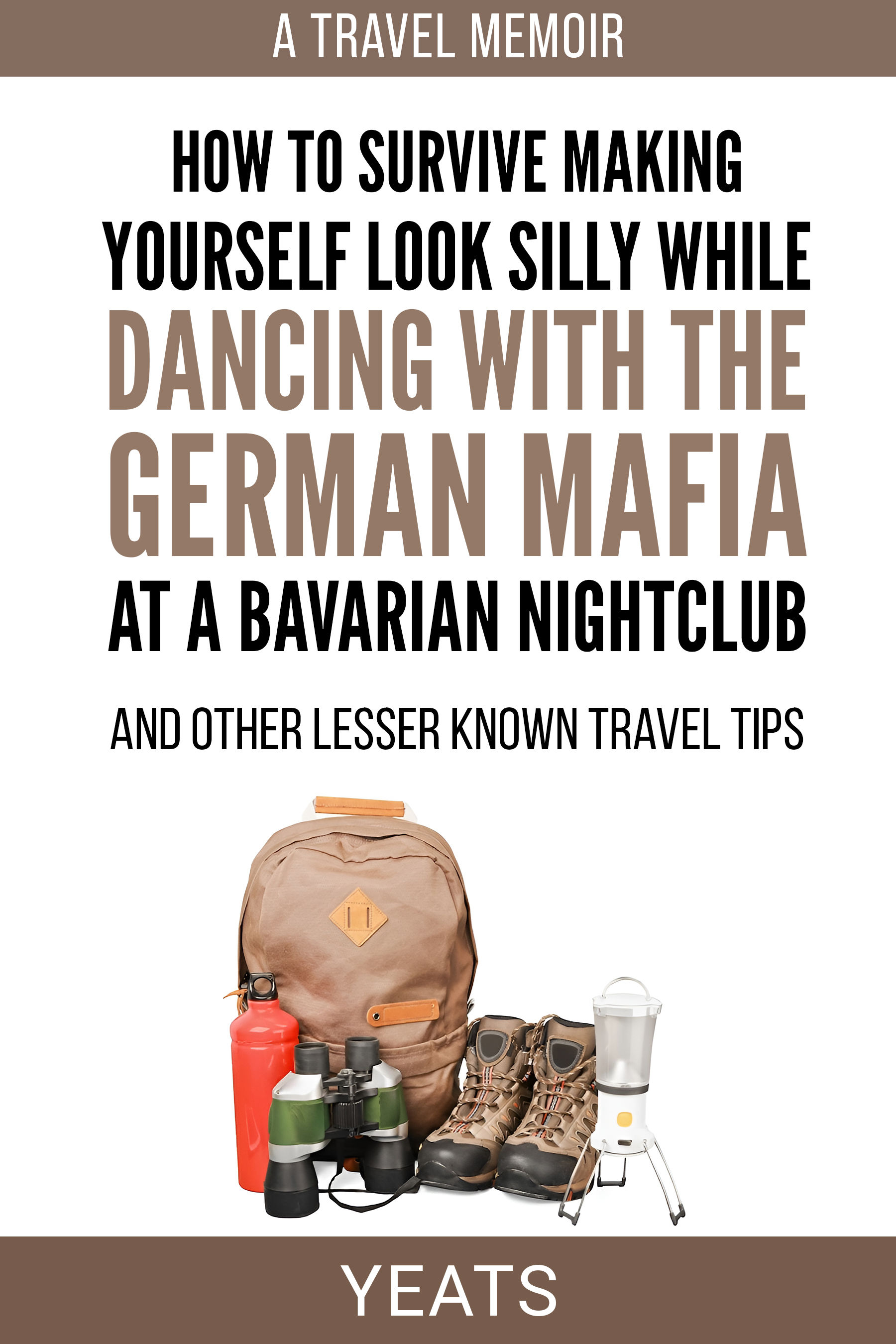
The best has been saved to last. Book 3 of a hilarious series of travel misadventures and dubious personal introspection by Australian author Simon Yeats, who from an early age learned that the best way to approach the misfortunes of this world is to laugh about it.
Simon shares his comedic insights into the unusual and uproarious elements of living life as an Aussie ex-pat and having a sense of Wanderlust as pervasive as Cholera in the 1850s.
From how to outwit the Italian police while trying to find parking in downtown Genoa, to how to negotiate exploring the Roman ruins of Plovdiv, Bulgaria while on crutches, to how to impress the German Mafia with 80s dance moves, to how to leave a lasting impression on a crowded bar in Gothenburg, Sweden after combining alcohol and antibiotics.
Simon Yeats has gone into the world and experienced all the out of the ordinary moments for you to sit back and enjoy the experience without the need to rupture a disc or succumb to Dengue fever.
Simon Yeats has lived nine lives, and by all estimations, is fast running out of the number he has left. His life of globetrotting the globe was not the one he expected to lead. He grew up a quiet, shy boy teased by other kids on the playgrounds for his red hair. But he developed a keen wit and sense of humor to always see the funnier side of life.
With an overwhelming love of travel, a propensity to find trouble where there was none, and being a passionate advocate of mental health, Simon’s stories will leave a reader either rolling on the floor in tears of laughter, or breathing deeply that the adventures he has led were survived.
No author has laughed longer or cried with less restraint at the travails of life.














 MJ Porter