I’m sharing a post about the family of Ealdorman Leofwine, Saxon England and the position of ealdormen/earls #nonfiction #fiction #histfic

I’m sharing a post about the family of Ealdorman Leofwine, Saxon England and the position of ealdormen/earls #non-fiction #fiction #histfic

Who was Ealdorman Leofwine?

Ealdorman Leofwine , was the ealdorman of the Hwicce (c.994-1023), one of the ancient tribal regions in Mercia, which was a part of England, at the time the story begins. It is possible he may have been related to Ælfwine, who is named, and dies at the Battle of Maldon (more below).

Ealdorman Leofwine and his descendants, who would hold positions of power until the Norman Conquest of 1066, are a unique family in this tumultuous period. No other family, apart from the ruling family of Wessex (and even then there was a minor hiccup caused by those pesky Danish kings) held a position of such power and influence and for such a long period of time, as far as is currently known. The position of ealdorman was not hereditary. It was a position in the gift of the king, and Saxon kings ruled with a varying number of ealdormen. To understand Leofwine’s significance, it’s important to understand this. Unlike an earl – a term we are all perhaps far more familiar with – but specifically a medieval earl in this regard – that position was both more often than not hereditary AND meant that the person involved ‘owned’ significant properties in the area they were earls over. This is not how the ealdormanic system worked in Saxon England, as it’s currently understood.

It is difficult to track many of the ealdormanic families of this period, and the previous century, but there are a few notable individuals, all who bucked the usual trend, which no doubt accounts for why we know who they are.

Perhaps most well-known is Ealdorman Athelstan Half-King, who was the ealdorman of East Anglia from about 934 to 955/6 when he fell from favour at court during the reign of King Eadwig and retired to Glastonbury Abbey. Before he did so, he ensured that his son, Æthelwald, was elevated to the position of ealdorman in his place. This was most unusual, but then, he came from a powerful family, fiercely loyal to the ruling House of Wessex, if not actually a member of them. Athelstan Half-King is believed to have been the son of Ealdorman Æthelfrith, a Mercian ealdorman when Lady Æthelflæd was the Lady of Mercia. Athelstan was one of four brothers. His older brother seems to have either briefly retained the ealdordom after their father’s death in Mercia, or been accorded it a few years later, but when he died, Athelstan Half-King didn’t become ealdorman of Mercia in his place. No, he remained in East Anglia while his two brothers, Eahric and Æthelwald, held ealdordoms in Wessex (Eahric) and Kent (Æthelwald). They didn’t become the ealdorman of Mercia either. The ealdordom passed to a different individual.

When Ealdorman Æthelwald of the East Angles died a few short years later (Athelstan Half-King’s son), his place was taken by Ealdorman Æthelwine, the youngest of Athelstan Half-King’s children. But, the family failed to hold on to the position, despite Ealdorman Æthelwine being married three times, and fathering three sons, one of whom died at the battle of Assandun in 1016. The next to hold the ealdordom of the East Angles after the death of Æthelwine was Leofsige, who was the ealdorman until he fell foul of the king in 1002. In the early 1000s Ulfcytel emerges and may have been married to one of the king’s daughters, but is never officially accorded the title of ealdorman. You can read about Ealdorman Athelstan Half-King in The Brunanburh Series.

Another famous ealdorman was Byrhtnoth of Essex, who died at the Battle of Maldon in 991. But Byrhtnoth was not the son of the previous ealdorman, and indeed, he married the daughter of a very wealthy man and in turn was raised to an ealdordom in Essex at exactly the same time that Ealdorman Athelstan Half-King was being forced to retire from his position in East Anglia. (Byrhtnoth’s wife’s sister had briefly been married to King Edmund (939-946, before his murder). While there are some arguments that Byrhtnoth was from a well regarded family, his appointment was not because of an hereditary claim. It’s known that he was father to a daughter, but not to a son. As such his family did not retain the ealdordom on his death. Indeed, it seems as though Essex and the East Anglian earlordoms were united for a time under Leofsige.

The argument has been put forth that the position of ealdorman may have come with properties that were the king’s to gift to the individual to enable them to carry out their duties in a particular area. The Saxons had a number of types of land tenure, bookland, was land of which the ‘owners’ held the ‘book’ or ‘the title deed.’ (There are some wonderful charters where landed people had to ask for the king to reissue a charter as theirs was lost, often in a fire. There is a wonderful example where King Edgar has to reissue a charter for his grandmother, as he’d lost it while it was in his care). Other land tenure was ‘loan land,’ that is land that could be loaned out, often for a set number of ‘lives.’ Ealdormen might then have held bookland that was hereditary, and not in the area they were ealdorman of, and loan land that was in the king’s to gift to them within the area that they were the appointed ealdorman.

Many will be familiar with the family of Earl Godwine and his sons (thanks to the influence of the Danes, the term ealdorman was replaced by earl, which was the anglicised version of jarl). Much work has been done on the land that the Godwine family held when the great Domesday survey was undertaken during the reign of William the Conqueror. It will quickly become apparent that while they had areas where they held a great deal of land, these were not necessarily the areas over which first Godwin and then his sons Tostig, Harold, Gyrth, Leofwine and Sweyn held the position of earl. Most notably, Tostig was earl of Northumbria from 1055-1065, and yet the family had almost no landed possessions there.

And this is where we return to Ealdorman Leofwine and his family. While everyone knows about Earl Godwine and his sons, they didn’t hold their position for as long as Ealdorman Leofwine and his family. Earl Godwine is first named as an earl in charter S951 dated to 1018. By that period, Leofwine of the Twice had already held a position of importance since 994. The families of both men would converge as the events of 1066 drew nearer, and indeed, Godwine’s son, Harold, was married to Ealdorman Leofwine’s great-granddaughter when he was briefly king of England.

When Ealdorman Leofwine died, his son, Leofric, didn’t become ealdorman in his place. Leofric was a sheriff during the period between his father’s death and his own appointment. And indeed, Leofric’s son, Ælfgar was elevated to an earldom before his father’s death, and so was not initially the earl of Mercia. However, on this occasion, and because of a political situation that was rife with intrigue, Ælfgar did become the earl of Mercia after his father’s death, and after Ælfgar’s death, his young son also took the earldom of Mercia. The family survived the events of 1066, but they didn’t retain their hold on the earldom. The House of Leofwine were a family to not only rival that of Earl Godwine’s, as far as it’s known, but they were also the ONLY family to retain a position as an ealdorman/earl for over seventy years. And yet, very few know about them, and indeed, in many non-fiction books, they’re not even mentioned. And that was the perfect opportunity for me to write about the fabulous family, largely inspired by a non-fiction book, The Earls of Mercia: Lordship and Power in Late Anglo-Saxon England by Stephen Baxter.

https://amzn.to/459MnGs


Join my monthly newsletter to keep up to date with all things book related, and receive a free ebook.

Posts

I’m delighted to welcome Judith Arnopp and her non-fiction title, How To Dress Like A Tudor to the blog #HistoricalCostume #TudorFashion #Tudors #BlogTour #CoffeePotBookClub

Here’s the blurb

Have you ever hankered to dress like a Tudor lord or lady, or perhaps you prefer the status of goodwife, or costermonger, or even a bawd? 

For beginner historical reenactors, the path to authenticity can be bewildering and sometimes intimidating. Judith Arnopp uses her own experience, both as a historian and a medieval/Tudor lady, to make your own journey a little easier.

The author traces the transition of fashion from the relatively subtle styles popular at the court of Henry VII, through the carefully constructed royal grandeur of Henry VIII, Edward VI, and Mary I to the pinnacle of majesty and splendid iconography of Elizabeth I. 

In contrast to the magnificence of court come the ordinary folk who, subject to sumptuary laws and regulations, wore garments of a simpler cut and cloth – a strata of society that formed the back bone of Tudor England.

This brief history of 16th century fashion examines clothing for both rich and poor, adult and child, and offers tips and tricks on how to begin to sew your first historically inspired garment, this book is aimed at helping the beginner learn How to Dress like a Tudor.

Buy Link:

 mybook.to/howtodress

Meet the author

Judith writes historical fiction set during the late medieval and Tudor period. Her usual focus is on the women who lived close to the monarch, women like Margaret Beaufort, Elizabeth of York and Mary Tudor but more recently has been writing from the perspective of Henry VIII himself. Her books are on Kindle, Audible and Paperback.

You can find her fiction books here: http://author.to/juditharnoppbooks

She also writes non-fiction, her work featuring in many anthologies and online magazines. Her latest non-fiction, How to Dress like a Tudor published by Pen & Sword Books is available now. 

Judith is a founder member of a reenactment group The Fyne Company of Cambria, and began making Tudor costumes for herself, her husband, John, and other members of the group. It was this that inspired How to Dress like a Tudor and she hopes to write more non-fiction Tudor history in the future.

Connect with the author

WebsiteBlueskyBook Bub:

Follow the How To Dress Like A Tudor blog tour with The Coffee Pot Book Club

I’m delighted to welcome Kimberley Burns to the blog with a post about her new book, The Redemption of Mattie Silks #HistoricalFiction #HistoricalWomensFiction #WestwardExpansion #BlogTour #CoffeePotBookClub

I’m delighted to welcome Kimberley Burns to the blog with a post about her new book, The Redemption of Mattie Silks.

Women of the Old West

Women of the Old West were pioneers and trailblazers, but not just in the sense that they gave up their homes and trekked into the wilderness. They also blazed trails in business, were pioneers of medicine and groundbreakers in politics.

Remember the old US Army advertising campaign: “We do more before 9AM than most people do all day”? My great-grandmother could have given any soldier a run for their money. With a baby on her hip and five more little ones trailing behind, she packed her valuables into a wagon and walked from North Carolina to Colorado. She spent the rest of her life on a homestead in the Colorado foothills, keeping the house and raising three more babies while also completing a man’s day’s work out on the range. She may have accomplished more before any given sunrise than I do in a good year. Sadly, stories of her and other remarkable but unknown heroines are being lost in the fog of history. 

There were few acceptable careers for women in the 1800s, and certainly none that created wealth. Most working women struggled on subsistence earnings as laundresses, cooks, maids, or teachers. But in the West, where survival often depended on everyone pulling their weight, women could not afford to be shrinking violets. Their husbands and communities needed all hands to pitch in. The move west wrenched women from the customs, conventions, standards, and traditions with which they had been raised. They had to develop new codes of acceptable behavior, dress, and mores. In my novel The Mrs. Tabor, a local madam explains that a woman alone can act with the highest decorum and in the end, she will politely starve to death. The madam warns, “The law of survival always trumps the rules of etiquette.”

The need for labor gave Western women opportunities to create careers that their sisters in the East did not have. Women were often good with livestock, and ran cattle ranches, bred horses, or drove pack mules. It is estimated that 15% of homesteaders were single women. In an era when women could not sign a legal contract or open a bank account, female entrepreneurs owned restaurants, stores, and hotels in frontier towns. 

In the mining boomtowns, most men preferred prospecting to planning infrastructure. This opened the door for the few women there to participate in government and improve the living conditions for their families and communities. In fact, many Old West towns lacked a school and church until the females organized the funding and building of these cultural institutions. White men may have explored the West, but white women settled it.

Western women also participated in politics decades before the constitution was amended to allow voting for all, regardless of sex. Wyoming Territory passed a women’s voting act in 1869, and the gals got right to work. Within a year the territory had female jury members, a bailiff and a justice of the peace. Other states and territories west of the Mississippi soon followed suit and women were voting in Colorado by 1893 and in Utah by 1896. 

In a region where males greatly outnumbered females, some lonely men were of the opinion that woman’s suffrage might attract quality marriage candidates. Daring and hardy adventuresses would be drawn to a new life in the Wild West in they had a hand in shaping it. Delicate flowers accustomed to a steady life of comfort need not apply. 

When their Eastern sisters were marching for the right to vote in matching white dresses, Western women were campaigning to be elected to public office themselves. All-lady town councils were elected in Oskaloosa, Kansas (1888) and Kanab, Utah (1912). In 1920, the same year that the 19th Amendment was finally ratified, Jackson, Wyoming elected an all-female mayor and city council. One of their descendants wrote, “There was a practical approach to it. [They said] we need this and we’ll do it ourselves.” Dubbed the Petticoat Rulers, they extended electric service, installed street lights, grated streets, created a town cemetery, collected taxes, and appointed a (female) town treasurer, marshal, and health officer. 

Medical schools were graduating a handful of token female doctors in the late 1800s. Many of those found acceptance in the rough western territories. Perhaps citizens felt a lady doctor was better than no doctor at all. The television show Dr. Quinn, Medicine Woman was loosely based on the life of Doc Susie who served small mountain towns in the Colorado Rockies from 1893 until 1956. Imagine the patients she must have treated in a region filled with wild animals and wilder men. Her story and that of a few other early medical professionals are noted in state historical society collections, but most are unknown in the wider world.

Some women found work on the wrong side of the law. Pearl Hart robbed stagecoaches. Belle Star led a gang of cattle rustlers. Sing Choy, also known as China Mary, controlled the opium dens and Chinese prostitution in old Tombstone. The main character of my latest book, Mattie Silks, used her sharp business acumen to run one of Denver’s most successful brothels for over forty years.

Regardless of where they found employment, the women of the Old West displayed an incredible work ethic and courage enough to fill a library with adventure stories. But there is another, less glamorous trait they seemed to possess — pragmatism. If there was work to be done, they simply got to it. I don’t think many of the women who settled the wild frontier took any time to reflect on accomplishments or bask in any congratulatory accolades. There were few philosophical debates about equality of ability or opportunity. They were too busy, living by the motto, “Get ’er done!”

Here’s the blurb:  

SEEKING REDEMPTION, SHE FINDS RETRIBUTION

In 1892, running one of the West’s fanciest brothels is a rough game. In a town filled with brazen criminals, corrupt police, zealous politicians, and morality committees, Madam Mattie Silks makes her fortune catering to Colorado’s gold and silver millionaires.

Notorious crime boss “Soapy” Smith is at the top of the Denver underworld. There are no rules for Smith’s gang. They solve problems with bribes and bullets. When Mattie’s husband stumbles into Soapy’s dealings, she struggles to protect him.

Gold is discovered in the Yukon and Mattie seizes the opportunity for adventure and profit. But Skagway, Alaska, is even more lawless than Denver. Mattie must use all her business sense and street smarts to safeguard those she cares about. Will it be enough? Or will Lady Justice again turn a blind eye?

Based on a true story, The Redemption of Mattie Silks is an action-packed tale of a woman succeeding in a man’s world even when the cards are stacked against her.

“The research on the era shines through, as do the grit and spirit of the characters. …A colorful and enthralling journey.” 

~ K.T. Blakemore, award-winning author of The Good Time Girlsseries

“A nice, nuanced portrait of the complex underworld with fine and witty turns of phrase. A great Western romp!”

~ Randi Samuelson-Brown, award-winning author of The Bad Old Daysseries

Buy Links:

This title is available to read with #KindleUnlimited

https://books2read.com/u/mlpKRv

Meet the author

Kimberly Burns grew up in Colorado hearing stories about the colourful characters of the Old West. She has degrees from the University of Colorado and the University of Hartford. Kimberly is a member of the Historical Novel Society, Western Writers of America, and Women Writing the West. She lives with her husband and black Lab in Leesburg, Virginia.

Her debut novel The Mrs. Tabor won numerous awards including the Western Fictioneers Peacemaker Award for Best New Novel, a gold medal for Best Regional Fiction from the Independent Publisher Book Awards, a National Indie Excellence Award, and a silver medal from the Colorado Independent Publishers Association EVVY Awards.

Kimberly and her unruly heroines make for an entertaining book talk. She is available to discuss her novels with book groups in person or online. Email her at info@kimberlyburnsauthor.com.

Connect with the author

Website

Follow The Redemption of Mattie Silks blog tour with The Coffee Pot Book Club

Today I’m delighted to be taking part in the blog tour for new historical mystery, Arsenic at Ascot by Kelly Oliver #blogtour #BoldwoodBooks

Here’s the blurb:

Saddle up for this first class historical mystery, perfect for fans of Helena Dixon and Verity Bright.

London, 1918

Fiona Figg finds herself back in Old Blighty saddled with shuffling papers for the war office. Then a mysterious card arrives, inviting her to a fancy house party at Mentmore Castle. This year’s Ascot-themed do will play host to a stable of animal defense advocates, and Fiona is tasked with infiltrating the activists and uncovering possible anti-war activity.

Disguised as the Lady Tabitha Kenworthy, Fiona is more than ready for the “mane” event, but the odds are against her when both her arch nemesis, dark-horse Fredrick Fredricks, and would-be fiancé Lieutenant Archie Somersby arrive unexpectedly and “stirrup” her plans. And when a horse doctor thuds to the floor in the next guest room, Fiona finds herself investigating a mysterious poisoning with some very hairy clues.

Can Fiona overcome the hurdles and solve both cases, or will she be pipped to the post and put out to pasture by the killer?

Purchase Link

https://mybook.to/arsenicascotsocial

My Review

This is the fourth book in the Fiona Figg and Kitty Lane Mystery Books I’ve read. I confess, what I really enjoyed about book 3, Mayhem in the Mountains, was Fiona’s lack of dressing up in costume and, therefore, no mention of her favourite fake moustache. So I was somewhat alarmed when, only a few chapters in, Fiona was once more masquerading in one of her many costumes. However, I needn’t have feared. Kitty has not forgotten about her costumes, and she certainly puts them to good use in Arsenic at Ascot, but much of the time, Fiona is either herself or Lady Tabitha. Not that I object to her masquerading, but I’d much rather hear about her favourite wig than her suitcase full of fake moustaches and beards.

Fiona has been grounded in Arsenic at Ascot. Somewhat depressed and out of sorts at finding herself once more a ‘mere’ file clerk, all is doom and gloom and complaints about washing up after the codebreakers when she’s summoned by none other than her boss and told to don one of her many costumes. What ensues is a, at times, somewhat uncomfortable look at the world of vivisectionists and antivivisectionists and the use animals were put to during the war. As Fiona has no clear idea about what she thinks about either side of the argument, the exploration into what we now think of as animal cruelty is somewhat distressing, although it’s never laboured. And readers will be quite astounded at some of the experiments, which, according to the end notes, are based on natural experiments of the time.

While all this is happening, Fiona is once more caught in the love triangle between Archie and Frederick Fredericks and has a hole to climb out of with Archie, thanks to Kitty Lane. It will not stop her from solving who killed the latest body she’s found at a country estate.

As with the Fiona Figg and Kitty Lane books, the mysteries and conspiracies are well thought out, and the conclusion is satisfying. I also enjoy knowing this is not the last of the series, as book 5 gets a great set-up in the final chapters.

If you enjoy historical mysteries with a dash of humour and a little frisson of romance, then the Fiona Figg and Kitty Lane books are sure to appeal to you, with their knowledge of the ‘of their time’ investigative techniques, all combined with the intrigue of our spies, Archie and Fredericks and dotted with either real historical characters or creations based on them—a delightful mystery.

Check out my review for books 1, 2 and 3 in the Fiona Figg and Kitty Lane Mystery books Chaos at Carnegie Hall, Covert in Cairo and Mayhem in the Mountains.

Meet the Author

Kelly Oliver is the award-winning, bestselling author of three mysteries series: The Jessica James Mysteries, The Pet Detective Mysteries, and the historical cozies The Fiona Figg Mysteries, set in WW1. She is also the Distinguished Professor of Philosophy at Vanderbilt University and lives in Nashville, Tennessee.

Connect with Kelly

Facebook: https://www.facebook.com/kellyoliverauthor  

Twitter: https://twitter.com/kellyoliverbook  

Bookbub profile: https://www.bookbub.com/authors/kelly-oliver

Newsletter Sign Up: https://bit.ly/KellyOlivernews

Today, I’m reviewing Spread: Tales of Deadly Flora, a collection of fabulous (and slightly disturbing) short stories) Highly recommended #blogtour

Here’s the blurb

Green thumbs beware. Plants are beautiful, peaceful, abundant, and life-sustaining. But what if something sinister took root in the soil, awakening to unleash slashing thorns, squeezing vines, or haunting greenery that lured you in? Perhaps blooms on distant planets could claim your heart, hitch a ride to Earth on a meteor, or simply poison you with their essence. Imagine a world where scientists produced our own demise in a lab, set spores free to infect, even bred ferns to be our friends only to witness the privilege perverted. When faced with botanical terror, will humanity fight to survive, or will they curl and wither like leaves in the fall? Read ten speculative tales ripe with dangerous flora to find out.

Purchase Link

https://www.amazon.com/dp/B0CKX9PGVY/

My Review

Spread is a collection of short stories all with a theme of deadly fauna. If this doesn’t sound like your sort of thing, then rest assured, it’s not really mine either, but these tales are all really good reads – I thoroughly enjoyed all of them even if some of them made me feel a bit itchy.

The tales are so well constructed, drawing you into a whole new world quickly, and packing a great deal of punch. Some of them are quite eerie. Some of them will have you shouting, ‘No, don’t do it,’ and others slowly reveal themselves and become creepy unexpectedly. They range from tales set on different planets to those set on an Earth slowly being consumed by deadly fauna, or being set upon by alien fauna, but not all of them can be quite so easily categorised. All of the tales are well worth reading.

In future, I will be eyeing up the plants around my house with a wary glance. Genuinely, it is an excellent collection of short stories, I’m so pleased I decided to read them.

Connect with the authors

Website: www.pageturnpress.com

Instagram & Twitter: @pageturnpress

Facebook: https://www.facebook.com/pageturnpress/

Today, I’m welcoming Ann Bennett and her new book, The Fortune Teller of Kathmandu to the blog #HistoricalFiction #HistoricalRomance #WomensAdventure #BlogTour #TheCoffeePotBookClub

I’m welcoming Ann Bennett and her new book, The Fortune Teller of Kathmandu to the blog, and she’s sharing a fabulous post about the historical research she undertook for the book.

Historical Research for The Fortune Teller of Kathmandu

There are several different strands to my latest historical novel, The Fortune Teller of Kathmandu, all of which needed to be researched. But I ended up using a variety of sources for each and approaching the research in many different ways. 

The story is about Lena, a young Eurasian (or Anglo-Indian) woman working as a teacher in a boarding school in Darjeeling in the early 1940s. It is the same school that she grew up in having been sent there at the age of three. All the girls at the school are the product of liaisons between British officers or civil servants and Indian women and whose presence the British in India would have preferred to forget. This was inspired by an article I read some years ago by a British journalist who had discovered a previously unknown relative who had been a Eurasian and brought up in such an establishment. That story really struck a chord with me, although I’ve been unable to track the article down again. However, I did find some really useful sources of research about the way Eurasians in India were seen as a problem by the British. For example, a thesis entitled The Eurasian Problem in Nineteenth Century India by Valerie Anderson of the School of African and Oriental Studies, London University which is available online. 

I visited Darjeeling in 2019 as part of my research (I have set another novel there too as I found it an atmospheric place in an incredible setting. That book is The Lake Pavilion). I found the old villas and hotels that remain from British India, as well as the austere Victorian boarding schools there a fascinating glimpse into the past). I also studied old Youtube footage of old Darjeeling and photographs from the period. I found an interesting article by blogger Vikram Karve called Institutions of the British Raj, which outlines how Darjeeling developed as a place to send British children to school. Eurasian, or Anglo-Indian children were not welcome at the same establishments and separate establishments were developed for them. This underlines the discrimination Eurasians encountered in British India, which is one of the themes of the novel. 

Secondly, I wanted to find out about the Nepalese Gurkhas and how soldiers were recruited from Nepal during the second world war by the British Army. I read as much as I could about this online, but my main source of information was a visit to the Gurkha museum in Pokhara. There I read details of how British recruitment officers would go into the hills and recruit young men from the villages. That museum also contains many first-hand stories of incredible bravery and loyalty of the Gurkha soldiers. 

As part of that research, I trekked into the hills of the Annapurna range to experience the landscape and communities there first hand. The village life is timeless and I suspect has changed little since the era the novel was set. However, there are probably more people living in the mountains now because of the increase in foreign visitors and wealth. When my characters Lena and George visited in the early 1940s, I suspect those hill villages such as Ghorepani were sparsely populated.

Thirdly, I needed to research the Burma campaign during the second world war, in which the Allies attempted to retake Burma from the Japanese and to prevent them from invading India, “the Jewel in the Crown”. I read about the incredible Chindit regiments commanded by Colonel Orde Wingate, who flew in gliders behind enemy lines to set up strongholds there to disrupt enemy operations. I’d researched the Burma Campaign for a previous book , The Lake Palace about a young English woman who volunteers to follow General Slim’s 14th Army as an auxiliary nurse to run a field hospital. For both books, I read extensively about the Burma Campaign, in which men on both sides fought courageously in the toughest of jungle conditions. It is often overlooked, so much so that the 14th Army is sometimes called The Forgotten Army. 

The books I found very helpful and informative were the following:  Burma ’44: The Battle That Turned Britain’s War in the East by James Holland, The Road Past Mandalay (W&N Military) by John Masters, Burma Victory: Imphal and Kohima, March 1944 to May 1945 (The Crucible of Leadership Book 2), by David Rooney, The Burma Campaign: Disaster into Triumph 1942-45 by Frank McLynn and Road of Bones: the epic siege of kohima: The Epic Siege of Kohima 1944 by Feargal Keane.

Lastly, I researched the Wasbies – The Women’s Auxiliary Service (Burma) whose story is also little known. Lena, my main character volunteers to join the service in 1943. I stumbled across the Wasbies’ story when I was researching The Lake Palace. I came across a photograph of a group of women, operating a mobile canteen out of an old, converted Chevrolet lorry near the battle lines during the Burma campaign. 

My main source of information about the Wasbies was a fabulous book, Front Line and Fortitude, by EJ Lockhart-Mure. It is the diary of a real-life Wasbie, Maria Pilbrow, and really brings home hardships those brave women went through. I read Chinthe Women – Women’s Auxiliary Service Burma 1942-1946 – Char and Wads on the frontline. The Chinthe is a mythical Burmese lion, which became the symbol of the Wasbies. This book contains a wealth of information and was written by Sally and Lucy Jaffe, granddaughters of Major Ninian Taylor, the leader of the Wasbies.

So my research for The Fortune Teller of Kathmandu involved reading history books, researching online sources and travelling to the region and experiencing the places I was writing about first hand. 

Thank you so much for sharing your research with my readers. Such a fascinating story.

Here’s the blurb

A sweeping wartime tale of secrets and love, mystery and redemption, moving from the snow-capped Himalayas to the steamy heat of battle in the Burmese jungle.

Perfect for fans of Dinah Jeffries, Victoria Hislop and Rosie Thomas.

Hampshire, UK, 2015. When Chloe Harper’s beloved grandmother, Lena dies, a stranger hands her Lena’s wartime diary. Chloe sets out to uncover deep family secrets that Lena guarded to her grave.

Darjeeling, India, 1943, Lena Chatterjee leaves the confines of a strict boarding school to work as assistant to Lieutenant George Harper, an officer in the British Indian Army. She accompanies him to Nepal and deep into the Himalayas to recruit Gurkhas for the failing Burma Campaign. There, she discovers that Lieutenant Harper has a secret, which she vows never to reveal.

In Kathmandu, the prophesy of a mysterious fortune teller sets Lena on a dangerous course. She joins the Women’s Auxiliary Service Burma (the Wasbies), risking her life to follow the man she loves to the front line. What happens there changes the course of her life.

On her quest to uncover her grandmother’s hidden past, Chloe herself encounters mystery and romance. Helped by young Nepalese tour guide, Kiran Rai, she finds history repeating itself when she is swept up in events that spiral out of control…

“A great read” Advance Reader.

” Thank you so much for allowing me to read the advance copy. I could barely put it down!” Advance Reader,

“What a wonderful book… I loved it. The dual time lines were delineated to perfection… the settings were perfectly rendered..” Advance Reader.

Buy Links: 

This title is available to read with #KindleUnlimited.

Universal Buy Link: https://mybook.to/tftok

Meet the author

Ann Bennett is a British author of historical fiction. She was born in Pury End, a small village in Northamptonshire, UK and now lives in Surrey. Her first book, Bamboo Heart: A Daughter’s Quest, was inspired by researching her father’s experience as a prisoner of war on the Thai-Burma Railway. Bamboo Island: The Planter’s WifeA Daughter’s Promise and Bamboo Road:The HomecomingThe Tea Panter’s Club and The Amulet are also about the war in South East Asia, which together with The Fortune Teller of Kathmandu make up the Echoes of Empire Collection.

Ann is also author of The Runaway Sisters, bestselling The Orphan HouseThe Forgotten Children and The Child Without a Home, published by Bookouture.

The Lake PavilionThe Lake Palace, both set in British India in the 1930s and WW2, and The Lake Pagoda and The Lake Villa, set in French Indochina during WW2, make up The Oriental Lake Collection.

Ann is married with three grown up sons and a granddaughter and works as a lawyer. For more details please visit www.annbennettauthor.com

Connect with the author

WebsiteTwitterFacebook

InstagramAmazon Author Page UKGoodreads

Follow The Fortune Teller of Kathmandu blog tour with The Coffee Pot Book Club

I’m delighted to welcome The Bastard Prince of Versailles by Will Bashor to the blog. Check out the snippet below. #HistoricalFiction #Versailles #LGBTBooks #BlogTour #CoffeePotBookClub

I’m delighted to welcome The Bastard Prince of Versailles by Will Bashor to the blog. Check out the snippet below.

On the way to his new chambers, Elizabeth introduced Louis to several courtiers in the galleries. Gentlemen bowed and ladies curtseyed, all the while eyeing his charming smile. Many commented that he had his mother’s dainty features. When Elizabeth and Louis happened upon a clutter of mignons in one of the galleries, Elizabeth took hold of Louis’ hand.

Junger Louis, these are the Italian chevaliers,” she said in a tense tone. “Ignore them.”

The young men stopped conversing upon seeing the newcomer. Elizabeth whispered, “And you’ll soon learn why they are called Italian.”

Louis had never seen young men dressed so frivolously. The sleeves of their shiny, short satin jackets were open from the shoulder to the laced cuffs at the wrist, showing the billowy sleeves of their silk shirts. Their short breeches were elaborately tied with bands of ribbon above the knee, and their red-heeled boots were topped with ruffles or lace garters. 

When Elizabeth caught the minions gawking at Louis, she barked, “Pathetic dolts!” and the mignons vanished from the salon.

As she escorted Louis down the long corridors, she passed an enormous wind. He looked up at her in disbelief.

“This is not Versailles, mein lieber Louis,” she bellowed.

They both chuckled, and Louis knew they were off to a great start. For the next few days, Elizabeth kept him busy settling in, meeting her husband’s bizarre followers, and learning the few rules of court etiquette. It wasn’t Sceaux. And it certainly wasn’t Versailles.

Here’s the blurb:

A historical novel inspired by real events, The Bastard Prince of Versailles,narrates the escapades of a misborn “prince” during the reign of Louis XIV in seventeenth-century France. Louis de Bourbon wasn’t a real prince-even though his father was King Louis XIV. 

The illegitimate son of the King and his mistress, Louise de La Vallière, young Louis has been kept far from the court’s eyes until summoned to bid adieu to his mother. To atone for her adultery, she joins a convent, abandoning Louis to an uncertain future. 

When Louis is humiliated by his father for his role in a secret gay society, he struggles to redeem himself through heroism and self-sacrifice in the king’s army on the battlefield.

Praise for The Bastard Prince of Versailles:

“Will Bashor effortlessly weaves together the threads of fact and fiction, transporting us back to the opulence and intrigue of 17th century France. The author’s research and attention to detail are evident and well applied, never seeming like a dry history lesson but always a hook keeping you turning the pages.

Louis is brought to life with such authenticity that you can’t help but empathize with his journey. As he navigates the treacherous waters of courtly politics and yearns for his father’s approval, you’ll feel a gripping connection to his struggles and triumphs. The rest of the characters are well-crafted as well, each contributing to the rich tapestry of the story.

If you are looking for a unique historical novel that will transport you to another time and leave a lasting impression, this book is an absolute must-read.”

–International Review of Books

Buy Links:

Universal Buy Link

Amazon UKAmazon USAmazon CAAmazon AU

Barnes and NobleKobo

Meet the author

From Columbus, Ohio, Will earned his Ph.D. from the American Graduate School of Paris. In his spare time, he reads memoirs and researches the lives of royals and their courtiers. He hopes to share his fascination with the Bourbon dynasty and its quirky inhabitants and, at the same time, weave the historical record with creative fiction. He has written articles for the Huffington Post, Age of Revolutions, BBC History Magazine, and Carine Roitfeld’s CR Fashion Book.

Connect with the author:

WebsiteTwitterFacebook

InstagramAmazon Author PageGoodreads

Follow The Bastard Prince of Versailles blog tour with The Coffee Pot Book Club

Who were the family of Lady Estrid? #HistFic #non-fiction

Lady Estrid was born into a large and illustrious family with far-reaching influence over Denmark, Sweden, Norway and England.

I’ve put together some genealogical tables of the main families to make easier to work out how everyone connected. (You can click on the images to make them bigger).

Due to a lack of information, I have made little mention of the rest of Estrid’s half-sisters, of which she had three or four. I feel it perhaps also helped the story a little – it was complicated enough as it was without giving them the capacity to meddle in affairs in Denmark.

To break it down into more palatable chunks, Lady Estrid’s mother was married twice, once to King Swein of Denmark (second) and also to King Erik of the Svear (first). King Swein was also married twice (in my story at least – as it is debated), to Lady Gytha (who I take to be his first wife) and then to Lady Sigrid (who I take to be his second wife.) Swein was king of Denmark, Erik, king of the Svear (which would become Sweden), and so Sigrid was twice a queen, and she would have expected her children to rule as well, and her grandchildren after her. Sigrid was truly the matriarch of a vast dynasty.

She would have grandchildren who lived their lives in the kingdom of the Rus, in Norway, in England, and Denmark.

And Sigrid wasn’t the only ‘double queen.’ Lady Emma, twice queen of England, was first married to King Æthelred and then to King Cnut, Estrid’s brother.

Not that it’s possible to speak of Lady Emma’s children from her two marriages, without considering the children of her first husband’s first marriage. King Æthelred had many children with his first wife, perhaps as many as nine (again, a matter for debate), the below only shows the children mentioned in Lady Estrid. Readers of The Earls of Mercia series, and the Lady Elfrida books, will have encountered the many daughters, as well as sons.

One of the other family’s that had the most impact on Lady Estrid, was that of her third husband, and father of her two sons, Jarl Ulfr.

Ulfr had a brother and a sister, and while little is known about the brother, it is his sister who birthed an extremely illustrious family, through her marriage to Earl Godwine of Wessex. (The family tree doesn’t include all of her children.)

Four such powerful families, all intermarried, make for a heady mix.

For the modern reader, not only are the family dynamics complicated to understand, but so too is the geography. Sweden was not Sweden as it is today, and the reason I’ve insisted on calling it the Land of the Svear. But equally, Denmark was larger than it’s current geographical extent, covering Skåne, (in modern day Sweden) as well. The map below attempts to make it a little clearer. Norway is perhaps the most recognisable to a modern reader, but even there, there are important difference. King Swein claimed rulership over parts of Norway during his rule, and so too did King Cnut. But, Denmark isn’t the only aggressor, there were rulers in all three kingdoms who wished to increase the land they could control, King Cnut of Denmark, England, Skåne and part of Norway, is merely the most well-known (to an English-speaking historian.)

Lady Estrid is available now

Lady Estrid is a standalone novel, but it does incorporate characters and events from The Earls of Mercia series. So, if you’ve not yet read The King’s Brother, it might contain some spoilers, and vice versa.

I have also written about Lady Estrid’s brother, Cnut, and her father, Swein. I classify the books as side stories to the main Earls of Mercia series, but they can all be read as standalones, or as a trilogy about the powerful family.


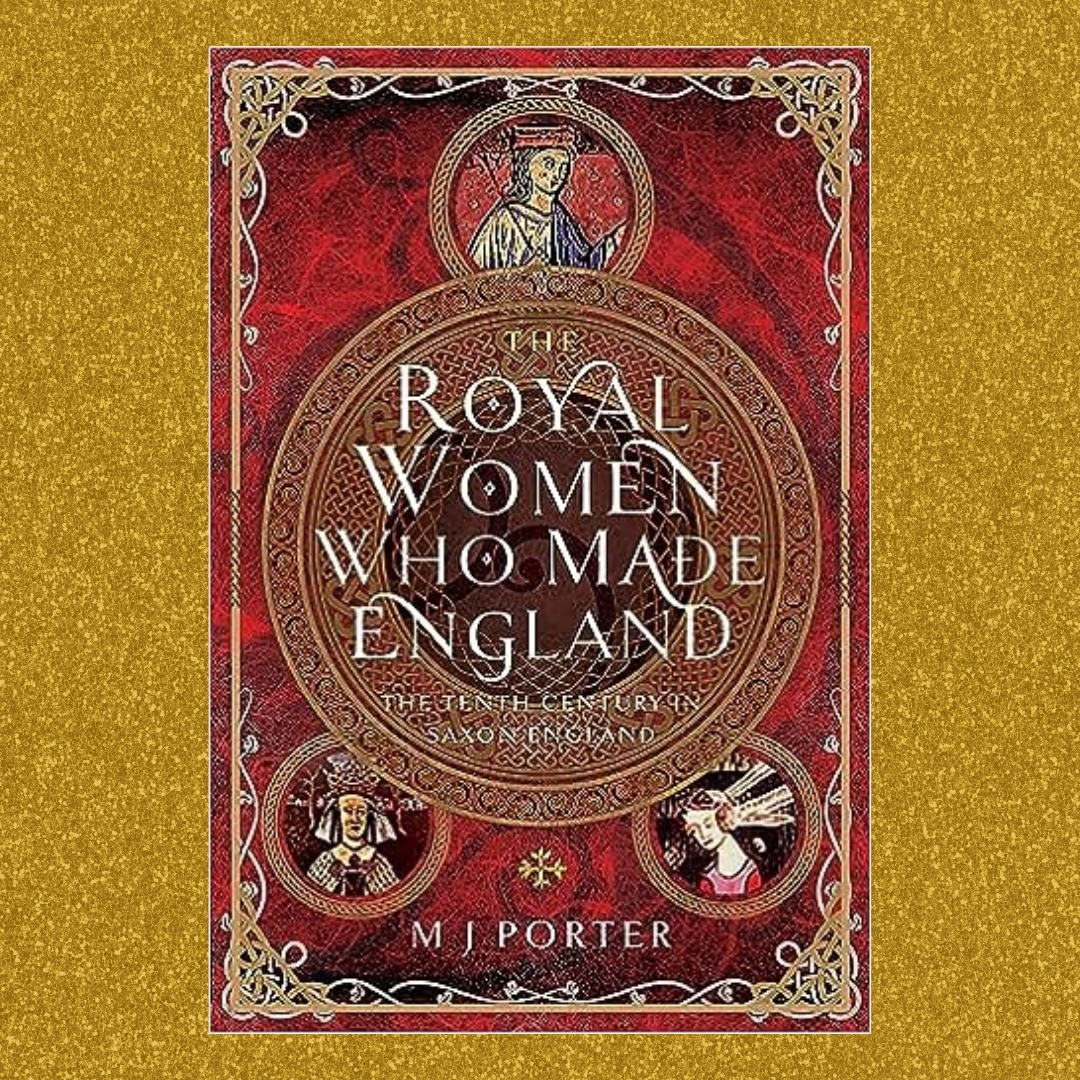
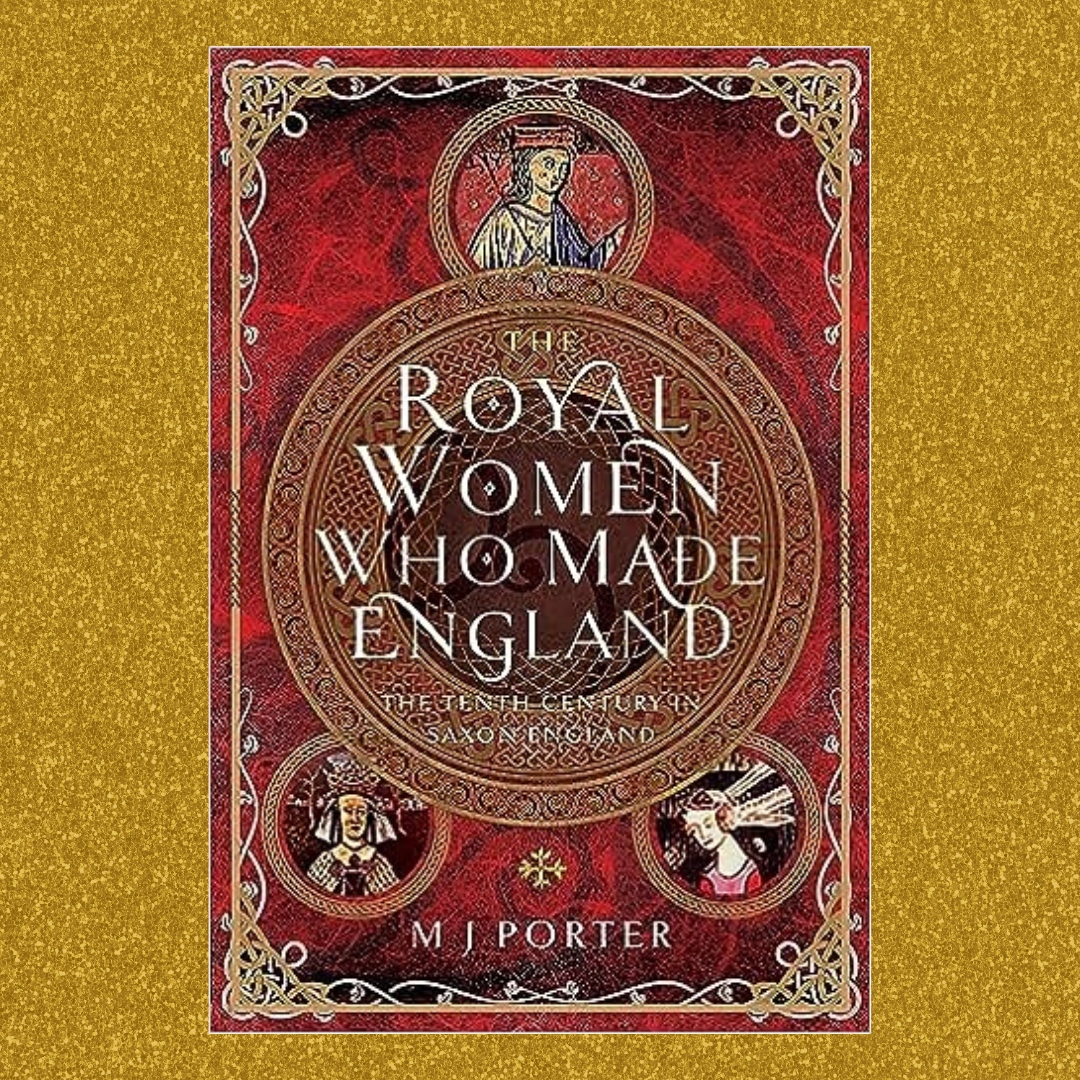
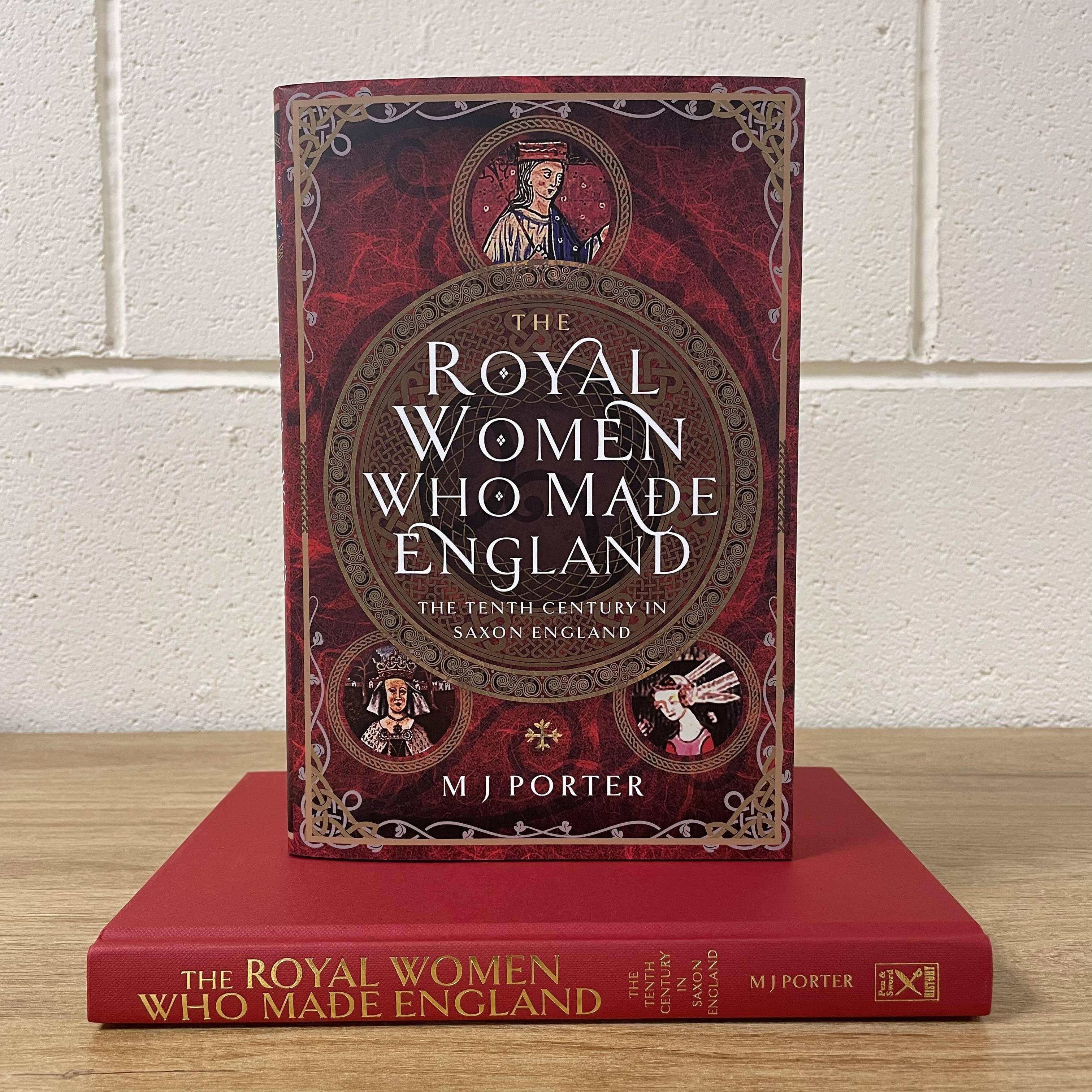
Interested in the unknown women of the tenth and the eleventh century? I’ve written about quite a few of them now. Check out The Tenth Century Series, featuring Lady Ælfwynn, Lady Eadgifu and the daughters of Edward the Elder, and the stories of Lady Elfrida as well as The Royal Women Who Made England.

Posts

I’m reviewing What Happened at the Abbey, a gothic mystery by Isobel Blackthorn #blogtour #histfic #recommended

Here’s the blurb

When Ingrid flees a violent husband to become a housekeeper in the Scottish Highlands, she discovers the family she works for has a much darker history than her own.

Who haunts Strathbairn? Why are the adult McCleod children at each other’s throats? And why does the youngest sneak off at night? As Ingrid searches for answers, she grows ever more fearful that her husband will track her down.

Set in late 19th century Scottish Highlands, WHAT HAPPENED AT THE ABBEY is a gothic mystery brimming with intrigue, ghostly drama, and family secrets.

Purchase Links 

https://www.amazon.com/What-Happened-Abbey-Strathbairn-Trilogy-ebook/dp/B0CJBNCV8L/

https://www.amazon.co.uk/What-Happened-Abbey-Strathbairn-Trilogy-ebook/dp/B0CJBNCV8L/

https://www.barnesandnoble.com/w/what-happened-at-the-abbey-isobel-blackthorn/1144091893?

My Review

What Happened at the Abbey is an engaging and satisfying read. It has all the elements we would expect from a creepy gothic novel, a desolate location, a family under duress, a woman hiding from her past, unhappy servants, and must that is left unsaid.

It really grips the reader and drags them into the storyline. The sense of unease grows throughout the book, with our poor heroine, Ingrid, cast in an unlucky role, and one where the reader really feels empathy for her. The reader suspects much of what’s going on, although they can never be truly sure, which means we trust no one, unlike Ingrid, who needs someone to talk to about her own traumas.

I sped through this book in just over a day. As it builds towards the ending, it does become more and more complicated, perhaps too complicated, but all the same, I really enjoyed the resolution, and also the ending of the novel. There is a lot going on in this haunting gothic novel. Recommended if you enjoy this novel, or just fancy a bit of a scare.

Meet the author
Isobel Blackthorn is a prolific novelist of unique and engaging fiction. She writes across a range of genres, including gripping mysteries and dark psychological thrillers.

The Unlikely Occultist: A biographical novel of Alice A. Bailey received an Honorable Mention in the 2021 Reader’s Favorite book awards. A Prison in the Sun was shortlisted in the LGBTQ category of the 2021 International Book Awards and the 2020 Readers’ Favorite Book Awards. Her short story ‘Nothing to Declare’ was shortlisted for the Ada Cambridge Prose Prize 2019. Her dark thriller A Legacy of Old Gran Parks won a Raven Award in 2019. The Cabin Sessions was nominated for the Bram Stoker Award 2018 and the Ditmar Awards 2018.

Isobel holds a PhD in Western Esotericism from the University of Western Sydney for her ground-breaking study of the texts of Theosophist Alice A. Bailey. Her engagement with Alice Bailey’s life and works has culminated in the biographical novel The Unlikely Occultist and the full biography Alice A. Bailey: Life and Legacy.

Isobel carries a lifelong passion for the Canary Islands, Spain, her former home. Six of her novels are set on the islands of Lanzarote and Fuerteventura. These standalone mystery novels are setting rich and fall into the broad genre of travel fiction.

Isobel has led a rich and interesting life and her stories are as diverse as her experiences, the highs and lows, and the dramas. A life-long campaigner for social justice, Isobel has written, protested and leant her weight to a range of issues including asylum seekers and family violence. A Londoner originally, Isobel currently lives in the Canary Islands, Spain.

Connect with the author

https://isobelblackthorn.com/

https://www.facebook.com/Author.Isobel.Blackthorn/

https://www.goodreads.com/author/show/5768657.Isobel_Blackthorn

https://twitter.com/IBlackthorn

https://www.instagram.com/isobelblackthorn/

I’m delighted to welcome Tim Walker to the blog to share two extracts from his new short story collection, London Tales. #ShortStories #HistoricalFiction #London #BlogTour #TheCoffeePotBookClub

I’m delighted to welcome Tim Walker to the blog to share two extracts from his new short story collection, London Tales, which feature the River Thames.

Londinium Falling

This story is set in the year 60 CE, at the time of the Boudican Revolt, when the settlement was barely 15 years old. Historians speculate that a bridge across the Thames was constructed around the year 50 CE. This wooden structure was situated next to the modern London Bridge, where solid rock on both banks made it possible for Roman bridge builders to lay the foundations. It is thought that there was a drawbridge in the central span to allow tall-masted galleys to row upstream of the bridge to moor in a natural pool that became the port. It is thought that a settlement on the south bank that would in time become Southwark, sprang up once the bridge was complete.

The Romans adopted the name of the tribal river god, Father Tamesis, as the name for the river. Over time, ‘Tamesis’ became ‘Thames’. Father Tamesis was a feared, spiteful entity who dwelt in the depths of the river, feeding on the bodies of the drowned. Would the ancient Britons have made human sacrifice to appease this feared god?

In this extract, Roman soldiers Marcellus and Septimus join a flotilla of small boats fleeing Boudica’s murderous tribal warriors who killed everyone they found, cutting off many heads that were tossed into the Walbrook (to be discovered in recent times by archaeologists), and burning the settlement to the ground…

The battle was lost and the galley carrying the procurator, centurion and several hundred men had cast off. It was still upstream of the bridge, heading for the wider centre span where a drawbridge was being opened for the high central mast to pass through. Marcellus and his comrades watched the drama unfold as a desperate defence of the raised bridge was put up by a band of plucky legionaries as screaming warriors poured onto the shaking structure. The warriors overpowered and killed the few remaining guards and some terrified civilians and cut away the ropes that held up their leaf of the raised bridge, sending it crashing down, but too late to prevent the galley passing through. There was little they could do apart from shout abuse and hurl what few weapons and objects came to hand. The Romans shielded themselves and shouted abuse back, passing safely into the widening river estuary.

Septimus pointed to a boat ahead of them as the general melee started to fade behind them. “That’s your friend, Lupus, and the brute, Brutus.” The six oarsmen rowed them alongside the smaller boat and Septimus shouted a friendly, “Hail fellow legionaries of the Ninth!” The other boat returned the welcome and threw a rope so the two boats could join…

They followed in the wake of the galley, going with the brown-grey flow of the impassive river, occasionally looking back to see Londinium burning, all red and orange flames, grey smoke spiralling to the skies. It was a funeral pyre for their fallen comrades, a show of utter contempt for the Roman invaders, exposing their weaknesses. It was an indication of the worthlessness of the settlement and all things Roman to the bold Britons who would soon wipe off their paint and melt away into the dark, foreboding forests or salty marshes.

“Are their gods stronger than ours?” Marcellus groaned at the sight of a legionary slipping under the brown, choppy flow as two tribal warriors up to their knees in muddy slime pointed their spears and shouted curses.

“Their flesh-eating god, Tamesis, will grow fat feeding on our brothers,” Septimus sourly replied. “But our generals will return with a greater force to subdue this stubborn island for the lumps of lead and silver in their rocks.”

Marcellus grunted and pulled on an oar, joining a flotilla of boats that followed in the wake of the galley. “Then, I hope they rebuild their towns with high stone walls, as these painted devils have had the taste of victory.”

Burning Shadows

Fast forward to 1666 and the Great Fire of London. In the story Burning Shadows, fugitive and notorious regicide, William Say, enlists the help of a friend to escape the sheriff’s men…

Half an hour later, they were on the raised deck of an elongated skiff with six oarsmen on each side. A family begged for deliverance, but Rook shook his head and ordered his men to cast off.

“I am relieved to be on the river, my friend, as the sheriff’s men nearly had me at the meeting house,” Say explained whilst scanning the shore for sight of his pursuers. “I have also learned that you can find friends in the most unexpected of places.”

“Then it’s God’s will that you are saved, William. To hunt you still for your part in Cromwell’s obsession is unjust, in my view. The Indemnity and Oblivion Act was intended to bring reconciliation and put the past to bed, but the new king uses it only to pursue his vengeance. I warrant we’ll be safe at Richmond.”

“Aye. My thanks again, Sebastian. My old bones cannot take much more of this. But we must spend our time in prayer to the Lord of Hosts to ready our souls for a sterner judgement.” The sight before them was one never to be forgotten, for however many days that remained of the world of Men. The river was a bustle of boats, mainly ferries taking distressed families from the north bank to the south, whilst the sight of St Paul’s burning brightly beneath a sombre, darkened sky, framed a scene of utter devastation. Warehouses along the river burnt fiercely, as did the first three houses on London Bridge in the distance. A warehouse exploded, sending white and blue sparks mixed with yellow high over the river in an unnatural rage, causing a wherry to capsize and the two friends to shudder.

“This has the whiff of God’s judgement, alright,” Rook muttered, gripping the rail as the boat rocked in a gentle swell.

William’s feet were planted wide apart, as he had learned from his Channel crossings. He linked his plump fingers in the act of prayer. “May God our Father watch over my daughter and her family, until such a time as they meet our maker on Judgement Day, whether this be it, or it is yet to be.”

The birds had fled the skies and the only sound was that of oars splashing in the opaque, brown flow of the river as the skiff moved upstream. They rounded a bend so that all that could be seen on the horizon was a column of black smoke rising to the heavens.

“There is meaning in this, but what is the lesson?” Rook asked.

“Either a divine rebuke, the wicked tongue of Satan, or the opening act of Doomsday?” William’s thoughts turned to little Ruth and a tear welled.

“An eye for an eye, ‘til we’re all blinded,” he muttered, wiping his face with a kerchief.

“What’s that, William?” Rook enquired.

“If I gave myself up to the king’s justice, would his revenge be satisfied, and my family be saved from persecution?”

“The king would have your head on a spike, but his thirst for revenge will not be slaked until the last of you is dead,” Rook replied. “This is a man who had Cromwell’s body dug up to display his rotting head on a pole. He would soon find another cause for his vengeful spirit to feast on. Do not doubt the importance of removing his father, the tyrant Charles Stuart, William, and ending the age of absolute monarchy. We shall bide our time, whatever time there is, and if the world doesn’t end, then we shall be here to curb the excesses of this arrogant, restored king. Parliament will rise again.”

William nodded at his friend’s soothing words, but his eyes remained fixed on the foul, black spew issuing from Satan’s gaping maw. All was not well in the world of Men; on that, all could agree.

Here’s the blurb

This collection of eleven tales offers dramatic pinpricks in the rich tapestry of London’s timeline, a city with two thousand years of history. They are glimpses of imagined lives at key moments, starting with a prologue in verse from the point of view of a native Briton tribeswoman absorbing the shock of Roman invasion. The first story is a tense historical adventure set in Roman Londinium in 60 CE from the perspective of terrified legionaries and townsfolk facing the vengeful Iceni queen, Boudica, whose army burnt the fledgling city to the ground.

Further historical dramas take place in 1381 during the Peasant’s Revolt, the Great Fire of London in 1666 and the last ice fair on the frozen Thames in 1814. These are followed by a romance set during the Blitz in 1941, then the swinging Sixties and wide-flared seventies are remembered in the life story of fictional policeman, Brian Smith. Moving on, an East End family get a fright from copycat killings that are a throwback to the 1888 Jack the Ripper murders.

There’s a series of contemporary stories that reference recent events, including the London terrorist bombings of 2005, a literary pub crawl and a daring prison break, building to the imagined death throes of London in a chilling, dystopian vision. These stories are loosely inspired by the author’s personal experiences and reflections on his time living and working in London in the 1980’s and 90’s. Adaptability, resilience, conformity and resolve are recurring themes.

London Tales evokes the city’s rich history and the qualities that were needed by Londoners at various times to survive and prosper – from the base and brutal, devious and inspired, to the refined and civilized.

Available from Amazon in e-book, paperback, Kindle Unlimited and audiobook formats, London Tales is a companion volume to Thames Valley Tales.

Book cover designed by Sean McClean, shows elements from stories.

Buy Link: 

This title is available to read on #KindleUnlimited.

http://mybook.to/LondonTales

Meet the author
Tim Walker is an independent author living near Windsor in the UK. Although born in Hong Kong in the sixties, he grew up in Liverpool where he began his working life as a trainee reporter on a local newspaper. After attaining a degree in Communication Studies he moved to London where he worked in the newspaper publishing industry for ten years before relocating to Zambia where, following a period of voluntary work with VSO, he set up his own marketing and publishing business. He returned to the UK in 2009.

His creative writing journey began in earnest in 2013, as a therapeutic activity whilst recovering from cancer treatment. He began writing an historical fiction series, A Light in the Dark Ages, in 2014, inspired by a visit to the part-excavated site of former Roman town Calleva Atrebatum at Silchester in Hampshire. The series connects the end of Roman Britain to elements of the Arthurian legend and is inspired by historical source material, presenting an imagined historical fiction of Britain in the fifth and early sixth centuries.

The last book in the series, Arthur, Rex Brittonum, was published in June 2020. This is a re-imagining of the story of King Arthur and follows on from 2019’s Arthur Dux Bellorum. Both titles are Coffee Pot Book Club recommended reads. The series starts with Abandoned (second edition, 2018); followed by Ambrosius: Last of the Romans (2017); and book three, Uther’s Destiny (2018). Series book covers are designed by Canadian graphic artist, Cathy Walker.

Tim has also written two books of short stories, Thames Valley Tales (second edition 2023), London Tales (2023); a book of verse, Perverse (2020); a dystopian thriller, Devil Gate Dawn (2016); and three children’s books, co-authored with his daughter, Cathy – The Adventures of Charly Holmes (2017), Charly & the Superheroes (2018) and Charly in Space (2020).

Tim took early retirement on medical grounds and now divides his time between writing and helping out at a Berkshire-based charity, Men’s Matters.

Find out more about the author at his website: www.timwalker1666.wixsite.com/website
Connect with the author
Goodreads Author Page:    Amazon Author Page
Facebook Pages:         

https://facebook.com/LondonPostcards Twitter:    Instagram:

Follow the London Tales blog tour with The Coffee Pot Book Club