Author of Saxon historical fiction and non-fiction, 20th-century historical mysteries, and Norse-inspired historical romantasy. Book reviewer and blog host.
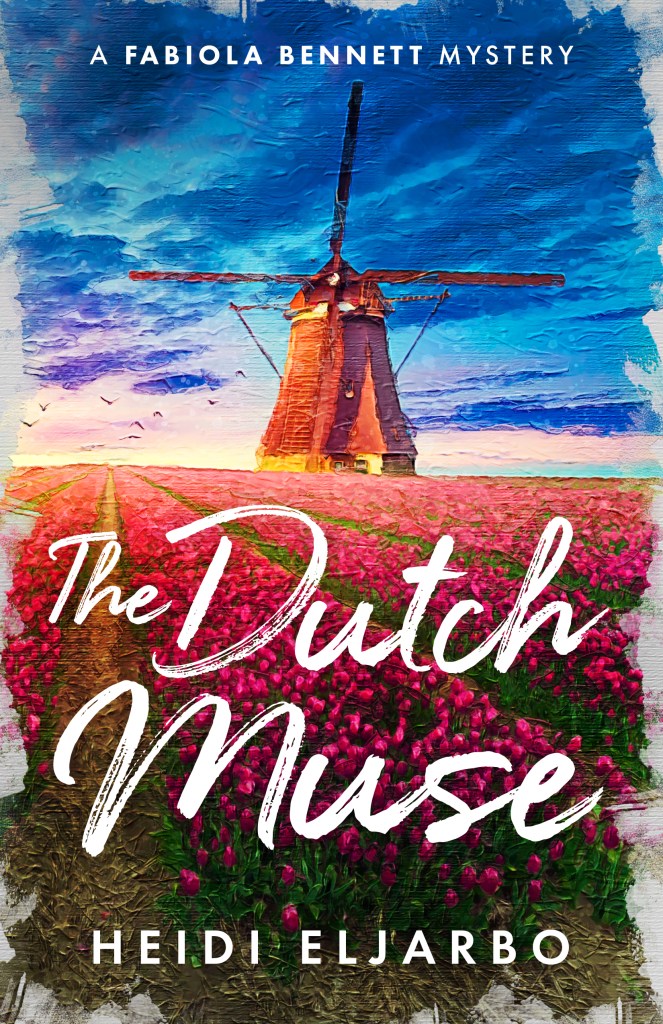
I’m delighted to welcome Heidi Eljarbo and her new book, The Dutch Muse, A Fabiola Bennett Mystery, to the blog.
Here’s the Blurb
A ruthless thief leaves a private Dutch gallery with a coveted seventeenth-century painting. The owner lies unconscious on the floor. Art historian Fabiola Bennett is on vacation in Holland and takes on the case.
Amsterdam, 1973. It’s late summer, and Fabiola and Pippa join their friend, Cary, for a few days of sightseeing, museums, and riding bikes around the beautiful city.
For the first time in her life, Fabiola feels a pang of jealousy, and rude comments from a gallerist make her doubt her own abilities.
Then, unexpectedly, Cary’s Dutch client, Lennard van de Hoek, is brutally struck down and a baroque portrait by Ferdinand Bol is stolen. Fabiola pushes aside her problems and jumps into danger without hesitation. The list of suspects is long, and with a cold-blooded criminal at large, they must constantly be on the alert.
Amsterdam, 1641. Ferdinand Bol has completed his five-year training with Master Rembrandt van Rijn and is ready to set up his own studio. The future looks bright, and Ferdinand sets a goal to become a widely sought-after and, hopefully, prosperous master portraitist.
Just when Ferdinand’s career starts to flourish—and patrons and customers discover his exceptional talent—one of his models confesses she’s in deep trouble, and he drops everything to help her.
This is a fast-paced and captivating who-done-it set in the Netherlands—the fourth installment and a spin-off from the Soli Hansen Mysteries.
This title is available to read on #KindleUnlimited
Meet the Author
HEIDI ELJARBO grew up in a home full of books, artwork, and happy creativity. She is the author of historical novels filled with courage, hope, mystery, adventure, and sweet romance during challenging times. She’s been named a master of dual timelines and often writes about strong-willed women of past centuries.
After living in Canada, six US states, Japan, Switzerland, and Austria, Heidi now calls Norway home. She lives with her husband on a charming island and enjoys walking in any kind of weather, hugging her grandchildren, and has a passion for art and history.
Her family’s chosen retreat is a mountain cabin, where they hike in the summer and ski the vast white terrain during winter.
Heidi’s favorites are her family, God’s beautiful nature, and the word whimsical.
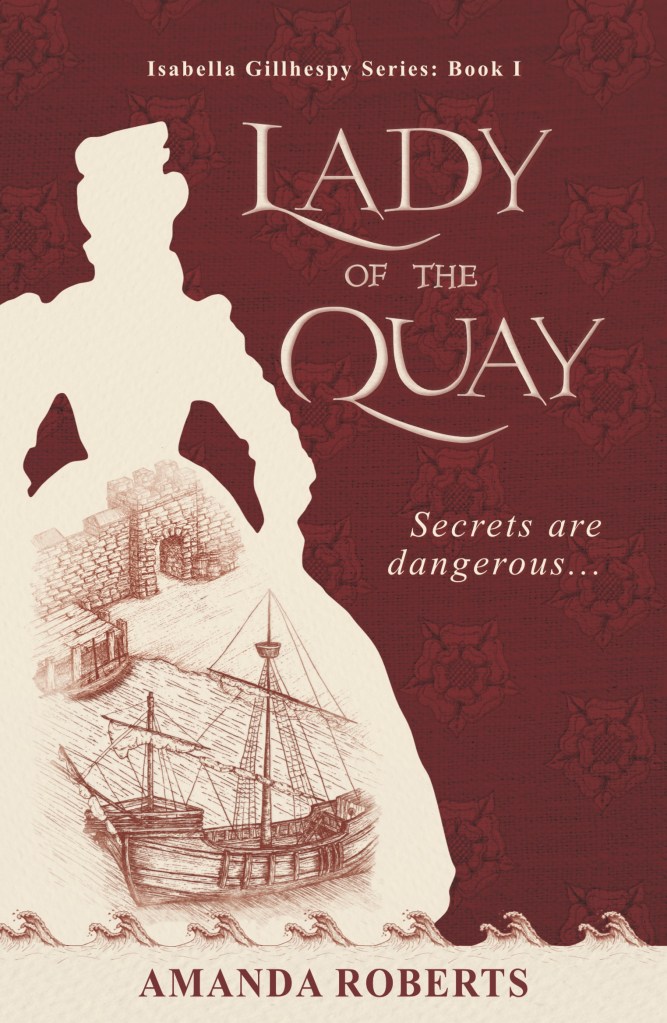
I’m delighted to welcome Amanda Roberts and her new book, Lady of the Quay, Book 1 in the Isabella Gillhespy Series, to the blog with a snippet.
Snippet
‘Drink?’ I asked, gesturing towards the cabinet. He removed his hat, threw it onto a chair, and shook his head.
‘I’m here on business.’
That had never stopped him before. My heart had already sunk into my stomach, and his curt reply sent it plummeting to my feet. I had envisaged a cosy chat, me resting on my settle, him in his favourite chair, either side of the fire. A scene we had populated so many times in the past. But I already knew that was not going to happen. I did not sit down, but faced him, both of us standing somewhat awkwardly in the middle of the room.
‘Well?’ I challenged him to speak first. If we got the business out of the way we might be able to move on to resolve the more personal difficulties that stood between us, a wall as impenetrable as those surrounding Berwick. But like our town defences, every wall has its gates. I just needed to find Will’s gate.
Here’s the Blurb
Knowing she is innocent is easy … proving it is hard
1560, Berwick-upon-Tweed, northern England
Following the unexpected death of her father, a series of startling discoveries about the business she inherits forces Isabella Gillhespy to re-evaluate everything she understands about her past and expects from her future.
Facing financial ruin, let down by people on whom she thought she could rely, and suspected of crimes that threaten her freedom, Isabella struggles to prove her innocence.
But the stakes are even higher than she realises. In a town where tension between England and her Scottish neighbours is never far from the surface, it isn’t long before developments attract the interest of the highest authority in the land, Sir William Cecil, and soon Isabella is fighting, not just for her freedom, but her life. She must use her wits and trust her own instincts to survive.
Lady of the Quay introduces an enticing new heroine who refuses to be beaten, even as it becomes clear that her life will never be the same again.
From the author of the award-winning ‘The Woman in the Painting’.
This title is available to read on #KindleUnlimited
Meet the Author
Amanda Roberts has worked as an Editor in business-to-business magazines for over 30 years, specialising in out-of-home coffee, vending and foodservice/catering, including Editor of the global gastronomy title: ‘Revue internationale de la Chaîne des Rôtisseurs’.
She currently freelances, editing UK-based healthcare titles – HEFMA Pulse, Hospital Food + Service and Hospital Caterer. She is a member of the Society of Authors, the Historical Novel Society and West Oxfordshire Writers. She also volunteers for Tea Books (part of Age UK) to run a book club/reading group for elderly people in the community.
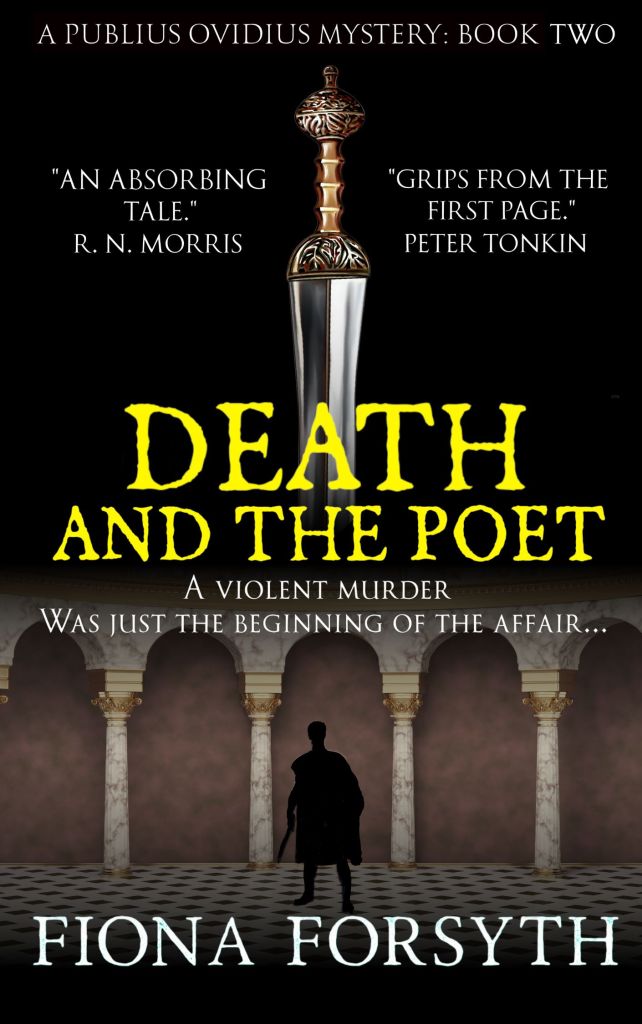
Here’s an exciting excerpt from Death and the Poet
Ovid gives a recital
July 2, or 6 days before the Nones
The recital took place in the late afternoon at the town’s main square on top of the hill overlooking the harbour. Entertainment in Tomis was infrequent and modest, with maybe a serious theatre performance in the spring in honour of Dionysus, and the occasional touring group performing comedies. There were rumours of a gladiator show, once they were a proper province, but for the moment, poetry was exciting enough to a Greek audience and Ovid was, after all, famous. People drifted into the square carrying chairs, stools and even cushions, unpacked their picnics and handed around pitchers of wine. Fabia was invited to sit in a roped-off area, where three rows of chairs had been laid out for special guests. In the central seat was Apollous, that year’s archon, and the members of the Town Council and their wives all lined up to express themselves thrilled to meet Fabia. Nobody was so indelicate as to mention the fact that Ovid was in Tomis because he had no choice.
Settled with an extra shawl because Flora had been certain that she would feel chilly even on a beautiful summer day, Fabia began to enjoy herself. She looked around the crowd, marking off people as Roman, Greek and Dacian, spotting several men with light coloured hair and beards and wearing leggings – surely they must be from the local tribes mentioned by her husband. It was harder to make any judgement on the female population, for every woman was wrapped up in a long dress, just as she was.
The poet first declaimed a well-known passage from his great poem on mythology, the Metamorphoses. He told the story of the god Apollo’s love of the nymph Daphne:
Just as when a careless dawn traveller has swept his torch too close to the stubble left in the field when the wheat is taken, setting the dry hedges on fire – so the god goes up in the flames of love.
Fabia saw the knowing nods as local landowners remembered threats to their own precious crops, and an audible murmur betrayed the audience’s opinion of firebugs.
Ovid then recited a poem Fabia had not heard before, one with a Tomis setting, but without the criticisms she had grown used to. She was pleased. There had been too many “Woe is me!” moments in Ovid’s poetry recently and he needed to acknowledge to this audience how grateful he was to them.
Ovid finished with a passage from the Fasti, an ambitious work which he planned would cover the major religious festivals of Rome. It was serious and noble and a little boring, though Fabia knew from her mother that Ovid’s work on this poem was considered skilful by those who knew about such things. She was amused to hear a young woman nearby whisper, “I thought he was a famous writer of love poetry?”
“Oh my dear,” thought Fabia, “Ovid will not be reciting any of his love poems here. They got him into enough trouble in Rome. I doubt your father would like you hearing about how a Roman lad goes on the prowl through the arcades of the city or lies wailing at the door of his beloved.”
Here’s the blurb
14 AD.
When Dokimos the vegetable seller is found bludgeoned to death in the Black Sea town of Tomis, it’s the most exciting thing to have happened in the region for years. Now reluctantly settled into life in exile, the disgraced Roman poet Ovid helps his friend Avitius to investigate the crime, with the evidence pointing straight at a cuckolded neighbour.
But Ovid is also on edge, waiting for the most momentous death of all. Augustus, the first Emperor of Rome, is nearing his end, and the future of the whole Roman world is uncertain.
Even as far away as Tomis, this political shadow creates tension as the pompous Roman legate Flaccus thinks more of his career than solving a local murder.
Avitius and Ovid become convinced that an injustice has been done in the case of the murdered vegetable seller. But Flaccus continues to turn a deaf ear.
When Ovid’s wife, Fabia, arrives unexpectedly, carrying a cryptic message from the Empress Livia, the poet becomes distracted – and another crime is committed.
Ovid hopes for a return to Rome – only to discover that he is under threat from an enemy much closer to home.
Triggers: murder, references to slavery, domestic abuse, alcohol, cancer
This title is available to read on #KindleUnlimited.
Meet the author
Fiona studied Classics at Oxford before teaching it for 25 years. A family move to Qatar gave her the opportunity to write about ancient Rome, and she is now back in the UK, working on her seventh novel.
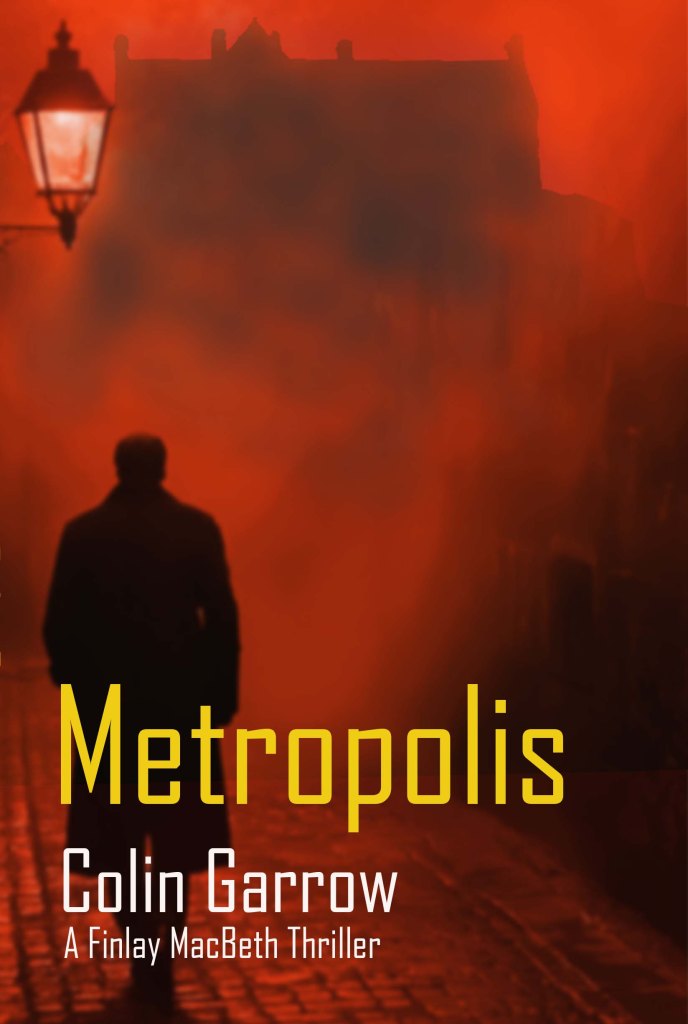
Edinburgh, 1936. People are disappearing. The police are clueless. Can Finlay MacBeth track down the perpetrator before someone else goes missing?
Haunted by his recent past, Professor Finlay MacBeth returns to his home town to take up a new post at the university. Within hours, his reputation for solving the occasional murder prompts the police to ask for his help. Four men—seemingly unconnected—have vanished into thin air. MacBeth must find whatever it is that links the men before the kidnapper strikes again.
But the police aren’t the only ones interested in MacBeth’s activities, and the amateur sleuth soon discovers that finding the missing men is the least of his problems…
In this thriller series set in Edinburgh, Metropolis is book #1 in the Finlay MacBeth Thriller series.
Colin Garrow grew up in a former mining town in Northumberland. He has worked in a plethora of professions including taxi driver, antiques dealer, drama facilitator, theatre director and fish processor, and has occasionally masqueraded as a pirate.
He has published more than thirty books, and his short stories have appeared in several literary mags, most recently in Witcraft, and Flash Fiction North. Colin lives in a humble cottage in Northeast Scotland where he writes novels, stories, poems and the occasional song.
He also plays several musical instruments and makes rather nice vegan cakes.
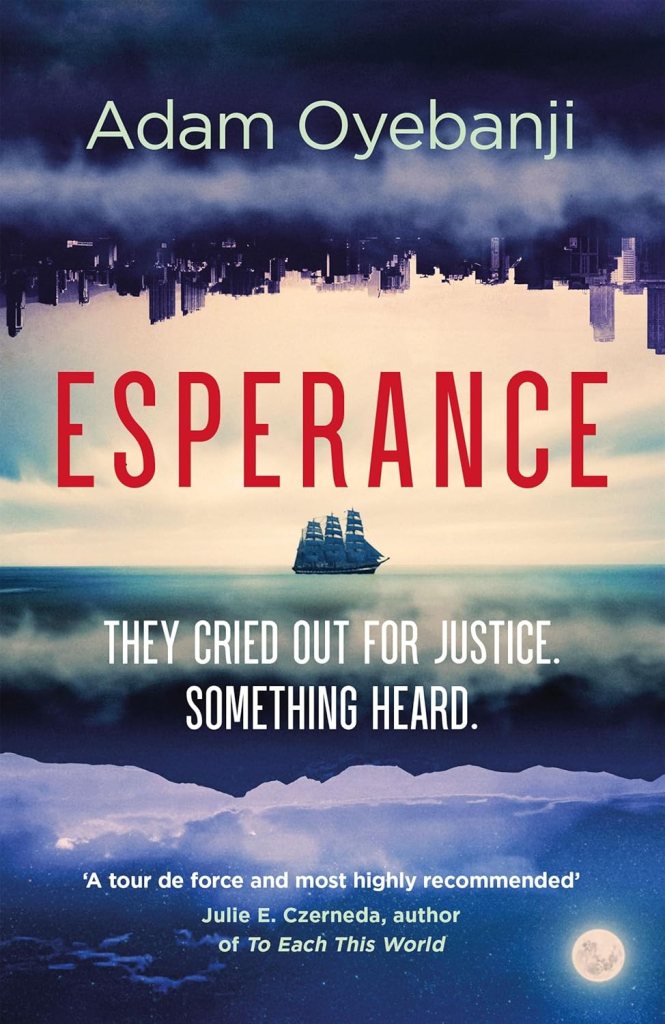
The history-bending speculative fiction from Adam Oyebanji, award-winning author of BRAKING DAY.
An impossible death: Detective Ethan Krol has been called to the scene of a baffling murder: a man and his son, who appear to have been drowned in sea-water. But the nearest ocean is a thousand miles away.
An improbable story: Hollie Rogers doesn’t want to ask too many questions of her new friend, Abi Eniola. Abi claims to be an ordinary woman from Nigeria, but her high-tech gadgets and extraordinary physical abilities suggest she’s not telling the whole truth.
An incredible quest: As Ethan’s investigation begins to point towards Abi, Hollie’s fears mount. For Abi is very much not who she seems. And it won’t be long before Ethan and Hollie find themselves playing a part in a story that spans cultures, continents . . . and centuries.
An extraordinary speculative thriller about the scars left by the Atlantic slave-trade, by a master of the genre.
Esperance is an enthralling and captivating novel. It is mostly a mystery, and much of it revolves around determining who perpetrated an impossible crime. It is also a story of friendship, family, and a quest for justice.
The story begins quickly, with our impossible crime, introducing us to one of our main characters, Ethan. It is he and Abi, who we meet a little while later, who propel the story onwards, but they both have their own agendas and therefore, the reader is very much left in the dark about some elements. We quickly realise Abi is far from what she seems. We quickly realise Ethan has his own demons, but we’re swept along in the mystery of the entire thing. I adored that Abi spoke with a 1930s flavour. It really gave her character an extraordinary shine.
I loved the historical elements of the story and how they combined with the otherworldly ones. I found the whole story quite extraordinary and incredibly enjoyable, although, of course, tinged with sorrow for the real-life elements it’s built upon.
The ending, when it came, perhaps felt a little rushed. I would have loved to know more about the otherworldly elements.
That said, readers of quirky mysteries interlaced with otherworldly elements, as well as those who love a good tale of retribution, will devour this novel, just as I did.
If it’s not quite a five-star read, it so very nearly is that I feel it would be wrong not to give it. Esperance is available now, and it’s well worth checking out. I have to say, the tag line got me for this one, ‘They cried out for justice. Something heard.’ (Shudder).
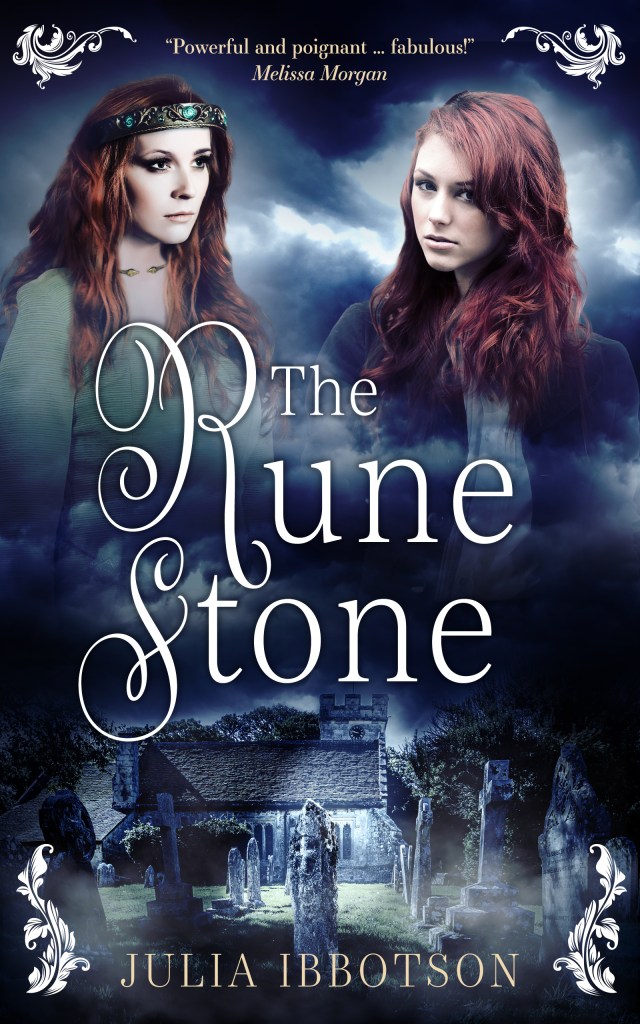
I’m delighted to welcome Julia Ibbotson and her book, The Rune Stone, book 3 in the Dr DuLac series (but can be read as a standalone), to the blog.
Blurb
A haunting time-slip mystery of runes and romance
When Dr Viv DuLac, medievalist and academic, finds a mysterious runic inscription on a Rune Stone in the graveyard of her husband’s village church, she unwittingly sets off a chain of circumstances that disturb their quiet lives in ways she never expected.
She, once again, feels the echoes of the past resonate through time and into the present. Can she unlock the secrets of the runes in the life of the 6th century Lady Vivianne and in Viv’s own life?
Again, lives of the past and present intertwine alarmingly as Viv desperately tries to save them both, without changing the course of history.
For fans of Barbara Erskine, Pamela Hartshorne, Susanna Kearsley, Christina Courtenay.
Praise for Julia Ibbotson:
(for A Shape on the Air) “In the best Barbara Erskine tradition …I would highly recommend this novel” –Historical Novel Society
(for the series) “Julia does an incredible job of setting up the idea of time-shift so that it’s believable and makes sense” – book tour reviewer
(for The Rune Stone) “beautifully written”, “absorbing and captivating”, “fully immersive”, “wonderfully written characters”, “a skilled story teller” – Amazon reviewers
“Dr Ibbotson has created living, breathing characters that will remain in the reader’s mind long after the book is read … The characters are brought to life beautifully with perfect economy of description … fabulous!” – Melissa Morgan
“A rich and evocative time-slip novel that beautifully and satisfyingly concludes this superb trilogy. The story is woven seamlessly and skilfully between the past and the present and the reader is drawn deeply into both worlds. Her portrayal of the 6th century and its way of life are authoritative, vivid and memorable.” – Kate Sullivan
This title is available to read on #KindleUnlimited
Meet the Author
Julia Ibbotson is fascinated by the medieval world and the concept of time. She is the author of historical mysteries with a frisson of romance. Her books are evocative of time and place, well-researched and uplifting page-turners. Her current series focuses on early medieval time-slip/dual-time mysteries. Julia read English at Keele University, England, specialising in medieval language / literature / history, and has a PhD in socio-linguistics.
After a turbulent time in Ghana, West Africa, she became a school teacher, then a university academic and researcher. Her break as an author came soon after she joined the RNA’s New Writers’ Scheme in 2015, with a three-book deal from Lume Books for a trilogy (Drumbeats) set in Ghana in the 1960s. She has published five other books, including A Shape on the Air, an Anglo-Saxon timeslip mystery, and its two sequels The Dragon Tree and The Rune Stone.
Her work in progress is a new series of Anglo-Saxon mystery romances, beginning with Daughter of Mercia, where echoes of the past resonate across the centuries. Her books will appeal to fans of Barbara Erskine, Pamela Hartshorne, Susanna Kearsley, and Christina Courtenay. Her readers say: ‘Julia’s books captured my imagination’, ‘beautiful storytelling’, ‘evocative and well-paced storylines’, ‘brilliant and fascinating’ and ‘I just couldn’t put it down’.
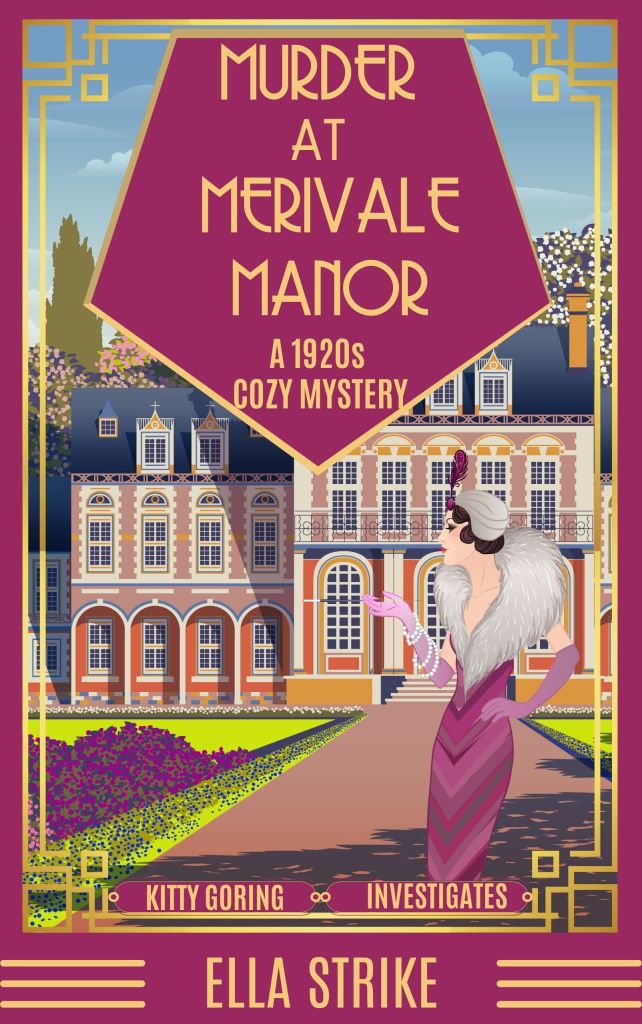
Kitty Goring seems to have it all—lavish nights at London’s finest clubs, elegant soirées, and a parade of charming bachelors vying for her hand. But despite the glamour, Kitty longs for something a little more… thrilling.
In a bid for excitement (and to avoid her mother’s constant reminders that she really ought to be searching for a husband), Kitty dreams up the perfect diversion. A playful mock robbery at her family’s grand estate, Merivale Manor. It’s all meant to be fun—until one of the guests turns up very much dead.
With a real killer on the loose in quaint little Hampstead Village, Kitty’s keen instincts kick in. Forget matchmaking—Kitty’s determined to unmask the culprit before anyone else falls victim. With a sharp wit and a flair for mischief, she dives headfirst into the investigation. But getting to the truth won’t be easy, especially with the brooding Detective Inspector Henry Burton underestimating her at every turn.
Murder, mystery, and a dash of romance—Kitty’s got her hands full in this charming whodunit!
Murder at Merivale Manor is the delightful first book in the Kitty Goring Investigates historical cozy mystery series.
Author’s note
London in the 1920s is a glamorous and exciting city, but danger and death are never too far behind. Join Kitty Goring and her group of Bright Young Things in the adventure of a lifetime, as they race to catch a killer who lurks amongst them. Each book in this series is a cozy period mystery that features our plucky heroine, aided in her investigations by a gang of eccentric and lovable characters.
MMurder at Merivale Manor is the first book in the Kitty Goring Investigations series of historical mysteries set in the 1920s.
This first book introduces us to Kitty, a headstrong woman with a varied collection of friends and associates and a somewhat overbearing mother. The family is somewhat down on its luck but still working to keep up appearances. One of those is the need for Kitty’s brother to marry well to recover the family fortunes.
But, as ever, all is not as it appears when a woman keen on Kitty’s brother is unexpectedly murdered at the local fete. Feeling guilty about a silly game Kitty initiated that seems to have led to Jane’s death, Kitty is determined to investigate and find the culprit.
This is a fun, quick read, and readers of the genre will enjoy discovering who the true culprit was.
Meet the author
Ella Strike, cat lover and author of historical cozy mysteries, lives in London with her husband and twins. When she’s not penning murder mysteries or drinking copious amounts of Earl Grey, you can find her with her nose buried in a book or listening to true crime podcasts as she cooks.
Her stories are a mix of history, a dash of intrigue, and a whole lot of cozy, old-world charm.
Chloe and her husband Scott are holidaying with their families on the beautiful Greek island of Mykonos. But Chloe has a secret… She has hired a hitman to kill Scott when they return home. This week, her plan is to pretend to be such a happy wife that no suspicion can possibly fall on her after the murder.
But she’s reckoning without Scott’s meddlesome sister, Tori, plus the rivalries and demands of both families. Can she deal with them all while keeping her murderous intentions hidden?
Then Chloe wakes up in their villa covered in blood, next to a dead body, with no memory of the previous night. Panic ensues as she tries to piece together what happened – and just who else on this holiday might be a secret killer…
Fans of Katy Brent, Bella Mackie and Julie Mae Cohen won’t be able to resist this twisty, darkly funny crime thriller.
How to Slay on Holiday is a fun, quick, and easy read. The use of three points of view helps the story move along at pace and also allows the reader to learn things not all of the characters know.
There are secrets aplenty between the two families on holiday and also between all of the characters. At times, I wondered how on earth it could ever be resolved, but resolved it was.
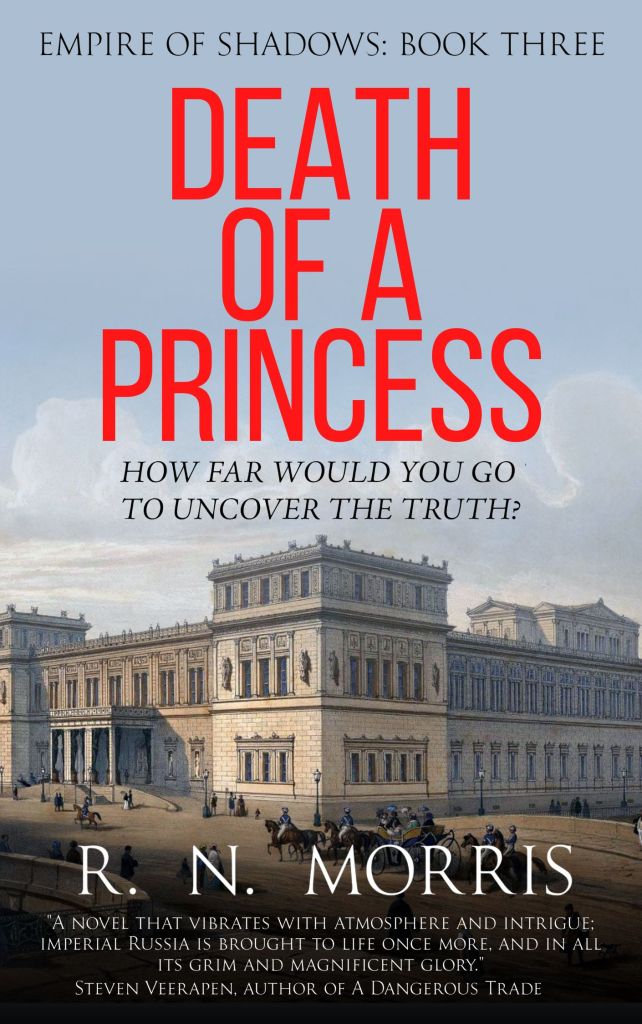
I’m delighted to welcome R.N. Morris and his book, Death of a Princess, Empire of Shadows Book 3, to the blog.
Here’s the blurb
Summer 1880.
Lipetsk, a spa town in Russia.
The elderly and cantankerous Princess Belskaya suffers a violent reaction while taking a mud bath at the famous Lipetsk Sanatorium. Soon after, she dies.
Dr Roldugin, the medical director of the sanatorium, is at a loss to explain the sudden and shocking death.
He points the finger at Anna Zhdanova, a medical assistant who was supervising the princess’s treatment.
Suspicion also falls on the princess’s nephew Belsky, who appears far from grief-stricken at his aunt’s death.
Meanwhile, investigating magistrate Pavel Pavlovich Virginsky arrives in Lipetsk from St Petersburg, seeking treatment after a nervous breakdown.
Against his better judgement, Virginsky is drawn in to the investigation. But is he getting closer to the truth or walking straight into a deadly trap?
This title is available to read on #KindleUnlimited
My Review
Death of a Princess is an intriguing and quite complex mystery set in the 1880s in Russia. It is the third book in the series, and I’ve not read the earlier two, but it didn’t diminish my enjoyment, and readers will easily be able to start with this title.
It has a wide cast of characters and follows them as they interact with one another and resolve other issues before fully resolving how the princess’s death came about.
It feels very ‘Russian.’ All the characters have delightful Russian names and attitudes, and the story well depicts the social structure of society. It’s an engaging read, pulling the reader along with some very tense moments until reaching the grand finale.
I very much enjoyed the mystery and look forward to reading more in the series.
Meet the Author
Roger (R.N) Morris is the author of 18 books, including a quartet of historical crime novels set in St Petersburg featuring Porfiry Petrovich, the investigating magistrate from Dostoevsky’s great novel Crime and Punishment. These were followed by the Silas Quinn series set in London in 1914. He has been shortlisted for the CWA Duncan Lawrie Gold Dagger and the CWA Historical Dagger.
A former advertising copywriter, Roger has written the libretto for an opera, modern retellings of Frankenstein and Macbeth for French school children. He’s also a scriptwriter for an award winning audio producer, working on true crime and history podcasts including The Curious History of your Home.
His work has been published in 16 countries.
Married with two grown-up children, Roger lives in Chichester where he keeps an eye out for seagulls.