Author of Saxon historical fiction and non-fiction, 20th-century historical mysteries, and Norse-inspired historical romantasy. Book reviewer and blog host.
I write about the Saxon kingdom of Mercia a lot. I thought it had been entirely unintentional until now. But has it?
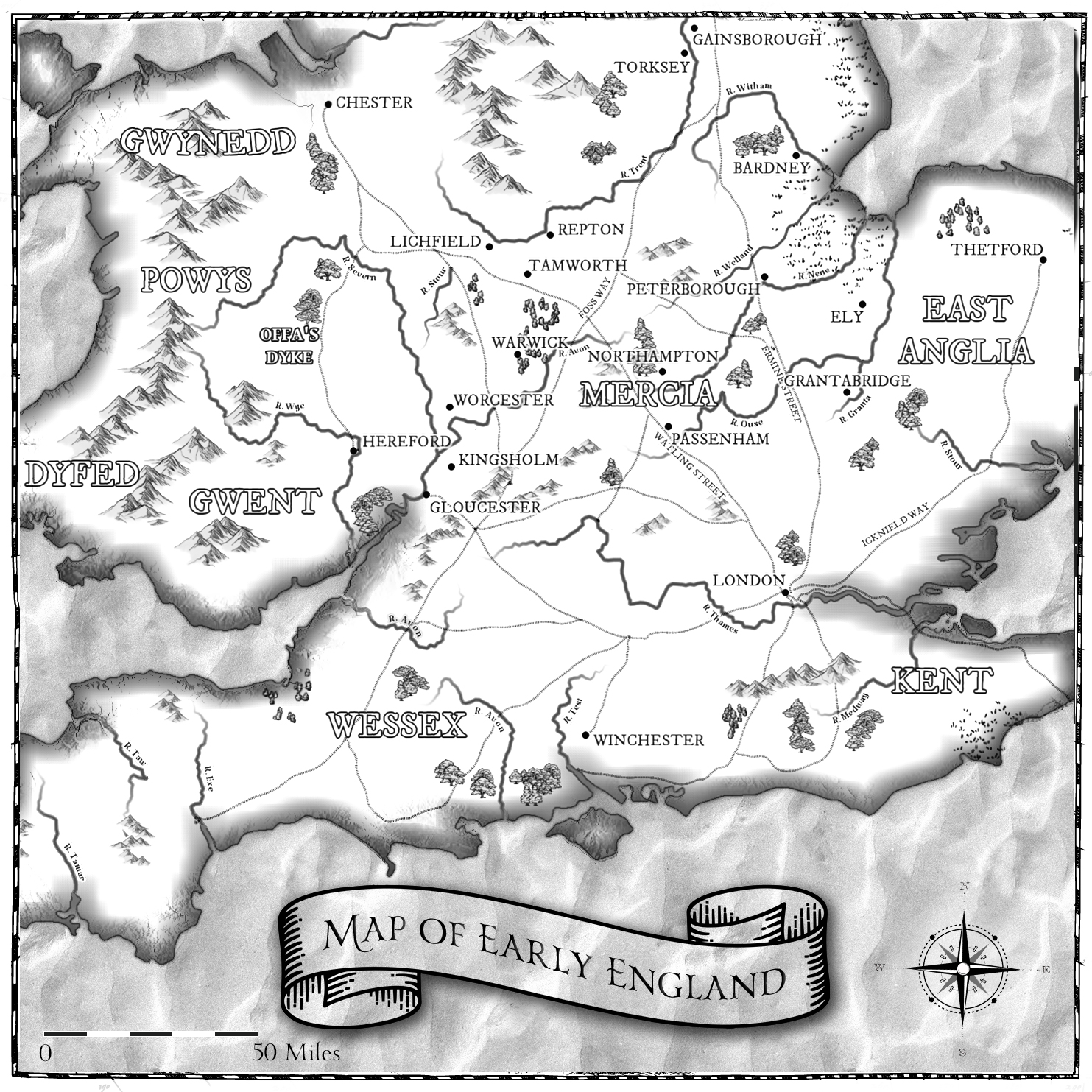
I grew up in an area that would one have been in Mercia. From a seemingly young age, I knew Mercia had once been a kingdom in its own right. I knew I lived in the centre of what had once been a mighty kingdom. The local church’s name, St Chad’s, was a dedication to a priest who converted the Mercians to Christianity. Tamworth, the next city along, was also a capital of Mercia (and where much of the Son of Mercia is set). Repton, a little further afield, a Mercian royal mausoleum, so when I went to university and began to study the period, I was, of course, drawn to that kingdom, to Mercia and to all it could offer me.
The Early English kingdom of Mercia is unfortunate in having no extant records surviving from the height of its power and reach. Northumbria has the works of the Venerable Bede and his Ecclesiastical History of the English People. Wessex has the Anglo-Saxon Chronicle (ASC) – a collection of nine extant ‘versions’ of the same chronicle but with some later regional bias. Mercia has none of these things – although one of the ASC’s may be more Mercian in tone than others. Mercia also has a collection of surviving charters, and also many, many sculptures, that can be dated to this era.
It’s believed that any Mercian annalistic records that existed were destroyed by the Raider Viking attacks that gained in intensity throughout the ninth century. This is highly possible. It means that we never truly ‘hear’ the story of Mercia. We hear a Northumbrian view of Mercia. And we hear a Wessex view on Mercia. What of Mercia itself? We also hear views of Mercia from Alcuin and his collection of letters from the later eighth century.
Students of Early England are taught very much in a set chronological pattern of the Golden Age of Northumbria in the seventh century, the Supremacy of Mercia in the eighth and then the slow but seemingly unstoppable expansion of Wessex to claim all of England under one kingship so that by the time we reach 1066, England as we know it today, exists and is ruled by one king. This glosses over the fact that these kingdoms all existed simultaneously. They all fought and argued amongst one another. They all had ambitions to rule much more of modern England than their kingdom borders necessitated.
And, of course, the joy of redressing the balance a little is never far from my mind. I aim to make sure that people know of Mercia and don’t just think of its growth, supremacy and decline, as though the kingdoms of Northumbria and Wessex were more to blame for what befell Mercia than its own kings and inhabitants.
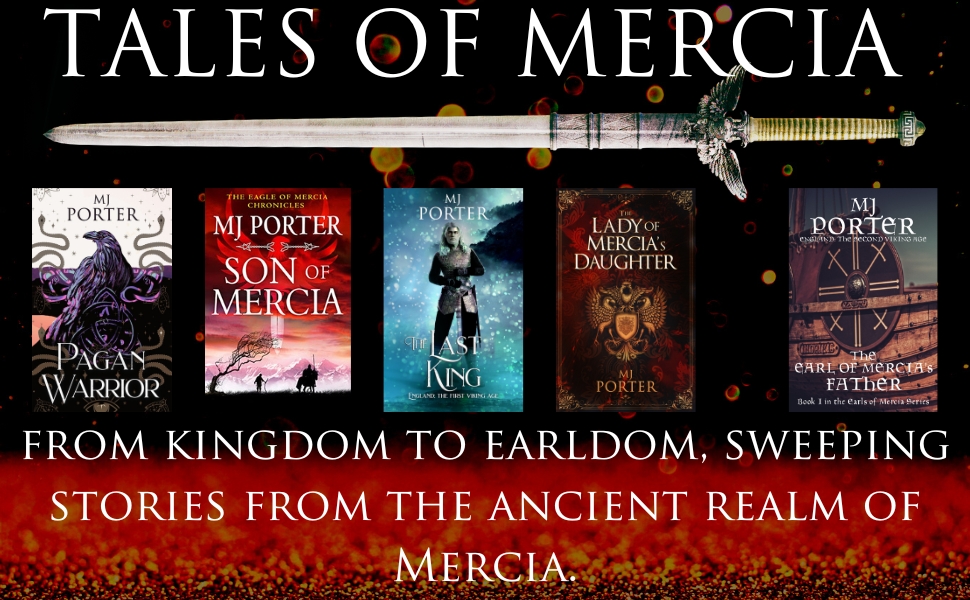
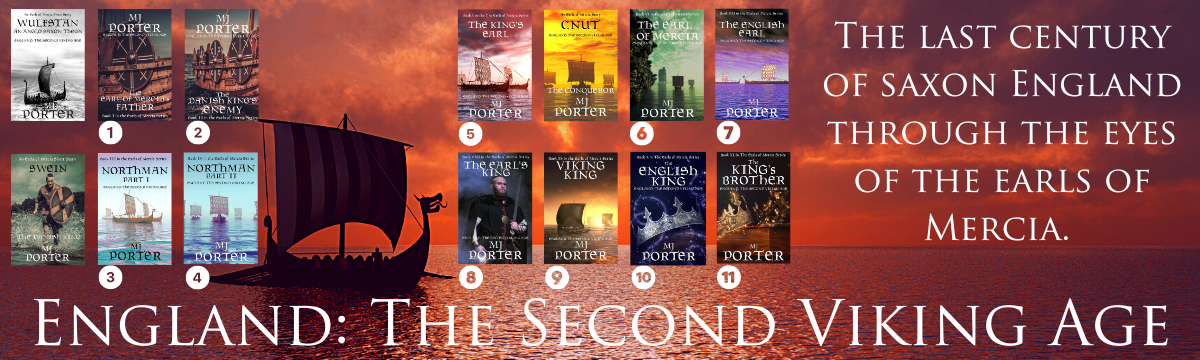
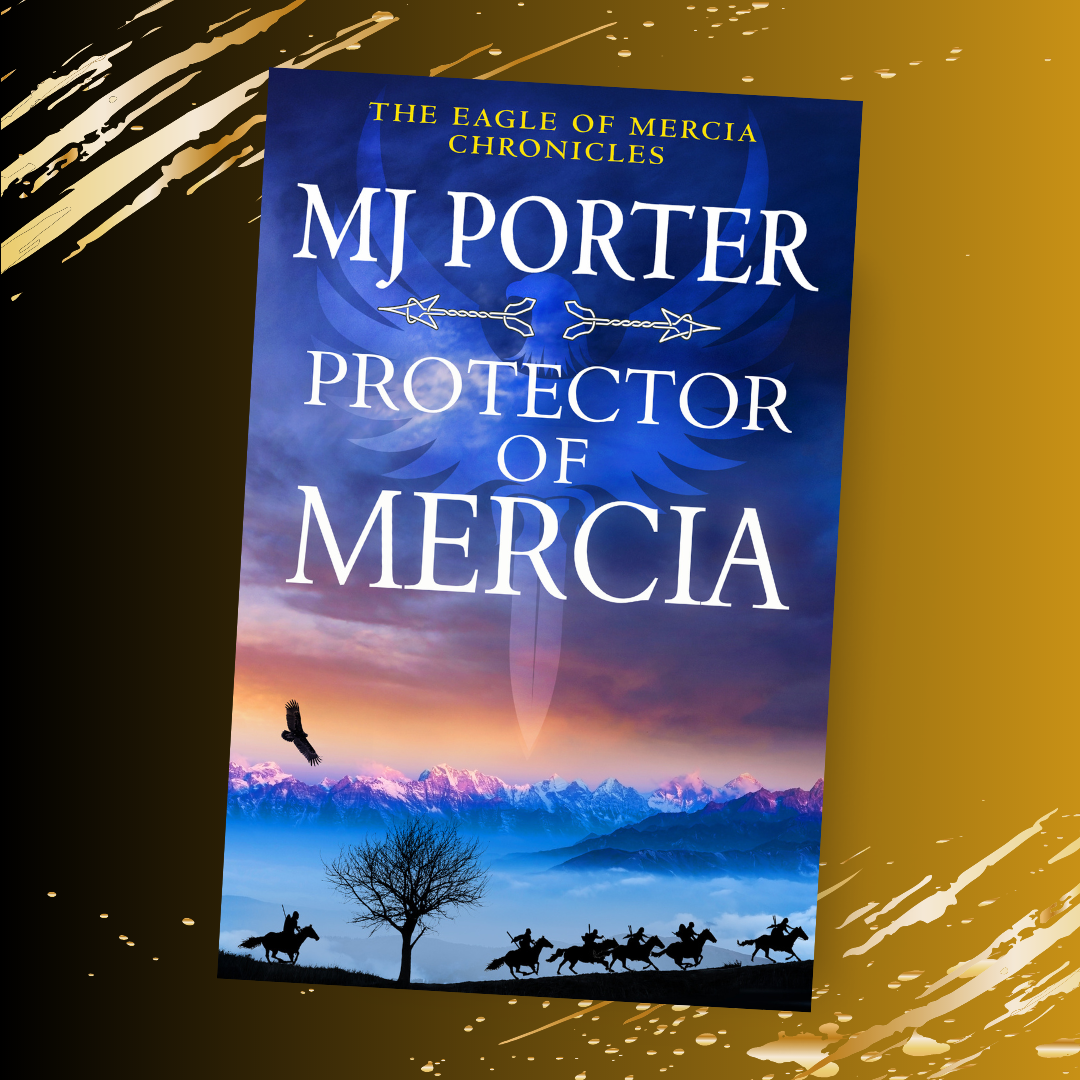
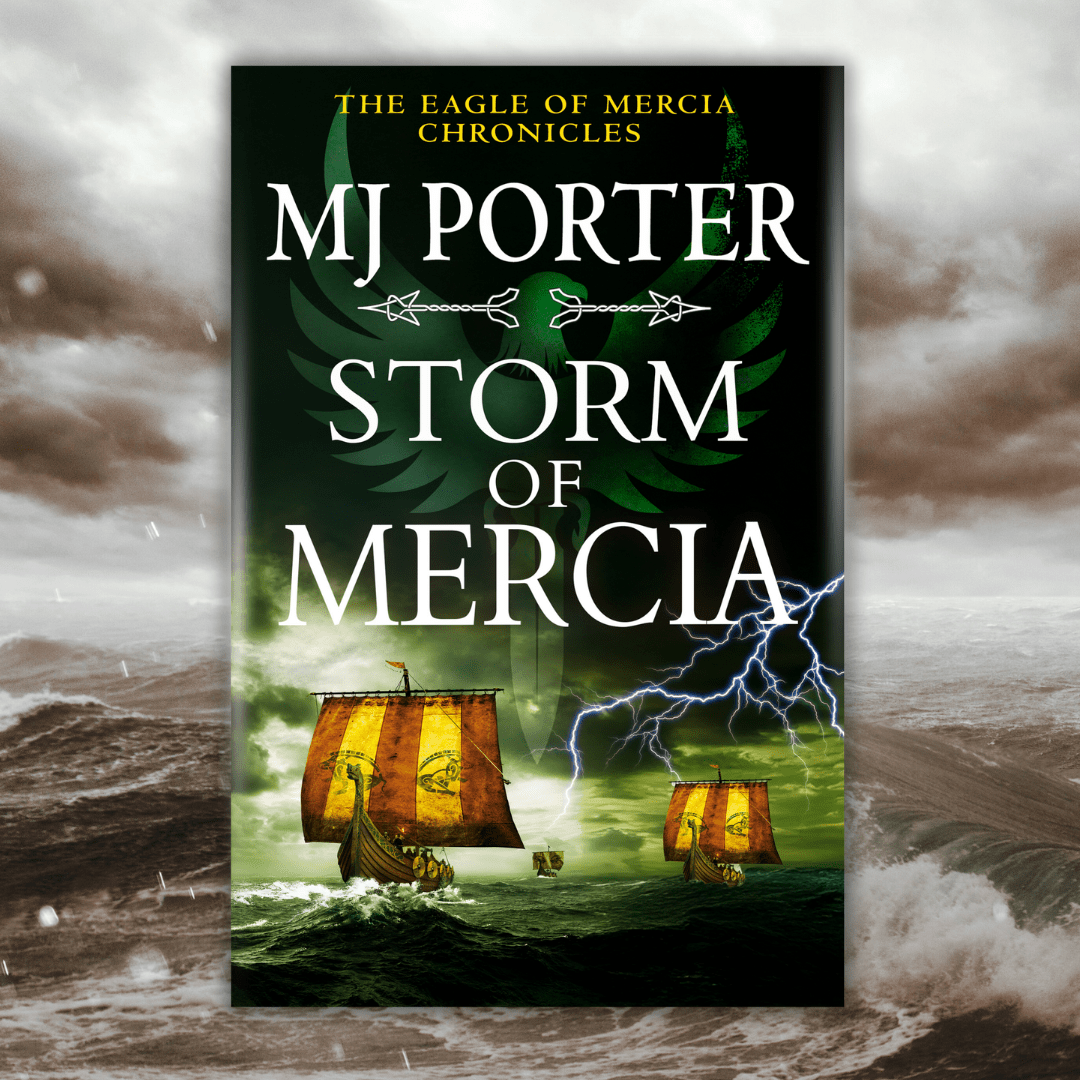
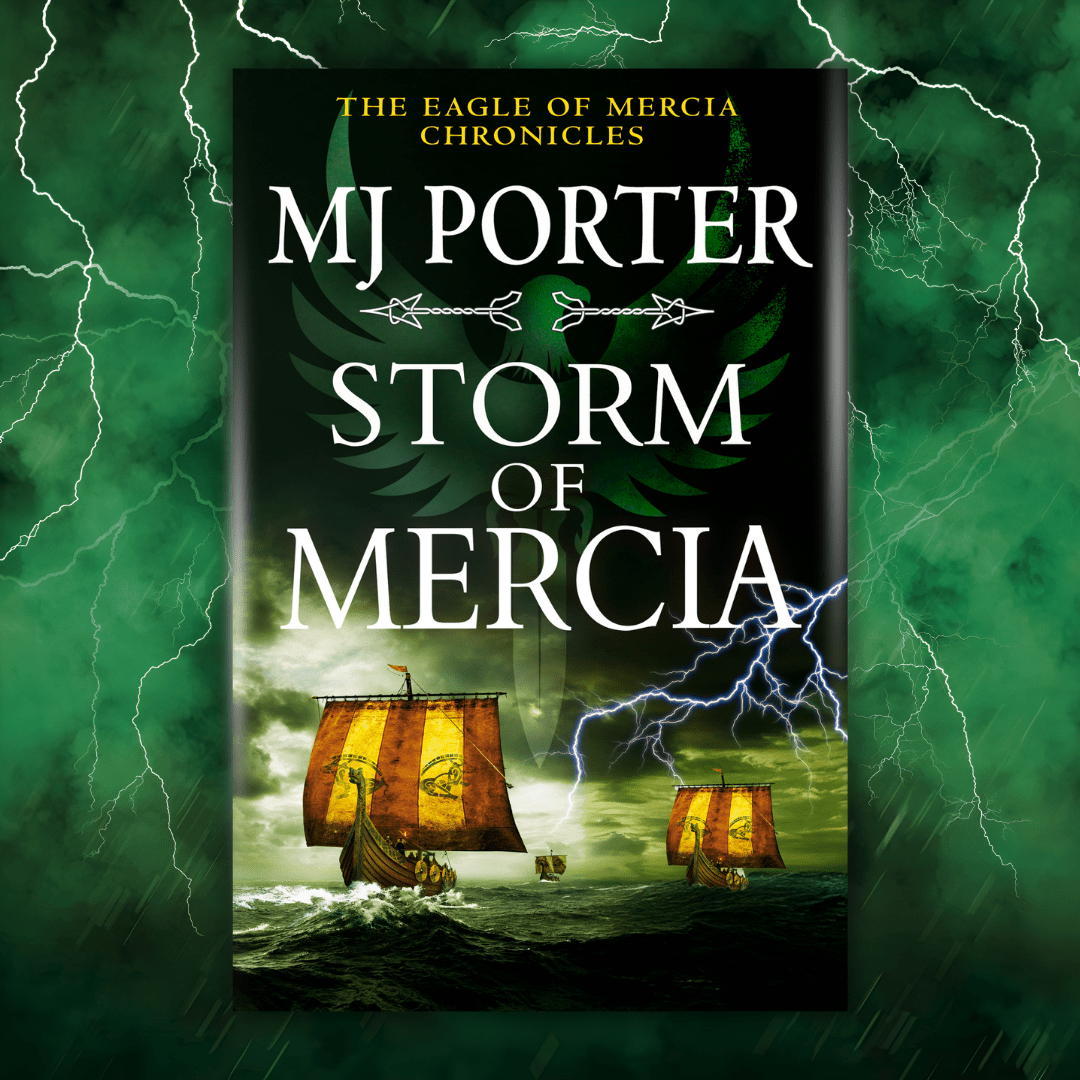
And so Mercia? What of Mercia during the Golden Age of Northumbria (the Gods and Kings trilogy)? What of Mercia through the decline of its supremacy (the Eagle of Mercia Chronicles), through the Viking Raider attacks and the growth of Wessex (the Mercian Ninth Century), after the death of Lady Æthelflæd (the Lady of Mercia’s Daughter) and what happened to Mercia during the final one hundred years of Saxon England (The Earls of Mercia series)?
What indeed? It’s not a small task, but it’s one I’ve set myself. And I’m far from finished with it. I have plans for more new titles, in time.
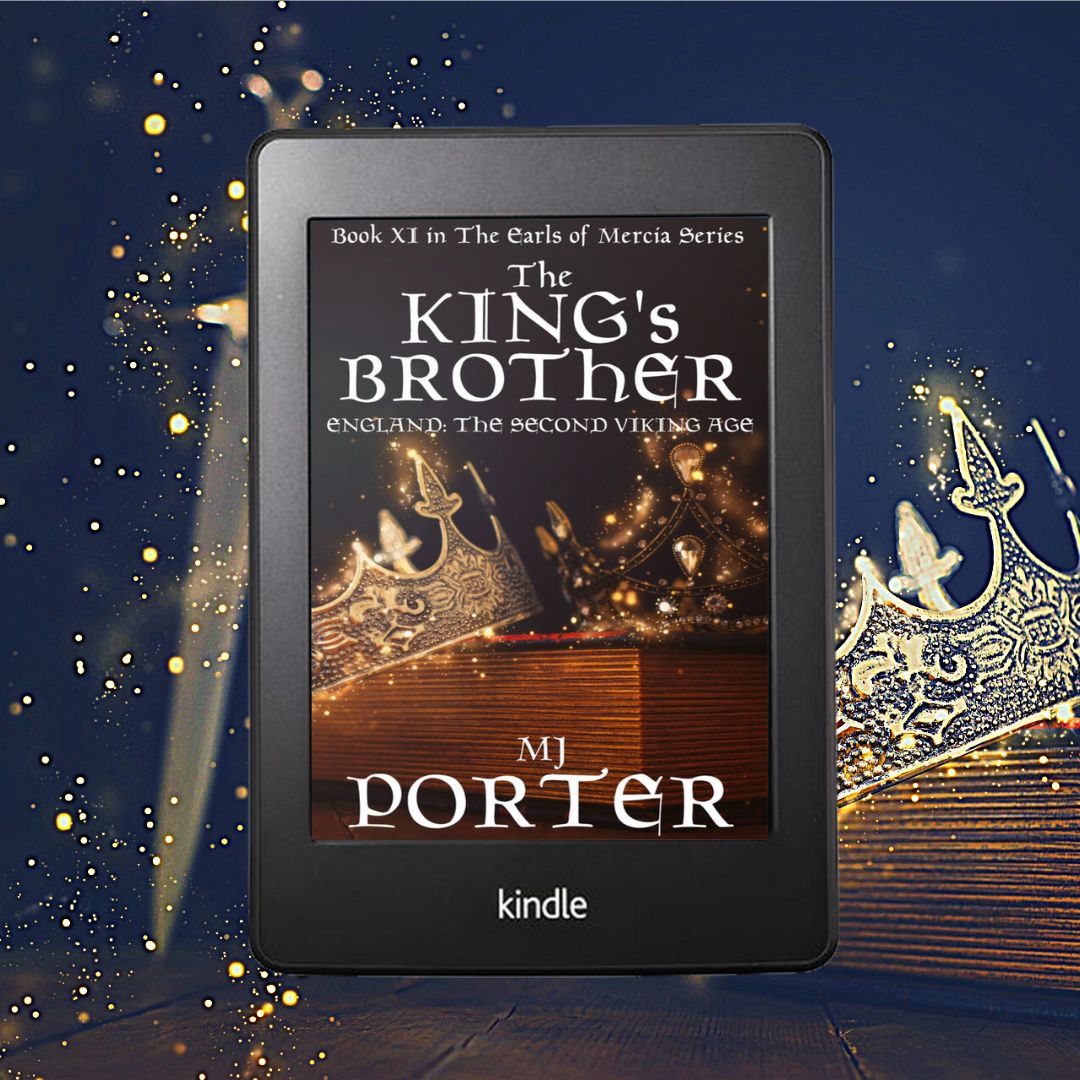
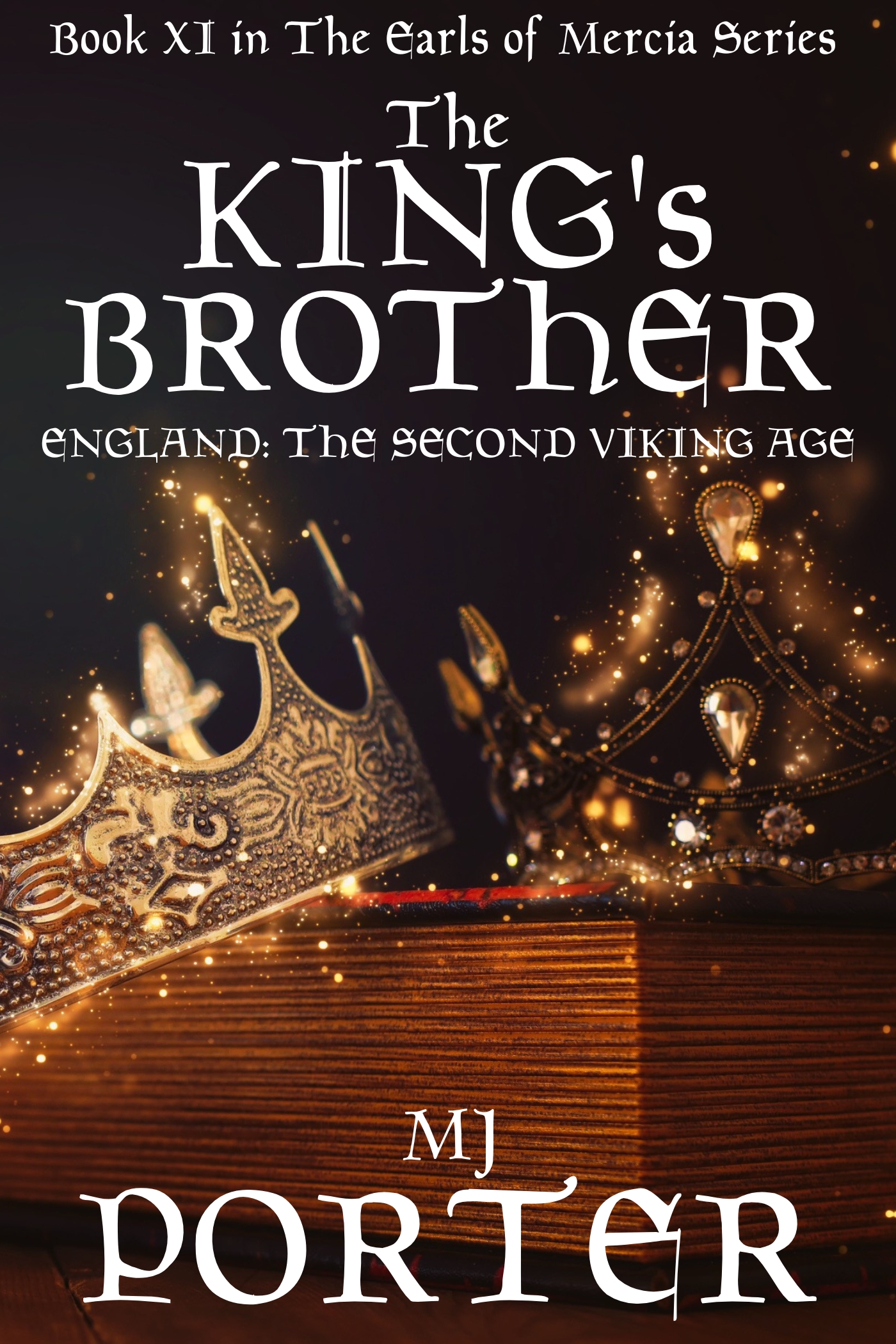
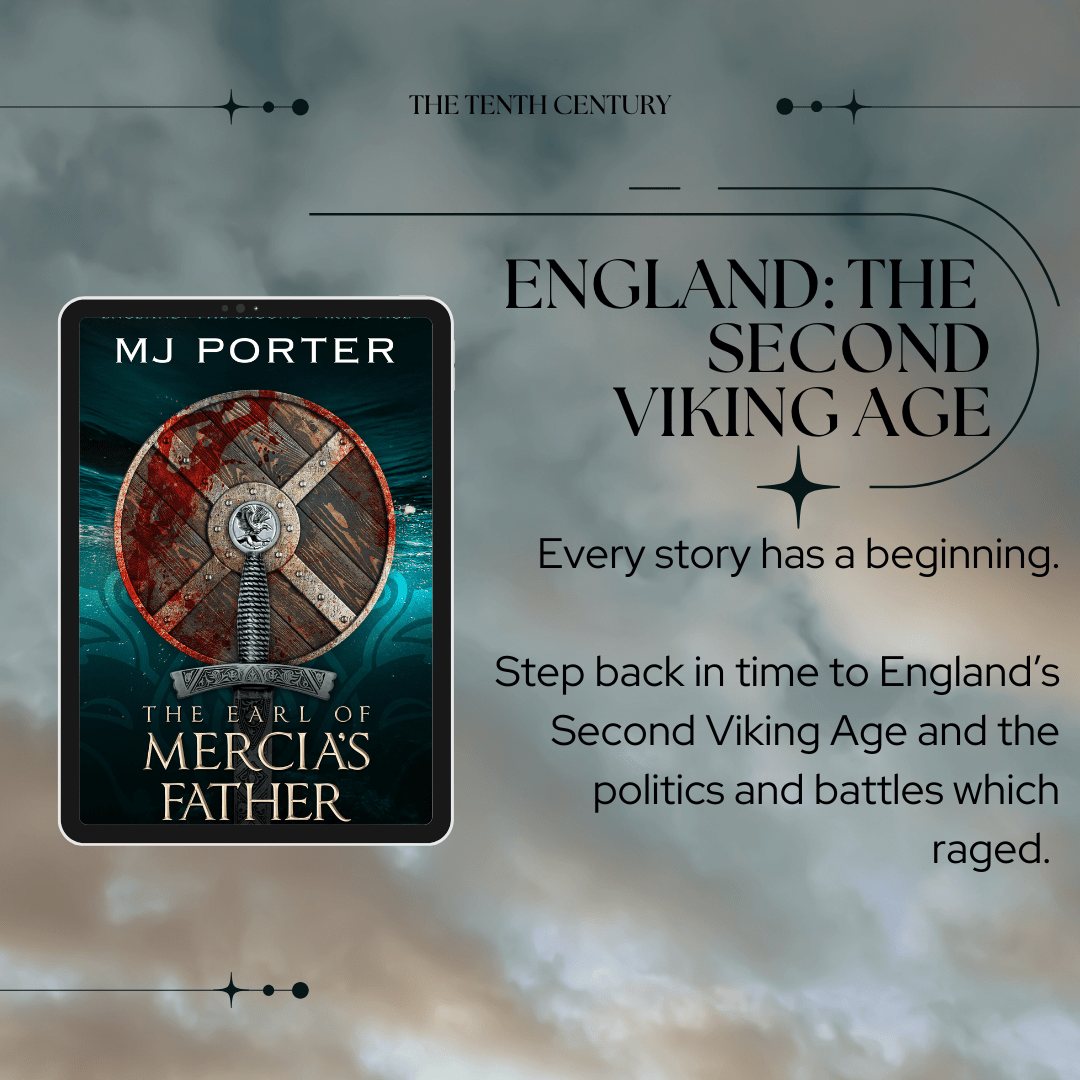
King Edward has married into the powerful House of Godwine, alongside making his wife’s brother, Sweyn Godwineson, Earl of Hereford. The House of Leofwine has received nothing, despite their continuing loyalty to the new king.
With the kingdom threatened by the pretensions of King Magnus of Norway, seeking to make good on the claim that he and Harthacnut agreed to inherit each other’s kingdoms should the other die first, King Edward is determined to build a ship army to counter anything his enemy might attempt.
But while the king’s eye is on external enemies, there are those closer to home determined to cause the king problems, most notably Sweyn Godwineson, who allies with the Welsh king responsible for the death of Eadwine Leofwineson, and then abducts the abbess of Leominster, refusing to give her up. With his sister as the king’s wife, Sweyn believes he can’t be touched until the church acts against him and he’s excommunicated and outlawed.
And Sweyn Godwineson hasn’t finished causing his king problems. When he returns to England without the king’s permission, desperate to recover his landed wealth and possessions, Sweyn finds more than just the House of Leofwine determined against his reinstatement.
Desperate men will take desperate actions, even the king’s brother.
‘The king has gifted more land to his wife,’ Lady Godgifu hissed to Earl Leofric as she strode from one end of their private quarters to another. He winced to hear the fury in her words.
‘She is his wife. It’s to be expected. He does no more than gift her the lands his mother held when she was queen.’
‘Is that right?’ his wife rounded on him, coming to an abrupt halt and rearing up before him. ‘It is merely the lands due to the queen, is it, just as the earls have lands due to them?’ Once more, Leofric grimaced to hear the fury in his wife’s words.
‘It is right, yes, and I’ve told you of the king’s reasons for making this marriage.’
‘Yes, you did, and with them, you implied that it would be a union worth nothing to the bloody Godwine family, and yet now, they have more landed possessions to laud over us and the other earls and their families.’
Leofric watched his wife, noting her flushed cheeks and how her lips were pursed as she once more paced from one end of the room to the other. All could hear the sound of her shoes over the wooden floorboards. All would hear, but whether they knew what it meant remained to be seen.
‘The king does us no disservice.’
‘And neither does he reward us for our loyalty,’ and here, his wife stabbed her chest forcefully with her finger. ‘Our loyalty and our desire to keep England united.’
‘The king must be seen to be caring towards his wife and any future children she must think to bear for him.’
‘But there are to be no children,’ Lady Godgifu all but shrieked, and now her face had bleached of all colour. ‘You’ve assured me,’ she almost spat.
‘And the king assured me. My dear, really, you must understand that this game the king is playing isn’t going to be concluded in a matter of months. He must be shown to be thinking of his wife’s future.’
‘Then he needs to do something to rein in that fat old Lady Gytha.’
Leofric recoiled at his wife’s harsh words, yet they were true. No one would deny them. Lady Gytha and her many, many years of childbearing had ensured the Godwine clan was huge. The House of Leofric was the very opposite, although his son, Ælfgar, was doing his best, alongside his wife, to ensure that the lack of children born to his father and mother was rectified in the next generation. Already they were the parents to three sons and a daughter.
‘What would you have me do?’ Earl Leofric capitulated. ‘The king can’t cast his wife aside so soon after the marriage. Neither can he purposefully withhold lands normally in the possession of the woman who is queen. Should he even attempt to do so, Earl Godwine will raise a stink at the witan.’
‘The king shouldn’t be fearful of that man,’ Godgifu sneered.
‘I don’t for one moment think he’s fearful of Earl Godwine. As I said, to ensure the earl and his family don’t suspect the king, he must do everything as he would, as though he knew there would be an heir at some point in the future.’
‘I don’t like it,’ Lady Godgifu finally swept onto the chair beside Leofric’s. ‘I don’t like it at all.’
‘And why, this morning, of them all, has it riled so much?’ Earl Leofric risked her wrath but knew the question needed asking.
‘Lady Gytha,’ Lady Godgifu began.
‘What of Lady Gytha?’ Leofric prodded when nothing further was forthcoming.
‘She, she,’ and here Lady Godgifu took a steadying breath and actually looked at her husband without the fury in her eyes. ‘She’s determined I’m only too aware of what her daughter has accomplished. She’s ensured word reached me of the queen’s latest acquisitions at Wantage and Lambourn.’
‘And they came as a surprise to you?’ Leofric felt safer now that Godgifu’s flash of fury had dissipated.
‘No, not really. I knew it would happen. It’s just the way that terrible woman has of making sure all know about her family and its wealth. She has no shame.’
Leofric found a grin on his face and chuckled gently.
‘Why should she be any different to her husband? He’s shameless in his grasping ways. He shows no remorse for those he tramples along the way. He’s almost without morals.’
‘It’s unseemly in a woman,’ Godgifu harrumphed unhappily, and Leofric laughed all the more.
‘So you wouldn’t do it given half a chance?’
‘I most certainly would not. There’s no need to gloat about my landed interests to anyone. I’m the earl of Mercia’s wife. I must have landed wealth, but I don’t need to vaunt about it.’ Godgifu settled herself, perching, Leofric couldn’t help thinking, like a hen over her egg. Not that he dared say that out loud.
‘She’s proud of her daughter. Think how foolish she’ll look when there’s no child and her grandson isn’t the next king of England.’
Lady Godgifu lapsed to silence, and then a slow grin spread over her face, returning to its normal pale colour. ‘It’ll be interesting to hear the excuses when they start in September,’ she murmured. ‘Provided the king hasn’t played us for fools. I don’t wish to have to contend with that family having a queen amongst them as well as a future king.’
Leofric nodded, pleased to have placated his wife, for all worry ran through his chest. The king had assured him that it was a means of curtailing the growing power of the House of Godwine, but Leofric couldn’t help thinking that his king was a wily man. Maybe he was merely placating the House of Leofwine for now. He gnawed on his lip and worked to restore his composure.
To celebrate Boldwood Books 4th birthday (yay), I shared four writing tips the other day, but as I’m currently in the ‘writing’ stage of a new book, I thought I’d share some more. But below is what I said as one of my four writing tips.
WRITE – it sounds stupid, but I do think it’s important to write, if not every day, then when you can fit it in. Routine is super important. As is setting yourself boundaries and deadlines. So, if you want to be a writer, you must write. It doesn’t have to be every day. It doesn’t have to be loads. If you’re struggling with the element of being an author that is writing, then I highly recommend taking part in NaNoWriMo in November of each year. I’ve been taking part for about ten years now. The lessons learned about routine will stay with you – and when they don’t – well, you can hop back on the NaNoWriMo train the following year.
So, last week I wrote a post about starting my newest writing project, which is Icel book 6. I said I planned on writing 5 days this week, with the intention to write 5K every day, having written for 3 days the week before, so I thought I’d let you know how I got on.
I had a very busy weekend with family and so as Monday came around, I was a bit tired. But, I had arranged to see a friend in the afternoon, and so I knew I had to get my writing done in the morning, or I’d be starting the week on a bit of a downer – I don’t like to mess up my writing goals. Luckily, I accomplished my 5K and had a great afternoon out, but then Tuesday came around, and I sort of forgot that I’d arranged to go out again. Oh no! I managed 1k only because I was out for much of the day. I was a bit annoyed with myself, but it was great to take a day off. I did think I might make up those missing 4k over the next few days. And you know what, I did. I pushed myself and managed to write an extra 2k on Wednesday and Thursday, so that on Friday I only had to write 5k.
This all sounds great, but I had a tough day on Wednesday. I was a bit tired, and grumpy from not hitting my writing goals the day before (even though I really enjoyed my trip to the cinema – it’s not very local – about a 70 miles round trip – the curse of living in the countryside) but what was making it worse was that I didn’t think my writing was working, and it still might not be, but I pushed on regardless. I had to take some time to do some research and check a few details – I don’t always do this when I’m writing as I know I can fill these sorts of things in when I’m editing – and I spent a frustrated few hours trying to work out something, and only the next day did I realise I already had the information to hand somewhere else.
All the same, and with all the ups and downs of virtually chaining myself to my desk all week, I’m still feeling good about this story. I’ve already discovered a few things I need to amend and add in as I beginning the editing process, but as I’ve said before, at the moment, I’m just telling myself the story before I start making sure that everything makes sense, and I’ve not forgotten a few characters.
Next week, I hope to write on at least four days – it’s Results Day on Thursday – so I’ll be at the local school – which should give me a word count of 60k – if I can keep up my momentum throughout the coming week. I’ll let you know how I get on, but I want to assure anyone reading this that the art to writing is writing, and that’s even on the days when you think everything’s rubbish. It’s those days – which are really hard to push through – that make your story great.
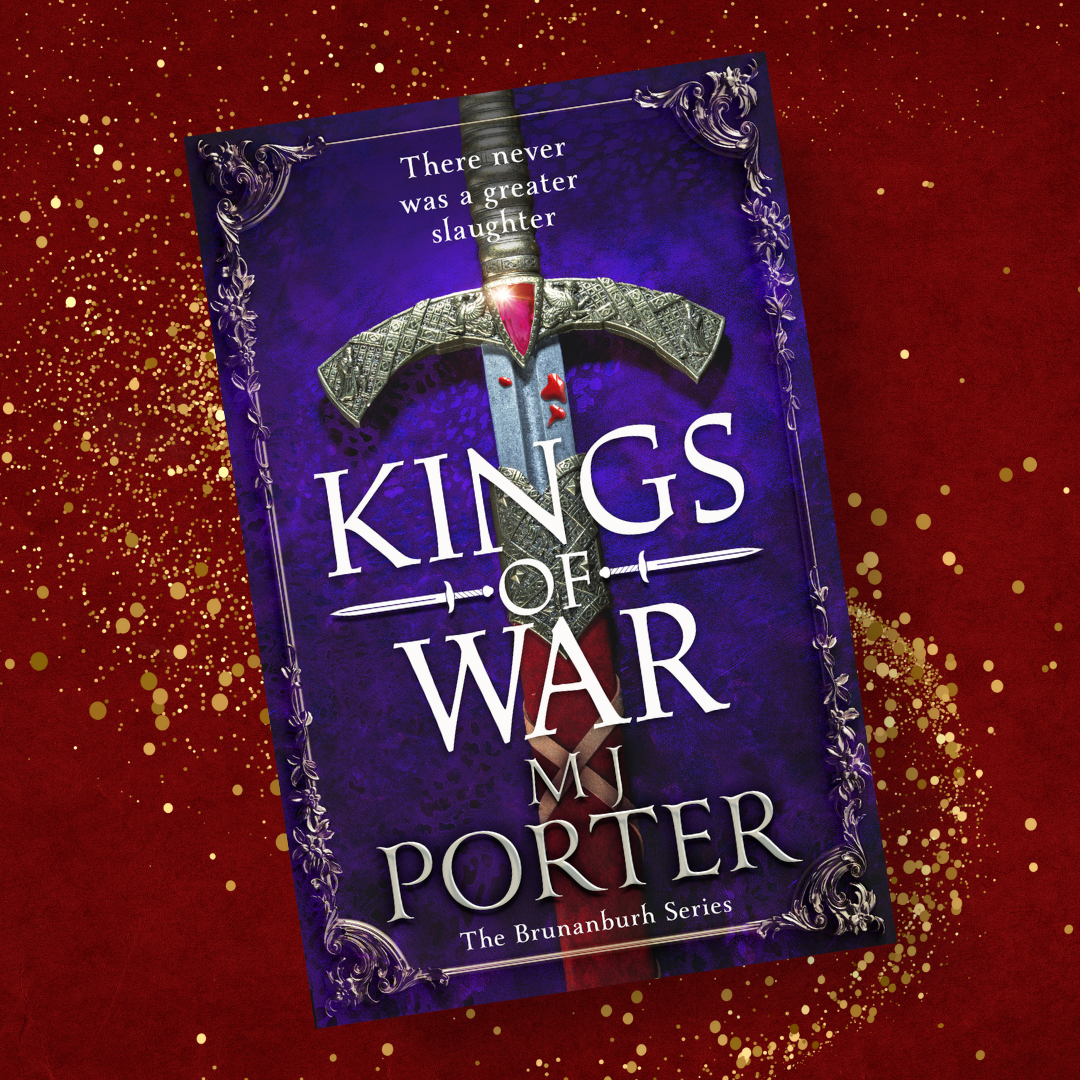
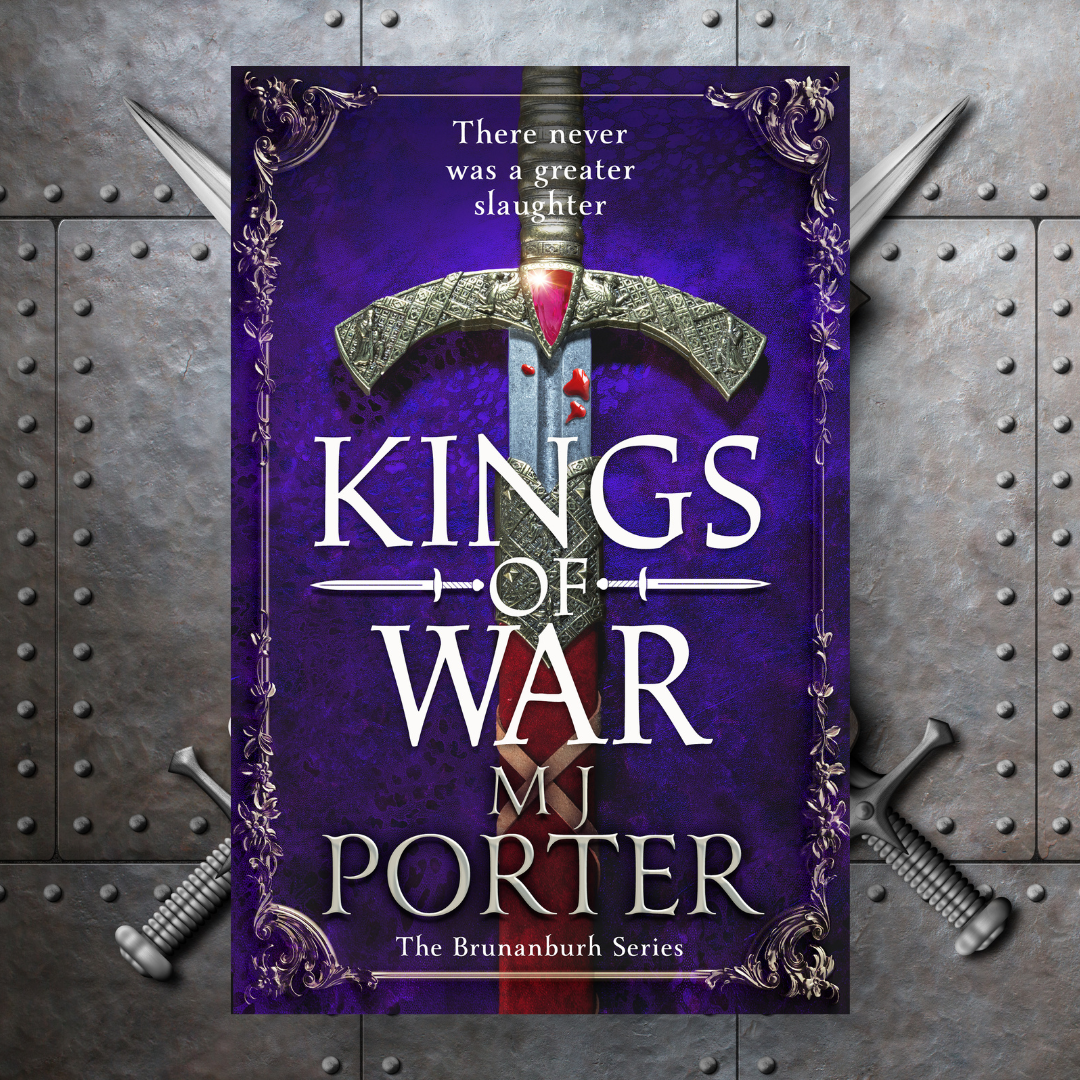
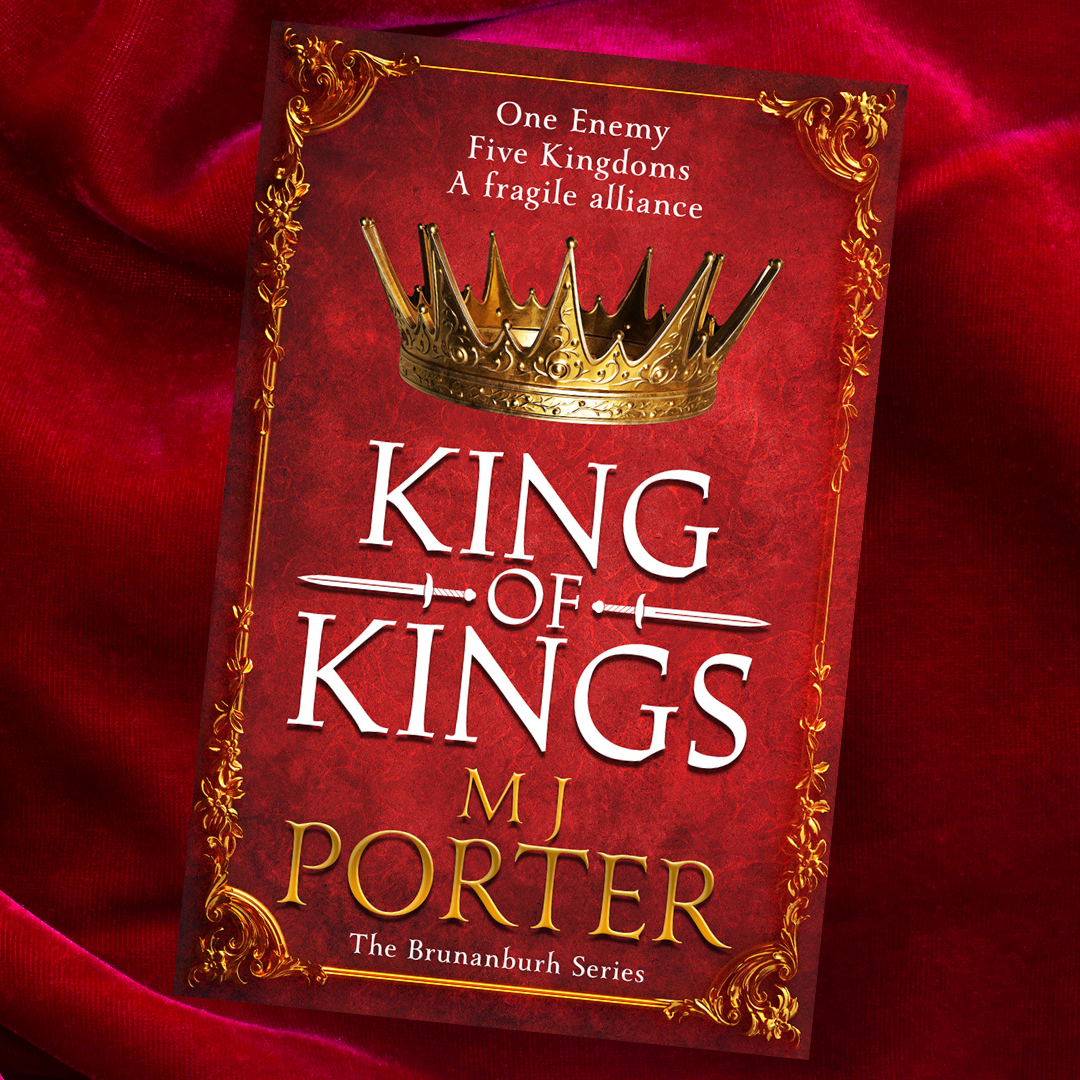
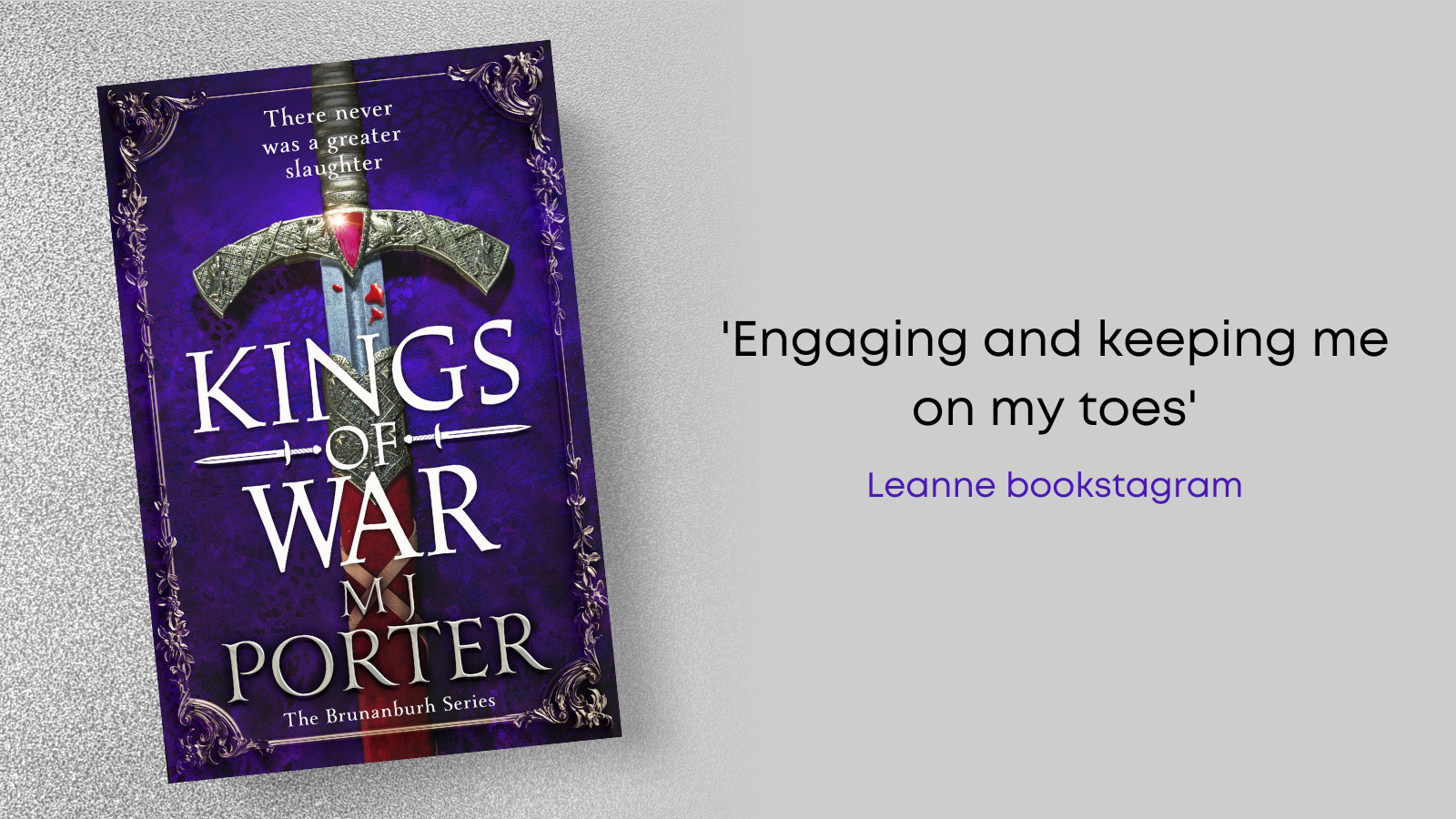
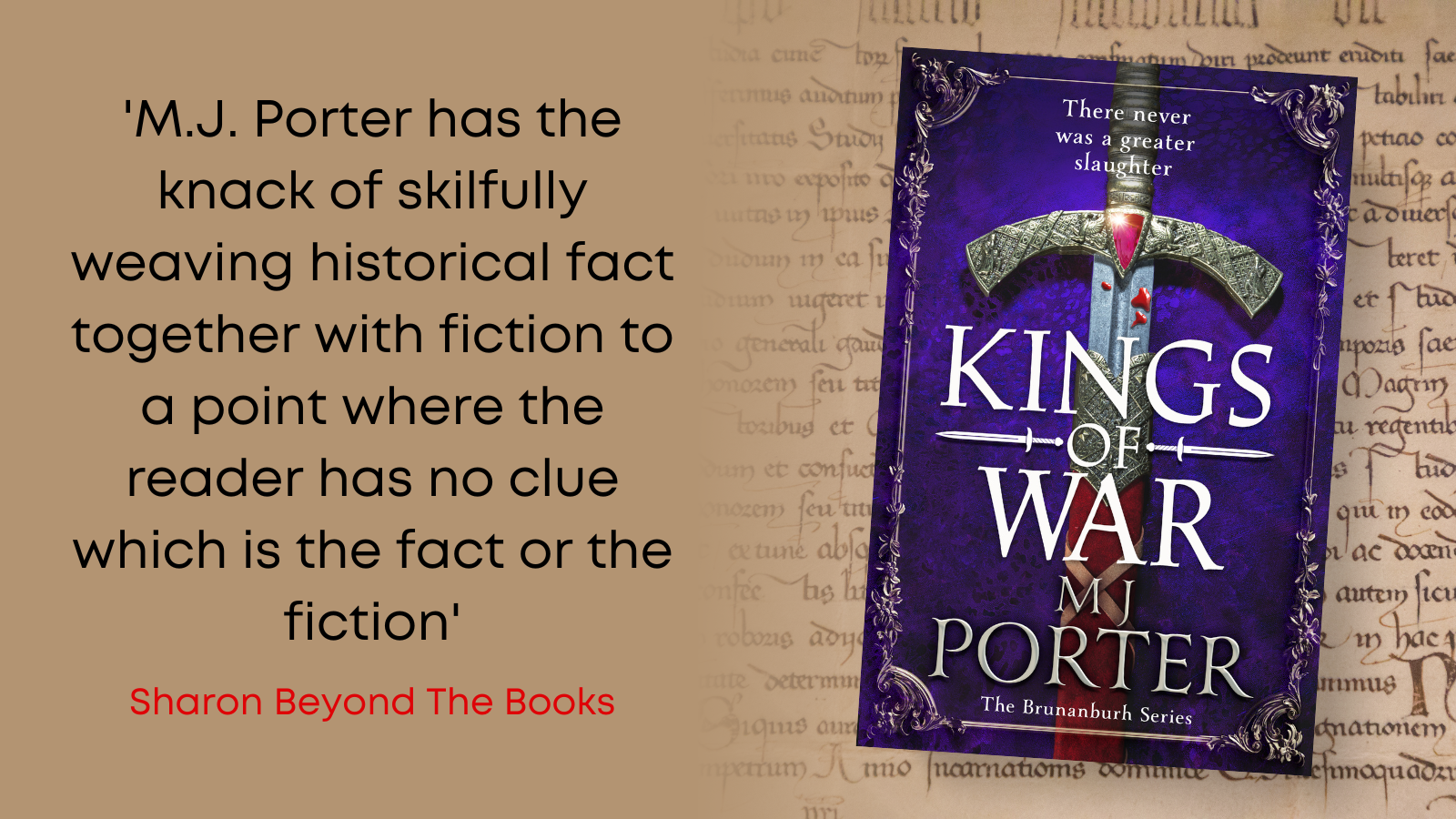
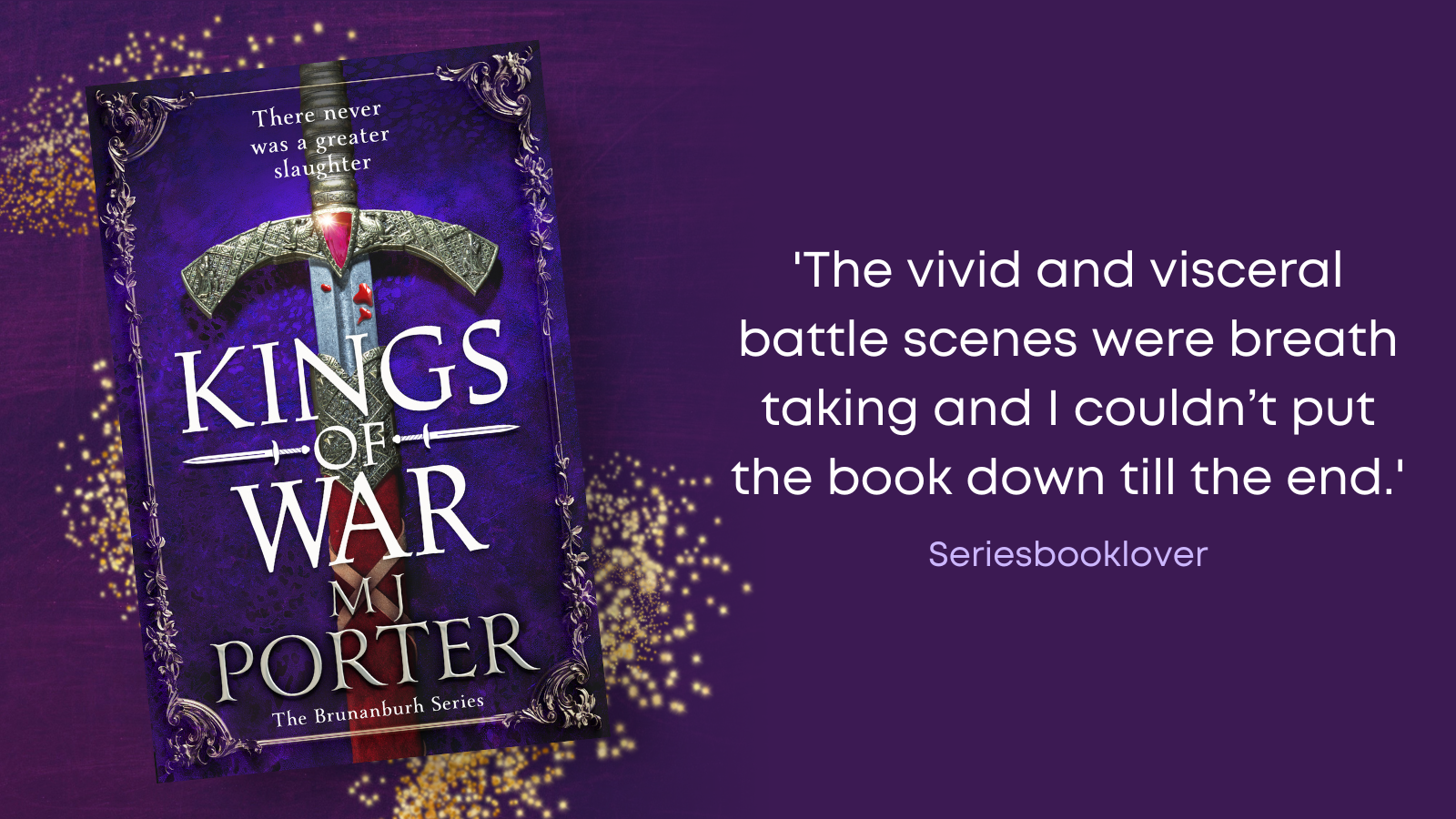
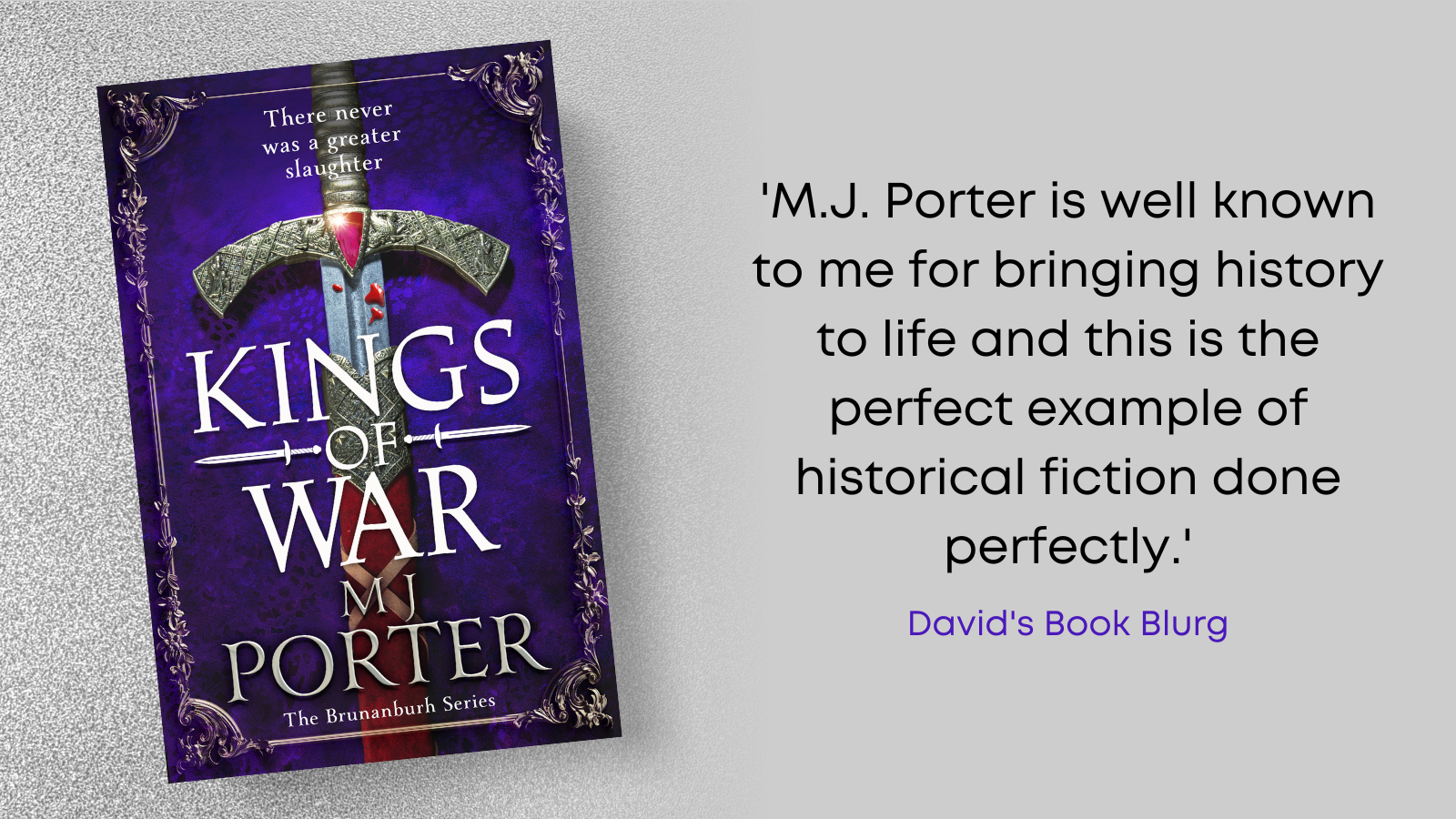
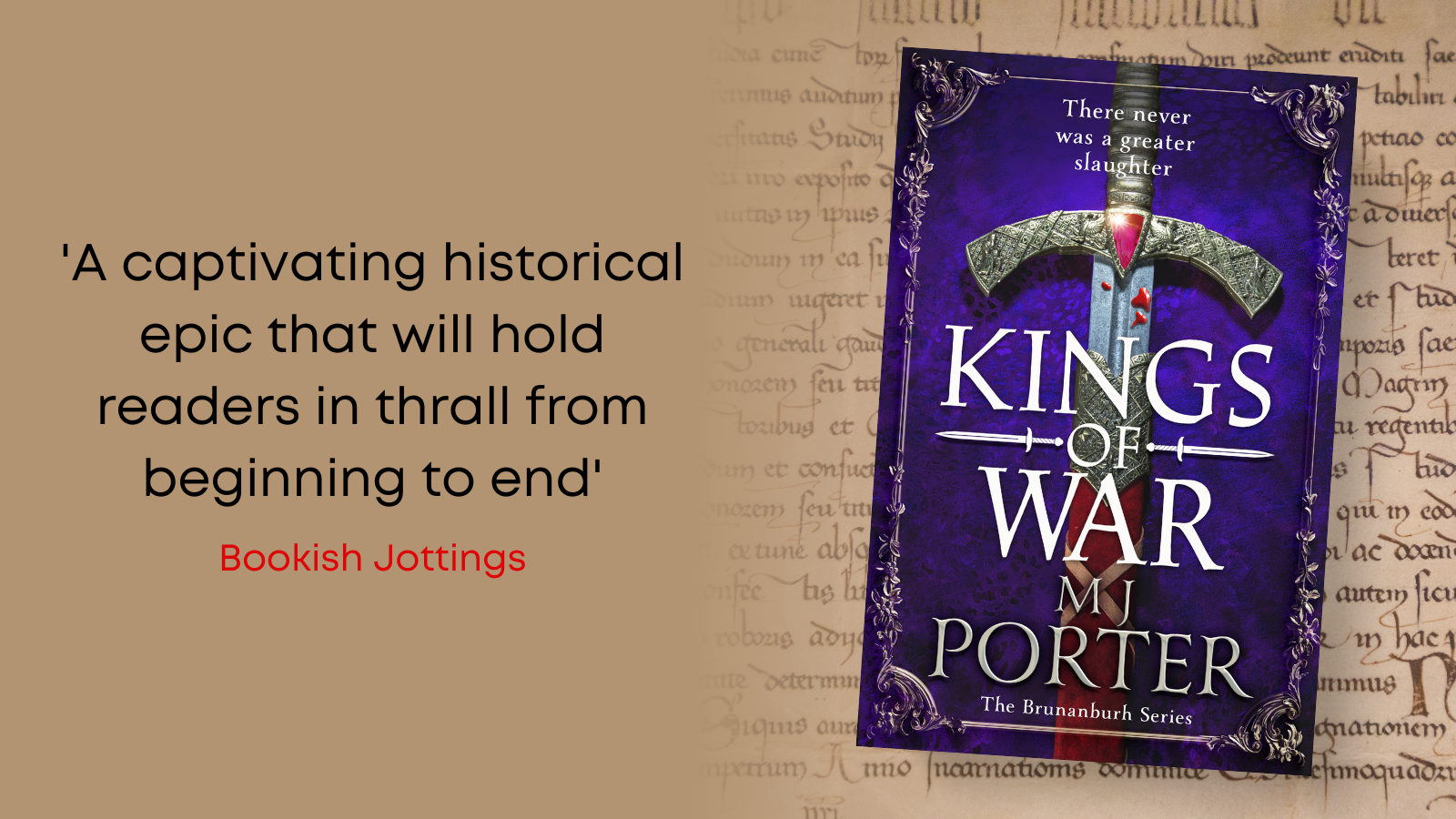
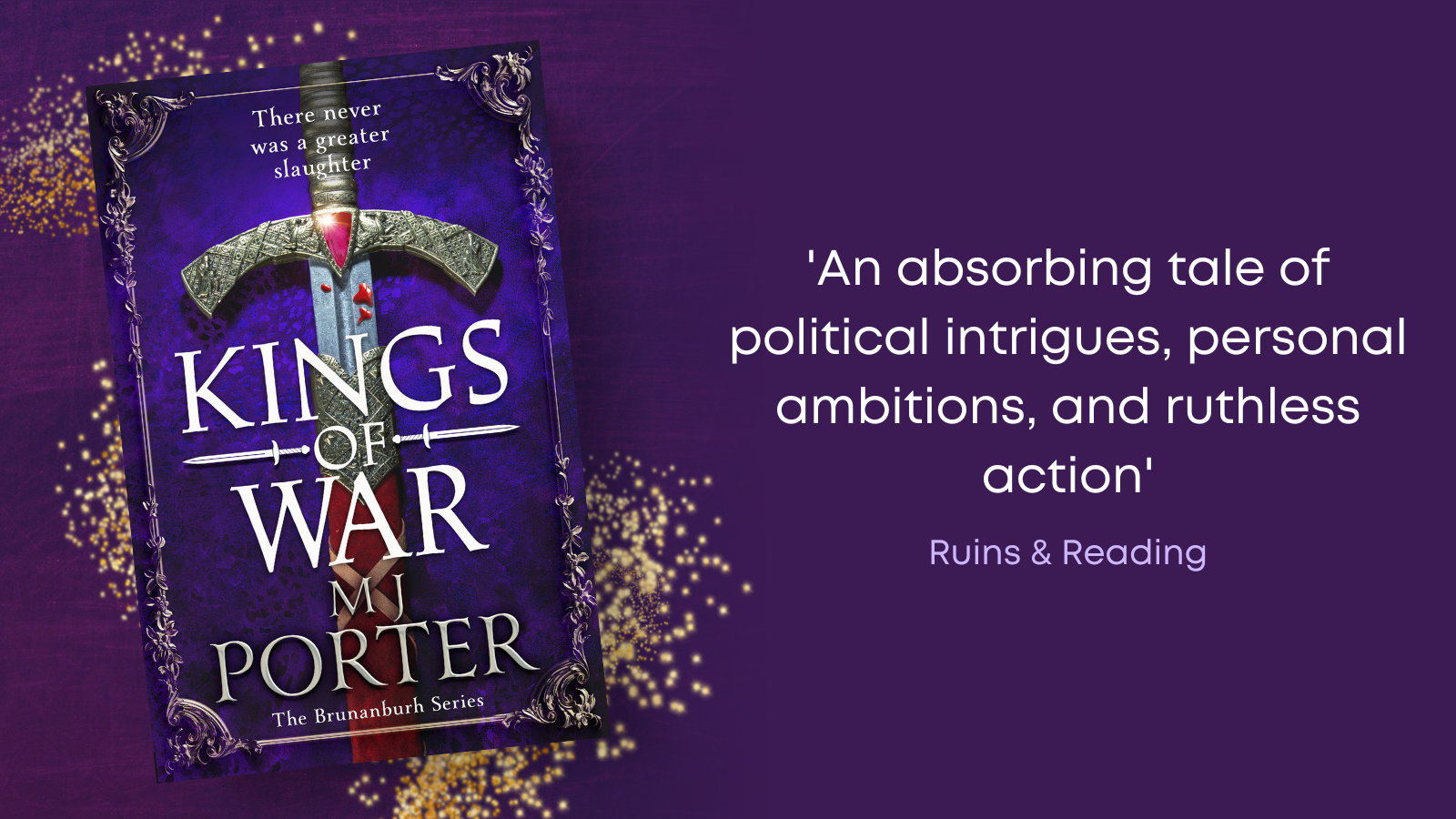
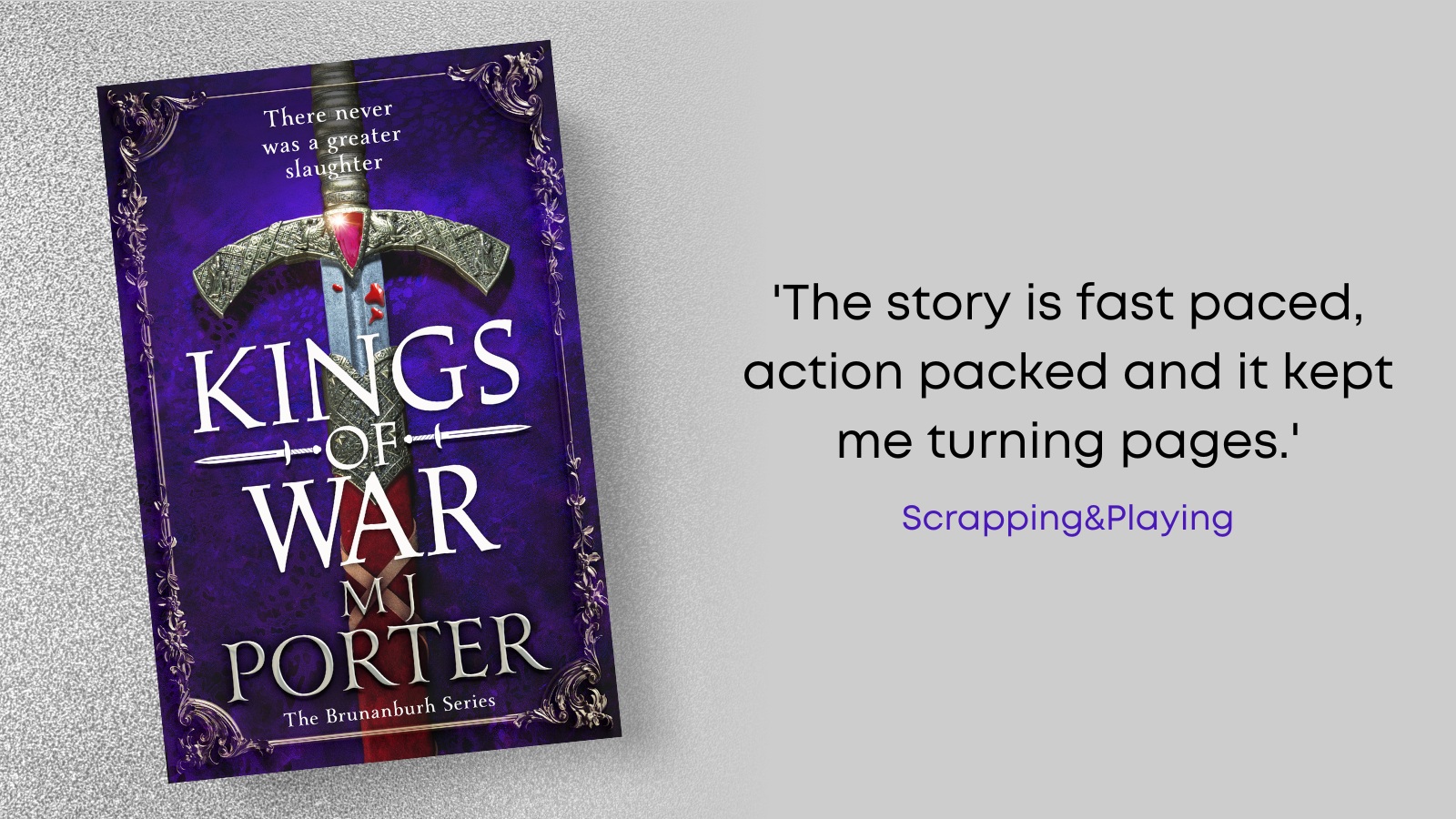
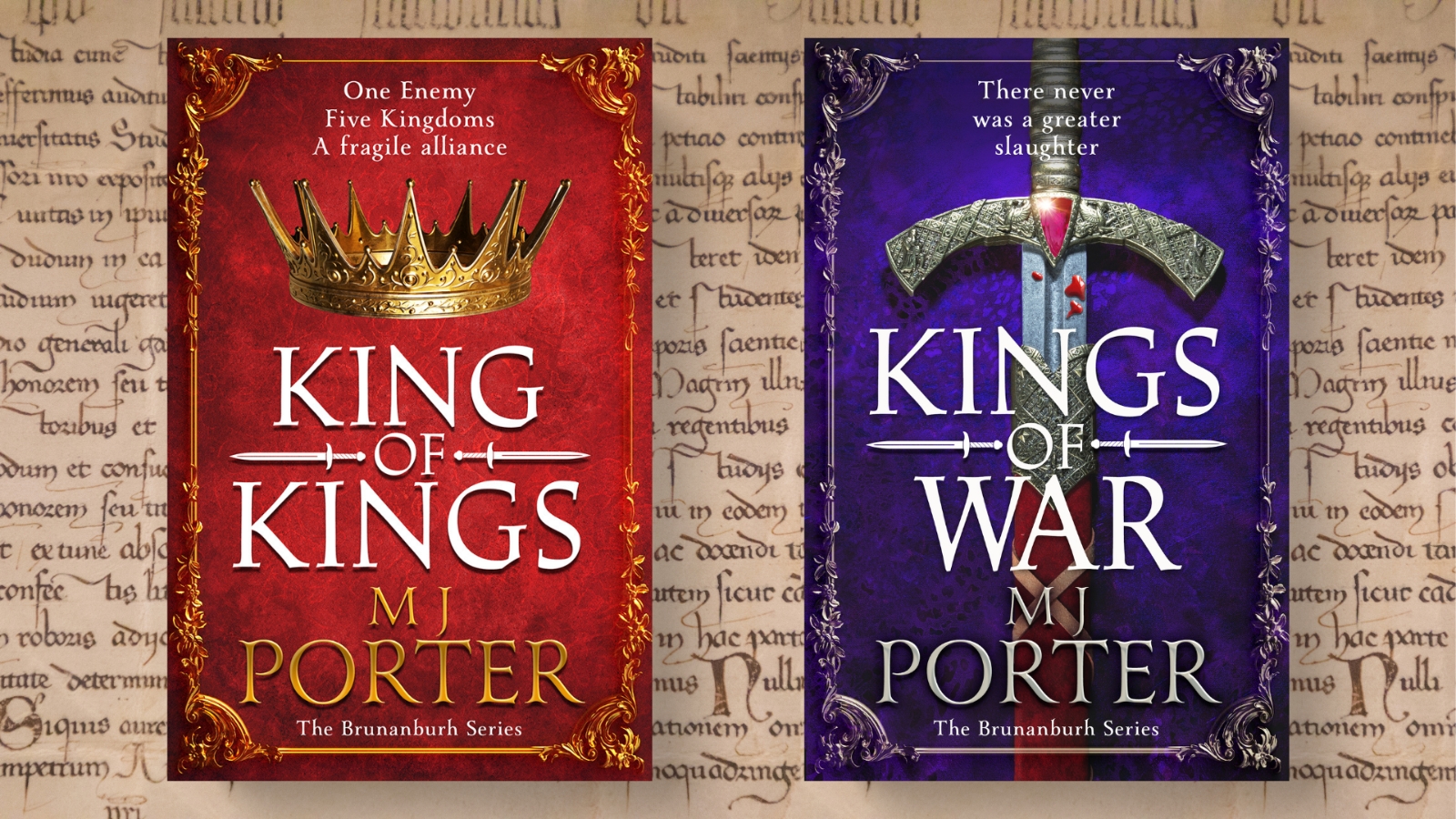
It’s been a month since the release of Kings of War, the sequel to King of Kings. This is the story of the battle of Brunanburh fought in 937. (Check out my post on where exactly Brunanburh was fought). It’s been a mad and busy month, so I thought I’d take a moment to reflect and say thank you my readers for the fab ratings/reviews and for taking a chance on my version of what led up to and happened at the battle of Brunanburh.
If you’ve not yet tried it, then King of Kings is still 99p on Amazon UK/Kobo and Kings of War is just £1.39 and both are available in ebook, audio, paperback and hardback.
Since Kings of War was released, I’ve also handed over book 3 in the series, and can reveal that the title is Clash of Kings, and it is available for preorder already.
Here’s the blurb:
Can the King of the Scots and the Dublin Norse triumph against a united England?
AD934
King Athelstan of the English has been successful in uniting the many kingdoms of Britain against one enemy, the Viking raiders.
But men who are kings don’t wish to be ruled.
Constantin, King of the Scots, rebelled against the Imperium and was forcibly brought to bend the knee to Athelstan and England at Cirencester.
His son Ildulb seeks bloody vengeance from Athelstan following the battle at Cait and the death of his son.
Olaf Gothfrithson, king of the Dublin Norse, having asserted his power following his father’s death has his sights set on reclaiming Jorvik.
Can the united might of the Scots and the violence of the Dublin Norse, descendants of the infamous Viking raiders, bring King Athelstan and his vision of the united Saxon English to her knees?
An epic story of kingsmanship that will result in the pivotal, bloody Battle of Brunanburh, where only one side can be victorious.
To celebrate Boldwood Books 4th birthday (yay), I shared four writing tips the other day, but as I’m currently in the ‘writing’ stage of a new book, I thought I’d share some more. But below is what I said as one of my four writing tips.
WRITE – it sounds stupid, but I do think it’s important to write, if not every day, then when you can fit it in. Routine is super important. As is setting yourself boundaries and deadlines. So, if you want to be a writer, you must write. It doesn’t have to be every day. It doesn’t have to be loads. If you’re struggling with the element of being an author that is writing, then I highly recommend taking part in NaNoWriMo in November of each year. I’ve been taking part for about ten years now. The lessons learned about routine will stay with you – and when they don’t – well, you can hop back on the NaNoWriMo train the following year.
Now, I’ve not been in a writing phase since April this year. That’s four long months that I’ve been busy editing what feels like book after book after book. Obviously, as part of editing, I have written new chapters and made lots of adjustments but I’ve not started FRESH with a new idea since I wrote Protector of Mercia. But, it’s August – I’ve finally caught up (Protector, Clash, non-fiction etc etc.) so now I can write. And this has reminded me that writing is my ‘happy place.’ I love the writing element. I love forging a new storyline. I’m a pantser – I make it up as I go (mostly) – and so this is where my imagination tends to roam somewhat free.
But, to accomplish my writing goals, I’m really strict with myself, even while being creative. My writing routine is 5k words a day – when I’m having a writing day – that’s not every day. For instance, this week, I wrote on the 1st, 2nd and 3rd August. I’m not writing on Friday because I have other commitments. But, next week, my aim is to write Monday-Friday. This is because I need to be kind to myself and ease myself into a new protect – so 3 days in a row – and also because I want to accomplish my goal of a horribly rough, first draft written in August. (Then I can move onto the dreaded editing – which I also enjoy – just not as much as writing). But, three days in a row will also give me a ‘feel’ for the story I want to tell. I also don’t tend to write at weekends, even though I could. Weekends are for blogging and advertising, unless I’m close to finishing and then I might well write anyway.
I often approach a new book with a very firm idea of the first chapter, or the last chapter, but not often the bit in the middle. This means that the first few days of writing can be quite ‘easy’ or quite ‘hard,’ depending on which bit I’m writing, and how long it’s been since I wrote about these characters – my most recent Earls of Mercia book was really hard as it had been 3 years since I last wrote about them.
Everything will be massively reedited – but this is me telling myself the story and so I have to tell it how I think it. After that, if my idea isn’t working, I’ll need to reset a little – and then work this retrospectively into what I’ve already written when I edit – not at this part of the process.
The other point to this is that when I’ve written so much, it’s easier to press on through the tough bits. By the time I hit 40k in a novel, I’m NOT going to give up on it even if I’m not entirely happy with it. That’s half a book – roughly. That’s a lot of thought and creativity. I will make it work. (Usually – I have some stories that aren’t historical fiction that have hit massive brick walls at this stage.)
I know a lot of people will be horrified by such an approach (I’m looking at you planners) but it’s what works for me. As much as planning might make the process easier (and I do think it would make the editing easier), after more books than I can remember off the top of my head, this is my approach in all its messy, horrible glory. As an aside – I’ve never been able to plan my writing – I can remember at school that I struggled to structure an essay because I’d just end up writing it, so what was the point, I may as well just write it.
That said, it’s taken me time to refine my approach and it does change from book to book. It used to take me all day to write 5k words (with breaks). Now I try and write them in the morning. I get up, I write. I take a short break. I write again. By the time I’ve written 3k words, I’ll have some momentum and be able to write the next 2k quite quickly. I rarely, if ever these days, push on beyond 5k because by that stage, even if I’m really keen, I tend to have exhausted my creativity and I need to do something else. It’s not easy, but I can convince myself that it is – if that makes sense. It also helps that I am a fast typist! I also set rules for myself – at a minimum I want to write 1K every hour – it shouldn’t take me so long – but it’s a good rule of thumb.
When I wrote my non-fiction book, this was all a bit different, because aside from deciding how to present my book, the creativity was much less – I was telling the story using the available source documentation. And so, throughout the whole of last August my problem wasn’t that my brain was tired from being creative – it was that it wasn’t. I found it difficult to stop, but with all the copying of sources – the process was slower.
I sometimes write to music – headphones on – music on – transporting myself to ‘my’ time and place. These days I don’t always need the music. I’ve trained myself to do the thing that needs doing with as little conscious thought as possible. To prove this, when I edit, I’ve often forgotten elements that I’ve written, especially if a few months have gone by since I wrote it. And, I have to write down my characters names because I always forget those who aren’t the main characters.
I’m massively motivated by having a ‘finished’ draft. There’s the old saying about enjoying the journey but I really do want to reach the ‘end.’ I mean, I really enjoy it as well. I’ve been smiley and jolly for the last three days. I’ve felt reinvigorated and ‘on it.’ It’s my happy place, but I still have to work at it.
So writers, remember writing is your ‘happy place’, and whether you want to linger on the sites and sounds, or get to the end, do what works for you, because it certainly isn’t the same for everyone.
I’m currently working on Icel 6, for those who might be curious. And after this, I’ll be getting back to Coelwulf 8. It no doubt helps that I really love writing these characters.
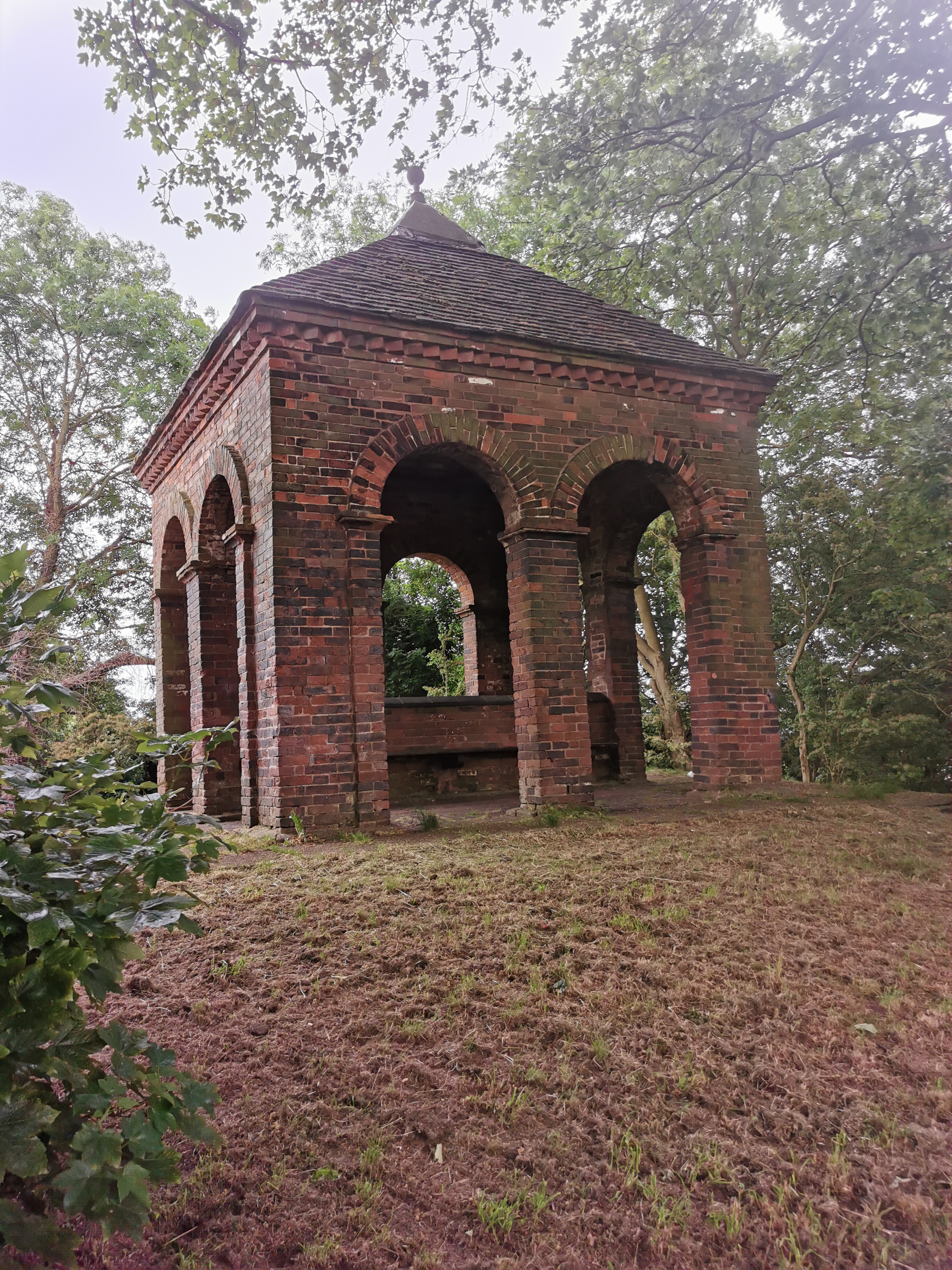
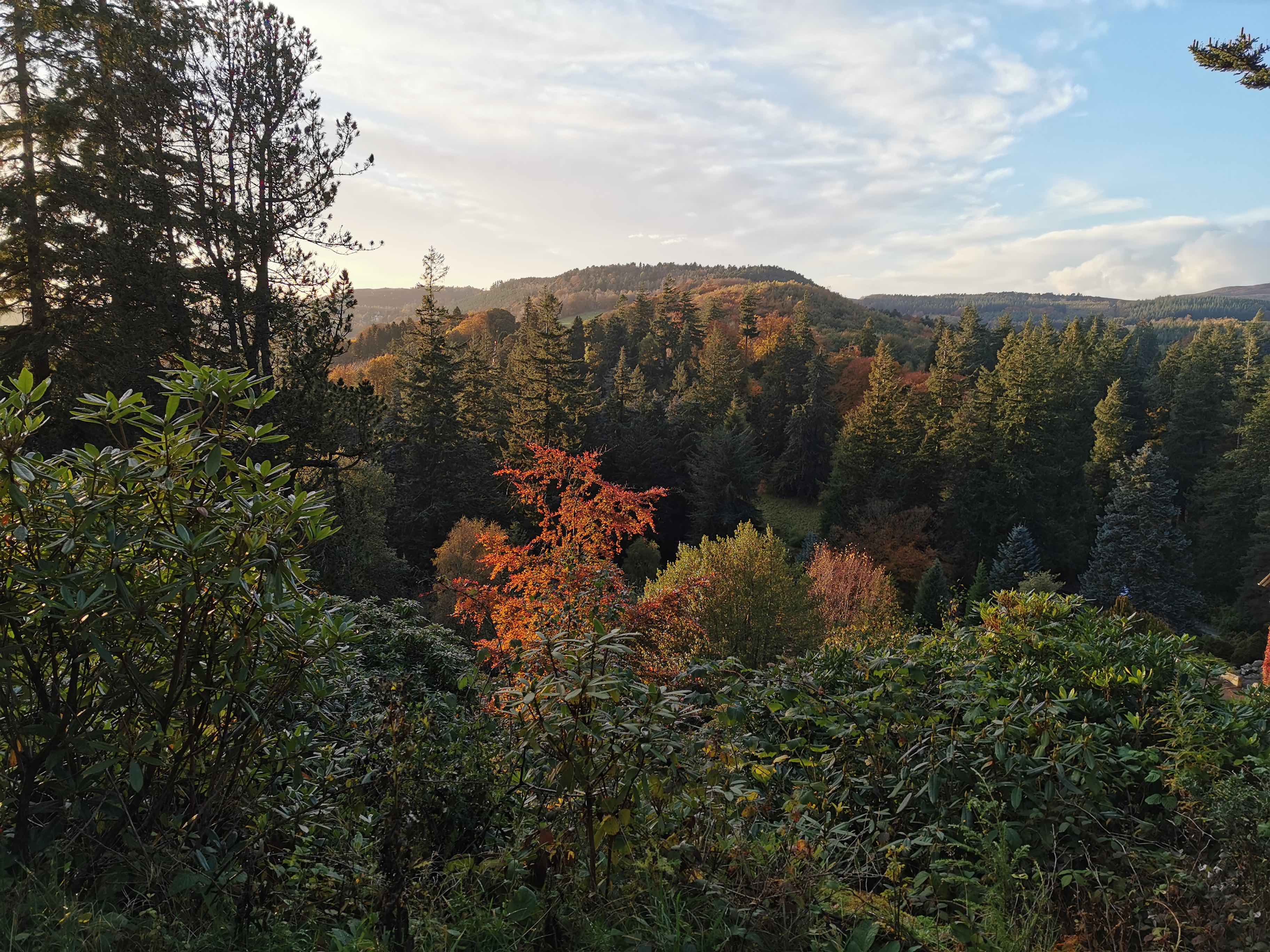
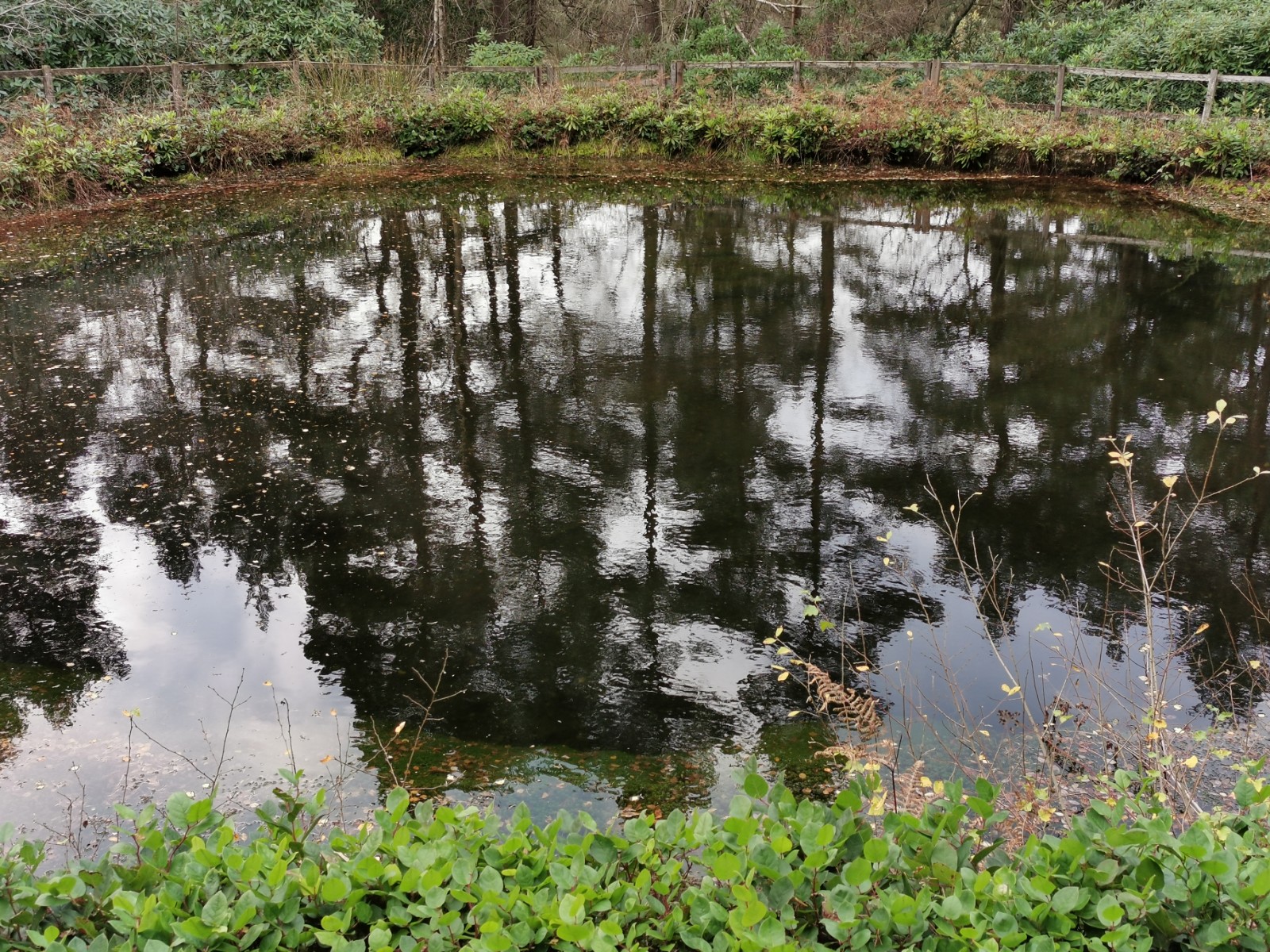
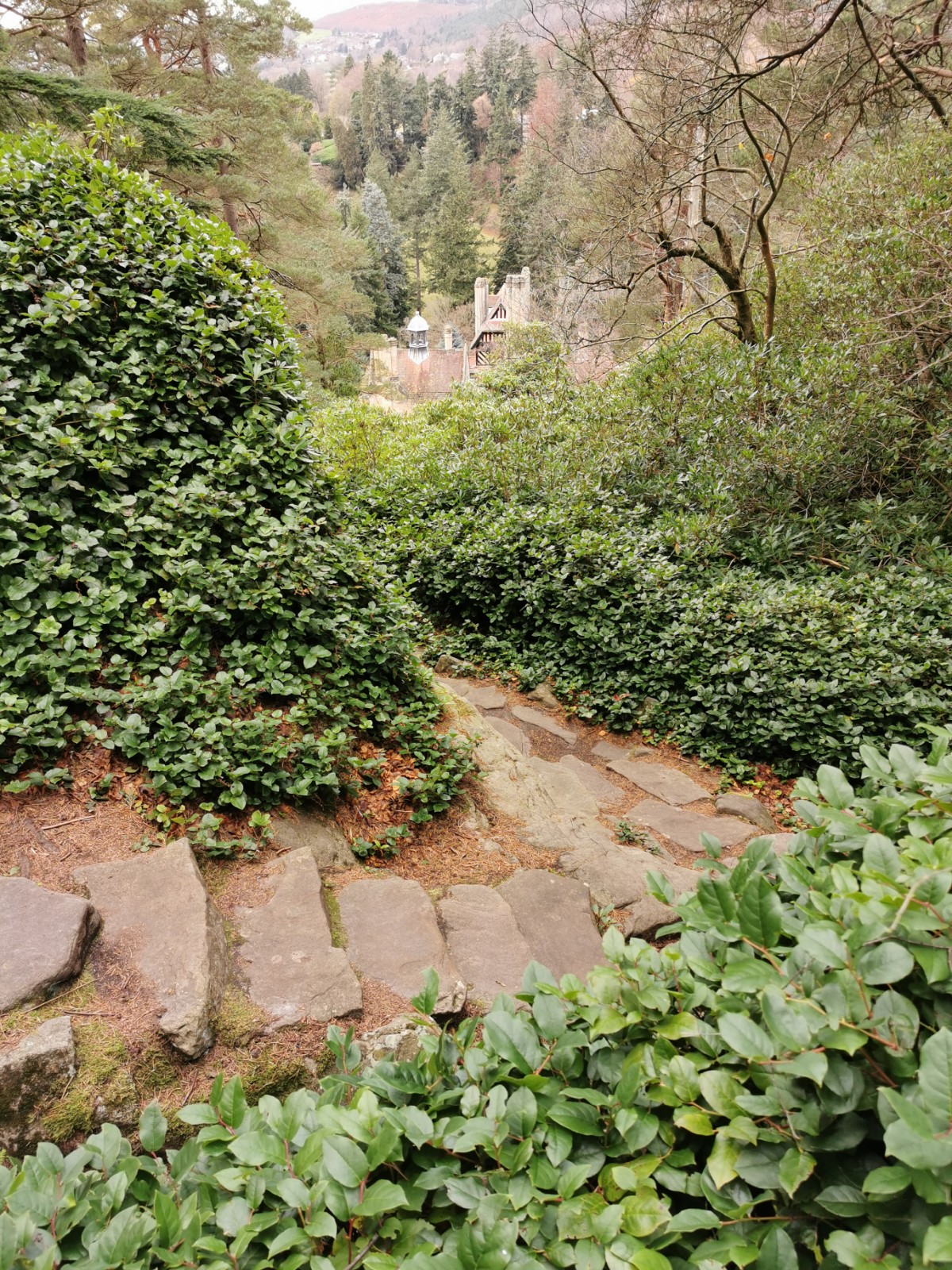
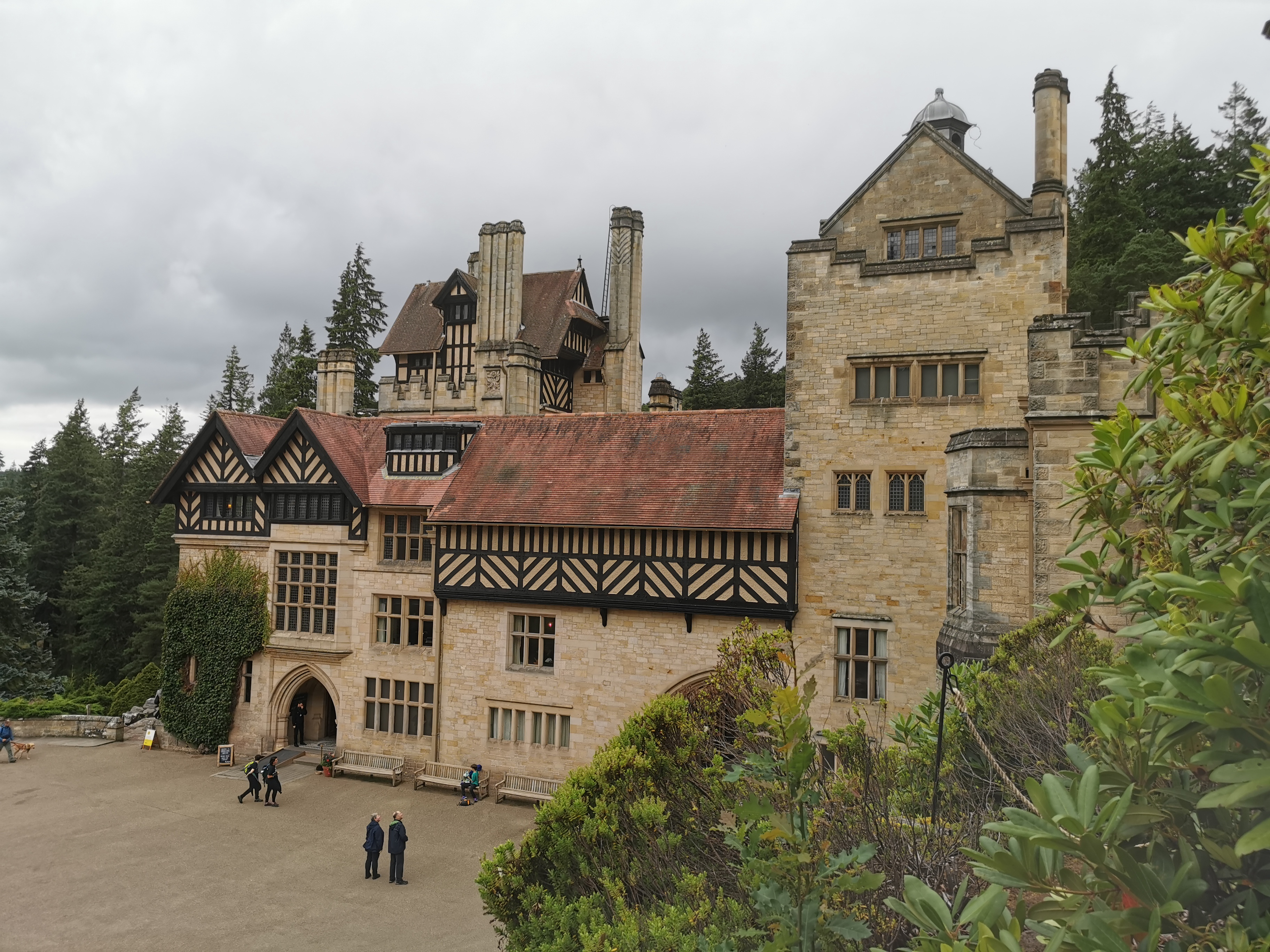
The estate is close to where I live, and so to add to the general ambience, I’m sharing a few more wintery photos of the beautiful grounds below, and a little video I took one day when I was making sure my timings for the book were correct. It was a wee bit windy:)
Autumnal view of the estate looking out towards Rothbury
The Basin Tank, Cragside
One of the many, many paths through the Estate and leading to the house
Cragside TreesCragside view from Debdon Valley
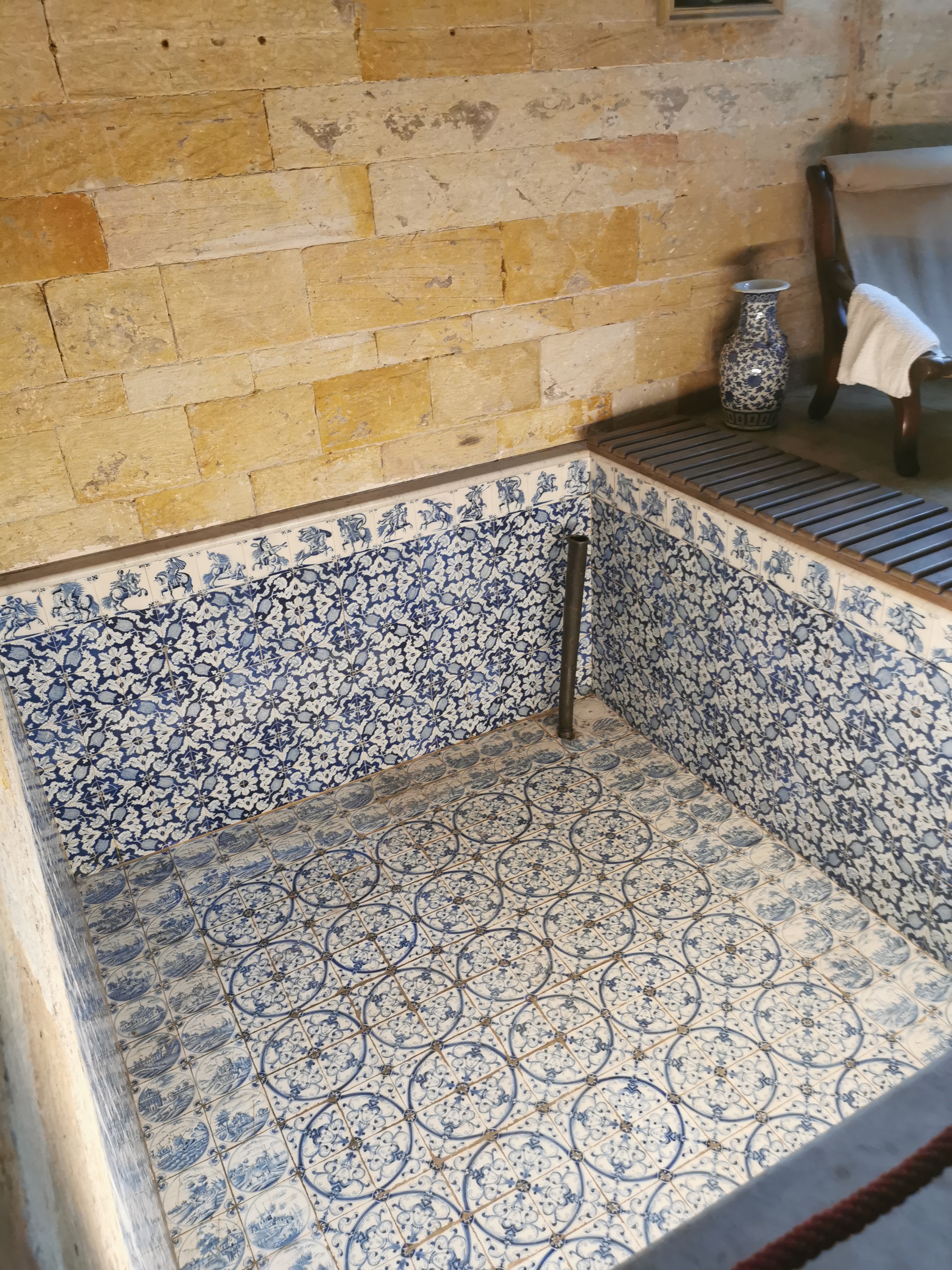
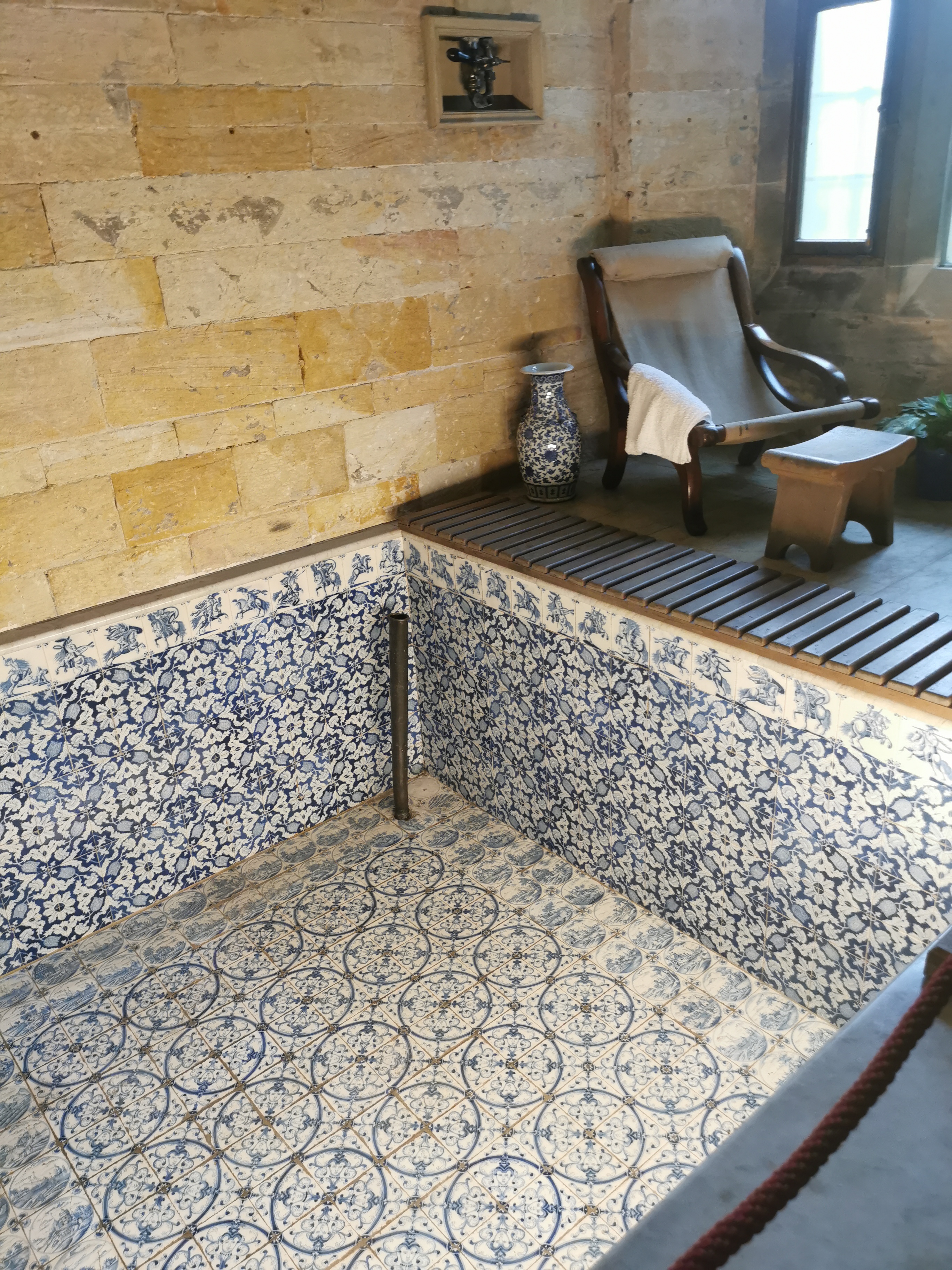
Somewhat by chance, I visited Cragside today and managed to snap some photos to share with my readers. I was most excited about the bathroom, which has been closed for a while but has now reopened. It looks amazing.
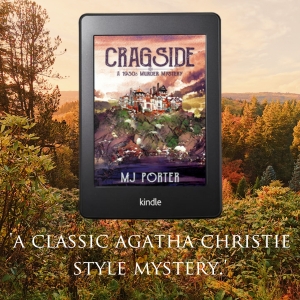
You can enjoy Cragside in ebook, paperback and audio, narrated by the fabulous Gill Mills, who portrays Lady Merryweather fantastically.
Can the Norse and the Scots exact their revenge over the mighty King Athelstan of the English?
AD937
After the slaughter field of Brunanburh, a defeated Olaf Gothfrithson of the Dublin Norse and Constantin of the Scots narrowly escaped with their lives. In their kingdoms, failure has left them demoralised and weak.
Olaf licks his wounds in Dublin, whilst Constantin and the Welsh kingdoms who defied King Athelstan, are once more forced to bend the knee. As Athelstan’s reputation grows stronger day by day, their need to exact revenge on the overmighty and triumphant Athelstan has never been greater.
Olaf sets his sights on reclaiming the lost kingdom of Jorvik only for tragedy to strike at the heart of England and a reluctant new King, Edmund steps into the fray.
While England mourns the death of their warrior king, her enemies gather on her borders and England stands alone against the might of the Norse, Welsh and Scots.
Can the new king be victorious and banish her enemies once and for all or will England, and its king lose all that’s been gained and succumb to a new pretender?
There’s no cover yet but I will share once I have it:)
If you’ve not yet grabbed King of Kings and Kings of War then they are currently just 99p/£1.39 on Amazon UK and the equivalent worldwide. You can read about the series on my Brunanburh page.
I’m also asking my readers if they’d like to meet me virtually via a Zoom chat? If you think you might, then please complete the Google form. It’s just to see what readers would be interested in, their availability and timezones:) Nothing is set in stone yet.
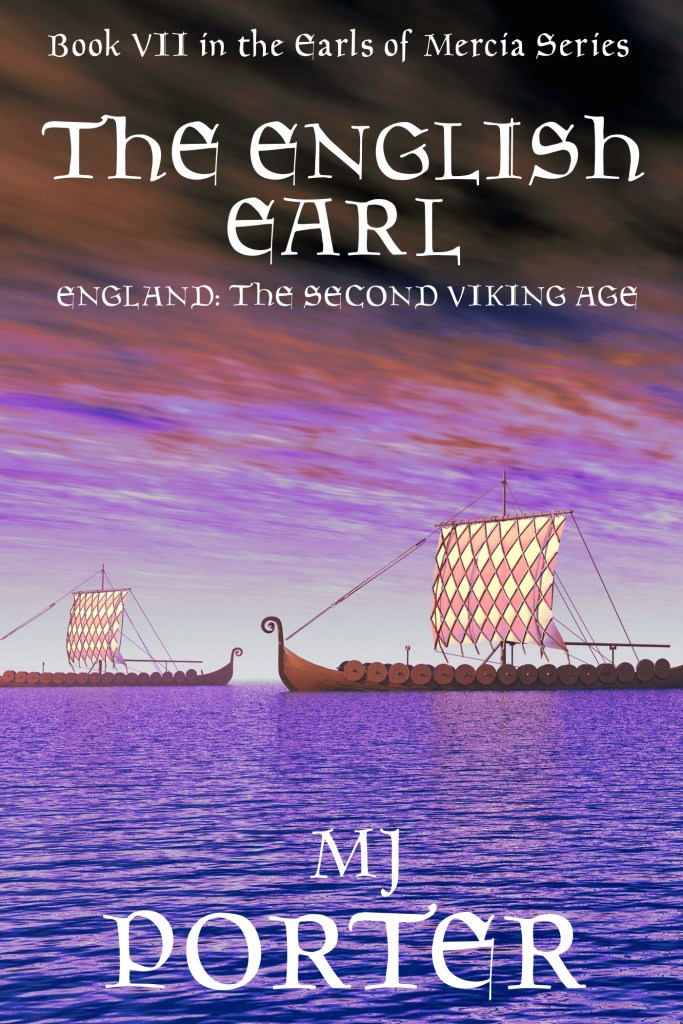
I think we all know that I’m really not very good at remembering book birthdays, but I have remembered this one and so, happy book birthday to The English Earl. (This is the book that I always forget when writing out the series – so I think it needs some love – I even managed to give it an ISBN that was out of sync with the rest of the series).
Intrigued? Here’s the blurb.
England, November AD1035.
Cnut, the Danish king of England, is dead, his son and chosen heir, Harthacnut, fighting for the survival of Denmark against Magnus, usurper of Cnut’s eldest son’s rule of Norway. Cnut’s Northern Empire of England, Denmark, Norway and Sweden is fragmented and in turmoil, and that’s before news of his death even spreads.
The queen dowager, Lady Emma, has the support of Earl Godwine to rule until her son, Harthacnut, can come to England to claim his inheritance. But there are problems. No one knows how long it will take Harthacnut to regain control of his father’s Viking Empire, and the English will not allow themselves to be left abandoned in the meantime.
Earl Leofric of Mercia, has long been an ally of Cnut’s, but not always an ally of his wife, the queen dowager. And more, Cnut made concessions for his other surviving son, the result of his union with Lady Ælfgifu of Northampton in Mercia, and Earl Leofric must honour those, despite the queen dowager’s determination to ignore the son’s existence.
As England once more faces the threat of external attack, should Magnus prevail in Denmark, Earl Leofric has important decisions to make. He has a long held grudge to settle with Earl Godwine of Wessex, Cnut’s much-favoured earl, while ensuring his own family’s survival. Earl Leofric is the only truly English Earl within England and Mercia is his to command.
And the queen dowager should never be overlooked. In power for her entire adult life, she is desperate to retain her hold on the network of prestige she controls, little caring who she endangers along the way. The queen dowager has twice been England’s queen. She has always had more than the one son she shared with Cnut, and her older sons are keen to exercise their own claim to wear England’s crown.
Harald, son of Cnut and Ælfgifu, Harthacnut, son of Cnut and Lady Emma, Edward and Alfred, sons of Lady Emma and King Æthelred II; four men with an equal, and valid claim to the English kingdom, but there is only one kingdom available. Who will prevail?
Available in ebook, paperback, large print/hardback and with Kindle Unlimited.
Check out the Earls of Mercia series page on my blog for more details.
It’s a happy 4th birthday to my publisher, Boldwood Books, so I’m sharing 4 books/authors that have inspired me on my journey to becoming an author, and they might not be what you expect.
Many authors of historical adventure/historical fiction often cite the greats when talking about their influences, Bernard Cornwell, Simon Scarrow etc etc (you get the picture), but those aren’t my author heroes. My first intention was to write historical fantasy, and my literary heroes are giants of that genre ( and you might realise here why I write so many series)
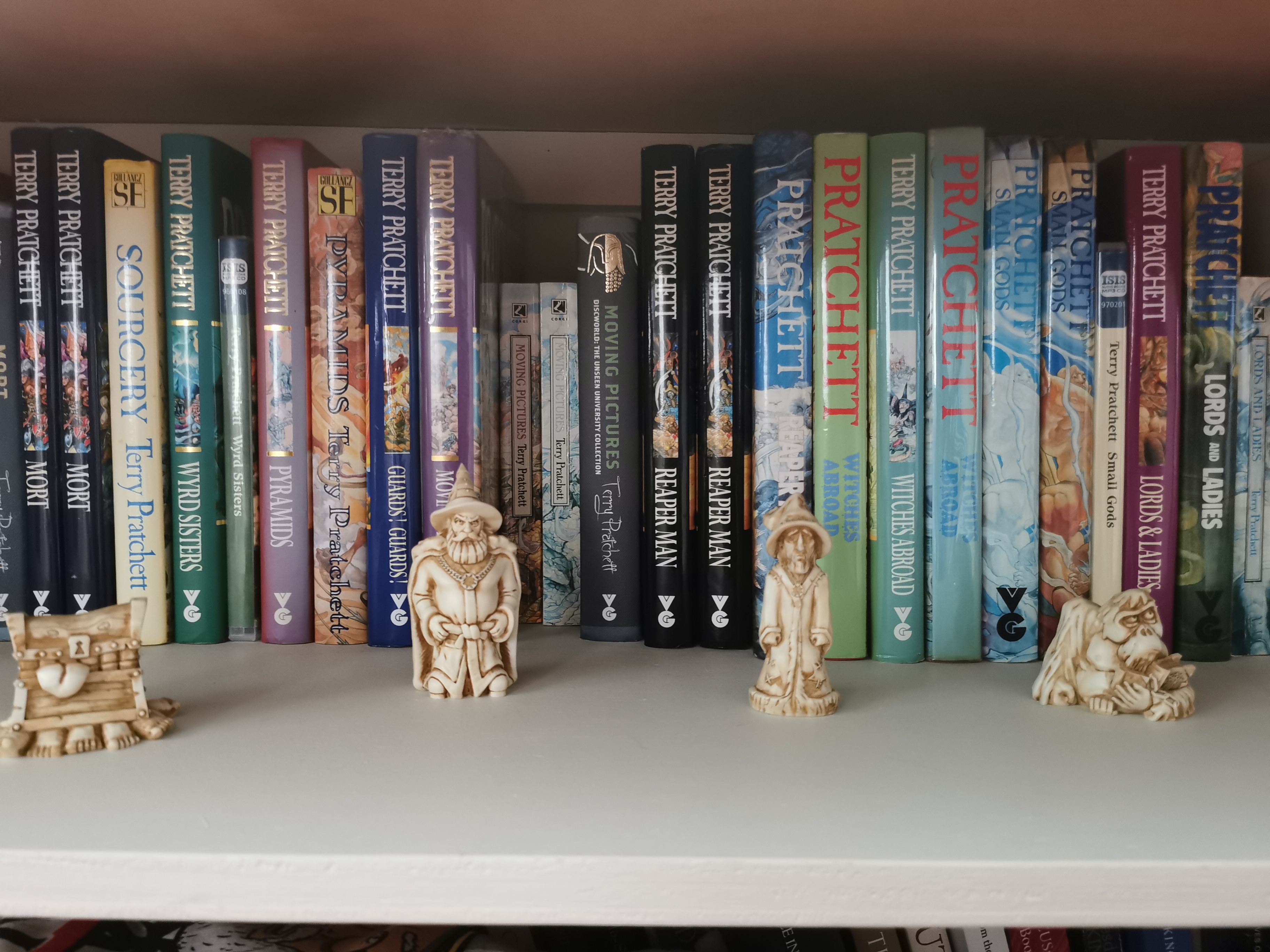
Terry Pratchett – his Discworld books, with their humour, recurring characters, and themes which are still very relevant, used to see me staying up late at night to finish them. I now listen to the audiobooks – which have luckily just been rerecorded and I adore all the versions.
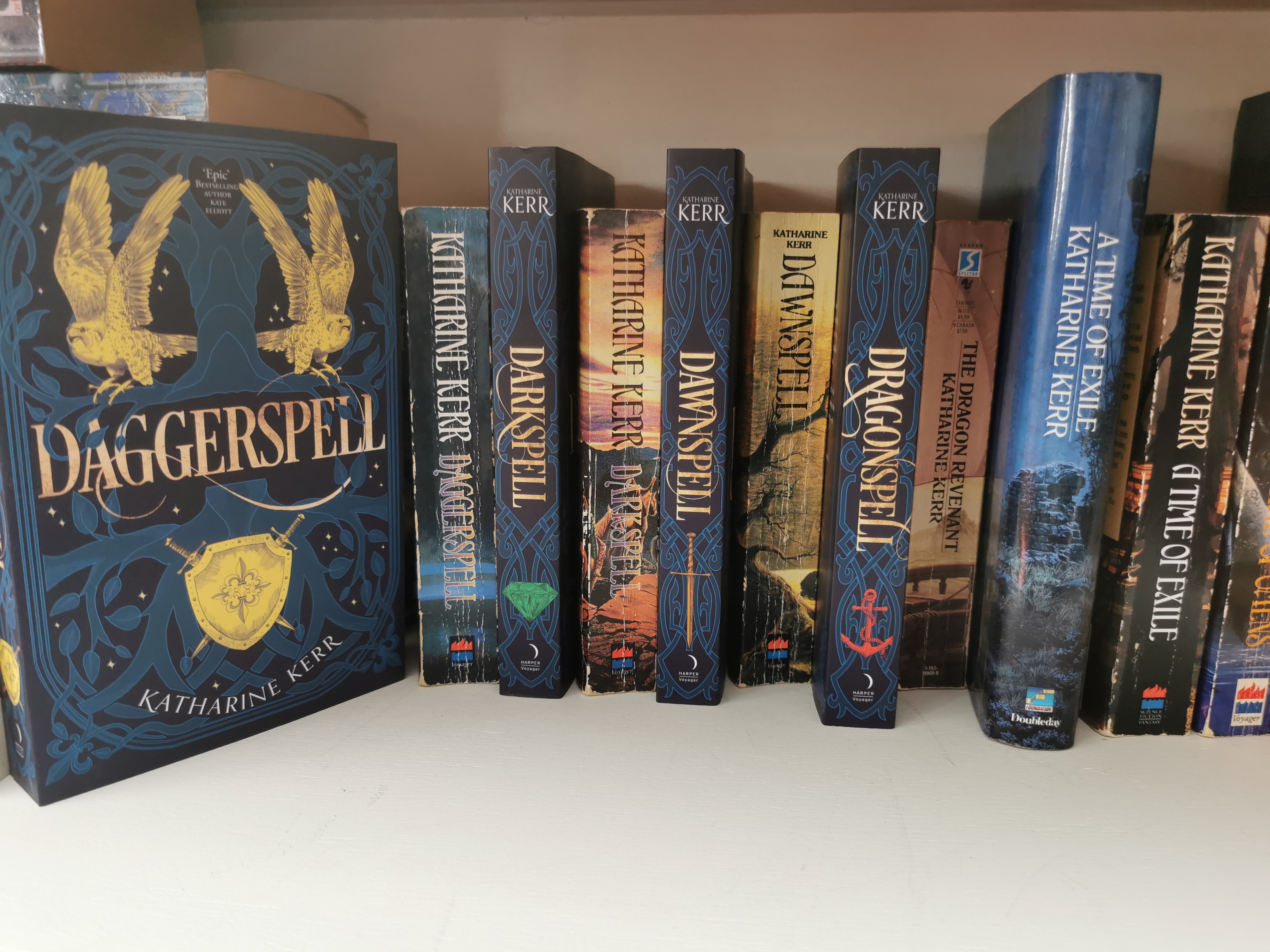
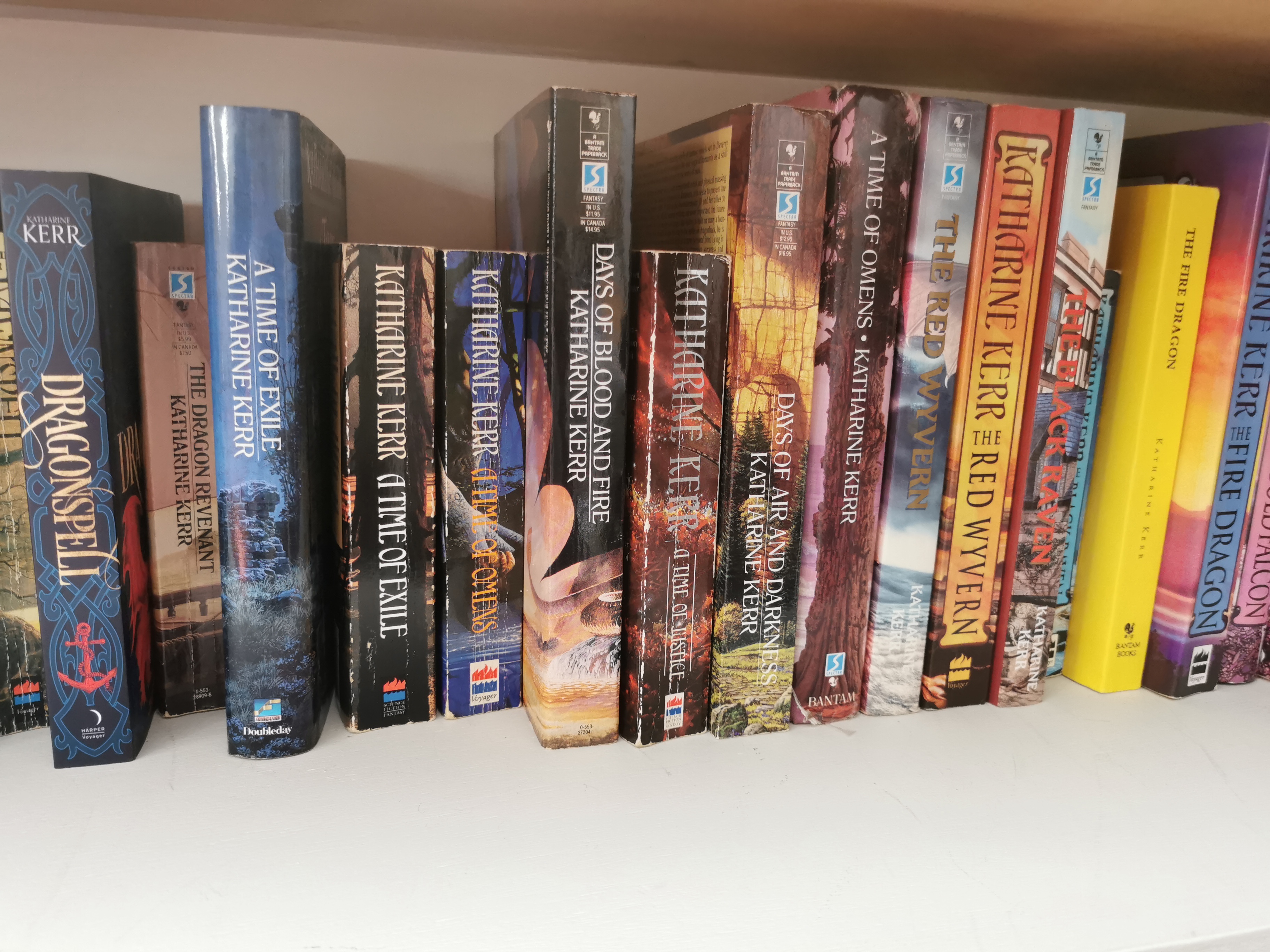
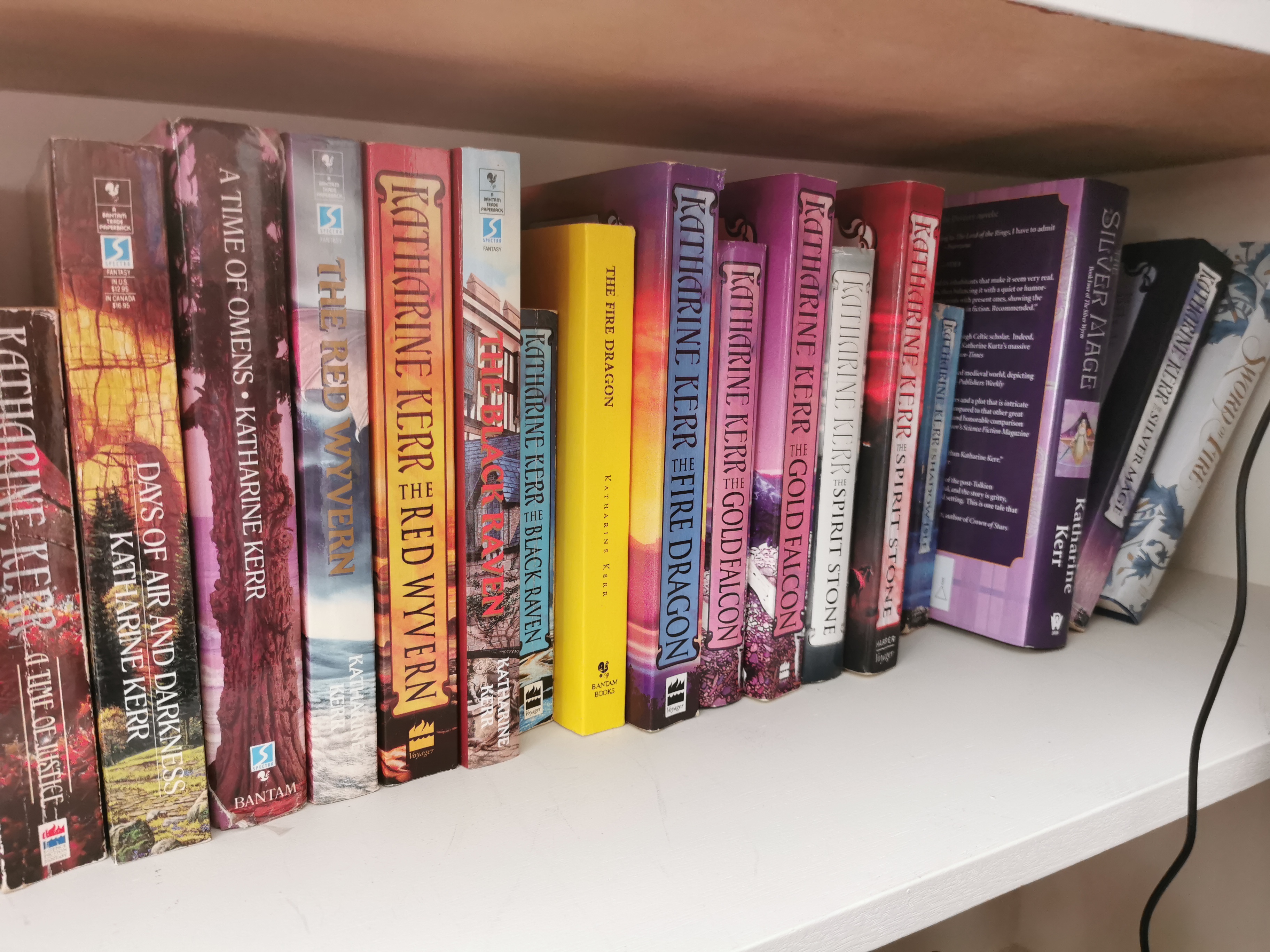
Katharine Kerr – the Deverry series. WOW. I might have told this story before, but I will never forget the day (many years ago) when I picked up my first Deverry novel. I’ve been reading them ever since. The wonderful mix of history/myth and the intertwining ‘lives’ of the characters have always thrilled me. And, on a personal note, the way that the death of one of the main characters was handled, gave me comfort when I was bereaved, many, many years ago. These things stick with us.
Anne McCaffrey – the PERN novels. I reread these books all the time. I’ve also read many of her other novels as well, but PERN were the ones for me. The timelines, the mixing of past and present, the DRAGONS. Just a fabulous set of novels. (These are still in a box somewhere from my recent move, and so I can’t share the images of my old covers, but the new ebook covers are delightful.)
Tom’s Midnight Garden – perhaps a strange one to include, but I read the book as a very young child, and I think the magic of the story, the interweaving of the narrative with past and present – certainly pushed me to seek out other novels that were very similar. At heart, I think I’ve always been intrigued by fantasy.
So yes, not many historical fiction novels there – but all of them have an element of the historical, and of course, Terry Pratchett has the humour, which I also try and incorporate into my stories these days. (Check out my new Discworld characters). And head over to my TikTok to see more of my Deverry collection. Some of these books came straight from Katharine Kerr herself (squee),and I treasure them. I also have some cards from the original UK cover illustrator.
I’ve been with Boldwood since just before their 2nd birthday – we celebrated birthday number 2 in an online Zoom. It was fab. Since then, I’ve met many of the authors and the ‘team’ behind the success of Boldwood in person. And, the other members of the Warrior Chronicles, Donovan, Peter, JC Duncan and me, try and have a chat once a month to share our knowledge, chat about random things and generally have a giggle. So, in the spirit of that, here are 4 (well 4.5) writing tips from me.
WRITE – it sounds stupid, but I do think it’s important to write, if not every day, then when you can fit it in. Routine is super important. As is setting yourself boundaries and deadlines. So, if you want to be a writer, you must write. It doesn’t have to be every day. It doesn’t have to be loads. If you’re struggling with the element of being an author that is writing, then I highly recommend taking part in NaNoWriMo in November of each year. I’ve been taking part for about ten years now. The lessons learned about routine will stay with you – and when they don’t – well, you can hop back on the NaNoWriMo train the following year.
BELIEVE IN YOUR WRITING – again, this might sound stupid, but it’s something I’m only really just starting to do. I’ve always been a little embarrassed by it all. And yes, there’s a very thin line between believing in it and being OTT about it – tread carefully.
PIVOT IF YOU MUST – my intention was always to write historical fantasy. When that didn’t work out as I quite expected, I moved to historical fiction – yes, it’s not that much of a move away, but it does mean I’ve had to stop putting dragons in my story.
NOT EVERYTHING WORKS – as I said above my first love is fantasy but that didn’t quite work out. Equally, I’ve tried to write other stories over the year and for one reason or another, they didn’t work. I have a number of unfinished manuscripts – a Tudor-esque fantasy, a sort of space-opera thing, and a more personal story – that I’ve started, many times, but for one reason or another, the time isn’t right for those stories, or the stories aren’t right for this time. As above – pivot if you must. You can, hopefully, always tell THAT story in another way, or if not, use elements of THAT story elsewhere. Which brings me to point 4.5 – never permanently delete anything:)
Happy 4th birthday Boldwood Books, and happy writing everyone!
(I’m going to share another post about my four most influential authors later today- you might not be surprised by how ‘fantasy’ they all are).

































 MJ Porter