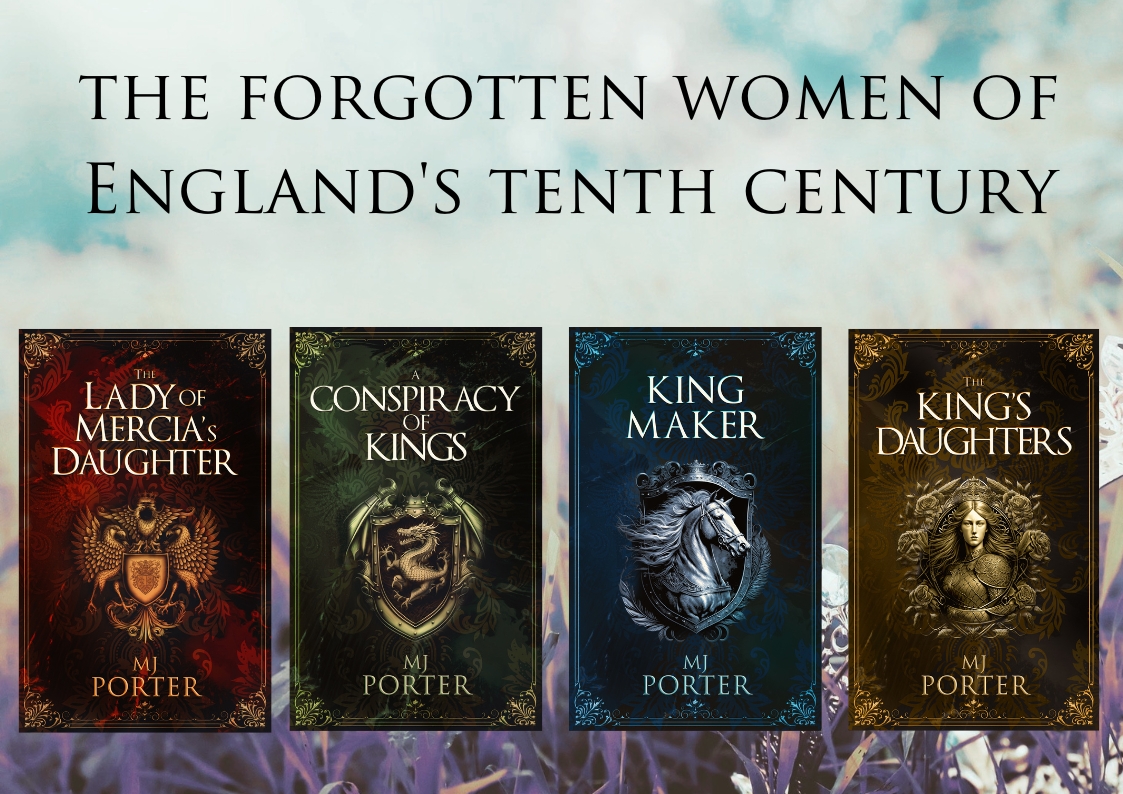
Author of Saxon historical fiction and non-fiction, 20th-century historical mysteries, and Norse-inspired historical romantasy. Book reviewer and blog host.
I thought I’d share some of my frustrations with writing about the lives of the ‘lost women’ of the tenth century.
The Tenth Century in Saxon England is often seen as heralding the triumph of Wessex to form England and to drive the Viking raiders far from England’s shores. That is both right and wrong, but it does mean that the names of the kings of the House of Wessex are well-known (comparatively speaking). The same can’t be said for the women who were wives, daughters and mothers of these kings. We can debate why this is but it doesn’t solve the problem of who these women were. For some of them, we don’t even know their names. We don’t know the name of King Athelstan’s mother, which astounds me. Equally, some of his half-sisters are quickly ‘lost’ in Continental Europe. Much of this is because they didn’t create huge dynasties to revere them after their death (apart from perhaps Eadgyth, who married Otto of the East Franks and whose sudden death deeply affected her husband). Of course, this problem is also compounded by the few surviving contemporary records.
Even those sources which do survive are not easy to access. Language barriers are a huge problem. The Anglo-Saxon Chronicles have been studied and translated into easily accessible volumes, but alas, only Ealhswith, wife of King Alfred, Æthelflæd of Mercia, her daughter Ælfwynn, and two unnamed sisters of Athelstan are actually mentioned in the ASC. We can find more names in Æthelweard’s Latin translation of the ASC known as the Chronicon but it is still not an exhaustive list of his own relatives. Æthelweard claimed descent from King Alfred’s brother, Æthelred I.
This situation doesn’t just apply to the tenth-century. The online resource, The Prosopography of Anglo-Saxon England (PASE), has a database of 33,981 male names listed for the entire period of Saxon England. Only 1460 female names are listed. As such, we know much more about the male members of Saxon England, than we do the females.
And, these women have received very little study. While there are academic books about the much better known eleventh-century queens, Emma of Normandy and Edith, the wife of Edward the Confessor, it’s not been possible to pick up a single title and learn about these lost women, aside from Elizabeth Norton’s monograph on Lady Elfrdia.
To begin with, I wished to fictionalise the life of Lady Elfrida, wife of King Edgar, thanks to the work by Elizabeth Norton. I then turned my mind to other women of the tenth century and, indeed, even to Lady Estrid, the sister of King Cnut. Time and again, I found that so little information had survived, the majority of it only a reference in relation to male members of the family, that much of their lives had to be reconstructed based on what is documented as happening at the time. There was certainly no tangible way to connect with these women, other than a possible surviving piece of embroidery which might have been stitched by King Edward the Elder’s second wife, and if not by her hand, then at her command, and which was found inside the tomb of St Cuthbert when it was opened in the early nineteenth century (1827).
I can’t help feeling this is how Æthelweard felt when he wrote his Chronicon. The passage of time has not made it any easier to uncover the names of the women, let alone their personalities.
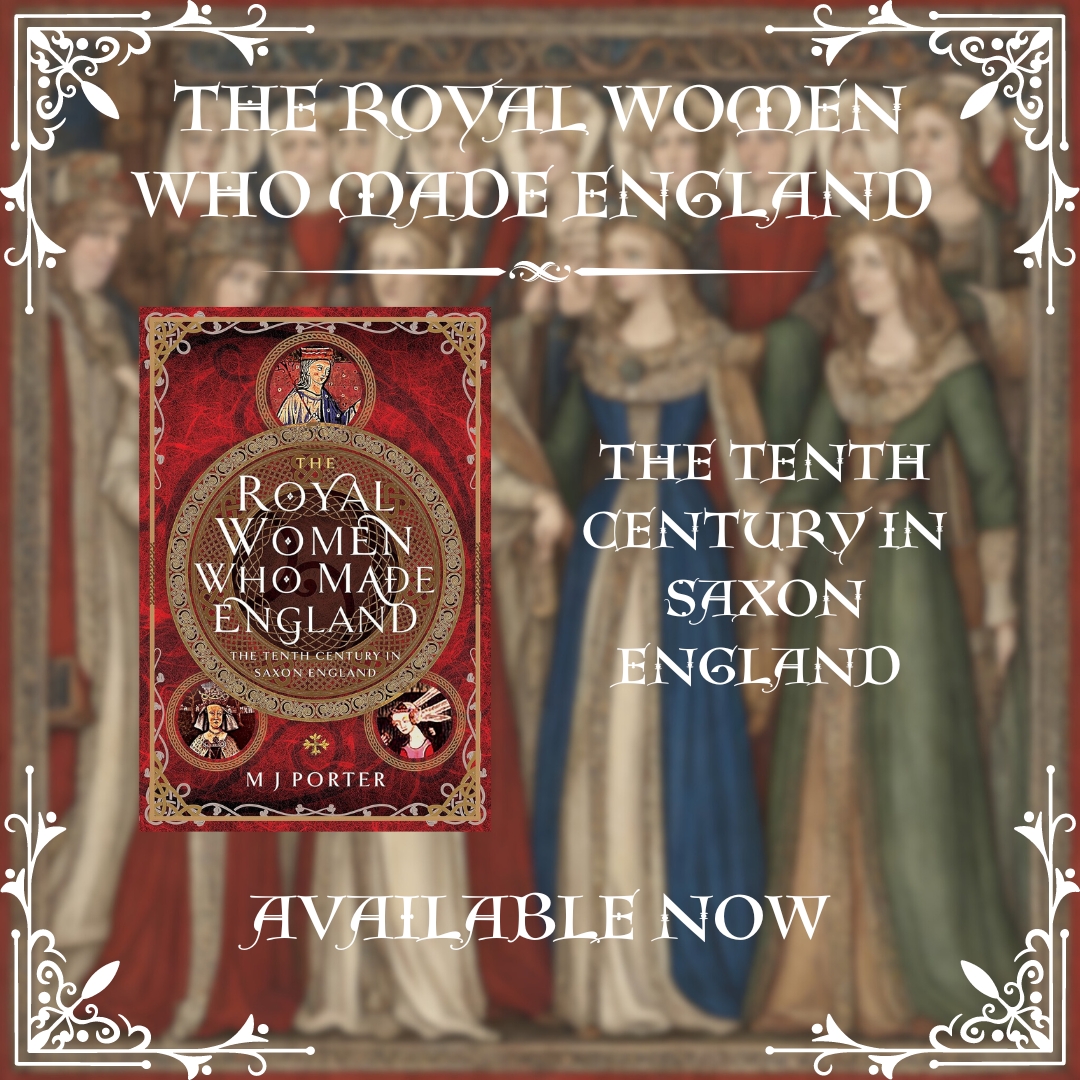
I have now written a non-fiction account of this period, and it is now available from Pen and Sword books – The Royal Women Who Made England. I hope, alongside the fictionalised accounts of their lives, that this will inspire more interest in them.
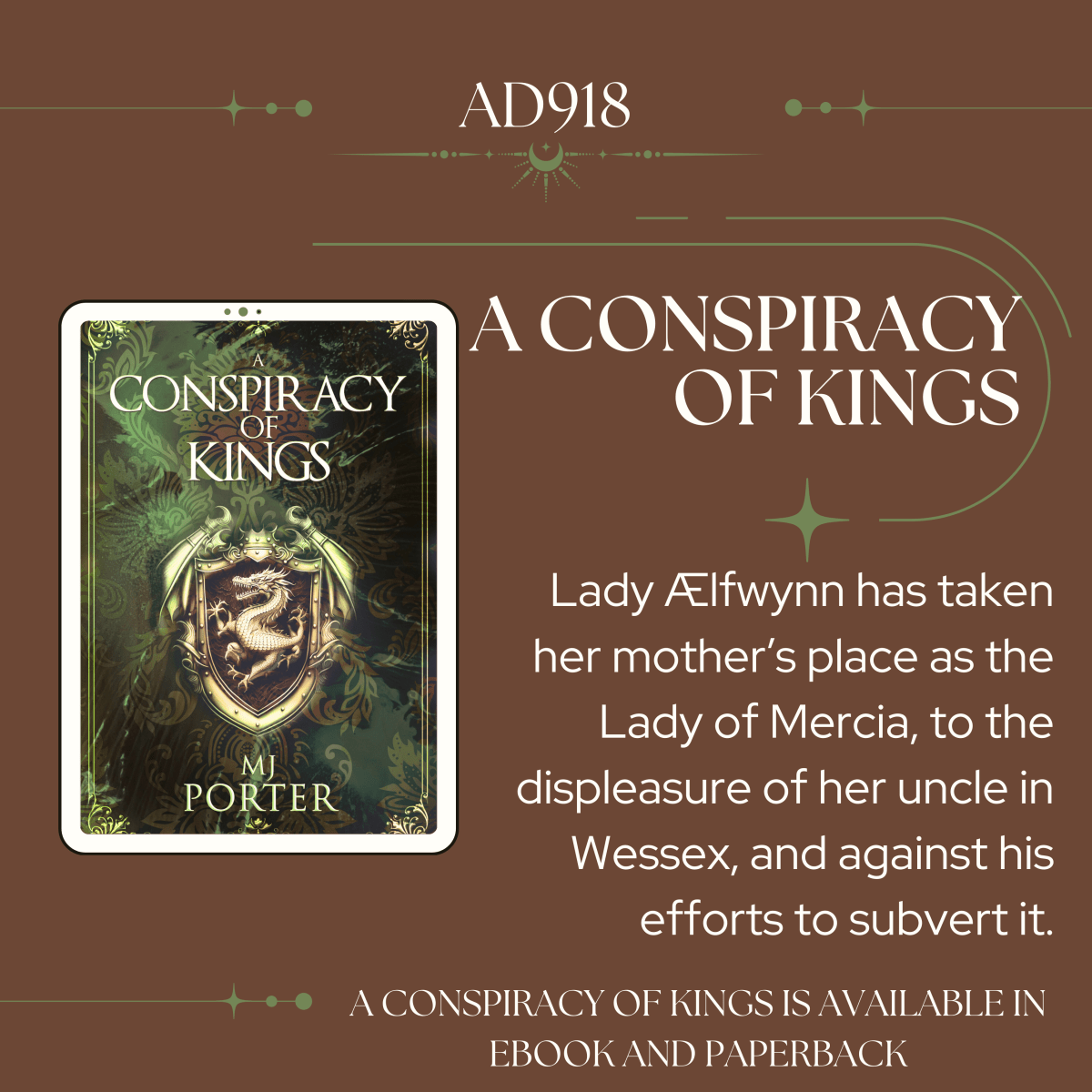
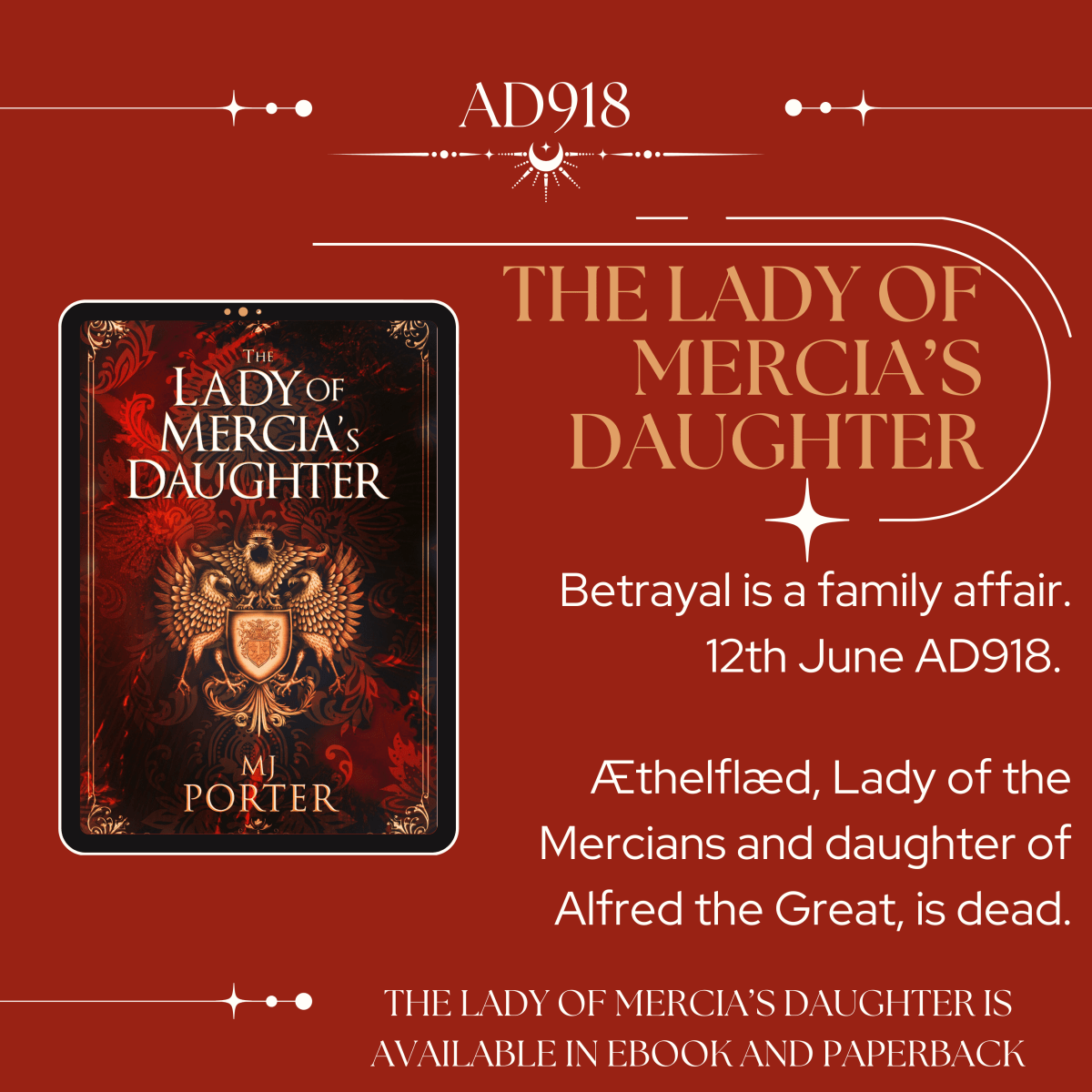
I’m reading the beginning from A Conspiracy of Kings. Hopefully, you’ll enjoy listening below. Just click on the image. This does contain spoilers if you’ve not yet read book 1, The Lady of Mercia’s Daughter.
Who was Lady Æthelflæd, and what do we know about her from the contemporary sources?
Æthelflæd,[i] said to be the oldest of the children of King Alfred, and his wife, Lady Eahlswith, was born around 866, the exact details are unknown, although the date of her death is well attested as 12 June 918.[ii]
She was married to Lord Æthelred of the Mercians at some point during the 880s, although an exact date cannot be given. The first mention of this union occurs in a charter dated to 887,[iii] although the date may not be reliable. There is also little information about who Lord Æthelred might have been, and his subsequent military successes should not be dismissed, as they often are. Lord Æthelred is assumed to have been a nobleman from Mercia, and one with enough of a reputation to secure the marriage alliance with the Wessex royal family (and it must be assumed, unrelated to her mother’s birth family, and also her father’s family through his sister’s union to Burgred).
Their marriage was a success, and yet there was only one child, a daughter, Ælfwynn, born to the union, perhaps quite soon after the marriage occurred.
During her lifetime, Æthelflæd’s name appears on fifteen surviving charters. These are a real collection, some promulgated by her father, her brother, her husband and then, in her name alone. The earliest to feature her name is S223 dated to 884×9, so between 884 and 889, which survives in two manuscripts, and discussed the building of the burh at Worcester. In her final charters, she’s the sole promulgator, her husband no doubt having already died. It is believed he died in 911. S224 and S225 date to 914 and 915. S225 names Æthelflæd as the ruler of Mercia, something which The Anglo-Saxon Chronicle mirrors in some versions.
In 912, the C text records, ‘Here, on the eve of the Invention of the Holy Cross, Æthelflæd, Lady of the Mercians came to Scergeat and built a stronghold there, and the same year, that at Bridgnorth.’[xxvii]
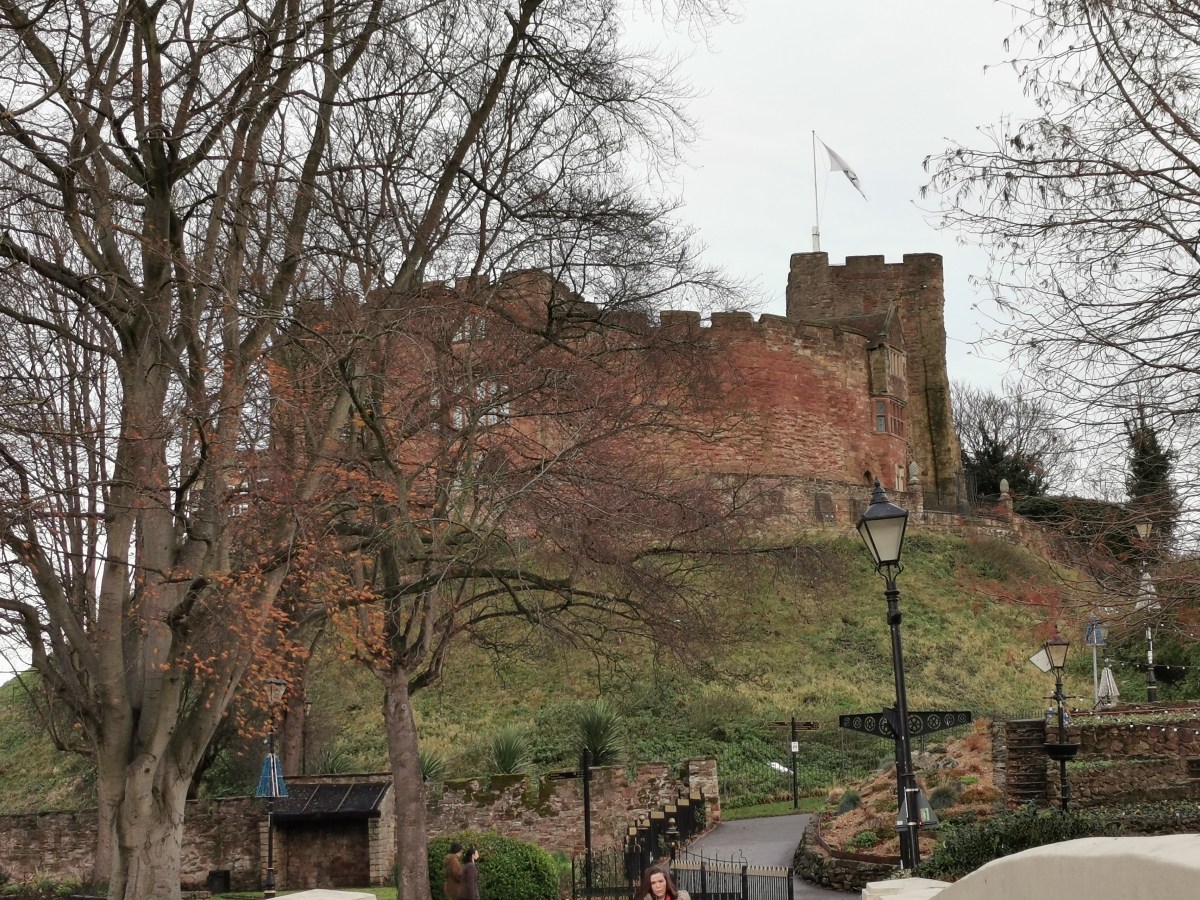
In 913, the C text further records, ‘Here, God helping, Æthelflæd, Lady of the Mercians, went with all the Mercians to Tamworth, and then built the stronghold there early in the summer, and afterwards before Lammas that at Stafford.’[xxviii]
In 917, the C text writes, ‘Here, before Lammas, God helping, Æthelflæd, Lady of the Mercians took possession of the stronghold which is called Derby, together with all that belonged to it.’[xxxi]
Æthelflæd’s death is recorded in the A and C editions of the Anglo-Saxon Chronicle and also in the E version of the Anglo-Saxon Chronicle, even if only in passing. ‘Here Æthelflæd, Lady of the Mercians, passed away.’[xxxii]
A text states: ‘and then when he (Edward) was settled in the seat there, his sister Æthelflæd at Tamworth, died 12 days before midsummer … and all the nation of the land of Mercia which was earlier subject to Æthelflæd turned to him.’
The C text of 918 offers:
Here in the early part of this year, with God’s help, she [Æthelflæd] peaceably got in her control the stronghold at Leicester and the most part of the raiding-armies that belonged to it were subjected. And also the York-folk had promised her – and some of them granted so by pledge, some confirmed with oaths – that they would be at her disposition. But very quickly after they had done that, she departed, twelve days before midsummer, inside Tamworth, the eighth year that she held control of Mercia, with rightful lordship; and her body lies inside Gloucester in the east side-chapel of St Peter’s Church.[xxxiii]
It seems highly probable that Æthelflæd’s death, when it came, was unexpected, occurring in the middle of an advance into the Danelaw and the Five Boroughs (Derby, Nottingham, Lincoln, Stamford, Leicester). It was left to her daughter, and also her brother, to continue her work, and you can read their story in The Lady of Mercia’s Daughter and A Conspiracy of Kings.
[xviii] Baker, N. and Holt, R. ‘The city of Worcester in the tenth century’, in St Oswald of Worcester: Life and InfluenceBrooks, N. and Cubitt, C. ed, (Leicester University Press, 1996), pp.134–5
[xix] Sawyer, P.H. (ed.), Anglo-Saxon charters: An annotated list and bibliography, rev. Kelly, S.E., Rushforth, R., (2022). http://www.esawyer.org.uk/, S1446
[xxi] Sawyer, P.H. (ed.), Anglo-Saxon charters: An annotated list and bibliography, rev. Kelly, S.E., Rushforth, R., (2022). http://www.esawyer.org.uk/, S1282
[xxii] Hart, C.R. The Early Charters of Northern England and the North Midlands (Leicester University Press, 1975), p.102 (100)
[xxvi] Swanton, M. ed. and trans. The Anglo-Saxon Chronicles, (Orion Publishing Group, 2000) Ibid., p.94
[xxxv] See Stafford, P. After Alfred. Anglo-Saxon Chronicles and Chroniclers 900–1150, (Oxford University Press, 2020), for a full discussion of the Æthelflæd and Edward Chronicles.
They sent three hundred warriors to kill one man. It wasn’t enough.
Mercia lies broken but not beaten, her alliance with Wessex in tatters. Coelwulf, a fierce and bloody warrior, hears whispers that Mercia has been betrayed from his home in the west. He fears no man, especially not the Vikings sent to hunt him down.
To discover the truth of the rumours he hears, Coelwulf must travel to the heart of Mercia, and what he finds there will determine the fate of Mercia, as well as his own.
Here’s an excerpt
AD874
I taste it on my lips, and over the salt of my sweat.
And I scowl. It’s not a flavour I wish to get used to. All the same, I know what it is without a second thought.
My seax glistens slickly in the dull light, the gleaming claret reminding me more of an exotic wine from the south than the lifeblood it truly is. The double headed-eagle impeccably depicted on the handle seems to wink at me, as the eyes fill with the ruby mixture.
Not that I focus on it for more than the time it takes me to blink.
This horde feels as though it’ll never stop, and I’m determined to end the lives of as many of them as possible. Such slaughter doesn’t bring me joy, but this is my skill. I wield it because I must.
My weapon, so sharp it cuts through byrnies as though they’re no more than spider webs, is busy today.
They come against my force, as small as it is, and they mean to annihilate us. But we will not go without making our sacrifices to their god of war.
My seax sweeps effortlessly along the abruptly exposed throat of my enemy, the realisation of what’s befallen him only reaching his eyes as he falls to the ground. I step over him, already sighting my next enemy.
This one swirls an axe in his left hand, as I reveal my bloodied teeth. His entire body recoils, almost a backward step. Before he can consider his move, I’ve sliced through his belly, the gut threatening to spill at my feet. I dismiss him and move onto the next man.
The ground beneath my feet squelches with each step, slick, more like a flooded river than the solid ground it should be.
It’s awash with the dead and wounded, the long shield wall that tried to defeat us long since disintegrated to small spots of desperate one to one fighting. This is my favourite part of any battle.
I turn, noting the angle of the sun, the brush of the breeze against my slick body, breathing deeply through my nose. This is not my first battle. Far from it.
I hear the cries of those boys who thought themselves men, and equally of those men who’ve found they are but boys when their lives are threatened.
I scorn them. They’re not worthy of my attention.
Quickly, I reach for my weapons belt, keen to know that all is where it should be. My hand brushes over the sharpened edges and deadly blades that make a home there. For now.
Satisfied, I pick my next target, a tight knot of men fighting not five steps away, and move forward.
I don’t hurry. Not this time. Neither, as I’ve seen others do, do I check the weight of my weapon, or test the strength of my arm as I consider my next move. Instinctively I know that all is well.
They’ll not fail me. They haven’t before.
If you’ve not yet discovered The Mercian Kingdom: The Ninth Century series, then you’ve in for a treat, as long as you’re not easily offended by foul language and violence – and if you are, there are Cleaner versions available on Amazon Kindle.
If you’ve been reading the Icel books, then you will find a friend in this series, set in the 870s in a Mercia under assault by the Viking raiders.
And don’t forget to check out the short story collection, Coelwulf’s Company, tales from before The Last King.
The Last King books are available in ebook, paperback and hardback, and The Last King (book 1 ) is also available in audio.
On the 27th October 939, the death of Athelstan, the first king of the English, at Gloucester. The symmetry of the death of King Athelstan and King Alfred, his grandfather, is noted in the Anglo-Saxon Chronicle A text, ‘40 years all but a day after King Alfred passed away’.[i]
[i] Swanton, M. ed. and trans. The Anglo-Saxon Chronicles, (Orion Publishing Group, 2000), p.110
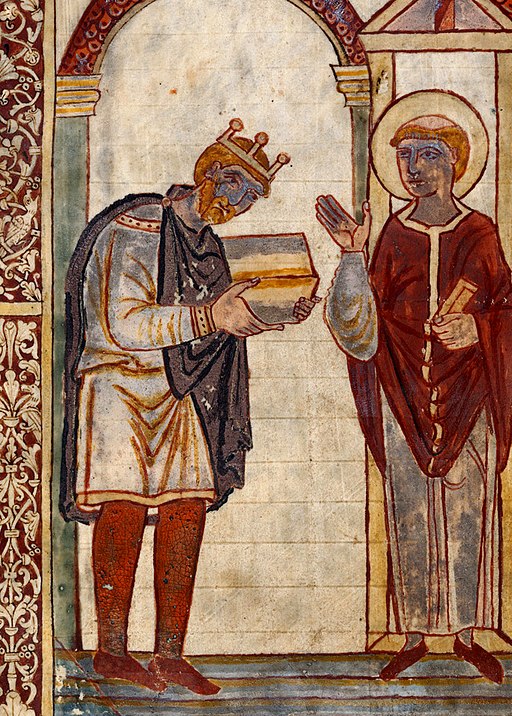
We don’t know for sure who Athelstan’s mother was, it’s believed she might have been called Ecgwynn. We don’t know, for certain, the name of his full sister, but it’s believed she might have been named Edith or Ecgwynn after her mother. What is known is that his father was Edward, the son of King Alfred, and known to us today as Edward the Elder. Athelstan is rare in that he is one of only two Saxon kings for whom a contemporary image is available. (The other is Edgar, who would have been his nephew)
It must be supposed that Athelstan was born sometime in the late 890s. And according to a later source written by William of Malmesbury in the 1100s (so over two hundred years later), was raised at the court of his aunt, Æthelflæd of Mercia. David Dumville has questioned the truth of this, but to many, this has simply become accepted as fact.
‘he [Alfred] arranged for the boy’s education at the court of his daughter, Æthelflæd and Æthelred his son in law, where he was brought up with great care by his aunt and the eminent ealdorman for the throne that seemed to await him.’[i]
[i] Mynors, R.A.B. ed and trans, completed by Thomson, R.M. and Winterbottom, M. Gesta Regvm Anglorvm, The History of the English Kings, William of Malmesbury, (Clarendon Press, 1998), p.211 Book II.133
Why then might this have happened? Edward became king on the death of his father, Alfred, and either remarried at that time, or just before. Edward’s second wife (if indeed, he was actually married to Athelstan’s mother, which again, some doubt), Lady Ælfflæd is believed to have been the daughter of an ealdorman and produced a hefty number of children for Edward. Perhaps then, Athelstan and his unnamed sister, were an unwelcome reminder of the king’s first wife, or perhaps, as has been suggested, Alfred intended for Athelstan to succeed in Mercia after the death of Æthelflæd, and her husband, Æthelred, for that union produced one child, a daughter named Ælfwynn.
Frontispiece of Bede’s Life of St Cuthbert, showing King Æthelstan (924–39) presenting a copy of the book to the saint himself. 29.2 x 20cm (11 1/2 x 7 7/8″). Originally from MS 183, f.1v at Corpus Christi College, Cambridge. (Wikimedia Commons)
What is known is that following the death of King Edward in 924, Athelstan was acknowledged as the king of Mercia; his half-brother, Ælfweard was proclaimed king in Wessex for a very short period.
‘Here King Edward died at Farndon in Mercia; and very soon, 16 days after, his son Ælfweard died at Oxford; and their bodies lie at Winchester. And Athelstan was chosen as king by the Mercians and consecrated at Kingston.’[i]
[i] Swanton, M. trans and edit The Anglo-Saxon Chronicles, (Orion Publishing Group, 2000), D text p.105
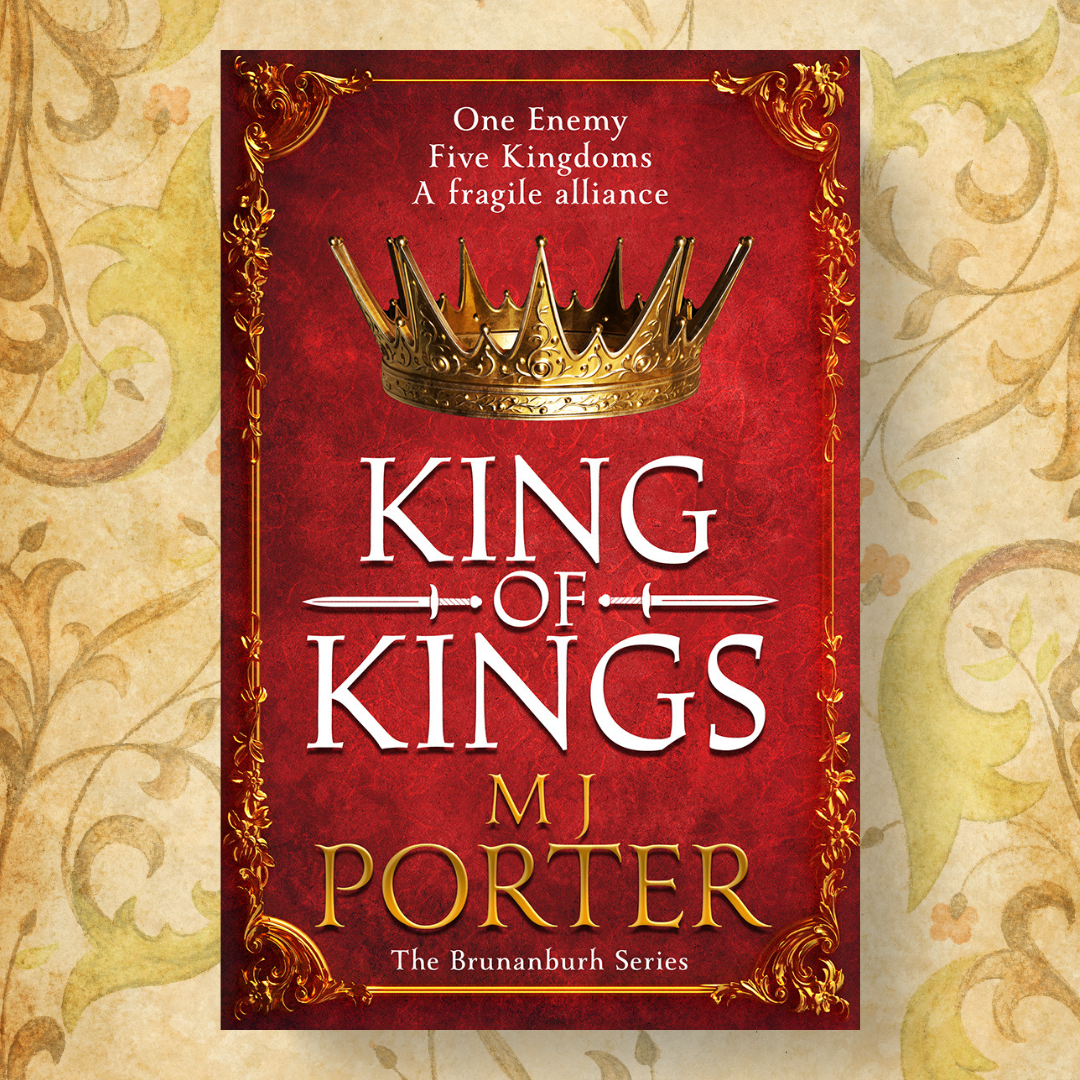
Design by Boldwood Books
But Ælfweard’s reign was short-lived and Athelstan was eventually proclaimed king of Wessex, as well as Mercia, and then, in time, as the king of the English, although his acceptance by the Wessex witan has been seen as very grudgingly given.
Whatever the exact details of the beginning of his kingship, Athelstan was consecrated in September 925, and the words of the ceremony are believed to survive (there is an argument as to whether the ceremony was written for his father or for him), and during the ceremony Athelstan was proclaimed as king not with the placement of a warrior helm on his head, but instead, with a crown, the first known occurrence of this in England.
Here’s my reimagining of the ceremony in King of Kings,
Athelstan, Kingston upon Thames, September AD925
‘This means that only a year after my father’s untimely death, the kingdoms of Mercia, those parts of the East Anglian kingdom that my father lately reclaimed, Wessex and Kent, are reunited again under one ruler. The Saxons, or rather, the English, have just one king. And this is my moment of divine glory, when, before the men and women of the Mercian and Wessex witan, I’ll be proclaimed as king over all.
A prayer is intoned by the archbishop of Canterbury, Athelm, appealing to God to endow me with the qualities of the Old Testament kings: Abraham, Moses, Joshua, David and Solomon. As such, I must be faithful, meek, and full of fortitude and humility while also possessing wisdom. I hope I’ll live up to these lofty expectations.
I’m anointed with the holy oil and then given a thick gold ring with a flashing ruby to prove that I accept my role as protector of the one true faith. A finely balanced sword is placed in my hands, the work of a master blacksmith, with which I’m to defend widows and orphans and through which I can restore things left desolated by my foes, and my foes are the Norse.
Further, I’m given a golden sceptre, fashioned from gold as mellow as the sunset, with which to protect the Holy Church, and a silver rod to help me understand how to soothe the righteous and terrify the reprobate, help any who stray from the Church’s teachings and welcome back any who have fallen outside the laws of the Church.
With each item added to my person, I feel the weight of kingship settle on me more fully. I may have been the king of Mercia for over a year now, the king of Wessex and Kent for slightly less time, but this is the confirmation of all I’ve done before and all I’ll be in the future.
It’s a responsibility I’m gratified to take, but a responsibility all the same. From this day forward, every decision I make, no matter how trivial, will impact someone I now rule over.
*******
And I? I’m the king, as my archbishop, Athelm of Canterbury, proclaims to rousing cheers from all within the heavily decorated church at Kingston upon Thames, a place just inside the boundaries of Wessex but not far from Mercia. It’s festooned with bright flowers and all the wealth this church owns. Gold and silver glitter from every recess, reflecting the glow of the hundreds of candles.
I’m more than my father, Edward, was and I’m more than my grandfather, Alfred, was. I’m the king of a people, not a petty kingdom, or two petty kingdoms, with Kent and the kingdom of the East Angles attached.
It’s done. I’m the anointed king of the English, the first to own such a title. I’ll protect my united kingdom, and with God’s wishes, I’ll extend its boundaries yet further, clawing back the land from the Five Boroughs and bringing the kingdom of the Northumbrians, and even the independent realm of Bamburgh, under my command.’
And Athelstan’s life is one of vast events. His reach extended far beyond the confines of England, or even the British Isles, his step-sisters making political unions in East and West Frankia, and his nephew becoming king of the West Franks. But he is perhaps best known for his victory at Brunanburh, over a coalition of the Scots and the Dublin Norse, and it is the tale of this great battle, and the events both before and afterwards, that I retell in the Brunanburh Series.
His death, on 27th October 939, can arguably be stated to have reset the gains made after Brunanburh, and set the creation of ‘England’ back, as his much younger step-brother battled to hold onto his brother’s gains, but for now, it is Athelstan and his triumphs which much be remembered, and not what happened after his untimely death.
Can the Norse and the Scots exact their revenge over the mighty King Athelstan of the English?
AD937
After the slaughter field of Brunanburh, a defeated Olaf Gothfrithson of the Dublin Norse and Constantin of the Scots narrowly escaped with their lives. In their kingdoms, failure has left them demoralised and weak.
Olaf licks his wounds in Dublin, whilst Constantin and the Welsh kingdoms who defied King Athelstan, are once more forced to bend the knee. As Athelstan’s reputation grows stronger day by day, their need to exact revenge on the overmighty and triumphant Athelstan has never been greater.
Olaf sets his sights on reclaiming the lost kingdom of Jorvik only for tragedy to strike at the heart of England and a reluctant new King, Edmund steps in the fray.
While England mourns the death of their warrior King, her enemies gather on her borders and England stands alone against the might of the Norse, Welsh and Scots.
Can the new King be victorious and banish her enemies once and for all or will England, and its king lose all that’s been gained and succumb to a new pretender?
I know I shared that many of my audiobooks are now available on Spotify, well now it’s even better for Premium Subscribers in the UK and Australia, as you can listen to up to 15 hours of audiobooks each month, included in your subscription. That’s enough hours to listen to any of my audios in their entirety. (I have been a premium subscriber for more years than I care to remember – we have a family subscription which is great until one of us forgets their log-in and logs-in using the wrong persons details:).
I know it’s all quite new at the moment, and therefore, not all of the titles are included – I’ve also noticed that not all of my titles are showing under my profile, and I’m trying to correct this. But, you can find all of my audios from Boldwood Books on Spotify, as well as Warrior King. But you will need to search for Son of Mercia, Wolf of Mercia, Kings of War and Warrior King separately until I can get them attached to my profile.
I understand that Spotify US will be following soon.
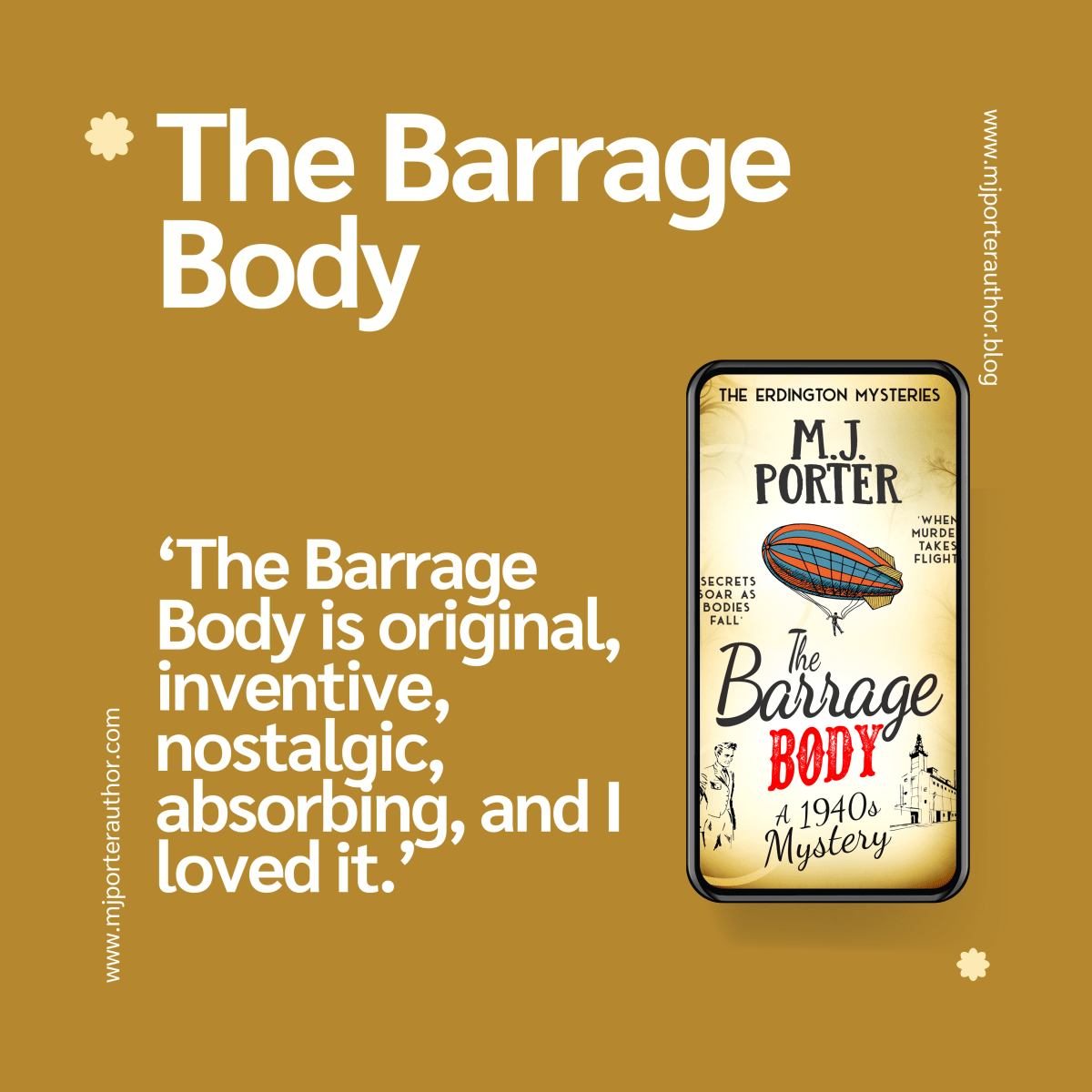
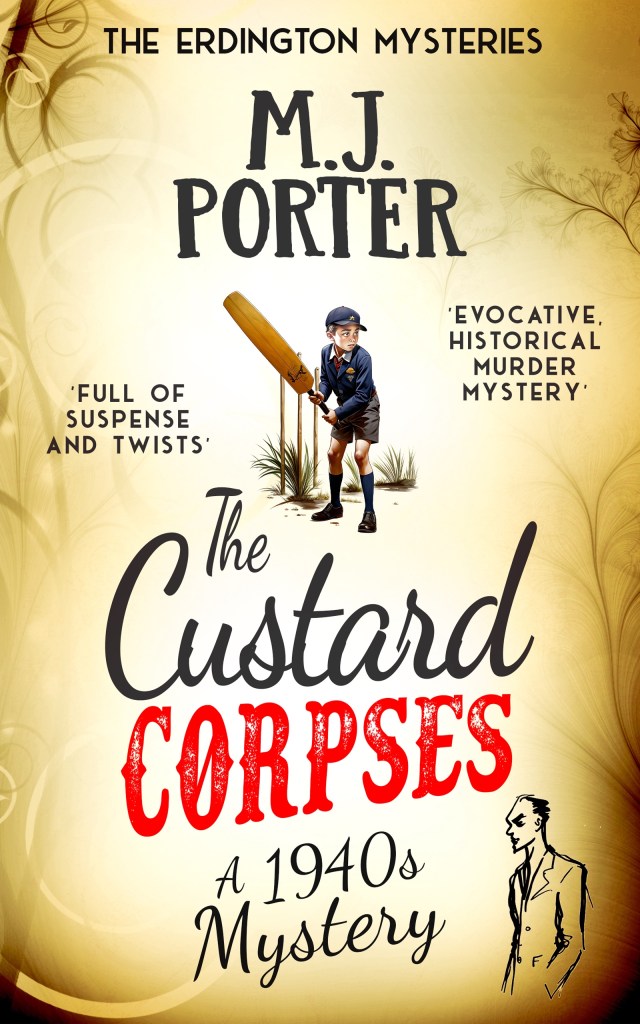
With a snazzy new cover, and with its sibling to arrive in the coming months, I’ve taken the decision to move The Custard Corpses to a wider audience in ebook format, so readers on Kobo, Apple, Nook and other retailers accessed via the Ingram distribution option, as well as Amazon, can now enjoy my twentieth-century mystery, set in the 1940s.
Here’s the blurb
A delicious 1940s mystery.
Birmingham, England, 1943.
While the whine of the air raid sirens might no longer be rousing him from bed every night, a two-decade-old unsolved murder case will ensure that Chief Inspector Mason of Erdington Police Station is about to suffer more sleepless nights.
Young Robert McFarlane’s body was found outside the local church hall on 30th September 1923. But, his cause of death was drowning, and he’d been missing for three days before his body was found. No one was ever arrested for the crime. No answers could ever be given to the grieving family. The unsolved case has haunted Mason ever since.
But, the chance discovery of another victim, with worrying parallels, sets Mason, and his constable, O’Rourke, on a journey that will take them back over twenty-five years, the chance to finally solve the case, while all around them the uncertainty of war continues, impossible to ignore.
Or you can buy paperback and hardback copies directly from me. Visit my SumUp store.
If you’ve not yet tried one of my ‘modern’ mysteries, then check out my series page on the blog to discover why I decided to write something so very different to everything I’ve ever written before.
For the first time ever, I’m on a podcast. Come and listen to me talk to the fabulous Jenny Wheeler about all things Saxon, and just what I really think of the term ‘the Dark Ages.’
Listen on The Joys of Binge Reading website, where you can also find links and a transcript of the podcast, or via Spotify below, and be sure to check out the other fab authors Jenny has featured on the podcast.
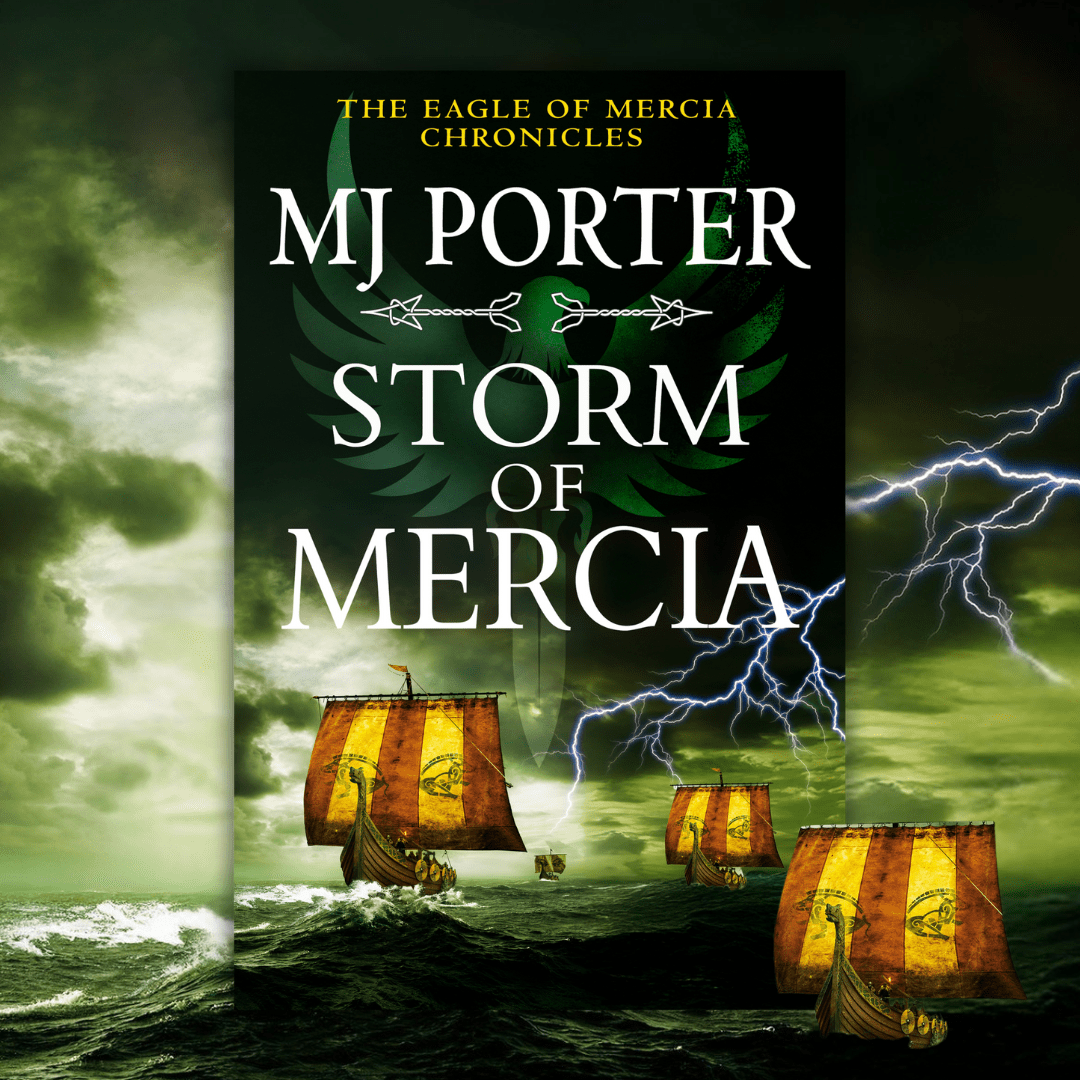
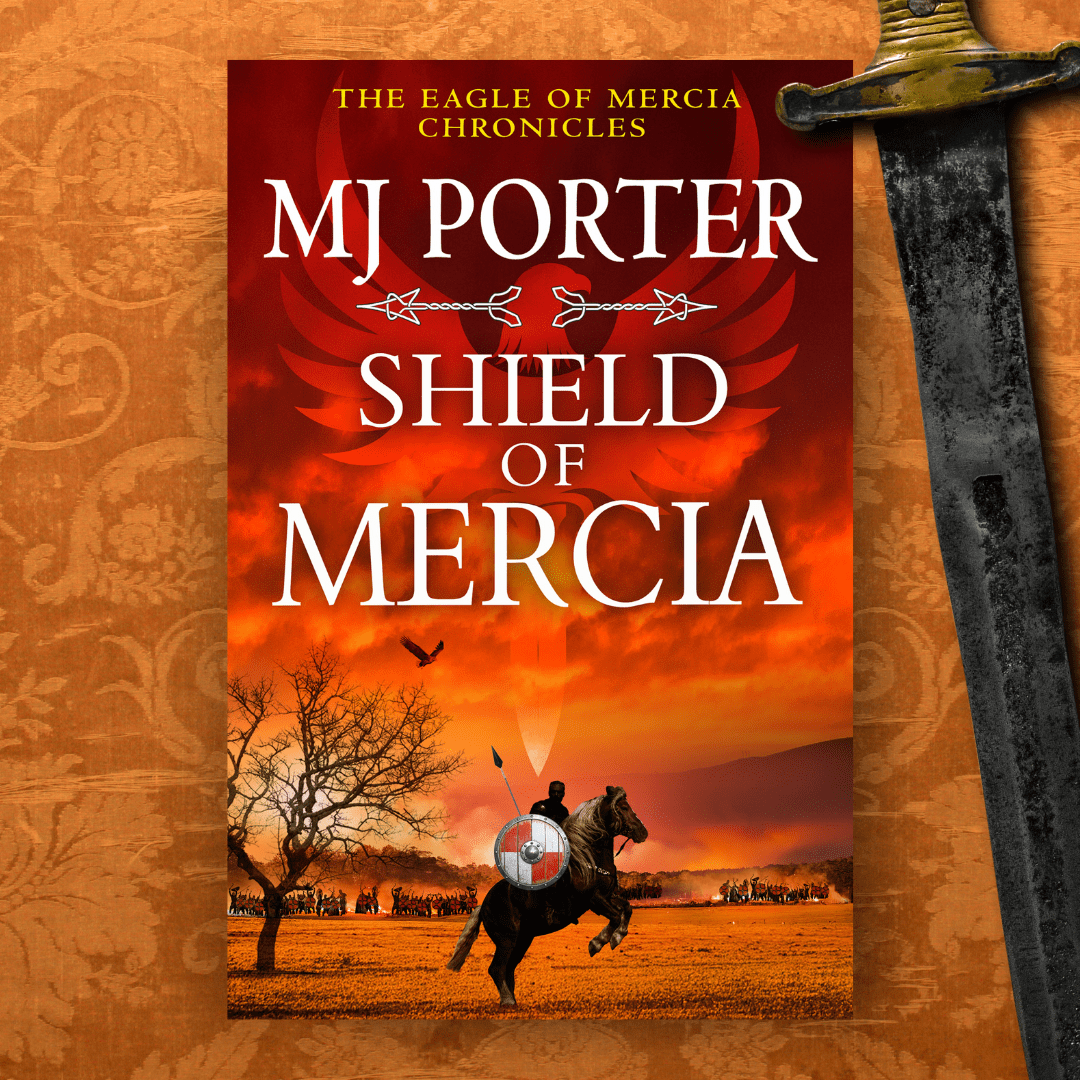
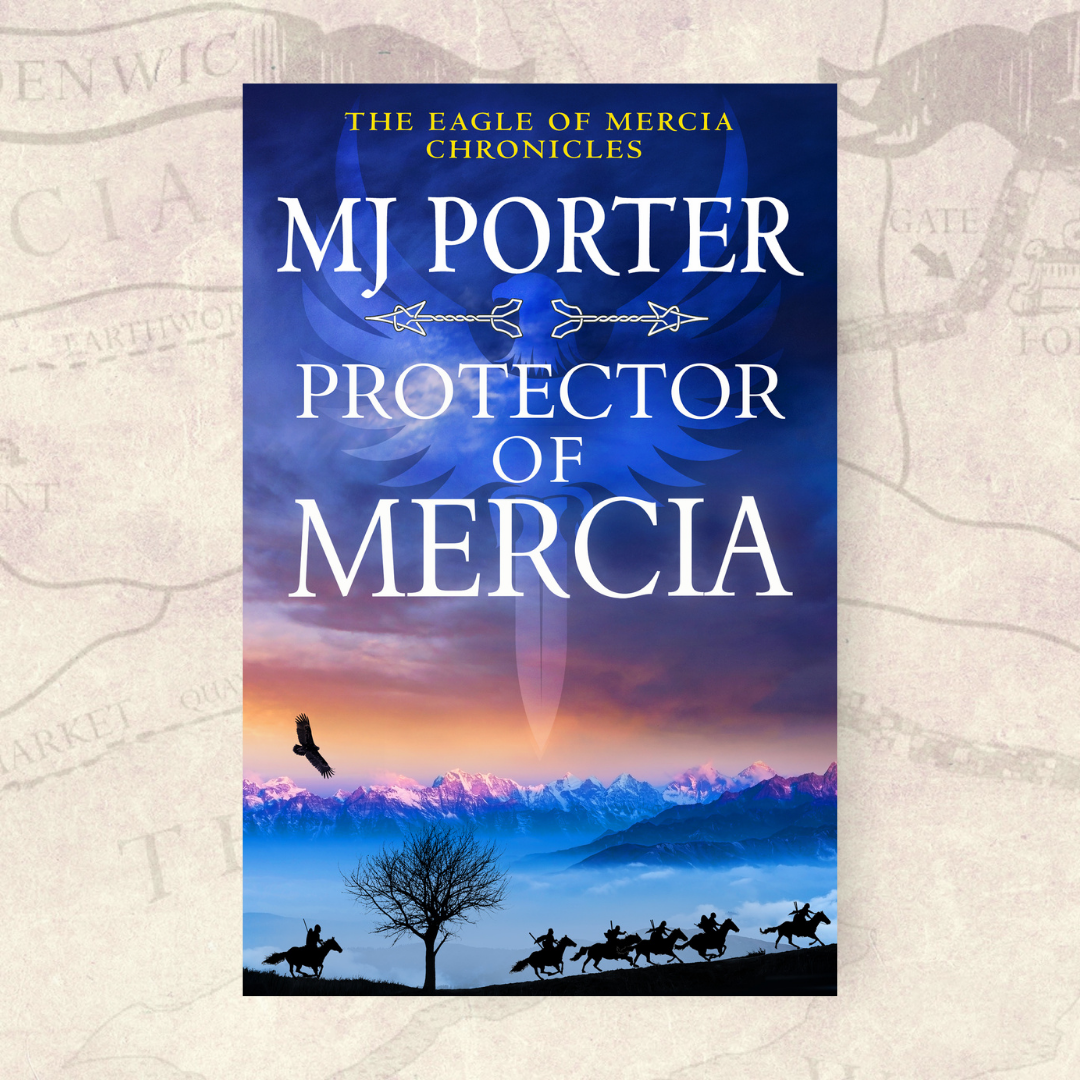
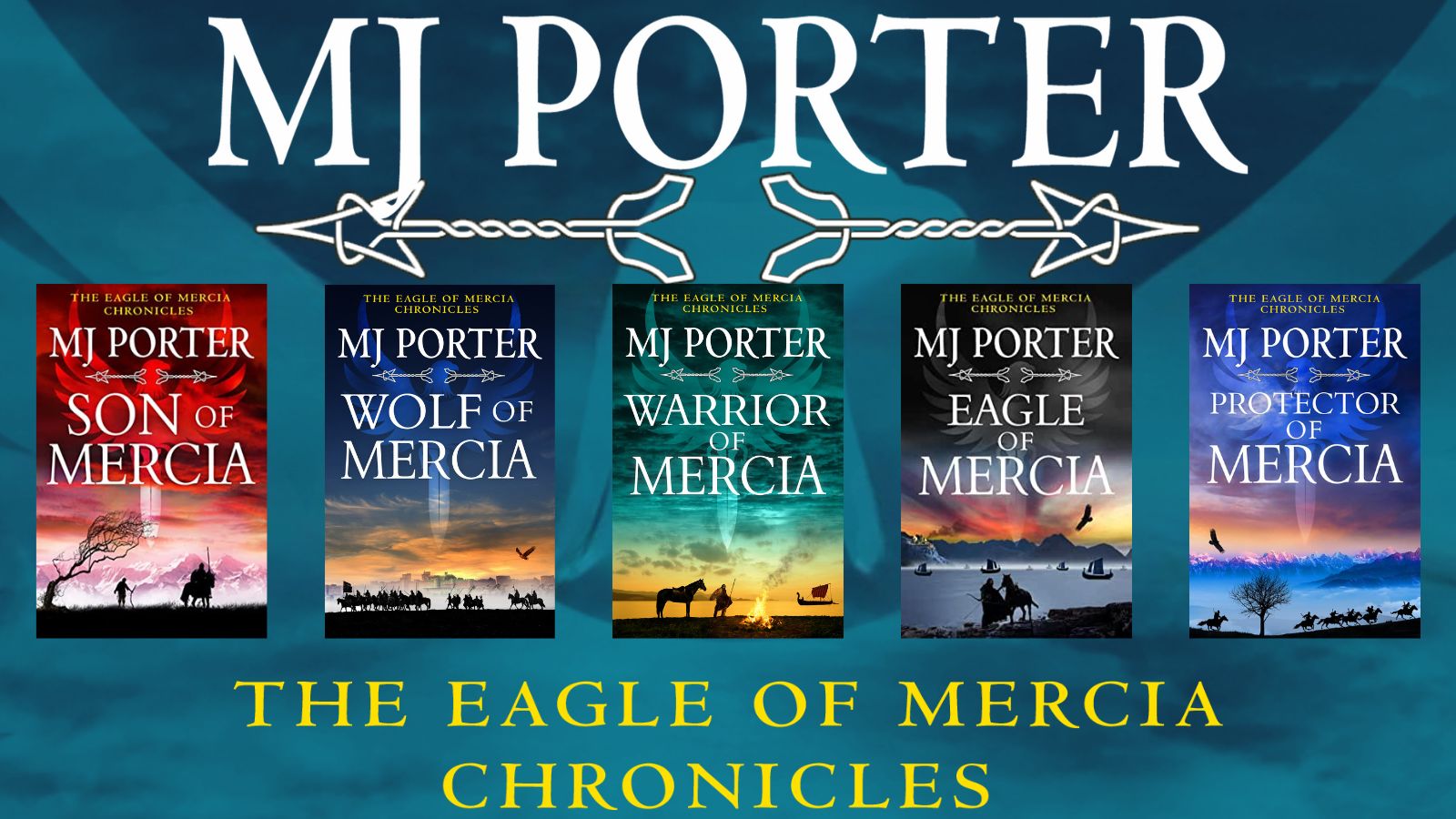
Welcome to my release day post for Protector of Mercia. I’m going to talk about the kings who preceded all the chaos of the series.
Readers of the Eagle of Mercia Chronicles will have encountered the names of kings Coenwulf and Coelwulf, although the kings in the first book, Son of Mercia, ruled after both Coenwulf and Coelwulf. But, having written about Coelwulf II in the Mercian Ninth Century books – which feature an older, and wiser Icel, I was eager to return to an equally unsettled period in Mercia’s history. And this, helped by the fact that Icel would just have been old enough at this period to be involved, very much helped set the scene. However, the aftermath of the reigns of these two men, brothers, are very much at the heart of political affairs during the Eagle of Mercia Chronicles.
So, who were Coenwulf and Coelwulf or Ceolwulf?
Coenwulf, the first and only of his name, was king of Mercia from 796 until his death in 821. He claimed descent, not from the previous king Offa (of Offa’s Dyke fame), and his son, but instead from Pybba, who is believed to have been the father of both Kings Penda and Eowa (read about them in my Gods and Kings trilogy) who ruled in the seventh century. You might have heard of Penda. Although the connection isn’t sound, he is often referenced when talking about the Staffordshire Hoard.
It does seem as though the crisis of the late 820s/830s and the slow decline of Mercian power have overshadowed all that King Coenwulf achieved, not helped by the fact that his son, who was to succeed him, died before his father (if he existed at all), so that on Coenwulf’s death, the kingship passed to his brother, Coelwulf, and he in turn was overthrown at some point in 823-826. The brother kings seem to have shared another brother as well, who may have been king of Kent, after Mercia annexed the kingdom to its own domain.
But Coenwulf was a successful ruler. He claimed the kingship after the death of Offa’s son, Ecgfrith, not long after his father’s death, (Offa is said to have been keen to eliminate all rivals to the kingship which is why, when his son died, the kingship had to pass to a more obscure branch of the ruling line), and while he suffered reverses in Kent and the kingdom of the East Angles, he does seem to have exercised control in both places, and was also aggressive against the Welsh kingdoms throughout his reign. Mercia, at this time, was NOT confined to the current English Midlands, it was a much vaster kingdom although it’s firm boundaries are difficult to establish.
Map design by Flintlock Covers
While the Anglo-Saxon Chronicle is sparse about our brother kings, that didn’t stop the later Norman writers, embellishing the story of them. But first, what do we hear about these kings from the Anglo-Saxon Chronicle?
‘Ceolwulf, king of Mercia, ravaged over the inhabitants of Kent as far as the Marsh, and [they] captured Præn, their king, and led him bound into Mercia.’ 796 [798[ (A)
´Here Coenwulf, king of Mercia, passed away, and Coelwulf succeeded to the kingdom.’ 819 [821] (A)
´Here Ceolwulf was deprived of his kingdom.’ 821 [823] (A)
´And the same year King Egbert and King Beornwulf fought at Ellendynm and Egbert took the victory; and a great slaughter was made there…. And that year the East Angles killed Beornwulf, king of the Mercians.’ 823 [825[ (A)
´Here Ludeca, king of Mercia, was killed, and his 5 ealdormen with him, and Wiglaf succeeded to the kingdom.’ 825 [827] (A)
´Here Wiglaf obtained the kingdom of Mercia again.’ 828 [830] (A)
Henry of Huntingdon, one of the Anglo-Norman author, writes of Cenwulf, our Coenwulf
‘Not long afterwards, Cenwulf, king of Mercia, beating and ravaging his way through the Kentish province, captured their king Præn, who could not match his strength and was lurking in the coverts and isolated places, and victoriously took him back in chains.’ p.259
Coenwulf’s brother, Coelwulf, succeeded him, but not for long, until he was usurped. Henry of Huntingdon in summarising affairs in Mercia adds.
‘Cenwulf reigned peacefully for twenty-six years, and died the common death.
Ceolwulf possessed the kingdom for three years, which the fierce Beornwulf then wrested from him.’ p.271
The Chronicle of John of Worcester adds similar details.
‘[821] Ceolwulf, king of the Mercians, was driven from his kingdom, and Beornwulf was raised to the kingship.’p241
There is some confusion regarding children born to either brother, and indeed, much that is known of that later Coelwulf II stems from the fact he shared a name with one of the two brothers, and as such, his connection with that ruling family can be supposed by experts in the field (not me). It appears that Coenwulf had a son and a daughter, the daughter well known as an abbess at a local nunnery, and possibly, two wives. King Coelwulf is known to have had one daughter, Ælflæd, who married Wigmund, the son of King Wiglaf. But there is a distinct lack of information regarding these individuals. We don’t know when the usurped King Coelwulf died. We don’t know when his daughter died, for certain, and obviously, other children are unknown.
The Chronicle of John of Worcester, another Anglo-Norman writer, informs us that.
‘[819] St Cenwulf, king of the Mercians, after a life devoted to good deeds, passed over to the eternal blessedness which is in heaven, and left his 7-year-old son St Kenelm heir of his realm. But when a few months had passed, by the treachery of his own sister Cwenthryth, whose cruel spirit had been roused by an awful lust for power, he was secretly done to death with cruel outrage by Æscberht, his most bloodthirsty tutor, in the shade of a thorn tree in a deserted wood. But he who was slain with heaven alone as witness, was later revealed by heaven’s witness through a column of light. Kenelm’s head was cut off, milk-white in the beauty and innocence of birth, and from it a milky dove with golden wings soared to heaven. After his happy martyrdom, Ceolwulf received the kingdom of the Mercians.’ P239-241
Henry of Huntington adds. ‘At Winchcombe you will read of the secret martyrdom of Kenelm. He was the son of Cenwulf, the Mercia king, who died in the year of grace 819, having reigned for twenty-four years. The martyrdom of his son Kenelm was revealed from heaven to Pope Silvester II at Rome.’p691
However, Coenwulf and Coelwulf I do seem to have enjoyed military successes. Coelwulf’s attacks on Wales are mentioned in the Annales Cambriae.
‘818 Cenwulf [Coenwulf] devastated the Dyfed regio.
822 The fortress of Degannwy is destroyed by the Saxons and they took the kingdom of Powys into their own control.’ p48
The Anglo-Saxon Chronicle is not helpful about the reigns of either brother, other than referencing their accession and either death or deposing. We don’t know the date that Coelwulf I died, although he clearly lived after being deposed.
Increasingly, scholarship is looking at Mercia during this period – if the answers can’t be found in the surviving written sources they can be found elsewhere. When King Alfred began his revival in education, many of the scholars he turned to were Mercians, highlighting Mercia’s accomplishments in all spheres – and the correlation has been made that the same happened in Mercia after the end of Northumbria’s Golden Age. There is also a wealth of Mercian sculpture dated to this period which hints at the power and influence of the kingdom, perhaps even of artistic centres at the heart of certain designs.
This doesn’t yet help us truly appreciate the power these kings could wield – so often overshadowed by what happened after their reigns, but it certainly shows we should be wary of accepting this absence in the written sources as indicative of their failure. Indeed, we should be wary of any Wessex-centred source from later in the same century (the Anglo-Saxon Chronicle) that might not only suffer from Wessex-bias, but may also reveal a desire to overshadow Mercia in order to proclaim Wessex’s kings as the more powerful. This is something that is certainly at the heart of the revival in interest in the descendant of these two kings, King Coelwulf II, or Mercia’s last king, written about as a ‘foolish king’s thegn’ in the Anglo-Saxon Chronicle but clearly very far from being that.
It’s intriguing to realise that our Norman writers only had access to much the same information that we do in order to offer an account of what was happening in Mercia at this time. But they do seem to have enjoyed embellishing the words of the Anglo-Saxon Chronicle, and while arguments are often made that they may have had access to local sources not written about in the Anglo-Saxon Chronicle, especially for John of Worcester, who wrote at one of the most important Mercian centres, until their words can be entirely unpicked, we must be wary of using their additions as historical ‘fact,’ in much the same way that we need to be wary of the Anglo-Saxon Chronicle(s).
Quotations are taken from the following translations. Darlington, R.R. & McGurk, P. ed. The Chronicle of John of Worcester Volume II The Annals from 450 to 1066(Clarendon Press, 1995). Greenway, D. ed. and trans. Historia Anglorum, The History of the English People, Henry of Huntingdon, (Clarendon Press, 1996. Morris’ translation of Nennius and the Welsh Annals and Swanton’s The Anglo-Saxon Chronicles.
If you’ve not yet started The Eagle of Mercia Chronicles, then check out this introduction to the series.
Sign up to my monthly newsletter to learn more about my writing journey, new releases and special offers, and receive a free short story collection featuring many stories of Saxon England.