Author of Saxon historical fiction and non-fiction, 20th-century historical mysteries, and Norse-inspired historical romantasy. Book reviewer and blog host.
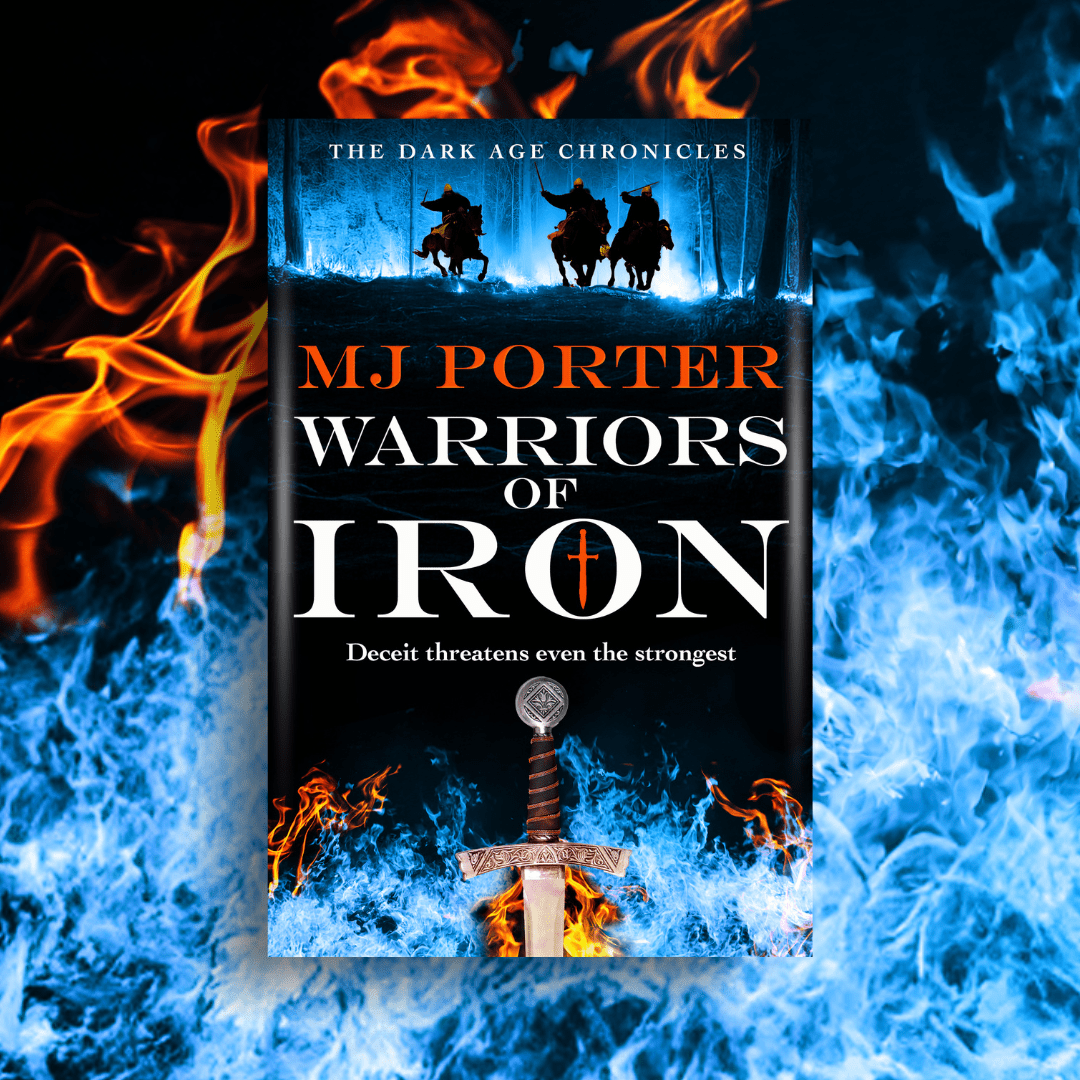
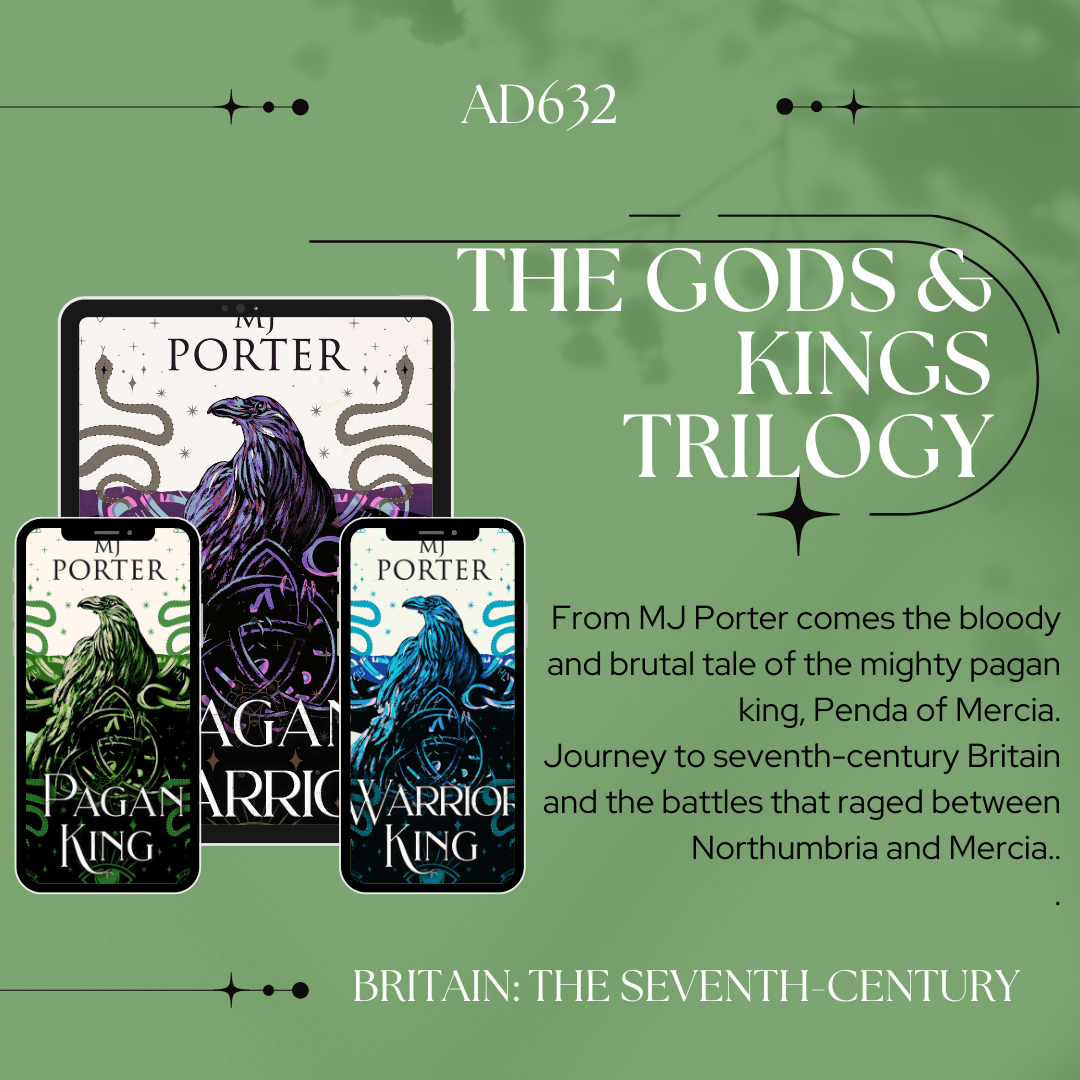
I’m really excited to share the details of the Pagan Warrior blog tour with The Coffee Pot Book Club.
Pagan Warrior is the story of the battle of Hædfeld, fought in the seventh century between the Northumbrians, and you got it, the Mercians – or rather, Cadwallon of Gwynedd but with Penda of Mercia as his firm ally. You can find more details here.
I might have written this book many years ago, but it’s had a refresh, and is now available in audio, narrated by the fabulous, Matt Coles, as is the second book, Pagan King. Warrior King will be coming later this year in audio.
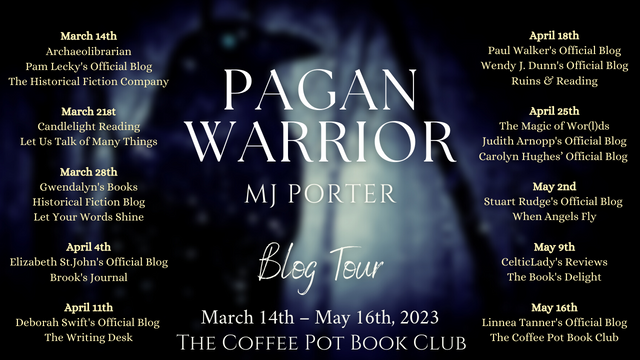
You can follow the blog tour, and I’ll be sharing posts here as well. A quick shout out to thank all the blog hosts and Cathie at The Coffee Pot Book Club for organising.
For April 11th, read a guest post about how we know, what we know, about the seventh century.
And, the post that perhaps gave me the most fear to begin will but which was fun when I remembered all the little details, five fun facts about writing the trilogy.
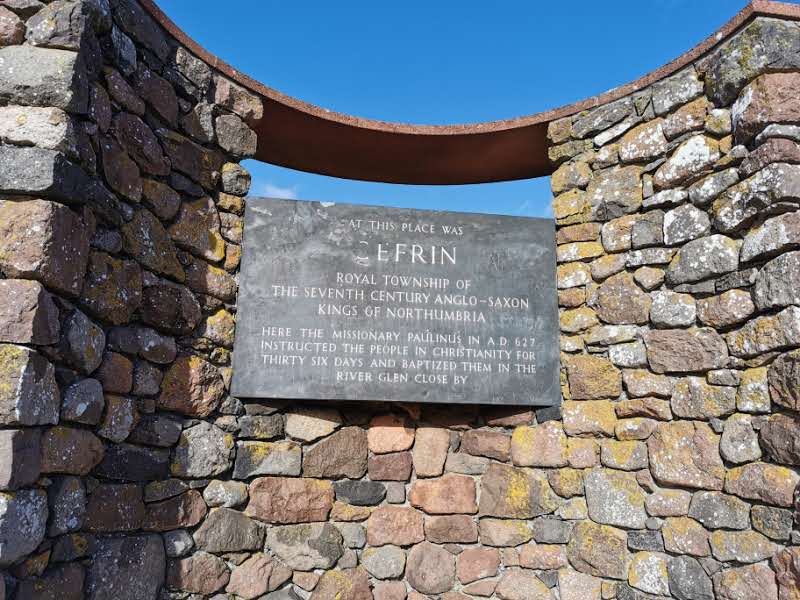
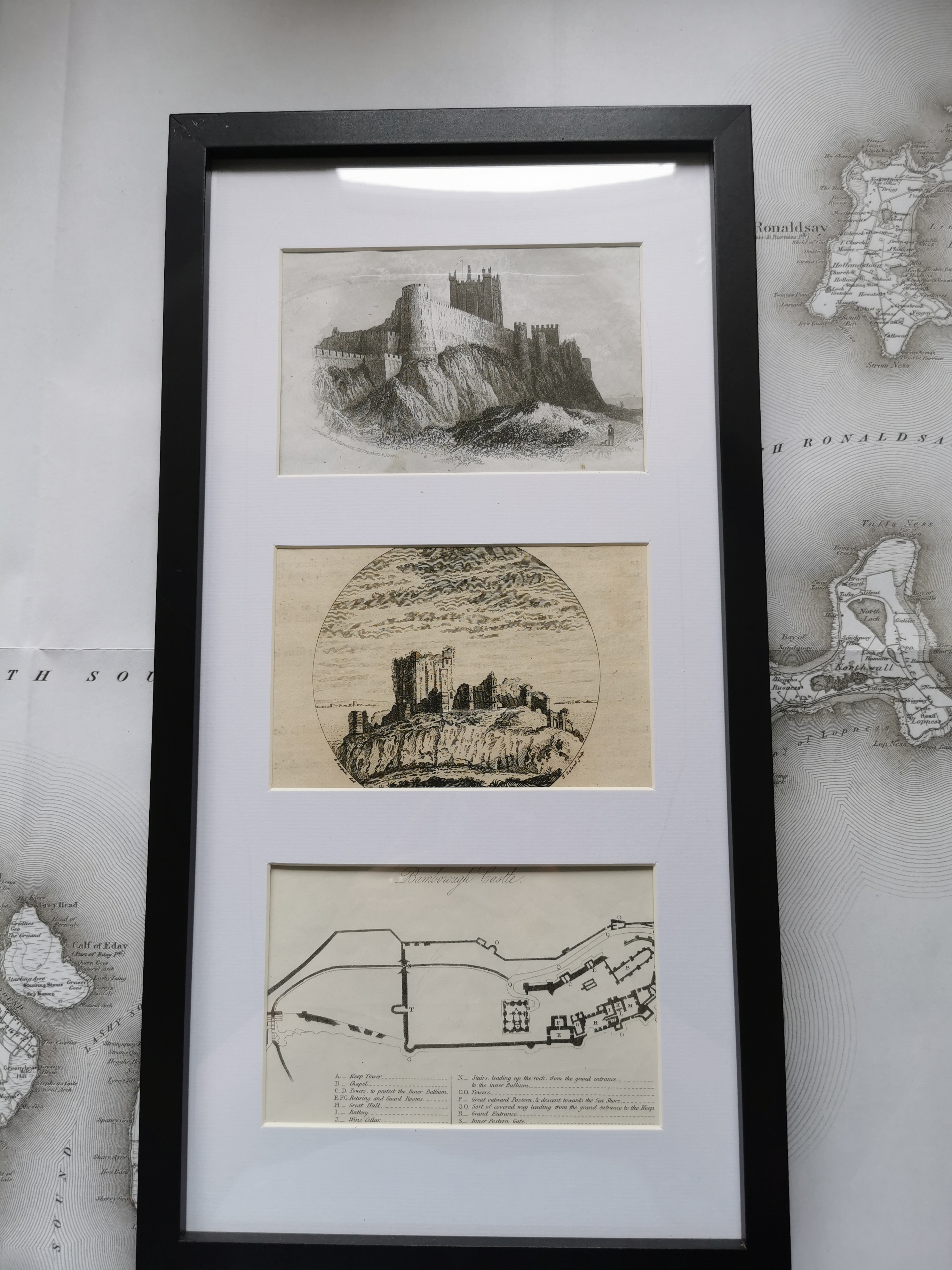
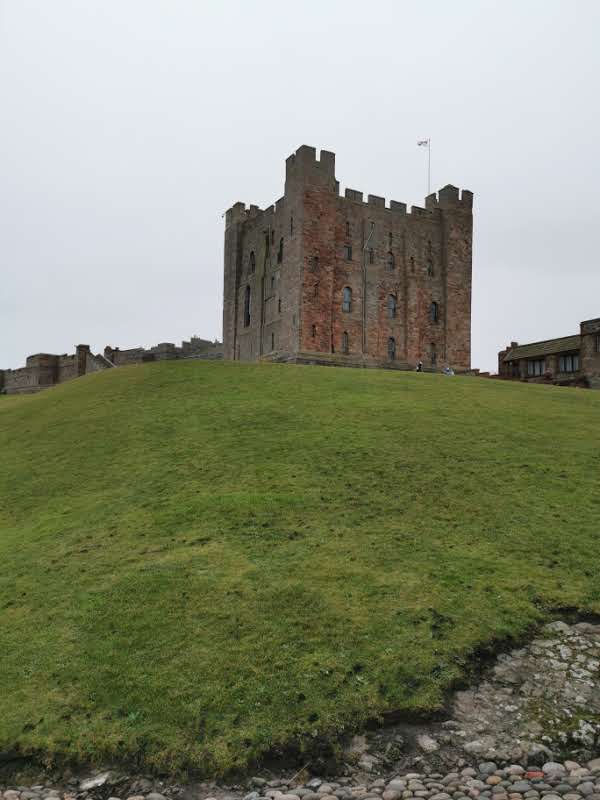
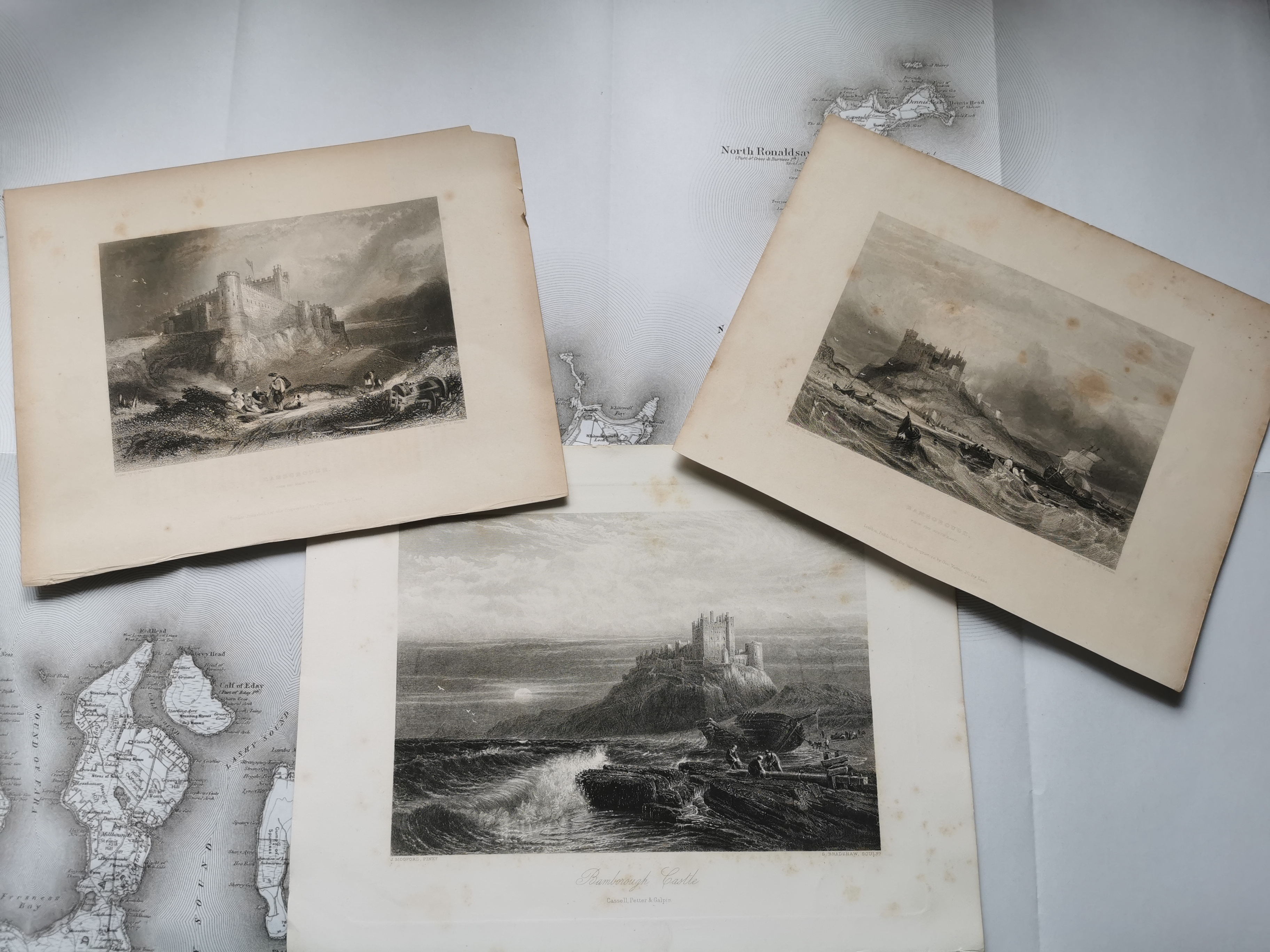
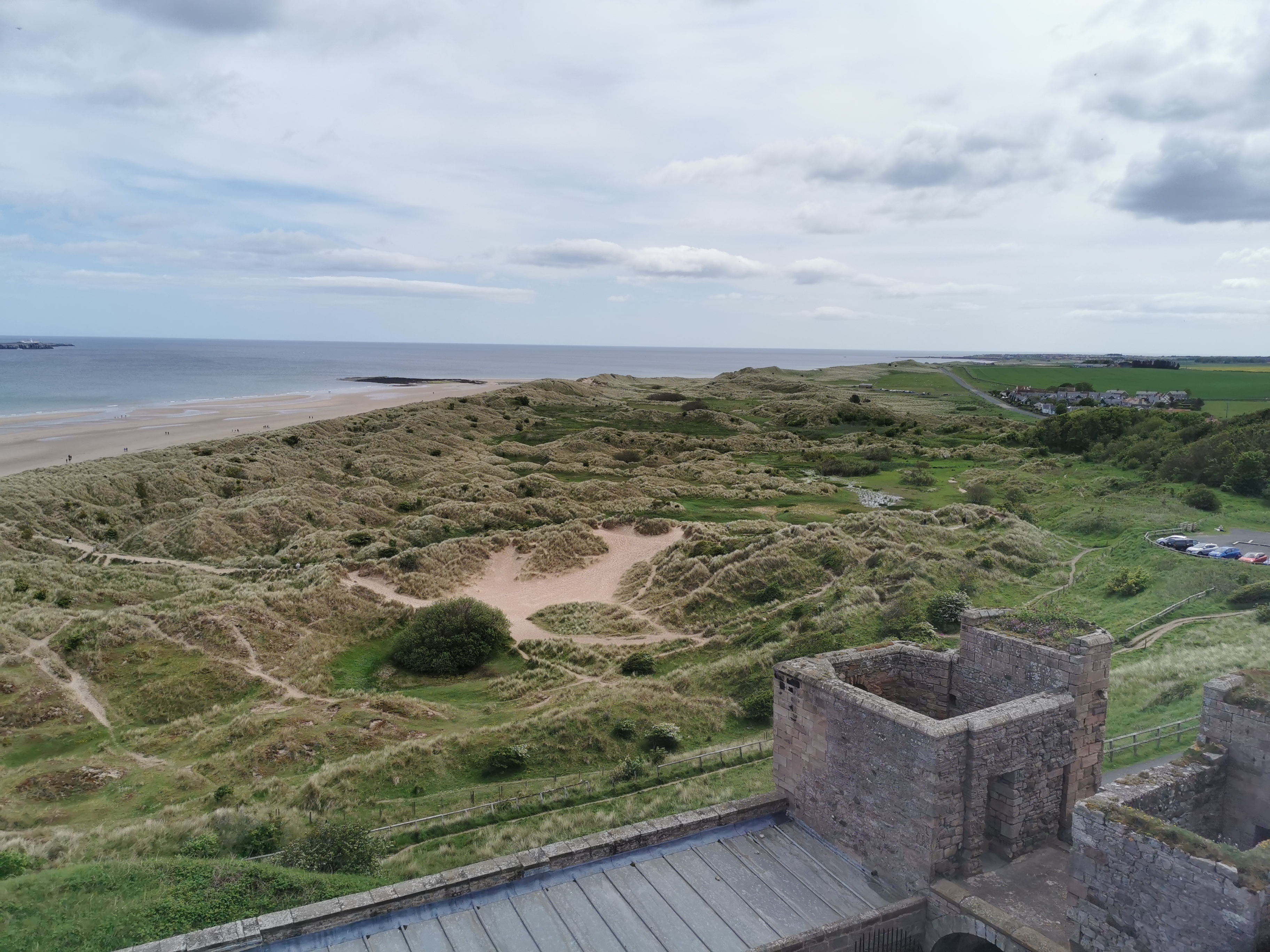
For March 21st check out a post about two of the royal residences of Bernicia at the time, Bamburgh and Ad Gefrin (Yeavering). (There are lots of photos, thank you to Helen Hollick for uploading them all).
I’m really excited to share the details of the Pagan Warrior blog tour with The Coffee Pot Book Club.
Pagan Warrior is the story of the battle of Hædfeld, fought in the seventh century between the Northumbrians, and you got it, the Mercians – or rather, Cadwallon of Gwynedd but with Penda of Mercia as his firm ally. You can find more details here.
I might have written this book many years ago, but it’s had a refresh, and is now available in audio, narrated by the fabulous, Matt Coles, as is the second book, Pagan King. Warrior King will be coming later this year in audio.
And, if you read on Nook, I’ve created a special discount code just for Nook readers. Using code BNPPAGAN at checkout will get you 50% off all three titles, for a limited time.
You can follow the blog tour, and I’ll be sharing posts here as well. A quick shout out to thank all the blog hosts and Cathie at The Coffee Pot Book Club for organising.
And, the post that perhaps gave me the most fear to begin will but which was fun when I remembered all the little details, five fun facts about writing the trilogy.
For March 21st check out a post about two of the royal residences of Bernicia at the time, Bamburgh and Ad Gefrin (Yeavering). (There are lots of photos, thank you to Helen Hollick for uploading them all).
I’m really excited to share the details of the Pagan Warrior blog tour with The Coffee Pot Book Club.
Pagan Warrior is the story of the battle of Hædfeld, fought in the seventh century between the Northumbrians, and you got it, the Mercians – or rather, Cadwallon of Gwynedd but with Penda of Mercia as his firm ally. You can find more details here.
I might have written this book many years ago, but it’s had a refresh, and is now available in audio, narrated by the fabulous, Matt Coles, as is the second book, Pagan King. Warrior King will be coming later this year in audio. For this third week, 27th March-2nd April, the ebook of Warrior King (book 3) is reduced globally to 99p/99c and equivalent. Follow the link below.
And, if you read on Nook, I’ve created a special discount code just for Nook readers. Using code BNPPAGAN at checkout will get you 50% off all three titles, for a limited time.
You can follow the blog tour, and I’ll be sharing posts here as well. A quick shout out to thank all the blog hosts and Cathie at The Coffee Pot Book Club for organising.
For today, March 28th, check out a fabulous review on
And, the post that perhaps gave me the most fear to begin will but which was fun when I remembered all the little details, five fun facts about writing the trilogy.
For March 21st check out a post about two of the royal residences of Bernicia at the time, Bamburgh and Ad Gefrin (Yeavering). (There are lots of photos, thank you to Helen Hollick for uploading them all).
I’m really excited to share the details of the Pagan Warrior blog tour with The Coffee Pot Book Club.
Pagan Warrior is the story of the battle of Hædfeld, fought in the seventh century between the Northumbrians, and you got it, the Mercians – or rather, Cadwallon of Gwynedd but with Penda of Mercia as his firm ally. You can find more details here.
I might have written this book many years ago, but it’s had a refresh, and is now available in audio, narrated by the fabulous, Matt Coles, as is the second book, Pagan King. Warrior King will be coming later this year in audio. For this second week, 20th March-25th March, the ebook of Pagan King (book 2) is reduced globally to 99p/99c and equivalent. Follow the link below.
I’ve also, finally, managed to get book three, Warrior King, uploaded to all good ebook platforms, and they will be going live during this week. Kobo have so far won the competition. Use this link, which I will be updating, or try the one above, and hopefully, Warrior King will be linked to Pagan King as well. It means Warrior King is also available in hardcover from Amazon.
You can follow the blog tour, and I’ll be sharing posts here as well. A quick shout out to thank all the blog hosts and Cathie at The Coffee Pot Book Club for organising.
For today (March 21st) check out a post about two of the royal residences of Bernicia at the time, Bamburgh and Ad Gefrin (Yeavering). (There are lots of photos, thank you to Helen Hollick for uploading them all).
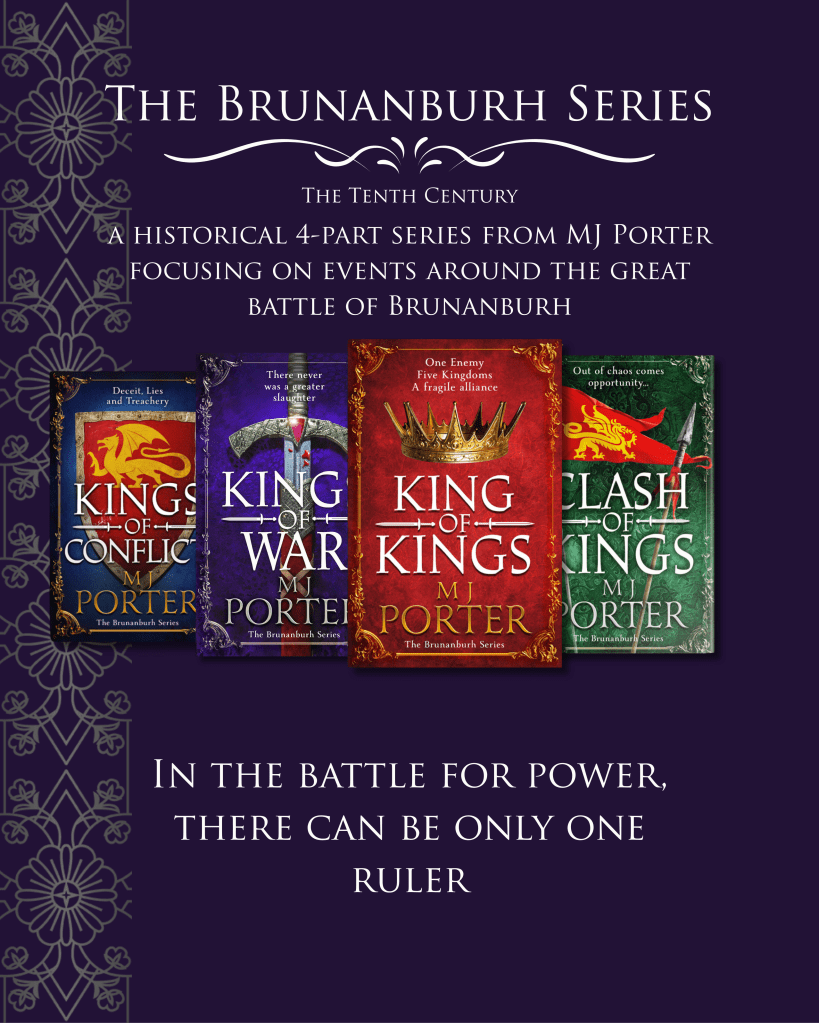
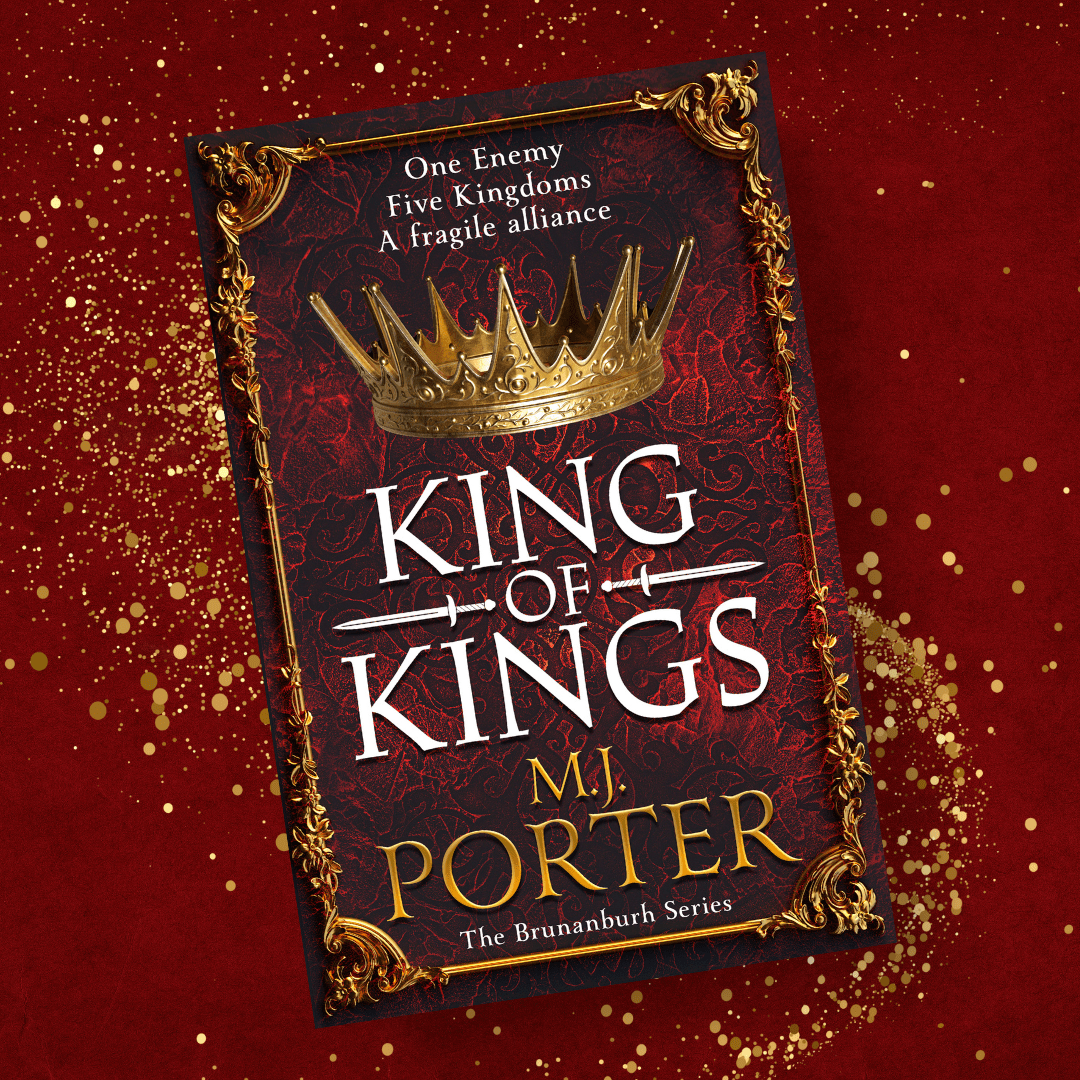
My latest release, King of Kings, is a tale of five kings, and one enemy. But what was the background in what we would now know as England?
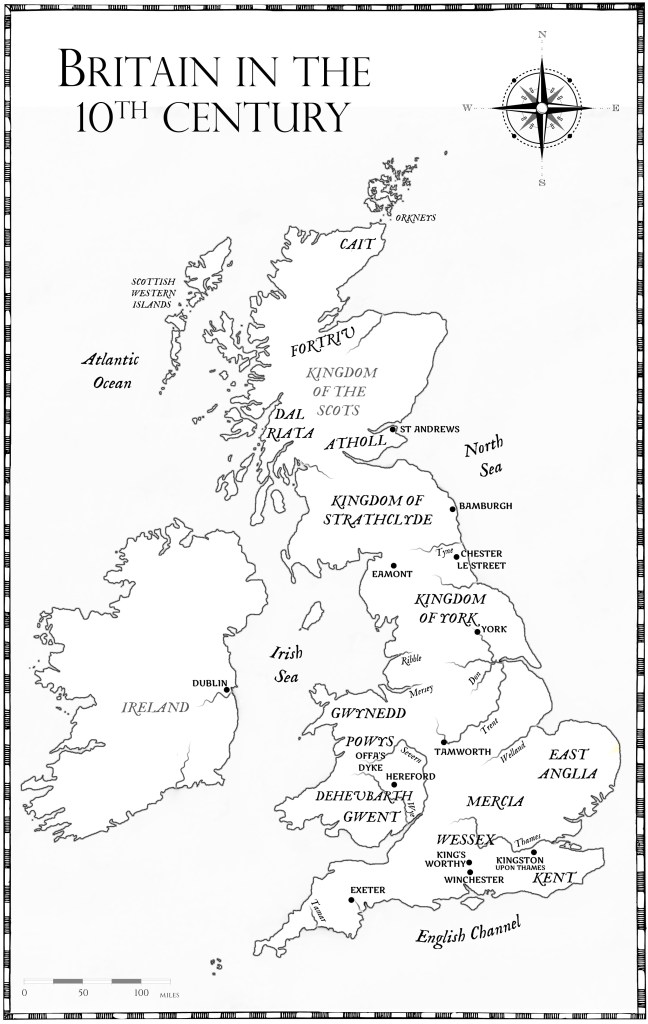
The tenth-century sees the creation of what we would recognise as ‘England’ – the combining of Wessex with Mercia, with the additions of Kent, the kingdom of the East Angles, the Danish Five Boroughs, and the kingdom of York, and also the independent kingdom of Bamburgh. But telling this story is complex. When people think of England, they might not know all these smaller kingdoms. They might not know, particularly, what the Danish Five Boroughs (Leicester, Nottingham, Lincoln, Stamford and Derby), were because if you google the Five Boroughs, you’ll be told about New York (this has happened to me).
Everybody knows about King Alfred of Wessex holding back the tide of the advancing Viking raiders throughout his reign from 874-899. And if everybody didn’t know before, then Uhtred, Bernard Cornwell’s Saxon warrior, has done much to ensure we know about it now.
But again, it’s not quite so simple. The Saxon kingdoms of the seventh century onwards numbered seven, alongside Wessex, there was also Kent, Mercia, the kingdom of the East Angles, Northumbria, Essex and Sussex. These kingdoms eventually merged to give us just Wessex, Mercia, Kent, the kingdom of the East Angles and Northumbria (which itself comprised of two kingdoms, Deira centred on York, and Bernicia, centred on Bamburgh). So, all seems clear there? But no.
When the Viking raiders began their concerted attacks on Britain in the late ninth century, Alfred of Wessex promulgated a treaty with one of their leaders, Guthrum, forging an independent kingdom of the Viking raiders, which stretched along something known as the Alfred-Guthrum line. Loosely, this meant that land to the east was in the control of the Viking raiders. All that survived of those kingdoms south of the Humber was Wessex and the western part of Mercia. The Viking raiders had already overrun Northumbria. The kingdom of Jorvik, centred on York, was part of a Dublin/York kingship, where the kings of York/Jorvik had often already been the king of Dublin, and this kingship was firmly in the hands of a family claiming descent from Ivarr (the Boneless), one of the men who’d led the concerted Viking raider attacks of the 860s and 870s which we might find termed The Great Heathen Army.
Map designed by Flintlock Covers
This, then, reimagined what we think of as England and these Saxon kingdoms weren’t the only ones to face attack from the Viking raiders. The many Welsh kingdoms shared sea borders with the Dublin Norse, and the small kingdom of Manx (the Isle of Man) became incredibly important, as did all of the islands that surround western and northern Scotland. Orkney, at this time, was settled by the Norse.
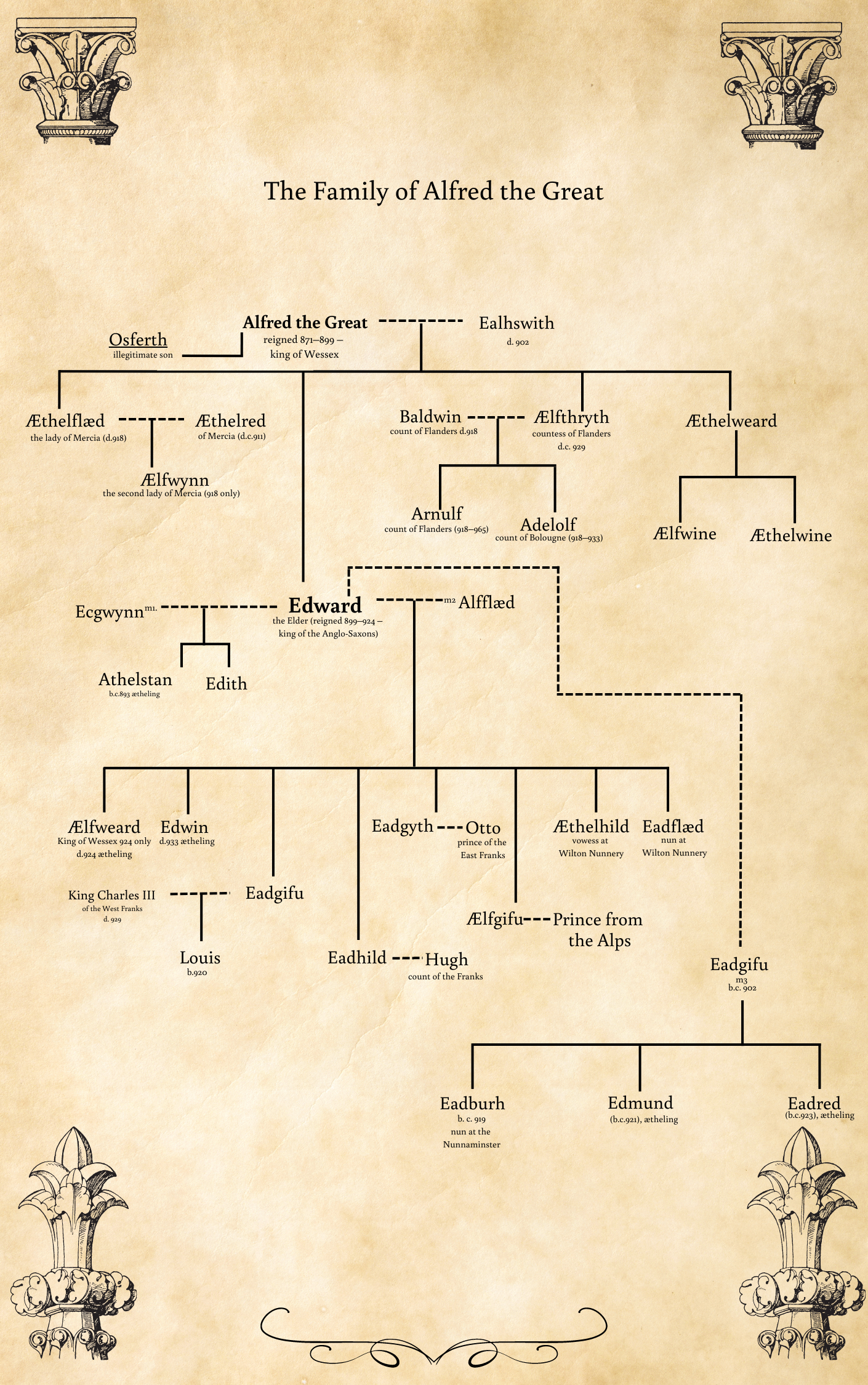
When Alfred died in 899, he was king of Wessex. His son, Edward, would become king of the Anglo-Saxons, ruling over Wessex and Kent, and then after the death of his sister, Æthelflæd, the Lady of Mercia, staking his claim to western Mercia as well as those parts of the Five Boroughs, essentially Norse held lands, known as the Danelaw, which Æthelflæd had ‘won’ back for Mercia.
‘Here in the early part of this year, with God’s help, she [Æthelflæd] peaceably got in her control the stronghold at Leicester and the most part of the raiding-armies that belonged to it were subjected. And also the York-folk had promised her – and some of them granted so by pledge, some confirmed with oaths – that they would be at her disposition.’[i]
This was a time of intense unease, almost constant warfare. And not everyone was happy about the advances the surviving Wessex royal family made. Edward died at Farndon, in Mercia, perhaps putting down a Mercian rebellion or, a Welsh one. Farndon wasn’t far from the border with the Welsh kingdoms.
But Edward’s death, and the subsequent death of his son Ælfweard only sixteen days later, brought about a sea change. Ælfweard wasn’t Edward’s oldest son; that was Athelstan, a youth seemingly banished to live with his aunt in Mercia when Edward remarried (if the later pseudo-historian, William of Malmesbury is to be believed who makes the claim that it was Alfred’s wish that Athelstan be brought up in ‘the court of his daughter Æthelflæd and Æthelred his son in law.’[ii]
Athelstan was immediately recognised as the king of Mercia. Not long afterwards, he also became king of Wessex. And his ambitions didn’t stop there.
‘Here King Edward died at Farndon in Mercia; and very soon, 16 days after, his son Ælfweard died at Oxford; and their bodies lie at Winchester. And Athelstan was chosen as king by the Mercians and consecrated at Kingston.’[iii]
It’s difficult to imagine that Athelstan wasn’t a warrior of fierce renown. His aunt and uncle, the lord and lady of Mercia, had spent much of their rule, both together, and then after Æthelred’s death, Æthelflæd had continued alone, driving back the incursion of the Viking raiders, or the Norse as it might be easier to term them. Athelstan must surely have taken his place in these battles. And yet, while he was eager to hold tightly to the kingdoms of Mercia, Kent and Wessex, he was also prepared to unite people through peace, and this is where the story, King of Kings, begins. With Athelstan, the first crowned king of the English.
[i] Swanton, M. trans and edit The Anglo-Saxon Chronicles, (Orion Publishing Group, 2000), p.105
[ii] Mynors, R.A.B. ed and trans, completed by Thomson, R.M. and Winterbottom, M. Gesta Regvm Anglorvm, The History of the English Kings, William of Malmesbury, (Clarendon Press, 1998), p.211
[iii] Swanton, M. trans and edit The Anglo-Saxon Chronicles, (Orion Publishing Group, 2000), D text p.105
(I’m re-sharing an old post which I’ve amended slightly, and added some new graphics).
England, Wales, Scotland, the smaller kingdoms of Mercia, Wessex, Northumbria, East Anglia, Kent, Powys, Gwynedd, Dal Riada – for the uninitiated (including myself) the sheer number of kingdoms and kings that peopled the period in British history before 1066 can appear as a bewildering display of names, places, times and events, and perhaps never more so than when a historian is trying to sell a book and so makes a statement in their title that applies to that particular king.
Map designed by Flintlock Covers
Phrases such ‘the Golden Age of Northumbria’, ‘the Mercian hegemony’, ‘the rise of Wessex’, they all mask so many events that I find the phrases very unhelpful and perhaps worse, misleading.
I think that Athelstan and his younger half brother, Edmund, probably deserve their titles as Kings of the English. And it’s not just my opinion either. There was, according to Sarah Foot in her book on Athelstan, a concerted effort by the king and his bishops to have him stand apart from his predecessors – to be something ‘different’ to them. They named him king of the English, not king of Mercia (a post he held briefly before another of his younger brothers died) and not king of Wessex, for all that he was both of those things.
They changed his title, they crowned him with a crown, not a helmet. They wanted Athelstan to be something other than his grandfather, King Alfred, and his father, King Edward. It was a bold statement to make, and one they continued when Athelstan died too young and his half-brother, Edmund replaced him. He too was crowned using, it must be supposed, the same Coronation service. (For full details have a peek at Sarah Foot’s book on Athelstan – or read the first few chapters of King of Kings as the service appears in it as well).
So why the change? Essentially the old Saxon kingdoms, for all that they were preserved in the naming of the earls/ealdormens designations, had been swept aside by the Viking raiders. The old kingdoms had become a handy label to apply to certain geographic areas, and the kings of Wessex, whilst keen to hold onto their hereditary titles because of the permanence their own royal line had managed to acquire, were equally as keen to do away with regional boundaries. There was, it can’t be denied, a concerted and almost unrelenting urge to drive any Viking raider or Dane or Norwegian (the Norse) from British soil, and this is what Athelstan and then Edmund were tasked with doing.
Yet the idea of ‘English’ wasn’t a new concept. Why else would Bede have called his great piece of religious historical writing “The Ecclesiastical History of the English people’, if there hadn’t been a shared consciousness that the people in England, all be it in their separate kingdoms, didn’t have a shared heritage? Why the idea suddenly took flight under King Athelstan could be attributed to a new sense of confidence in Wessex and Mercia at the time. They were confident that they could beat the Viking raiders and they were convinced that England belonged to them.
Or perhaps it was more than that? The destruction wrought by the Viking raiders on the separate kingdoms must have been a stark reminder of just how insular the kingdoms had become, and the Viking raiders showed everyone just how easy it was to run roughshod over the individual kingdoms. Only in unity could the Saxon kingdoms of England survive another onslaught; only with unity could the Saxons hold onto their kingdoms they’d claimed about 500 years before.
It was a message that was learned quickly and taken to heart. Athelstan worked to reunite more of the Saxon kingdoms with the growing ‘England’, and he tried to do so by both diplomacy and through war. Yet, the Viking raiders hadn’t finished with England, and nor were they her only enemies. This also lies at the heart of Athelstan’s ‘masterplan’ his treaty of Eamont (if it truly happened – Benjamin Hudson in his Celtic Scotland is not convinced). Athelstan wanted to be a mighty king, but he also wanted England, and the wider Britain (also a concept already understood otherwise why else would that cantankerous monk – Gildas – have called his even earlier work than Bede’s “On the Ruin of Britain?”) to be united in their attempts to repel the Viking raiders. He was a man with a keen vision of the future and it was a vision that his brother continued, with slightly different direction and results.
Family Tree designed by Boldwood Books
The ‘English Kings” saw safety in unity, and of course, an increase in the power they held went hand-in-hand with that.
Yet at no point during the Saxon period can it be said that the emergence of ‘England’ as we know it, was a given certainty. Throughout the period other great kings had tried to claim sovereignty over other kingdoms, but never with any permanence. The earlier, regional kings, were powerful within their own lifetimes and within their own regions. Few, if any, were able to pass on their patrimony complete upon their death. This was a time of personal kingship, and it was only under Athelstan and Edmund that the leap was taken away from this to a more permanent power base.
Not that it was a smooth transition and it did have the side-effect of allowing other men, those not related to the royal family, to evolve their own individual power bases in the old Saxon kingdoms. The ‘English’ kings had to do more than just rule their own kingdom, they had to rule their ealdormen and earls, their warriors, bishops and archbishops. The number of names of kings might start to deplete in the after math of Athelstan and Edmund’s kingship, but in their place spring up more and more powerful men, men that these English kings had to rely on.
Becoming King of the English was very much a mixed blessing, bringing with it new and greater responsibilities and more, it brought with it the need to expand personal government further, to have a greater persona to broadcast.
I’m really excited to share the details of the Pagan Warrior blog tour with The Coffee Pot Book Club.
Pagan Warrior is the story of the battle of Hædfeld, fought in the seventh century between the Northumbrians, and you got it, the Mercians – or rather, Cadwallon of Gwynedd but with Penda of Mercia as his firm ally. You can find more details here.
I might have written this book many years ago, but it’s had a refresh, and is now available in audio, narrated by the fabulous, Matt Coles, as is the second book, Pagan King. Warrior King will be coming later this year in audio. For this first week, 13th March-19th March, the ebook of Pagan Warrior is reduced globally. Follow the link below.
You can follow the blog tour, and I’ll be sharing posts here as well. A quick shout out to thank all the blog hosts and Cathie at The Coffee Pot Book Club for organising.
For today, March 14th, check out my author interview over on Archaeolibrarian.
I’m delighted to welcome Trish MacEnulty to the blog with a guest post about her books.
Lesbians in the Early 20th Century — Branded as Deviants and Sometimes Jailed!
In my series, the Delafield & Malloy Investigations, one of my main characters — Ellen Malloy, an Irish immigrant — is a lesbian. As soon as she appeared on the page, she let me know in no uncertain terms that the expectation of marriage was the main reason she had left Ireland to become a servant for a wealthy family in Manhattan. Well, that didn’t work out either, but eventually she found her way and fell in love with a suffragist.
What would life be like for a lesbian in New York in 1913? I had no idea. The lives of gay men and the indignities they suffered in the late 19th and early 20th centuries has been widely documented — Oscar Wilde made sure of that! All the while, lesbians unobtrusively managed to find love and companionship in spite of the fact that their existence was rarely acknowledged.
In her fascinating academic tome, A Novel Approach to Lesbian History, Linda Garber writes “The historical records, if they exist at all, frustrate as often as they inform. Spotty, written by men, open to multiple interpretations—traces of a recognizably lesbian past run aground on the rocky shoals of the history of sexuality itself.” (3)
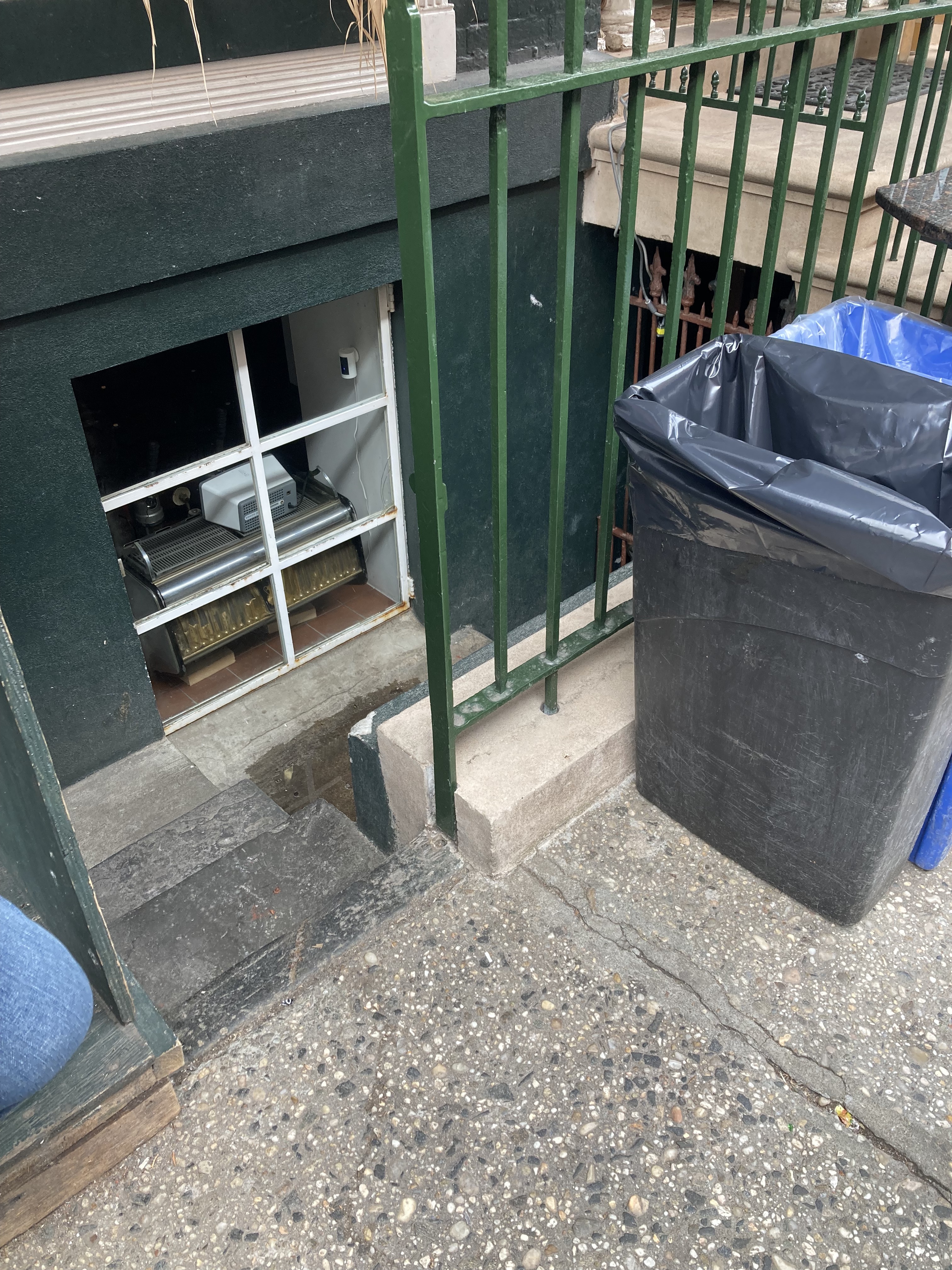
Fortunately, in the early 20th Century, the Bohemians of Greenwich Village had the freedom to live ‘unconventional’ lifestyles somewhat openly. In the Village, tea rooms provided space for women to meet each other away from the disapproving eye of society. On a recent tour of Greenwich Village with the Bowery Boys, I was shown one of the basement entrances for a former tea room. In those days, according to legend, it bore a sign that read, “Men are admitted but not welcome.”
Picture of basement, photo by me
Of course, the police knew about these places. In her autobiography, Mary Sullivan, one of the first police matrons to do actual police work, wrote, “A few tearooms run by women with a fondness for college girl patronage really were a menace…”
She added, “One of the most difficult types of degenerate with whom we have to deal is the woman with homosexual tendencies.” The police department received a complaint about “indecent literature” on sale in one of the tea rooms and a proprietess who “tried to entice girl students from a nearby college.” So Sullivan and one of her female colleagues set out to entrap the proprietess.
They visited the tea room, and the other police woman accepted a date from the proprietess, a woman named Billie. After trying to kiss the woman while on their date, Billie was arrested and then convicted of “disorderly conduct and distributing obscene literature.” She was sentenced to six months in the workhouse. Her tea room was closed. (Interestingly, this is the same scenario which happened later to activist Eve Adams; it may be the stories are conflated.)
Sullivan didn’t think jailing women with “homosexual tendencies” was the solution, however. “There is no doubt in my mind that they should be treated primarily as medical and psychiatric cases, though we still have to learn about the method of treatment.” Well, we all know where that eventually led: the horrors of conversion therapy!
picture of Sullivan’s book, photo by me
Not all lesbians kept quiet or hid their preferences. Polish-born Eve Adams arrived in New York in 1912 when she was twenty years old. In 1925, she wrote and published a book called Lesbian Love “for private circulation only.” Two years later she was arrested for obscenity and disorderly conduct and deported.
There’s an excellent book about Adams, titled The Daring Life and Dangerous Times of Eve Adams by Jonathan Ned Katz. In 1912, according to Katz, the term lesbian did not always signify a sexual relationship between women. It could simply refer to a community of women. For example, a women’s college newspaper in Maryland was called the Lesbian Herald. From everything I’ve read, the common term, at the time, for gays and lesbians was “invert.”
With this and other research in hand, I felt I could do justice to Ellen’s story in her quest for love and fulfillment. This scene is the moment Ellen first sees the women with whom she later falls in love in The Whispering Women as she is looking through the window of a teahouse in Greenwich Village:
“The tables were occupied by women of various ages and classes who seemed engrossed in conversations. One woman in particular caught her eye. She looked to be in her late twenties, big boned with a narrow face, an affable smile, and big brown eyes under thick eyebrows. Ellen could tell by her tailored gray jacket she had money, but she wasn’t showy. A strand of pearls hung carelessly around her neck. A feeling swept over Ellen like a dull ache — the kind of ache you don’t want to stop. The woman laughed at something her companion said. Ellen swiveled her head to look at the companion. Small, blond, and delicately holding her tea cup. When the woman with the pearls got up to get some more tea, Ellen saw the blond woman glance out the window and wave a handkerchief. Curiously, Ellen looked around. Two men stood across the street, smoking cigarettes with their eyes fixed on the window of the tea shop. Police, Ellen knew immediately.”
Thank you for sharing such a fascinating post. Good luck with your series.
Blurb:
“Richly drawn characters, the vibrant historical setting, and a suspenseful mystery create a strong current that pulls readers into this delightful novel. But it’s the women’s issues—as relevant today as they were in the early 1900s—that will linger long after the last page.”
— Donna S. Meredith, The Southern Literary Review
Can two women get the lowdown on high society?
“Two powerless young women must navigate a soul-crushing class system and find the levers of power they wield when they combine their strengths. These women may have been taught to whisper, but when their time comes, they will roar.”
– 5 Star Amazon Review
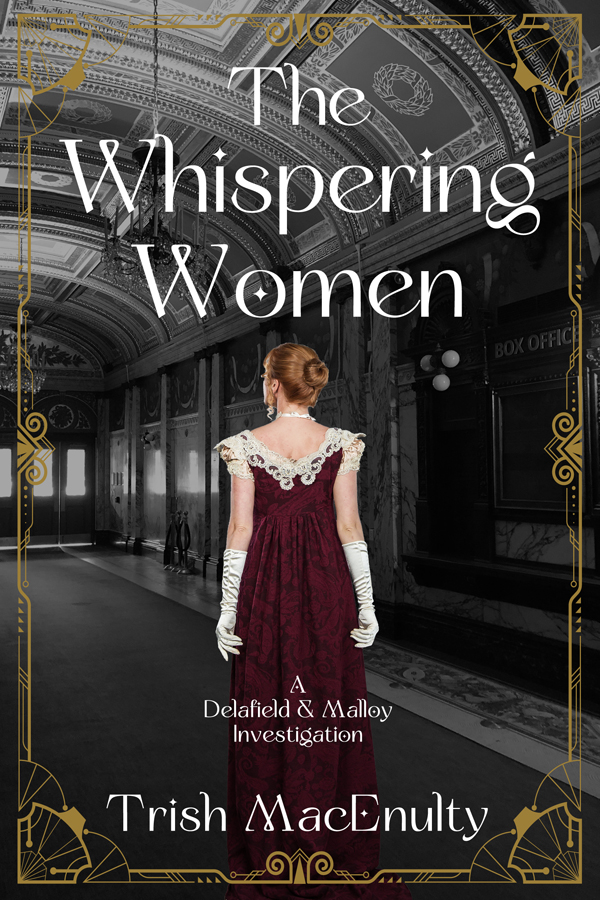
Louisa Delafield and Ellen Malloy didn’t ask to be thrown together to bring the truth to light. But after Ellen witnesses the death of a fellow servant during an illegal abortion, Louisa, a society columnist, vows to help her find the truth and turn her journalistic talent to a greater purpose.
Together, these unlikely allies battle to get the truth out, and to avenge the wrongful death of a friend.
What will our heroes do when their closest allies and those they trust turn out to be the very forces working to keep their story in the dark? They’ll face an abortionist, a sex trafficking ring, and a corrupt system determined to keep the truth at bay.
“If you like historical fiction and if you like mysteries, this one is for you!”
– 5 Star Amazon Review
Was change possible in 1913?
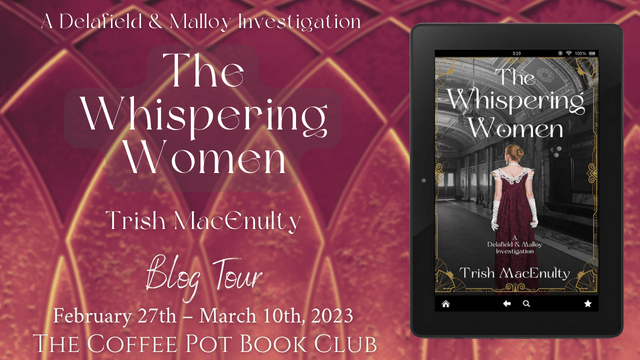
To find out, read THE WHISPERING WOMEN today!
Buy Links:
The books in this series are available to read on Kindle Unlimited.
Trish MacEnulty is a bestselling novelist. In addition to her historical fiction, she has published novels, a short story collection, and a memoir. A former Professor of English, she currently lives in Florida with her husband, two dogs, and one cat. She writes book reviews and feature articles for the Historical Novel Review. She loves reading, writing, walking with her dogs, streaming historical series, cooking, and dancing.
I always think that the characters of Saxon England are a little too ethereal for people to really connect with. I think it’s difficult to visualise life before the Norman Conquest, but it doesn’t mean we shouldn’t try.
My current obsession, and victim of my historical fiction endeavours is Leofwine, Ealdorman of the Hwicce during the reign of Æthelred II, who I refuse to call ‘Unready’ because I just don’t think he was. I think, he was a victim of his times, treated harshly by later historians.
My research is going deeper, examining the evidence of the charter attestations that Leofwine made (where he signs, and therefore, it must be assumes, agrees to whatever the charter is concerned with). Charters from before the Norman Conquest are rare, and have only survived in copies because they benefitted someone in some way, normally the monastery or Church that the copy of the original charter has survived in, or a later lay landowner keen to keep hold of the land.
This effectively means that in determining the validity of the charter, historians need to know about what was happening in the world at large, when the COPY of the charter was made. Effectively, to study Saxon history, you have to also study early Anglo-Norman history to work out just what’s going on and why the charter is so important.
In the records of Sherborne, Leofwine’s name can be found attesting two charters. No original copies of the charters survive, and the record as we have it, is in a twelfth century hand. So, should it be trusted? Should it be used as an historical source? Or as with so much history, can it really only be used as a historical record of the time period that produced it? After all, at least a hundred years and probably more like 150 years, separate the copy of the charter and the date of its alleged drafting and attestation.
It’s an interesting dilemma and one I don’t plan on solving today. Would I use it? Yes, I’d but I’d be standing on the shoulders of those giants of academic history who have studied far more charters than me and who’ve decided that the copies are ‘probably’ genuine as they stand. I’d also be wary of this, and all it might mean.
And how relevant are they to Ealdorman Leofwine? I think very, because they appear to show his standing at the royal court. In charter S933 (1015) he signs as the third ‘dux’ (ealdorman) and in S910 from 1005 he also signs as the third ‘dux’. So what does it all mean? Well, as with everything the picture is wider than just Sherborne. In total Leofwine attests 41 charters whilst an ealdorman. So although I think it’s important to examine the validity of the cartularies that the charters survive in, it’s a bit of a painstaking and picky business. But one I’m enjoying. For anyone really keen to look at Leofwine’s charters in more detail, you can start by having a look at the Electronic Sawyer. And you can see an image of S910 it on The British Library Digitised Manuscripts Website ff. 27v-29r and S933 also on The British Library Digitised Manuscripts Website at ff. 4v-6r. The handwriting is amazing.