Author of Saxon historical fiction and non-fiction, 20th-century historical mysteries, and Norse-inspired historical romantasy. Book reviewer and blog host.
Why did I decide to tell the story of King Coelwulf II of Mercia?
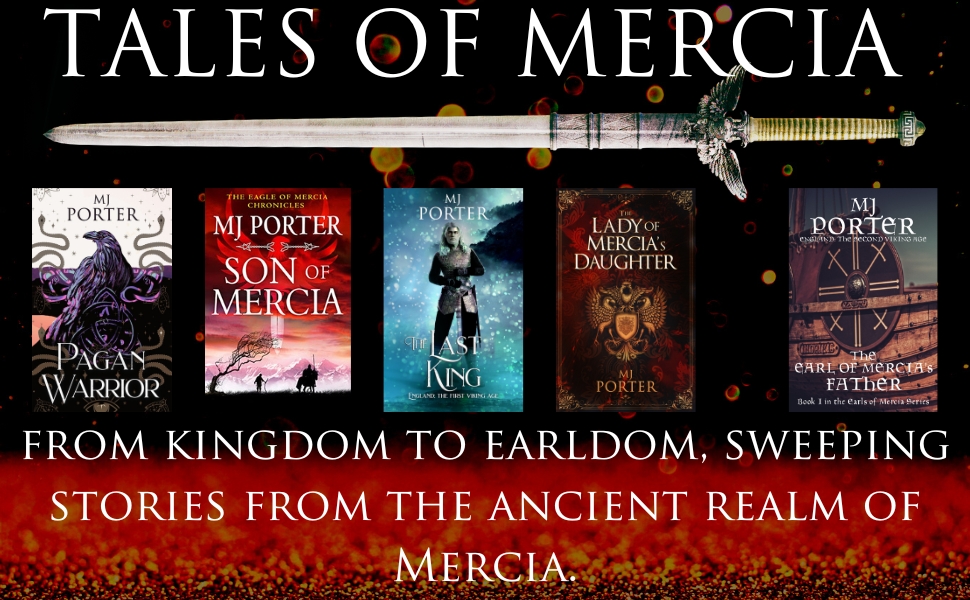
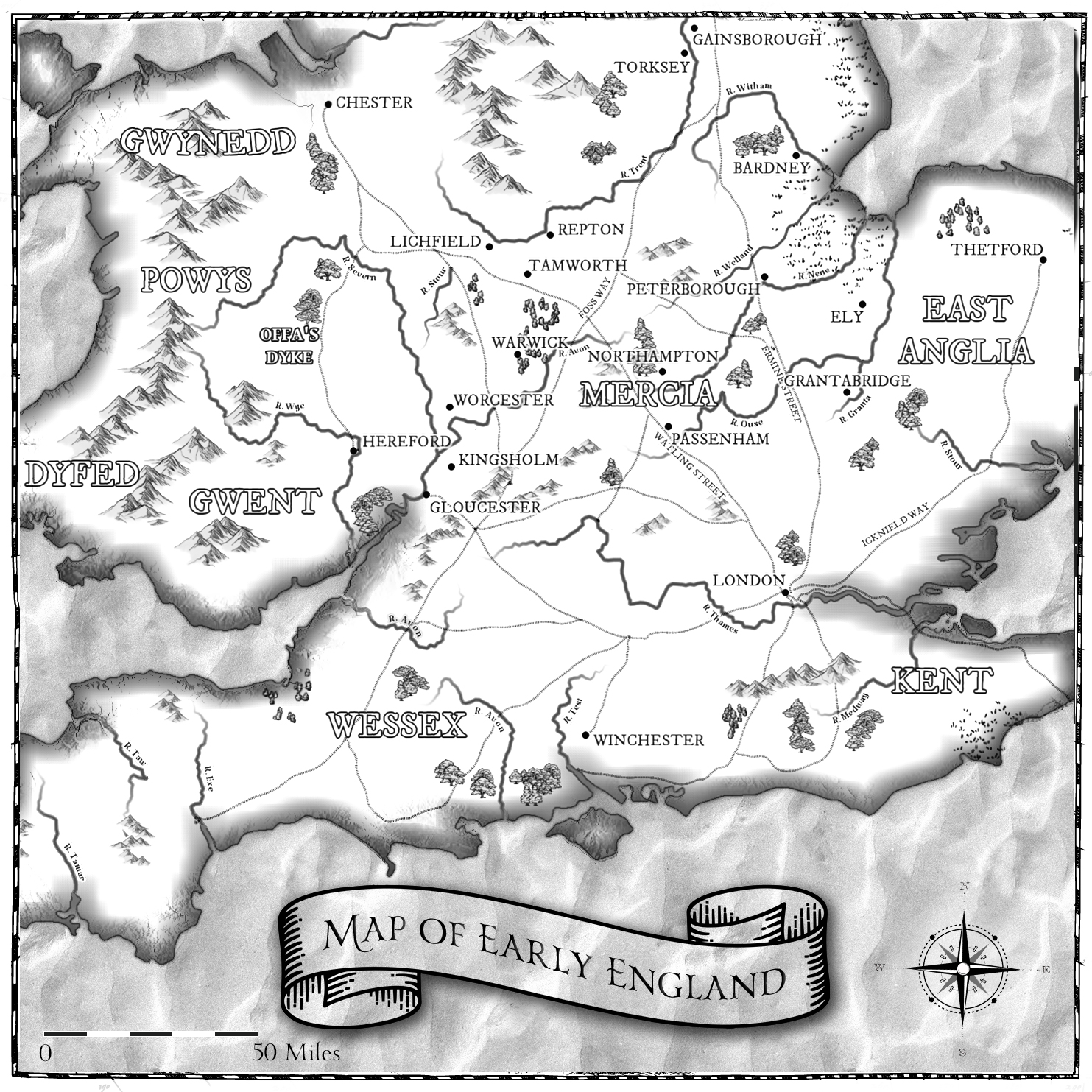
The Last King is set in Mercia in the Ninth Century, one of the ancient kingdoms of England. Mercia, at that time, is perceived as being on the decline – no more the mighty King Penda of the seventh century (who I’ve written about in Pagan Warrior) or King Offa of the eighth century (who I do want to write about), but instead Wessex, on Mercia’s southern border, just waiting to pounce when Mercia is already weak and further destabilised by the Vikings of the Great Heathen Army. It seems inevitable that Mercia will be subsumed by Wessex.
Mercia’s king in the early 870’s was Burgred, brother by marriage to King Alfred and with King Alfred himself married to a Mercian, I think we can all decipher the intentions of the House of Wessex towards Mercia. This alliance seems to have been powerful, persuasive, and long lasting, until abruptly, Wessex gave up on Mercia, and refused to assist in the battle against the Vikings. It is this Mercia that Coelwulf lived in, and lived through.
The historical Coelwulf was allegedly a member of a family who had ruled as kings in the early 800’s. King Coelwulf II (as he was known) was accepted by the Mercians as their king. This is ‘proved’ by the few charters which survive from the time period, which are ‘witnessed’ by the three bishops of Mercia, and her ealdormen as well. In the past, these documents have been taken to show that all of the Mercian nobility bowed down before the Vikings and accepted them as their ‘overlords.’ This view is only now being challenged, and I’m enjoying challenging it.
Mercia, unlike the kingdoms of Northumbria and Wessex, had no one who wrote propaganda for her. Northumbria had the Venerable Bede, Wessex had the Anglo-Saxon Chronicle, but for Mercia, there is a dearth of information. Perhaps there was a record, it is hinted at in something known as the Mercian Register incorporated in one version of the Anglo-Saxon Chronicle, but it is presumed that much of the record was burned by the Vikings.
I’m thriving on looking at the possibilities for what might have happened in Mercia. There are surprising omissions in the Anglo-Saxon Chronicle, a few things that don’t make too much sense when you examine them further, and so ‘my’ version of the time period is a little bit different to anything people might read about in older books. It doesn’t make it right, but, and this is what is so appealing about the time period, it also doesn’t make it wrong.
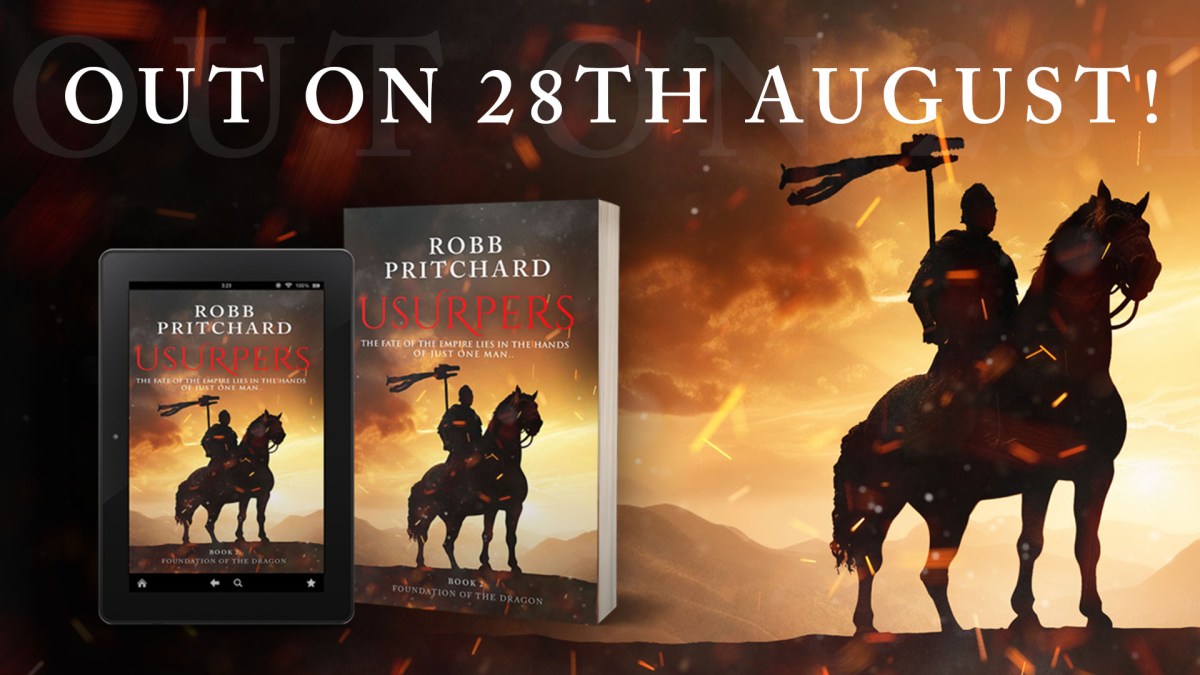
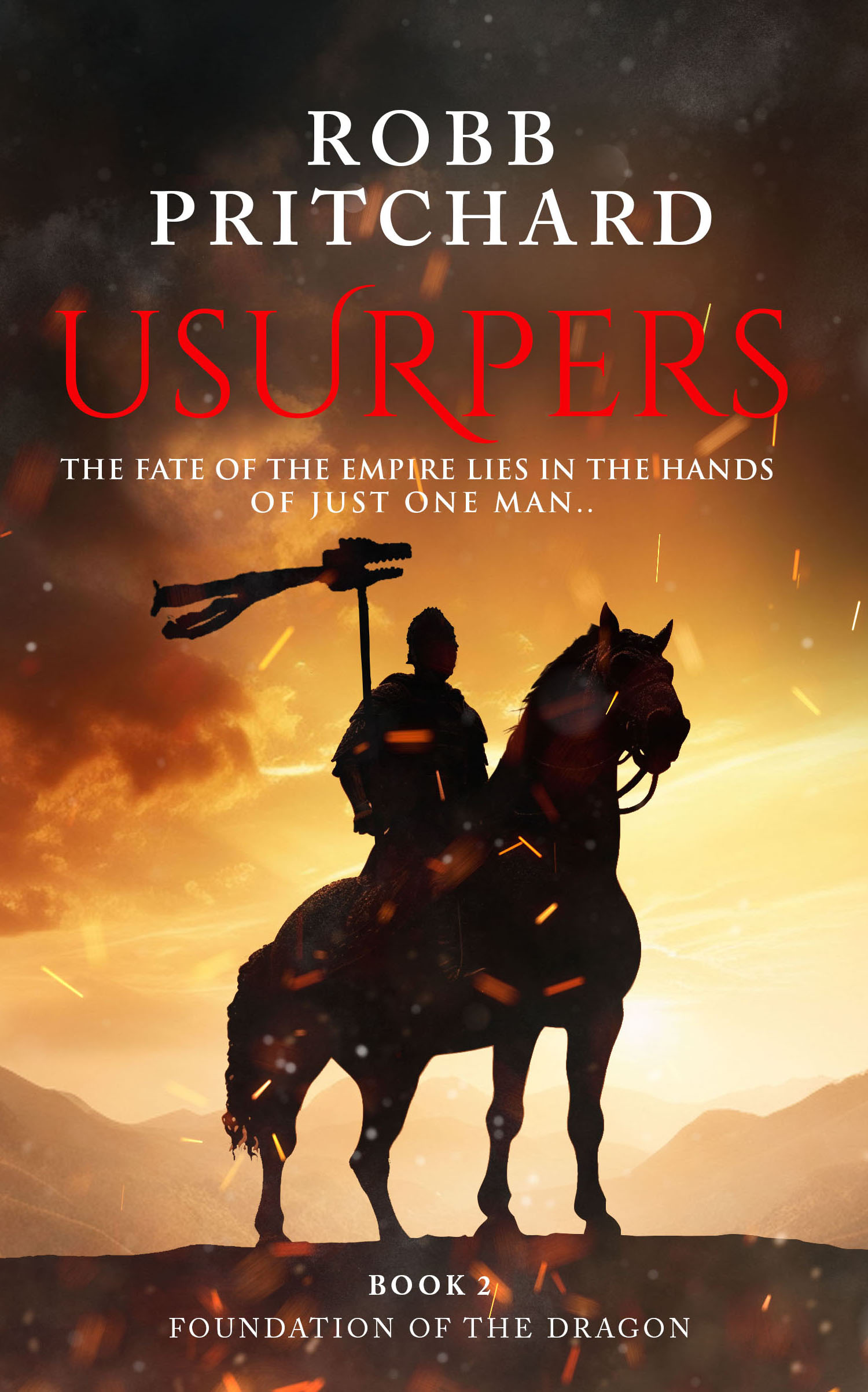
I’m really excited to share a fabulous blog post about his new book, Usurpers, from Robb Pritchard. I do love a story that uses ancient sources and historical ‘fact.’
Man and myth. Apart from King Arthur, of course, there is another man in British history who is known in myth just as much as the historical record. Immortalised as Macsen Wledig in one of Wales’ most important ancient works of literature, the Mabinogion, Magnus Maximus was also a real general, and later, a usurping emperor.
Relatively speaking, the three centuries of Roman rule in Britannia was a rather secure time for the Romanised inhabitants. After Boudica’s revolt in AD 61 the four provinces that divided the island enjoyed an extended period of peace, which it has rarely experienced in the subsequent 1700 years. But towards the end of the fourth century, the security of the social fabric was beginning to unravel. And Magnus played an important role in that.
In 367 Britannia was almost completely overrun by a horde of barbarians, a seemingly coordinated mix of Picts, Scotti and Saxons. It was only saved by the efforts of a General Theodosius, who was supported by his son and nephew, the future emperors Theodosius the Younger and Magnus Maximus. And thus, Magnus’ story in Britannia begins.
Some fifteen years later, the Elder Theodosius has been murdered by factions of either the court of Gratian, or the toddler emperor, the young son of Valentinian I. Theodosius has been raised to Eastern Emperor, but Magnus is languishing in Rome unable to use his military expertise to help the Empire recover after the crushing disaster of Adrianople, al lost battle against the Goths in which a good percentage of the Roman army was wiped out.
It wouldn’t have been much of a surprise for him to end at the end of an assassin’s blade, the same way as his uncle, but instead, he found himself promoted to the enviable position of Dux Britanniarum, in charge of bolstering the islands’ defences. Perhaps he was given the position to keep him safely away from the circles of power in the imperial cities of Rome, Trier and Milan where a former general with his reputation could be a threat, but it ended up leading to the opposite outcome. Instead of being kept busy in a distant province, he used his position to build support for himself over a couple of years, before launching a successful bid for the ‘purple’. He ruled the Western Empire from Trier for five years.
His reign, and life, ended on the 28th of August 388, ignominiously, in a roadside ditch somewhere in present-day Slovenia, but his connection to Wales still endures to this day. Several royal dynasties which came to prominence in the early medieval period claimed descent from him, finding both pride and authority in the connection to Rome. He was evidently popular enough in popular culture that people spoke about him around fires in their halls as when the Red Book of Hergest was written, some thousand years after his death, they wrote the Dream of Macsen Wledig about him.
For Book 2 of the Foundation of the Dragon series, this is the story I chose to write. But it wasn’t quite as easy as simply collecting all the known facts and weaving them onto a narrative. Magnus is equally well known, perhaps more so, from the Dream of Macsen Wledig, than as a real person, but the story bears no resemblance to the real one. With the resurgence of interest in Welsh culture and heritage, I wanted to include the Mabignion dream story.
How to connect the myth of Macsen Wledig of the Mabinogion with the factual Roman Dux Britanniarum and emperor into a coherent and believable story took quite a while, and a few failed attempts, but I think it turned out quite well. I am terribly self-critical when it comes to my writing, so a couple of weeks out from publication, I am as nervous as perhaps Magnus was as he sailed over to Gaul in 383.
Usurpers covers the period of Magnus’s life from outcast to the moment he is proclaimed as Augustus by the soldiers of Britannia. Book 3 will follow the story of his years ruling from Trier and the ill-fated war against his cousin. If all goes to plan, Book 4 will be about Vortigen in the years of upheaval during Rome’s withdrawal from Britannia, which should be out in the second half of 2024.
Usurpers, Book 2 of the Foundation of the Dragon series is out on the 28th of August. Pre-orders are available now.
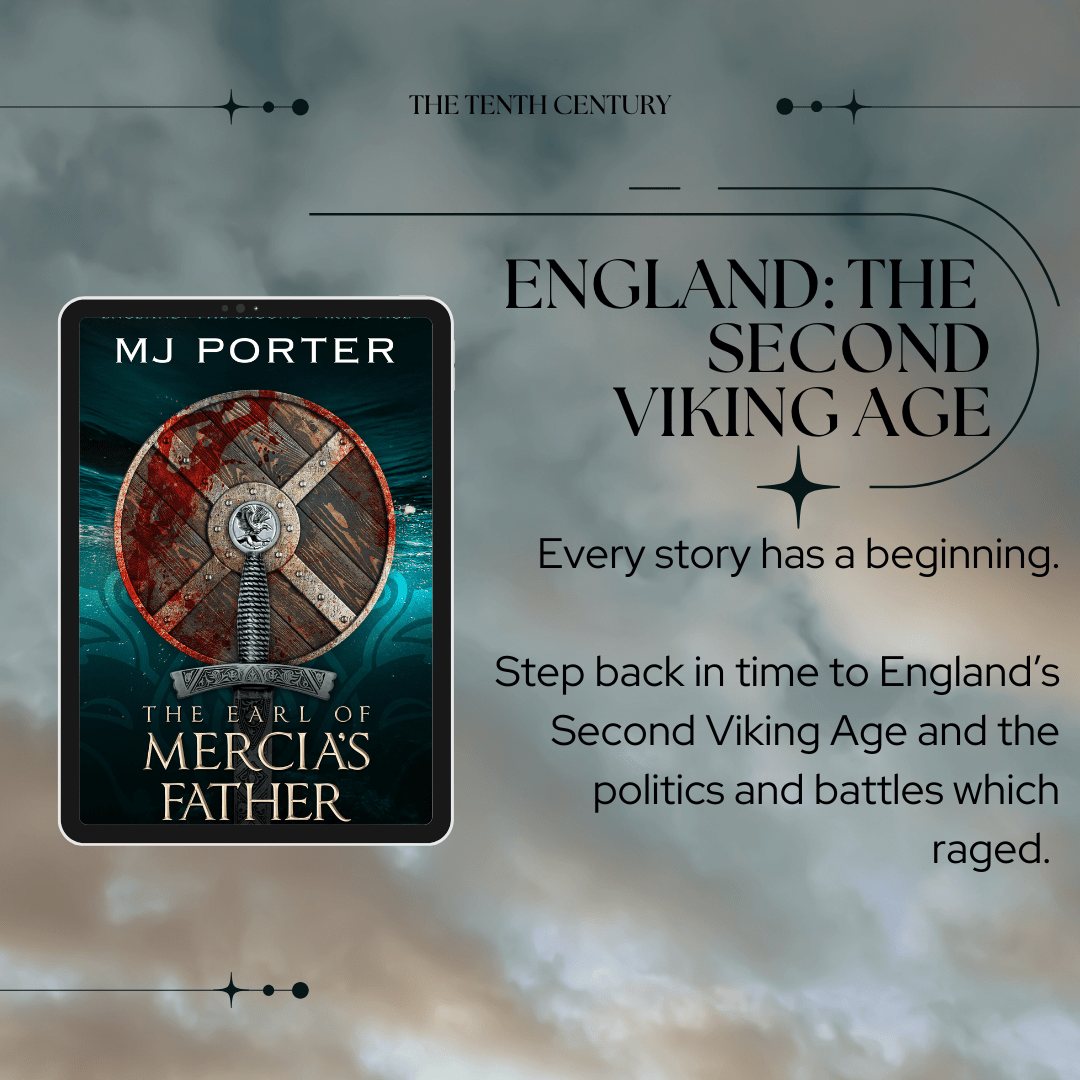
The Earl of Mercia’s Father, or Ealdorman as it was originally known, has had quite the book journey and I thought I’d share some of those details.
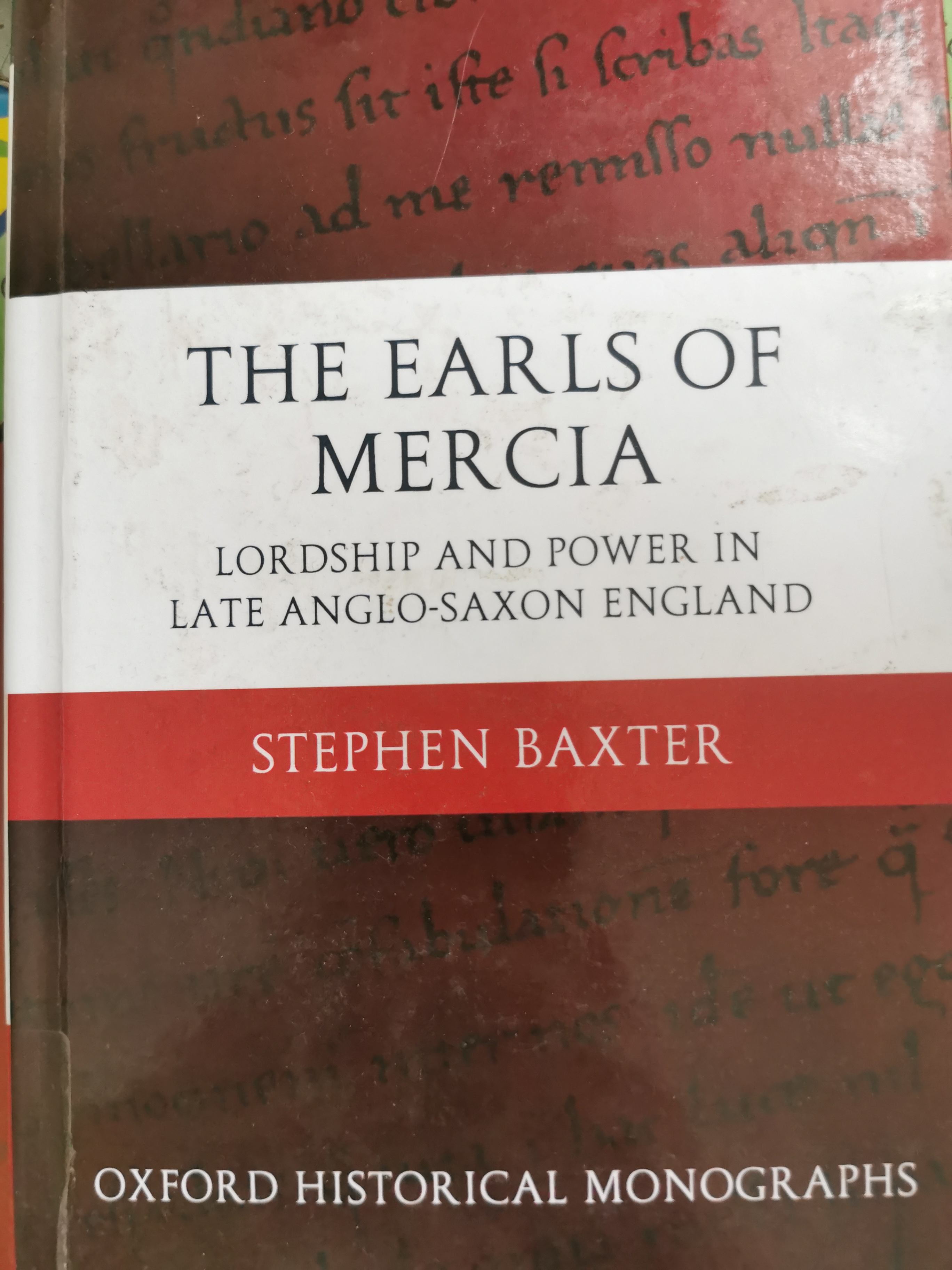
Ealdorman began life back in about 2011 when I was researching for my MA using the local university library. It didn’t have a massive Saxon section, and so I slowly worked my way through the more biographical titles. I am interested in the people and their lives, but also in the wider political events. I read all and sundry, in no particular order, and really, with no intention of doing more than learning a bit more about the era. I read about Lady Elfrida, England’s first crowned queen, I read about King Edward the Confessor, I read about the Godwines, Cnut, Æthelred (I think you’re getting the idea), and I read a book about the Earls of Mercia. And I did some more research and wrote some essays and then one day I thought, ‘wait a mo, that would be a good story.’ And so, the first Earls of Mercia story began life, the intention to offer an alternative narrative to the one often presented of the last century of Saxon England, through the eyes of the Earls of Mercia as opposed to Earl Godwine and his family.
From my research, I’d discovered Ealdorman Leofwine, an often shadowy character but one who is documented from 994 to about 1022 as one of King Æthelred II’s ealdormen (we didn’t have earls until King Cnut conquered England). But, I’ve told this story many times, my intention here is to write about that book.
It began life in 2011, but ground to a halt sometime that year, about 30,000 words in because I was a bit stuck. I wanted to take my character to Shetland, but kept confusing Orkney and Shetland. That sounds like a stupid reason to stop writing, but stop I did. And for quite a long time. Not until May 2013 did I resume my story, and only after a trip to Orkney, which, once and for all, ensured I knew the difference between Orkney and Shetland.
I hurried to finish the book, filled with enthusiasm for the project once more. I played the old ‘find an agent game’ to no avail, and decided to indie publish myself, as I’d been doing with my fantasy books. And so that should have been it. Ealdorman was out in the world.
But that wasn’t it. In fact, that was far from it. I held the rights for some years, continued writing the series, and one day, signed a publishing contract with much excitement, for book 1 and book 2. Suffice to say, it was not my best decision. So, fast forward a few years and it was mine once more, and I could republish it – with a new title and a new cover. But that wasn’t all.
In the ‘lost years’ (as I’ll term them), I’d continued writing, this series, another series, probably another series, a few side stories, etc etc. And so, the original book, Ealdorman, was no longer, in my mind at least, ‘fit for purpose.’ Being indie, knowing that one day I’d hopefully get my rights back, I both wrote out the first two books in the series (for people reading all of my series and after a chronologically sound narrative between series) and also massively edited, amended and rewrote the book as I could publish it in paperback. The one that’s now published, is not at all the book I first wrote between 2011 and 2013. There are elements that remain, and certainly Ealdorman Leofwine is still my half-blind hero, but much else has changed. It’s more exciting now. I’ve dealt with some of the ‘nerd’ elements to it, but Leofwine is still Leofwine.
This then, is something that many writers never get to do. If Ealdorman had remained as it was, if I’d given up due to a lack of success, if I’d not written more books, if I’d not lost my rights for a few years, if I’d traditionally published it, the book that is The Earl of Mercia’s Father in its current guise wouldn’t exist. And despite it’s problems – it’s not been possible to write them all out – I’m very proud of all that this book represents, not just for me as a writer, but for the journey the book has been on, from handwritten notes, to a finished draft, to a rewritten draft, through another rewrite to what it is today. It’s been a journey and a half.
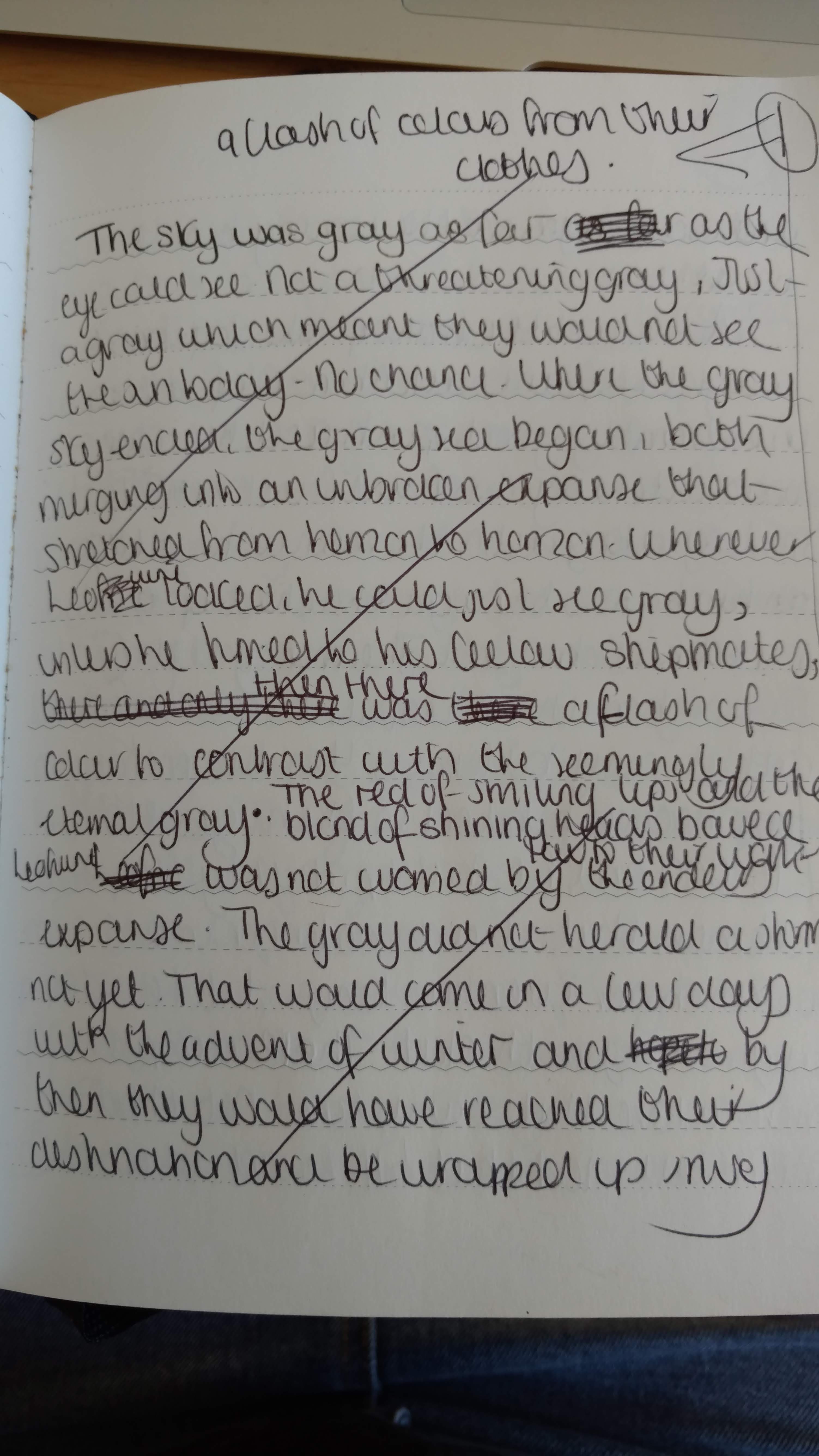
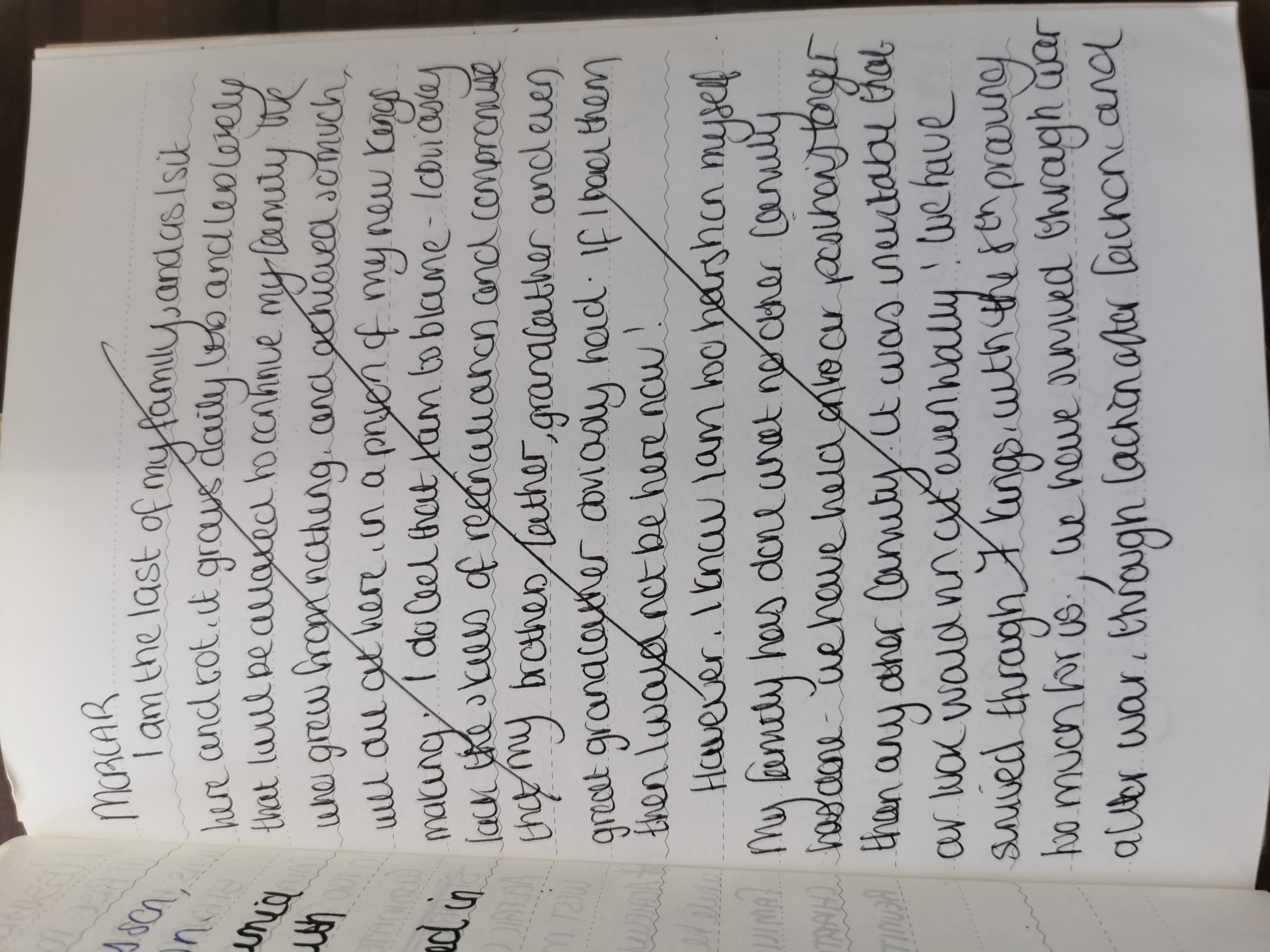
The notebook, the original beginning, and the ending that has still never been written, although I have used it in a short story.
You can find out more about the entire series on my Earls of Mercia page on the blog.
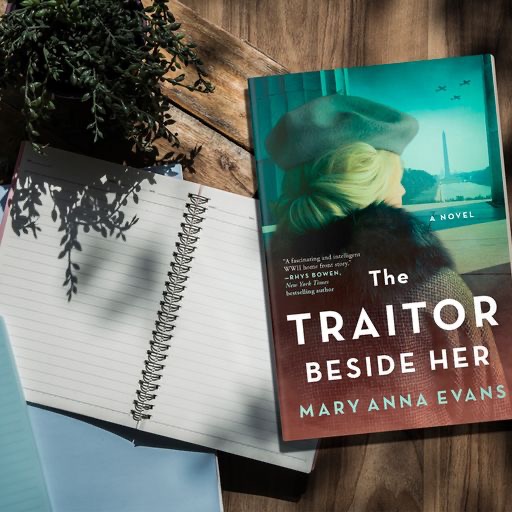
I’m delighted to welcome Mary Anna Evans to the blog with her new book, The Traitor Beside Her and a blog post about the book’s setting.
When You Need to Know A Whole Lot About Your Nation’s Capital, But What You Really Need to Know Is What it Was Like in 1944….
It’s no spoiler, based on my book’s cover, to say that The Traitor Beside Her is set in and around Washington, DC. Based on the woman’s clothing and the three possibly military-ish planes in the sky, and also based on the word “traitor,” it would be a safe bet for you to guess that it is set during World War II. And you’d be right!
Much of the action in The Traitor Beside Her takes place across the Potomac River from Washington, DC, in Arlington, Virginia, where a code breaking operation being done at a place called Arlington Hall paralleled the more widely known work being done across the Atlantic at Bletchley Park. However, my protagonist, Justine Byrne—she of the fetching hat and coat on the book cover—crosses the Potomac twice during the book, both times in the company of a man who is trying to woo her.
One of those dates is a traditional dinner date, during which Justine is wined and dined, all while packing heat in her white satin evening bag. But that is a story for another day. At the moment, I’m more focused on a more humble, everyday date, the kind of date you might go on during wartime when money was short and there was no sugar to go in the ice cream soda that a 1940s-era suitor might ordinarily have bought for a girl he was sweet on. For this humble date, Justine and the young man take an ordinary walk in an extraordinary setting.
Justine lives in a government-owned dormitory near where the Arlington Bridge crosses the Potomac, so she and her date take a short walk to the city, with the Lincoln Memorial as imposing sight in front of them. To write this scene, I had to first make sure that the Arlington Bridge was even there in 1944 (Spoiler Alert 1—it was), and that you could walk across it (Spoiler Alert 2—you could), and that it was lit if you needed to walk back after dark (Spoiler Alert 3—there were indeed lights).
The Lincoln Memorial was there, looking much like it does now, only a lot newer. The same could be said of the Lincoln Memorial Reflecting Pool, except there was a lot less pavement around it. These days, the pool is ringed with sidewalks, but not back then. There was just a narrow rim of pavement, presumably stone, at the edge of the pool. If Justine and her date want to walk around it, and they do, then they’ll be walking in the grass.
I thought this was all interesting information that was useful as the kind of background information that makes a historical novel feel real. But then I realized that it was also information that was important to my story. One of my characters uses a wheelchair. He can and absolutely does make his way through grass when he needs to do so. However, the lack of sidewalks making the Reflecting Pool easily accessible to him led me to another question. Was there a way to the pool in 1944 that didn’t involve a flight of stairs?
Well, the historical pictures that I could find didn’t tell me, and I still don’t know, but I acknowledged in the text that there were surely accessibility difficulties for that character in 1944, and I made sure that I did not put Jerry in a spot where he could not have been in that day and time. (Actually, I should say that I did not put him in a spot where he couldn’t easily have been in that day and time. Anybody who reads the climactic scene will see that Jerry always finds a way to do what needs doing.)
But if I told you what kind of trouble Jerry needed to get into in the climactic scene, I would need to give you Spoiler Alert 4, so I think I shall quit while I’m ahead.
Mary Anna
Thank you so much for sharing such a fabulous blog post.
Here’s the blurb
“Evans’s characters are vividly drawn, elevating this story and its revelations about women’s little-celebrated contributions to the war effort.”—Washington Post
“An exciting read with historical tidbits, a hint of danger, and a touch of romance.”—Kirkus Reviews
The Traitor Beside Heris an intricately plotted WWII espionage novel weaving together mystery, action, friendship, and a hint of romance perfect for fans ofThe Rose CodeandCode Name Helene.
Justine Byrne can’t trust the people working beside her. Arlington Hall, a former women’s college in Virginia has been taken over by the United States Army where hundreds of men and women work to decode countless pieces of communication coming from the Axis powers.
Justine works among them, handling the most sensitive secrets of World War II—but she isn’t there to decipher German codes—she’s there to find a traitor.
Justine keeps her guard up and her ears open, confiding only in her best friend, Georgette, a fluent speaker of Choctaw who is training to work as a code talker. Justine tries to befriend each suspect, believing that the key to finding the spy lies not in cryptography but in understanding how code breakers tick. When young women begin to go missing at Arlington Hall, her deadline for unraveling the web of secrets becomes urgent and one thing remains clear: a single secret in enemy hands could end thousands of lives.
“A fascinating and intelligent WWII home front story.” —Rhys Bowen,New York Timesbestselling author forThe Physicists’ Daughter
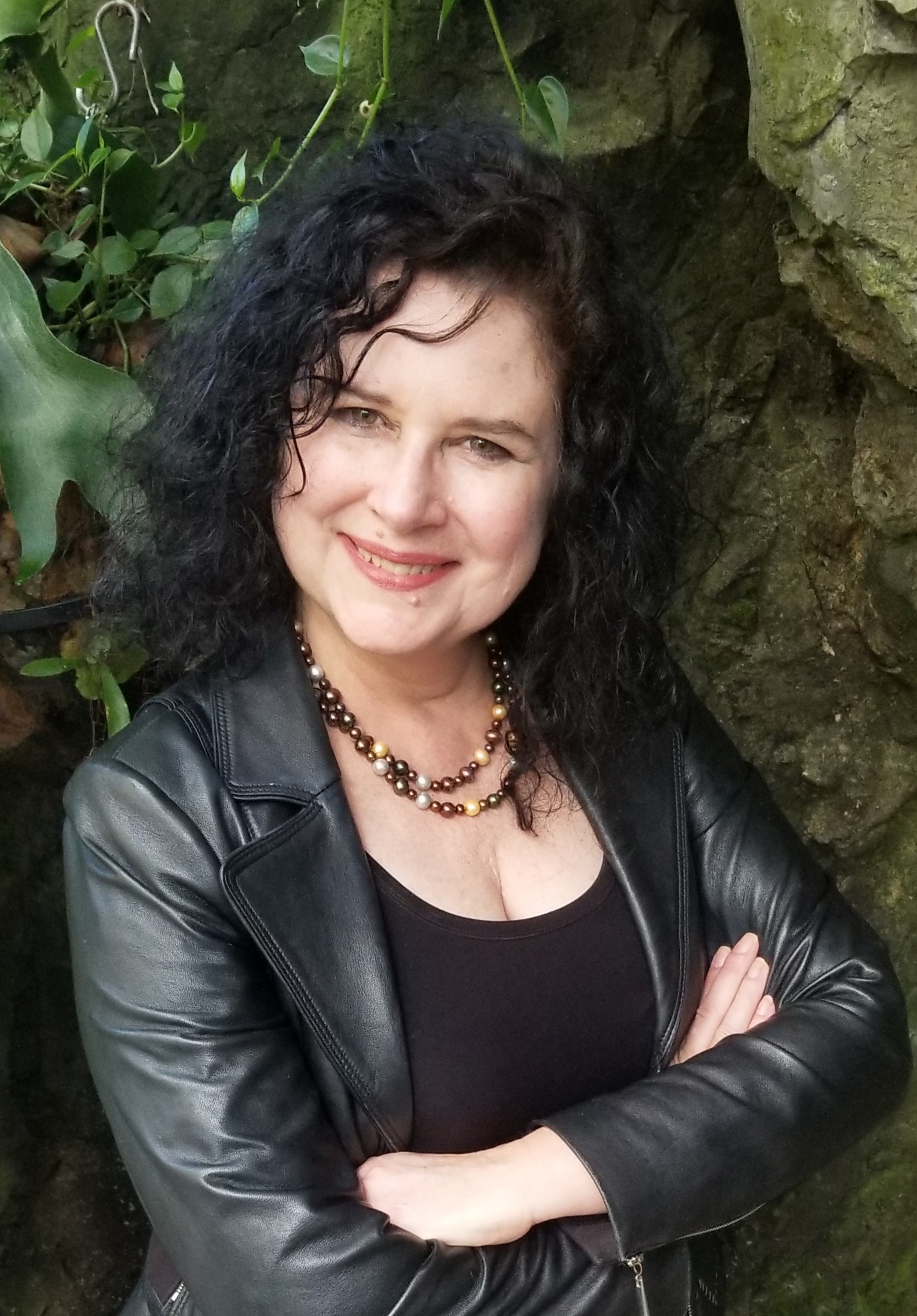
Mary Anna Evans is an award-winning author, a writing professor, and she holds degrees in physics and engineering, a background that, as it turns out, is ideal for writing her Justine Byrne series, which began withThe Physicists’ Daughter and continues with her new book, The Traitor Beside Her. She describes Justine as “a little bit Rosie-the-Riveter and a little bit Bletchley Park codebreaker.”
Mary Anna’s crime fiction has earned recognition that includes two Oklahoma Book Awards, the Will Rogers Medallion Awards Gold Medal, and the Benjamin Franklin Award, and she co-edited the Edgar-nominated Bloomsbury Handbook to Agatha Christie.
I write about the Saxon kingdom of Mercia a lot. I thought it had been entirely unintentional until now. But has it?
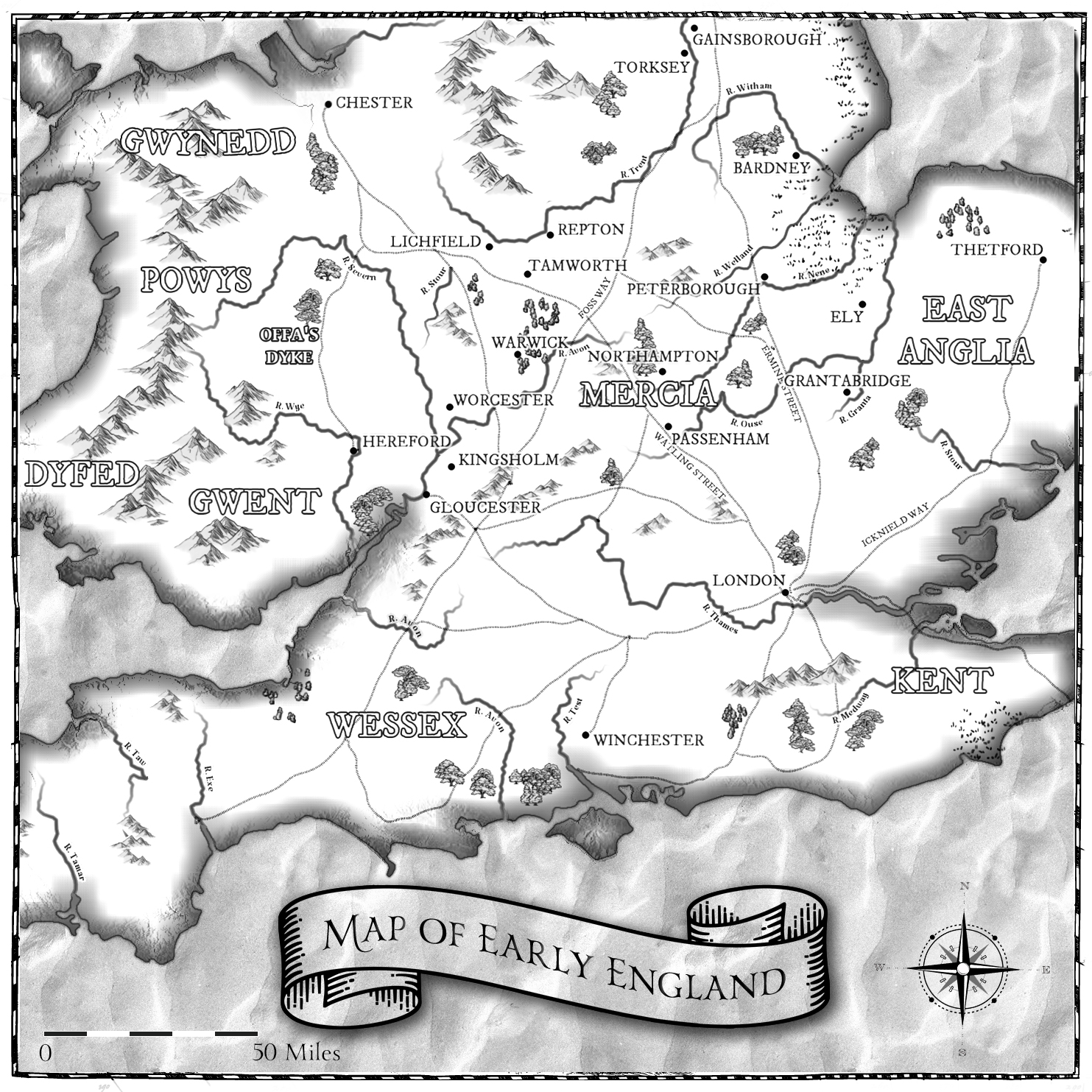
I grew up in an area that would one have been in Mercia. From a seemingly young age, I knew Mercia had once been a kingdom in its own right. I knew I lived in the centre of what had once been a mighty kingdom. The local church’s name, St Chad’s, was a dedication to a priest who converted the Mercians to Christianity. Tamworth, the next city along, was also a capital of Mercia (and where much of the Son of Mercia is set). Repton, a little further afield, a Mercian royal mausoleum, so when I went to university and began to study the period, I was, of course, drawn to that kingdom, to Mercia and to all it could offer me.
The Early English kingdom of Mercia is unfortunate in having no extant records surviving from the height of its power and reach. Northumbria has the works of the Venerable Bede and his Ecclesiastical History of the English People. Wessex has the Anglo-Saxon Chronicle (ASC) – a collection of nine extant ‘versions’ of the same chronicle but with some later regional bias. Mercia has none of these things – although one of the ASC’s may be more Mercian in tone than others. Mercia also has a collection of surviving charters, and also many, many sculptures, that can be dated to this era.
It’s believed that any Mercian annalistic records that existed were destroyed by the Raider Viking attacks that gained in intensity throughout the ninth century. This is highly possible. It means that we never truly ‘hear’ the story of Mercia. We hear a Northumbrian view of Mercia. And we hear a Wessex view on Mercia. What of Mercia itself? We also hear views of Mercia from Alcuin and his collection of letters from the later eighth century.
Students of Early England are taught very much in a set chronological pattern of the Golden Age of Northumbria in the seventh century, the Supremacy of Mercia in the eighth and then the slow but seemingly unstoppable expansion of Wessex to claim all of England under one kingship so that by the time we reach 1066, England as we know it today, exists and is ruled by one king. This glosses over the fact that these kingdoms all existed simultaneously. They all fought and argued amongst one another. They all had ambitions to rule much more of modern England than their kingdom borders necessitated.
And, of course, the joy of redressing the balance a little is never far from my mind. I aim to make sure that people know of Mercia and don’t just think of its growth, supremacy and decline, as though the kingdoms of Northumbria and Wessex were more to blame for what befell Mercia than its own kings and inhabitants.
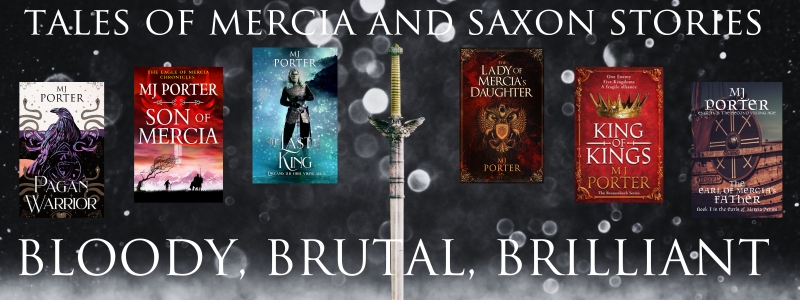
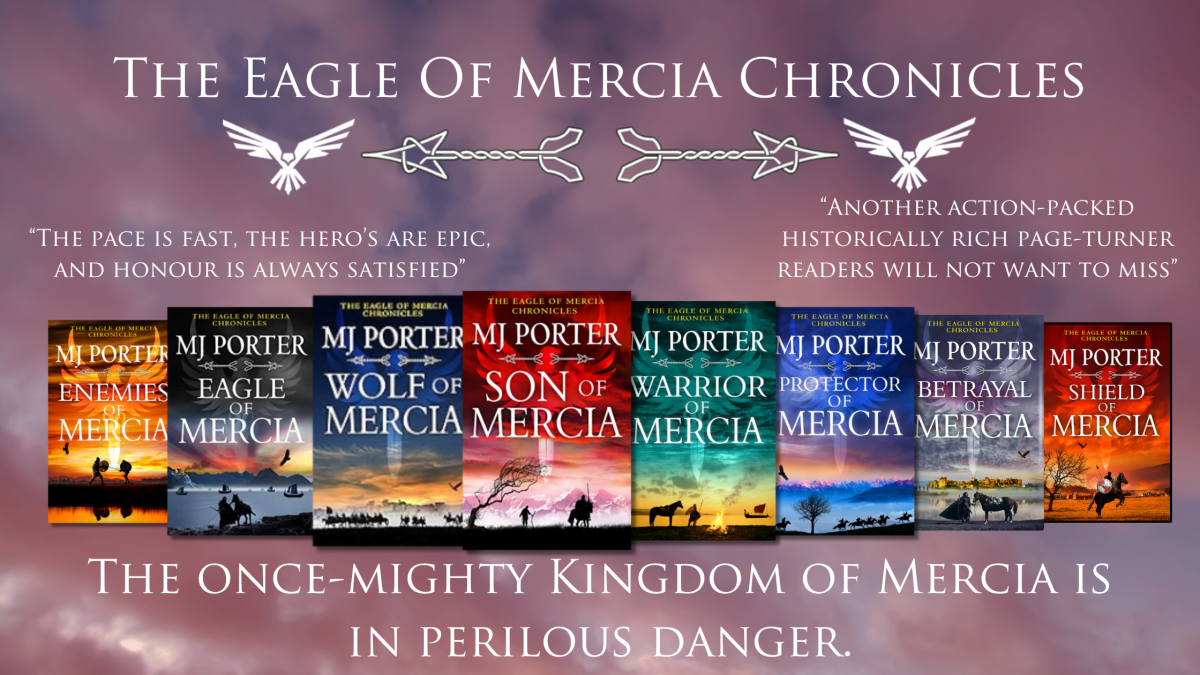
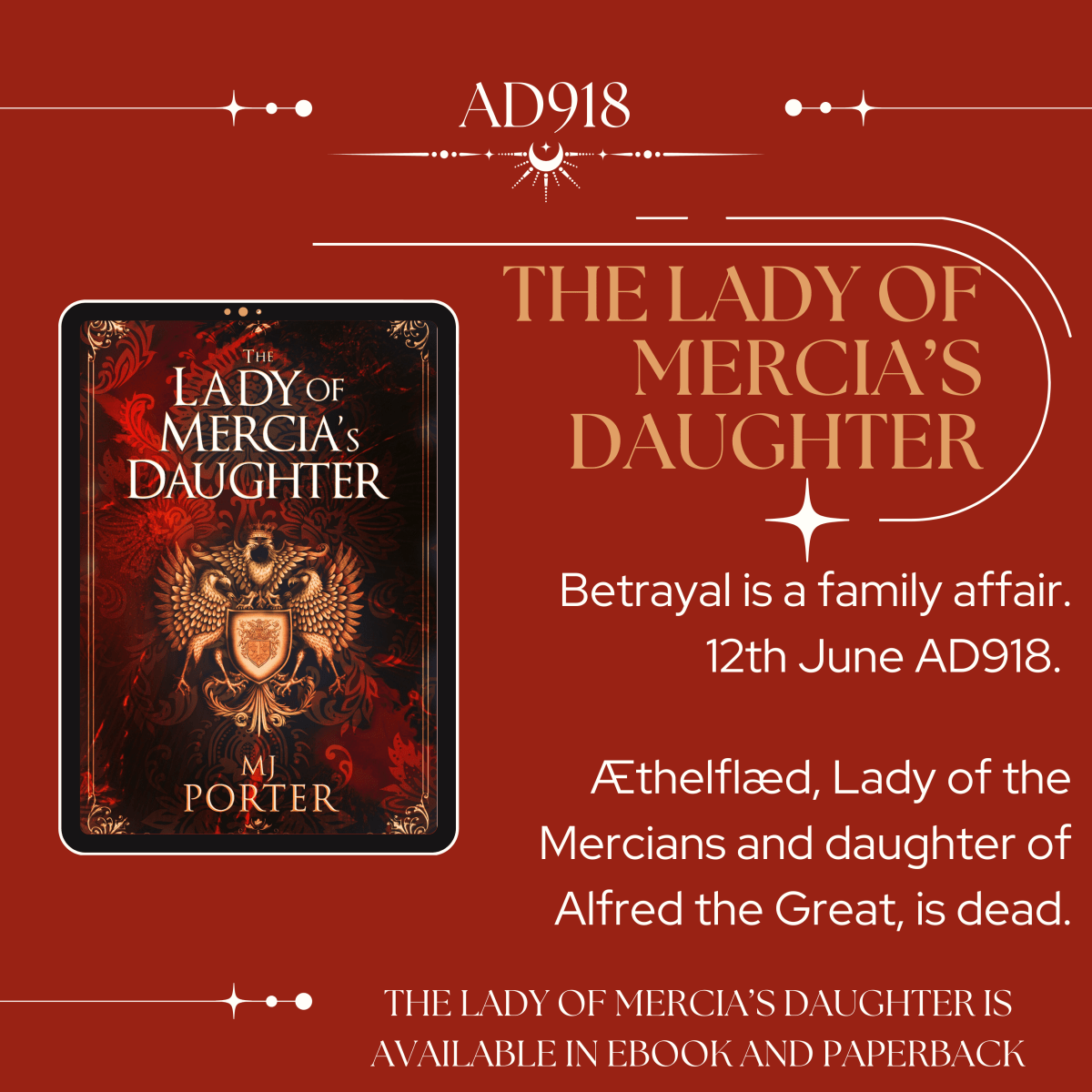
And so Mercia? What of Mercia during the Golden Age of Northumbria (the Gods and Kings trilogy)? What of Mercia through the decline of its supremacy (the Eagle of Mercia Chronicles), through the Viking Raider attacks and the growth of Wessex (the Mercian Ninth Century), after the death of Lady Æthelflæd (the Lady of Mercia’s Daughter) and what happened to Mercia during the final one hundred years of Saxon England (The Earls of Mercia series)?
What indeed? It’s not a small task, but it’s one I’ve set myself. And I’m far from finished with it. I have plans for more new titles, in time.
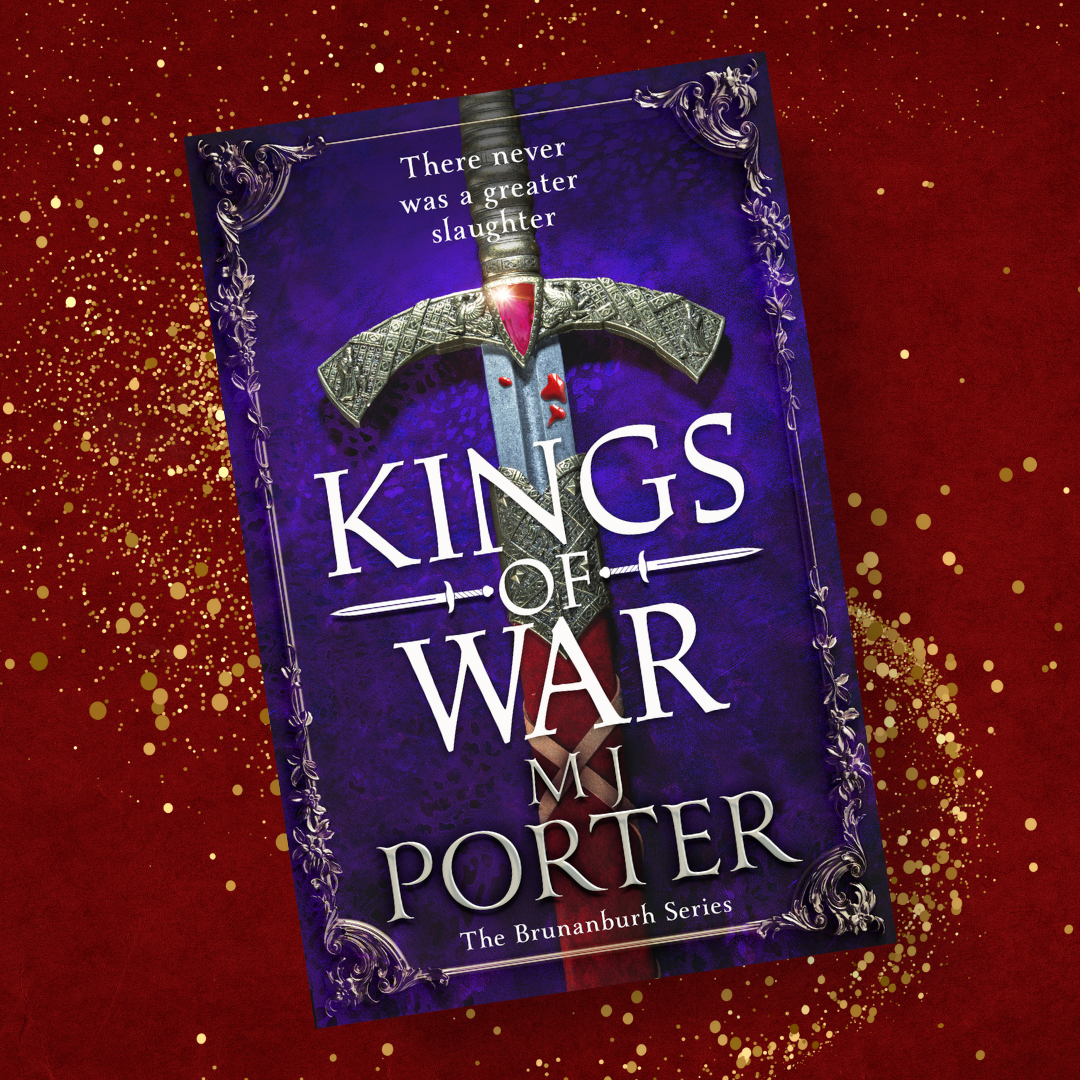
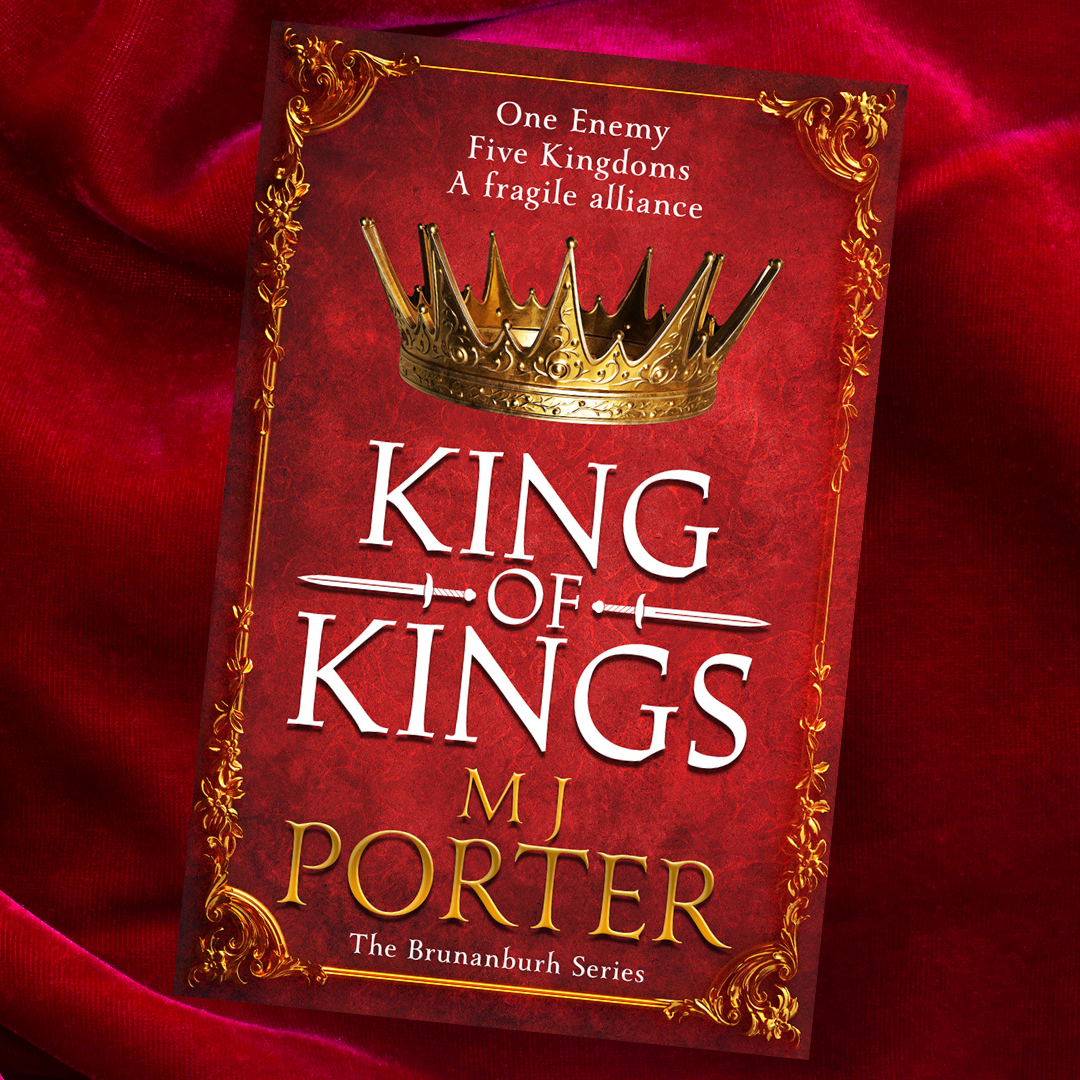
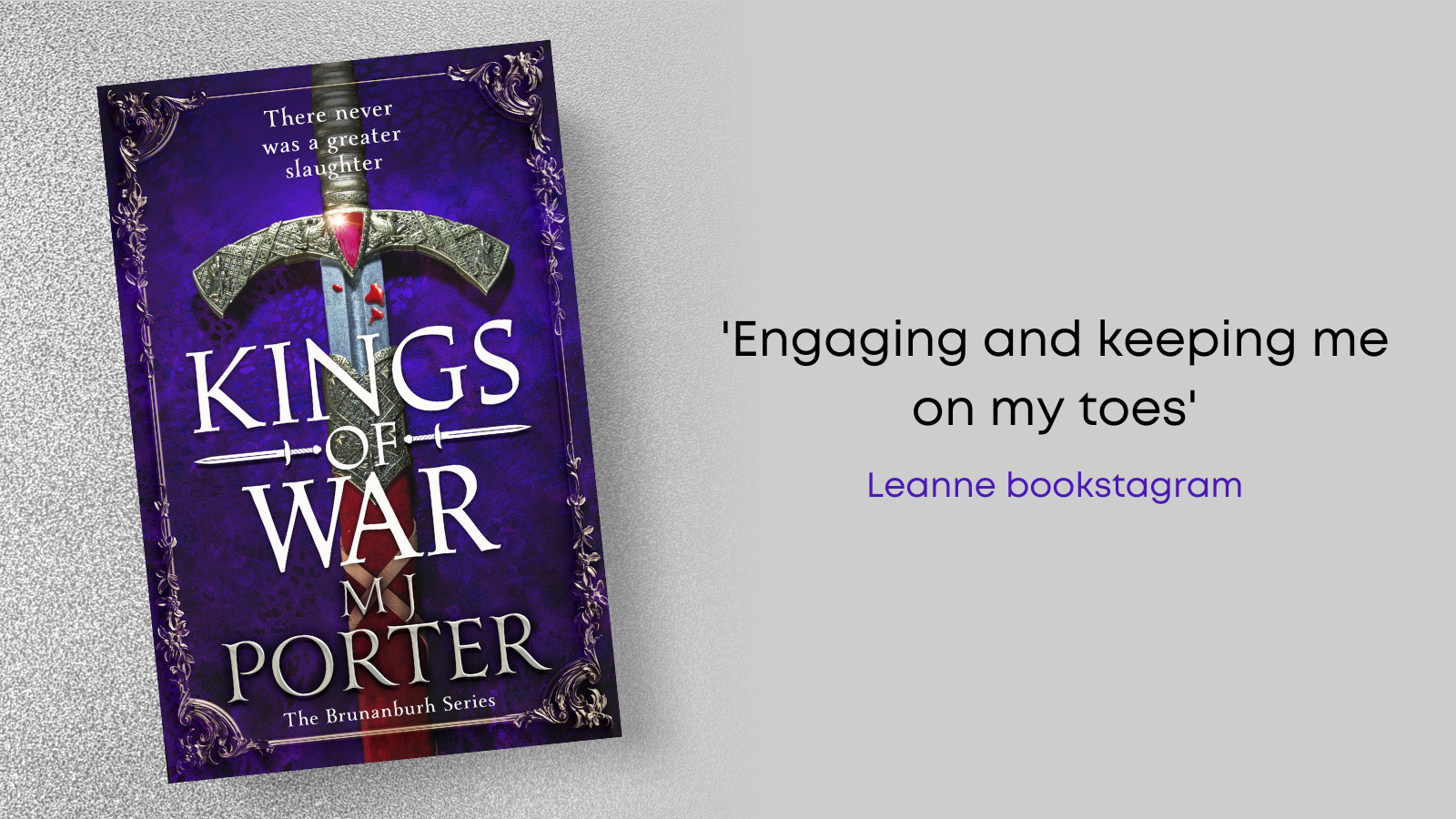
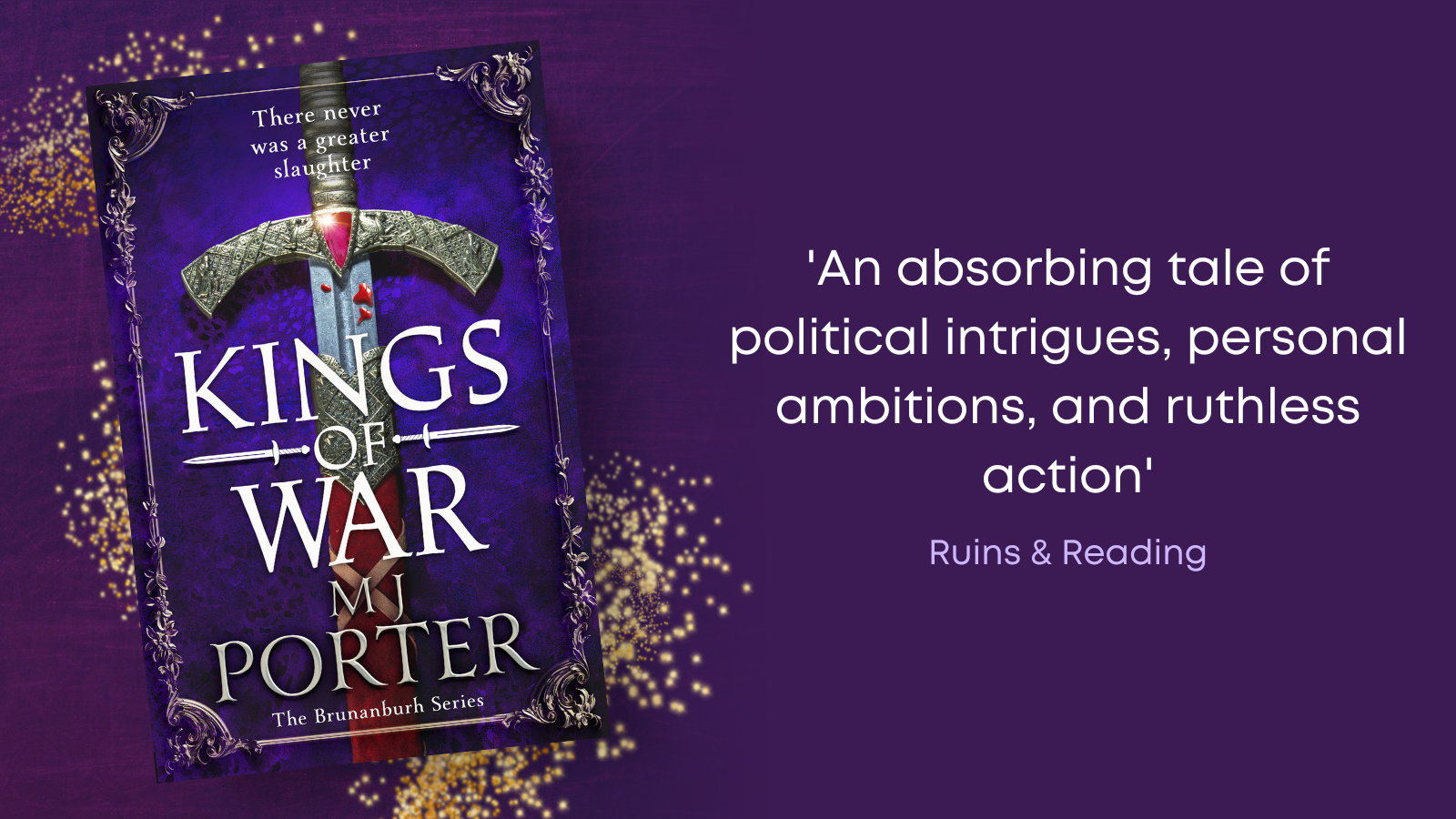
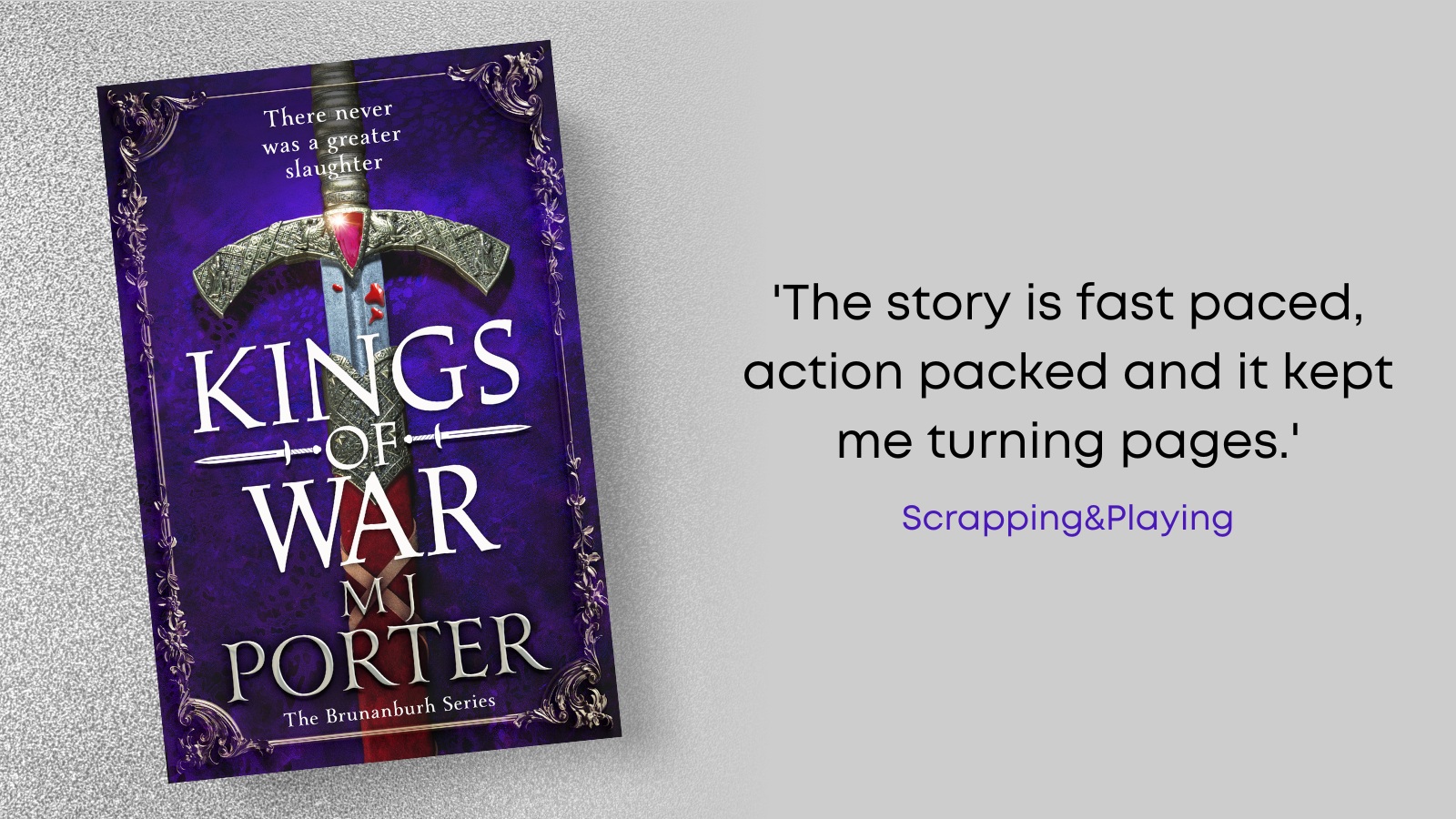
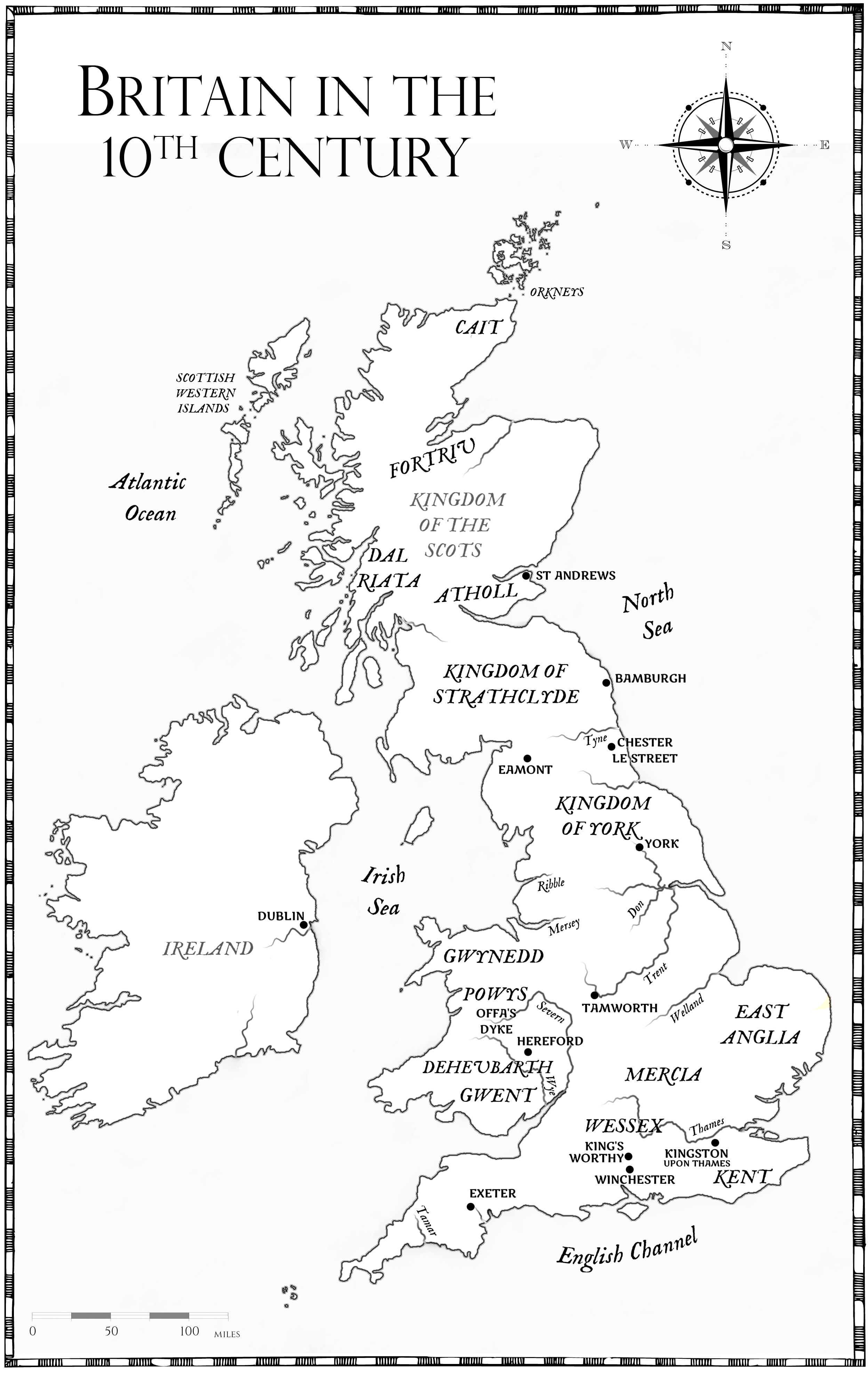
It’s been a month since the release of Kings of War, the sequel to King of Kings. This is the story of the battle of Brunanburh fought in 937. (Check out my post on where exactly Brunanburh was fought). It’s been a mad and busy month, so I thought I’d take a moment to reflect and say thank you my readers for the fab ratings/reviews and for taking a chance on my version of what led up to and happened at the battle of Brunanburh.
If you’ve not yet tried it, then King of Kings is still 99p on Amazon UK/Kobo and Kings of War is just £1.39 and both are available in ebook, audio, paperback and hardback.
Since Kings of War was released, I’ve also handed over book 3 in the series, and can reveal that the title is Clash of Kings, and it is available for preorder already.
Here’s the blurb:
Can the King of the Scots and the Dublin Norse triumph against a united England?
AD934
King Athelstan of the English has been successful in uniting the many kingdoms of Britain against one enemy, the Viking raiders.
But men who are kings don’t wish to be ruled.
Constantin, King of the Scots, rebelled against the Imperium and was forcibly brought to bend the knee to Athelstan and England at Cirencester.
His son Ildulb seeks bloody vengeance from Athelstan following the battle at Cait and the death of his son.
Olaf Gothfrithson, king of the Dublin Norse, having asserted his power following his father’s death has his sights set on reclaiming Jorvik.
Can the united might of the Scots and the violence of the Dublin Norse, descendants of the infamous Viking raiders, bring King Athelstan and his vision of the united Saxon English to her knees?
An epic story of kingsmanship that will result in the pivotal, bloody Battle of Brunanburh, where only one side can be victorious.
Sometimes, it seems to me, that fiction and non-fiction authors of the Saxon era believe the stories they’re told about Saxon England which are actually the result of much later sources. This of course, means that the later stories, more often than not the work of Norman pseudo-historians writing in the 1100s and later, grow in popularity while fewer people understand that the stories are not only not contemporary, they might have been written down hundreds of years after the events they allegedly describe and discuss.
I make no bones of the fact that understanding the sources of the Saxon period is complex and difficult. Much of it depends on what a scholar, or a reader, might take as the ‘level of credibility.’ Some people will take saints lives at face value, others will not. Some will find value in poems and some will not. Some, and I include myself in this, will misconstrue the Anglo-Saxon Chronicle and realise they were reading it all wrong.
There are really very few sources available for the modern reader. The Anglo-Saxon Chronicle is very well known, but perhaps not the bones of how it was constructed (please see Pauline Stafford’s book After Alfred for a comprehensive, and frankly, mind-blowing discussion). The words of Bede are often cited. There are charters, wills, legal documents, some poetry and saints lives, as mentioned above. This is not a huge amount to build a narrative upon, and yet historians have done this for many years – to some the increasing amount of archaeological information (often contradictory) is an annoyance, but for others, it has made the merits of the surviving written word more questionable. We should be asking, ‘why do we know what we know,’ as opposed to lapping it up and assuming its authenticity.
Another problem is the scarcity of the surviving documents, and the fact that very, very few of them survive in contemporary formats. With the best will in the world, what is copied isn’t always correct and equally, the temptation to embellish mustn’t be ignored, and that’s before we return to the heart of the problem. What was written was written for a purpose. As today, everything contains bias, it exhibits their intentions (Bede wrote an ecclesiastical history – the clue is in the name), while the Anglo-Saxon Chronicle was a Wessex based endeavour, at least in the beginning. The surviving nine recensions changed hands on more than one occasion, and the bias subsequently changed with it. We imagine monks labouriously copying out the texts, letter by letter, but what if the words were written by female religious? Or not by the religious at all? What if they were a state-sponsored endeavour to present their patron in the best possible light? Who was that patron? Was that patron always the same one? We don’t, it appears, have the ‘original’ version of the Anglo-Saxon Chronicle. The versions available to us are all copies – written out at various points from the tenth to the twelfth century, and then again, heavily annotated during the Tudor era.
And this is merely another step along the way. Few can read these precious sources in their original format or even in their original language. We rely on translations, which allow a fresh wave of bias, and also, understanding. Our world is different to the world the Saxons lived within. They had different contexts for some words. While researching for my non-fiction book, I was amazed to discover the work of Sarah Foot and the Veiled Women of England, and her assertion that the word ‘nonne‘ might not have meant a cloistered nun, as we assume from the similarity of the two words.
We don’t know far more than we do know. There is a temptation to ‘plug’ the gaps with any available knowledge. And that’s not a problem, providing the author confirms it is fiction, not non-fiction. I write fiction, but I know the non-fiction the stories are built upon (hopefully). I write extensive historical notes for all of my books. I play with the possibilities, and purposefully reinterpret the ‘gaps’ but I don’t pretend that what I write is factual.
We have almost no images of anyone who lived in Saxon England. There are contemporary images of King Athelstan and his nephew, King Edgar. I can’t think of a single contemporary image of a woman. The Bayeuax Tapestry dates to after the end of Saxon England. We might have something which was held, or commissioned by a Saxon woman, and a queen, if the embroideries found in St Cuthbert’s tomb were indeed made by Lady Ælflæd, the second wife of King Edward the Elder.
We do have coins, more often than not from archaeological or metal-detecting finds. They do allow us a tangible hold on this part of history, and increasingly are adding to the need to rewrite the written words that have survived. We also have increasing archaeological finds, but again, and as no expert in archaeology, there is also a thin line. Archaeologists often set out to ‘find’ something. What they find often isn’t that ‘thing’ but in the past, the temptation to present only limited information has allowed certain narratives to stand, which are only now being understood, just as with increasing study on the written sources.
When writing about Saxon England, we must be wary of all of these things – we need to be aware that very rarely is something what we expect it to be, and equally, we must remember that the people of Saxon England were just that, people. They would have been irrational, selfish, violent, horrible, brutal, honest, religious, fervent, foolish, intelligent or not.
And so, writing Saxon England is far from a simple task. It is very rare to be able to categorically state that something is ‘wrong’. It is even rarer to be able to categorically state that something is ‘correct.’ The work of a fiction writer might be easier than that of a non-fiction writer, but the fiction writer has to recreate people as well as a coherent narrative, and there are always people who will be happy to argue with those interpretations. And that is all they are, interpretations – but so, if non-fiction writers are honest enough to admit – is much of their work as well.
(I’ve not even discussed the problems of trying to write a coherent piece on the history of the British Isles at this time – contending with Old Norse, Old Irish, Old English, Old Welsh, Latin and no doubt, other languages that I’ve failed to mention).
That said, the era is fascinating. It’s worth investing in it, and taking the time to understand the complexities.
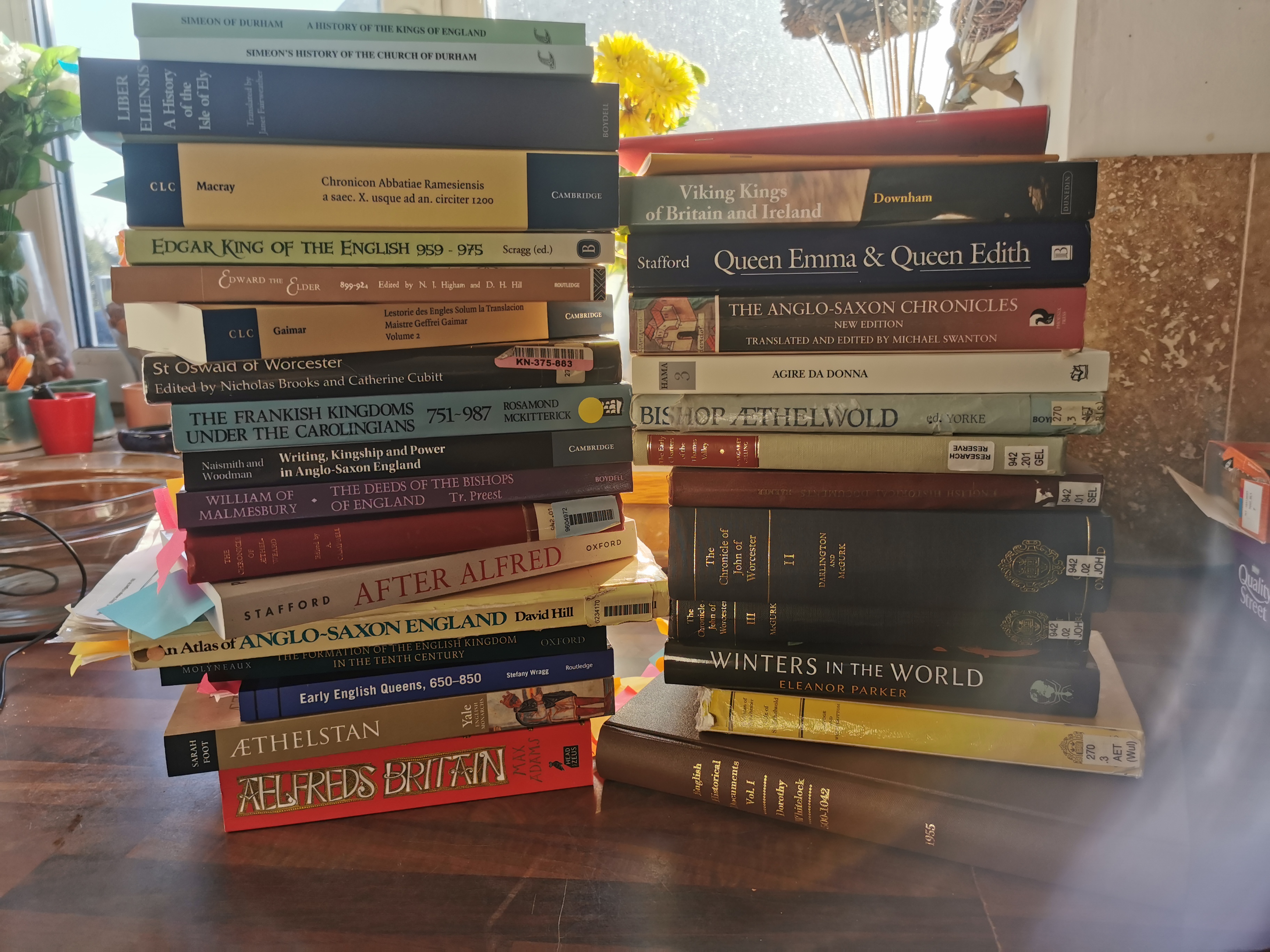
Looking to read about Saxon England? Here are some of the primary and secondary works that I highly recommend.
An Atlas of Anglo-Saxon England – David Hill (It took me years but I eventually found a copy on Abebooks that didn’t break the bank)
The Electronic Sawyer – online catalogue of Anglo-Saxon Charters – an amazing resource once you feel confident to explore the primary sources. Used to be part of the KEMBLE online resource but this seems to have disappeared, which is a great shame.
https://oepoetryfacsimile.org – Old English poetry collection, showing different translations, and reprints – fascinating – and revealing I’m not the only one with these concerns:)
Just a few of my Saxon books (some were from the local library)
As a rule of thumb, and it’s not always right – the more expensive a resource- the more academic the contents.
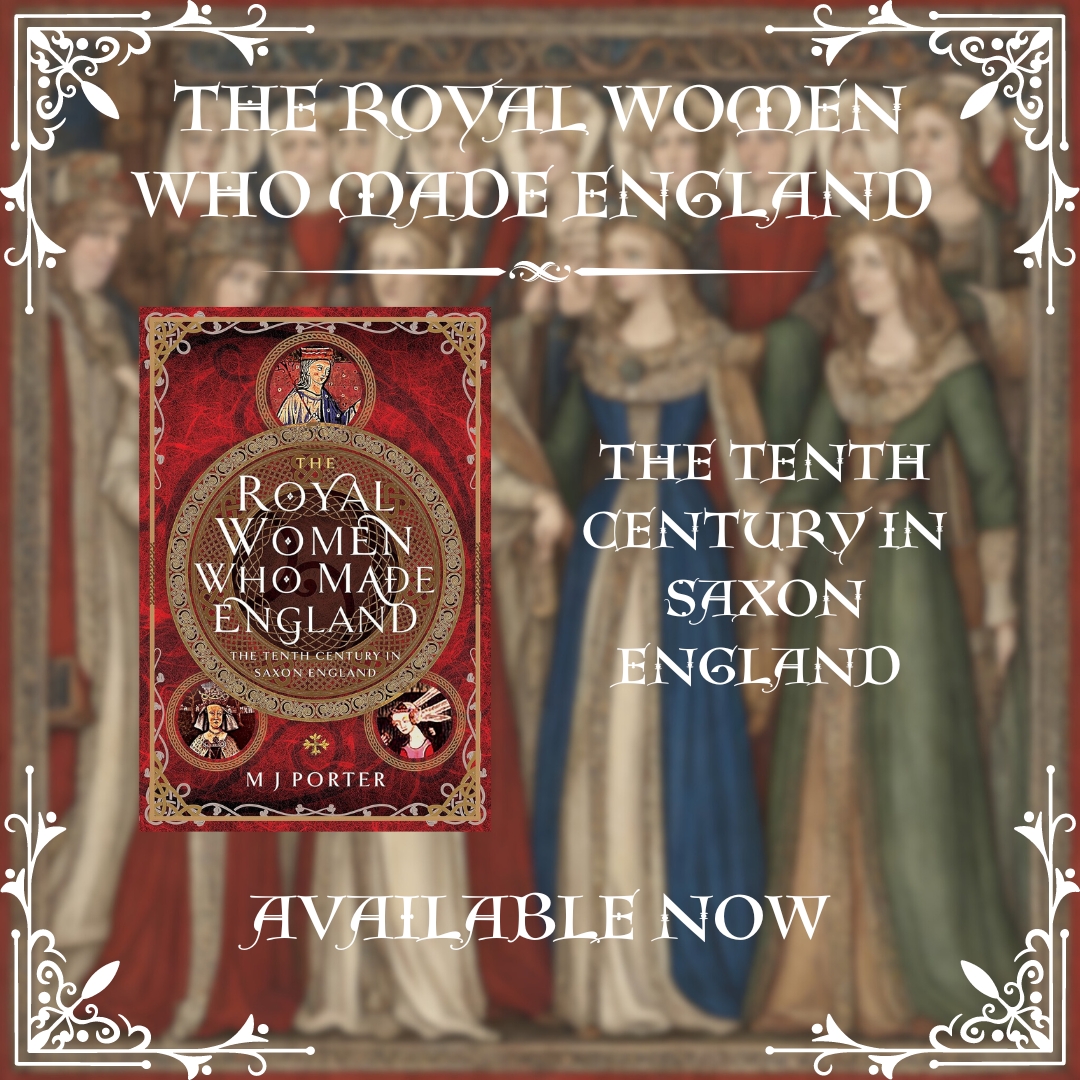
I recommend anything written by Max Adams, Nick Higham (sometimes uses his initials), Pauline Stafford, Ann Williams, Levi Roach and Simon Keynes, amongst many others. Once you’ve got to grips with the period/person/event you’re interested in, start to dig a little deeper with more academic articles.
And here are some of my favourite moments in the novel, as Icel marvels at what’s been left behind by those who came before him.
And then we come to a stop. In front of me, there’s a structure I can hardly comprehend. All around it are smaller piles of stones, no doubt the remains of other buildings. Beneath my feet, I walk on gravel and tufted grasses. Lifting my feet to peer down, I question whether the whole place was once laid with stone upon which to walk? I pause, gaze around me. In the distance, almost further than the entire settlement of Tamworth, are hints of more walls, more random pieces of white stone, discarded and abandoned. I don’t see any crops or greenery, only shrivelled weeds and little else. If I were to live here, where would I grow my food? Where would Wynflæd harvest her herbs from? The place is dusty and barren, just as Wulfheard told me.
There’s a forest of stone plinths guiding us towards the smell of campfires, with some immobile figures on them, all missing arms, or legs, or feet or even heads, their whiteness attesting to being made from some sort of priceless stone. To me, they look so similar to the bodies of the dead that, for a moment, I can’t quite decipher the intent behind them. And Brihtwold is no help. I can hardly ask what this place is because I should already know.
‘They’re in the centre of the settlement, in a stone-built building, one of the few that still stands to two levels. We head towards the east, and it’s in the centre. It’s difficult to miss it during the daytime, what with the ruined columns that still stand, and the statues that guide our steps towards it, but in the darkness of night, it might be a little more tricky.’
Wolf of Mercia is book 2 in The Eagle of Mercia Chronicles, and I had a lot of fun thinking about what the settlement might have looked like in the 830s, hundreds of years after Londinium was abandoned.
You can read all about Londonia below.
Londonia, the setting for Wolf Of Mercia
I’ve been avoiding taking my Saxon characters to London for quite some time. Bernard Cornwell, I feel, has done a fine job of explaining London to readers of his The Last Kingdom books. I wasn’t sure I had a great deal more to offer. But how wrong I was.
Londonia, the name suggested by Rory Naismith in his Citadel of the Saxons, for the combined settlement of the seventh century, seems a neat and tidy way of referencing both settlements, the Roman Londinium, and the Saxon Lundenwic. And yet, both settlements were so very different, it seems wrong to try and make them appear unified, at a time when they really weren’t. The ‘wic’ element of the name means it refers to a market site, somewhere where trade took place.
The River Fleet, now a lost river of London, once divided these two settlements, the one built of stone with high walls that may have been as tall as six metres, and the other, built of wattle and daub, and entirely open to the River Thames. It’s believed the lost River Fleet might have been substantial enough over 1200 years ago that a bridge was built over it. And this reminds travellers to the past of the mistake of assuming landscapes haven’t altered. It’s often easy to remember that buildings and roads might have changed, even that rivers might have changed course, and that sea levels might have risen or fallen, but an entirely lost river is a new one for me.
Neither should we consider Londinium, the Roman fort, to always have appeared as we imagine it. A brief look through the archaeological details for Roman Londinium, reveal that it changed dramatically over time. Most obviously, the walls for which it’s so famous, were not part of the original structure, they weren’t built until AD180-220. The earliest timbers so far found on the site date to nearly one hundred and fifty years earlier.
The number of inhabitants inside those stone walls seems to have waxed and waned throughout the period of Roman Britain, and there is some suggestion that it might have been abandoned as early as the fourth century, and therefore, much before the acknowledged ‘end of Roman Britain’ came in the early years of the fifth century. The bridge crossing from Londinium to Southwark, on the southern shore, may also have disappeared by the fourth century. There is therefore, a great deal to unpick. And for my characters, in the ninth century, just what would they have walked through? It’s an intriguing question. Would there have been abandoned statues, half-collapsed buildings, an eerie quiet, or would much of that have already disappeared, perhaps even been ‘robbed out’ as we know happened in other places, most notably along Hadrian’s Wall where stone often appears in the fabric of later churches.
As to Lundenwic? Are we to truly believe that it was little more than a boggy riverfront site? In fact, the location was chosen precisely to miss the boggy area from where the River Fleet would have joined the River Thames. But why move from behind those stone walls? The huge area of Londinium, was simply too vast for a much diminished population to attempt to control. The settlement that developed in Lundenwic was half as big as that of the Roman site, with a population of around 7000 (compared to an estimated 25,000-30,000 in Londinium at its peak). It consisted of small buildings, tightly packed together with small alleyways leading off from a few main roads. But, these main roads were fitted with wooden drainage ditches. While it might not have been the majestic sweep of a huge walled city, it wasn’t quite the hovel it’s often been betrayed as.
And, these two separate settlements, didn’t last for that long individually. But, in the year AD830, it’s just possible that young Icel may have walked through a serviceable, if abandoned Roman settlement when he visited Londinium, and that was too good an opportunity not to incorporate into the new book, Wolf of Mercia.
Ælfwynn, the daughter of Æthelflæd of Mercia and her husband, Æthelred was born at some point in the late 880s or early 890s. It’s believed that she was an only child, although it does appear (in the later accounts of William of Malmesbury – an Anglo-Norman writer from centuries later) that her cousins, Athelstan, and his unnamed sister, were sent to Mercia to be raised by their aunt when Edward remarried on becoming king in 899. There is a suggestion that it might have been Alfred’s decision to do this and that Athelstan was being groomed to become king of Mercia, not Wessex.
Ælfwynn is mentioned in three charters. S367, surviving in one manuscript, dates to 903, where she witnesses without a title. S1280, survives in two manuscripts, dates to 904 and reads in translation.
‘Wærferth, bishop, and the community at Worcester, to Æthelred and Æthelflæd, their lords; lease, for their lives and that of Ælfwynn, their daughter, of a messuage (haga) in Worcester and land at Barbourne in North Claines, Worcs., with reversion to the bishop. Bounds of appurtentant meadow west of the [River] Severn.’[i]
[i] Sawyer, P. H. (Ed.), Anglo-Saxon charters: An annotated list and bibliography, rev. Kelly, S. E., Rushforth, R., (2022). http://www.esawyer.org.uk/ S1280. See above for the full details under Æthelflæd
Historians have reconstructed this haga in Worcester in ‘The city of Worcester in the tenth century’ by N Baker and R Holt.
In S225, surviving in one manuscript, dated to 915, Ælfwynn witnesses below her mother. Hers is the second name on the document. This could be significant, as she would certainly have been an adult by now, was she already being prepared as the heir to Mercia on her mother’s death?
Ælfwynn is named in the Anglo-Saxon Chronicle in the C text under 919. ‘Here also the daughter of Æthelred lord of the Mercians, was deprived of all control in Mercia, and was led into Wessex three weeks before Christmas; she was called Ælfwynn.’[i]
[i] Swanton, M. trans and edit The Anglo-Saxon Chronicles, (Orion Publishing Group, 2000), p.105
And from there, we hear nothing more of Lady Ælfwynn, the second lady of the Mercians. Even though this is the first record of a ruling woman being succeeded by her daughter.
There’s no further mention of Ælfwynn in The Anglo-Saxon Chronicle. It’s been assumed that she became a nun, and she might well be referenced in charter S535, surviving in one manuscript, and which Eadred granted at the request of his mother, dated to 948, reading,
‘King Eadred to Ælfwyn, a religious woman; grant of 6 hides (mansae), equated with 6 sulungs, at Wickhambreux, Kent, in return for 2 pounds of purest gold.’[i]
[i] Sawyer, P. H. (Ed.), Anglo-Saxon charters: An annotated list and bibliography, rev. Kelly, S. E., Rushforth, R., (2022). http://www.esawyer.org.uk/ S535
Bailey has suggested that, ‘In view of its close association with the women of the royal family, and of Eadgifu’s patronage of Ælfwynn (in S535), I would venture to suggest that it is possible she too may have ended her days at Wilton.’[i]
[i] Bailey. M, ‘Ælfwynn, Second Lady of the Mercians’, Edward the Elder, 899-924 Higham, N.J. and Hill, D. H. ed (Routledge, 2001), p.125
This would mean that rather than ruling as her mother would have wanted her to, Ælfwynn was overruled by her uncle, who essentially stole her right to rule Mercia as soon as he possibly could on her mother’s death. It must be said that he might have later paid for this with his life if he was indeed putting down a Mercian rebellion in Farndon when he died in 924.
Alternatively, there is another beguiling theory that Ælfwynn might not have become a nun but was, in fact, married to Athelstan, an ealdorman of East Anglia, known as the ‘Half-King,’ because of the vast control he had in East Anglia. It’s long been believed that this label might well have resulted from the fact that Athelstan was an extremely powerful and well-landed nobleman who was much beloved by the Wessex royal family and its kings. However, it might well be because he was indeed married to the king’s cousin (under Athelstan, Edmund and Eadred). If this is the case, and it’s impossible to prove, then Ælfwynn, as the wife of Ealdorman Athelstan, had four sons, Æthelwold, Æthelwine, Æthelsige and Ælfwold, and these sons would be friends and enemies of the kings of England in later years. She might also have been given the fostering of the orphaned, and future King Edgar, which would also have made these men the future king’s foster brothers.
‘he [Athelstan Half-King] bestowed marriage upon a wife, one Ælfwynn by name, suitable for his marriage bed as much as by the nobility of her birth as by the grace of her unchurlish appearance. Afterwards she nursed and brought up with maternal devotion the glorious King Edgar, a tender boy as yet in the cradle. When Edgar afterwards attained the rule of all England, which was due to him by hereditary destiny, he was not ungrateful for the benefits he had received from his nurse. He bestowed on her, with regal munificence, the manor of Weston, which her son, the Ealdorman, afterwards granted to the church of Ramsey in perpetual alms for her soul, when his mother was taken from our midst in the natural course of events.’
Edington, S and Others, Ramsey Abbey’s Book of Benefactors Part One: The Abbey’s Foundation, (Hakedes, 1998) pp.9-10
If this identification is correct, ‘This would explain why she was considered suitable to be a foster-mother to the ætheling Edgar. It may even explain why Edgar was considered in 957 suitable to rule Mercia.’[i]
[i] Jayakumar, S. ‘Eadwig and Edgar’, in Edgar, King of the English, 959-975, ed. D Scragg (Boydell Press, 2014), p.94
If Lady Ælfwynn did survive beyond the events of 919, it seems highly likely she would have continued her friendship with her cousin, Athelstan, when he became king of Mercia, and then Wessex and then England. It’s also highly likely that she might have rallied support for him in Mercia.
Certainly, the first known occurrence of a woman succeeding a woman in Saxon England ended in obscurity for Lady Ælfwynn.
So, who is my Lady Ælfwynn?
Well, she’s a warrior woman, reeling from the unexpected death of her mother. She is her mother’s daughter. She knows what’s expected of her, and she has no problem contending with the men of the witan, her uncle, Edward king of Wessex, or indeed, the Viking raiders. She and Rognvaldr Sigfrodrsson have a particularly intriguing relationship.
Here’s the beginning of The Lady of Mercia’s Daughter
‘The men of the witan stand before me in my hall at Tamworth, the ancient capital of the kingdom of Mercia. The aged oak beams bear the brunt of centuries of smoking fires. Some are hard men, glaring at me as though this predicament is of my making. They are the beleaguered Mercians, the men from the disputed borders to the north, the east, and the west, if not the south. They’re the men who know the cost of my mother’s unexpected death. And strangely, for all their hard stares and uncompromising attitudes, their crossed arms and tight shoulders, they’re the men I trust the most in this vast hall. It’s filled with people I know by name and reputation, if not by sight.
Those with sympathy etched onto their faces are my uncle’s allies. These men might once have understood the dangers that Mercia faces, but they’ve grown too comfortable hidden away in Wessex and Kent. Mercia has suffered the brunt of the continual encroachments while they’ve been safe from Viking attack for nearly twenty years. Some are too young to have been born when Wessex was almost extinguished under the onslaught of the northern warriors.
Even the clothes of the sympathetic are different from those with hard stares. Not for them, the warriors’ garb. There are no gaping spaces on warrior belts where seaxes and swords should hang, but don’t, as weapons must not be worn in my presence.
No, they wear the luxurious clothing of royalty, even if they’re not members of the House of Wessex. They have the time, and the wealth, to ensure their attire is as opulent as it can be. They don’t fear a middle-of-the-night call to arms. They don’t need to maintain vigilance or continuously be battle-ready. They don’t have to fight for their kingdom and their family at a moment’s notice or be ready to lose a loved one or face a fight to the death.’
Lady Eadgifu was the third wife of Edward the Elder (r.899-924), king of the Anglo-Saxons. Edward the Elder was the father of King Athelstan, and a whole host of daughters, as well as five sons. Lady Eadgifu would, it seems, have been young when she married the aging Edward the Elder, and that meant that she long outlived him, and also, that her three children (possibly four, but I’ve opted for three) were young when their father died. And two of these children were sons, Edmund (born c.921) and Eadred (born c.923). Her daughter, Eadburh, is thought to have been the oldest of the three children, born c.919.
While Lady Eadgifu, from what’s known (and it isn’t much, as there are few surviving charters from the end of Edward’s reign) perhaps had little role to play while her husband lived, other than wife and mother to the king’s children, following his death, she became increasingly significant. She was the daughter of an ealdorman, who perhaps died just before her birth, and her family are said to have had connections with Kent. Indeed, it’s often stated that she brought her husband Kent with their union. By that, what’s often meant, is the loyalty of the Kentish people. Remember, at this time, we’re still just before the creation of ‘England’ as we would now recognise it.
Sadly, very little is known about Lady Eadgifu (and she’s not alone in this – many of the royal women ‘disappear’ at points in the historical record, and on occasion, are entirely lost.) We know about a land dispute she was involved in, and also much more information for after King Athelstan’s reign (her step-son, who was quite likely older than she was).
Indeed, it has been said that
‘Nor is it surprising that Eadgifu, as the consort of the previous king, served little role in her stepson’s court.[i]
‘the enhanced position [of Lady Eadgifu] may also have been developed specifically for the widowed Eadgifu as part of an alliance with her stepson Æthelstan [Athelstan] in which she supported his position and he recognised her sons as his heirs.’[i]
[i] Yorke, B. ‘The Women in Edgar’s Life,’ in Edgar, King of the English, 959-975 Scragg, D. ed (The Boydell Press, 2008), p.146
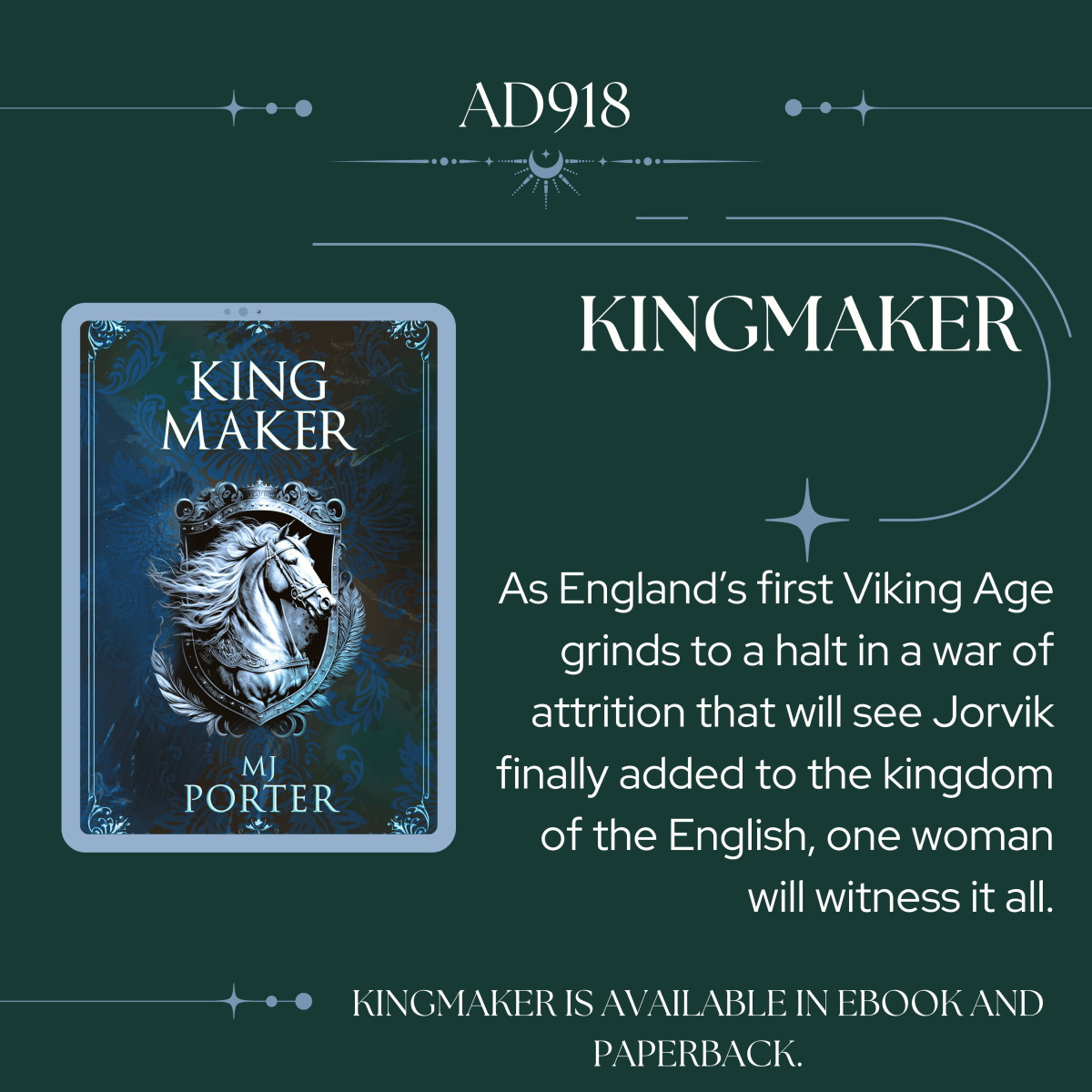
And it is this option that I’ve decided to explore in Kingmaker. Lady Eadgifu was wife to a king. She would have known her worth, even when faced with a stepson as the king of the English, and another stepson, and stepdaughters, who perhaps didn’t share any love for their, potentially, younger stepmother.
But the story doesn’t stop there. In later years, during the reigns of her sons, and her grandsons, Eadgifu would have been a powerhouse at the centre of English politics. Read her story, for it is, the story of England between the reigns of King Alfred, and King Æthelred II – allegedly, a century of peace between the English and the Norse. Read on to find out the truth of that assertion.