Author of Saxon historical fiction and non-fiction, 20th-century historical mysteries, and Norse-inspired historical romantasy. Book reviewer and blog host.
Confusingly, Athelstan the Ealdorman shares the same name as King Athelstan of the English, a fact I allow the pair to find amusing because of the uncertainty it causes.
Athelstan is the son of an ealdorman, and one of four brothers, although one has already died . Athelstan, Eadric and Æthelwald are held in high regard by King Athelstan and all become ealdormen.
In my version of events, Athelstan is married to Lady Ælfwynn, the cousin of King Athelstan and daughter of Æthelflæd, the lady of Mercia, a suggestion that isn’t widely accepted, but is certainly a possibility, thus making him a member of King Athelstan’s extended family. His epithet, the Half-King could have arisen because he was indeed married to the king’s cousin (under Athelstan, Edmund and Eadred).
Even if Athelstan Half King wasn’t married to the daughter of Lady Æthelflæd of Mercia, it seems he was married to an Ælfwynn. He was a powerful man, building a dynasty, and also part of a powerful dynasty. Between him and his brothers, they must often have been found at the court of the king in the tenth-century. Athelstan was the ealdorman of East Anglia, his older brother, Ælfstan, one of the ealdormen of Mercia (930-934) before his death, while Eadric was an ealdorman of Wessex (942-949), and Æthelwald was an ealdorman of Kent (940-946).
Athelstan the ealdorman seemed an obvious choice for me to develop as a character in the series. He’s closely bound to the ruling family, married into it, and he’s also a warrior who fought at the battle of Brunanburh. His influence continues to grow in Clash of Kings. His relationships with his brothers was also fun to explore. Powerful men, with warriors at their command, and fiercely invested in the future of the English kingdom.
With Clash of Kings being released on 13th January 2024, I thought I’d reintroduce my readers to the main characters.
Here’s Edmund, ætheling and Prince of the English.
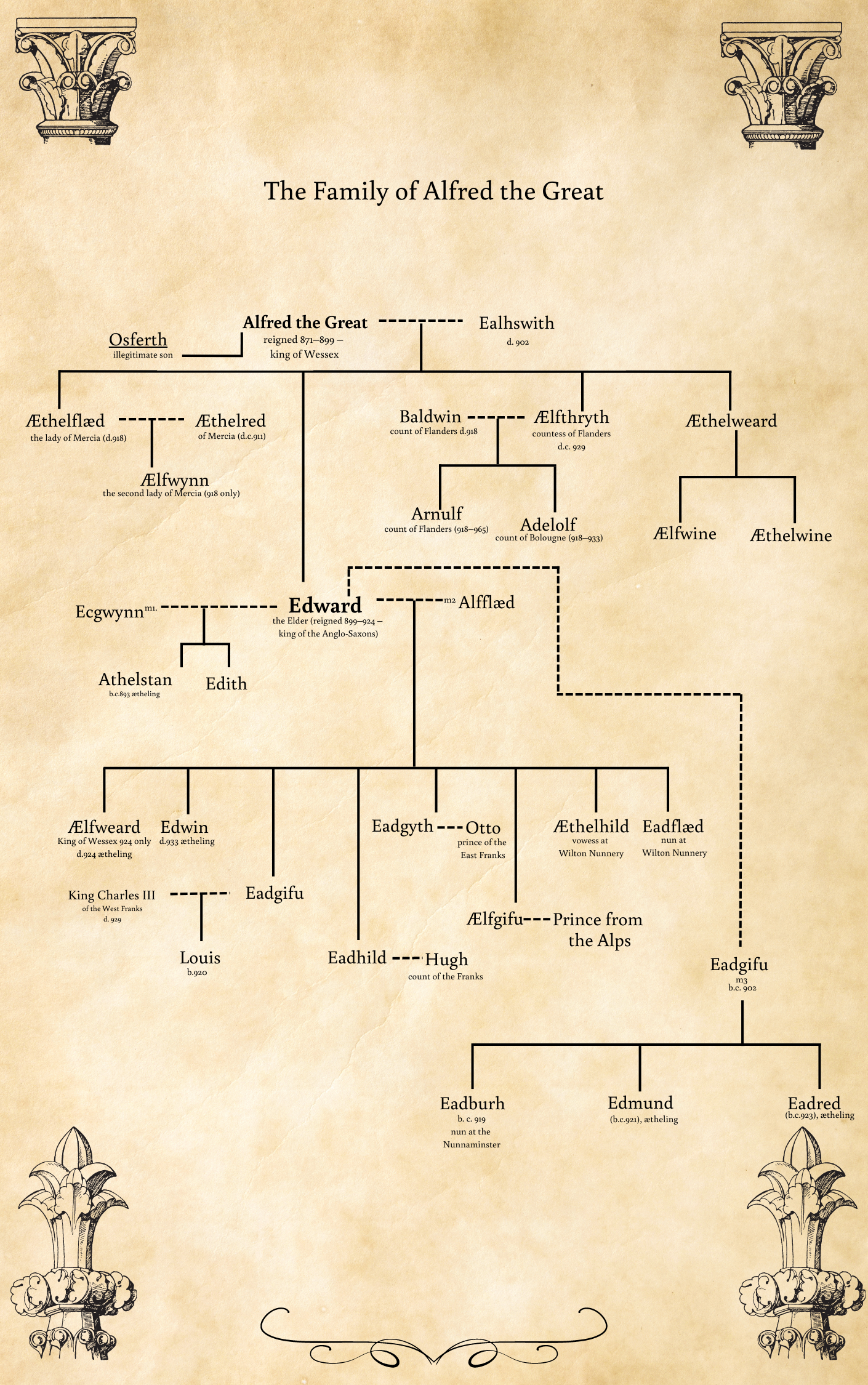
Edmund, of the House of Wessex, is the second-youngest halfbrother of the king of the English, Athelstan. His date of birth is not known for sure, but it’s believed to have been in about 921, as he’s said to have been 18 when he became king on Athelstan’s death. His mother is Lady Eadgifu, the third wife of Edward the Elder. He has a full brother, Eadred, even younger than him, and a sister who may have been older than him, and who became a cloistered woman.
Family tree by Boldwood Books
‘And the Ætheling succeeded to the kingdom; and he was then 18 years old.’ (ASC A)
Edmund would only have been very young when his father, Edward the Elder, died in 924. It’s doubtful whether he had any memory of him at all. It’s long been believed that his mother, Lady Eadgifu, was responsible for raising him and his younger brother. What precisely Edmund was doing during the reign of his older half-brother isn’t known for sure. He is said to have fought beside him at the Battle of Brunanburh, but some historians cast doubt on this.
As a character in Kings of War and Clash of Kings, Edmund has become a man throughout the previous books, and developed a close relationship with Athelstan. But, he’s still young. He’s riven with indecision, and while delighted to have been involved in the success of the battle of Brunanburh, he’s happy to let his older brother rule England. There is also an on-going thread which pitches Edmund against the family of Constantin, the king of the Scots. Events in Clash of Kings will have a profound effect on young Edmund.
My portrayal of Constantin, the king of the Scots, is of course fictional in the Brunanburh series, but he is based on a historical individual, Constantin (e) II, so who exactly was he?
Constantin is a fascinating character. Again, and as with Athelstan, his exact date of birth is unknown, but it must have been, at the latest, by 877/8, when his short-reigned father died.
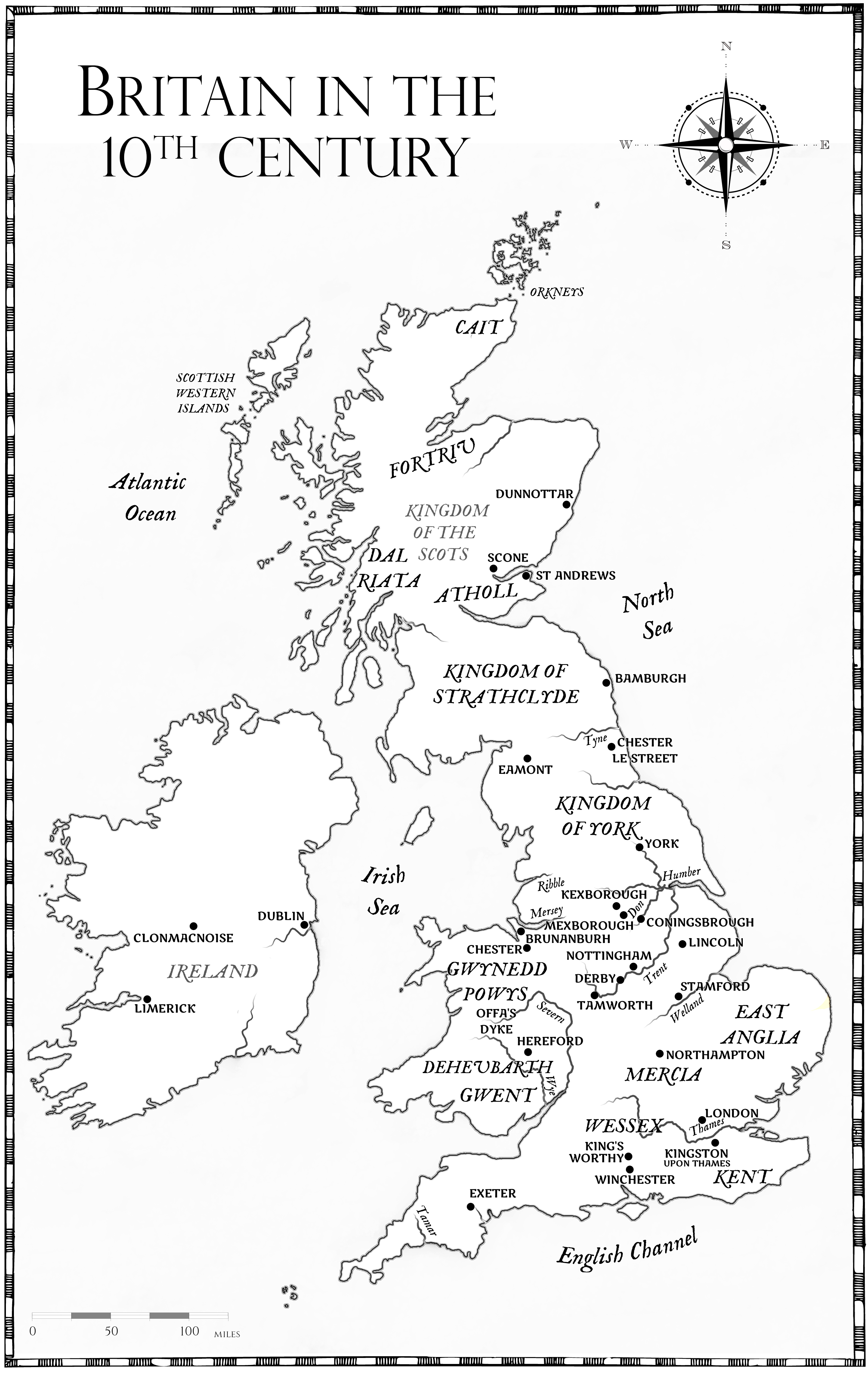
By 900, Constantin was the king of the Scots (we think – there is some confusion about this). This wasn’t yet quite Scotland, but it was getting there. The ancient kingdoms of Cait, Fortriu, Atholl and Dal Riata, were ruled by one king, Constantin. But, he hadn’t succeeded his father, Aed, but rather a man named Domnall II, his cousin. At this time there were two rival dynasties and they strictly alternated the kingship.
Affairs in the kingdom of the Scots often intermingled with those of the independent kingdom of Bamburgh, Strathclyde, and of course, the Norse, or Viking raiders, if you will. Indeed, the entry recording Constantin’s death in the Annals of Ulster, reads as though there was often strife.
‘Constantinus son of Ed held the kingdom for xl years in whose third year the Northmen plundered Dunkeld and all Albania. In the following year the Northmen were slain in Strath Erenn…And the battle of Tinemore happened in his xviii year between Constantin and Ragnall and the Scotti had the victory. And the battle of Dun Brunde in his xxxiiii year.’ (Alex Woolf, From Pictland to Scotland, 789-1070,p.126)
Constantin, ruling for decades, and I mean decades, seems to have brought much needed stability to the kingdom, as affairs there very much mirrored the emerging ‘England’ to the south.
‘Constantin’s reign has increasingly come to be see as one of the most significant in the history of Scotland. Not only was it very long, at least forty years, but it was also the period during which conflict and diplomatic relations between a kingdom recognisably ancestral to Scotland and one recognisably ancestral to England first occurred.’ (Alex Woolf, From Pictland to Scotland, 789-1070, p.128)
Constantin allied with the rulers of Bamburgh, and York, and also, on occasion, both Æthelflæd of Mercia and Edward the Elder, after her death. But, he seems to have been quite flexible in his thinking, and was prepared to pick and choice as he saw fit.
By the beginning of Clash of Kings, Constantin would have been in his mid-sixties. He was certainly a more than adequate counterpart to Athelstan, king of the English, no doubt helped by his sons and grandsons, as his reign continued, but his participation at the battle of Brunanburh, and its subsequent failure, might well have severely undermined him.
With a successor, Mael Column, desperate to succeed him, and his son, Ildulb, just as keen to succeed Mael, it seems that Constantin is about to enter one of the most turbulent periods of his kingship.
Read Clash of Kings to discover what happens in the kingdom of the Scots.
I’m delighted to welcome Justin Newland to the blog with a guest post about his new book, The Mark of the Salamander.
The Mark of the Salamander is the first part of a two-book series entitled The Island of Angels, which tells the epic story and secret history of England’s coming of age during the Elizabethan era.
Queen Elizabeth of England and King Philip II of Spain opposed each other in a religious war in the late 16th century. Even as enemies, they shared plenty in common.
Elizabeth was known as the Virgin Queen because she never married. King Philip II of Spain was known as ‘the Prudent’ because he was frugal with his money.
Process El Escorial Monastery
She too was a spendthrift, and was exceedingly careful with money, and so in the same way as Philip, she was prudent too. For many years, Philip lived in the castle- monastery of El Escorial near Madrid. There he was surrounded by Hieronymite monks, who lived an austere life in the image of the their founder, the biblical scholar, St Jerome. Living like a monk, study, austerity and discipline were Philip’s daily fare.
Elizabeth on the other hand, moved around using the River Thames to head from her favourite palace at Richmond to her other royal estates at Whitehall and Greenwich.
She also went on royal progresses to visit the estates of her senior courtiers, like Kenilworth, Osterley and Theobalds.
Elizabeth I
Astrologically, Elizabeth was a Virgo, actually a double Virgo, because her rising sign was also Virgo. Curiously, Virgo means virgin. The coincidences don’t end there. Because the flag that the Spanish Armada flew had, on one side of it, an image of Madonna, Mary, the mother of Jesus who was herself a virgin.
Philip was himself a Taurus, the bull, and bullish he was in defiance. Stubborn as a mule, he sent several Armadas to invade England, but none of them succeeded. Taurus and Virgo are both Earth signs; Elizabeth and Philip shared that in common too.
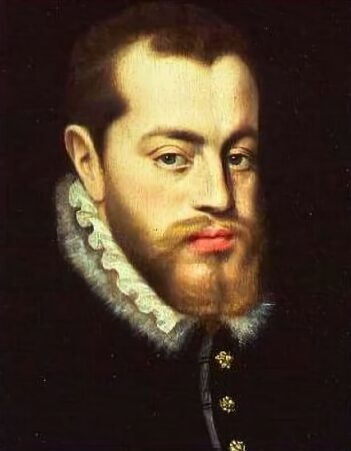
King Philip II of Spain
The boundaries between the two nations would not have been as explicit had England and Spain been at war today. Today there would be sanctions on trade between the warring nations. In the 16th Century, things were not as cut and dried.
For example, it would have been quite normal for the Queen, Drake and the other English aristocrats to enjoy a glass of Spanish wine and sherry. The other irony to this is that one of the major exporters of said Spanish wine was from the estates of the Duke of Medina Sidonia. Said Duke was the commander of the Spanish Armada sent to invade England’s shores in the summer of 1588.
Elizabeth’s personal motto was ‘Semper Eadem’ which means ‘Always the Same.’ But what was ‘the same’ where she was concerned? She saw herself as married and in service to the people and land of England, and that never varied. She saw herself as protector of the realm, and that never varied either. She too was always fierce in her defiance against the Duke of Parma, who had invaded the Netherlands on behalf of King Philip. This resolution is enshrined in the words from her famous Tilbury speech:
“… I think foul scorn that Parma or Spain, or any prince of Europe, should dare to invade the borders of my realm.”
By comparison, King Philip’s motto was Orbis non Sufficit, which means the World is Not Enough. If the world is not enough, what is? The solar system? The universe? This motto reeks of hubris, or excessive pride. Perhaps this is what led King Philip to miss out certain orders to his naval commander, the Duke of Medina Sidonia.
Two opponents. One a man, who rested in one place, static. The other a woman, who moved from place to place, ever mobile. One led the life of a scholarly monk. The other danced her way into the hearts of the English people and gave her name to an era.
Here’s the blurb
1575.
Nelan Michaels is a young Flemish man fleeing religious persecution in the Spanish Netherlands. Settling in Mortlake outside London, he studies under Queen Elizabeth’s court astrologer, conjuring a bright future – until he’s wrongly accused of murder.
Forced into the life of a fugitive, Nelan hides in London, before he is dramatically pressed into the crew of the Golden Hind.
Thrust into a strange new world on board Francis Drake’s vessel, Nelan sails the seas on a voyage to discover discovery itself. Encountering mutiny, ancient tribes and hordes of treasure, Nelan must explore and master his own mystical powers – including the Mark of the Salamander, the mysterious spirit of fire.
THE MARK OF THE SALAMANDER is the first in The Island of Angels series: a two-book saga that tells the epic story and secret history of England’s coming of age during the Elizabethan era.
Justin Newland’s novels represent an innovative blend of genres from historical adventure to supernatural thriller and magical realism. His stories explore the themes of war and religion, and speculate on the human’s spiritual place in the universe.
Undeterred by the award of a Doctorate in Mathematics from Imperial College, London, he conceived his debut novel, The Genes of Isis (Matador, 2018), an epic fantasy set under Ancient Egyptian skies.
The historical thriller, The Old Dragon’s Head (Matador, 2018), is set in Ming Dynasty China in the shadows of the Great Wall.
The Coronation (Matador, 2019) was another historical adventure and speculates on the genesis of the most important event in the modern world – the Industrial Revolution.
The Abdication (Matador, 2021) is a mystery thriller in which a young woman confronts her faith in a higher purpose and what it means to abdicate that faith.
The Mark of the Salamander (Book Guild, 2023) is the first in a two-book series, The Island of Angels. Set in the Elizabethan era, it’s an epic tale of England’s coming of age.
His work in progress is the second in the series, The Midnight of Eights, the charting of the uncanny coincidences that led to the repulse of the Spanish Armada.
Author, speaker and broadcaster, Justin appears on LitFest panels, gives talks to historical associations and libraries and enjoys giving radio interviews and making podcasts.
Born three days before the end of 1953, he lives with his partner in plain sight of the Mendip Hills in Somerset, England.
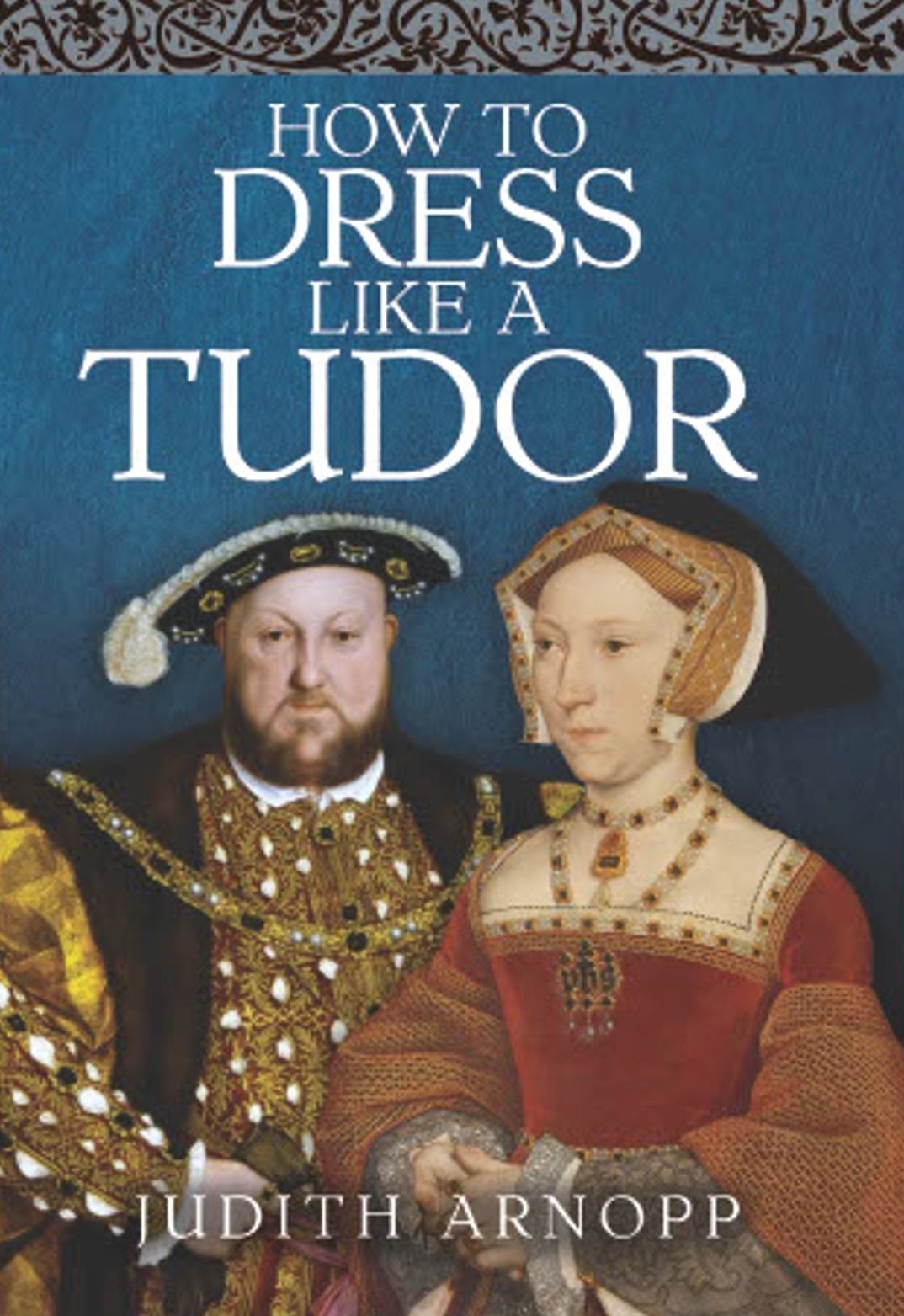
Have you ever hankered to dress like a Tudor lord or lady, or perhaps you prefer the status of goodwife, or costermonger, or even a bawd?
For beginner historical reenactors, the path to authenticity can be bewildering and sometimes intimidating. Judith Arnopp uses her own experience, both as a historian and a medieval/Tudor lady, to make your own journey a little easier.
The author traces the transition of fashion from the relatively subtle styles popular at the court of Henry VII, through the carefully constructed royal grandeur of Henry VIII, Edward VI, and Mary I to the pinnacle of majesty and splendid iconography of Elizabeth I.
In contrast to the magnificence of court come the ordinary folk who, subject to sumptuary laws and regulations, wore garments of a simpler cut and cloth – a strata of society that formed the back bone of Tudor England.
This brief history of 16th century fashion examines clothing for both rich and poor, adult and child, and offers tips and tricks on how to begin to sew your first historically inspired garment, this book is aimed at helping the beginner learn How to Dress like a Tudor.
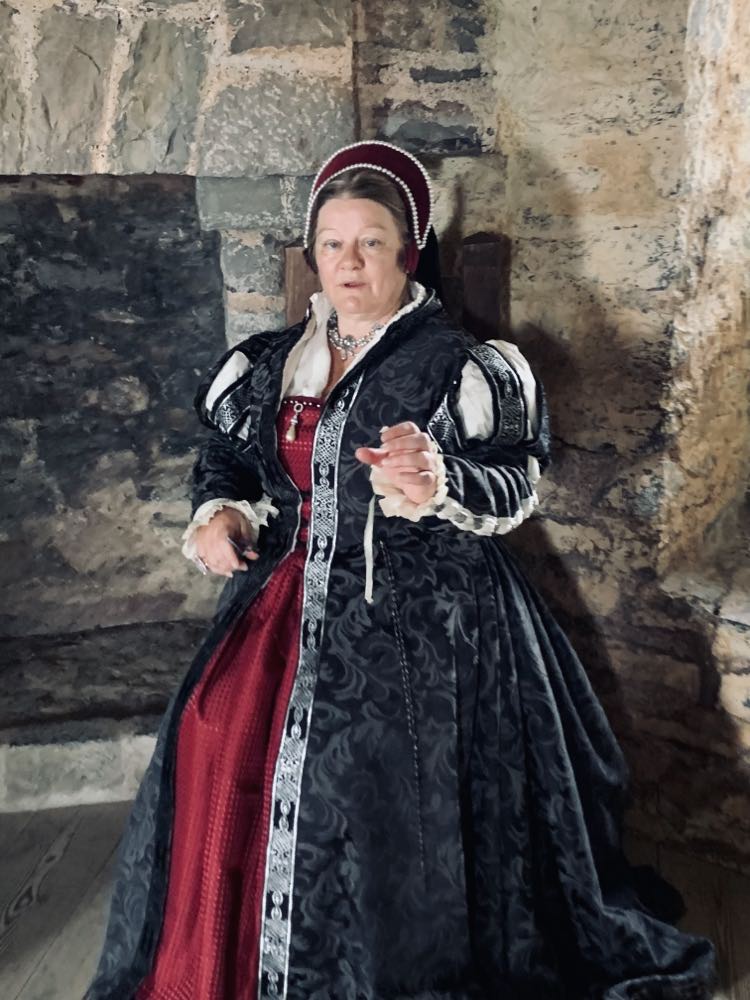
Judith writes historical fiction set during the late medieval and Tudor period. Her usual focus is on the women who lived close to the monarch, women like Margaret Beaufort, Elizabeth of York and Mary Tudor but more recently has been writing from the perspective of Henry VIII himself. Her books are on Kindle, Audible and Paperback.
She also writes non-fiction, her work featuring in many anthologies and online magazines. Her latest non-fiction, How to Dress like a Tudor published by Pen & Sword Books is available now.
Judith is a founder member of a reenactment group The Fyne Company of Cambria, and began making Tudor costumes for herself, her husband, John, and other members of the group. It was this that inspired How to Dress like a Tudor and she hopes to write more non-fiction Tudor history in the future.
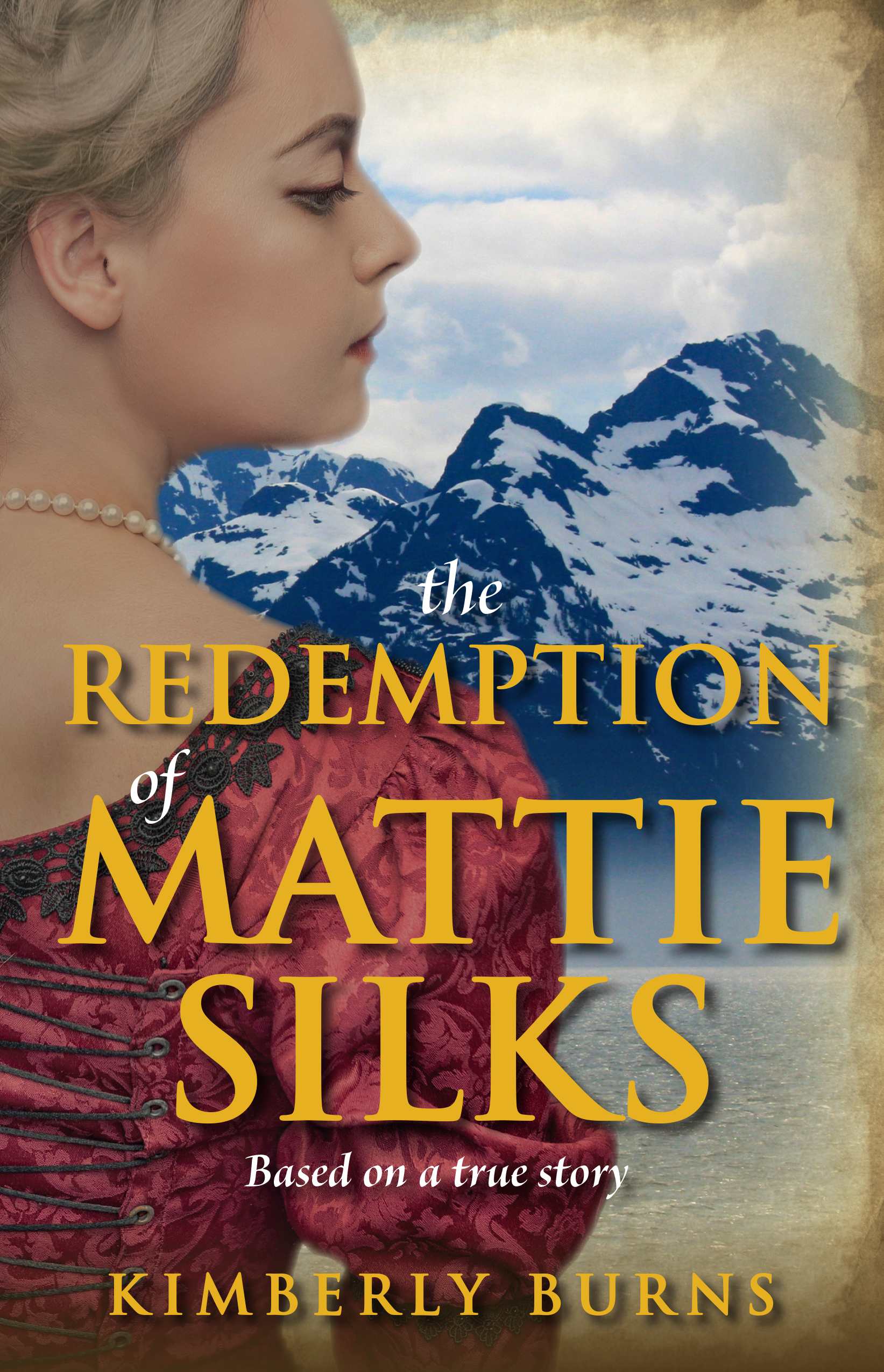
I’m delighted to welcome Kimberley Burns to the blog with a post about her new book, The Redemption of Mattie Silks.
Women of the Old West
Women of the Old West were pioneers and trailblazers, but not just in the sense that they gave up their homes and trekked into the wilderness. They also blazed trails in business, were pioneers of medicine and groundbreakers in politics.
Remember the old US Army advertising campaign: “We do more before 9AM than most people do all day”? My great-grandmother could have given any soldier a run for their money. With a baby on her hip and five more little ones trailing behind, she packed her valuables into a wagon and walked from North Carolina to Colorado. She spent the rest of her life on a homestead in the Colorado foothills, keeping the house and raising three more babies while also completing a man’s day’s work out on the range. She may have accomplished more before any given sunrise than I do in a good year. Sadly, stories of her and other remarkable but unknown heroines are being lost in the fog of history.
There were few acceptable careers for women in the 1800s, and certainly none that created wealth. Most working women struggled on subsistence earnings as laundresses, cooks, maids, or teachers. But in the West, where survival often depended on everyone pulling their weight, women could not afford to be shrinking violets. Their husbands and communities needed all hands to pitch in. The move west wrenched women from the customs, conventions, standards, and traditions with which they had been raised. They had to develop new codes of acceptable behavior, dress, and mores. In my novel The Mrs. Tabor, a local madam explains that a woman alone can act with the highest decorum and in the end, she will politely starve to death. The madam warns, “The law of survival always trumps the rules of etiquette.”
The need for labor gave Western women opportunities to create careers that their sisters in the East did not have. Women were often good with livestock, and ran cattle ranches, bred horses, or drove pack mules. It is estimated that 15% of homesteaders were single women. In an era when women could not sign a legal contract or open a bank account, female entrepreneurs owned restaurants, stores, and hotels in frontier towns.
In the mining boomtowns, most men preferred prospecting to planning infrastructure. This opened the door for the few women there to participate in government and improve the living conditions for their families and communities. In fact, many Old West towns lacked a school and church until the females organized the funding and building of these cultural institutions. White men may have explored the West, but white women settled it.
Western women also participated in politics decades before the constitution was amended to allow voting for all, regardless of sex. Wyoming Territory passed a women’s voting act in 1869, and the gals got right to work. Within a year the territory had female jury members, a bailiff and a justice of the peace. Other states and territories west of the Mississippi soon followed suit and women were voting in Colorado by 1893 and in Utah by 1896.
In a region where males greatly outnumbered females, some lonely men were of the opinion that woman’s suffrage might attract quality marriage candidates. Daring and hardy adventuresses would be drawn to a new life in the Wild West in they had a hand in shaping it. Delicate flowers accustomed to a steady life of comfort need not apply.
When their Eastern sisters were marching for the right to vote in matching white dresses, Western women were campaigning to be elected to public office themselves. All-lady town councils were elected in Oskaloosa, Kansas (1888) and Kanab, Utah (1912). In 1920, the same year that the 19th Amendment was finally ratified, Jackson, Wyoming elected an all-female mayor and city council. One of their descendants wrote, “There was a practical approach to it. [They said] we need this and we’ll do it ourselves.” Dubbed the Petticoat Rulers, they extended electric service, installed street lights, grated streets, created a town cemetery, collected taxes, and appointed a (female) town treasurer, marshal, and health officer.
Medical schools were graduating a handful of token female doctors in the late 1800s. Many of those found acceptance in the rough western territories. Perhaps citizens felt a lady doctor was better than no doctor at all. The television show Dr. Quinn, Medicine Woman was loosely based on the life of Doc Susie who served small mountain towns in the Colorado Rockies from 1893 until 1956. Imagine the patients she must have treated in a region filled with wild animals and wilder men. Her story and that of a few other early medical professionals are noted in state historical society collections, but most are unknown in the wider world.
Some women found work on the wrong side of the law. Pearl Hart robbed stagecoaches. Belle Star led a gang of cattle rustlers. Sing Choy, also known as China Mary, controlled the opium dens and Chinese prostitution in old Tombstone. The main character of my latest book, Mattie Silks, used her sharp business acumen to run one of Denver’s most successful brothels for over forty years.
Regardless of where they found employment, the women of the Old West displayed an incredible work ethic and courage enough to fill a library with adventure stories. But there is another, less glamorous trait they seemed to possess — pragmatism. If there was work to be done, they simply got to it. I don’t think many of the women who settled the wild frontier took any time to reflect on accomplishments or bask in any congratulatory accolades. There were few philosophical debates about equality of ability or opportunity. They were too busy, living by the motto, “Get ’er done!”
Here’s the blurb:
SEEKING REDEMPTION, SHE FINDS RETRIBUTION
In 1892, running one of the West’s fanciest brothels is a rough game. In a town filled with brazen criminals, corrupt police, zealous politicians, and morality committees, Madam Mattie Silks makes her fortune catering to Colorado’s gold and silver millionaires.
Notorious crime boss “Soapy” Smith is at the top of the Denver underworld. There are no rules for Smith’s gang. They solve problems with bribes and bullets. When Mattie’s husband stumbles into Soapy’s dealings, she struggles to protect him.
Gold is discovered in the Yukon and Mattie seizes the opportunity for adventure and profit. But Skagway, Alaska, is even more lawless than Denver. Mattie must use all her business sense and street smarts to safeguard those she cares about. Will it be enough? Or will Lady Justice again turn a blind eye?
Based on a true story, The Redemption of Mattie Silks is an action-packed tale of a woman succeeding in a man’s world even when the cards are stacked against her.
“The research on the era shines through, as do the grit and spirit of the characters. …A colorful and enthralling journey.”
~ K.T. Blakemore, award-winning author of The Good Time Girlsseries
“A nice, nuanced portrait of the complex underworld with fine and witty turns of phrase. A great Western romp!”
~ Randi Samuelson-Brown, award-winning author of TheBad Old Daysseries
Buy Links:
This title is available to read with #KindleUnlimited
Kimberly Burns grew up in Colorado hearing stories about the colourful characters of the Old West. She has degrees from the University of Colorado and the University of Hartford. Kimberly is a member of the Historical Novel Society, Western Writers of America, and Women Writing the West. She lives with her husband and black Lab in Leesburg, Virginia.
Her debutnovel The Mrs. Tabor won numerous awards including the Western Fictioneers Peacemaker Award for Best New Novel, a gold medal for Best Regional Fiction from the IndependentPublisher Book Awards, a National Indie Excellence Award, and a silver medal from the Colorado Independent Publishers Association EVVY Awards.
Kimberly and her unruly heroines make for an entertaining book talk. She is available to discuss her novels with book groups in person or online. Email her at info@kimberlyburnsauthor.com.
It’s often forgotten, in the great swirl of events throughout the eleventh century, that England wasn’t conquered once, but instead three times, by King Swein in 1013, by his son in 1016, and then by William the Conqueror in 1066.
England only reclaimed its English king with the death of King Swein shortly after he claimed the kingship, when Æthelred II, the much-maligned, king of England was restored, it’s said, by his nobility, provided he did ‘a better job’ of it (I paraphrase). At this time, Cnut, Swein’s son, wasn’t deemed as suitable to replace his father, while Æthelred II had many sons who could succeed him. Æthelred was deemed ‘an old man’ by now (born probably in about 966-8), but he had surviving sons from his marriage to his first wife, named as Ælfgifu, and also from the better known Lady Emma. The oldest of these sons,Athelstan, died in 1014, having made a name for himself as an honourable man. His will survives. His next youngest brother had also perished a decade ago, meaning Edmund was the oldest surviving son. In the great swirl of events, people forget Edmund was proclaimed king on his father’s death in April 1016, and that he ruled for a good sixth months, before his own death in November.
The relationship between Edmund and his father is difficult to unpick. It doesn’t seem to have been congenial. Æthelred II is most often accused of having overmighty subjects (somewhat ironic when they invited him back to England after Swein’s death), and there was a particular thorny problem of Eadric Streona, married, it’s said, to one of Æthelred’s daughters, and a tricky character. Eadric is associated with Mercia. To counter his reach, Edmund, married into a Mercian family in 1015, the story being that he rescued the woman from captivity and then married her. As romantic as that might sound, this was sound political expediency. In the tenth century, King Athelstan was strongly associated with Mercia, being declared king of Mercia before becoming king of Wessex. Edgar, in the 950s, seems to have done something similar, being declared king of Mercia while his brother, Eadwig, was king of England, or perhaps only Wessex – there is much uncertainty about this. Eadwig would die young, allowing Edgar to build on his Mercian powerbase and claim England for himself.
As such, Edmund was following known precedent when he looked to Mercia for support when he must have feared that the eyes of the witan would favour his younger half-brother, Edward, for the kingship. No doubt, Edmund actually gained support because while England was at war with Cnut throughout 1016, he was a man grown and could fight for the English. Edward, much younger, would have been unable to do so.
And so to 1016. On the death of his father, Edmund was declared king, but Cnut also took the same title. Many battles later, Cnut and Edmund reached an accord, it’s said, after the English defeat at the unallocated battle of Assandun. England was ‘split,’ Edmund became king of Wessex, Cnut held the remainder and it could have possibly remained split if not for Edmund’s untimely death, perhaps from wounds taken in battle fighting against Cnut and his warriors, and in which, Eadric Streona had played his new king false, defecting to King Cnut’s side.
Edmund II, known as Ironside, left two children, perhaps twins, and these children were raised in exile, away from England and the reach of the Danish conquering force. They did still have a part to play in the future of England, and Edmund’s granddaughter became queen of Scotland in 1070, while his grandson was briefly declared king of England in the tumultuous events of 1066.
You can read the story of Cnut and Edmund in The Earls of Mercia series side story, Cnut: The Conqueror.
Here’s the blurb:
To gain what he wanted, what he felt he was owed, he would do anything, even if it meant breaking oaths to a woman he loved and the mother of his son.
Swein, King of Denmark, and briefly England, lies dead, his son ousted from England as King Æthelred returns from his exile in Normandy at the behest of his witan and the bishops. Æthelred might have relinquished his kingdom to Swein, the Danish conqueror, but with Swein dead, the men have no interest in supporting an untried youth whose name resounds with the murder of one of England’s greatest bishops. A youth known only for his savagery and joy of battle. A true Norseman who utilizes his weapons without thought.
But Cnut wants a kingdom and will do anything to gain one. As England’s ravaged by a civil war between the sons of two former kings, Edmund, son of King Æthelred, and Cnut, son of Swein, the men must make personal decisions in the heat of battle as they strive to reclaim their birthrights whilst doing all they can to stay alive.
Cnut is a side story in the Earls of Mercia series, retelling the story of the last century of Saxon England through the eyes of the powerful Earls of Mercia, the only noble family, apart from the House of Wessex, to hold their position for nearly a century.
I’m delighted to welcome The Bastard Prince of Versailles by Will Bashor to the blog. Check out the snippet below.
On the way to his new chambers, Elizabeth introduced Louis to several courtiers in the galleries. Gentlemen bowed and ladies curtseyed, all the while eyeing his charming smile. Many commented that he had his mother’s dainty features. When Elizabeth and Louis happened upon a clutter of mignons in one of the galleries, Elizabeth took hold of Louis’ hand.
“Junger Louis, these are the Italian chevaliers,” she said in a tense tone. “Ignore them.”
The young men stopped conversing upon seeing the newcomer. Elizabeth whispered, “And you’ll soon learn why they are called Italian.”
Louis had never seen young men dressed so frivolously. The sleeves of their shiny, short satin jackets were open from the shoulder to the laced cuffs at the wrist, showing the billowy sleeves of their silk shirts. Their short breeches were elaborately tied with bands of ribbon above the knee, and their red-heeled boots were topped with ruffles or lace garters.
When Elizabeth caught the minions gawking at Louis, she barked, “Pathetic dolts!” and the mignons vanished from the salon.
As she escorted Louis down the long corridors, she passed an enormous wind. He looked up at her in disbelief.
“This is not Versailles, mein lieber Louis,” she bellowed.
They both chuckled, and Louis knew they were off to a great start. For the next few days, Elizabeth kept him busy settling in, meeting her husband’s bizarre followers, and learning the few rules of court etiquette. It wasn’t Sceaux. And it certainly wasn’t Versailles.
Here’s the blurb:
A historical novel inspired by real events, The Bastard Prince of Versailles,narrates the escapades of a misborn “prince” during the reign of Louis XIV in seventeenth-century France. Louis de Bourbon wasn’t a real prince-even though his father was King Louis XIV.
The illegitimate son of the King and his mistress, Louise de La Vallière, young Louis has been kept far from the court’s eyes until summoned to bid adieu to his mother. To atone for her adultery, she joins a convent, abandoning Louis to an uncertain future.
When Louis is humiliated by his father for his role in a secret gay society, he struggles to redeem himself through heroism and self-sacrifice in the king’s army on the battlefield.
Praise for The Bastard Prince of Versailles:
“Will Bashor effortlessly weaves together the threads of fact and fiction, transporting us back to the opulence and intrigue of 17th century France. The author’s research and attention to detail are evident and well applied, never seeming like a dry history lesson but always a hook keeping you turning the pages.
Louis is brought to life with such authenticity that you can’t help but empathize with his journey. As he navigates the treacherous waters of courtly politics and yearns for his father’s approval, you’ll feel a gripping connection to his struggles and triumphs. The rest of the characters are well-crafted as well, each contributing to the rich tapestry of the story.
If you are looking for a unique historical novel that will transport you to another time and leave a lasting impression, this book is an absolute must-read.”
From Columbus, Ohio, Will earned his Ph.D. from the American Graduate School of Paris. In his spare time, he reads memoirs and researches the lives of royals and their courtiers. He hopes to share his fascination with the Bourbon dynasty and its quirky inhabitants and, at the same time, weave the historical record with creative fiction. He has written articles for the Huffington Post, Age of Revolutions, BBC History Magazine, and Carine Roitfeld’s CR Fashion Book.
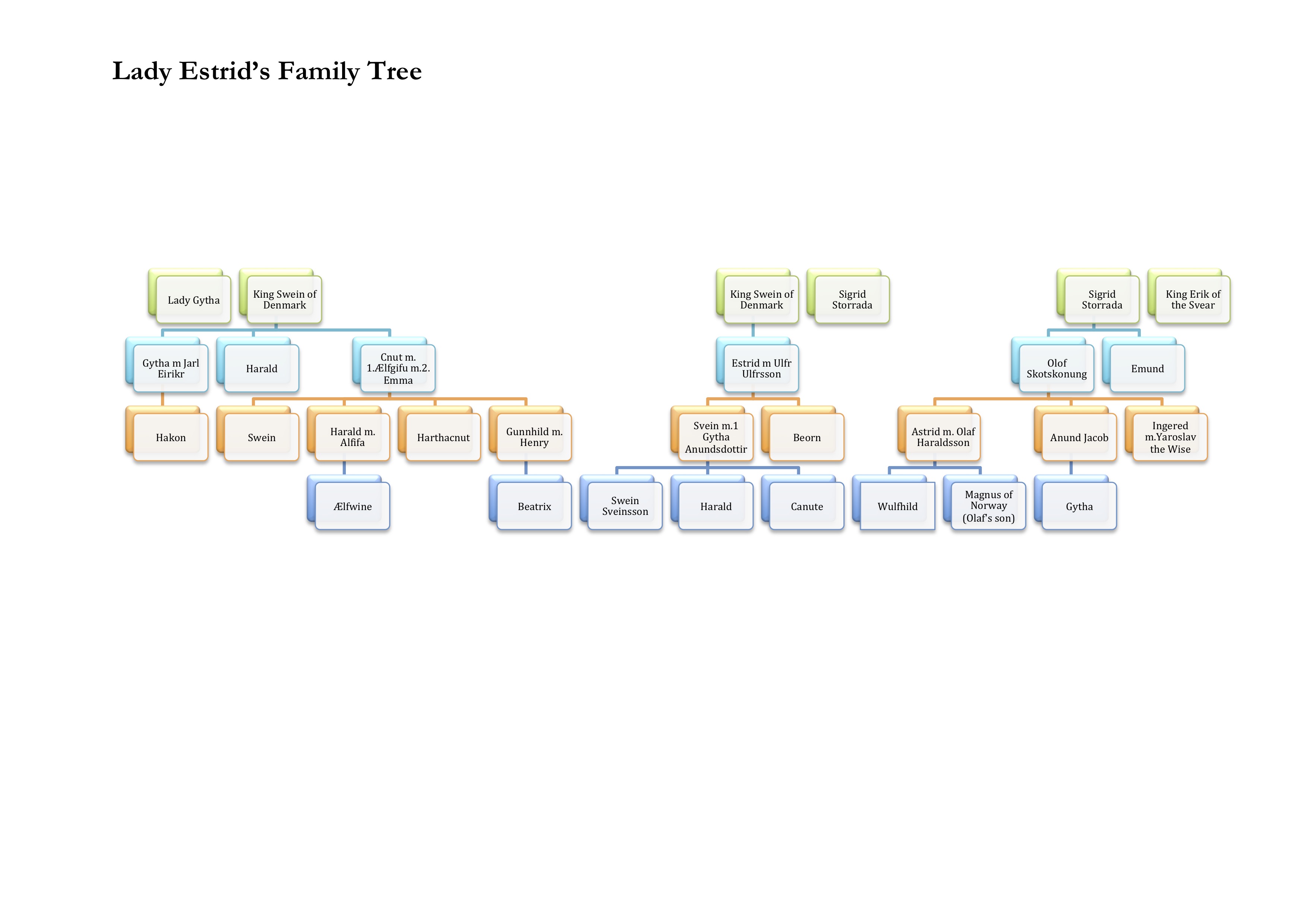
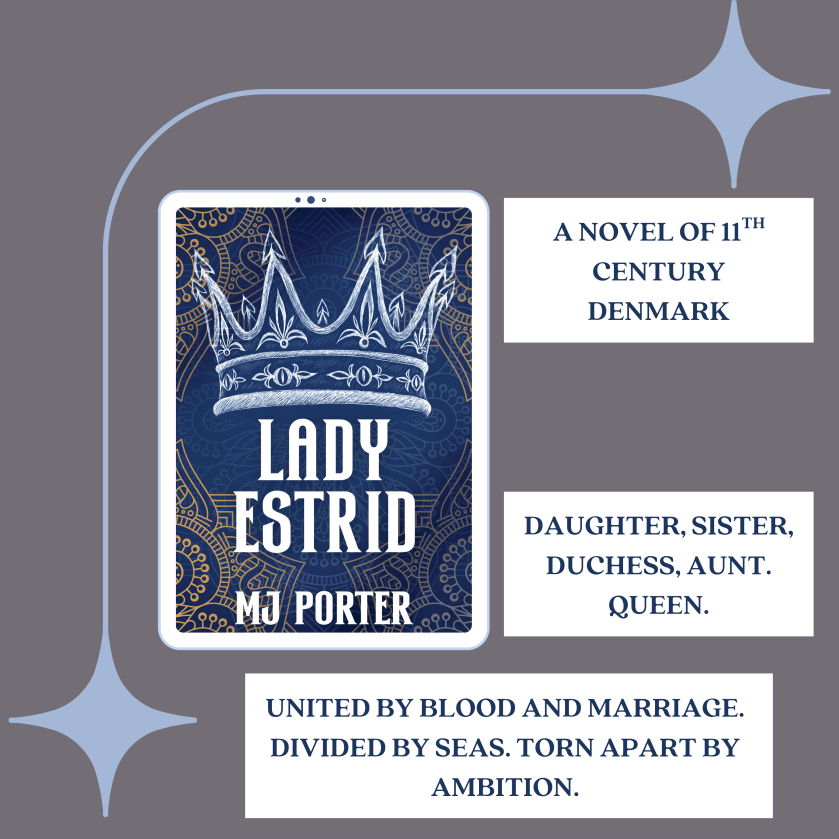
Lady Estrid was born into a large and illustrious family with far-reaching influence over Denmark, Sweden, Norway and England.
I’ve put together some genealogical tables of the main families to make easier to work out how everyone connected. (You can click on the images to make them bigger).
The family of Lady Estrid Sweinsdottir, as mentioned in Lady Estrid.
Due to a lack of information, I have made little mention of the rest of Estrid’s half-sisters, of which she had three or four. I feel it perhaps also helped the story a little – it was complicated enough as it was without giving them the capacity to meddle in affairs in Denmark.
To break it down into more palatable chunks, Lady Estrid’s mother was married twice, once to King Swein of Denmark (second) and also to King Erik of the Svear (first). King Swein was also married twice (in my story at least – as it is debated), to Lady Gytha (who I take to be his first wife) and then to Lady Sigrid (who I take to be his second wife.) Swein was king of Denmark, Erik, king of the Svear (which would become Sweden), and so Sigrid was twice a queen, and she would have expected her children to rule as well, and her grandchildren after her. Sigrid was truly the matriarch of a vast dynasty.
She would have grandchildren who lived their lives in the kingdom of the Rus, in Norway, in England, and Denmark.
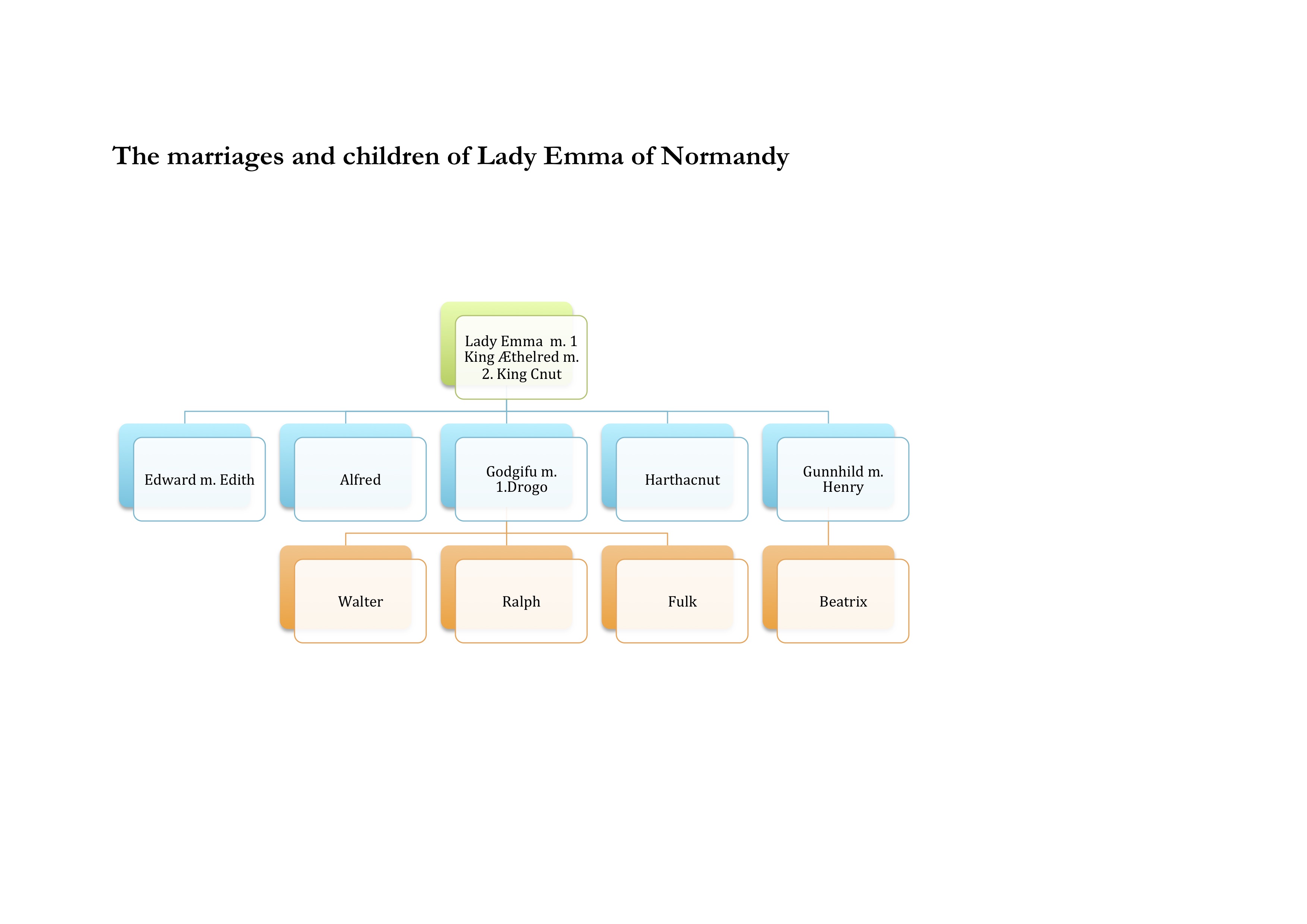
And Sigrid wasn’t the only ‘double queen.’ Lady Emma, twice queen of England, was first married to King Æthelred and then to King Cnut, Estrid’s brother.
Lady Emma, twice queen of England and her children
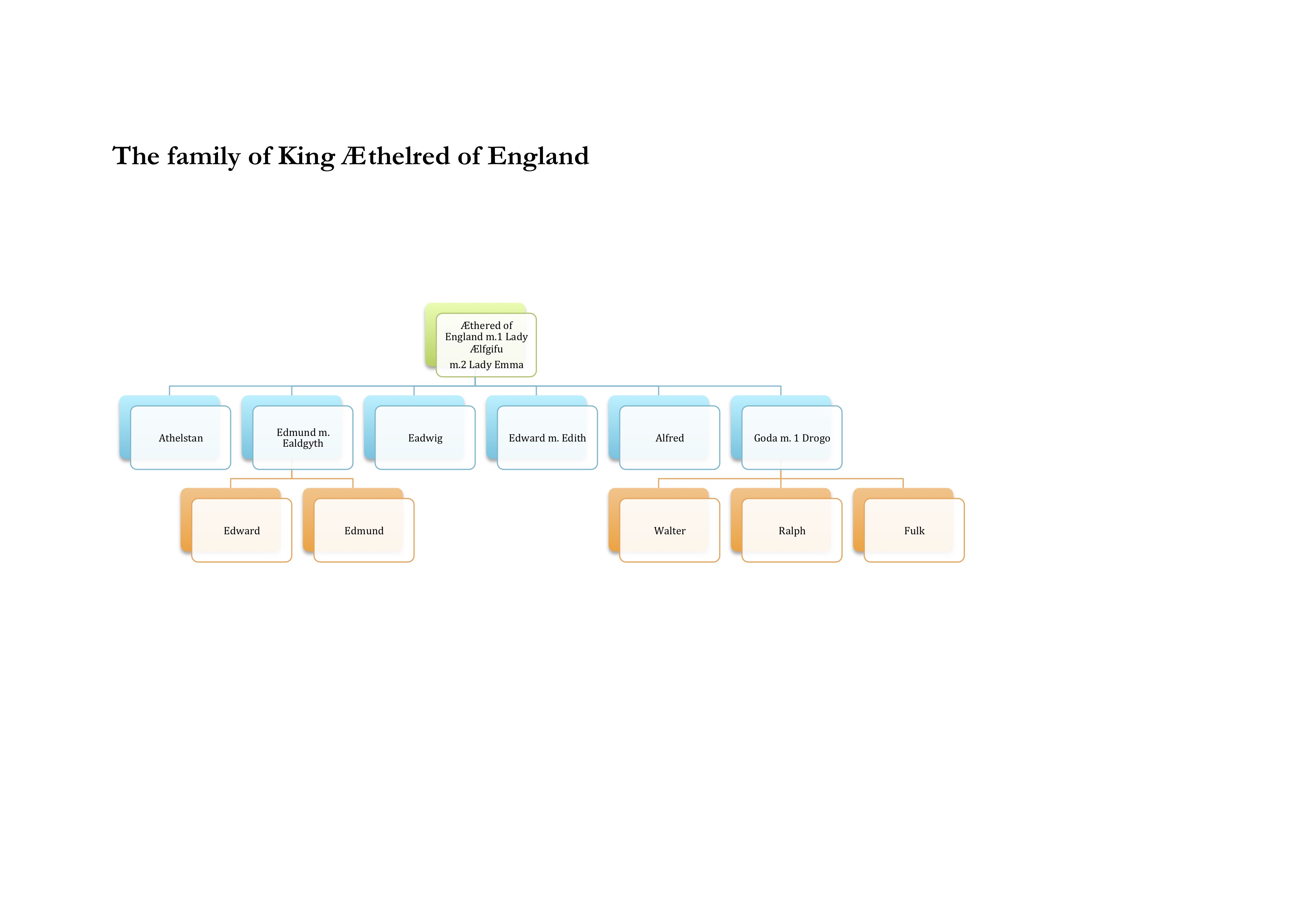
Not that it’s possible to speak of Lady Emma’s children from her two marriages, without considering the children of her first husband’s first marriage. King Æthelred had many children with his first wife, perhaps as many as nine (again, a matter for debate), the below only shows the children mentioned in Lady Estrid. Readers of The Earls of Mercia series, and the Lady Elfrida books, will have encountered the many daughters, as well as sons.
The family of King Æthelred of England
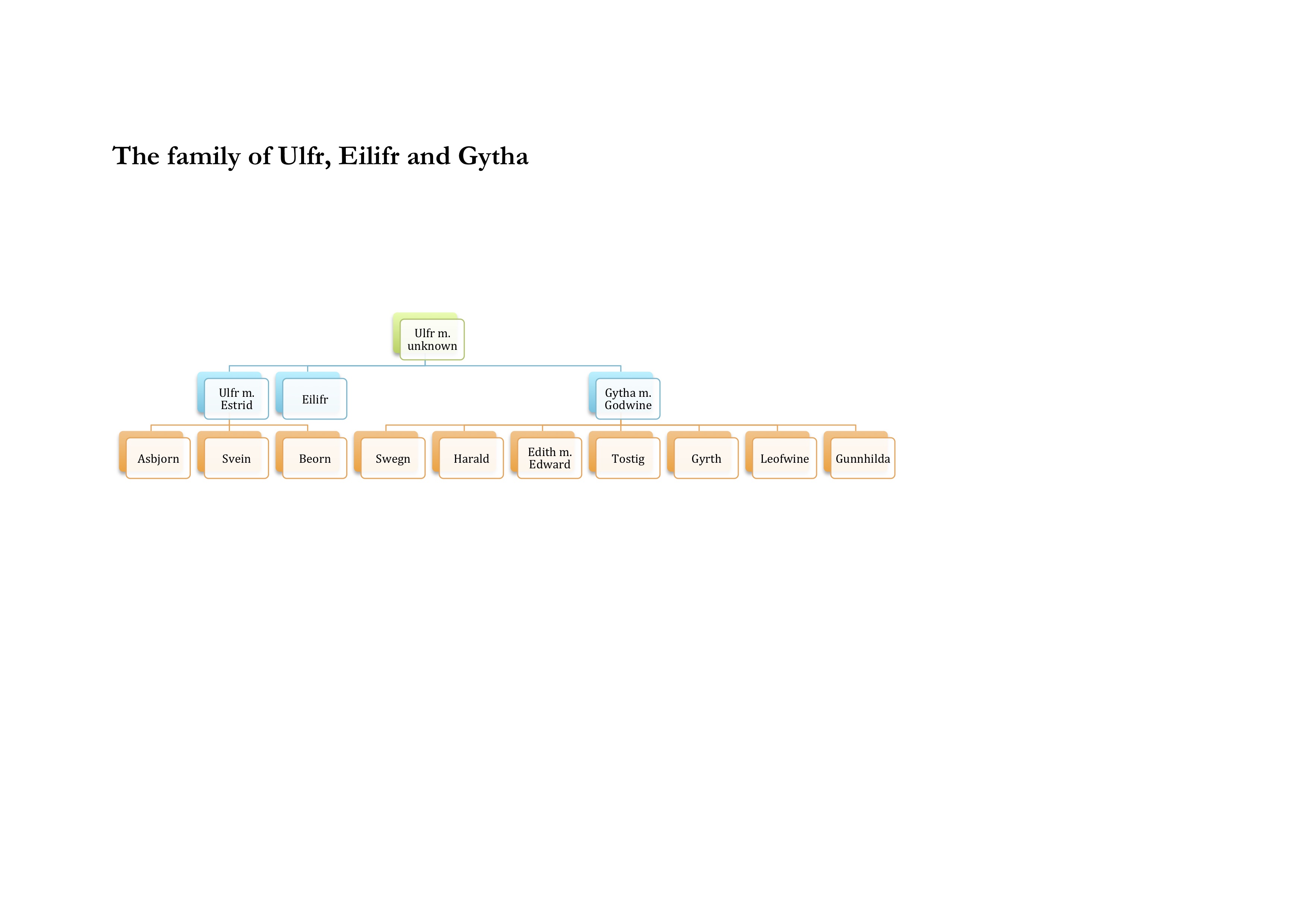
One of the other family’s that had the most impact on Lady Estrid, was that of her third husband, and father of her two sons, Jarl Ulfr.
The family of Ulfr
Ulfr had a brother and a sister, and while little is known about the brother, it is his sister who birthed an extremely illustrious family, through her marriage to Earl Godwine of Wessex. (The family tree doesn’t include all of her children.)
Four such powerful families, all intermarried, make for a heady mix.
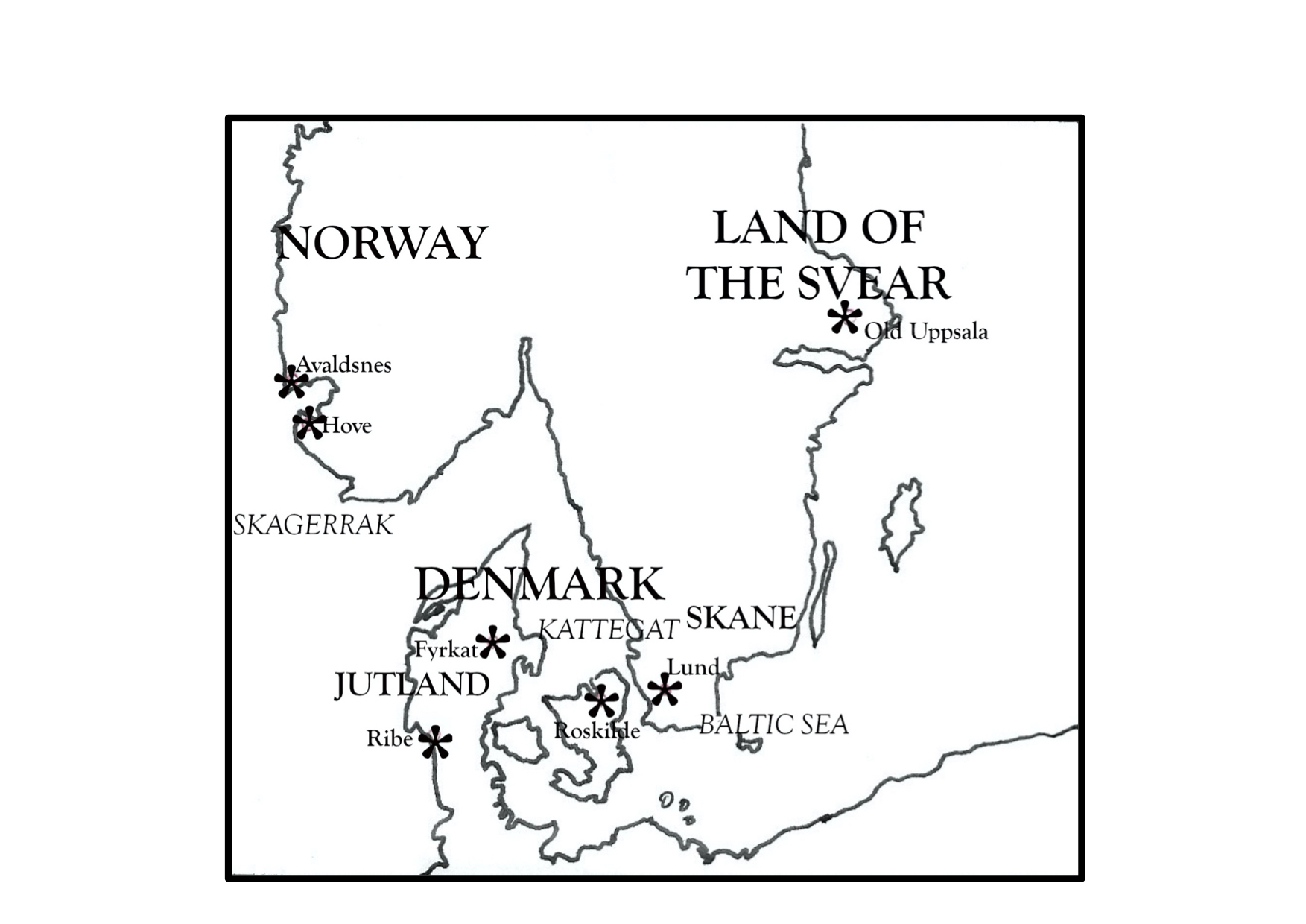
For the modern reader, not only are the family dynamics complicated to understand, but so too is the geography. Sweden was not Sweden as it is today, and the reason I’ve insisted on calling it the Land of the Svear. But equally, Denmark was larger than it’s current geographical extent, covering Skåne, (in modern day Sweden) as well. The map below attempts to make it a little clearer. Norway is perhaps the most recognisable to a modern reader, but even there, there are important difference. King Swein claimed rulership over parts of Norway during his rule, and so too did King Cnut. But, Denmark isn’t the only aggressor, there were rulers in all three kingdoms who wished to increase the land they could control, King Cnut of Denmark, England, Skåne and part of Norway, is merely the most well-known (to an English-speaking historian.)
Lady Estrid is a standalone novel, but it does incorporate characters and events from The Earls of Mercia series. So, if you’ve not yet read The King’s Brother, it might contain some spoilers, and vice versa.
I have also written about Lady Estrid’s brother, Cnut, and her father, Swein. I classify the books as side stories to the main Earls of Mercia series, but they can all be read as standalones, or as a trilogy about the powerful family.
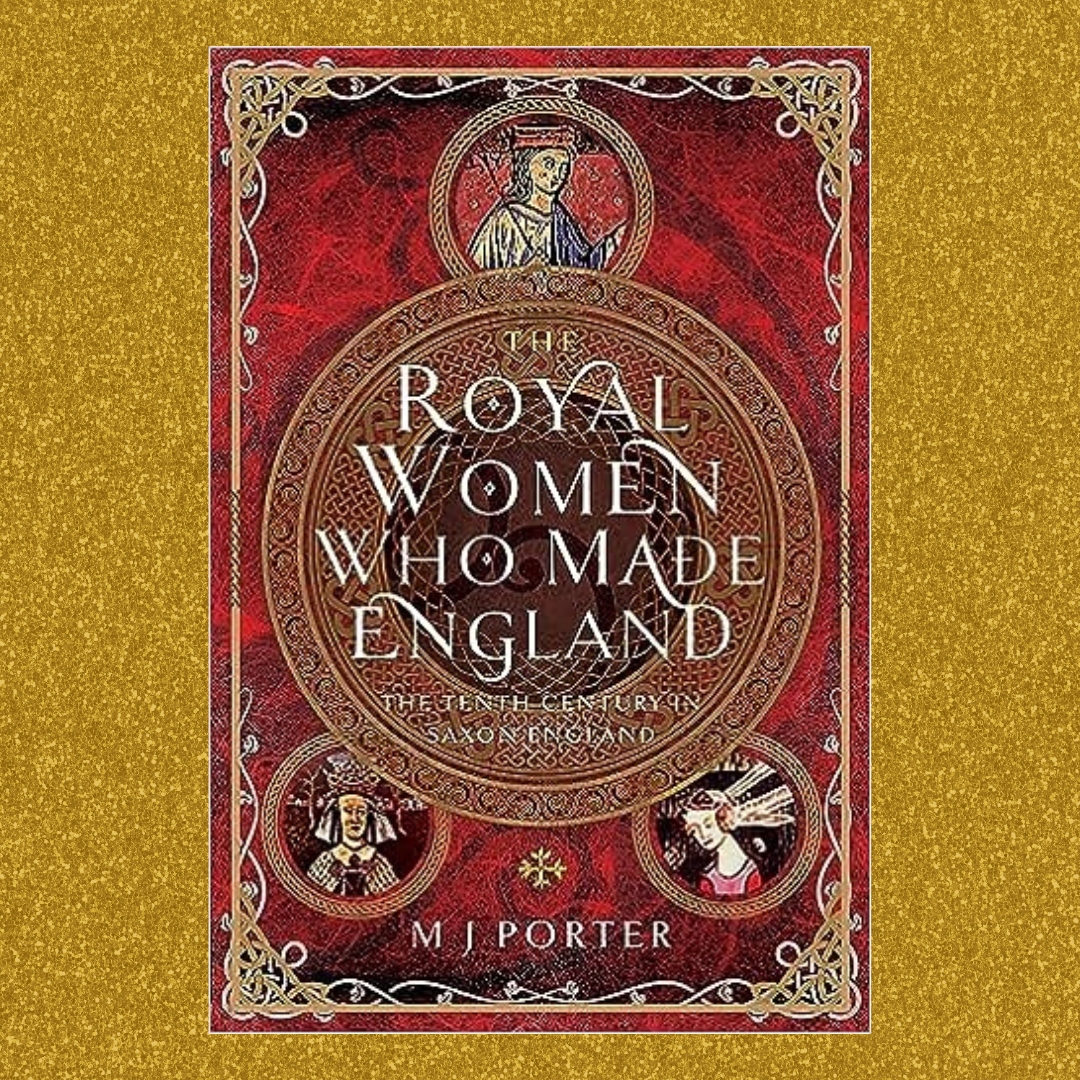
Interested in the unknown women of the tenth and the eleventh century? I’ve written about quite a few of them now. Check out The Tenth Century Series, featuring Lady Ælfwynn, Lady Eadgifu and the daughters of Edward the Elder, and the stories of Lady Elfrida as well as The Royal Women Who Made England.
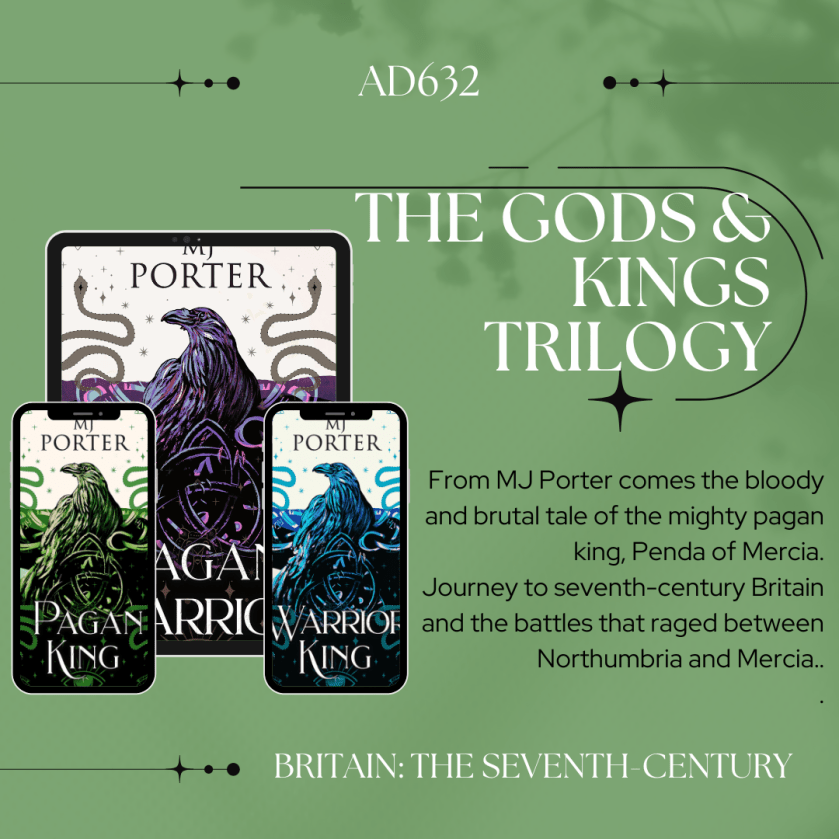
The Battle of Winwæd, fought on 15th November 655, is the backdrop for the final book in the Gods and Kings trilogy, which follows three very famous battles, Hædfeld in 632/3, Maserfield in 642 and Winwæd in 655, only one of the battles being fought in the summer – which always surprises me. These three pitched battles saw Mercia and Northumbria vying for supremacy over the Saxon kingdoms of Britain, a narrative that has been interpreted as leading to Northumbria’s triumph, and indeed, its Golden Age.
But much of what happened from Hæ∂feld to Winwæd was a matter of family politics, muddled by the many marriages these kings may have made, and the horde of children they fathered who had opinions and aspirations of their own. Just as the War of the Roses many centuries later, this was a time when family loyalty meant little or nothing to some people, and everything to others.
The Mercian king, Penda, most famously known for being a pagan when the Saxon kingdoms were being converted to Christianity, achieved a great deal throughout his lifetime, regardless of the debate about how long he reigned for and when he can officially be known as King of Mercia, and he is the constant throughout these three battles. The bias of Bede, our main source for this period (even though he wrote in the following century) and his famous list of bretwaldas (wide-rulers) ignores Penda. In doing so people cast their eyes only on events in Northumbria, seeing Penda in the same light as Bede would have us do, as a pagan who continually thwarted the advances of the Christian doctrine either from the north (Celtic Christianity) or the south (Roman Christianity). In fact, Penda could reasonably be said to have achieved far more than the Northumbrian kings, Edwin, Oswald or Oswiu ever did – the men he battled against at Hædfeld, Maserfeld and Winwæd. It’s a great pity that he met his death in the way he did, allowing Bede to skewer his narrative even further, to make Oswiu, the Christian, the victor over Penda the pagan.
History can be cruel.
Yet recent historians cast Penda in a more complimentary light. D.P. Kirby calls him ‘without question the most powerful Mercian ruler so far to have emerged in the Midlands.’ Frank Stenton has gone further, ‘the most formidable king in England.’ Whilst N J Higham accords him ‘a pre-eminent reputation as a god-protected, warrior king.’ These aren’t hastily given words from men who’ve studied Saxon England to a much greater degree than I have.
The wording of Bede is vague when detailing this third and final battle of Penda’s against the Northumbrians. Bede could speak directly when he wanted to, or so it seems, but for some events, he applied a little haze of Northumbrian drizzle to obscure the facts, but on the fact that more men died in the flood waters than on the battlefield, he is clear.
Bede’s Ecclesiastical History of the English People
CHAPTER XXIV KING PENDA BEING SLAIN, THE MERCIANS RECEIVED THE FAITH OF CHRIST, AND OSWY GAVE POSSESSIONS AND TERRITORIES TO GOD, FOR BUILDING MONASTERIES, IN ACKNOWLEDGMENT FOR THE VICTORY OBTAINED. [A.D. 655.] AT this time, King Oswy was exposed to the fierce and intolerable irruptions of Penda, king of the Mercians, whom we have so often mentioned, and who had slain his brother; …….After this he gave battle with a very small army against superior forces: indeed, it is reported that the pagans had three times the number of men; for they had thirty legions, led on by most noted commanders. King Oswy and his son Aifrid met them with a very small army, as has been said, but confiding in the conduct of Christ; his other son, Egfrid, was then kept an hostage at the court of Queen Cynwise, in the province of the Mercians. King Oswald’s son Etheiwald, who ought to have assisted them, was on the enemy’s side, and led them on to fight against his country and uncle; though, during the battle, he withdrew, and awaited the event in a place of safety. The engagement beginning, the pagans were defeated, the thirty commanders, and those who had come to his assistance were put to flight, and almost all of them slain; among whom was Ethelbere, brother and successor to Anna, king of the East Angles, who had been the occasion of the war, and who was now killed, with all his soldiers. The battle was fought near the river Vinwed, which then, with the great rains, had not only filled its channel, hut overflowed its banks, so that many more were drowned in the flight than destroyed by the sword.
This narrative is largely copied in the other surviving sources, all much later than the events they describe.
Penda, son of Pybba, reigned ten years; he first separated the kingdom of Mercia from that of the North-men, and slew by treachery Anna, king of the East Anglians, and St. Oswald, king of the North-men. He fought the battle of Cocboy, in which fell Eawa, son of Pybba, his brother, king of the Mercians, and Oswald, king of the North-men, and he gained the victory by diabolical agency. He was not baptized, and never believed in God.
The Anglo-Saxon Chronicle (first written from the late 890s).
A.D. 655. This year Penda was slain at Wingfield, and thirty royal personages with him, some of whom were kings. One of them was Ethelhere, brother of Anna, king of the East-Angles. The Mercians after this became Christians. From the beginning of the world had now elapsed five thousand eight hundred and fifty winters, when Paeda, the son of Penda, assumed the government of the Mercians.