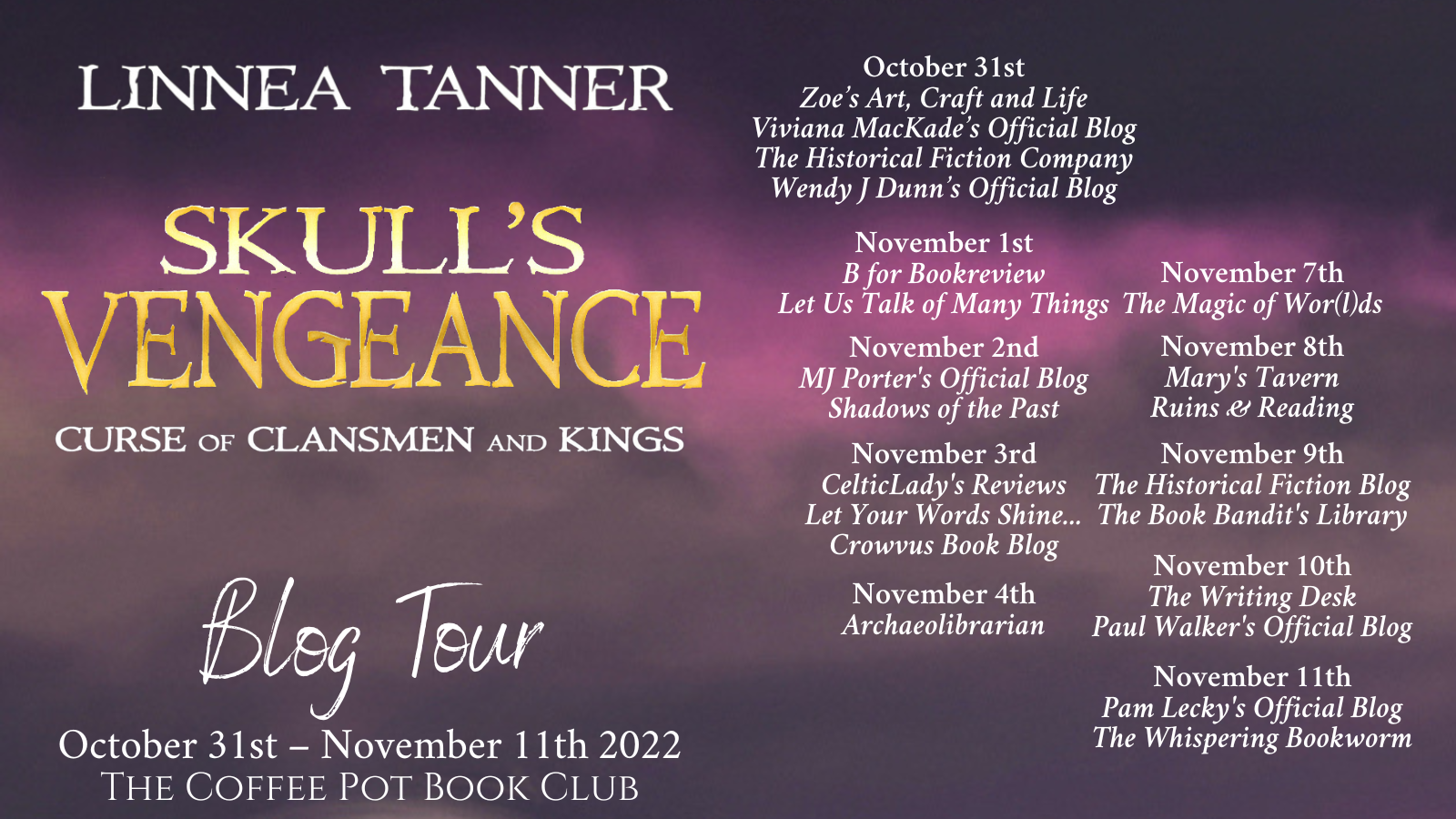

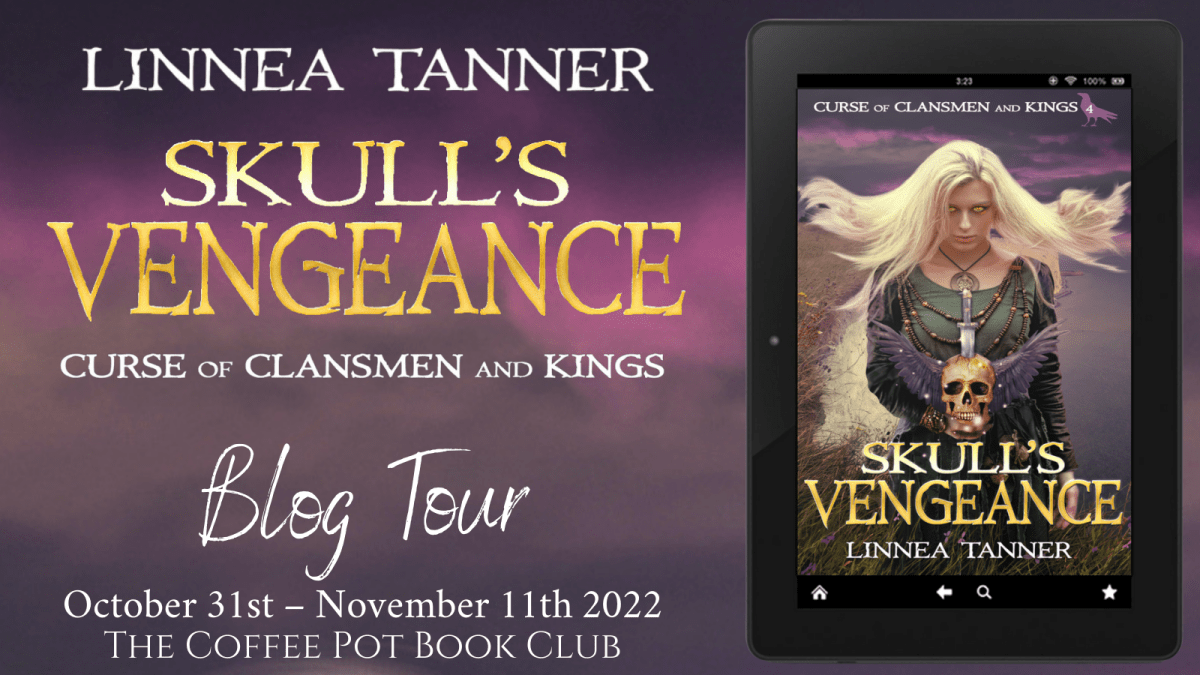
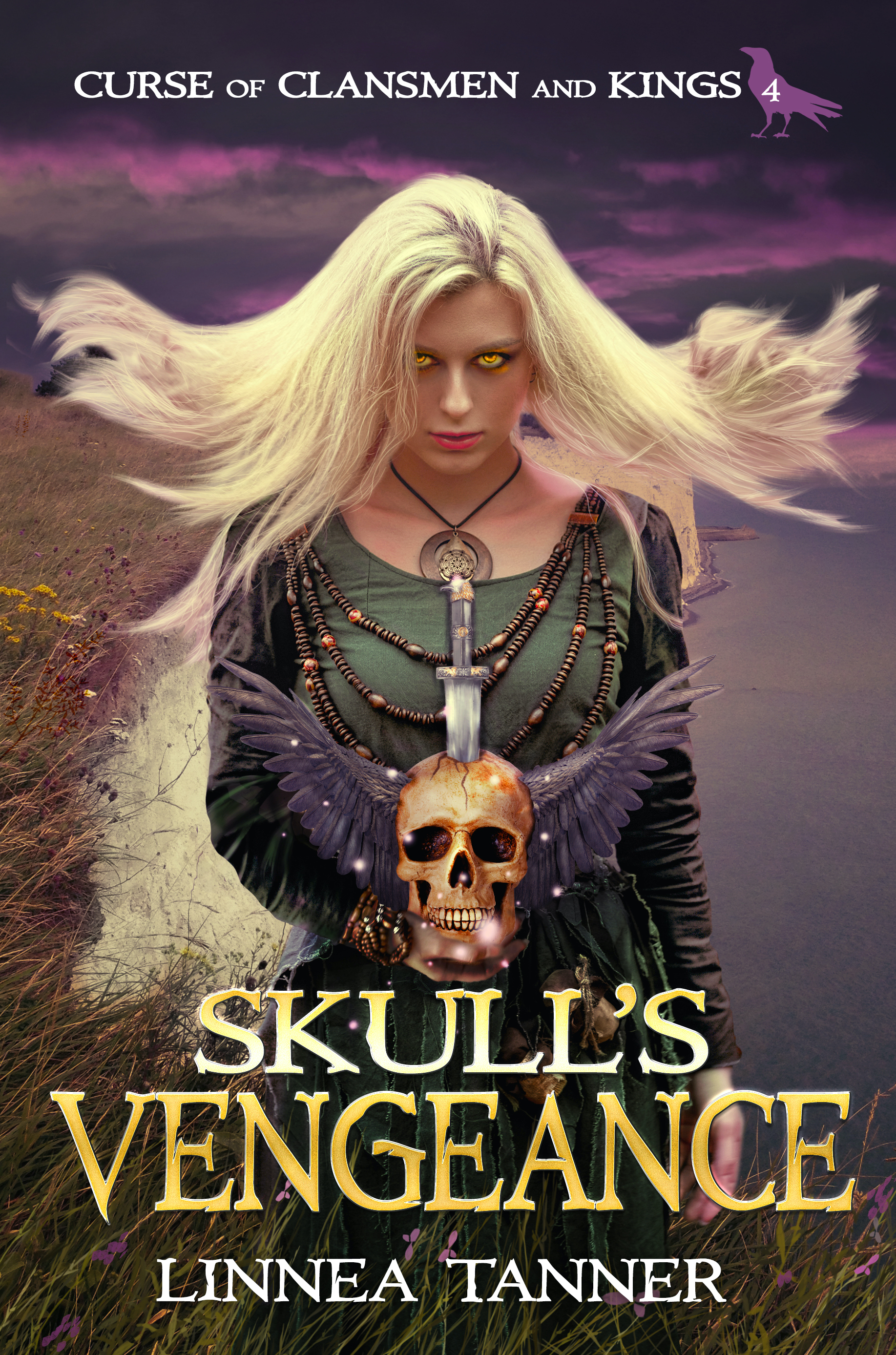
I’m delighted to welcome Linnea Tanner back to the blog with her new book, Skull’s Vengeance #blogtour

I’m delighted to have the opportunity to grill Linnea Tanner about her new book, Skull’s Vengeance.

Thank you, MJ, for hosting my blog tour of Skull’s Vengeance (Curse of Clansmen and Kings, Book 4) and for giving me the opportunity to discuss some of the resources I used to research the history and mythology of Celts in Roman Britain.

  1. Is there a book that first inspired your passion for the era of Roman Britain?

Although the setting of the book is toward the end of the era of Roman Britain, I was first inspired about the time period with Marion Zimmer Bradley’s novel, The Mists of Avalon. The novel explored pagan beliefs and rituals of the Celts which were being replaced by the Christian religion. This novel introduced me to the concept of a “sovereignty goddess” who confers sovereignty on a mortal king in a ritual union. The key element of their sacred marriage—his kingship—is the consummation between the king and the Goddess of the territory he is to rule over. There is a scene in The Mists of Avalon in which Arthur sleeps with his sister, Morgaine—a priestess of the Goddess—as part of the ritual to confer his kingship. 

  • Do you have non-fiction book recommendations for people who might just be discovering this period in time?

Several books about ancient Celts have been written by Professor Barry Cunliffe that describe the rise and fall of the Celtic civilization spanning from Ireland, across northern Europe, and as far as Turkey. Two of his books that I keep on my bookshelf are: The Ancient Celts and Britain Begins

  • Is there a resource that you wouldn’t be without when you’re writing your books?

I often refer to Joseph Campbell’s The Hero with a Thousand Faces for elements of the hero’s journey. Also, I keep reference books such as a thesaurus and dictionary handy. Other resources include The Chicago Guide to Grammar, Usage, and Punctuation and The Elements of Style by William Strunk, Jr. and E.B. White.

  • How did you go about researching the more fantastical elements of your stories?

I use a variety of resources including Greek, Roman, and medieval historical accounts; various books about Celtic mythology; and archaeological books. Some of my favourite books include: The Celtic Heroic Age edited by John T. Koch in collaboration with John Carey; The History of the Kings of Britain by Geoffrey of Monmouth; The Religion of the Ancient Celts by J. A. MacCulloch; and The Druids by Peter Berresford Ellis.

  • Who are your favourite authors who write similar stories?

My favourite authors are Marion Zimmer Bradley and Diana L. Paxon for the Roman Britain time period. However, I’ve recently enjoyed reading novels set in the Saxon/Viking Middle Ages. One author I follow is Eric Schumacher and his character-driven, action-packed Viking series: Olaf’s Saga and Hakon’s Saga

  • Do you have a favourite place to visit in Britain?

Oh…this is like trying to choose your favourite child. I’ve had the opportunity to explore London, Hadrian’s Wall, Bath, Stonehenge, Salisbury, Canterbury, and Wales. However, I keep returning to Dover and exploring the grounds around the historical castle in which there is a well-preserved Roman lighthouse. 

Dover Castle Roman Lighthouse

One of my biggest thrills was to hike eleven miles from Deal to Dover in 2012. Right before our hike, a large wall of the Dover Cliffs collapsed into the sea of which I took a photo. 
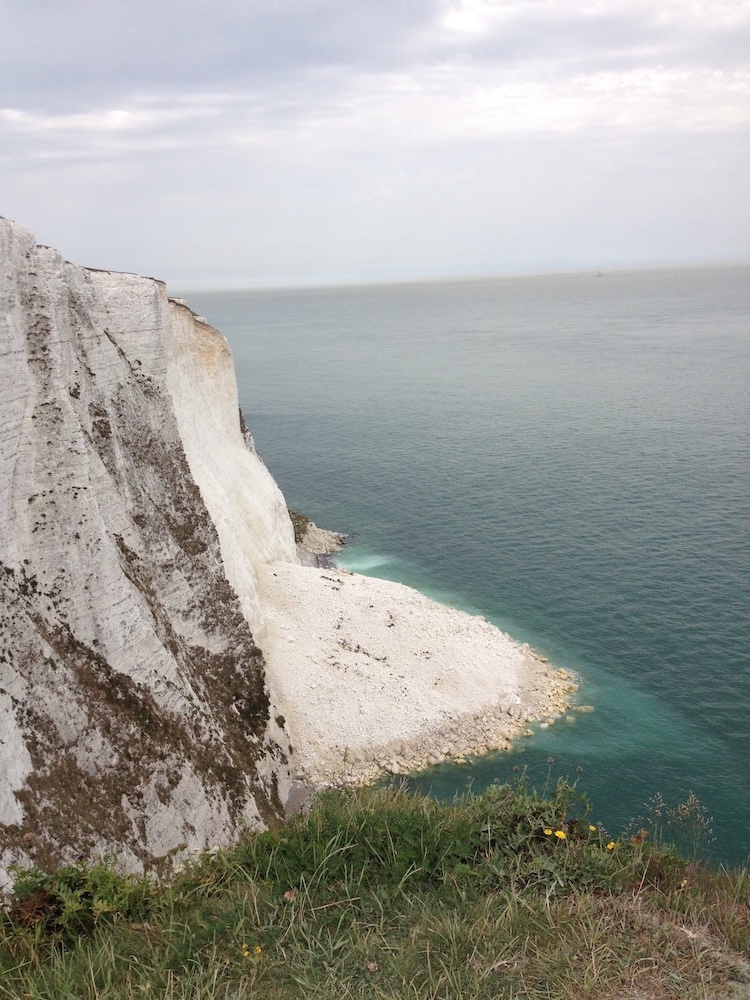
Collapsed Wall White Cliffs

Five years after that, my husband and I brought our granddaughter with us to hike the trails around Dover. Some of the scenes in Skull’s Vengeance take place on the hilltop overlooking the city.
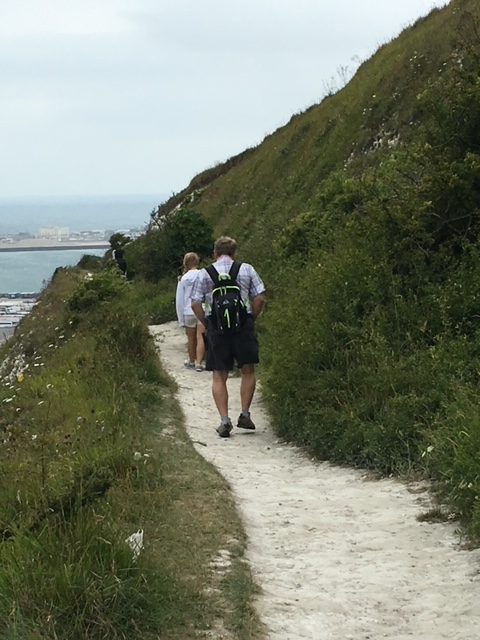
Hiking Dover Cliffs

Thank you so much for sharing such great answers. Marion Zimmer Bradley was definitely an influence for me as well, as was Patricia Kenneally Morrison:)

Here’s the blurb:

A Celtic warrior queen must do the impossible—defeat her sorcerer half-brother and claim the throne. But to do so, she must learn how to strike vengeance from her father’s skull.

AS FORETOLD BY HER FATHER in a vision, Catrin has become a battle-hardened warrior after her trials in the Roman legion and gladiatorial games. She must return to Britannia and pull the cursed dagger out of the serpent’s stone to fulfill her destiny. Only then can she unleash the vengeance from the ancient druids to destroy her evil half-brother, the powerful sorcerer, King Marrock. Always two steps ahead and seemingly unstoppable, Marrock can summon destructive natural forces to crush any rival trying to stop him and has charged his deadliest assassin to bring back Catrin’s head.

To have the slightest chance of beating Marrock, Catrin must forge alliances with former enemies, but she needs someone she can trust. Her only option is to seek military aid from Marcellus—her secret Roman husband. They rekindle their burning passion, but he is playing a deadly game in the political firestorm of the Julio-Claudian dynasty to support Catrin’s cause.

Ultimately, in order to defeat Marrock, Catrin must align herself with a dark druidess and learn how to summon forces from skulls to exact vengeance. But can she and Marcellus outmaneuver political enemies from Rome and Britannia in their quest to vanquish Marrock?

Trigger warnings:

Sex, Slave trafficking and abuse, Violence, Childbirth

Acclaim for other books in the Curse of Clansmen and Kings series:

“[An] epic tale of love, betrayal and political intrigue.” —InD’tale Magazine

“The requisite fantasy elements of magic and mystery abound…Tanner also does an admirable job weaving in the politics and mythology of a bygone people.” —Kirkus

“Part fantasy, part historical fiction, Linnea Tanner has woven together a wonderful tale of romance, intrigue, mystery, and legend to create an entertaining and complex story.” —The International Review of Books

“[A] captivating tale of triangles; love, lust and espionage; friend, foe, and spies; barbarians, civilized Rome and spiritual-supernatural beings.” —2019 Pencraft Book of the Year Award
Buy Links

Skull’s Vengeance:

Universal:

Amazon UKAmazon USAmazon CAAmazon AU

Barnes and Noble:   iTunesKoboGooglePlayBooktopia

Buy Links

Books from Curse of Clansmen and Kings series:
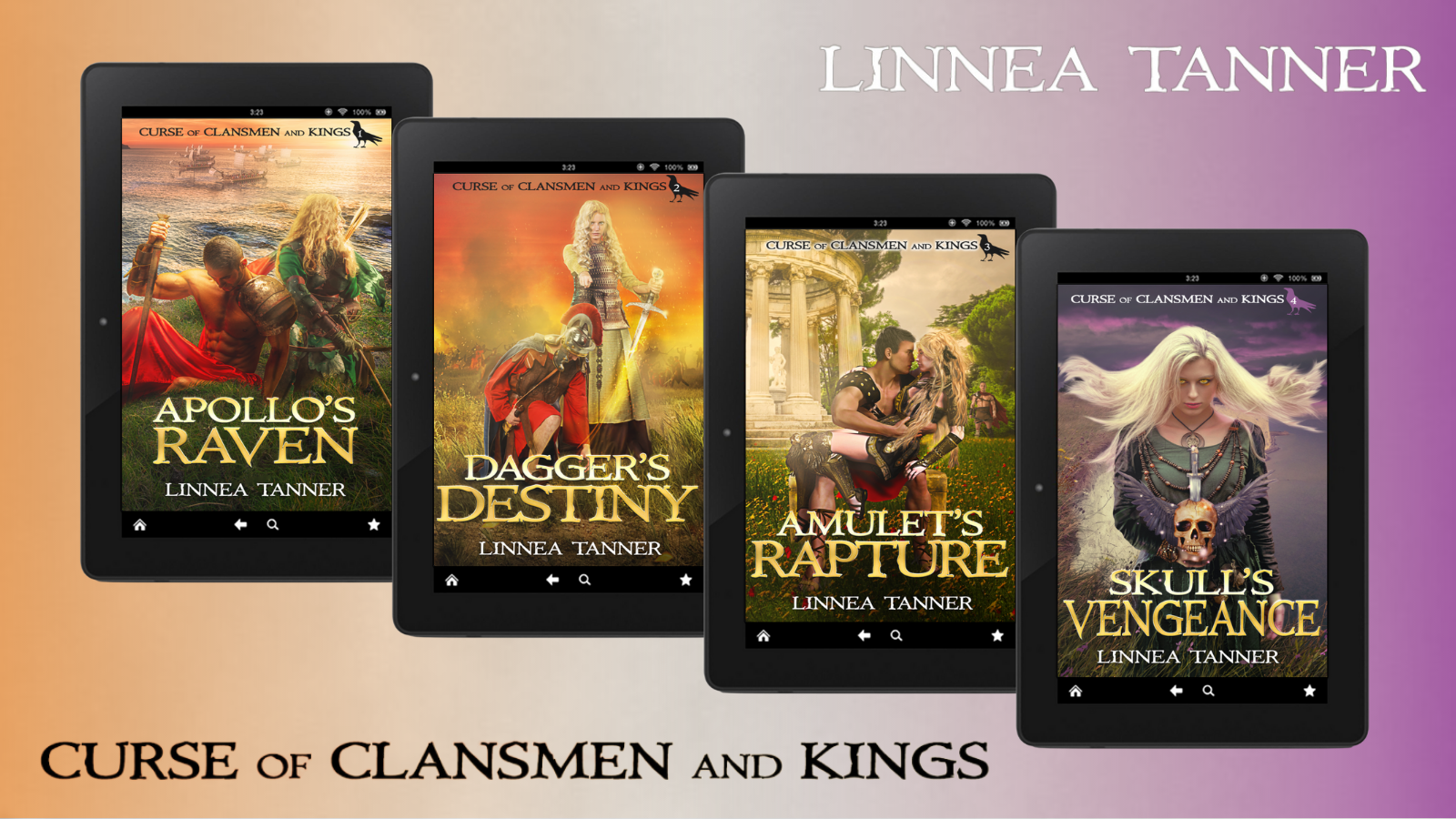
Apollo’s Raven

Dagger’s Destiny

Amulet’s Rapture

Skull’s Vengeance

Meet the Author

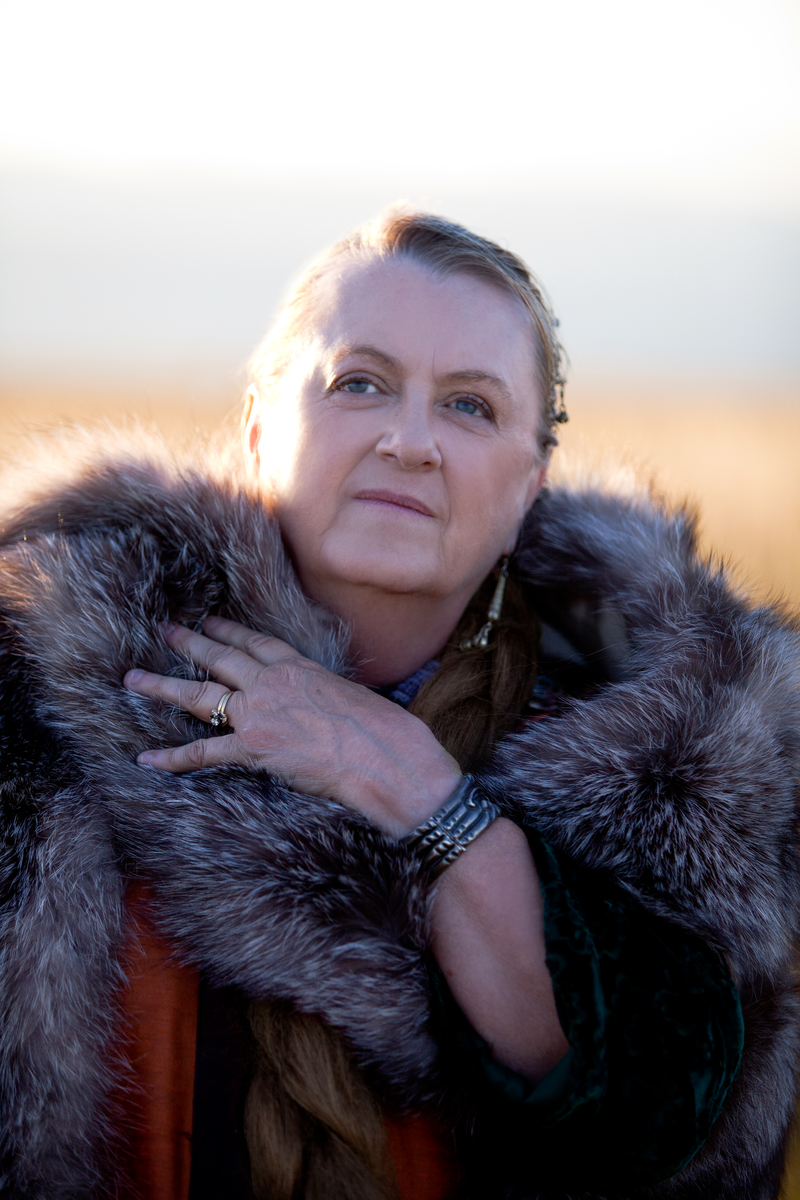
Award-winning author, Linnea Tanner, weaves Celtic tales of love, magical adventure, and political intrigue in Ancient Rome and Britannia. Since childhood, she has passionately read about ancient civilizations and mythology. Of particular interest are the enigmatic Celts, who were reputed as fierce warriors and mystical druids.


Linnea has extensively researched ancient and medieval history, mythology, and archaeology and has traveled to sites described within each of her books in the Curse of Clansmen and Kings series. Books released in her series includeApollo’s Raven (Book 1), Dagger’s Destiny (Book 2), Amulet’s Rapture (Book 3), and Skull’s Vengeance (Book 4).

A Colorado native, Linnea attended the University of Colorado and earned both her bachelor’s and master’s degrees in chemistry. She lives in Fort Collins with her husband and has two children and six grandchildren.
Connect with Linnea

WebsiteTwitter:   FacebookLinkedInInstagram

PinterestBook BubAmazon Author PageGoodreads

Follow the Skull’s Vengeance blog tour with The Coffee Pot Book Club

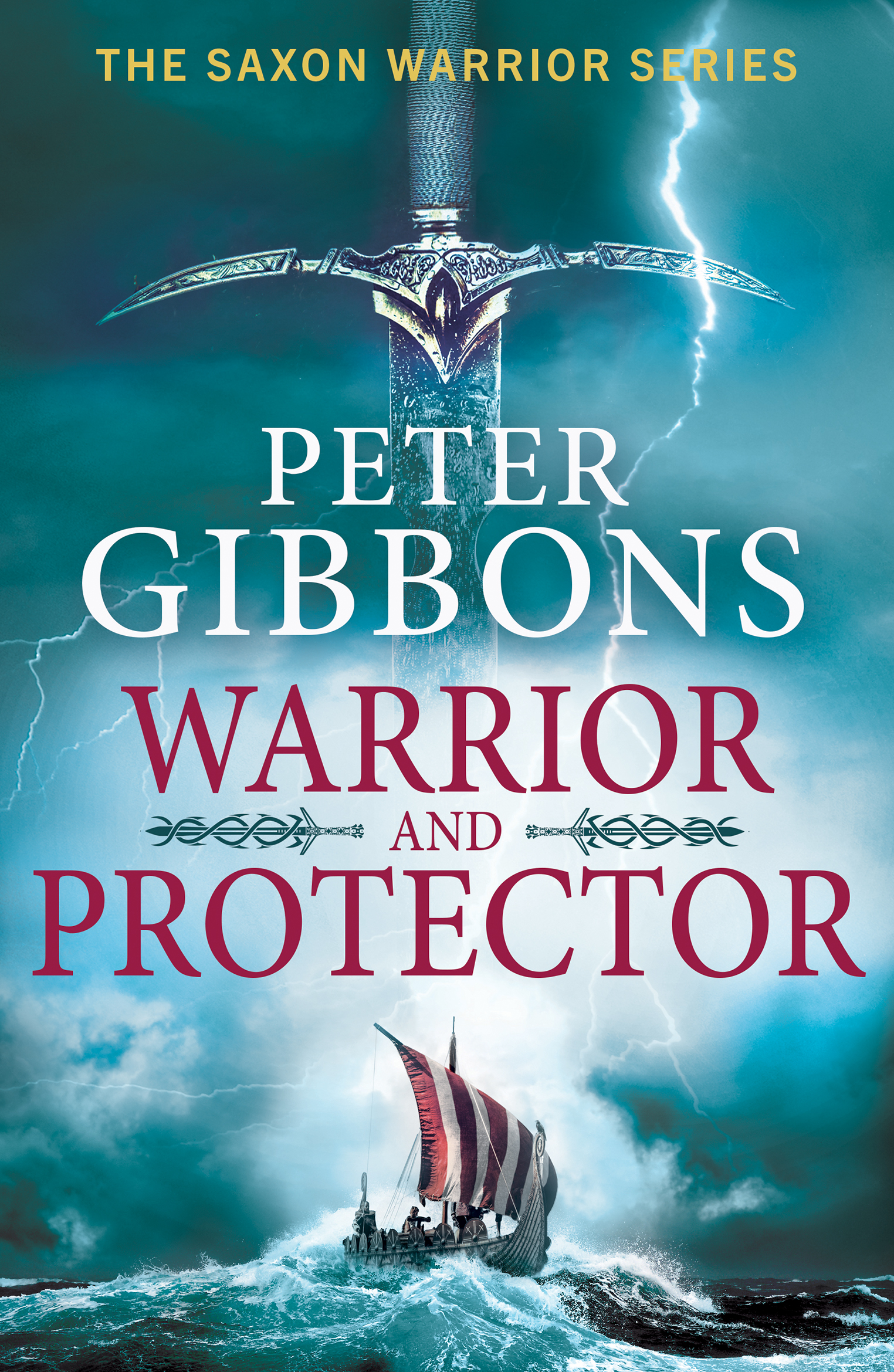
Today, I’m taking part in blog tour for Warrior and Protector by Peter Gibbons #histfic #blogtour

Here’s the blurb:

The start of a brand NEW series – an unputdownable fast paced adventure, filled with unforgettable characters.

989 AD.

Alfred the Great’s dream of a united England has been forged by his daughter Aethelfaed and grandson, King Aethelstan.

The Vikings have been expelled from York following the death of Erik Bloodaxe, and for two generations there has been peace between Saxon and Dane.

A new Viking warlord Olaf Tryggvason seeks revenge for Bloodaxe’s death and the slaughter that followed, and has set his sights on a fresh assault on England’s shores. With Skarde Wartooth they set sail for Saxon lands, hungry for glory, conquest and vengeance.

Beornoth, a brutal and battle-hardened Saxon Thegn, is called to arms to fight and protect the Saxon people from the savage Norse invaders. On a personal crusade, he joins the army of Byrthnoth, Lord of the east Saxons in a desperate fight against the bloodthirsty Vikings.

Beornoth must lay his own demons to bed, survive vicious attacks and find redemption for his tragic past.

If you like Bernard Cornwell, Simon Scarrow, Conn Iggulden, and David Gemmell you will love this epic Saxon adventure packed with battles, Vikings, and adventure. 

Purchase Link – https://amzn.to/3RuNZ4u

My Review

Warrior and Protector takes the reader to England in the late 980s.

While England may have been largely peaceful and free from attacks from the Viking raiders for the last thirty years, Beornoth, once a respected thegn, is tormented by his own failings as a husband, warrior and father. Only the return of his despised enemy can rouse him from his drunken stupor. And luckily for Beornoth, but not for the English, the Viking raiders are about to make an unwelcome return to the eastern shores of England. Beornoth is forced to face his enemy and his past and, in the process, make a few new enemies as well.

This tale of England in the 980s resounds with the fierceness of battle-hardened men, both the English and the Viking raiders, and the concluding battle is portrayed in fierce and bloody detail.

I’m looking forward to following this series that will take readers to one of the best-known battles in Saxon England.

Meet the Author

Peter Gibbons is a financial advisor and author of the highly acclaimed Viking Blood and Blade trilogy. He comes to Boldwood with his new Saxon Warrior series, set around the 900 AD Viking invasion during the reign of King Athelred the Unready. The first title of the new series, Warrior and Protector, will be published in October 2022. He originates from Liverpool and now lives with his family in County Kildare.

Connect with Peter

Facebook: Peter Gibbons Author – Home | Facebook

Twitter: Peter Gibbons Author (@AuthorGibbons) / Twitter

Instagram: Peter Gibbons Author (@petermgibbons) • Instagram photos and videos

Bookbub profile: Peter Gibbons Books – BookBub

Follow the Warrior and Protector blog tour with Rachel’s Random Resources

A post about the family of Ealdorman Leofwine, Saxon England and the position of ealdormen/earls

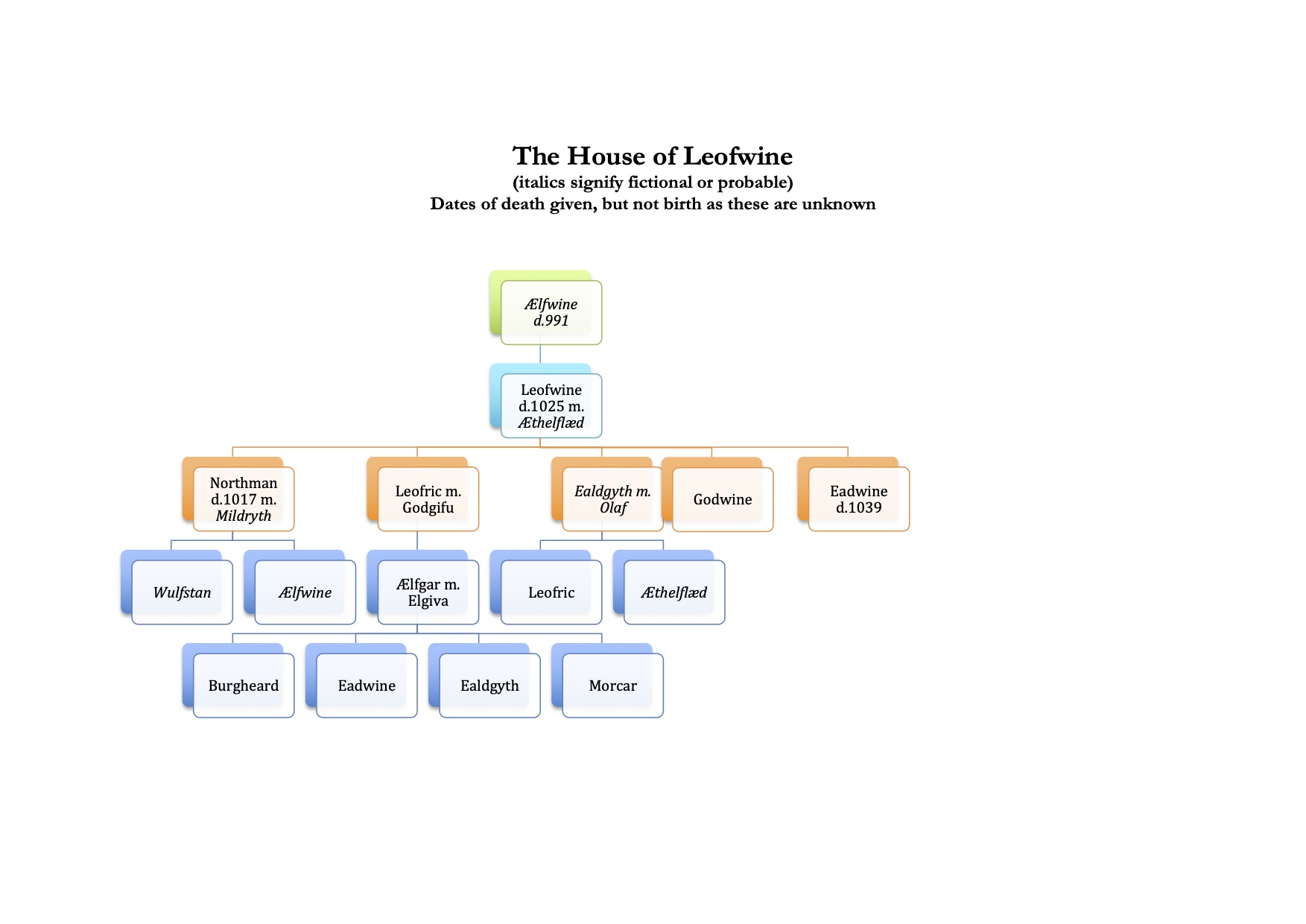
Ealdorman Leofwine , was the ealdorman of the Hwicce (c.994-1023), one of the ancient tribal regions in Mercia, which was a part of England, at the time the story begins. It is possible he may have been related to Ælfwine, who is named, and dies at the Battle of Maldon (more below).

Ealdorman Leofwine and his descendants, who would hold positions of power until the Norman Conquest of 1066, are a unique family in this tumultuous period. No other family, apart from the ruling family of Wessex (and even then there was a minor hiccup caused by those pesky Danish kings) held a position of such power and influence and for such a long period of time, as far as is currently known. The position of ealdorman was not hereditary. It was a position in the gift of the king, and Saxon kings ruled with a varying number of ealdormen. To understand Leofwine’s significance, it’s important to understand this. Unlike an earl – a term we are all perhaps far more familiar with – but specifically a medieval earl in this regard – that position was both more often than not hereditary AND meant that the person involved ‘owned’ significant properties in the area they were earls over. This is not how the ealdormanic system worked in Saxon England, as it’s currently understood.

It is difficult to track many of the ealdormanic families of this period, and the previous century, but there are a few notable individuals, all who bucked the usual trend, which no doubt accounts for why we know who they are.

Perhaps most well-known is Ealdorman Athelstan Half-King, who was the ealdorman of East Anglia from about 934 to 955/6 when he fell from favour at court during the reign of King Eadwig and retired to Glastonbury Abbey. Before he did so, he ensured that his son, Æthelwald, was elevated to the position of ealdorman in his place. This was most unusual, but then, he came from a powerful family, fiercely loyal to the ruling House of Wessex, if not actually a member of them. Athelstan Half-King is believed to have been the son of Ealdorman Æthelfrith, a Mercian ealdorman when Lady Æthelflæd was the Lady of Mercia. Athelstan was one of four brothers. His older brother seems to have either briefly retained the ealdordom after their father’s death in Mercia, or been accorded it a few years later, but when he died, Athelstan Half-King didn’t become ealdorman of Mercia in his place. No, he remained in East Anglia while his two brothers, Eahric and Æthelwald, held ealdordoms in Wessex (Eahric) and Kent (Æthelwald). They didn’t become the ealdorman of Mercia either. The ealdordom passed to a different individual.

When Ealdorman Æthelwald of the East Angles died a few short years later (Athelstan Half-King’s son), his place was taken by Ealdorman Æthelwine, the youngest of Athelstan Half-King’s children. But, the family failed to hold on to the position, despite Ealdorman Æthelwine being married three times, and fathering three sons, one of whom died at the battle of Assandun in 1016. The next to hold the ealdordom of the East Angles after the death of Æthelwine was Leofsige, who was the ealdorman until he fell foul of the king in 1002. In the early 1000s Ulfcytel emerges and may have been married to one of the king’s daughters, but is never officially accorded the title of ealdorman.

Another famous ealdorman was Byrhtnoth of Essex, who died at the Battle of Maldon in 991. But Byrhtnoth was not the son of the previous ealdorman, and indeed, he married the daughter of a very wealthy man and in turn was raised to an ealdordom in Essex at exactly the same time that Ealdorman Athelstan Half-King was being forced to retire from his position in East Anglia. (Byrhtnoth’s wife’s sister had briefly been married to King Edmund (939-946, before his murder). While there are some arguments that Byrhtnoth was from a well regarded family, his appointment was not because of an hereditary claim. It’s known that he was father to a daughter, but not to a son. As such his family did not retain the ealdordom on his death. Indeed, it seems as though Essex and the East Anglian earlordoms were united for a time under Leofsige.

The argument has been put forth that the position of ealdorman may have come with properties that were the king’s to gift to the individual to enable them to carry out their duties in a particular area. The Saxons had a number of types of land tenure, bookland, was land of which the ‘owners’ held the ‘book’ or ‘the title deed.’ (There are some wonderful charters where landed people had to ask for the king to reissue a charter as theirs was lost, often in a fire. There is a wonderful example where King Edgar has to reissue a charter for his grandmother, as he’d lost it while it was in his care). Other land tenure was ‘loan land,’ that is land that could be loaned out, often for a set number of ‘lives.’ Ealdormen might then have held bookland that was hereditary, and not in the area they were ealdorman of, and loan land that was in the king’s to gift to them within the area that they were the appointed ealdorman.

Many will be familiar with the family of Earl Godwin and his sons (thanks to the influence of the Danes, the term ealdorman was replaced by earl, which was the anglicised version of jarl). Much work has been done on the land that the Godwin family held when the great Domesday survey was undertaken during the reign of William the Conqueror. It will quickly become apparent that while they had areas where they held a great deal of land, these were not necessarily the areas over which first Godwin and then his sons Tostig, Harold, Gyrth, Leofwine and Sweyn held the position of earl. Most notably, Tostig was earl of Northumbria from 1055-1065, and yet the family had almost no landed possessions there.

And this is where we return to Ealdorman Leofwine and his family. While everyone knows about Earl Godwin and his sons, they didn’t hold their position for as long as Ealdorman Leofwine and his family. Earl Godwine is first named as an earl in charter S951 dated to 1018. By that period, Leofwine of the Twice had already held a position of importance since 994. The families of both men would converge as the events of 1066 drew nearer, and indeed, Godwine’s son, Harold, was married to Ealdorman Leofwine’s great-granddaughter when he was briefly king of England.

When Ealdorman Leofwine died, his son, Leofric, didn’t become ealdorman in his place. Leofric was a sheriff during the period between his father’s death and his own appointment. And indeed, Leofric’s son, Ælfgar was elevated to an earldom before his father’s death, and so was not initially the earl of Mercia. However, on this occasion, and because of a political situation that was rife with intrigue, Ælfgar did become the earl of Mercia after his father’s death, and after Ælfgar’s death, his young son also took the earldom of Mercia. The family survived the events of 1066, but they didn’t retain their hold on the earldom. The House of Leofwine were a family to not only rival that of Earl Godwine’s, as far as it’s known, but they were also the ONLY family to retain a position as an ealdorman/earl for over seventy years. And yet, very few know about them, and indeed, in many non-fiction books, they’re not even mentioned. And that was the perfect opportunity for me to write about the fabulous family, largely inspired by a non-fiction book, The Earls of Mercia: Lordship and Power in Late Anglo-Saxon England by Stephen Baxter.

Check out The Earls of Mercia Series page for more details.

Posts

Today, I’m delighted to welcome Jane Davis and her new book, Small Eden, to the blog #HistoricalFiction #TheCoffeePotBookClub #BlogTour #blogpost

Today, I’m welcoming Jane Davis to the blog with a fascinating post about her new book, Small Eden.

In England’s Green and Pleasant Land

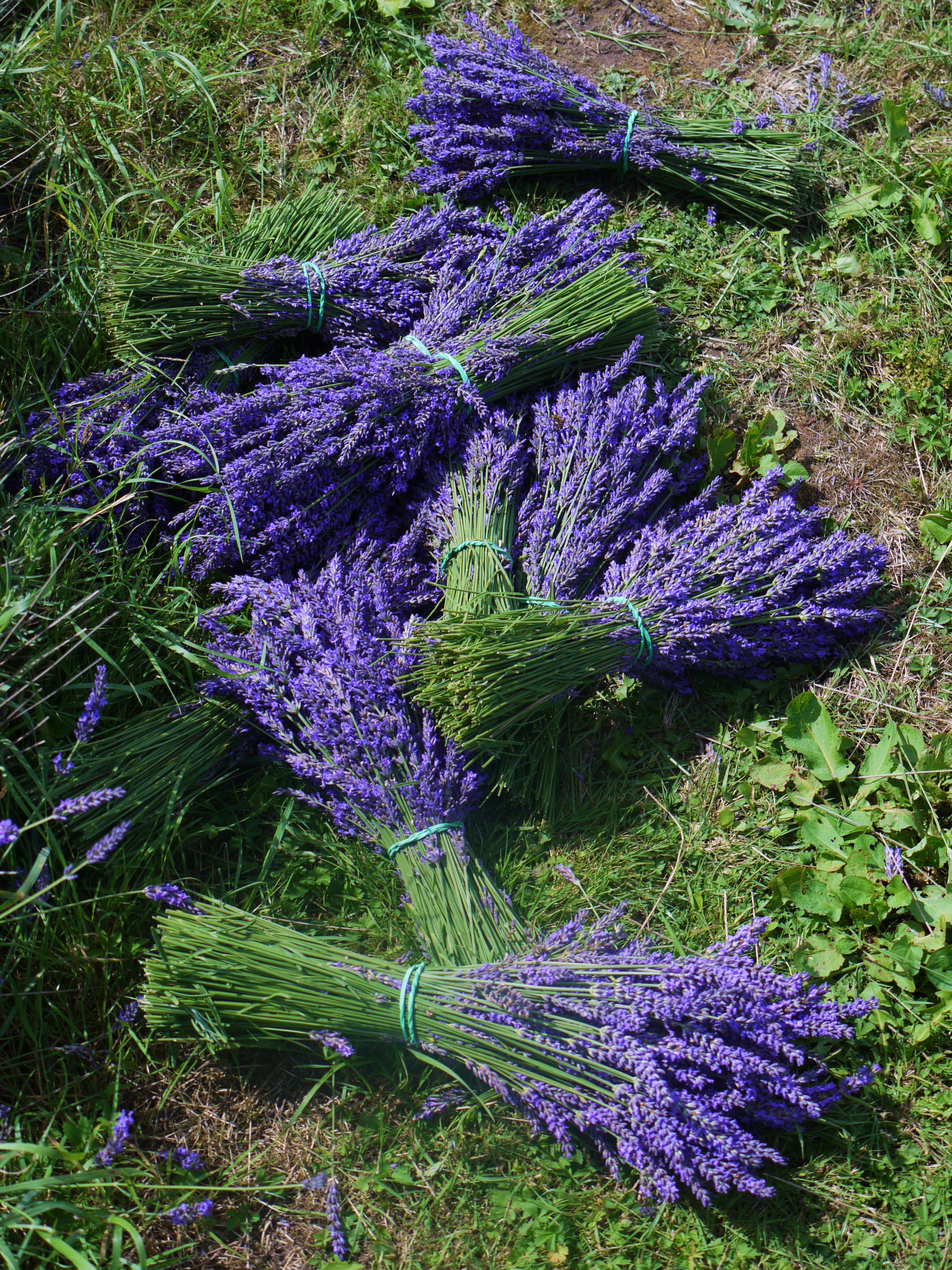
In Victorian England, Carshalton and nearby Mitcham were known for their physic gardens, where plants were grown for medicinal and cosmetic use. Peppermint, lavender, camomile, aniseed, rhubarb, and liquorice were stable crops but today the name Carshalton is best associated with lavender growing. Of the many lavender farms that used to exist, only two remain. Mayfield Lavender is the larger of the two. In the summer months, people come a long way to see it. https://www.mayfieldlavender.com/

Lavender Fields (copyright, author)

At a time when few women ran their own businesses, I was delighted to stumble across the story of Sarah Sprules. Sarah had worked alongside her father in his physic garden and took over his business after he died. Her produce was known worldwide. Her lavender water won medals at exhibitions in Jamaica and Chicago, but the highest accolade she held was her Royal Warrant to supply lavender oil to Queen Victoria, bestowed on her after the Queen and Princess Louise visited her during August 1886. The royal connection proved especially beneficial as Queen Victoria had so many European relatives. 

But that wasn’t all. it was the discovery that Mitcham was once the opium-growing capital of the UK that made me decide my leading man, Robert Cooke, should be a physic gardener. This chapter has been written out of the history books, but in the nineteenth century, far from having a seedy reputation, opium use was respectable. Queen Victoria’s household ordered opium from the royal apothecary, and Prime Minister William Gladstone is said to have drunk opium tea before important speeches. It was used an anaesthetic, in sedatives, for the relief of headaches, migraines, sciatica, as a cough suppressant, to treat pneumonia, and for the relief of abdominal complaints and women’s cramps.

Mrs Beeton’s famous Book of Household Management recommended that no household should be without a supply of powdered opium and laudanum, and she included a recipe for laudanum. But awareness of its dangers was beginning to spread. 

Opium Poppy or Papaver somniferum, vintage engraved illustration. Trousset encyclopedia (1886 – 1891). (Image licensed to author)

Short Matching Excerpt from Small Eden

It was Freya who first showed him Dr Bull’s Hints to Mothers, a pamphlet highlighting the dangers of opiates in the nursery. Of course he doesn’t agree with the practice of dosing up babies so that they sleep all day, he told his wife, but yes, he’s aware it goes on. Working mothers have little choice but to leave children for hours at a time, so they doctor their gripe-water. And it’s not just the poor. Mothers read the labels that say Infant Preservative and Soothing Syrup. They think that ‘purely herbal’ and ‘natural ingredients’ means that products are safe. Though it was chilling to read about case after case of infant deaths linked to over-use.

As many as a third of infant deaths in industrial cities.

And he, who has buried two sons.

But even Dr Bull didn’t condemn the use of opiates outright. They are medicines, he wrote, and like any medicine, ought to be prepared by pharmacists. The trouble is, Robert told Freya, that until recently any Tom, Dick or Harry could operate a pharmacy. And hasn’t he been vocal in his support for an overhaul of the system?

***

Why did it take so long for opium to be banned?

In the 19th Century, Great Britain fought two wars to crush Chinese efforts to restrict its importation. Why? Because opium was vital to the British economy. And then there was the thorny issue of class. The upper and middle classes saw the heavy use of laudanum among the lower classes as ‘misuse’; however they saw their own use of opiates was seen as necessary, and certainly no more than a ‘habit’. Addiction wasn’t yet recognised. That would come later.

The anti-opium movement

In 1874, a group of Quaker businessmen formed The Society for the Suppression of the Opium Trade. Then in 1888 Benjamin Broomhall formed the Christian Union for the Severance of the British Empire with the Opium Traffic. Together, their efforts ensured that the British public were aware of the anti-opium campaign.

Short Matching Excerpt from Small Eden

“Indulge me if you will while I explain how the Indian trade operates – a system that the House of Commons condemned this April last. The East India Company – with whom I’m sure you are familiar – created the Opium Agency. Two thousand five hundred clerks working from one hundred offices administer the trade. The Agency offers farmers interest-free advances, in return for which they must deliver strict quotas. What’s so wrong with that? you may ask. What is wrong, my friends, is that the very same Agency sets the price farmers are paid for raw opium, and it isn’t enough to cover the cost of rent, manure and irrigation, let alone any labour the farmer needs to hire. And Indian producers don’t have the option of selling to higher bidders. Fail to deliver their allocated quota and they face the destruction of their crops, prosecution and imprisonment. What we have is two thousand five hundred quill-pushers forcing millions of peasants into growing a crop they would be better off without. And this, this, is the Indian Government’s second largest source of revenue. Only land tax brings in more.”

More muttering, louder. The shaking of heads and jowls.

“I propose a motion. That in the opinion of this meeting, traffic in opium is a bountiful source of degradation and a hindrance to the spread of the gospel.” Quakers are not the types to be whipped up into a frenzy of moral indignation, but their agreement is enthusiastic. “Furthermore, I contend that the Indian Government should cease to derive income from its production and sale.”

Robert looks about. Surely he can’t be the only one to wonder what is to replace the income the colonial government derives from opium? Ignoring this – and from a purely selfish perspective, provided discussion is limited to Indian production – his business will be unaffected. Seeing his neighbours raise their hands to vote, Robert lifts his own to half-mast. Beside him, Smithers does likewise.

***

The time comes when Robert Cooke must make a choice. He can either diversify, or he can gamble that the government will ban cheap foreign imports and that the price of domestic produce will rise. Robert Cooke is a risk-taker. He decides to specialise, and that decision will cost him dearly. It may even cost him his family. 

Thank you so much for such a fascinating post. Good luck with your new book.

Here’s the blurb:

A boy with his head in the clouds. A man with a head full of dreams.  

1884. The symptoms of scarlet fever are easily mistaken for teething, as Robert Cooke and his pregnant wife Freya discover at the cost of their two infant sons. Freya immediately isolates for the safety of their unborn child. Cut off from each other, there is no opportunity for husband and wife to teach each other the language of their loss. By the time they meet again, the subject is taboo. But unspoken grief is a dangerous enemy. It bides its time.

A decade later and now a successful businessman, Robert decides to create a pleasure garden in memory of his sons, in the very same place he found refuge as a boy – a disused chalk quarry in Surrey’s Carshalton. But instead of sharing his vision with his wife, he widens the gulf between them by keeping her in the dark. It is another woman who translates his dreams. An obscure yet talented artist called Florence Hoddy, who lives alone with her unmarried brother, painting only what she sees from her window… 

Buy Links:

Universal Link

Amazon UKAmazon USAmazon CAAmazon AU

Barnes and NobleWaterstones:    (POD) / Trade paperback – Waterstones

FoylesKoboiBooksSmashwords:

Meet the author

Hailed by The Bookseller as ‘One to Watch’, Jane Davis writes thought-provoking literary page turners.

She spent her twenties and the first half of her thirties chasing promotions in the business world but, frustrated by the lack of a creative outlet, she turned to writing.

Her first novel, ‘Half-Truths and White Lies’, won a national award established with the aim of finding the next Joanne Harris. Further recognition followed in 2016 with ‘An Unknown Woman’ being named Self-Published Book of the Year by Writing Magazine/the David St John Thomas Charitable Trust, as well as being shortlisted in the IAN Awards, and in 2019 with ‘Smash all the Windows’ winning the inaugural Selfies Book Award. Her novel, ‘At the Stroke of Nine O’Clock’ was featured by The Lady Magazine as one of their favourite books set in the 1950s, selected as a Historical Novel Society Editor’s Choice, and shortlisted for the Selfies Book Awards 2021.

Interested in how people behave under pressure, Jane introduces her characters when they are in highly volatile situations and then, in her words, she throws them to the lions. The themes she explores are diverse, ranging from pioneering female photographers, to relatives seeking justice for the victims of a fictional disaster.

Jane Davis lives in Carshalton, Surrey, in what was originally the ticket office for a Victorian pleasure gardens, known locally as ‘the gingerbread house’. Her house frequently features in her fiction. In fact, she burnt it to the ground in the opening chapter of ‘An Unknown Woman’. In her latest release, Small Eden, she asks the question why one man would choose to open a pleasure gardens at a time when so many others were facing bankruptcy?

When she isn’t writing, you may spot Jane disappearing up the side of a mountain with a camera in hand.

Connect with Jane:

WebsiteTwitterFacebook:  LinkedIn

PinterestBook BubAmazon Author PageGoodreads

Follow the Small Eden blog tour with The Coffee Pot Book Club

Posts

Today, I’m delighted to share my review for Victoria and Violet by Rachel Brimble #blogtour #historicalfiction #historicalromance

Here’s the blurb:

It should be a dream come true to serve the Queen of England…

When Violet Parker is told she will be Queen Victoria’s personal housemaid, she cannot believe her good fortune. She finally has the chance to escape her overbearing mother, a servant to the Duchess of Kent. 

Violet hopes to explore who she is and what the world has to offer without her mother’s schemes overshadowing her every thought and action.

Then she meets James Greene, assistant to the queen’s chief political adviser, Lord Melbourne. From entirely different backgrounds and social class, Violet and James should have neither need nor desire to speak to one another, yet through their service, their paths cross and their lives merge—as do their feelings.

Only Victoria’s court is not always the place for romance, but rather secrets, scandals, and conspiracies…

Purchase Links 

UK – https://www.amazon.co.uk/Victoria-Violet-Royal-Maids-Book-ebook/dp/B0B6T47ZX5

US – https://www.amazon.com/Victoria-Violet-Royal-Maids-Book-ebook/dp/B0B6T47ZX5

My Review

Victoria and Violet is a beautifully evoked story of Queen Victoria and her court, in the days before and during her marriage to Prince Albert. I won’t be alone in having read other books and watched film adaptations about the young Victoria, and Victoria and Violet really does capture the feel and mood of the royal court.

Violet is that most typical of women of the era, her life revolving around the will of another, only on this occasion, her mother, and her mother’s employer, Victoria’s mother, the Duchess of Kent. And we all know that’s not going to end well. Only, while she might be sent to spy on Queen Victoria, Victoria quickly strikes up a friendship with her maid and together, the two seem to be able to conquer just about anything the Duchess of Kent puts in their way.

James Greene too is not able to do what he wants, an expectant father, who was also a brutal father, expecting him home to run a prosperous estate, whereas James is keen to continue his work with Melbourne, the Prime Minister, and then Prince Albert himself.

This is a story filled with twists and turns. Will James and Violet fall in love? Will they be able to live their lives together? Or will his father, and her mother, force them apart?

This really is a delightful tale, well researched and very well grounded in the era and period. I’m really pleased I decided to read it:)

Meet the author

Rachel lives in a small town near Bath, England. She is the author of 29 published novels including the Ladies of Carson Street trilogy, the Shop Girl series (Aria Fiction) and the Templeton Cove Stories (Harlequin). Her latest novel, Victoria & Violet is the first book in her new Royal Maids series with the Wild Rose Press.

Rachel is a member of the Romantic Novelists Association as well as the Historical Novel Society and has thousands of social media followers all over the world. 

Connect with Rachel

Website: https://bit.ly/3wH7HQs

Twitter: https://bit.ly/3AQvK0A

Facebook: https://bit.ly/3i49GZ3

Instagram: https://bit.ly/3lTQZbF

Follow the Victoria and Violet tour with Rachel’s Random Resources

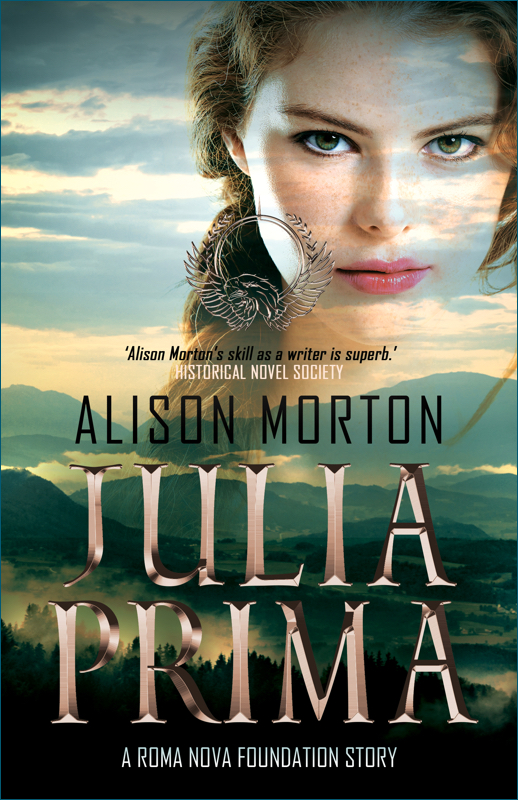
Today I’m welcoming JULIA PRIMA by Alison Morton to the blog #HistoricalFiction #BlogTour #CoffeePotBookClub #BlogPost

I’m delighted to feature JULIA PRIMA by Alison Morton, and she’s written a fabulous post about her book.

The dangers of travelling in the fourth century

Historical fiction at its best transports the reader into another time and place – the heat, fear and smell of battle, the celebration of a marriage where fire flickers nearby when the bride’s hair is arranged with a sharp spear point, or a voyage across a cold featureless sea where you feared might drop off the edge of the world into oblivion.

Style, tone and construction may be radically different, and the settings may be frightening or fascinating, but all good historical fiction conveys the impression of being an eyewitness to what is happening around them as well as how they are acting in that context.

One immediate way of anchoring a book in the past is thinking about how people travelled. We are so used to leaping into the car or catching a train or plane that we forget how completely different journeys were for pre-industrial people.

The concept of distance has changed radically over time. Over much of human history, it was measured in days or weeks taken rather than in land measurement such as miles. Depending on modes of transport available, whether imperial courier’s horse, an ox cart or simple trudging on foot, the perception of distance depended on the state of tracks, paths or roads. 

JULIA PRIMA features a journey on horseback through mountains, transfer on a coastal barge, a voyage on a trading ship, crossing the Apennines on horseback and finally walking through the city of Rome. Each method presents challenges. Horses must be rested and fed regularly. Roman imperial couriers carrying urgent dispatches would change horses at official way stations every 8-10 miles for this reason. Only in Hollywood films and Netflix series can they gallop on and on all day. Saddles at that time had four horns – two back and two front – which held the rider in securely; there were no stirrups. Then there was the question of whether horses were shod or not . . . 

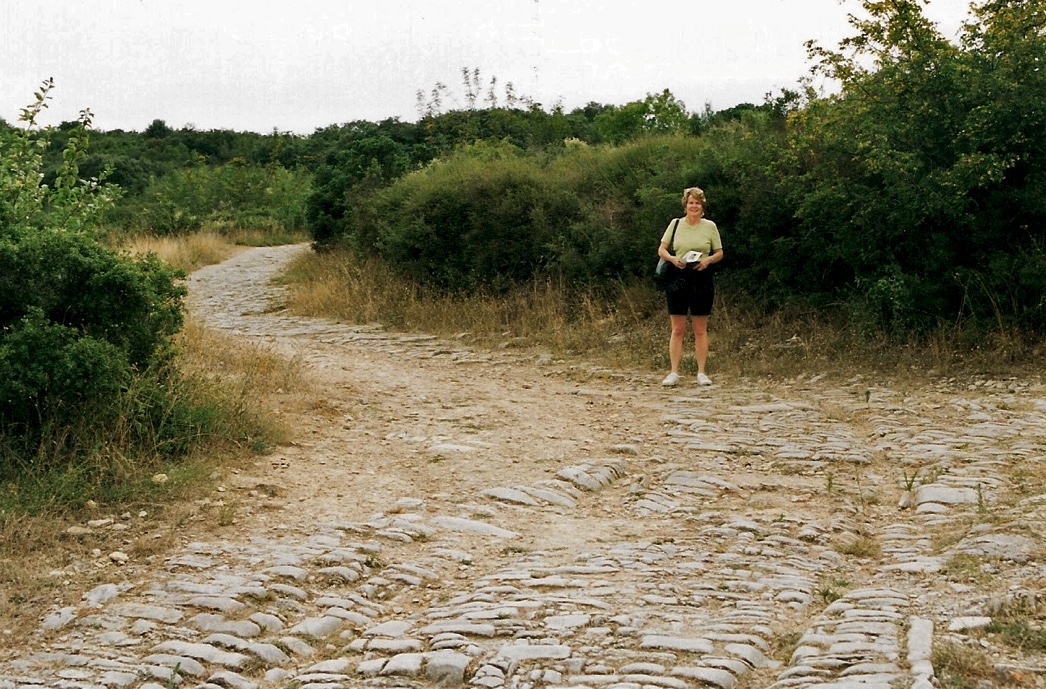
Not all Roman roads were hard metalled and impeccably paved and drained. Primarily, the roads had been built for military use as a quick and efficient means for overland movement of armies and officials. Altogether there were more than 400,000 kilometres (250,000 miles) of roads, of which over 80,500 km (50,000 miles) were stone paved. Many were gravelled, even in towns with some slabbed surfaces in the most important parts such as the forum. Added to these were private roads, rural roads, tracks and link roads. Much more detail here: https://www.alison-morton.com/2020/12/18/on-the-road-to-rome/

Taken together, they allowed the movement of people and goods, and connected isolated communities, helping them to absorb new ideas and influences, sell surplus goods, and buy what they could not produce locally. This trade resulted in an increase of wealth for everyone to a level not seen before and is suggested as a strong reason why many people strove to adopt the lifestyle of their conquerors. 

But towards the end of the fourth century, there were potholes, missing slabs and invasive vegetation as local authorities could not afford their upkeep. Bridges built earlier, especially in the time of Augustus nearly two hundred years earlier, were failing, with parapets missing, holes in the surface and even collapsing completely.

Sailings, even for short passages such as across the Adriatic from Trieste to Ancona, were subject to season, usually May to October, and in the late fourth century, the most fearful danger: pirates. The imperial navy was mostly based in Constantinople by the time of JULIA PRIMA in AD 370 and the few ships still based in Ravenna would not offer comprehensive protection. Storms could bring all sea transport to a grinding halt as could a complete lack of wind. Nevertheless, traders still crossed the water, usually in convoys, and if fortunate escorted by a naval ship which gave an appearance, if not the reality, of protection.

Ferries today such as the cross-Channel ones offer cushioned seating, restaurants, shops and even cabins with ensuite bathrooms. Julia and her companions travel on the hard deck of a merchant ship with whatever shelter and comfort, such as light mattresses, they brought with them. The galley could provide hot water, but you brought your own washing bowl, cups and eating dishes and your own food. Once it set sail, a ship was a self-contained and vulnerable world that was lost to all human contact until it docked again. No ship’s radio, GPS, satellite tracking and communication meant that it could disappear without trace and nobody would know its fate. And news of events, e.g. death of an emperor, would only be available once the ship docked. 

Many travellers stayed with friends, family or trade colleagues. In larger cities and ports, there was a range of possibilities from well-equipped rooms in top class inns to a bed in a shared dormitory, often also shared with travellers of the insect variety!

At the most simple were private houses offering a room in their property for a fee. They could include stabling for animals and supper for their riders. Perhaps an early form of B&B! Travellers would know these houses by a lamp lit over their entrance door. Often this was the only form of hospitality in rural or remote areas.

mansio gave accommodation to official visitors and feeding, watering and stables for their animals. They had to produce a travel document/official chit to show their entitlement to gain access to these government-funded facilities or they were back on the road again. 

Non-official travellers had a choice, depending on the size of their purse and their inclination. Cauponae were often sited near the mansions and performed the same functions at a lower level of comfort. However, they suffered from a bad reputation as they were frequented by thieves and prostitutes. Tabernae provided hospitality for the more discerning traveller. In early days, they were mere houses along the road, but as Rome grew, so did its tabernae, becoming more luxurious. Of course, some did not, but they were generally above the level of the scruffy cauponae. Many cities of today grew up around a taberna complex, such as Rheinzabern in the Rhineland. 

A third system of way stations serviced vehicles and animals: the mutationes (changing stations). In these complexes, the driver could purchase the services of wheelwrights, cartwrights and equarii medici, or vets.  Some hostelries had elements of each type above, so historical fiction writers can often use generic descriptions such as inns or lodgings and vary the description of the accommodation as it suits their story. 

For travellers in the late imperial period, such as Julia in AD 370, the danger from bandits had increased markedly. Some were dispossessed agricultural workers, some escaped slaves, mercenaries for hire or just criminals. As systems dissolved, the military became less visible and finances to fund them ran out, thereby making travelling increasingly dangerous.

Here’s the blurb:

“You should have trusted me. You should have given me a choice.”

AD 370, Roman frontier province of Noricum. Neither wholly married nor wholly divorced, Julia Bacausa is trapped in the power struggle between the Christian church and her pagan ruler father. 

Tribune Lucius Apulius’s career is blighted by his determination to stay faithful to the Roman gods in a Christian empire. Stripped of his command in Britannia, he’s demoted to the backwater of Noricum – and encounters Julia.

Unwittingly, he takes her for a whore. When confronted by who she is, he is overcome with remorse and fear. Despite this disaster, Julia and Lucius are drawn to one another by an irresistible attraction.

But their intensifying bond is broken when Lucius is banished to Rome. Distraught, Julia gambles everything to join him. But a vengeful presence from the past overshadows her perilous journey. Following her heart’s desire brings danger she could never have envisaged…

Buy Links:

Universal Link: https://books2read.com/JULIAPRIMA

Amazon UK:   Amazon USAmazon CAAmazon AU

Barnes and NobleWaterstonesKoboApple

Meet the author:

Alison Morton writes award-winning thrillers featuring tough but compassionate heroines. Her nine-book Roma Nova series is set in an imaginary European country where a remnant of the ancient Roman Empire has survived into the 21stcentury and is ruled by women who face conspiracy, revolution and heartache but with a sharp line in dialogue. 

She blends her fascination for Ancient Rome with six years’ military service and a life of reading crime, historical and thriller fiction. On the way, she collected a BA in modern languages and an MA in history.  

Alison now lives in Poitou in France, the home of Mélisende, the heroine of her latest two contemporary thrillers, Double Identity and Double Pursuit. Oh, and she’s writing the next Roma Nova story.

Connect with Alison

Alison Morton’s World of Thrillers site

Facebook author pageTwitter

Alison’s writing blog:  InstagramGoodreads:  

BookBubAlison’s Amazon pageNewsletter sign-up

Follow the JULIA PRIMA blog tour with The Coffee Pot Book Club

Today, I’m excited to share my review for Daggers at the Country Fair, the second book in Catherine Coles delightful 1940s cozy crime series

Here’s the blurb:

Winteringham Village 1947

As a thank you for her previous brilliant crime solving, amateur sleuth, Martha Miller is guest of honour at the Winteringham Country Fair. However, this time she is looking forward to simply judging dog shows and eating cream teas rather than apprehending a killer!

And Martha is just beginning to enjoy spending quality time with Vicar Luke Walker away from the prying eyes and gossips of her own village, when disaster strikes, and the local teenage femme fatale is found stabbed to death behind the tea tent by Martha’s trusted red setter Lizzie!

But who would want to kill such a young girl and why? Someone in the village has secrets to hide and it seems Martha and Luke have another case to solve!

Let the investigation commence!

Purchase Link

https://amzn.to/39FO4RF

My Review

Daggers at the Country Fair is a welcome return to the sleuthing duo of Martha and Luke. This time the characters aren’t at home but rather on a weekend away, when their skills are unexpectedly called into use once more.

What follows is an intriguing examination of the inhabitants of Winteringham when a body is found during the country fair. Martha and Luke work to unpick what happened to the deceased and to hunt down the killer, as a collection of likely murderers make themselves known

I do love a Catherine Coles cozy mystery, and Daggers at the Country Fair is a welcome addition to the Martha Miller series. I will definitely look out for book 3 in the series.

Catherine Coles writes bestselling cosy mysteries set in the English countryside. Her extremely popular Tommy & Evelyn Christie series is based in North Yorkshire in the 1920’s and Catherine herself lives in Hull with her family and two spoiled dogs.

Connect with Catherine 

Facebook 

Twitter 

Instagram

Newsletter Sign Up

Bookbub profile

Follow the Daggers at the Country Fair blog tour with Rachel’s Random Resources

Happy release day to Donovan Cook and his new book, Chaos of the Gods #historicalfiction #Vikings

Here’s the blurb:

The gods want chaos. He wants no part of their game. Can one man defy the will of the gods?

Bruised and battered from a disastrous raid, Ulf and his companions are set to return to their home. But the gods have other ideas. A violent sea storm pushes them back onto the treacherous land of Francia. With their ship damaged, Ulf and his Norse brothers are left stranded.

While the sea nearly cost them their lives, the land on the North Frankish coast could prove more deadly. And with the ruthless Griml on their tail, they must stay alert to survive.

But another threat looms over them, one that ensures the gods will get their chaos.

This battle is far from over.

Chaos of the Gods

Check out the first book in the series here: Son of Anger

Connect with Donovan

WebsiteTwitter:   Facebook

BookBub Amazon Author Page

  Goodreads: 

I’m delighted to welcome Nicola Matthews to the blog with a post about her new book, Kitty Canham #blogtour

Woman, Then and Now 

Nicola Matthews is the author of the historical fiction Kitty Canham. The real life of her protagonist, who lived in the same part of Essex 300 years earlier, inspired her to write. 

There is a theme in Kitty’s life that echoes a theme that has run through my own life. A theme that is not so often written about, because it is not exciting or enlivening. It is the theme of inevitability. Kitty says that life, ‘is like an inevitable river flowing with or without her consent.’ For too many women in Kitty’s era, as in my own, fighting the flow of the current that was the inequality that women faced, proved too strong. We become worn by its pull and allowed ourselves to drift in its inevitable flow. Kitty often finds herself in such a place. She struggles to make her way amid the conventions that restrain her, but when she expresses her anger, it only seems to confirm her weakness as a woman. Kitty was born into a society where women were expected to present themselves well, in order to receive a good proposal for marriage. That was the sole purpose of so many women in Kitty’s time. 

In the eighteenth century women could not inherit easily and were certainly not expected to enjoy the hard graft of a farming life, which Kitty relished. She finds herself in the happy position of becoming the inheritor of her father’s farm, until a boy appears, born to her father out of wedlock but now welcomed into the home by her mother. The boy dispossesses her. 

I was born in the late 50’s. It was post war Britain when women’s brief foray into the world of work during the world wars, had come to an end. So many of my friend’s mothers spent their time keeping home for their working spouses. The atmosphere often seemed drab and devoid of conversation. Although my own upbringing was rather more bohemian, and certainly a lot of fun, a woman was still there for the gaze and service of their husband. My father was a well-known actor. My mother was the perfect hostess and a star in my father’s firmament. She fitted it well. I remember watching films in Home Economics, where we were told, by a smiling woman in a 50’s dress and pinny, how to keep house and cook! That was to be our lot, whether it fitted us well or not. Too many women were forced into positions to which they were wholly unsuited. 

My character, Kitty, had no interest in presenting herself appropriately for a good marriage. But she too often finds herself caught in the current that was the society of the day. With few options and when all else is closed to her, she agrees to marry Alexander, a rector in the local parish. He is a good man, but still a man of his time, unable and unused to expressing himself to a woman. When she comes home from helping old Jacob with the lambing at the farm, dressed in breeches with blood on her hands, Alexander is angry. He tells her in no uncertain terms that she is an embarrassment and will have to change. Kitty bows to inevitability once more, though she finds her passionate and restless nature will not allow her to settle as she hoped. Eventually she finds a course of happiness, but one that comes at great cost both physically and emotionally. As we know, things have improved for women immeasurably since Kitty’s time. However, we are not there yet. 

Thankfully, for my generation, the 60’s/70’s brought change. Though the male gaze had not changed. It was the era of the Carry On movies when a wolf whistle was seen as a compliment. Both my sisters were older than I and were actresses through the sixties. My sister Debbie, ten years my senior, became known as a ‘blond bombshell’ – an image which she was never fully able to break away from and which led her into difficulties as she grew older. Although I was younger than my sisters, the shadow of the expectations I grew up with, lived on in my own soul. 

Kitty’s life story was very different to my own, and my struggles were far less keen, but in writing Kitty Canham I found myself expressing, through her, my own anger against the restraints that I felt in my younger years, restraints so often in my own mind, rather than in those around me. In giving Kitty a feisty nature, I found I was able to give expression to my anger, not for myself so much, but for those women, the world over, who’s fight for equality has barely begun.  

Nicola Matthews is the author of Kitty Canham (Hall House Press, £8.99, eBook: £2.99), available now from Amazon: https://amzn.to/3lCKLxj

Nicola Matthews was inspired by the ragged North Essex coastline, where she lives with her husband, to write Kitty Canham’s story. She was an undiagnosed dyslexic until her mid-forties and has worked as a sculptor and in the theatre, writing and producing community productions. She is also the author of Anxt and Other Poems, a poetry anthology. It was the unexpected gift of lockdown that gave Nicola the time and inclination to finally write her debut novel, Kitty Canham. Find out more: www.nicolamwrites.com/novel

@NicolaMatthewsAuthor

@nicola_author

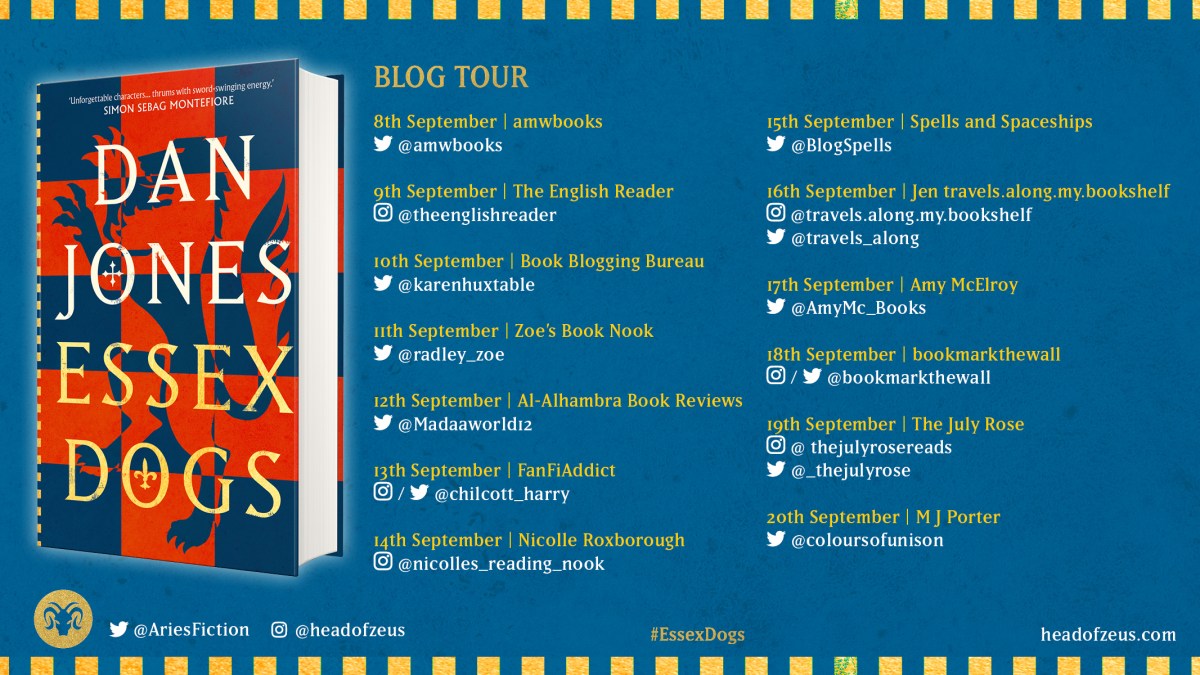
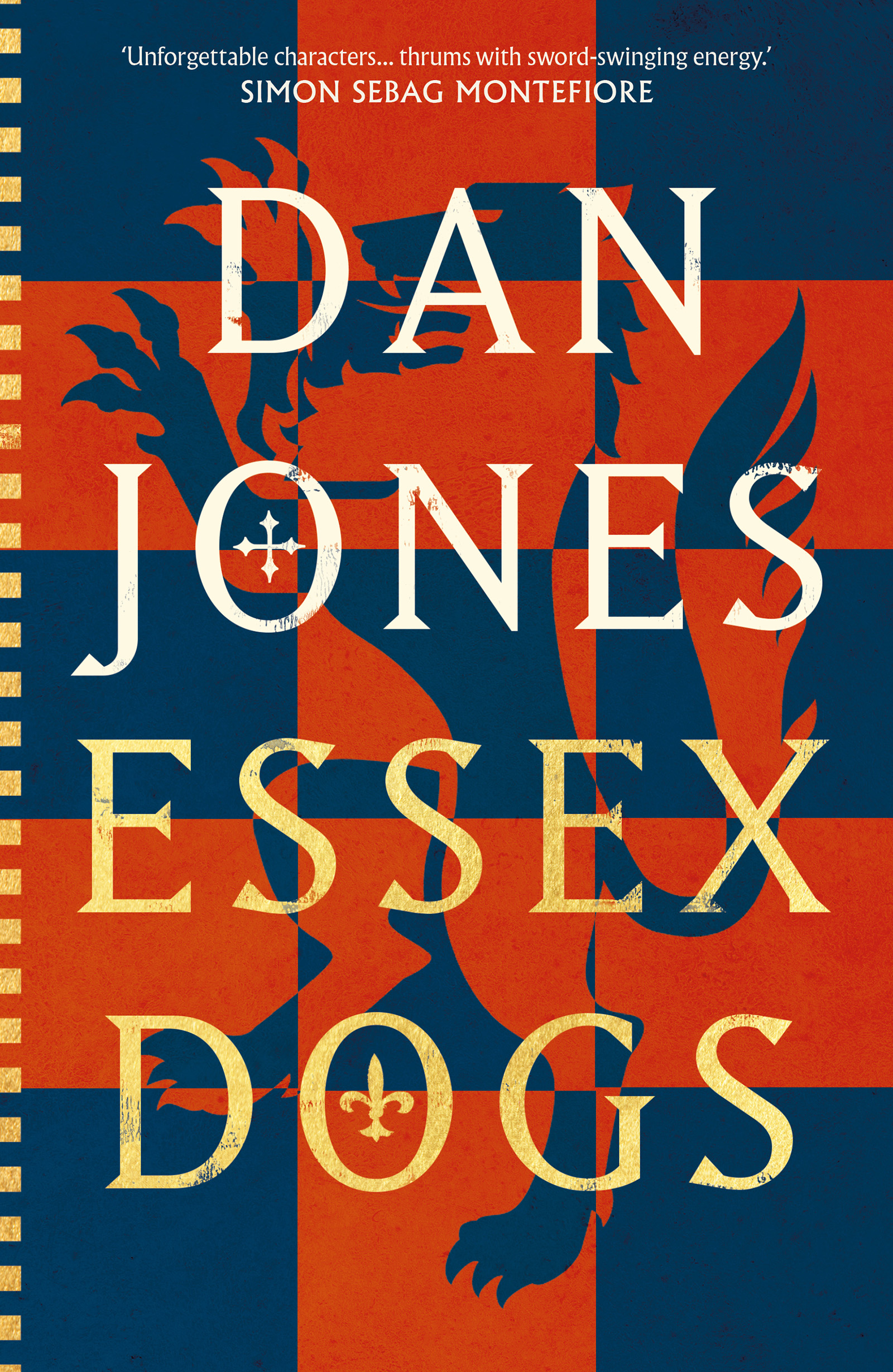
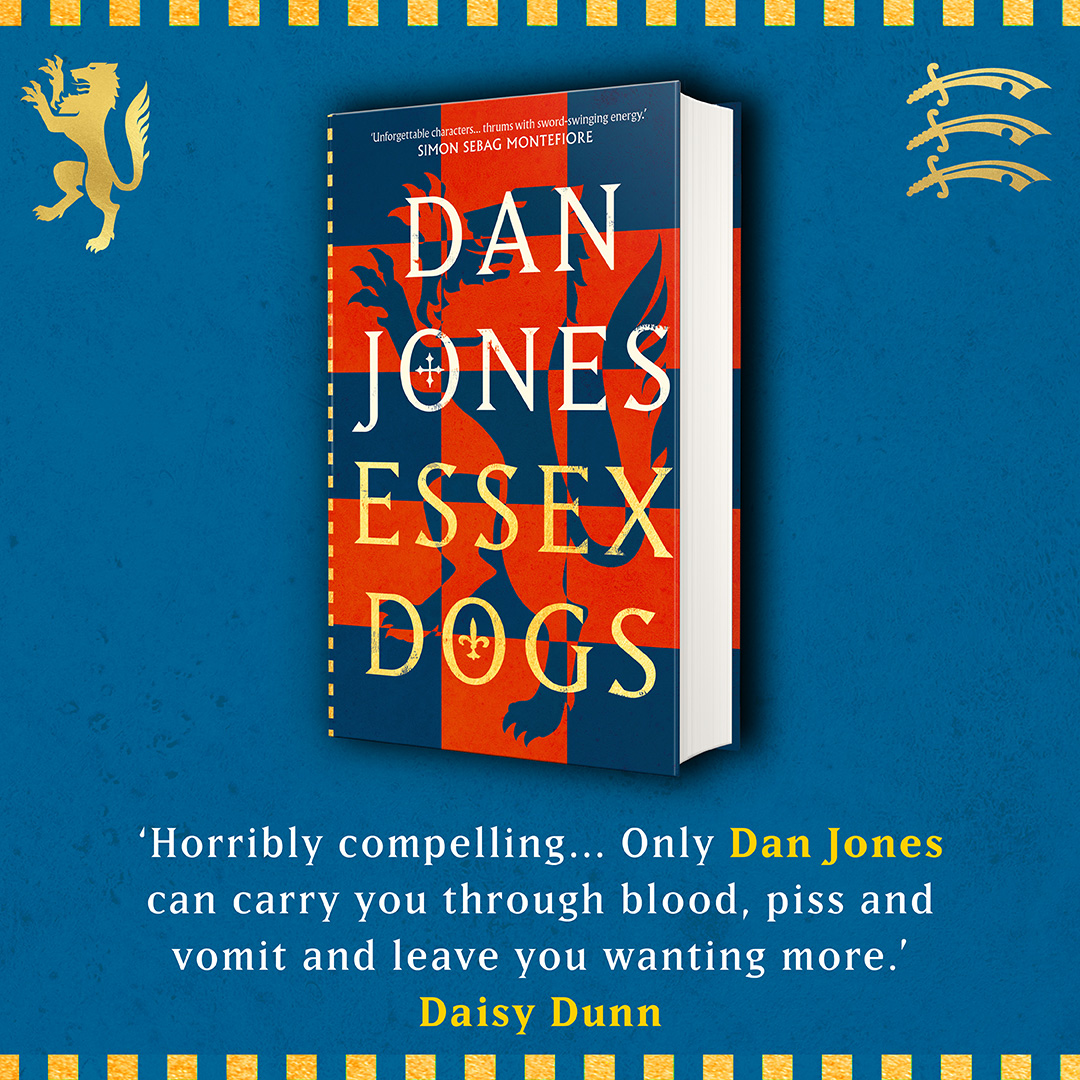
Today, I’m delighted to be hosting Essex Dogs by Dan Jones on the blog #blogtour #newrelease #TheHundredYearsWar

Here’s the blurb:

July 1346. The Hundred Years’ War has begun, and King Edward and his lords are on the march through France. But this war belongs to the men on the ground.

Swept up in the bloody chaos, a tight-knit company from Essex must stay alive long enough to see their home again. With sword, axe and longbow, the Essex Dogs will fight, from the landing beaches of Normandy to the bloodsoaked field of Crécy.

There’s Pismire, small enough to infiltrate enemy camps. Scotsman, strong enough to tear down a wall. Millstone, a stonemason who’ll do anything to protect his men. Father, a priest turned devilish by the horrors of war. Romford, a talented young archer on the run from his past. And Loveday FitzTalbot, their battle-scarred captain, who just wants to get his boys home safe.

Some men fight for glory. Others fight for coin. The Essex Dogs? They fight for each other.

My Review

Essex Dogs by Dan Jones, despite its girth, coming in at nearly 7500 lines on my Kindle and 450 pages in hardback, is a really easy-going read. It has a light writing style, and therefore, it’s not an onerous read for anyone worried that it might just be that little bit longer than they’re used to. (I never used to consider the length of a book, but now I do, when there are so many books to read and so little time).

The opening scene, the landing on the beach for the invasion of France, is very well told, and draws you into the world that the Essex Dogs live within. The action then slightly backs off, as we learn more about the men behind the invasion and the details of what’s planned. And there are many little details that slowly draw the reader into the scenario the Dogs face, as just one of many bands of warriors, commissioned for their 40 days of service, to fight on behalf of a lord, who’s in turn beholden to the king or the prince of Wales.

While the Hundred Years War is not ‘my’ time period, I’m not a stranger to it. If you’ve read other books set in the period, as I have, then this feels very close to those books. In no time at all, I was remembering some of the historical details, and I felt right at home with the ‘Dogs.’

This, as the blurb says, is the story of the Essex Dogs, and not the king and lords. The prince, Northampton and Warwick are the most notable members of the nobility to get a decent-sized portion of the story but only in relation to the way the Essex Dogs’ lives mingle, merge and separate with them. You can almost smell the dust and heat, the stink of the rivers, and not for the first time when I read books like this, I’m left considering why the English king was so determined to claim a province that was so hostile to him.

The story, not without tragedy, slowly builds to an intriguing finale, on the field of Crecy, where we follow the efforts of young Romford as he attempts to stay alive.

There is blood and gore in this book, but not tonnes of the stuff. There is some pretty strong language, but not tonnes of it (if you’ve read my The Last King series, it will feel a little tame). My overwhelming feeling on finishing it is that the games kings play affected the men who fought for them more than them, and I more than imagine that this is what Dan Jones is hoping to make us feel. And so, an engaging and well-told tale, not without moments of tragedy and comedy, and one certainly worthy of picking up and devouring.

About the author

Dan Jones is the Sunday Times and New York Times bestselling author of ten non-fiction books, including The Templars, The Colour of Time and Powers and Thrones. He is a renowned writer, broadcaster and journalist, and has for many years wanted to write authentic but action-packed historical fiction. His debut novel, Essex Dogs, is the first in a planned trilogy following the fortunes of ten ordinary soldiers in the early years of the Hundred Years’ War. He lives near London with his family.

Purchase link

Amazon: https://amzn.to/3cNE9LN

Follow Dan

Twitter: @dgjones

Instagram: @d_a_n_jones
TikTok: d_a_n_jones

Follow Aries

Twitter: @AriesFiction

Facebook: Aries Fiction

Website: http://www.headofzeus.com