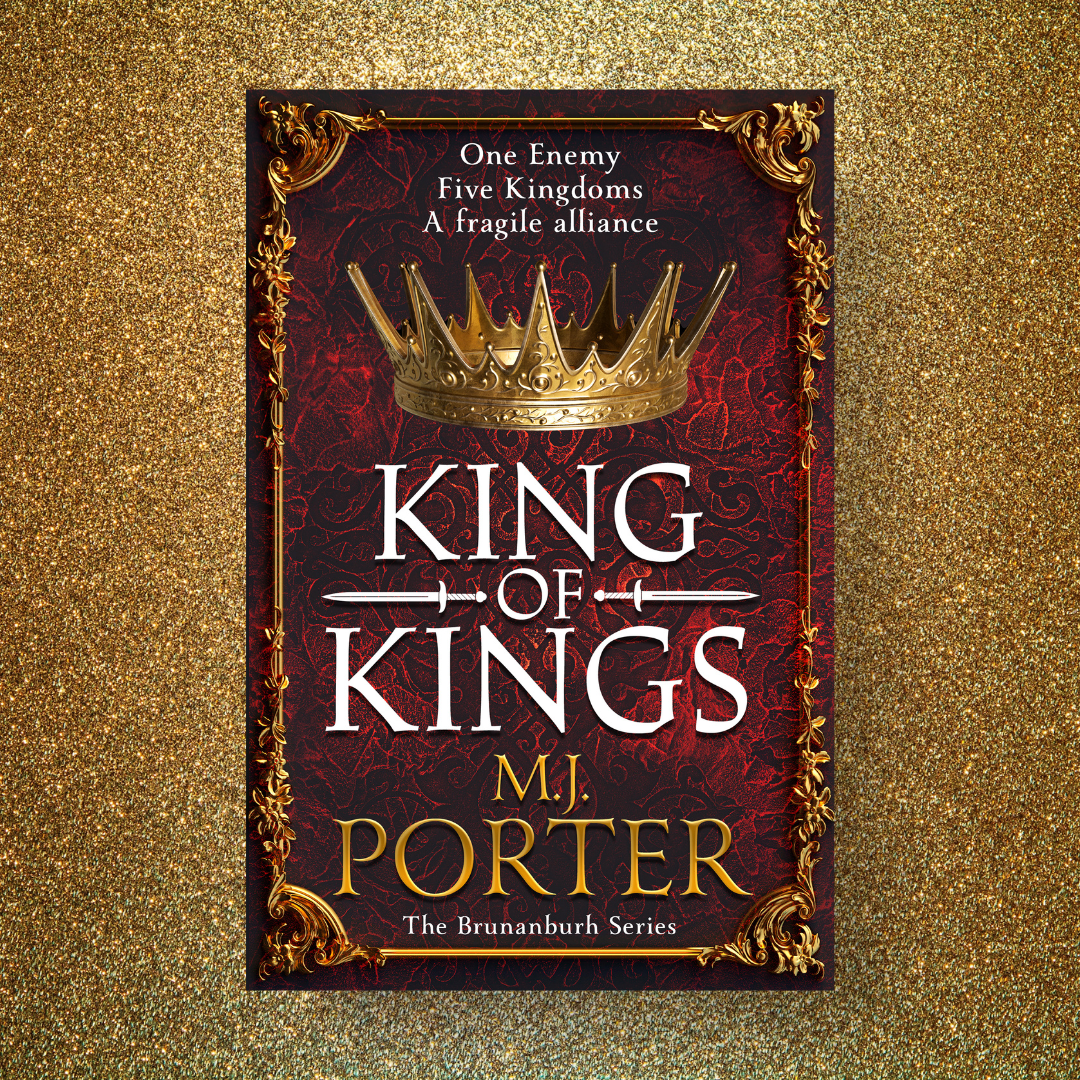
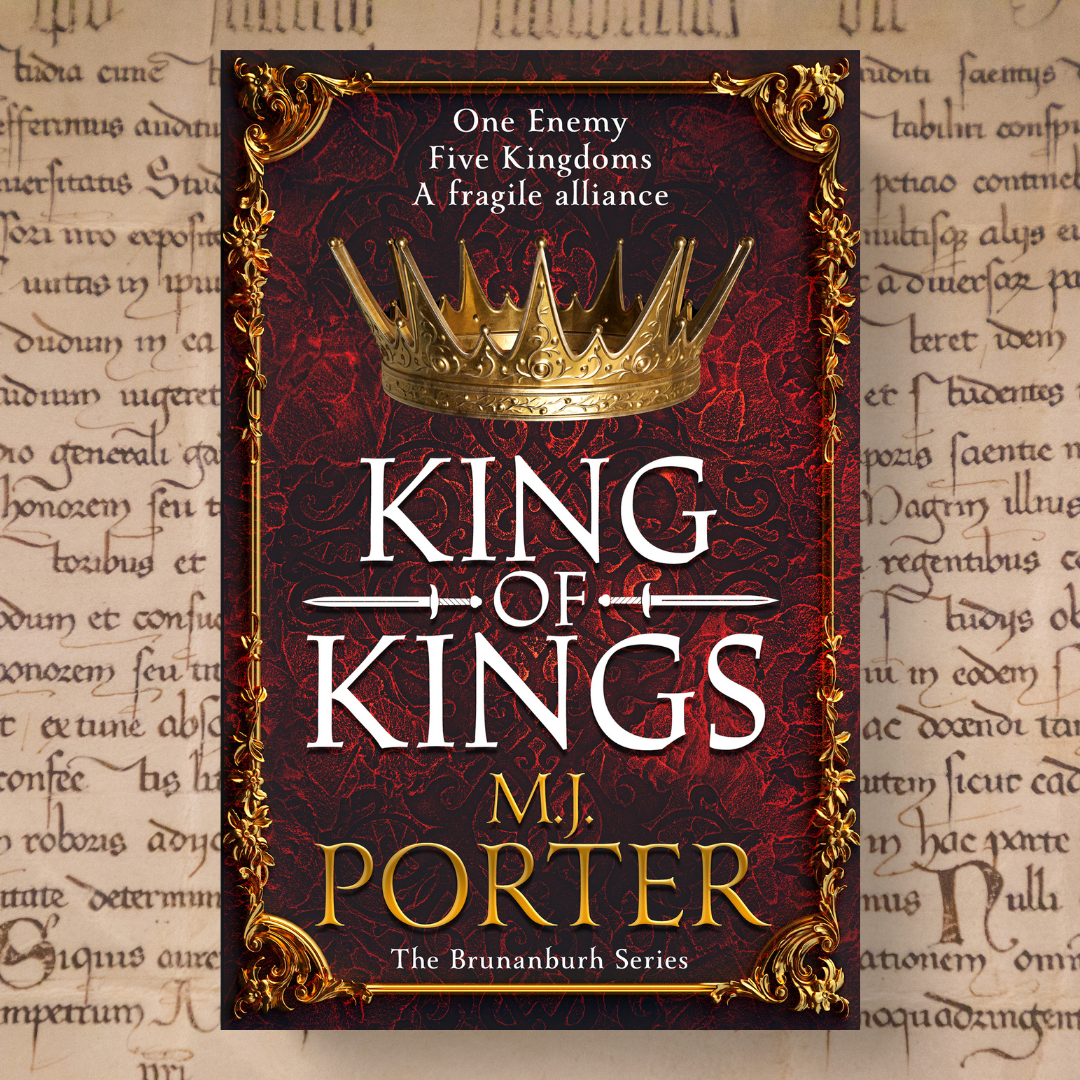
My new book, King of Kings, is a multi-viewpoint novel telling the story of events in Britain from 925-934. I thought it would be good to share details of the historical people my character are based on.
My portrayal of Constantin, the king of the Scots, is of course fictional in King of Kings, but he is based on a historical individual, Constantin (e) II, so who exactly was he?
Constantin is a fascinating character. Again, and as with Athelstan, his exact date of birth is unknown, but it must have been, at the latest, by 877/8, when his short-reigned father died.
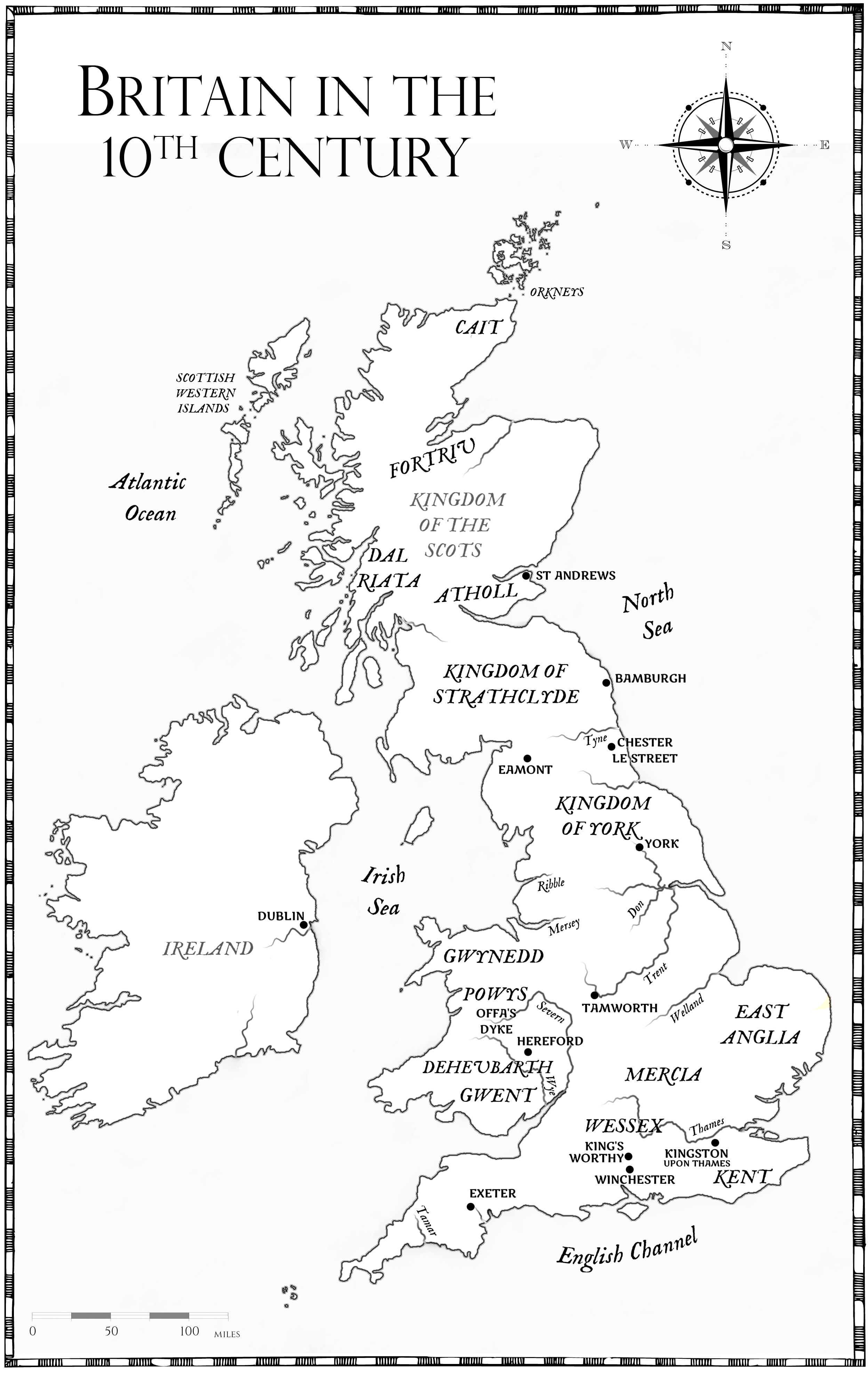
By 900, Constantin was the king of the Scots (we think – there is some confusion about this). This wasn’t yet quite Scotland, but it was getting there. The ancient kingdoms of Cait, Fortriu, Atholl and Dal Riata, were ruled by one king, Constantin. But, he hadn’t succeeded his father, Aed, but rather a man named Domnall II, his cousin. At this time there were two rival dynasties and they strictly alternated the kingship.
Affairs in the kingdom of the Scots often intermingled with those of the independent kingdom of Bamburgh, Strathclyde, and of course, the Norse, or Viking raiders, if you will. Indeed, the entry recording Constantin’s death in the Annals of Ulster, reads as though there was often strife.
‘Constantinus son of Ed held the kingdom for xl years in whose third year the Northmen plundered Dunkeld and all Albania. In the following year the Northmen were slain in Strath Erenn…And the battle of Tinemore happened in his xviii year between Constantin and Ragnall and the Scotti had the victory. And the battle of Dun Brunde in his xxxiiii year.’ (Alex Woolf, From Pictland to Scotland, 789-1070,p.126)
Constantin, ruling for decades, and I mean decades, seems to have brought much needed stability to the kingdom, as affairs there very much mirrored the emerging ‘England’ to the south.
‘Constantin’s reign has increasingly come to be see as one of the most significant in the history of Scotland. Not only was it very long, at least forty years, but it was also the period during which conflict and diplomatic relations between a kingdom recognisably ancestral to Scotland and one recognisably ancestral to England first occurred.’ (Alex Woolf, From Pictland to Scotland, 789-1070, p.128)
Constantin allied with the rulers of Bamburgh, and York, and also, on occasion, both Æthelflæd of Mercia and Edward the Elder, after her death. But, he seems to have been quite flexible in his thinking, and was prepared to pick and choice as he saw fit.
By the beginning of King of Kings, Constantin would have been in his mid-forties, and he was still to rule for many years to come, and he was certainly a more than adequate counterpart to Athelstan, king of the English, no doubt helped by his sons and grandsons, as his reign continued.
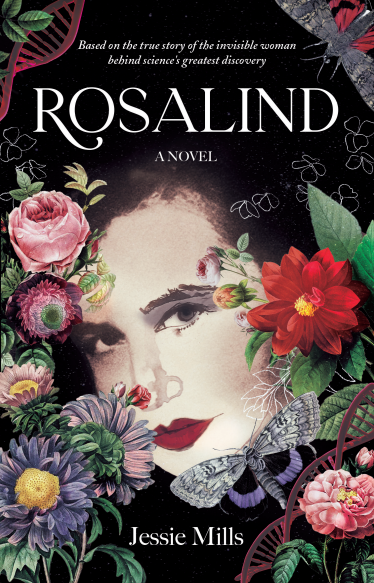
I’m delighted to welcome Jessie Mills to the blog, with an extract from her novel, Rosalind: DNA’s Invisible Woman
Extract from ROSALIND: DNA’s INVISIBLE WOMAN, Part I, chapter 1 (Exodus | Shemot)
Norway, August 1939
As I stand in line with the other passengers, a dour-faced policeman snatches my passport from my hands. He looks up to examine me from beneath a deeply etched brow.
‘English?’ he asks.
His menacing eyes follow me as I walk past him and up the steps to board the ocean liner. The port town of Bergen is dotted with wooden houses in vivid hues of red and yellow. It is a different sight from the sleepy fishing village on our inbound journey when the Sheriff’s office was closed. I wished then that we could have flown from Gressholmen Airport, in one of the new metallic Imperial Airways planes. They were as big and shiny as the Zeppelins on the banners in Paris. But Father insisted that we couldn’t get the family Austin on one.
On our return, queues into the port stretch for several miles. The jetty is crawling with uniformed police in visor caps, which shield their faces from the stark Norwegian sun. The police are checking passengers’ papers before boarding the boat.
The ship has cast a deep and foreboding shadow over the steps.
As my feet navigate each rung, the iron staircase creaks and yawns. The structure is gnawing at the bolts on the side of the ship.
The staircase sways in unison with the waves as they lap with force against the steel stern. My feet move in time with the structure, back and forth like a pendulum. I vault two steps at a time, levering my body from every other step until the sun’s rays warm the cloth on my back.
Standing on the ship’s bow, I long to stay there forever. The last of August’s sun is twinkling softly on the water’s peaks. The waves are undulating gently against the hull as the boat crosses the water.
The journey out of the port is smooth. With each ripple and swell of the water, my mind drifts, first to home and then to college. I am due to return to Cambridge in less than a month. Suddenly, a thought grips me. At first, it is fleeting, but the more I try to suppress it, the harder it resurfaces, with agonising intensity. I may never return.
Seconds later, a pummelling sensation rams my stomach. The ship swings to one side, and the rail jolts against my ribs.
‘Navy ships?’ my mother asks.
A Cimmerian mist quickly settles on the water’s surface. Through the haze, a large vessel is visible.
My father’s response is inaudible.
As we descend the poorly lit stairwell at the side of the ship, a tide of panic sweeps over me. My parents and brothers spend the rest of the journey in silence.
Perhaps it is selfish to want the bourgeois life of a scientist, a gentleman’s profession. I like Maths too, as well as Chemistry. Yet while the rest of the world is upended by ideology, science is the last bastion deserving of my faith. From the tiniest molecule to the whole of the universe, science pervades every inch. It is the only language we have to make sense of it.
When you lose everything you ever knew to be true, all you can do is drive forwards to keep the ghosts at bay. Our family holiday to Norway began much like our trip two years before. There were few signs of what would transpire, or how it would change the course of our lives. Sometimes it only takes one event, one meeting, one person, or one kiss, for a life to change forever. That August was to be one of those events.
Here’s the blurb
‘A luminous, pin-sharp portrait of a true trailblazer. Mills’s writing simply glows.’ Zoë Howe, Author, Artist and RLF Writing Fellow at Newnham College, University of Cambridge
Rosalind: DNA’s Invisible Woman tells the true story of the woman who discovered the structure of DNA, whose work was co-opted by three men who won a Nobel prize for the discovery.
Her story is one of hope, perseverance, love and betrayal.
Driven by her faith in science, Rosalind Franklin persisted with her education in the face of formidable obstacles, including the de-reservation of women from war science.
In Norway at the start of World War II, her place at Cambridge’s first women’s college was thrown into jeopardy.
A decade later, she fled Paris upon the news that the research director at the State Chemicals Lab was having an affair. They continued to write to each other in secret.
Rosalind knew when embarking on science, a gentleman’s profession, that the odds would be stacked against a woman’s success. But she did not foresee that her pay would later be cut on account of her age and gender, that she would be burned by the plagiarism rife among her male contemporaries or face her own battle with cancer.
When she took a research post at King’s College London, the head of the physics department switched her subject to DNA at the last minute.
She was tasked with discovering its structure using X-ray crystallography. Could she become the first scientist to map the DNA molecule and would the discovery ultimately be worth it?
When two researchers at Cambridge University, her alma mater, built a three-chain model of DNA weeks after seeing her lecture, she knew that it was wrong.
Scientists at each of the three labs competing in the race to find DNA’s structure had guessed that the molecule had three chains. Her evidence proved them wrong. But would anybody listen?
This is the story of DNA that you won’t find in the history books…
The woman behind science’s greatest discovery has been variously referred to as ‘an obsessive woman’, ‘difficult’, and ‘the dark lady of DNA’. Why was she called these names, and were they justified?
Written by journalist and former Wall Street Journal (PRO) editor Jessica Mills Davies, following nearly three years of intensive archival research, the novel aims to give Rosalind Franklin a voice for the first time in history. Her story is the most well-documented account of ‘the Matilda effect’ and its corollary ‘the Matthew Effect’, whereby women’s contributions to science and other professions are often ignored or misappropriated.
The Exeter Novel Prize-longlisted novel is peppered with copies of original correspondence between her and her contemporaries, illustrating how three men got away with the biggest heist in scientific history.
Jessica is a journalist and author. She has written for publications such as The Independent, The Wall Street Journal and Business Insider, where she investigated the use of flammable cladding in hospital intensive care units in 2020.
Before that she was a member of the steering committee for Women at Dow Jones, where she spent several years as an editor and led the team that uncovered the misuse of funds at Abraaj.
Her debut novel tells the true story of Rosalind Franklin, the invisible woman behind the discovery of DNA’s double helix. It was longlisted for the Exeter Novel Prize 2020.
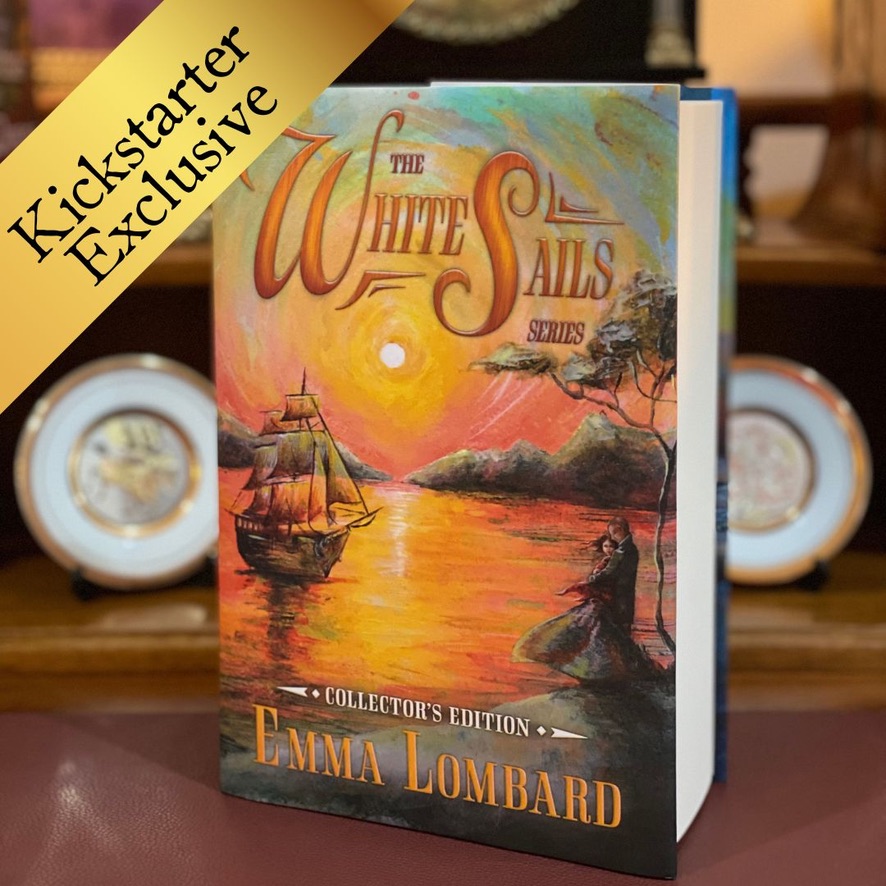
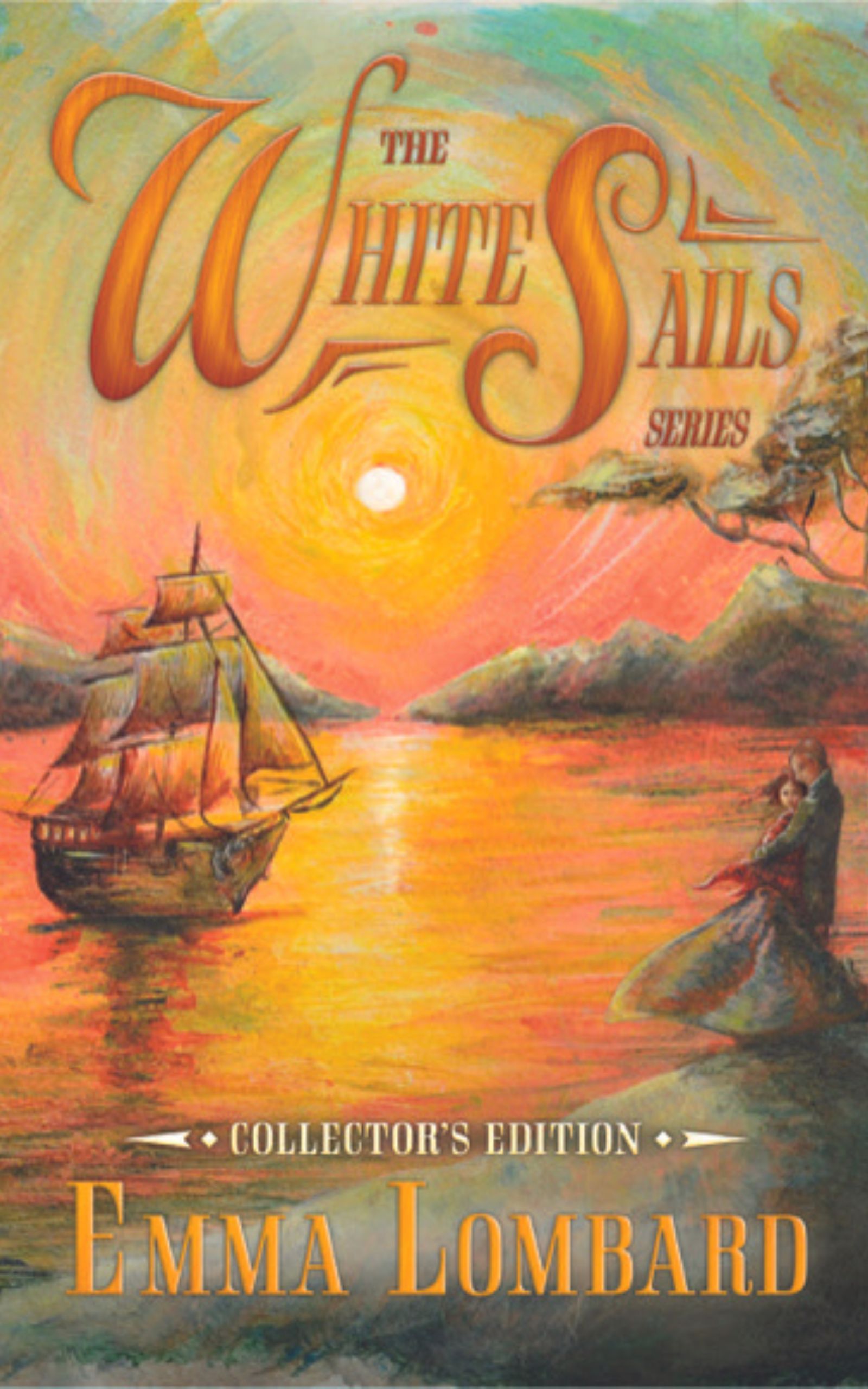
Award-winner, The White Sails Series, where icy winter storms, opportunistic mercenaries, uncharted lands, and a colourful crew of sailors are all lashed together by an epic love story.
This collector’s edition includes all four books in the series.
The White Sails Series: Special Hardback Omnibus
If Bridgerton and Pirates of the Caribbean had a love child.
Are you a fan of sweeping romantic adventures?
Do you fall for tall, brooding Naval Officers?
Love a feisty female lead who makes you yell aloud?
Then hop aboard Emma Lombard’s hardback Collector’s Edition of The White Sails Series, and batten down the hatches!
But why?
Well, firstly, let me tell you what my Kickstarter campaign isn’t. It isn’t a plea for donations, it’s not a beg for money, and it’s not just another retailer.
Okay, so what is it then?
Kickstarter is a wonderful way for me to give more to my fans.
It allows fans access to a special collector’s edition that is not (and will never be) available from online retailers.
It allows fans to have each and every copy personalised, which is just not doable on retailers.
It also allows fans a more intimate view of the story behind my series.
And best of all, it allows fans to get involved in my next series, whether through an exclusive sneak peek of the first draft or even having a character named after them.
Oh, and did I mention there’s an opportunity to win the original oil painting of the cover?
Where else in the world do you get all this extra cool stuff thrown in just because you bought a book?
What’s in it for you, Emma?
Without wanting to sound too cheesy, I’m beside myself to put such a pretty book out in the world. I’m mean, just look at that dreamy sunset! I’m not going to lie, I love a chunky book.
This collector’s edition fulfils my ultimate author dream—to be able to hold (and smell) a weighty tome. I’m not the only one—I’ve had folks walk up to my books at the market and pick them up just to smell them! My kind of peeps!
I know it’s taboo to talk about money, but the pledges received for this campaign will help me recoup some of the upfront expenses that I have already laid out, like editing, book cover design, audiobook narration, and it will give me the momentum I need to invest in those same services for my next series, The Gold Hills Series.
You’ll be helping keep the indie publishing ecosphere turning, which in turn lets me keep creating more stories.
So, what’s The White Sails Series about?
One of my readers described it best: If Bridgerton and Pirates of the Caribbean had a love child.
The idea for this series was born from a tiny nugget of family gossip that my grandmother shared with me. She told me how my 3x great grandmother left her well-to-do family in England to elope with an English sea captain, and live aboard his ship with him.
I took the basic concept of this story and had a blast creating an entirely fictitious imagining of what it might have been like for a woman to live aboard a ship in those days. Quite ironic considering that I get terribly sea-sick myself.
Curious? Never seen what a Kickstarter campaign looks like?
Emma Lombard was born in Pontefract in the UK. She grew up in Africa—calling Zimbabwe and South Africa home for a few years—before finally settling in Brisbane Australia, and raising four boys. Before she started writing historical fiction, she was a freelance editor in the corporate world, which was definitely not half as exciting as writing rollicking romantic adventures. Her characters are fearless seafarers, even though in real life Emma gets disastrously sea sick.
I’m delighted to feature an excerpt from The Adventures of Ruby Pi and the Math Girls by Tom Durwood.
Gunfight in the Mogollons
“These Colorado coaches,” lectured the solicitor, Aynsley, “are a larger, more rugged version of the Kinnear design. Wells Fargo uses them widely.
“This is a Concorde model, if I’m not mistaken,” he added. “Capacious.”
Johnny glared at the talkative lawyer.
“More useless information,” snorted the militia man, Morgan. He rubbed his bandaged hand sullenly.
The stagecoach’s constant motion cast a bad mood within its large interior, but it was more than just the motion. The day had turned to dusk. Only an hour further to Folsom. The mountain trail was clear, the horses making good time.
“Leather-strap suspension,” offered Aynsley to his captive audience, “is what gives the carriage its swinging movemen– ”
It happened so fast.
All in the same moment–
They heard a thunderous crash, followed by three loud gunshots.
The horses whined their objection in a panic –
One of the brake levers snapped.
The stagecoach screeched to a halt.
The stagecoach passengers heard a hard, painful scream from the driver’s seat –
“I’m hit! I’m hit!”
The stage door flew open and half of the passengers spilled falling out onto the trial –
“Shut up,” came a woman’s voice. A pause, and then, “Morgan! You there?”
The passengers stood. Now they could see that a great, bulky deadfall had been placed across the trail to block the stage.
Angie and Drew, from the saloon in Silver City, sat astride two horses, guns drawn.
“Hands up! All of you!” proclaimed Drew. “This here’s a robbery!”
He held his pistol on the stage driver, who had his hands up. Beside him, the rifleman clutched at his arm, where had been shot.
Now Morgan smirked as he trained a gun on Johnny’s stomach.
“What the devil — ” sputtered Aynsley.
“You- you’re bandits?” demanded the startled Mrs. Aynsley.
“The money belts,” commanded Morgan. “That deed! Now!”
One of the drivers groaned for mercy.
Angie stopped placing the saddle on the lead horse, turned and shot him
“Money belts,” spat Drew.
“But you’re such a nice boy — ”
“I’ll shoot you, hey,” shouted Drew, trembling.
“You’ll never get away with it,” warned the lawyer.
“Easy …” said Johnny.
“Sorry, bub,” Morgan said, half-smiling, to Johnny as he raised the weapon. “We can’t leave witnesses now, can we?”
Ma yelled ‘No!’ and lunged for the militia man —
“Hey. Morgan,” said Casey.
Morgan turned in time to see Casey’s hand sweep to her side and emerge with a gleaming pistol, one of the Colt Rainmaker’s, nickel-plated and deadly fast.
In a liquid motion, she raised the Colt and fanned the hammer —
BAMBAMBAM!
Three rounds sunk deep into Morgan’s chest, all at once.
Casey swiveled and sent three more rounds slamming into anxious young Drew, jerking him clean from his saddle —
With a curse, Angie jammed her spurs into her horse and rode off —
Casey dropped the Colt and ran to grab the Enfield rifle from the passenger racks.
She shucked the rifle sheath and ran to the edge of the trail.
She stood on an outcrop facing northeast. She could see the sweep of the basin and range, to her right, where Angie was escaping —
She was galloping unseen, along the high-walled Mogollon limestone.
But there was a break in the wall, very distant …
It was that opening to which Casey devoted her attention.
They could hear the horse’s canter, moving away …
Casey thumbed in three big, heavy cartridges.
“Eleven hundred meters … ” said Johnny.
Johnny held the rangefinder like binoculars.
He counted off a sequence of numbers.
Casey scribbled the calculations.
Distance … curvature …target point … origin point
Now she watched through the Enfield’s telescopic sight, following the horse-and-rider trajectory, as she imagined it.
John called out a second sequence of numbers, distance in meters.
“Twenty …” said Johnny.
“Fifteen,,, ten .. five …”
The Enfield let go a sharp crack —
The firearm echoed in the great solemn quiet along the southern section of the Mogollons …
Angie’s body slumped and fell from the saddle.
What we see are objects in refracted light. A thing itself does not change, just the ways in which we experience it. It is the light which changes.
A blue moon looks blue because of shifts in light, the suspended volcano dust in the air. The way that light refracts can make everything look new, and not as we thought it to be.
It alters how things appear to us, does the immense cloud of fine dust and ash from the Krakatoa Volcano, supplemented by forest fires in Sweden and Canada. When the quality of the air changes, so does the quality of light. On a Blue Moon night, the thing itself does not change, just the ways we experience it.
Casey turned to Ma.
“Why don’t you take the money back to Mister Torgeson, Ma?”
She indicated the currency that had spilled from the lawyer’s satchel onto the trail, when Johnny had shot Morgan.
“Back to Silver City.”
Ma looked long and still at her daughter.
“I’m sure he’d appreciate it,” said Casey.
She slung the Enfield over her shoulder, like it had always been there, like it belonged attached to her.
“Johnny and me can run the clinic in Folsom. Then we’ll head straight for Albuquerque.
“You come join us, soon as you can.”
The horses fell quiet. A silence vast and deep seemed to descend, all along the southeastern section of the Mogollon Rim. The little grouping around the stagecoach listened, as though they could all feel, or somehow hear, the rotation of the earth.
No man or woman could put an adjective to the look that appeared on Ma’s face. It was sad and accepting, almost relieved and almost embarrassed, and several more emotions as well, all at the same time.
“And so the child,” intoned Aynsley, “is father to the man.”
“What, are you the effing chorus now?” Johnny raised his pistol to shoot the lawyer. “You two-faced shill — ”
“No! Please!” Mrs. Aynsley began to cry —
“They were robbing us, too,” she reminded Johnny.
Now Mrs. Aysnley’s cry turned into a scream, a hideous, feral sound, for such a cultured woman —
Johnny lowered the gun. “Just as soon,” he murmured.
“All right, Case,” said Ma. “All good.”
Ma’s face had gone white. She gripped the hem of her skirt tightly
“You two …take …” Ma choked. “Ah! Me! Take good care, Johnny –”
“The Fort Stanton stage should be by here in an hour or so,” said Casey. “That about right, Whip?” she called to the driver.
“Yup,” came the reply.
Casey looked out over the basin lowlands. She closed eyes, for a moment.
“I don’t know what we’ll find in Albuquerque,” Casey said to her brother as she swung into the saddle of the horse Drew had been riding.
“But we got a real-life deed to some damn thing.”
“We got two hundred bucks.”
She patted the horse’s neck.
“And we can make an honest living fixin’ guns.”
“We should be all right,” Johnny nodded.
He finished cinching the saddle of the lead stage horse and checked the horse’s underbelly. The bay was ready to trade all this gunplay and confusion among the humans for an open run along a clear path.
“Let’s light a shuck — “
Here’s the blurb
A collection of adventure stories featuring young heroines at turning points in history who use math to solve colossal problems. Smart girls take on buried secrets, villains, tanks, mysteries, codes, and economics to save their people “Stories, mystery and math go well together… a welcome addition.” (~ Jeannine Atkins, author of “Grasping Mysteries: Girls Who Loved Math”)
Tom Durwoodis a teacher, writer and editor with an interest in history. Tom most recently taught English Composition and Empire and Literature at Valley Forge Military College, where he won the Teacher of the Year Award five times. Tom has taught Public Speaking and Basic Communications as guest lecturer for the Naval Special Warfare Development Group at the Dam’s Neck Annex of the Naval War College.
Tom’s ebook Empire and Literature matches global works of film and fiction to specific quadrants of empire, finding surprising parallels. Literature, film, art and architecture are viewed against the rise and fall of empire. In a foreword to Empire and Literature, postcolonial scholar Dipesh Chakrabarty of the University of Chicago calls it “imaginative and innovative.” Prof. Chakrabarty writes that “Durwood has given us a thought-provoking introduction to the humanities.” His subsequent book “Kid Lit: An Introduction to Literary Criticism” has been well-reviewed. “My favorite nonfiction book of the year,” writes The Literary Apothecary (Goodreads).
Early reader response to Tom’s historical fiction adventures has been promising. “A true pleasure … the richness of the layers of Tom’s novel is compelling,” writes Fatima Sharrafedine in her foreword to “The Illustrated Boatman’s Daughter.” The Midwest Book Review calls that same adventure “uniformly gripping and educational … pairing action and adventure with social issues.” Adds Prairie Review, “A deeply intriguing, ambitious historical fiction series.”
Tom briefly ran his own children’s book imprint, Calico Books (Contemporary Books, Chicago). Tom’s newspaper column “Shelter” appeared in the North County Times for seven years. Tom earned a Masters in English Literature in San Diego, where he also served as Executive Director of San Diego Habitat for Humanity.
Two of Tom’s books, “Kid Lit” and “The Illustrated Boatman’s Daughter,” were selected “Best of the New” by Julie Sara Porter’s Bookworm Book Alert
Athelstan is one of the main characters in my new book, King of Kings, a multiple point of view story, recounting affairs in Britain from 925-934.
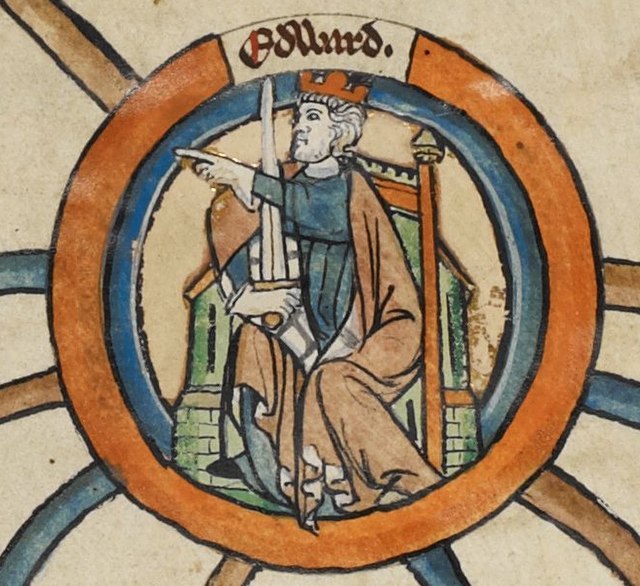
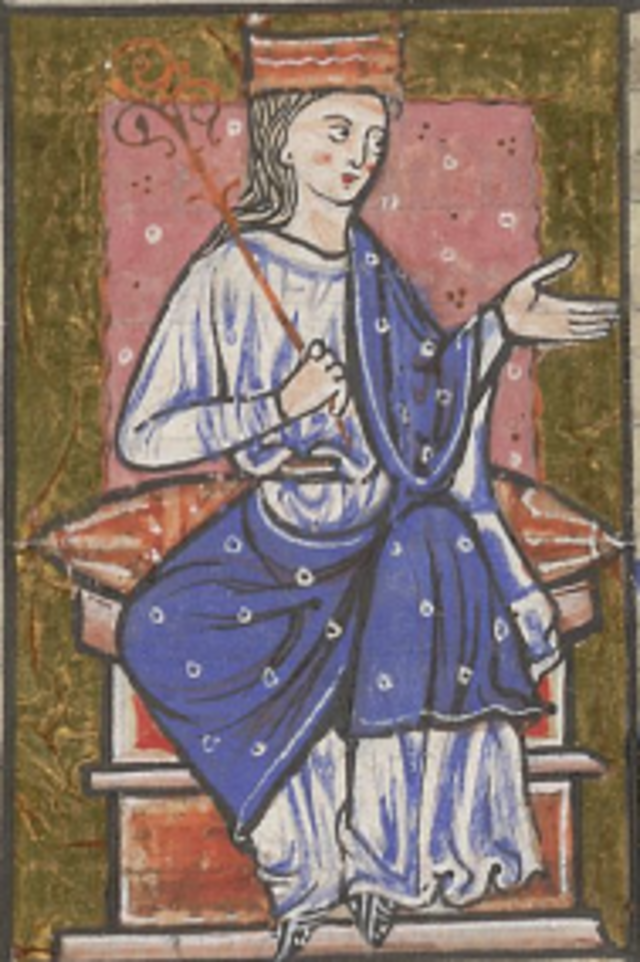
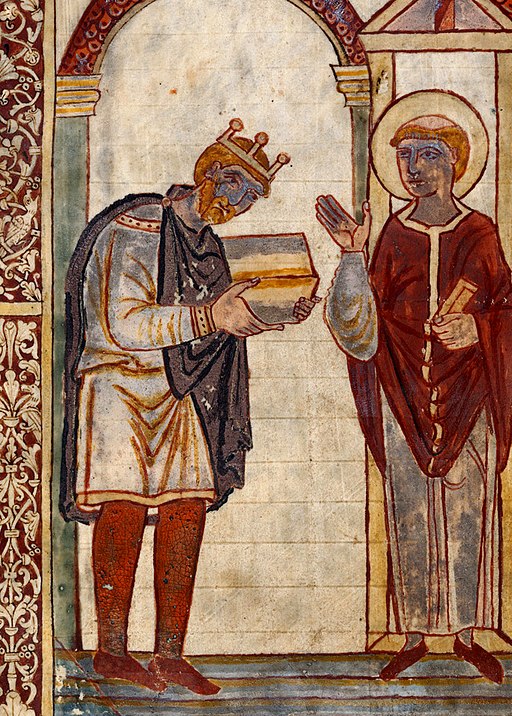
Based on a historical person, my portrayal of him, is of course, fictitious, but there are many details known about him. However, we don’t know for sure who his mother was, it’s believed she might have been called Ecgwynn, and we don’t know, for certain, the name of his sister, but it’s believed she might have been named Edith. What is known is that his father was Edward, the son of King Alfred, and known to us today as Edward the Elder. Athelstan is also rare in that he is one of only two Saxon kings for who a contemporary image is available. (The other is Edgar, who would have been his step-nephew)
It must be supposed that Athelstan was born sometime in the late 890s. And according to a later source, that written by William of Malmesbury in the 1100s (so over two hundred years later), Athelstan was raised at the court of his aunt, Æthelflæd of Mercia. David Dumville has questioned the truth of this, but to many, this has simply become accepted as fact.
‘he [Alfred] arranged for the boy’s education at the court of his daughter, Æthelflæd and Æthelred his son in law, where he was brought up with great care by his aunt and the eminent ealdorman for the throne that seemed to await him.’[i]
[i] Mynors, R.A.B. ed and trans, completed by Thomson, R.M. and Winterbottom, M. Gesta Regvm Anglorvm, The History of the English Kings, William of Malmesbury, (Clarendon Press, 1998), p.211 Book II.133
Why then might this have happened? Edward became king on the death of his father, Alfred, and either remarried at that time, or just before. Edward’s second wife (if indeed, he was actually married to Athelstan’s mother, which again, some doubt), Lady Ælfflæd is believed to have been the daughter of an ealdorman and produced a hefty number of children for Edward. Perhaps then, Athelstan and his unnamed sister, were an unwelcome reminder of the king’s first wife, or perhaps, as has been suggested, Alfred intended for Athelstan to succeed in Mercia after the death of Æthelflæd, and her husband, Æthelred, for that union produced one child, a daughter named Ælfwynn.
There is an acknowledged dearth of information surrounding King Edward the Elder’s rule of Wessex. He’s acknowledged as the king of the Anglo-Saxons. His father had been the king of Wessex. Historians normally use the surviving charters to unpick the political machinations of the Saxon kings, but for Edward, there’s a twenty year gap between the beginning and end of his reign, where almost no known genuine charters have survived. What isn’t known for sure, is how much control, if any, he had in Mercia. Was Mercia subservient to Wessex or was it ruled independently? It’s impossible to tell. And this makes it difficult to determine what Athelstan might have been doing, and also what his father’s intentions were towards him.
Frontispiece of Bede’s Life of St Cuthbert, showing King Æthelstan (924–39) presenting a copy of the book to the saint himself. 29.2 x 20cm (11 1/2 x 7 7/8″). Originally from MS 183, f.1v at Corpus Christi College, Cambridge. (Wikimedia Commons)
What is known is that following the death of King Edward in 924, Athelstan was acknowledged as the king of Mercia; his stepbrother, Ælfweard was proclaimed king in Wessex. As with all events at this time, it shouldn’t be assumed that just because this is what happened, this is what was always intended.
‘Here King Edward died at Farndon in Mercia; and very soon, 16 days after, his son Ælfweard died at Oxford; and their bodies lie at Winchester. And Athelstan was chosen as king by the Mercians and consecrated at Kingston.’[i]
[i] Swanton, M. trans and edit The Anglo-Saxon Chronicles, (Orion Publishing Group, 2000), D text p.105
But, if Athelstan was raised in Mercia, it’s highly likely he was a warrior from a young age, helping the Mercians defeat the Viking raiders who still had control of the Danish Five Boroughs of Lincoln, Nottingham, Derby, Nottingham and Leicester.
And the events of 924 are where King of Kings begins, and so I will leave him there. By now, he would have been perhaps thirty years old, give or take a few years. What sort of man was he? What sort of king might he be? Do please read King of Kings to find out. And, if this intrigues you, then do please have a look at Sarah Foot’s wonderful monograph on him, Athelstan, from Yale Publishing.
‘It’s not a fair world I’m afraid. Beauty or fortune carries the day. You have the beauty and I the fortune, so there’s every chance we’ll succeed’
In Regency England, marriage is everything. For young widow Sybella Lovatt, the time has come to find a suitable husband for her sister and ward Lucie. Male suitors are scarce near their Wiltshire estate, so the sisters resolve to head to London in time for The Season to begin.
Once ensconced at the Mayfair home of Lady Godley, Lucie’s godmother, the whirl of balls, parties and promenades can begin. But the job of finding a husband is fraught with rules and tradition. Jostling for attention are the two lords – the charming and irresistible Freddie Lynwood and the preternaturally handsome Valentine Ravenell, their enigmatic neighbour from Shotten Hall, Mr Brabazon, and the dangerous libertine Lord Rockliffe, with whom the brooding Brabazon is locked in deadly rivalry.
Against the backdrop of glamorous Regency England, Sybella must settle Lucie’s future, protect her own reputation, and resist the disreputable rakes determined to seduce the beautiful widow. As the Season ends, will the sisters have found the rarest of things – a suitable marriage with a love story to match?
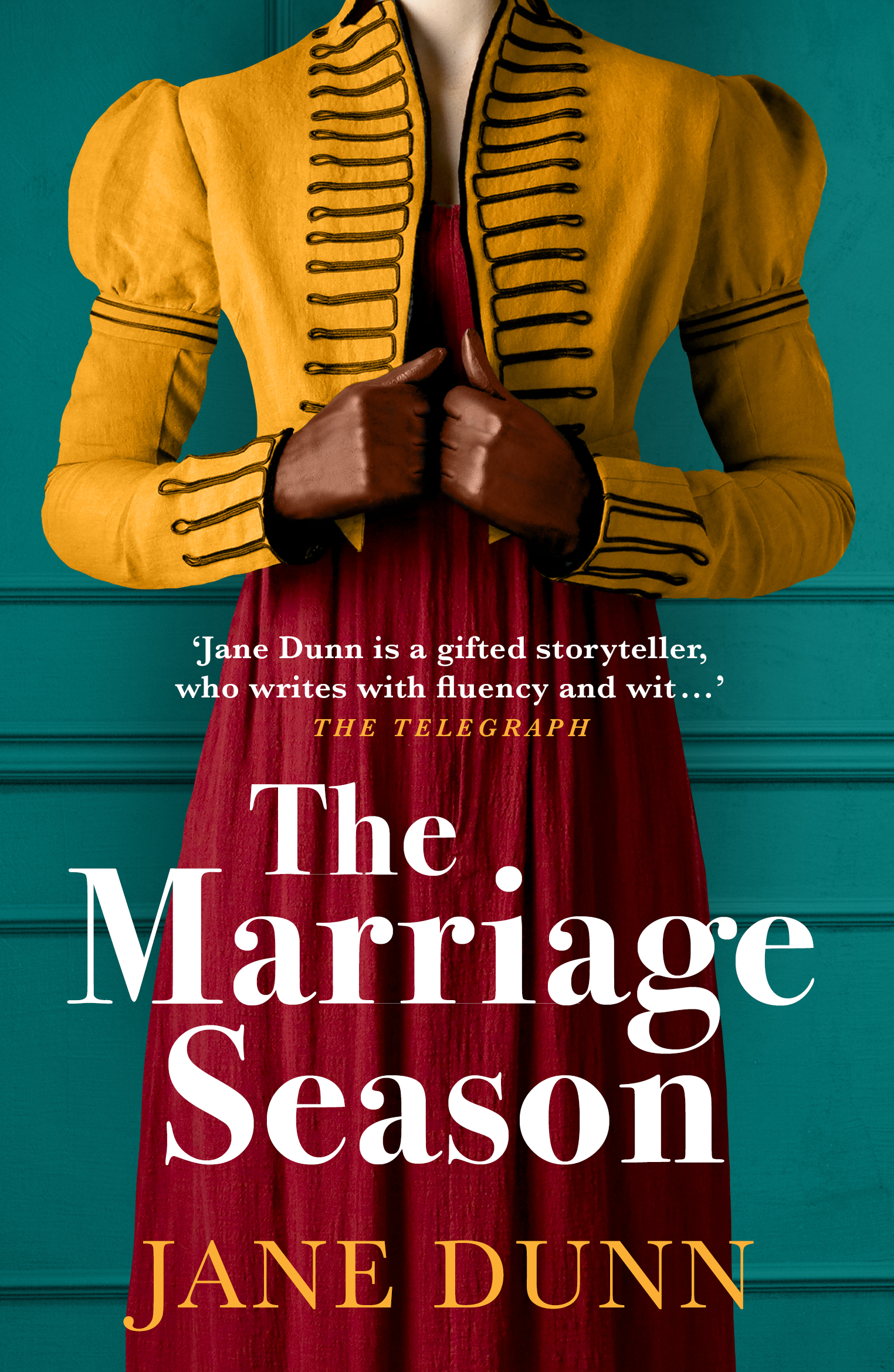
The Marriage Season by Jane Dunn is a delightful Regency romance that’s a little different to similar tales I’ve read, for the story is not just of a young woman trying to find a husband but of a widow deciding if she is perhaps prepared to love again, and her small son, James, or Jim as he likes to be called.
As much as Lucie and Sybella are fabulous creations, as are the men they encounter, it is little Jim and his love of ‘prancers’ that truly steals the show, and why not? That said, the story of Lucie and Sybella is delightful and well-told. Yes, it contains the twisting storylines we might expect, but the author has also littered the narrative with some delightful, period-specific words, which make the story really sparkle. And it’s not just young Jim and his roguish words that bring that charm.
I really adored The Marriage Season. Yes, it was fairly obvious what was going to happen, but that’s not truly the charm of the story but rather the detours the reader is taken on along the way, and of course, young Jim and his love of prancers is a true delight.
Meet the author
Jane Dunn is an historian and biographer and the author of seven acclaimed biographies, including Daphne du Maurier and her Sisters and the Sunday Times and NYT bestseller, Elizabeth & Mary: Cousins, Rivals, Queens. She comes to Boldwood with her first fiction outing – a trilogy of novels set in the Regency period, the first of which is to be published in January 2023. She lives in Berkshire with her husband, the linguist Nicholas Ostler.
A Notable Omissionis the seventh novel from Isabella Muir – all of them set during the 1960s and 1970s. Here Isabella Muir provides some insight into one particular resource that helped her set the story in this particular historical period…
Having fun with historical research
Online research is fun, of course, but right now I’m saying thank goodness for libraries! With all my novels being set during those iconic decades of the 1960s and 1970s I’ve built up a broad range of resources to support my research into all things ‘sixties’. And along the way, in my local library, I tracked down a fascinating book. The Neophiliacs was written by Christopher Booker and published in 1969. It turns out that it is now out of print and Amazon are asking over £100 for a copy! So, you can imagine my delight when my wonderful library managed to retrieve a copy from their ‘rare and out-of-print’ books.
Wanting to find out more about Christopher Booker, I did what many do nowadays in these times of instant ‘information’ – I Googled him. I discovered that back in 1961 he became the founder and one of the early editors of the satirical magazine Private Eye. He was the first jazz critic for the Sunday and Daily Telegraph and continued as a weekly columnist for the Telegraph right up to 2019, when he finally retired at the age of 81. As well as The Neophiliacs Booker has written a number of books studying British society, as well as commenting on wider issues, such as the European Union. Some of his views regarding climate change, health issues, such as the dangers of asbestos and cigarettes, have been controversial; he would appear to be someone who is not afraid to say what he thinks, even if it means going against the grain.
However, as much as Mr Booker and I do not see eye-to-eye over such issues as climate change, his insight into the long-term implications of social change during the 1950s and 1960s have really struck a chord with me.
This paragraph in particular made me sit up and think:
‘…the twentieth century has also provided two other factors to aggravate and to feed the general neurosis; the first being the image-conveying apparatus of films, radio, television, advertising, mass-circulation newspapers and magazines; the second the feverishly increased pace of life, from communications and transport to the bewildering speed of change and innovation, all of which has created a profound subconscious restlessness which neurotically demands to be assuaged by more speed and more change of every kind.’
From: THE NEOPHILIACS: A STUDY OF THE REVOLUTION IN ENGLISH LIFE IN THE FIFTIES AND SIXTIES BY CHRISTOPHER BOOKER
Of course, now in 2023 the desire for speed is all around us – from the need for ever faster broadband, to high-speed rail links and non-stop Transatlantic flights. Some will point out that the changes started when the Industrial Revolution resulted in horse-drawn carriages and ploughs being replaced with the engine and the first railways. Social change is ongoing, but it does appear that some eras are more significant than others.
What is fascinating is to realise that at least sixty or seventy years ago Booker was able to identify ‘restlessness’ as it was happening, knowing that people would need more of the same, on and on until we reach the present day addiction to online and social media, where we constantly flick through images to gratify our seemingly ever reducing attention span.
Sadly, when my loan period expired, I had to return The Neophiliacs to the library, but not before making copious notes. Notes that helped no end as I drafted A Notable Omission, and insights that I hope have helped to set the scene for the novel, transporting readers back to an era when the pace of life was a tad gentler than it is today.
Here’s the blurb
A 1970s debate on equality is overshadowed by a deadly secret…
Spring 1970. Sussex University is hosting a debate about equality for women. But when one of the debating group goes missing, attention turns away from social injustice to something more sinister.
It seems every one of the group has something to hide, and when a second tragedy occurs, two of the delegates – amateur sleuth Janie Juke, and reporter Libby Frobisher – are prepared to make themselves unpopular to flush out the truth. Who is lying and why?
Alongside the police investigation, Janie and Libby are determined to prise answers from the tight-lipped group, as they find themselves in a race against time to stop another victim being targeted.
In A Notable Omission we meet Janie at the start of a new decade. When we left Janie at the end of The Invisible Case she was enjoying her new found skills and success as an amateur sleuth. Here we meet her a few months later, stealing a few days away from being a wife and mother, attending a local conference on women’s liberation to do some soul-searching…
Isabella is never happier than when she is immersing herself in the sights, sounds and experiences of family life in southern England in past decades – specifically those years from the Second World War through to the early 1970s. Researching all aspects of life back then has formed the perfect launch pad for her works of fiction. It was during two happy years working on and completing her MA in Professional Writing when Isabella rekindled her love of writing fiction and since then she has gone on to publish seven novels, six novellas and two short story collections.
This latest novel, A Notable Omission, is the fourth book in her successful Sussex Crime Mystery series, featuring young librarian and amateur sleuth, Janie Juke. The early books in the series are set in the late 1960s in the fictional seaside town of Tamarisk Bay, where we meet Janie, who looks after the mobile library. She is an avid lover of Agatha Christie stories – in particular Hercule Poirot. Janie uses all she has learned from the Queen of Crime to help solve crimes and mysteries. This latest novel in the series is set along the south coast in Brighton in early 1970, a time when young people were finding their voice and using it to rail against social injustice.
As well as four novels, there are six novellas in the series, set during the Second World War, exploring some of the back story to the Tamarisk Bay characters.
Isabella’s love of Italy shines through all her work and, as she is half-Italian, she has enjoyed bringing all her crime novels to an Italian audience with Italian translations, which are very well received.
Isabella has also written a second series of Sussex Crimes, set in the sixties, featuring retired Italian detective, Giuseppe Bianchi, who is escaping from tragedy in Rome, only to arrive in the quiet seaside town of Bexhill-on-Sea, East Sussex, to come face-to-face with it once more.
Isabella’s standalone novel, The Forgotten Children, deals with the emotive subject of the child migrants who were sent to Australia – again focusing on family life in the 1960s, when the child migrant policy was still in force.
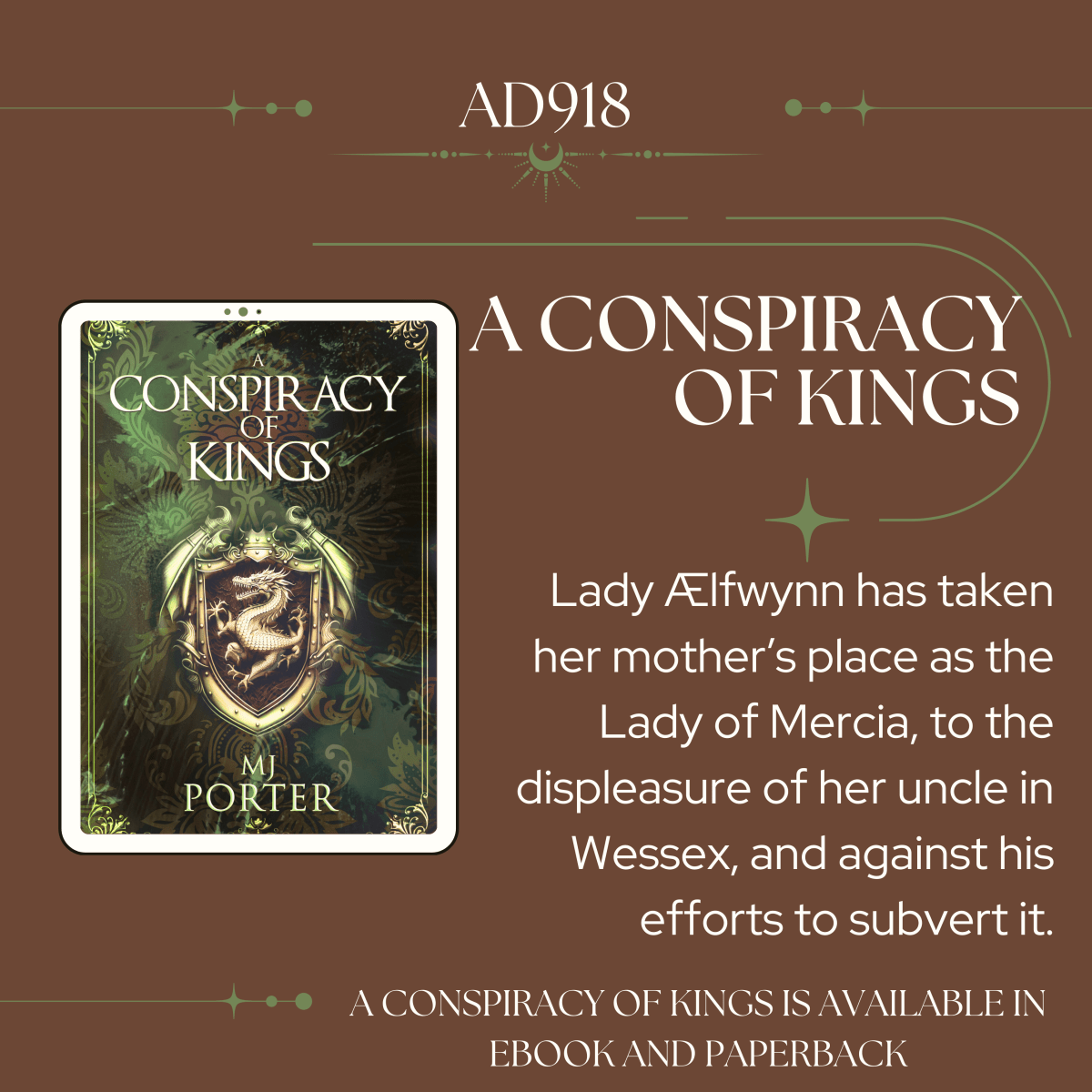
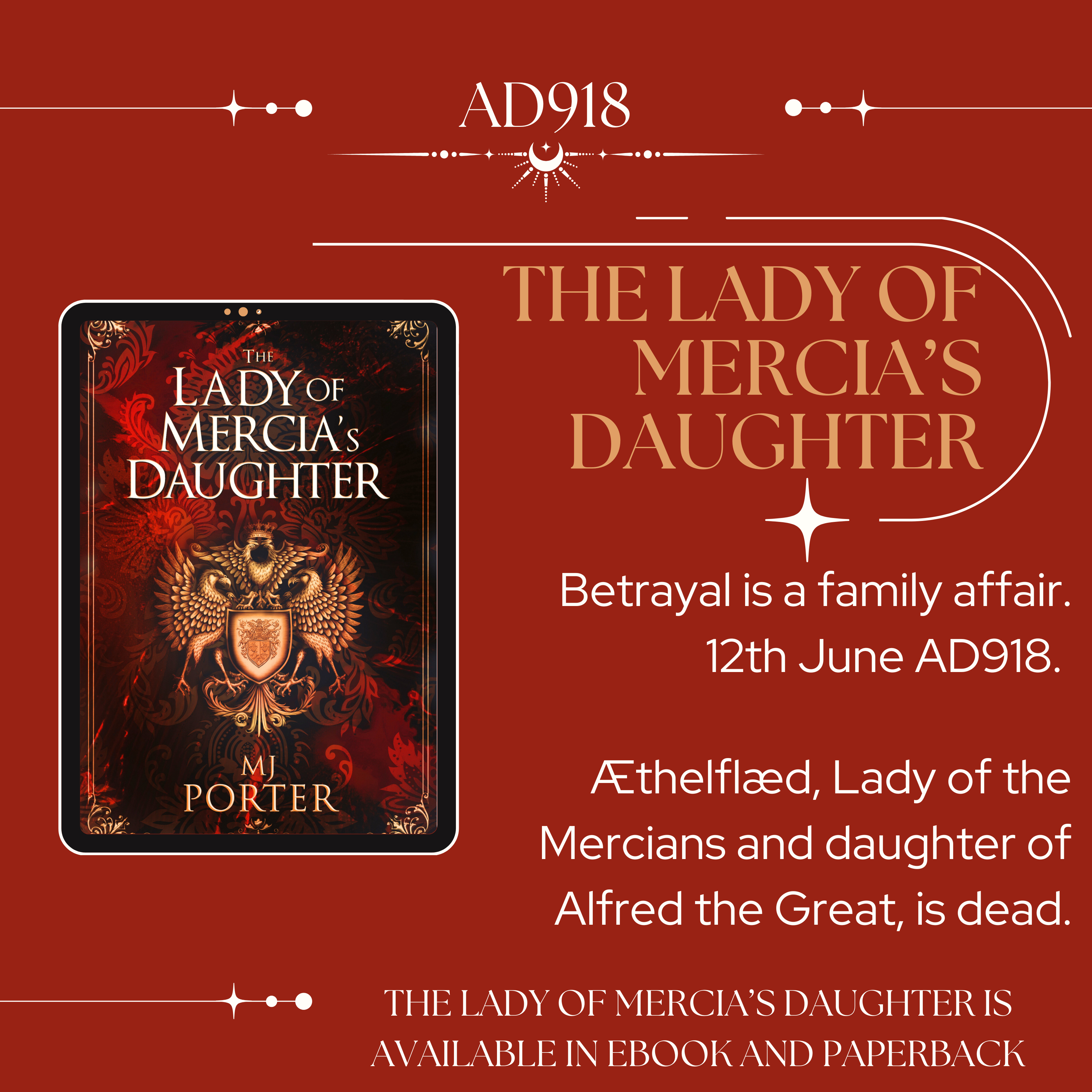
Here it is. The new cover for A Conspiracy of Kings, the sequel to The Lady of Mercia’s Daughter.
Here’s the blurb
Mercia, 918.
Lady Ælfwynn has taken her mother’s place as the Lady of Mercia, to the displeasure of her uncle in Wessex, and against his efforts to subvert it.
King Edward, casts his eye longingly over Mercia, and finds a willing accomplice where none should exist. This time, the threat to Lady Ælfwynn is not as easy to defeat.
This is the continuing story of Lady Ælfwynn, the granddaughter of King Alfred, begun in The Lady of Mercia’s Daughter.
It is intended that The Lady of Mercia’s Daughter should be read before A Conspiracy of Kings.
“Go out and tell all those you meet, Caledon has risen. Caledon will be protected and defended. And to you who would cause her harm, be prepared. A new fight has come.”
After the destruction of the Jacobite forces at Culloden, Scotland is divided, vulnerable and leaderless, with survivors from both sides seeking to make sense of the battles they have fought against their fellow Scots.
James Og flees Drumossie, seeking the protection of his uncle’s house in Sutherland. It is here that James learns that the Northern Highlands hold a secret power only he can wield: Caledon. When Ensign John Mackay begins hunting Og’s family, James realises he must harness this power to defeat the enemies of Scotland.
But, as the ageless Caledon awakes, so too does an ancient evil. When it allies with Mackay, the small Clan of Caledon faces enemies at every turn, discovering that even those closest to them may seek to destroy them.
Caledon is an intriguing work of historical fantasy set in Scotland following the battle of Culloden.
The narrative revolves around six main characters, switching between points of view, and is centred around family loyalty, distrust and the war raging between the Hanoverians and the Stuarts. There are also a few star-crossed lovers, and sadly, not everyone will get the happy ending they deserve, even with the aid of the mysterious Caledon.
With its supernatural elements it offers something a little different as the Clan of Caledon learn to trust their abilities while all those around them seek their destruction.
An enjoyable read and one sure to appeal to those with a love of a Scottish setting.
Meet the author
Virginia grew up in Orkney, using the breath-taking scenery to fuel her imagination and the writing fire within her. Her favourite genres to write are fantasy and historical fiction, sometimes mixing the two together. She enjoys swashbuckling stories such as The Three Musketeers by Alexandre Dumas and is still waiting for a screen adaption that lives up to the book!
When she’s not writing, Virginia is usually to be found teaching music. She believes wholeheartedly in the power of music, especially as a tool of inspiration. She also helps out with the John o’ Groats Book Festival which is celebrating its 4th year.
She now lives in the far-flung corner of Scotland. A doting spaniel-owner to Orlando and Jess, Virginia soaks up in inspiration from the landscape as she ventures out with her canine companions.
She loves cheese, music, and films, but hates mushrooms.
In the spring of 1939, dashing young William Burton and the beautiful Constance Han set sail from London on the same ocean liner to Hong Kong.
Romance blossoms while they enjoy games of deck quoits and spend sultry tropical evenings dancing under the stars. Connie is intrigued by Will’s talent for writing poetry, and she offers to give him Cantonese lessons to help him with his new job— a cadet in the colonial service.
But once in Hong Kong, Connie is constrained by filial duty towards her Eurasian parents, and their wish for her to marry someone from her own background. She can’t forget Will however and arranges to meet him in secret under the magnificent canopy of a flame of the forest tree—where she fulfils her promise to teach him to speak Chinese.
Before too long, trouble looms as Japanese forces gather on the border between Hong Kong and mainland China. Will joins a commando group tasked with operating behind enemy lines, and Connie becomes involved in the fight against local fifth columnists.
When war breaks out, they find themselves drawn into a wider conflict than their battle against prejudice. Can they survive and achieve a future together? Or do forces beyond their control keep them forever apart?
Based on a little-known true story, The Flame Tree is a tale of love and survival against all the odds.
PRAISE FOR SIOBHAN DAIKO
“Siobhan Daiko will tug at your heartstrings, and leave you desperate for more…”
~ Ellie Yarde, The Coffee Pot Book Club.
“Daiko is an author you’ll want to add to your historical fiction favourites.”
Siobhan Daiko is a British historical fiction author. A lover of all things Italian, she lives in the Veneto region of northern Italy with her husband, a Havanese dog and a rescued cat. Siobhan was born of English parents in Hong Kong, attended boarding school in Australia, and then moved to the UK—where she taught modern foreign languages in a Welsh comprehensive school. She now spends her time writing page-turners and enjoying her life near Venice.
Her novels are compelling, poignant, and deeply moving, with strong characters and evocative settings, but always with romance at their heart. You can find more about her books on her website http://www.siobhandaiko.org

































 MJ Porter

