You can listen to my Boldwood Books audios on Spotify

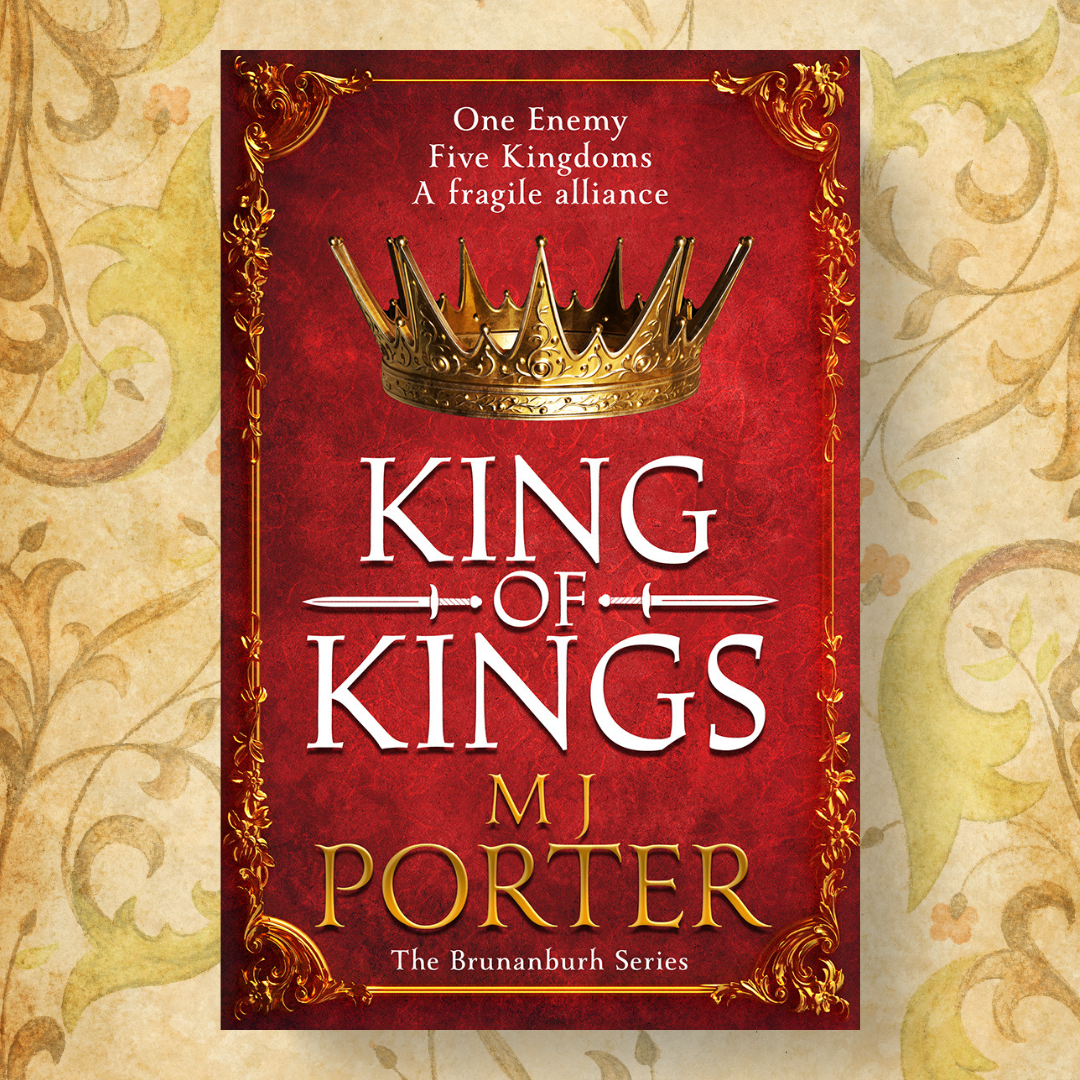
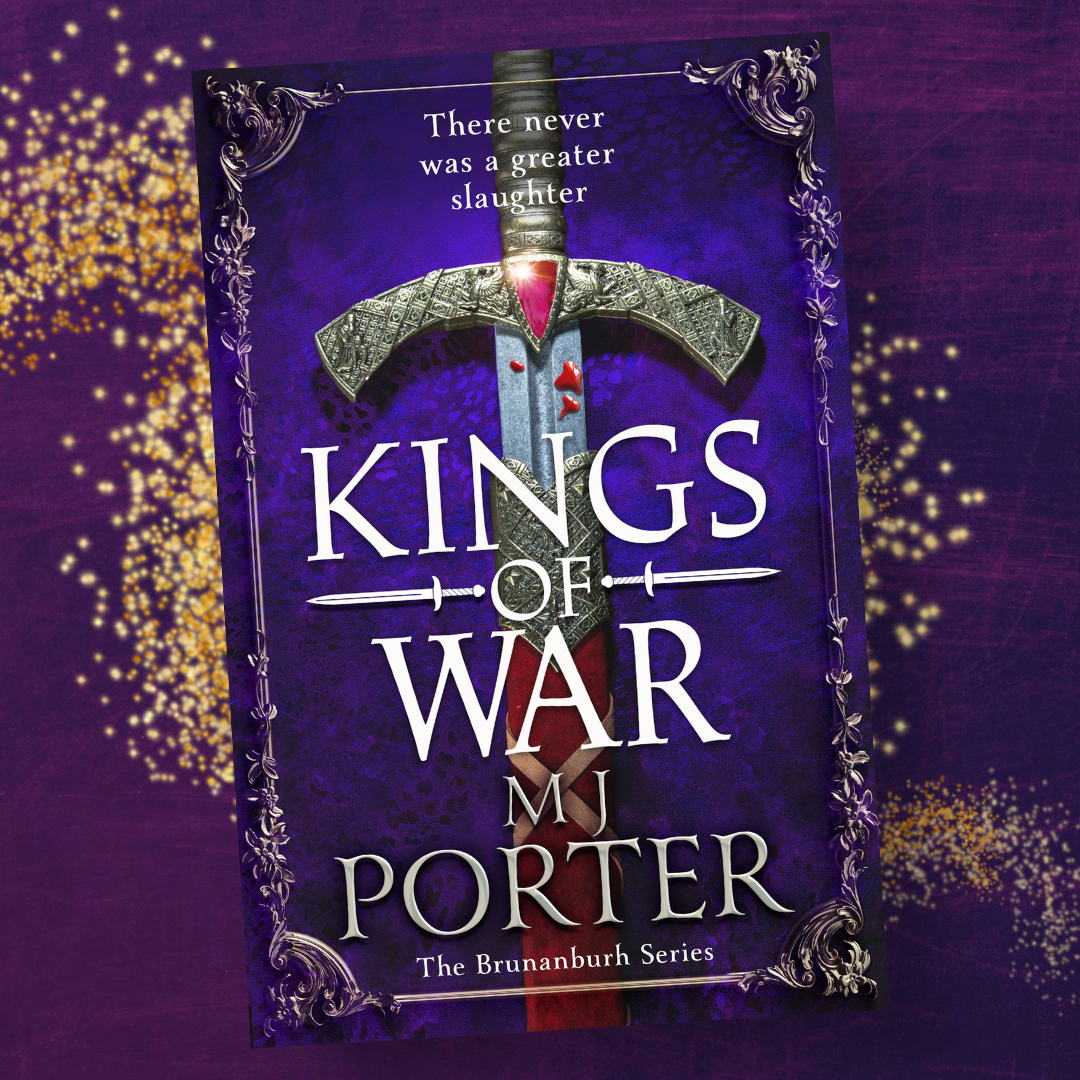
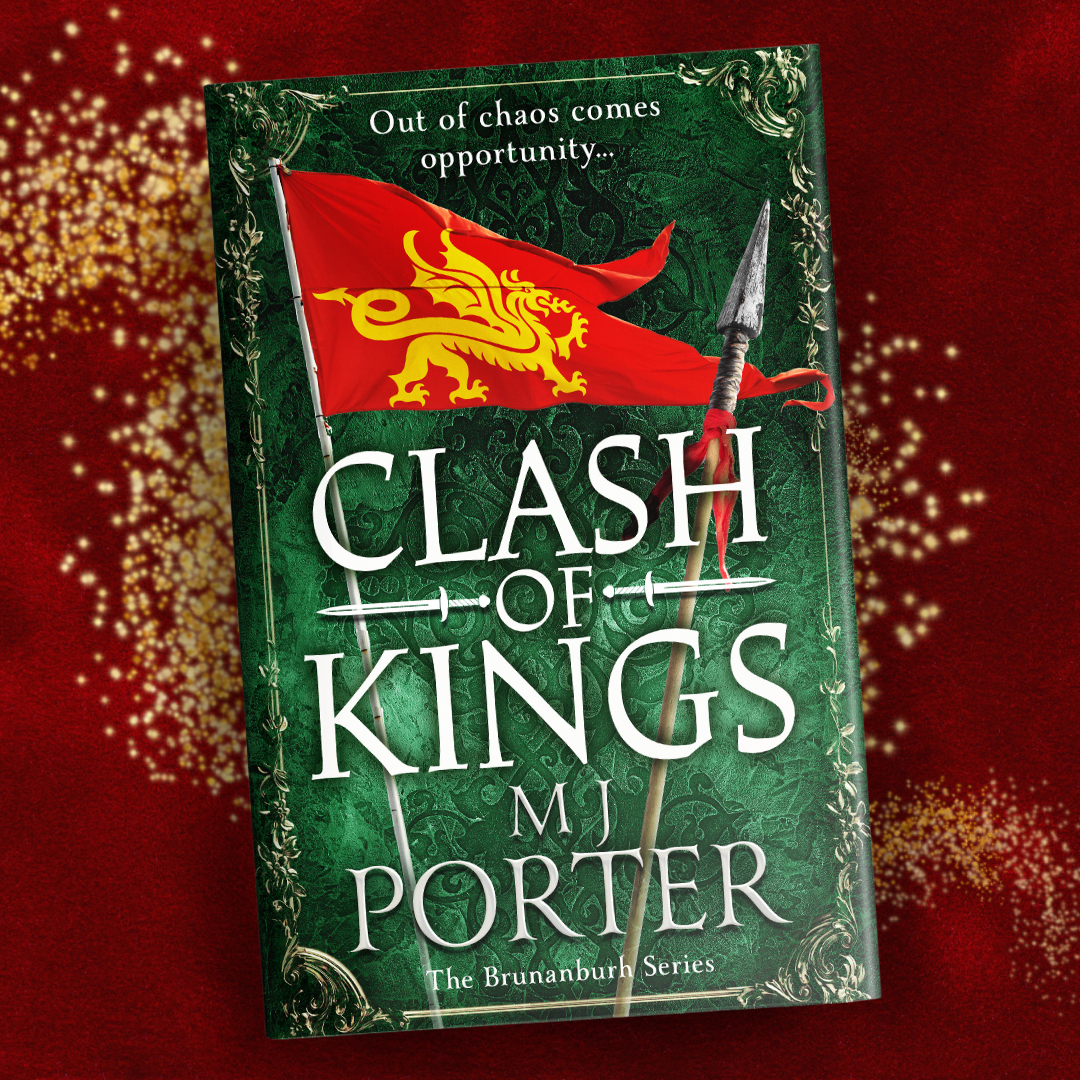
I’ve just been checking my Spotify and discovered I could share this with my readers. My books with Boldwood should be on there – the stories of young Icel and the Brunanburh series. Son of Mercia doesn’t seem to be connected to the main account, but I found it below. Enjoy.

The pitfalls and perils of writing about Saxon England

Sometimes, it seems to me, that fiction and non-fiction authors of the Saxon era believe the stories they’re told about Saxon England which are actually the result of much later sources. This of course, means that the later stories, more often than not the work of Norman pseudo-historians writing in the 1100s and later, grow in popularity while fewer people understand that the stories are not only not contemporary, they might have been written down hundreds of years after the events they allegedly describe and discuss.

I make no bones of the fact that understanding the sources of the Saxon period is complex and difficult. Much of it depends on what a scholar, or a reader, might take as the ‘level of credibility.’ Some people will take saints lives at face value, others will not. Some will find value in poems and some will not. Some, and I include myself in this, will misconstrue the Anglo-Saxon Chronicle and realise they were reading it all wrong.

There are really very few sources available for the modern reader. The Anglo-Saxon Chronicle is very well known, but perhaps not the bones of how it was constructed (please see Pauline Stafford’s book After Alfred for a comprehensive, and frankly, mind-blowing discussion). The words of Bede are often cited. There are charters, wills, legal documents, some poetry and saints lives, as mentioned above. This is not a huge amount to build a narrative upon, and yet historians have done this for many years – to some the increasing amount of archaeological information (often contradictory) is an annoyance, but for others, it has made the merits of the surviving written word more questionable. We should be asking, ‘why do we know what we know,’ as opposed to lapping it up and assuming its authenticity.

Another problem is the scarcity of the surviving documents, and the fact that very, very few of them survive in contemporary formats. With the best will in the world, what is copied isn’t always correct and equally, the temptation to embellish mustn’t be ignored, and that’s before we return to the heart of the problem. What was written was written for a purpose. As today, everything contains bias, it exhibits their intentions (Bede wrote an ecclesiastical history – the clue is in the name), while the Anglo-Saxon Chronicle was a Wessex based endeavour, at least in the beginning. The surviving nine recensions changed hands on more than one occasion, and the bias subsequently changed with it. We imagine monks labouriously copying out the texts, letter by letter, but what if the words were written by female religious? Or not by the religious at all? What if they were a state-sponsored endeavour to present their patron in the best possible light? Who was that patron? Was that patron always the same one? We don’t, it appears, have the ‘original’ version of the Anglo-Saxon Chronicle. The versions available to us are all copies – written out at various points from the tenth to the twelfth century, and then again, heavily annotated during the Tudor era.

And this is merely another step along the way. Few can read these precious sources in their original format or even in their original language. We rely on translations, which allow a fresh wave of bias, and also, understanding. Our world is different to the world the Saxons lived within. They had different contexts for some words. While researching for my non-fiction book, I was amazed to discover the work of Sarah Foot and the Veiled Women of England, and her assertion that the word ‘nonne‘ might not have meant a cloistered nun, as we assume from the similarity of the two words.

We don’t know far more than we do know. There is a temptation to ‘plug’ the gaps with any available knowledge. And that’s not a problem, providing the author confirms it is fiction, not non-fiction. I write fiction, but I know the non-fiction the stories are built upon (hopefully). I write extensive historical notes for all of my books. I play with the possibilities, and purposefully reinterpret the ‘gaps’ but I don’t pretend that what I write is factual.

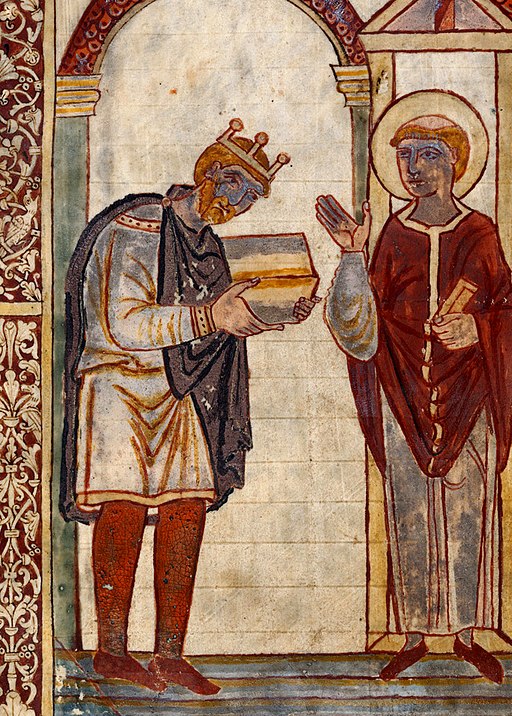
We have almost no images of anyone who lived in Saxon England. There are contemporary images of King Athelstan and his nephew, King Edgar. I can’t think of a single contemporary image of a woman. The Bayeuax Tapestry dates to after the end of Saxon England. We might have something which was held, or commissioned by a Saxon woman, and a queen, if the embroideries found in St Cuthbert’s tomb were indeed made by Lady Ælflæd, the second wife of King Edward the Elder.

We do have coins, more often than not from archaeological or metal-detecting finds. They do allow us a tangible hold on this part of history, and increasingly are adding to the need to rewrite the written words that have survived. We also have increasing archaeological finds, but again, and as no expert in archaeology, there is also a thin line. Archaeologists often set out to ‘find’ something. What they find often isn’t that ‘thing’ but in the past, the temptation to present only limited information has allowed certain narratives to stand, which are only now being understood, just as with increasing study on the written sources.

When writing about Saxon England, we must be wary of all of these things – we need to be aware that very rarely is something what we expect it to be, and equally, we must remember that the people of Saxon England were just that, people. They would have been irrational, selfish, violent, horrible, brutal, honest, religious, fervent, foolish, intelligent or not.

And so, writing Saxon England is far from a simple task. It is very rare to be able to categorically state that something is ‘wrong’. It is even rarer to be able to categorically state that something is ‘correct.’ The work of a fiction writer might be easier than that of a non-fiction writer, but the fiction writer has to recreate people as well as a coherent narrative, and there are always people who will be happy to argue with those interpretations. And that is all they are, interpretations – but so, if non-fiction writers are honest enough to admit – is much of their work as well.

(I’ve not even discussed the problems of trying to write a coherent piece on the history of the British Isles at this time – contending with Old Norse, Old Irish, Old English, Old Welsh, Latin and no doubt, other languages that I’ve failed to mention).

That said, the era is fascinating. It’s worth investing in it, and taking the time to understand the complexities.

Looking to read about Saxon England? Here are some of the primary and secondary works that I highly recommend.

PRIMARY SOURCES

The Anglo-Saxon Chronicles – translated and edited by Michael Swanton

English Historical Documents Vol 1 500-1042 – Dorothy Whitelock (a very expensive resource – perhaps best found in a library or online)

English Historical Documents Vol 2 1042-1189 – David C Douglas (as above. I was lucky to find some reasonably inexpensive copies but it took years)

An Atlas of Anglo-Saxon England – David Hill (It took me years but I eventually found a copy on Abebooks that didn’t break the bank)

The Electronic Sawyer – online catalogue of Anglo-Saxon Charters – an amazing resource once you feel confident to explore the primary sources. Used to be part of the KEMBLE online resource but this seems to have disappeared, which is a great shame.

The Prospography of Anglo Saxon England – this is a new one for me, but I wanted to share as it looks like it’s going to be extremely useful.

https://oepoetryfacsimile.org – Old English poetry collection, showing different translations, and reprints – fascinating – and revealing I’m not the only one with these concerns:)

Just a few of my Saxon books (some were from the local library)

SECONDARY SOURCES

Anglo-Saxon Kingdoms by Claire Breay and Joanna Story

The First Kingdom by Max Adams

Aelfred’s Britain by Max Adams

After Alfred, Anglo-Saxon Chronicles and Chroniclers 900-1150 by Pauline Stafford, an absolute must to understand one of the most important sources for the period.

The Death of Anglo-Saxon England by N J Higham

The Diplomas of King Æthelred the Unready 978-1016 by Simon Keynes (if you can get a first edition do so, as the reprint doesn’t include the tables which is very frustrating).

Æthelred the Unready by Levi Roach

Æthelred the Unready, the ill-counselled king by Ann Williams

Cnut, England’s Viking King by M K Lawson

The Reign of Cnut: King of England, Denmark and Norway by Alexander Rumble

Cnut the Great by Timothy Bolton

Queen Emma and Queen Edith by Pauline Stafford

Edward the Confessor by Frank Barlow

Edward the Confessor by Tom Licence 

Godwins: The Rise and Fall of a Noble Dynasty by Frank Barlow

Harold The Last Anglo Saxon King by Ian W Walker

Conquered: The Last Children of Anglo-Saxon England by Eleanor Parker

As a rule of thumb, and it’s not always right – the more expensive a resource- the more academic the contents.

I recommend anything written by Max Adams, Nick Higham (sometimes uses his initials), Pauline Stafford, Ann Williams, Levi Roach and Simon Keynes, amongst many others. Once you’ve got to grips with the period/person/event you’re interested in, start to dig a little deeper with more academic articles.

This post contains Amazon affiliate links.

I’m sharing the first chapter from A Conspiracy of Kings #histfic #TheRoyalWomen

Here’s the beginning from A Conspiracy of Kings (there might be spoilers if you’ve not read The Lady of Mercia’s Daughter)

Chapter 1

Tamworth, the kingdom of Mercia, 918

We feast that night. There are smiles and tears on everyone’s faces as Tamworth’s great hall is swept clear of the men and women from Wessex. My armed guard ensures no one hurts them as the Mercians pull tables and benches to fill the vast space left behind. My servants, taken only somewhat by surprise as they were expecting a feast one way or another after the witan, rush to ensure everyone has a drink, if not food. 

Cousin Ecgwynn hurries to me as I watch the activity, questions on her lips and I throw my arms around her, unheeding her sumptuous gown while I wear the clothes of a warrior. Usually, she would protest. But not today.

‘Enough of that,’ Cousin Ecgwynn complains, batting my embrace away, and not delicately. She holds my arms away from her, glaring at me.

I can see the flicker of rage in her blue eyes and the tightness of her stance.

‘You let me believe you were dead! I’ve been mourning for you, as I would a sister, and coming so soon after the death of Lady Æthelflæd….’ Her normally serene face floods with tears as her words trail off. I thrust my arms around her again, holding her tighter, hoping to make her understand, using my strength gained on the training field to overpower hers. I absorb her scent, the familiarity of home, the reminder of all that my uncle and Archbishop Plegmund tried to take from me.

‘I’m sorry, dear Ecgwynn. It was.’ I pause, unsure what to say, speaking into her ear as I continue to hold her tight. ‘Well, in all honesty, it was all we could think of to ensure that Uncle Edward’s treachery was exposed.’

I don’t call King Edward of Wessex her father. That would be too cruel. I think that, like me, Lady Ecgwynn could happily forget that a man was even involved in her conception and birth. Certainly, he’s done little enough for her since he became the king of Wessex when she was no more than a child and banished her to Mercia alongside Cousin Athelstan.

But Cousin Ecgwynn’s not finished yet. Once more, she pulls her way clear of my embrace, determined to argue with me.

‘But my brother knew and still didn’t tell me. That’s too cruel,’ her angry voice is gaining force. I know there’s nothing to do but try and explain. I could make excuses all night long, but she’s almost my sister, and she deserves the truth.

‘He knew. But only because he came to me and saw that I still lived after the attack in the north. Admittedly, cousin Athelstan could have told you that I wasn’t dead, but then, how would you have greeted King Edward when he came to Mercia to stake his claim for it? He couldn’t know that I yet lived.’

‘I’m not a woman to have her head turned by the arrival of a man whose only call on her affection is to claim to be her father. I wouldn’t have put your scheme in peril!’ Her voice is shrill with outrage, all tears forgotten, as she chastises me, her words coming almost too fast to decipher.

To the side, cousin Athelstan hovers, and I know why. He’s not scared of facing any man on the battlefield, but his sister? Well, he’d sooner not see her angry, and certainly, he’s content for me to be the one to soothe her. 

I realise then that we erred when we made our plans.

‘No, I know you’re not. Apologies, cousin Ecgwynn. It wasn’t done because of a lack of trust. It was just better if as few as possible knew the truth.’ I can see that being so brutally honest at least pleases her, even if her forehead remains lined with anger and her lips purse tightly.

I hold my arms out once more. This time she steps into them willingly, a faint wrinkle on her nose because I smell of horse and sweat. I feel her shoulders sag, and her body trembles as though she’s going to cry. But she steps away from my embrace mere moments later, a watery smile on her face.

‘If only everyone I ever loved who died could come back to life, as you have. It would make my heart ache less.’ I nod. Abruptly, my thoughts focus on my mother, and despite my warrior’s prowess, my grief is fresh. I’d gladly step into my mother’s arms and cry away all my sorrows and disappointments at my uncle’s actions. 

‘What would your mother think?’ Lady Ecgwynn asks, her thoughts following mine as she loops her arm through mine to walk amongst the people toasting my good health and the future of Mercia. Their voices range from soft to the roar of a battle cry. I chuckle at the exuberance, aware that cousin Athelstan stays close. He and cousin Ecgwynn will need to make peace with each other at some point. But not yet.

‘I hardly know what my mother would think or do. She and Edward were never close; at least, I don’t think they were. But, I believe she understood his ambitions well, all the same.’

‘Your mother was an excellent judge of character,’ cousin Ecgwynn confirms. ‘Although she did trust Archbishop Plegmund, the poisonous snake.’ 

My voice ripples with laughter as I picture Plegmund’s face too easily as the head of a snake.

https://amzn.to/46DvlA6

The cover for A Conspiracy of Kings

Find out who the historical Ælfwynn was here.

Visit The Tenth Century Royal Women page here.

Posts

I’m delighted to feature an excerpt from Finlay McQuade’s new book, Life and Death in Ephesus, a short story collection. HistoricalFiction #shortstories #Ephesus #BlogTour #TheCoffeePotBookClub

I’m delighted to feature an excerpt from Finlay McQuade’s new book, Life and Death in Ephesus, a short story collection.

From “Nestorius.”

The next day, sure enough, the church of the Evangelist was half empty, but the murmurs of protest were twice as loud as the hissing and whispering of the day before. Even so, Nestorius persisted. Desperate to demonstrate the simple logic of his argument, he introduced a new metaphor into his sermon:
“Ferment the grape and what do you get? You get a sublime wine that buoys your spirit and lifts you heavenward. Squeeze the olive and what do you get? You get a taste of ancient earth, a hint of delight first tasted in the Garden by our earliest ancestors. But when you mix the two, what do you get? The sublime headiness of wine? No. The rich earthiness of Eden? No. You get a noxious mixture that retains the qualities of neither. Such is not the nature of Jesus Christ.
“Jesus was a man and had all the qualities of a man, including the capacity to suffer and die. And he was also and always will be a God, who did not die and did not fear the pains of death as you and I inevitably will. Our Lord Jesus Christ had two natures, the one human and the other divine. The blessed Virgin gave birth to the one, but she did not give birth to the other, because the Son of God already existed and had always existed. That is why I have said and I say again that the blessed Virgin was the Christ-bearer, not the God-bearer. And yet, from that miraculous moment of Incarnation, the God and the man were united as one: human and divine in perfect union.”
It seemed at first to have made an impression on his audience, for they were quiet. Later, on reflection, he thought that perhaps they were dazzled by the clarity of his argument, but no closer to accepting its truth. Then a scrawny little monk with a red clean-shaven face in the pew nearest to the altar stood and shouted in a deep bass voice, “HERETIC! HERETIC!” and continued to shout it until he was joined by a scattering of others in the dim interior of the church, and gradually by just about everyone present, “HERETIC! HERETIC! HERETIC!”

Here’s the blurb:

For over a thousand years, Ephesus, on the Aegean coast of what is now Turkey, was a thriving city. It was the site of the Temple of Artemis, one of the Wonders of the World, and a destination for religious pilgrimage long before the advent of Christianity. In the first century CE, St. John and St. Paul introduced Christianity to Ephesus, where it survived its turbulent beginnings and, in the fifth century CE, hosted the God-defining Council of Ephesus.

Life and Death in Ephesus is a collection of stories about major events in the history of Ephesus. Characters appearing in these stories include Herostratus, first to commit a “herostratic crime”; Alexander, the warrior king; Julius Caesar and Mark Antony, both lovers of Cleopatra; Heraclitus, the philosopher who said, “You can’t put your foot in the same river twice”; St. Paul, persona non grata in Ephesus; Nestorius, whose characterization of Jesus split the Eastern and Western church, and others, also important, whose names I have had to make up.

Hilke Thür, a leading archeologist, has said of these stories, “Life and Death in Ephesus will be a delightful and enjoyable accompaniment to the many available guidebooks. Not just tourists, but anyone interested in history will benefit from reading them.”

Buy Links:

Universal Link:

Amazon UKAmazon USAmazon CA: Amazon AU:

Barnes and Noble. Kobo

Meet the author

Finlay McQuade is a retired educator. He was born in Ireland, went to high school in England, and university in the USA. He has a BA in English from Pomona College, an MA in British and American literature from Harvard University, and a PhD in education from the University of Pittsburgh, where he also taught writing courses in the English department. He spent some happy years as a high school English teacher and soccer coach, but after co-authoring the book How to Make a Better School he found himself in demand as a consultant to schools and school improvement projects in the USA and often, also, abroad. He ended his career in education when he retired from Bogazici University in Istanbul, where he had mentored young teachers in the school of education. 

For eight years after retirement, he lived in Selcuk, Turkey, among the ruins of the ancient city of Ephesus. The streets and squares of Ephesus became his neighborhood. His companions included archeologists, tour guides, and souvenir sellers. His curiosity about the people who had lived in those empty buildings for over a thousand years resulted in Life and Death in Ephesus, a collection of stories chronicling major events in the city’s history.

Now, back in the USA with time on his hands, he finds himself returning again and again to memories of his boyhood on the coast of Northern Ireland. The result of these forays into his past will be another collection of stories, part memoir, part fiction, called Growing Up in Ulster.

Connect with Finlay:

WebsitePinterestAmazon Author PageGoodreads

Follow the Life and Death in Ephesus blog tour with The Coffee Pot Book Club

Today, I’m welcoming Juliane Weber to the blog with her series, The Irish Fortune which begins with Under the Emerald Sky #HistoricalFiction #HistoricalRomance #Ireland #BlogTour #BookBlast #TheCoffeePotBookClub

Today, I’m delighted to welcome Juliane Weber, and the Irish Fortune series to the blog. Book 1 is currently on special offer for 99p/99c, so snap it up.

Here’s the blurb

“Under the Emerald Sky reaches another level in storytelling, the kind where the characters remain with you long after you have closed the book.” – The Historical Fiction Company

It’s 1843 and the Englishman Quinton Williams has come to Ireland to oversee the running of his father’s ailing estate and escape his painful past. There he meets the Irishwoman Alannah O’Neill, whose family is one of few to have retained ownership of their land, the rest having been supplanted by the English over the course of the country’s bloody history. Seeing the injustices of Victorian Ireland, Alannah’s brother Kieran has learned to hate the English and imperialism. Aware of Kieran’s hostility towards the English, Alannah keeps her growing relationship with Quin a secret – but it’s a secret that can’t be kept for long from those plotting to end England’s oppression of the Irish people. As Quin and Alannah seek happiness in the face of hate and revenge, an action-packed romance ensues.

But all the while, disaster looms – the Great Famine that would forever change the course of Ireland’s history. With repeated failure of the potato harvest upon which most Irish families depend, thousands will go hungry, with sickness and starvation sweeping through Irish farms, decimating poor populations for years to come.

Can Quin and Alannah find happiness in a land teetering on the brink of disaster?  

Buy Links: 

This series is available to read on #KindleUnlimited. 

*Under the Emerald Sky, Book 1, ebook is on offer at 0.99.*

Universal Links

Under the Emerald Sky

Beneath the Darkening Clouds

Amazon UK:  Book 1  Book 2 Series

Amazon US:  Book 1 Book 2  Series 

Amazon CA:  Book 1  Book 2  Series 

Amazon AU:  Book 1 Book 2 Series

Meet the author

Juliane Weber is a scientist turned historical fiction writer, and author of the Irish Fortune Series. Her stories take readers on action-packed romantic adventures amid the captivating scenery and folklore of 19th century Ireland. 

Under the Emerald Sky, the first book in the Irish Fortune Series, was awarded bronze medals in The Historical Fiction Company 2021 Book of the Year Contest and The Coffee Pot Book Club 2022 Book of the Year Contest. The second book in the series, Beneath the Darkening Clouds, was awarded a bronze medal in The Historical Fiction Company 2022 Book the Year Contest.

Juliane spent most of her life in South Africa, but now lives with her husband and two sons in Hamelin, Germany, the town made famous by the story of the Pied Piper.

Connect with Juliane

WebsiteTwitterFacebookLinkedInInstagram

Book BubAmazon Author PageGoodreads

Follow the Irish Fortune Series blog tour with The Coffee Pot Book Club

I’m delighted to welcome Elizabeth St. John and her new audiobook, The Godmother’s Secret to the blog #HistoricalFiction #PrincesInTheTower #Audiobook #BlogTour #TheCoffeePotBookClub

I’m delighted to welcome Elizabeth St. John and her new audiobook, The Godmother’s Secret to the blog, with a snippet to read, and to listen to:)

Spring 1483 | Stony Stratford

“Go to Ned’s chamber, Lady Scrope. You can see for yourself—there, upstairs, with the guard on the door.” Gloucester nods across the mud-rutted stable yard of the Rose and Crown in Stony Stratford. “’Struth, but this is a piss-poor place for the King of England to spend the night. But directly on the London road.” He glances at Harry. “I believe you are right. Lord Rivers is preparing for a speedy departure.”

“And that he will have,” responds Harry. “But perhaps not in the direction he planned.” He gestures at me impatiently. “Go now to the king.”

I dismount and walk cautiously up the broken wooden stairs to the outer gallery. Harry’s ranting increased on the brief ride from Northampton, his cursing against the Woodvilles unbearable. I just want to hold Ned, comfort him and give him courage to face the days ahead. The poor boy has lost his father. The rest is men’s talk.

The guard is sleepy, his air distracted. 

“I am Lady Scrope. Godmother to King Edward.”

He just stares ahead.

“Let me pass.”

Reluctantly, he moves to one side. 

My precious boy stands in the middle of the room, quite alone. He cries in surprise and runs into my arms. Ned’s thin frame is trembling like a stricken rabbit. He is now my king, but he is also my boy, a mere twelve-year-old lad guarded and alone in his chamber in this dilapidated inn. 

“My father.” His voice cracks like a broken reed. “Oh, Lady Scrope, I did not get to say good-bye to him.”

“Hush. Hush, my Ned.” His baby name slips out naturally. I hug him for the longest time, feeling his tense shoulders gradually lower. I can feel him struggling not to cry, and I must help him gather his emotions. I hold him at arm’s length to look into his eyes. “Be brave, my darling, take courage. You must be strong, be true to your destiny.”

“But not yet, Lady Scrope. I’m not ready yet.” His eyes well with tears again. My heart breaks.

“Listen to me,” I say fiercely. “Just as Arthur pulled the sword from the stone, kingship has been thrust upon you.”

He looks at me, his head tilted. “And he didn’t even know he would be king.”

I knew I’d capture his imagination. “No, he didn’t. And look how brave he was.”

Ned childishly scrubs his face, a crimson flush on his fair skin. “Our favourite story. Do you think I could be a great king like Arthur?”

“Yes, my darling. Yes. For you have been schooled well in chivalry, Ned. Your father and Lord Rivers have prepared you since your birth for this moment, although it has indeed come too quickly.” I gently wipe a tear from his smooth cheek. “And you have me, Lord Scrope, and your mother, Dickon, and your sisters, your family who loves you so very much, to help you.”  

Ned lifts his chin, sucks in a deep shuddering breath. I free the crucifix from my purse and fold it into his palms, pressing his hands around the precious relic.

“From your father, to my care.” I stroke the blond hair that tufts from his damp forehead in the way it has grown since he was four years old. “So you would know he is always with you, Ned. And that he entrusts me with your well-being.”

Audio Link to go with Snippet

https://youtu.be/uBkAEsx8WEo

Here’s the blurb:

“An extremely well-written book with depth and complexity to the main characters. The author says she wanted to write a book about family love and tolerance, and a woman’s loyalty and courage. She has done so. This is the best book I’ve read in ages!”

The Ricardian Bulletin, Richard III Society

“The authenticity and historical research displayed within this story is immense and exquisite. Ms. St. John is sure to be a newfound favorite for fans of not only this fractious time in English history, but of all historical fans who adore rich, immersive prose.”
Historical Fiction Company 2022 Book of the Year

“A very enjoyable read. The historical veracity is impeccable, and Elysabeth is a likeable, admirable character who faces interesting dilemmas with love and courage.”
Historical Novel Society

If you knew the fate of the Princes in the Tower, would you tell? Or forever keep the secret?

May 1483: The Tower of London. When King Edward IV dies and Lady Elysabeth Scrope delivers her young godson, Edward V, into the Tower of London to prepare for his coronation, she is engulfed in political turmoil. Within months, the prince and his brother have disappeared, Richard III is declared king, and Elysabeth’s sister Margaret Beaufort conspires with her son Henry Tudor to invade England and claim the throne.

Desperate to protect her godson, Elysabeth battles the intrigue, betrayal, and power of the last medieval court, defying her Yorkist husband and her Lancastrian sister under her godmother’s sacred oath to keep Prince Edward safe. Bound by blood and rent by honour, Elysabeth is torn between King Richard and Margaret Beaufort, knowing that if her loyalty is questioned, she is in peril of losing everything—including her life.

Were the princes murdered by their uncle, Richard III? Did Margaret Beaufort mastermind their disappearance to usher in the Tudor dynasty? Or did the young boys vanish for their own safety? Of anyone at the royal court, Elysabeth has the most to lose–and the most to gain–by keeping secret the fate of the Princes in the Tower.

Inspired by England’s most enduring historical mystery, Elizabeth St.John blends her family history with known facts and centuries of speculation to create an intriguing story about what happened to the Princes in the Tower.

Buy Links:

Audiobook Buy Link 

The Godmother’s Secret is discounted by 50% on Audiobooks.com only this week – use the link below.

https://www.audiobooks.com/promotions/promotedBook/680002/godmothers-secret

The ebook is available to read on Kindle Unlimited.

Universal Buy Link 

Meet Elizabeth St. John

Elizabeth St.John’s critically acclaimed historical fiction novels tell the stories of her ancestors: extraordinary women whose intriguing kinship with England’s kings and queens brings an intimately unique perspective to Medieval, Tudor, and Stuart times.

Inspired by family archives and residences from Lydiard Park to the Tower of London, Elizabeth spends much of her time exploring ancestral portraits, diaries, and lost gardens. And encountering the occasional ghost. But that’s another story.

Living between California, England, and the past, Elizabeth is the International Ambassador for The Friends of Lydiard Park, an English charity dedicated to conserving and enhancing this beautiful centuries-old country house and park. As a curator for The Lydiard Archives, she is constantly looking for an undiscovered treasure to inspire her next novel.

Elizabeth’s books include her trilogy, The Lydiard Chronicles, set in 17th Century England during the Civil War, and her newest release, The Godmother’s Secret, which explores the medieval mystery of the missing Princes in the Tower of London.

Connect with Elizabeth

WebsiteTwitter

FacebookLinkedInInstagram

Book BubAmazon Author PageGoodreads

Follow The Godmother’s Secret blog tour with The Coffee Pot Book Club

I’m sharing my favourite #BoldDestination #Londinium in Wolf of Mercia #TheEagleOfMerciaChronicles

And here are some of my favourite moments in the novel, as Icel marvels at what’s been left behind by those who came before him.

And then we come to a stop. In front of me, there’s a structure I can hardly comprehend. All around it are smaller piles of stones, no doubt the remains of other buildings. Beneath my feet, I walk on gravel and tufted grasses. Lifting my feet to peer down, I question whether the whole place was once laid with stone upon which to walk? I pause, gaze around me. In the distance, almost further than the entire settlement of Tamworth, are hints of more walls, more random pieces of white stone, discarded and abandoned. I don’t see any crops or greenery, only shrivelled weeds and little else. If I were to live here, where would I grow my food? Where would Wynflæd harvest her herbs from? The place is dusty and barren, just as Wulfheard told me.

There’s a forest of stone plinths guiding us towards the smell of campfires, with some immobile figures on them, all missing arms, or legs, or feet or even heads, their whiteness attesting to being made from some sort of priceless stone. To me, they look so similar to the bodies of the dead that, for a moment, I can’t quite decipher the intent behind them. And Brihtwold is no help. I can hardly ask what this place is because I should already know.

‘They’re in the centre of the settlement, in a stone-built building, one of the few that still stands to two levels. We head towards the east, and it’s in the centre. It’s difficult to miss it during the daytime, what with the ruined columns that still stand, and the statues that guide our steps towards it, but in the darkness of night, it might be a little more tricky.’

Wolf of Mercia is book 2 in The Eagle of Mercia Chronicles, and I had a lot of fun thinking about what the settlement might have looked like in the 830s, hundreds of years after Londinium was abandoned.

You can read all about Londonia below.

Londonia, the setting for Wolf Of Mercia

I’ve been avoiding taking my Saxon characters to London for quite some time. Bernard Cornwell, I feel, has done a fine job of explaining London to readers of his The Last Kingdom books. I wasn’t sure I had a great deal more to offer. But how wrong I was.

Londonia, the name suggested by Rory Naismith in his Citadel of the Saxons, for the combined settlement of the seventh century, seems a neat and tidy way of referencing both settlements, the Roman Londinium, and the Saxon Lundenwic. And yet, both settlements were so very different, it seems wrong to try and make them appear unified, at a time when they really weren’t. The ‘wic’ element of the name means it refers to a market site, somewhere where trade took place.

The River Fleet, now a lost river of London, once divided these two settlements, the one built of stone with high walls that may have been as tall as six metres, and the other, built of wattle and daub, and entirely open to the River Thames. It’s believed the lost River Fleet might have been substantial enough over 1200 years ago that a bridge was built over it. And this reminds travellers to the past of the mistake of assuming landscapes haven’t altered. It’s often easy to remember that buildings and roads might have changed, even that rivers might have changed course, and that sea levels might have risen or fallen, but an entirely lost river is a new one for me. 

Neither should we consider Londinium, the Roman fort, to always have appeared as we imagine it. A brief look through the archaeological details for Roman Londinium, reveal that it changed dramatically over time. Most obviously, the walls for which it’s so famous, were not part of the original structure, they weren’t built until AD180-220. The earliest timbers so far found on the site date to nearly one hundred and fifty years earlier.

The number of inhabitants inside those stone walls seems to have waxed and waned throughout the period of Roman Britain, and there is some suggestion that it might have been abandoned as early as the fourth century, and therefore, much before the acknowledged ‘end of Roman Britain’ came in the early years of the fifth century. The bridge crossing from Londinium to Southwark, on the southern shore, may also have disappeared by the fourth century. There is therefore, a great deal to unpick. And for my characters, in the ninth century, just what would they have walked through? It’s an intriguing question. Would there have been abandoned statues, half-collapsed buildings, an eerie quiet, or would much of that have already disappeared, perhaps even been ‘robbed out’ as we know happened in other places, most notably along Hadrian’s Wall where stone often appears in the fabric of later churches.

As to Lundenwic? Are we to truly believe that it was little more than a boggy riverfront site? In fact, the location was chosen precisely to miss the boggy area from where the River Fleet would have joined the River Thames. But why move from behind those stone walls? The huge area of Londinium, was simply too vast for a much diminished population to attempt to control. The settlement that developed in Lundenwic was half as big as that of the Roman site, with a population of around 7000 (compared to an estimated 25,000-30,000 in Londinium at its peak). It consisted of small buildings, tightly packed together with small alleyways leading off from a few main roads. But, these main roads were fitted with wooden drainage ditches. While it might not have been the majestic sweep of a huge walled city, it wasn’t quite the hovel it’s often been betrayed as. 

And, these two separate settlements, didn’t last for that long individually. But, in the year AD830, it’s just possible that young Icel may have walked through a serviceable, if abandoned Roman settlement when he visited Londinium, and that was too good an opportunity not to incorporate into the new book, Wolf of Mercia. 

Check out The Eagle of Mercia Chronicles page on the blog.

Image shows the 8 covers in the Eagle of Mercia Chronicles

Posts

Who was the historical Ælfwynn, the main character in The Lady of Mercia’s Daughter duology?

Ælfwynn, the daughter of Æthelflæd of Mercia and her husband, Æthelred was born at some point in the late 880s or early 890s. It’s believed that she was an only child, although it does appear (in the later accounts of William of Malmesbury – an Anglo-Norman writer from centuries later) that her cousins, Athelstan, and his unnamed sister, were sent to Mercia to be raised by their aunt when Edward remarried on becoming king in 899. There is a suggestion that it might have been Alfred’s decision to do this and that Athelstan was being groomed to become king of Mercia, not Wessex.

The Family Tree of Alfred the Great, king of Wessex

Ælfwynn is mentioned in three charters. S367, surviving in one manuscript, dates to 903, where she witnesses without a title. S1280, survives in two manuscripts, dates to 904 and reads in translation.

‘Wærferth, bishop, and the community at Worcester, to Æthelred and Æthelflæd, their lords; lease, for their lives and that of Ælfwynn, their daughter, of a messuage (haga) in Worcester and land at Barbourne in North Claines, Worcs., with reversion to the bishop. Bounds of appurtentant meadow west of the [River] Severn.’[i]


[i] Sawyer, P. H. (Ed.), Anglo-Saxon charters: An annotated list and bibliography, rev. Kelly, S. E., Rushforth, R., (2022). http://www.esawyer.org.uk/ S1280. See above for the full details under Æthelflæd

Historians have reconstructed this haga in Worcester in ‘The city of Worcester in the tenth century’ by N Baker and R Holt.

In S225, surviving in one manuscript, dated to 915, Ælfwynn witnesses below her mother. Hers is the second name on the document. This could be significant, as she would certainly have been an adult by now, was she already being prepared as the heir to Mercia on her mother’s death? 

Ælfwynn is named in the Anglo-Saxon Chronicle in the C text under 919. ‘Here also the daughter of Æthelred lord of the Mercians, was deprived of all control in Mercia, and was led into Wessex three weeks before Christmas; she was called Ælfwynn.’[i]


[i] Swanton, M. trans and edit The Anglo-Saxon Chronicles, (Orion Publishing Group, 2000), p.105

And from there, we hear nothing more of Lady Ælfwynn, the second lady of the Mercians. Even though this is the first record of a ruling woman being succeeded by her daughter. 

There’s no further mention of Ælfwynn in The Anglo-Saxon Chronicle. It’s been assumed that she became a nun, and she might well be referenced in charter S535, surviving in one manuscript, and which Eadred granted at the request of his mother, dated to 948, reading,

‘King Eadred to Ælfwyn, a religious woman; grant of 6 hides (mansae), equated with 6 sulungs, at Wickhambreux, Kent, in return for 2 pounds of purest gold.’[i]


[i] Sawyer, P. H. (Ed.), Anglo-Saxon charters: An annotated list and bibliography, rev. Kelly, S. E., Rushforth, R., (2022). http://www.esawyer.org.uk/ S535

Bailey has suggested that, ‘In view of its close association with the women of the royal family, and of Eadgifu’s patronage of Ælfwynn (in S535), I would venture to suggest that it is possible she too may have ended her days at Wilton.’[i]


[i] Bailey. M, ‘Ælfwynn, Second Lady of the Mercians’, Edward the Elder, 899-924 Higham, N.J. and Hill, D. H. ed (Routledge, 2001), p.125

This would mean that rather than ruling as her mother would have wanted her to, Ælfwynn was overruled by her uncle, who essentially stole her right to rule Mercia as soon as he possibly could on her mother’s death. It must be said that he might have later paid for this with his life if he was indeed putting down a Mercian rebellion in Farndon when he died in 924.

Alternatively, there is another beguiling theory that Ælfwynn might not have become a nun but was, in fact, married to Athelstan, an ealdorman of East Anglia, known as the ‘Half-King,’ because of the vast control he had in East Anglia. It’s long been believed that this label might well have resulted from the fact that Athelstan was an extremely powerful and well-landed nobleman who was much beloved by the Wessex royal family and its kings. However, it might well be because he was indeed married to the king’s cousin (under Athelstan, Edmund and Eadred). If this is the case, and it’s impossible to prove, then Ælfwynn, as the wife of Ealdorman Athelstan, had four sons, Æthelwold, Æthelwine, Æthelsige and Ælfwold, and these sons would be friends and enemies of the kings of England in later years. She might also have been given the fostering of the orphaned, and future King Edgar, which would also have made these men the future king’s foster brothers.
‘he [Athelstan Half-King] bestowed marriage upon a wife, one Ælfwynn by name, suitable for his marriage bed as much as by the nobility of her birth as by the grace of her unchurlish appearance. Afterwards she nursed and brought up with maternal devotion the glorious King Edgar, a tender boy as yet in the cradle. When Edgar afterwards attained the rule of all England, which was due to him by hereditary destiny, he was not ungrateful for the benefits he had received from his nurse. He bestowed on her, with regal munificence, the manor of Weston, which her son, the Ealdorman, afterwards granted to the church of Ramsey in perpetual alms for her soul, when his mother was taken from our midst in the natural course of events.’

Edington, S and Others, Ramsey Abbey’s Book of Benefactors Part One: The Abbey’s Foundation, (Hakedes, 1998) pp.9-10


If this identification is correct, ‘This would explain why she was considered suitable to be a foster-mother to the ætheling Edgar. It may even explain why Edgar was considered in 957 suitable to rule Mercia.’[i]


[i] Jayakumar, S. ‘Eadwig and Edgar’, in Edgar, King of the English, 959-975, ed. D Scragg (Boydell Press, 2014), p.94 

If Lady Ælfwynn did survive beyond the events of 919, it seems highly likely she would have continued her friendship with her cousin, Athelstan, when he became king of Mercia, and then Wessex and then England. It’s also highly likely that she might have rallied support for him in Mercia. 

Certainly, the first known occurrence of a woman succeeding a woman in Saxon England ended in obscurity for Lady Ælfwynn.

So, who is my Lady Ælfwynn?

Well, she’s a warrior woman, reeling from the unexpected death of her mother. She is her mother’s daughter. She knows what’s expected of her, and she has no problem contending with the men of the witan, her uncle, Edward king of Wessex, or indeed, the Viking raiders. She and Rognvaldr Sigfrodrsson have a particularly intriguing relationship.

Here’s the beginning of The Lady of Mercia’s Daughter

‘The men of the witan stand before me in my hall at Tamworth, the ancient capital of the kingdom of Mercia. The aged oak beams bear the brunt of centuries of smoking fires. Some are hard men, glaring at me as though this predicament is of my making. They are the beleaguered Mercians, the men from the disputed borders to the north, the east, and the west, if not the south. They’re the men who know the cost of my mother’s unexpected death. And strangely, for all their hard stares and uncompromising attitudes, their crossed arms and tight shoulders, they’re the men I trust the most in this vast hall. It’s filled with people I know by name and reputation, if not by sight.

Those with sympathy etched onto their faces are my uncle’s allies. These men might once have understood the dangers that Mercia faces, but they’ve grown too comfortable hidden away in Wessex and Kent. Mercia has suffered the brunt of the continual encroachments while they’ve been safe from Viking attack for nearly twenty years. Some are too young to have been born when Wessex was almost extinguished under the onslaught of the northern warriors.

Even the clothes of the sympathetic are different from those with hard stares. Not for them, the warriors’ garb. There are no gaping spaces on warrior belts where seaxes and swords should hang, but don’t, as weapons must not be worn in my presence. 

No, they wear the luxurious clothing of royalty, even if they’re not members of the House of Wessex. They have the time, and the wealth, to ensure their attire is as opulent as it can be. They don’t fear a middle-of-the-night call to arms. They don’t need to maintain vigilance or continuously be battle-ready. They don’t have to fight for their kingdom and their family at a moment’s notice or be ready to lose a loved one or face a fight to the death.’

https://amzn.to/3JnZoDC

(available with Kindle Unlimited)

To read more about the women of the tenth century in Saxon England, check out The Royal Women Who Made England, now available.

The Royal Women Who Made England cover

Posts

Who was Lady Eadgifu, the main character in Kingmaker?

Who was Lady Eadgifu?

Lady Eadgifu was the third wife of Edward the Elder (r.899-924), king of the Anglo-Saxons. Edward the Elder was the father of King Athelstan, and a whole host of daughters, as well as five sons. Lady Eadgifu would, it seems, have been young when she married the aging Edward the Elder, and that meant that she long outlived him, and also, that her three children (possibly four, but I’ve opted for three) were young when their father died. And two of these children were sons, Edmund (born c.921) and Eadred (born c.923). Her daughter, Eadburh, is thought to have been the oldest of the three children, born c.919.

The family of Alfred the Great

While Lady Eadgifu, from what’s known (and it isn’t much, as there are few surviving charters from the end of Edward’s reign) perhaps had little role to play while her husband lived, other than wife and mother to the king’s children, following his death, she became increasingly significant. She was the daughter of an ealdorman, who perhaps died just before her birth, and her family are said to have had connections with Kent. Indeed, it’s often stated that she brought her husband Kent with their union. By that, what’s often meant, is the loyalty of the Kentish people. Remember, at this time, we’re still just before the creation of ‘England’ as we would now recognise it.

Sadly, very little is known about Lady Eadgifu (and she’s not alone in this – many of the royal women ‘disappear’ at points in the historical record, and on occasion, are entirely lost.) We know about a land dispute she was involved in, and also much more information for after King Athelstan’s reign (her step-son, who was quite likely older than she was).

Indeed, it has been said that

‘Nor is it surprising that Eadgifu, as the consort of the previous king, served little role in her stepson’s court.[i]

[i] Firth, M. and Schilling, C. ‘The Lonely Afterlives of Early English Queens’, in Nephilologus September 2022, https://doi.org/10.1007/s11061-022-09739-4p.7

However, Barbara Yorke believes that,

‘the enhanced position [of Lady Eadgifu] may also have been developed specifically for the widowed Eadgifu as part of an alliance with her stepson Æthelstan [Athelstan] in which she supported his position and he recognised her sons as his heirs.’[i]


[i] Yorke, B. ‘The Women in Edgar’s Life,’ in Edgar, King of the English, 959-975 Scragg, D. ed (The Boydell Press, 2008), p.146


And it is this option that I’ve decided to explore in Kingmaker. Lady Eadgifu was wife to a king. She would have known her worth, even when faced with a stepson as the king of the English, and another stepson, and stepdaughters, who perhaps didn’t share any love for their, potentially, younger stepmother.

But the story doesn’t stop there. In later years, during the reigns of her sons, and her grandsons, Eadgifu would have been a powerhouse at the centre of English politics. Read her story, for it is, the story of England between the reigns of King Alfred, and King Æthelred II – allegedly, a century of peace between the English and the Norse. Read on to find out the truth of that assertion.

Map design by Shaun at Flintlock Covers

Check out The Tenth Century Royal Women page on the blog.

Curious? Read about the Royal Women of The Tenth Century in my nonfiction title.

The Royal Women Who Made England cover

Posts

I’m delighted to share my review for A Killing at Smugglers Cove by Michelle Salter #historicalmystery #cosycrime #highlyrecommended

Here’s the blurb

Wartime secrets, smugglers’ caves, skeletal remains. And the holiday’s only just begun…

July 1923 – Iris Woodmore travels to Devon with her friends Percy Baverstock and Millicent Nightingale for her father’s wedding to Katherine Keats.

But when Millicent uncovers skeletal remains hidden on the private beach of Katherine’s former home, Iris begins to suspect her future stepmother is not what she seems.

The police reveal the dead man is a smuggler who went missing in 1918, and when a new murder occurs, they realise a killer is in their midst. The link between both murders is Katherine. Could Iris’s own father be in danger?

 Purchase Link

 https://mybook.to/Killingsmugglerssocial

My Review

I adore the Iris Woodmore mystery series, and A Killing at Smugglers Cove does not disappoint.

Moving away from Walden, where many of the previous adventures have taken place, Iris is on holiday, if you can call it a holiday, when it’s for her father’s remarriage. But no sooner does she arrive than a body is discovered, or rather, the skeletal remains of a body.

Iris, of course, can’t help but involve herself, especially as it’s possible her soon-to-be stepmother might somehow be involved, and that might just prevent her father from marrying again – not that she ever quite says as much.

What ensues is a delightfully twisty tale, interwoven with what a holiday in the 1920s might have been like and featuring her trusty sidekicks alongside her.

A Killing At Smugglers Cove is filled with rich period drama, including a lesson in smuggling and avoiding the excise men, and the mystery, as in the first three books, is perfectly staged and well-developed, poignant and unexpected.

I’ve said it before, and I’ll say it again, the Iris Woodmore Mysteries are a firm favourite of mine – rich with period detail but with a damn fine mystery as well. Highly recommended.

Check out my review for Death at Crookham Hall, Murder at Waldenmere Lake, The Body at Carnival Bridge.

Meet the author

Michelle Salter is a historical crime fiction writer based in northeast Hampshire. Many local locations appear in her mystery novels. She’s also a copywriter and has written features for national magazines. When she’s not writing, Michelle can be found knee-deep in mud at her local nature reserve. She enjoys working with a team of volunteers undertaking conservation activities.

Connect with Michelle  

Facebook: 

Twitter

Instagram

Bookbub profile

Newsletter Sign Up

Posts