I shared four writing tips the other day, but now I want to share my experience of just the ‘writing’ bit

To celebrate Boldwood Books 4th birthday (yay), I shared four writing tips the other day, but as I’m currently in the ‘writing’ stage of a new book, I thought I’d share some more. But below is what I said as one of my four writing tips.

WRITE – it sounds stupid, but I do think it’s important to write, if not every day, then when you can fit it in. Routine is super important. As is setting yourself boundaries and deadlines. So, if you want to be a writer, you must write. It doesn’t have to be every day. It doesn’t have to be loads. If you’re struggling with the element of being an author that is writing, then I highly recommend taking part in NaNoWriMo in November of each year. I’ve been taking part for about ten years now. The lessons learned about routine will stay with you – and when they don’t – well, you can hop back on the NaNoWriMo train the following year.

Now, I’ve not been in a writing phase since April this year. That’s four long months that I’ve been busy editing what feels like book after book after book. Obviously, as part of editing, I have written new chapters and made lots of adjustments but I’ve not started FRESH with a new idea since I wrote Protector of Mercia. But, it’s August – I’ve finally caught up (Protector, Clash, non-fiction etc etc.) so now I can write. And this has reminded me that writing is my ‘happy place.’ I love the writing element. I love forging a new storyline. I’m a pantser – I make it up as I go (mostly) – and so this is where my imagination tends to roam somewhat free.

But, to accomplish my writing goals, I’m really strict with myself, even while being creative. My writing routine is 5k words a day – when I’m having a writing day – that’s not every day. For instance, this week, I wrote on the 1st, 2nd and 3rd August. I’m not writing on Friday because I have other commitments. But, next week, my aim is to write Monday-Friday. This is because I need to be kind to myself and ease myself into a new protect – so 3 days in a row – and also because I want to accomplish my goal of a horribly rough, first draft written in August. (Then I can move onto the dreaded editing – which I also enjoy – just not as much as writing). But, three days in a row will also give me a ‘feel’ for the story I want to tell. I also don’t tend to write at weekends, even though I could. Weekends are for blogging and advertising, unless I’m close to finishing and then I might well write anyway.

I often approach a new book with a very firm idea of the first chapter, or the last chapter, but not often the bit in the middle. This means that the first few days of writing can be quite ‘easy’ or quite ‘hard,’ depending on which bit I’m writing, and how long it’s been since I wrote about these characters – my most recent Earls of Mercia book was really hard as it had been 3 years since I last wrote about them.

Everything will be massively reedited – but this is me telling myself the story and so I have to tell it how I think it. After that, if my idea isn’t working, I’ll need to reset a little – and then work this retrospectively into what I’ve already written when I edit – not at this part of the process.

The other point to this is that when I’ve written so much, it’s easier to press on through the tough bits. By the time I hit 40k in a novel, I’m NOT going to give up on it even if I’m not entirely happy with it. That’s half a book – roughly. That’s a lot of thought and creativity. I will make it work. (Usually – I have some stories that aren’t historical fiction that have hit massive brick walls at this stage.)

I know a lot of people will be horrified by such an approach (I’m looking at you planners) but it’s what works for me. As much as planning might make the process easier (and I do think it would make the editing easier), after more books than I can remember off the top of my head, this is my approach in all its messy, horrible glory. As an aside – I’ve never been able to plan my writing – I can remember at school that I struggled to structure an essay because I’d just end up writing it, so what was the point, I may as well just write it.

That said, it’s taken me time to refine my approach and it does change from book to book. It used to take me all day to write 5k words (with breaks). Now I try and write them in the morning. I get up, I write. I take a short break. I write again. By the time I’ve written 3k words, I’ll have some momentum and be able to write the next 2k quite quickly. I rarely, if ever these days, push on beyond 5k because by that stage, even if I’m really keen, I tend to have exhausted my creativity and I need to do something else. It’s not easy, but I can convince myself that it is – if that makes sense. It also helps that I am a fast typist! I also set rules for myself – at a minimum I want to write 1K every hour – it shouldn’t take me so long – but it’s a good rule of thumb.

When I wrote my non-fiction book, this was all a bit different, because aside from deciding how to present my book, the creativity was much less – I was telling the story using the available source documentation. And so, throughout the whole of last August my problem wasn’t that my brain was tired from being creative – it was that it wasn’t. I found it difficult to stop, but with all the copying of sources – the process was slower.

I sometimes write to music – headphones on – music on – transporting myself to ‘my’ time and place. These days I don’t always need the music. I’ve trained myself to do the thing that needs doing with as little conscious thought as possible. To prove this, when I edit, I’ve often forgotten elements that I’ve written, especially if a few months have gone by since I wrote it. And, I have to write down my characters names because I always forget those who aren’t the main characters.

I’m massively motivated by having a ‘finished’ draft. There’s the old saying about enjoying the journey but I really do want to reach the ‘end.’ I mean, I really enjoy it as well. I’ve been smiley and jolly for the last three days. I’ve felt reinvigorated and ‘on it.’ It’s my happy place, but I still have to work at it.

So writers, remember writing is your ‘happy place’, and whether you want to linger on the sites and sounds, or get to the end, do what works for you, because it certainly isn’t the same for everyone.

I’m currently working on Icel 6, for those who might be curious. And after this, I’ll be getting back to Coelwulf 8. It no doubt helps that I really love writing these characters.

Cragside: A 1930s murder mystery

Some photos from Cragside Estate

The estate is close to where I live, and so to add to the general ambience, I’m sharing a few more wintery photos of the beautiful grounds below, and a little video I took one day when I was making sure my timings for the book were correct. It was a wee bit windy:)

Autumnal view of the estate looking out towards Rothbury
The Basin Tank, Cragside
One of the many, many paths through the Estate and leading to the house

Somewhat by chance, I visited Cragside today and managed to snap some photos to share with my readers. I was most excited about the bathroom, which has been closed for a while but has now reopened. It looks amazing.

You can enjoy Cragside in ebook, paperback and audio, narrated by the fabulous Gill Mills, who portrays Lady Merryweather fantastically.

books2read.com/Cragside

I’m delighted to announce the title of my new book in the Brunanburh series, and would you like to ‘meet me’ virtually?

Dun, dun, dun……………

Clash of Kings is coming soon.

Can the Norse and the Scots exact their revenge over the mighty King Athelstan of the English?  

AD937  

After the slaughter field of Brunanburh, a defeated Olaf Gothfrithson of the Dublin Norse and Constantin of the Scots narrowly escaped with their lives. In their kingdoms, failure has left them demoralised and weak.

Olaf licks his wounds in Dublin, whilst Constantin and the Welsh kingdoms who defied King Athelstan, are once more forced to bend the knee. As Athelstan’s reputation grows stronger day by day, their need to exact revenge on the overmighty and triumphant Athelstan has never been greater. 

Olaf sets his sights on reclaiming the lost kingdom of Jorvik only for tragedy to strike at the heart of England and a reluctant new King, Edmund steps into the fray.

While England mourns the death of their warrior king, her enemies gather on her borders and England stands alone against the might of the Norse, Welsh and Scots. 

Can the new king be victorious and banish her enemies once and for all or will England, and its king lose all that’s been gained and succumb to a new pretender?  

An epic tale of kinsmanship, greed and power.

Preorder now

https://books2read.com/clashofkings

There’s no cover yet but I will share once I have it:)

If you’ve not yet grabbed King of Kings and Kings of War then they are currently just 99p/£1.39 on Amazon UK and the equivalent worldwide. You can read about the series on my Brunanburh page.


I’m also asking my readers if they’d like to meet me virtually via a Zoom chat? If you think you might, then please complete the Google form. It’s just to see what readers would be interested in, their availability and timezones:) Nothing is set in stone yet.

https://forms.gle/5pZcc2niBheCLGe79

The English Earl is 5 years old today

I think we all know that I’m really not very good at remembering book birthdays, but I have remembered this one and so, happy book birthday to The English Earl. (This is the book that I always forget when writing out the series – so I think it needs some love – I even managed to give it an ISBN that was out of sync with the rest of the series).

Intrigued? Here’s the blurb.

England, November AD1035.

Cnut, the Danish king of England, is dead, his son and chosen heir, Harthacnut, fighting for the survival of Denmark against Magnus, usurper of Cnut’s eldest son’s rule of Norway. Cnut’s Northern Empire of England, Denmark, Norway and Sweden is fragmented and in turmoil, and that’s before news of his death even spreads.

The queen dowager, Lady Emma, has the support of Earl Godwine to rule until her son, Harthacnut, can come to England to claim his inheritance. But there are problems. No one knows how long it will take Harthacnut to regain control of his father’s Viking Empire, and the English will not allow themselves to be left abandoned in the meantime.

Earl Leofric of Mercia, has long been an ally of Cnut’s, but not always an ally of his wife, the queen dowager. And more, Cnut made concessions for his other surviving son, the result of his union with Lady Ælfgifu of Northampton in Mercia, and Earl Leofric must honour those, despite the queen dowager’s determination to ignore the son’s existence.

As England once more faces the threat of external attack, should Magnus prevail in Denmark, Earl Leofric has important decisions to make. He has a long held grudge to settle with Earl Godwine of Wessex, Cnut’s much-favoured earl, while ensuring his own family’s survival. Earl Leofric is the only truly English Earl within England and Mercia is his to command.

And the queen dowager should never be overlooked. In power for her entire adult life, she is desperate to retain her hold on the network of prestige she controls, little caring who she endangers along the way. The queen dowager has twice been England’s queen. She has always had more than the one son she shared with Cnut, and her older sons are keen to exercise their own claim to wear England’s crown.

Harald, son of Cnut and Ælfgifu, Harthacnut, son of Cnut and Lady Emma, Edward and Alfred, sons of Lady Emma and King Æthelred II; four men with an equal, and valid claim to the English kingdom, but there is only one kingdom available. Who will prevail?

Cover image for The English Earl, book 7 in the Earls of Mercia series by MJ Porter

Available in ebook, paperback, large print/hardback and with Kindle Unlimited.

Check out the Earls of Mercia series page on my blog for more details.

Posts

I’m delighted to welcome Elizabeth St. John and the audiobook for The Lady of the Tower to the blog #HistoricalFiction #Audiobook #BlogTour #TheCoffeePotBookClub #PrincesInTheTower

Elizabeth St John is sharing a snippet – written and audio – of her fab book, The Lady of the Tower. Enjoy.

Chapter Nine

Lydiard Park

I drew a deep, shuddering breath, my hand on my breast, feeling the posie ring concealed beneath.

“I can’t bear it, Anne. I can’t live this way any longer.” I slumped into a chair, such a paralyzing emptiness overwhelming me that my tears were frozen. Although the afternoon sun warmed my chamber, my hands were icy cold. I had hidden my emotions for so long that only hollowness remained, and the loss of Theo’s letters slammed the door shut on my soul. I hated the thought of Joan and Barbara reading his precious words, spitefully laughing over his declarations of love and his promises for our future. I did not care of their opinions of me, for I did not respect their morality, but to consider their envious suppositions tainted his writings disturbed me beyond words.

“Lucy, they are so terribly jealous of your happiness. It is horrible. I tried to stop them from forcing the lock on your box. I tried to prevent them from removing Theo’s letters. I am so sorry I could not intervene.” Anne’s white face was pinched, her cheeks streaked with tears.

“It’s not your fault, Anne. Don’t distress yourself more. I do not know what I have ever done to deserve this treatment from them, but it has been this way since I was a child, and it appears it will never cease.”

I looked around the familiar room, my sanctuary at Lydiard. The polished chestnut paneling glowed in the afternoon sun, and the vase of yellow roses on the chest emanated a heady fragrance that promised the long summer days ahead. Through the diamond-paned window shimmered the green parkland, where an ancient cypress tree marked the boundary of the bowling green and offered a shady resting place. All were loved by me with a passion that had sustained me during my exile at Battersey, and they became my refuge when I returned. Now they taunted me with an oppressive familiarity. I longed to be stripped of all the layers of family and emotions binding me to this place and to be free of the jealous web threatening now to strangle me.

“Anne, I need your help.”

She lifted her head eagerly, her sweet expression expectant.

“Of course, Lucy, of course. I will tell John of Joan’s cruel accusations. He will not believe her.”

“No, leave John from this for now. He will not understand the woman’s jealous heart that steers these resentful actions. No, it is something different that I ask of you.”

“Anything, for I cannot bear to see you be the object of your sister’s envy this way.”

“You leave for Guernsey to visit your father next week. I would come with you.”

Check out the audio snippet: https://youtu.be/s_Vn6LPoyFE

Here’s the blurb:

“Elizabeth St John has brought the Stuart Court vividly to life. She weaves together the known facts of Lucy’s life with colourful scenes of fictional imagination, drawing on innocent romance and bleak deception to create a believable heroine and an intriguing plot.” Historic Novel Society Book Review 

“The Lady of the Tower is a beautifully produced novel with a well-crafted story that will keep you both engaged and entertained. A joy to read. Thank you for sharing your world with us.” 

Writers Digest 24th Annual Book Awards

London, 1609. When Lucy St.John, a beautiful highborn orphan at the court of King James, is seduced by the Earl of Suffolk, she never imagines the powerful enemy she creates in his beloved sister, the Countess of Rochester. Or that her own sister Barbara would betray her and force Lucy to leave the court in disgrace. Spirited, educated, and skilled in medicine and precious remedies, Lucy fights her way back into society, and through an unexpected love match, becomes mistress of the Tower of London. 

Living inside the walls of the infamous prison, she defies plague, political intrigues and tragic executions to tend to aristocratic prisoners and criminals alike. Now married into the immensely powerful Villiers family, Barbara unites with the king’s favorite, the Duke of Buckingham, to raise the fortunes of Lucy and her family to dizzying heights. But with great wealth comes treachery, leaving Lucy to fight for her survival—and her honor—in a world of deceit and debauchery. 

Elizabeth St.John’s critically acclaimed debut novel tells the true story of her ancestress Lucy through her family’s surviving diaries, letters, and court papers. Lucy’s personal friendships with historical figures such as Sir Walter Raleigh and the Stuart kings brings a unique perspective to the history of seventeenth century England.  

Buy Links:

The ebook is available to read on Kindle Unlimited.

Universal Buy Link: https://geni.us/MyBookLOTT

Audiobook Buy Links:

Available on BookBub Chirp for only $3.99 during August:

https://www.chirpbooks.com/audiobooks/the-lady-of-the-tower-by-elizabeth-st-john

On all other platforms from $7.99 or FREE with an Audible subscription: 

https://geni.us/XZlpl45

Official Audiobook Sample:

https://geni.us/LOTTAudioSample

Meet Elizabeth St. John

Elizabeth St.John’s critically acclaimed historical fiction novels tell the stories of her ancestors: extraordinary women whose intriguing kinship with England’s kings and queens brings an intimately unique perspective to Medieval, Tudor, and Stuart times.

Inspired by family archives and residences from Lydiard Park to the Tower of London, Elizabeth spends much of her time exploring ancestral portraits, diaries, and lost gardens. And encountering the occasional ghost. But that’s another story.

Living between California, England, and the past, Elizabeth is the International Ambassador for The Friends of Lydiard Park, an English charity dedicated to conserving and enhancing this beautiful centuries-old country house and park. As a curator for The Lydiard Archives, she is constantly looking for an undiscovered treasure to inspire her next novel.

Elizabeth’s books include her trilogy, The Lydiard Chronicles, set in 17th Century England during the Civil War, and her newest release, The Godmother’s Secret, which explores the medieval mystery of the missing Princes in the Tower of London.

Connect with Elizabeth

WebsiteTwitter

FacebookLinkedInInstagram

Book BubAmazon Author PageGoodreads

Follow The Lady of the Tower blog tour with The Coffee Pot Book Club

Happy 4th Birthday to Boldwood Books. Here are 4 books (authors) that have inspired me

It’s a happy 4th birthday to my publisher, Boldwood Books, so I’m sharing 4 books/authors that have inspired me on my journey to becoming an author, and they might not be what you expect.

Many authors of historical adventure/historical fiction often cite the greats when talking about their influences, Bernard Cornwell, Simon Scarrow etc etc (you get the picture), but those aren’t my author heroes. My first intention was to write historical fantasy, and my literary heroes are giants of that genre ( and you might realise here why I write so many series)

  1. Terry Pratchett – his Discworld books, with their humour, recurring characters, and themes which are still very relevant, used to see me staying up late at night to finish them. I now listen to the audiobooks – which have luckily just been rerecorded and I adore all the versions.
  2. Katharine Kerr – the Deverry series. WOW. I might have told this story before, but I will never forget the day (many years ago) when I picked up my first Deverry novel. I’ve been reading them ever since. The wonderful mix of history/myth and the intertwining ‘lives’ of the characters have always thrilled me. And, on a personal note, the way that the death of one of the main characters was handled, gave me comfort when I was bereaved, many, many years ago. These things stick with us.
  3. Anne McCaffrey – the PERN novels. I reread these books all the time. I’ve also read many of her other novels as well, but PERN were the ones for me. The timelines, the mixing of past and present, the DRAGONS. Just a fabulous set of novels. (These are still in a box somewhere from my recent move, and so I can’t share the images of my old covers, but the new ebook covers are delightful.)
  4. Tom’s Midnight Garden – perhaps a strange one to include, but I read the book as a very young child, and I think the magic of the story, the interweaving of the narrative with past and present – certainly pushed me to seek out other novels that were very similar. At heart, I think I’ve always been intrigued by fantasy.

So yes, not many historical fiction novels there – but all of them have an element of the historical, and of course, Terry Pratchett has the humour, which I also try and incorporate into my stories these days. (Check out my new Discworld characters). And head over to my TikTok to see more of my Deverry collection. Some of these books came straight from Katharine Kerr herself (squee),and I treasure them. I also have some cards from the original UK cover illustrator.

Happy 4th Birthday to Boldwood Books, to celebrate here are 4 writing tips from me

I’ve been with Boldwood since just before their 2nd birthday – we celebrated birthday number 2 in an online Zoom. It was fab. Since then, I’ve met many of the authors and the ‘team’ behind the success of Boldwood in person. And, the other members of the Warrior Chronicles, Donovan, Peter, JC Duncan and me, try and have a chat once a month to share our knowledge, chat about random things and generally have a giggle. So, in the spirit of that, here are 4 (well 4.5) writing tips from me.

  1. WRITE – it sounds stupid, but I do think it’s important to write, if not every day, then when you can fit it in. Routine is super important. As is setting yourself boundaries and deadlines. So, if you want to be a writer, you must write. It doesn’t have to be every day. It doesn’t have to be loads. If you’re struggling with the element of being an author that is writing, then I highly recommend taking part in NaNoWriMo in November of each year. I’ve been taking part for about ten years now. The lessons learned about routine will stay with you – and when they don’t – well, you can hop back on the NaNoWriMo train the following year.
  2. BELIEVE IN YOUR WRITING – again, this might sound stupid, but it’s something I’m only really just starting to do. I’ve always been a little embarrassed by it all. And yes, there’s a very thin line between believing in it and being OTT about it – tread carefully.
  3. PIVOT IF YOU MUST – my intention was always to write historical fantasy. When that didn’t work out as I quite expected, I moved to historical fiction – yes, it’s not that much of a move away, but it does mean I’ve had to stop putting dragons in my story.
  4. NOT EVERYTHING WORKS – as I said above my first love is fantasy but that didn’t quite work out. Equally, I’ve tried to write other stories over the year and for one reason or another, they didn’t work. I have a number of unfinished manuscripts – a Tudor-esque fantasy, a sort of space-opera thing, and a more personal story – that I’ve started, many times, but for one reason or another, the time isn’t right for those stories, or the stories aren’t right for this time. As above – pivot if you must. You can, hopefully, always tell THAT story in another way, or if not, use elements of THAT story elsewhere. Which brings me to point 4.5 – never permanently delete anything:)
Happy 4th birthday Boldwood Books, and happy writing everyone!

(I’m going to share another post about my four most influential authors later today- you might not be surprised by how ‘fantasy’ they all are).

Sherlock Holmes & The Silver Cord by M.K.Wiseman is on the blog today #blogtour #bookreview #newrelease

Here’s the blurb:

“I speak of magic, Mr. Holmes.”

Mr. Percy Simmons, leader of London’s Theosophical Order of Odic Forces, is fully aware that his is not a case which Mr. Sherlock Holmes would ordinarily take up.

These are not ordinary times, however. 

For something, some unquiet demon within Holmes stirs into discomfiting wakefulness under the occultist’s words. The unassuming Mr. Simmons has spoken of good and evil with the sort of certainty of soul that Sherlock yearns for. A certainty which has eluded Holmes for the three years in which the world thought him dead. While, for all intents, constructions, and purposes, he was dead.

But six months ago, Sherlock Holmes returned to Baker Street, declared himself alive to friend and foe alike, took up his old rooms, his profession, and his partnership with Dr. J. Watson—only to find himself haunted still by questions which had followed him out of the dreadful chasm of Reichenbach Falls:

Why? Why had he survived when his enemy had not? To what end? And had there ever, truly, been such a thing as justice? Such a thing as good or evil?

Purchase Links 

https://www.amazon.com/dp/173446416X

https://www.amazon.co.uk/dp/173446416X

https://www.kobo.com/us/en/ebook/sherlock-holmes-the-silver-cord

https://www.barnesandnoble.com/w/sherlock-holmes-the-silver-cord-m-k-wiseman/1143402437

My Review

Sherlock Holmes and the Silver Cord takes place in the aftermath of the events that see Holmes thought dead, alongside Moriarty. Restless after his three years away from Baker Street, Holmes takes every case coming his way until two seem to collide – the one certainly involving magic, the other, perhaps doing the same.

As with all good Holmes stories, the impossible slowly attains some explanation, in these perplexing cases, with Watson on hand to provide some much needed perspective for the ‘ordinary’ reader, as opposed to the brilliance of Holmes. And yet Holmes is bedevilled by his own demons – he has his own questions to ask and perhaps seek answers for – about good and evil and how he fits in the grand scheme of things.

This is perhaps a more perceptive Holmes than we might expect, and yet still very much fitting our expectations of how he acts and thinks, and this novel is, as the author admits, their attempt to answer some of the unsolved questions about Holmes that have bedevilled her about what happened to Holmes after the events with Moriarty.

A really enjoyable read – sure to appeal to fans of Holmes – and while Holmes might be struggling with his inner demons, he’s still able to conclude the mysteries presented to him in Sherlock Holmes and the Silver Cord.

Check out my link for Sherlock Holmes and the Singular Affair.

Meet the author

M. K. Wiseman has degrees in Interarts & Technology and Library & Information Studies from the University of Wisconsin-Madison. Her office, therefore, is a curious mix of storyboards and reference materials. Both help immensely in the writing of historical novels. She currently resides in Cedarburg, Wisconsin.

Connect with M.K.Wiseman

https://www.tiktok.com/@faublesfables

https://twitter.com/FaublesFables

https://www.facebook.com/FaublesFables/

https://www.instagram.com/faublesfables/

It’s release day for the Buccaneer, the new book from Chris Thorndycroft, Pirates #Caribbean #Swashbuckling #NavalFiction #BlogTour #NewRelease #TheCoffeePotBookClub

Here’s the blurb

Bristol, 1713. When Philip Rake, pickpocket, smuggler and scoundrel is arrested and thrown in jail, he assumes he has a short walk to the gallows. But his father, a wealthy merchant who has remained a figure of mystery throughout his life, throws him a lifeline; become an indentured man on an expedition to the East Indies led by his friend, Woodes Rogers.

Woodes Rogers is looking for Libertatia – the fabled pirate kingdom of the legendary buccaneer Henry Avery – and the hoard of treasure rumoured to be hidden there. But Philip wants his freedom and when he learns that there are men onboard who once sailed with Henry Avery and plan to take the treasure for themselves, he jumps ship and embarks upon a career of piracy.

Philip’s story takes him from the backstreets of Bristol to the sun-baked hills of Madagascar and on to the tropical islands of the Caribbean in a thrilling tale of adventure in which he rubs shoulders with some of the most notorious pirates of the age including Blackbeard, Charles Vane, Anne Bonny and Mary Read.

Buy Links:

This title will be available to read on #KindleUnlimited. 

Universal Link

Amazon UKAmazon US

Amazon CAAmazon AU

Meet the Author

Chris Thorndycroft’s writing career began with short horror stories which appeared in magazines and anthologies such as Dark Moon Digest and American Nightmare. 
His first novel under his own name was A Brother’s Oath, book one in the Hengest and Horsa trilogy, which deals with the beginning of Anglo-Saxon England. He has always had a passion for historical fiction, kindled at the age of six when he first saw Errol Flynn in The Adventures of Robin Hood (1938). His books are deeply grounded in real history but often reimagine legends such as King Arthur and Robin Hood, weaving them in with historical events. 

He currently lives in Norway with his wife and two kids. 

Connect with Chris

WebsiteTwitter: Facebook:     Instagram

TikTokAmazon Author PageGoodreads:

Follow the Buccaneer Blog Tour with The Coffee Pot Book Club

Who were the daughters of Edward the Elder who married into the ruling families of East and West Frankia? #histfic #non-fiction

Who were the many daughters of Edward the Elder who married into the ruling families in East and West Frankia?

Edward the Elder was married three times, to an unknown woman- who was the mother of the future King Athelstan, to Lady Ælfflæd – who was the mother of the future, and short-lived King Ælfweard, and finally to Lady Eadgifu – who was the mother of the future kings Edmund and Eadred. But, while each woman was mother to a future kings, this story focuses on the daughters. And there were a lot of them, and their lives were either spent in making prestigious marriages, or as veiled women – whether professed religious, or merely lay women living in a nunnery or an isolated estate.

Eadgifu[i], was perhaps the oldest daughter of King Edward the Elder, and his second wife, Lady Ælfflæd. She was the first to marry, to Charles III, King of West Frankia (879-929), who ruled the kingdom from 898-922. This union is written about by the near-contemporary writer Æthelweard in the prologue to his Chronicon
‘Eadgyfu [Eadgifu] was the name of the daughter of King Eadweard [Edward], the son of Ælfred…and she was your great-aunt and was sent into the country of Gaul to marry the younger Charles.’[ii]

This was a marriage of some prestige for the granddaughter of King Alfred and one which saw her become the Queen of the West Franks.  

Charles was much her senior, and one with many illegitimate sons, born to Charles’ concubines,[iii] as well as six daughters with his first wife, Frederuna.[iv]  But, on the death of his first wife in 917, Charles had no legitimate heir to rule after him.

Eadgifu isn’t mentioned in The Anglo-Saxon Chronicle, but she does feature in The Annals of Flodoard of Reims 919-966. historian Sarah Foot maintains that as Eadgifu’s marriage isn’t mentioned in the work of Flodoard, it must have occurred before he began writing and, therefore before 919.[v] 

Yet, Charles III didn’t rule a quiet kingdom, far from it, in fact. Louis, Eadgifu and Charles’ son was born in 921-922, and his birth seems to have coincided with Charles losing control of his kingdom to an overpowerful nobleman, who ruled as Robert, King of the West Franks from 922-923 when Charles III was briefly reinstated before being deposed once more and imprisoned, where he wound remain until his death in 929. 

It is known that Louis was sent to the Wessex royal court, to be fostered firstly by her father and then by her half-brother, Athelstan.[vii] It’s likely that Louis was a similar age to Edward the Elder’s younger children. If Eadgifu returned to Wessex in 923 as well, she would have been in Wessex when her father died, her full-brother became king, albeit briefly, only for Athelstan, her half-brother, to become king.

On Charles’ death, in 929, Eadgifu was certainly once more living in England with her son Louis. And she would do so until 936 when Louis regained his kingship, and Eadgifu returned to West Frankia as the king’s mother. 

Louis’ reinstatement does seem to have had much to do with his uncle by marriage, Hugh of the Franks (c.895-956), married to his aunt Eadhild. 

We’re told by Flodoard,

‘Louis’s uncle, King Athelstan, sent him to Frankia along with bishops and others of his fideles after oaths had been given by the legates of the Franks. Hugh and the rest of the nobles of the Franks set out to meet Louis when he left the ship, and they committed themselves to him on the beach at Boulogne-sur-Mer just as both sides had previously agreed. They then conducted Louis to Laon and he was consecrated king, anointed and crowned by Lord Archbishop Artoldus (of Rheims) in the presence of the leading men of the kingdom and more than twenty bishops.’[viii]

But all might not be quite as bland as Flodoard states. Hugh might have been married to Eadhild, Louis’ aunt, but he was also an extremely powerful nobleman, brother to the previous king, Ralph. As McKitterick states, ‘No doubt Hugh calculated that he would be able to exert effective power within the kingdom as the young monarch’s uncle, chief advisor and supporter.’[ix]

 Young Louis would only have been about sixteen when he was proclaimed king of West Frankia. He was also a virtual stranger to those he now ruled, having been fostered at the Wessex/English court since 923.

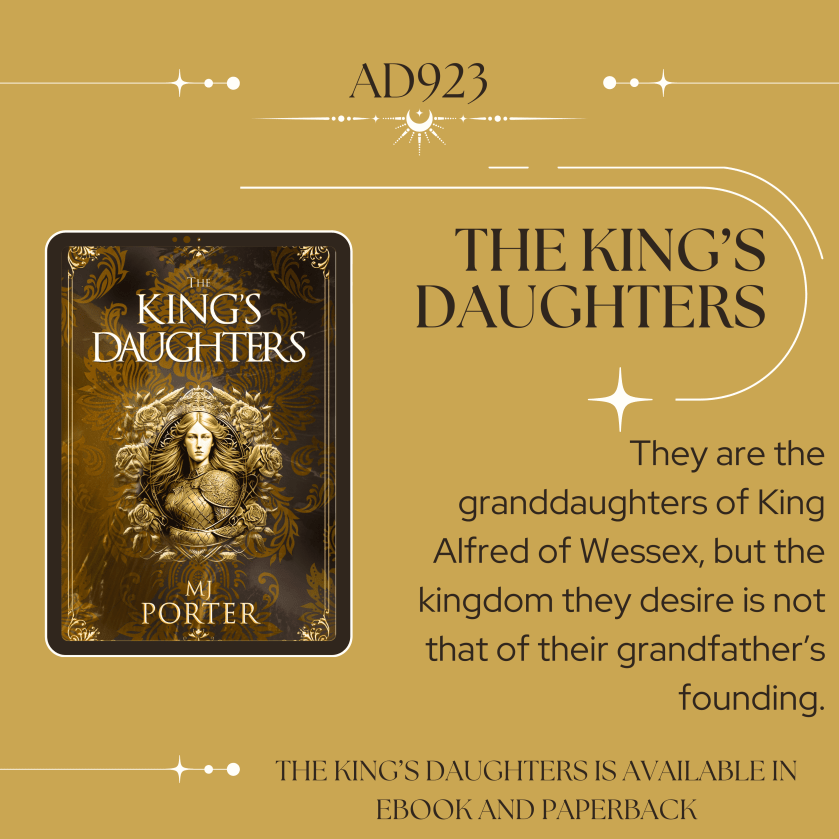
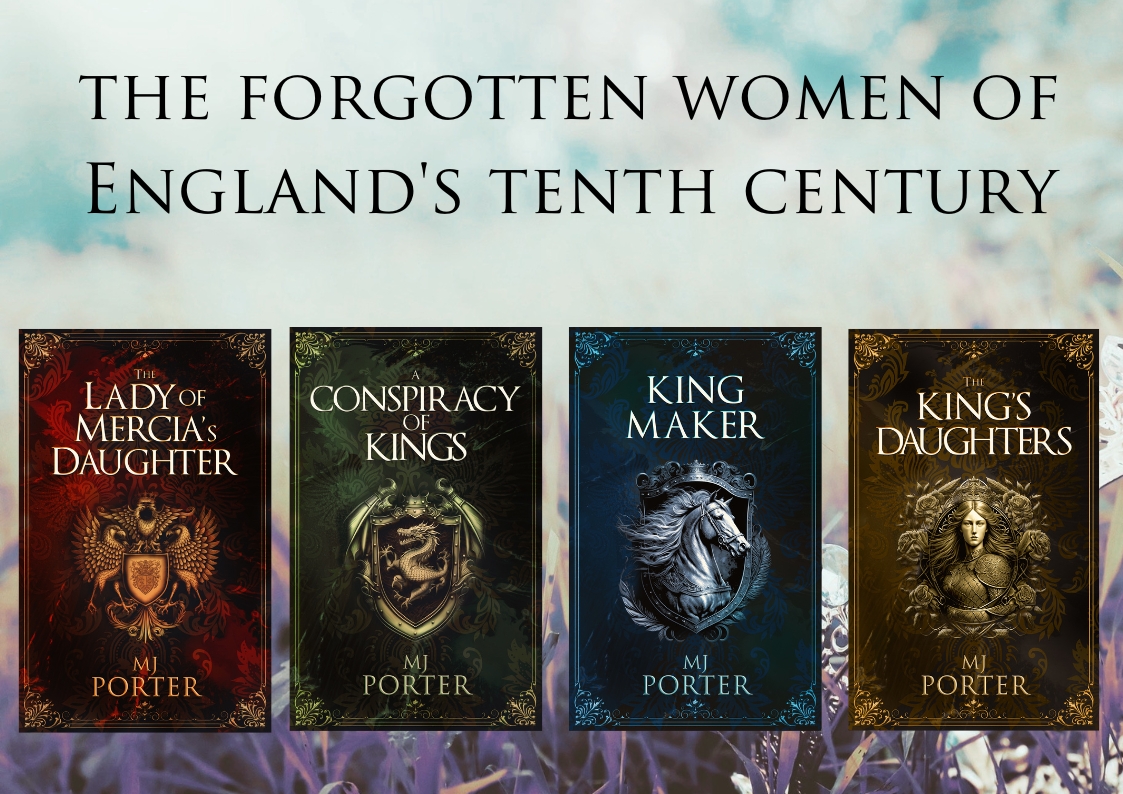
Louis was consecrated on 19th June 936. What happened during the early years of his rule is explored in The King’s Daughters, through the eyes of his mother.

(Read on below the references to find out about the other daughters).


[i] PASE Eadgifu (3) 

[ii] Campbell, A. ed The Chronicle of Æthelweard: Chronicon Æthelweardi, (Thomas Nelson and Sons Ltd, 1962), Prologue p.2

[iii] The matter of marriages, and concubinage is gathering increasing levels of interest. It is becoming apparent that the need for legitimate marriages was a matter laid down by the Church as a means to garner legitimacy. Before this, unions of concubinage may have held as firmly as church recognised marriages. 

[iv] Details taken from McKitterick, R. The Frankish Kingdoms Under The Carolingians, 751-987, (Longman, 1983), p. 365 Genealogical table

[v] Foot, S Athelstan (Yale University Press, 2011), p.46

[vi] Bachrach, B.S. and Fanning, S ed and trans, The Annals of Flodoard of Reims, 916-966 (University of Toronto Press, 2004), 20A

[vii] William of Jumieges in his Gesta Normannorum Ducum III.4 (PASE)

[viii] Bachrach, B.S. and Fanning, S ed and trans, The Annals of Flodoard of Reims, 916-966 (University of Toronto Press, 2004), 18A (936). Foot, S Athelstan (Yale University Press, 2011), p.168

[ix] McKitterick, R. The Frankish Kingdoms Under The Carolingians, 751-987, (Longman, 1983), p.315

[x] Van Houts, E. M. C., trans. The Gesta Normannorum Ducum of William of Jumieges, Orderic Vitalic, and Robert of Torigni, (Clarenden Press, Oxford, 1992) pp82-83 Book III.4

[xi] Bachrach, B.S. and Fanning, S ed and trans, The Annals of Flodoard of Reims, 916-966 (University of Toronto Press, 2004), 33G

[xii] PASE Greater Domesday Book 353 (Lincolnshire 18:25)


Eadhild[i], perhaps the second daughter of Edward the Elder and his second wife, Lady Ælfflæd, marriage Hugh the Great, later known as dux Francorum, in another continental dynastic marriage similar to that of her sister. Under 926, Flodoard of Reims states, ‘Hugh, son of Robert, married a daughter of Edward the Elder, the king of the English, and the sister of the wife of Charles.’[ii] This wasn’t Hugh’s first marriage, but that union was childless.

There’s no record of the marriage in The Anglo-Saxon Chronicle. However, once more, it is mentioned in Æthelweard’s Chronicon, ‘Eadhild, furthermore, was sent to be the wife of Hugo, son of Robert.’[iii] And also in Flodoard’s Annals, as mentioned above.

There is a later, really quite detailed account in the twelfth-century source of William of Malmesbury’s Gesta Regum Anglorum. He describes Eadhild as ‘in whom the whole mass of beauty, which other women have only a share, had flowed into one by nature,’ was demanded in marriage from her brother by Hugh of the Franks.’[v]

Hugh was a very wealthy individual. His family, ‘commanded the region corresponding to ancient Neustria between the Loire and the Seine, except for the portions ceded to the Vikings between 911 and 933. Hugh also possessed land in the Touraine, Orleanais, Berry, Autunois, Maine and north of the Seine as far as Meaux, and held the countships of Tours, Anjou and Paris. Many powerful viscounts and counts were his vassals and deputies…a number of wealthy monasteries were also in Robertian [the family named after his father] hands. Hugh himself was lay abbot of St Martin of Tours, Marmoutier, St Germain of Auxerre (after 937), St Denis, Morienval, St Riquier, St Valéry and possibly St Aignan of Orleans, St Germain-des-Pres and St Maur des Fosses.’[viii]

Eadhild, sadly died in 937, childless, and in The King’s Daughters her death sets in motion some quite catastophic family feuding.

(Read on below the references to learn more about The King’s Daughters)


[i] Eadhild (1) PASE

[ii] Foot, S Athelstan (Yale University Press, 2011), p.47.  Bachrach, B.S. and Fanning, S ed and trans, The Annals of Flodoard of Reims, 916-966 (University of Toronto Press, 2004), 926 

[iii] Campbell, A. ed The Chronicle of Æthelweard: Chronicon Æthelweardi, (Thomas Nelson and Sons Ltd, 1962), Prologue p.2

[iv] Bachrach, B.S. and Fanning, S ed and trans, The Annals of Flodoard of Reims, 916-966 (University of Toronto Press, 2004), 8E

[v] Foot, S Athelstan (Yale University Press, 2011), p.47. Mynors, R.A.B. ed and trans, completed by Thomson, R.M. and Winterbottom, M. Gesta Regvm AnglorvmThe History of the English Kings, William of Malmesbury, (Clarendon Press, 1998),ii,135,pp218-9

[vi] McKitterick, R. The Frankish Kingdoms Under The Carolingians, 751-987, (Longman, 1983), p.314

[vii] Foot, S Athelstan (Yale University Press, 2011), p.47

[viii] McKitterick, R. The Frankish Kingdoms Under The Carolingians, 751-987, (Longman, 1983), p.314


Eadgyth,[i]  has her marriage mentioned in the entry for the D text of the Anglo-Saxon Chronicle under the year 924. Alongside Athelstan’s unnamed biological sister, she’s the only one of Edward’s daughters to be mentioned in The Anglo-Saxon Chronicle. ‘..and he gave his sister across the sea to the son of the King of the Old Saxons (Henry).’[ii]Sarah Foot notes that in the Mercian Register section of The Anglo-Saxon Chronicle, this sentence in 924 is unfinished. The D text chooses to complete this sentence differently, referencing the union of Eadgyth to Otto, as opposed to the union of Athelstan’s unnamed sister to Sihtric of York. This then explains why the reference occurs in the annal entry for 924, whereas the union took place in 929/30, following a Saxon military triumph over the Slavs in the late summer of 929.[iii]

Æthelweard’s Chronicon again adds to our knowledge by informing his readers that Athelstan sent two of his sisters for Otto to choose the one he found most agreeable to be his wife. 

‘King Athelstan sent another two [of his sisters] to Otho, the plan being that he should choose as his wife the one who pleased him. He chose Eadgyth.’[v] This story is also told in Hrotsvitha’s Gesta Ottonis. ‘he bestowed great honour upon Otto, the loving son of the illustrious king, by sending two girls of eminent birth, that he might lawfully espouse whichever one of them he wished.’[vi]

Bishop Cenwald of Worcester accompanied both sisters to Saxony. The account of his visit can be witnessed in a confraternity book from St Galen, where he signed his name. Eadgyth was certainly the mother of a son and a daughter, Liudolf and Liudgar. 

Read The King’s Daughters to discover more about her story.


[i] PASE Eadgyth (2) 

[ii] Swanton, M. trans and edit The Anglo-Saxon Chronicles, (Orion Publishing Group, 2000), p105. And Foot, S Athelstan (Yale University Press, 2011), p.49 n69

[iii] Foot, S Athelstan (Yale University Press, 2011), p.48

[iv] Foot, S Athelstan (Yale University Press, 2011), p.48

[v] Campbell, A. ed The Chronicle of Æthelweard: Chronicon Æthelweardi, (Thomas Nelson and Sons Ltd, 1962), Prologue p.2

[vi] Foot, S Athelstan (Yale University Press, 2011), p.49, but Hrotsvitha, Gesta Ottonis, lines 79-82 and 95-8 ed. Berchin 278-9

[vii] Swanton, M. trans and edit The Anglo-Saxon Chronicles, (Orion Publishing Group, 2000), C p.124


King Athelstan is said to have sent two sisters to the court of Otto of Saxony, for him to determine which he would marry. This sister has vexed historians, even Æthelweard in his Chronion is unsure of her name,[i] and he wrote his text much earlier than other sources available, by c.978 at the latest. It would be hoped that a woman who left England only forty years earlier might have been remembered.  Æthelweard believed she had married, ‘a certain king near the Alps, concerning whose family we have no information, because of both distance and the not inconsiderable lapse of time.’[ii] He held out hopes that Matilda, to whom he dedicated his work, might be able to tell him more. 

‘Louis, brother of Rudolf of Burgundy, and his English wife were influential figures in that region when Rudolf died young, leaving only a child, Conrad, as heir.’[vi]

More than this, it is impossible to say. It is unsettling to realise that the daughter of one of the House of Wessex’s kings could so easily be ‘lost’ to our understanding today, and indeed, to that of her descendants only forty years later. This raises the awareness that if noble women could disappear from the written records, then so to could almost anyone. 


[i] This sister may appear as Anonymous 921 on PASE

[ii] Campbell, A. ed The Chronicle of Æthelweard: Chronicon Æthelweardi, (Thomas Nelson and Sons Ltd, 1962), Prologue p.2

[iii] Mynors, R.A.B. ed and trans, completed by Thomson, R.M. and Winterbottom, M. Gesta Regvm AnglorvmThe History of the English Kings, William of Malmesbury, (Clarendon Press, 1998), pp.199-201

[iv] Foot, S Athelstan (Yale University Press, 2011) p.51

[v] Please see Foot, S Athelstan (Yale University Press, 2011), p.51 for this fascinating discussion in its entirety. 

[vi] Foot, S ‘Dynastic Strategies: The West Saxon royal family in Europe,’ in England and the Continent in the Tenth Century: Studies in Honour of Wilhelm Levison (1876-1947) (Brepols, 2012), p.250


The King’s Daughter is the story of these women and their lives (mostly) in Continental Europe, and I hope you’ll enjoy it.

Check out The Tenth Century Royal Women page.

https://amzn.to/4ptykUl

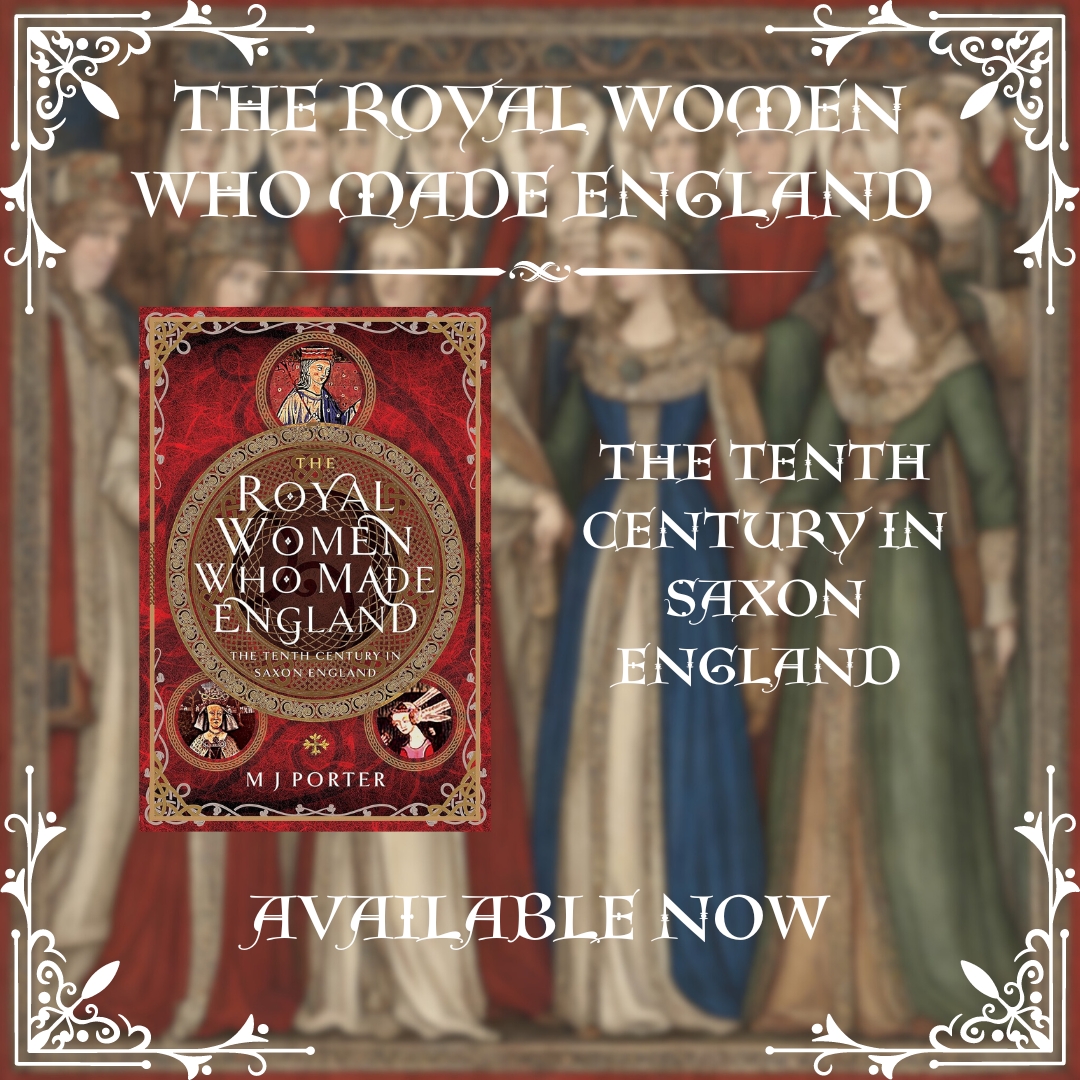
Interested in the real women? Please check out my non-fiction title, The Royal Women Who Made England.

The Royal Women Who Made England cover

Posts