Author of Saxon historical fiction and non-fiction, 20th-century historical mysteries, and Norse-inspired historical romantasy. Book reviewer and blog host.
My blog has gone from strength to strength in 2023, with traffic increasing by 49%. Thank you to everyone who popped by and read posts I’d written, or from guests on the blog. Here’s to a great 2023.
I’ve just read my 2022 Writing Year in Review post, (you can read it here) and can assure you, I didn’t manage to stick to my carefully thought out first half of the year. Indeed, the only aspect I seem to have stuck is taking it a bit easier in December. I’ve not left myself with a huge looming deadline, although I haven’t accomplished all I might like to have done. But then, I often have unrealistic expectations of myself.
So, what have I been writing/editing in 2023? It’s time to turn to my trusty diary to find out.
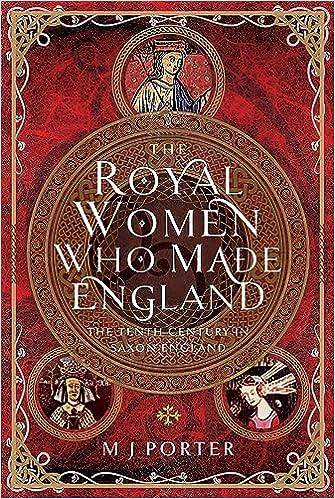
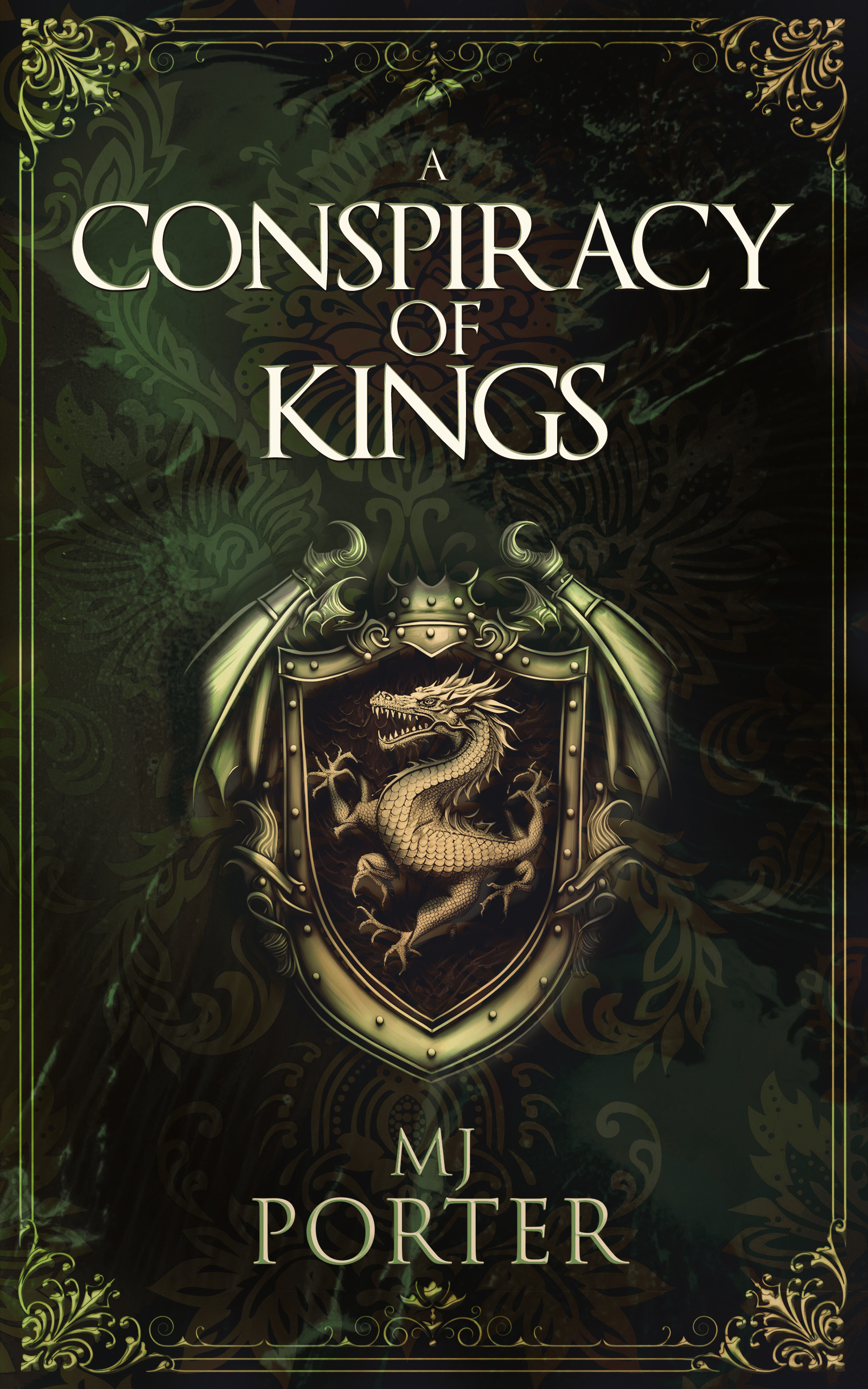
In January, I submitted The Royal Women Who Made England: The Tenth Century in Saxon England a few days late – I didn’t correctly calculate how long the editing process would take. I was also working on book 2 of the Brunanburh series – this was a massive rewrite, adding 50% more content to the original version, and I was reediting A Conspiracy of Kings, ready for its book birthday in February. On a side note – it also seems that I undertook some much needed TLC on my iMac, which I’ve written down as ‘taking all afternoon.’ I think it might have slightly annoyed me, but the beast has been working much better ever since. But yes, I didn’t understand what I was doing in replacing the SSD hard drive but I’m glad I did. I also took a trip to Gloucester and I know I spent the entire train journey there, and back, editing Kings of War! (The things you remember). I have decided that if I ever struggle with a deadline, I’m just going to hop on a long train journey. It’s the ultimate means of isolating yourself.
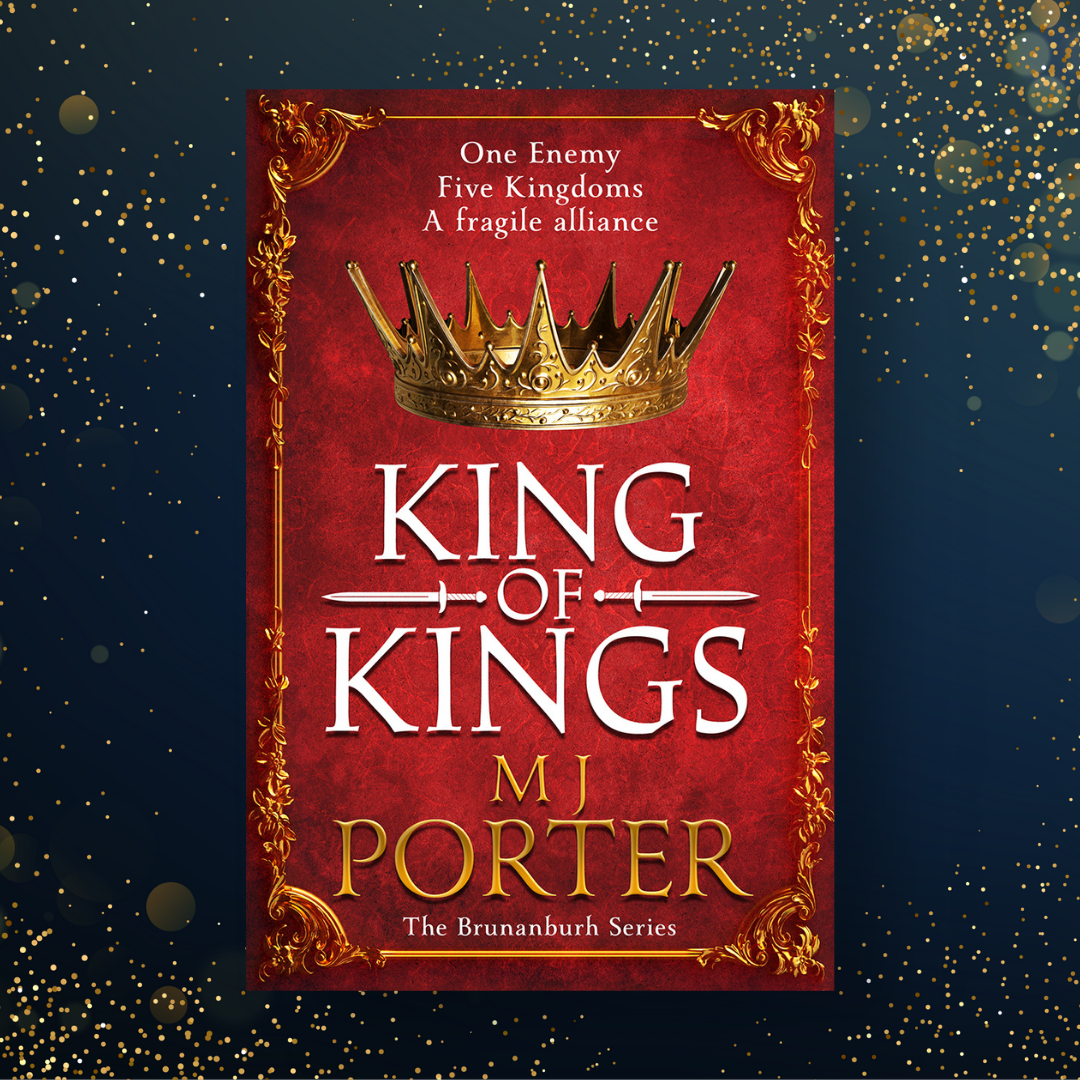
In February, I was writing Protector of Mercia – which wasn’t my working title, and so has confused me as I put this together, and also editing Eagle of Mercia, not once but twice (copyedit and proofread), while King of Kings was released on 10th February.
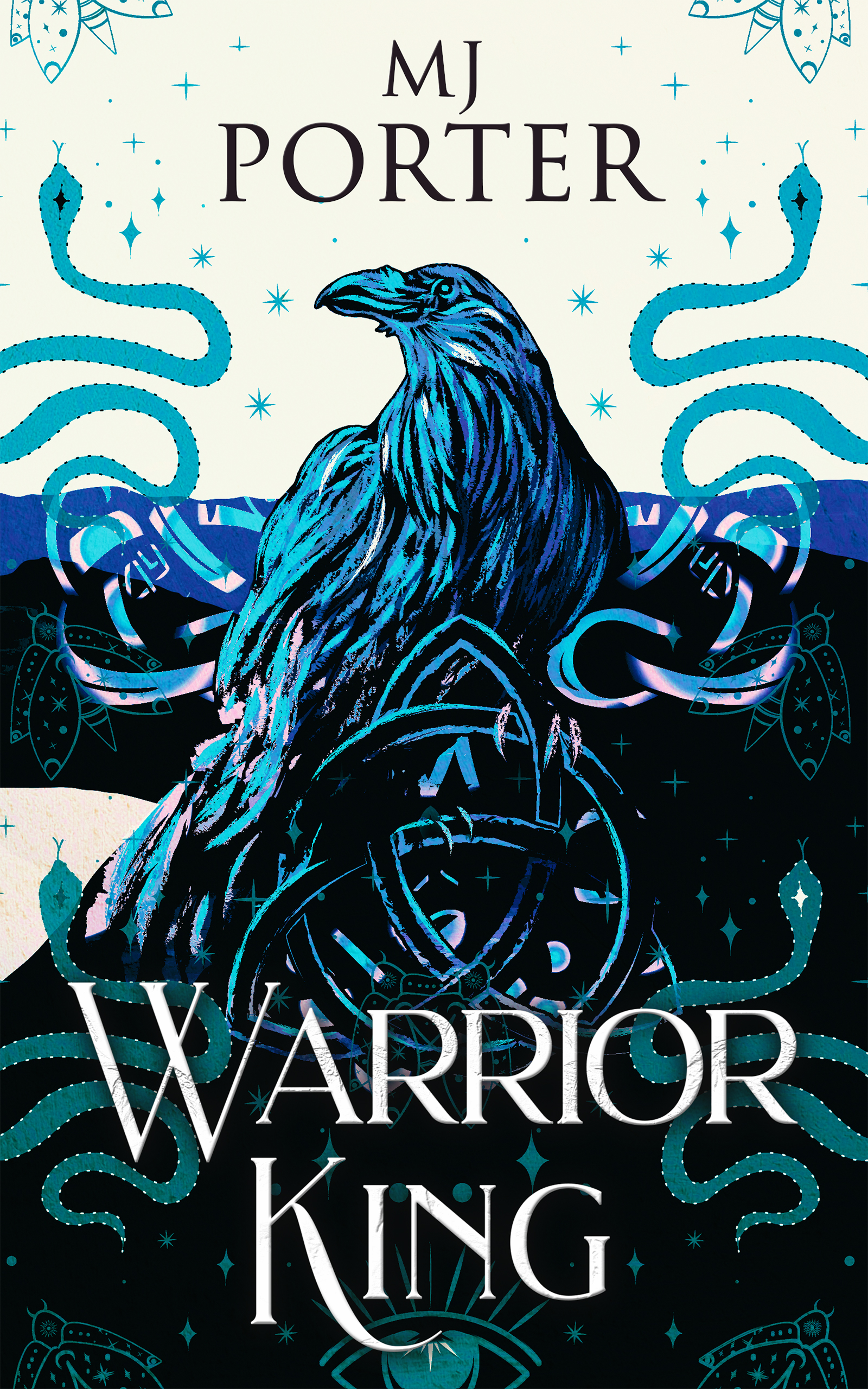
For March, I set myself four pretty huge tasks – I’ve written them down on 1st March. But how did I get on? I finished the proofread for Eagle of Mercia. I worked on the structural edit for Kings of War, AND I was reediting Warrior King ready to have it made into an audio book, narrated by the trusty and fabulous Matt Coles.
While working on Clash of Kings, I discovered, much to my annoyance that Limerick in Ireland was not at all where I ‘thought’ it was, and so had to do a large rewrite. My geography is woeful. I should have taken the time to check before I started writing the scene. I was also editing Protector of Mercia, which I sent to my editor on 31st March. I also went to work for a week in the school AND we moved house. Jeez. What a month. It seems that my fourth project didn’t even get a look in (I’m not surprised). Let’s see what happened in April.
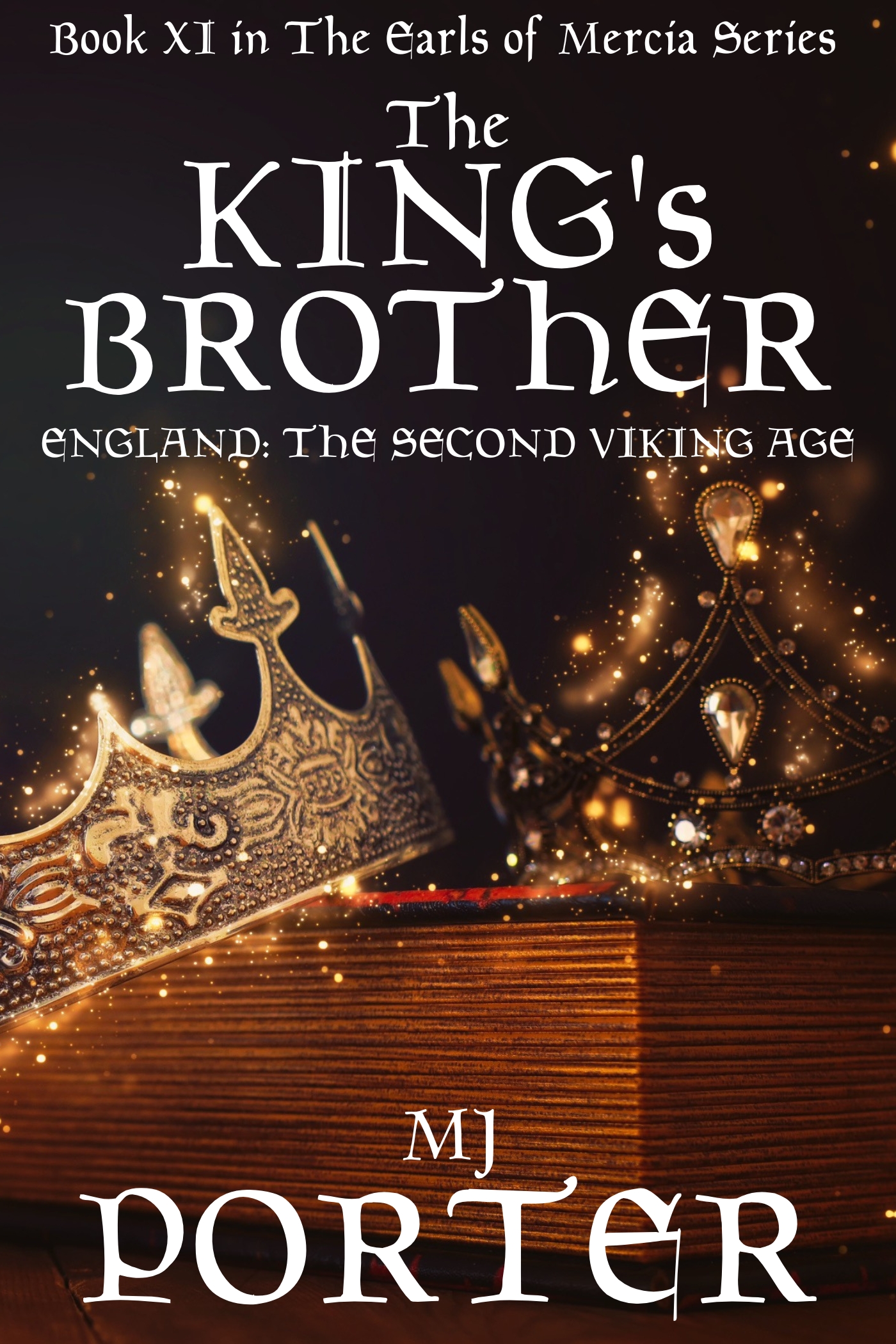
April began with a scramble for my internet connection, having moved house. I was due to present for The History Quill on 4th April. Luckily, the internet worked after a few stupid mistakes on my part. I finally made it back to my missed project 4 in March, which was The King’s Brother, which I edited and continued to write. I also wrote a short story. And, I was working on some form of edits for Protector of Mercia and Kings of War. All the frantic activity of the last few months paved the way for my Summer holiday in Orkney – the temperature peaked on the last day in the middle of May at 13 degrees, and I came home with a burned bright red face. The light is just different in Orkney. It was a glorious two weeks away, very much in isolation on one of the more northerly islands. We fell foul of the ferry running aground, but we managed to book an alternative route home.
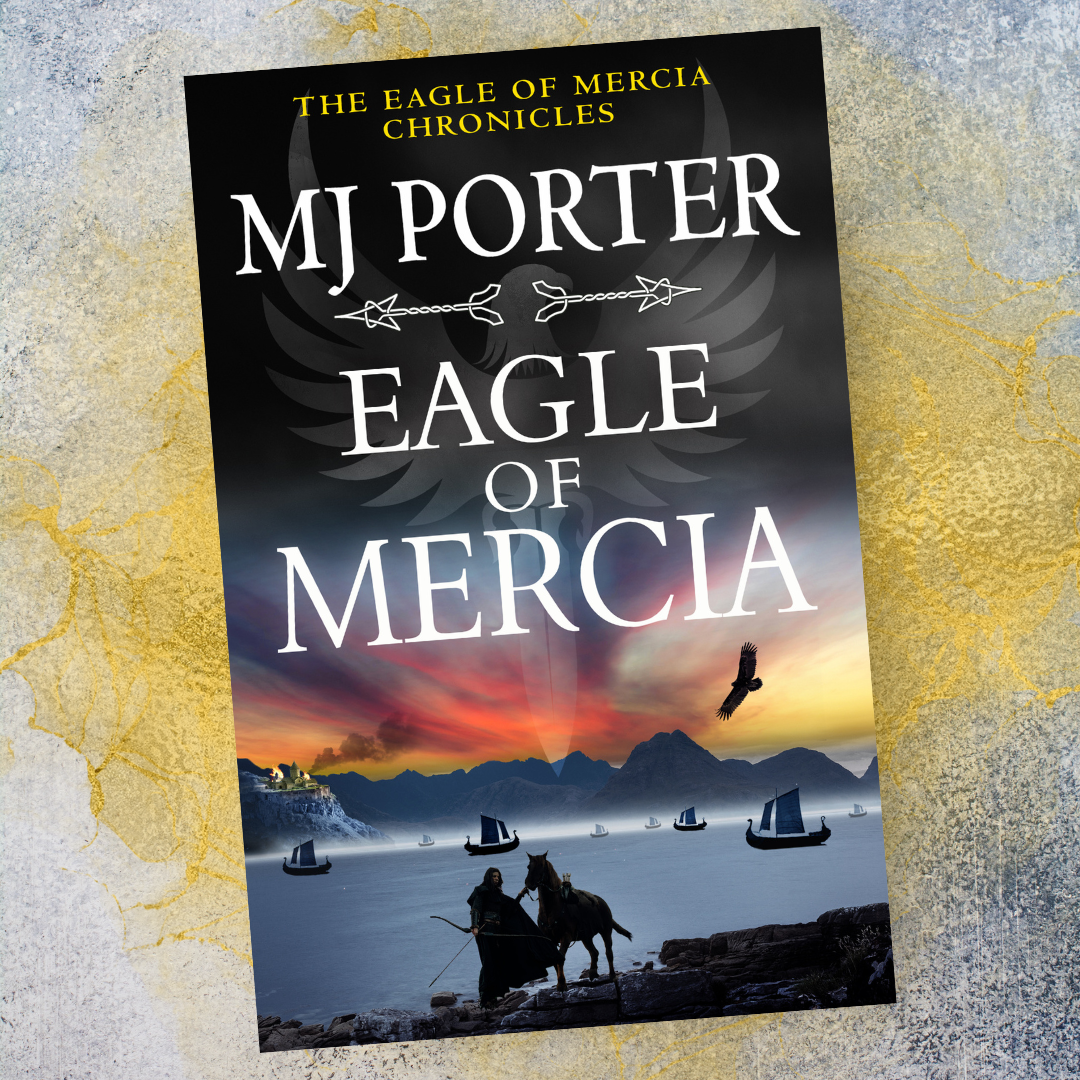
May 3rd saw the release of Eagle of Mercia, and I came back to two weeks of very long hours during the summer exam period at my local school. I spent my weekends working on structural edits for Protector of Mercia, and even managed to sneak in a trip to London for the Boldwood Books summer party. I spent the last week in May frantically editing The King’s Brother, which I should have done months before. I didn’t get much writing done in these two months, and I knew I wouldn’t, that’s why March had been such a mad month.
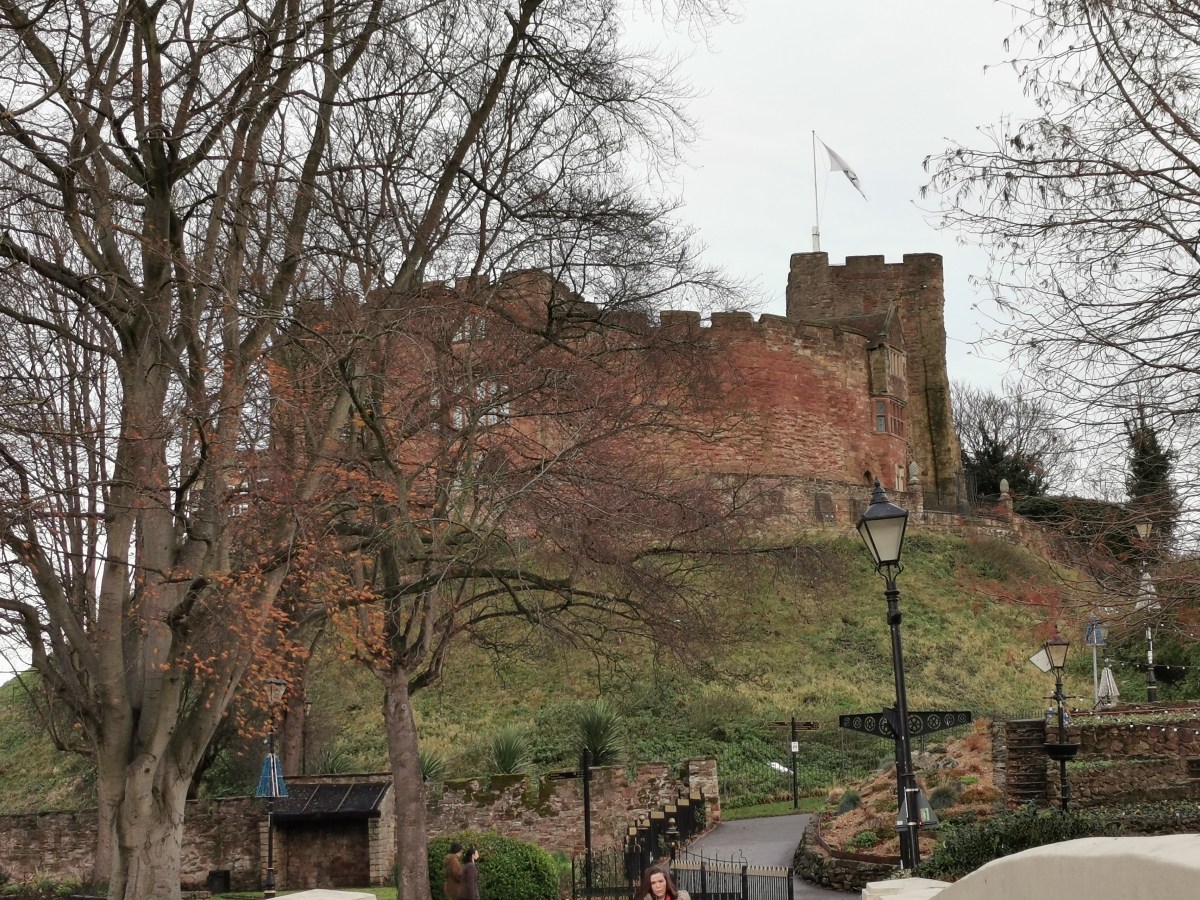
June was another busy month, but not in terms of writing. I participated in Æthelfest at Tamworth and by the end of the month I had (and I’ve not written this down) worked on some edits for Clash of Kings. It also saw the release of The King’s Brother. It had been very hard to return to the world of the Earls of Mercia, but with the help of Lady Godgifu, a character I developed substantially for the book, I felt it worked really well.
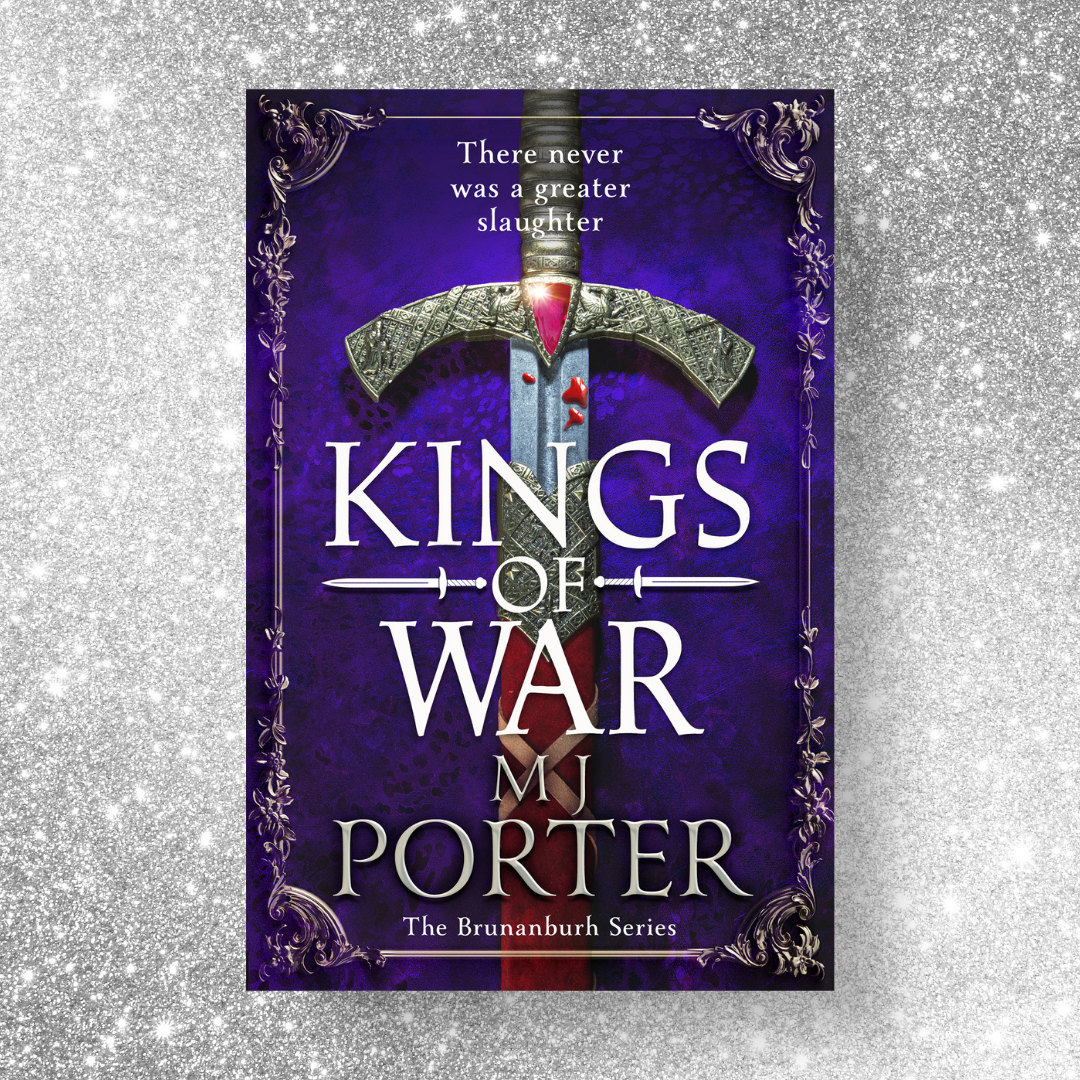
July 12th saw the release of Kings of War and I was once more embroiled in editing, both Protector of Mercia and my non-fiction title, as well as the structural edit from hell for Clash of Kings because of a problem when I’d converted it in Vellum, managing to muddle all the chapters. August saw me beginning work on Icel book 6, now Enemies of Mercia, and I really tried to concentrate on the title as I felt I’d done little ‘new’ writing for quite some time.
September saw the release of Protector of Mercia, and I held my first Zoom with readers to celebrate the release. It went really well. I was copyediting Clash of Kings, and also working on the first proof for The Royal Women of the Tenth Century, and producing the index for it. When that was done, I got back to Enemies of Mercia which was nearly finished, but not quite. The index stretched to 13 pages. It was a huge task. Next time I write a non-fiction title, I might miss out everyone’s names.
October saw Enemies of Mercia sent to my editor, and some more work which took me away from my desk. But, never fear readers, November was just around the corner, and that meant it was time for National Novel Writing Month, and a very, very welcome return to the world of Coelwulf from The Last King, but not before the final proofread for Clash of Kings.
In November I wrote, wrote, wrote. Not as much as in the past, but I was determined to get back to a good daily habit, and so I didn’t push myself until I had time to write 5k a day, which wasn’t until later in the month, as I had a structural edit for Enemies of Mercia to work on. And the second proof for The Royal Women also arrived in my inbox.
For December, remember above I said I had to be kinder to myself, I’ve given myself the time to finish writing The Last Viking, the new Coelwulf book, as well as writing a short story on my way home from London, and I’ve also got a final proof for The Royal Women Who Made England to look at. On the whole, a much quieter December to that of 2022, and far more enjoyable. It’s hoped this will recharge my batteries for what I hope will be a busy 2024, with another Coelwulf, Icel, Earls of Mercia and something new in the pipeline.
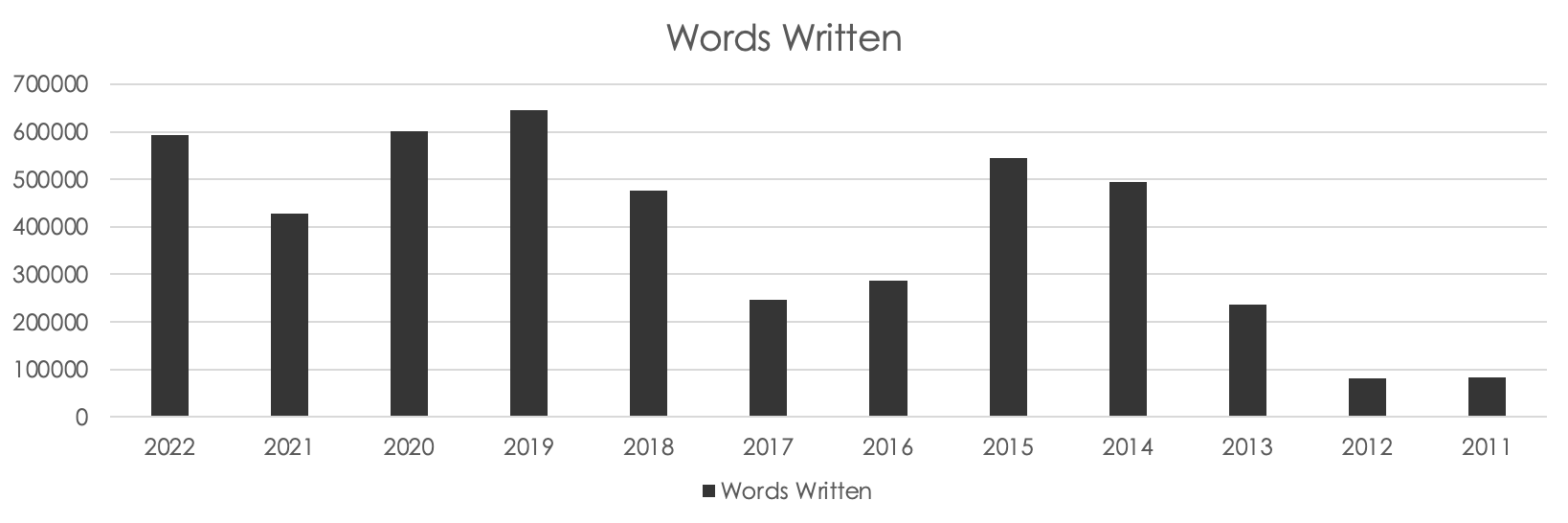
In terms of words written this year, a very rough tally sets it at about 340k, which is one of my lowest since 2017 – see my little chart below. (I can’t correctly determine all of the words written – I sometimes wish Word tracked how many words I deleted as well as how many I added). This might also be because some of my record keeping has been poor. My most prolific day was March 28th when I wrote 7000 words.
For 2024, I’m determined to work on my planning – not always easy with structural, copyedits and proofreads coming at me from all angles, but I am going to try and ensure I have more periods of time when I can write in a sustained way. I only managed this for three months in 2023. My style of writing means that I have to write quickly, or, quite frankly, I lose the thread of the story. I am, after all, a pantser, not a planner, and my characters very much lead the story. Sometimes, I need to give them a bit of time to decide what it is they intend to do.
Forthcoming releases with be Clash of Kings, The Royal Women Who Made England, The Last Viking and Enemies of Mercia. There will also be the fourth part of The Brunanburh Series later in the year. I had thought 2024 would be a quieter year, but clearly not.
If you want to follow my writing journey, join my newsletter. I update readers each month, and you can also join my Facebook group.
I will be sharing my reading year in review soon – there’s a lot of historical mystery in there:)
I’m sharing a snippet from Milana Marsenich’s new novel, Beautiful Ghost.
“Come back to the bakery with me and you can see for yourself. Annie doesn’t even know I exist when you are around. You can stay with us. You’ll be safe there.” Kaly heard herself echoing a sentiment Beth had once professed to Kaly. “Come stay at Miss Lottie’s,” her friend had said. “You’ll be safe there.”
This was different. Kaly looked at the ground. “Besides, we talked about it. You can’t work the line now.” Beth had agreed. The syphilis would infect others, eventually killing them. “Maybe Tara would put you to work.”
Kaly worked hard in the bakery. At first, she’d waited tables, but soon learned to cook good wholesome food. She cleaned tables and swamped the place at night, shopped, and stocked supplies. Still, she would not be able to make ends meet without Tara’s help and Tommy sending home his army money.
Beth shook her head. “You know I can’t live on that kind of money. I’ve got a scheme brewing and as soon as it’s ready, you’ll be the first to know.”
Kaly couldn’t help but feel that she had betrayed and abandoned her friend. So many didn’t have the means to retire that profession. Old prostitutes often died cold and sick on the streets, or at one of the hog ranches for old whores. Those with syphilis did even worse.
She couldn’t stand to think of that fate for Beth. Beautiful, bold, vivacious Beth. Kaly missed their camaraderie. Beth had been her best friend since she was fourteen. If Kaly had her way, she’d never give her up. But Beth had distanced herself from Kaly since she’d moved in with Tara McClane, and there seemed to be nothing Kaly could do about it.
Here’s the blurb
During the fall of 1918, the influenza pandemic crosses the nation and reaches the mining town of Butte, Montana.
Marika Jovich, who wants to go to school to become a physician, works menial tasks for Dr. Fletcher. She feels useless as she tries to save friends and neighbors from the ravages of the flu. In the midst of the pandemic, she watches the town shut down, young and old perish, and her medical dreams all but evaporate.
Kaly Monroe used to be a half-good woman of the night. She left that life to raise her daughter, Annie, and live and work with her long-lost mother, Tara McClane. Kaly waits for her husband, Tommy, to return from the war. Word from the east is that soldiers are dying of influenza and she prays that Tommy is not one of them.
When an out-of-town woman named Amelia suddenly dies in Dr. Fletcher’s office, both women try to learn more about the mysterious woman and the circumstances regarding her death. Is she another casualty of the pandemic, or the victim of manmade foul play? Who is this stranger, and is her demise a portent of the fate that awaits the residents of Butte?
Praise for Beautiful Ghost:
“Marsenich doesn’t just describe the place and times, she conjures it up like time travel.” ~ Amazon Review by Ellen Leahy Howell
Award winning author, Milana Marsenich lives in Northwest Montana near Flathead Lake at the base of the beautiful Mission Mountains. She enjoys quick access to the mountains and has spent many hours hiking the wilderness trails with friends and dogs. For the past 20 years she has worked as a mental health therapist in a variety of settings. As a natural listener and a therapist, she has witnessed amazing generosity and courage in others. She first witnessed this in her hometown of Butte, Montana, a mining town with a rich history and the setting for Copper Sky, her first novel.
Copper Sky was chosen as a Spur Award finalist for Best Western Historical Novel in 2018. Her second novel, The Swan Keeper, was a Willa Award finalist in 2019. Her short story, Wild Dogs, won the Laura Award for short fiction in 2020.
She has an M.Ed. in Mental Health Counseling from Montana State University and an MFA in Creative Writing from the University of Montana. She has previously published in Montana Quarterly, Big Sky Journal, The Polishing Stone,The Moronic Ox, BookGlow, and Feminist Studies.
She has three published novels, Copper Sky, The Swan Keeper, and Beautiful Ghost, and one popular history book, Idaho Madams. Her upcoming novel, Shed Girl: A Juliet French Novel, will be released January 2024. Her popular history book, Mary MacLane: Butte’s Wild Woman and her Wooden Heart, will be out sometime in 2025.
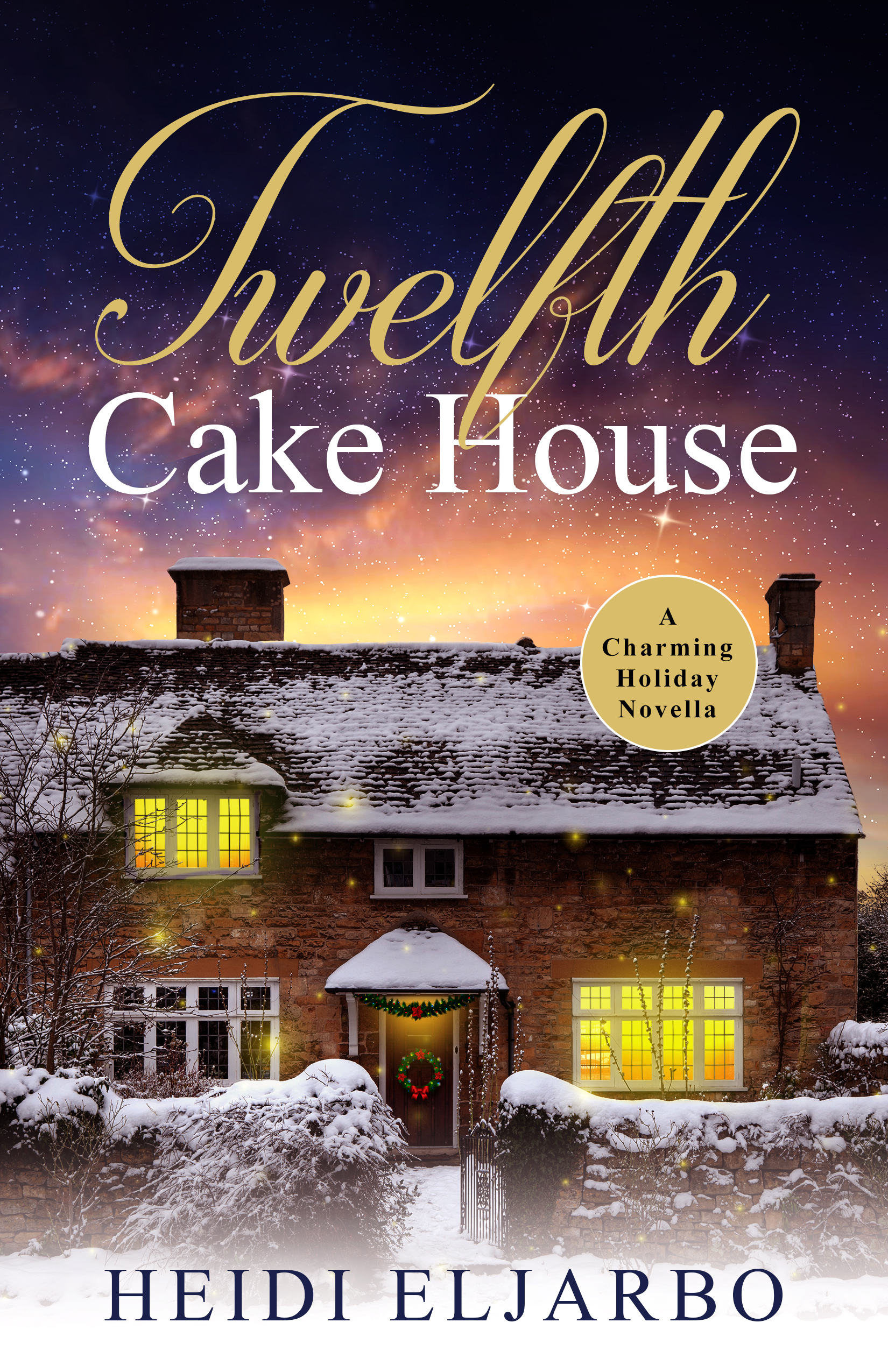
I’m delighted to welcome Heidi Eljarbo and her Christmas romance, Twelfth Cake House, to the blog
Here’s the blurb
Even a clever matchmaker may need a push in the right direction if she’s to find true love. When she’s asked to find a match for herself, it proves to be the most difficult task she’s ever undertaken.
Mid-December 1796.
Sixty-year-old spinster Miss Jemima Thurgood has three weeks to finish the preparations for her annual Twelfth Night party. In her position as a matchmaker, for over forty years she has assumed a grave responsibility. Luckily, she’s a shrewd observer of people, and many happy reunions have come about due to her exceptional talent for nudging kindred hearts in the right direction.
Every year, Jemima invites twelve carefully selected men and women to her festivity, and each guest is assigned a dinner partner. The days before the merrymaking are constantly disrupted by one unforeseen event after another. Jemima must work hard to be ready in time, and more importantly, to provide the kind of celebration her chosen guests deserve.
But this year, what Jemima doesn’t know is that her life is about to take a sudden change of course—one she could not have predicted or planned for. As the days pass, several gentlemen indicate they are interested in becoming better acquainted with her, but only a very special man can charm a matchmaker.
A sweet romance novella set during a witty and enchanting Georgian-Era Christmas, Twelfth Cake House is a story about traditions, goodwill, and finding hope and the courage to change and take a chance on finding true love.
Buy Links:
This title is available to read on #KindleUnlimited.
Heidi Eljarbo is the award-winning author of dual-timeline historical fiction with heartwarming clean romance, wit, and adventurous mystery.
Heidi grew up in a home filled with books and artwork and never imagined she would do anything other than write and paint. She studied art, languages, and history, danced on the BYU Ballroom Dance Team, and still sings in choirs.
After living in Canada, six US states, Japan, Switzerland, and Austria, Heidi now calls Norway home. She and her husband have a total of nine children, and fifteen grandchildren—so far—in addition to a bouncy Wheaten Terrier.
Their favorite retreat is a mountain cabin, where they hike in the summertime and ski the vast, white terrain during winter.
Heidi’s favorites are family, God’s beautiful nature, and the word whimsical.
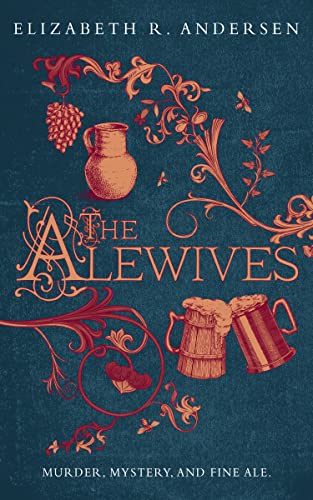
Hello readers. I had to share this because The Alewives is such a fantastic read. Do please snap it up. (Over night it’s been riding very high in the UK top 100 overall chart which is AMAZING). I’ve read the book and listened to the audio, and if you know me by now, that is very rare! So, yes, my love for this story is very genuine.
Here’s the blurb
Colmar, 1353 CE
Gritta, Appel, and Efi managed to survive the Black Death, only to find that they are in desperate need of money. With limited options and lots of obstacles, they band together to become alewives – brewing and selling ale in the free Alsatian town of Colmar. But when an elderly neighbor is discovered dead in her house, the alewives cannot convince the sheriff and the town council that her death wasn’t an accident, it was murder. As the body count piles up, the ale flows and mystery is afoot!
Set in the tumultuous years after the most devastating pandemic the world has ever experienced, The Alewives is a playful romp through a dark time, when society was reeling from loss and a grieving population attempted to return to normal, proving that with the bonds of love, friendship, and humor, the human spirit will always continue to shine.
The Alewives is a fantastically well-written murder mystery set in the immediate aftermath of the Black Death, with delightful characters and a sinister murderer and thief, at the heart of all the problems. Set in the tannery area of Colmar, something smells bad.
The three main characters of Gritta, Appel, and Efi are all glorious creations – Grita with her useless husband and horde of children (she had 12, you see), Appel with her mysterious nighttime activities, and young Efi, who has the sense of a young kid goat at the beginning of the tale.
This story is immersive and filled with just enough tension and humour to make even a story about those who survived the Black Death an absolute delight to read. The humour is well constructed, the antics of the three women, acting a little outside the ‘law’ in a deeply patriarchal society that doesn’t allow women to brew their own ale for profit, artfully created, and even the Friar, Wikerus, is a sympathetic character, in the end. The three women are put upon. Society is against them, as is the sheriff (all the male characters are dismissive of the women, but they get on with it, doing all they can to circumnavigate the obstacles placed in their path), and the church, and just about everyone else, but they triumph.
The mystery itself is really well constructed, as are the red herrings. I didn’t know who the culprit(s) (no spoilers here) were until the big reveal.
A short, sharp, snappy, hugely entertaining, medieval mystery that portrays the realities of life at the time, with just the right amount of humour to make it thoroughly entertaining. A well-deserved 5/5 from me!
Meet the Author
Elizabeth R. Andersen’s debut novel, The Scribe, launched in July of 2021. Although she spent many years of her life as a journalist, independent fashion designer, and overworked tech employee, there have always been two consistent loves in her life: writing and history. She finally decided to do something about this and put them both together.
Elizabeth lives in the Seattle area with her long-suffering husband and young son. On the weekends she usually hikes in the stunning Cascade mountains to hide from people and dream up new plotlines and characters.
– Join Elizabeth’s monthly newsletter and receive the first two chapters of The Scribe for free. Sign up at https://www.elizabethrandersen.com
– Find photos of hikes and daily author life at Elizabeth’s Instagram: @elizabethrandersen
– Follow Elizabeth on Twitter for nerdy medieval history facts: @E_R_A_writes
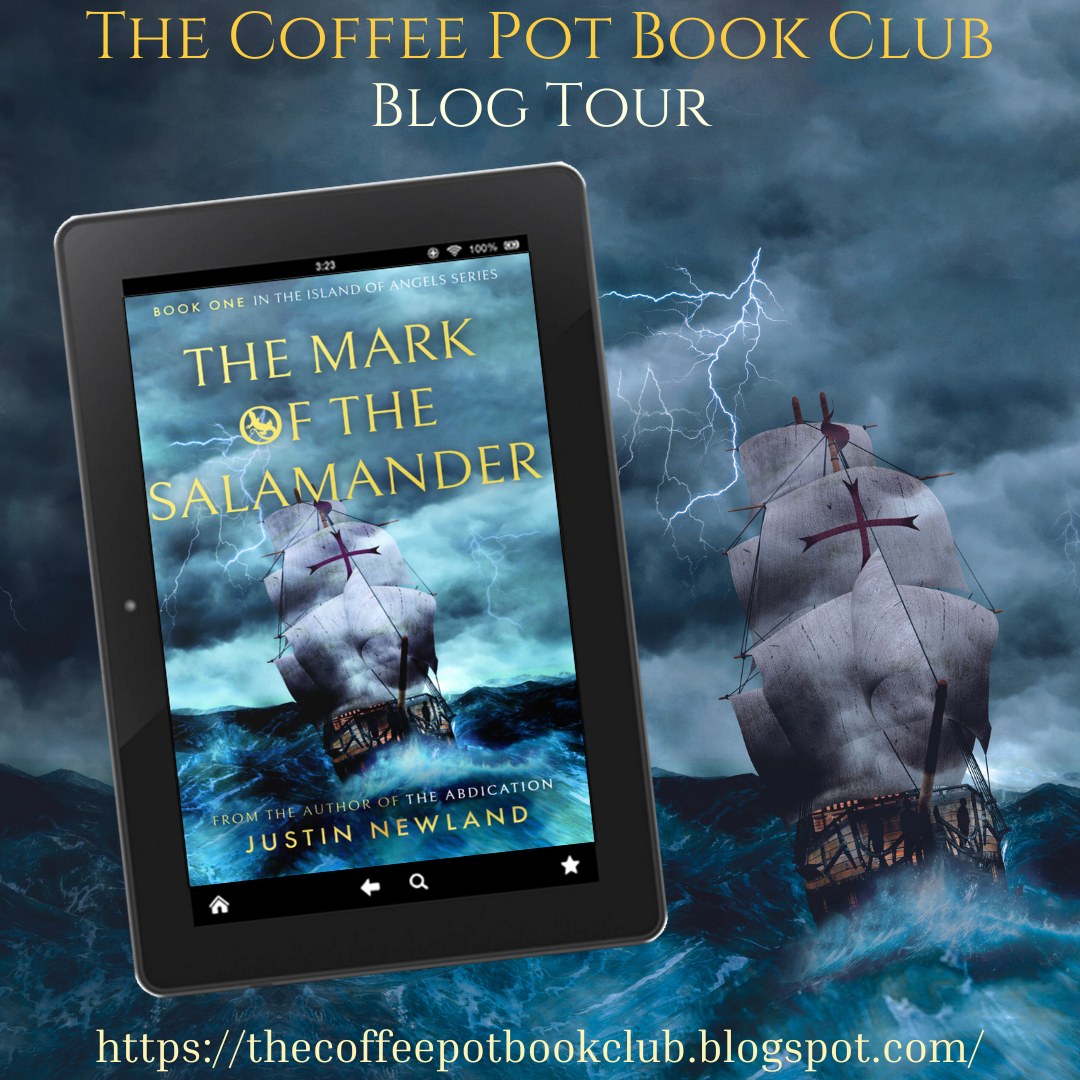
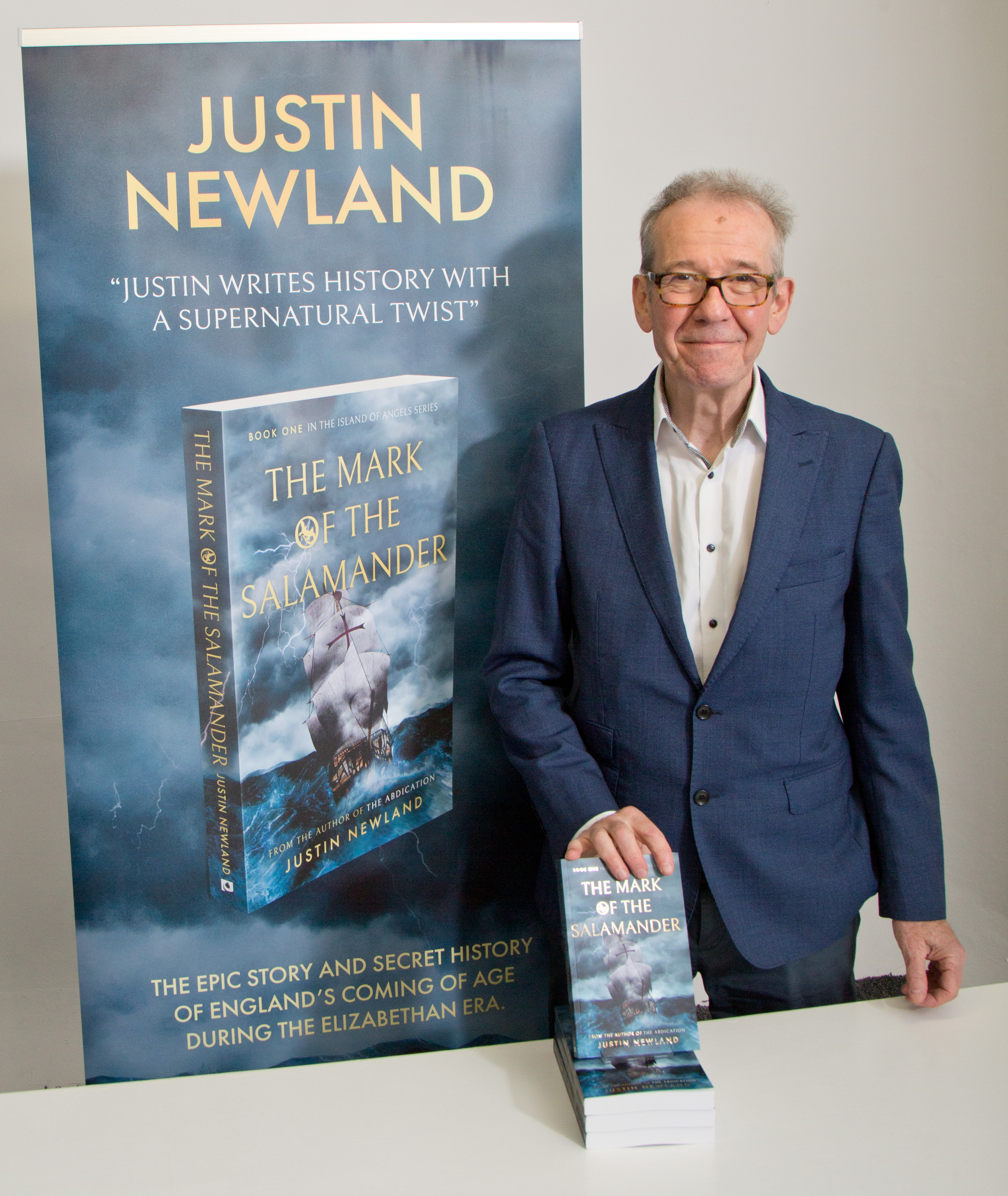
I’m delighted to welcome Justin Newland to the blog with a guest post about his new book, The Mark of the Salamander.
The Mark of the Salamander is the first part of a two-book series entitled The Island of Angels, which tells the epic story and secret history of England’s coming of age during the Elizabethan era.
Queen Elizabeth of England and King Philip II of Spain opposed each other in a religious war in the late 16th century. Even as enemies, they shared plenty in common.
Elizabeth was known as the Virgin Queen because she never married. King Philip II of Spain was known as ‘the Prudent’ because he was frugal with his money.
Process El Escorial Monastery
She too was a spendthrift, and was exceedingly careful with money, and so in the same way as Philip, she was prudent too. For many years, Philip lived in the castle- monastery of El Escorial near Madrid. There he was surrounded by Hieronymite monks, who lived an austere life in the image of the their founder, the biblical scholar, St Jerome. Living like a monk, study, austerity and discipline were Philip’s daily fare.
Elizabeth on the other hand, moved around using the River Thames to head from her favourite palace at Richmond to her other royal estates at Whitehall and Greenwich.
She also went on royal progresses to visit the estates of her senior courtiers, like Kenilworth, Osterley and Theobalds.
Elizabeth I
Astrologically, Elizabeth was a Virgo, actually a double Virgo, because her rising sign was also Virgo. Curiously, Virgo means virgin. The coincidences don’t end there. Because the flag that the Spanish Armada flew had, on one side of it, an image of Madonna, Mary, the mother of Jesus who was herself a virgin.
Philip was himself a Taurus, the bull, and bullish he was in defiance. Stubborn as a mule, he sent several Armadas to invade England, but none of them succeeded. Taurus and Virgo are both Earth signs; Elizabeth and Philip shared that in common too.
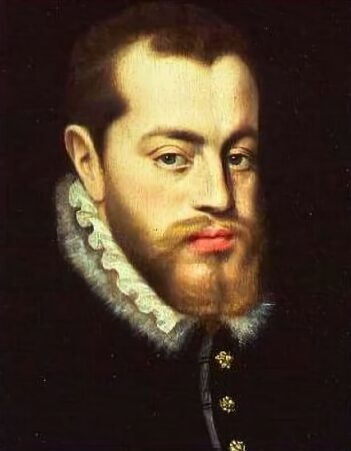
King Philip II of Spain
The boundaries between the two nations would not have been as explicit had England and Spain been at war today. Today there would be sanctions on trade between the warring nations. In the 16th Century, things were not as cut and dried.
For example, it would have been quite normal for the Queen, Drake and the other English aristocrats to enjoy a glass of Spanish wine and sherry. The other irony to this is that one of the major exporters of said Spanish wine was from the estates of the Duke of Medina Sidonia. Said Duke was the commander of the Spanish Armada sent to invade England’s shores in the summer of 1588.
Elizabeth’s personal motto was ‘Semper Eadem’ which means ‘Always the Same.’ But what was ‘the same’ where she was concerned? She saw herself as married and in service to the people and land of England, and that never varied. She saw herself as protector of the realm, and that never varied either. She too was always fierce in her defiance against the Duke of Parma, who had invaded the Netherlands on behalf of King Philip. This resolution is enshrined in the words from her famous Tilbury speech:
“… I think foul scorn that Parma or Spain, or any prince of Europe, should dare to invade the borders of my realm.”
By comparison, King Philip’s motto was Orbis non Sufficit, which means the World is Not Enough. If the world is not enough, what is? The solar system? The universe? This motto reeks of hubris, or excessive pride. Perhaps this is what led King Philip to miss out certain orders to his naval commander, the Duke of Medina Sidonia.
Two opponents. One a man, who rested in one place, static. The other a woman, who moved from place to place, ever mobile. One led the life of a scholarly monk. The other danced her way into the hearts of the English people and gave her name to an era.
Here’s the blurb
1575.
Nelan Michaels is a young Flemish man fleeing religious persecution in the Spanish Netherlands. Settling in Mortlake outside London, he studies under Queen Elizabeth’s court astrologer, conjuring a bright future – until he’s wrongly accused of murder.
Forced into the life of a fugitive, Nelan hides in London, before he is dramatically pressed into the crew of the Golden Hind.
Thrust into a strange new world on board Francis Drake’s vessel, Nelan sails the seas on a voyage to discover discovery itself. Encountering mutiny, ancient tribes and hordes of treasure, Nelan must explore and master his own mystical powers – including the Mark of the Salamander, the mysterious spirit of fire.
THE MARK OF THE SALAMANDER is the first in The Island of Angels series: a two-book saga that tells the epic story and secret history of England’s coming of age during the Elizabethan era.
Justin Newland’s novels represent an innovative blend of genres from historical adventure to supernatural thriller and magical realism. His stories explore the themes of war and religion, and speculate on the human’s spiritual place in the universe.
Undeterred by the award of a Doctorate in Mathematics from Imperial College, London, he conceived his debut novel, The Genes of Isis (Matador, 2018), an epic fantasy set under Ancient Egyptian skies.
The historical thriller, The Old Dragon’s Head (Matador, 2018), is set in Ming Dynasty China in the shadows of the Great Wall.
The Coronation (Matador, 2019) was another historical adventure and speculates on the genesis of the most important event in the modern world – the Industrial Revolution.
The Abdication (Matador, 2021) is a mystery thriller in which a young woman confronts her faith in a higher purpose and what it means to abdicate that faith.
The Mark of the Salamander (Book Guild, 2023) is the first in a two-book series, The Island of Angels. Set in the Elizabethan era, it’s an epic tale of England’s coming of age.
His work in progress is the second in the series, The Midnight of Eights, the charting of the uncanny coincidences that led to the repulse of the Spanish Armada.
Author, speaker and broadcaster, Justin appears on LitFest panels, gives talks to historical associations and libraries and enjoys giving radio interviews and making podcasts.
Born three days before the end of 1953, he lives with his partner in plain sight of the Mendip Hills in Somerset, England.
I’m delighted to welcome Marcia Clayton and her new book, Millie’s Escape, to the blog. She’s sharing a snippet from the story.
“Granny, Granny, guess what. I’ve been serving customers all on my own, and I even took the money because I can count the pennies now.”
Betsey studied her grandson fondly. At four years old, he was the spitting image of his father, William, and a constant reminder of the son she had lost, but she loved him dearly, and though she would never admit it to anyone, even herself, he was something of a favourite. She pulled him towards her and sat him on her knee, pushing his mop of curly red hair out of his eyes.
“Aren’t you a clever young man, then? Whom did you serve?”
“Mum said I could serve all the children with a square of sugary pastry and charge them a ha’penny each.”
“That’s very smart of you. What did you do if a customer gave you a penny?”
“Oh, that’s easy; I gave them a ha’penny change. I know there are two ha’pennies in one penny.”
“That’s right. You’ll be running the place before we know it.”
“Do you know, though, Granny, there were three who didn’t have any money, and Mum told me to give them a pastry square each anyway.”
Bentley seemed puzzled by this.
“I see. Did you want to give them some food?”
“Yes; they were thin and dirty and looked cold and hungry, so I think they needed something to eat.”
“You did the right thing then, and I hope you’ll always be kind to folk less fortunate than yourself. Do you know, when I was a little girl, I was like those three children because I never had enough to eat, and I was always cold? But for the kindness of some folk, I probably wouldn’t be here at all.”
Bentley was astounded at the thought of his granny being cold and hungry.
“Oh, I’m so glad someone was nice to you, Granny. I’ll always remember that.”
Here’s the blurb
1885 North Devon, England
It is winter in the small Devon village of Brampford Speke, and a typhoid epidemic has claimed many victims. Millie, aged fifteen, is doing her best to nurse her mother and grandmother as well as look after Jonathan, her five-year-old brother. One morning, Millie is horrified to find that her mother, Rosemary, has passed away during the night and is terrified the same fate may befall her granny, Emily.
When Emily’s neighbours inform her that Sir Edgar Grantley has also perished from the deadly disease, the old woman is distraught, for the kindly gentleman has been their benefactor for many years, much to the disgust of his wife, Lilliana. Emily is well aware that Sir Edgar’s generosity has long been a bone of contention between him and his spouse, and she is certain Lady Grantley will evict them from their cottage at the first opportunity.
As she racks her brain for a solution, Emily remembers her father came from Hartford, a seaside village in North Devon and had relatives there. Desperate and too weak to travel, she insists Millie and Jonathan leave home and make their way to Hartford before the embittered woman can cause trouble for them. There, she tells them, they must throw themselves on the mercy of their family and hope they will offer them a home.
With Emily promising to follow as soon as possible, the two youngsters reluctantly set off on their fifty-mile journey on foot and in the harshest of weather conditions. Emily warns them to be cautious, for she suspects Lady Grantley may well pursue them to seek revenge for a situation that has existed between the two families for many years.
Buy Links:
This title is available to read with #KindleUnlimited.
All the books in The Hartford Manor Series can be ordered from any bookshop.
Meet the author
Marcia Clayton is the author of five books in The Hartford Manor Series, a heart-warming family saga stretching from the Regency period to Victorian times. A sixth book is to be released in 2024.
Marcia was born in North Devon, a rural and picturesque area in the far South West of England. When she left school, Marcia worked in a bank for several years until she married her husband, Bryan, and then stayed at home for a few years to care for her three sons, Stuart, Paul and David. As the children grew older, Marcia worked as a Marie Curie nurse caring for the terminally ill and later for the local authority managing school transport.
Now a grandmother, Marcia enjoys spending time with her family and friends. She’s a keen researcher of family history, and this hobby inspired some of the characters in her books. A keen gardener, Marcia grows many of her own vegetables. She is also an avid reader and enjoys historical fiction, romance, and crime books.
Vilified by history, Caterina Sforza learned early that her life was not her own. Married at age ten, she was a pawn in the ever-changing political environment of Renaissance Italy.
Resigned to her life as a fifteenth-century wife, Caterina adapted to the role she was expected to play: raising and educating her children, helping the poor in her new home, and turning a blind eye to her husband’s increasingly shameful behaviour. But Fate had other plans for her, and soon Caterina’s path would be plagued by murder, betrayal, and heartbreak.
“Could I write all, the world would turn to stone.”
Buy Links:
This title is available to read on #KindleUnlimited.
Turning the World to Stone follows the life of young Caterina Sforza through her marriage to the nephew of the current pope. It is a story of the city-states of Italy, told through the eyes of one girl as she becomes a young woman in a world where family names are important.
Her husband, chosen for her by her father, is not at all a dashing figure of early Renaissance Italy but rather a bit of a fool who thinks more of himself than he should, relying on his relationship with the pope until the pope’s death plunges him, and his ever-growing family into strife, which his wife, Caterina, is unprepared to accept.
This is a story of its time when women were ruled by their fathers and then their husbands, expected to do little more than breed and look pretty. Still, Caterina has other plans and, while saddled with a useless and politically inept husband, can make much of her birth family to ensure the survival of her and her children.
It is an engaging tale, sure to delight fans of stories concerning the forgotten women of history and those interested in Italian history.
Meet the author
Born in Canada of Scottish extraction, Kelly Evans graduated in History and English then moved to England where she worked in the financial sector. While in London Kelly continued her studies in history, concentrating on Medieval History, and travelled extensively through Eastern and Western Europe.
Kelly is now back in Canada with her husband Max and a rescue cat. She writes full-time, focussing on illuminating little-known women in history with fascinating stories. When not working on her novels, Kelly writes Described Video scripts for visually impaired individuals, plays oboe, and enjoys old sci-fi movies.
I’m sharing a post about the family of Ealdorman Leofwine, Saxon England and the position of ealdormen/earls #non-fiction #fiction #histfic
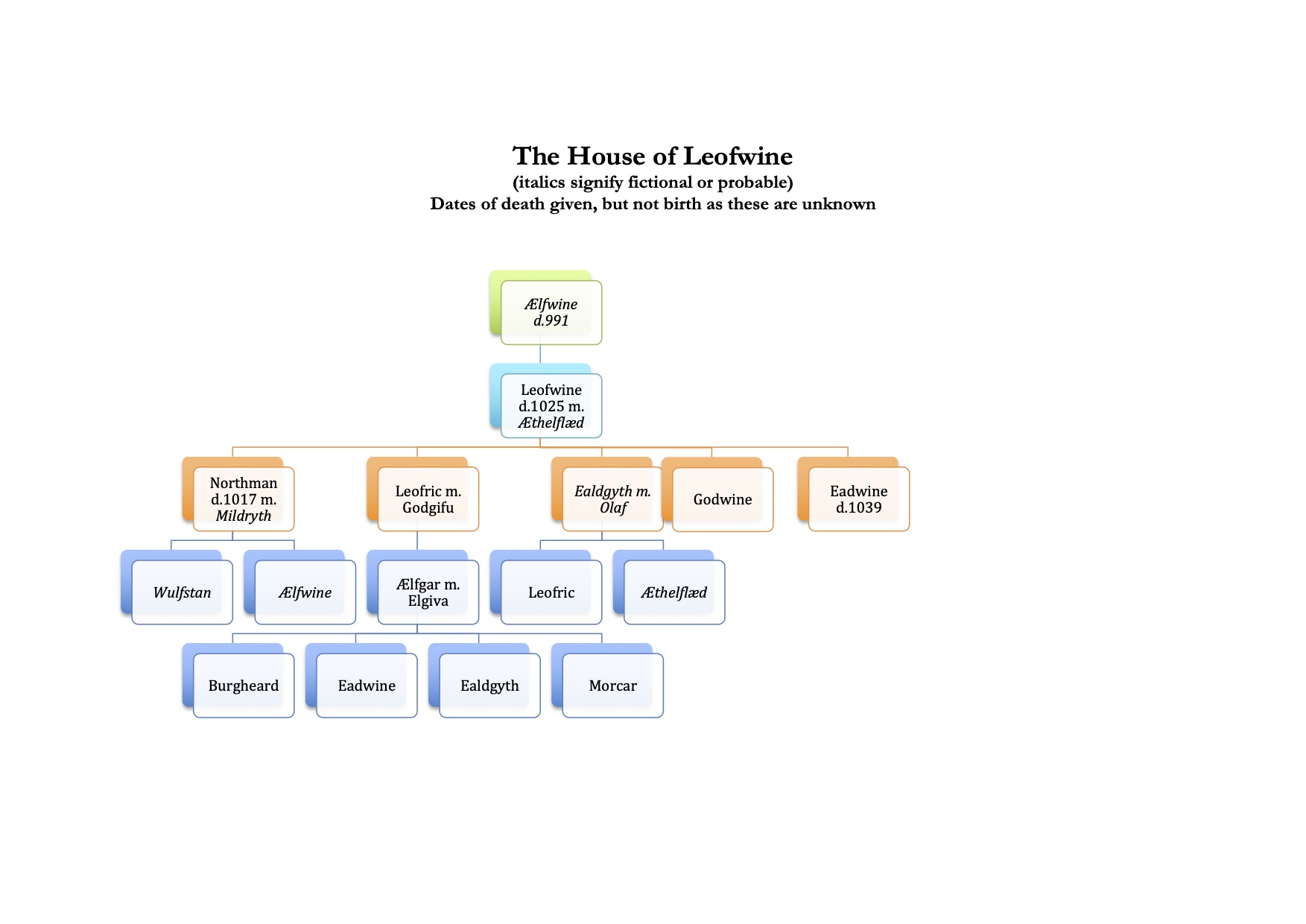
Who was Ealdorman Leofwine?
Ealdorman Leofwine , was the ealdorman of the Hwicce (c.994-1023), one of the ancient tribal regions in Mercia, which was a part of England, at the time the story begins. It is possible he may have been related to Ælfwine, who is named, and dies at the Battle of Maldon (more below).
Ealdorman Leofwine and his descendants, who would hold positions of power until the Norman Conquest of 1066, are a unique family in this tumultuous period. No other family, apart from the ruling family of Wessex (and even then there was a minor hiccup caused by those pesky Danish kings) held a position of such power and influence and for such a long period of time, as far as is currently known. The position of ealdorman was not hereditary. It was a position in the gift of the king, and Saxon kings ruled with a varying number of ealdormen. To understand Leofwine’s significance, it’s important to understand this. Unlike an earl – a term we are all perhaps far more familiar with – but specifically a medieval earl in this regard – that position was both more often than not hereditary AND meant that the person involved ‘owned’ significant properties in the area they were earls over. This is not how the ealdormanic system worked in Saxon England, as it’s currently understood.
It is difficult to track many of the ealdormanic families of this period, and the previous century, but there are a few notable individuals, all who bucked the usual trend, which no doubt accounts for why we know who they are.
Perhaps most well-known is Ealdorman Athelstan Half-King, who was the ealdorman of East Anglia from about 934 to 955/6 when he fell from favour at court during the reign of King Eadwig and retired to Glastonbury Abbey. Before he did so, he ensured that his son, Æthelwald, was elevated to the position of ealdorman in his place. This was most unusual, but then, he came from a powerful family, fiercely loyal to the ruling House of Wessex, if not actually a member of them. Athelstan Half-King is believed to have been the son of Ealdorman Æthelfrith, a Mercian ealdorman when Lady Æthelflæd was the Lady of Mercia. Athelstan was one of four brothers. His older brother seems to have either briefly retained the ealdordom after their father’s death in Mercia, or been accorded it a few years later, but when he died, Athelstan Half-King didn’t become ealdorman of Mercia in his place. No, he remained in East Anglia while his two brothers, Eahric and Æthelwald, held ealdordoms in Wessex (Eahric) and Kent (Æthelwald). They didn’t become the ealdorman of Mercia either. The ealdordom passed to a different individual.
When Ealdorman Æthelwald of the East Angles died a few short years later (Athelstan Half-King’s son), his place was taken by Ealdorman Æthelwine, the youngest of Athelstan Half-King’s children. But, the family failed to hold on to the position, despite Ealdorman Æthelwine being married three times, and fathering three sons, one of whom died at the battle of Assandun in 1016. The next to hold the ealdordom of the East Angles after the death of Æthelwine was Leofsige, who was the ealdorman until he fell foul of the king in 1002. In the early 1000s Ulfcytel emerges and may have been married to one of the king’s daughters, but is never officially accorded the title of ealdorman. You can read about Ealdorman Athelstan Half-King in The Brunanburh Series.
Another famous ealdorman was Byrhtnoth of Essex, who died at the Battle of Maldon in 991. But Byrhtnoth was not the son of the previous ealdorman, and indeed, he married the daughter of a very wealthy man and in turn was raised to an ealdordom in Essex at exactly the same time that Ealdorman Athelstan Half-King was being forced to retire from his position in East Anglia. (Byrhtnoth’s wife’s sister had briefly been married to King Edmund (939-946, before his murder). While there are some arguments that Byrhtnoth was from a well regarded family, his appointment was not because of an hereditary claim. It’s known that he was father to a daughter, but not to a son. As such his family did not retain the ealdordom on his death. Indeed, it seems as though Essex and the East Anglian earlordoms were united for a time under Leofsige.
The argument has been put forth that the position of ealdorman may have come with properties that were the king’s to gift to the individual to enable them to carry out their duties in a particular area. The Saxons had a number of types of land tenure, bookland, was land of which the ‘owners’ held the ‘book’ or ‘the title deed.’ (There are some wonderful charters where landed people had to ask for the king to reissue a charter as theirs was lost, often in a fire. There is a wonderful example where King Edgar has to reissue a charter for his grandmother, as he’d lost it while it was in his care). Other land tenure was ‘loan land,’ that is land that could be loaned out, often for a set number of ‘lives.’ Ealdormen might then have held bookland that was hereditary, and not in the area they were ealdorman of, and loan land that was in the king’s to gift to them within the area that they were the appointed ealdorman.
Many will be familiar with the family of Earl Godwine and his sons (thanks to the influence of the Danes, the term ealdorman was replaced by earl, which was the anglicised version of jarl). Much work has been done on the land that the Godwine family held when the great Domesday survey was undertaken during the reign of William the Conqueror. It will quickly become apparent that while they had areas where they held a great deal of land, these were not necessarily the areas over which first Godwin and then his sons Tostig, Harold, Gyrth, Leofwine and Sweyn held the position of earl. Most notably, Tostig was earl of Northumbria from 1055-1065, and yet the family had almost no landed possessions there.
And this is where we return to Ealdorman Leofwine and his family. While everyone knows about Earl Godwine and his sons, they didn’t hold their position for as long as Ealdorman Leofwine and his family. Earl Godwine is first named as an earl in charter S951 dated to 1018. By that period, Leofwine of the Twice had already held a position of importance since 994. The families of both men would converge as the events of 1066 drew nearer, and indeed, Godwine’s son, Harold, was married to Ealdorman Leofwine’s great-granddaughter when he was briefly king of England.
When Ealdorman Leofwine died, his son, Leofric, didn’t become ealdorman in his place. Leofric was a sheriff during the period between his father’s death and his own appointment. And indeed, Leofric’s son, Ælfgar was elevated to an earldom before his father’s death, and so was not initially the earl of Mercia. However, on this occasion, and because of a political situation that was rife with intrigue, Ælfgar did become the earl of Mercia after his father’s death, and after Ælfgar’s death, his young son also took the earldom of Mercia. The family survived the events of 1066, but they didn’t retain their hold on the earldom. The House of Leofwine were a family to not only rival that of Earl Godwine’s, as far as it’s known, but they were also the ONLY family to retain a position as an ealdorman/earl for over seventy years. And yet, very few know about them, and indeed, in many non-fiction books, they’re not even mentioned. And that was the perfect opportunity for me to write about the fabulous family, largely inspired by a non-fiction book, The Earls of Mercia: Lordship and Power in Late Anglo-Saxon England by Stephen Baxter.
The History Quill Convention has been running for a few years now, and in February 2024 it’s back, as a weekend-long convention (so shorter than others), focusing on two main themes, The Craft of Historical Fiction (3rd Feb) and The Business of Historical Fiction (4th Feb)- two topics that are very relevant to today’s author. I’ll be talking on day 2 with fellow authors, about different pathways in publishing, popping on my ‘indie’ head and my ‘traditionally published’ head.
If this sounds like your sort of thing, then check out the Convention webpage using this (affiliate) link, and do it before the Early Bird Discount runs out. Tickets are for each day so if only one topic interests you, you only attend that one day,
I really enjoy The History Quill Conventions – it’s always good to learn ‘new’ things, and sometimes, just to hear that what you’re doing is ‘right.’