Author of Saxon historical fiction and non-fiction, 20th-century historical mysteries, and Norse-inspired historical romantasy. Book reviewer and blog host.
A chance meeting…or so she thought. Is confidence trickster Will Samson the hero he claims to be or someone else entirely…
Emily Darson assumed her future of propriety and privilege amid a loveless marriage was set in stone. At least, she did until confidence trickster Will Samson came into her life…
Then everything changed.
With each revelation about her fiancé and herself that Will uncovers, he also reveals a little more of who is he, what he has suffered, and the volatile vengeance that burns in his heart.
Can Emily really risk security for scandal? Loyalty for love? Only time will tell…
Her Scandalous Suitor is a steamy historical fiction romance set in the 1800s.
Our two main characters, Emily and Will are both stuck in unenviable situation, Will seeking revenge against Nicholas, Emily quailing at the prospect of an unhappy forthcoming marriage to Nicholas, the son of her dying father’s dead business associate.
All is not well with Nicholas, and while Emily worries about her future, Will determines to exact his revenge against Nicholas, inevitably pulling Emily into his plot, and along the way, finding himself falling in love with her.
While Emily feels the same pull, she tries to do all she can to avoid him, but is to be prevented from doing so due to a series of events. And because Nicholas is not at all the man he pretends to be, as she begins to discover.
Taking readers to the underworld of Bath, Her Scandalous Suitor, addresses some of the pertinent issues of the day with regard to women and the hardships they face from the over mighty men who seemed to be able to get away with anything.
An engaging tale, with all the right touches for a steamy romance, including the promise of a happily ever after.
Rachel lives in a small town near Bath, England. She is the author of 29 novels including the Ladies of Carson Street trilogy, the Shop Girl series (Aria Fiction) and several single titles with The Wild Rose Press. She is super excited to be the first historical fiction author writing for Harpeth Road Press and her first novel with them will be released May 2024.
Rachel is a member of the Romantic Novelists Association and the Female Entrepreneur Association and has thousands of social media followers all over the world.
To sign up for her newsletter (a guaranteed giveaway every month!), click here:https://bit.ly/3zyH7dt
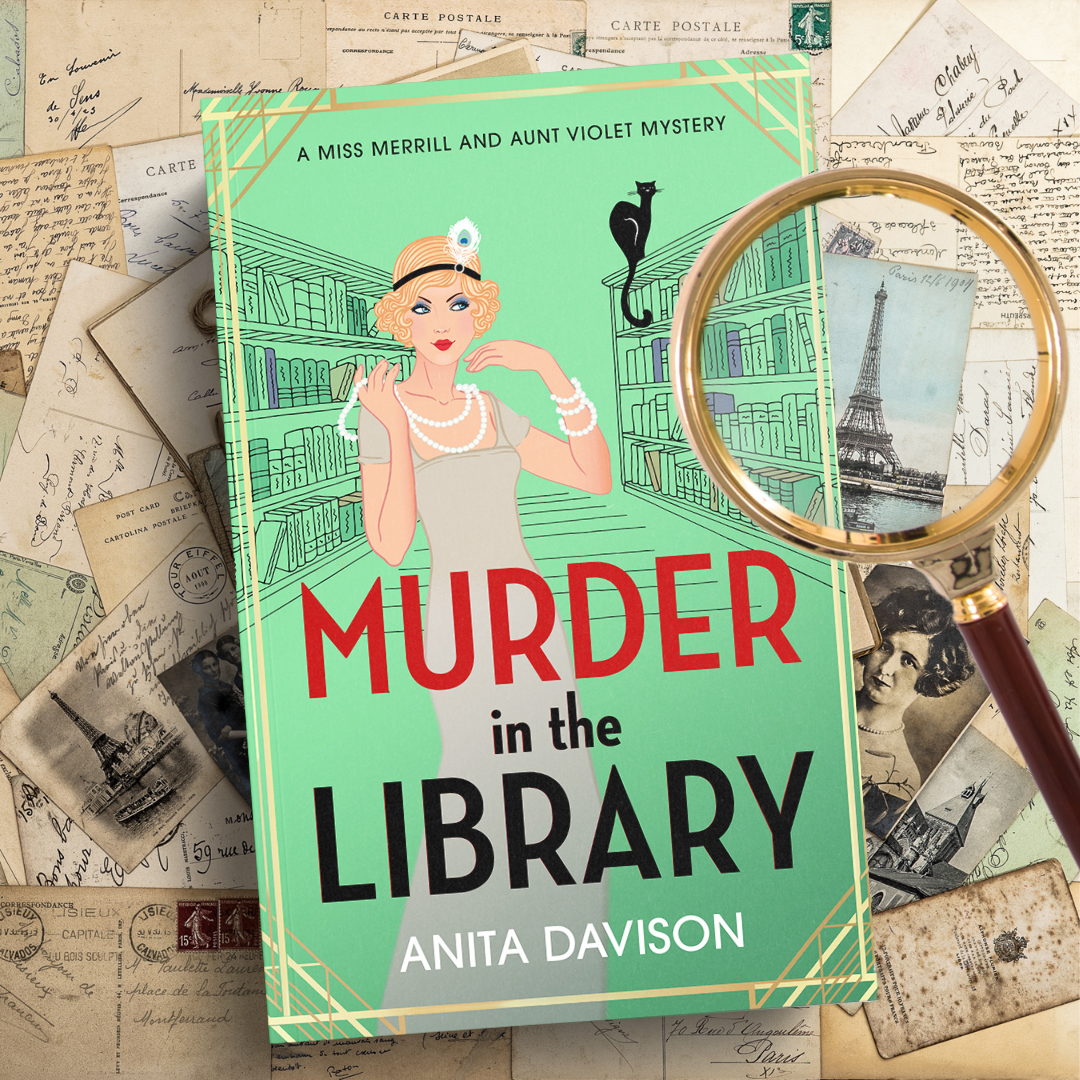
A body in a hospital isn’t so unusual. Unless they’ve been murdered!
1916, London: Keen to support the war effort, bookshop manager and sometime amateur sleuth Hannah Merrill has taken a volunteer role in the library of the nearby military hospital. But arriving at the hospital one cold winter’s morning, she is horrified to find the body of a dead soldier in the library.
What’s more, a beautiful young nurse confides in Hannah that she thinks she’s being followed, and then she abruptly disappears. Hannah can’t shake the suspicion that the two cases are connected, but she can’t solve the case alone. She’ll once again need to call upon her delightful, demanding, only-occasionally devious aunt, Violet. The two women know they must find the missing nurse before it’s too late… but they don’t realise they’re now both in the killer’s sights.
Murder in the Library is the second book in the Miss Merill and Aunt Violent cosy crime mystery series. I have read the first book.
Events begin quickly in this one when Hannah finds a body in the hospital library where she volunteers. Although she doesn’t intend to, Hannah quickly finds herself embroiled in the investigation to uncover who killed the dead man and why. Along the way, she finds herself involved in a few tricky situations as the toll of World War I begins to be felt in Britain.
All the familiar characters from Book 1 reappear, and I’m enjoying the relationships that are developing between Aunt Violet and Hannah.
The mystery is intriguing, although it seems to be resolved fairly quickly. Although, fear not, for there is more at play and more to uncover.
It’s a really enjoyable historical mystery. Hannah is a fun character, as is her aunt, and I’m enjoying reading about the two women flouting the social constraints of the era.
It’s sure to appeal to fans of a good historical who dun it.
Anita Davison is the author of the successful Flora Maguire historical mystery series. Previously published by Aria, she is writing a new cosy mystery series for Boldwood, the first title of which, Murder in the Bookshop, will be published in August 2023.
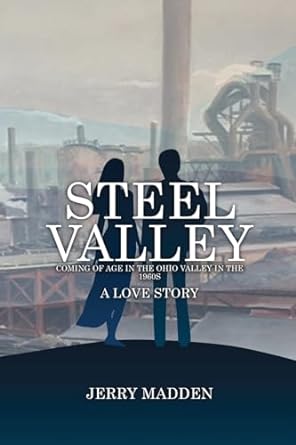
I’m delighted to welcome Jerry Madden, and his new book, Steel Valley: Coming Of Age in the Ohio Valley in the 1960s, to the blog.
Here’s the blurb
For readers of The World Played Chess by Robert Dugoni and Last Summer Boys by Bill Rivers
Love is never easy…even in easier times, like the 1950s and 1960s in the Ohio Valley with the steel industry booming.
Second-generation immigrant families were reaching for the American middle class. And Catholic schools-made feasible by selfless Catholic nuns-promised bigger lives for everyone, including Jack Clark and Laurie Carmine. As they spent years searching for their separate futures, though, they were also stumbling toward love just as their world came crashing down.
Steel Valley depicts a story of love longed for, lost, and perhaps still within reach, just as our nation’s mythic yesterday became our troubled today, our last summer of innocence.
Jerry Madden grew up in the Upper Ohio Valley in the 1960s. He holds a B.A. from the College of Steubenville and law degrees from the University of Dayton School of Law and the Georgetown University Law Center. After law school, Jerry served as the sole law clerk to the Chief Justice of the Supreme Court of Ohio, C. William O’Neill. He served in the United States Marine Corps (R) between 1970 and 1976.
Jerry has practiced law in Washington, D.C., since 1979, including fourteen years at the Department of Justice as a trial and appellate attorney. He is the principal of The Madden Law Group PLLC in Washington, D.C.
He lives in Northern Virginia with his wife, Cyndi, a retired educator. They have two children, Kelsey and Jack, both of whom hold M.Ed. degrees. They have one grandchild, Jamie Maclennan.
Japan’s decision to attack Pearl Harbor has gone down in history as a short-term victory with catastrophic long-term consequences.
The Japanese leadership, already bogged down in an unwinnable war in China, were aware that they were hopelessly out matched by the industrial might of the United States. However, they believed there was no other option.
Japan had no natural resources, a growing population to feed and was encircled by Russia, Britain, France, the Netherlands and the United States; who were all furthering their interests in the Far East. Japan felt it needed to expand and increase its power base to avoid being swallowed by the Western powers and to develop as a great power in their own right.
This led to their invasion of China in the 1930s and the annexing of French Indochina in 1941. In response the United States imposed stiff economic sanctions that cut Japan’s supply of oil and raw materials. This left the Imperial Navy with only enough oil for a year. The Japanese government and military therefore saw a war with America as inevitable and an act of national self-defence that had been imposed upon them.
Imperial Japanese Navy, Public domain, via Wikimedia Commons
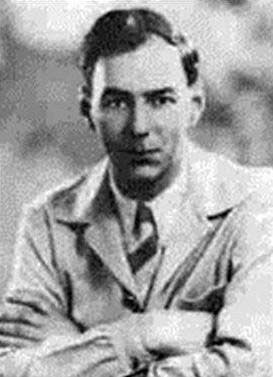
Takeo Yoshikawa in his memoir Japan’s Spy at Pearl Harbor stated that, ‘in the final analysis, the U.S. was the underlying cause of this war… The war finally broke out because you (Americans) did not understand Japan.’
The decision to go to war therefore originated from what was seen as two choices, to either face the humiliation of curtailing their imperial ambitions and exist as a client state of America, dependent on their iron-ore and oil. Either to become a third-class nation as Prime Minister Tōjō put it or to come out fighting.
Richard Overy argues in Blood and Ruins, The Great Imperial War 1931-1945, ‘The decision was taken with a fatalistic acceptance that fighting was preferable to humiliation and dishonour.’
Japan was already a highly militarised society and at a war footing, where as they viewed America as unprepared and unwilling to fight because of its culture of isolationism.
U.S. Navy, Office of Public Relations, Public domain, via Wikimedia Commons
Nonetheless it was clear that war could not be waged on conventional lines. Japan would need to knock the United States out in one decisive engagement, destroying the morale of America and making it impossible for them to conduct war in the Pacific by forcing a stalemate. This, along with the growing pressure for America to fight the Germans on a second front in Europe, would be too much even for a power such as America and they would quickly make peace. That, at least was the strategic thinking behind the attack on Pearl Harbor and much of Japan’s long-term military thinking.
It was a terrible risk, but it presented a great opportunity. If Japan could destroy the American fleet at Pearl Harbor, the raw materials of Southeast Asia was there for the taking.
Such a complex operation would need careful planning and precise information about the disposition and defences of the US Fleet. That in itself risked exposing the whole plan. This is a major plotline of my novel Rising Tide, as seen through the eyes of Takeo Yoshikawa.
Here’s the blurb
November 1940.
Lieutenant Daniel Nichols, a former pacifist turned crusader, is wounded taking part in the Royal Navy’s carrier born air raid on the Italian Battle Fleet in Taranto.
Six months later Sándor Braun, a British double agent, escorts a Japanese delegation around Taranto and discovers that they are planning a similar attack. But what will the target be?
Nichols, now unable to fly, joins the Naval Intelligence Division, despite growing rumours that his nerve has gone. He debriefs Braun in London and sees the implications of his discovery. Britain cannot afford to suffer further setbacks in the far East.
Nichols convinces his superior officer, Ian Fleming, to allow him to travel to Lisbon in a bid to identify the target before it’s too late. The former airman uses the rumours about his lack of moral fibre as cover and poses as a deserter, with information to sell about the Taranto raid.
Braun helps Nichols to gain the confidence of German and Japanese Intelligence officers – and he is recruited to fly to Hawaii and spy on the US Navy.
Convinced that the Japanese plan to attack Pearl Harbour, Nichols travels to America to inform the FBI, but his warnings fall on deaf ears.
Nichols takes matters into his own hands and ventures to Hawaii, with the intention of preventing a catastrophe.
But will the Englishman’s intervention prove too little, too late?
Writing historical fiction combines the first great love of Alan Bardos’ life, making up stories, with the second, researching historical events and characters. He currently lives in Oxfordshire with his wife… the other great love of his life.
There is still a great deal of mystery and debate surrounding many of the events of the First World War, which he explores in his Johnny Swift historical fiction series. The series starts with the pivotal event of the twentieth century, the Assassination of Archduke Franz Ferdinand. The second book ‘The Dardanelles Conspiracy’ is based on an attempt by Naval Intelligence to bribe Turkey out of the First World War. In the third book ‘Enemies and Allies’ Johnny is employed as a useful idiot to flush out a traitor working to undermine the Allies.
His new World War 2 series follows Daniel Nichols, a former pacifist turned crusader, as he moves from the Fleet Air Arm to Intelligence and Special Operations. The first book ‘Rising Tide’ is set against the backdrop of the Japanese attack on Pearl Harbor; as Nichols is embroiled in a conspiracy to keep the USA bogged down in the Pacific and out of the war in Europe.
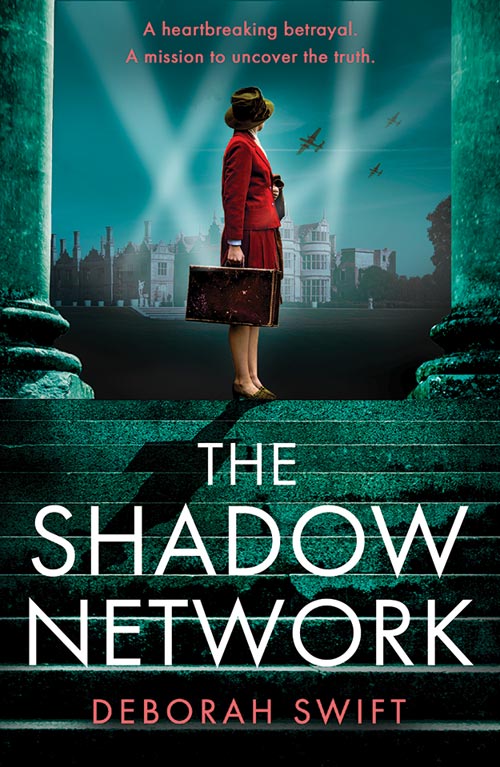
I’m delighted to welcome Deborah Swift and her new book, The Shadow Network, to the blog, with WW2 German and Irish Saboteurs.
The Shadow Network:WW2 German and Irish Saboteurs
The radio signal for the ‘fake news’ radio stations that feature in The Shadow Network needed to be strong enough to appear as though it came from Germany, and had to be more powerful than anything that was then available.
By coincidence, the Radio Corporation of America (RCA) had created two high-powered radio transmitters which could not be used in the US, because of a change in American law. The RCA were eager to sell them to Britain. So Harold Robin, a Foreign Office radio engineer, saw their potential, and travelled to America to examine them, and then worked to improve them. He adapted a transmitter so it was able to move frequency in a fraction of a second, at the flick of a switch.
The powerful ex-RCA transmitter, eventually installed in Sussex, England, was named Aspidistra, referencing the popular Gracie Fields song ‘The Biggest Aspidistra in the World’, in which an Aspidistra houseplant grows until it ‘nearly reached the sky’.
In fact, most of the technology was buried underground at the site at Crowborough in Sussex, though its antennae were visible – three guyed masts, each 110 metres tall, directing the signal broadly to the east. The Art Deco–style transmitter building was housed in an underground shelter which had to be excavated by the Canadian army troops who were stationed nearby.
As far as I know there was never any attempt to sabotage or bomb the Aspidistratransmitter, though I enjoyed making it a possible target for a German agent and saboteur. However, German agents were sent into Britain to sabotage British targets – mainly military, industrial, and transport facilities. Their aim was to create maximum disruption, and to lower the morale of British civilians.
Inefficient Saboteurs
In reality, the German spies were less efficient than my fictional Brendan – the German spies had poor English-language skills and little knowledge of British customs. One German spy was arrested after trying to order a pint of cider at ten in the morning, as he didn’t know that landlords weren’t allowed to serve alcohol before lunchtime. Two other agents were stopped because they were cycling on the wrong side of the road. The twelve spies we know of who landed in Britain as part of the so-called Operation Lena in September 1940 were nearly all captured.
The German war machine was generally very efficient, so it remains a mystery why these men were not better trained. For this reason, I chose to link my saboteur to the Irish Republican Army (IRA), and the Coventry IRA bomb. It is a little-known fact that the IRA and the Nazi regime were in collaboration during the war.
Irish Saboteurs
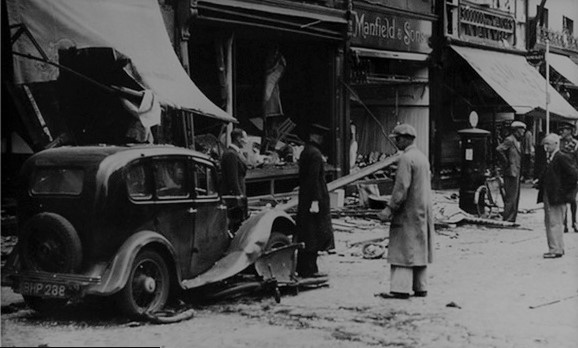
At lunchtime on 25 August 1939 an unknown bomb-maker cycled into the city of Coventry in England with a five-pound bomb in his bicycle basket. The device, wrapped in brown paper and with an alarm clock timer, was left outside Astley’s shop where it exploded fifty minutes later, killing five people and injuring seventy, and causing devastation to the surrounding buildings. For a while, the authorities and the public were wary of anyone Irish, but because of close ties to Ireland this vigilance soon waned.
The Coventry plot was linked to three other ‘bicycle bomb’ plots in London which were part of a concerted campaign by the IRA. The S-Plan (Sabotage Campaign or England Campaign) was a campaign conducted by members of the IRA to protest against control of Northern Ireland by the British.
Nazi links to the IRA
The Nazis made links with the IRA as far back as 1936, when IRA member Sean Russell sought German support for IRA activities and engaged in talks with the German Foreign Office, regarding IRA–German cooperation. When war was declared, the Germans saw the IRA as a useful ally should the Wehrmacht invade Britain. However the IRA saw Germany only as a stepping stone to a united Ireland, and these two motivations were not easily aligned. The IRA’s collaboration with the Nazis against Great Britain made the ideal background for me to construct the character of Brendan Murphy, the agent charged with sabotaging the Aspidistra radio mast.
One woman must sacrifice everything to uncover the truth in this enthralling historical novel, inspired by the true World War Two campaign Radio Aspidistra…
England, 1942: Having fled Germany after her father was captured by the Nazis, Lilli Bergen is desperate to do something pro-active for the Allies. So when she’s approached by the Political Warfare Executive, Lilli jumps at the chance. She’s recruited as a singer for a radio station broadcasting propaganda to German soldiers – a shadow network.
But Lilli’s world is flipped upside down when her ex-boyfriend, Bren Murphy, appears at her workplace; the very man she thinks betrayed her father to the Nazis. Lilli always thought Bren was a Nazi sympathiser – so what is he doing in England supposedly working against the Germans?
Lilli knows Bren is up to something, and must put aside a blossoming new relationship in order to discover the truth. Can Lilli expose him, before it’s too late? Set in the fascinating world of wartime radio, don’t miss The Shadow Network, a heart-stopping novel of betrayal, treachery, and courage against the odds.
Deborah Swift is the English author of eighteen historical novels, including Millennium Award winner Past Encounters, and The Lady’s Slipper, shortlisted for the Impress Prize.
Her most recent books are the Renaissance trilogy based around the life of the poisoner Giulia Tofana, The Poison Keeper and its sequels, one of which won the Coffee Pot Book Club Gold Medal. Recently she has completed a secret agent series set in WW2, the first in the series being The Silk Code. Deborah used to work as a set and costume designer for theatre and TV and enjoys the research aspect of creating historical fiction, something she loved doing as a scenographer. She likes to write about extraordinary characters set against the background of real historical events. Deborah lives in North Lancashire on the edge of the Lake District, an area made famous by the Romantic Poets such as Wordsworth and Coleridge.
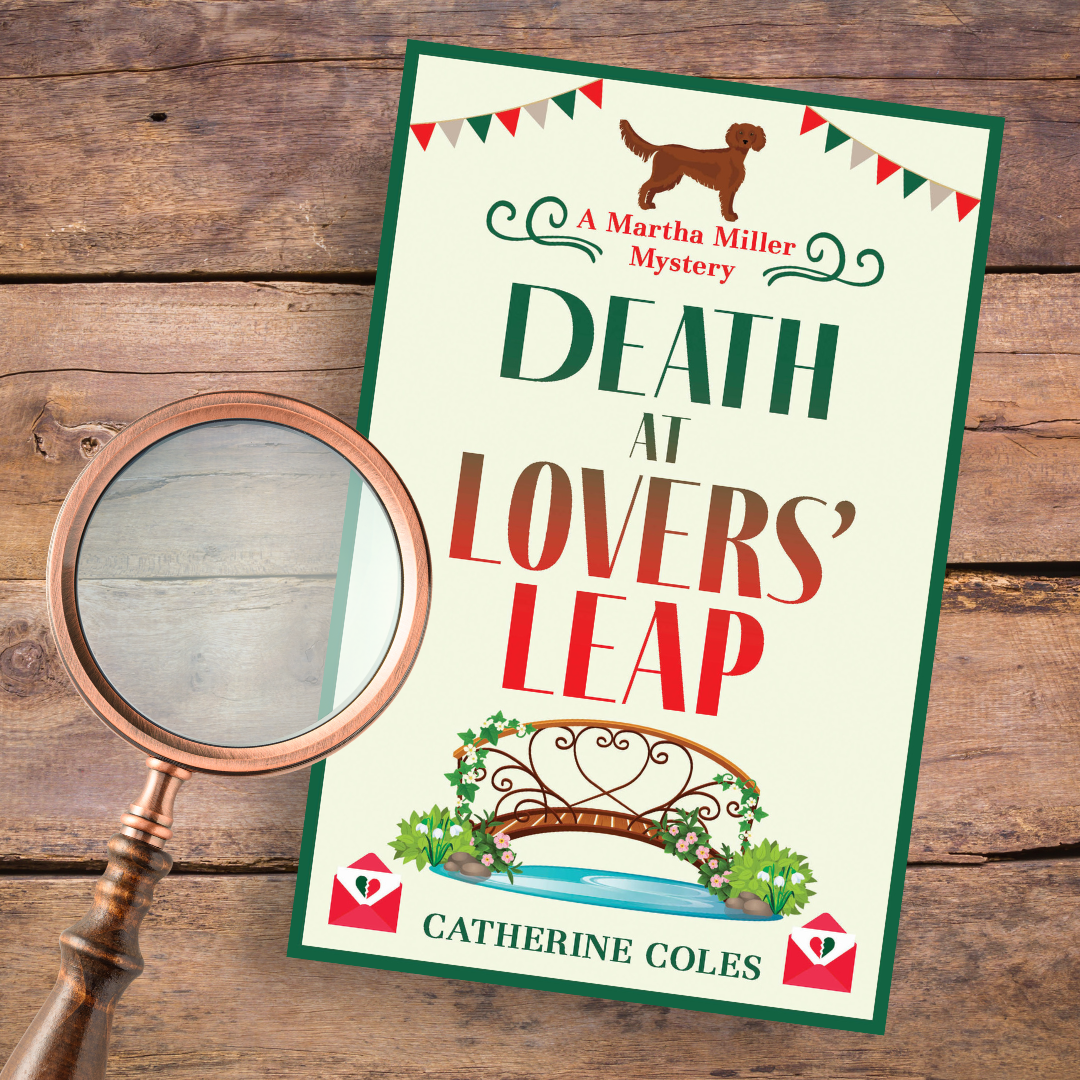
As Valentine’s Day rolls around, Martha Miller finds herself unusually melancholy at the state of her own love life. With husband Stan still missing and with her growing feelings for Vicar Luke still shrouded in secrecy, there’s only one place Martha can go – famous local beauty spot, Lovers’ Leap.
Legend has it that those with a broken heart throw themselves off the bridge that spans the river, but Martha is certainly not about to do such a thing! But it looks like someone else has had other ideas…. Because there in the river, Martha finds a body. But is this misadventure, a moment of lovesick madness, or is foul play afoot? Martha knows one thing…the villagers of Westleham have another crime to solve! Let the investigation commence! Find out if Martha and Luke can catch the killer in a brand new Martha Miller mystery from bestselling author Catherine Coles.
My Review
Death at Lovers’ Leap is a welcome return to the village of Westleham and Martha Miller (and her trusty dog). An innocent walk quickly turns to tragedy for Martha, as she ends up, not only coated in mud from head to toe, but discovering the body of one of the local young men.
As ever, Martha is determined to discover the culprit, and with the aid of the vicar, Luke, and her two trusty nosy neighbours, she begins to do just that, uncovering a web of deceit which extends even to the grave.
Death at Lover’s Leap is another really well thought out cosy mystery, where a cup of tea is never far from the lips of our characters, and where the privations of post-war Britain are kept firmly in mind.
A delightful mystery. I’ve been reading Catherine Coles books for a good few years now. Martha is a great creation, and this is another really good addition to the series. Fans of cosy crime will really enjoy the mystery.
Catherine Coles writes bestselling cosy mysteries set in the English countryside. Her extremely popular Tommy & Evelyn Christie series is based in North Yorkshire in the 1920’s and Catherine herself lives in Hull with her family and two spoiled dogs.
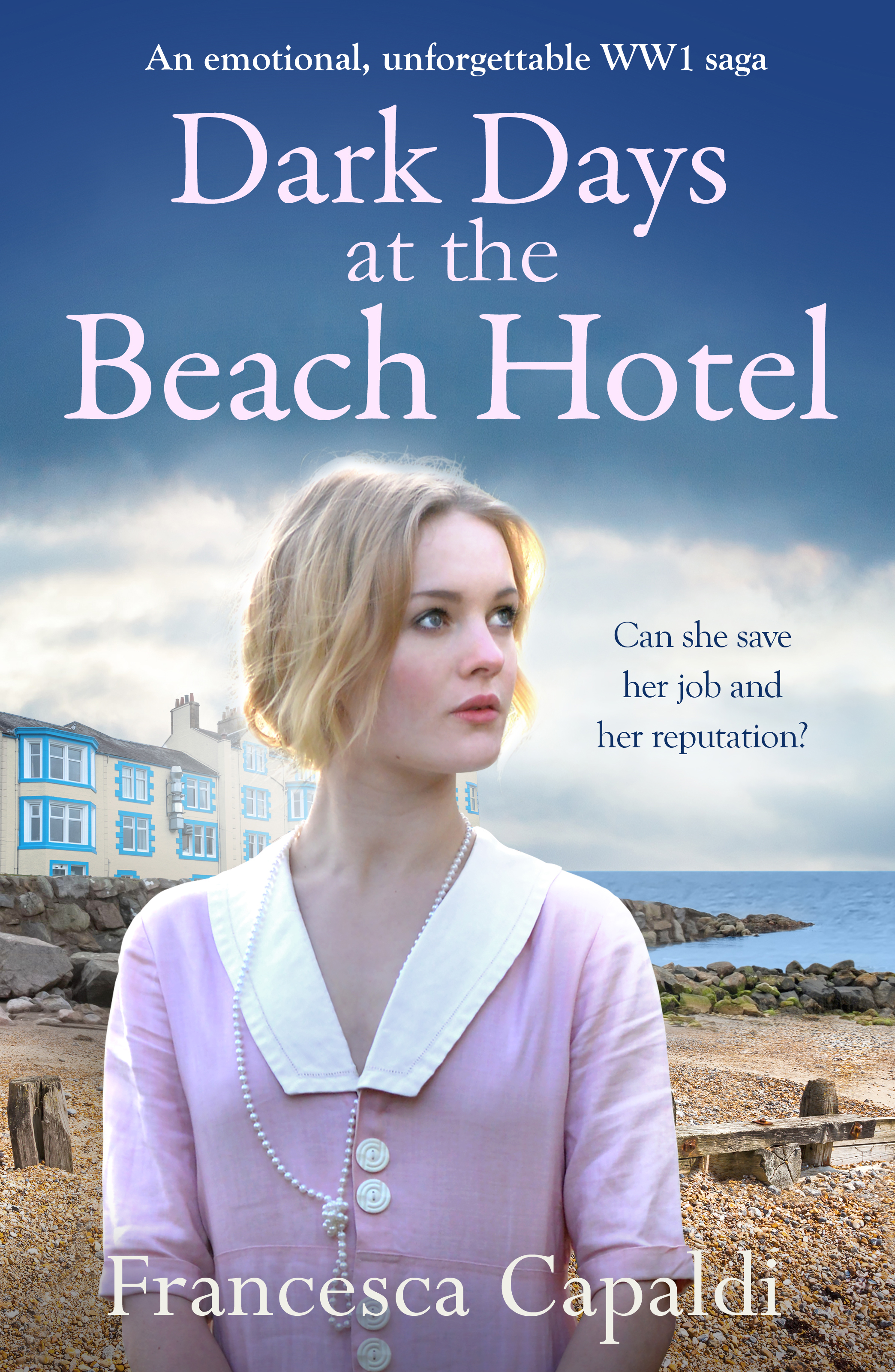
Helen Bygrove, manageress of the Beach Hotel since her bullying husband was conscripted, is called to the foyer on the arrival of Detective Inspector Toshack. There’s recently been some libellous letters sent, and accusations have been flying around as to who’s been sending them.
In the foyer, Helen was alarmed to see that Sergeant Gardener was with him. Standing behind him were WPC Amanda Lovelock, who used to be her bookkeeper, and Constable Twort, who’d retired originally a few years before the war. A feeling of dread crept up her body and she had a bitter taste in her mouth. Surely they hadn’t concluded that someone from the hotel had written the letters. Could it be one of the new chambermaids, as Edie had suggested? Did Miss Harvey know something, and that’s why she’d turned up at the carol concert?
‘Inspector,’ she greeted him. ‘How may I help you today?’
The inspector opened his mouth to respond but was cut short by both front doors being pushed open. Lady Blackmore was fussing as she entered, along with around a dozen people Helen recognised from the businesses in Beach Town. Cecelia was nowhere in sight. The looks on their faces suggested they weren’t here for pleasure.
Lady Blackmore opened with, ‘Well, that decides it. The hotel crest was on my latest letter. Now try and tell me the letters did not originate from this hotel.’
‘And on mine!’ cried Norah Johnson, who as Norah Daniels had once been a chambermaid at the hotel. Before the dairy farmer’s son had made her pregnant and they’d had to marry. ‘Just because I used to work ’ere and had to marry my Jim, don’t give you no permission to send me letters calling me names like trollop.’
‘That’s what I was about to tell you,’ Toshack told Helen. ‘More letters have been received, but this time on hotel notepaper.’
‘And what have I ever done to you?’ said Mrs Riddles, the postmistress from Norfolk Road. ‘Calling me a stinking cow of a liar, just because I took my last letter to the police station.’ She pointed towards Helen.
‘I’ve never done any such thing,’ said Helen, feeling a weight in her chest. ‘And why on earth would I send anonymous letters on hotel paper.’
‘But they’re not anonymous,’ said the landlord of the New Inn, also on Norfolk Road. ‘They’re signed H.B. That’s you innit?’
‘That’s even less likely then,’ said Edie, coming forward.
‘No, it’s to double bluff people, Miss Harvey here reckons,’ said Norah Johnson. ‘And it makes sense. It’d be the best defence in a courtroom.’
‘That’s enough of that now,’ said Inspector Toshack. ‘If you’d all kindly leave me to carry out my job – ’
‘We want to make sure you do carry out your job,’ said Miss Harvey. ‘Not like last time.’
‘I used to think you were a decent sort,’ said Norah, ‘when I worked for you. Thought it was ya ’usband what was the silly bugger. I guess now ’e’s gone away you’ve taken over his meanness too.’
‘That’s enough of that, young woman,’ Sergeant Gardner warned.
‘And this accusation about her ladyship,’ said the landlord. ‘What proof have you got that her companion is her daughter.’
‘We don’t need to mention the details,’ Lady Blackmore whimpered, her hands covering her cheeks.
‘Mine had that ridiculous claim too,’ said Mrs Riddles. ‘I can quote it exactly, I can. ‘Lady Millicent Blackmore can’t keep her vile secret any more, it said. We can all see the likeness between her and Cecelia, and we know that she’s really her bastard child, born out of wedlock.’
Lady Blackmore let out a strangled cry of anguish. ‘Of course that’s not true! I am only ten years older than Cecelia. How could she be my daughter? Whoever heard of anything so absurd?’
‘I agree,’ said Helen. ‘And I would never say such a thing.’
‘Not to our faces,’ said Norah. ‘Makes me wonder what you said be’ind our backs when I was working ’ere.’
‘I’m warning you,’ said the sergeant.
‘What, only me?’ said Norah. ‘What, ’cause I’m the trollop ’ere, eh?
It seemed to Helen that the scene before her was diminishing, and the sound fading. She had an acid taste at the back of her throat. Was she still in bed, dreaming?
The gathering mob started to talk over each other, provoking both Sergeant Gardner and Inspector Toshack to censure them. The sergeant went with, ‘Quiet now!’ while the inspector went with the more polite, ‘Would you all calm down now.’
The double instruction had the desired effect and the incensed chatter ceased immediately.
‘Now, unless you want to be arrested for disturbance of the peace, I suggest you all vacate the hotel,’ said the inspector, stretching up to his full height. ‘And if I receive any reports that you’ve returned to cause trouble, I will spare no time in sending one of my officers to your abodes. Is that clear?’
There were several mumbles of assent, before each of them turned to exit. Lady Blackmore charged out of the door first, almost knocking Norah Johnson over. The rest followed on, subdued, apart from Miss Harvey. She stood, defiant, for several seconds, glaring at Helen. She was the last of them to leave.
Helen was grateful that nobody had emerged from either dining room during this scene, though she had no doubt that the throng that had gathered today would soon pass around news of the latest letters.
‘Mrs Bygrove,’ said Toshack. ‘Mrs Bygrove?’
‘Hm?’ She came to. ‘Sorry, what did you say?’
‘I said, could we go somewhere more private.’
‘Of… of course. Edie, I’m leaving you in charge.’
‘Yes, madam.’
Helen took a deep breath, determined to pull herself together. But she was badly shaken. ‘Come this way.’ She led the four police officers to the staff area, stopping in the corridor. ‘We’ll go to my office.’
‘No, this will suffice,’ said the inspector. ‘WPC Lovelock, you know the building. Show Sergeant Gardner the way.’
‘Yes sir,’ she said with little enthusiasm. She opened the door to the stairs, that led to the staff living quarters.
‘What are they doing?’ said Helen.
‘Carrying out a search.’
Here’s the blurb
Can Helen save the hotel… and her reputation?
Helen Bygrove is managing the hotel, now that her husband has been conscripted. Against all expectations, Helen and her team are doing marvellously, despite the shortages brought by war. Even the exacting Lady Blackmore agrees. But then the calm is shattered when poison pen letters are sent to prominent townsfolk and Helen finds herself the target of a police investigation. Is someone trying to ruin Helen, and the Beach Hotel? And can she rely on the handsome but taciturn Inspector Toshack to help her? When her husband, Douglas, is invalided out of the war he is determined to take back control of the hotel and things go from bad to worse.
How can she ever escape his bullying? Is she a fool to hope that she may have a second chance at love?
Francesca has enjoyed writing since she was a child, largely influenced by a Welsh mother who was good at improvised story telling.
Writing under both her maiden name, Francesca Capaldi, and her married name, Francesca Burgess, she is the author of historical novels, short stories and several pocket novels. She is a member of the Romantic Novelists’ Association and the Society of Women Writers and Journalists.
The first novel in the Wartime in the Valleys series, Heartbreak in the Valleys, was shortlisted for the Romantic Novelists’ Association Historical Award 2021. Both the Valleys series and the Beach Hotel series are published by Hera Books.
Francesca was born and brought up on the Sussex coast, but currently lives in Kent with her family and a cat called Lando Calrission.
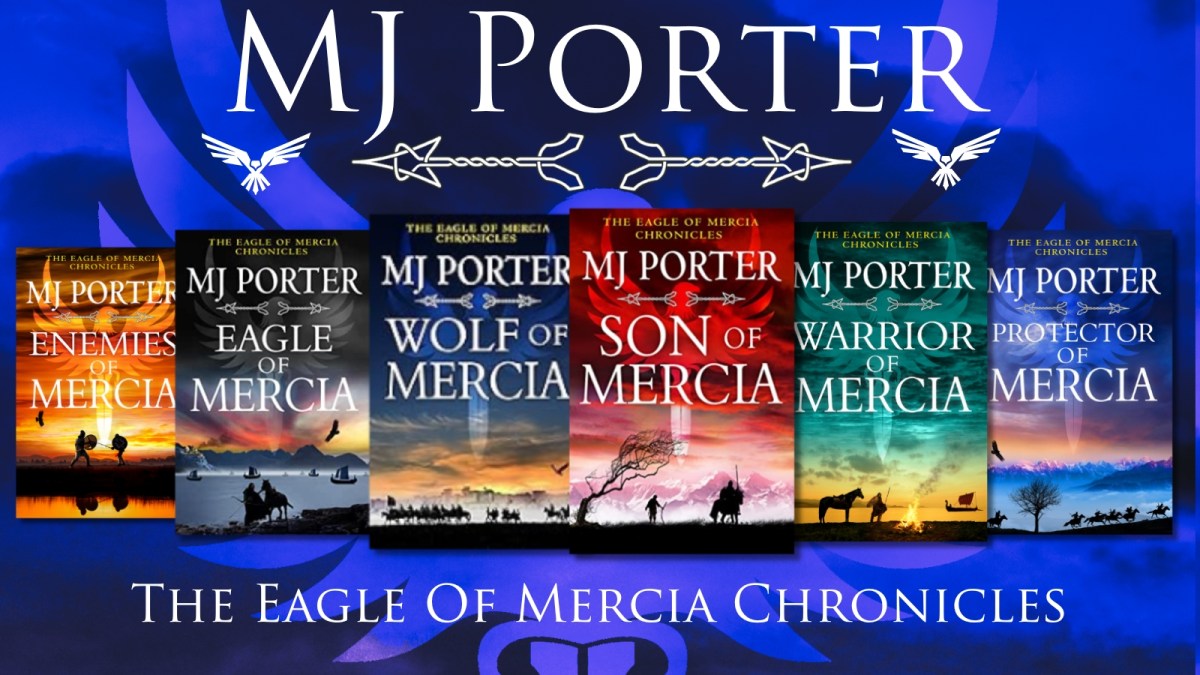
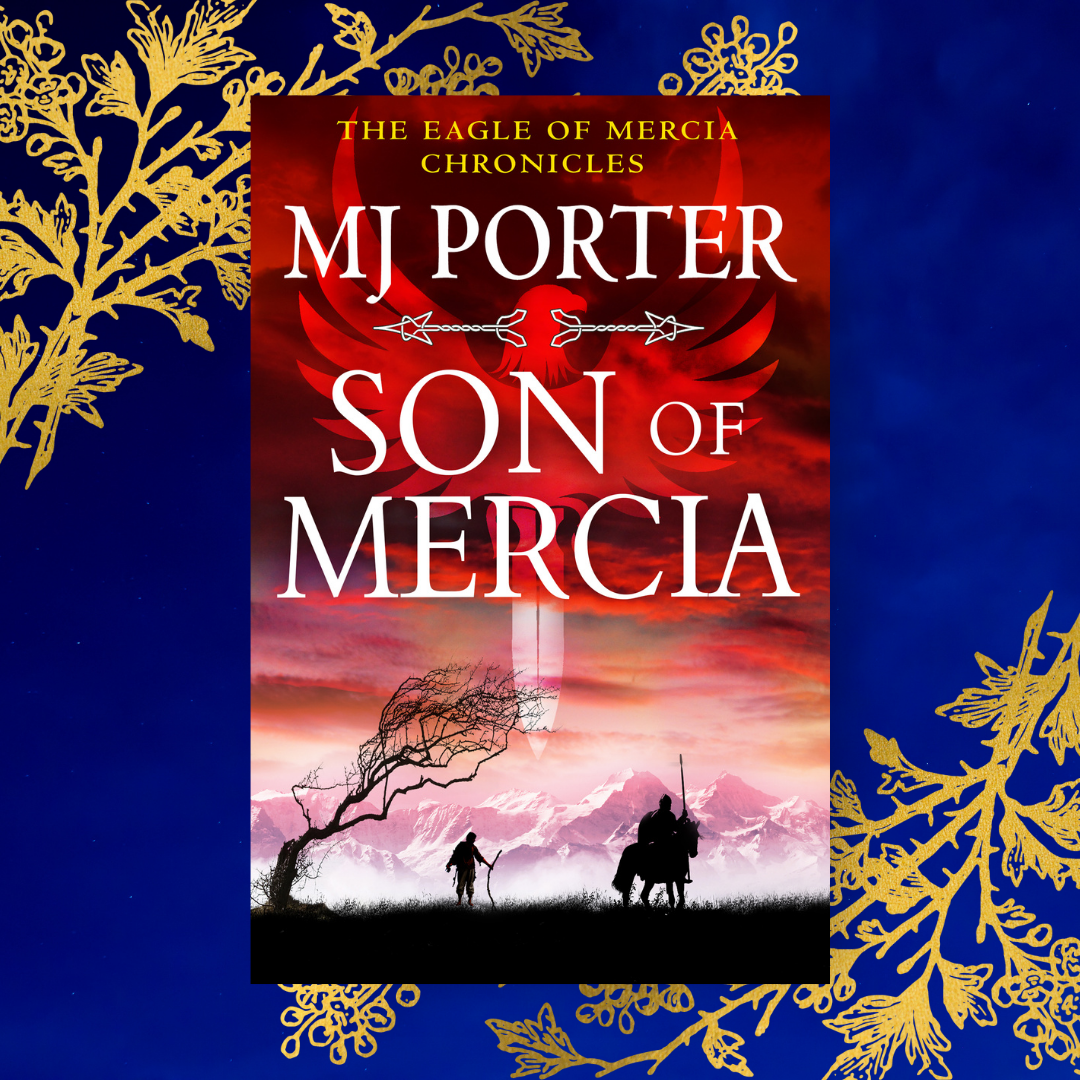
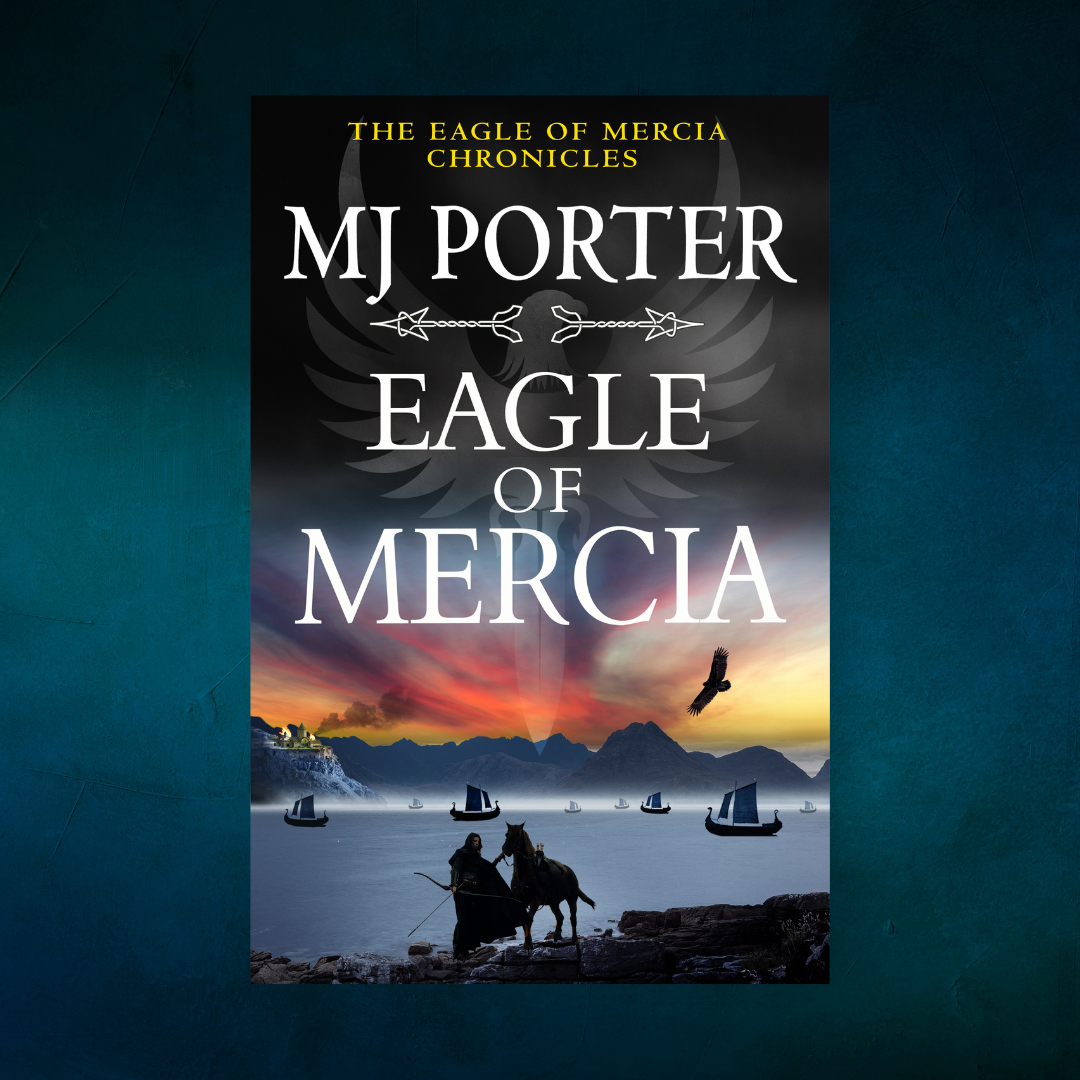
Happy book birthday to the wonderful Son of Mercia, the first book telling the story of young Icel in early ninth-century Mercia (fans of The Last King will have met Icel before, but it’s not necessary to have read the later series to enjoy Son of Mercia).
The series is now a massive six books long, and I’m busy working on book 7, which doesn’t have a title just yet (or does it?)
I thought today would be a great day to shine a light on all six books featuring young Icel. He’s endured a lot. He’s grown into a young man, but it’s good to remember how we first met Icel – scared, hungry and desperate to evade Lady Cynehild. How times have changed for him.
I love writing the stories of young Icel. He’s a fabulous character, and indeed, the more I write him, the better he becomes. And those with ‘eagle’ eyes (did you see what I did there), will have started to notice more and more Icel appearing in the later, The Last King books.
Tamworth, Mercia AD825.
The once-mighty kingdom of Mercia is in perilous danger.
Their King, Beornwulf lies dead and years of bitter in-fighting between the nobles, and cross border wars have left Mercia exposed to her enemies.
King Ecgberht of Wessex senses now is the time for his warriors to strike and exact his long-awaited bloody revenge on Mercia.
King Wiglaf, has claimed his right to rule Mercia, but can he unite a disparate Kingdom against the might of Wessex who are braying for blood and land?
Can King Wiglaf keep the dragons at bay or is Mercia doomed to disappear beneath the wings of the Wessex wyvern?
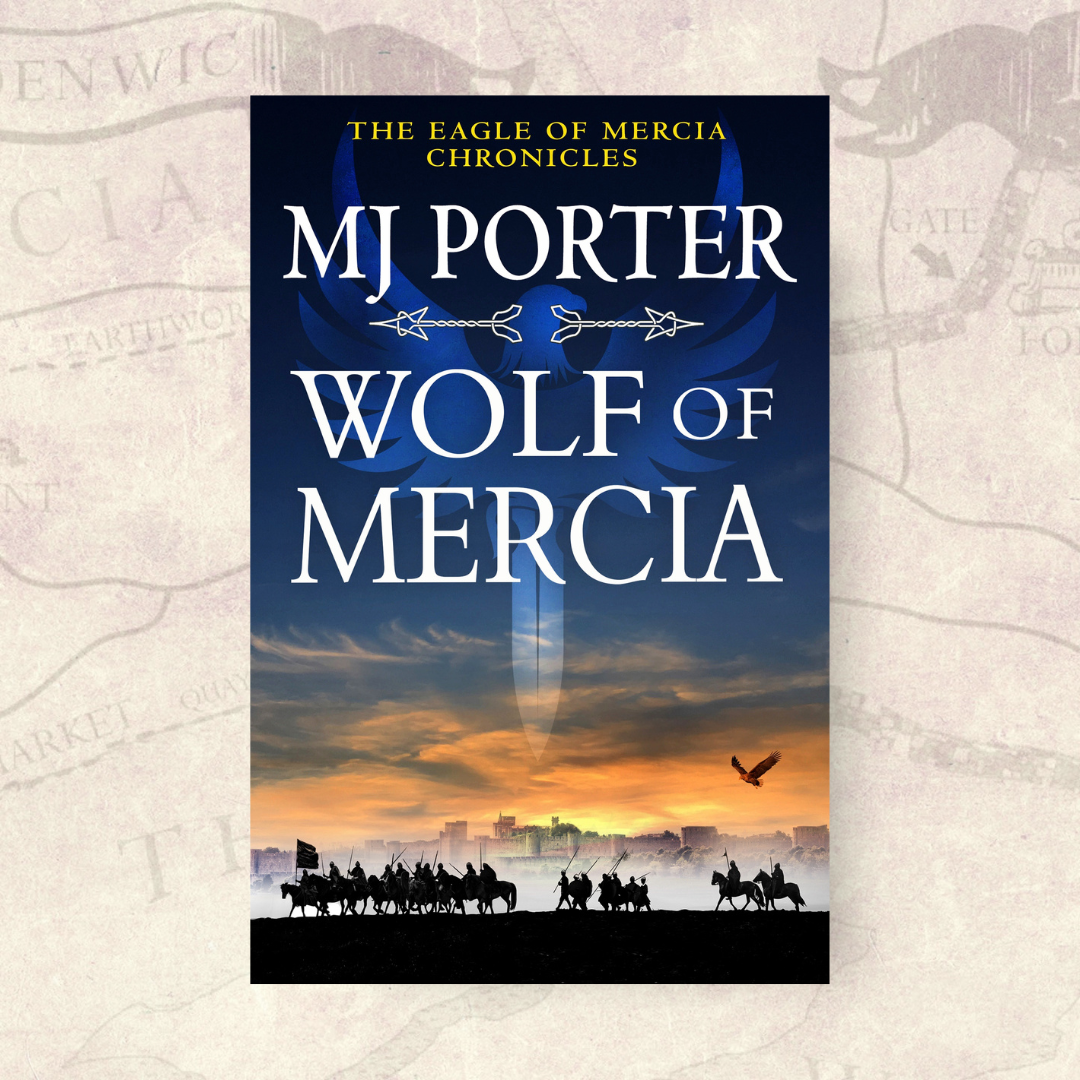
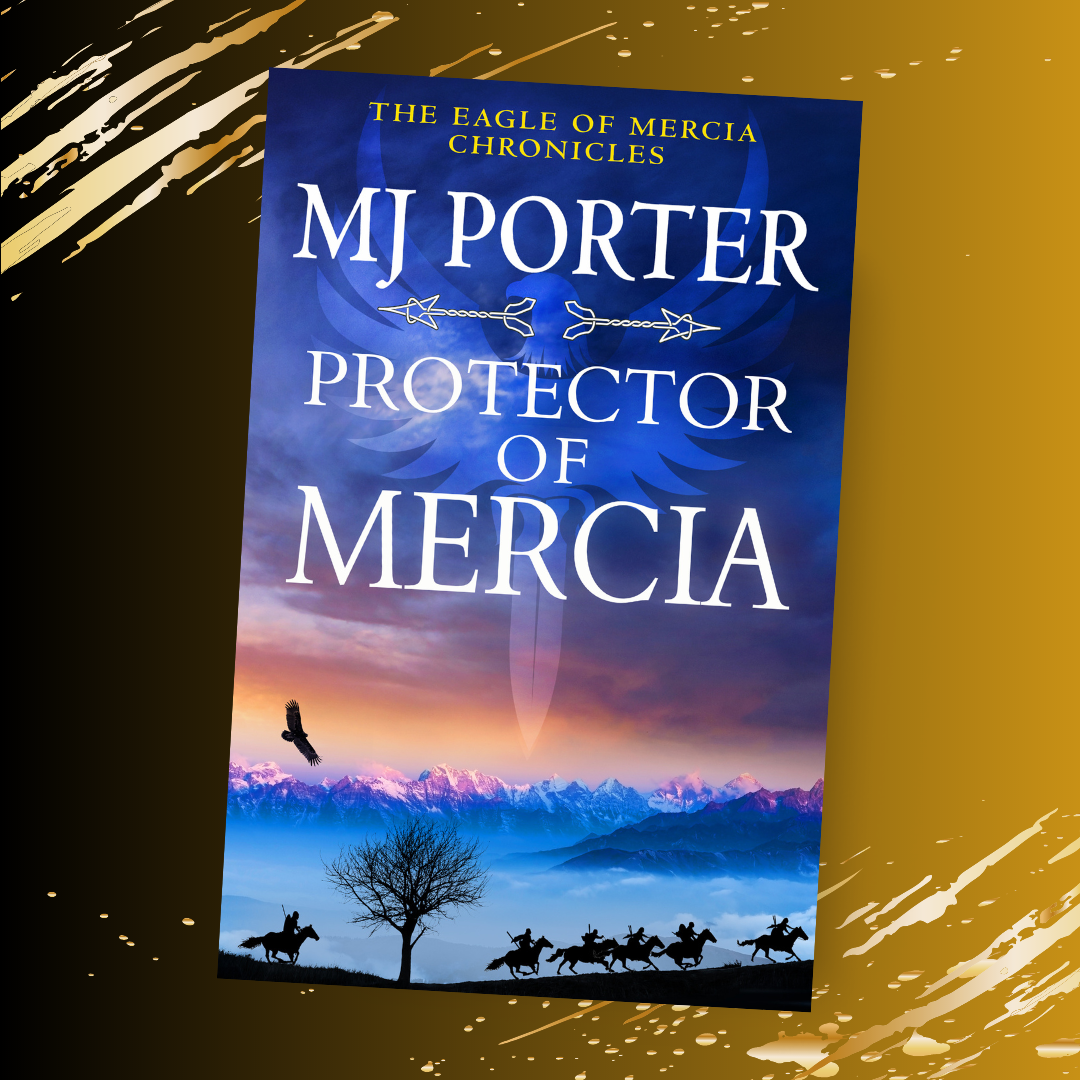
Icel is becoming a warrior of Mercia, but King Ecgberht of Wessex still holds the Mercian settlement of Londonia and its valuable mint.
King Wiglaf of Mercia is determined that the last bulwark be reclaimed from his sworn enemy to complete his rehabilitation as Mercia’s rightful ruler.
In the heart of the shield wall, Icel suddenly finds himself on the wrong side of the battle and thrust into the retreating enemy stronghold where he must take on the pretence of a Wessex warrior to survive and exact a cunning plan to bring down the Wessex force cowering behind the ancient walls.
His allegiances are tested and the temptation to make new allies is overwhelming but Icel must succeed if he’s ever to see Tamworth again and bring about King Wiglaf’s victory, or will he be forced to join the enemy?
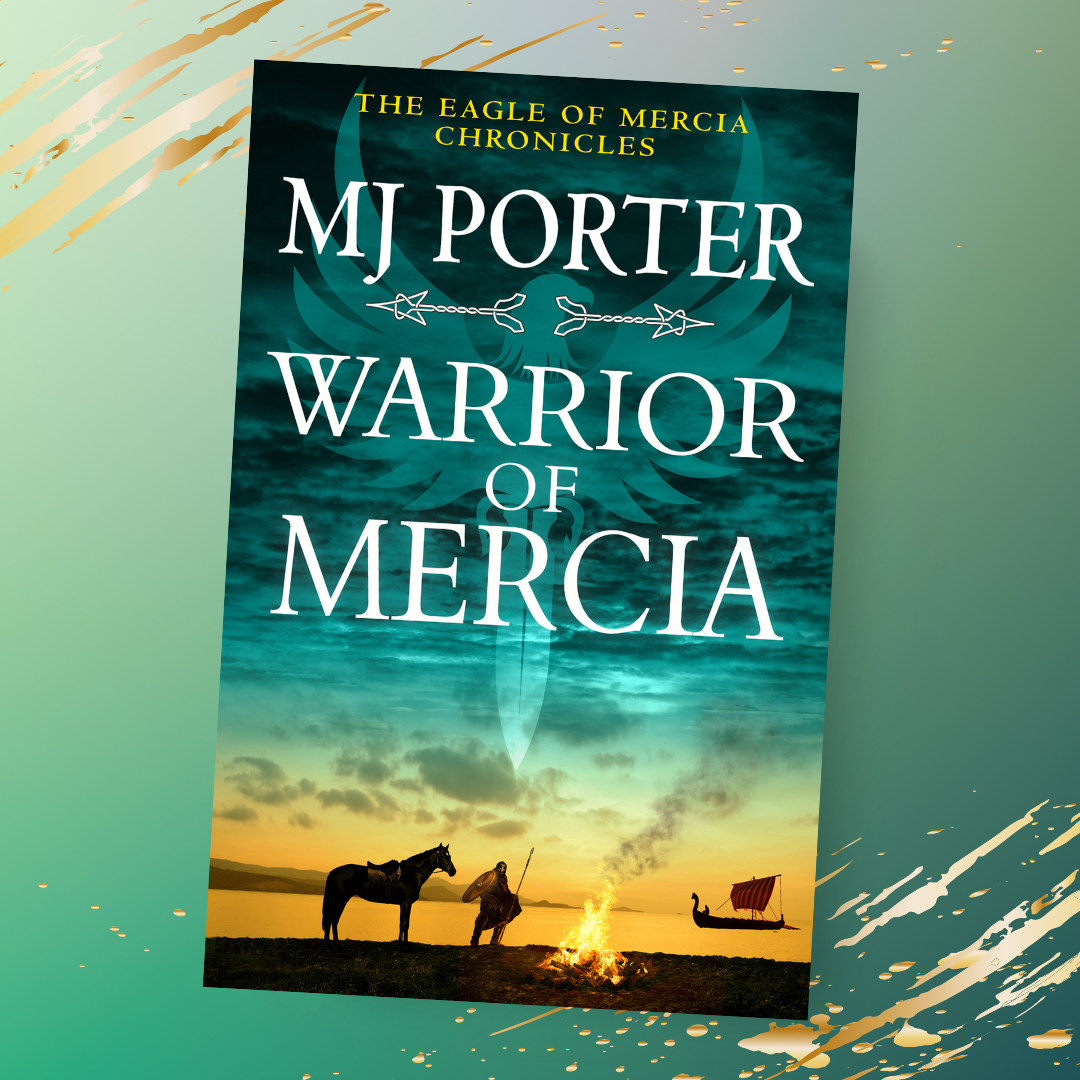
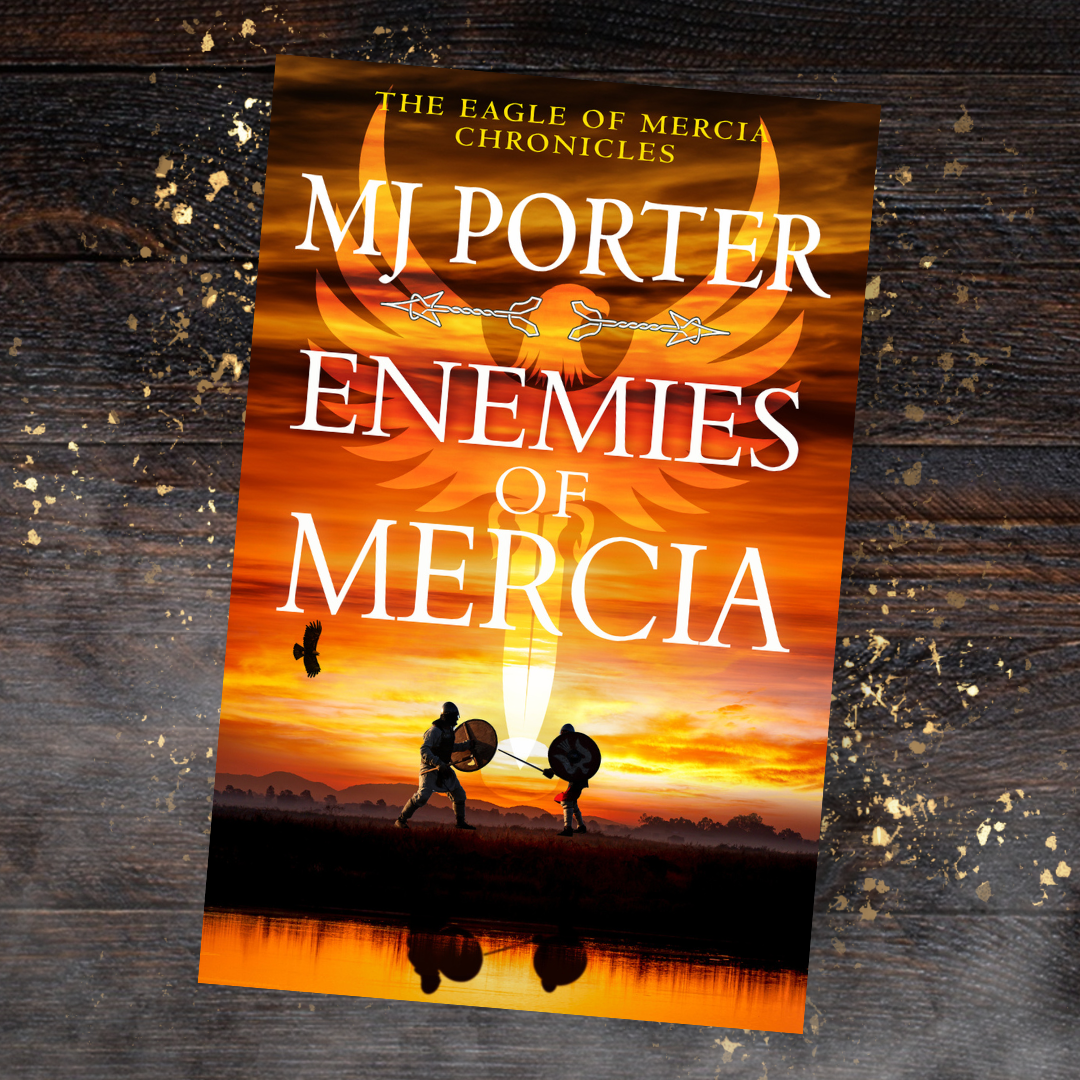
Oath sworn to Wiglaf, King of Mercia and acknowledged as a member of Ealdorman Ælfstan’s warrior band, Icel continues to forge his own destiny on the path to becoming the Warrior of Mercia.
With King Ecgberht of Wessex defeated and Londonium back under Mercian control, the Wessex invasion of Mercia is over.
But the Wessex king was never Mercia’s only enemy. An unknown danger lurks in the form of merciless Viking raiders, who set their sights on infiltrating the waterways of the traitorous breakaway kingdom of the East Angles, within touching distance of Mercia’s eastern borders.
Icel must journey to the kingdom of the East Angles and unite against a common enemy to ensure Mercia’s hard-won freedom prevails.
A mercy mission in the heart of Wessex is beset with deadly, bloody dangers.
Tamworth AD831
Icel’s profile continues to rise. Lord of Budworth and warrior of Mercia, he’s acknowledged by King Wiglaf and his comrades to keep Mercia safe from the ravages of Wessex, the king-slayer of the East Angles, and the Viking raiders. But, danger looms. Alongside Spring’s arrival comes the almost certain threat of the Viking raiders return.
When Lord Coenwulf of Kingsholm is apprehended by a Viking and held captive on the Isle of Sheppey in Wessex held Kent, Icel is implored by Lady Cynehild to rescue her husband.
To rescue Lord Coenwulf, Icel and his fellow warriors must risk themselves twice over, for not only must they overpower the Viking raiders, they must also counter the threat of Mercia’s ancient enemy, the kingdom of Wessex as they travel through their lands.
Far from home and threatened on all sides, have Icel and his fellow warriors sworn to carry out an impossible duty
A deathbed oath leaves the lives of two infants hanging in the balance… Tamworth AD833
After successfully rescuing her husband Lord Coenwulf from the Isle of Sheppey, Icel hears the deathbed confession of Lady Cynehild which leaves him questioning what he knows about his past, as well as his future.
In the unenviable position of being oath sworn to protect their two atheling sons when Lord Coenwulf is banished for his treason against the Mercian ruler, King Wiglaf, Icel is once more torn between his oaths and the life changing secret he now knows.
When the two children are kidnapped, Icel, good to his word, and fearing for their safety, pursues their abductors into the dangerous Northern lands.
He fears whose powerful and deadly royal gamesmanship is behind the audacious attempt on their young and innocent lives.
Alone in the Northern lands, Icel finds himself facing his worse fears.
Can he rescue the children from their captor, or will he fail and lose his own life in the process?
A King’s command. A warrior’s quest for the truth… Tamworth AD835
Following Icel’s epic rescue of Lord Coenwulf’s children from their almost certain death, King Wiglaf is forced to call upon Icel’s loyal services once more.
Furious that the conspirators behind the audacious move to snatch the children have yet to face justice, he despatches Icel to hunt down the enemy of Mercia and discover who seeks to conspire against the throne.
The dangerous mission will take Icel into the heartland of enemy-held Wessex to Winchester and onto Canterbury. As the web of lies and deceit grows, Icel must battle to discover the truth whilst keeping himself and his allies safe.
But those who conspire against the King have much to lose and will stop at nothing to prevent Icel discovering the truth. Once more, Icel’s life is endangered as he tries to protect Mercia from her enemies who threaten Mercia’s kingly line.
Set in the troubled years at the end of the Mercian supremacy, with the advent of the true First Viking Age just around the corner, The Eagle of Mercia Chronicles allow me to explore the kingdoms of Saxon England at the time, while ensuring my focus remains on Mercia, the kingdom in the’Midlands’ of England, with which I’m quite obsessed.
And choosing to write about a very strong character from my The Last King series, also allows me to play with my readers expectations. Icel is a fabulous creation, and one I’m incredibly proud of and pleased that my readers love so much.
Yes, these are bloody and brutal tales, but at the heart of them is a ‘coming of age’ story as young Icel learns about himself, as well as the truth of his heritage and birth.
If you’ve not yet tried The Eagle of Mercia Chronicles, then now is the perfect opportunity. Enjoy.
I’m delighted to welcome David Fitz-Gerald, and his new book, A Grave Every Mile, with an excerpt.
Excerpt from Chapter 3
First day on the trail, April 15, 1850
Our three teams of oxen, led by Hardtack and Scrapple, stand ready to do their job. It takes a while before it’s our turn to begin pulling, with fifteen wagons ahead of us. When the wheels of the wagon before us begin to turn, Larkin cracks the bullwhip and shouts, “Hi-yah!” He snaps the whip again, and the poor beasts lumber forward.
The broody hen squawks in her box. Straps hold the cage in place on a shelf on the wagon’s exterior. Ridge, the devil-eyed goat, blats in protest as the rope that ties her to the back left corner of the wagon drags her along. I can’t see Blizzard, tied to the other corner of the wagon. The children and I begin on foot, following closely behind Larkin.
I hate it when people are cruel to animals. I should hold my tongue, but I cannot. “Must you snap that whip so sharply? It’s barbaric. We should thank the oxen, not whip them.”
“Don’t be ridiculous, Dorcas. I’m not whipping them. I’m whipping the air above them. You know that. We can’t get to Oregon if the oxen don’t move. Don’t carry on like a child.”
Of course, he’s right. Somehow, dressing a deer doesn’t phase me. I can snap a chicken’s neck and pluck its feathers, but the idea of hurting beasts of burden saddens me. “Couldn’t you just tap them lightly on the rump rather than scare the poor creatures?”
“Look, see, we’re already falling behind. We need to drive the oxen faster if we want to get to Oregon before winter.”
“But…”
“That’s enough, Dorcas. Don’t pester me anymore.”
My molars tighten against each other. I know a woman shouldn’t bicker, argue, or nag. Usually, Larkin doesn’t complain about having a garrulous wife. Still, it rankles when he tells me not to pester him.
After walking alongside for half an hour, Dahlia Jane says she is tired. One mile down, one thousand, nine-hundred and ninety-nine miles to go. I lift the child into the wagon. Fortunately, she is content to play quietly by herself.
I walk for a while beside Blizzard. He always seems to listen and understand me when I share my troubles, worries, and complaints. His coat is sleek beneath the palm of my hand. I can never resist stroking his neck. “We’ll take a ride together soon. I promise.”
Dahlia Jane hasn’t moved from her nest in the back of the wagon, so I return to walk with the other children. I’m surprised to find Christopher where Larkin was. Larkin is missing. I glance about and don’t see him anywhere. Andrew smiles and says, “Nature calls.” Rose slaps her forehead and looks at her hand to see if she squashed a bug. Christopher seems to have mastered snapping the bullwhip above the oxen, and it makes me cringe even more than when Larkin does it.
After half an hour, Larkin tells Rose it’s her turn. She had been complaining about boredom and appears to have come alive as Larkin calls out her name. “Alright, Rose. Here is the whip. Hold it high and flick it hard with your wrist so that it snaps in the air above the kine.”
Rose asks, “What if I accidentally hit them with it?”
Larkin answers, “Don’t worry. It will not hurt them. They have thick skin and dull nerves.”
I can’t help but say, “Larkin, how do you know how they feel? Please don’t beat our animals.”
Larkin replies, “We’ll try, but the children must learn how to drive them. If you can’t bear to watch, may I suggest you visit our neighbors?”
“Very well, then.” It doesn’t make it any better knowing they whip the beasts while I’m gone, but I pluck Dahlia Jane from her burrow and wander back to the next wagon.
Here’s the blurb
Embark on a harrowing trek across the rugged American frontier in 1850. Your wagon awaits, and the untamed wilderness calls. This epic western adventure will test the mettle of even the bravest souls.
Dorcas Moon and her family set forth in search of opportunity and a brighter future. Yet, what awaits them is a relentless gauntlet of life-threatening challenges: miserable weather, ravenous insects, scorching sunburns, and unforgiving terrain. It’s not merely a battle for survival but a test of their unity and sanity.
Amidst the chaos, Dorcas faces ceaseless trials: her husband’s unending bickering, her daughter’s descent into madness, and the ever-present danger of lethal rattlesnakes, intensifying the peril with each step. The specter of death looms large, with diseases spreading and the eerie howls of rabid wolves piercing the night. Will the haunting image of wolves desecrating a grave push Dorcas over the edge?
With each mile, the migration poses a haunting question: Who will endure the relentless quest to cross the continent, and who will leave their bones to rest beside the trail? The pathway is bordered by graves, a chilling reminder of the steep cost of dreams.
A Grave Every Mile marks the commencement of an unforgettable saga. Start reading Ghosts Along the Oregon Trail now to immerse yourself in an expedition where every decision carries the weight of life, death, and the pursuit of a brighter future along the Oregon Trail.
David Fitz-Gerald writes westerns and historical fiction. He is the author of twelve books, including the brand-new series, Ghosts Along the Oregon Trail set in 1850. Dave is a multiple Laramie Award, first place, best in category winner; a Blue Ribbon Chanticleerian; a member of Western Writers of America; and a member of the Historical Novel Society.
Alpine landscapes and flashy horses always catch Dave’s eye and turn his head. He is also an Adirondack 46-er, which means that he has hiked to the summit of the range’s highest peaks. As a mountaineer, he’s happiest at an elevation of over four thousand feet above sea level.
Dave is a lifelong fan of western fiction, landscapes, movies, and music. It should be no surprise that Dave delights in placing memorable characters on treacherous trails, mountain tops, and on the backs of wild horses.
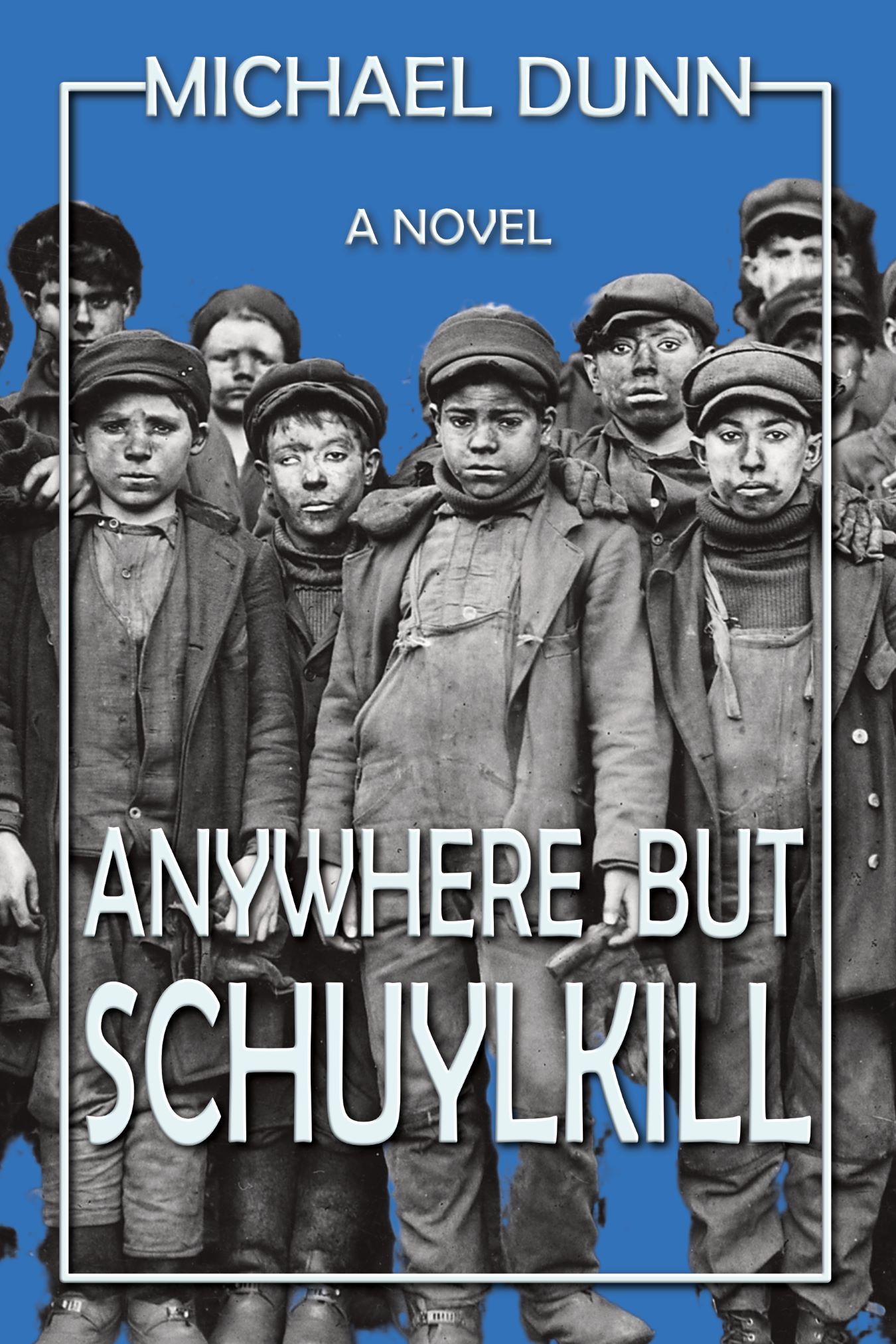
I’m delighted to welcome Michael Dunn, and his new book, Anywhere But Schuylkill to the blog, with What’s Love Got To Do With It?
What’s Love Got To Do With It?
As most readers know, a little romance always spices up a story, regardless of the genre. So, for my guest post today, I thought I’d write something about love and romance, in honor of Valentine’s Day.
In my recent historical novel, Anywhere But Schuylkill, my protagonist, Mike Doyle, is in love with a girl named Hannah, who happens to be his sister Tara’s best friend. This is troubling enough for him, since he cares deeply for his sister and doesn’t want to harm her friendship with Hannah. But Mike also works for Hannah’s father, who happens to be a gangster, and he has told Mike to keep his hands off his daughter. And to complicate matters further, Hannah’s mother is incredibly hot, and she likes to flirt with Mike when her husband isn’t around. At the same time, Tara is in love with Mike’s friend Johnny Morris, who their Uncle Sean thinks is a ne’er-do-well. And Uncle Sean is not someone you want to anger.
As a writer, I found these romantic minefields a lot of fun to create. But I also had to do a lot of research, because courtship rituals in the 1870s were so different than today. We’re talking about a small town, rural, and very traditional. There was, of course, a common trick I could exploit that transcends time period: Hannah could sneak away from her protective parents to be with Mike by pretending she was visiting her best friend, Tara. And Tara could sneak away from Uncle Sean, pretending to visit Hannah, but actually run off to meet with Johnny Morris.
This trick will only get you so far as a teen (the adults are usually sharp enough to catch on and will eventually tighten the reins). Likewise, it will only get me so far as a writer, since you modern readers are even sharper than a gilded-age parent. So, let’s talk about the research that helped me make these romances seem more authentic, and true to the era and setting.
One of the first things to consider is that none of these kids went to school. They were too poor and either had to stay home and help with the chores or go out and work for someone else to help support their families. Mike and Johnny Morris worked at the colliery. Tara and her mother worked for a neighborhood washer woman. And Hannah took care of her younger siblings, so her mother could help at the tavern. This left Sunday church as one of the only times and places where teens with strict parents could regularly meet, free of their usual burdens. While there wasn’t much courting that could occur in church, kids could chat before and after mass, and there were plenty of opportunities for lusty thoughts and teen imaginations to run wild.
There were also holidays, and community events, where teens might be able to sneak away from parents and chaperones long enough for a dance, or perhaps something a bit more illicit. Bonfire Night was one such holiday. Celebrated on the evening of June 23, Bonfire Night was historically connected to St. John’s Night, but, like many religious holidays, was likely an appropriation of an older pagan ritual. This would explain the date’s proximity to the summer solstice, and its May Day-like rituals, such as bonfires, which are lit at sunset, and kept going until long after midnight. Typically, there is food, alcohol, song and dance, creating a socially acceptable milieu for courtship. However, it is also a family-friendly event. The pious take embers home to ward off disease and evil spirits. Parents tell stories about the fairies, and kids get to stay up as late as they want because, if they fall asleep on Bonfire Night, the devil is sure to take them. Younger kids beat drums and blow tin whistles. They light sticks on fire and throw them into the air, while teens and young men challenge each other to leap across the fire. The flicker and spark of the flames tell whether they’ve been naughty, particularly in the romance department, and this can be a great source of amusement, or embarrassment.
Another popular holiday for young folks was Halloween. But an Irish-American Halloween in the 1870s was quite different than what most of us have experienced, particularly in terms of romance. The holiday often involved food, games and rituals to divine the future, particularly with regards to matrimony. For example, a traditional (and yummy) Halloween dish was colcannon, a casserole of mashed potatoes, milk, onion and kale, served with lots of butter, if one could afford it. The cook would hide prizes in the colcannon. The person who found a ring hidden in their serving was supposedly the next to get married. Alternatively, they might scoop the first and last spoonful of colcannon into a girl’s stocking, and hang that from a nail in the door, and her future husband would be the next person to enter through that door.
Another Halloween treat was barmbrack, a sweetbread filled with fruit, and sometimes hidden prizes. In this case, finding a hidden ring foretold of an impending romance, whereas a thimble meant you would never get married.
Supposedly, if a girl ate an apple while combing her hair in front of a mirror at midnight on All Hallows Eve, she would see her future husband gazing back at her. If she walked out into the night, blindfolded, and was led to a cabbage patch, she could predict the size and shape of her future husband by the size and shape of the first cabbage she picked. And if she peeled an apple and let the shavings fall to the ground, she might be able to discern her sweetheart’s initials.
Mumming, or guising, was another tradition that the Irish brought to the U.S., and that continues to be practiced in parts of Pennsylvania. Mumming involves dressing in costume and marching from door to door, performing rhyming plays, usually humorous, and often in exchange for food, treats, or even booze. It may have been the origin of the contemporary tradition of trick-or-treating. It was also common for mummers to dress in drag. One typical character was the darling Miss Funny, generally a man in drag, who demanded kisses or treats from audience members. And, instead of pumpkin Jack-o-lanterns, mummers carried hollowed out turnips, carved into grotesque faces, with lumps of burning coal inside to illuminate their way. For a fascinating history of Irish mumming, check out Henry Glassie’s, All Silver and No Brass (1975).
There are other kinds of love that are important in stories, too. For example, the desire to be loved, or the fear of being unlovable, can help explain a character’s motivations and actions. It can even help liven up a character that hasn’t been fully fleshed out yet, that feels too one-dimensional. This was initially the case with my villain, Uncle Sean, who felt like the epitome of a cruel, abusive parent. Indeed, Mike’s little brother, Bill, even says that the only two emotions Uncle Sean can feel are anger and rage. But when I added back story about Sean’s adoration of Aunt Mary, and his belief that she was the only one who could love him, “tetters and all,” he started to seem more like a real person, someone who felt pain and longing, and who struggled with his own insecurities.
This brings us back to my original premise, that a little love or romance helps spice up a story. Obviously, there is the salacious angle, like Hannah’s mom flirting with Mike. But much more important to the craft of writing is how love and romance can be exploited to enrich the side plots and add dimension to the characters. But what I find most interesting of all, is how both reading and writing about fictional love and romance can help us better understand our own real-life relationships with these emotions. What kinds of choices do we make in life to find love? To maintain love? To avoid being jilted or abandoned? And how do these choices affect our ongoing relationships with those we love, like friends and family members?
Here’s the blurb
In 1877, twenty Irish coal miners hanged for a terrorist conspiracy that never occurred. Anywhere But Schuylkill is the story of one who escaped, Mike Doyle, a teenager trying to keep his family alive during the worst depression the nation has ever faced. Banks and railroads are going under. Children are dying of hunger. The Reading Railroad has slashed wages and hired Pinkerton spies to infiltrate the miners’ union. And there is a sectarian war between rival gangs. But none of this compares with the threat at home.
Michael Dunn writes Working-Class Fiction from the Not So Gilded Age. Anywhere But Schuylkill is the first in his Great Upheaval trilogy. A lifelong union activist, he has always been drawn to stories of the past, particularly those of regular working people, struggling to make a better life for themselves and their families.
Stories most people do not know, or have forgotten, because history is written by the victors, the robber barons and plutocrats, not the workers and immigrants. Yet their stories are among the most compelling in America. They resonate today because they are the stories of our own ancestors, because their passions and desires, struggles and tragedies, were so similar to our own.
When Michael Dunn is not writing historical fiction, he teaches high school, and writes about labor history and culture.