Author of Saxon historical fiction and non-fiction, 20th-century historical mysteries, and Norse-inspired historical romantasy. Book reviewer and blog host.
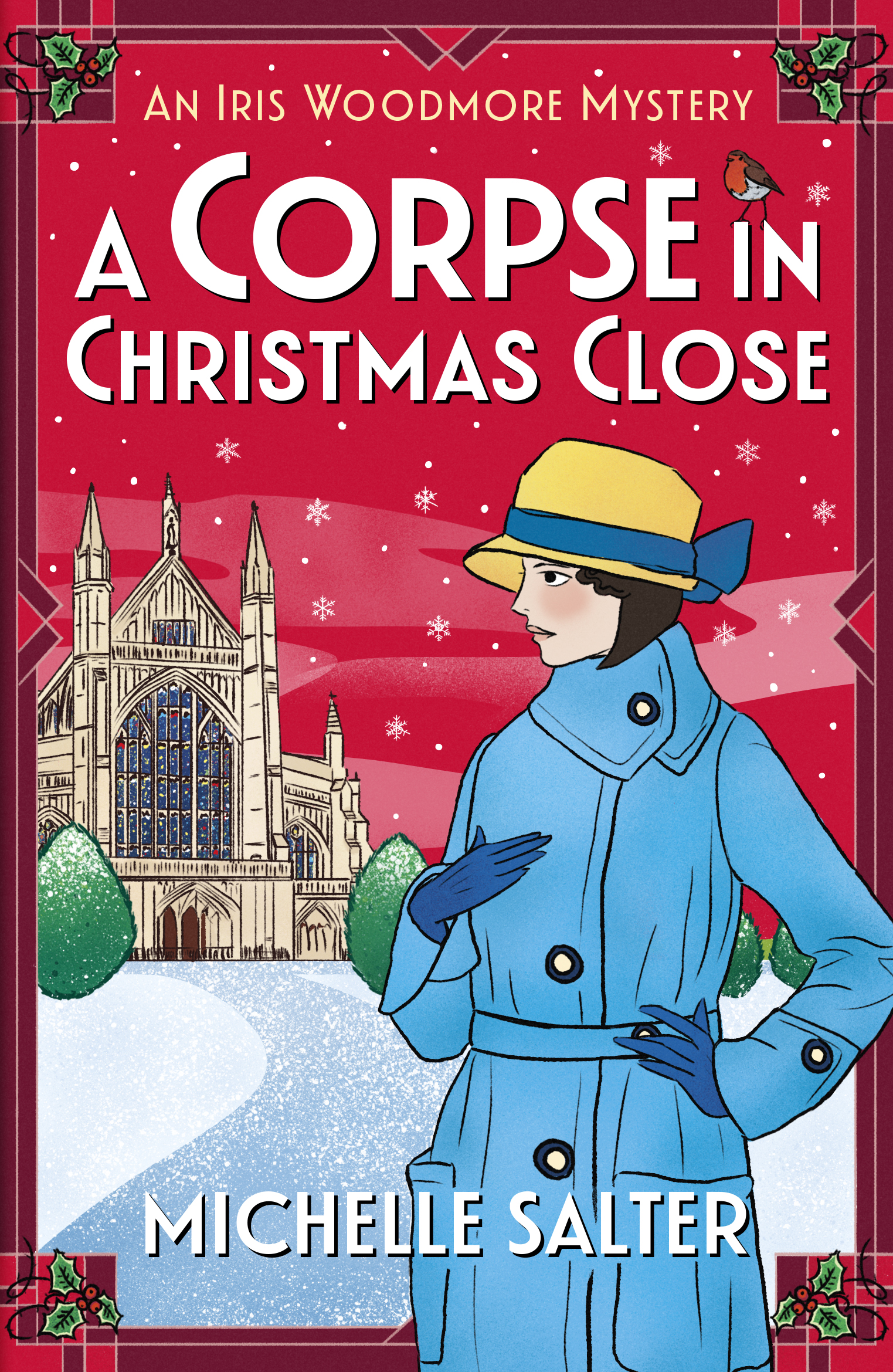
When a pantomime turns deadly, Iris investigates a cast of killers…
Christmas, 1923. When reporter Iris Woodmore is sent to cover the Prince of Wales’ visit to historic Winchester, she discovers more than just royal gossip.
The leading lady in Winchester Cathedral’s charity pantomime is found dead in mysterious circumstances. And the chief suspect is Cinderella’s handsome prince, played by Percy Baverstock’s younger brother, Freddie.
For the sake of the Baverstocks, Iris must investigate the murder, even though it means confronting an old enemy. And as the line between friend and foe blurs dangerously, she’s ensnared by someone she hoped she’d never see again…
Everyone’s favourite amateur sleuth returns for a Christmas mystery, perfect for fans of Verity Bright, Claire Gradidge and Emily Organ.
I love a new Iris Woodmore 1920s mystery, and A Corpse in Christmas Close is as well-plotted and deeply grounded in the historical events of the day as the previous books in the series.
Iris is a great main character. She is tenacious and outspoken, aware of society’s conventions but often keen to ignore them. She and her fellow cast members are all well-drawn and believable.
I almost always determine how much I love a mystery by whether I work out the culprit or not, and once more, I was caught out by the resolution for A Corpse in Christmas Close.
The pacing is great. I’m looking forward to Iris’ next adventure.
Michelle Salter writes historical cosy crime set in Hampshire, where she lives, and inspired by real-life events in 1920s Britain. Her Iris Woodmore series draws on an interest in the aftermath of the Great War and the suffragette movement.
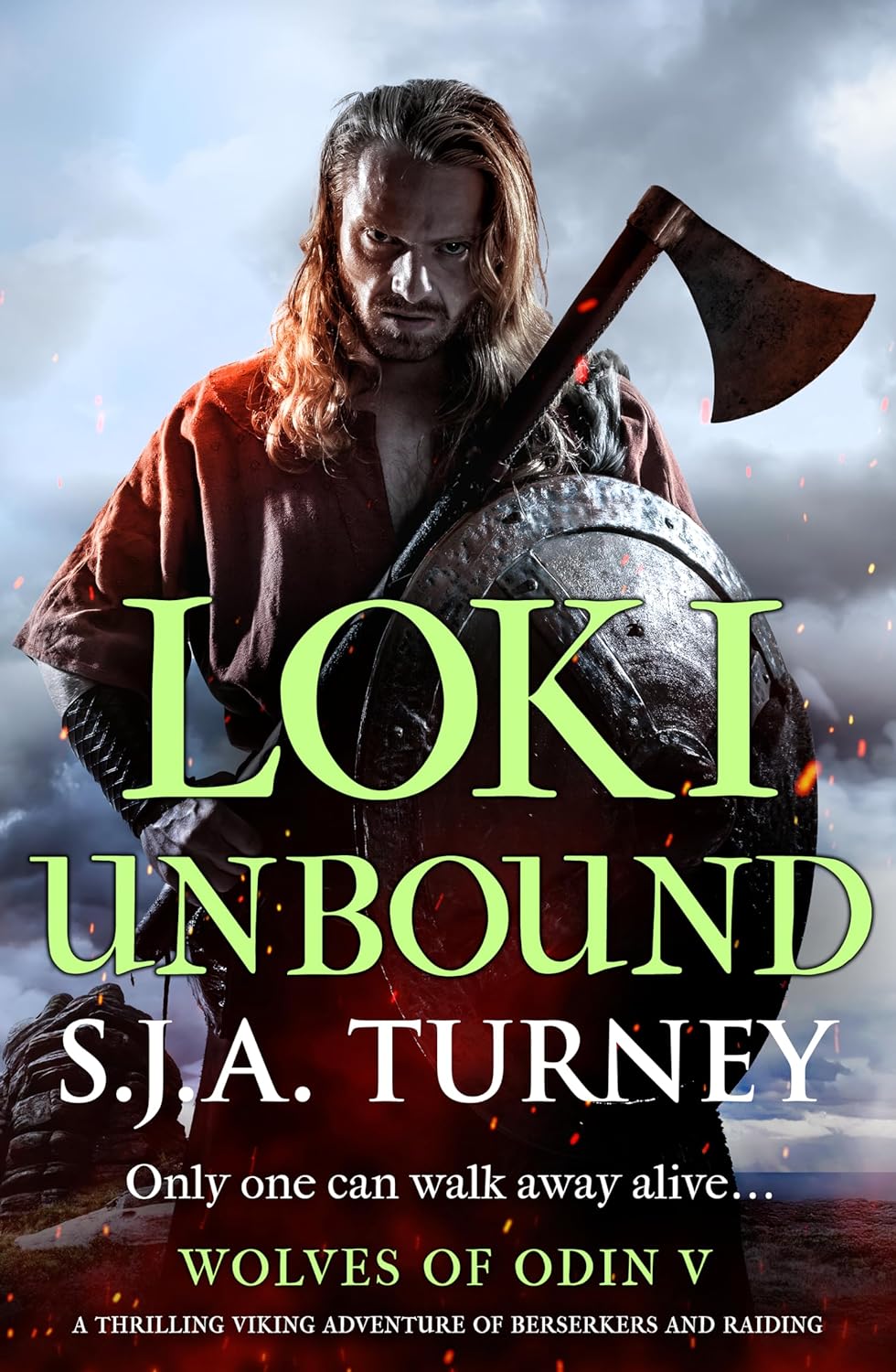
The Wolves of Odin must bring a rogue Viking chief to heel, in the rolling Yorkshire Dales… AD 1044. Fleeing the machinations of William the Conqueror in France, the Wolves of Odin set sail for Britain.
They make for the north of the country, heading to Jorvik – Viking York. Its earl, Sigurd, doesn’t believe they have arrived with peaceable intentions. To prove their good faith, he challenges them to fix a problem for him…
North of Jorvik, in the Dales, a rogue Viking warlord, Arkil, resists Sigurd’s rule with a small army. Sigurd’s forces are spread too thin to deal with him directly, and so it falls to the Wolves…
My Review
Loki Unbound is the fifth book in the Wolves of Odin series. I’ve read book 2, but none of the others. It took me a little while to get back into the characters, but more than anything, it’s because Hardrada was such an important character in book 2, and he’s not in this one:) Once I realised this, I worked out what was happening.
This book takes us to Jorvik and Swaledale, north of Jorvik, where our cast of warriors and seeresses are faced with a seemingly impossible task: reclaiming a lost mining area from the local Viking. The Viking has built some fairly impenetrable defences and has a warrior of immense renown amongst his warriors and his own seeress. But Halfdan, Gunnhild, and Bjorn are not to be stopped in their attempts to aid the bishop of Jorvik and, in exchange, gain something they really want as they work towards facing their own enemies in the Scandinavian lands.
Told from the viewpoint of our main characters and with some retrospective story elements concerning Bjorn, which worked really well, this is an engrossing tale of the time that I thoroughly enjoyed. I will have to go back and read the stories I’ve missed in this series.
SJA Turney is an author I trust to tell me an excellent story, be it Roman or Viking, and he didn’t disappoint.
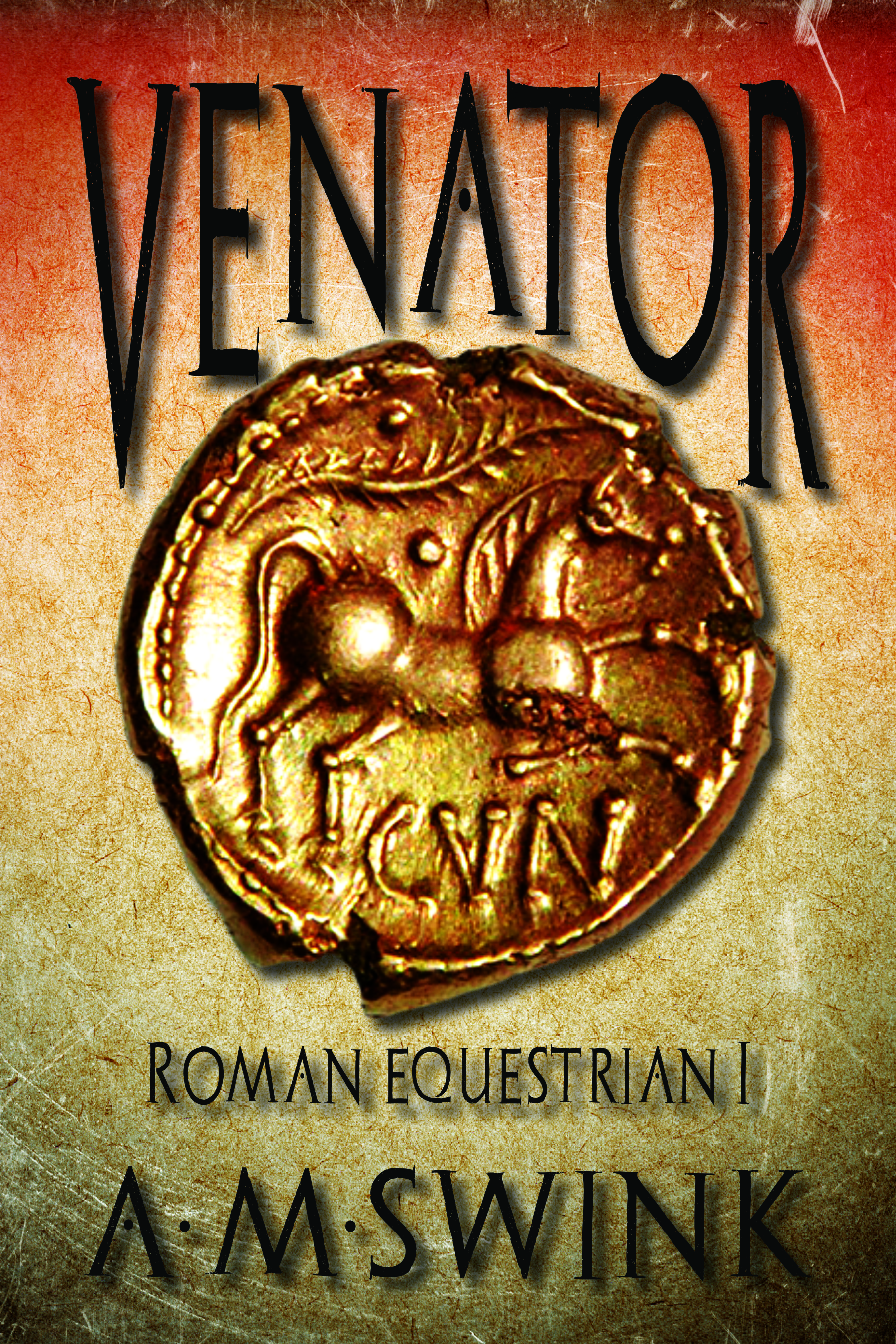
I’m delighted to welcome A.M.Swink and her new book, Venator from the Roman Equestrian Series, to the blog with an excerpt.
Excerpt
Excerpt 5:
‘There we are.’ Julianus Titianus pushed Livius away as soon as he’d poured the wine. He lifted his glass at Decimus. ‘Your health, Centurion.’
Decimus begrudgingly sipped his drink. With a grunt, he leant forward and slammed his beaker back on the tribune’s marble table. ‘What do you want, Titianus?’
‘My, my! So very direct!’ The tribune chuckled, narrowing his beady eyes at the centurion over the rim of his glass. ‘Not even a word of thanks for your gracious host?’
‘I’m not fond of lies. They tend to stick in my throat.’ Decimus scowled.
He glanced around uncomfortably at his surroundings. Though as primus pilus he’d spent long hours in the war room discussing campaign strategies with the legate, Decimus had never felt entirely at ease within the ornate praetorium. The high, vaulted ceilings, painted walls, and mosaic floors seemed far too excessive for his tastes. Did all men of such high rank have to make their homes in opulent palaces?
He shuddered. Perhaps he wasn’t cut out for belonging to the equestrian class.
Across the table, Titianus sat before a mural depicting Pluto leading Proserpina into Hades; the mouth of the cave to the underworld loomed directly behind the tribune’s head. ‘Words were never your strong suit, were they, Maximus?’ Titianus smirked. ‘You’ve always been a man of action.’
‘Get to your point!’ Decimus barked, sitting on the edge of his chair.
‘So impatient!’ Titianus reclined against the back of his seat and tutted softly. ‘I do hope you aren’t considering the mercantile trade when you leave the army, old boy. You’re a pretty poor negotiator.’
‘Luckily enough, Tribune, I have no plans of the sort.’
‘Oh, really?’ Titianus coolly pulled out a tool to begin picking at imagined flecks of dirt beneath his spotless fingernails. ‘I thought I’d been reliably informed you plan to spend your retirement in the capital.’
Decimus shifted in his seat uncomfortably. ‘And why is it any of your concern?’
‘Just wondering if our paths shall cross again.’ Titianus smirked. ‘I’ll be heading back to pursue a quaestorship come spring. And my promotion is assured. I don’t have to bother telling you who my connections are. Let’s just say that I would be quite the valuable ally or quite the powerful enemy.’
‘Your connections are too rich for my blood; I think I’ll remain neutral.’
‘I hardly think you can value neutrality when it comes to me, Centurion.’
Decimus impatiently drummed his fingers on the table. ‘You know nothing about the business that interests me,’ he said at last.
‘Hmm…’ Titianus pretended to mull over Decimus’s words. ‘I don’t know about that. I do know that if you want to breed nags for the imperial army, you’re going to need a contract. One taken out with the palace.’
Decimus abruptly stopped drumming his fingers. He eyed the tribune suspiciously. ‘And?’
‘Well, I’m hardly one to brag, but…I do have friends in high places.’ Titianus shrugged. ‘Ones that have the ability to push for or against the success of such a petition.’
Decimus felt a cool chill from the smile Titianus gave him. He forced himself to bark out a laugh. ‘You’re bluffing.’
Titianus picked up his beaker and idly swirled its contents. ‘Find out at your peril, Centurion.’
‘I value my time, Tribune. And you are wasting it.’ Decimus pushed his chair back and stood.
‘Hold on!’ A note of alarm entered Titianus’s voice. He lifted a hand in protest. ‘Aren’t you curious as to what I’ve got to say?’
‘No.’ Decimus picked his helmet off the table and turned to leave. ‘I’ve played in this little farce for long enough!’
‘It concerns the princess.’
Decimus froze. His tongue darted out to wet his dry lips. ‘What about her?’
Titianus gestured to the vacant seat. He smiled as the centurion reluctantly sat back down. ‘Good, good. Now, let’s discuss this properly.’ He linked his fingers together on the tabletop, twiddling his soft, doughy thumbs. ‘I understand from our quartermaster that you purchased the princess from the legion two months ago for the sum of five hundred denarii. Is that correct?’
Decimus curtly nodded.
Titianus met the centurion’s gaze. He paused for a long moment, leaning over the table. ‘I’ll give you a thousand denarii for her.’
‘I’m sorry, Tribune.’ Decimus quickly stood again. ‘My slave is not for sale.’
‘Twelve hundred denarii!’
‘Not for that price. Not for any price.’ He clapped his helmet back on his head and began making his way towards the door.
Titianus stood and followed him down the hall. ‘Fifteen hundred denarii!’
‘At any price, Tribune!’ Decimus called warningly, refusing to break stride.
‘All right, all right!’ Titianus grabbed at the centurion’s shoulder. Decimus halted and whirled around to face him with a snarl. The tribune backed away, holding his hands up defensively. ‘Eighteen hundred denarii for one night. Just one night with her. Otherwise, she’s yours. Eighteen hundred denarii. One night. My final offer.’
Decimus’s face darkened. He loomed over the cowering tribune and grabbed hold of his neckerchief. ‘Do I look like a pimp to you?’
‘I…I just…’ Titianus choked.
‘Do I look like a pimp to you?!’ Decimus shook Titianus, lifting him onto his toes. With a contemptuous grunt, he tossed him onto the tiled floor. The man skidded roughly against the tesserae before slowing to a halt before his gilded lararium.
‘Stay away from my property, Tribune. Consider this your final warning.’ Decimus turned and stalked out the door.
Livius materialised in the hall and hastened to his master’s side.
‘Get off!’ Titianus kicked at Livius when the slave stooped to help him up. He panted, lifting his head to watch the centurion march away towards the barracks. Hate glistened in his beady dark eyes.
Blurb
Britannia, AD 59. Decimus is a long-serving senior centurion who dreams of retirement in Rome. Luciana is a Cornovii princess devoted to the freedom and survival of her tribe. Connected only by a passion for horsemanship, the pair could not be more ill-matched. After a deadly conflict thrusts these enemies together, each is determined to fight their desires and triumph over the other. Who will ultimately control the other’s heart?
But Decimus and Luciana are not the only ones on the hunt for supremacy; a desperate struggle over the province is beginning to simmer to a boil. There are whispers of mysterious Druids fomenting unrest among the western British tribes, whose inter-tribal divisions threaten to subsume them. The future of the Roman legions in the province is suddenly thrown into doubt as casualties begin to mount. Decimus and Luciana find themselves entangled within a web of characters, Briton and Roman, playing with Britannia’s destiny to serve their own ends.
The hunt for power is on, where only one side can emerge triumphant. But just who among these hunters will end up hunted?
A native of Dayton, Ohio, A.M. Swink grew up obsessed with two things: books and horses. After a childhood of reading, writing, showing, and riding, she moved to Lexington, Kentucky to complete a degree in equine science and management and a degree in English literary studies. She now works in Lexington as a college professor of reading and writing. In her spare time, she has travelled extensively around the UK and Ireland, exploring ancient sites and artefacts, as well as tracing her own ancestry. She is proud to be descended from County Cork’s Callaghan clan.
When not writing, she can be found collecting and showing model horses or enjoying her favourite British comedy programmes.
Setting for The Custard Corpses, my first foray into historical mysteries
The Custard Corpses is set during the 1920s, 1930s and 1940s. I wanted to make the book as authentic as possible, even though I’m not a historian of that time period. When I was first studying history at school, I always found it strange to think of it as history as I had grandparents who had lived through the 1920s, 1930s and 1940s (my old granny was born in 1901, my mother’s parents in 1920 and my father’s parents in 1926 and 1928). That’s probably why I’ve never written about the period before.
Getting the names right
I wanted to ensure I was using names and places that existed at the time, and I didn’t want to inadvertently make any silly mistakes – a few beta readers pointed out I was using metric measurements, when they should have been imperial in the 1940s. They thought it was sweet that I’d never known the world of imperial numbers (and money).
Maps and train routes
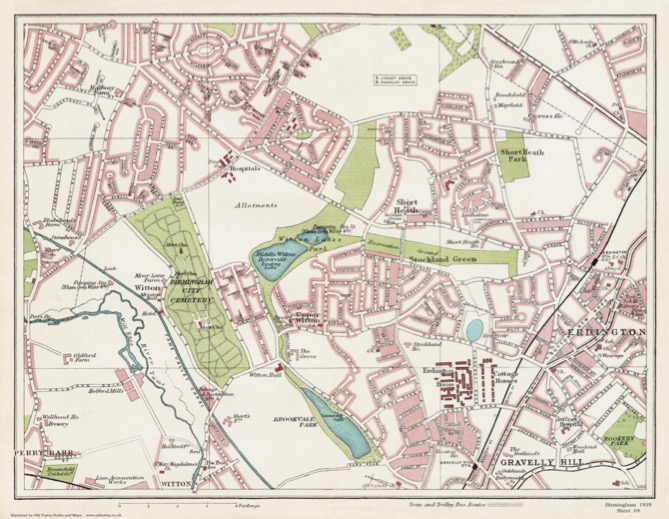
So, I spent quite a bit of time hunting down random facts; maps of the time period, tram and train routes (which you can find online, but I had some old maps), pictures of cars, police uniforms at the time, advertisements of the time and also editions of the Picture Post magazine. At one point, I wanted a celebrity scandal, and there it was, on the cover of a magazine.
Map of Erdington from the era
Newspaper Archives
I was amazed by the information that I could find by accessing archives ( and also that which I couldn’t find), and I was especially impressed by the ‘history’ section on the Birmingham.gov website, and by those local newspapers that have archives available online – such as the Inverness newspaper and the Birmingham Mail. There’s also a whole aerial photo website that I could have used, but I couldn’t quite work it out.
Family memories
I was also lucky in that I set the book somewhere I have childhood memories of, and also that a family member spent their early years in Erdington. It was funny to realise the parts that they especially remembered – such as the fact that some of the buses were still open-topped at the time, and the liveries that buses were decorated with. The Birmingham that I remember is very different to the one that exists now, and the one that existed in the 1940s. My memories of Birmingham consist of the dodgy car park we used, the train journey we used to take in the old carriages with individual doors (they were old in my day) and shopping for jeans.
I also made some use of the 1911 census records, and the Office for National Statistics spreadsheet which lists all the most popular names in decades. It made it easy to devise names for the characters. It also helped that while the 1940s is ‘history’ it’s much more relatable to me than the period before 1066, when I usually set my stories, so provided I didn’t use the internet in the story itself (and only as a research tool), or refer to cms, it was just about authentic, I hope. And did allow for the use of cars and telephones.
The inspiration behind The Custard Corpses #histfic #mystery
The inspiration behind The Custard Corpses is a bit weird, even I admit that
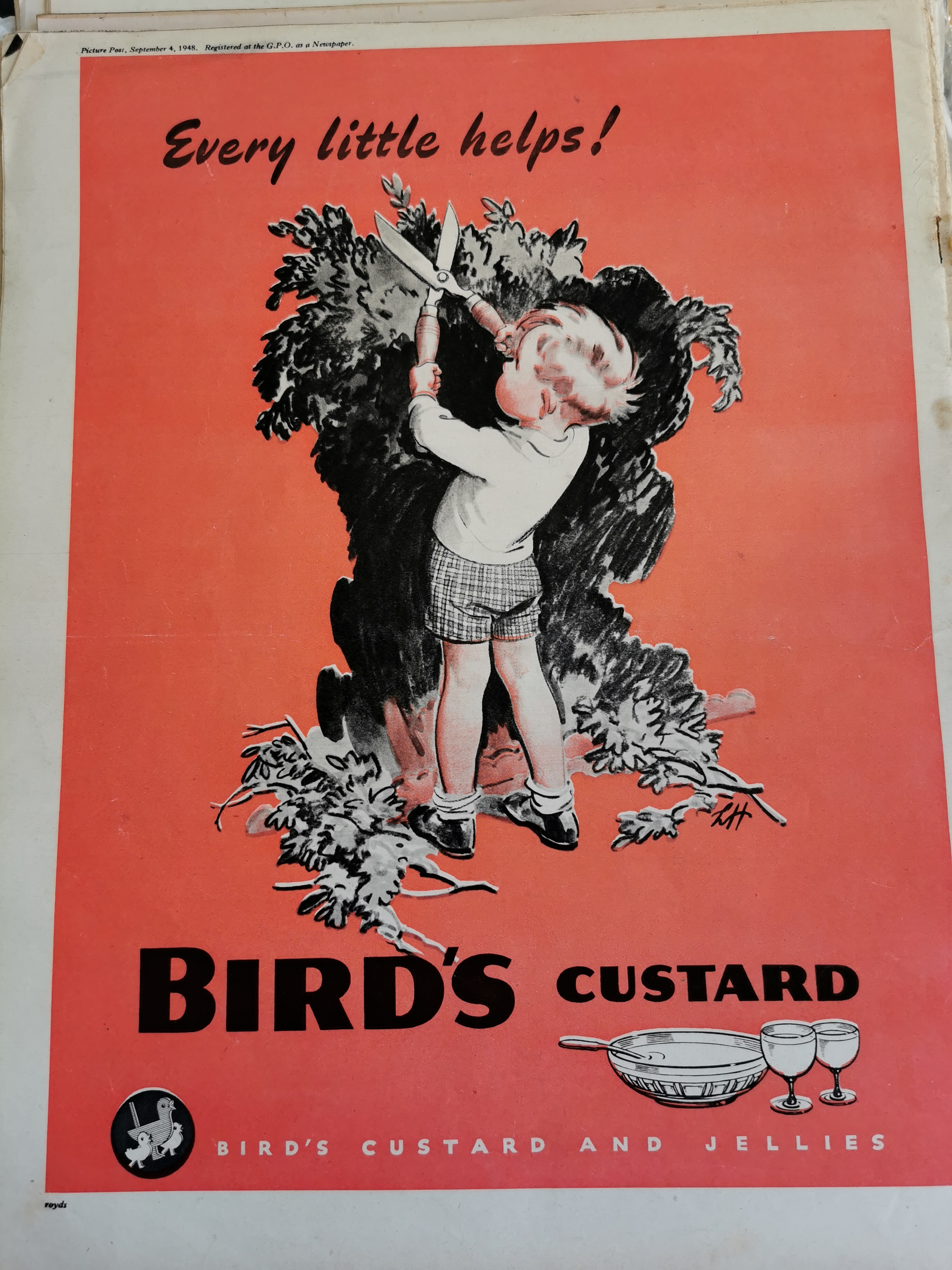
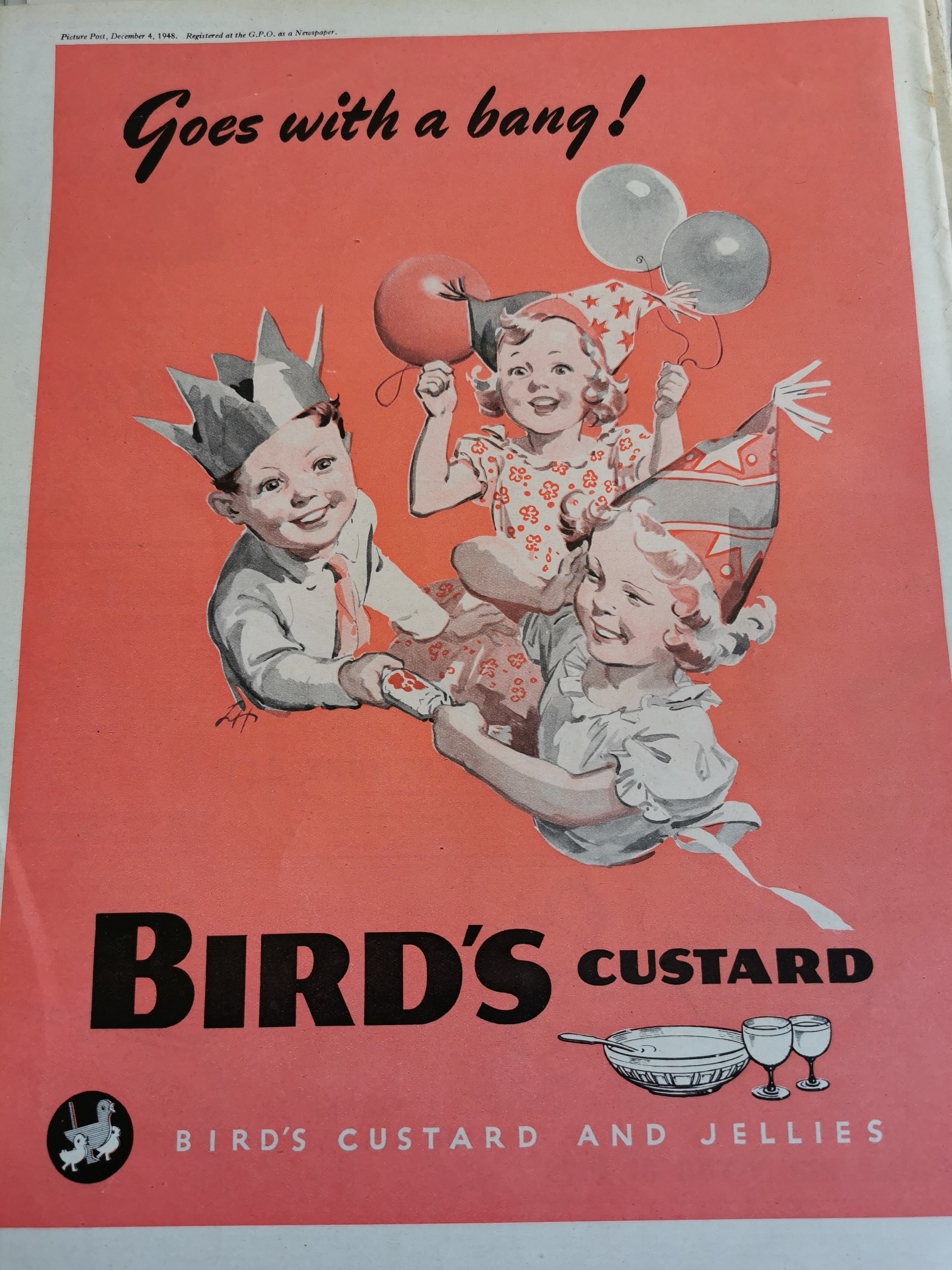
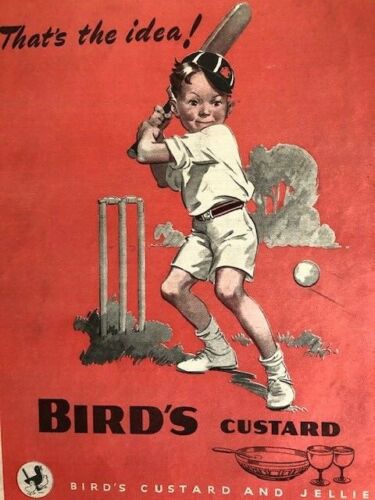
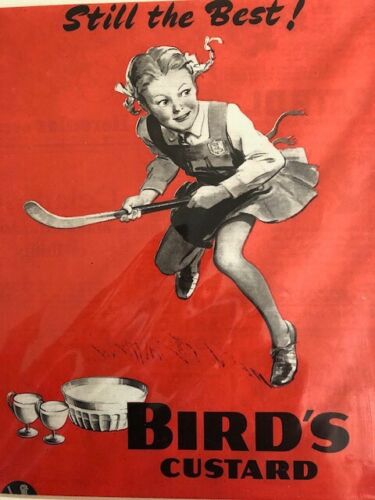
My father had, for many years, bought and sold antique paraphernalia, mostly maps, but also other items as well – books, stamps, old vellum deeds, postcards – you get the idea. With the restrictions during Lockdown, he wasn’t able to sell as normal at his antique fairs, and having put off having an online presence, he finally decided to open an eBay shop – but needed tech support. And so, as ‘tech support’, he started sending me all sorts of fascinating items to list, but the one that really got my attention were the advertisements that ran in the Picture Post magazines for Bird’s Custard.
They’re bright, they’re inviting, they are, to put it bluntly, before their time. They have lovely catchphrases, such as ‘every little helps’ which Tesco use now. The black and white images on the coloured background ensure the readers eye is drawn to the happy child, and they do make you want to eat custard.
I wanted to share them with as many people as possible so that they could catch a glimpse of these old campaigns. There were other advertisements as well in the magazines, ones for Pepsi and for Shell, to name a few, but it was the Bird’s Custard ones that really captured my imagination. But how could I share them with people?
Well, my mind works in strange ways, and I began to consider a mystery that would somehow be relevant to the advertisements, so it needed to be set during the period the Picture Post magazine was produced from 1938 to the 1950s. And so, The Custard Corpses.
I set The Custard Corpses during the Second World War, but that was really because it fit with the adverts I’d seen, the added bonus that I could then use the well-known events of the war was a secondary consideration.
Where I set the book was entirely based on the fact that I had family members who’d lived in Erdington at the time. I was able to pick the brains of my Dad for the little details that I didn’t know or couldn’t remember, not that he was born in 1943, but not long after.
It was all quite random, in the end, and there was a swell of little details that I uncovered that just, through pure happenstance, fitted together. It helped that I wanted to try my hand at something more modern than the eleventh century, but still historical. But I’m not an expert on any other time period, so I suppose it was an easy choice to decide on a setting that was just within living memory of some. I couldn’t visit anywhere due to Lockdown, so familiar was best.
Is this the weirdest reason to have written a book?
Buy The Custard Corpses here, available in ebook, paperback, hardback and audio. Or, check out the signed editions page to get a copy directly from me. Book 3, The Secret Sauce, is available now, (as is book 2, The Automobile Assassination), and the Barrage Body is coming very soon.
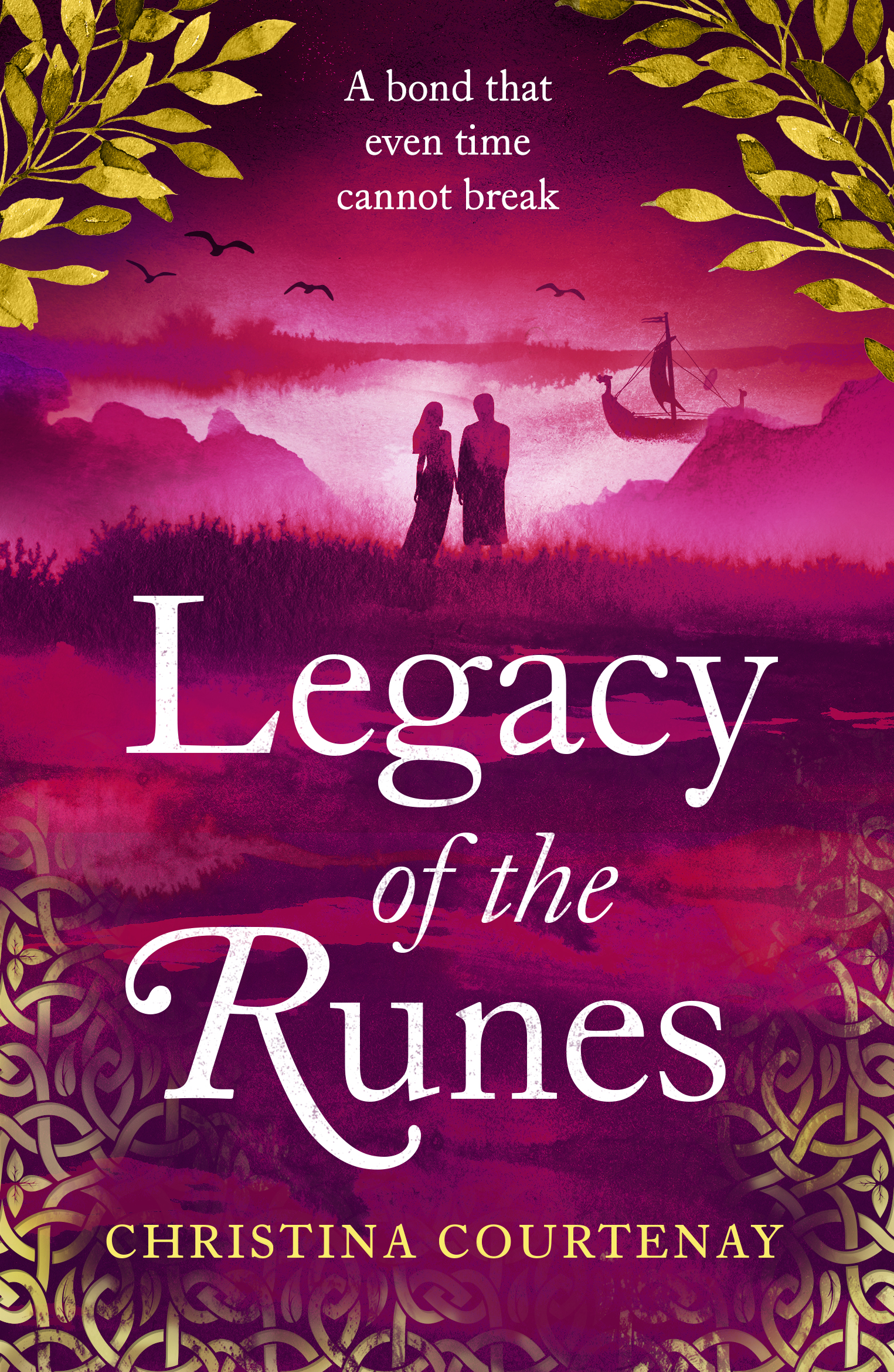
I’m delighted to share an excerpt from Legacy of the Ruins
The heroine, Freydis, aged 10, is being sent away to live with relatives against her will and her mother doesn’t seem to care about her wishes:-
Freydis jumped over the gunwale easily and sat down on her chest of belongings, which must have been loaded earlier. She knew it was hers because it had her name carved in runes on the lid. Reading and writing was a skill her late father had taught her, and she was proud of her proficiency. She also knew how to count and haggle for goods to best advantage. Perhaps one day this would come in useful. She lifted a hand to wave at her mother, schooling her features into an expression of calm acceptance, directly at odds with how she was feeling. ‘Farewell, Mother.’ Dagrun nodded. ‘May the gods go with you.’ Then she turned and walked up the path without waiting for the ship to cast off. Freydis swallowed hard several times, but turned her head away so that no one would see. It hurt that her mother could dismiss her so easily, but they had never been close. Dagrun had despaired of her unwillingness to learn female tasks, and had often bemoaned the fact that she was allowed to run wild. It was something her parents had never seen eye to eye on, but now it was a moot point. Her hands were shaking and she buried them in the folds of the smokkr her mother had forced her to wear. Underneath, she had on the tunic and trousers she was usually dressed in, which were more practical. As soon as the ship had moved out of sight of the settlement, she pulled the overdress off. She glanced defiantly at Joalf as she began to fold it, then stood up to place it in her kist. ‘You have something against women’s garments?’ the big man asked mildly, one eyebrow quirking up. He looked amused rather than annoyed. ‘Yes. My father raised me to be a fighter, not a girl. I cannot do that in skirts.’ Joalf nodded. ‘Fair enough.’ With those two words, Freydis knew she had found a friend. Perhaps life with her mother’s cousin would not be so bad after all. She would bide her time until she could return. Hopefully that would not be too long.
Here’s the blurb
A bond that even time cannot break
Storm Berger has never forgiven himself for his younger sister Madison’s disappearance. Suspecting she’s travelled back to the ninth century in the footsteps of other family members, Storm can only make sure she’s safe by going after her.
Raised unconventionally as her father’s only child, Freydis has never been content to simply accept her fate. So, when she’s promised in marriage to a tyrant, she’s determined to find a way out of the arrangement. Help comes in the form of a mysterious and attractive stranger stranded on her island’s shores: Storm.
The only way Freydis can truly be free is for Storm to marry her himself. But that would mean entwining lives that, until now, have been separated by centuries. . .
Christina Courtenay writes historical romance, time slip/dual time and time travel stories, and lives in Herefordshire (near the Welsh border) in the UK. Although born in England, she has a Swedish mother and was brought up in Sweden – hence her abiding interest in the Vikings. Christina is a Vice President and former Chair of the UK’s Romantic Novelists’ Association and has won several awards, including the RoNA for Best Historical Romantic Novel twice with Highland Storms (2012) and The Gilded Fan (2014) and the RNA Fantasy Romantic Novel of the year 2021 with Echoes of the Runes. LEGACY OF THE RUNES (time travel historical romance published by Headline Review 15th August 2024) is her latest novel. Christina is a keen amateur genealogist and loves history and archaeology (the armchair variety).
SHE STRUGGLES AGAINST HER ENEMIES. BUT STILL, THEY STAND IN HER WAY. In 14th century England, Meg of St. Michael’s Mead endures a life of abuse and isolation due to her birth deformity. After witnessing a shocking birth, Meg discovers her true purpose: to become England’s first licensed female physician and provide compassionate care to women.
To achieve her goal, Meg seeks the tutelage of William of Oxford, a gruff surgeon who agrees to mentor her. But there’s a catch. She must keep a secret—William and his son Gerard are performing illegal human dissections—and she must assist them. As Gerard and Meg work together, their feelings for each other deepen.
Amidst a civil war, Meg makes an enemy of the Queen, who accuses her of treason. Forced to flee to Montpellier, France, Meg tries to enter medical school, only to be met with resistance. She is told to marry, stay at home, and please her husband. Meg refuses to conform. When a deadly epidemic breaks out in Montpellier, Meg has one last chance to prove herself, but at the risk of losing Gerard.
A story of one woman’s courage and persistence, this captivating tale follows Meg’s arduous journey of overcoming prejudice and adversity as she battles societal expectations amidst the specter of a lethal epidemic.
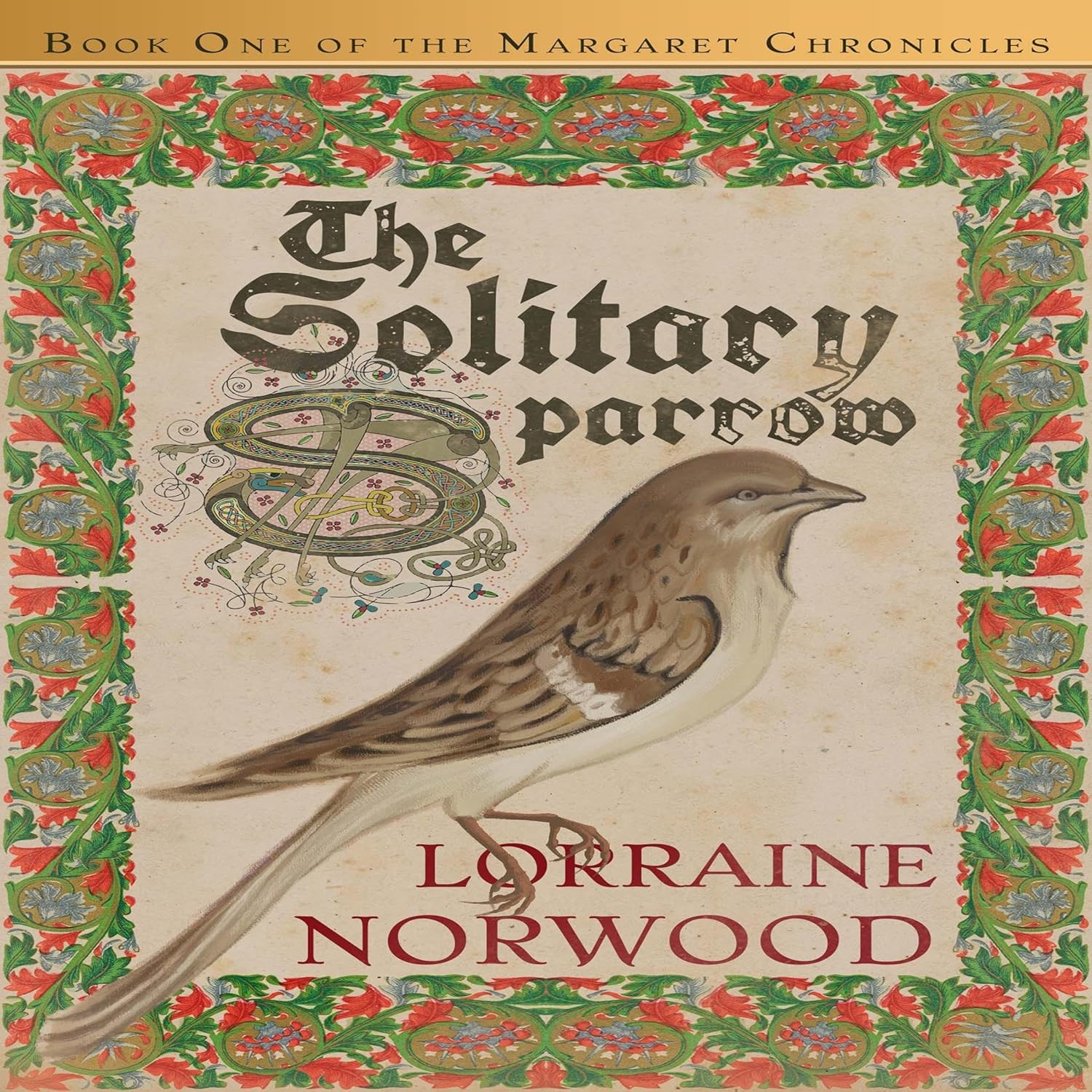
The Solitary Sparrow by Lorraine Norwood and narrated by Tracy Russell is a wonderfully atmospheric story of the fourteenth century, following Meg as she attempts to fulfil her hopes and dreams following a difficult childhood.
It does not shy away from describing some quite graphic medical conditions, but voiced by our narrator, the reader can only be enthralled and absolutely fascinated, as events unfold for Meg. Indeed, I was hooked by the end of the first chapter.
It’s such a fascinating story, stuffed with medical knowledge of the era and sure to enthrall readers, even if the topics are not always the most pleasant. An absolute delight.
Meet the author
Lorraine Norwood was a professional journalist for over 20 years, working in print and television journalism. Her lifelong interest in archaeology led her to change careers at midlife and earn a master’s degree in medieval archaeology from the University of York in York, England. When she returned to the U.S., she worked in archaeology and historic preservation for a number of years but is now happily writing full-time. She has participated in excavations in the UK including many in York, her favorite city. The Solitary Sparrow is her first novel, the first in a series titled The Margaret Chronicles. She is working on the sequel, A Pelican in the Wilderness. The series is set in 14th century England and France. Lorraine is a member of the Women’s Fiction Writers Association and the Historical Novel Society. She is a certified book coach and a developmental editor and loves mentoring new writers. She lives with an old Lab who follows her everywhere and a grumpy old cat who doesn’t care what the human does as long as he has food in his bowl. Lorraine lives in the Blue Ridge Mountains of North Carolina.
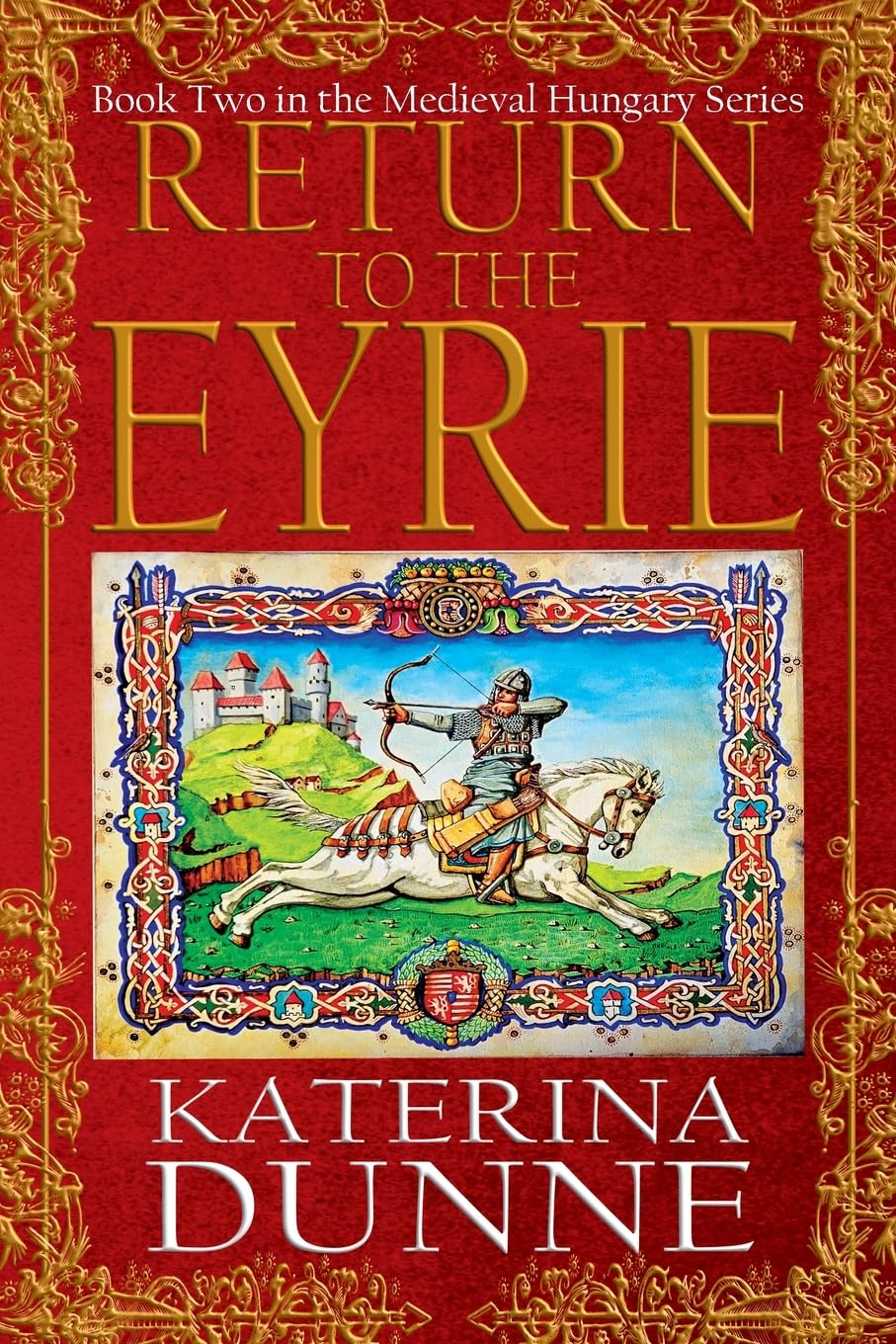
I’m delighted to welcome Katerina Dunne and her new book, Return to the Eyrie from the Medieval Hungary series to the blog with The Siege of Szabács (1476).
The Siege of Szabács (1476)
During his long reign (1458-1490), King Mátyás of Hungary faced the Ottoman army many times. Although the King kept a rather defensive stance against Sultan Mehmed’s advances towards Central Europe, he did his best to ensure the border raids perpetrated by the Ottomans remained localised. Mátyás focused on expanding his kingdom to the west and north; but when circumstances demanded it, he fought the Ottomans successfully.
Several chapters of Return to the Eyrie are dedicated to the siege of Szabács (Jan-Feb 1476) It is where the young heroine, Margit, receives her baptism of fire as a soldier. Dressed in a man’s clothes, she puts her archery and fighting skills to the test.
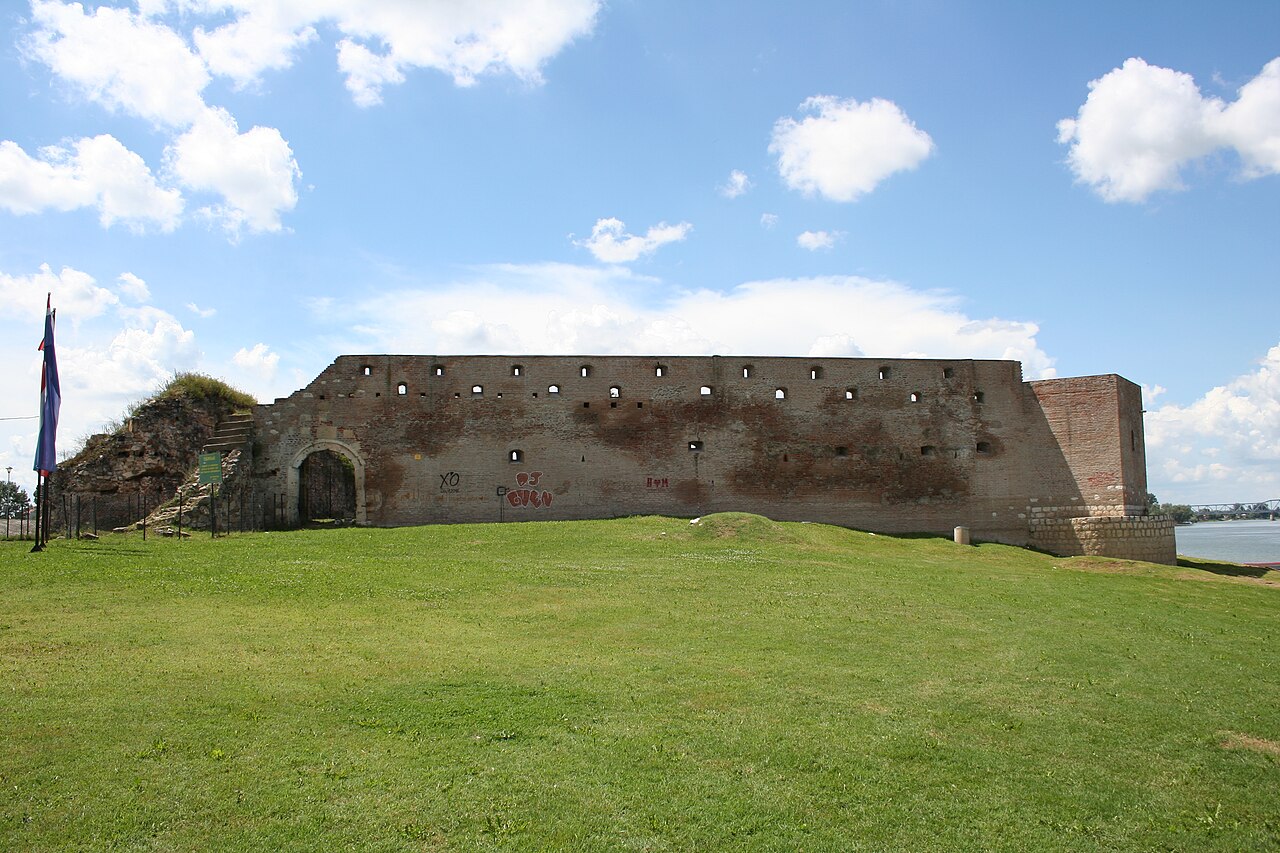
The fortress of Szabács (Šabac in Serbian) was a stronghold on the southern bank of the river Sava. It was built in 1470 by the Ottomans, who had occupied the area since 1459 and used the fortress as a base to launch raids into the territories of the Kingdom of Hungary (mainly Croatia, Slavonia and the Hungarian-occupied area around Belgrade)
According to sources of the time, the fortress was constructed of wood and rammed earth and was surrounded by marshes as well as man-made ditches. This whole arrangement was quite effective against bombardment.
The remains of the Šabac / Szabács fortress photo by Ванилица from Wikipedia
After fighting against his Christian neighbours for many years, King Mátyás wished to pacify public opinion in Hungary and abroad and present himself as a “defender of the faith”. During 1475, he had already established a huge army of Hungarian, Transylvanian, Wallachian and mercenary forces, including artillery and siege equipment as well as river galleys and gunboats.
It is not exactly certain whether his plan at the time was to go to the aid of the Moldavian and Wallachian princes, whose territories were threatened by an Ottoman invasion, or capture the main Ottoman fortresses in Serbia in order to stop the enemy attacks against his own kingdom. In any case, he ended up besieging Szabács in January and February 1476 from land and river with a force that severely outnumbered the Ottoman defenders and discouraged any relief army to approach the fortress.
The earthen walls of Szabács withstood the long-range bombardment during the first part of the siege while the Ottoman arrows and firearms prevented any assault from the land. But when the waters in the ditches rose in the first days of February, the war galleys were able to approach from the river and intensify the damage to the walls. This, together with bombardment and assaults from the land, broke the Ottoman resistance, and the defenders surrendered on 15 February 1476.
In his chronicle, Antonio Bonfini wrote that Mátyás took the fortress by employing a ruse: he feigned retreat while a part of his army hid in a neaby forest. When the Ottomans thought the danger had passed and relaxed their guard, the hidden soldiers climbed the walls and took Szabács. Although this story has great dramatic effect (which I partly use in my novel), it was probably only a myth.
Another primary source of the time, the anonymous poem Szabács Viadala (The Fight for Szabács), presents a more plausible version of how the fortress was taken. In the poem, an Ottoman soldier, who still remembered his Hungarian origin, fled and revealed the weak points of the fortifications to Mátyás. The bombardment then concentrated on these areas until the fotress fell.
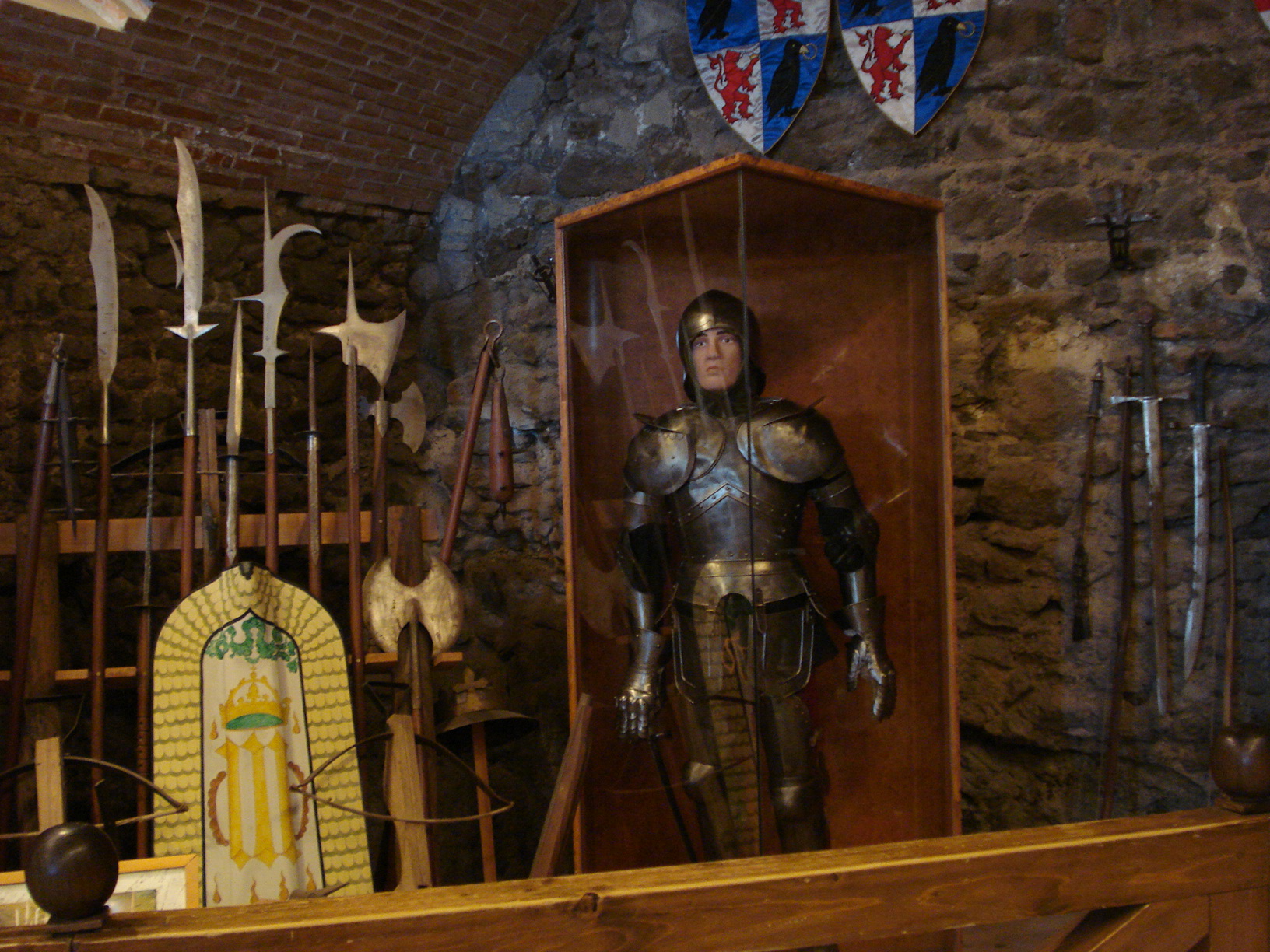
Armour and weapons of King Mátyás’soldiers at the Visegrád citadel museum (my photo)
Whatever the real reason for the capture of Szabács was, historian Tamás Pálosfalvi suggests that its significance rests on the King’s original intentions at the time. If Mátyás had intended to assist Moldavia and Wallachia but was forced to change his plans due to the adverse weather or the failure of the Ottomans to attack Wallachia at the time, then the victory at Szabács can be considered a success. If, however, Szabács was his main aim, then the whole operation only served to convince public opinion in Hungary and abroad of the King’s commitment to defending Christendom against the Ottoman danger.
Works Consulted:
Antonio Bonfini: A Magyar Történelem Tizedei (Rerum Hungaricarum Decades), Hungarian trans. P. Kulcsár (Budapest, 1995)
Szabács Viadala (The Fight for Szabács)—a poem commemorating the siege and capture of Szabács (author anonymous; date unknown but possibly around the time of the siege in 1476)
Armour and weapons of King Mátyás’soldiers at the Visegrád citadel museum (my photo)
Blurb
Honour, revenge, and the quest for justice.
Belgrade, Kingdom of Hungary, 1470:
Raised in exile, adolescent noblewoman Margit Szilágyi dreams of returning to her homeland of Transylvania to avenge her father’s murder and reclaim her stolen legacy. To achieve this, she must break the constraints of her gender and social status and secretly train in combat.
When the king offers her a chance at justice, she seizes it—even if it means disguising herself as a man to infiltrate the vultures’ nest that now occupies her ancestral ‘eyrie’.
Plagued by childhood trauma and torn between two passionate loves, Margit faces brutal battles, her murderous kin’s traps and inner demons on her quest for vengeance. Only by confronting the past can she reclaim her honour—if she can survive long enough to see it through.
Return to the Eyrie is an epic coming-of-age tale of a young woman’s unwavering pursuit of justice and destiny in 15th century Hungary.
Katerina Dunne is the pen-name of Katerina Vavoulidou. Originally from Athens, Greece, Katerina has been living in Ireland since 1999. She has a degree in English Language and Literature from the University of Athens, an MA in Film Studies from University College Dublin and an MPhil in Medieval History from Trinity College Dublin.
Katerina is passionate about history, especially medieval history, and her main area of interest is 13th to 15th century Hungary. Although the main characters of her stories are fictional, Katerina uses real events and personalities as part of her narrative in order to bring to life the fascinating history of the medieval Kingdom of Hungary, a location and time period not so well-known to English-speaking readers.
Return to the Eyrie (published April 2024) is the second book in the Medieval Hungary series, a sequel to Lord of the Eyrie (published in February 2022).
I’m delighted to welcome Jennifer Ivy Walker and her new book, The Witch of the Brenton Woods, to the blog with the historical aspect of The Witch of the Brenton Woods.
Historical Aspect of The Witch of the Brenton Woods
I wanted the hero of my story to be an American paratrooper dropped into Normandy for the D-Day landings on June 6, 1944, so I researched many of the different divisions of American servicemen during World War II. I selected the 507th PIR (Parachute Infantry Regiment), which was part of the 82nd Airborne Division, whose D-Day objective known as Mission Boston was to secure the Merderet River crossing in Normandy.
As I developed the historical fiction aspects of The Witch of the Breton Woods, I decided to have my fictional character, First Lieutenant Richard Zachford, be forced to make an emergency jump when his plane was shot down by German 88mm flak antiaircraft artillery guns. It was rewarding and challenging to weave together fictious characters who were part of the real 507th PI and weave them into the Battle of Saint-Malo, the culminating point of my novel.
I did extensive research about the Battle of Saint-Malo, a city in Bretagne (Brittany) that I had visited twice before as a high school French teacher taking my students on trips to France. When I discovered that a major focus of World War II had been The Battle of Brittany, I wove my fictional characters into the historical events which actually took place in the Battle of Saint-Malo, one of the crucial seaports that the Nazis controlled, which was deemed essential for the Allies to recapture.
Saint-Malo was one of the French towns designated as a fortress under Hitler’s Atlantic Wall program, and the Allies intended to capture the town so that its port could be used to land supplies and naval reinforcement. However, the Germans had covered the medieval castle into an underground fortress that was nearly impenetrable. When the Allies did successfully retake Saint-Malo, it had been so heavily damaged that it had been rendered unusable, and the courageous Malouins (the French name for the local inhabitants of Saint-Malo) slowly rebuilt their beloved city.
In writing The Witch of the Breton Woods, I wove together the events leading up to the surrender of the German Colonel Von Aulock (known as the Mad Colonel) on the 17th of August, 1944 and the surrender of the nearby German garrison of Cézembre on September 2nd. It was very challenging to entwine the plot development of my novel with the actual events which occurred between the D-Day landing of June 6th and the surrender of the Germans at Saint-Malo on September 2nd, 1944. I am very proud to have interwoven compelling historical fiction and thrilling romantic suspense in The Witch of the Breton Woods.
Blurb
Traumatized by horrors witnessed during the Nazi invasion of France, a young woman retreats to the dense Breton woods where she becomes a member of the clandestine French Resistance. When she finds a critically injured American paratrooper whose plane was shot down, she shelters the wounded soldier in her secluded cottage, determined to heal him despite the enormous risk.
Ostracized by villagers who have labeled her a witch, she is betrayed by an informant who reports to the Butcher—the monstrous leader of the local paramilitary organization that collaborates with the Germans. As the enemy closes in, she must elude the Gestapo while helping the Resistance reunite the American with his regiment and join the Allied Forces in the Battle of Brittany.
Can true love triumph against all odds under the oppressive Third Reich?
Jennifer Ivy Walker has an MA in French literature and is a former high school teacher and professor of French at a state college in Florida. Her novels encompass a love for French language, literature, history, and culture, incorporating her lifelong study, summers abroad, and many trips to France.
The Witch of the Breton Woods is heart-pounding suspense set during WWII in Nazi-occupied France, where a young woman in the French Resistance shelters and heals a wounded American soldier, hiding him from the Gestapo and the monstrous Butcher who are relentlessly hunting him.
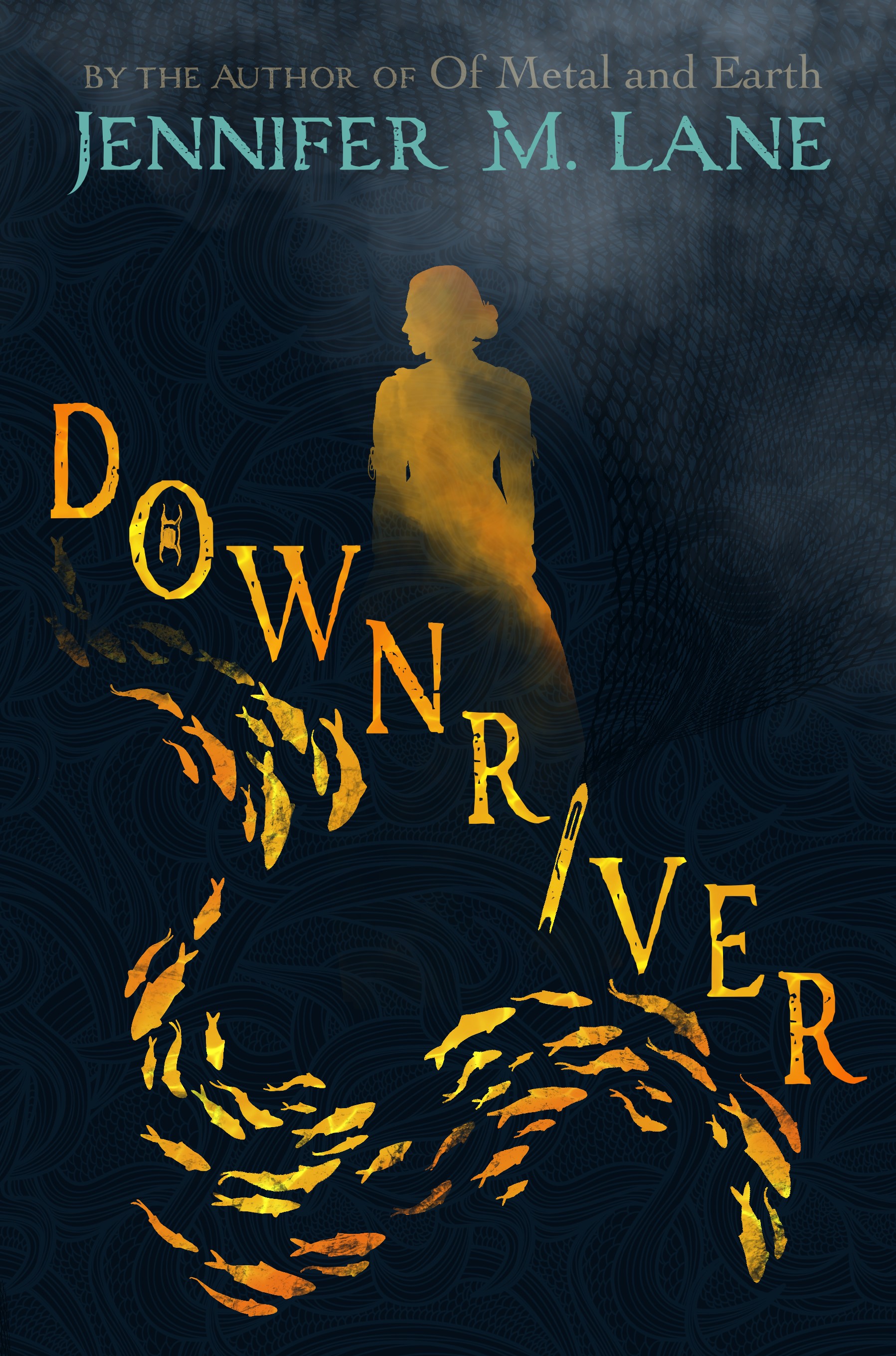
I’m delighted to welcome Jennifer M. Lane and her new book, Downriver from The Poison River Series, to the blog with a guest post.
Guest Post
On the surface, Downriver, the first book in the Poison River series, is an extension of my lifelong interest in coming-of-age tales, where men and women unlock a part of themselves that allows them to move into a new phase of life. Though I believe we can “come of age” at many points, Charlotte and her friends are teenagers at the start of the series, fighting a battle much more formidable than their years.
The story is fictional, but the places are real, and the foundation on which the plot sits is based in the history of Pennsylvania’s anthracite coal country.
The world Charlotte and her brother, Emmett, come from is tainted by the conflict between coal bosses and mine workers. It’s a history of rich versus poor, of immigrants with fewer protections being abused by a coordinated system of oppression.
Mine workers in this region in the nineteenth century were largely Irish immigrants, many of whom fled the potato famine and the corporatization of their food supply. As they fought back in Ireland and England, emigrees formed a group known as the Molly Maguires, coordinating increasingly violent uprisings against farmers who locked them out of land they once farmed and merchants who raised the rates on foods.
The Strike in The Coal Mines. Credit: Public Domain (prior to 1929)
In the United States, as Irish workers settled in anthracite country and took on mine work, they soon found themselves financially shackled to their new employer. Housing was taken from their pay along with fees for the town doctor. Their remaining income was paid in scrips—company coin that could only be spent in the overpriced company store. Their income rarely exceeded their bills. And the more they pushed for better conditions, the more the coal bosses fought back. Eventually, things turned violent.
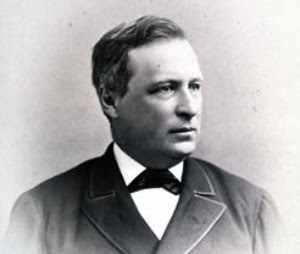
No paper trail links the 1860s and 1870s violence and murders of coal bosses to a coordinated Molly Maguires group, but once slung, the moniker stuck. As the chasm between the miners and coal bosses widened, Frank Gowen convinced the State of Pennsylvania to allow the coal patch towns to hire their own private police force to combat the Mollies. The Coal and Iron Police was formed, then returned the miner’s fire.
Frank Gowen. Credit: Public Domain (prior to 1929)
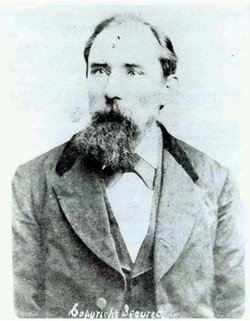
This is the world of my fictional Frank Morris, Charlotte and Emmett’s father. The fictional man was a more public figure than the man who inspired him. Frank Morris wrote speeches that sparked an uprising before losing his life to poisoning. The real Jack Kehoe was hanged, accused of working quietly, leading a group of men who used violence and murder to punish coal bosses and intimidate their opposition.
Jack Kehoe. Credit: Public Domain (prior to 1929)
In retaliation, Frank Gowen hired a Philadelphia detective (Allan Pinkerton) to plant a spy within his worker’s ranks. That spy found himself regretfully entangled in violence he was accused of instigating before testifying against the miners in a case that was prosecuted by Gowen himself. The gross miscarriage of justice is considered one of the bleakest eras of the American justice system.
Readers will encounter more of this rich history in subsequent books in the series. Set a mere quarter century after twenty men were sentenced to hang for their role as Molly Maguires, Downriver draws largely on these political and worker tensions as background. The battle Charlotte and her friends wage is against a pollution that poisons the air and the water, sickening people in her hometown of Stoke and poisoning the fish in the Maryland foster village on the Chesapeake Bay.
Eckley Miner’s Village. Credit: CC BY-SA
As she battles her father’s coal boss from afar, Charlotte teams up with suffragists, her high school literary society, and a handsome young man who lost family to the poison, too.
Though the era of the American Revolution is my favorite, writing Downriver has given me a chance to merge the historical settings of my Chesapeake Bay hometown and my partner’s in the Poconos outside Eckley Miner’s Village. Visitors to their museum can enjoy the history and structures such as houses and the coal breaker that was constructed for the 1970s film The Molly Maguires.
Blurb
A sulfur sky poisoned her family and her heart. Now revenge tastes sweeter than justice.
It’s 1900. In a Pennsylvania coal town tainted by corruption and pollution, Charlotte’s world collapses when her parents meet a tragic end. Sent to a foster family in a Maryland fishing village, she’s fueled by grief and embarks on a relentless quest for justice against the ruthless coal boss, Nels Pritchard.
But Charlotte is no ordinary girl. She shares the fiery spirit of her father, whose powerful speeches inspired worker riots. With a burning desire for vengeance, she sets out to uncover the truth behind Pritchard’s crimes, unearthing a shocking connection between the town’s toxic air and the lifeless fish washing up on the shore of her Chesapeake Bay foster town.
To expose the truth, Charlotte builds a network of unexpected allies. There are gutsy suffragists, a literary society of teenage girls willing to print the truth… and Weylan. The captivating young man lost his own family to Pritchard’s poison. He offers support, but Charlotte questions his true motives when he lures her to break the law. Could she be falling into a dangerous trap, leading her to a fate worse than poison?
With her unwavering spirit and determination, Charlotte must forge alliances and navigate a web of treachery before Pritchard seeks his own ruthless revenge.
The newest book by award-winning author Jennifer M. Lane is perfect for fans of Jeannette Walls’ Hang the Moon and the fiery protagonist in The Hunger Games. Join Charlotte in this small town, coming-of-age dystopian historical saga as she finds resilience, courage, and triumph in her search for identity, independence, and her true home.
This title is available to read on #KindleUnlimited
Meet the Author
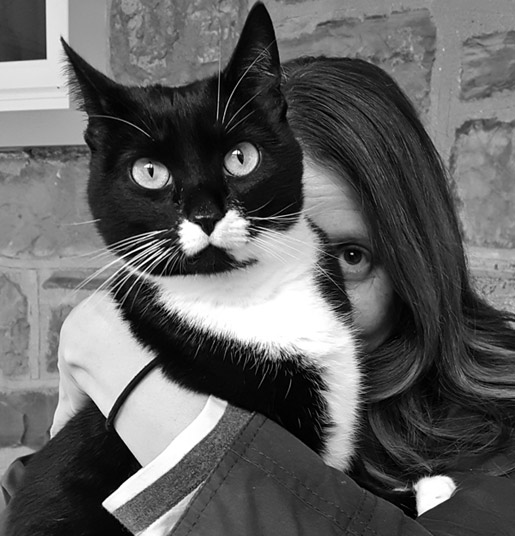
A Maryland native and Pennsylvanian at heart, Jennifer M. Lane holds a bachelor’s degree in philosophy from Barton College and a master’s in liberal arts with a focus on museum studies from the University of Delaware, where she wrote her thesis on the material culture of roadside memorials.
Jennifer is a member of the Authors Guild and the Historical Novel Society. Her first book, Of Metal and Earth, won the 2019 Next Generation Indie Book Award for First Novel and was a Finalist in the 2018 IAN Book of the Year Awards in the category of Literary / General Fiction. She is also the author of Stick Figures from Rockport, and the six book series, The Collected Stories of Ramsbolt.