I’m welcoming Noni Valentine and her new novel, Humility and Tolerance, to the blog #newrelease #blogtour #historicalromance

Here’s the blurb

A sequel to Jane Austen’s Pride and Prejudice.

Seven years after Elizabeth Bennett married Fitzwilliam Darcy, they are still deeply in love, with two small children. But paradise is showing cracks now that Darcy’s aged housekeeper has died and Elizabeth must take up her duties. It’s more than one woman, even one as capable as Elizabeth, can manage.

Her sister Kitty, with Elizabeth and Jane’s help and a heroic effort on Kitty’s part, has outgrown her silly youth and matured into a sensible young woman—who, being sensible, spends as much time away from her parents and visiting her sisters as possible. Darcy’s sister Georgiana, with perhaps more influence from Elizabeth than is good for her, has become a confident, independent woman who is nevertheless ripe for romance. Charlotte Collins, newly widowed, is searching for a way out of the household of her husband’s crabbed patron, Lady Catherine, that doesn’t involve returning to her parents’ house.

Elizabeth sees a way to restore order to Pemberley and give herself a chance to to breathe: she offers Kitty a job as housekeeper of the estate, and Charlotte a job as governess of her adored children.

With these four women under one roof, chaos and the unexpected are inevitable. Both Kitty and Georgiana meet and begin falling in love with honorable, interesting men, neither of whom are gentlemen and therefore not considered eligible matches for them. Charlotte has the opposite problem: a childhood acquaintance who is now a Lord has become fixated on her and begins diligently wooing her, when all she wants is a quiet life and a chance to recover from eight years of marriage to a man she never loved.

When Elizabeth and Darcy learn of their sisters’ budding romances, each has the same reaction: delight at their sister-in-law’s choice and outrage at that of their sister. Now throw a ball into the mix, with Elizabeth’s mother bringing up forbidden topics from the past and her father hiding from the noise, Jane and Bingley attempting to calm the waters, Elizabeth trying to set up all three of the younger women, and Charlotte’s Lord pursuing her all over the dance floor—and an explosion is sure to happen.

This charming romance will delight all lovers of Jane Austen’s masterpiece who have ever wondered, “What happened next?”

Purchase Links

https://www.amazon.com/Humility-Tolerance-Noni-Valentine-ebook/dp/B0CWPWCSH5

https://www.amazon.co.uk/Humility-Tolerance-Noni-Valentine-ebook/dp/B0CWPWCSH5

Meet the author

Noni Valentine grew up in the north central part of the U.S., but moved away after graduating from high school, and never again stayed in one place for long. She has been writing for most of her life, but discovered Jane Austen as an adult and fell in love all over again.

She lives with a small menagerie of feathered and furry companions. Oh, almost forgot—there’s a human in that collection as well.

I’m delighted to welcome Deborah Swift and her book, The Fortune Keeper, to the blog #FortuneKeeper #HistoricalFiction #BlogTour #TheCoffeePotBookClub

I’m delighted to welcome Deborah Swift and her new book, The Fortune Keeper, to the blog with some backstory behind The Fortune Keeper.

The Fortune Keeper

I’ve always been fascinated by Renaissance art and science and its effect on cultural life. In these novels I explore the artist Bernini and the legacy of Galileo Galilei as well as the influence of major cities such as Rome and Venice and their unique religious and architectural heritage. For a fiction writer you are looking for a period that can immerse people quickly into a recognisable setting, but one that is also different from today, and the Renaissance has a visual appeal that is both familiar, in that people do already have some visual ideas about it, but also with much left to uncover to tempt and enthral the reader. The grandeur of the Vatican or the shimmering canals of Venice offer opportunities for writing scenes that few locations can match. In the end though, it was the people and the characters that drew me, and one person in particular – Giulia Tofana.

I knew very little, except what was available in books and online. Despite this, her name had lived on and she was credited with the poisoning of more than six hundred men. That seemed to be an extreme number, and led to my interest in uncovering more about her and in particular to explore her motives through fiction. Why did she do it, and why was she never caught?

It soon became apparent why. I learnt from researching her that we were in fact talking about three women rather than one. The three women were Giulia’s mother Theofania, Giulia herself and her daughter Girolama (later discovered to be a step-daughter). This idea helped to make sense of the conflicting evidence from the different sources. Or so I thought. Later, as I was researching the third book, lost documents emerged from an Italian archive that threw all the existing knowledge about her into question. The daughter Girolama is the main character in The Fortune Keeper, and I enjoyed exploring how she came to live with Giulia, and how it shaped her life.

In fact there are some excellent books which chronicle women’s lives in the Renaissance. I was particularly grateful to the book ‘Women in Italy 1550 – 1650’  by Mary Rogers and Paola Tinagli,  here is ‘how to bring up a daughter’, a passage from that book written in 1547,

‘as soon as the girl reaches the right age to learn to read and writer; I want the father to have two aims for her; one is religion, the other the management of the household.’

This seems to have been a common view, with the priority for girls being to remain ‘chaste’ for the marriage market, and also to have good practical skills in running a household or ordering servants. In Italy marriage then was a contract, with young women as young as twelve married off to older men whose previous partners had died in childbirth or from disease. Of course every society has the rebels who refuse to conform, and the more oppressive the society, the more underground the rebellion has to be. In a patriarchal society where women’s rights are few, the drastic action of poisoning an abusive partner was often the last recourse of a woman at the end of her tether.

xr:d:DAEbig1CmJo:257,j:33693903820,t:22082511

For me the story comes first. I’m in the business of entertaining through fiction. Of course this doesn’t mean to throw out the history, but to use it intelligently, to choose eras where the story would naturally fit, and use the history to support the story, or particular version of events you are trying to tell. A novelist always makes choices about how to use the known facts at their disposal. I could have made Giulia a monster and turned it into a horror story, but instead I chose to focus on the ambiguity of women’s role as both prostitute and saint, how the Catholic religion both supported and undermined women, and to make the narrative a bigger exploration of the way women fight back when they have few options left to them.

A book I thoroughly enjoyed reading was The Ceremonial City by Iain Fenlon, which gives a sense of the myths and rituals that drive life in Venice. Not only is it lavishly illustrated (always a bonus for a fiction writer) but I appreciated the way he explored the way religious and secular life intertwined Monica Chojnacka’s book ‘Working Women of Early Modern Venice’ was a wonderful book that made me consider life outside the grand palazzi that readers often associate with Venice, and which gave an good insight into the working class.

I really enjoy the early modern period, and have set novels in the period not only in Italy, but here in England, and also in Spain. I think what appeals to me about the period is that it was a period of massive expansion in trade. And by trade, I mean not only commodities and goods, but also trade in ideas. It was a time when the world was incredibly outward-looking and open to encountering ‘the new.’ I hope to immerse people in this world through my trilogy of books set in Italy at that time.

Here’s the blurb

Count your nights by stars, not shadows ~ Italian Proverb

Winter in Renaissance Venice

Mia Caiozzi is determined to discover her destiny by studying the science of astronomy. But her stepmother Giulia forbids her to engage in this occupation, fearing it will lead her into danger. The ideas of Galileo are banned by the Inquisition, so Mia must study in secret.

Giulia’s real name is Giulia Tofana, renowned for her poison Aqua Tofana, and she is in hiding from the Duke de Verdi’s family who are intent on revenge for the death of their brother. Giulia insists Mia should live quietly out of public view. If not, it could threaten them all. But Mia doesn’t understand this, and rebels against Giulia, determined to go her own way.

When the two secret lives collide, it has far-reaching and fatal consequences that will change Mia’s life forever.

Set amongst opulent palazzos and shimmering canals, The Fortune Keeper is the third novel of adventure and romance based on the life and legend of Giulia Tofana, the famous poisoner.

‘Her characters are so real they linger in the mind long after the book is back on the shelf’

~ Historical Novel Society

NB This is the third in a series but can stand alone as it features a new protagonist. Other two books are available if reviewers want them.

Trigger Warnings:

Murder and violence in keeping with the era.

Buy Link

Universal Link:

This title is available to read on #KindleUnlimited

Audiobook Buy Links

Kobo: Audio:

Meet the Author

Deborah Swift is a USA TODAY bestselling author who is passionate about the past. Deborah used to be a costume designer for the BBC, before becoming a writer. Now she lives in an old English school house in a village full of 17th Century houses, near the glorious Lake District. Deborah has an award-winning historical fiction blog at her website http://www.deborahswift.com.

Deborah loves to write about how extraordinary events in history have transformed the lives of ordinary people, and how the events of the past can live on in her books and still resonate today.

The first in her series about the Renaissance poisoner Giulia Tofana, The Poison Keeper, was a winner of the Wishing Shelf Book of the Decade, and a Coffee Pot Book Club Gold Medal, and the latest in her WW2 Secret Agent series, Operation Tulip, is coming soon.

Connect with the Author

Website: BookBub:

Follow The Fortune Keeper blog tour with The Coffee Pot Book Club

I’m delighted to welcome I.M. Foster and her new book, Murder on West Main, to the blog #MurderOnWestMain #IMFoster #HistoricalMystery #CozyMystery #BlogTour #TheCoffeePotBookClub

I’m delighted to welcome I.M. Foster and her new book, Murder on West Main, to the blog with a snippet.

Snippet

A knot tightened in his stomach, for it wasn’t like her to seek him out in this manner.

Here’s the blurb

When Colin Brissedon arrives at work one summer morning to find his new boss murdered, all eyes turn to him. After all, the man had threatened to fire him just a few days before, and his colleagues are more than happy to tell the tale. Kathleen admits her brother is no angel, but she can’t believe he would sink this low. Fortunately for them, neither does Daniel O’Halleran, the village’s new coroner’s assistant. Of course, he needs more than his gut feeling to prove it.


But that’s not going to be an easy task, considering the victim does not appear to have been held in high regard. In fact, Daniel is hard-pressed to find anyone who did like him, though there are more than a few who had reason to wish the man dead. To make matters worse, Kathleen is intent on conducting her own investigation despite his wishes, and he fears the consequences could be deadly.


And yet, with the pieces of the puzzle laid before him, he can’t shake the feeling that something is missing, an integral clue that will tie everything else together. Will Daniel be able to find the elusive detail and discover the reason behind the gruesome murder of the prominent attorney? Or will the guilty party live to kill again?

Buy Link

Universal Link:

This title is available on #KindleUnlimited

Meet the Author

I. M. Foster is the pen name author Inez Foster uses to write her South Shore Mystery series, set on Edwardian Long Island. Inez also writes historical romances under the pseudonym Andrea Matthews, and has so far published two series in that genre: the Thunder on the Moor series, a time-travel romance set on the 16th century Anglo-Scottish Borders, and the Cross of Ciaran series, which follows the adventures of a fifth century Celt who finds himself in love with a twentieth century archaeologist.

Inez is a historian and librarian, who love to read and write and search around for her roots, genealogically speaking. She has a BA in History and an MLS in Library Science and enjoys the research almost as much as she does writing the story. In fact, many of her ideas come to her while doing casual research or digging into her family history. Inez is a member of the Long Island Romance Writers, and the Historical Novel Society.

Connect with the Author

Website: BookBub:

Follow the Murder On West Main blog tour with The Coffee Pot Book Club

I’m delighted to welcome back David Fitz-Gerald and his new book, Rolling Home, to the blog #WesternFiction #WesternAdventure #AmericanWest #NewRelease #BlogTour #TheCoffeePotBookClub

I’m delighted to welcome back David Fitz-Gerald and his new book, Rolling Home from the Ghosts Along the Oregon Trail series, to the blog with a series trailer.

Ghosts Along the Oregon Trail Series Trailer

Ghosts Along the Oregon Trail Series Trailer

Here’s the blurb

Climb aboard! Don’t miss the heart-pounding climax of the Ghosts Along the Oregon Trail series. Rolling Home is the final installment.

In the heart of the rolling village, dissent brews as the stubbornest naysayer refuses to continue the journey. With an ominous early snowfall and memories of the ill-fated Donner Party haunting the pioneers, Dorcas Moon faces a new wave of challenges. Just when she believes things can’t get worse, a disastrous river crossing claims their wagon and submerges their belongings.

As the rolling village approaches the final leg of the journey, the looming threat of outlaws intensifies. The notorious bandit known as The Viper and his ruthless brothers are determined to rob the greenhorns, sell their stock, and kill every last one of them. The pioneers had heard tales of their brutality, but now, with Dorcas’ daughter kidnapped and Dorcas captured, everyone is in danger.

What will become of Dorcas Moon, her family, and their friends? Will anyone survive the perilous journey?

Rejoin the expedition and witness the thrilling end to a gripping saga.

Buy Link

Universal Link:

This title is available to read on #KindleUnlimited

Meet the author

David Fitz-Gerald writes westerns and historical fiction. He is the author of twelve books, including the brand-new series, Ghosts Along the Oregon Trail set in 1850. Dave is a multiple Laramie Award, first place, best in category winner; a Blue Ribbon Chanticleerian; a member of Western Writers of America; and a member of the Historical Novel Society.

Alpine landscapes and flashy horses always catch Dave’s eye and turn his head. He is also an Adirondack 46-er, which means that he has hiked to the summit of the range’s highest peaks. As a mountaineer, he’s happiest at an elevation of over four thousand feet above sea level.

Dave is a lifelong fan of western fiction, landscapes, movies, and music. It should be no surprise that Dave delights in placing memorable characters on treacherous trails, mountain tops, and on the backs of wild horses.

Connect with the author

Website: BookBub: LinkTree:

Follow the Rolling Home blog tour with The Coffee Pot Book Club

I’m delighted to welcome Gail Ward Olmsted and her new book, Katharine’s Remarkable Road Trip, to the blog #HistoricalFiction #CivilWarNurses #BiographicalFiction #WomenInHistory #BlogTour #TheCoffeePotBookClub

I’m delighted to welcome Gail Ward Olmsted and her new book, Katharine’s Remarkable Road Trip, to the blog with a snippet.

Snippet

Katharine’s (semi-solicited) advice to a troubled newlywed

I am probably the last person qualified to give relationship advice. But since you’re asking me, I’ll tell you what I think. Go home. Not to your parents’ but to the home you share with Charlie. Talk to your husband, but wait until he’s had a bath after work. And maybe serve him a special dinner too. It’s much easier to talk to someone who’s well-fed. I know what you’re thinking. You’ve got a little one to keep fed and clean and now you’ve got Charlie, too? Dear, I’m not saying you must run his bath or cook a three-course meal every night, but you both have a job to do. Currently, his is to go to work every day in a factory that I can only imagine is loud and dirty, get his weekly pay, put food on the table and keep a roof over your heads. Yours is equally important, but for the time being, lacks much in the way of tangible rewards. But it’s vital work. Caring for your son, tending to your home, loving your husband: it’s all very important. She seemed unconvinced, so I tried a different, more direct approach.

What I’m saying in a nutshell is, it’s time to grow up. You chose to get married, and that comes with responsibilities. You’re not playing house, my dear. Real life is hard and now you’ve got a third person added to the equation. One that relies on you for absolutely everything. You are his entire world. You must tell Charlie what you need from him and, at the same time, assure him you’re quite capable of running the house and caring for your son. Can you do that, Hannah?

Here’s the blurb

In the fall of 1907, Katharine decides to drive from Newport, Rhode Island, to her home in Jackson, New Hampshire. Despite the concerns of her family and friends, that at the age of 77 she lacks the stamina for the nearly 300-mile journey, Katharine sets out alone. Over the next six days, she receives a marriage proposal, pulls an all-nighter, saves a life or two, crashes a high-society event, meets a kindred spirit, faces a former rival, makes a new friend, takes a stroll with a future movie mogul, advises a troubled newlywed, and reflects upon a life well lived; her own! 

Join her as she embarks upon her remarkable road trip.

Katharine Prescott Wormeley (1830-1908) was born into affluence in England and emigrated to the U. S. at the age of eighteen. Fiercely independent and never married, Kate volunteered as a nurse on a medical ship during the Civil War, before founding a vocational school for underprivileged girls. A lifelong friend and trusted confidante of landscape architect Frederick Law Olmsted, she was a philanthropist, a hospital administrator, and the author of The Other Side of War: 1862, as well as the noted translator of dozens of novels written by French authors, including Moliere and Balzac. She is included in History’s Women: The Unsung Heroines; History of American Women: Civil War Women; Who’s Who in America 1908-09; Notable American Women, A Biographical Dictionary: 1607-1950and A Woman of the 19th Century: Leading American Women in All Walks of Life.

Buy Link

Universal Link:

This title will be available on #KindleUnlimited

Meet the author

Gail Ward Olmsted was a marketing executive and a college professor before she began writing fiction on a fulltime basis. A trip to Sedona, AZ inspired her first novel Jeep Tour. Three more novels followed before she began Landscape of a Marriage, a biographical work of fiction featuring landscape architect Frederick Law Olmsted, a distant cousin of her husband’s, and his wife Mary. After penning a pair of contemporary novels featuring a disgraced attorney seeking a career comeback (Miranda Writes, Miranda Nights) she is back to writing historical fiction featuring an incredible woman with an amazing story. Watch for Katharine’s Remarkable Road Trip on June 13th.

For more information, please visit her on Facebook and at gwolmstedauthor.carrd.co

Connect with the author

Website: BookBub:

Follow Katharine’s Remarkable Road Trip blog tour with The Coffee Pot Book Club

I’m delighted to welcome Richard Buxton and his trilogy, the Shire’s Union Trilogy, to the blog #ShiresUnion #AmericanCivilWar #Historical Fiction #BlogTour #TheCoffeePotBookClub

I’m delighted to welcome Richard Buxton and his trilogy, the Shire’s Union Trilogy, to the blog with a series trailer.

Shire’s Union Trilogy Series Trailer

Shire’s Union Trilogy Series Trailer

Tigers in Blue – Excerpt

Giles County, Tennessee – November 1864

Their train stopped again. The three of them disembarked and walked beyond the engine. It had pulled up a handful of crossties before a fire-blackened and wounded trestle bridge that spanned a deep and wide ravine. There must have been three hundred men or more working on the repairs. They swarmed over the bridge, a busy blue infestation, some out along the incomplete top span, others either end of a crane carried on a flatbed railcar, many more perilously among the posts and cross-struts. Men struggled to shout instructions over a chorus of hammer and saw. Way down in the ravine and across a swift creek stood a clump of engineer officers. One held a sheet of paper so big he looked in danger of being lifted into the air. Others pointed and gestured up at the bridge. As Shire watched, a steam winch puffed into action on the crane-car and a thick trestle rose and swayed up from below like a miracle, before being claimed by many hands and dragged into the great puzzle of wood. Despite their industry, the nearer half of the bridge was missing the top forty feet.

The engine driver came and stood beside them, wiping sooty hands on a dirty rag. Rice, greasy hair pushed back off his forehead, asked, ‘If you knew the bridge was broke, why did you set out? We’ll be stuck for days.’

The driver took his time surveying the works. ‘Well,’ he said, ‘you’re welcome to climb down and up the other side, but any trains that happen along from Nashville will only queue up to go south. Watch a while.’ He turned to walk back to his engine. ‘These people will have us over before nightfall.’

With nothing to do but wait, Shire and Tuck left Rice at the engine and worked their way along the top of the ravine to a spot where they could watch the repair. The ground fell steeply away before them. Predictably, Tuck dropped his pack, took up his fiddle and sat. He hadn’t said a word today. A stiff breeze struck up under a gray sky. At least they had the car to retreat to if it came on to rain. Shire got out his dog-eared map of Tennessee and Kentucky and unfolded it carefully so as not to bring on further dishevelment. He found Pulaski and traced the rail line to Nashville via Columbia. Short of Franklin he found Spring Hill. They would pass right by. Clara had been full of dubious enthusiasm for her move when he’d left her. What would have changed since? He wouldn’t need the train to stop again to be certain how he felt. That question had always been for her, though he wondered if she’d answered it quietly to herself a long time ago.

He folded his map away and got busy with a fire. In the army it paid to eat when the opportunity presented itself. ‘I’ll cook your pork. We ate mine yesterday,’ he said. They often shared rations. That way if one of them got a runt portion the hardship was shared too.

There was no response from Tuck. Sometimes it was like living with an elderly relative whose mind had been misplaced. In his own time, Tuck bowed into a slow waltz, utterly at odds with the exertions of the bridge builders. Evidently, it carried on the wind into the ravine and on to those high on the bridge, as not a few faces turned their way. There was a moment’s lull in the hammering before it stuttered up again. Two men on the flatbed end of the crane-car moved elegantly into closed hold and took a turn or two before their corporal beat them apart with his hat. Shire smiled but saw Tuck was too far inside his tune to take it in.

Once he had the fire going, he dug in Tuck’s pack for the salt belly-pork they’d been doled out back in Athens. It was a mess in there. An apple long past saving, percussion caps loose that should have been in a box, a lone dollar bill left to its own devices. The string hadn’t been tied properly on the pork paper. The exposed meat had picked up a covering of cotton threads and other miniature detritus. Shire reasoned it would cook off in his small skillet. Tuck’s ration was more than ample, so he cut off two-thirds and put it to cook slowly, not too close to the heat so that the fat would stay aboard. He wrapped the remains with care and was finding a safe corner back in Tuck’s pack when he happened on something round and hard. He drew out an enamel doorknob.

He recognized it. Tuck kept it as a grim reminder of his parents who were burned alive in their farmhouse, Tuck’s home. The enamel was scorched on one side, a smooth, mute witness to their murders. He’d been about to look for some wild onion or anything that might flavor the meat, but instead he took the doorknob and went to sit next to Tuck.

He didn’t expect to be acknowledged, but the lack irked Shire all the same. The waltz looped around and around. Shire could have sworn some of the hammering was striking out one, two, three… one, two, three. ‘I think you’re slowing down their industry,’ he said. Tuck played on. Shire felt a bubble of anger pop inside.

Blurb

Shire leaves his home and his life in Victorian England for the sake of a childhood promise, a promise that pulls him into the bleeding heart of the American Civil War. Lost in the bloody battlefields of the West, he discovers a second home for his loyalty.

Clara believes she has escaped from a predictable future of obligation and privilege, but her new life in the Appalachian Hills of Tennessee is decaying around her. In the mansion of Comrie, long hidden secrets are being slowly exhumed by a war that creeps ever closer.

The Shire’s Union trilogy is at once an outsider’s odyssey through the battle for Tennessee, a touching story of impossible love, and a portrait of America at war with itself. Self-interest and conflict, betrayal and passion, all fuse into a fateful climax.

Written by award winning author Richard Buxton, the Shire’s Union trilogy begins with Whirligig, is continued in The Copper Road, and concludes with Tigers in Blue.

Trilogy Buy Links:

US: UK:

Meet the Author

Richard lives with his family in the South Downs, Sussex, England. He completed an MA in Creative Writing at Chichester University in 2014. He has an abiding relationship with America, having studied at Syracuse University, New York State, in the late eighties. He travels extensively for research, especially in Tennessee, Georgia and Ohio, and is rarely happier than when setting off from a motel to spend the day wandering a battlefield or imagining the past close beside the churning wheel of a paddle steamer.

Richard’s short stories have won the Exeter Story Prize, the Bedford International Writing Competition and the Nivalis Short Story Award. His first novel, Whirligig (2017) was shortlisted for the Rubery International Book Award. It was followed by The Copper Road (2020) and the Shire’s Union trilogy was completed by Tigers in Blue (2023). To learn more about Richard’s writing visit www.richardbuxton.net.

Connect with the Author

Website: BookBub:

Follow the Shire’s Union Trilogy with The Coffee Pot Book Club

I’m delighted to welcome Nancy Jardine and her new book, Novice Threads, to the blog #VictorianSaga #HistoricalFiction #Scotland #WomensFiction #BlogTour #TheCoffeePotBookClub

I’m delighted to welcome Nancy Jardine and her new book, Novice Threads from the Silver Sampler Series, to the blog with Growing Up Brings More Questions Than Answers.

Growing Up Brings More Questions Than Answers

September 1850

“What do you need help with, Father?” Margaret asked on her return from assisting Granny Maggie to bake a batch of fruit pies, the apple harvest having been plentiful as had the plums in the little strip of garden behind her granny’s house.

“I’m not sure you’ll be so keen in a minute, lass.” Her father’s expression was a little bit whimsical and lit up his unusually bright grey eyes. It was a sight to see replacing the usual serious and sombre. “However, you can help me tidy some shelves later on.”

She had been expecting to spend the rest of the day doing shop chores, since it was still September and her new school session was not due to restart before mid-October. She’d attended a smattering of classes during July and August, though the bulk of of Mister Anderson’s summer teaching time was being spent with his most senior pupils who were learning Latin and Greek.

The smile she sent her father’s way was a puzzled one.

“I’m not sure I understand you.”

William leant closer, still teasing her with a whisper. “You have another letter.”

She flew along the passage and opened the kitchen door so quickly it startled her mother who was placing a pot of soup to heat on the range.

“I’ve another letter from Jessie?”

“That you have. It’s here on the table.”

Snatching it into her eager fingers, Margaret first savoured the writing on the front.

“Look, at how carefully she’s written my name,” she cried.

Her mother glanced at the letter. “She’s still making mistakes, though. Our shop name has been written twice.”

Margaret was undaunted. “I couldn’t have written an address if I had never had writing lessons from Mister Anderson. Would you have had the courage to try if you were in Jessie’s shoes?”

To her relief, Peggy didn’t take offence. “No, I suppose not. Your father needed me to compose and address our shop correspondence so I learned quickly to produce a good standard.”

Opening the seal, Margaret wandered around the room as she read.

“Jessie’s handwriting is much less scratchy, this time. I can read it more easily.”

“That’s good,” Peggy said. “I wonder how she’s managing to practise?”

Margaret agreed that was a very good question. It looked as though someone might be helping Jessie.

“Oh, my!” she declared, her tone making her mother lay down her sharp knife.

“What’s wrong?”

“Not wrong exactly. Jessie says the family she’s been sent to are related to the minister of the Free Kirk here in Milnathort.”

“That’s interesting,” Peggy declared, something odd lighting up her expression.

“I think Jessie means that it’s the Reverend Leslie Duncan’s brother, a man named Stewart, that she’s working for?” She handed the letter over to Peggy to help her understand it.

“Yes, that seems to be what she’s writing. And that it’s a very big house.” Peggy looked as puzzled as Margaret felt. “Now, I wonder why Jessie was sent there?”

Her grin was an excited one. “Isn’t she lucky to have got the work there?”

Peggy lifted the bread knife to slice a fresh loaf for their mid-day meal. “Well, until Jessie is able to tell you more, you’ll just have to assume that she’s found her feet.”

“What?” She questioned the now doubtful look on her mother’s face.

“Jessie doesn’t yet say if there are a lot of servants. If it’s a very big house then I hope she’s one of many servants, and not being expected to do too much on her own.”

“Oh!” Margaret hadn’t thought of that, just imagining that it must be fun to work in the big city of Edinburgh. She’d been thinking that it was a privilege for Jessie to work there, in the same way that it had been a privilege for Jessie to get some basic schooling in Milnathort paid for by her mystery benefactor – though now she wasn’t so sure. It was a pity to be so undecided, because having a benefactor had sounded special.

“Have you ever heard of the Reverend Duncan organising anything like this for other girls in Milnathort?” she asked Peggy.

Her mother shook her head. “Not until now, but who knows what that man’s likely to do?”

“What do you mean?” Margaret was puzzled.

“Never you mind. There’s always gossip enough in Milnathort, and I for one will not be adding to it. You just be careful who you tell about Jessie’s good fortune.”

Margaret realised her mother had grown quite serious, though she was happy to keep her knowledge of Jessie’s plight a secret. Apart from herself, Jessie hadn’t made other proper friends in Milnathort.

“And if Mistress Byers asks if you’ve heard anything from Jessie, you just tell her that all you know is that she arrived safely and is working. Nothing about where her job is. Mind my words! Since your father moved us all to the United Presbyterian Church, I never hear anything about the Free Kirk anyway, and that’s how I want it to stay!”

Margaret knew there was never a time to share any of her memories of Mistress Morison’s gripes. She could almost hear the old woman mouthing the words ‘That Free Kirk Reverend ought to have known better. The man should have left Ruth’s skirts well alone. That one mistake was bad enough but more were unforgiveable.’ Margaret couldn’t stop those memories from surfacing every now and then, but she’d vowed to keep them secret forever– for Jessie’s sake.

Now that she was older, she’d a better inkling of what Mistress Morison’s grumbles might have meant. Men chasing skirts she now knew often led to surprise babies being born, but exactly how they were produced was for her to learn another day.

It was confusing. Many of her conclusions were very disheartening.

Blurb

A thirst for education.  Shattered dreams. Fragile relations.

1840s Scotland

Being sent to school is the most exhilarating thing that’s ever happened to young Margaret Law. She sharpens her newly-acquired education on her best friend, Jessie Morison, till Jessie is spirited away to become a scullery maid. But how can Margaret fulfil her visions of becoming a schoolteacher when her parents’ tailoring and drapery business suddenly collapses and she must find a job?

Salvation from domestic drudgery – or never-ending seamstress work – comes via Jessie whose employer seeks a tutor for his daughter. Free time exploring Edinburgh with Jessie is great fun, but increasing tension in the household claws at Margaret’s nerves.

Margaret also worries about her parents’ estrangement, and the mystery of Jessie’s unknown father.

When tragedy befalls the household in Edinburgh, Margaret must forge a new pathway for the future – though where will that be?

Buy Link

Universal Link:

This title is available to read on #KindleUnlimited

Meet the Author

Nancy writes historical and contemporary fiction. 1st Century Roman Britain is the setting of her Celtic Fervour Series. Victorian and Edwardian history has sneaked into two of her ancestry-based contemporary mysteries, and her current Silver Sampler Series is set in Victorian Scotland.

Her novels have achieved Finalist status in UK book competitions (People’s Book Prize; Scottish Association of Writers) and have received prestigious Online Book Awards.

Published with Ocelot Press, writing memberships include – Historical Novel Society; Romantic Novelists Association; Scottish Association of Writers; Federation of Writers Scotland; Alliance of Independent Authors.

Connect with the Author

Website: BlueSky: BookBub:

Follow the Novice Threads blog tour with The Coffee Pot Book Club

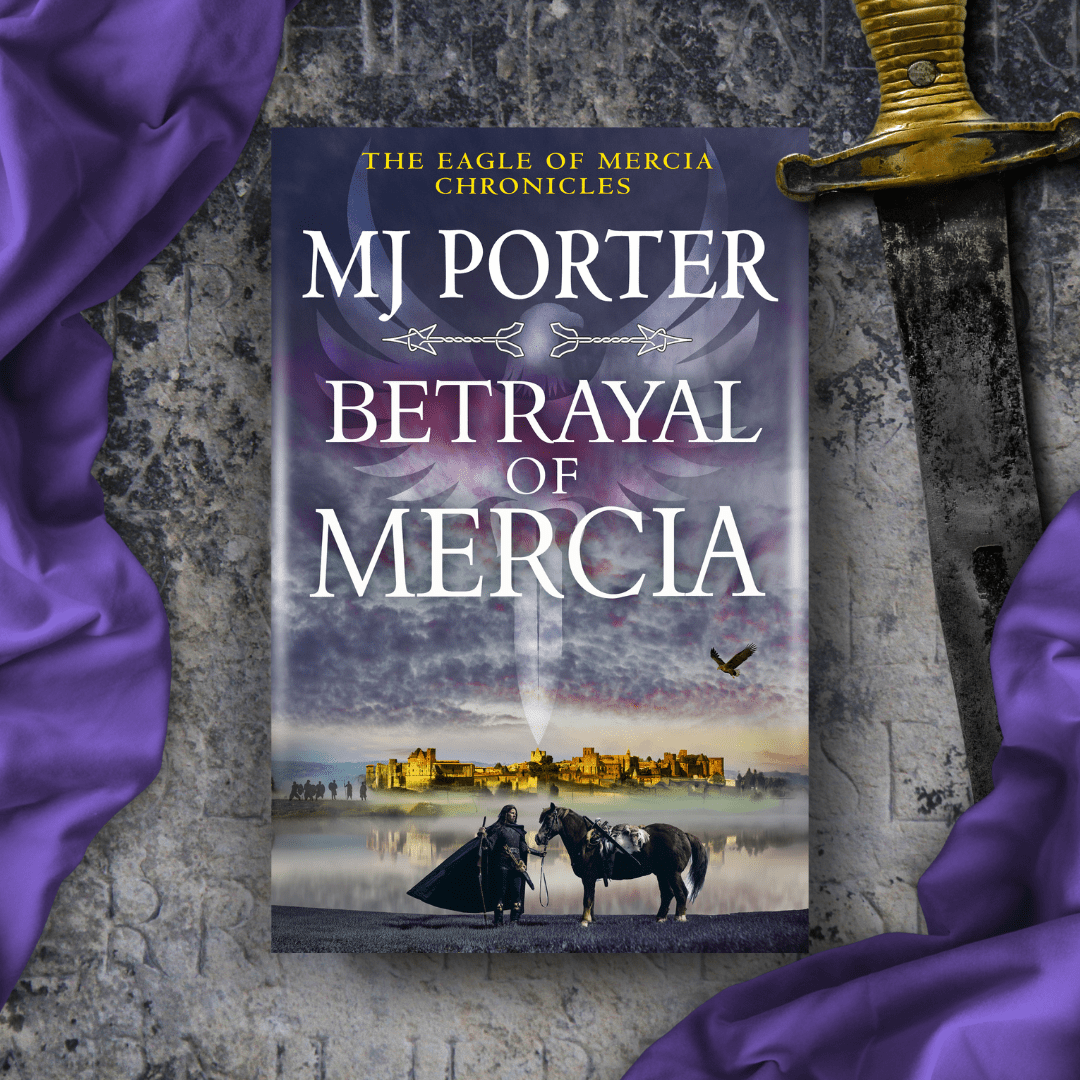
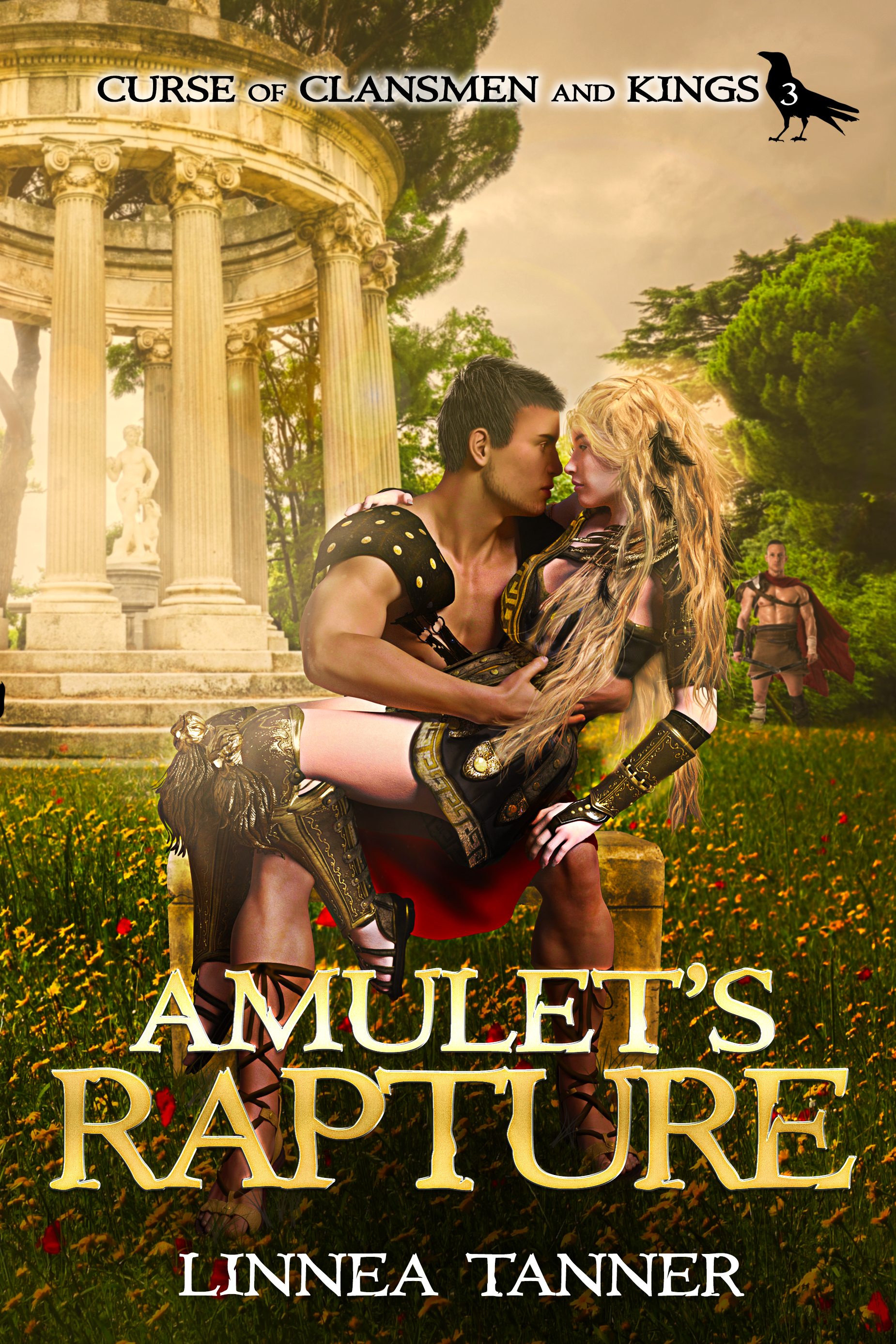
It’s cover reveal day for Kings of Conflict, the final book in the Brunanburh series

The final, thrilling instalment in MJ Porter’s The Brunanburh Series.

Can King Edmund of the English banish the Norse invaders from England one final time?

AD942

In the wake of the agreement reached at Lincoln between Edmund and Anlaf Sihtricson of the Norse, Edmund returns to Wessex to reflect and rebuild, impatient to reverse his losses at Lincoln.

But this is the winter of discontent. In Jorvik and the kingdom of the Scots, those who’ve waited too long to become kings in their own right grow restless.

As the enemies of the English turn on themselves, Edmund senses the opportunity to reclaim all his brother, the victor of Brunanburh, managed to gain before his untimely death plunged England back into war with her many foes.

With his sights set firmly on York, can he recreate the England his brother built, or will the enemies of England realise the error of their ways and once more unite to drive Edmund back to Wessex, leaving York in the hands of the Norse.

books2read.com/KingsOfConflict10th

Check out the Brunanburh Series page.

Happy release day to Arthur by Giles Kristian, the last in the Arthurian Trilogy #histfic #newrelease

Here’s the blurb

Years have passed since the clash of shield-walls echoed across the land . . .

The Saxons are now the lords of Britain. And yet the bards still sing of Arthur – ‘In our darkest time, when we need him most, shall he come again.’

Ageing mercenary Beran has no love of bards’ songs. Nor of people. Unless they are paying him to steal or kill. Now he has been ordered to murder a boy. But this is no ordinary child. The son of King Constantine and the grandson of High King Ambrosius, this boy could be the saviour of Britain . . . if he lives.

Betraying his companions and returning to a world he believed he’d forsaken, Beran vows to take the boy to the one place that still holds out against the invader: Camelot.

Hunted by Saxons, Queen Morgana and those he deceived, he will seek the help of Guivret, called the Little King, and the Saracen, Palamedes who once rode beneath Arthur’s banner. They will meet the doomed lovers, Tristan and Isolde. And they will fight for their lives and for each other.

For if there’s to be any hope for Britain, Beran must deliver the boy to Camelot. And to do that, he must come to terms with his past . . .

Arthur is the breathtaking new novel from the author of the bestselling Lancelot, called ‘a masterpiece’ by Conn Iggulden . . .

Purchase Link

https://amzn.to/4aPRjzL

My Review

Arthur by Giles Kristian is the third and final book in his retelling of the Arthurian Legend, in sub-Roman, or Post-Roman, Britain. I’ve read all three books, although they have been spread over several years. I adored Lancelot and enjoyed Camelot, which takes us to Arthur.

Arthur has left me somewhat perplexed. I’ve not jumped right on here to write a review. I needed time to think about it. I’m unsure if this is because of the book or because of my mind putting some pieces together about the entire legend and asking even more questions about the legend rather than the book. However, there are a few authors whose work I really enjoy, but I seem to take away something different from others (Mark Lawrence being one of those authors), and this is also one of those books.

The world-building is both vast and intimate. The characters we meet, a young Arthur, Beran and Constantine’s grandson, are intriguing choices. True to the legend as we know it, Arthur falls prey to some ill-advised antics and seeks to distance himself from them and his father, although that’s never going to work. Beran is an old, tired man, aching and bedevilled by his past and the main driving force of the narrative. Constantine’s grandson embodies a young boy, entirely out of his element, believing his position is all he needs to ensure his survival in a world turned upside down. The twin storylines very much run independently of one another. Arthur, as a young man, never quite feels fully formed – the story depends very much on readers knowing the legends of Arthur. Beran feels more fully formed, and his decisions perhaps make more sense to a modern audience. The juxtaposition between Beran and Constantine’s grandson gains poignancy as the tale progresses.

Yet, as beautiful as some of the phrases are, some of them are not. The world-building is both well done and also somewhat laboured and repetitive. Huge elements of the storyline are only explained much later in the book, and for much of it, I was unsure why I persisted in reading. The title is particularly vexing. I fear readers will not persevere to understand its relevance. I’m glad that I did.

The poignancy of a world lost is perfectly evoked. The men and women living in it are almost ‘out of time,’ with events taking place around them. The book is tinged with sorrow. 

I think that if I had read all three books together, the trilogy would work very well. Returning to the trilogy after so many years means I’ve lost the threads from Lancelot and Camelot, which both feature Arthur.

This is a bold end to a trilogy that has tried to be very different. I believe readers will love it or hate it. I can certainly appreciate the crafting of the story, even if I’m left perplexed by it. It is an absorbing tale, sucking me in and not letting me go. I read it in a few days. Perhaps, after all, it is as ephemeral as the legends themselves, and that is a testament to the author evoking such a response in me. 

Check out my reviews for Lancelot and Camelot

If you read my reviews, you’ll know I don’t usually highlight elements of them, but for Arthur I want you as a perspective reader to understand that I feel much of my reaction was perhaps as personal as the writing of the novel was for the author.

It’s time for a new Bradecote and Catchpoll historical mystery. I’m reviewing Litany of Lies by Sarah Hawkswood #historicalmystery

Here’s the blurb

Midsummer, 1145. Walter, the steward of Evesham Abbey, is found dead at the bottom of a well pit. The Abbot, whose relationship with the lord Sheriff of Worcestershire is strained at best, dislikes needing to call in help. However, as the death appears to have not been an accident, he grudgingly receives Undersheriff Hugh Bradecote, Serjeant Catchpoll and Underserjeant Walkelin.

The trio know to step carefully with the contentious undercurrents at play. As the sheriff ‘s men investigate the steward’s death, they discover that truth is in short supply. With the tensions between the Abbey and the local castle guard reaching boiling point, another killing will force the investigation down a dangerous path.

Purchase Link

My Review

It’s a joy to be back with our ‘boys’, Bradecote, Catchpoll and Walkelin.

Another murder needs solving, and we know Bradecote, Catchpoll and Walkelin won’t rest until they find the culprit. This is a particularly twisty tale of long-standing grievances and newer ones as well. I didn’t guess the culprit, and I always appreciate a mystery where I can’t work out who ‘did it.’

I love this series. I came to it late, and I’ve now taken myself back to the first books, and they are also a true delight. If you’re looking for a new historical mystery series, I highly recommend this one set in the mid-twelfth century in England. I always appreciate the maps at the beginning of the books.

Check out previous reviews for the series.

Too Good To Hang

A Taste For Killing

Wolf At The Door

Posts