Author of Saxon historical fiction and non-fiction, 20th-century historical mysteries, and Norse-inspired historical romantasy. Book reviewer and blog host.
Cristó Lovetta, a skilled stonemason, arrives in the rural village of Pieve Santa Clara to work on a nobleman’s house.
Haunted by a tragic past, Cristó wonders if he will ever find happiness again. However, as he immerses himself in his work, the warmth of the community and the beauty of the landscape convince him to begin a new life there.
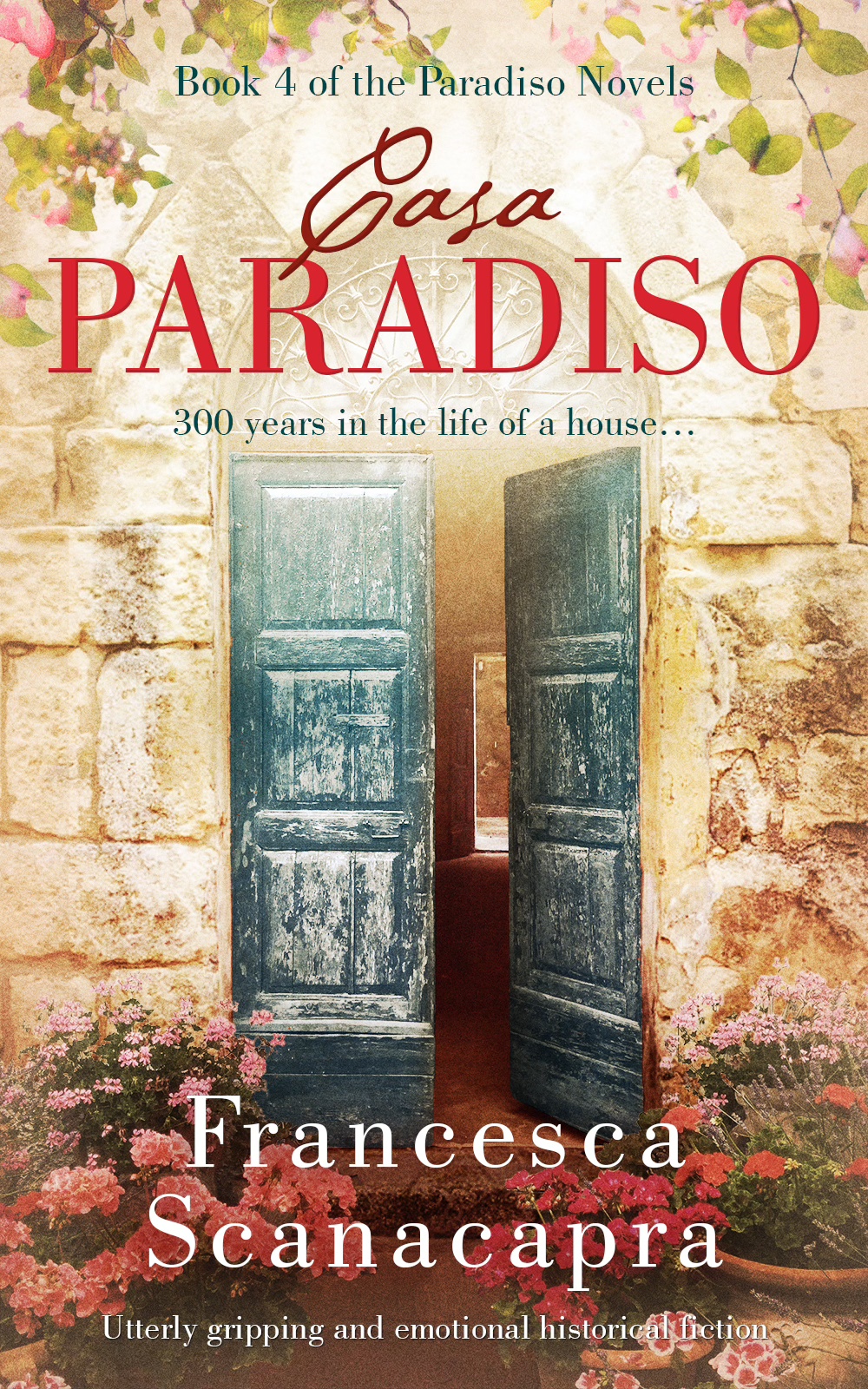
Cristó designs and builds his own house, which he names Casa Paradiso. Over the centuries, Casa Paradiso becomes home to many generations, standing testament to lives beginning and ending, and witnessing the everyday challenges and triumphs of its inhabitants – from love lost and found, to the tragedies of war, the far-reaching consequences of political decisions made by powerful men and the evolving role of women in Italian society.
Casa Paradiso – the fourth instalment of the Paradiso Novels – is a shining, evocative saga spanning three hundred years in the life of a very special house, and a book that explores the enduring strength of the human spirit, contrasted with the transient nature of life itself.
Casa Paradiso is such an engaging collection of stories, all interlinked, and all taking place with the same house as it’s main character.
The reader is swept through tale after tale, century after century, in the life of the house. Not all of our characters are immediately likeable, and not all of the tales are happy, and some of them truly make sense with the poignancy of retrospection for the next people to live within the property.
A truly charming collection of stories that drive you through the centuries, even though, sometimes, you might like to linger in one particular tale.
A fabulous idea, beautifully executed.
Meet the author
Francesca Scanacapra was born in Italy to an English mother and Italian father, and her childhood was spent living between England and Italy. Her adult life has been somewhat nomadic with periods spent living in Italy, England, France, Senegal and Spain. She describes herself as ‘unconventional’ and has pursued an eclectic mixture of career paths – from working in translation, the fitness industry, education and even several years as a builder. In 2021 she returned to her native country and back to her earliest roots to pursue her writing career full time. Francesca now resides permanently in rural Lombardy in the house built by her great-grandfather which was the inspiration for her ParadisoNovels: Paradiso, Return to Paradiso, The Daughter of Paradiso and Casa Paradiso. Her novel The Lost Boy of Bologna was also published by Silvertail Books.
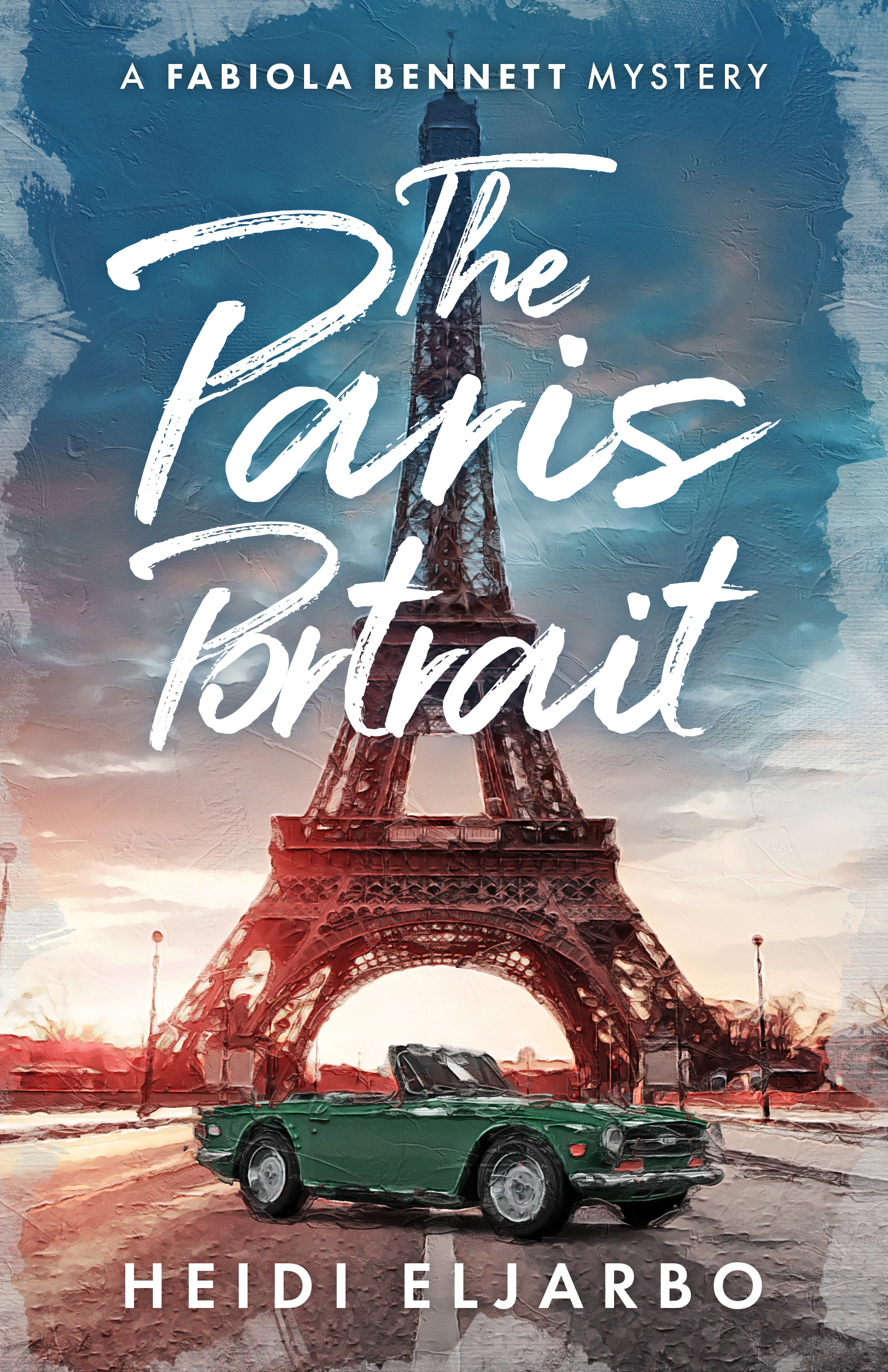
I’m delighted to welcome Heidi Eljarbo and her new book, The Paris Portrait, A Fabiola Bennett Mystery, to the blog.
Here’s the Blurb
Fabiola stumbles upon a clue that indicates a royal portrait went missing almost two hundred years ago. Is this true, or is there substance to the rumor?
Paris, France, 1973. After an enjoyable but dusty road trip, Fabiola and her friends, Pippa and Cary, arrive in a small village on the outskirts of Paris to spend a few days with Fabiola’s brother Eivind and his family.
On their first evening there, Eivind shows Fabiola an ancient recipe book he bought at an auction. The book is filled with old writing, and he asks Fabiola to decipher the pages. After the others have gone to bed, she spends hours reading and is gripped by the last pages that have nothing to do with recipes for baked goods and stews. Certain the author was a famous portrait artist at the time of the French Revolution, Fabiola and her friends set out on a treacherous investigation, dodging murderers and thieves to learn the truth.
Versailles, France, 1789. Élisabeth Louise Vigée Le Brun— portraitist and close friend of the extravagant queen of France, Marie Antoinette—has already painted thirty portraits of the queen. Her contemporaries compare her to the old Dutch masters, calling her one of the greatest portrait painters of her time.
But outside on the streets, Paris is becoming more perilous with every day that passes. Madame Le Brun would be a fool to think the rumors of a revolution will pass, and aristocratic life will continue as before.
Amid the turmoil, she paints one final portrait of Marie Antoinette, knowing well her association with the queen could cause her to be arrested or executed. As chaos and riots in Paris turn to violence, Madame Le Brun flees with her young daughter, hoping her royal friend and the portrait will be safe.
This is Heidi Eljarbo’s third dual timeline novel about Norwegian art historian Fabiola Bennett—a captivating spin-off from her much-loved Soli Hansen Mysteries.
This title is available to read on #KindleUnlimited
Meet the Author
HEIDI ELJARBO grew up in a home full of books, artwork, and happy creativity. She is the author of historical novels filled with courage, hope, mystery, adventure, and sweet romance during challenging times. She’s been named a master of dual timelines and often writes about strong-willed women of past centuries.
After living in Canada, six US states, Japan, Switzerland, and Austria, Heidi now calls Norway home. She lives with her husband on a charming island and enjoys walking their Wheaten Terrier in any kind of weather, hugging her grandchildren, and has a passion for art and history.
The greatest threat to the empire is not a foreign army, but the thirst for power at all costs.
1038 AD, Constantinople
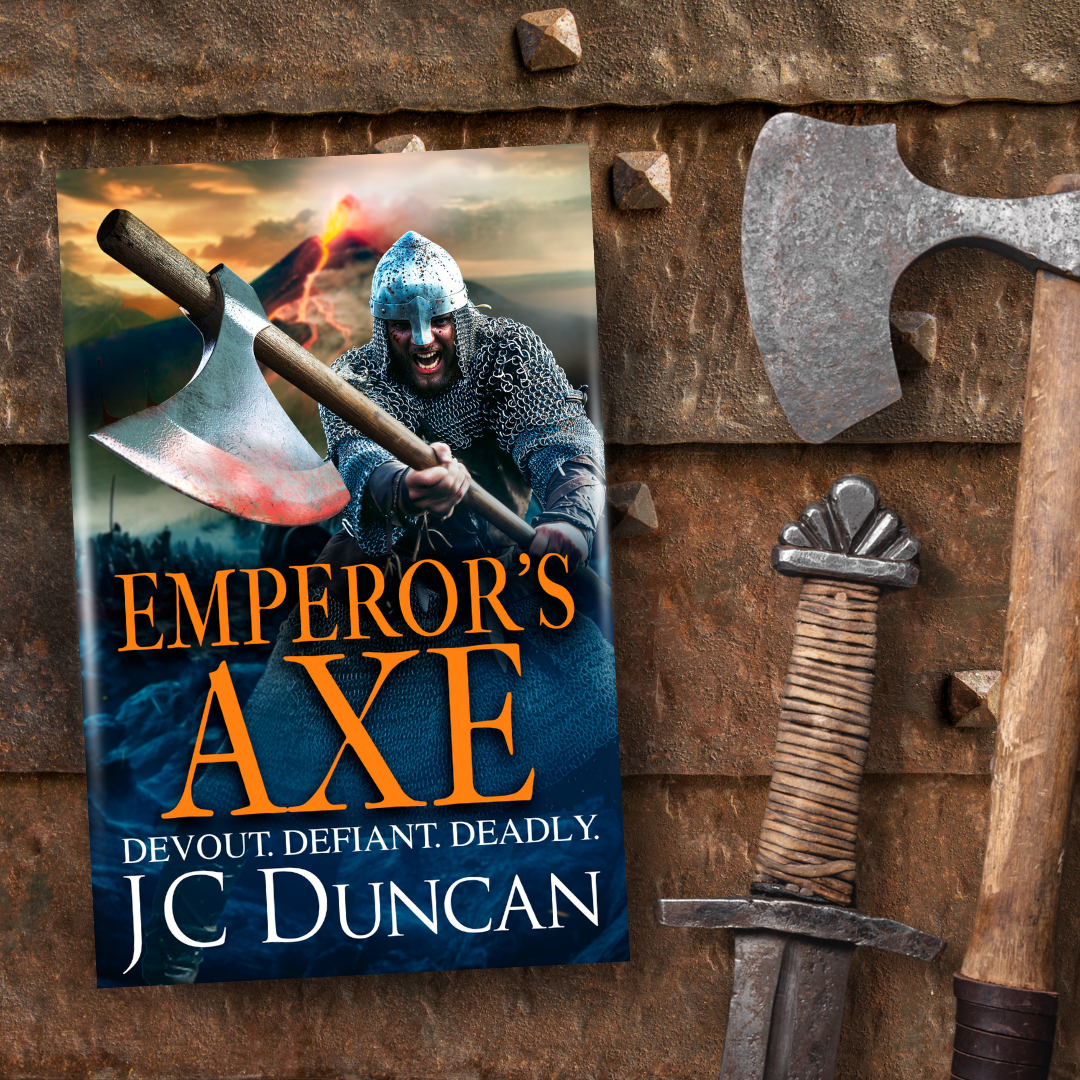
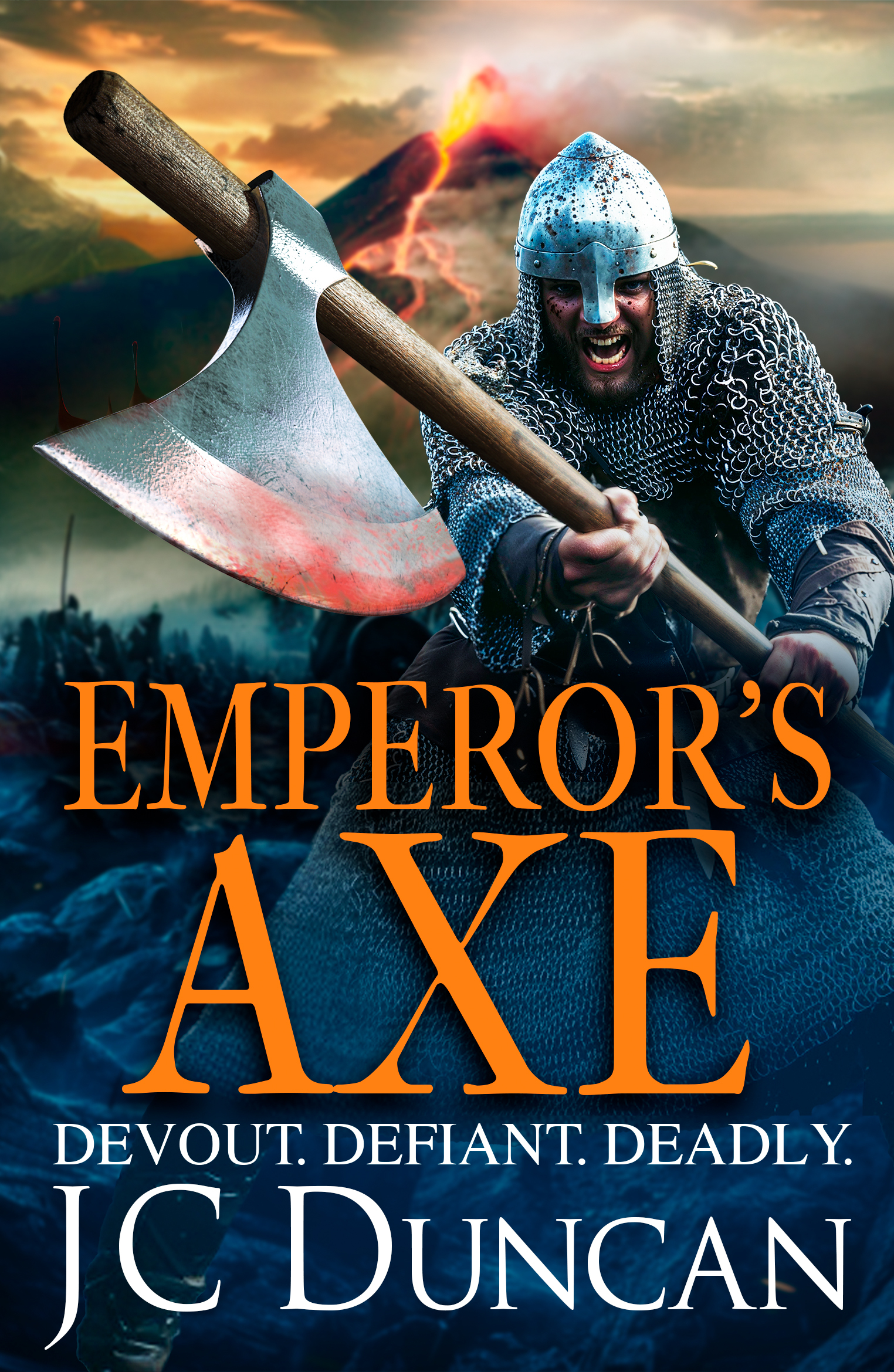
Harald Sigurdsson has risen through bravery and glory in battle to become the commander of the legendary Varangian guard, the oath-sworn protector of the Roman throne in Constantinople; The wielder of the emperor’s axe.
With the estranged Emperor and Empress consumed in a deadly palace war for sole control of the empire, Harald must somehow keep the peace. In a city where everything is taken by subterfuge, violence and deceit, what must an honourable man do to protect the empire from both its enemies and itself?
Harald might be forced to choose between his life and his oaths, to take a side or become an enemy of all, and watch, outcast, as the empire crumbles. Harald is a master of war, but victory in battle will no longer be enough.
The explosive next chapter in the extraordinary tale of Harald Hardrada
Emperor’s Axe is book three in JC Duncan’s epic retelling of Harald Hardrada’s life. I’ve read the first two books.
Emperor’s Axe sees our hero, Harald, still deeply embroiled in the court politics of the era, only this time, he does seem to have found himself an enemy that might just be his match, John, the Emperor’s brother. As such, he quickly finds himself and many of his men shipped off to fight a seemingly impossible offensive in Sicily and on the mainland of what is now Italy. The expedition’s leaders are ineffective, placed there because of politics and not skill. That’s never going to go down well with Harald, who has a thirst for action and brave daring-do. And it is up to our narrator, Eric the Follower, to intervene when allies threaten to become enemies.
Eric, narrating his tale fifty years later, has the benefit of hindsight and can gloss over some details, but he never shies away from being honest about Harald’s character. He might follow him, but always agree with him? That’s another thing entirely.
And indeed, Harald’s thirst for action and brave daring-do, as opposed to having a sound head for politics, leads him to the tumultuous concluding events of the novel, when he is finally allowed to return to Constantinople, and finds the Empress and Emperor in crisis.
JC Duncan never lets us forget that the Emperor and Empress rule over vast swathes of land. Neither can we forget that Harald has a goal in mind, reclaiming his dead brother’s kingship as soon as he’s able. This is a hugely entertaining novel, managing to encapsulate so much, including the Norman warriors as well as the Norsemen, and stuffed with detail. A fabulous read.
J. C. Duncan is a well-reviewed historical fiction author and amateur bladesmith, with a passion for Vikings. The first book in his fictional series about Harald Hardrada, the last great Viking leader, will be published by Boldwood in October 2023.
I’m delighted to welcome Deborah Chase and her new book, Georgia’s Folly, to the blog.
Here’s the Blurb
For fans of “Antiques Roadshow” and “American Pickers” – this is the one for you!
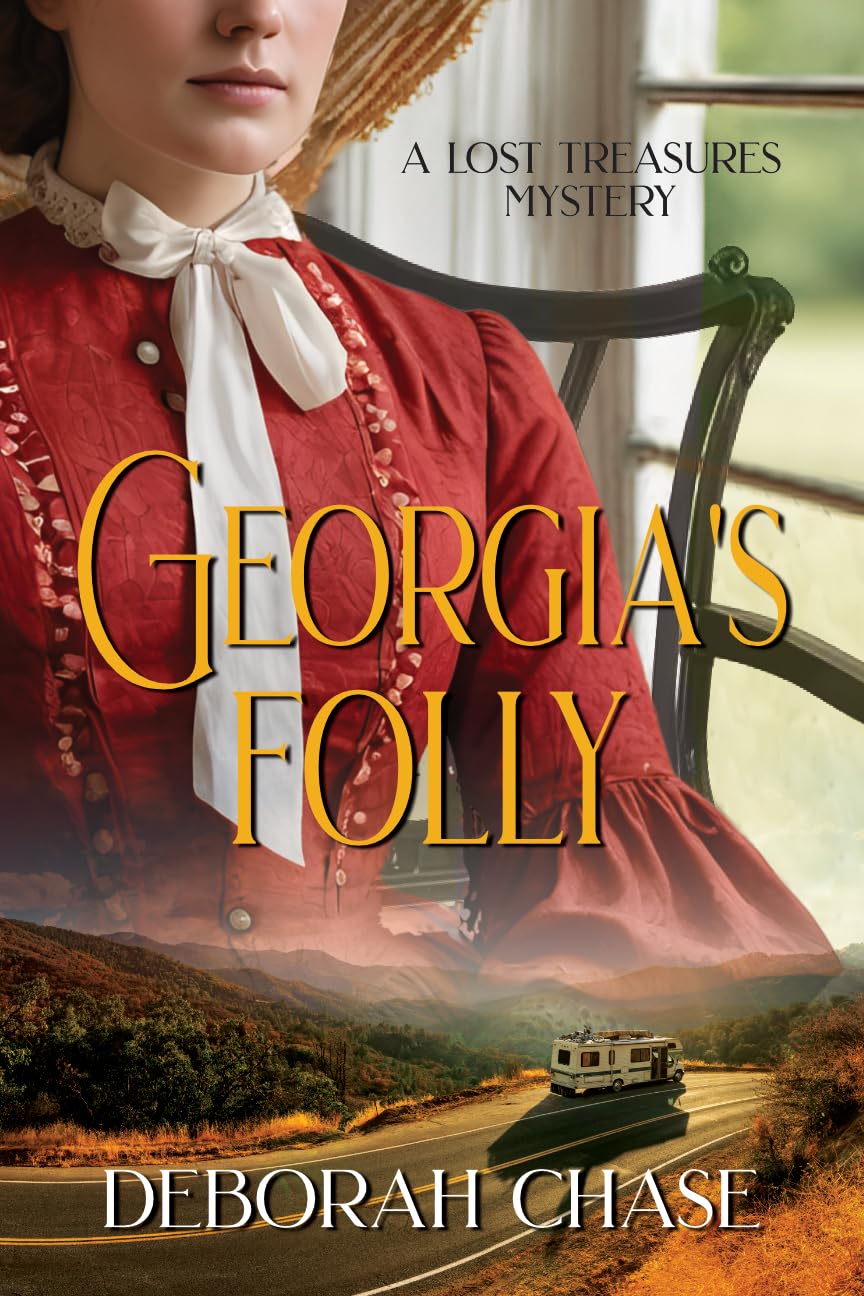
Beginning at a cluttered flea market and ending at a glittering art auction, Georgia’s Folly tells the compelling story that blends past and present and the search for a valuable and elusive antique. Chloe Bishop grew up in foster care. She loves shopping at flea markets, picking up family heirlooms like old pottery or vintage furniture to fill in for the family and home she never had.
As Chloe walks through the Brooklyn Flea Market, she stumbles upon the diary of Miss Georgia Potter, a young woman who had lived in Gettysburg, Pennsylvania during the Civil War. The yellowed pages reveal the impact of the war on daily life and spotlights the role of women including Harriet Tubman, Clara Barton and Louisa May Alcott.
Like Chloe, Georgia Potter was a passionate collector and her diary lists her collection of valuable antiques—including the Holy Grail of 18th century furniture—a Chippendale settee. Well versed in antiques, Chloe is aware that there are only five known examples and a sixth settee would be worth more than $4 million.
Chloe immediately contacts Ben Thompson, the man who sold her the diary. Ben is a picker who drives his RV across America, searching for collectibles to sell to dealers. He is estranged from his wealthy, prominent family who cringe at his chosen career. Ben agrees to take her along to search for the valuable and iconic settee. As Ben and Chloe head to Gettysburg, they are unaware that Gregor Petrov, a shady antiques dealer and Harrison Kent, a respected but unscrupulous art expert are trailing them.
The search for the settee takes Chloe and Ben on fast paced journey from the Gettysburg battlefields to the 18th century street of artisans in Philadelphia to a historic mansion on the banks of the Hudson River. Traveling together in the small RV, Ben and Chloe draw closer. In the confines of the RV, embroiled in an unimaginable quest, Chloe confides that she is also in search for the father she never knew while Ben struggles to explain his complicated family to a woman who never had one.
In a thrilling ending, the rare Chippendale settee is not Chloe’s only valuable discovery.
Deborah Chase grew up in a family filled with art and antiques. On the high end, her uncle, William Lincer, lead violist at the New York Philharmonic, was an art lover whose collection was sold at Sotheby’s. On the low end, her father, writer Allen Chase took her to flea markets and estate sales. He sparked a lifelong fascination with tales of lost treasures that ranged from plundered Egyptian tombs to trainloads of art stolen by the Nazis. It was this love of history and antiques that inspired her first novel, Georgia’s Folly
She was a founding editor of the Berkeley Wellness Newsletter and the author of 12 books including TheMedically Based No-Nonsense Beauty Book (Alfred Knopf), Extend Your Life Diet (Pocket Books), FruitAcids for Fabulous Skin (St Martin’s Press), Every Bride is Beautiful (Morrow), and with her husband Dr Neil Schachter co-author of Life and Breath (Doubleday) and The Good Doctor’s Guide to Colds andFlu (Harper). The books have been a selection of the Book of the Month Club and her articles have appeared in Ladies Home Journal, Self, Glamour, Redbook, Family Circle,Parents and Good Housekeeping.
She is a graduate of Bronx High School of Science and a winner of the Westinghouse Science Talent Search. A graduate of New York University she earned a degree with a duel major in journalism and history.
A native New Yorker, Deborah like to spend her weekends at an upstate home where a big kitchen and an endless supply of estate sales indulge her duel passions for cooking and collecting.
When I came to the end of my Wartime in the Valleys series, I had to consider whether to carry on with the South Wales setting, where my mum had come from, or pick a different location for a new series. A couple of years before, I’d had an idea for a World War One series set in Littlehampton, at the luxury Beach Hotel, and now seemed like a good time to write it.
Why Littlehampton, a seaside town in West Sussex? Because that’s where I was brought up. I was born just up the coast in Worthing, which gets a couple of guest appearances in the series, including in Love and Loss at the Beach Hotel. We moved to Littlehampton when I was three. My dad had a café on Pier Road, opposite the River Arun, so I was often in that part of town, especially as a teenager when I worked as a waitress there. In the evenings, my friends and I would often go to the Butlin’s funfair, between the café and the beach.
The grass common, beyond Butlins, was huge, and taking pride of place on it was the magnificent Beach Hotel. I never stepped inside it, so when it came to writing the first book, I had no idea how it would have been set out. This is where a vivid imagination comes in handy. Looking at where the windows and doors were situated on the various photographs I found, I made a plan of my own version of the interior, which I still use now.
Downstairs, I’ve placed a smart foyer, a lounge for guests and a glorious ballroom. There’s a large dining room next door to a conservatory, both of which overlook the extensive garden. On the photographs, the left side of the hotel looks functional, so this is where I placed the staff rooms and quarters, including the kitchen, storerooms, scullery, stillroom and staff dining room,
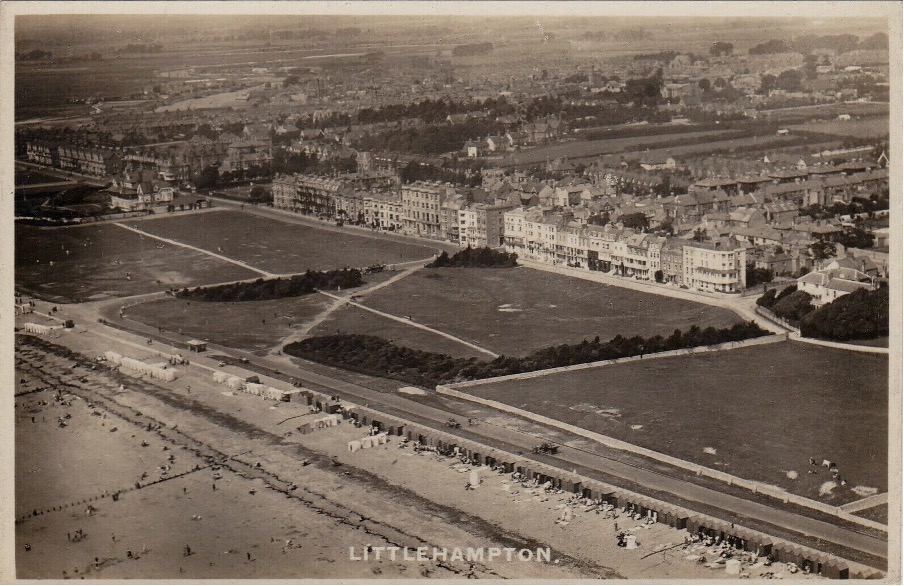
The characters from the series are often by the beach, on the riverside, or in town. A combination of old photographs and my own memories enabled me to build up a distinct picture of what the town would have looked like then. Having visited Littlehampton many times since I left at eighteen, I am convinced that the town of my youth was much more like the town of World War One than the town of today, even though there had been many changes even by then.
Butlin’s funfair, which I mentioned earlier, wasn’t there in the time the series is set, but instead the area consisted of two rows of coastguards’ cottages, a windmill and the Casino Theatre. These were all dispensed with in the early 1930s, when Butlins was built. Next to this, the path used to run alongside the River Arun, but this was built up at the same time, so you could no longer walk to the water’s edge. The buildings have changed again in the last twenty years, and all that remains that my characters would recognise now is the old battery mound (from the Napoleonic Wars) and the pier (the place of many trysts in the novels).
Back then the quay, between Pier Road and River Road, was full of workshops and warehouses. Many of these were for shipbuilding. This is where Victor Perryman’s flying boat workshop, Humphrey Wilmot’s, was situated in Love and Loss at the Beach Hotel, though in real life it was called Hubert Williams. All of these have gone, as has the Britannia Public House. The green swing bridge at the end of River Road, occasionally crossed by my characters, has also gone. These were all still there in my youth, so I can at least picture them.
South Terrace, several long terraces of grand houses on the opposite side of the street to the hotel, is still there, almost in its entirety, I’m glad to say. This is where various day guests who visit the hotel live, including the rather prim and disapproving Lady Blackmore. Surrey Cottage, the home of Victor Perryman and his family, still sits at the eastern end of South Terrace, though it has now been separated into flats.
What of the hotel itself? Sadly, it sustained damage in the storm of 1987 and was pulled down in the early 1990s. In its place was built a much less elegant curve of flats called Beach Crescent. The only thing that still exists is part of the original garden wall. I’m just glad that, in my books, I’m able to bring the hotel back to life once more.
Aerial of Littlehampton around the time of the books. Beach Hotel is on the common towards the left
Here’s the blurb
Can true love win the day?
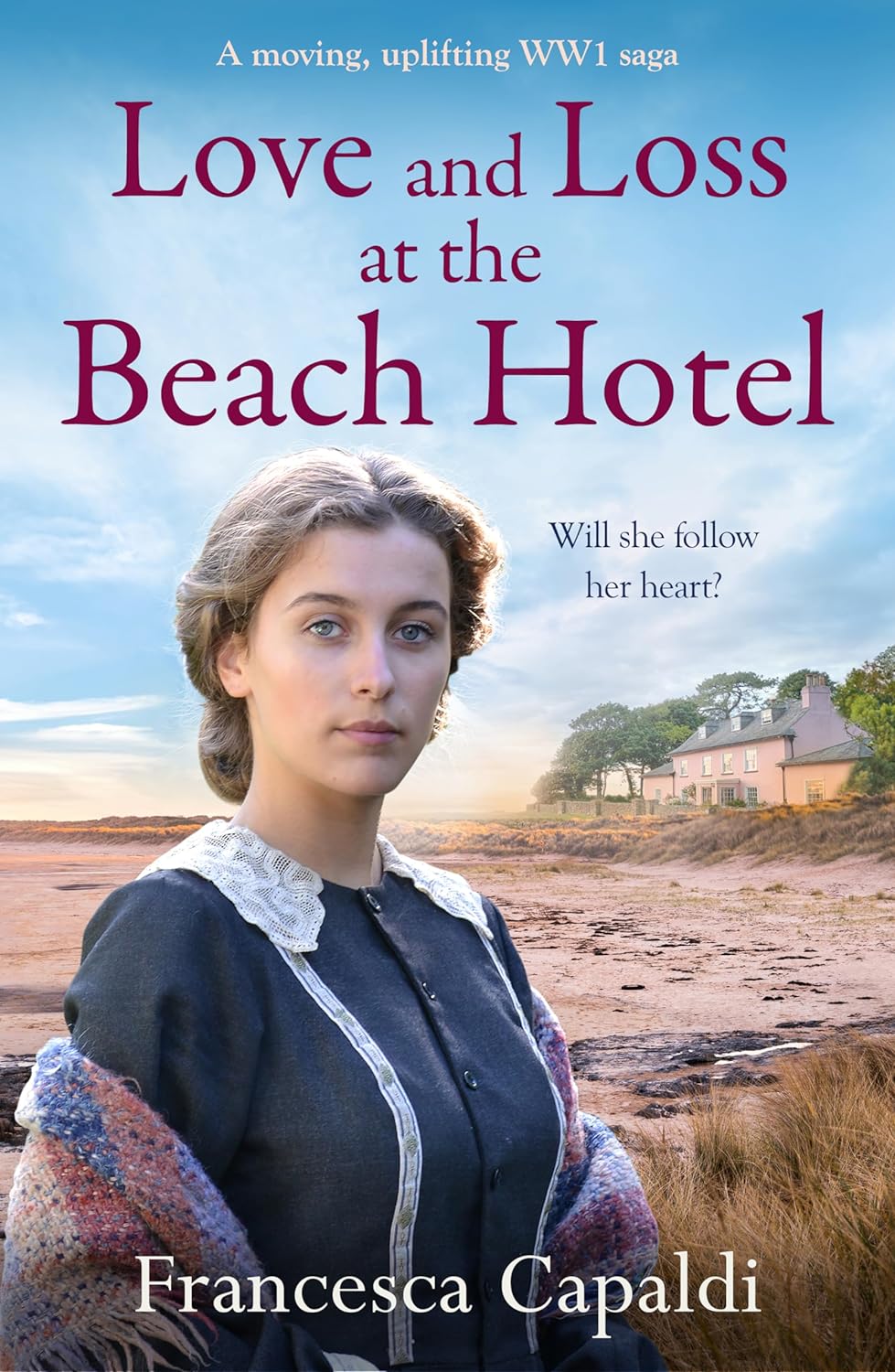
Hetty Affleck is working as a maid at the prestigious Beach Hotel in Littlehampton. Her beau, Lorcan, is away at war and has recently stopped replying to her letters but she is determined to keep her spirits up. When she meets wealthy shipbuilder’s son Victor Perryman, they pass the time of day and they both feel a connection but she can’t allow herself to think anything more of it – not only does she have Lorcan to think of, but she and Victor are divided by wealth and class.
Yet they meet again and Hetty is charmed and intrigued by Victor and his openness towards her. It becomes harder to ignore the attachment growing between them.
When Lorcan comes back on leave, Hetty is forced to face her true feelings. Who does she really love, and can that love conquer everything in its path?
Francesca has enjoyed writing since she was a child. Born in Worthing and brought up in Littlehampton in Sussex, she was largely influenced by a Welsh mother who loved to tell improvised stories. A history graduate and qualified teacher, she decided to turn her writing hobby into something more in 2006, when she joined a writing class.
Writing as both Francesca Capaldi and Francesca Burgess, she has had many short stories published in magazines in the UK and abroad, along with several pocket novels published by DC Thomson.
Her Welsh World War 1 sagas were inspired by the discovery of the war record of her great grandfather, a miner in South Wales. Heartbreak in the Valleys was a finalist in the Historical Romance category of the Romantic Novelists’ Association Awards (RoNAs) in 2021. Her latest series, The Beach Hotel, is set in her own childhood town, where her Italian father had a café on the riverside. The first in that series, A New Start at the Beach Hotel, won the Romantic Saga Award in the RoNAs in 2024.
Francesca is a member of the Romantic Novelists’ Association and the Society of Women Writers and Journalists. She currently lives on the North Downs in Kent with her family and a cat called Lando Calrission.
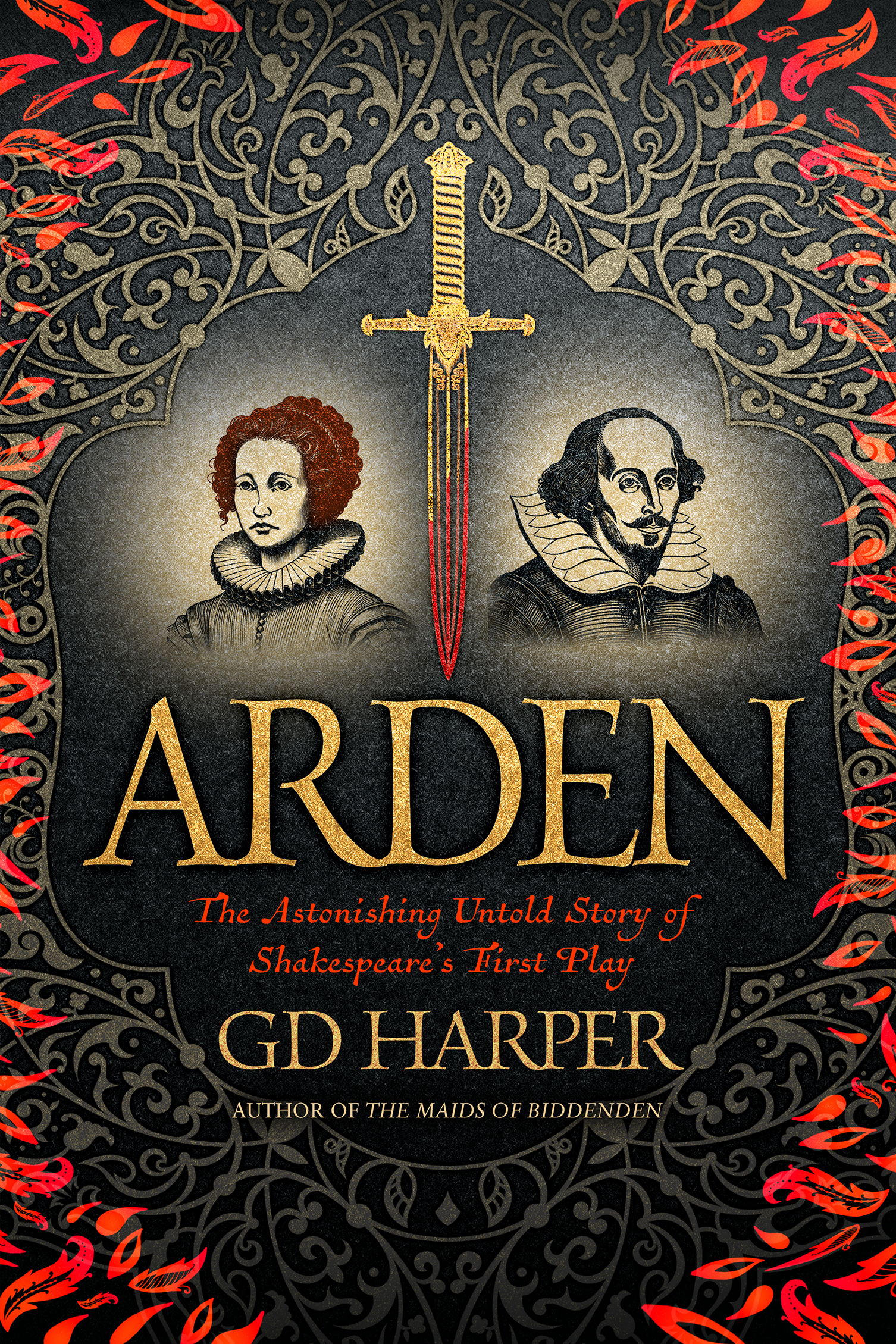
Alice Arden, idealistic and wealthy beauty, burnt at the stake for killing her husband, the former mayor of Faversham in Kent. But was she really the one responsible for the most scandalous murder of the sixteenth century?
William Shakespeare, England’s greatest playwright, born thirteen years after Alice’s execution. Why does his first-ever play, written about this murder, not bear his name?
This is a story of two people – one reviled, one revered – whose fates become linked in a tale of corruption, collusion and conspiracy. Based on historical documents and recently published academic research, Arden unveils shocking new evidence about the murder of Thomas Arden and reveals, for the first time, a remarkable new theory about Shakespeare’s early years.
Arden by GD Harper is a beautifully crafted tale of two individuals, separated by forty years, with the one entirely unaware of the other, that reimagines the hows, whats and ifs of Shakespeare’s earliest efforts to become a playwright and the story that ‘called’ to him to enable him to do so.
Offering us two points of view, that of Alice Arden, and Shakespeare himself, we travel through the years that lead to Alice’s crisis and see how Shakespeare was himself plagued by her story. To begin with, Alice is the most likeable character. Young, bright, and vivacious, she pulls the reader along through the years when Shakespeare is not at all the man we might expect him to be. His life is difficult (perhaps because he makes it so, to be honest), but soon his dreams of being an actor and writing plays becomes his driving force. At the same time, Alice’s life is blighted by her marriage to a man of ambition but no regard for the life of his wife, who is deeply unhappy. Shakespeare’s life improves as events rumble towards their awful conclusion for Alice. But he is still somewhat haunted by the tale of Alice Arden, and I adored how her final narrative is teased from those who have knowledge of it that isn’t known by all. It is horrific.
This was such an engaging narrative. I liked neither character at points, but they both had endearing qualities that made it a joy to read this fictionalised account of what might have been.
I have written four novels in the last eight years under the penname GD Harper.
My last novel, The Maids of Biddenden, the imagined biography of real-life conjoined twins born in 12th-century Kent, was featured on BBC TV News and was the winner of the Next Generation Indie Book Awards in the historical fiction category, shortlisted for the 2022 Selfie Award at the London Book Fair, and shortlisted or longlisted for five other awards.
It has over a thousand ratings on Amazon UK and Goodreads, with an average score of 4.3. Across the major Amazon markets, it reached number sixteen in overall paid-for e-book sales, number two in historical fiction and number one in medieval historical fiction.
If you were given the opportunity to disappear and start your life again, would you take it?
Paris 1933. Four people’s lives are dramatically torn apart by a single terrifying event. Two days before Christmas the express train to Strasbourg crashes into a local train in the winter darkness outside Paris. On board is Gilles Malroux, a man with a shady past and a strong reason to avoid the police. In the mayhem of the crash he is badly injured but to avoid capture by the police he swaps identity papers with one of the other victims of the impact. Gilles tries to flee in the dark but finds himself taken to the house of a woman he doesn’t know but who calls him Davide. She nurses him. But is the bitter medicine in the spoon she puts to his lips healing him or harming him?
Camille Malroux is Gilles’ sister. She works for the French Civil Service and is trying to climb the ladder of respectability after a childhood in poverty. When she is informed by police that her brother is seriously injured in hospital, she rushes to his bedside, only to discover it is not Gilles. It is a heavily bandaged stranger. He is unconscious and has her brother’s identity papers in his locker. Only by digging to discover the true identity of the bandaged man in the hospital bed can she hope to trace Gilles.
But Gilles is sinking into further danger. He is drugged. A priest and a doctor hover over him, as if waiting for him to die, and constantly the woman who calls him Davide is at his side. What is it she wants from him?
The Crash is thrilling historical fiction about identity, revenge and survival.
The Crash by Kate Furnivall is a thrilling historical mystery set around Christmas 1933 in Paris, and follows the events after a horrific train crash in which Camille fears her brother has died. What ensues is a thrilling investigation to uncover what exactly her brother, Gilles, was involved in, taking many unexpected twists and turns along the way (no spoilers here).
It is thoroughly atmospheric, the chill seeping into my bones.
It’s always nice to get a little ‘reader quote’ box over on the ‘Zon:)
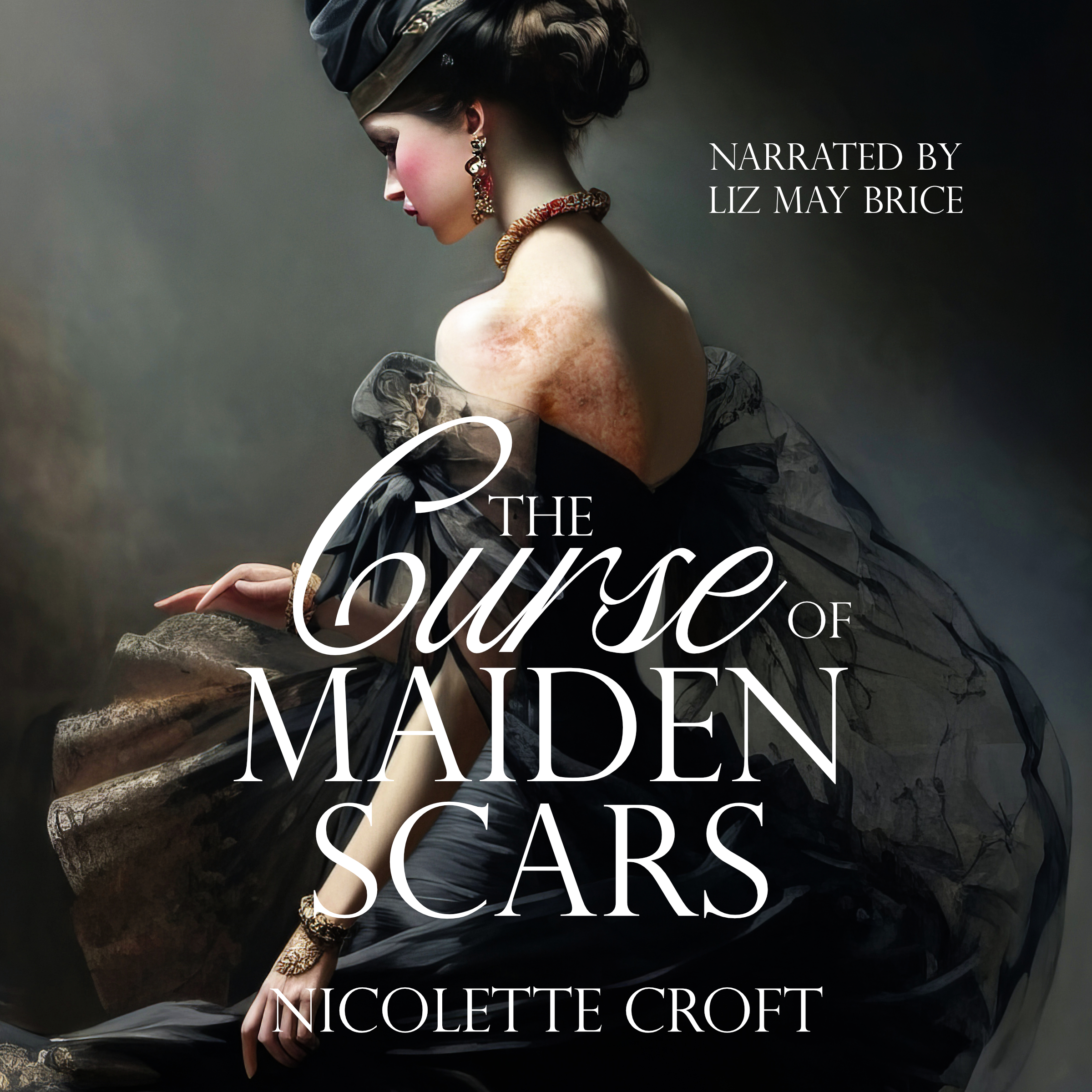
I’m delighted to welcome Nicolette Croft and her new book, The Curse of Maiden Scars from the Maiden Mother Crone Series, to the blog with an audio clip.
Audio Clip: Chapter 16
Here’s the Blurb
A Yorkshire orphan struggling for opportunity against 18th-century odds reluctantly transforms into a Venetian courtesan during the Empire’s last days.
Sixteen-year-old Renna Covert toils away in the shadows of a Yorkshire workhouse, her days filled with the mundane task of shelling cotton and the dangerous duty of scouting for punters. One fateful night, she crosses paths with two sailors and finds herself thrust into the heart of a chilling encounter at the local asylum.
These harrowing experiences catalyze Renna’s journey, promising newfound opportunities and revealing long-buried family secrets. Yet, at every turn, powerful forces conspire to thwart her quest for truth, forcing her to abandon her scullery work and embark on a daring escape to Venice alongside her steadfast companions.
In the labyrinthine alleys of Venice, Renna’s fate takes yet another twist. She is ensnared by a cunning Madam who trains her as a Venetian courtesan. But beneath the veneer of luxury lies a world fraught with danger, where Renna must rely on her witts and resilience to navigate the treacherous waters of deceit and betrayal.
Set against the backdrop of Venice’s tumultuous Napoleonic invasion of 1797, this is a tale of a girl’s struggle for survival. It is a story of resilience, defiance in the face of adversity, and, ultimately, one young woman’s determination to reclaim her identity.
THE CURSE OF MAIDEN SCARS is a coming-of-age, women’s fiction novel with gothic flair set in the tradition of Victoria Mas’ THE MADWOMAN’S BALL, and Sarah Dunant’s IN THE COMPANY OF THE COURTESAN, with the sensuality of LADY CHATTERLEY’S LOVER.
Nicolette Croft can’t remember a time when she was not creating imaginary worlds inspired by her Hungarian and American ancestors. As a neuro-divergent learner, however, putting those stories to paper proved more challenging than imagining them. Because her determination would not allow her to settle, she pursued an English B.A. to improve her writing.
Young motherhood also brought unexpected challenges, which motivated her to pursue graduate work in twice-exceptional learners and education. She would later add an M.A. degree in Clinical Mental Health Counseling, specializing in neurodivergent people, trauma, and grief. Nicolette uses her natural gift of storytelling as an exploratory method for her clients.
The Curse of Maiden Scars is also an outgrowth of her personal journey and marks her first publication as a novelist, having previously published short fiction. When not at her counseling practice or researching historical facts for her latest story, Nicolette shares treasured time with family, friends, and her husband. Whether writing, cooking, traveling, or learning, the act of creation is always at the center of her colorful life.
Miss Green, the actress Lizzie Dixie has been murdered.” I stared at the young inspector. “But it’s impossible. She drowned. Years ago.”
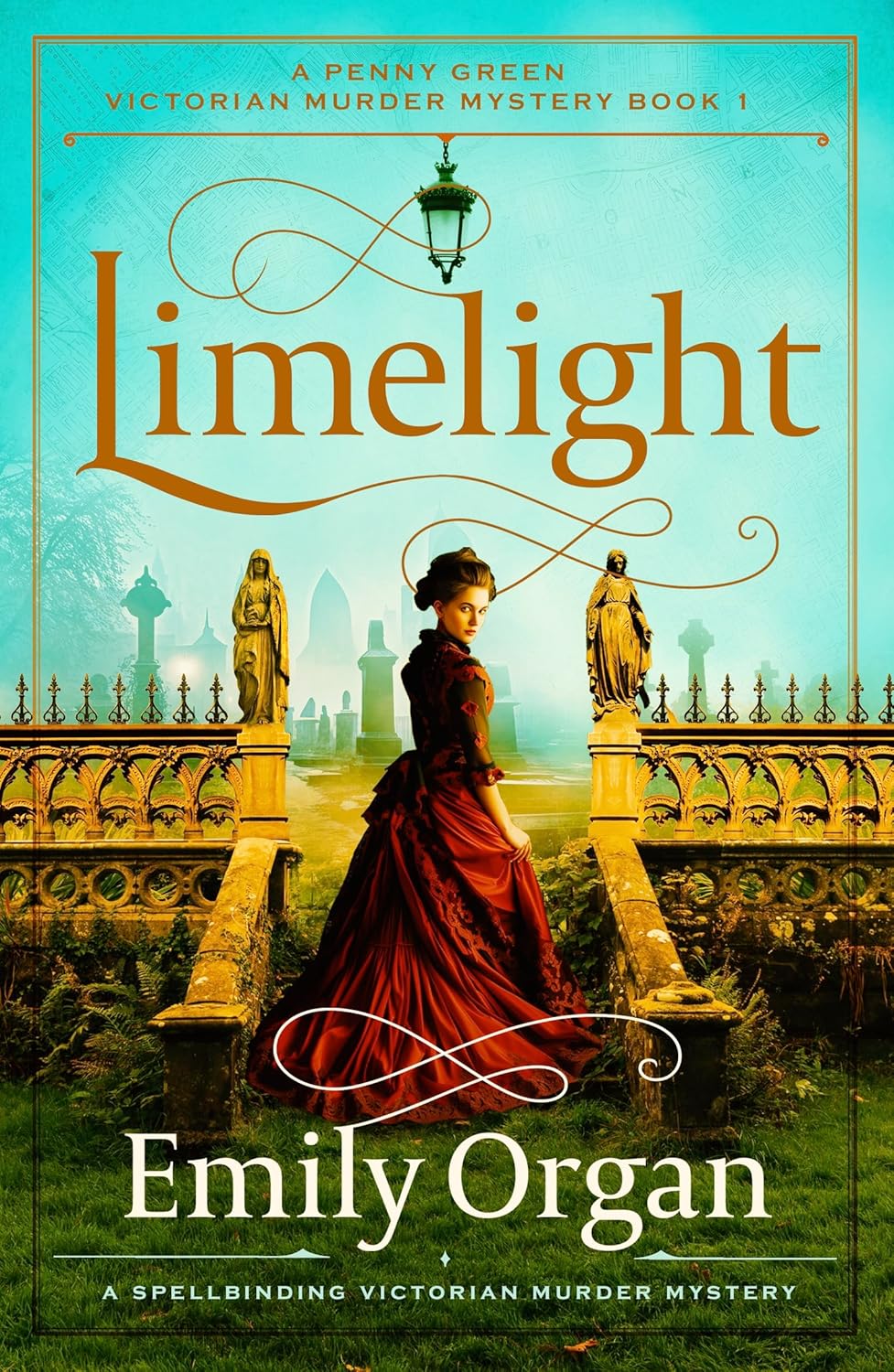
London, 1883. Fleet Street’s pioneering lady reporter Penny Green is stunned when a long-dead actress is found murdered in Highgate Cemetery. Lizzie Dixie supposedly drowned in the River Thames years ago, so how did she end up shot to death on a foggy October night? Penny’s personal connection to the victim draws her into the case, as does the charm of Scotland Yard inspector James Blakely. But her return to work sparks the attentions of someone with evil intent.
Why did Lizzie fake her own death? Who knew she was still alive? With each revelation, the killer draws nearer. Can Penny unmask the culprit before she becomes the next victim? Or will the bright lights of Victorian London be forever dimmed by a killer lurking in the shadows?
An enthralling and atmospheric historical mystery that will have you reading deep into the night. Limelight is the first instalment in the bestselling Penny Green Victorian Mystery series.
My Review
Limelight is the first book in the Penny Green Victorian Mysteries. It is a fabulously atmospheric and evocative novel that brings a grimy, smog-covered 1880s London to life.
Our main character is Penny, a currently jobless reporter who lost her job thanks to an unhappy member of the constabulary who called on the ‘gentleman’s club’ mentality of the era to have her dismissed, even though she only reported the truth. However, just as all seems quite desperate, Penny learns of the murder of a friend and is called upon to help the police. In return, she manages to regain her job. She is to help report on the police investigation and assist the police.
This sets up a good narrative. Penny is connected to the characters under investigation but hasn’t been for the last five years, so there is always an opportunity for her not to know things about them. And there is a great deal she doesn’t know.
While all this is happening, the tapestry of events in London is playing out, from visiting the circus to bombs on the underground to the opening of the new Natural History Museum. It teems with everyday life in London, from the reporters’ favourite pubs to the gentlemen’s favoured places to meet their courtesans, from cabs to omnibuses, from the hospital to the suitably dark and menacing cemetery. It is indeed an evocative novel of the era.
The mystery itself is intriguing – and what could be more Victorian than a woman already believed dead being found deceased?
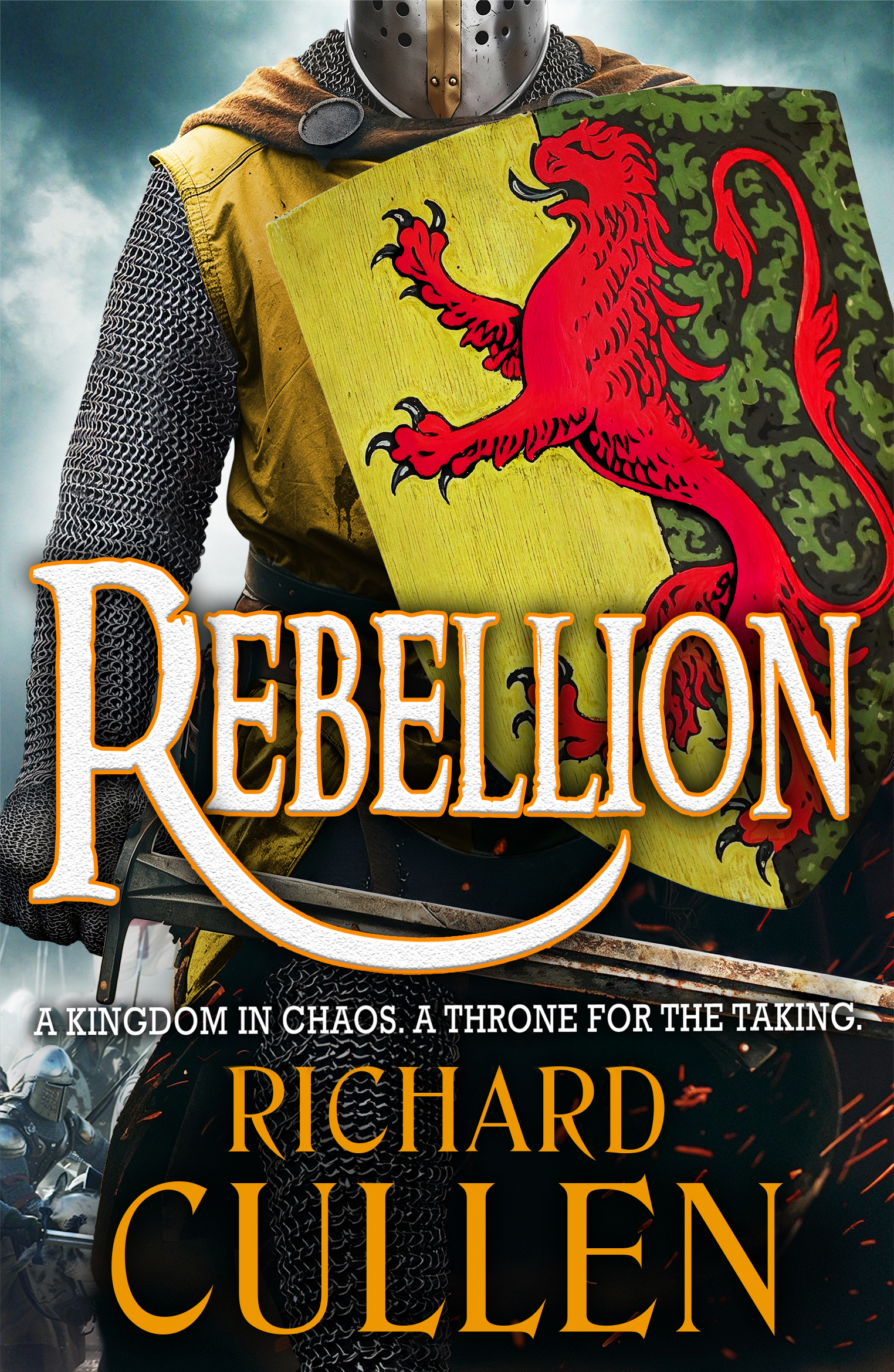
The start of an epic new historical adventure series from Richard Cullen introducing The Black Lion
As war approaches, the lion will roar…
1213AD.
King Richard the Lionheart is dead, and his brother, John Lackland, sits uneasily upon the throne of England.
Across the sea, Prince Louis, heir to the powerful King Philip Augustus of France, looks to King John’s crown with a covetous eye.
But King John must be wary of rebellion, as well as invasion, for even his own barons would see their king unseated, and the French pretender put in his place.
Thrust amid this tumult is young Estienne Wace, orphan squire to Earl William Marshal – the greatest knight to ever serve the kings of England, and one of the few men who still holds faith in King John’s rule.
Raised by Marshal as his ward, Estienne must prove himself worthy of his adopted father’s name, but acceptance may be the least of his troubles. War is looming, as usurpers emerge from every quarter, determined to steal England’s crown from its most wretched king.
Perfect for the fans of Bernard Cornwell, Ben Kane and Conn Iggulden.
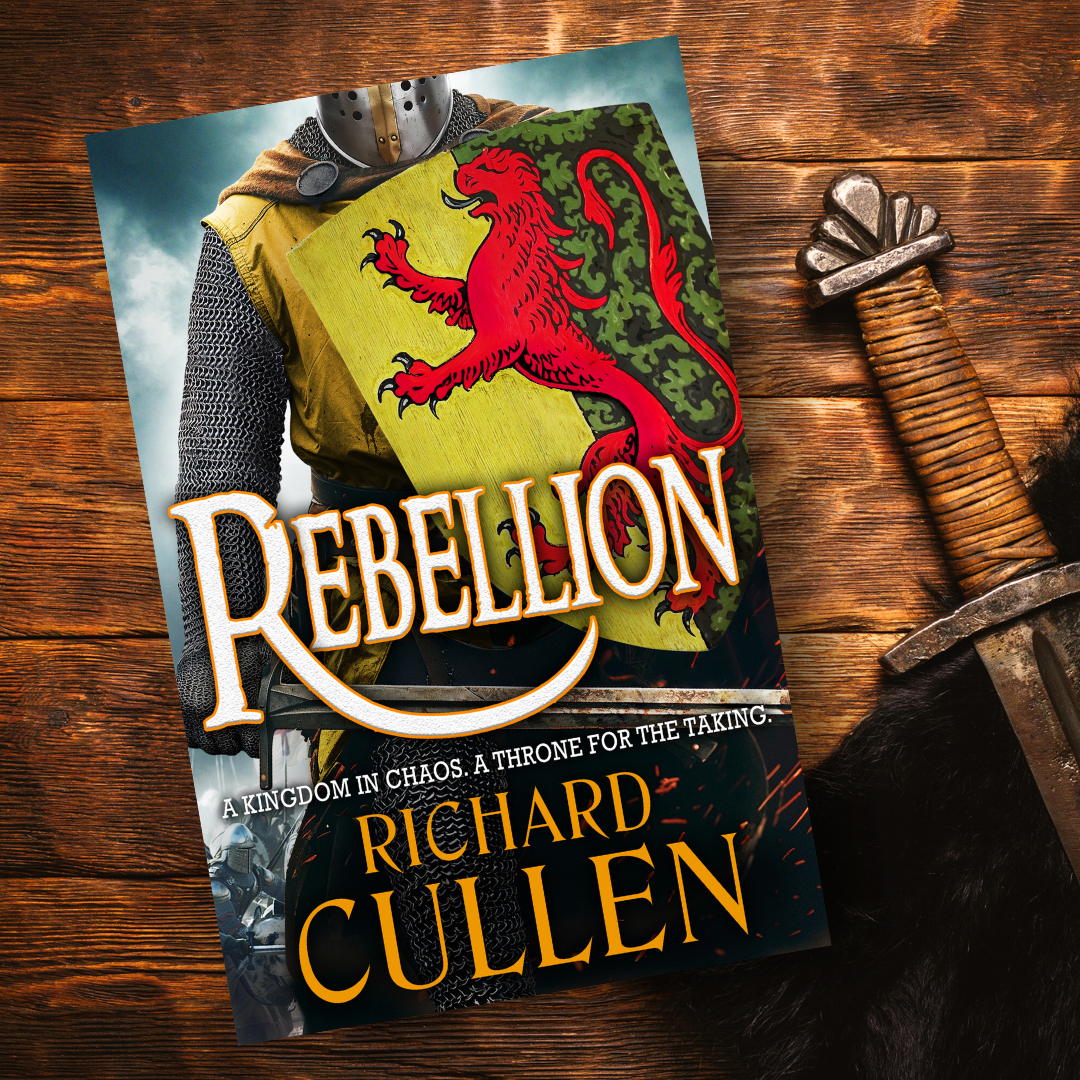
Rebellion by Richard Cullen is the first in a new series featuring young Estienne, an orphan sent to be raised in the household of the fabulous William Marshal in the final troubled years of King John’s reign. (You may have noticed that I’m a huge William Marshal fan—I wasn’t expecting to find him in this book, so I was very pleased.)
Estienne quickly makes an enemy for himself in the form of one of the other squires while showing his loyalty and fierce desire to succeed. In the process, he wins the high regard of William Marshal and two of his older sons.
The story is very busy. A lot is happening as rebellion against King John builds, and there’s the threat of invasion from France, and Estienne finds himself at the heart of much of it. This leads to some good battle scenes and harsh depictions of life in a siege. I did feel a bit sorry for his poor horse and the miles he had to journey. Although I knew the period’s history, I still found it very enjoyable to follow Estienne’s role in it all. He does witness many of the major elements and, of course, gets to face off against his enemy, although he never discovers his identity.
This is a thrilling start to a new series, and I’m excited to see what happens to Estienne in the future. It is sure to appeal to fans of the genre and those interested in the events of King John’s reign. And, we can’t forget, it features the fabulous William Marshal in all his wonderful glory.
Meet the author
Richard Cullen is a writer of historical adventure and epic fantasy. His historical adventure series Chronicles of the Black Lion is set in thirteenth-century England.