SHE STRUGGLES AGAINST HER ENEMIES. BUT STILL, THEY STAND IN HER WAY. In 14th century England, Meg of St. Michael’s Mead endures a life of abuse and isolation due to her birth deformity. After witnessing a shocking birth, Meg discovers her true purpose: to become England’s first licensed female physician and provide compassionate care to women.
To achieve her goal, Meg seeks the tutelage of William of Oxford, a gruff surgeon who agrees to mentor her. But there’s a catch. She must keep a secret—William and his son Gerard are performing illegal human dissections—and she must assist them. As Gerard and Meg work together, their feelings for each other deepen.
Amidst a civil war, Meg makes an enemy of the Queen, who accuses her of treason. Forced to flee to Montpellier, France, Meg tries to enter medical school, only to be met with resistance. She is told to marry, stay at home, and please her husband. Meg refuses to conform. When a deadly epidemic breaks out in Montpellier, Meg has one last chance to prove herself, but at the risk of losing Gerard.
A story of one woman’s courage and persistence, this captivating tale follows Meg’s arduous journey of overcoming prejudice and adversity as she battles societal expectations amidst the specter of a lethal epidemic.
The Solitary Sparrow by Lorraine Norwood and narrated by Tracy Russell is a wonderfully atmospheric story of the fourteenth century, following Meg as she attempts to fulfil her hopes and dreams following a difficult childhood.
It does not shy away from describing some quite graphic medical conditions, but voiced by our narrator, the reader can only be enthralled and absolutely fascinated, as events unfold for Meg. Indeed, I was hooked by the end of the first chapter.
It’s such a fascinating story, stuffed with medical knowledge of the era and sure to enthrall readers, even if the topics are not always the most pleasant. An absolute delight.
Meet the author
Lorraine Norwood was a professional journalist for over 20 years, working in print and television journalism. Her lifelong interest in archaeology led her to change careers at midlife and earn a master’s degree in medieval archaeology from the University of York in York, England. When she returned to the U.S., she worked in archaeology and historic preservation for a number of years but is now happily writing full-time. She has participated in excavations in the UK including many in York, her favorite city. The Solitary Sparrow is her first novel, the first in a series titled The Margaret Chronicles. She is working on the sequel, A Pelican in the Wilderness. The series is set in 14th century England and France. Lorraine is a member of the Women’s Fiction Writers Association and the Historical Novel Society. She is a certified book coach and a developmental editor and loves mentoring new writers. She lives with an old Lab who follows her everywhere and a grumpy old cat who doesn’t care what the human does as long as he has food in his bowl. Lorraine lives in the Blue Ridge Mountains of North Carolina.
I’m delighted to welcome Katerina Dunne and her new book, Return to the Eyrie from the Medieval Hungary series to the blog with The Siege of Szabács (1476).
The Siege of Szabács (1476)
During his long reign (1458-1490), King Mátyás of Hungary faced the Ottoman army many times. Although the King kept a rather defensive stance against Sultan Mehmed’s advances towards Central Europe, he did his best to ensure the border raids perpetrated by the Ottomans remained localised. Mátyás focused on expanding his kingdom to the west and north; but when circumstances demanded it, he fought the Ottomans successfully.
Several chapters of Return to the Eyrie are dedicated to the siege of Szabács (Jan-Feb 1476) It is where the young heroine, Margit, receives her baptism of fire as a soldier. Dressed in a man’s clothes, she puts her archery and fighting skills to the test.
The fortress of Szabács (Šabac in Serbian) was a stronghold on the southern bank of the river Sava. It was built in 1470 by the Ottomans, who had occupied the area since 1459 and used the fortress as a base to launch raids into the territories of the Kingdom of Hungary (mainly Croatia, Slavonia and the Hungarian-occupied area around Belgrade)
According to sources of the time, the fortress was constructed of wood and rammed earth and was surrounded by marshes as well as man-made ditches. This whole arrangement was quite effective against bombardment.
The remains of the Šabac / Szabács fortress photo by Ванилица from Wikipedia
After fighting against his Christian neighbours for many years, King Mátyás wished to pacify public opinion in Hungary and abroad and present himself as a “defender of the faith”. During 1475, he had already established a huge army of Hungarian, Transylvanian, Wallachian and mercenary forces, including artillery and siege equipment as well as river galleys and gunboats.
It is not exactly certain whether his plan at the time was to go to the aid of the Moldavian and Wallachian princes, whose territories were threatened by an Ottoman invasion, or capture the main Ottoman fortresses in Serbia in order to stop the enemy attacks against his own kingdom. In any case, he ended up besieging Szabács in January and February 1476 from land and river with a force that severely outnumbered the Ottoman defenders and discouraged any relief army to approach the fortress.
The earthen walls of Szabács withstood the long-range bombardment during the first part of the siege while the Ottoman arrows and firearms prevented any assault from the land. But when the waters in the ditches rose in the first days of February, the war galleys were able to approach from the river and intensify the damage to the walls. This, together with bombardment and assaults from the land, broke the Ottoman resistance, and the defenders surrendered on 15 February 1476.
In his chronicle, Antonio Bonfini wrote that Mátyás took the fortress by employing a ruse: he feigned retreat while a part of his army hid in a neaby forest. When the Ottomans thought the danger had passed and relaxed their guard, the hidden soldiers climbed the walls and took Szabács. Although this story has great dramatic effect (which I partly use in my novel), it was probably only a myth.
Another primary source of the time, the anonymous poem Szabács Viadala (The Fight for Szabács), presents a more plausible version of how the fortress was taken. In the poem, an Ottoman soldier, who still remembered his Hungarian origin, fled and revealed the weak points of the fortifications to Mátyás. The bombardment then concentrated on these areas until the fotress fell.
Armour and weapons of King Mátyás’soldiers at the Visegrád citadel museum (my photo)
Whatever the real reason for the capture of Szabács was, historian Tamás Pálosfalvi suggests that its significance rests on the King’s original intentions at the time. If Mátyás had intended to assist Moldavia and Wallachia but was forced to change his plans due to the adverse weather or the failure of the Ottomans to attack Wallachia at the time, then the victory at Szabács can be considered a success. If, however, Szabács was his main aim, then the whole operation only served to convince public opinion in Hungary and abroad of the King’s commitment to defending Christendom against the Ottoman danger.
Works Consulted:
Antonio Bonfini: A Magyar Történelem Tizedei (Rerum Hungaricarum Decades), Hungarian trans. P. Kulcsár (Budapest, 1995)
Szabács Viadala (The Fight for Szabács)—a poem commemorating the siege and capture of Szabács (author anonymous; date unknown but possibly around the time of the siege in 1476)
Armour and weapons of King Mátyás’soldiers at the Visegrád citadel museum (my photo)
Blurb
Honour, revenge, and the quest for justice.
Belgrade, Kingdom of Hungary, 1470:
Raised in exile, adolescent noblewoman Margit Szilágyi dreams of returning to her homeland of Transylvania to avenge her father’s murder and reclaim her stolen legacy. To achieve this, she must break the constraints of her gender and social status and secretly train in combat.
When the king offers her a chance at justice, she seizes it—even if it means disguising herself as a man to infiltrate the vultures’ nest that now occupies her ancestral ‘eyrie’.
Plagued by childhood trauma and torn between two passionate loves, Margit faces brutal battles, her murderous kin’s traps and inner demons on her quest for vengeance. Only by confronting the past can she reclaim her honour—if she can survive long enough to see it through.
Return to the Eyrie is an epic coming-of-age tale of a young woman’s unwavering pursuit of justice and destiny in 15th century Hungary.
Katerina Dunne is the pen-name of Katerina Vavoulidou. Originally from Athens, Greece, Katerina has been living in Ireland since 1999. She has a degree in English Language and Literature from the University of Athens, an MA in Film Studies from University College Dublin and an MPhil in Medieval History from Trinity College Dublin.
Katerina is passionate about history, especially medieval history, and her main area of interest is 13th to 15th century Hungary. Although the main characters of her stories are fictional, Katerina uses real events and personalities as part of her narrative in order to bring to life the fascinating history of the medieval Kingdom of Hungary, a location and time period not so well-known to English-speaking readers.
Return to the Eyrie (published April 2024) is the second book in the Medieval Hungary series, a sequel to Lord of the Eyrie (published in February 2022).
I’m delighted to welcome Jennifer Ivy Walker and her new book, The Witch of the Brenton Woods, to the blog with the historical aspect of The Witch of the Brenton Woods.
Historical Aspect of The Witch of the Brenton Woods
I wanted the hero of my story to be an American paratrooper dropped into Normandy for the D-Day landings on June 6, 1944, so I researched many of the different divisions of American servicemen during World War II. I selected the 507th PIR (Parachute Infantry Regiment), which was part of the 82nd Airborne Division, whose D-Day objective known as Mission Boston was to secure the Merderet River crossing in Normandy.
As I developed the historical fiction aspects of The Witch of the Breton Woods, I decided to have my fictional character, First Lieutenant Richard Zachford, be forced to make an emergency jump when his plane was shot down by German 88mm flak antiaircraft artillery guns. It was rewarding and challenging to weave together fictious characters who were part of the real 507th PI and weave them into the Battle of Saint-Malo, the culminating point of my novel.
I did extensive research about the Battle of Saint-Malo, a city in Bretagne (Brittany) that I had visited twice before as a high school French teacher taking my students on trips to France. When I discovered that a major focus of World War II had been The Battle of Brittany, I wove my fictional characters into the historical events which actually took place in the Battle of Saint-Malo, one of the crucial seaports that the Nazis controlled, which was deemed essential for the Allies to recapture.
Saint-Malo was one of the French towns designated as a fortress under Hitler’s Atlantic Wall program, and the Allies intended to capture the town so that its port could be used to land supplies and naval reinforcement. However, the Germans had covered the medieval castle into an underground fortress that was nearly impenetrable. When the Allies did successfully retake Saint-Malo, it had been so heavily damaged that it had been rendered unusable, and the courageous Malouins (the French name for the local inhabitants of Saint-Malo) slowly rebuilt their beloved city.
In writing The Witch of the Breton Woods, I wove together the events leading up to the surrender of the German Colonel Von Aulock (known as the Mad Colonel) on the 17th of August, 1944 and the surrender of the nearby German garrison of Cézembre on September 2nd. It was very challenging to entwine the plot development of my novel with the actual events which occurred between the D-Day landing of June 6th and the surrender of the Germans at Saint-Malo on September 2nd, 1944. I am very proud to have interwoven compelling historical fiction and thrilling romantic suspense in The Witch of the Breton Woods.
Blurb
Traumatized by horrors witnessed during the Nazi invasion of France, a young woman retreats to the dense Breton woods where she becomes a member of the clandestine French Resistance. When she finds a critically injured American paratrooper whose plane was shot down, she shelters the wounded soldier in her secluded cottage, determined to heal him despite the enormous risk.
Ostracized by villagers who have labeled her a witch, she is betrayed by an informant who reports to the Butcher—the monstrous leader of the local paramilitary organization that collaborates with the Germans. As the enemy closes in, she must elude the Gestapo while helping the Resistance reunite the American with his regiment and join the Allied Forces in the Battle of Brittany.
Can true love triumph against all odds under the oppressive Third Reich?
Jennifer Ivy Walker has an MA in French literature and is a former high school teacher and professor of French at a state college in Florida. Her novels encompass a love for French language, literature, history, and culture, incorporating her lifelong study, summers abroad, and many trips to France.
The Witch of the Breton Woods is heart-pounding suspense set during WWII in Nazi-occupied France, where a young woman in the French Resistance shelters and heals a wounded American soldier, hiding him from the Gestapo and the monstrous Butcher who are relentlessly hunting him.
I’m delighted to welcome Jennifer M. Lane and her new book, Downriver from The Poison River Series, to the blog with a guest post.
Guest Post
On the surface, Downriver, the first book in the Poison River series, is an extension of my lifelong interest in coming-of-age tales, where men and women unlock a part of themselves that allows them to move into a new phase of life. Though I believe we can “come of age” at many points, Charlotte and her friends are teenagers at the start of the series, fighting a battle much more formidable than their years.
The story is fictional, but the places are real, and the foundation on which the plot sits is based in the history of Pennsylvania’s anthracite coal country.
The world Charlotte and her brother, Emmett, come from is tainted by the conflict between coal bosses and mine workers. It’s a history of rich versus poor, of immigrants with fewer protections being abused by a coordinated system of oppression.
Mine workers in this region in the nineteenth century were largely Irish immigrants, many of whom fled the potato famine and the corporatization of their food supply. As they fought back in Ireland and England, emigrees formed a group known as the Molly Maguires, coordinating increasingly violent uprisings against farmers who locked them out of land they once farmed and merchants who raised the rates on foods.
The Strike in The Coal Mines. Credit: Public Domain (prior to 1929)
In the United States, as Irish workers settled in anthracite country and took on mine work, they soon found themselves financially shackled to their new employer. Housing was taken from their pay along with fees for the town doctor. Their remaining income was paid in scrips—company coin that could only be spent in the overpriced company store. Their income rarely exceeded their bills. And the more they pushed for better conditions, the more the coal bosses fought back. Eventually, things turned violent.
No paper trail links the 1860s and 1870s violence and murders of coal bosses to a coordinated Molly Maguires group, but once slung, the moniker stuck. As the chasm between the miners and coal bosses widened, Frank Gowen convinced the State of Pennsylvania to allow the coal patch towns to hire their own private police force to combat the Mollies. The Coal and Iron Police was formed, then returned the miner’s fire.
Frank Gowen. Credit: Public Domain (prior to 1929)
This is the world of my fictional Frank Morris, Charlotte and Emmett’s father. The fictional man was a more public figure than the man who inspired him. Frank Morris wrote speeches that sparked an uprising before losing his life to poisoning. The real Jack Kehoe was hanged, accused of working quietly, leading a group of men who used violence and murder to punish coal bosses and intimidate their opposition.
Jack Kehoe. Credit: Public Domain (prior to 1929)
In retaliation, Frank Gowen hired a Philadelphia detective (Allan Pinkerton) to plant a spy within his worker’s ranks. That spy found himself regretfully entangled in violence he was accused of instigating before testifying against the miners in a case that was prosecuted by Gowen himself. The gross miscarriage of justice is considered one of the bleakest eras of the American justice system.
Readers will encounter more of this rich history in subsequent books in the series. Set a mere quarter century after twenty men were sentenced to hang for their role as Molly Maguires, Downriver draws largely on these political and worker tensions as background. The battle Charlotte and her friends wage is against a pollution that poisons the air and the water, sickening people in her hometown of Stoke and poisoning the fish in the Maryland foster village on the Chesapeake Bay.
Eckley Miner’s Village. Credit: CC BY-SA
As she battles her father’s coal boss from afar, Charlotte teams up with suffragists, her high school literary society, and a handsome young man who lost family to the poison, too.
Though the era of the American Revolution is my favorite, writing Downriver has given me a chance to merge the historical settings of my Chesapeake Bay hometown and my partner’s in the Poconos outside Eckley Miner’s Village. Visitors to their museum can enjoy the history and structures such as houses and the coal breaker that was constructed for the 1970s film The Molly Maguires.
Blurb
A sulfur sky poisoned her family and her heart. Now revenge tastes sweeter than justice.
It’s 1900. In a Pennsylvania coal town tainted by corruption and pollution, Charlotte’s world collapses when her parents meet a tragic end. Sent to a foster family in a Maryland fishing village, she’s fueled by grief and embarks on a relentless quest for justice against the ruthless coal boss, Nels Pritchard.
But Charlotte is no ordinary girl. She shares the fiery spirit of her father, whose powerful speeches inspired worker riots. With a burning desire for vengeance, she sets out to uncover the truth behind Pritchard’s crimes, unearthing a shocking connection between the town’s toxic air and the lifeless fish washing up on the shore of her Chesapeake Bay foster town.
To expose the truth, Charlotte builds a network of unexpected allies. There are gutsy suffragists, a literary society of teenage girls willing to print the truth… and Weylan. The captivating young man lost his own family to Pritchard’s poison. He offers support, but Charlotte questions his true motives when he lures her to break the law. Could she be falling into a dangerous trap, leading her to a fate worse than poison?
With her unwavering spirit and determination, Charlotte must forge alliances and navigate a web of treachery before Pritchard seeks his own ruthless revenge.
The newest book by award-winning author Jennifer M. Lane is perfect for fans of Jeannette Walls’ Hang the Moon and the fiery protagonist in The Hunger Games. Join Charlotte in this small town, coming-of-age dystopian historical saga as she finds resilience, courage, and triumph in her search for identity, independence, and her true home.
This title is available to read on #KindleUnlimited
Meet the Author
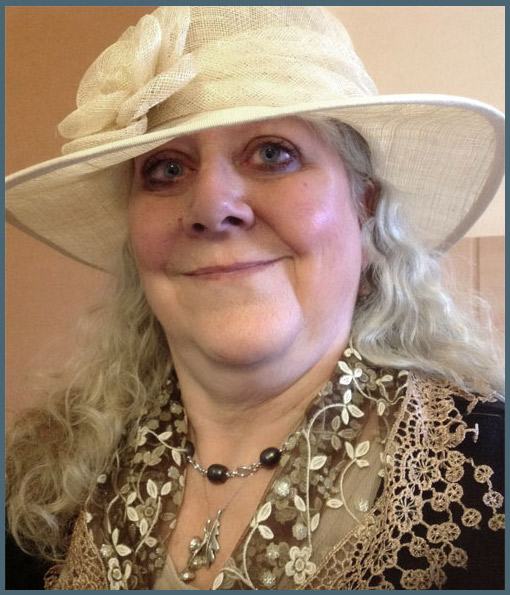
A Maryland native and Pennsylvanian at heart, Jennifer M. Lane holds a bachelor’s degree in philosophy from Barton College and a master’s in liberal arts with a focus on museum studies from the University of Delaware, where she wrote her thesis on the material culture of roadside memorials.
Jennifer is a member of the Authors Guild and the Historical Novel Society. Her first book, Of Metal and Earth, won the 2019 Next Generation Indie Book Award for First Novel and was a Finalist in the 2018 IAN Book of the Year Awards in the category of Literary / General Fiction. She is also the author of Stick Figures from Rockport, and the six book series, The Collected Stories of Ramsbolt.
Now we’ve reached the end, it’s time to go back to the beginning
If you’ve not yet had enough of the characters from The Brunanburh Series, then I have good news for you. I wrote a prequel short story from Athelstan’s point of view, and you can download it for free following this link below. You do have to give your email details and sign up for my Boldwood Books newsletters, but they are not at all aggressive with their marketing (I know – I follow myself to make sure) and you will hear from them only about new releases and book related news. And you get a free prequel short story via Bookfunnel. What’s not to love:)
Being a book reviewer is really hard work. I know because I do it myself. And so, I want to give a huge thank you to the book reviewers and bloggers who have helped launched Kings of Conflict throughout the last week, and to Rachel who organises them. (And also to my personal Street Team who are fabulous and so committed.) Everyone thinks that book reviewing must be great because you get to read books before everyone else, (and they’re free) but that overlooks the time and energy it takes to read and review every book and then make them look fancy on the internet. It can be very hard to juggle deadlines and then sometimes, you just don’t gell with a book/character and so, it’s not all free books and leisurely afternoons reading with a coffee (or beverage of choice). It can feel quite pressured. There is an overwhelming urge to want to help an author do really well with every new release. So, a huge thank you to these wonderful people, many of whom I have come to know really well, and I am so grateful to them. (You can check out the highlights from their reviews below – and you can also find the full reviews by typing their names in your search engine).
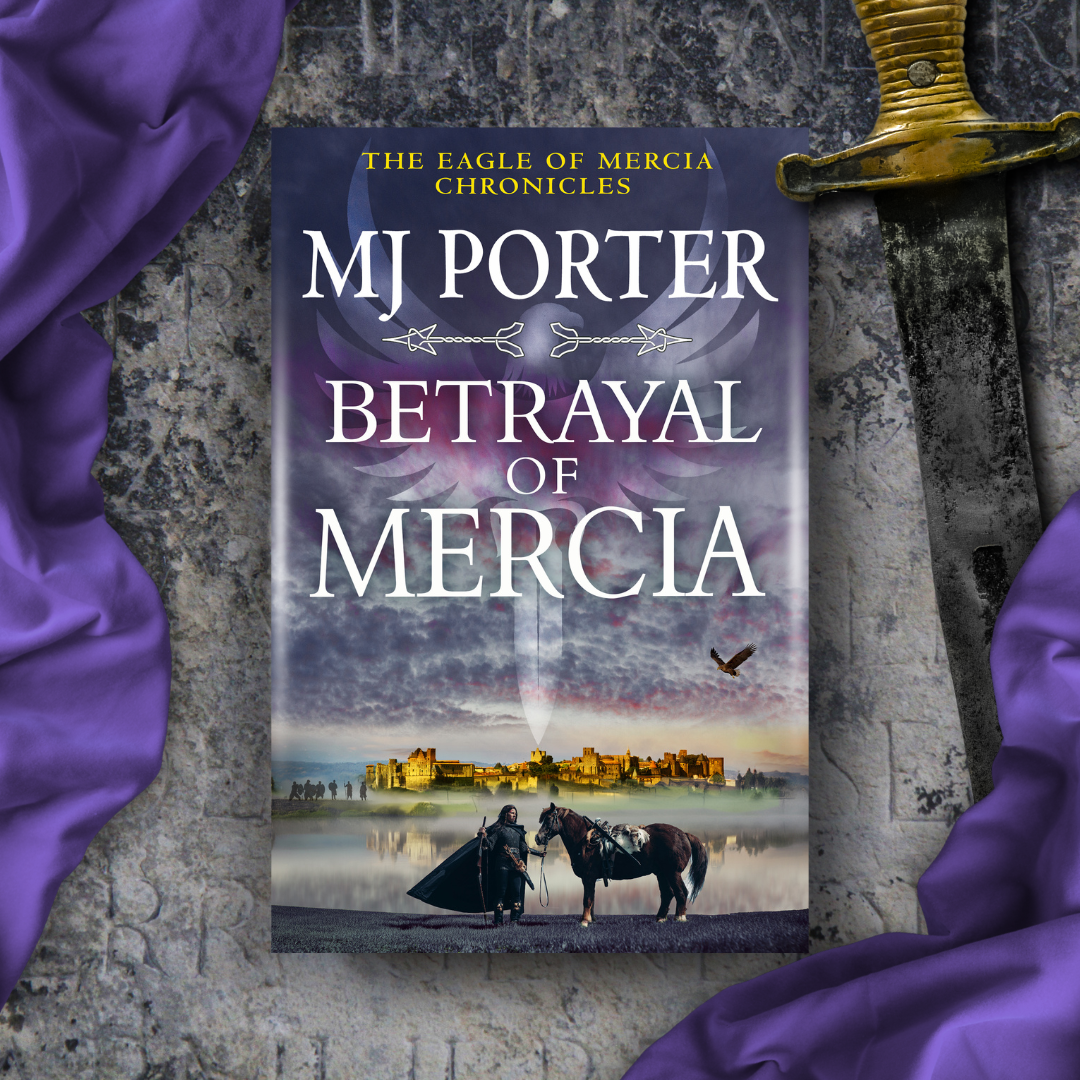
Then pick up the free prequel story, and you can read book 1, King of Kings, free with Prime Reading and it’s also in Kindle Unlimited. The first chapter recreates King Athelstan’s coronation ceremony, and then the politics and chaos descends. Enjoy.
In Regency England, twenty-seven-year-old Leonora Appleby is considered by many – herself included – to be beyond her most eligible marrying years. With her childhood home, Hasterleigh Manor, soon to be taken over by the heir to the land, George Lockwood, Leonora has happily resigned herself to a quiet life as a country Miss.
But life has a way of springing surprises and the return of the brooding war hero Earl Rokeby, presumed dead on the French battlefields, to the magnificent neighbouring Rokeby Abbey has the village atwitter with speculation. Earl Rokeby has returned, scarred in mind and body, with news for Leonora’s best friend Charlotte Blythe – news that will change everything.
Now Charlotte and Leonora must travel to Town for the Season and take their futures and fate into their own hands in the whirl of balls, parties and gossip. But will either of them return to Hasterleigh with a husband and a fortune, and what other secrets does the devastatingly dashing Alistair Rokeby have up his silken sleeves…
Sunday Times bestselling author Jane Dunn brings the Regency period irresistibly to life. Perfect for fans of Jane Austen, Janice Hadlow, Gill Hornby, and anyone with a Bridgerton-shaped hole in their lives.
I’ve read all of Jane Dunn’s Regency romances to date, and they are all fabulous. A Lady’s Fortune is a delightful addition to her books.
Our two main characters, Leonora and Charlotte, are refreshing in their outlook on life. Leonora is happy with her rural existence, while Charlotte expects little because the nature of her birth is a mystery. Both women flourish outside the constraints of the expectation of a London season, but are to be plunged into it, eventually, for much of this book takes place in their rural idyll, where our author is able to draw on her love of gardening and the outdoors (I follow her on X) to enrich the storyline – and this is coming from someone who can just about name a daffodil or a rose.
What I loved about this book is that we, the reader, really do know much of what will happen, but it unfolds in the delightful and charming way that Regency romances should – I read the last 30% in one sitting, unable to put it down.
Leonora, Charlotte, Earl Rokesby and George Lockwood will surely delight readers of the genre. 5 stars from me.
Meet the author
Jane Dunn is an historian and biographer and the author of seven acclaimed biographies, including Daphne du Maurier and her Sisters and the Sunday Times and NYT bestseller, Elizabeth & Mary: Cousins, Rivals, Queens. She lives in Berkshire with her husband, the linguist Nicholas Ostler.
I’m delighted to welcome Constance Briones and her new book, Try Before You Trust: To All GentleWomen and Other Maids in Love, to the blog with an excerpt.
Excerpt
A sorrowful expression crossed his face. “When I said I loved you, I meant it. I have loved you like no other woman I’ve known,” he uttered with a hint of resentment that I doubted his love for me.
I believed him, but how he could bury his love for me to procure a more comfortable married life with Rose Clavell was unfathomable.
I let go of his arm and opened the door. “Aye, you loved me, Robert. But not enough to weather the tribulations of love.”
He averted his gaze and hesitated before leaving. It was as if he wanted to say more in self-defense, but it would have fallen on deaf ears. He walked briskly past me and down the stairs. When I heard the central door shut, I slumped to the floor. I could feel angry tears in my eyes, but I refused to let them fall. Like the women in Heroides, I, too, had fallen victim to my passion and was forsaken by a man I loved too fast and too soon. But unlike them, I would not break.
Blurb
What if Taylor Swift found herself penning songs about love in Elizabethan England when women were required to be chaste, obedient, and silent?
Isabella Whitney, an ambitious and daring eighteen-year-old maidservant turned poet, sets out to do just that. Having risked reputation and virtue by allowing her passions for her employer’s aristocratic nephew to get the better of her, Isabella Whitney enters the fray of the pamphlet wars, a scurrilous debate on the merits of women.
She’s determined to make her mark by becoming the first woman to write a poem defending women in love, highlighting the deceptive practices of the men who woo them. Her journey to publication is fraught with challenges as she navigates through the male-dominated literary world and the harsh realities of life in sixteenth-century London for a single woman.
Loosely based on the life of Elizabethan poet Isabella Whitney, this is a compelling tale of a young woman’s resilience and determination to challenge the status quo and leave her mark in a world that was not ready for her.
Constance Briones has a Master’s in Woman’s History, which informs her writing.
She first learned about the subject of her debut historical fiction novel, the sixteenth-century English poet Isabella Whitney, while doing research for her thesis on literacy and women in Tudor England. Isabella Whitney’s gusty personality to defy the conventions of her day, both in her thinking and actions, impressed Constance enough to imagine that she would make a very engaging literary heroine.
As a writer, Constance is interested in highlighting the little-known stories of women in history. She is a contributing writer to Historical Times, an online magazine. When not writing, she lends her time as an educational docent for her town’s historical society.
She contently lives in Connecticut with her husband and Maine coon sibling cats, Thor and Percy.
Looking at many of my photos of historical locations I’ve visited, it’s beginning to look as though I never have any luck with the weather. My visit to Dumbarton Castle occured on a very chilly February day a few years ago.
The view from the summit of Dumbarton Castle
That said, the moody nature of these photos helped me to perfectly describe some of the events that take place at Dumbarton in the Brunanburh Series, the final book of which is now available. And no matter the weather, the view is stunning.
Where’s Uhtred of Bebbanburg in The Brunanburh Series?
Uhtred of Bebbanburg is perhaps our most famous character from Saxon England, even if he is a fictional creation. Not only does he have his own TV series alongside the books, but his very strong association with Bebbanburg/Bamburgh (somewhere I’m lucky to live very close to hence the photo in January below, and have been visiting since I was a small child), means that he feels very ‘real’ to many readers and audiences, and indeed, encourages thousands of people to Northumberland every year to visit Bamburgh, of which even the earliest standing buildings date to just after the Norman Conquest of 1066. (Bamburgh has a very active group investigating the archaeology (The Bamburgh Research Project with whom I attended a post-excavation week in September 2023)). He has become somewhat like the Arthur of the Arthurian Legends – more real than many historical attested individuals.
Bamburgh Castle on a chilly January day in 2024
So, where is Uhtred of Bebbanburg in my Brunanburh Series?
This is a tough one because I can’t find ‘Uhtred of Bebbanburg’ in any of the sources I’ve consulted (not that there are many). Indeed, affairs at Bamburgh at this time are so little understood, that we don’t even definitely know the names of some of the individuals who may have ‘ruled’ there, and even what the extent of their powers might have been for Bamburgh was sandwiched between the might of a growing kingdom of the Scots, and the kingdom of Norse Jorvik or English York (depending on who claimed it).
Ealdorman Uhtred
There is an ealdorman of King Athelstan who’s named Uhtred (there’s actually two, but I’m focusing on the main one here, named as a ‘dux’ or ealdorman), appearing in the surviving charter evidence from 931 to 935 (he witnesses or attests 8 of King Athelstan’s surviving charters) including the charter when Athelstan gifts a great deal of land to Archbishop Wulfstan of York in 934 on his way to ‘invade’ the kingdom of the Scots, but aside from that, he doesn’t appear in the Anglo-Saxon Chronicle at this time, and indeed, doesn’t seem to be associated with Bamburgh at all.
Who was ruling Bamburgh then?
Indeed, at this time, we have two men who seem to have ‘ruled’ in Bamburgh, one Eadwulf/Ealdwulf is attested, in the Annals of Ulster naming him as ‘king of the Saxons of the north.’ He died in c.913. His son, Ealdred/Eadred (there is confusion with the correct name) joined an alliance with Edward the Elder, king of the Anglo-Saxons, in 920 (corrected from 924).
‘And then the king of Scots and all the nation of Scots chose him as father and lord; and [so also did] Reginald and Eadwulf’s son and all those who live in Northumbria, both English and Danish and Norwegians and others; and also the king of the Strathclyde Britons and all the Strathclyde Britons.’ (Swanton, M. trans and edit The Anglo-Saxon Chronicles, (Orion Publishing Group, 2000 p.104 (A text 924 for 920)
As well as the one with King Athelstan in 927,
‘King Athelstan succeeded to the the kingdom of Northumrbia; and he governed all the kings who were in this island; first Hywel, king of the West Welsh, and Constantine, king of Scots, and Owain, king of Gwent, and Ealdred, Ealdwulf’s offspring, from Bamburgh. And they confirmed peace with pledges and with oaths in a place which is named Rivers’ Meeting on 12th July;…’ (Swanton, M. trans and edit The Anglo-Saxon Chronicles, (Orion Publishing Group, 2000 p.107 (D text for 926 )
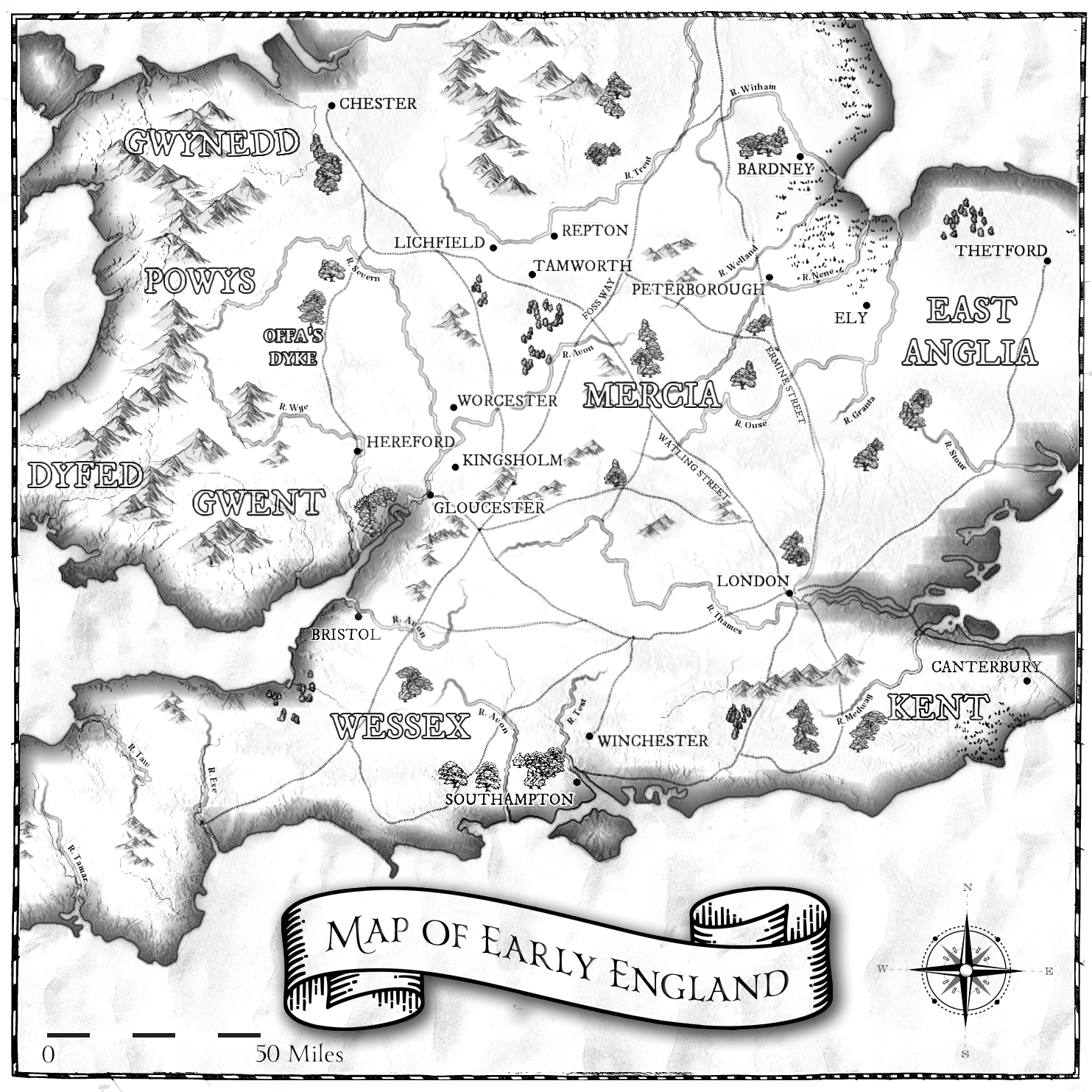
Ealdred seems to hold his position until 934 when his death may be recorded in the Annals of Clonmacnoise. His death could have precipitated Athelstan’s decision to invade the kingdom of the Scots if perhaps Constantin of the Scots was ‘meddling’ with the Saxon enclave, perhaps hoping to claim it himself, which ultimately led to the battle of Brunanburh in 937 between Constantin, Athelstan and Olaf Gothfrithson.
What happened in Bamburgh after the death of Ealdred is very hazy. I’ve made some leaps of faith, largely influenced by academic scholars of the period, in Kings of Conflict, and my imagination, but alas, it did not allow me to find our missing ‘Uhtred’ of Bebbanburg, and while in initial drafts, I did ‘allow’ Ealdorman Uhtred some interest in Bamburgh, I removed these because it just didn’t fit with the information I could find.
Kings of Conflict, the last part of the Brunanburh series, is available now.
In 2014, I had the ‘amazing’ idea to write a novel about the events that led to the famous battle of Brunanburh in 937 – the greatest battle on British soil that few people have ever heard about (Or certainly hadn’t heard about back then – who knew Uhtred of Bebbanburg would be taking part in it).
My reasons were two-fold. I’d just read Sarah Foot’s monograph on Athelstan, and the UK was in the grip of a vote for Scottish Independence. It made me consider the union of the kingdoms of Wales, Scotland, England and Northern Ireland and the history behind it. But, it also stemmed from my own frustration with the way we’re taught history in the UK. ‘United’ it might say but if you go to school in England, Scotland, Wales or Northern Ireland you will be taught the ‘history’ of those kingdoms (and only those kingdoms)- that was when I was a kid, and I think it’s still true – very little ‘joined up’ thinking, and this is something that continues to cause problems today, and not just in the UK, but everywhere. Country-specific agendas fall down when looking at periods before these kingdoms actually existed – and the desire to see the ‘march’ towards unity as simple also misses the naunces.
In the first book in what became the Brunanburh Series, I wanted to examine these kingdoms – to unpick the seeming ‘inevitability’ of it all – and it massively helped that despite what might come before, and after, and as little as it may seem – we do know a surprising amount about the kings who fought at Brunanburh. What we don’t know (although the Wirral is now almost ‘accepted’ as the correct location) is where Brunanburh took place, and what actually led to it. It was time for me to get writing.
1100th Anniversary of Athelstan becoming king of Mercia
2024 marks the 1100th anniversary of King Athelstan becoming king of Mercia (although his coronation as king of the English took place in 925 – so a year later (read my post about this period here). While he has been often overlooked between the alleged ‘greatness’ of King Alfred (871-899), and the alleged ‘failure’ of King Æthelred II (978-1033/1013-1016), Alfred’s great great grandson, more and more historical investigation is being undertaken on Athelstan, and indeed, his half-brother, Edmund, who is one of the other characters in the series. (It might also have helped that Athelstan features in Bernard Cornwell’s The Last Kingdom series). A spotlight is being shone on all Athelstan accomplished, and the move is also encompassing Edmund, (as well as Eadred, and Eadwig – these three often overlooked).
Non-fiction books to read
And this investigation is also looking at events in what would be Scotland, Ireland and Wales, as well as the Norse kings of Jorvik. The approach I’ve taken, is one that historians are examining – Alex Woolf’s From Pictland to Alba and Claire Downham’s Viking Kings of Britain and Ireland (they did it before me – but their books have helped me massively), as well as Max Adams’ Ælfred’s Britain which focused on much more than just Alfred.
My conclusions from writing about this period?
What then can I say after four books considering this period? Quite simply, nothing is as easy to explain or account for as might be hoped. The sources that have survived come with so many explanations about translation (they are not written in English – and indeed we have Old English, Latin, Old Irish, Old Welsh etc) bias, survival, manipulation, and corroboration (one source is often used to corroborate another) that sometimes it feels easier to hold my hands up and say ‘who knows?’
Attempts to draw together a cohesive narrative are constantly thwarted. One historian may argue for one thing, another for another. Every person who studies the period will have their own levels of ‘acceptable’ when looking at the sources. I am always wary of Saints Lives – they were not intended, and can not be, accepted as historical ‘fact’ but they do tell us a lot about reputation – another interesting facet to consider. The Icelandic Sagas must also come with a host of caveats. I also have to rely on translations and therefore remove myself from the original intention of the scribe once more.
The joy of this period is in the nuances that can be exploited – it is also where most people are likely to argue. And indeed, readers may fail to comprehend these nuances – hence the ‘it’s too predicatable’ complaint- I imagine all of ‘my’ kings would have welcomed the preditability of knowing the eventual outcome.
Trying to explain concepts such as ‘this is the first king of the English,’ ‘Hywel’s a king of all the Welsh’ falter because my audience expect these places to be united and under one king – but alas, were rarely that. The other England-specific failure to teach history before ‘1066’ also adds to these problems. The Saxon period is deemed as ‘weird,’ (the names, oh the names). There is so much going on, that even I have fallen down and made mistakes, and only with a sort of ‘doh’ moment made the connection between the name Brunanburh and the element of most interest ‘burh.’ (Thank you Bernard Cornwell for that moment of understanding – I still feel very, very stupid about it – not his fault).
Team Norse, Team England, Team Wales or Team Scots?
To tell a story such as this involves standing on the shoulders of giants. I am indebted to them – and sometimes, a bit narked that they won’t give me any definites either – what I will say is this – I understand a lot more now. I hope others do as well. And whether you’re Team England, Team Norse, Team land of the Scots, or Team what would be Wales, I hope you enjoyed meeting these long-dead men and women and realising that they were just as shifty, ambitious and perhaps, blood-thirsty, as people are today. I really can’t ask for more than that, other than you read the non-fiction for the period as well, and hopefully, enjoy it.