Author of Saxon historical fiction and non-fiction, 20th-century historical mysteries, and Norse-inspired historical romantasy. Book reviewer and blog host.
I’m reviewing Woden’s Storm by Donovan Cook #blogtour #newrelease #historicalfiction the second book in the First Kingdom series
Here’s the blurb
A storm is coming. A storm that will banish the old and deliver the new.
450AD Britain
Octa has the spear of Woden, but the redemption he sought is out of his grasp. With his banishment and the death of his father, he can no longer return to his Saxon homelands. His only salvation is to join forces with Hengist and Horsa, and their Jutish army that beaches itself on Brittania’s shores. But can he trust their motivation or are there greater plans afoot?
The Gods have their own plans, though, and Octa’s fate is not his own to control as Friga, the mother of the Saxon gods, battles to avoid a war with the gods of the Britons and Saxons using Octa as her weapon.
Prince Vortimer, the son of High King Vortigern, is angered by his father’s agreement with Hengist and Horsa as they remain unchecked and their numbers swell. He suspects treachery and encouraged by some well-placed words of a stranger, he rebels against his father and gathers his army to attack the unwelcome visitors.
War is coming to Britannia and as Octa struggles to understand his role and fate, he knows he has one question to answer. Will he run or will he stand and fight?
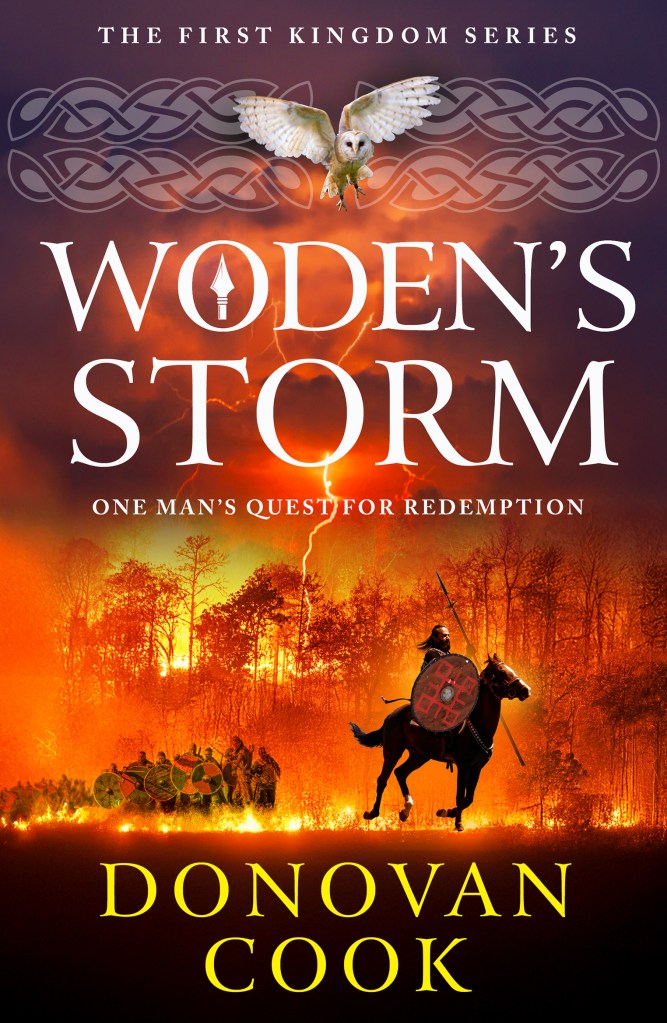
Woden’s Storm is the second book in The First Kingdom series by Donovan Cook. We’re once more in a recreated Britain of the middle fifth century, where everyone’s actions are guided by their Gods. And there are a lot of Gods who want to have a say in what’s happening, and not all of them, on the ‘same side’ as it were, hope to achieve the same ends. Octa, Vortimor, and the rest of the characters are constantly being tested by their deities, told half the story and left to work the rest out for themselves. Will they interpret their meetings with the Gods correctly, or will they make everything more chaotic by muddying these messages with their own intentions?
I do enjoy the element of the Gods walking amongst the characters and interfering in what’s happening. I mean, I doubt it would be peaceful without them, but with them, it certainly isn’t:) It adds a new dimension to this period and perhaps helps to account for some of the more eccentric decisions the characters make as they all endeavour to accomplish their goals. There is still much to play for and the series will continue.
An entertaining and intriguing series with a whole host of ‘named’ characters, people who love the era will recognise.
Donovan Cook is the author of the well-received Ormstunga Saga series which combines fast-paced narrative with meticulously researched history of the Viking world, and is inspired by his interest in Norse Mythology. He was born in South Africa and currently lives in Lancashire, UK.
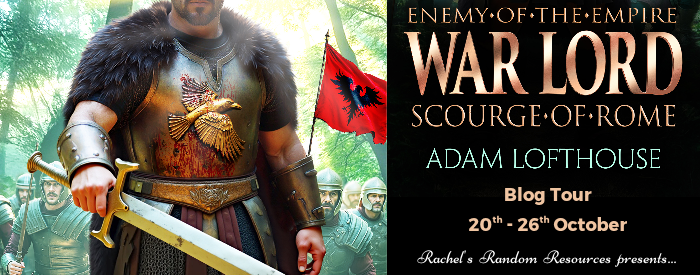
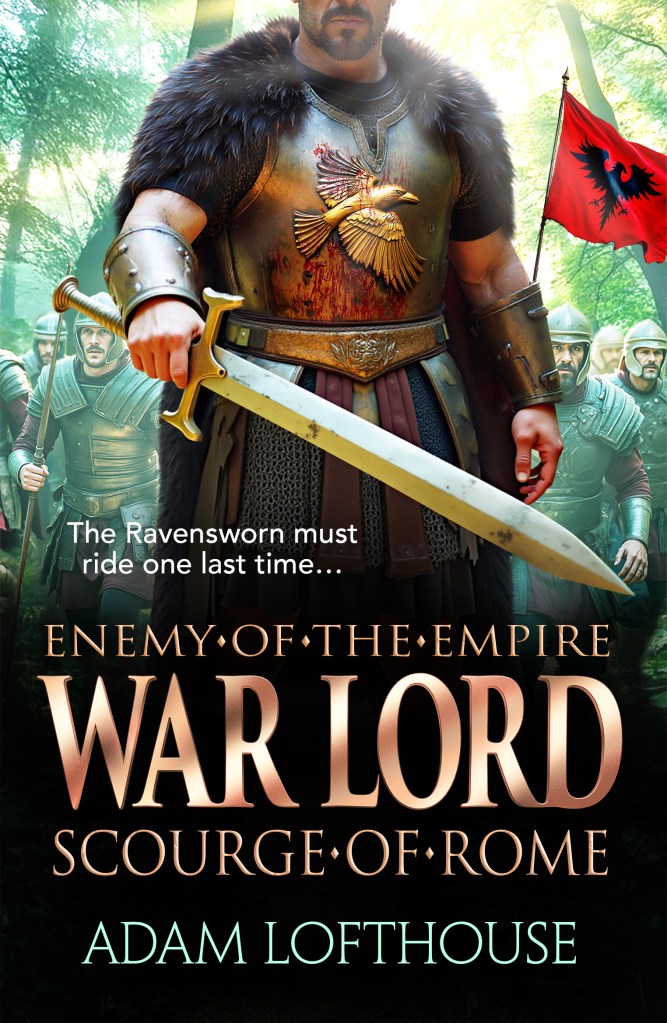
I’m delighted to share my review for Adam Lofthouse’s War Lord: Scourge of Rome #historicalfiction #blogtour #Roman
Here’s the blurb
And so we have reached the end of my tale. But what are endings if not new beginnings?
Alaric has been home for a year. He went north and saved the Cimbri, just as he said he would. But the cost has been higher than he ever thought. A shadow of the War Lord he once was, he now trades in amber and dotes on his children.
A simple life. And with it, contentment. But he knew this couldn’t last forever; peace isn’t for someone like him, and sure enough trouble finds him once again. A routine journey south turns into a new and unknown wave of danger as red-cloaked legionaries attack, causing confusion and carnage.
Warriors dressed as Romans have been scouring the country, slaughtering innocent people, and leaving Roman footprints wherever they march. But things are not what they seem, and it falls to Alaric to don his armour once more, and march his Ravensworn in pursuit of a mysterious enemy that could destabilise his world beyond repair.
War Lord, as the blurb states, is the end of Alaric, or is it a beginning for him?
Once more, we’re thrust straight back into the action, and Alaric, while accepting he’s an old man these days, does indeed not seem to have ‘grown up’ at all, as he’s so fond of reminding himself. From one hairbrained scheme to another, Alaric realises that perhaps, after all, there is a great deal at stake, and he is, of course, the man to solve everyone else’s problems, for all he likes to pretend he doesn’t care about anyone but himself, his children and his wife.
Adam writes fabulous books. I do love Alaric. He’s a bad egg, and yet, we all can’t help liking him, as indeed, does everyone who comes into contact with him. There’s no end of action and adventure, no end of peril, and through it all, Alaric sails with his usual charm and determination. But, is this one quest too much for our epic second-century hero, living on the outskirts of the Roman empire, but admiring them all the same? Has he finally found an enemy he can’t hope to beat, even if he unites the tribes? Or will he have to prove as quick-thinking as ever?
While all this is happening, there is also an intriguing backstory, reliving a moment in Alaric’s life when everything changed for him. It adds a certain poignancy to our character, making his wild ways more understandable.
This is a cracking finale for Alaric’s story. Enjoy it. I know I did.
Adam Lofthouse is the author of action-packed historical thrillers. His brand new series for Boldwood, ‘Enemies of Rome’, will focus on the boundaries at the edge of the Roman Empire. The first book Raven, will be published in February 2025.
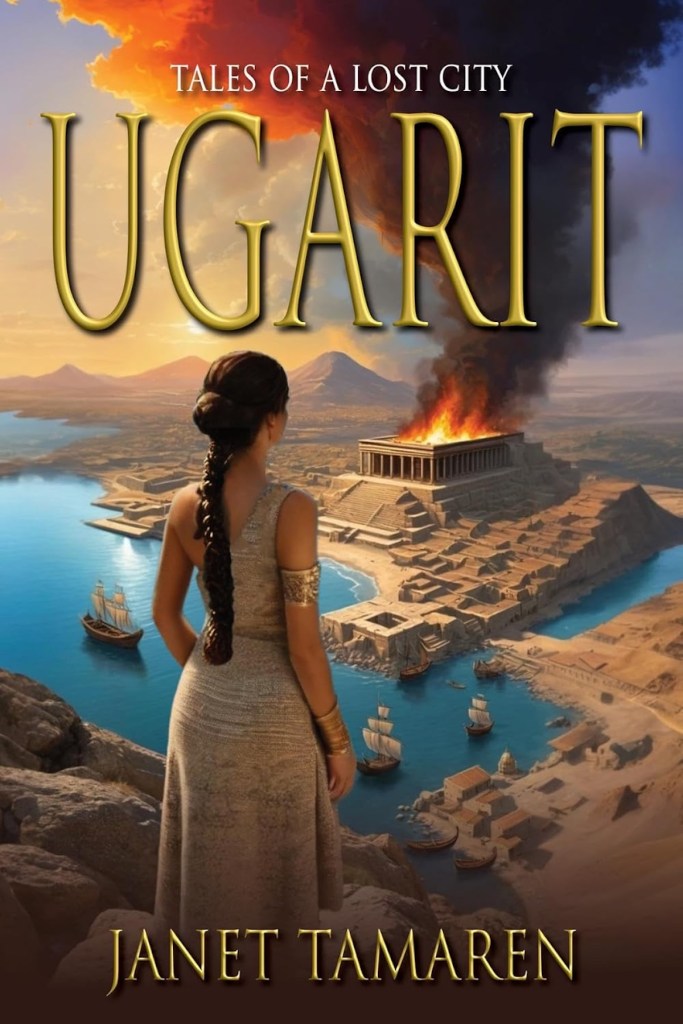
I’m delighted to welcome Janet Tamaren and her book, Ugarit: Tales of a Lost City, to the blog #HistoricalFiction #AncientNearEast #BronzeAge #Ugarit #BlogTour #TheCoffeePotBookClub
I’m delighted to welcome Janet Tamaren and her book, Ugarit: Tales of a Lost City, to the blog with an excerpt.
Excerpt
CHAPTER 4: AT THE HEALER’S SHOP
Yoninah’s house had the classic sign of the healer outside the door: a snake entwined around a pole.
Hearing a firm knock at the door from the street, Yoninah went to answer it. A middle-aged man stood there, nursing his left arm. The arm was clearly crooked.
“I broke my arm. Can you fix it?” he said with a slight accent.
“Yes, I can splint your arm for you,” she said. “And I have pain meds for you as well.”
“That would be most welcome.” He grimaced with the pain.
Showing him to the front room, where she kept her herbs and supplies, she got him situated on a comfortable bench. She was skilled at setting broken bones. Every month or so, someone from the docks appeared at her door with an injury to an arm or leg. The men did heavy work: unloading cargo from the ships.
“I have silver to pay you. I am told you are good at your work. I’ve broken bones before. I know it will lay me up for a while.” The man attempted a smile, but it didn’t quite work.
Looking more closely at him, she saw that he had the cheekbones, chin, and beard of the Aegean. His hair was black, mixed with a sprinkling of gray. The skin of his face and arms was heavily tanned, with creases across the face, courtesy of the harsh sun of the Great Sea. A handsome face except for the grimace.
Probably a refugee from the war in the north, from Troy, she thought. A war that had been over and done with for a good twenty years.
She picked up a salve of poppy seed extract and myrrh and returned to the bench where the Mycenean sat. She washed the area and applied the numbing ointment as a compress. As she worked, she made small talk to distract him from his pain: “I’m guessing you are Mycenaean. Not much accent there, but you look like you’re from the Aegean. How did you break your arm?”
“I was carrying wine jars on a cart drawn by an ox. The cursed animal took a tumble,” said the Mycenean. “I tried to catch the jars before they hit the ground. The jars survived but my arm broke. Heard the thing snap. Hurts like the sting of a thousand bees.”
“Well, let the compress work for a bit. Should feel better in a short time,” said Yoninah. “Let me find a splint to fit you.”
“And maybe a cup of honeyed wine to take the edge off?” he asked.
“Certainly,” she said. Yoninah called for her daughter Laylah to fetch a flask with honeyed wine.
“How did you end up in Ugarit?” asked Yoninah. “This is a distance from the Aegean Sea.”
“The war,” he said flatly. “I mean the Trojan War. I joined the fleet in Mycenae when I was seventeen because I thought it would be a grand adventure. They paid a good bonus as well. Ten stinking years later – most of it spent outside the grand walls of Troy, in a siege that was going nowhere –we somehow broke through the walls, looted the city, and burnt it.”
“I was sick of the whole adventure by then. And sick of the sea: too many storms, too many shipwrecks. Never wanted to go back across the Great Sea.” He paused for a beat and said, “Is my arm almost ready? I can’t feel the pain as much anymore.”
“Good,” she said. “Lay your arm flat on the table. And here is that wine for you.”
Taking a cup of wine from Laylah with his right arm, he drank it down in one fell swoop.
Yoninah had him lay his misshapen left arm on the table, and manipulated the broken bone back into position. She splinted it with a plank of cedar wood and wrapped it in clean cloths. “How does it feel?” she asked.
“Not bad,” the man said. The man’s attempt at a smile proved a bit more successful.
“You fought at Troy. That’s a goodly distance from Ugarit,” Yoninah said as she gathered up a sling. “How did you wind up here?”
“Never wanted to go back to the open sea. Took passage on a ship bound for Ugarit. As you know, these ships travel along the coast. That took a scant ten days, what with favorable winds and currents. Been here a good twenty tears now,” he said.
She gave him a sling, to keep his elbow bent and the arm held close against his chest. She tied the sling herself. As she bent over him, he stared at her chest.
“That’s a pretty necklace you are wearing.” His eyes were fixed on the pendant she wore, a painted terracotta figure of a naked woman.
Yoninah bit her lip as she tried to hold back a smile. Her patient was a bit tipsy now.
“Thank you. It is Asherah, the Queen of Heaven.” She was momentarily distracted by the intensity of his gaze. She reverted quickly to her healer persona.
“There you go. No using the arm! For at least four weeks. Do you have a wife or daughter to keep an eye on you?” Yoninah couldn’t meet his eyes as she asked this question.
“No,” he said. “My wife died. I have a friend who can help. I’ll be all right.”
“My husband died five years ago,” Yoninah said before she could catch herself. She didn’t really need to tell him this information. She turned away and busied herself for a moment.
“I’ll need you to come back in two weeks,” she said. I’ll need to make sure the arm is healing.”
“My name is Menelaus. And yours is?”
“You can call me Yoninah” she said.
Giving her a silver shekel for the arm repair, he swore he would be careful with the arm and agreed to return in two weeks. He gave her a lopsided grin at that point. Possibly due to the excess of wine, she thought.
After he left, she felt uplifted. That had been an unusually pleasant interaction. The bone had gone smoothly back into place.
Laylah had remained respectful while the Mycenean was there. After he left, she looked at her mother’s flushed face and laughed. “You like him.” she said.
Yoninah agreed: “He is handsome enough. He kept us amused.” She thought, “It is true, I am looking to forward to seeing him again.”
Here’s the Blurb
A captivating tale of bravery in the face of heartbreak and upheaval.
IN THE SPRING OF 1190 BC, on the sun-drenched shores of the eastern Mediterranean, the thriving city of Ugarit pulses with life, trade, and courtly intrigues. But danger brews beyond its walls.
Yoninah, a gifted healer, offers herbs and amulets to ease her neighbours’ suffering. When a Mycenaean – an ex-soldier from the Trojan War—stumbles into her life, he reawakens memories she thought long buried. Just as whispers of war echo ever closer.
Meanwhile, in the royal court, Thut-Moses is a scribe who was trained in the temples of Egypt. The king is paralyzed by ominous messages: foreign invaders are razing one coastal city after another. As the tide of destruction nears, Ugarit’s fate hangs in the balance.
Torn between loyalty and survival, love and duty, Yoninah and Thut-Moses must each decide: what will they risk to protect what the hold most dear?
Rich with historical detail and inspired by newly-translated cuneiform tablets unearthed form Ugarit’s ashes, UGARIT brings to life the final days of a cosmopolitan world on the brink of collapse – a sweeping tale of courage and resilience at the twilight of the Bronze Age.
Praise for Ugarit:
“A masterfully told tale-rich, riveting, and utterly transporting. I couldn’t put it down.”
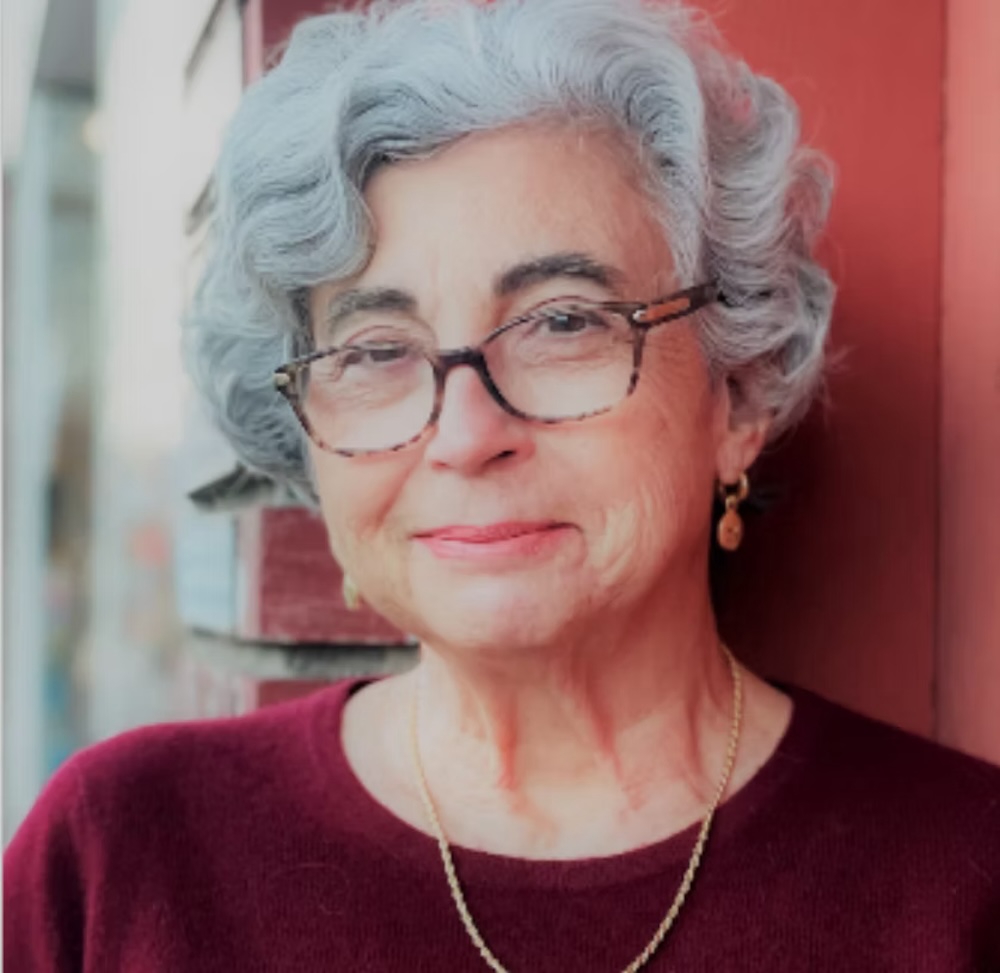
Janet Tamaren is a retired physician who practiced for two decades in rural Kentucky. Now living in Denver with her husband, she enjoys writing and is the author of a medical memoir and a guide to Hebrew Bible stories. She began writing UGARIT during the COVID lockdown.
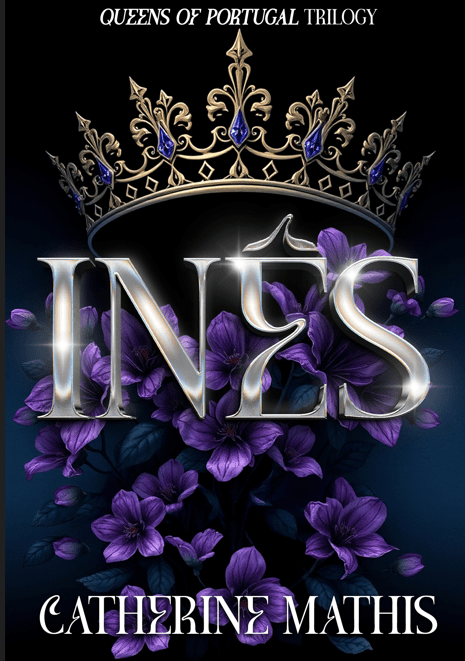
I’m delighted to welcome Catherine Mathis and her new book Inês to the blog, with a fascinating guest post #HistoricalFiction #MedievalFiction #BlogTour #TheCoffeePotBookClub @cathiedunn
@thecoffeepotbookclub @cmathisauthor
In Candide Voltaire describes the great earthquake of All Saints Day 1755 which hit during Sunday church services resulting in the destruction of most of Lisboa and surrounding villages for miles and miles. Then Lisboa burned and was hit by a tsunami. Records and documents not destroyed in 1755 were ravaged by Napoleon’s troops. Records for the early fourteenth century were never as plentiful for Portugal as they are for France or England, and these two seminal events did not help. The larger hurdle is I do not speak or read Portuguese or the earlier spellings of medieval Portuguese, nor Spanish for that matter.
Most histories of Portugal will mention the Pedro and Inês affair in passing, not depth. The prominent chronicle surviving to this day was written by Fernão Lopes in the early fifteenth century. The extant Lopes work starts with the reign of King Pedro. Lopes’s chronicles for earlier kings are lost. Lopes proclaims an intent for historical accuracy and does a good job of balancing characters and events despite writing for the Avis dynasty. These chronicles were not available in English until 2023, and I did not trip across them until mid-2024 when my novel was already with the publisher.
There are references to other documents long lost to time. There are some records in archives and other Portuguese and Spanish cities. Professor Rita Costa Gomes wrote The Making of Court Society, a scholarly Portuguese book translated into English, though it provides some information only in Portuguese. Other useful books include: de Oliveira Marques’s Daily Life in Portugal in the Late Middle Ages, A.R. Disney’s History of Portugal and the Portuguese Empire, and Oliver Sacks’s Hallucinations.
For good or ill, my primary source was Edward McMurdo’s The History of Portugal, Volume II published in 1889. McMurdo takes a bit of getting used to; his opinions are well stirred into the history presented. Likely Portuguese/Spanish documents of recent years have updated information.
I found this legend on a trip to Portugal. Then several years later I returned to Portugal, specifically to visit the locations central to the story along with visiting museums. There is little extant material in museums from this period. I walked the grounds of a convent now in ruins in Coimbra that is central to the story. While geography changes with time, walking narrow streets and the buildings that remain from the fourteenth century helped when creating scenes.
It is in the gaps of written documents that novels unfold. It does not mean that accuracy is not important. It absolutely is. Did Pedro marry Inês? Not in the legal sense of marriage arranged for an heir to the throne. Did Pedro believe he wed her? Did Inês believe she was married? I chose to answer yes to both questions. Inês – from what we believe we know – exhibited loyalty to her friend Constanza, Pedro’s wife, and cared deeply for all of Pedro’s children. Inês did not have a child until at least a year after the death of Pedro’s first wife. Then she bears Pedro children regularly. Others suppose the love affair began before Pedro was widowed. Pedro refused to marry suitable women his father proposed after his first wife’s death. He had clergy attest to the marriage with Inês. And he never marries again, though he has a consequential affair.
There are lots of technical practices in the lives of medieval royals that are not common in our world. Technically Pedro was married before he wed Constanza. It was a marriage never consummated before it was dissolved. Often marriage agreements are bargaining tools of a king in managing relationships with other countries or inside his own country. The key is what is important to the story being told, what is critical in the history of the time, yet not a turning point for the story being told. For example, the Battle of Salado was huge in Pedro’s lifetime as was the Great Pestilence. Neither of these events is a driving factor in the legend. They are included but not critical.
The other key issue is names. Men named Pedro or João or women named Maria litter the landscape. I made a decision to use a name per person and not confuse the reader by overly focusing on titles or full proper names. It is easier if there is one central Pedro not to be confused with Pedro’s in the nobility or neighboring countries. The point is the story. For the novel, this means a Pedro in a neighboring country becomes Peter or more plainly Castile’s king. All readers know Portugal existed in the medieval period. Their likely earliest recollection is of Prince Henry the Navigator, still a century away from Pedro. Those seeking a good story are less concerned with the rabbit holes and details of history some of us find fascinating. This is the writer’s balancing act.
Let’s close with a final thought on sources and information. For many dates there is not an agreement as different sources will offer different dates for the same event. And between then and now, the calendar changed. Many birth dates and thus ages were not recorded in sources, especially for women and also children who die young. Often this is not critical to the story, the legend.
The fun part of research is falling down the rabbit holes. As I chase a fact or information about a location I can get sidetracked into reading articles on the nature of queenship, the trade between Portugal and England or the Netherlands, life on board a ship, etc. Most of the research is never used, and always worth the time to study.
Here’s the blurb
An heir to the throne, a gorgeous blonde lady-in-waiting, the king’s trusted advisor. When a father and son don’t understand each other, the son pays an outrageous price.
Love, jealousy, loyalty, and revenge roil the court of 14th century Portugal.
In this engrossing launch to the Queens of Portugal trilogy, Catherine Mathis gives a fresh take on the tale of Pedro and Inês, Portugal’s real-life Romeo and Juliet. Pedro’s father would not have been king if not for his trusted advisor, Gonçalves. Once king, he wants no part in neighboring Castile’s royal convulsions though his son, Pedro, befriends powerful Castilians.
The all-consuming drive of the king is to ensure his line rules Portugal for centuries to come. He needs legitimate, strong heirs. The Infante Pedro loves a woman not deemed worthy to wear the crown as queen. Between father and son is Gonçalves, the king’s powerful, unquestioned counselor who is mentor to the son. Both Gonçalves and Pedro seek the attention of Inês.
There is a horrific cost to winning the love of Inês. She will not release her grip on Pedro until he keeps the two sworn oaths he made to her. Can Pedro do the impossible to satisfy Inês?
Inês is based on real people and events, exploring a cultural touchstone of Portuguese history.
Praise for Inês:
“Mathis masterfully weaves emotional depth into the narrative, creating a deeply engaging experience that leaves a lasting impression and invites readers on an unforgettable journey through the grandeur and intrigue of Portugal’s past.” ~ Mary Anne Yarde, The Coffee Pot Book Club 5* Review
“This exciting start to the Queens of Portugal trilogy describes the legendary love story of Pedro and Inês, and I was amazed at the excellent storytelling and how the author brings the courts to life. There is a lot of drama and intrigue, and the characters’ emotions are beautifully captured in this engrossing tale.” ~ Readers Favorite 5* Review
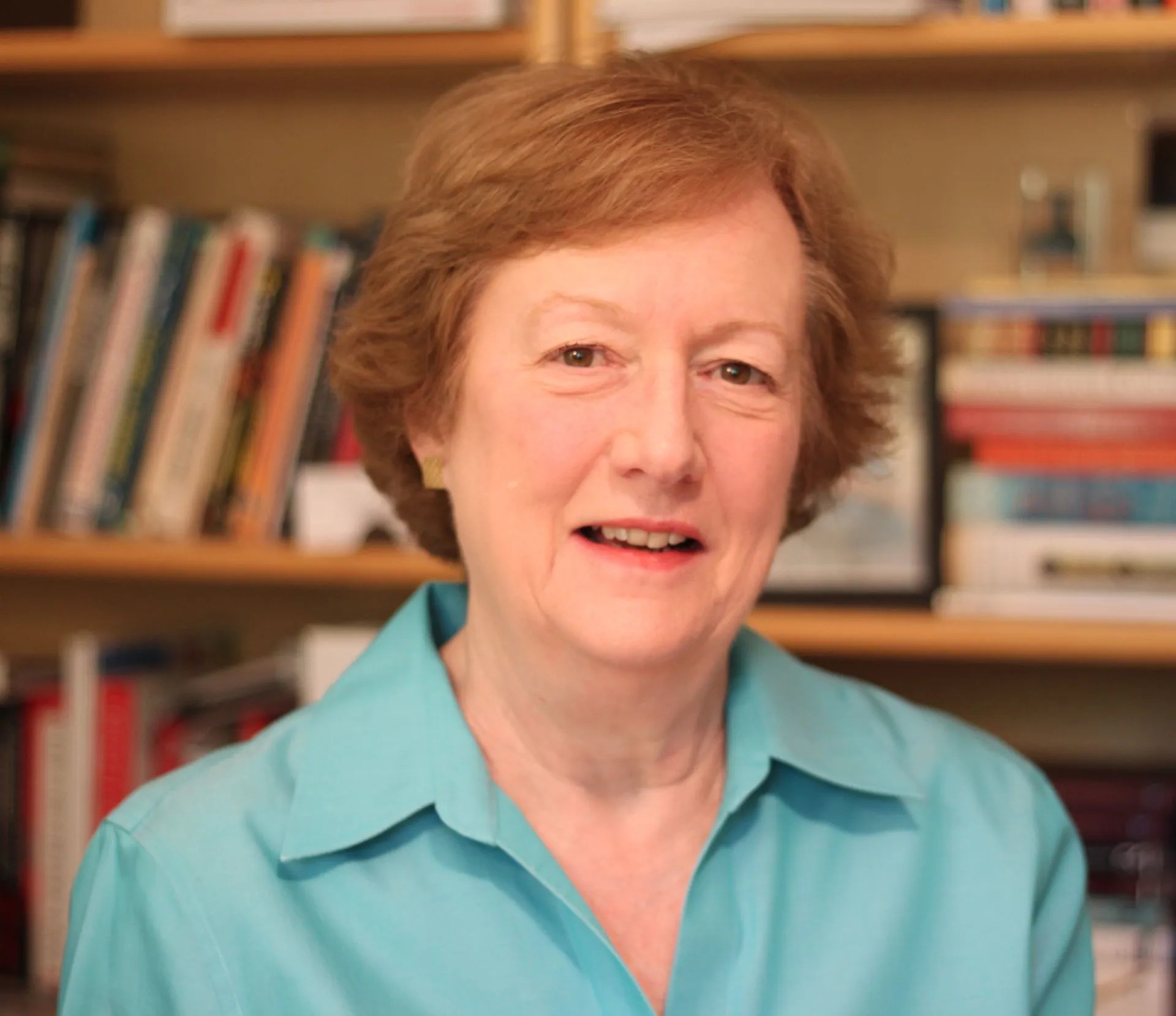
Catherine Mathis was born in Berlin, the daughter of an American spy. As she grew up in Washington, D.C., her spy father turned into a drug enforcement agent. His career change wrecked any chance at high school popularity. She graduated from Sewanee | The University of the South with a degree in history focused on the medieval period. After a career in finance, she returned to her first love of medieval history to ‘Share Iberian Tales.’ Outside of writing, spare time joys are family, friends, reading, collecting folk/outsider art, and travel.
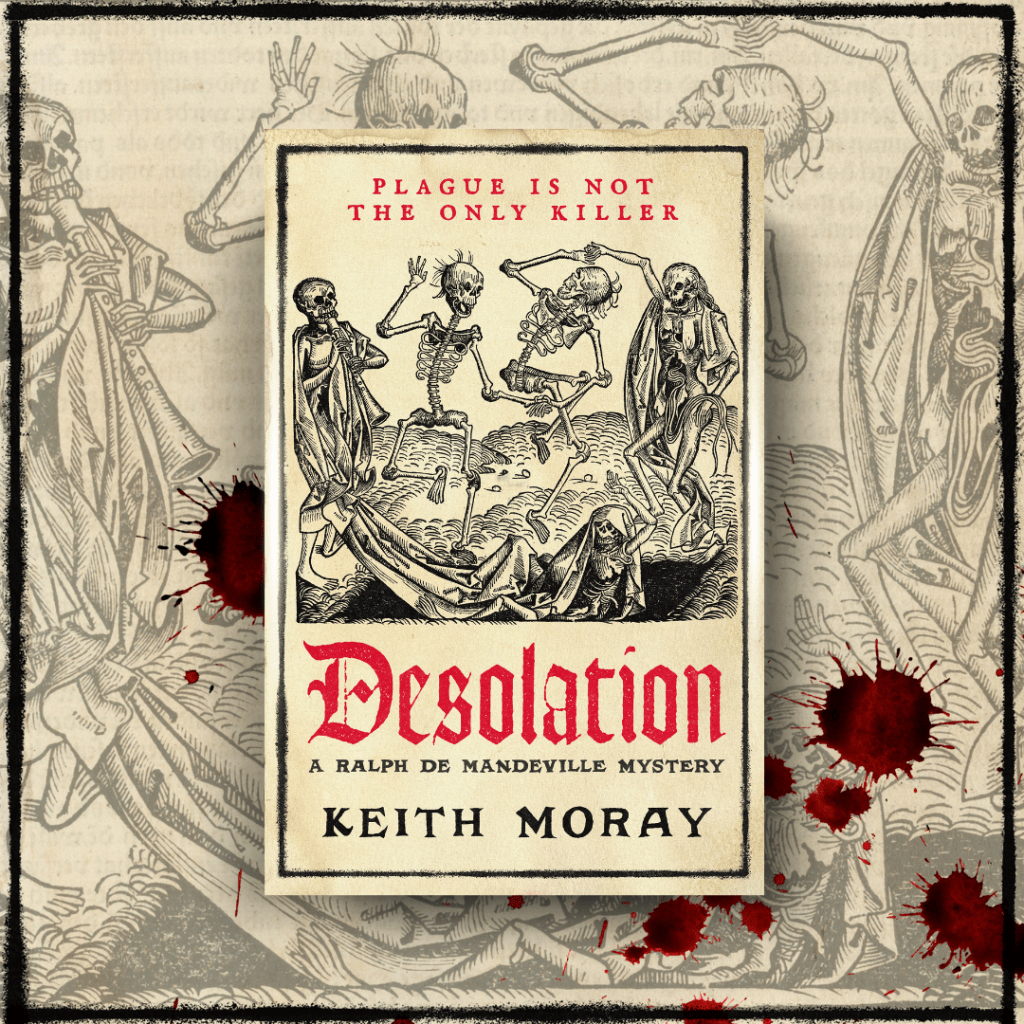
I’m sharing my review for Desolation by Keith Moray, a brand new historical mystery #bookreview #blogtour #newrelease
Here’s the blurb
A BRAND NEW wickedly dark medieval mystery from Keith Moray. If you like your murder truely gruesome – this series is for you! 🩸☠️🗡️
The Black Rood of Scotland, stolen.
A coroner of York, murdered
An evil worse than plague itself, at large…
1361, York. As the country recovers from the war with France, and whispers that the pestilence has returned to England grow louder, fear is in the heart of every nobleman and commoner alike. Sir Ralph de Mandeville, ex-solider and newly appointed Justice of the Peace is sent to Langbarugh, just outside York, to investigate the murder of Coroner Sir Boderick de Whitby.
More deaths quickly follow, and while these are swiftly dealt with as plague victims, Sir Ralph and his two assistants Merek and Peter soon uncover something altogether more horrifying… A greater evil is at large in the northern wapentakes.
As panic escalates and the lines between plague and murder blur, Sir Ralph is thrust into a desperate race against time. Every shadow hides a potential killer, every cough could be a death knell. Can he unmask a murderer lurking in the terrifying shadow of the Black Death before they’re all consumed by a terror more sinister than any plague?
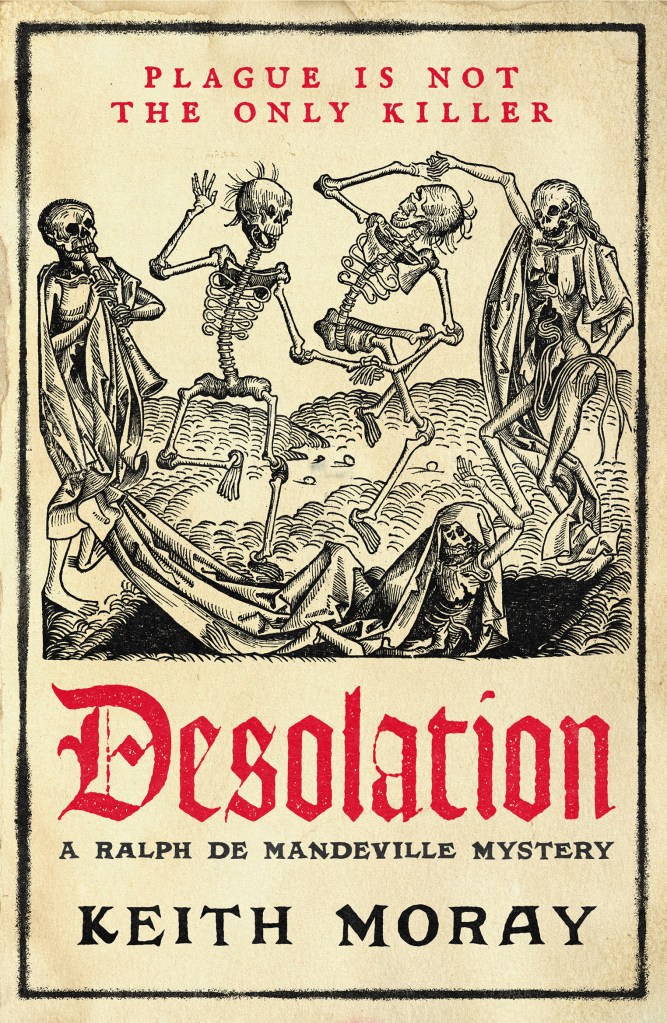
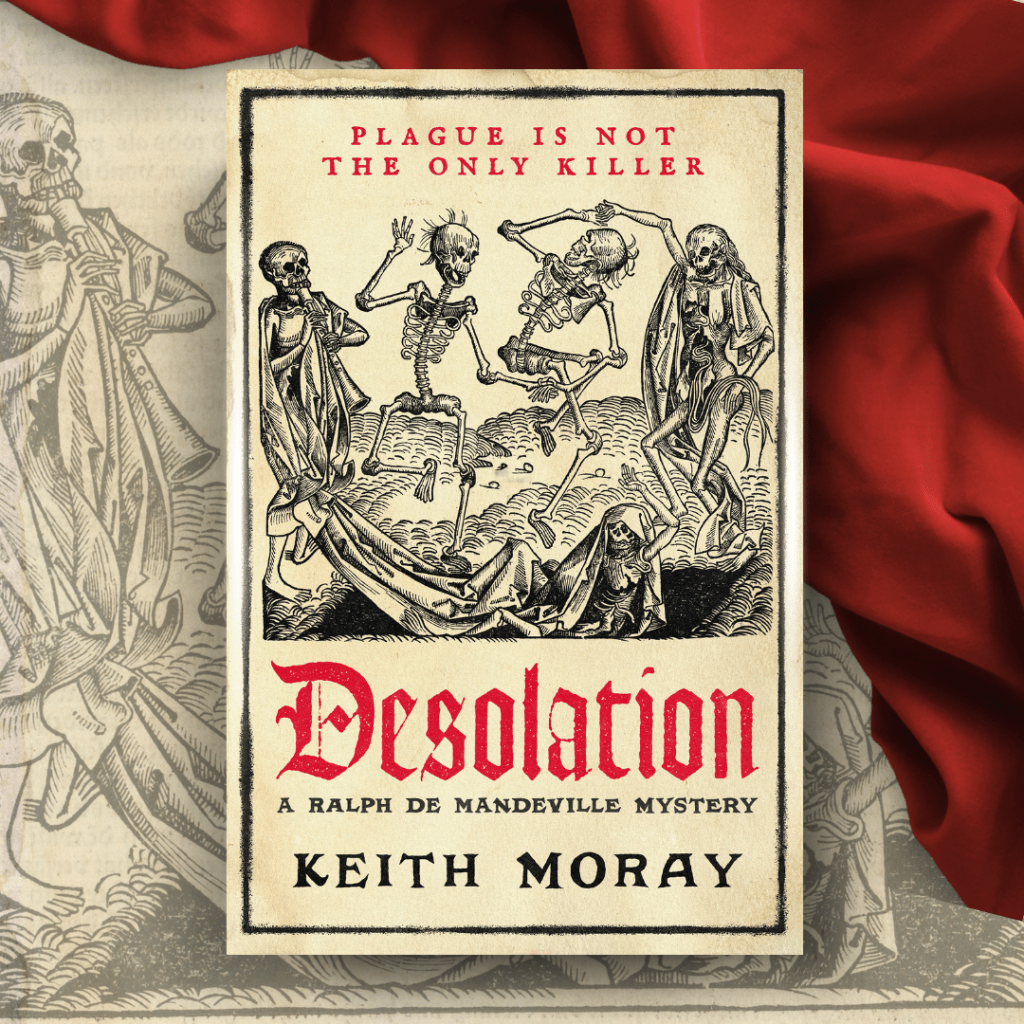
Desolation is the first book I’ve read by Keith Moray. I think the cover is fabulous and very evocative.
The story is intriguing, with a wide cast and it takes quite some time until we finally meet Ralph de Manville because there are so many other characters to meet first. I do hope that in later books in the series, Ralph will enter the narrative a little quicker.
It is quite a complex plot, because the narrative switches between characters so much. The reader does have to work to make sense of what’s happening. We are told certain things, but not others – so we know what’s happening but not necessarily who is doing it. The body count is HUGE!
When Ralph finally begins to make sense of what’s happening, the resolution comes quite quickly, and the ending is certainly satisfying.
I read a lot of mysteries. If I don’t work out ‘who did it’ I am always impressed, although with Desolation there are so many people implicated, it does feel as though there are a lot of people to guess. I worked out some elements, but not others, and I did very much enjoy the mystery element of the story.
Meet the author
Keith is a retired GP, medical journalist and novelist, writing in several genres. As Keith Moray he writes historical crime fiction in the medieval era and in ancient Egypt, The Inspector Torquil McKinnon crime novels set on the Outer Hebridean island of West Uist, and as Clay More he writes westerns. Curiously, his medical background finds its way into most of his fiction writing.