Author of Saxon historical fiction and non-fiction, 20th-century historical mysteries, and Norse-inspired historical romantasy. Book reviewer and blog host.
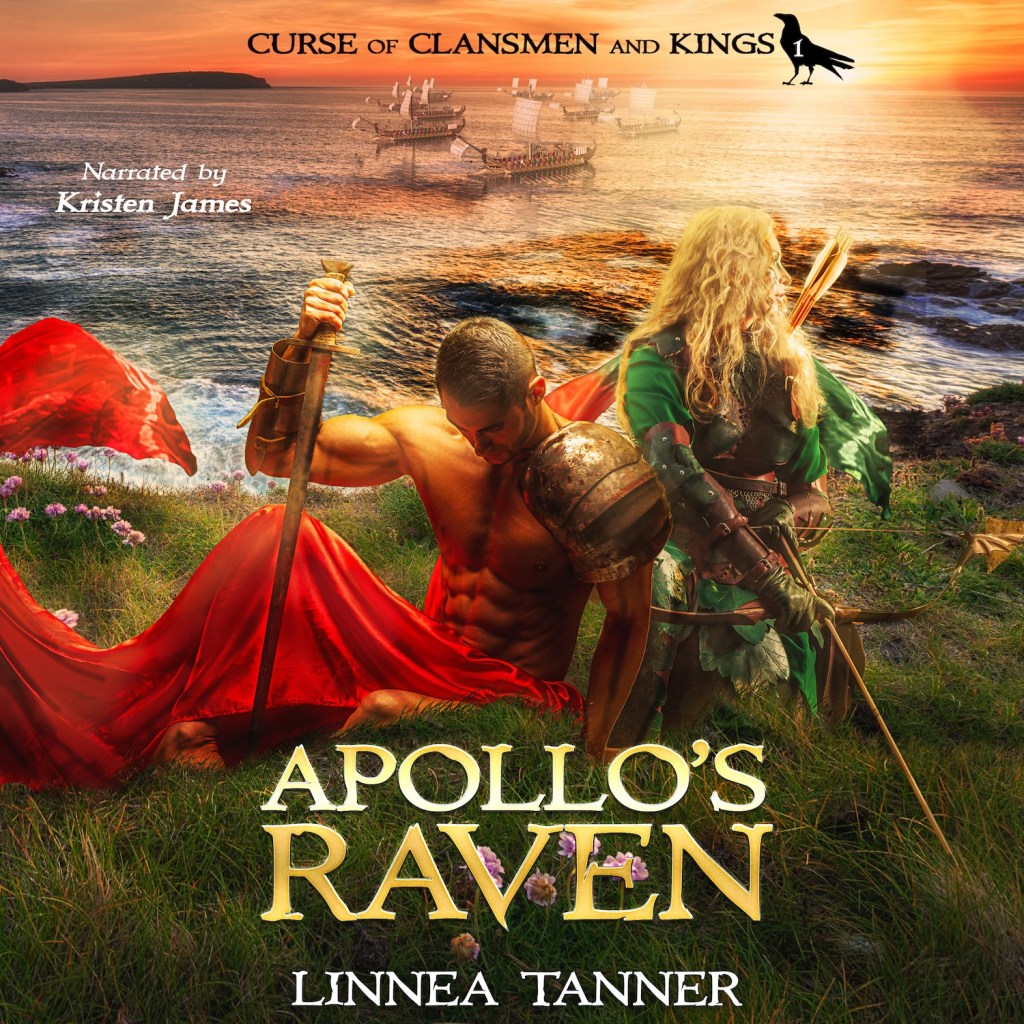
I’m delighted to welcome Linnea Tanner and her audiobook, Apollo’s Raven, to the blog #HistoricalFantasy #HistoricalFiction #Rome #Britannia #CelticMyths #BlogTour #TheCoffeePotBookClub
I’m delighted to welcome Linnea Tanner and her audiobook, Apollo’s Raven, Curse of Clansmen and Kings Series, to the blog with a book trailer.
Book Trailer
Here’s the Blurb
A Celtic warrior princess is torn between her forbidden love for the enemy and duty to her people.
AWARD-WINNING APOLLO’S RAVEN sweeps you into an epic Celtic tale of forbidden love, mythological adventure, and political intrigue in Ancient Rome and Britannia. In 24 AD British kings hand-picked by Rome to rule are fighting each other for power. King Amren’s former queen, a powerful Druid, has cast a curse that Blood Wolf and the Raven will rise and destroy him.
The king’s daughter, Catrin, learns to her dismay that she is the Raven and that her banished half-brother is Blood Wolf. Trained as a warrior, Catrin must find a way to break the curse, but she is torn between her forbidden love for her father’s enemy, Marcellus, and loyalty to her people. She must summon the magic of the Ancient Druids to alter the dark prophecy that threatens the fates of everyone in her kingdom.
Will Catrin overcome and eradicate the ancient curse? Will she be able to embrace her forbidden love for Marcellus? Will she cease the war between Blood Wolf and King Amren and save her kingdom?
Praise:
“Mystery and intrigue with each word, Tanner is a master wordsmith. Her vivid imagery and imagination are captured in her story and character development.” ~ The Audiobook Reviewer
” Many surprising twists enrich the historically drawn plot. Points of view shift between different characters effectively, heightening the tension from one moment to the next.” ~ Historical Novel Society Review
A winner will be chosen at random and announced after the tour has finished.
Meet the Author
Award-winning author, Linnea Tanner, weaves Celtic tales of love, magical adventure, and political intrigue in Ancient Rome and Britannia. Since childhood, she has passionately read about ancient civilizations and mythology. She is particularly interested in the enigmatic Celts, who were reputed as fierce warriors and mystical Druids.
Linnea has extensively researched ancient and medieval history, mythology, and archaeology and has traveled to sites described within each of her books in the Curse of Clansmen and Kings series. Books released in her series include Apollo’s Raven (Book 1), Dagger’s Destiny (Book 2), Amulet’s Rapture (Book 3), and Skull’s Vengeance (Book 4). She has also released the historical fiction short story Two Faces of Janus.
A Colorado native, Linnea attended the University of Colorado and earned both her bachelor’s and master’s degrees in chemistry. She lives in Fort Collins with her husband and has two children and six grandchildren.
I’m sharing my review for The Girls Who Dared to Love by Diney Costeloe #blogtour #newrelease #historicalromance @rararesrources
Here’s the blurb
Three girls seem to have the world at their feet in the summer of 1914. But World War I is coming and things will change forever – especially for women.
Debutante Lucinda McFarlane is engaged to be married to Major Sir David Melcome, but their society wedding has to be scaled right down when war is declared and David is recalled to his regiment.
Mabel Oakley, once a maid for the McFarlanes, has inherited Thomas Clarke’s printing works, but an unexpected turn of events leaves her at the mercy of her father’s old enemy, solicitor John Sheridan. What can she do?
Lady Diana Fosse-Bury is incredibly beautiful and reckless. When war is declared she immediately wants to be in the thick of it. Can her budding romance with Lucinda McFarlane’s brother Iain survive the Western front?
With war coming, the destinies of these three girls will soon be entwined forever, but only if they dare to love in the face of the dangers ahead of them.
The Girls Who Dared to Love is a story of three young women at the start of World War 1, all with different intentions in life.
We first meet Lucinda and follow her marriage to Sir David. The storyline then intermingles with feisty Mabel before Diana makes an appearance. We follow the many intricacies and minutiae of their lives as the threat of war begins to build. Then it starts, complete with the oft-repeated phrase that it would all be over by Christmas 1914, which adds poignancy to their stories.
While the writing style isn’t one I favour (as the chapters aren’t character-specific), I found the storyline engaging and was certainly rooting for Mabel, who perhaps, as the working-class member of the cast, has the biggest fight of all on her hands.
A charming novel, sure to appeal to fans of the genre, and those with an interest in women’s lives during the First World War.
Meet the author
Diney Costeloe is the author of twenty-four novels, including The Girls Who Dared to Dream, several short stories, and many articles and poems. She has three children and seven grandchildren, so when she isn’t writing, she’s busy with family.
In this post, I’m going to share something of what I’ve learned about the life of medieval nuns, and the other people who lived and/or worked in or for the priory. To paint a picture of how life might have been for Sister Rosa and her sister nuns, I’ve drawn heavily upon a book written in the 1920s by a medieval historian, Eileen Power: Medieval English Nunneries.
A nunnery – even a relatively small one like my fictional Northwick Priory – was a community, including not only avowed nuns, but also novices (children or adults) and servants. Depending upon the size of the priory, there could be a large domestic staff, easily outnumbering the nuns themselves. There would be household maids, and some of the senior nuns (especially in a wealthy nunnery) might have personal maids, although in Northwick, only the prioress has such a maid. Other staff could include both men and women: for example, the cook(s) and kitchen servants, workers for the brewery, bakery and dairy (milking cows, making butter and cheese), the laundry and in the kitchen garden (potager).
I imagine most of the servants probably lived in the nearby village. Outside the priory itself, there would be an estate – the manor(s) owned by the priory – with a home farm. To run the estate and farm required a number of secular officials (typically all men).
The steward was often an honorary position, held by a local gentleman – or even a nobleman if the nunnery was high status. He’d oversee and make decisions about the nunnery’s properties, including the lands, buildings and livestock, although he’d have other officials working under him, such as the bailiff and the reeve. He’d also liaise with those nuns whose roles involved some form of property management, such as the sacrist and the cellaress, and of course the treasuress, and the prioress herself.
The bailiff was to some extent the farm manager, but might also help the nuns acquire supplies, if they had to be purchased some distance away. As on secular manors, there would be other farm officials, like the reeve, and all the usual workers: ploughmen, cowherds, swineherds and shepherds, carters, and general labourers. Also, of course, craftsmen such as carpenters and masons would be needed when the buildings required repairs or new work was planned, and, if the priory kept its own horses and vehicles, a blacksmith or wheelwright too. All such workers would probably be employed from the nearest village.
The priory itself, of course, even if it was comparatively small, had to be managed, just like any business or institution, and the nuns themselves undertook most of this administrative work.
One important aspect of their daily lives that nuns couldn’t undertake themselves was that part of their religious practice that demanded the services of an ordained priest. Nuns could conduct services but could neither hear confession nor administer the sacraments, and so had to have at least one chaplain, who might have his lodgings within the priory’s grounds (but outside the nuns’ quarters).
At the top of the administrative hierarchy was the prioress, essentially the CEO or chairman, supervising the work of senior nuns, and chairing daily meetings in the chapter house, where all nuns gathered to discuss day-to-day concerns and make joint decisions. The prioress was also, in principle, the person who liaised with important people outside the priory, including the bishop.
There might also be a subprioress, but reporting to the prioress were “obedientiaries”, senior nuns who held particular positions of responsibility. In a relatively small priory like Northwick, nearly every nun would have such a position, to enable all the work to be done.
After the prioress, I imagine the treasuress was the next most important person in the priory. Larger priories might have more than one treasuress. Her job was to receive and record all income and manage all expenditure. It must surely have been a demanding job, especially when one considers that she was managing the finances not just of the priory itself but also the home farm and estate.
I also feel that the job of the cellaress must have been quite onerous, being responsible for providing food for the nuns and the domestic servants, and usually overseeing the management of the home farm. The cellaress had to ensure that the nunnery had constant and adequate stores of food and drink, no simple task in the days before refrigeration. Some supplies came from the home farm, the rest bought in. I think the cellaress would manage the priory’s gardens, where vegetables and fruit and herbs would be grown, presumably employing a number of gardeners to do the work.
Two obedientiaries reported to the cellaress: the kitcheness and the fratress.
The kitcheness supervised the work of the kitchen, managing the kitchen staff, who were mostly lay people, not nuns, and could be both men and women. The cellaress made sure food was supplied but ensuring meals were prepared fell to the kitcheness, although she was unlikely to do much, if any, of the cooking herself. The fratress, unsurprisingly, was in charge of the frater, the dining hall. She ensured the tables and benches or stools were kept in good repair, looked after table linen and dishes, and supervised the servants who served the meals.
Thesacrist took care of the church building, arranging for any repairs or works, and looked after the valuable church plate, vestments and altar cloths. She also had to provide lighting for both the church and the priory itself, buying the wax, tallow and wicks and arranging for candles to be made, often by a local candle-maker. At Northwick, I have the sacrist also caring for the priory buildings, as well as the church. If repairs were needed, she would have worked closely with lay people from outside the priory, such as the steward. Finally, it was the sacrist’s job to ensure that the bell was rung for chapel services and meals.
The chambress wasin charge of everything to do with the nuns’ clothes and bedding, buying cloth, employing seamstresses to make up garments, sheets, and blankets, and ensuring it was all kept clean and in good repair.
There were two “care-giving” roles: the infirmaress and the almoness. The nun in charge of the sick in the infirmary was the infirmaress. She would care directly for the patients, presumably with the help of servants. She provided food, drink and medicine, and treated wounds, sometimes at the behest of a physician, but perhaps preparing some medicines herself. The infirmary was generally a separate building from the priory, to avoid the spread of infection. Thealmonesswas responsible for giving help to the poor and sick who lived in the community around the priory. The giving of alms – typically food, clothing or money – was a most important part of a nunnery’s function.
The chantress or precentrix ensured the chapel services and offices ran smoothly and reverentially. She trained the novices in singing and led the sisters in the psalms and hymns during services. The mistress of the novices acted as schoolmistress to the novices, teaching them all they needed to know in order to become nuns, and supervising their general behaviour.If the nunnery had a school for local children – which Northwick doesn’t – the mistress of the novices would usually be in charge of that as well.
It’s clear that many of the nuns who held these, sometimes onerous, positions were women of great skill and competence. The tasks of the treasuress and the cellaress, for example, were surely quite demanding, and required at the very least an ability to read and write and manage accounts, for which one presumes they received no training but rather learned “on the job”. I feel they should be much admired!
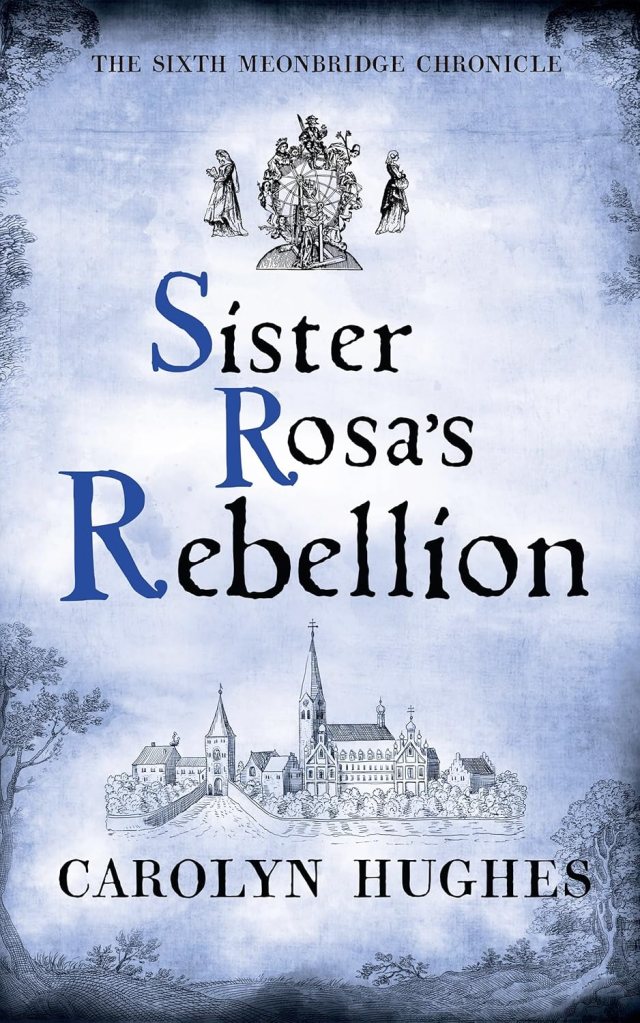
Here’s the blurb
How can you rescue what you hold most dear, when to do so you must break your vows?
1363. When Mother Angelica, the old prioress at Northwick Priory, dies, many of the nuns presume Sister Rosa – formerly Johanna de Bohun, of Meonbridge – will take her place. But Sister Evangelina, Angelica’s niece, believes the position is hers by right, and one way or another she will ensure it is.
Rosa stands aside to avoid unseemly conflict, but is devastated when she sees how the new prioress is changing Northwick: from a place of humility and peace to one of indulgence and amusement, if only for the prioress and her favoured few. Rosa is terrified her beloved priory will be brought to ruin under Evangelina’s profligate and rapacious rule, but her vows of obedience make it impossible to rebel.
Meanwhile, in Meonbridge, John atte Wode, the bailiff, is also distraught by the happenings at Northwick. After years of advising the former prioress and Rosa on the management of their estates, Evangelina dismissed him, banning him from visiting Northwick again.
Yet, only months ago, he met Anabella, a young widow who fled to Northwick to escape her in-laws’ demands and threats, but is a reluctant novice nun. The attraction between John and Anabella was immediate and he hoped to encourage her to give up the priory and become his wife. But how can he possibly do that now?
Can John rescue his beloved Anabella from a future he is certain she no longer wants? And can Rosa overcome her scruples, rebel against Evangelina’s hateful regime, and return Northwick to the haven it once was?
This title is available to read on #KindleUnlimited.
Meet the author
CAROLYN HUGHES has lived much of her life in Hampshire. With a first degree in Classics and English, she started working life as a computer programmer, then a very new profession. But it was technical authoring that later proved her vocation, word-smithing for many different clients, including banks, an international hotel group and medical instruments manufacturers.
Although she wrote creatively on and off for most of her adult life, it was not until her children flew the nest that writing historical fiction took centre stage. But why historical fiction? Serendipity!
Seeking inspiration for what to write for her Creative Writing Masters, she discovered the handwritten draft, begun in her twenties, of a novel, set in 14th century rural England… Intrigued by the period and setting, she realised that, by writing a novel set in the period, she could learn more about the medieval past and interpret it, which seemed like a thrilling thing to do. A few days later, the first Meonbridge Chronicle, Fortune’s Wheel, was under way.
Seven published books later (with more to come), Carolyn does now think of herself as an Historical Novelist. And she wouldn’t have it any other way…
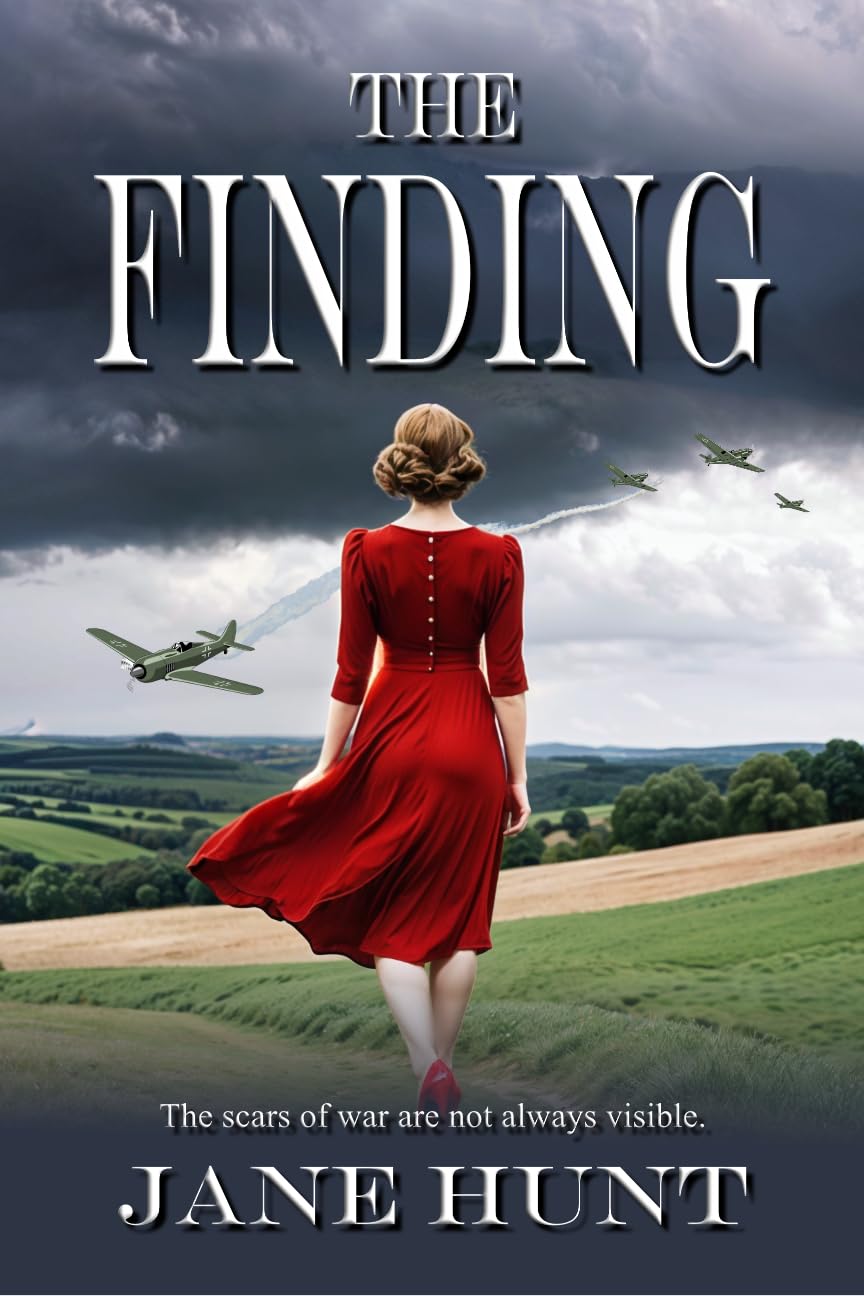
I’m delighted to welcome Jane Hunt and her new book, The Finding, to the blog.
Here’s the Blurb
This poignant novella is a tale of forbidden love, resilience, and the human cost of war.
In the quiet fields of Wiltshire during World War II, Eveline, a sheltered young woman, stumbles upon a life-altering discovery: a German Luftwaffe pilot, Fritz, has crash-landed near her home. Against the backdrop of war and suspicion, her family takes the injured man in, nursing him back to health. Beneath his reserved demeanor and burned body, Eveline senses a mystery—and something stirs an unfamiliar longing within her.
As Eveline’s infatuation deepens, she faces a storm of challenges: her overbearing mother’s rigid rules, a zealous preacher’s warnings, and the scrutiny of the town’s gossips. Despite Fritz’s attempts to keep her at arm’s length Eveline’s heart defies reason, falling for the man branded as her enemy.
But Fritz harbors secrets that could shatter Eveline’s fragile world. When the truths of war and the weight of loyalty collide, Eveline must confront the reality of loving someone forbidden.
Will their bond endure the hostility of a nation at war? Or will the scars of betrayal and loss prove impossible to heal?
Born in Reading UK, Jane grew up with a love of reading. She remembers taking Enid Blyton books to bed and reading them under the covers when she should have been asleep! Her love of the written word extended into the classroom where the teachers commented on her vivid imagination and length of stories—probably accompanied with a few sights when they realized the amount of time the reading would take!
On leaving school Jane spent a brief spell at college before finding employment as a Dental Nurse where she spent many happy years meeting lots of wonderful people and mixing lots of fillings. After meeting her husband, she later went on to have three children and found work as a Teaching Assistant.
Alongside a busy life, she completed a comprehensive writing course, which saw her having non-fiction work published in newspapers and magazines. But the desire to do something ‘creative’ burned ever brightly. Having recently undertaken a lot of research into her family tree, a desire to find out what life was really like for her ancestors took hold, and she developed a fascination with World War II. Heeding the advice of her late parents to ‘put pen to paper’, she decided to get a story that had been buzzing in her head for quit some time written.
The result of her endeavour was a very ‘raw’ manuscript: The Finding. With some professional help—thank you, Dee, the story evolved into a book—something she still can’t quite believe!
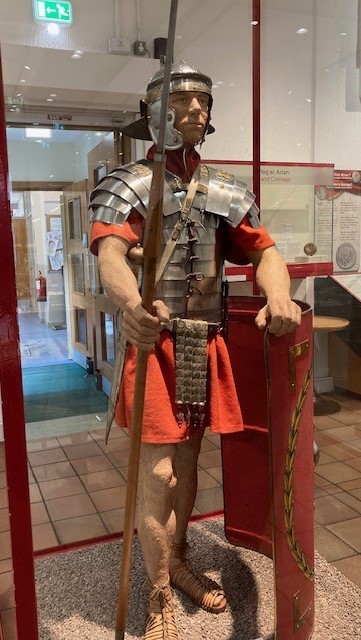
Here in the UK we are very lucky to have quite a few Roman sites to explore, which is very helpful when writing a story set during that era. The Romans were here for nearly 400 years, so they have left a lot of traces behind. My story SHADOWS IN THE SPRING features a legionary as the villain, so I had to do some research regarding the occupying legions that were present in the Britannia of AD 80. Therefore, it was natural for me to visit the town of Caerleon, which is fairly close to where I live.
Caerleon was called Isca by the Romans after the name of the river that flows through it, which is now the Usk. Around AD 75 they built a fortress there in order to keep the local Silures tribe under control. They’d been difficult to subdue and it needed a strong military presence. The Silures must have been a real thorn in the Romans’ side as Isca was one of only three permanent legionary bases in Britain at the time. (The others were at Chester/Deva and York/Eboracum).
The legion assigned to build it was the Legio II Augusta – or Second Augustan Legion. This legion had formed a part of the force that invaded Britain in AD 43 and they had remained ever since. They were originally stationed at Exeter, but later sent to Isca when the Silures proved troublesome. Part of a legionary’s job was to build forts, ramparts, ditches and roads, and they must have had to work very hard. The outline of the Isca fortress can still be seen in the town today, and it is vast. To begin with, the barracks and other buildings would have been constructed mostly of timber, with the buildings surrounded by a ditch and earth bank topped by a palisade. I would have been impressive and presumably intimidating to the locals. It housed upwards of 5,000 men, quite a sizeable force.
The barracksThe amphitheatre
As with other forts, a civilian settlement grew up around it (a so-called vicus) and buildings like a bath complex were added for both legionaries and civilians to enjoy. The legionaries would have enjoyed this ‘taste of home’ as I’m sure life in Wales was very different to what at least some of them were used to. Imagine coming from sunny Italy or Spain to a cold, windy and rainy Britannia – probably a shock to the system! It was also dangerous, what with skirmishes and illnesses making life expectancy short, so to be able to relax and enjoy some leisure time at the baths was greatly appreciated.
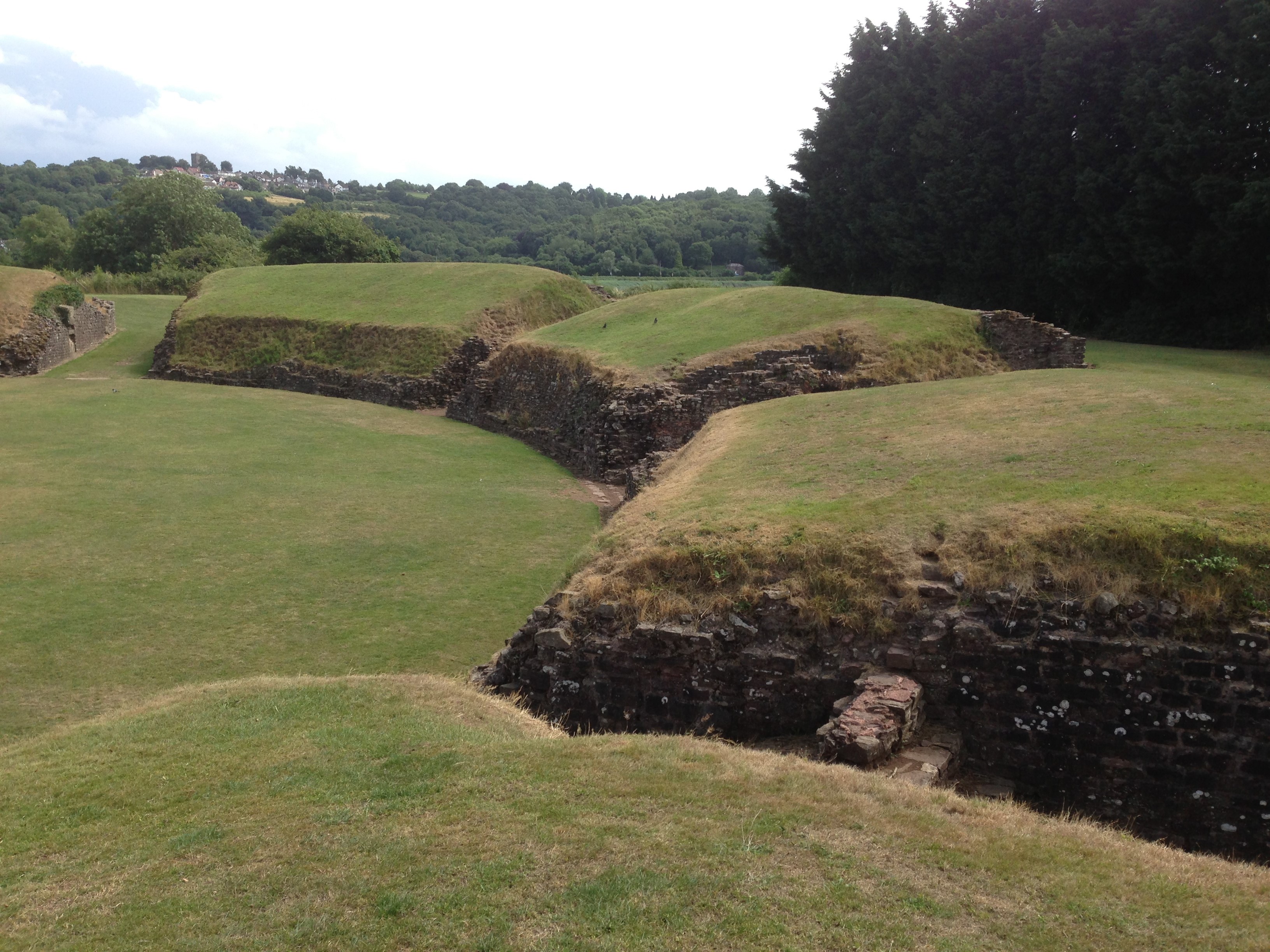
SHADOWS IN THE SPRING is set in AD 80, which was ten years before the amphitheatre at Isca was built just outside the fort. It’s still there today, albeit mostly consisting of turf now. It’s an impressive place that would have seated about 6,000 people on wooden tiers built on a stone base. No doubt the spectators enjoyed all sorts of events, like gladiatorial games and executions of criminals. It was also used for military training. I loved standing in the middle of the arena – once covered in sand – and imagining what it must have been like to perform there.
There are two museums in Caerleon – one that shows what’s left of the baths and tells their story, and one with Roman artefacts. Both were very useful to me and I really enjoyed my visit to the picturesque town. It’s a bit off the beaten track, but if you ever find yourself nearby, I would definitely recommend that you take a look – you won’t regret it!
Here’s the blurb
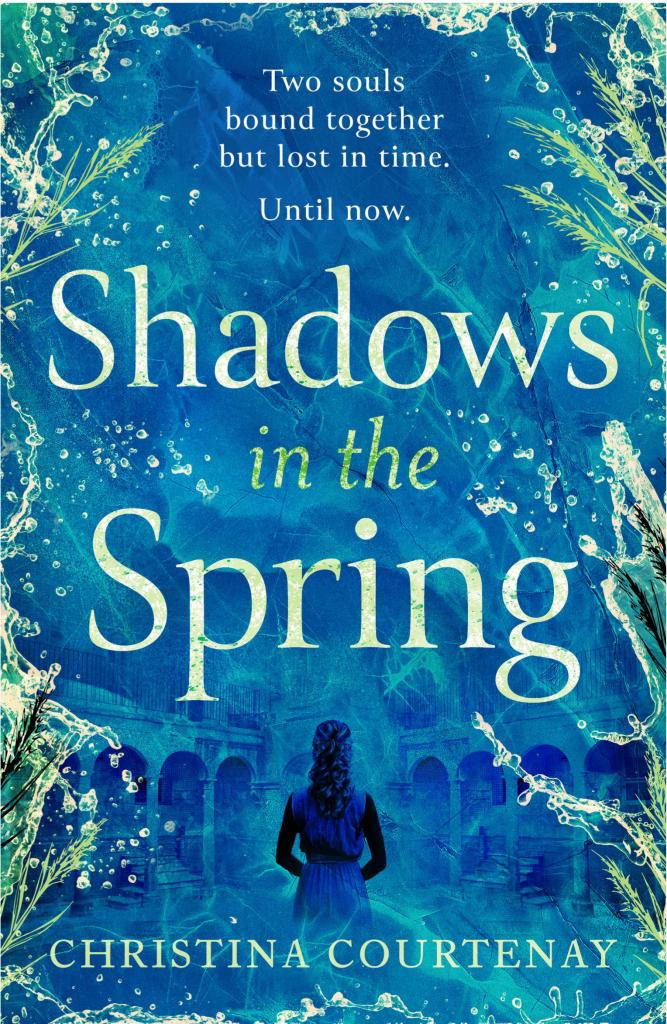
Two souls bound together but lost in time. Until now.
AD 80
Duro of the Iceni tribe escaped life as an enslaved gladiator and is now finally home in Britannia with one thing on his mind: vengeance. For 20 years he has sought the Roman legionary who destroyed his family. What he didn’t expect was Gisel: a fierce Germanic woman with long white-blonde hair, forced into slavery by the Romans. Hypnotised by her spirit and her beauty, Duro frees Gisel and slowly tries to win her trust as they work together to complete his quest.
Present Day
Mackenna Jackson returns to Bath with a broken heart, thanks to rockstar Blue Daniels. Luckily she can still count on Blue’s former bandmate Jonah Miller as a listening ear. But Jonah has secretly been fighting stronger feelings, drawn to Mac’s quiet confidence and gorgeous white-blonde hair. As they explore the area, memories they can’t quite explain flood them both.
Is the spark between Mac and Jonah in fact a sign of something much deeper – a love enduring through millennia – or can it all be an illusion?
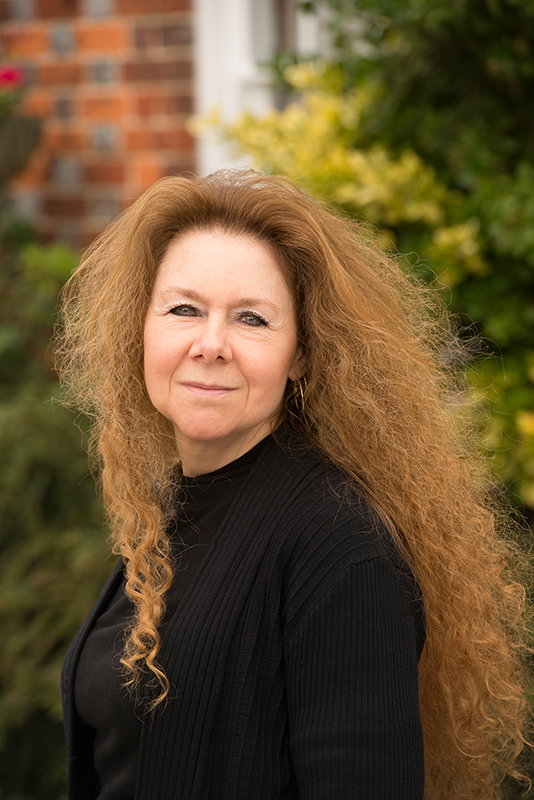
Christina Courtenay writes historical romance, time slip/dual time and time travel stories, and lives in Herefordshire (near the Welsh border) in the UK. Although born in England, she has a Swedish mother and was brought up in Sweden – hence her abiding interest in the Vikings. Christina is a Vice President and former Chair and of the UK’s Romantic Novelists’ Association and has won several awards, including the RoNA for Best Historical Romantic Novel twice with Highland Storms (2012) and The Gilded Fan (2014) and the RNA Fantasy Romantic Novel of the year 2021 with Echoes of the Runes. SHADOWS IN THE SPRING (dual time historical romance published by Headline Review 24th April 2025) is her latest novel. Christina is a keen amateur genealogist and loves history and archaeology (the armchair variety).
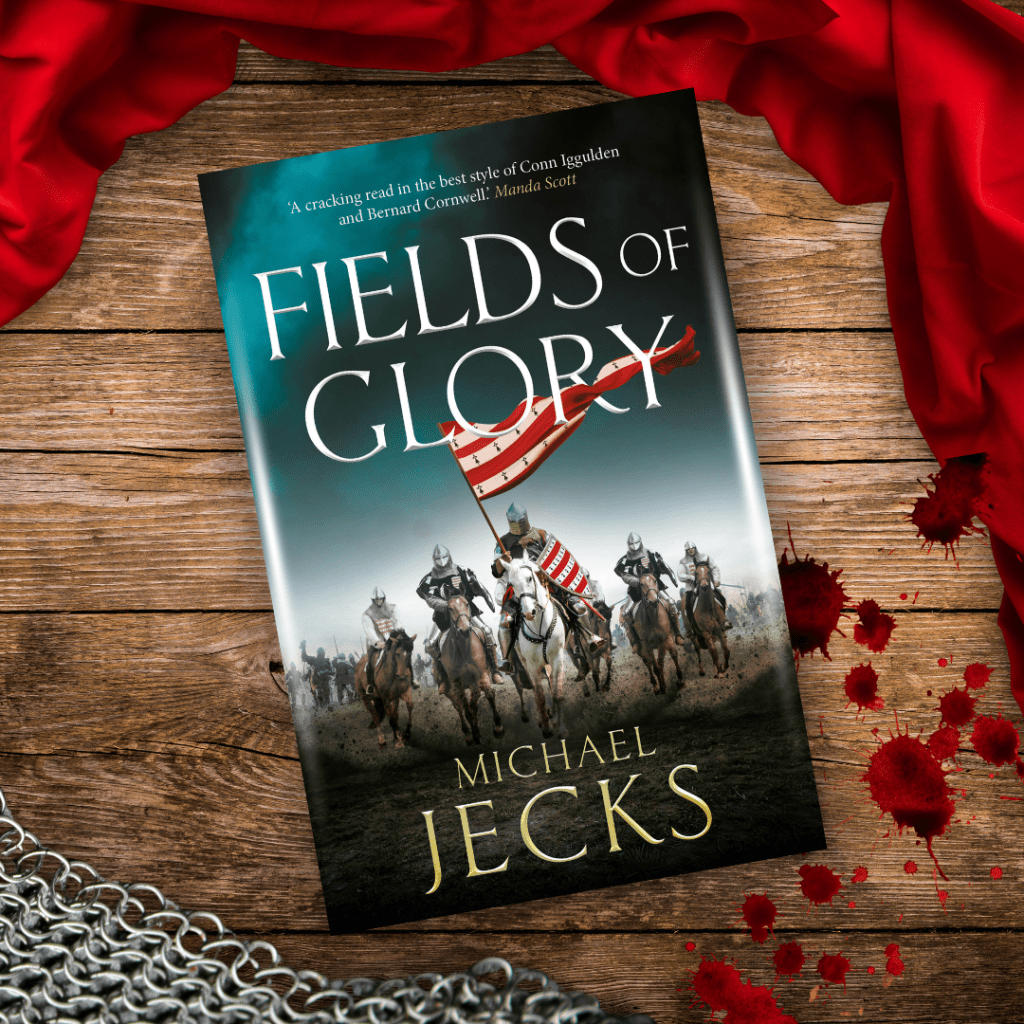
1346. France. King Edward III is restless. Despite earlier victories the French crown remains intact. Determined to bring France under his own rule, Edward has devised a new plan of attack – one which he believes will finally bring the French army to its knees: a final, cataclysmic battle …
Berenger Fripper, Vintener of a pox-ridden mob of sixteen who make up the Vintaine of Sir John de Sully, storms the beaches of Normandy to bring victory to their king. But the French are nowhere to be seen…
And so Berenger leads his Vintaine through France and onward to battle – the Battle of Crécy – one which will both bond and break his men and be a decisive turning point in the Hundred Years’ War.
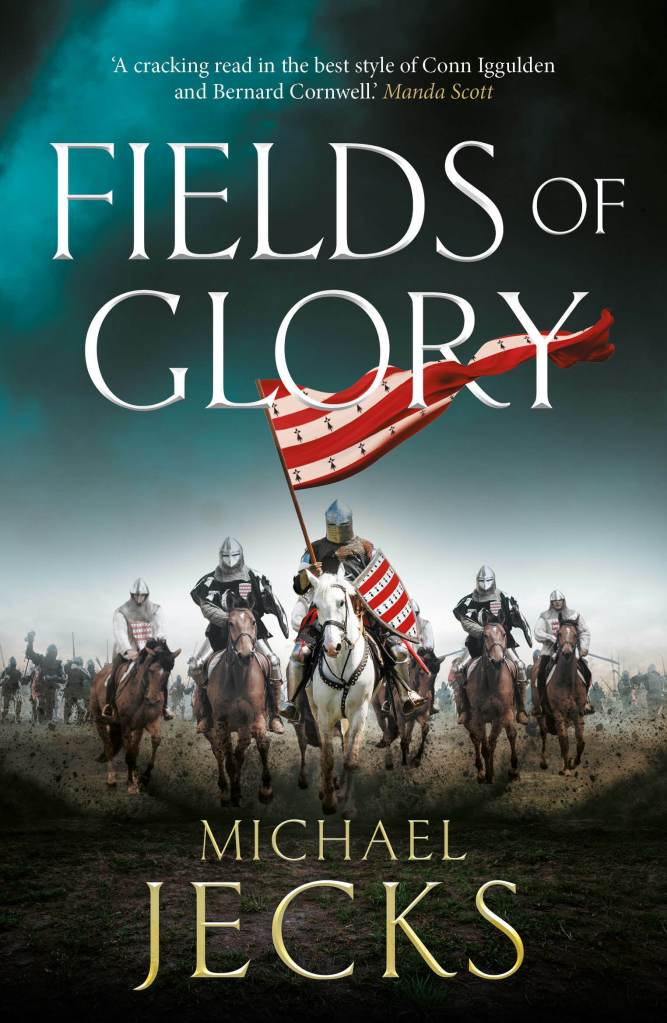
Fields of Glory by Michael Jecks is a novel about the Hundred Years’ War in all its bloody glory. Featuring an ensemble cast of characters, every person has their own story to tell, hidden behind the veneer of bloody war, and the demands of an intolerant king, who appears to preach reconciliation with the French but finds every excuse to change his mind.
I can’t say any of this ragtag collection of men is particularly endearing. Sir John cares more for his horse than his men, while King Edward and the Prince of Wales are just as thoughtless regarding the lives they’re destroying. This makes it a very realistic portrayal, if not for the faint-hearted. Indeed, if seeking some semblance of empathy between the characters, we must look to the men of the Vintaine, and not those who command them.
A blood-drenched traipse through France will bring our characters the opportunity to earn battle booty, if only they can live through it. Fields of Glory is a must-read for fans of the genre and those interested in the Hundred Years’ War.
Meet the author
Studied actuarial science, then became a computer salesman for 13 years- after the 13th company folded, he turned to writing.
He’s the author of 50 novels, 6 novellas, 4 collaborative books and short stories. His tales are inspired by history and legends, but are all grounded in real life and real people, what motivates them, and why they turn to violence.
Founder of Medieval Murderers, he has served on the committees of: Historical Writers’ Association, CWA and Detection Club. He has judged the Debut Dagger, Ian Fleming Steel Dagger and other prizes, as well as serving as Dagger liaison officer and CWA Chair. He has taught writing at Swanwick and Evesham, and tutored for the Royal Literary Fund. He now runs South West Writers in Devon.
His work has been celebrated by Visconti and Conway Stewart pens; 2014 he was International Guest of Honour at the Bloody Words festival in Toronto, and Grand Master of the first parade in the New Orleans Mardi Gras.
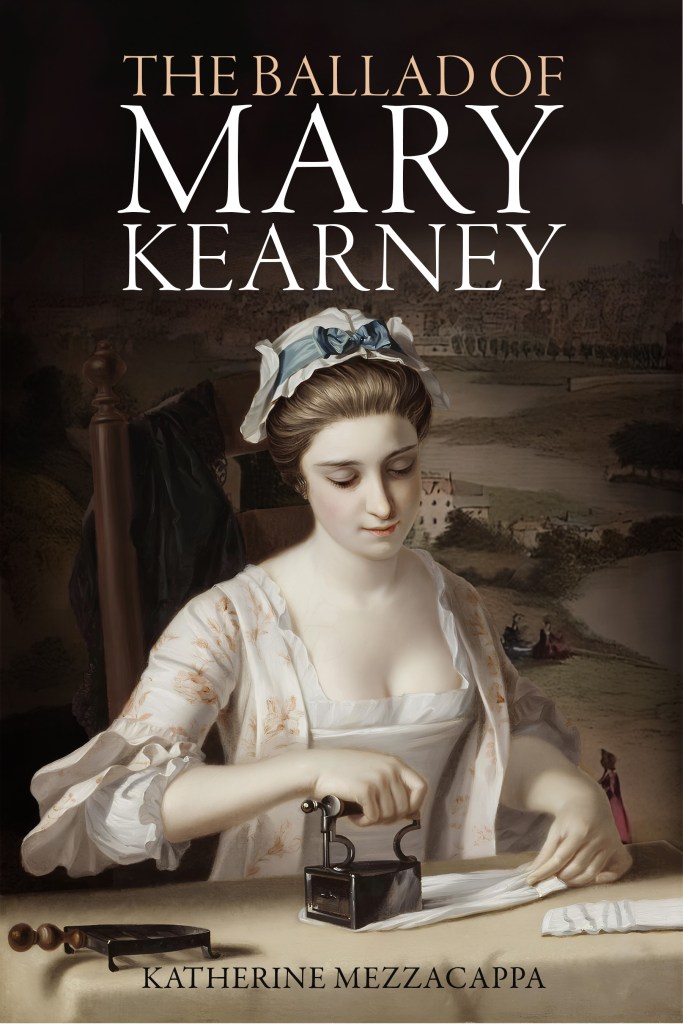
I’m delighted to welcome Katherine Mezzacappa and her book, The Ballad of Mary Kearney, to the blog with an excerpt.
Excerpt
The Revd. Samuels Regrets Much but Tells Only his Diary
20th June 1766
I have this day done myself much harm, more than at other times, and the good Lord knows that I do not use His gifts as I should, but in truth I am much tried.
If I survive what I have done today, I must take this as a lesson and mend my ways.
The little bog-trotter called today with a message from Viscount Kilkeel, which he delivered to Meg as I had said I did not wish to be disturbed. She knows well enough that my company is the decanter and not the preparation of next Sunday’s sermon but as a good wife and obedient to me in all things she says nothing. But this time she taps the study door, and waits so that I may go through the pretence of putting by the claret, opening my books and dipping my quill in the inkstand.
The note, which I hope has not been read by those of the servants who can (which means the Chittleboroughs and that Swiss valet), bids me to receive one of his housemaids and please to instruct her in what is necessary that she should read, write and know her numbers as a good Christian child. Would that I were not the third son I am, and my father a plain English squire in ever reducing circumstances, for he did sire many without the wherewithal to provide elegantly for them. Thus my scholarship was hard-won, long years a servitor waiting at the Tufts’ table. The only living being on this island to know the extent of my humiliations is my poor Meg. Often has she asked me in trembling accents to give her leave to run a little school. Other parsons’ wives do this profitably and wisely, she says. But I have never wished my wife to serve anyone for that to me is too near what I was obliged to do to pay my way. And then comes this missive dashed off by his Lordship that I should letter some hoyden that he drops his breeches for now that there is no Lady Mitchelstown to tail!
So after our meal comes this child, scrubbed to the point of decency, I must say, dropping eyes and curtseys and ‘if it please you, sir’ and all coy manners. “No!” I hurl at her, “it pleases me not, but I must do as I am bid.” Meg comes at the noise but I shoo her away, though I know she stood trembling behind the door throughout. But I did wrong. I visited on that child all my rage and frustration. She merely stood in my path though she did not choose to be there. Does he tup her? I know not. It is none of my business to know. If he does, I should pity her, for no man of her class will want her after, and she shall be consigned to the Magdalen or given up for worse. I do not know how much native wit she might have that would permit her to learn from me, for in truth I gave her no opportunity, railing at her as I did. Nor can she have missed the reek of the claret. If he have ruined her she is sure to tell him all of this. His Lordship may be laughing at my expense even now. And yet, perhaps I have no justification for thinking ill of her. There was none of that tawdry pride of the fallen, none of the base cunning of those who think they have the upper hand for a brief time and so must make much of it. Nay, she cowered before me and took the blows I gave with tears but no protestations. Could she know that as she felt the sting of that crop that it was myself I really wished to punish? If she dissembled she did it so well—no, I believe she did not.
Bless my Meg for coming in as she did. I took myself to the yard and put my head under the pump. The fresh air and sunlight worked on my rage and self loathing, and with the shock of that cold water I found I could no longer contain myself but spewed all I held within over the cobbles. I took the pail and washed it away, and by my exertion, the expulsion of what was poisoning me, and copious draughts of that spring water, I came more or less to myself again, and so am face to face with my foolishness. The realisation that I cannot even hold my drink is itself merely another confirmation of the fact that I am not a gentleman and should not pass for such. And my actions in drink today were those of a lunatic. To think that I was so proud to have obtained this living.
My hope lies now only in poor Meg and her good offices with this child. Later, I went into the parlour and asked her as gently as I was able how she had found her pupil. She needed some encouragement, but I got out of her that the girl was biddable, quick in her wits once her tears were dried, and most desirous of coming here again. And the poor lady’s eyes I saw fill with tears of happiness when I heard myself say to her: “If it pleases you to instruct this girl, then let us consider also your little school.” She deserves some joy after so many years of disappointment that no child of our own ever came to stand at her knee. It seems it may take so little, if today I have really learned to be less proud.
Image: Maghera Church Maghera Church of Ireland church from the old cemetery Image: Eric Jones. Wikimedia Commons
Here’s the Blurb
‘I am dead, my Mary; the man who loved you body and soul lies in some dishonorable grave.’ In County Down, Ireland, in 1767, a nobleman secretly marries his servant, in defiance of law, class, and religion. Can their love survive tumultuous times?
‘Honest and intriguing, this gripping saga will transport and inspire you, and it just might break your heart. Highly recommended.’ Historical Novel Society
‘Mezzacappa brings nuance and a great depth of historical knowledge to the cross-class romance between a servant and a nobleman.’ Publishers Weekly.
The Ballad of Mary Kearney is a compelling must-read for anyone interested in Irish history, told through the means of an enduring but ultimately tragic love.
Katherine Mezzacappa is Irish but currently lives in Carrara, between the Apuan Alps and the Tyrrhenian Sea. She wrote The Ballad of Mary Kearney (Histria) and The Maiden of Florence (Fairlight) under her own name, as well as four historical novels (2020-2023) with Zaffre, writing as Katie Hutton. She also has three contemporary novels with Romaunce Books, under the pen name Kate Zarrelli.
Katherine’s short fiction has been published in journals worldwide. She has in addition published academically in the field of 19th century ephemeral illustrated fiction, and in management theory. She has been awarded competitive residencies by the Irish Writers Centre, the Danish Centre for Writers and Translators and (to come) the Latvian Writers House.
Katherine also works as a manuscript assessor and as a reader and judge for an international short story competition. She has in the past been a management consultant, translator, museum curator, library assistant, lecturer in History of Art, sewing machinist and geriatric care assistant. In her spare time she volunteers with a second-hand book charity of which she is a founder member. She is a member of the Society of Authors, the Historical Novel Society, the Irish Writers Centre, the Irish Writers Union, Irish PEN / PEN na hÉireann and the Romantic Novelists Association, and reviews for the Historical Novel Review. She has a first degree in History of Art from UEA, an M.Litt. in Eng. Lit. from Durham and a Masters in Creative Writing from Canterbury Christ Church. She is represented by Annette Green Authors’ Agency.
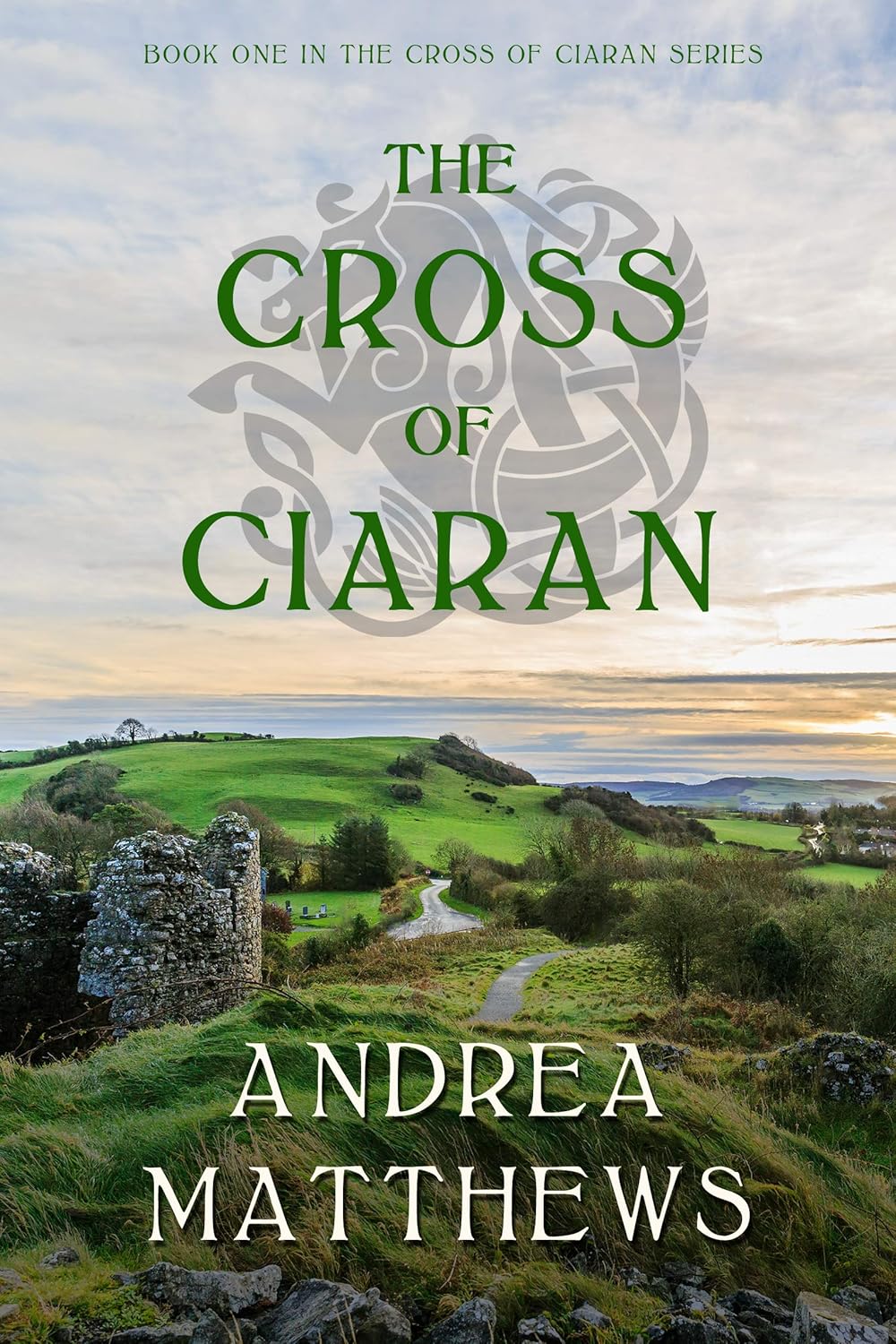
I’m delighted to welcome Andrea Matthews and her book, The Cross of Ciarán, to the blog.
Here’s the Blurb
When a fifth century pagan priest is unearthed in Ireland fifteen hundred years after being entombed, archaeologist Caitlin O’Connell is convinced it’s the find of the century. The body is in perfect condition, right down to the intricate tattoos adorning the Celt’s skin. In fact, if scientific data hadn’t proved otherwise, she would swear he hadn’t been interred more than a few hours.
Eager to discover more about the mysterious Celt, Caitlin accompanies the body back to the New York museum where she’s employed, but before she has time to study him, the priest disappears without a trace.
Rumors surrounding the event begin to circulate and result in the excavation’s benefactor pulling the plug on the entire expedition. The rumors are not far off the mark though.
After being buried alive for betraying his goddess and his priesthood in the dawning age of Christianity, Ciarán wakes to a strange new world. Alone and frightened in an unforgiving city, he stumbles upon the only thing familiar to him and seeks sanctuary within the church walls. With the help of the parish’s pastor, Father Mike, Ciarán slowly grows accustomed to his surroundings, though he’s plagued by dark dreams and the disturbing sensation that an evil from his past has followed him into the future.
But a more immediate danger lurks on his doorstep. Caitlin is determined to get to the bottom of the mystery concerning her missing Celt, and when she meets her Uncle Mike’s new handyman, Ciarán Donnelly, she’s convinced the handsome Irishman knows more about the theft than he’s letting on.
Yet, even she can’t deny the attraction between them, simmering below the surface and blurring the lines between her personal and professional life.
But will Ciarán’s secrets draw them together or shatter their future forever.
Andrea Matthews is the pseudonym for Inez Foster, a historian and librarian who loves to read and write and search around for her roots, genealogical speaking. She has a BA in History and an MLS in Library Science, and enjoys the research almost as much as she does writing the story. In fact, many of her ideas come to her while doing casual research or digging into her family history.
She is the author of the Thunder on the Moor series set on the 16th century Anglo-Scottish Border, and the Cross of Ciaran series, where a fifteen hundred year old Celt finds himself in the twentieth century.
Andrea also writes historical mysteries under the pen name I. M. Foster. Her series A South Shore Mystery is set in the early 1900s on Long Island. She is a member of the Long Island Romance Writers, and the Historical Novel Society.
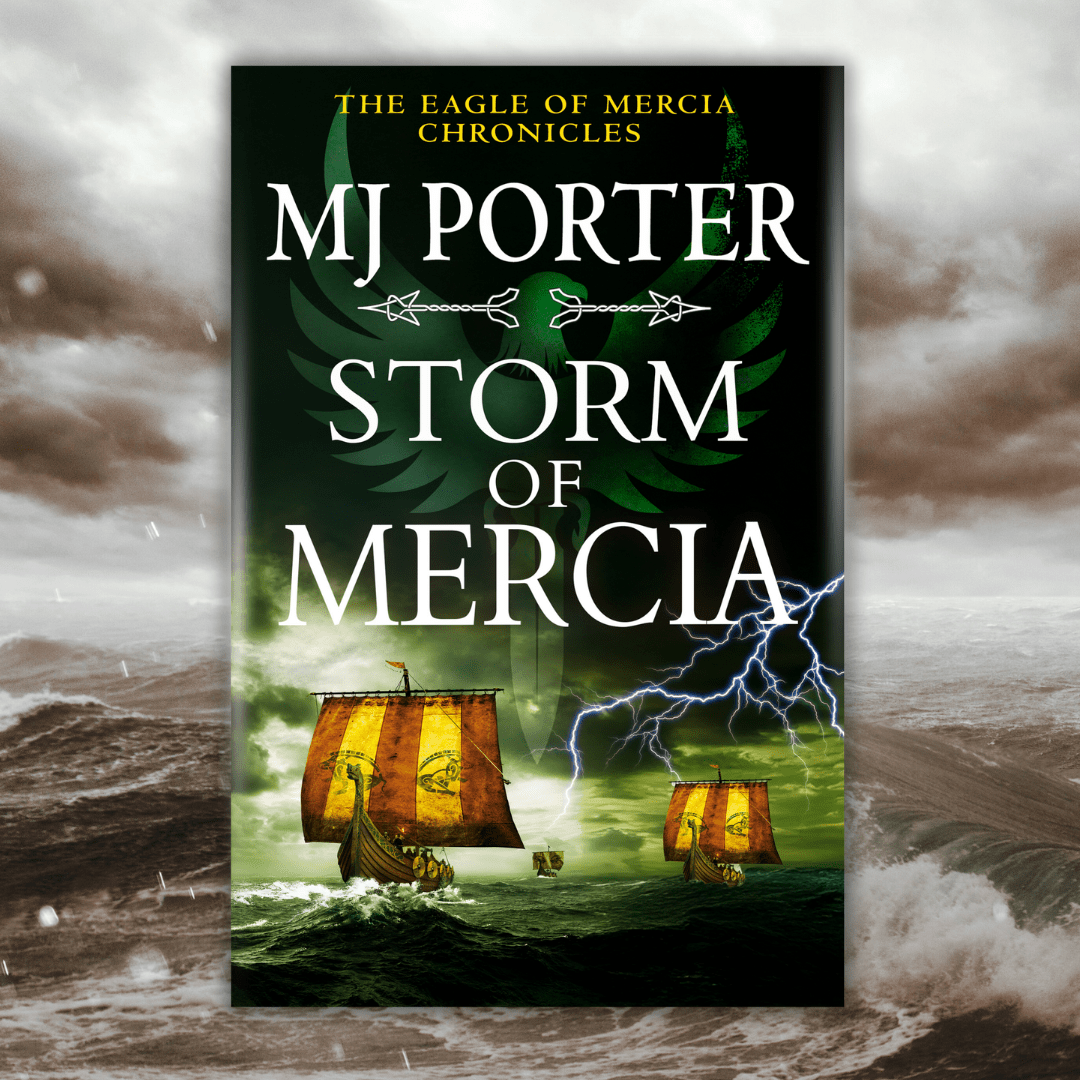
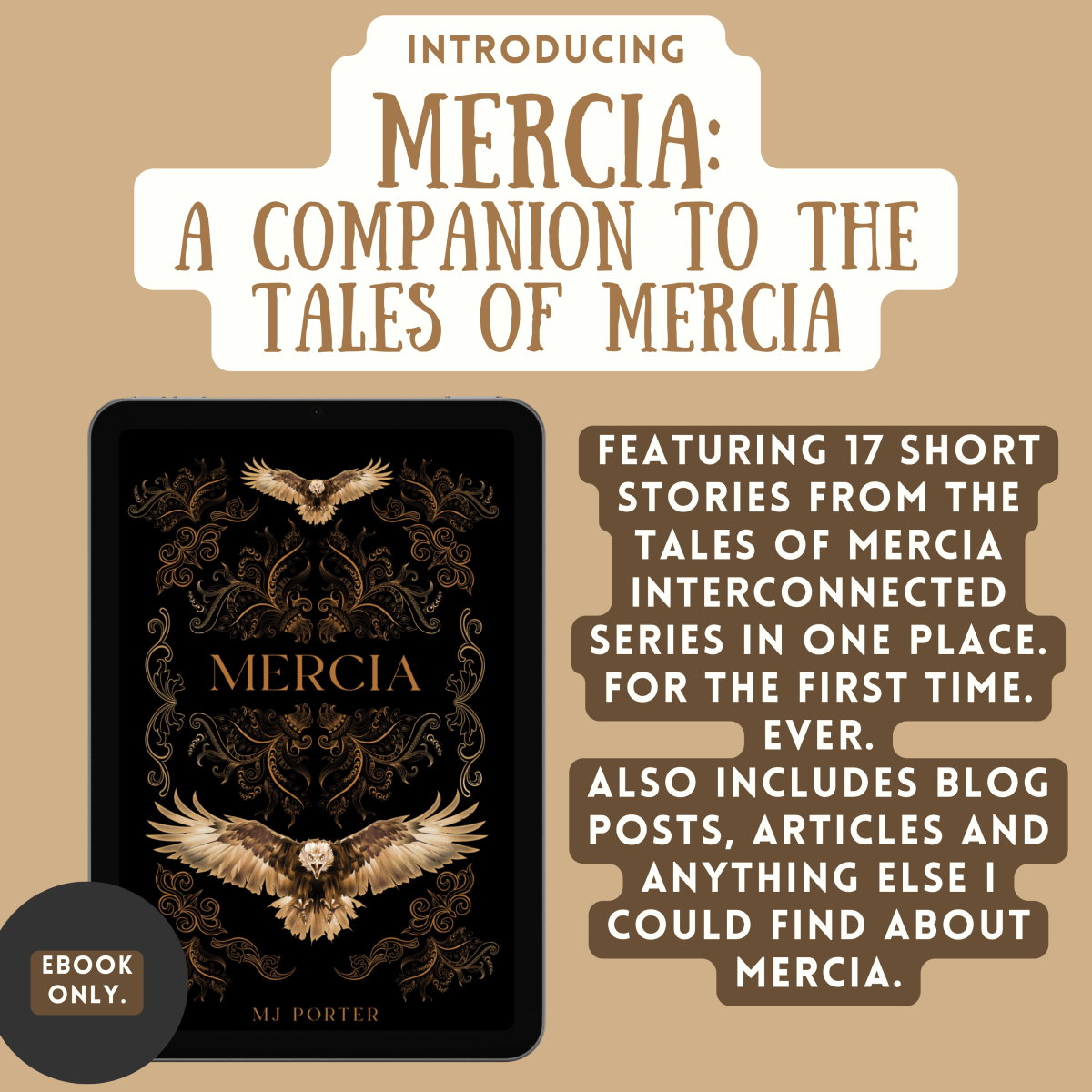
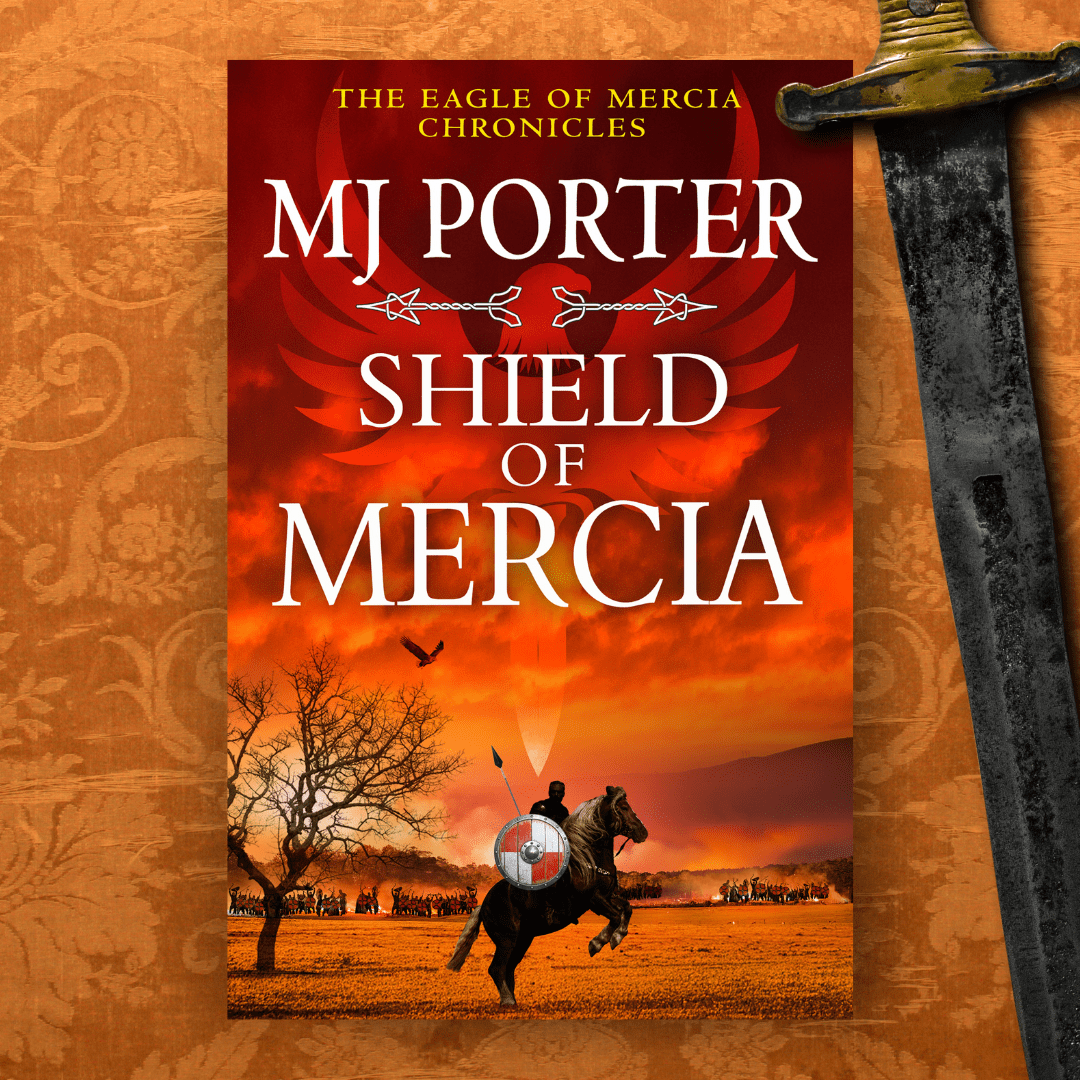
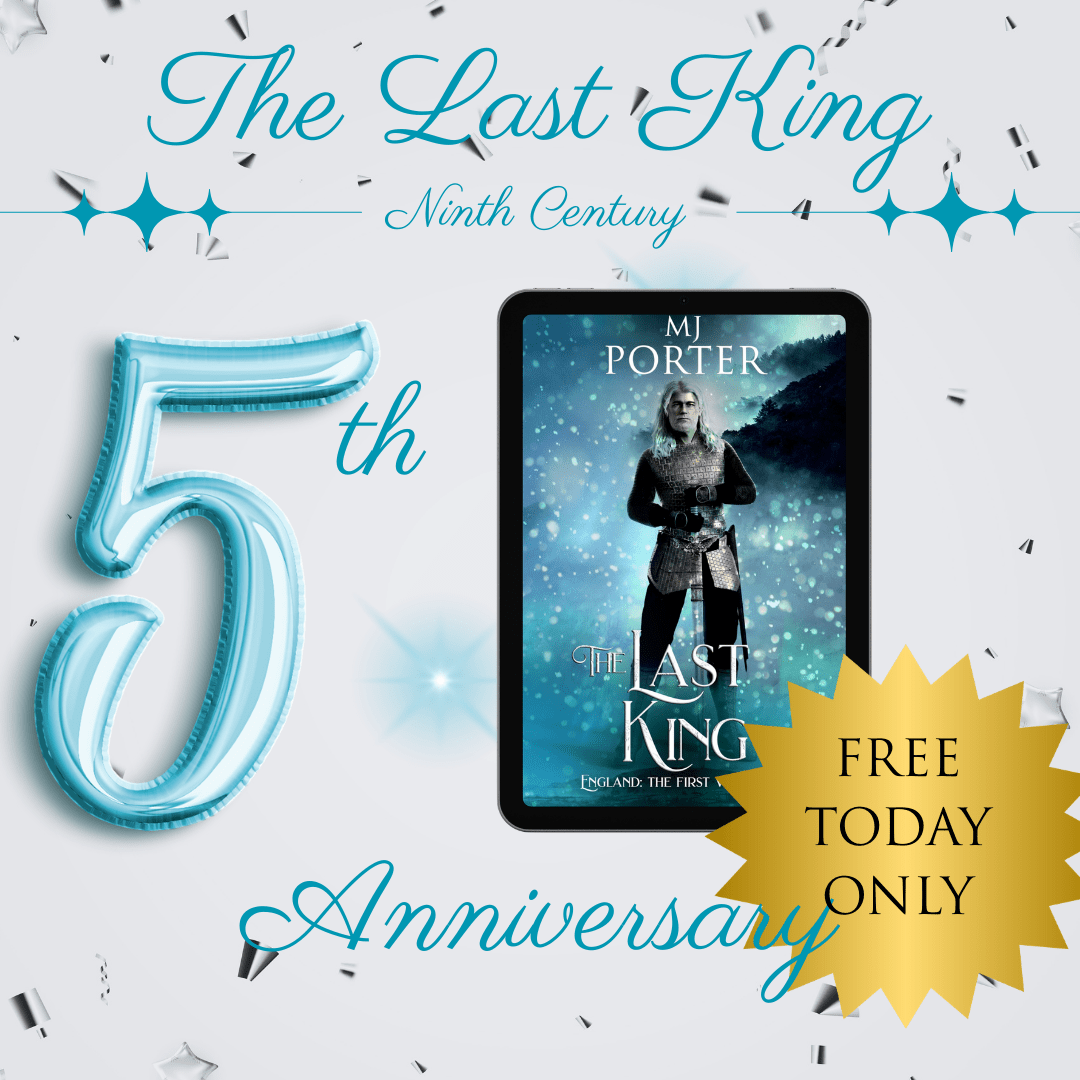
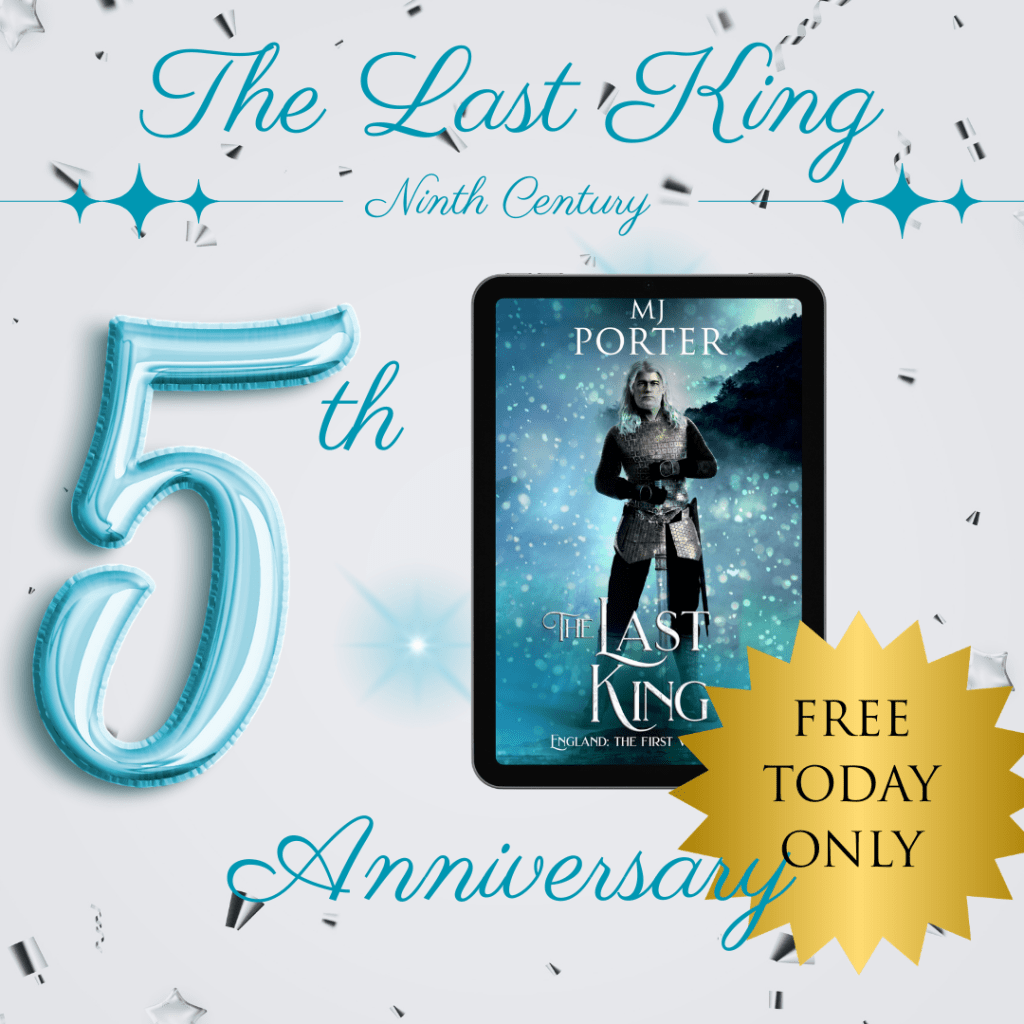
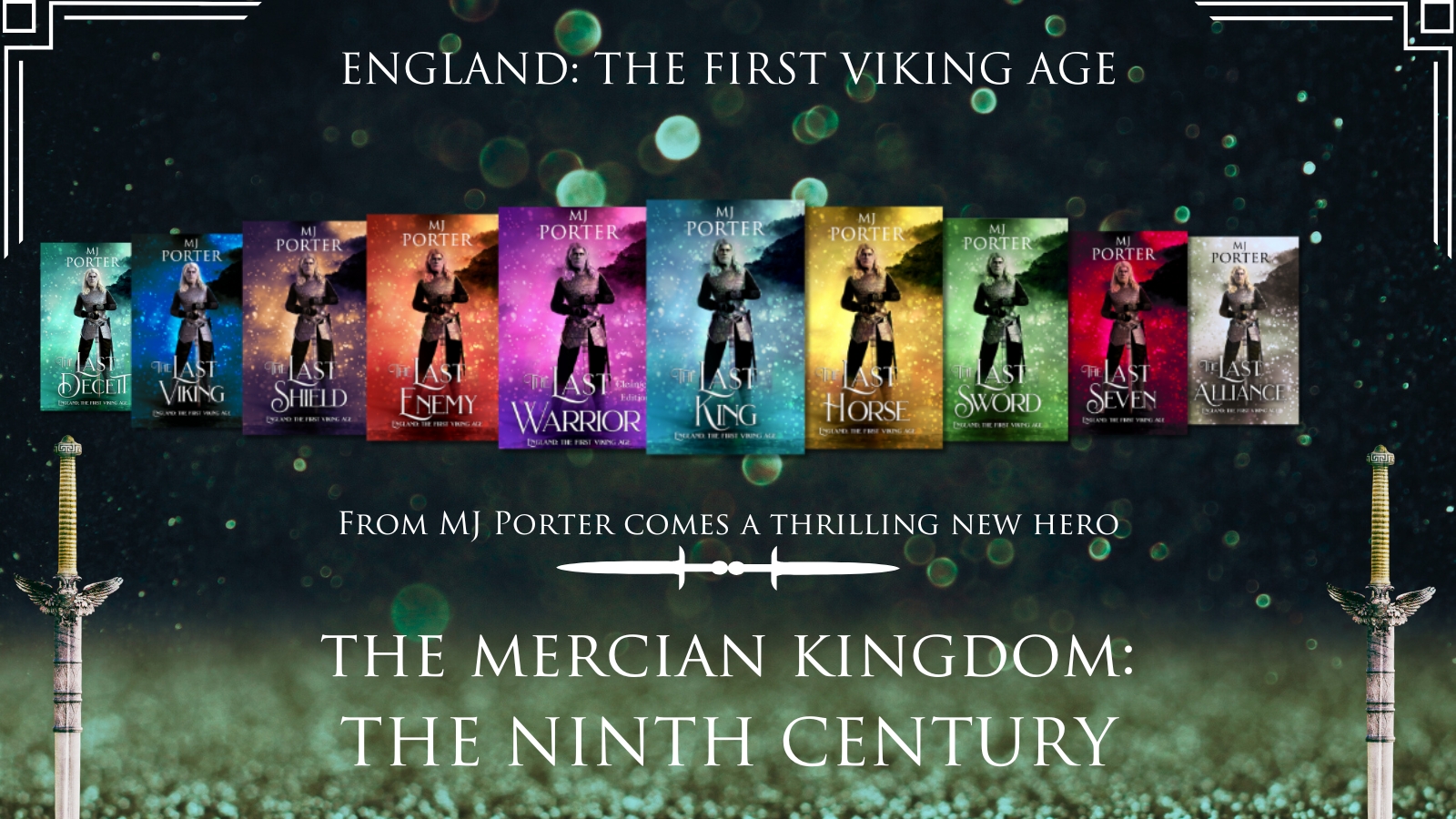
If you’ve been with Coelwulf, Rudolf, Icel, Edmund and Pybba since the beginning, then you’re probably with me in trying to work out how five years have gone by since the first book’s release. There are now ten books in all, as well as a short story collection, Coelwulf’s Company, and the prequel series featuring a young Icel, the Eagle of Mercia Chronicles (check out the stories featuring a young Icel – if you know, you know, and if you don’t yet know, you’re going to want to find out.)
If you’ve not yet discovered The Mercian Kingdom: The Ninth Century series, then you’re in for a treat, as long as you’re not easily offended by foul language and violence – although if you are, there are Cleaner versions available without quite so much swearing. Follow this link, as they can be a bit tricky to find on Amazon.
The Last King books are available in ebook, paperback and hardback, and The Last King (book 1 ) is also available in audio.
Competition Time
I’ve gained some of the best fans ever by running competitions to win signed copies of my books, and this year is no different, although the prize keeps getting BIGGER.
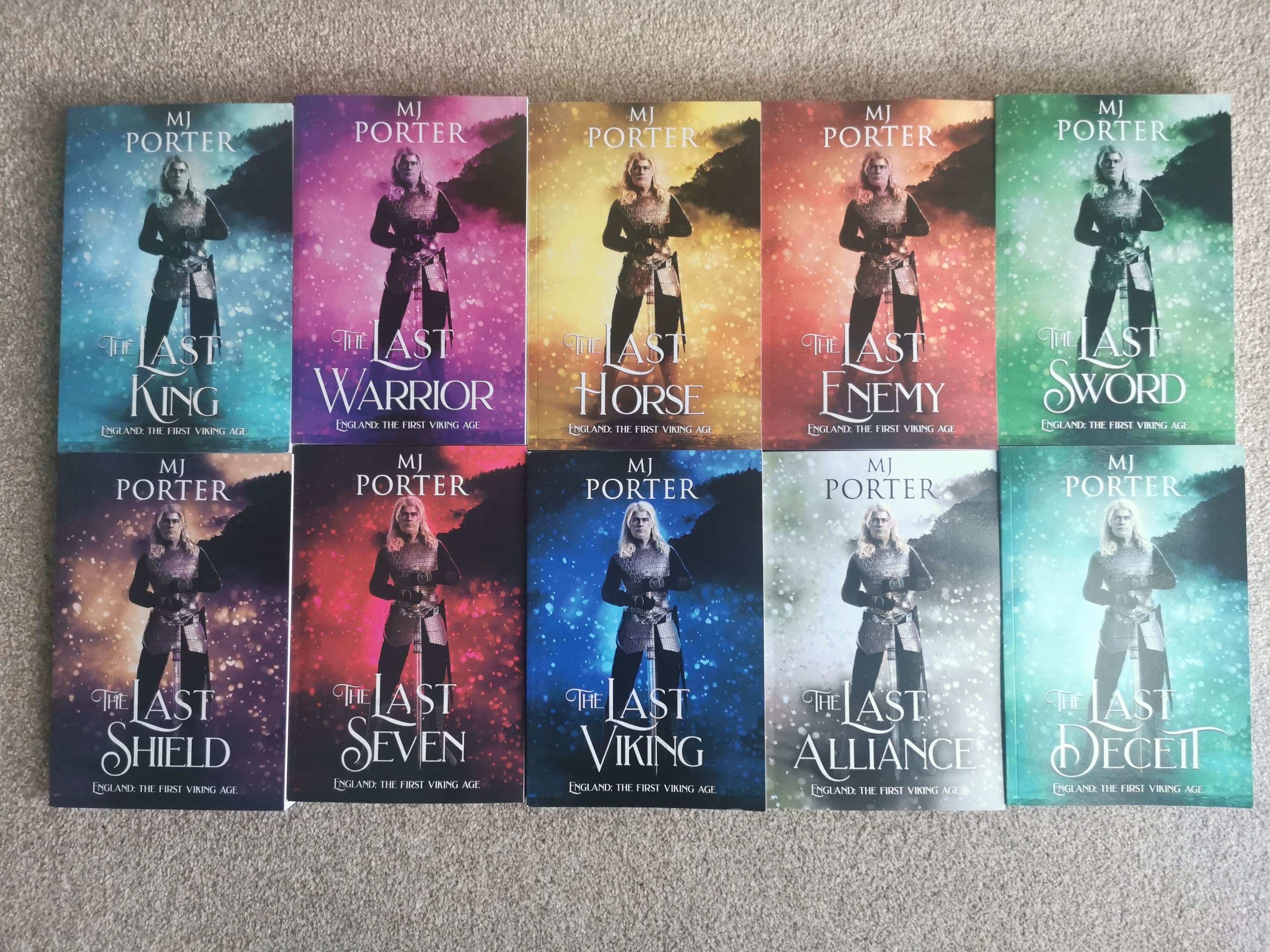
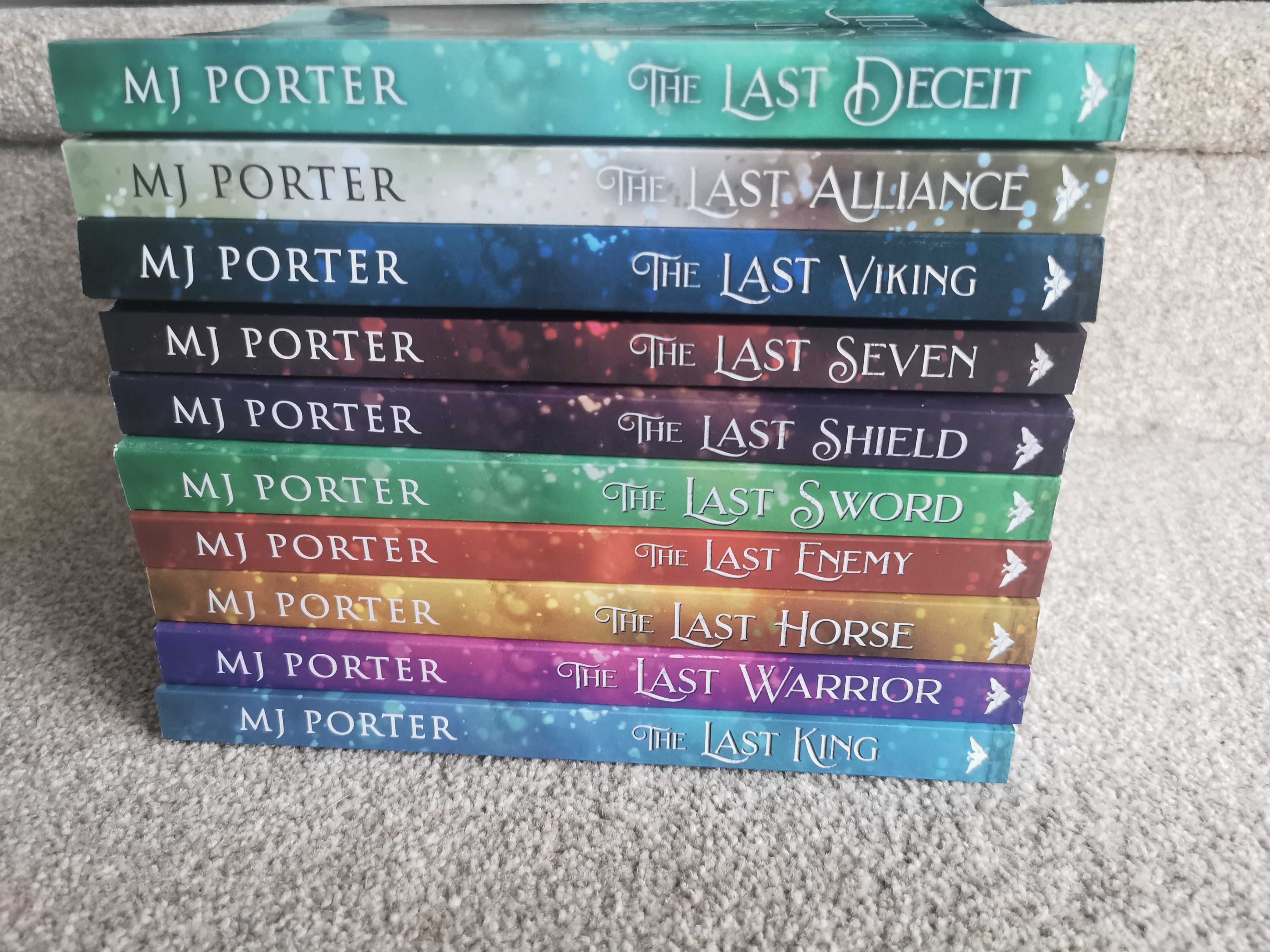
To enter the competition to win all 10 books signed by me, complete this Google form. (Competition is open until 30th April 2025).
Entries are open to UK-based people only (because postage is very expensive elsewhere), but people outside the UK can still submit their details and receive a FREE copy of a short story collection featuring stories set in The Last King’s world (and check out another fabulous deal below).
You can also grab the first 3 books in the series for 99p/99c and equivalent worldwide for a very limited time
These are the less sweary-versions (I am having a bit of moment with hyphenated words so I am going with it for this).
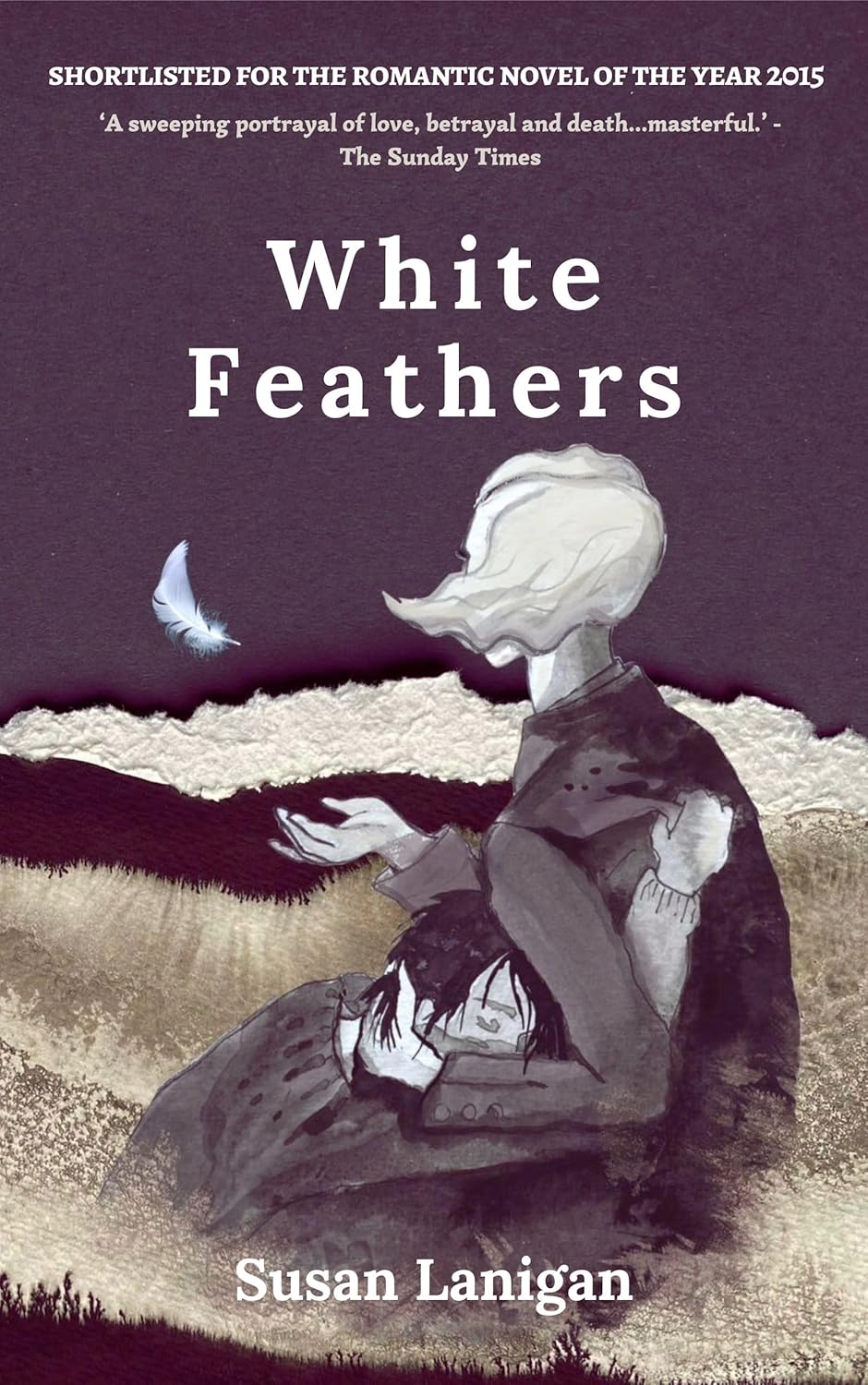
I’m delighted to welcome Susan Lanigan and her new book, White Feathers, to the blog with guest post.
Guest Post
My Research Process
By Susan Lanigan
When I was constructing the narrative of White Feathers, I needed an outline, but I was not sure in advance of everything that would occur. The advantage of writing historical fiction is that you can use real events as the vines on the trees which my Tarzan plot could grasp onto and swing to the next tree. So, I looked up various battles of World War I – Loos, the Somme, Neuve-la-Chapelle – and threaded a narrative from them. Like many, I had been captivated by Vera Brittain’s memoir Testament of Youth, and while I think Brittain would probably have been a lot personally, my heart broke for what she endured, how her hope was destroyed and how she carried on regardless after hope was gone.
I owe Brittain a lot for the construction of Eva’s narrative, particularly when she was in Étaples working as a Voluntary Aid Detachment nurse. Brittain’s narrative of that time is captivating and contains so many details. I first learned of the stark tale of the sinking of HMHS Britannic in that book, and then did my own research on the subject. I also read the account of Mary Borden, who writes in a very modernist style. The section in White Feathers where the dying Canadian lieutenant begs for a drink is based on an account in her book The Forbidden Zone.
While my research on the battles was comprehensive, my true experience of researching was coming across random fascinating minutiae and feeling compelled to shoehorn them into the story. The pigeon van was one of these phenomena, discovered while wandering around the Musée de la Grande Guerre, built near Mons, with a monument to mark the battle there. It was the closest the Germans got to Paris. The white feather propaganda was fascinatingly horrifying, and I can only imagine what it was like to see those notices on every corner, how hard it must have been to maintain an ethical stance in the face of overwhelming institutional opposition to it. The priest who oversees the trial and confession of a particular character was a real person, as was the order to which he belonged.
The inevitable problem with research is that you must omit more than you include if you are to have a novel that approaches a publishable wordcount. I could have spent all day talking about the “Little Mother” letter quoted by Robert Graves in Goodbye to All That, or the internecine rivalry of the Pankhurst sisters. But in the end, it’s story that matters; it is the flowing dress with the pleasing detail and the research is the firm undergarment that keeps everything in shape beneath!
Here’s the Blurb
“Anti-war and anti-patriarchy without ever saying so – a bravura performance of effortless elegance” – Irish Echo in Australia
SHORTLISTED FOR THE ROMANTIC NOVEL OF THE YEAR AWARD 2015
In 1913, Irish emigrée Eva Downey receives a bequest from an elderly suffragette to attend a finishing school. There she finds friendship and, eventually, love. But when war looms and he refuses to enlist, Eva is under family and social pressure to give the man she loves a white feather of cowardice. The decision she eventually makes will have lasting consequences for her and everyone around her.
Journey with Eva as she battles through a hostile social order and endeavours to resist it at every turn.
Susan Lanigan’s first novel White Feathers, a tale of passion, betrayal and war, was selected as one of the final ten in the Irish Writers Centre Novel Fair 2013, and published in 2014 by Brandon Books. The book won critical acclaim and was shortlisted for the UK Romantic Novel of the Year Award in 2015. This edition is a reissue with a new cover and foreword.
Her second novel, Lucia’s War, also concerning WWI as well as race, music and motherhood, was published in June 2020 and has been named as the Coffee Pot Book Club Honourable Mention in the Modern Historical Book of the Year Award.
Susan lives by the sea near Cork, Ireland, with her family.