Author of Saxon historical fiction and non-fiction, 20th-century historical mysteries, and Norse-inspired historical romantasy. Book reviewer and blog host.
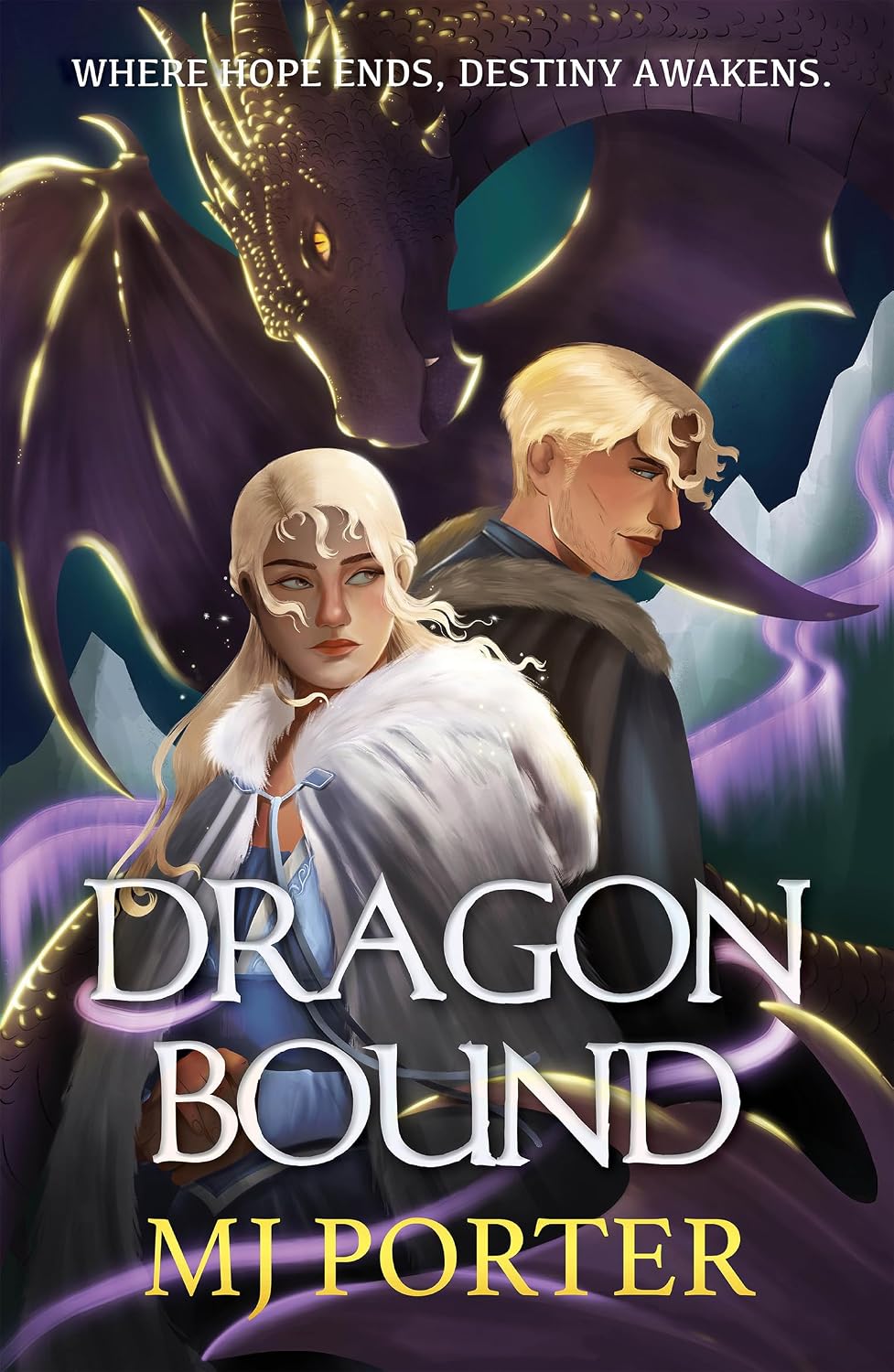
Happy release day to Dragonbound, the first book in the Ice and Fire series, #historicalromantasy #booklaunch
To be a writer, you first must write
Dragonbound has been a story so many years in the making that since I first set pen to paper (yes, you read that correctly) I’ve undergone a complete sea change in how I write, and probably, why I write as well.
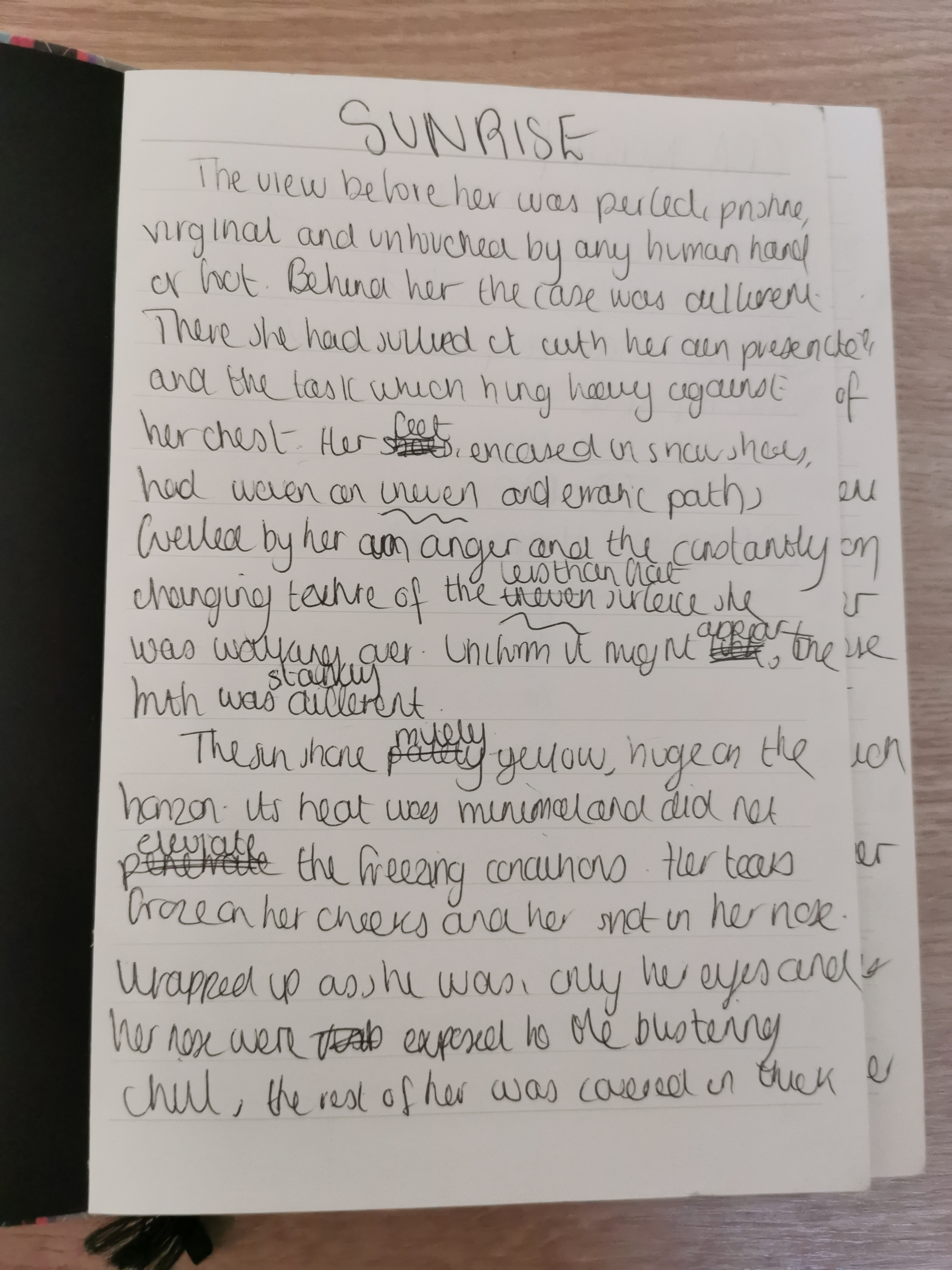
But with the release of Dragonbound, I thought I’d share a throwback image of what a first story looks like, from the very beginning. Although that’s not quite right either, because this image is from when I first ‘properly’ started to write this story, and I can assure you I’d already discarded some even earlier ideas. (I had yet to discover my favourite inky pen).
A handwritten notebook showing the first page of what would become Dragonbound by MJ Porter
And now you can read the ‘cleaned up’ version of this opening of the book in Dragonbound, released today. A story, I am very proud to say, has taken me about 30 years to get to this stage. It’s a good job that I went on to write other stories in the intervening period.
Here’s the blurb
The Long Night is ending. The dragon is waking.
Sereh is finally free — but the frozen wilds are just as deadly as the life she left behind. When she saves a mysterious stranger, she binds herself to a fate she doesn’t understand.
Erann has secrets. About the cold. About the land. About why the world is changing.
As the Long Night lingers and something ancient stirs beneath the frozen land, survival means staying together. And their fragile alliance turns into something neither of them can afford.
Because in a world of ice and fire, trust might be the spark that destroys them both.
This slow-burning Norse fantasy romance is perfect for fans of Robin Hobb, T. Kingfisher, S.L. Rowland and Anne McCaffrey.
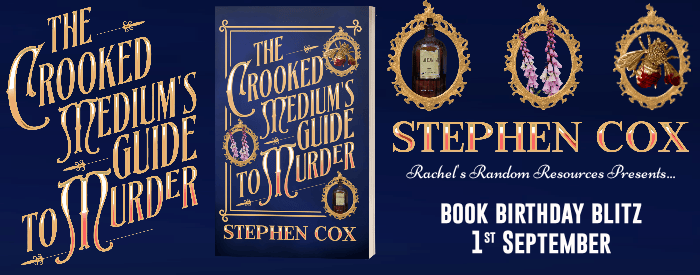
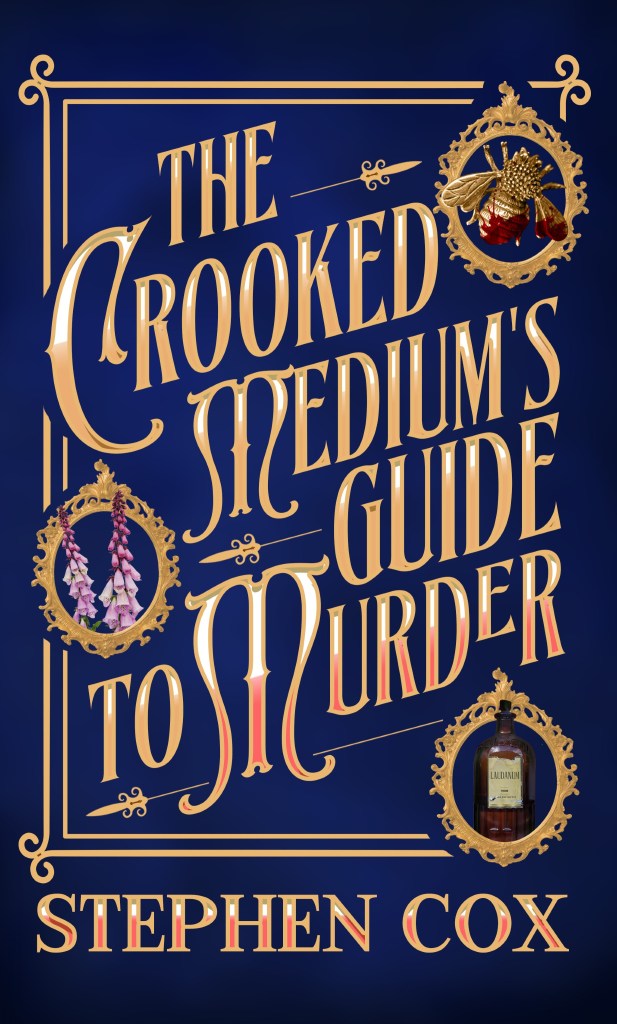
I’m reviewing The Crooked Medium’s Guide to Murder (The Crooked Medium 1) by Stephen Cox #blogtour #bookreview #historicalmystery
I’m reviewing The Crooked Medium’s Guide to Murder (The Crooked Medium 1) by Stephen Cox #blogtour #bookreview #historicalmystery
Here’s the blurb
London 1881. Can two crooked women stop a murder?
Extravagant medium Mrs Ashton and her lover, blunt working-class Mrs Bradshaw, run a spiritualist scam. Mrs Ashton secretly reads minds.
Believing that Mrs Ashton is genuine, grieving Lady Violet craves the truth behind her mother’s untimely death. But Lady Violet’s powerful husband Sir Charles hates spiritualists. Has he killed before?
Uncovering this MP’s wicked crimes will put all three women in terrible danger…
To solve a shocking murder, look both sides of the grave.
“I loved this book! Victorian murder mystery meets “ghost” story, with delicious sprinklings of compassion and mischief…”
Caroline Day, author of Sunday Times Bestseller Hope Nicely’s Lessons for Life
The Crooked Medium’s Guide to Murder is an enthralling late nineteenth-century set mystery, with all the trappings we would expect from a story set in this era, complete with a spiritualist (or is she?), an angry husband and a desperate wife, told with a flair for the language of the time, and some quite amusing insults to boot.
The setting is well depicted, and the (initial) mystery quickly reveals itself as Mrs Ashton resolves to aid poor Lady Violet while she uncovers the truth about her mother’s death. And yet, not all is as it seems, and Mrs Ashton, with her own secrets as well, finds herself caught in the middle of something she’s desperate to understand. Having placed herself in terrible danger when the very man she’s investigating turns up dead himself, she’s implicated in his murder; only there’s something even more unsettling for Mrs Ashton to contend with (I don’t want to spoil what happens). This adds a whole new dimension to everything the reader thought they knew!
A rousing mystery, with plenty of pace and a sure-fire hit for those who love stories set in the era. And with a fabulous ‘well, I didn’t see that coming’ element about halfway through the book. This story kept me reading, and I was absolutely hooked. This is late nineteenth-century London (and further afield) splendidly told, never stinting on the harder sides of life, and with quite a shocking resolution. I am looking forward to book 2.
Meet the author
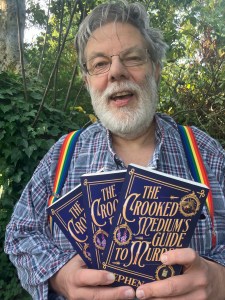
My grandmother told me I read too much. I remember walking in the garden when I was small, telling myself stories. It was over thirty years of wanting to be a novelist before I tried… and succeeded.
The Crooked Medium’s Guide to Murder arose because I wanted to write about Britishness and specifically about Englishness; about our complex relationship with the past; I wanted leads who were morally grayer but still capable of kindness. It was time for a novel with queer leads. And in quite desperate times, I needed to write something with some uplift. It’s the first book intended to start a series.
My first books, Our Child of the Stars and Our Child of Two Worlds are set in the 1960s USA. It’s about Gene and Molly, a childless couple, and Cory, the little boy from the stars that they adopt, under such challenging circumstances. The books got lovely reviews and are available on both sides of the Atlantic.
I spent nearly all my childhood in Bristol, and I’m now an adoptive Londoner. I live with my partner, and it’s the best thing our two adult children come back from time to time. Our garden rages wild.
Prize includes – Our Child of the Stars, Our Child of Two Worlds, The Crooked Medium’s Guide to Murder and the Crooked Medium’s Guide to Terror.
*Terms and Conditions –UK entries welcome. Please enter using the Gleam box below. The winner will be selected at random via Gleam from all valid entries and will be notified by Twitter and/or email. If no response is received within 7 days then Rachel’s Random Resources reserves the right to select an alternative winner. Open to all entrants aged 18 or over. Any personal data given as part of the competition entry is used for this purpose only and will not be shared with third parties, with the exception of the winners’ information. This will passed to the giveaway organiser and used only for fulfilment of the prize, after which time Rachel’s Random Resources will delete the data. I am not responsible for despatch or delivery of the prize.
I’m reviewing The Knife Maker of Venice by David Gilman #bookreview #blogtour #historicalfiction
I’m reviewing The Knife Maker of Venice by David Gilman #bookreview #blogtour
Here’s the blurb
A young Englishman captured by slavers must survive the snakepit that is seventeenth-century Venice.
1604. As pirates seeking slaves to sell in the markets of North Africa terrorise the coasts of Europe, headstrong Richard Sheriff and his sister Elizabeth are torn from their Devonshire home and thrust into a waking nightmare.
Richard’s skills as a blacksmith see him fetch a high price, but the pirate captain has other plans for Elizabeth and once they are separated, Richard has no idea of his sister’s fate. They must both learn to survive on a deadly voyage into the unknown.
Sold into servitude in Venice: glittering, vicious city of secrets, he is apprenticed to a knife maker. Richard’s talents soon win him renown… but haunted by his sister’s absence, he vows never to stop looking for her, knowing she would do the same for him.
First he must survive that city of ghosts. Will the siblings live to see each other again, or will they join the myriads lost to Venice, where life is cheap, profit is all, and escape nigh-on impossible?
A powerful historical adventure perfect for fans of Kate Mosse, Ken Follett and Robert Harris.
The Knife Maker of Venice is a chunk of a book, following the events that befall Richard and Elizabeth, starting with a good punch, before moving somewhat into the future.
It is fraught with peril for our two main characters, although they’re far from the only two voices we hear. Richard is almost unbearably headstrong, and gets himself into many scrapes. Elizabeth is far from the naive individual we might originally suspect, although her story is teased out more slowly than Richard’s.
What follows is a deeply researched tale of life in the early 1600s, thrusting the reader into the possibly previously unknown world of slavers and what happened to those stolen away from the Devonshire coast.
I listened to the audio book for the novel, and very much enjoyed the narrator as he expertly brought the characters to life.
This does take a while to get going – there is a lot of action in the first third, but much of it takes place on the high seas where the author ensures we all know how miserable the voyage is for the unfortunate abductees.
An engaging read.
Meet the author
David Gilman has enjoyed many careers, including paratrooper, firefighter, and photographer. An award-winning author and screenwriter, he is the author of the critically acclaimed Master of War series of historical novels, and was shortlisted for the Wilbur Smith Adventure Writing Prize for The Last Horseman. He was longlisted for the same prize for The Englishman, the first book featuring ex-French Foreign Legionnaire Dan Raglan. David lives in Devon. Follow David on @davidgilmanuk, http://www.davidgilman.com, and facebook.com/davidgilman.author
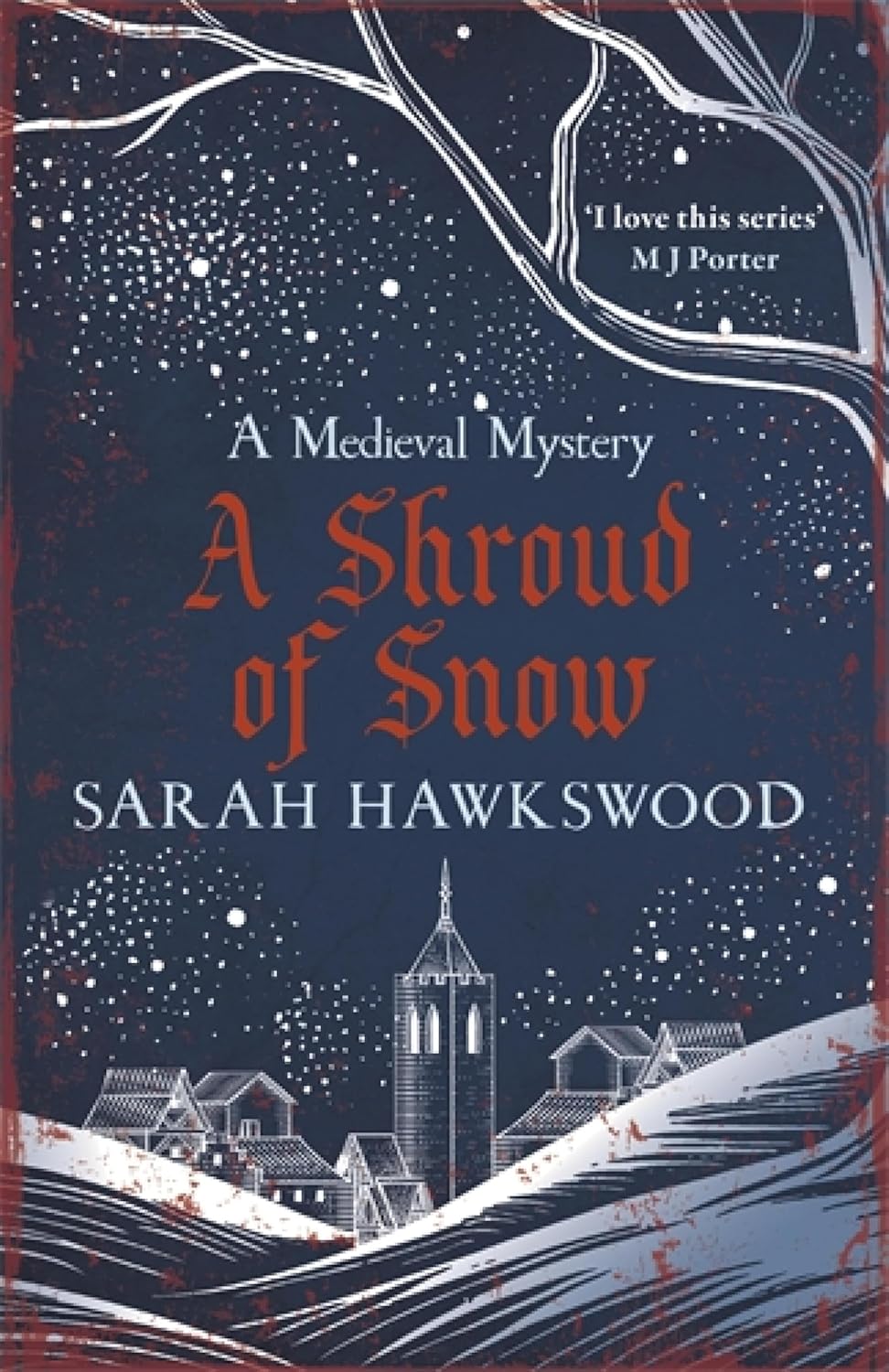
It’s time for a new Bradecote and Catchpoll historical mystery. I’m reviewing A Shroud of Snow by Sarah Hawkswood #historicalmystery #bookreview #favouriteseries
Here’s the blurb
December, 1145.
Hamelin Isenmongere, trader in iron and charcoal from Gloucester, is considered by many to be the most popular man in Worcester. Why then is he found on the quayside near his warehouse with his head beaten in? As the winter bites, Undersheriff Hugh Bradecote, Serjeant Catchpoll and Walkelin begin the hunt for a killer. However, matters are complicated when evidence leads them to Worcester Castle itself and the hunt for a spy in the midst of complicated political crosscurrents.
Bradecote, Catchpoll and Walkelin must uncover whether the murder was an act of betrayal from close to home, or one that casts a shadow over the fight for England’s crown.
Sarah Hawkswood’s medieval mysteries are some of my favourite books. I wish I could savour them when they’re released once a year, but I find myself reading far too quickly.
Her main characters, Bradecote, Catchpoll and Wakelin are determined and intrepid in their desire to solve each mystery presented to them.
I love this series of medieval mysteries set in and around Worcester, and A Shroud of Snow is a fab addition, and has certainly kept me cool during the recent heatwave.
Catchpoll and Walkelin find themselves summoned to the quayside on a bitterly cold morning where the body of Hamelin Isenmonger has been found. A convivial, generous trader, everyone wonders who on earth would have wanted to kill the man, with a whole host of suspects, from his wife to his ship’s commander.
What unfolds is another fine mystery, that sees our characters forced to question not just the underbelly of Worcester, but also those in high up places, as they work to make sense of the seemingly random series of events. While Walkelin and Catchpoll are contending with some of the local inhabitants, Bradecote has to contend with some haughty lords at the castle.
Bradecote, Catchpoll and Walkelin are getting rather good at solving crimes, ferreting out those who speak falsehoods and getting to the crux of the matter as quickly as possible. This one had its fair share of politics to contend with as well, which I did sometimes get a little confused about, but luckily, I could remember what was happening in the wider world of the Anarchy.
It’s always a treat to get a new Bradecote & Catchpoll mystery and this one didn’t disappoint.
I highly recommend this series to anyone who loves a bloody good historical mystery, and I promise you, soon the way the characters speak will become like second-nature to you, so don’t let it put you off!
Check out my reviews for other books in the series (I have read them all)
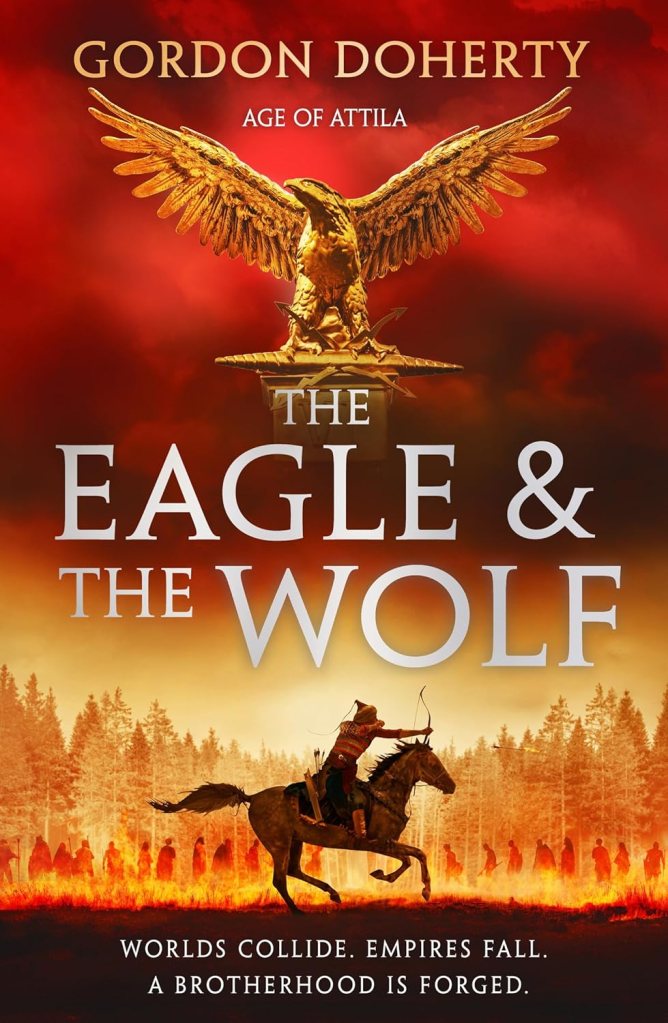
Book review The Eagle and the Wolf by Gordon Doherty #histfic #Romanfiction #BookReview
Here’s the blurb
As Hun hordes and Germanic tribes maraud through Imperial lands, two legendary men – Attila the Hun and the “Last of the Romans” General Flavius Aetius find their fortunes entangled with the chaos.
Flavius Aetius, a noble Roman son, is an outsider in a savage land. He has been banished, given as hostage to the barbaric Huns and sent to the edge of the world.
What the Huns do not know, however, is that his father and mother have been murdered in a coup. He is an orphan, with no value at all. His life hangs on a lie.
In this new harsh world, he manages to find one grudging ally, a young boy named Attila.
A brotherhood is formed. One that, the shamans foretell, will shatter the world.
The Eagle and the Wolf is an enthralling read, revealing the world of the Huns through the eyes of their Roman adversary, and in doing so, exploring the strangeness of the Steppes for a Roman-born lad, even as Flavius becomes integrated into the community, accepting many of the integral parts of being a member of the Huns.
Our two main characters, Attila and Flavius, bond in the most unlikely of circumstances, in a true friendship. But, there are problems brewing for both of them. There are enemies where there should be friendships, and vice versa. There is a great deal of peril for the two young men as they grow to adulthood, and their friendship must survive despite a yawning physical difference between them.
As I know so little about the period, I was entirely swept away in the narrative, and can’t wait to read the next book in the series.
The Eagle and the Wolf is a captivating, engrossing tale and I adored it.
Meet the author
Gordon is a Scottish writer, addicted to reading and writing historical fiction. His novels have been Amazon smash-hits, and have gone on to be translated and published in over a dozen languages worldwide.
Gordon’s love of history was first kindled by visits to the misty Roman ruins of Britain and the sun-baked antiquities of Turkey and Greece. His expeditions since have taken him all over the world and back and forth through time (metaphorically, at least), allowing him to write tales of the later Roman Empire, Byzantium, Classical Greece and the Bronze Age.
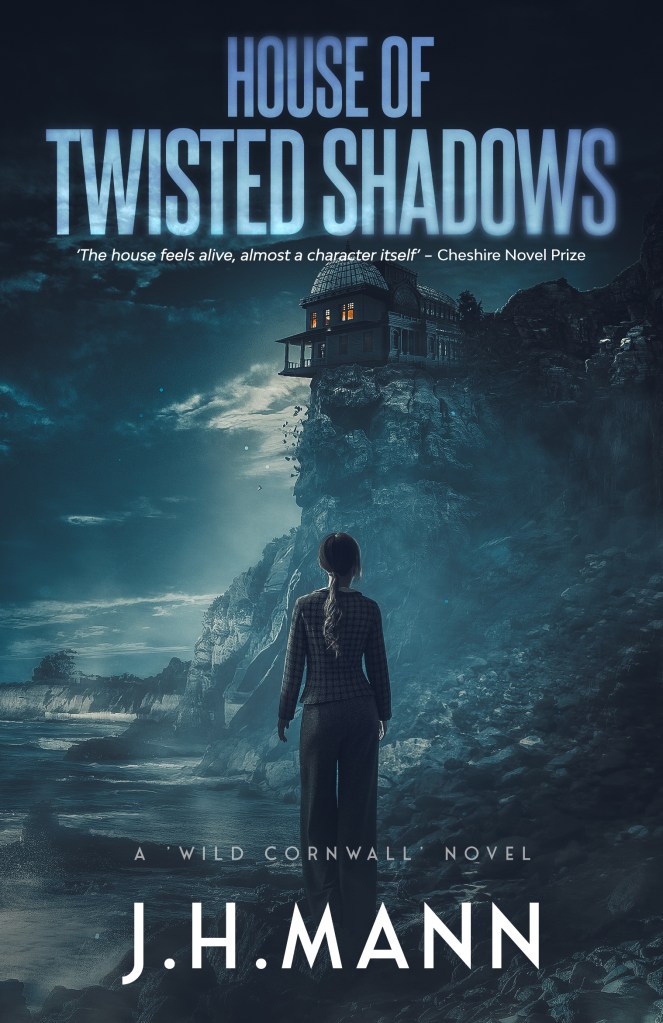
I’m delighted to be reviewing House of Twisted Shadows by JH Mann, an extremely atmospheric story set in Cornwall #bookreview #blogtour
Here’s the blurb
A HOUSE ON THE EDGE A DAUGHTER DRIVEN TO OBSESSION A FORBIDDEN LOVE
Winter 1962. Amelia Tremayne has spent the past ten years in London trying to forget the lonely clifftop house where her father was killed. Tyler House was built shortly before the Second World War on Cornwall’s stormy coast by a wealthy German outsider. Its most unsettling feature is a vast glass dome that bends the light, casting twisted, elongated shadows across the walls.
Amelia’s father, Douglas Tremayne, a noted historian, was researching a controversial book about Tyler House’s Nazi origins – and its links to powerful figures in the local community.
As Amelia begins to uncover the truth about her father’s death, she is pulled into a web of buried secrets – and into a forbidden love that could destroy everything she holds dear.
INSPIRED BY A TRUE STORY
Praise for J.H.Mann:
‘Powerful, evocative and steeped in atmosphere – J.H. Mann vividly brings Cornwall’s wild, haunting landscape and its legends to life’ – Margaret James, bestselling author of the Denham Family Sagas
‘Vivid details of the landscape, eroding cliffs and crumbling house…the tension grips you and the atmospheric setting of Tyler House draws you in’ – Cheshire Novel Prize
House of Twisted Shadows is an engrossing, claustrophobic historical thriller set in a bitterly cold winter in 1962.
Our main character, Amelia, is driven to finally discover the truth about her father’s murder, ten years earlier, no matter what it takes. Returning to the long-abandoned home, she’s met by firm resistance from all she hopes will aid her in the quest to discover her father’s last manuscript before the house finally crashes onto the coastline below the cliffs. Perhaps it’s mention of the German who built the house, or perhaps it’s the close-knit community who don’t want Amelia to prevail. Perhaps it’s because she immediately seeks out her former lover, now married with a child, and it stirs up resentment. Or perhaps, it’s the house itself, which is oppressive and filled with ghosts of the past, which doesn’t wish to give up its secrets.
This is a real race against time thriller, as the reader certainly knows the house isn’t going to stay standing for much longer as wild winter weather covers the land.
I really enoyed House of Twisted Shadows. It’s a fast-paced read, with some lovely elements to it, as Amelia confronts the ghosts of her past and the ghosts of many others as well.
I’ll be grabbing the rest of the books in this interlinked collection of novels by the author.
Meet the author
J.H.Mann is an award-winning journalist and writer living in the South West of England. His second novel, The Echoing Shore, was a Yeovil Literary Prize award winner and the Adult Fiction Winner of the 2025 Selfies Book Awards at the London Book Fair. His third novel, The Silver Tide, has just been shortlisted for the 2026 Selfies Book Awards. He has strong family links with Cornwall. His novels are inspired by the many stories told by his mother and father and his own experiences as a shore-based volunteer for the Royal National Lifeboat Institution (RNLI). He lives with his wife, Nicola, and their lively whippet Patch.
You might well have read romantasy there and wondered what it was all about, but while this is certainly ‘my romance’ story, this book (which you may have read in a previous iteration), like my historical fiction novels, was most certainly inspired by my historical research. Read on…..
The setting for Dragonbound – the first book in the Ice and Fire series
The Ice and Fire series is set in my re-imaginings of an alternative Viking-age Iceland, with dragons (and a few other things going on too). So yes, this is potentially not a ‘normal’ inspiration for fantasy writers, but I’ve always been drawn to fantasy books that heavily rely on a historical setting (and very rarely a true medieval one, (although the PERN novels of Anne McCaffrey do perhaps fall into that category)).
What drew me to this time and place was the stunning bravery of men and women who decided to risk it all and start afresh in an entirely new ‘land’ to the one they called their home. It’s always been said that Iceland was settled because those living in Norway didn’t wish to fall under the sway of ‘a’ king, and a king they were going to get in the final years of the 800s. While this is somewhat contested now, back then (last century when I first had the idea) this enthralled me.
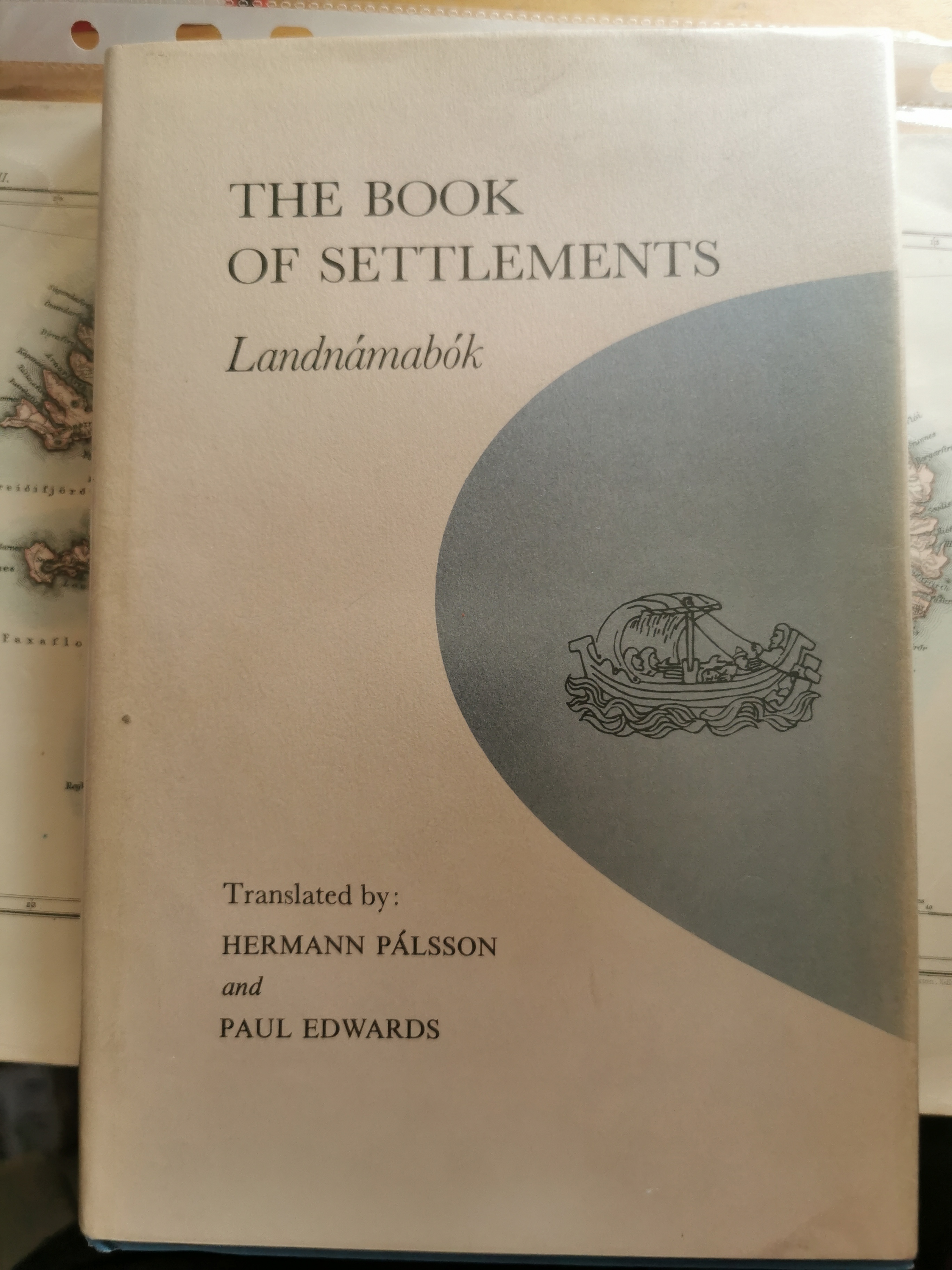
Iceland, when it was settled, is said to have been empty apart from one of two religious figures living at the extreme of the known world. Can you imagine being the first to step foot on that landscape? It must have been magical. But that wasn’t the only inspiring element. Those first settlers also undertook a number of endeavours that are unique. They wrote the Landnámabók (the book of Settlements)– a book detailing the land claimed by those settlers, and in that way recorded their history (astonishing).
The Landnámabók begins, ‘In his book On Times the Venerable Priest Bede mentions an island called Thule, said in other books to lie six days’ sailing to the north of Britain. He says there’s neither daylight there in winter, nor darkness when the day is at its longest in the summer.’ (from the translation by H Pálsson and Paul Edwards.)
These settlers also vowed to have no one king and to rule largely through consensus (amazing). And they decided to live in an environment that was harsher than they were used to, even coming from Norway.
And so, I set my characters in an idea of what this might have been, adopting the customs, the ideas, the way they might have lived, but in an entirely fantastical world (unless, of course, there were dragons in Viking age Iceland). I do not profess that everything is accurate (it isn’t), it couldn’t be, but the beautiful, deadly landscape; the bravery of those men and women all inspired me to create the setting for the world of Ice and Fire (and, to be honest, earlier iterations stayed even more true to this setting and landscape, but have been somewhat relaxed to ensure this is a work of fiction).
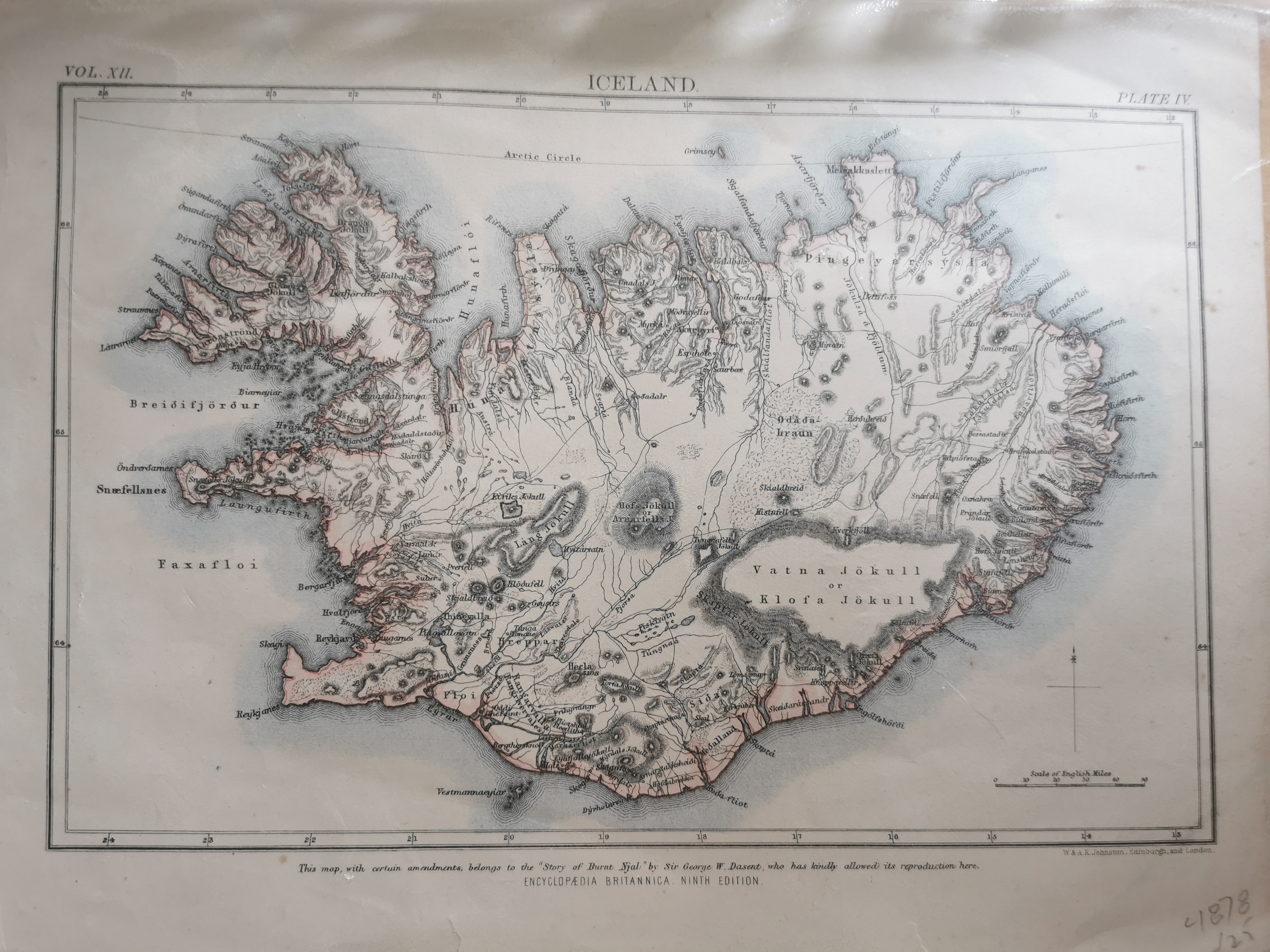
An antique map of Iceland
Here’s the blurb
The Long Night is ending. The dragon is waking.
Sereh is finally free — but the frozen wilds are just as deadly as the life she left behind. When she saves a mysterious stranger, she binds herself to a fate she doesn’t understand.
Erann has secrets. About the cold. About the land. About why the world is changing.
As the Long Night lingers and something ancient stirs beneath the frozen land, survival means staying together. And their fragile alliance turns into something neither of them can afford.
Because in a world of ice and fire, trust might be the spark that destroys them both.
This slow-burning Norse fantasy romance is perfect for fans of Robin Hobb, T. Kingfisher, S.L. Rowland and Anne McCaffrey.
It’s time… 757, the first book in the brand-new series, The House of Mercia, is now available. Listen to me talking about the new book #fiction #TalesOfMercia #fiction #nonfiction #Mercia #MJPorter #HistoricalFiction #SaxonEngland #VikingAge #AngloSaxonHistory #BernardCornwell #LastKingdom #HistFic #ReadingCommunity #BookTok #Vikings
It’s time… 757, the first book in the brand-new series, The House of Mercia, is now available. Listen to me talking about the new book #fiction #TalesOfMercia
I recorded this when 757 was complete
Here’s the blurb for 757
This is Mercia. The year is 757. A king will fall. A king will rise. But first, civil war will rage.
King Æthelbald’s forty-year vice-like rule over Mercia has been rigid. But he lacks a legitimate heir despite his insatiable bedchamber antics.
Offa must stand hostage to his family’s good behaviour, when his father missteps in removing his mother from Æthelbald’s bed. Shockingly, his younger sister now replaces her.
But the king isn’t finished with his denigration of Offa’s noble House. When his parents are traitorously killed, Offa’s resentment grows, compounded by the ridicule heaped on him by King Æthelbald’s oathsworn warriors.
With the king’s health deteriorating, the matter of the succession becomes paramount. There are plenty who share a claim to the kingship.
Discord threatens to fracture the mighty realm, and those with sword and shield, seax and spear are prepared to risk it all to be the future king of Mercia.
Join my Boldwood newsletter to receive a free prequel short story, written exclusively for the the release of The House of Mercia series.https://BookHip.com/MKSKVRX
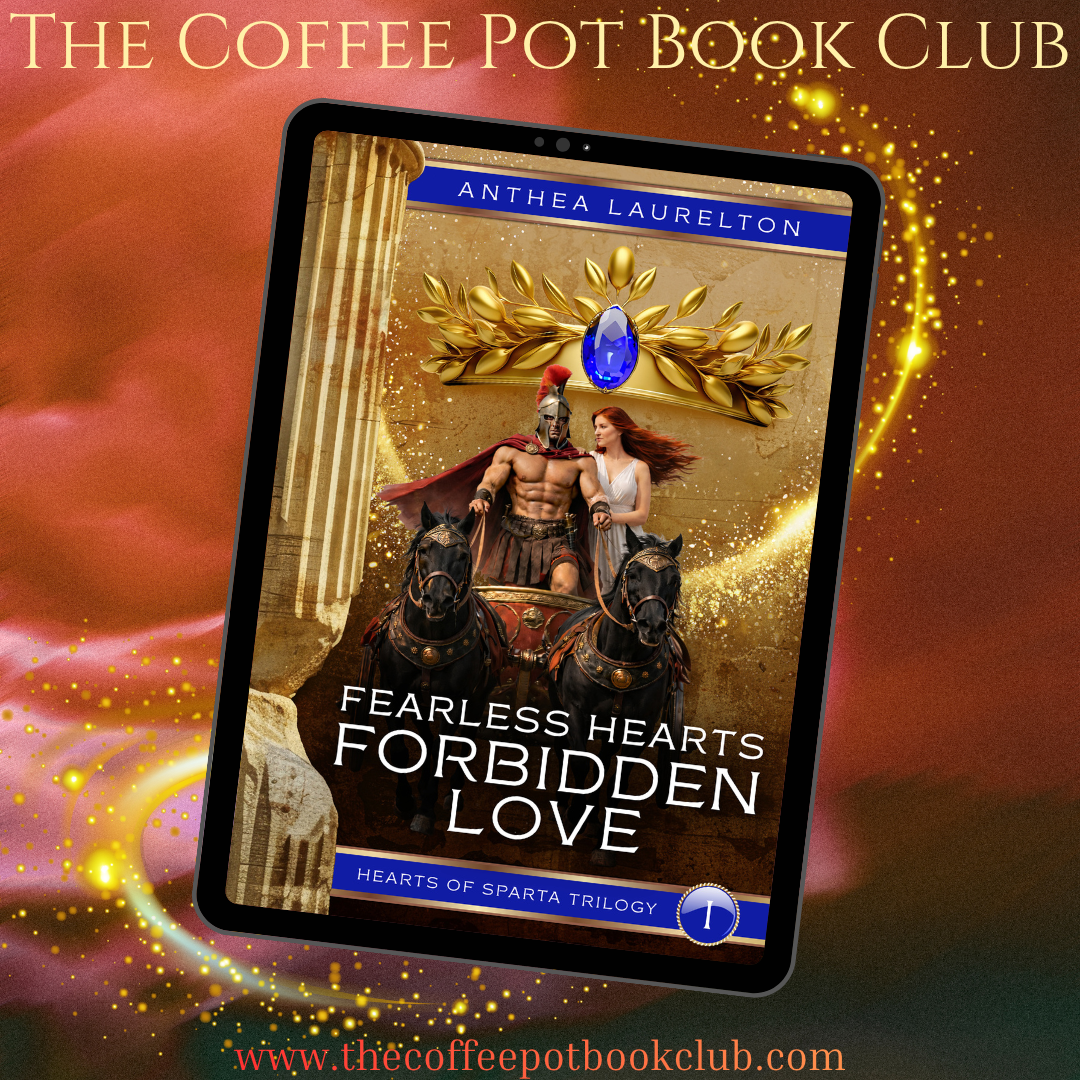
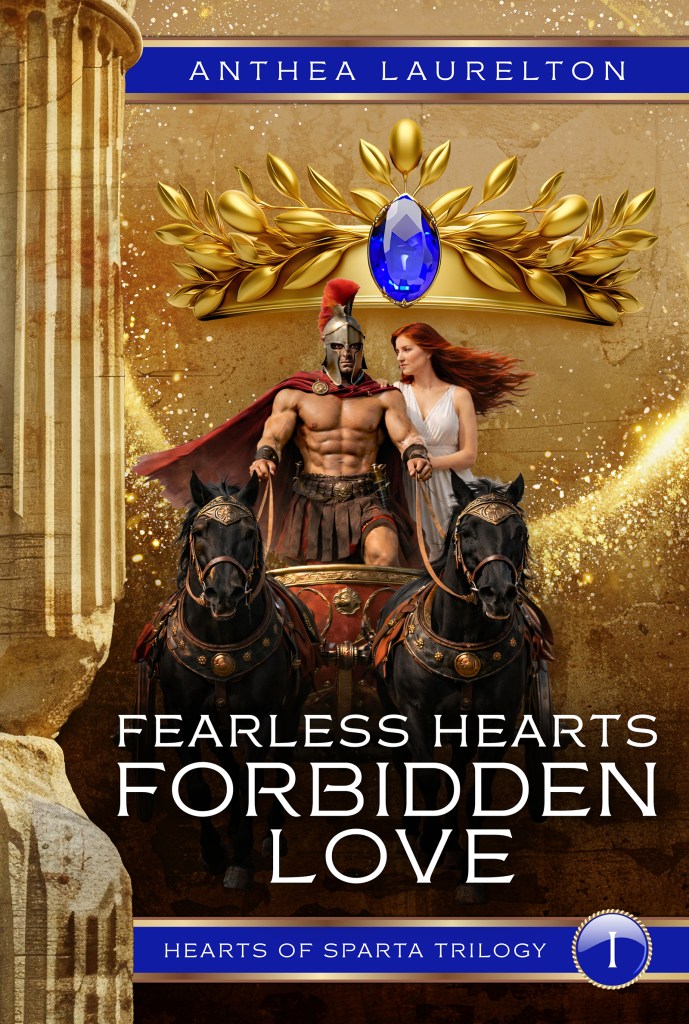
I’m welcoming Anthea Laurelton and Fearless Hearts Forbidden Love to the blog #HistoricalRomance #SpartanRomance #HistoricalFantasy #HeartsOfSparta #FearlessHeartsForbiddenLove #BlogTour #TheCoffeePotBookClub
I’m welcoming Anthea Laurelton and Fearless Hearts Forbidden Love to the blog #HistoricalRomance
Here’s the blurb
To save her city, she must risk her life.
To fulfil his oath, he must harden his heart.
Together, they stand to lose everything.
Spartan warrior, Diokles, has waited years for the opportunity to right a failure that torments his heart and integrity. Sent to hunt down a threat to Sparta, this campaign may be his final chance to restore his honour and uncover the traitor whose actions blighted his life. Success is at his fingertips, but when duty forces him to take an unwilling accomplice, his plans are challenged in ways he never foresaw.
Leandra, high priestess of Apollysis, stands at the edge of revelation and ruin. Haunted by fragments of a forgotten past, she alone can uncover the truth that will save her city. To do so, she must wear the fabled Coronet of Apollo, a sacred act that could cost her life.
Bound together by necessity and desire, captor and captive race into danger the closer they draw to the shrine of Apollo. With a relentless enemy closing in, one who seeks Diokles dead and Leandra for himself, their growing passion becomes both their greatest strength and their most perilous weakness.
In a time where prophecy, honour, and blood rule, love was never part of the plan.
An epic historical adventure romance of bravery, betrayal, and forbidden desire.
Fully edited, revised version of ‘SpartanQuest – Salvation’ with extra scenes.
Triggers: Love scenes on the page – Romance heat level 3. Some battle scenes.
Anthea Laurelton writes sweeping romances inspired by Ancient Sparta and Greek mythology. Her stories combine historical elements, forbidden love, dangerous quests and emotionally complex heroines for readers of mythological and historical fantasy.
A fan of sword and sandal movies, her plots blend slow-burn romance, dangerous quests, warrior culture and family intrigue for readers who crave epic adventures. Falling in love with Greek mythology at the age of thirteen, her love of the Spartans especially, came after reading Roger Lancelyn Green’s THE TALE OF TROY where she cheered on Menelaus to take his queen back!
She left a career in IT to pursue her passion for storytelling and pander to an extremely spoilt German Shepherd whom she refers to as ‘The Muse’.
A former equestrian, Anthea enjoys keeping active and has a bucket list of travel destinations waiting to be fulfilled.
I’m welcoming G.G. MacLeod to the blog with VIA MALORUM #AncientRome #Agrippina #Messalina #DarkRomantasy #PsychThriller #Giallo #BlogTour #ReaderReach #TheCoffeePotBookClub #YardeBookPromotions @GGMacLeod1 @cathiedunn @maryanneyarde @ggmacleod1 @thecoffeepotbookclub @yardereviews
I’m welcoming G.G. MacLeod to the blog with VIA MALORUM #AncientRome #Agrippina #Messalina #DarkRomantasy #PsychThriller #Giallo #BlogTour #ReaderReach #TheCoffeePotBookClub #YardeBookPromotions
Here’s the blurb
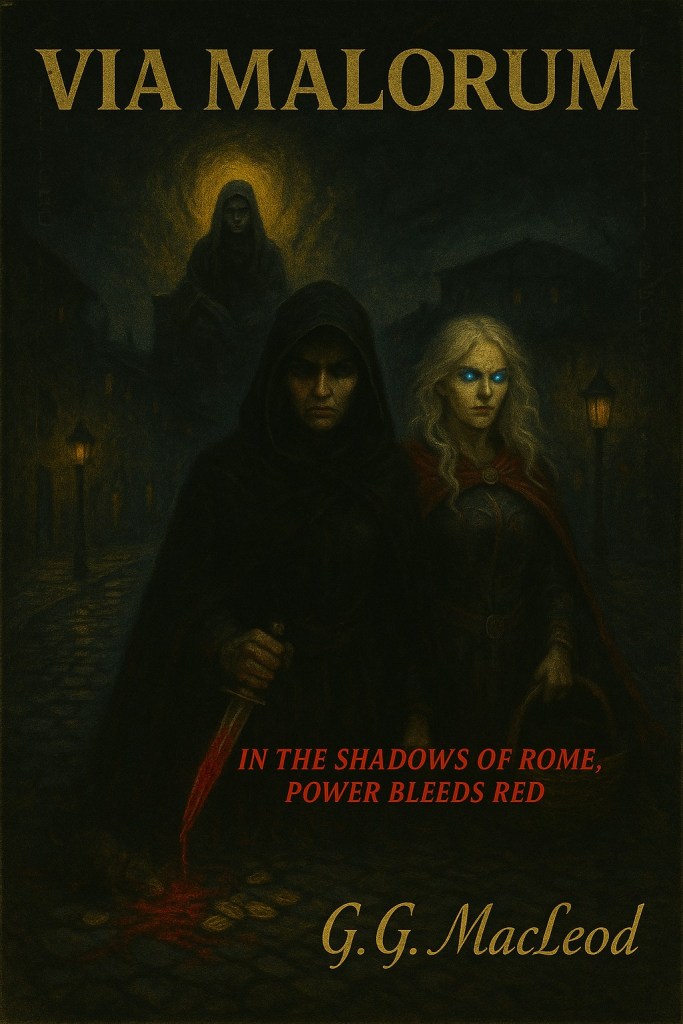
In the shadows of Rome power bleeds red.
In the shadowed streets of ancient Rome, 37 CE, power is a blade that cuts both ways. Agrippina, a towering enigma of ambition, slips from Caligula’s gilded cage with her newborn son, Domitius, her mind a labyrinth of cold calculation. At her side prowls Messalina, a siren in scarlet, her seductive cunning as deadly as her blade. Together, they navigate a city teeming with decadence and deceit, pursued by whispers of treachery and the emperor’s wrath.
Their journey leads to the Temple of Fortuna where the enigmatic Prophet Cassandra unveils a cryptic fate – one that demands sacrifice and promises blood. As alleys echo with violence and forbidden passions ignite, Agrippina’s quest for dominion collides with Messalina’s ruthless desires. In a night where every step drips with danger, who will rise and who will fall?
VIA MALORUM is a visceral plunge into the heart of Roman darkness, blending historical intrigue with the chilling allure of giallo. Prepare for a tale where power bleeds red, and trust is a luxury none can afford.
Any Triggers: Some rough lesbian sex, moderate violence.
The author is a 59-year-old Canadian male based in Calgary. The author has always had a tendency of combining genres like horror and action along with drama, psychological thrillers, giallo, and sometimes even comedy.
It really depends on how the author feels from moment to moment as they write because the author likes to entertain themselves first and then hope that a smattering of other people out there in the world will like it as well.