Author of Saxon historical fiction and non-fiction, 20th-century historical mysteries, and Norse-inspired historical romantasy. Book reviewer and blog host.
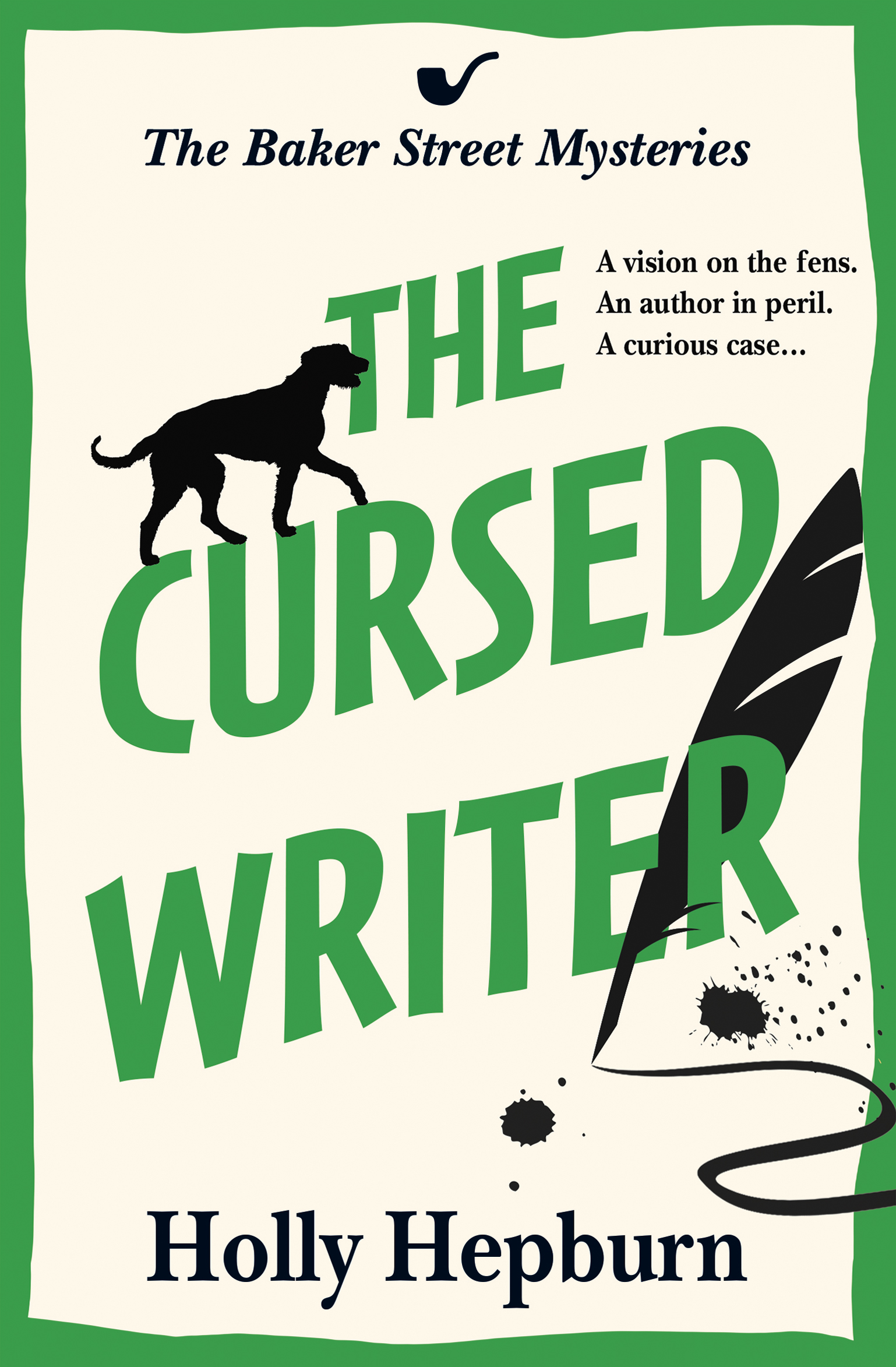
Harriet White is no stranger to odd correspondence. Ensconced in the basement of the Baker Street building society, her job is to reply to the mail they receive on behalf of Sherlock Holmes.
But while letters to the fictional sleuth may be plentiful, telegrams are rare, and so when she receives one describing the grave situation of celebrated author Philip St John, her interest is piqued. The writer describes St John as being consumed by terror, seeing ghostly apparitions on the fens, and only at ease in the company of his loyal wolfhound.
Before long, Harry finds herself in Cambridgeshire under the guise of being Holmes’ assistant. The residents of Thurmwell Manor believe their master is cursed. Harry is sure there must be a logical explanation, but inside the echoey halls of the grand gothic house, her confidence in science and reason begin to crumble…
Can Harry solve the mystery before the fens claim their next victim?
Join Harriet White in 1930’s London for another glorious Sherlock Holmes-inspired mystery, for fans of Nita Prose and Janice Hallett.
The Cursed Writer is the second book in the Baker Street Mysteries. I’ve read book 1. Check out the review for The Missing Maid.
Events start immediately after the end of book 1, with our detective Harry returning to her poky office after the thrilling ending to her first mystery. She could be forgiven for being a little glum when she finds herself typing the same reply to every message she receives, but never fear—an urgent telegram soon lifts her from her melancholy. It has her adopting her detecting hat once more.
This time, we’re taken to the Fens in Cambridgeshire to investigate a strange mystery surrounding the sudden change in author Philip St John’s demeanour. His nephew desperately seeks the aid of celebrated detective Sherlock Holmes at 221B Baker Street. So desperately, he’s prepared to spend the money to send a telegram and not just a letter. And not just one, but two! While Harry tries to determine how she can uncover more about the telegram without revealing that Holmes is, of course, a fictional character, she is also embroiled in a few other little mysteries, which, for some time, appear irrelevant but offer excellent continuity from book one until they become increasingly relevant.
Harry’s two trips to the Fens are very Holmesesque, providing us with an eerie atmosphere in the depths of winter, and it felt very true to form.
The mystery elements themselves are very well strung together, and while I might have guessed part of the solution, the eventual conclusion was even better than I could have hoped.
This was a thrilling continuation of the Baker Street Mysteries. I was entirely hooked and devoured the story in a few sittings.
Meet the author
Holly Hepburn writes escapist, swoonsome fiction that sweeps her readers into idyllic locations, from her native Cornwall to the windswept beauty of Orkney. She has turned her hand to cosy crime inspired by Sherlock Holmes himself. Holly lives in leafy Hertfordshire with her adorable partner in crime, Luna the Labrador.
Planning a wedding with the man you’re secretly in love with… what could go wrong?
Liv Holland has a secret: she’s been crushing on Arran Adebayo, her brother’s best friend, for years. They’re ‘just friends’ but she can’t help the butterflies in her stomach whenever she’s around him.
When they’re asked to help plan festivities for Liv’s brother’s wedding, Liv and Arran can no longer deny the sparks between them. But with both having their own chequered romantic history, risking everything for love could mean losing each other forever…
As the wedding bells ring, will Liv and Arran finally find their own happy ever after?
Zoe Allison lives in Scotland with her husband and two children, having been brought up in a mixed-race family in Yorkshire.
Growing up, Zoe enjoyed stories about falling in love. But rather than daydreaming of being rescued by a knight in shining armour, she imagined herself fighting dragons alongside him, battling supervillains as heroic allies, or teaming up to dive into perilous waters and save the day.
As an adult, Zoe became a doctor. However as time passed, she craved a creative outlet to counter the soul-sapping burnout that her career inflicted upon her, and also to achieve the happy endings that were so often lacking in the real world. She wanted to create heroines who represent her and her values, as well as heroes who truly love women—men who find their true loves inspiring, want to connect with them as soulmates, and fully open themselves to their partners on an emotional level. And so, Zoe began to write romance.
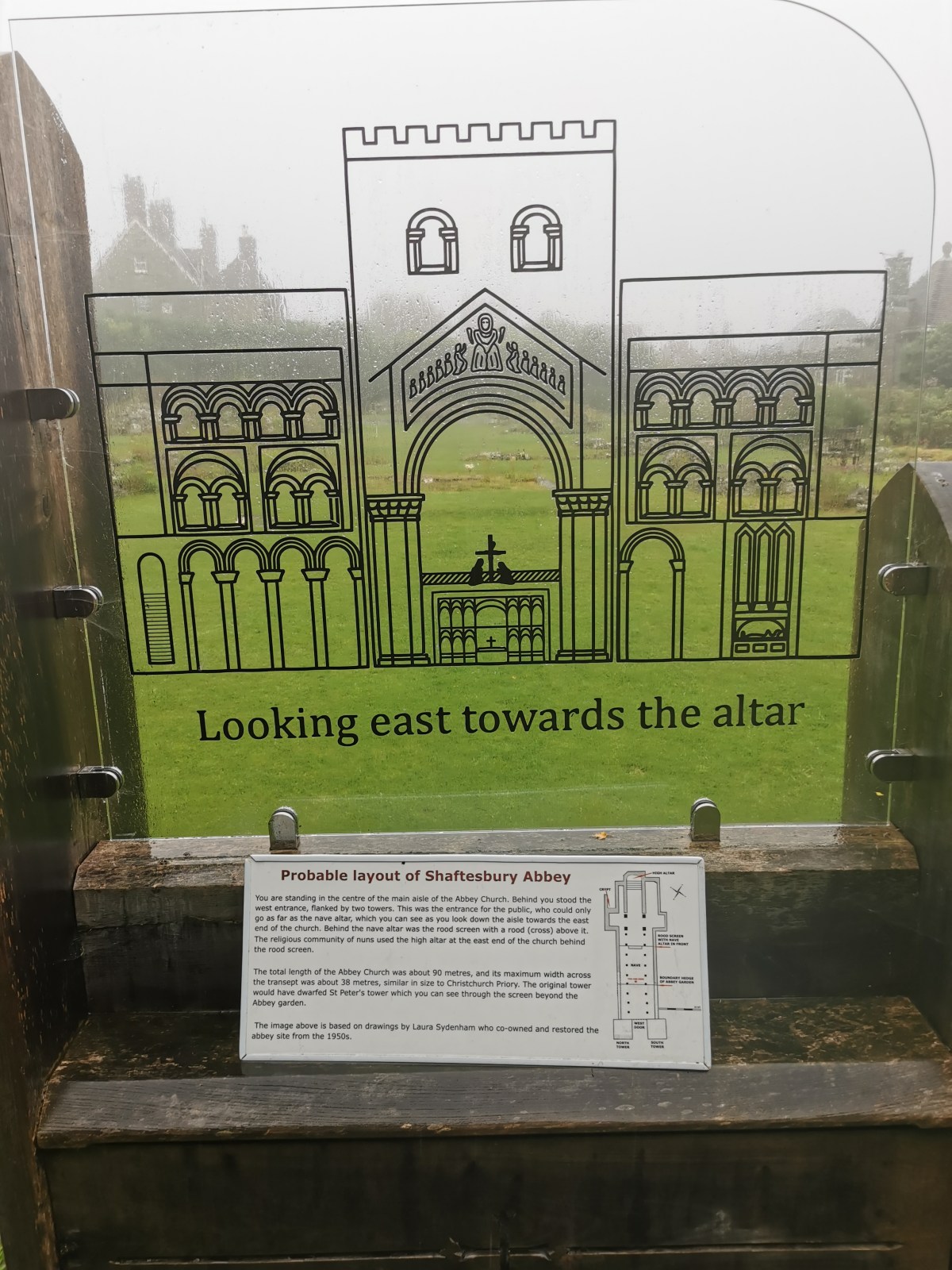
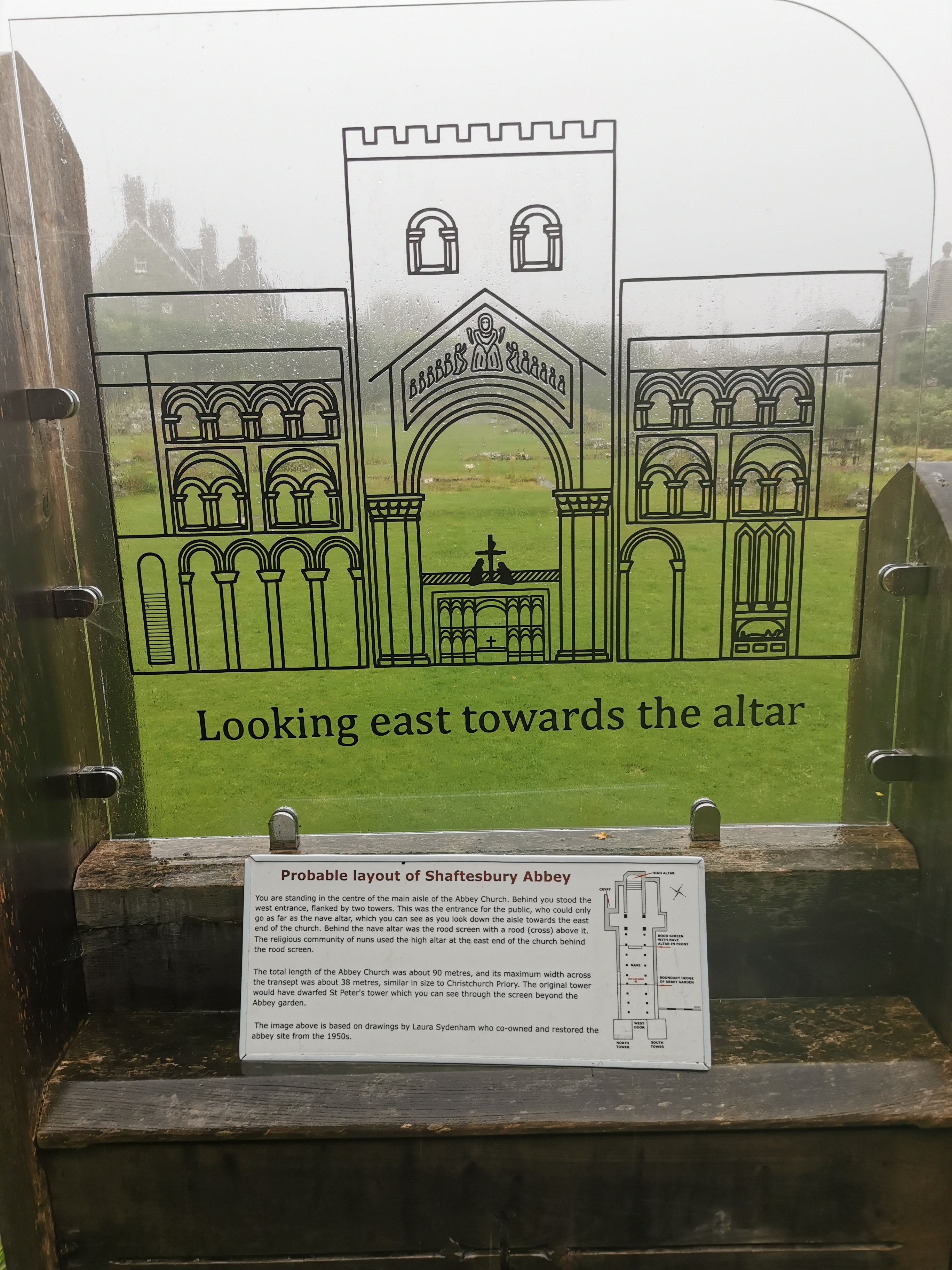
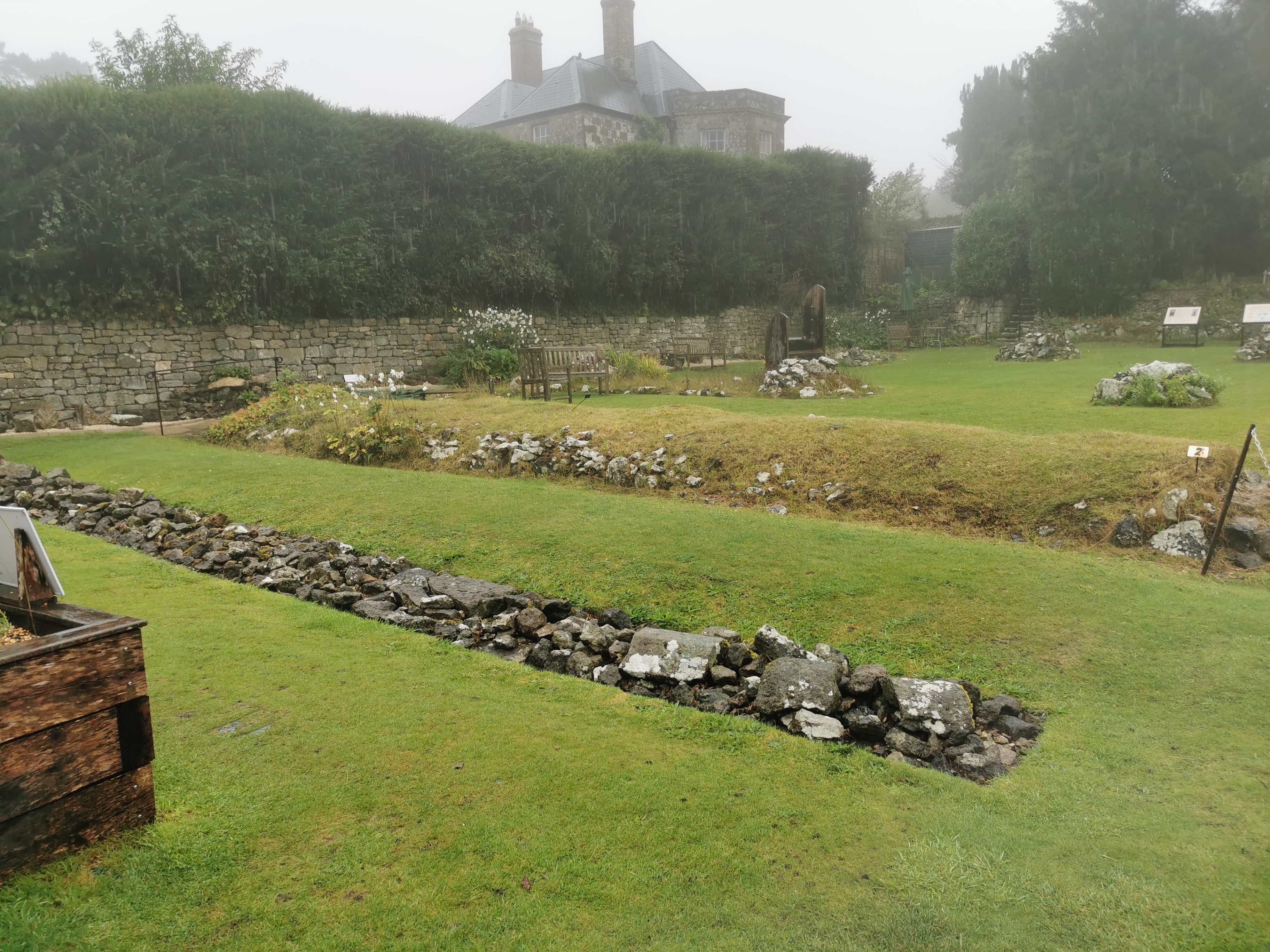
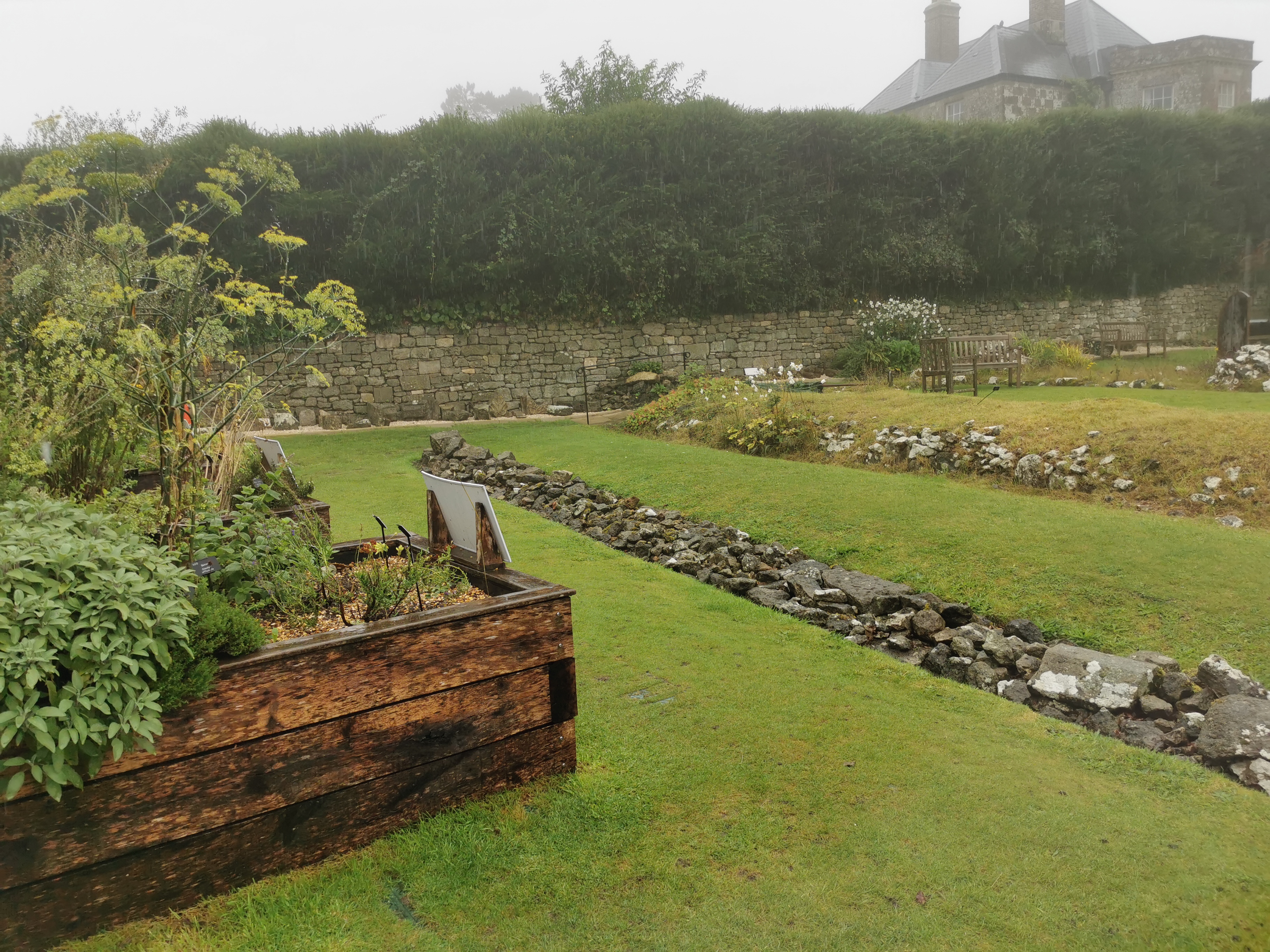
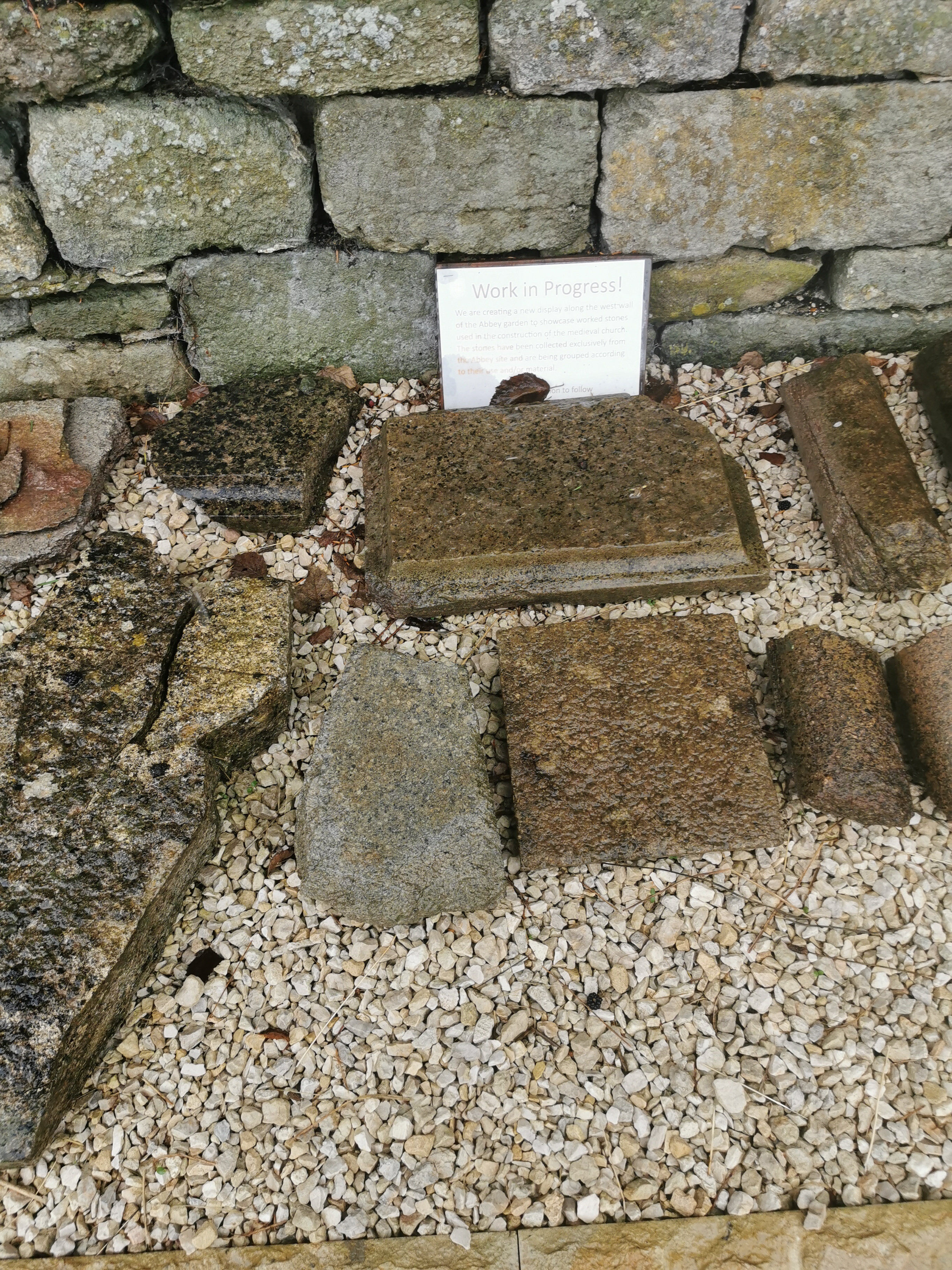
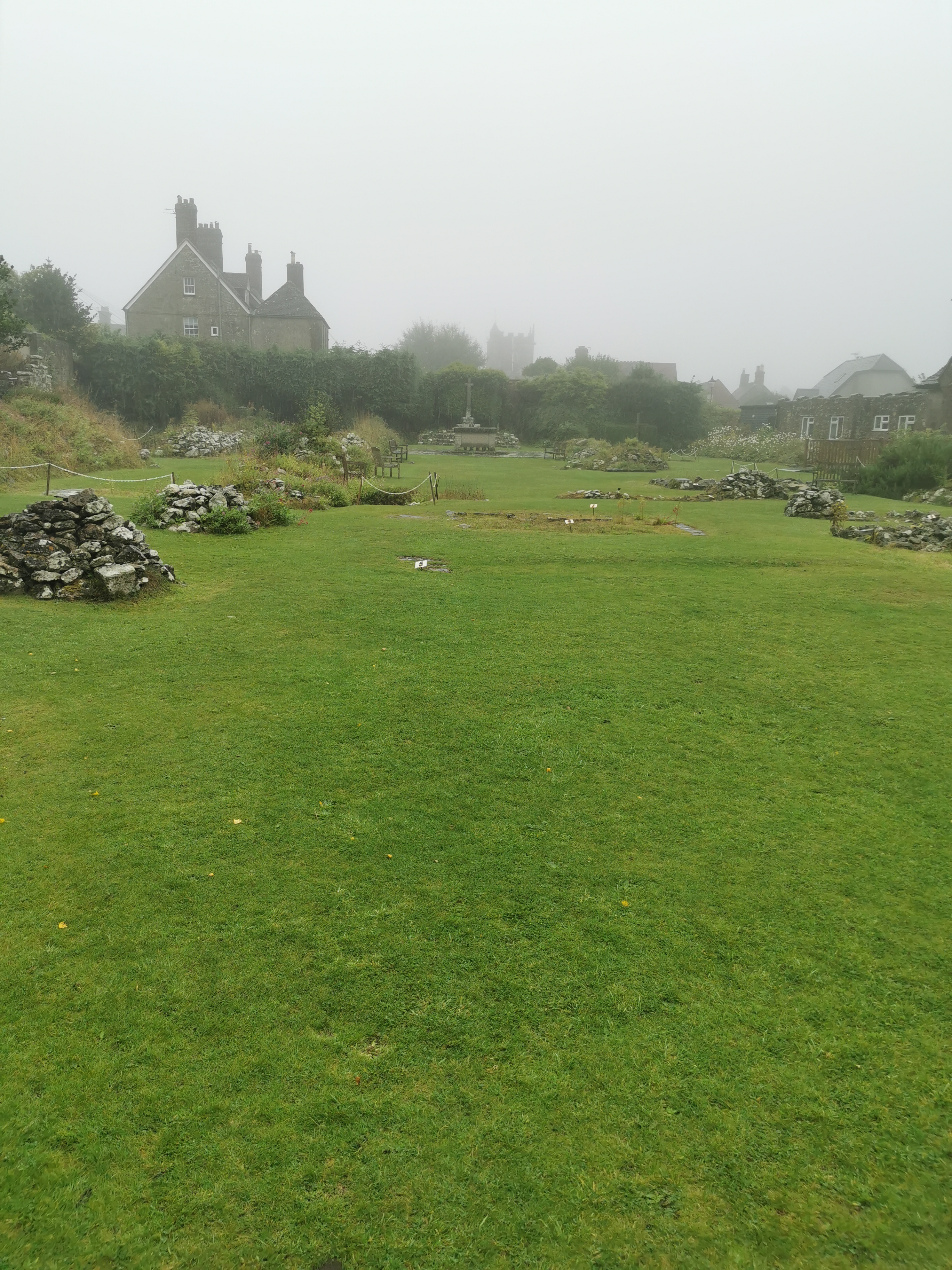
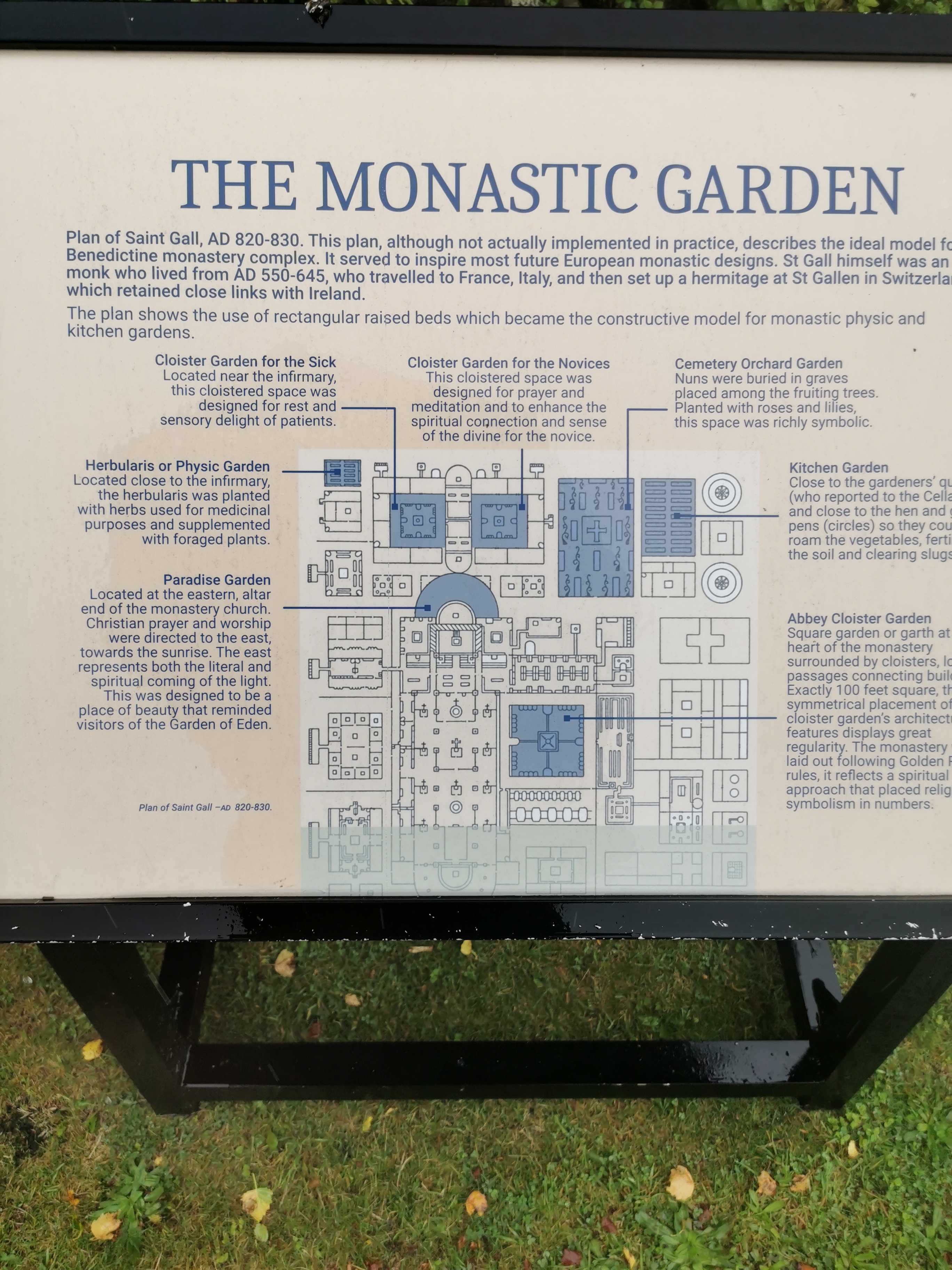
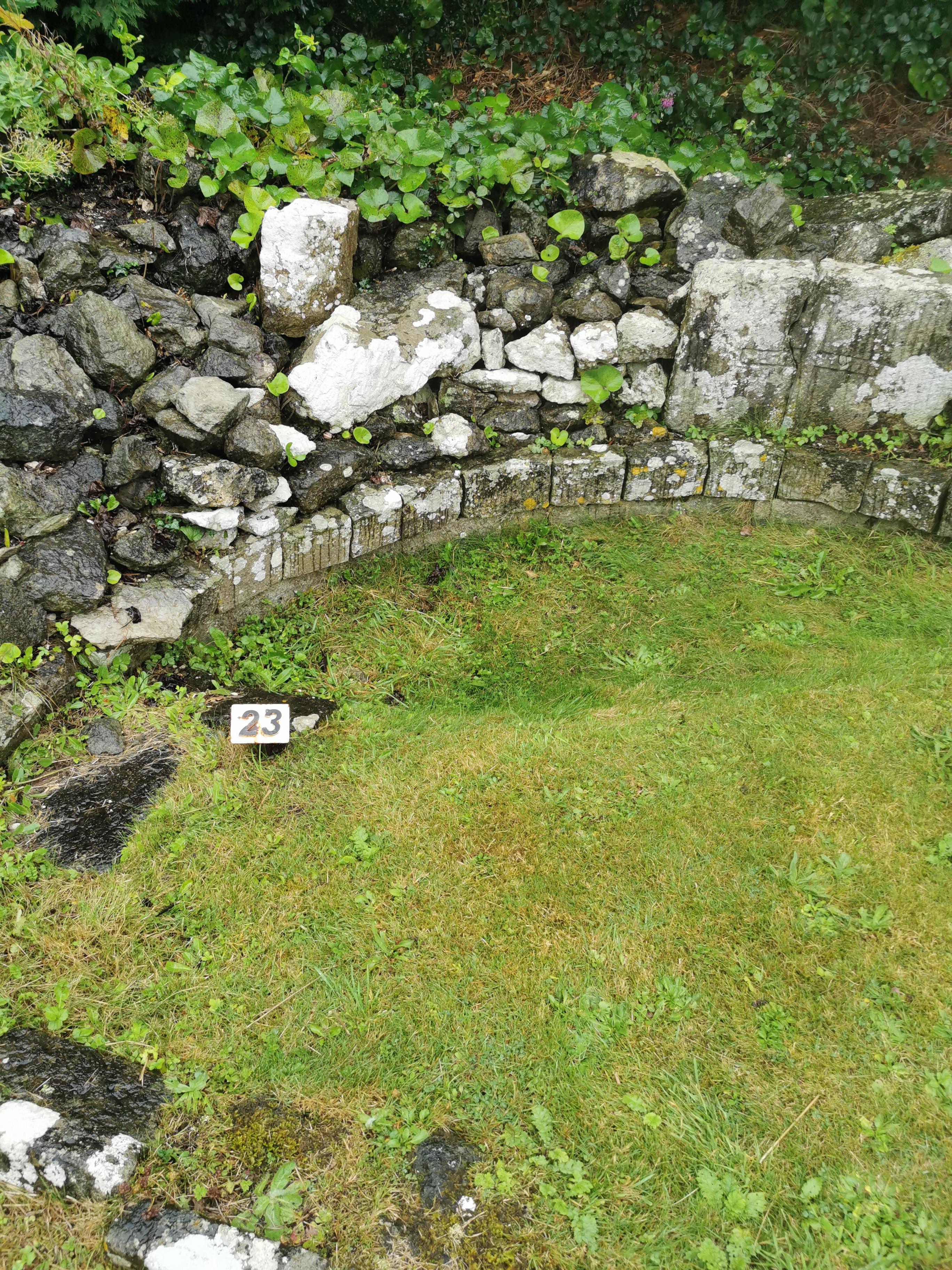
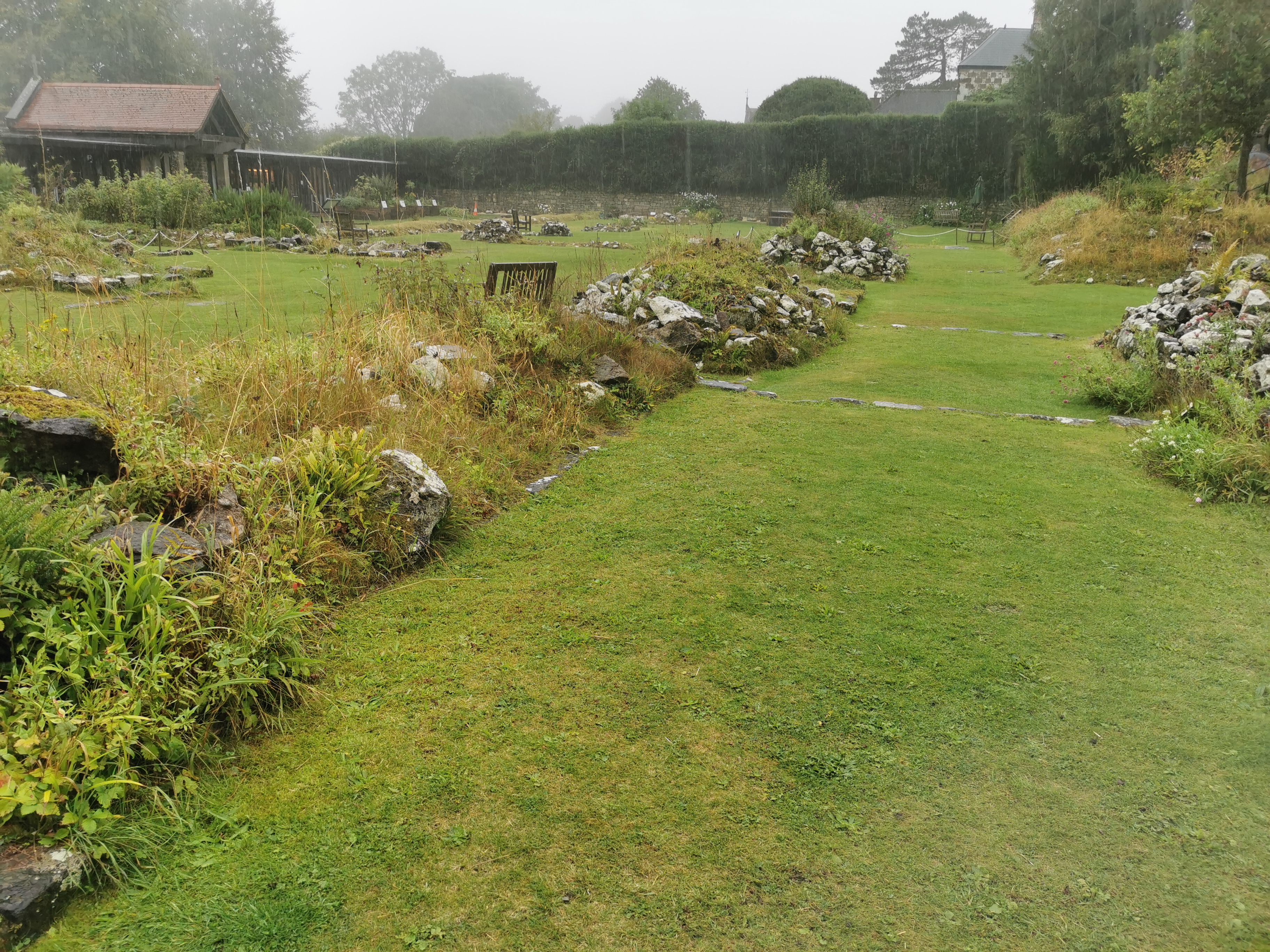
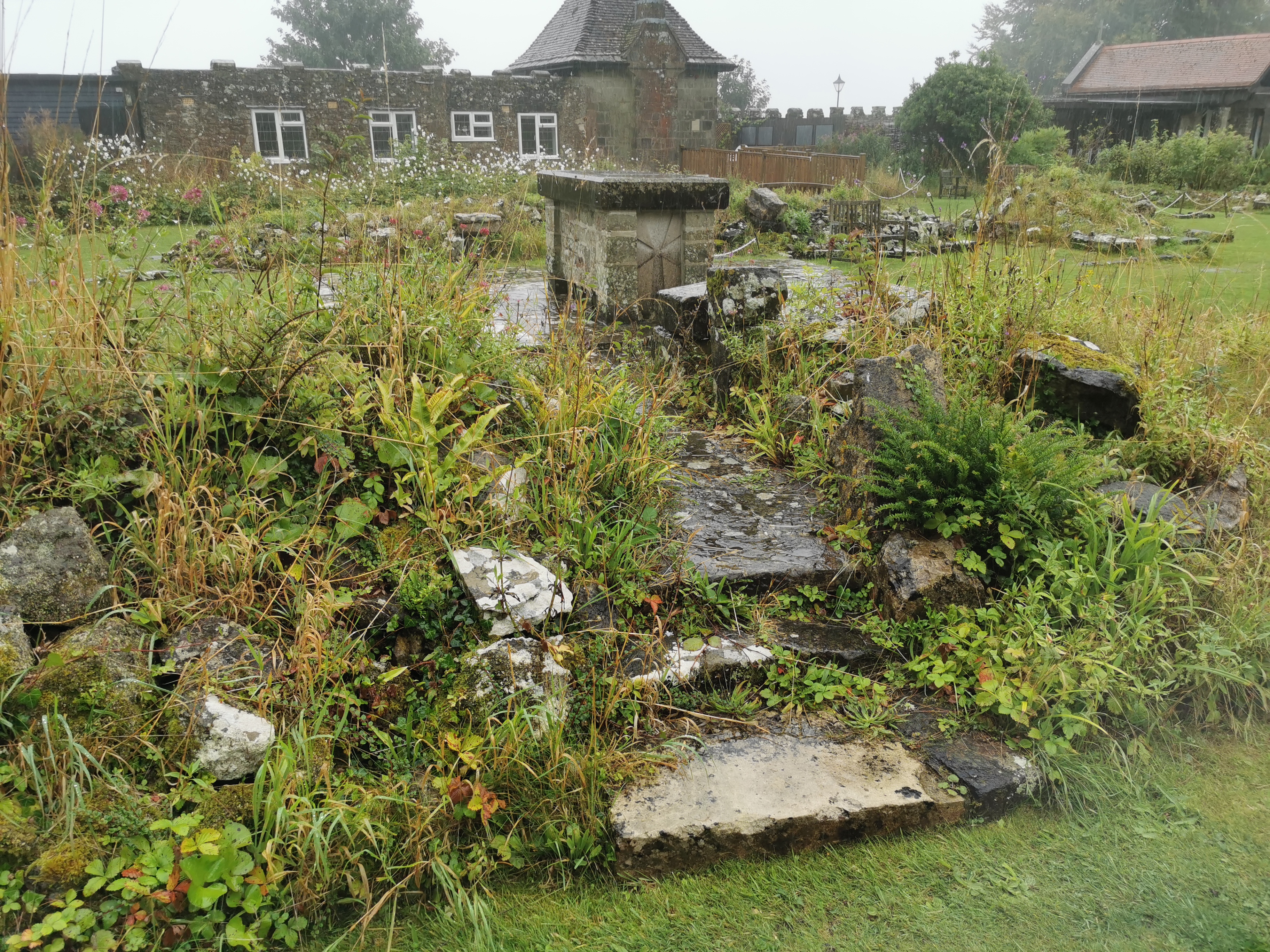
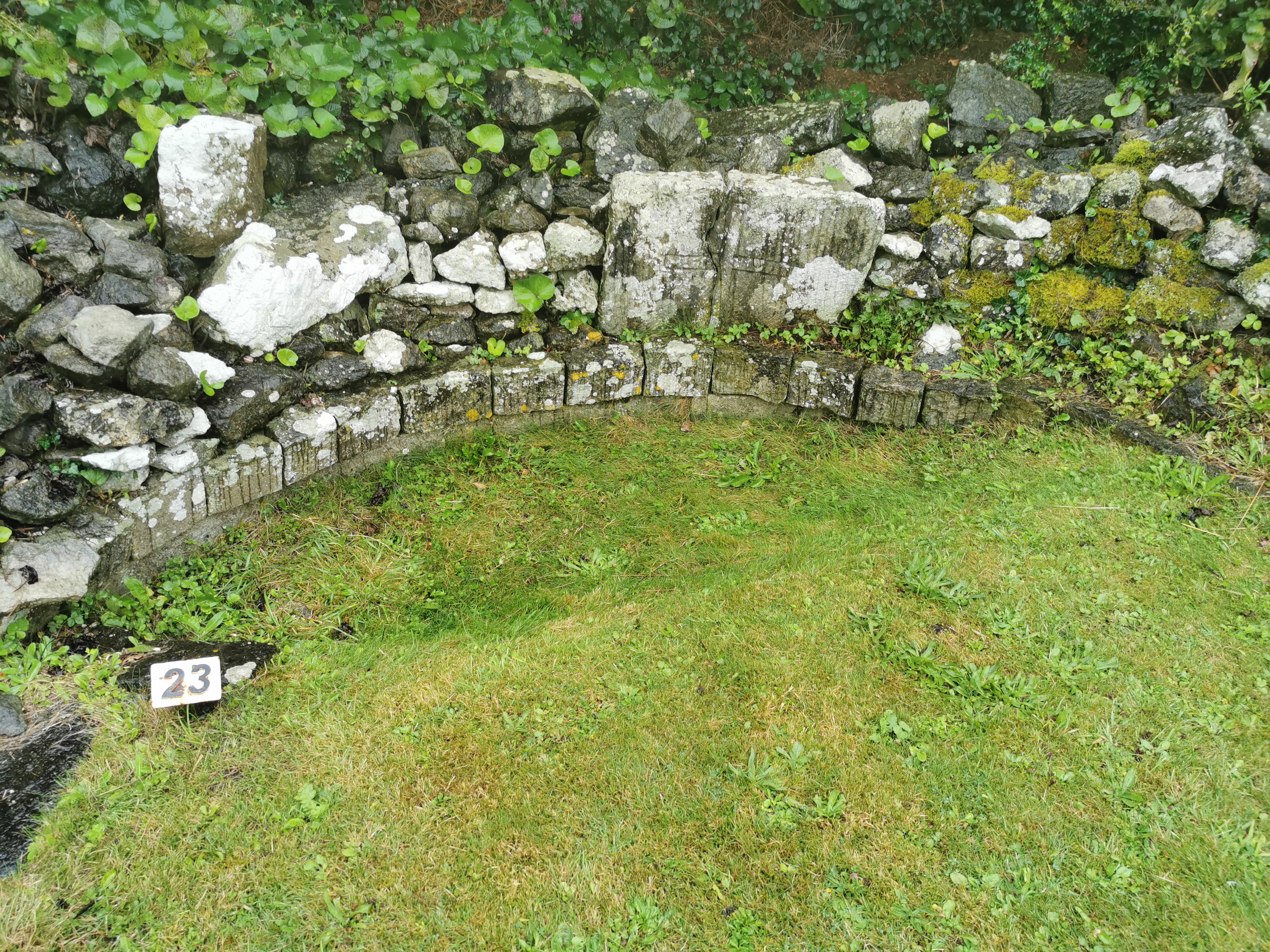
Shaftebury Abbey is a ruin, in private hands and run by a charity, and I was desperate to visit because it’s where King Alfred’s daughter, Æthelgifu, was an abbess, and where King Edmund’s first wife, Ælfgifu, was buried, (the mother of Eadwig and Eadgar/Edgar) and where the body of King Edward the Martyr was moved to after his murder (the oldest son of Eadgar/Edgar). You can read about these women in my The Royal Women Who Made England non-fiction title. And I’ve fictionalised many of them as well, especially Lady Elfrida, accused of murdering her stepston.
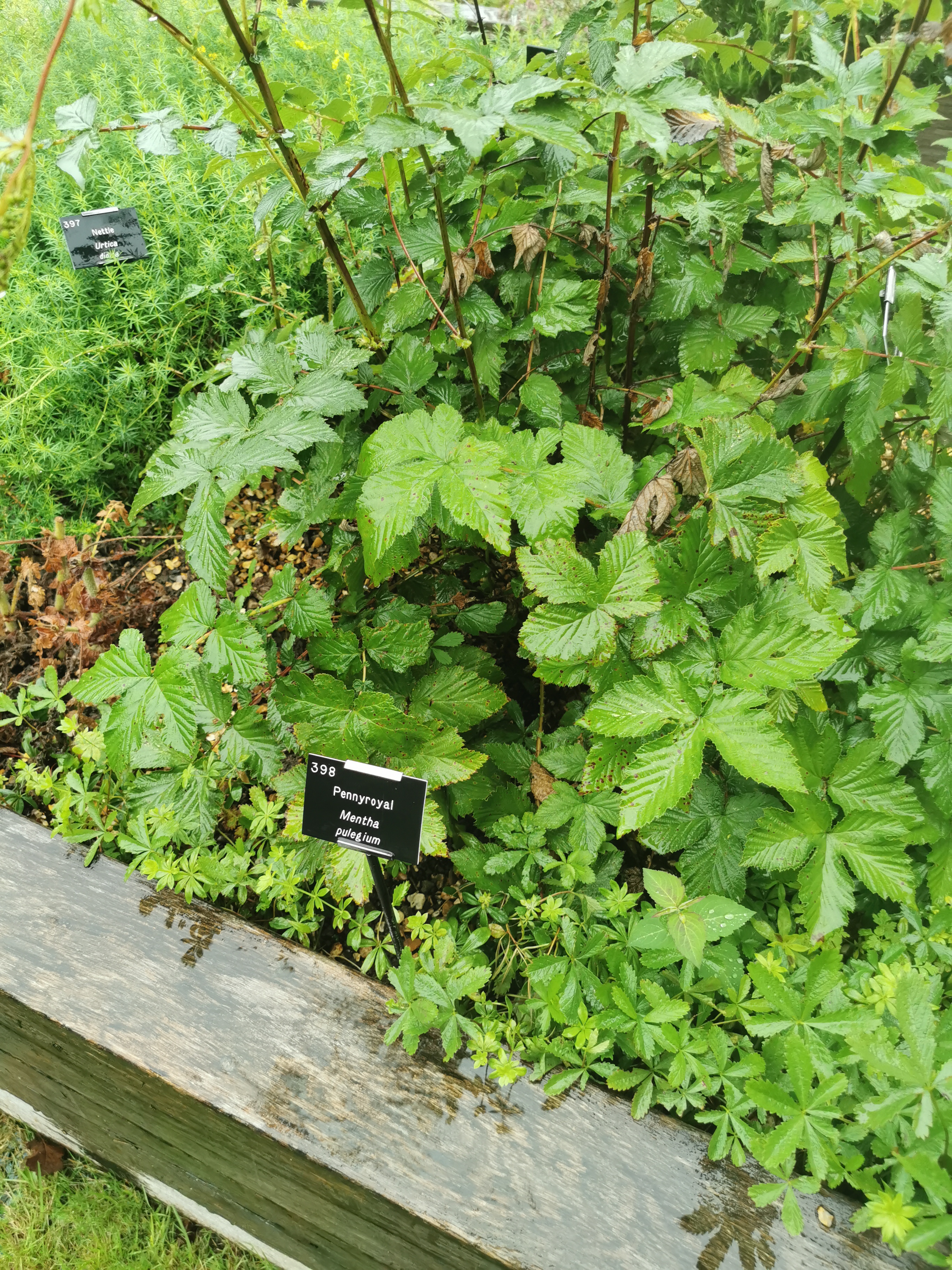
However, I was there on a day so biblically wet a few weeks ago, that sadly, they had to close (i.e. this is the first time I’ve been kicked out of a historical monument), but the volunteers were absolutely lovely and I’m grateful they let me look for as long as possible before making sure they got home safely on roads that were very, very wet. And, it made the whole experience very atmospheric. If you pop over to their website, there are fab images of it being sunny. https://www.shaftesburyabbey.org.uk I hope to be able to return on day when it’s not raining.
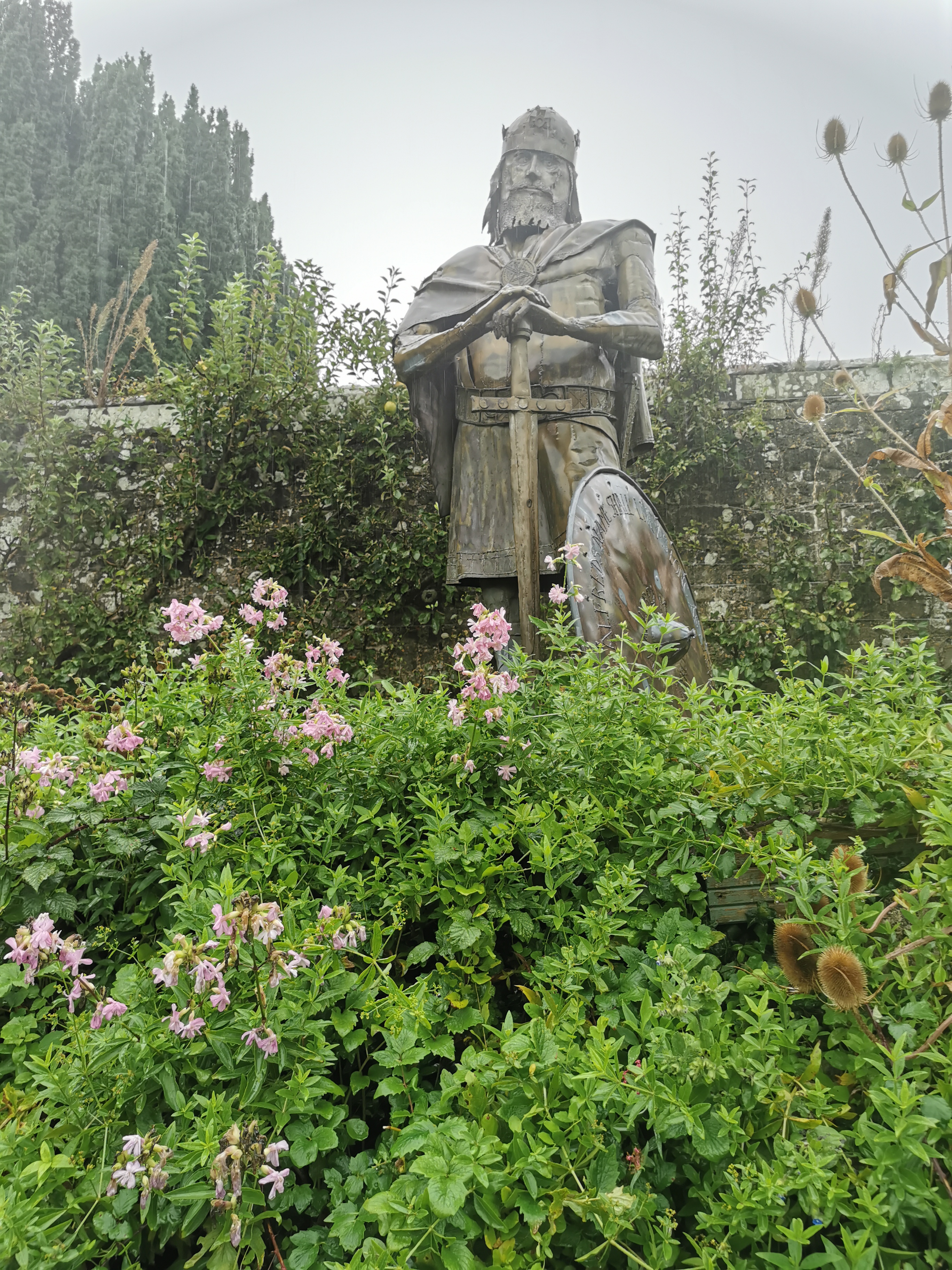
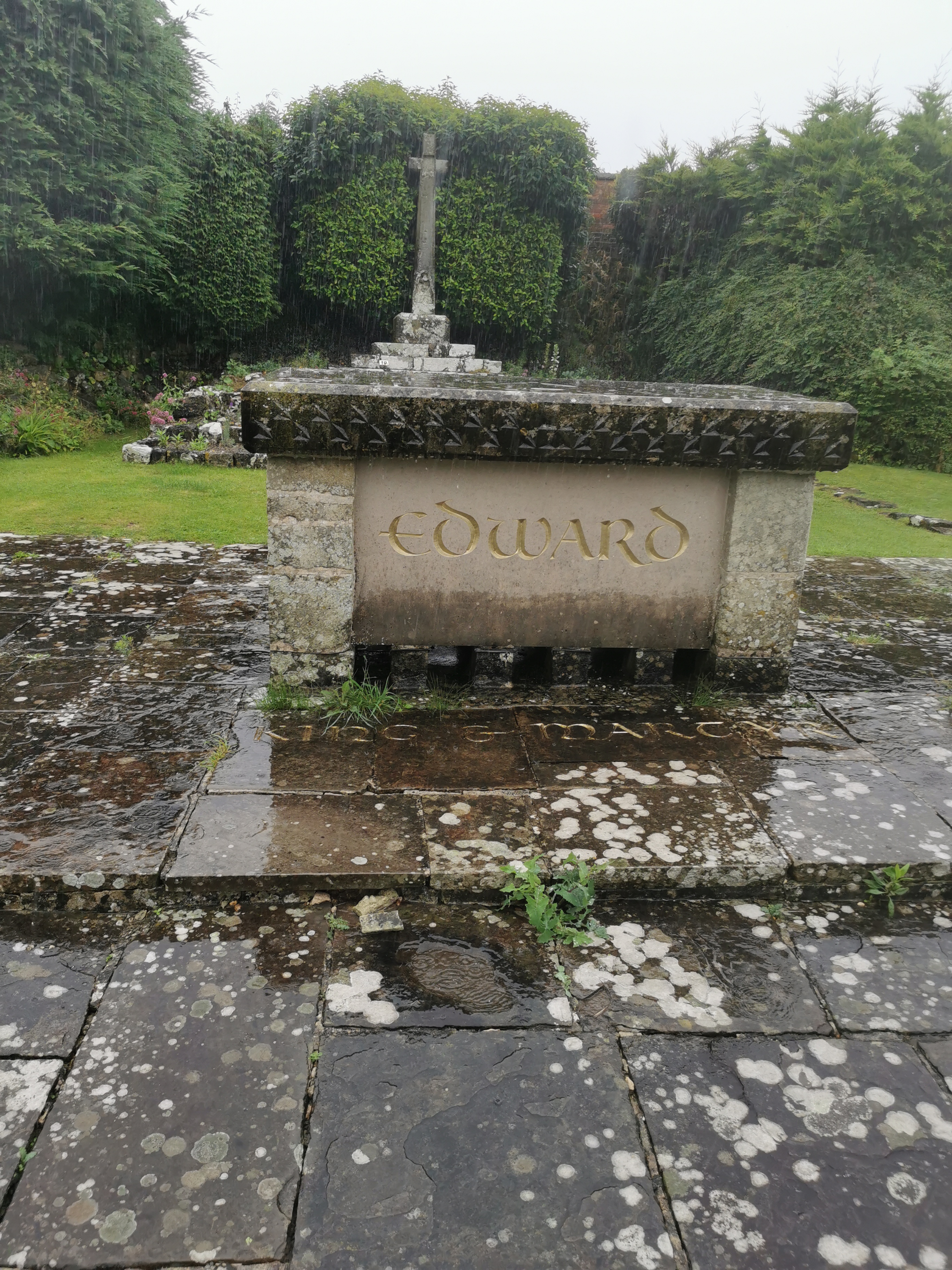
Taking photos of all the plants in the herbal gardenI was standing under my umbrella the whole timeA statue of King AlfredThe memorial for Edward the MartyrA side on view of Edward the Martyr’s memorial
The lettering by the monument to Edward the Martyr
From memory, this is where it’s believed Edward the Martyr was originally buried when the abbey was in use
Setting for The Custard Corpses, my first foray into historical mysteries
The Custard Corpses is set during the 1920s, 1930s and 1940s. I wanted to make the book as authentic as possible, even though I’m not a historian of that time period. When I was first studying history at school, I always found it strange to think of it as history as I had grandparents who had lived through the 1920s, 1930s and 1940s (my old granny was born in 1901, my mother’s parents in 1920 and my father’s parents in 1926 and 1928). That’s probably why I’ve never written about the period before.
Getting the names right
I wanted to ensure I was using names and places that existed at the time, and I didn’t want to inadvertently make any silly mistakes – a few beta readers pointed out I was using metric measurements, when they should have been imperial in the 1940s. They thought it was sweet that I’d never known the world of imperial numbers (and money).
Maps and train routes
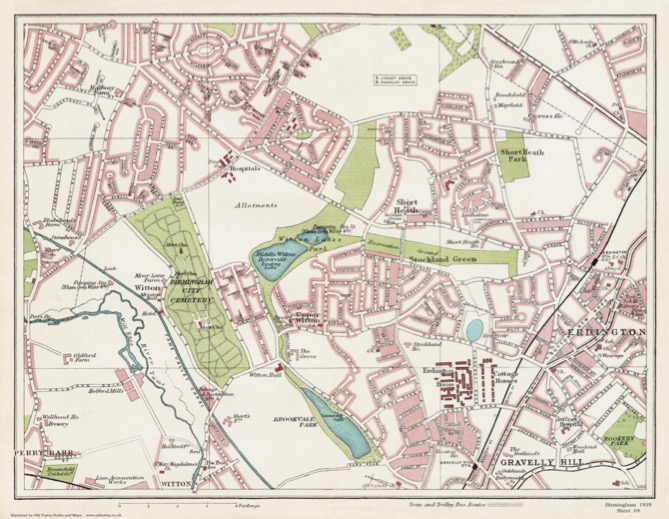
So, I spent quite a bit of time hunting down random facts; maps of the time period, tram and train routes (which you can find online, but I had some old maps), pictures of cars, police uniforms at the time, advertisements of the time and also editions of the Picture Post magazine. At one point, I wanted a celebrity scandal, and there it was, on the cover of a magazine.
Map of Erdington from the era
Newspaper Archives
I was amazed by the information that I could find by accessing archives ( and also that which I couldn’t find), and I was especially impressed by the ‘history’ section on the Birmingham.gov website, and by those local newspapers that have archives available online – such as the Inverness newspaper and the Birmingham Mail. There’s also a whole aerial photo website that I could have used, but I couldn’t quite work it out.
Family memories
I was also lucky in that I set the book somewhere I have childhood memories of, and also that a family member spent their early years in Erdington. It was funny to realise the parts that they especially remembered – such as the fact that some of the buses were still open-topped at the time, and the liveries that buses were decorated with. The Birmingham that I remember is very different to the one that exists now, and the one that existed in the 1940s. My memories of Birmingham consist of the dodgy car park we used, the train journey we used to take in the old carriages with individual doors (they were old in my day) and shopping for jeans.
I also made some use of the 1911 census records, and the Office for National Statistics spreadsheet which lists all the most popular names in decades. It made it easy to devise names for the characters. It also helped that while the 1940s is ‘history’ it’s much more relatable to me than the period before 1066, when I usually set my stories, so provided I didn’t use the internet in the story itself (and only as a research tool), or refer to cms, it was just about authentic, I hope. And did allow for the use of cars and telephones.
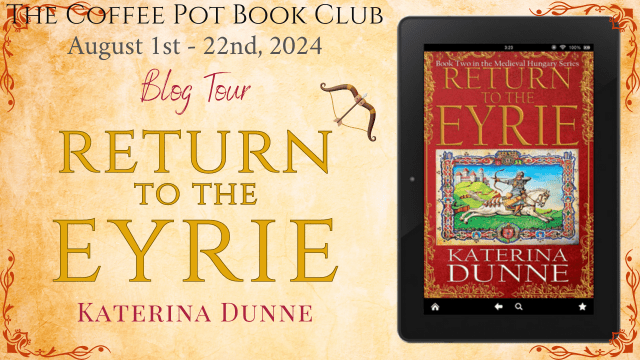
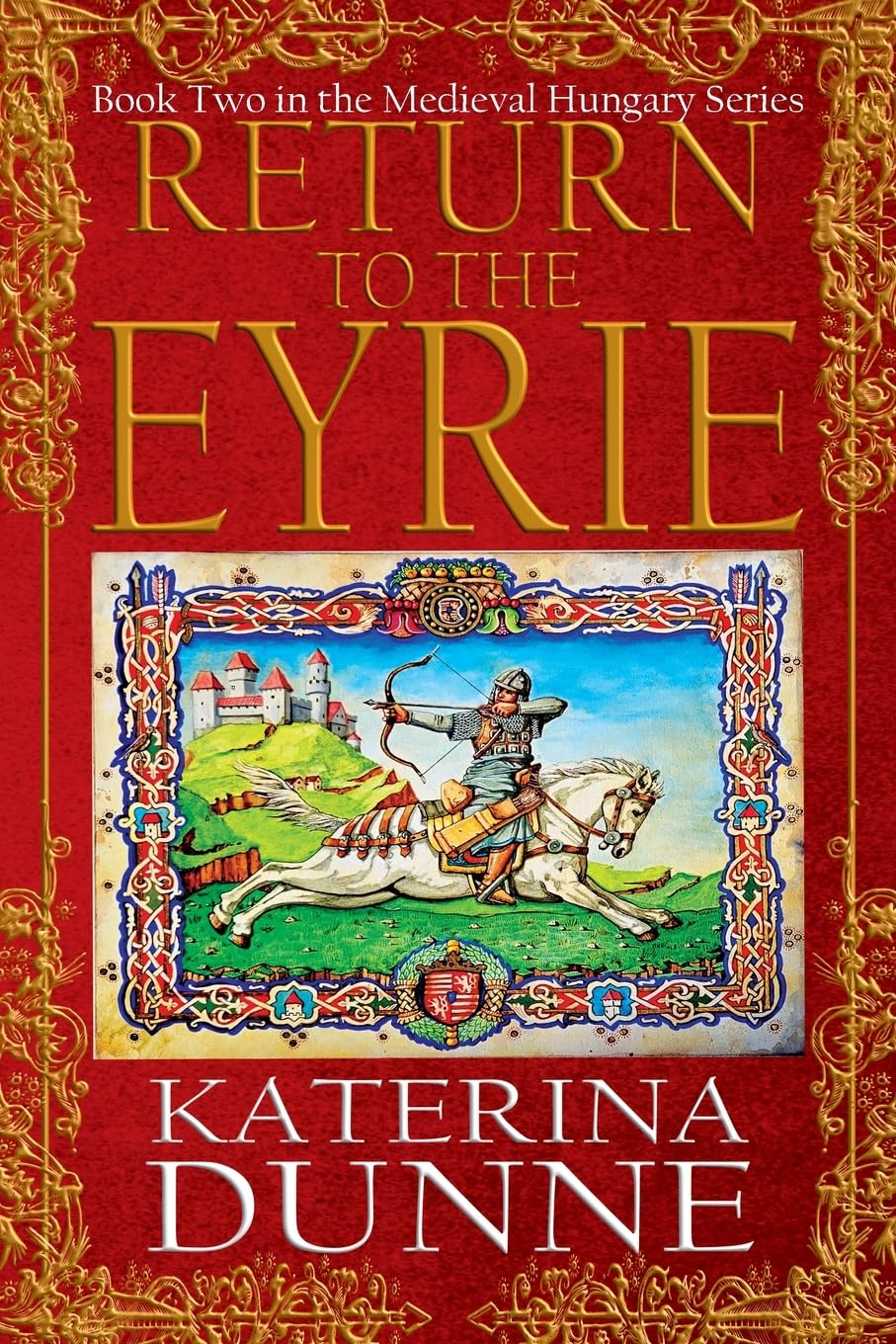
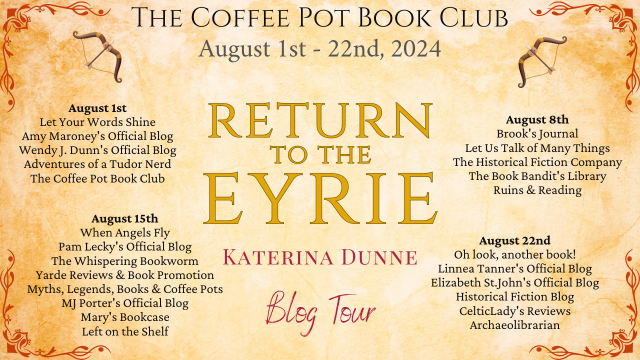
I’m delighted to welcome Katerina Dunne and her new book, Return to the Eyrie from the Medieval Hungary series to the blog with The Siege of Szabács (1476).
The Siege of Szabács (1476)
During his long reign (1458-1490), King Mátyás of Hungary faced the Ottoman army many times. Although the King kept a rather defensive stance against Sultan Mehmed’s advances towards Central Europe, he did his best to ensure the border raids perpetrated by the Ottomans remained localised. Mátyás focused on expanding his kingdom to the west and north; but when circumstances demanded it, he fought the Ottomans successfully.
Several chapters of Return to the Eyrie are dedicated to the siege of Szabács (Jan-Feb 1476) It is where the young heroine, Margit, receives her baptism of fire as a soldier. Dressed in a man’s clothes, she puts her archery and fighting skills to the test.
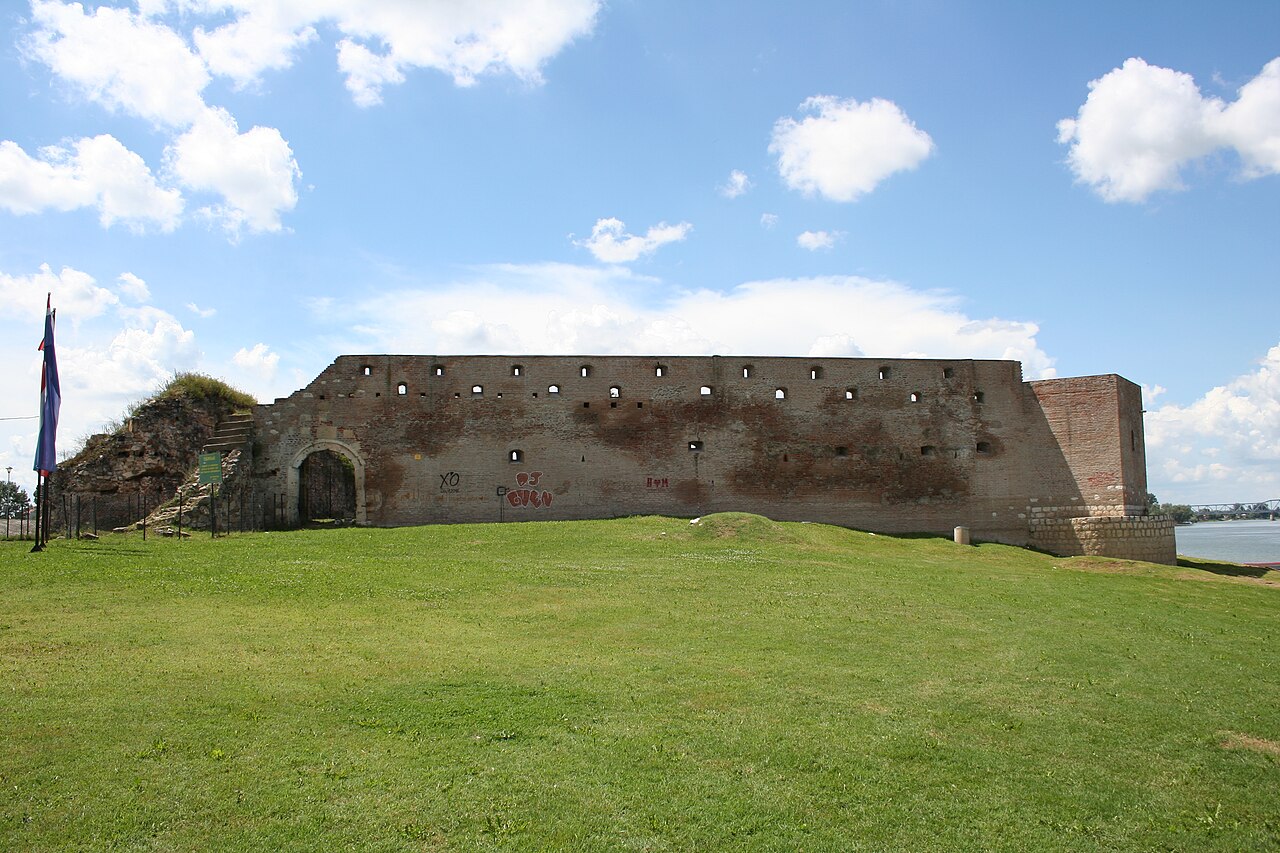
The fortress of Szabács (Šabac in Serbian) was a stronghold on the southern bank of the river Sava. It was built in 1470 by the Ottomans, who had occupied the area since 1459 and used the fortress as a base to launch raids into the territories of the Kingdom of Hungary (mainly Croatia, Slavonia and the Hungarian-occupied area around Belgrade)
According to sources of the time, the fortress was constructed of wood and rammed earth and was surrounded by marshes as well as man-made ditches. This whole arrangement was quite effective against bombardment.
The remains of the Šabac / Szabács fortress photo by Ванилица from Wikipedia
After fighting against his Christian neighbours for many years, King Mátyás wished to pacify public opinion in Hungary and abroad and present himself as a “defender of the faith”. During 1475, he had already established a huge army of Hungarian, Transylvanian, Wallachian and mercenary forces, including artillery and siege equipment as well as river galleys and gunboats.
It is not exactly certain whether his plan at the time was to go to the aid of the Moldavian and Wallachian princes, whose territories were threatened by an Ottoman invasion, or capture the main Ottoman fortresses in Serbia in order to stop the enemy attacks against his own kingdom. In any case, he ended up besieging Szabács in January and February 1476 from land and river with a force that severely outnumbered the Ottoman defenders and discouraged any relief army to approach the fortress.
The earthen walls of Szabács withstood the long-range bombardment during the first part of the siege while the Ottoman arrows and firearms prevented any assault from the land. But when the waters in the ditches rose in the first days of February, the war galleys were able to approach from the river and intensify the damage to the walls. This, together with bombardment and assaults from the land, broke the Ottoman resistance, and the defenders surrendered on 15 February 1476.
In his chronicle, Antonio Bonfini wrote that Mátyás took the fortress by employing a ruse: he feigned retreat while a part of his army hid in a neaby forest. When the Ottomans thought the danger had passed and relaxed their guard, the hidden soldiers climbed the walls and took Szabács. Although this story has great dramatic effect (which I partly use in my novel), it was probably only a myth.
Another primary source of the time, the anonymous poem Szabács Viadala (The Fight for Szabács), presents a more plausible version of how the fortress was taken. In the poem, an Ottoman soldier, who still remembered his Hungarian origin, fled and revealed the weak points of the fortifications to Mátyás. The bombardment then concentrated on these areas until the fotress fell.
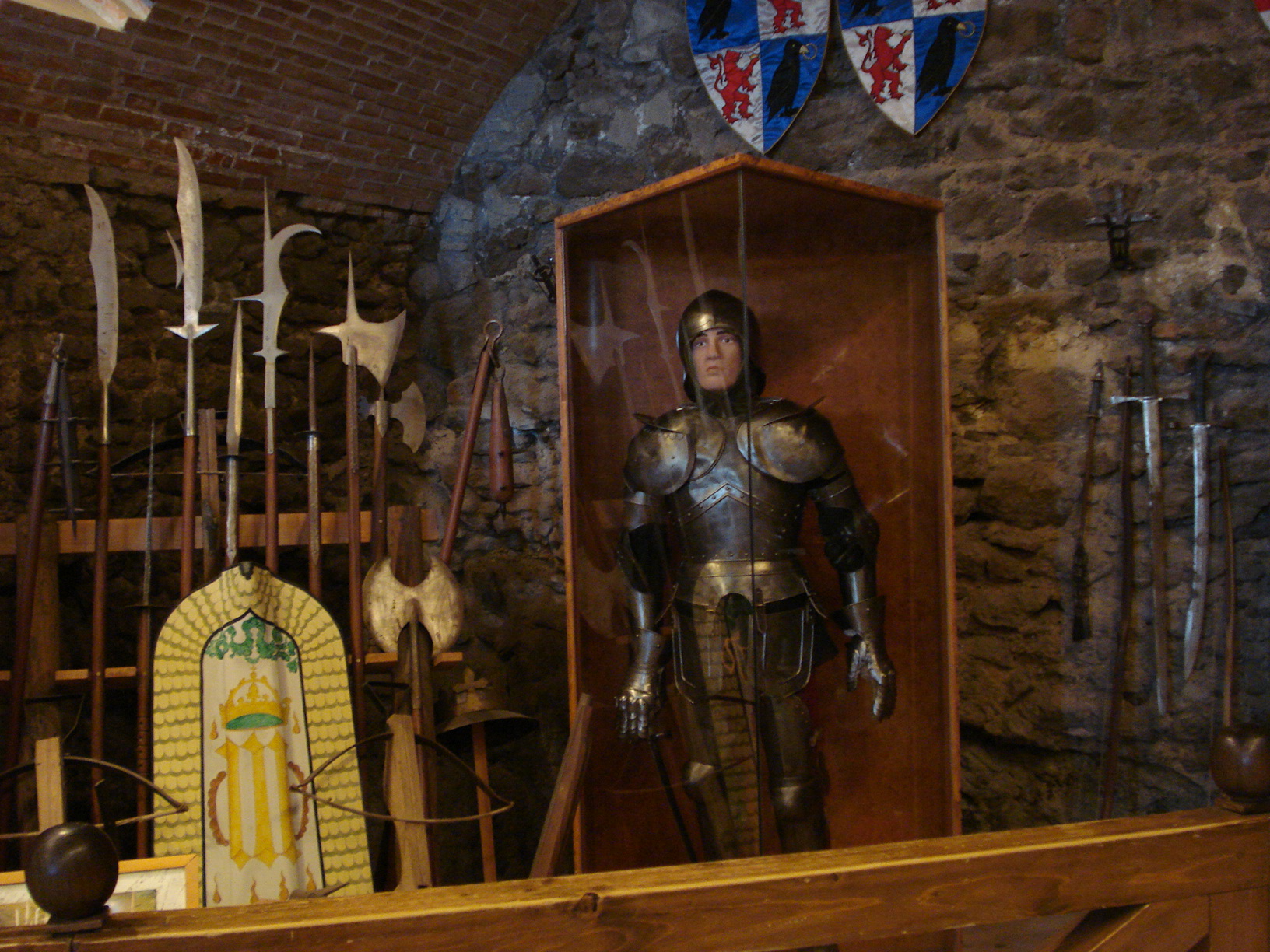
Armour and weapons of King Mátyás’soldiers at the Visegrád citadel museum (my photo)
Whatever the real reason for the capture of Szabács was, historian Tamás Pálosfalvi suggests that its significance rests on the King’s original intentions at the time. If Mátyás had intended to assist Moldavia and Wallachia but was forced to change his plans due to the adverse weather or the failure of the Ottomans to attack Wallachia at the time, then the victory at Szabács can be considered a success. If, however, Szabács was his main aim, then the whole operation only served to convince public opinion in Hungary and abroad of the King’s commitment to defending Christendom against the Ottoman danger.
Works Consulted:
Antonio Bonfini: A Magyar Történelem Tizedei (Rerum Hungaricarum Decades), Hungarian trans. P. Kulcsár (Budapest, 1995)
Szabács Viadala (The Fight for Szabács)—a poem commemorating the siege and capture of Szabács (author anonymous; date unknown but possibly around the time of the siege in 1476)
Armour and weapons of King Mátyás’soldiers at the Visegrád citadel museum (my photo)
Blurb
Honour, revenge, and the quest for justice.
Belgrade, Kingdom of Hungary, 1470:
Raised in exile, adolescent noblewoman Margit Szilágyi dreams of returning to her homeland of Transylvania to avenge her father’s murder and reclaim her stolen legacy. To achieve this, she must break the constraints of her gender and social status and secretly train in combat.
When the king offers her a chance at justice, she seizes it—even if it means disguising herself as a man to infiltrate the vultures’ nest that now occupies her ancestral ‘eyrie’.
Plagued by childhood trauma and torn between two passionate loves, Margit faces brutal battles, her murderous kin’s traps and inner demons on her quest for vengeance. Only by confronting the past can she reclaim her honour—if she can survive long enough to see it through.
Return to the Eyrie is an epic coming-of-age tale of a young woman’s unwavering pursuit of justice and destiny in 15th century Hungary.
Katerina Dunne is the pen-name of Katerina Vavoulidou. Originally from Athens, Greece, Katerina has been living in Ireland since 1999. She has a degree in English Language and Literature from the University of Athens, an MA in Film Studies from University College Dublin and an MPhil in Medieval History from Trinity College Dublin.
Katerina is passionate about history, especially medieval history, and her main area of interest is 13th to 15th century Hungary. Although the main characters of her stories are fictional, Katerina uses real events and personalities as part of her narrative in order to bring to life the fascinating history of the medieval Kingdom of Hungary, a location and time period not so well-known to English-speaking readers.
Return to the Eyrie (published April 2024) is the second book in the Medieval Hungary series, a sequel to Lord of the Eyrie (published in February 2022).
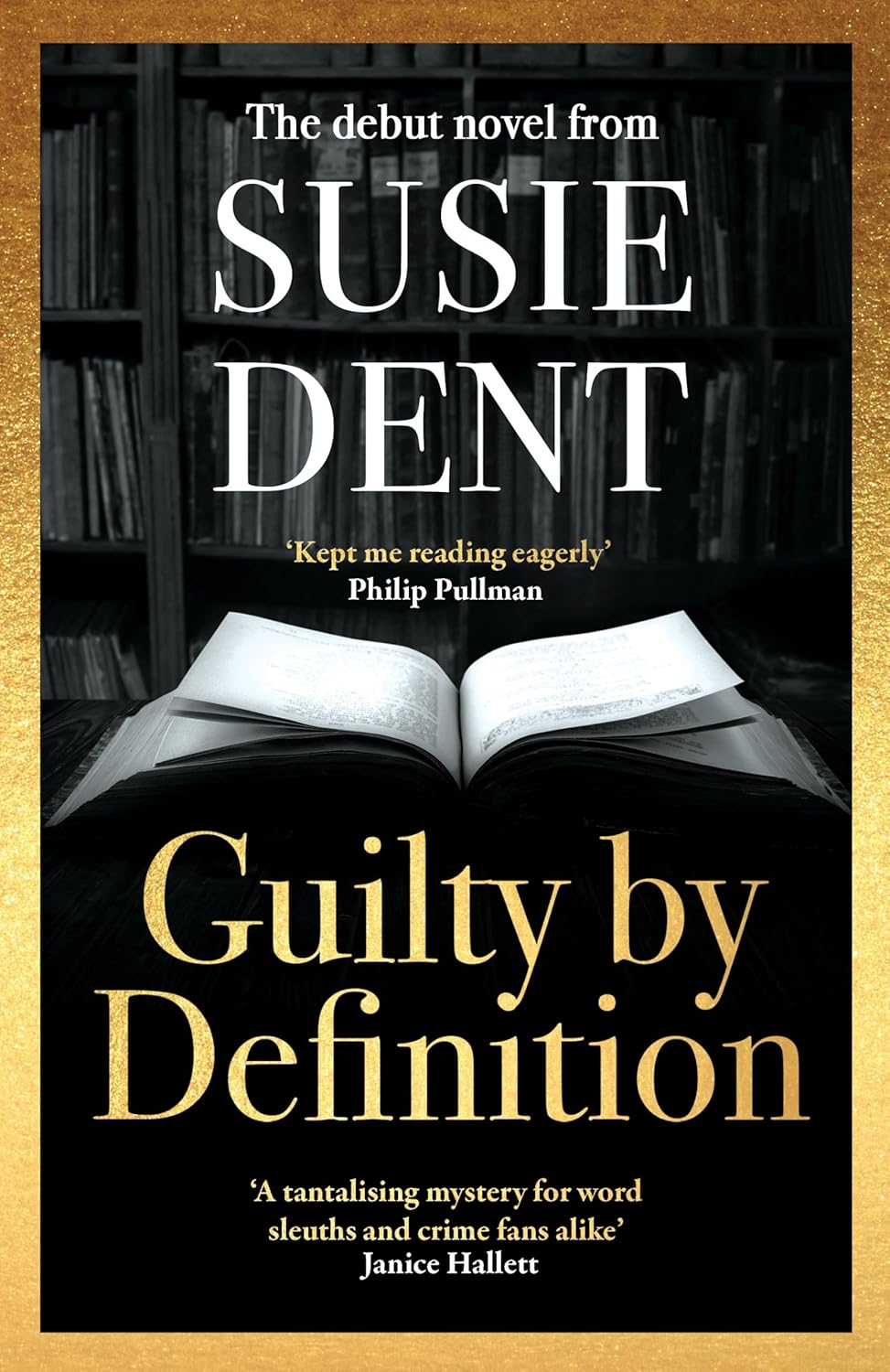
When an anonymous letter is delivered to the Clarendon English Dictionary, it is rapidly clear that this is not the usual lexicographical enquiry. Instead, the letter hints at secrets and lies linked to a particular year.
For Martha Thornhill, the new senior editor, the date can mean only one thing: the summer her brilliant older sister Charlie went missing. After a decade abroad, Martha has returned home to the city whose ancient institutions have long defined her family. Have the ghosts she left behind her been waiting for her return?
When more letters arrive, and Martha and her team pull apart the complex clues within them, the mystery becomes ever more insistent and troubling. It seems Charlie had been keeping a powerful secret, and someone is trying to lead the lexicographers towards the truth. But other forces are no less desperate to keep it well and truly buried.
Guilty by Definition rises above other celebrity mysteries by being excellent.
This story is well-plotted and well-devised, delightfully intermingled with snippets about the Clarendon Dictionary and the little foibles of the English language, and has a great storyline. It also offers a lovely conjuring of Oxford and the surrounding location—as well as some special Oxford-specific events.
Our four main characters are well-developed, and all have their secrets as they endeavour to solve the perplexing riddles and, in doing so, answer the questions surrounding Martha’s sister’s disappearance.
It is a complex mystery that is sure to appeal to fans of the genre and the English language. I don’t want to give any spoilers, but I loved it:)
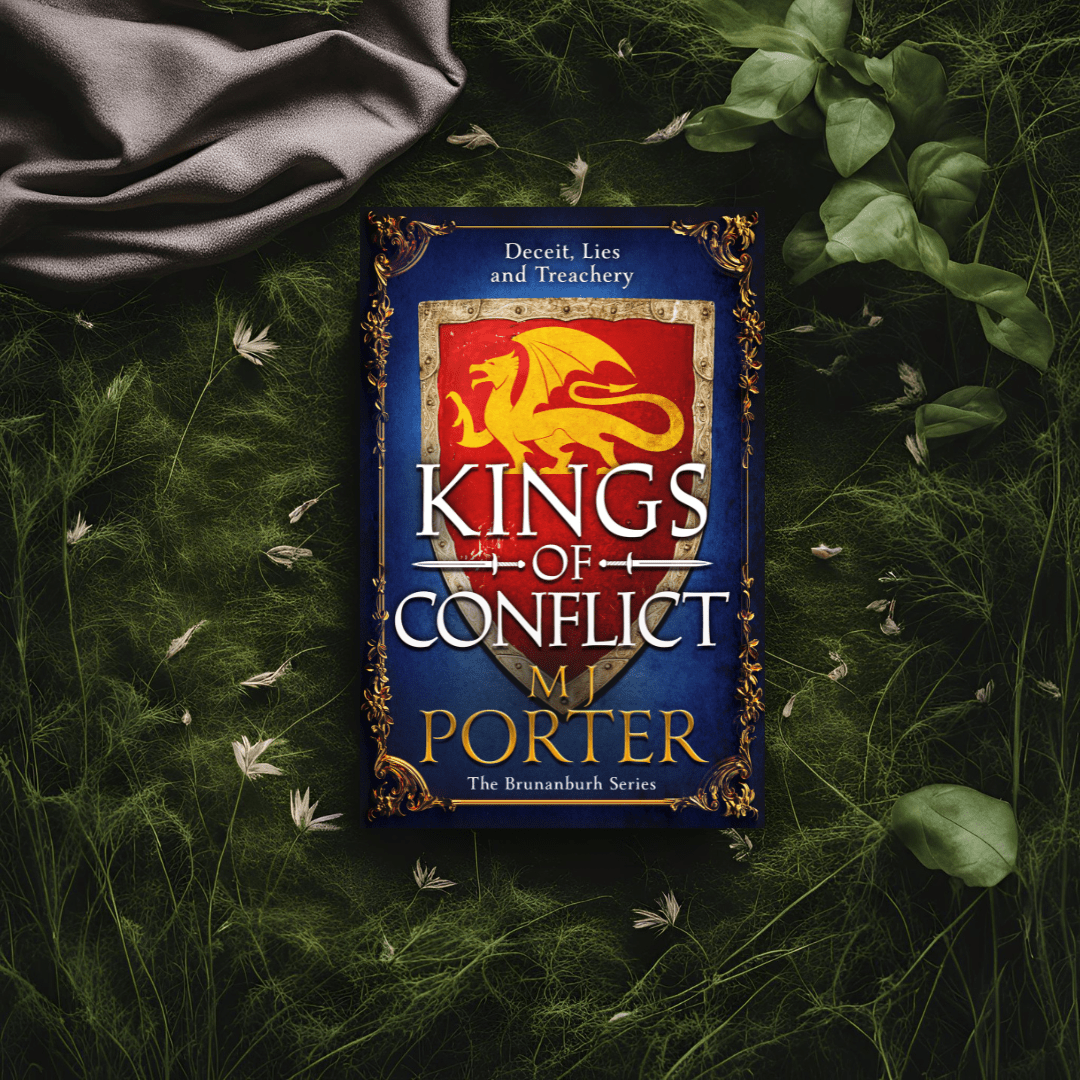
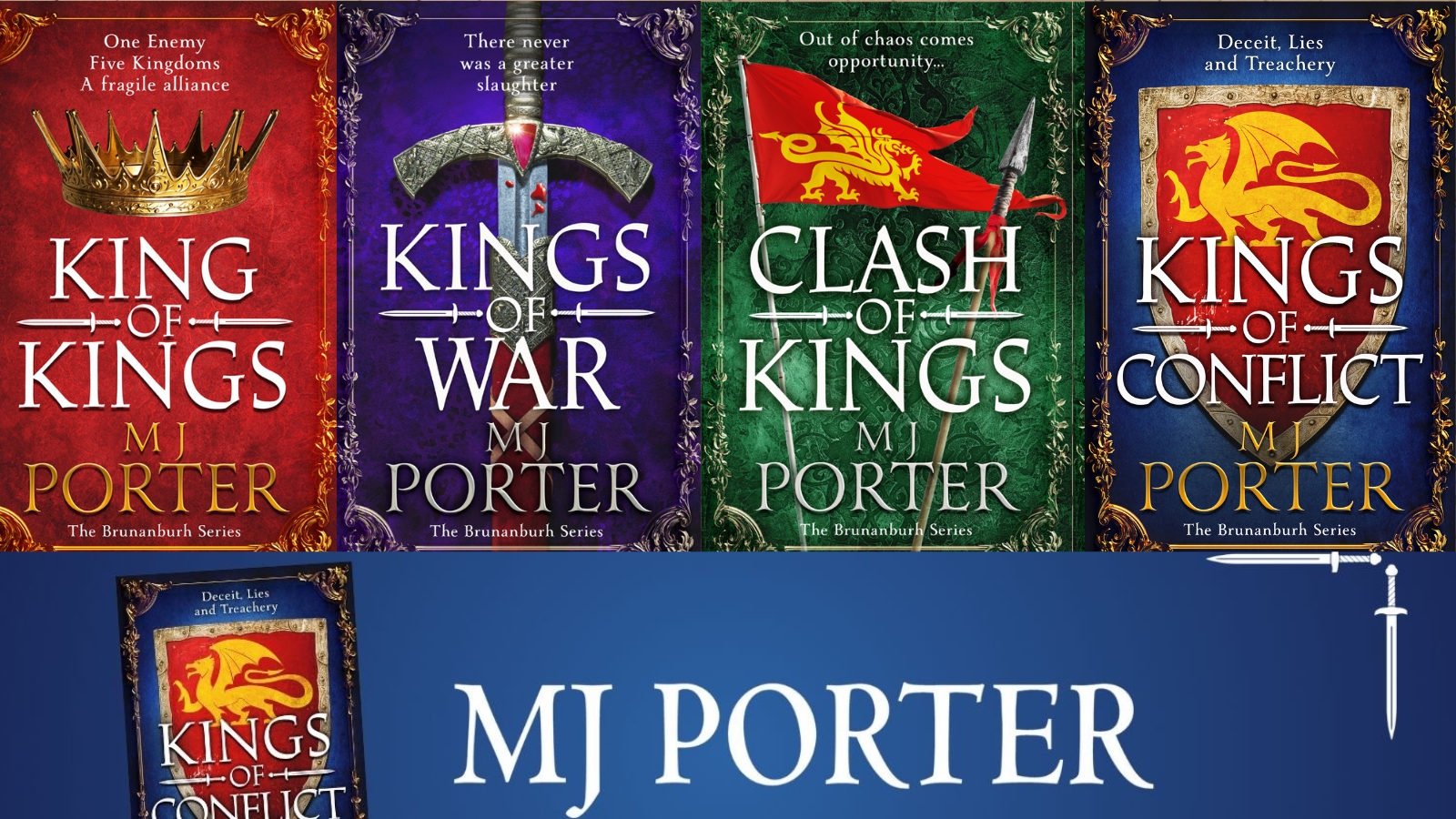
When I first wrote Kings of Conflict, I had very little idea what Jorvik at the time (the 930s/940s) might have looked like. I wrote an entire battle scene and then realised some of my assumptions were very, very wrong (I do this all the time. Don’t feel sorry for me. I should just do the research first instead of giving free rein to my imagination.) I got the fact the settlement was split in two by the River Ouse wrong (and who knew about the Foss). But, most tellingly, what I failed to understand was the true nature of York, from its Roman origins as Eboracum to the age of Jorvik, and most importantly by that I mean its Roman walls and what might, or might not have still been standing at this period.
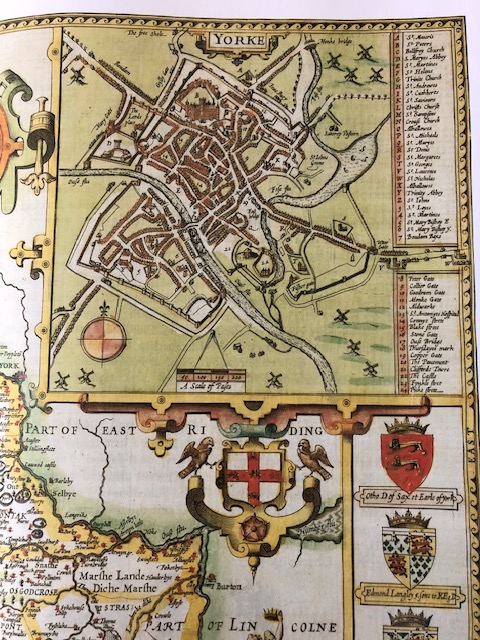
We don’t (yet) have time machines. We can’t visit York in the 940s, but if there is one thing York is famous for it’s the archaeology, and the Jorvik Viking Centre, which offers a recreation of what those streets on Coppergate might once have looked like, and also much else. And because Jorvik/York has benefitted from so much archaeological work, there are also a series of maps showing York at various times in its lifetime, alas out of print at this time, but which can be accessed via a good library (my thanks to the Great Northern Library at the Hancock museum in Newcastle – if you want to see it then let them know so they can have it ready for you, and make note of their opening hours) or the amalgamation of this work available in An Historical Map of York, available from all good book sellers. And if not, then my favourite ‘go-to’ for recreating this time period, the antiquarian maps by John Speed (which are also much prettier) can also offer some information.
York, from John Speed’s West Riding of Yorkshire map (own photo)
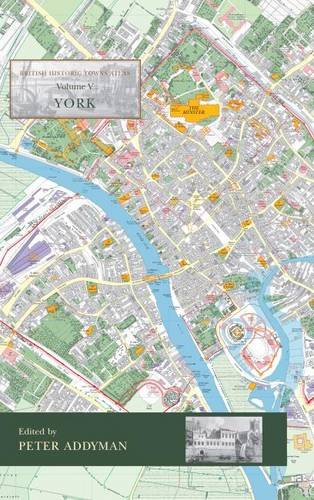
This is readily available and amalgamates the information from the actual Atlas.This is currently out of print – check out your local library or antiquarian library for a copy
Roman York
The British Historic Towns Atlas Volume V, York ed. Peter Addyman provides the following information about Eboracum-Roman York.
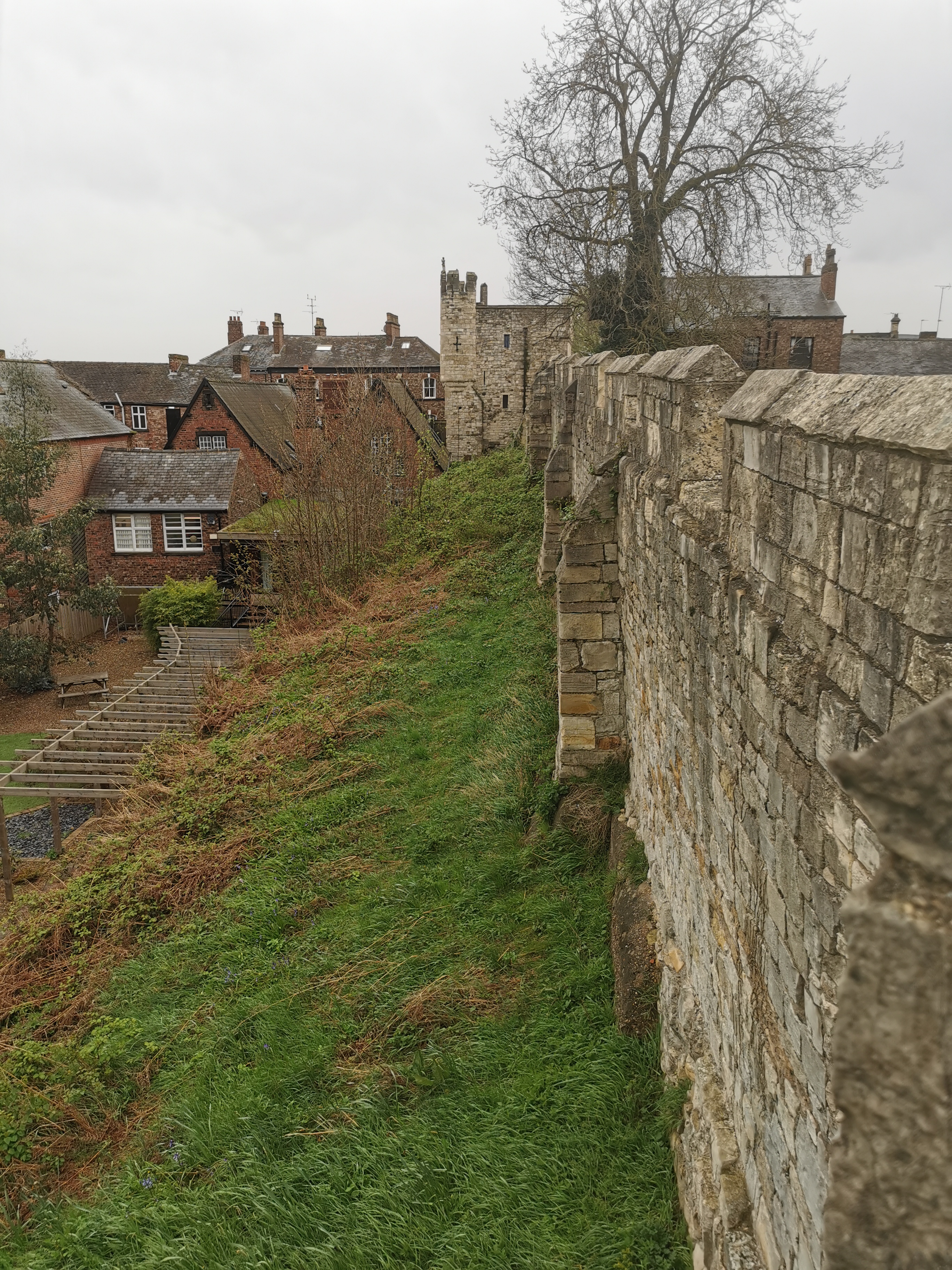
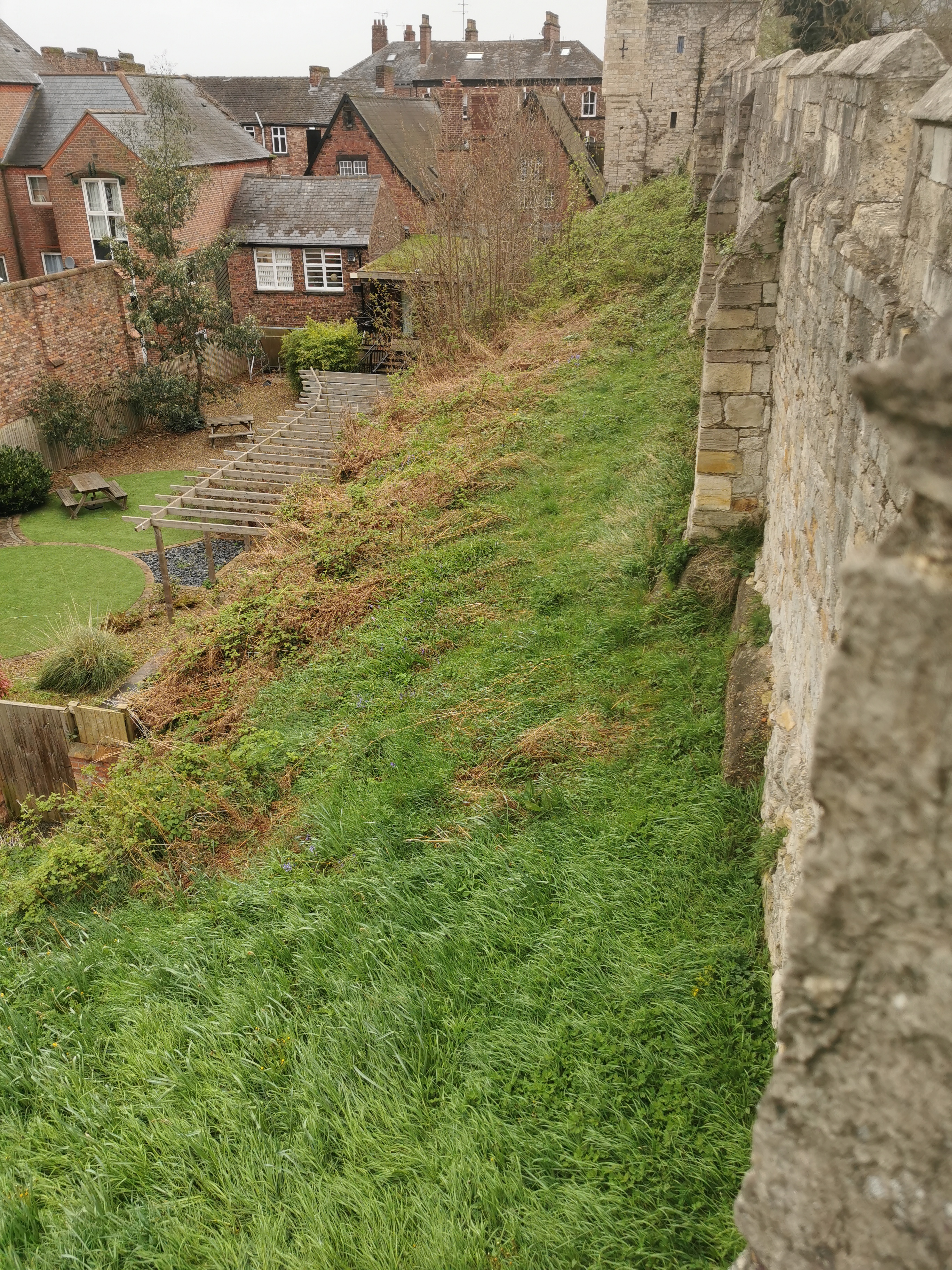
York’s surviving walls, not far from MicklegateI planned to take many more photos but my phone went flat and it was a suitably biblically wet day in York – which seems to happen every time I visit:)
It might have been occupied under Vettius Bolanus (69-71) but was truly founded under Emperor Vespasian (69-79). However, the ridge of the River Ouse was a routeway from the Neolithic onwards. This was in the territory of the Brigantes although the East Riding of Yorkshire was that of the Parisi. It is possible that Eboracum means ‘the place of the yew trees.’
The stone used in constructing the fortress was Magnesian Limestone from Tadcaster and Millstone Grit from Bramham Park (I love that they know this). To begin with the fortress had a ditch, rampart and timber structures and four gates, with the original towers up to 15 metres high. And here, there is the suggestion that to begin with, crossing the River Ouse (to get to the civilian settlement) was via ferry. The bridge can only be confirmed from the second century onwards. The Foss River was also tidal at this time and the banks sloped sharply. The rampart was widened from 20feet to about 42 feet during a second phase of occupation.
Some ‘old’ bits of Roman York (I think), from the museum in York Minster
The end of Roman York is impossible to pinpoint. Did it cease to exist? Certainly, the last documentary reference was in 314 when York’s bishop, Eborus, attended the Council of Arles, but as with so many of these Roman settlements in Britannia, what happened afterwards is more difficult to determine and we must turn to archaeology and not written records.
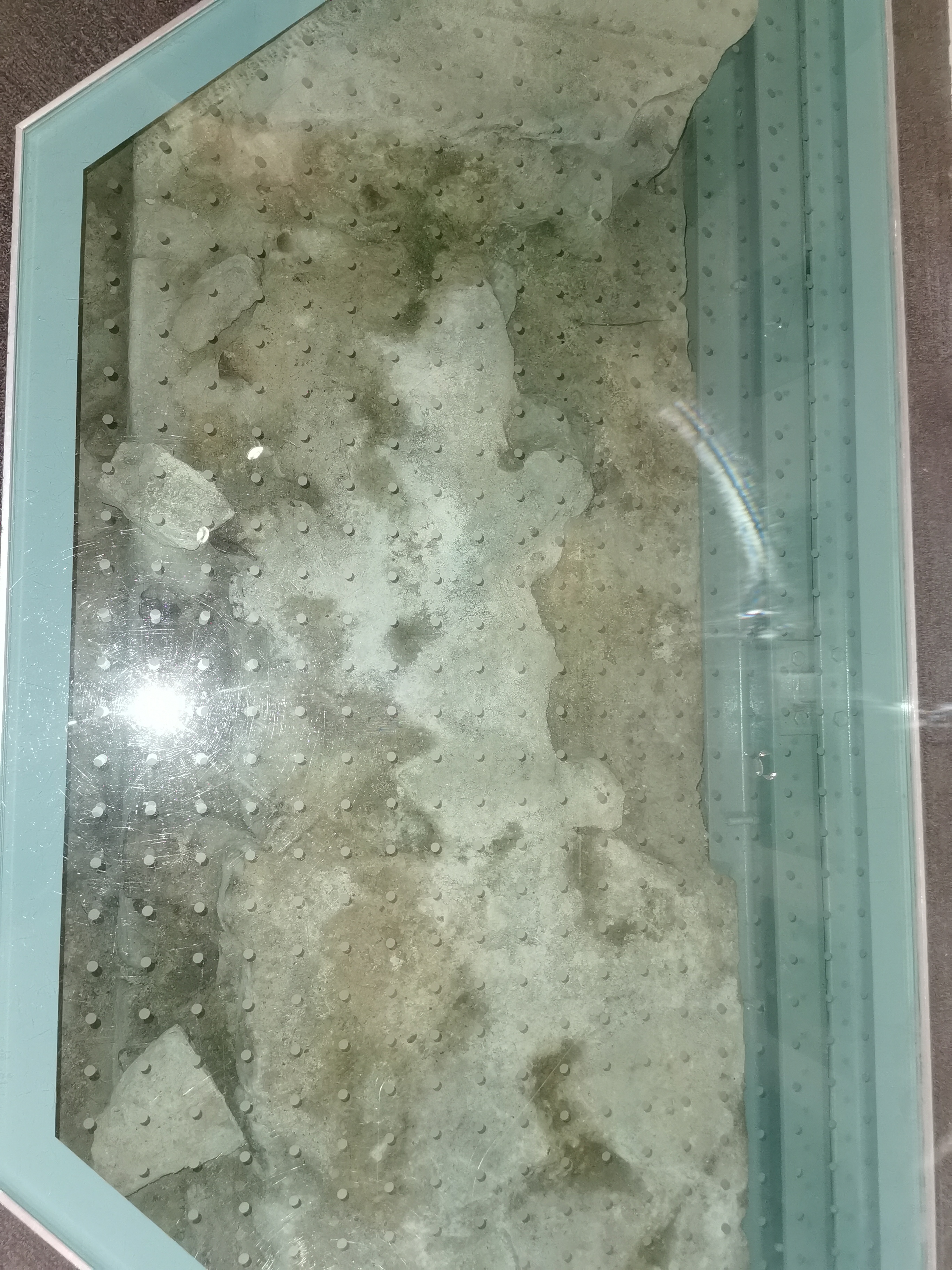
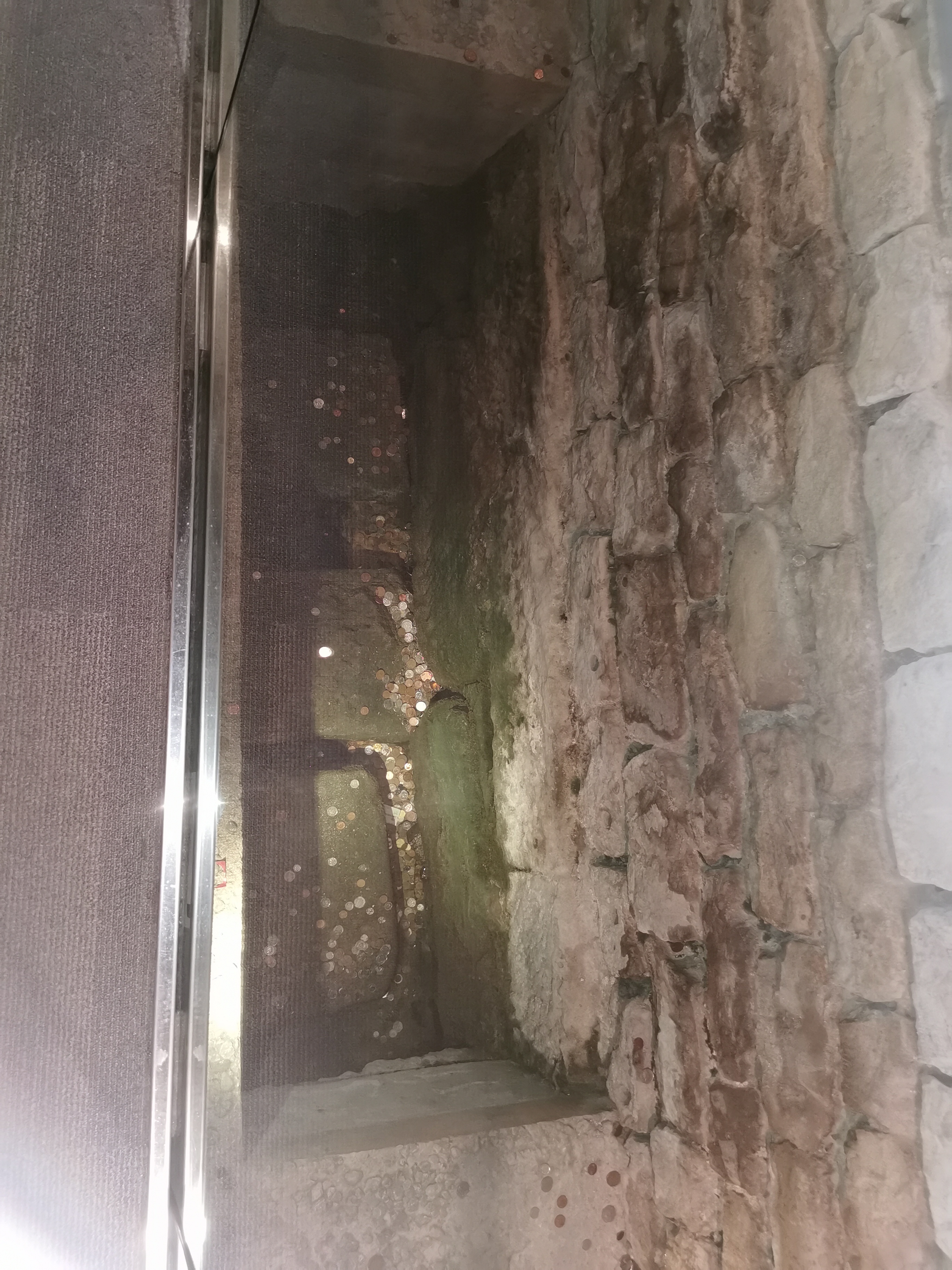
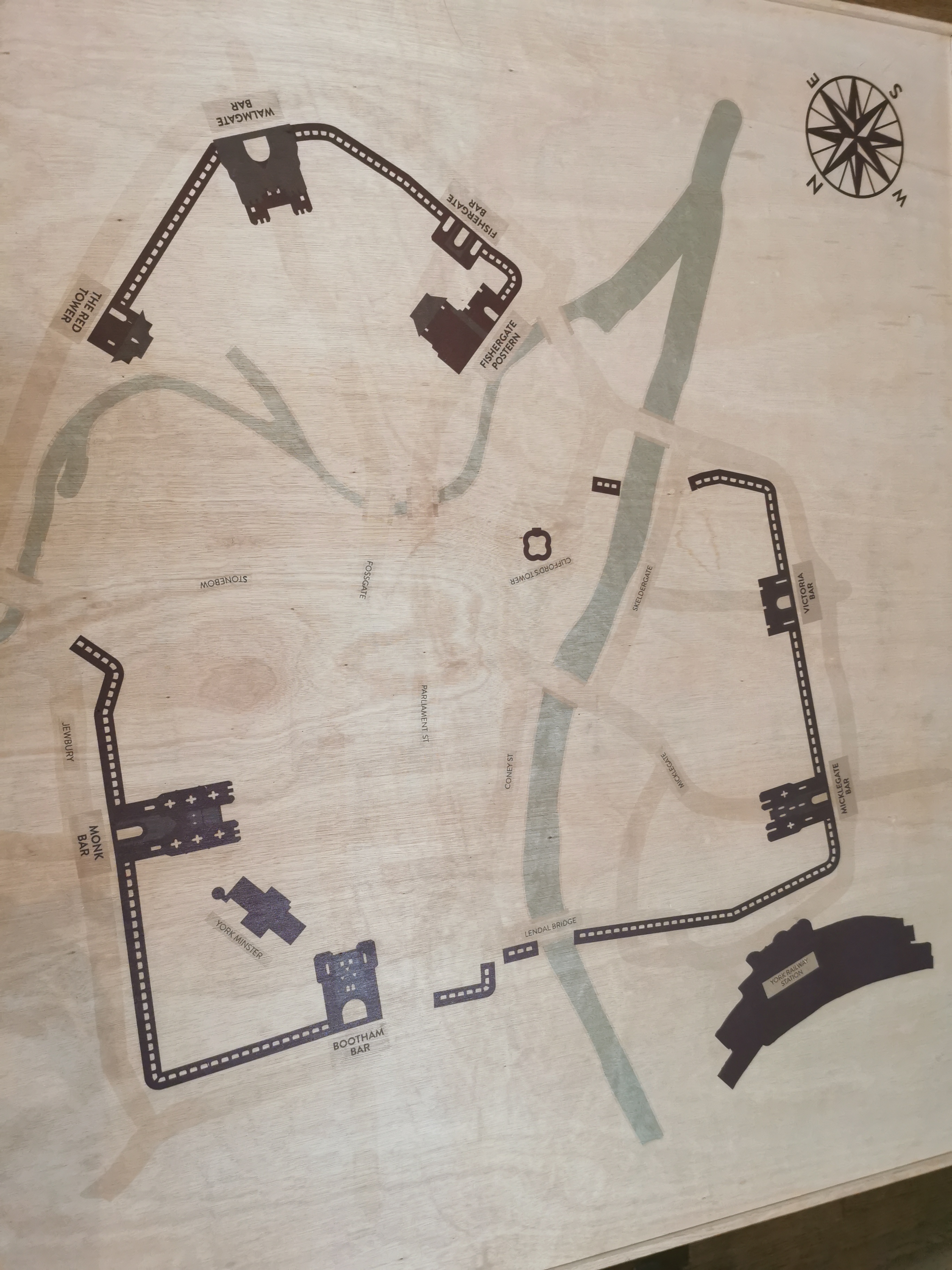
I think this is from the exhibition at Micklegate Bar but I could be wrong. It very clearly shows the two ‘halves’ of the walls.
I must admit, all of this information about Roman York makes me somewhat desperate to write a book about it:) (Don’t all groan).
Anglian York – Eoforwic
The creators of this series of maps make the point that this is the most speculative of the series. Put simply, they really don’t know what was happening.
What can be said is that the walls were renovated on the north west side of the fortress with a dry stone wall and cobbled sentry walk while the eastern ramparts were topped with a timble palisade wider than the Roman wall (if I’ve understood that correctly).
Eoforwic first enters the historical record as the place of baptism for Edwin in 627, the king of Northumbria (Deira and Bernicia combined).
‘…the king was baptised at Easter with all his chief men; that Easter was on 12 April. This was done in York, where earlier he had ordered a church to be built of wood.’ ASC E 626 p.25
The archbishopric began from 735, but Eoforwic was not densely settled at this period, although it does seem to have had many, many churches. This includes the Minster, St Michael-Le-Belfrey, Holy Trinity, St Peter the Little, St Martin, St Michael, and many more, all probably founded by 850.
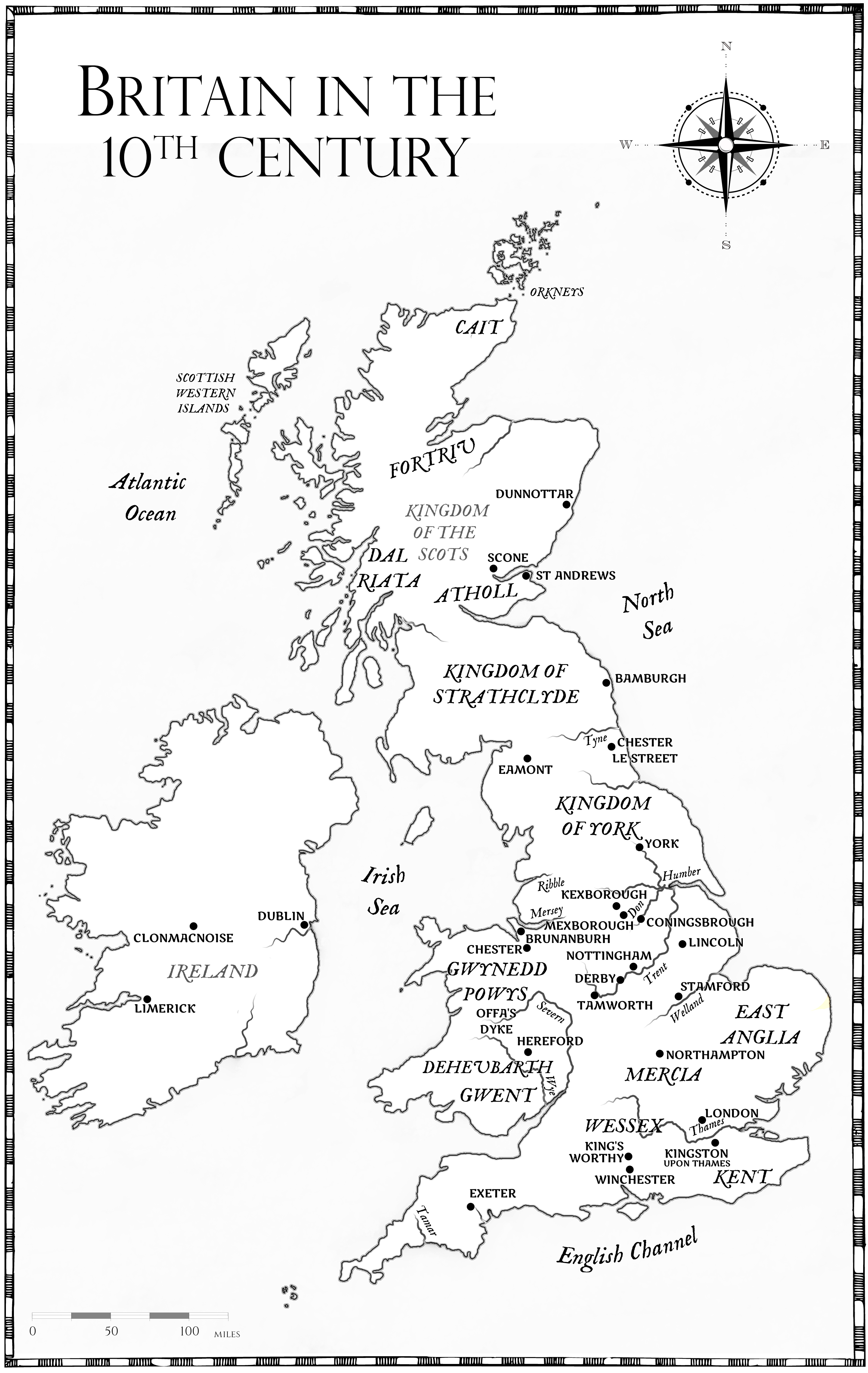
Map of Britain in the tenth century, showing York (map design by Flintlock Covers).
Viking York – Jorvik
It’s record that the first attack Viking attack on York occured on 1st November 866. The Northumbrians counter-attacked in 867 but this left York under Viking control.
‘Here the raiding-army went from East Anglia over the mouth of the Humber to York city in Northumbria;’ ASC A 867 corrected to 866 p.68 (from my preferred edition edited by Michael Swanton).
And here is where my notes become a little muddled between time periods. The British Historic Towns Atlas Volume V informs that the River Ouse at the time would have been tidal, and much wider than it is now and also with much steeper banks .
The late-eighth-century scholar Alcuin describes York as having high walls and lofty towers (he spent time in York). Asser (Alfred’s late-tenth-century biographer – although I’m curious as to how he’d know as I’m sure he was from one of the Welsh kingdoms and York was not under Alfred’s control) suggests that York’s walls were insecure and there is a suggestion that the Vikings restored the walls. Considering what we know about Asser and his ability to be less than honest, we might suspect this statement. Certainly, the remains of the walls were visible but whether they were defensible is unknown.
The walls survive to this day. To paraphrase from the Atlas, from the western corner of the Roman fortress to fifty metres along its south-west front, parallel to the river, the Roman wall is still visible above ground. Beyond this point, its six projecting interval towers and the Roman south/west gateway leading to the bridge over the Ouse have either been demolished to foundation level or been covered by organic-rich debris of post-Conquest date. The fortress’s south corner tower at Freasgate survives to fifteen foot. It is suggested that the south-west section of the civilian settlement might not have been included in the walled defences.
On the northern banks of the River Ouse, there were plots about 5.5m wide occupied by one or more structures (Coppergate/Ousegate/Pavement) with backyards running downslope towards the River Foss. Hungate also had similar plots. There might have been crossings over the rivers below St Mary Castlegate and Hungate. These rectangular structures of post and wattle had entrances front and back, with centrally arranged hearths and roofs made of turf, reeds or straw. Most settlement was below Coppergate, Ousegate, Pavement, Hungate and Walmgate areas.
Recreating Jorvik?
But what does all this mean when trying to recreate the time period? (Some will know that I’ve already ‘visited’ York earlier in the Brunanburh series, and without all this angst). It is frustrating that some aspects are so clearly defined and others aren’t. Where were the people living – especially the high status people? Where were the kings living? In King’s Square/Kuningesgard? And what’s this about the civilian defences never being completed to the south?
My overwhelming impression is that the remains of the actual Roman encampment (to the north of the Ouse) were in better condition than those to the south of the Ouse surrounding the civilian settlement (there are ‘proper’ terms for this – I’m not using them). But, these remains of the Roman wall at the fort seem to have largely been surrounding the religious centre under the control of the Archbishop of York, Wulfstan I. Were they any use to those in control of Jorvik? And what about the rivers? How navigable were they? Could they be easily blocked? How tidal is tidal? Did it raise and lower the water level by metres or centimetres?
Was there even a bridge over the River Ouse or did they need to use a boat to get across? Perhaps there was only one bridge over the Ouse, and only one over the River Foss.
Having this information to hand and making sense of it are two very different things. How would someone have gone about attacking York? Would they have taken ships, come on foot or tried to steal their way inside through the never completed walls? Who would have protected it? What would our erstwhile holy man, Archbishop Wulfstan have done? If the walls were standing, how many warriors would have needed to protect it?
You’ll have to read Conflict of Kings to see just what I did, and you can from 6th August 2024:)
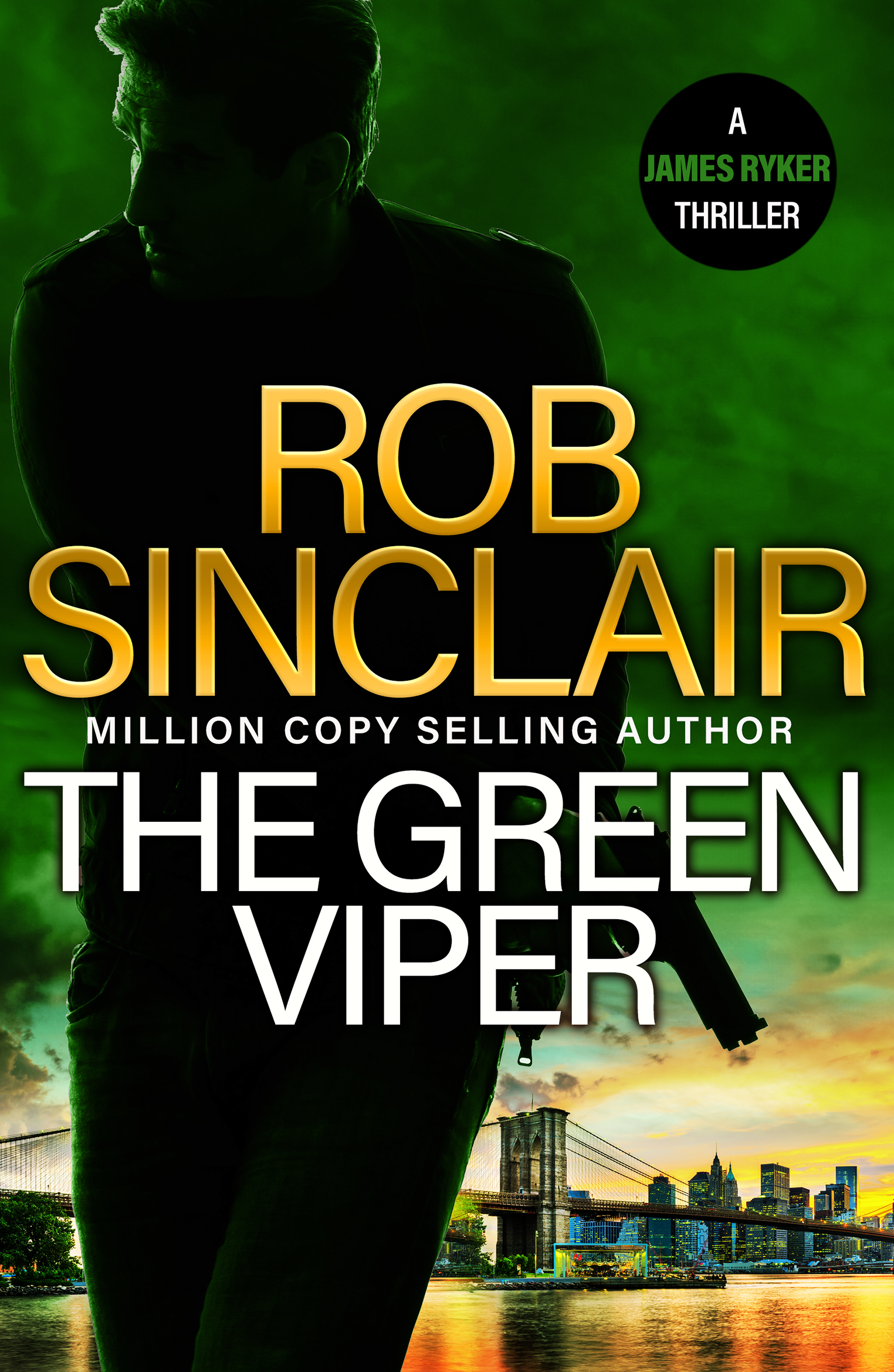
Ex-intelligence agent James Ryker receives a coded message through a secret drop point, a means of communication known only to him and one other person. The problem is, that other person is his ex-boss, Mackie… and he’s already dead.
But the cry for help is real, and it’s a request Ryker can’t refuse.
Travelling to New York alone and without official sanction, Ryker has a single goal in mind, yet even he couldn’t have bargained for the violent world he’s soon embroiled in. Caught in the middle of a spiralling chaos with the FBI on one side, and two warring underworld bosses on the other, Ryker must put all of his skills to the test in order to come out on top, and keep his word.
In a world full of lies and deceit, loyalty is everything, and it’s time for James Ryker to pay his dues.
A fast-paced thriller filled with twists, turns, and intrigue that will grip fans of Mark Dawson and the Jason Bourne novels.
The Green Viper is book 4 in the James Ryker series, but the first one I’ve read, although I’ve read one of Rob Sinclair’s standalone novels, Rogue Hero. Check out the review here.
It is fast-paced as our ‘hero’ sets about helping the son of his former boss where he’s entangled himself in a bit of bother in New York. That said, the beginning is a little more difficult to really get into – I would recommend persevering because after that, the storyline is very quick and I read the vast majority of the book in one sitting. It’s a fun, pacy read with a whole load of violent encounters thrown in for good measure, and some rather nasty bad guys, and our author has no problem with ramping up the body count.
If you’re a fan of action thrillers, then you’ll really enjoy The Green Viper. I certainly plan on finding some room on my TBR pile to add the other books in the series.
Meet the author
Rob Sinclair is the million copy bestseller of over twenty thrillers, including the James Ryker series. Rob previously studied Biochemistry at Nottingham University. He also worked for a global accounting firm for 13 years, specialising in global fraud investigations.
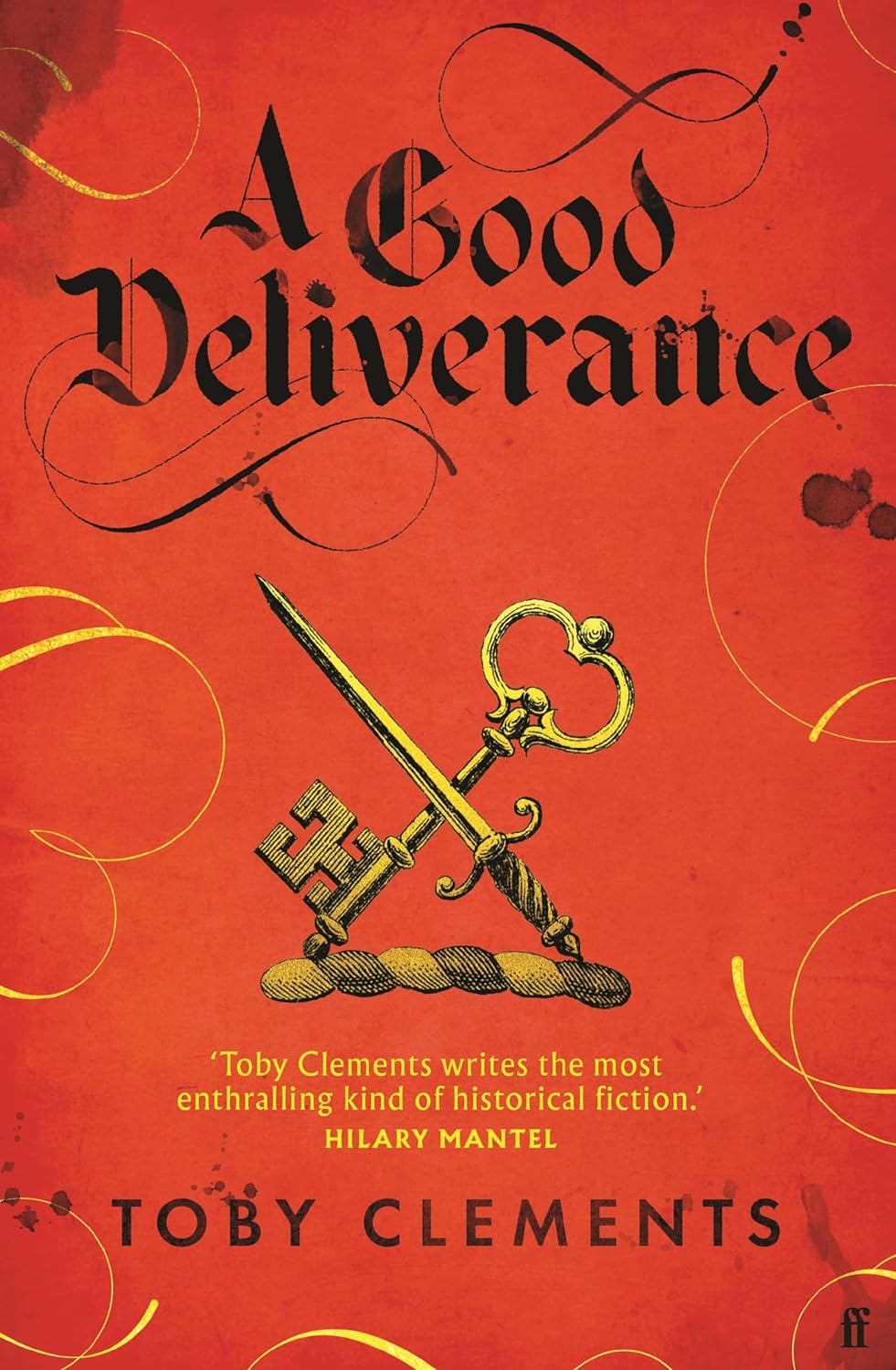
From the author of the Kingmaker series, an epic and intimate tale of adventure, myth and the creation of one of literature’s greatest stories.
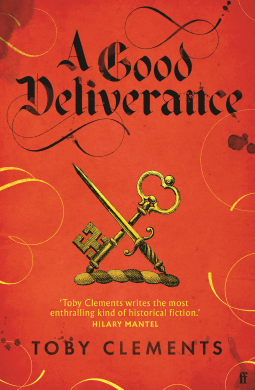
Warwick, 1468. One drowsy summer afternoon, Sir Thomas Malory – politician, courtier, renowned author of Le Morte D’Arthur – is seized from his garden and dragged to Newgate Prison for reasons unknown.
Shivering in his foul-smelling, filthy old cell, Malory mourns his misspent life as he awaits the execution bell. But when the locking bar lifts, he is greeted by a boy of about twelve winters: the gaoler’s son. Giddy with relief, Malory seizes the opportunity to recount his deeds to an audience.
So begins a prison confession of a perilously exciting life full of sieges, battles and court intrigue. A Good Deliverance is the captivating tale of a man at odds with his past and the events that inspired him to write the first great work of prose fiction in English.
A Good Deliverance is a fictional account of Thomas Malory, the man who wrote the famous Le Morte D’Arthur and, in doing so, perpetuated the myths of Arthur and his knights, queen, and, of course, Lancelot.
Our Thomas Malory, as presented by Toby Clements, is a man of his time, living a life that even he questions for his feelings of inadequacy. He doesn’t fight at Agincourt, and indeed, his deeds of martial glory come from a battle few remember. Locked up for a crime we, the readers, never truly understand, he finds a willing listener to his life’s tales in the son of his prison guard.
This is an intriguing tale, told in an unconventional way. Wary of losing the interest of his audience, much of the tale is told as an aside, the parts that his young listener won’t be interested in hearing. It does make the story a little disjointed, but it also allows us to sweep through some of the more mundane details and focus on what Thomas Malory (and the author) thinks is important to the reader. Perhaps very much as the Arthurian Legend, it focuses on brave daring-do (or not) and not so much on matters of the heart or Malory’s less honourable actions.
It is somewhat of a rambling tale – indicative of a man fearing for his life and determined to ensure someone knows his story before his death. It is also thoroughly enjoyable – fans of the period will delight in seeing the glories of Agincourt and the hot mess of politics and bickering kingship played out in a very different way – through the eyes, not of a common man, but through the eyes of one for whom everything is still very much out of his control. Thomas Malory must do as he’s bid to make his way in the world.
The ending of this tale is very abrupt – too abrupt – no doubt because I as the reader was hoping for some redemption for our main character.
In a genre where the legends of Arthur have always been so alluring for authors and readers alike, I admire this fresh attempt to tackle where much of our knowledge of the legend comes from. The book might have its faults, but in revealing even our scribe’s biases, it sheds a whole new light on the tales.
A fabulous take on the fifteenth century and the man behind the Le Morte D’Arthur (even if so much of it is fictional as we know so little about him).
I’m delighted to welcome back R.W. Meek and his new book, The Dream Collector “Sabrine and Vincent van Gogh”, to the blog with an excerpt.
The Dream Collector Excerpt 3
“The Mermaid Palace”
MAP IN HAND, I followed Theo’s route to the brothel district. At Place Victor Hugo, I stopped and thought this square might be where Vincent confronted Gauguin with a straight razor. According to Gauguin, his stare alone stopped Vincent in his tracks, causing him to run back to the Yellow House and use the razor on himself. The suspicion I brought to Arles was that the two artists, who held each other in high regard, would not reach such a violent juncture, unless there was a woman involved. Would the prostitute Rachel talk with me?
I reached Place du Calvaire, a three-quarter circle of tall, dreary houses except for the three Maisons de Tolerance,each brazenly painted a different primary colour. I kept a safe distance from House #1, Vincent’s brothel of choice, where his favorite Rachel worked. I lingered and wondered if Sundays were a busy day for brothels?
House of Tolerance #1 was painted a lurid purple-blue which I thought could have only been attractive to the coarsest eye. Gauguin mentioned that the brothel was ruled by a Madame Virginie. I knocked, but no one answered, every window shuttered, and the front door latch locked.
I noticed narrow alleyways separated the houses around the circle. The gated alleyway
next to the brothel was unlocked. Creaking open, I ventured into a dark, dank, and urine smelling passageway, coming to separate wooden gates.’ I pushed open the one leading to the back of the brothel. The scene before me defied immediate comprehension.
Here’s the blurb
Sabrine, hospitalized for five years at the infamous Salpêtrière Asylum for Women, gains her release due to intervention of her sister Julie Forette and a young Sigmund Freud. The reunited sisters are introduced to the dazzling art milieu of 1886 Paris, and soon become close friends to the leading Impressionists. Sabrine attracts a cult following as a poetess, the enigmatic “Haiku Princess.” Seemingly cured by Freud of her Grand Hysteria, Sabrine soon enters into a tumultuous relationship with Vincent van Gogh.
Julie and Sigmund Freud, alarmed by the eerie parallels between the emotionally volatile couple and their self-destructive impulses, begin an urgent search to discover the root causes for Sabrine and Vincent’s growing psychoses. Julie, ‘The Dream Collector’ seeks their most unforgettable dream for Freud’s interpretation and revelations occur.
The Dream Collectoris an exploration of the psychological consequences of betrayal, abandonment–and the redemptive power of art.
R.w. Meek has a Master’s degree in Art History from the American University in Washington, D.C., his areas of expertise are Impressionism and Post-Impressionism, with a particular interest in Vincent van Gogh.
His first novel The Dream Collector “Sabrine & Sigmund Freud” was voted runner-up by the Historical Fiction Company for best novel of 2022.
Born in Baltimore, he currently resides with his wife Pamela in Santa Clarita, California. He’s passionate about art, cinema, literature and jazz. His two dogs, Reve and Banjo, were awarded angelic status in heaven.