I’m really excited to share the details of the Pagan Warrior blog tour with The Coffee Pot Book Club.
Pagan Warrior is the story of the battle of Hædfeld, fought in the seventh century between the Northumbrians, and you got it, the Mercians – or rather, Cadwallon of Gwynedd but with Penda of Mercia as his firm ally. You can find more details here.
I might have written this book many years ago, but it’s had a refresh, and is now available in audio, narrated by the fabulous, Matt Coles, as is the second book, Pagan King. Warrior King will be coming later this year in audio.
And, if you read on Nook, I’ve created a special discount code just for Nook readers. Using code BNPPAGAN at checkout will get you 50% off all three titles, for a limited time.
You can follow the blog tour, and I’ll be sharing posts here as well. A quick shout out to thank all the blog hosts and Cathie at The Coffee Pot Book Club for organising.
And, the post that perhaps gave me the most fear to begin will but which was fun when I remembered all the little details, five fun facts about writing the trilogy.
For March 21st check out a post about two of the royal residences of Bernicia at the time, Bamburgh and Ad Gefrin (Yeavering). (There are lots of photos, thank you to Helen Hollick for uploading them all).
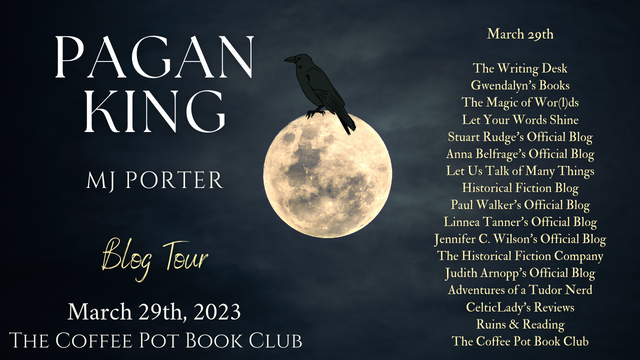
Not content with highlighting Pagan Warrior, Pagan King gets its own blog tour today. A huge thank you to Cathie at The Coffee Pot Book Club for organising, and to all the hosts for showcasing the second book in the Gods and Kings trilogy/ also known as The Seventh Century trilogy, on their blogs today.
You can follow the tour below.
And, you can find Pagan King on your retailer of choice here. It’s also available in audio format from Audible, Amazon and iTunes. Check it out below. Narrated by the fabulous Matt Coles.
I’m really excited to share the details of the Pagan Warrior blog tour with The Coffee Pot Book Club.
Pagan Warrior is the story of the battle of Hædfeld, fought in the seventh century between the Northumbrians, and you got it, the Mercians – or rather, Cadwallon of Gwynedd but with Penda of Mercia as his firm ally. You can find more details here.
I might have written this book many years ago, but it’s had a refresh, and is now available in audio, narrated by the fabulous, Matt Coles, as is the second book, Pagan King. Warrior King will be coming later this year in audio. For this third week, 27th March-2nd April, the ebook of Warrior King (book 3) is reduced globally to 99p/99c and equivalent. Follow the link below.
And, if you read on Nook, I’ve created a special discount code just for Nook readers. Using code BNPPAGAN at checkout will get you 50% off all three titles, for a limited time.
You can follow the blog tour, and I’ll be sharing posts here as well. A quick shout out to thank all the blog hosts and Cathie at The Coffee Pot Book Club for organising.
For today, March 28th, check out a fabulous review on
And, the post that perhaps gave me the most fear to begin will but which was fun when I remembered all the little details, five fun facts about writing the trilogy.
For March 21st check out a post about two of the royal residences of Bernicia at the time, Bamburgh and Ad Gefrin (Yeavering). (There are lots of photos, thank you to Helen Hollick for uploading them all).
I’m delighted to share an excerpt from The Mazzard Tree by Marcia Clayton.
Excerpt
The matron marched Amelia and her twin brothers down the long corridor and into a washroom, where she handed them over to a large woman.
“Here you go then, Nellie, three new arrivals for you to see to.”
Nellie took in their foreign appearance with a disapproving glance. Pursing her lips, she mumbled something to herself, about there being enough poor in the country already, without half-castes adding to the problem.
“Now, I have to cut your hair, and give you a wash, and then you’ll put on some new clothes. Don’t give me any trouble, because I haven’t the time for it. Come here, lad, you can be first.”
She sat Joe firmly on a chair and began cutting off his long curls. Tears shone brightly in his eyes, but he did not complain. When most of his hair was on the floor, Nellie took a razor and shaved his head. Matthew and Amelia stood close together and watched in horror. Their mother had loved their thick curly hair. Nellie then beckoned Matthew.
“Come on then, lad, you next. Show your little sister there’s nothing to be frightened about.”
She pulled Matthew onto the chair and he received the same treatment as his brother. By this time, Amelia’s eyes were round with fear.
“Please don’t cut off my hair. I’m a little girl, and girls don’t have short hair. Please don’t cut off my hair. My daddy loved my curly hair.”
“Now, it’s no use you making a fuss. Your daddy’s gone, and you must do as you’re told. Your hair will soon grow again, but this is the only way I can be sure you don’t have nits. We have enough trouble with them as it is, so sit still, and be a good girl.”
“I don’t have nits! I don’t have nits! My hair is clean.”
Amelia had no intention of being a good girl, and she struggled and refused to sit on the chair. Nellie smacked her legs and tried to sit her on the chair, but Amelia was having none of it and she kicked Nellie hard in the shins and bit her hand.
“Ouch, now look what you’ve done, you little devil; you’ve drawn blood.”
Nellie slapped Amelia hard across the side of the head, and she fell to the floor, stunned.
At this, Matthew and Joe leapt up and ran to her.
“Come on, Meely. It will be all right. Let her cut your hair off, then you’ll look just like us. It’s not so bad.”
Nellie was furious. She dragged the dazed child to the chair and tied her to it with a bandage.
“Right then, madam, now you just sit still and let me cut your hair, or I’ll give you such a hiding you won’t sit down for a week.”
Amelia sat still, tears rolling down her face, and decided she would hate this woman for as long as she lived. When their hair was cut, the children were taken to the pump and made to stand underneath the stream of cold water. By the time Nellie allowed Amelia to get dried, she was shaking with the cold and fright. The new clothes that their daddy had bought them were taken away, and in their place, the boys were given rough grey tweed shorts and a coarse shirt and jersey. Amelia was given a grey woollen dress with a white apron to put on. Amelia’s doll lay on the floor next to her clothes, and she eyed it wistfully, debating whether to risk picking it up. Just as she was plucking up the courage to grab the doll, another maid appeared.
“Ah, there you are, Lizzie, just in time. Take these three to the refectory will you; though this little madam is not to have any tea. Bit me, she did. She’s lucky I don’t have her beaten. Put their clothes in the storeroom; fine quality they are and should fetch a few bob. That doll too.”
Lizzie gathered up their clothes and the doll and led the children away. Amelia pulled at Lizzie’s arm.
“Please, may I have my dolly? I always sleep with her. Please, may I have my dolly? My aunty made her for me.”
Lizzie looked down at the small, tear-stained face, the bright red finger marks still vivid across her bald head and cheek, and could see what had happened.
“Well, now, little girl. You won’t be able to keep your dolly. Even if I let you keep her, the bigger girls would take her off you in no time, and you’d never see her again. I’ll tell you what though, how about if I keep her for you, and maybe, just maybe, I might be able to let you see her sometimes?”
Sadly, Amelia nodded. “Yes, please, she’s called Evie after my aunty who made her.”
“All right, now, if I do that, will you behave yourself for me? It’s not easy living here, but you’ll get on better if you do as you’re told. Here, give your dolly one last cuddle, and say goodbye.”
They entered a large room, with long tables surrounded by seemingly hundreds of children, all dressed in the same clothes as themselves. The children were sitting silently, waiting for permission to start their meal of bread and dripping with a mug of water. A few looked up when Matthew, Joe, and Amelia were shepherded to the nearest table, but most showed little interest, for they were too intent on the food in front of them.
“Sit here for today, but tomorrow you boys will sit on that side of the room, and you, young lady, will sit with the girls.”
Amelia, miserable and hungry, reached for her thin slice of bread, but Lizzie swiftly took the plate away.
“There’s none for you today, little girl. Nellie will check I don’t give you anything, so you’ll have to go hungry. The sooner you learn not to cross Nellie, the better, and don’t you two even think of giving your little sister any of yours, or you’ll be in trouble too.”
Here’s the blurb
1880 North Devon, England
Annie Carter is a farm labourer’s daughter, and life is a continual struggle for survival. When her father dies of consumption, her mother, Sabina, is left with seven hungry mouths to feed and another child on the way. To save them from the workhouse or starvation, Annie steals vegetables from the Manor House garden, risking jail or transportation. Unknown to her, she is watched by Robert, the wealthy heir to the Hartford Estate, but far from turning her in, he befriends her.
Despite their different social backgrounds, Annie and Robert develop feelings they know can have no future. Harry Rudd, the village blacksmith, has long admired Annie, and when he proposes, her mother urges her to accept. She reminds Annie, that as a kitchen maid, she will never be allowed to marry Robert. Harry is a good man, and Annie is fond of him. Her head knows what she should do, but will her heart listen?
Set against the harsh background of the rough, class-divided society of Victorian England, this heart-warming and captivating novel portrays a young woman who uses her determination and willpower to defy the circumstances of her birth in her search for happiness.
Buy Links
This title is available to read on #KindleUnlimited
All the books in The Hartford Manor Series can be ordered from any bookshop.
Meet the Author
Marcia Clayton was born in North Devon, a rural and picturesque area in the far South West of England. She is a farmer’s daughter and often helped to milk the cows and clean out the shippens in her younger days.
When Marcia left school she worked in a bank for several years until she married her husband, Bryan, and then stayed at home for a few years to care for her three sons, Stuart, Paul and David. As the children grew older, Marcia worked as a Marie Curie nurse caring for the terminally ill, and later for the local authority managing school transport.
Now a grandmother, Marcia enjoys spending time with her family and friends. She’s a keen researcher of family history, and it was this hobby that inspired some of the characters in her books. A keen gardener, Marcia grows many of her own vegetables. She is also an avid reader and mainly enjoys historical fiction, romance and crime books.
I’m really excited to share the details of the Pagan Warrior blog tour with The Coffee Pot Book Club.
Pagan Warrior is the story of the battle of Hædfeld, fought in the seventh century between the Northumbrians, and you got it, the Mercians – or rather, Cadwallon of Gwynedd but with Penda of Mercia as his firm ally. You can find more details here.
I might have written this book many years ago, but it’s had a refresh, and is now available in audio, narrated by the fabulous, Matt Coles, as is the second book, Pagan King. Warrior King will be coming later this year in audio. For this second week, 20th March-25th March, the ebook of Pagan King (book 2) is reduced globally to 99p/99c and equivalent. Follow the link below.
I’ve also, finally, managed to get book three, Warrior King, uploaded to all good ebook platforms, and they will be going live during this week. Kobo have so far won the competition. Use this link, which I will be updating, or try the one above, and hopefully, Warrior King will be linked to Pagan King as well. It means Warrior King is also available in hardcover from Amazon.
You can follow the blog tour, and I’ll be sharing posts here as well. A quick shout out to thank all the blog hosts and Cathie at The Coffee Pot Book Club for organising.
For today (March 21st) check out a post about two of the royal residences of Bernicia at the time, Bamburgh and Ad Gefrin (Yeavering). (There are lots of photos, thank you to Helen Hollick for uploading them all).
I’m sharing an excerpt from Run with the Hare, Hunt with the Hound by Paul Duffy.
Underworld
I was still young when the fulcrum began its pitch. Fortune’s wheel clanking around in its inscrutable way. It was the year that the sky ships were seen in Ard Macha. A silver host, spectral and gold illuminated the heavens, emerging from the cloud with their glistening sails and their ghostly hosts peering down, blazing with light on the men below who shrank from them in terror. And in that year also, the crozier of the bishop of Cluin Ioraird spoke to its owner, words of radiance and doom setting the kingdom alight.
Though we saw no such miracles to presage coming things, the Tiarna had a dream. He saw a great light rise from the mound on Cnuc Bán. A sídhemound guarding the high pass over the valley and below – a stag belling, a wild dog of two colours devouring a heron’s nest and above, a sun rising in the west, spreading brightness over a darkened east. A weapon shining at the heart of the mound. A weapon of immense power.
The Tiarna ignored the words of his wife and councillors, he disregarded his ollamh, he closed his house to the monk and chewed his thumb long into the night. Night after night ruminating beside ashen fires, forging his resolve. Until, one darkening day, he sat on his horse commanding the unthinkable. Watching us scrabble and shift moss-thick stones from the ancient cairn. We worked in silence, frantic in our task, working to quieten the dread that rang out in each of our heads. To stave off the flesh-creep as hour after hour, we watched the sun pass its peak and begin to drop away westwards over the shoulder of the cairn. The mound’s passive bulk thrumming with threat, and the geis-breaking sound of stones rolling free, rising to swallow everything else. Swallowing the champ of the standing horses, the rare lilts of the wind through the woodland below, the keening of buzzards circling. We cast the stones out beyond the kerbing into the heather, hoping they would land soft. Flinching at each cracking strike as they collided with hidden rock among the furze. Dread and skeletal hands clenching slowly within our skulls as the darkness thickened in the east.
‘Ho,’ Lochru cried out – the first human sound in hours and he came around the curve of the mound, his palsied face white, his hands trembling. He motioned to the Tiarna who urged his horse onwards. Tuar, his ollamh and the monk, Milesius cantering on also. We all followed to where the youth Fiacra stood, unnaturally still, his eyes fixed upon something in the scree. With great reluctance, he raised his hand and pointed at an opening which showed amongst the loose stone. Two rough pillars leaning towards each other, forming a narrow doorway as wide as the span between fist and elbow.
We stood steaming in the cold. Shudders passed among us and Milesius, hand on the psalter hanging in a satchel at his side, mumbled Latin incantations. The Tiarna gazed coldly. He looked to where his son, Conn stood by, leaning on a spear. I saw the subtle question in the Tiarna’s eye. I saw Conn’s face lowering to the ground, refusing the wordless request and, to disguise Conn’s refusal, the Tiarna’s voice came sudden and barking.
‘Send in the Sasanach,’ he said without looking in my direction and my bowels dropped within me. I stared ahead at the terrible and absolute blackness, a blackness that inhaled the failing light, and did not move. Lochru came towards me, grabbing my arm and pulling me past him with a blow that cupped the back of my skull. I staggered forward, feet twisting among the stones, and fell to my knees before the doorway, backing instantly, as if from a wild beast. I looked to the Tiarna on his horse and Milesius at his side. Their faces as hard as the stone of the hill. I breathed through my nose, a forceful breath. Another. And another. I made the sign of the cross, rose, commending myself to God and the Saints Patricius, Féichin, Lasair and stepped forward.
I moved towards the dragging blackness. Towards the mouth of the underworld. Towards the realm of the sídhe. I approached as if approaching cold water, step by step, clenching something deep within. My hand reached out to touch a pillar and its frigid surface drew the warmth from me. I turned side-on, a welling panic, though I did not stop. I slid my shoulder into the gap and pushed my chest through, feeling the pillars scrape at once along my spine and breastbone. I dipped my head, without looking back and entered the dark.
The space within forced me to crawl and I advanced blindly, my bulk blocking the light from the opening. The stones pressed in all around so that I could neither stand nor turn. Pools of water splashed beneath me, a dead air, stale in my lungs. My eyes moved wildly around, though nothing changed in the depthless dark. Hands slipped and scraped and I struck my head frequently on the uneven roof. Yet I moved, and in moving there was hope.
Here’s the blurb
On a remote Gaelic farmstead in medieval Ireland, word reaches Alberic of conquering Norman knights arriving from England. Oppressed by the social order that enslaved his Norman father, he yearns for the reckoning he believes the invaders will bring—but his world is about to burn. Captured by the Norman knight Hugo de Lacy and installed at Dublin Castle as a translator, Alberic’s confused loyalties are tested at every turn. When de Lacy marches inland, Alberic is set on a collision course with his former masters amidst rumours of a great Gaelic army rising in the west. Can Alberic navigate safely through revenge, lust and betrayal to find his place amidst the birth of a kingdom in a land of war?
Paul Duffy, author of Run with the Hare, Hunt with the Hound (2022), is one of Ireland’s leading field archaeologists and has directed numerous landmark excavations in Dublin as well as leading projects in Australia, France and the United Kingdom.
He has published and lectured widely on this work, and his books include From Carrickfergus to Carcassonne—the Epic Deeds of Hugh de Lacy during the Cathar Crusade (2018) and Ireland and the Crusades (2021). He has given many talks and interviews on national and international television and radio (RTÉ, BBC, NPR, EuroNews).
Paul has also published several works of short fiction (Irish Times, Causeway/Cathsair, Outburst, Birkbeck Writer’s Hub) and in 2015 won the Over the Edge New Writer of the Year Award. He has been shortlisted for numerous Irish and international writing prizes and was awarded a writing bursary in 2017–2018 by Words Ireland.
I’m really excited to share the details of the Pagan Warrior blog tour with The Coffee Pot Book Club.
Pagan Warrior is the story of the battle of Hædfeld, fought in the seventh century between the Northumbrians, and you got it, the Mercians – or rather, Cadwallon of Gwynedd but with Penda of Mercia as his firm ally. You can find more details here.
I might have written this book many years ago, but it’s had a refresh, and is now available in audio, narrated by the fabulous, Matt Coles, as is the second book, Pagan King. Warrior King will be coming later this year in audio. For this first week, 13th March-19th March, the ebook of Pagan Warrior is reduced globally. Follow the link below.
You can follow the blog tour, and I’ll be sharing posts here as well. A quick shout out to thank all the blog hosts and Cathie at The Coffee Pot Book Club for organising.
For today, March 14th, check out my author interview over on Archaeolibrarian.
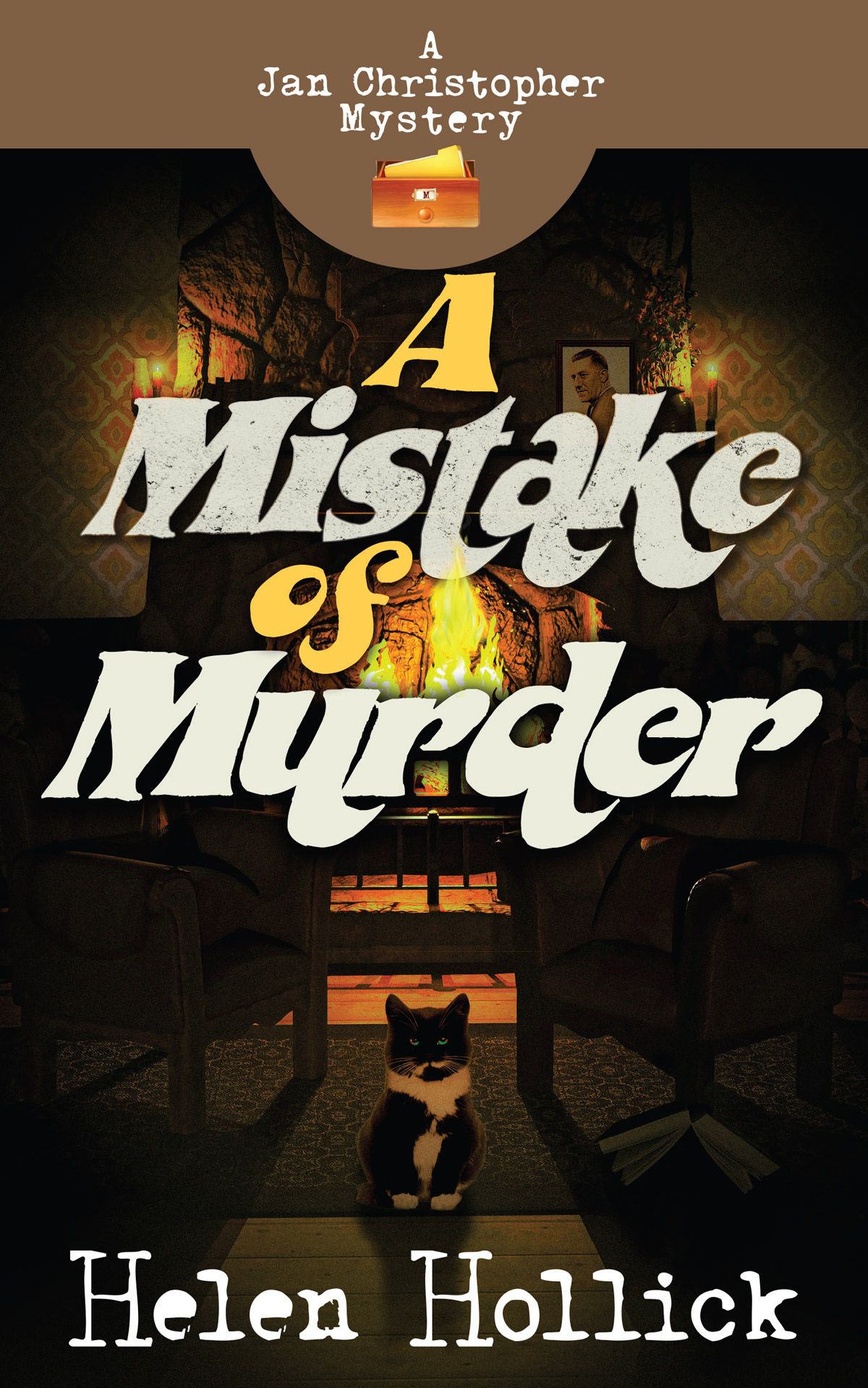
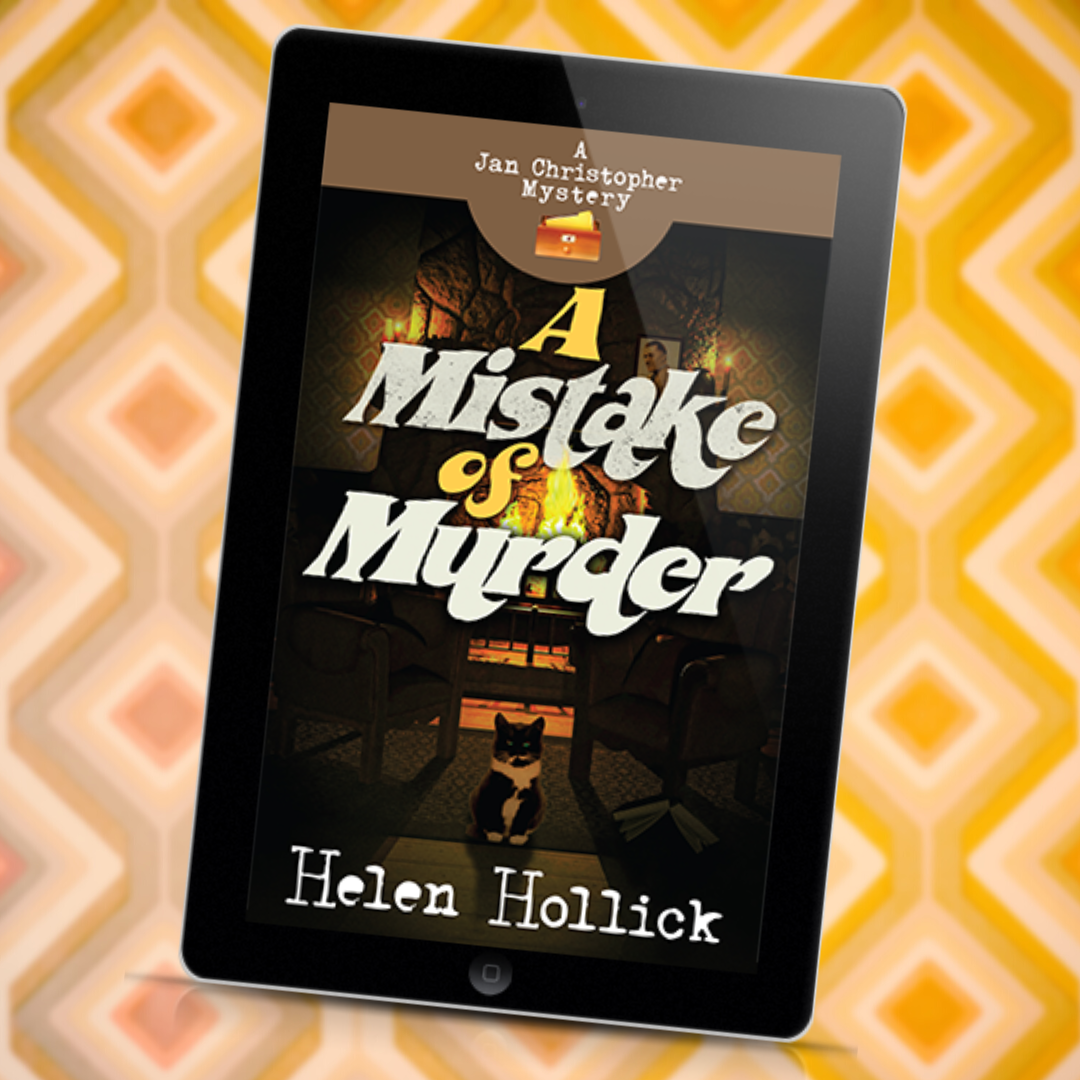
January 1972. The Christmas and New Year holiday is over and it is time to go back to work. Newly engaged to Detective Sergeant Laurence Walker, library assistant Jan Christopher is eager to show everyone her diamond ring, and goes off on her scheduled round to deliver library books to the housebound – some of whom she likes; some, she doesn’t.
She encounters a cat in a cupboard, drinks several cups of tea… and loses her ring. When two murders are committed, can Jan help her policeman uncle, DCI Toby Christopher and her fiancé, Laurie, discover whether murder was a deliberate deed – or a tragic mistake?
Buy Links
This title is available to read on #KindleUnlimited.
First accepted for traditional publication in 1993, Helen became a USA Today Bestseller with her historical novel, The Forever Queen (titled A Hollow Crown in the UK) with the sequel, Harold the King (US: I Am The Chosen King) being novels that explore the events that led to the Battle of Hastings in 1066.
Her Pendragon’s Banner Trilogy is a fifth-century version of the Arthurian legend, and she writes a nautical adventure/fantasy series, The Sea Witch Voyages. She has also branched out into the quick read novella, ‘Cosy Mystery’ genre with her Jan Christopher Murder Mysteries, set in the 1970s, with the first in the series, A Mirror Murderincorporating her, often hilarious, memories of working as a library assistant.
Her non-fiction books are Pirates: Truth and Tales and Life of A Smuggler. She lives with her family in an eighteenth-century farmhouse in North Devon, England, and occasionally gets time to write…
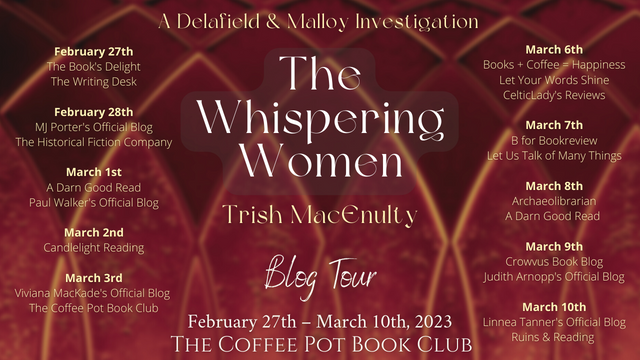
I’m delighted to welcome Trish MacEnulty to the blog with a guest post about her books.
Lesbians in the Early 20th Century — Branded as Deviants and Sometimes Jailed!
In my series, the Delafield & Malloy Investigations, one of my main characters — Ellen Malloy, an Irish immigrant — is a lesbian. As soon as she appeared on the page, she let me know in no uncertain terms that the expectation of marriage was the main reason she had left Ireland to become a servant for a wealthy family in Manhattan. Well, that didn’t work out either, but eventually she found her way and fell in love with a suffragist.
What would life be like for a lesbian in New York in 1913? I had no idea. The lives of gay men and the indignities they suffered in the late 19th and early 20th centuries has been widely documented — Oscar Wilde made sure of that! All the while, lesbians unobtrusively managed to find love and companionship in spite of the fact that their existence was rarely acknowledged.
In her fascinating academic tome, A Novel Approach to Lesbian History, Linda Garber writes “The historical records, if they exist at all, frustrate as often as they inform. Spotty, written by men, open to multiple interpretations—traces of a recognizably lesbian past run aground on the rocky shoals of the history of sexuality itself.” (3)
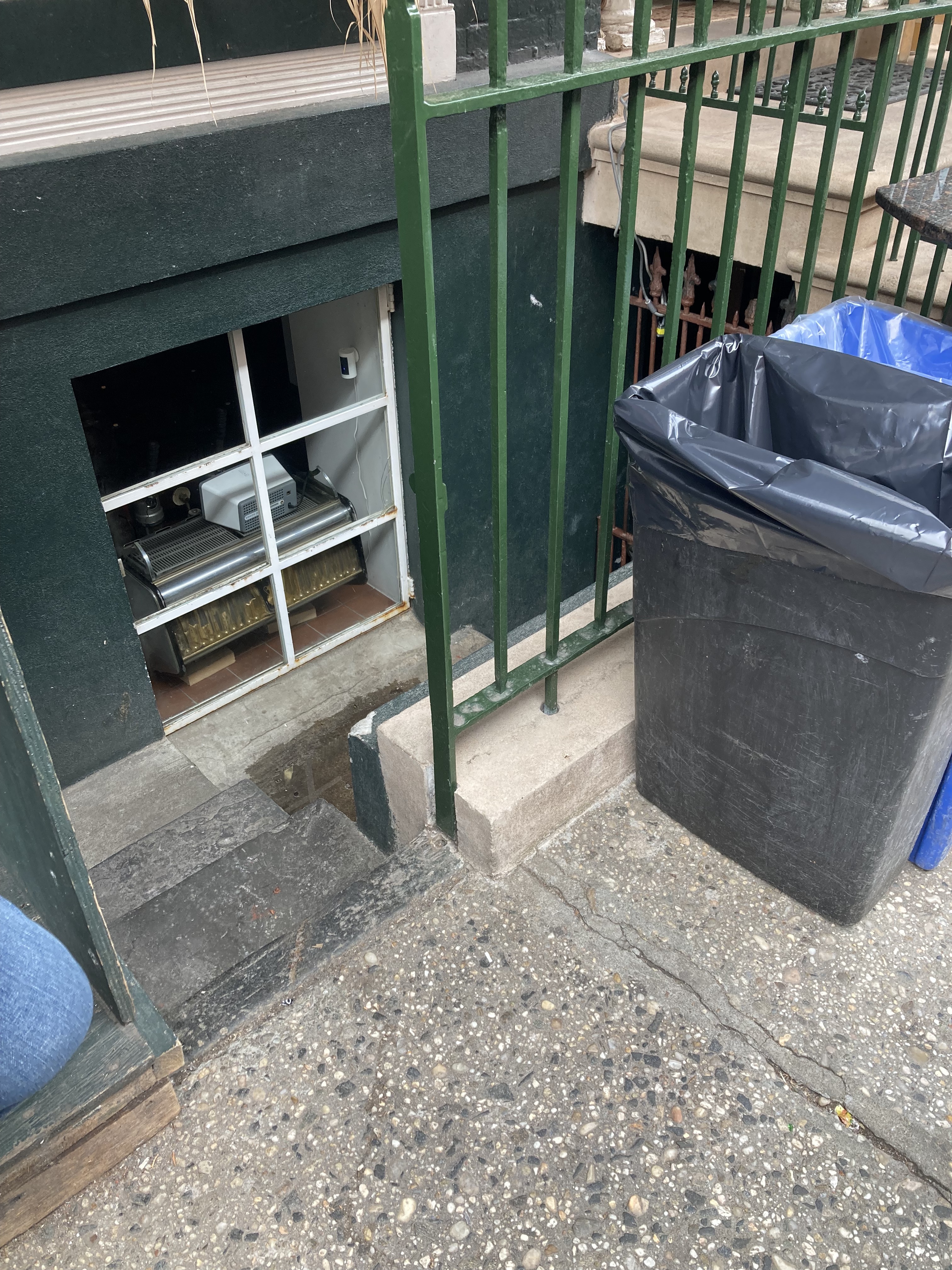
Fortunately, in the early 20th Century, the Bohemians of Greenwich Village had the freedom to live ‘unconventional’ lifestyles somewhat openly. In the Village, tea rooms provided space for women to meet each other away from the disapproving eye of society. On a recent tour of Greenwich Village with the Bowery Boys, I was shown one of the basement entrances for a former tea room. In those days, according to legend, it bore a sign that read, “Men are admitted but not welcome.”
Picture of basement, photo by me
Of course, the police knew about these places. In her autobiography, Mary Sullivan, one of the first police matrons to do actual police work, wrote, “A few tearooms run by women with a fondness for college girl patronage really were a menace…”
She added, “One of the most difficult types of degenerate with whom we have to deal is the woman with homosexual tendencies.” The police department received a complaint about “indecent literature” on sale in one of the tea rooms and a proprietess who “tried to entice girl students from a nearby college.” So Sullivan and one of her female colleagues set out to entrap the proprietess.
They visited the tea room, and the other police woman accepted a date from the proprietess, a woman named Billie. After trying to kiss the woman while on their date, Billie was arrested and then convicted of “disorderly conduct and distributing obscene literature.” She was sentenced to six months in the workhouse. Her tea room was closed. (Interestingly, this is the same scenario which happened later to activist Eve Adams; it may be the stories are conflated.)
Sullivan didn’t think jailing women with “homosexual tendencies” was the solution, however. “There is no doubt in my mind that they should be treated primarily as medical and psychiatric cases, though we still have to learn about the method of treatment.” Well, we all know where that eventually led: the horrors of conversion therapy!
picture of Sullivan’s book, photo by me
Not all lesbians kept quiet or hid their preferences. Polish-born Eve Adams arrived in New York in 1912 when she was twenty years old. In 1925, she wrote and published a book called Lesbian Love “for private circulation only.” Two years later she was arrested for obscenity and disorderly conduct and deported.
There’s an excellent book about Adams, titled The Daring Life and Dangerous Times of Eve Adams by Jonathan Ned Katz. In 1912, according to Katz, the term lesbian did not always signify a sexual relationship between women. It could simply refer to a community of women. For example, a women’s college newspaper in Maryland was called the Lesbian Herald. From everything I’ve read, the common term, at the time, for gays and lesbians was “invert.”
With this and other research in hand, I felt I could do justice to Ellen’s story in her quest for love and fulfillment. This scene is the moment Ellen first sees the women with whom she later falls in love in The Whispering Women as she is looking through the window of a teahouse in Greenwich Village:
“The tables were occupied by women of various ages and classes who seemed engrossed in conversations. One woman in particular caught her eye. She looked to be in her late twenties, big boned with a narrow face, an affable smile, and big brown eyes under thick eyebrows. Ellen could tell by her tailored gray jacket she had money, but she wasn’t showy. A strand of pearls hung carelessly around her neck. A feeling swept over Ellen like a dull ache — the kind of ache you don’t want to stop. The woman laughed at something her companion said. Ellen swiveled her head to look at the companion. Small, blond, and delicately holding her tea cup. When the woman with the pearls got up to get some more tea, Ellen saw the blond woman glance out the window and wave a handkerchief. Curiously, Ellen looked around. Two men stood across the street, smoking cigarettes with their eyes fixed on the window of the tea shop. Police, Ellen knew immediately.”
Thank you for sharing such a fascinating post. Good luck with your series.
Blurb:
“Richly drawn characters, the vibrant historical setting, and a suspenseful mystery create a strong current that pulls readers into this delightful novel. But it’s the women’s issues—as relevant today as they were in the early 1900s—that will linger long after the last page.”
— Donna S. Meredith, The Southern Literary Review
Can two women get the lowdown on high society?
“Two powerless young women must navigate a soul-crushing class system and find the levers of power they wield when they combine their strengths. These women may have been taught to whisper, but when their time comes, they will roar.”
– 5 Star Amazon Review
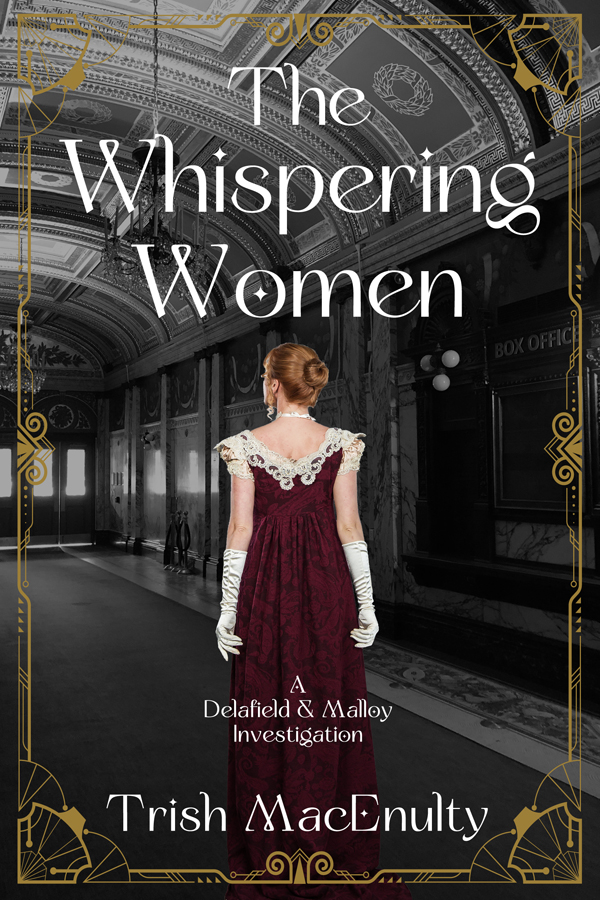
Louisa Delafield and Ellen Malloy didn’t ask to be thrown together to bring the truth to light. But after Ellen witnesses the death of a fellow servant during an illegal abortion, Louisa, a society columnist, vows to help her find the truth and turn her journalistic talent to a greater purpose.
Together, these unlikely allies battle to get the truth out, and to avenge the wrongful death of a friend.
What will our heroes do when their closest allies and those they trust turn out to be the very forces working to keep their story in the dark? They’ll face an abortionist, a sex trafficking ring, and a corrupt system determined to keep the truth at bay.
“If you like historical fiction and if you like mysteries, this one is for you!”
– 5 Star Amazon Review
Was change possible in 1913?
To find out, read THE WHISPERING WOMEN today!
Buy Links:
The books in this series are available to read on Kindle Unlimited.
Trish MacEnulty is a bestselling novelist. In addition to her historical fiction, she has published novels, a short story collection, and a memoir. A former Professor of English, she currently lives in Florida with her husband, two dogs, and one cat. She writes book reviews and feature articles for the Historical Novel Review. She loves reading, writing, walking with her dogs, streaming historical series, cooking, and dancing.
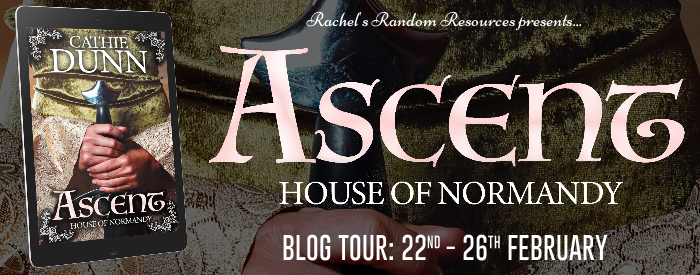
I’m delighted to be reviewing Ascent by Cathie Dunn, #histfic #BookReview #Normandy
Here’s the blurb
A brutal Viking raid heralds the dawn of a new, powerful dynasty – the House of Normandy
Neustria, Kingdom of the West Franks AD 890
Fourteen-year-old Poppa’s life changes when Northmen land near Bayeux. Count Bérengar, her father, submits to them, and she is handfasted to Hrólfr, the Northmen’s heathen leader, as part of their agreement.
To her relief, Hrólfr leaves immediately in search of further conquest, only returning to claim her years later. In the face of retaliating Franks, they flee to East Anglia, where she gives birth to their son and daughter.
When Hrólfr and Poppa return to reclaim Bayeux, his new campaign strikes at the heart of Frankish power, and King Charles of the West Franks offers him a pact he cannot refuse. In exchange for vast tracts of land in Neustria, Hrólfr must convert to Christianity and accept marriage to Gisela, the king’s illegitimate daughter.
Poppa’s world shatters. She remains in Bayeux, with her daughter, Adela. When Gisela arrives one day, demanding she hand over Adela, to be raised in Rouen, Poppa’s patience is at an end. But Gisela makes for a dangerous enemy, and only one woman will survive their confrontation high up on the cliffs.
Will Poppa live to witness the dawn of a new era?
ASCENT is the first in a new series about the early women of the House of Normandy – women whose stories have been forgotten through time.
Until now!
Readers of Viking and medieval fiction will enjoy ASCENT, a fictional account of the life of Poppa of Bayeux, handfasted wife of Rollo the Viking.
Trigger warning: Loss of a child. Some battle and fighting scenes.
Ascent tells the story of how the Duchy of Normandy formed, through the eyes of both Poppa, wed to the man many of us will know as Rollo and Rollo himself.
This is a fascinating period, at the end of the ninth century and the beginning of the tenth, when the focus of the Viking raiders had shifted from just trying to plunder, kill and steal to wanting to find new homes for themselves. While some of the story takes places in England, the focus is on the West Frankish lands, and there are familiar names here, Charles III, the king of the West Franks, the most well-known of them all.
Poppa is a strong-willed woman, but her life isn’t without hardship and suffering. Rollo, or Hrolfr, is a Viking raider, but with an eye to the future and ambition to match it. The evolving story is well portrayed, focusing on several life-changing moments as the tale progresses as it covers their entire lives after meeting.
I feel the book really comes into its own from about halfway through, and I powered through the remainder of the story. Poppa and Hrolfr are both ambitious and strong-willed, with an eye to the future, and such ambition is well portrayed without us disliking either of them. Their friends and allies also provide moments of intense sorrow and triumph as Dunn weaves a tale of the era, bringing in far-flung places, such as Orkney, which were all closely interconnected to men and women of the sea.
Constructed using incredibly scarce surviving sources (I know, I’ve studied this period, and it is mind-glowingly confusing), Ascent, the first book in the stories of Normandy, is sure to appeal to those interested in tales of historically strong women, in the formation of Normandy and also in this turbulent period when the Viking raiders – or the Normans as they came to be known – claimed a toe-hold on Frankish soil which was to have far-reaching consequences. I look forward to book 2.
Meet the author
Cathie Dunn is an award-winning author of historical fiction, mystery, and romance. The focus of her historical fiction novels is on strong women through time.
Cathie has been writing for over twenty years. She studied Creative Writing online, with a focus on novel writing, which she also taught in the south of France. She loves researching for her novels, delving into history books, and visiting castles and historic sites. A voracious reader, primarily of historical fiction / romance, she often reviews books on her blog, Ruins & Reading.
Cathie is a member of the Historical Novel Society, the Richard III Society, and the Alliance of Independent Authors.
After many years in Scotland, Cathie now lives in south of France with her husband, and rescued Charlie Cat and Ellie Dog. Discover more about Cathie at http://www.cathiedunn.com!















 MJ Porter