Author of Saxon historical fiction and non-fiction, 20th-century historical mysteries, and Norse-inspired historical romantasy. Book reviewer and blog host.
England, 1925. Louisa Drew lost her husband in the First World War and her six-year-old twin sons in the Spanish Flu epidemic of 1918. Newly re-married to a war-traumatised husband and seven months pregnant, Louisa is asked by her employer to travel to Clewer Hall in Sussex where she is to photograph the contents of the house for auction.
She learns Clewer Hall was host to an infamous séance in 1896, and that the lady of the house has asked those who gathered back then to come together once more to recreate the evening. When a mysterious child appears on the grounds, Louisa finds herself compelled to investigate and becomes embroiled in the strange happenings of the house. Gradually, she unravels the long-held secrets of the inhabitants and what really happened thirty years before… and discovers her own fate is entwined with that of Clewer Hall’s.
An exquisitely crafted and compelling mystery that invites the reader in to the crumbling Clewer Hall to help unlock its secrets alongside the unforgettable Louisa Drew.
I’ve been drawn to books like The Quickening for my last few reads, and it’s helped that there’s been a good selection in the Kindle 99p sale.
The Quickening sits comfortably within its genre – it’s not a terrifying ghost story, although it is eerie in places, and with a definite supernatural element.
The main character, Louisa Drew, immediately earns the sympathy of the reader. A life challenged by recent tragedies, a desire to move on from them finds her in an uncomfortable position, hungering for the life she once led before the war, with the promise of the future not quite what she’d thought it might be. Combined with the secrets that permeate Clewer Hall, the scene is set for a fascinating and intriguing story as we learn more about Louisa, and more about the inhabitants and history of Clewer Hall, and the famous seance of thirty years before.
An enjoyable read.
I snapped this up for 99p in the kindle sale, and you can buy it here.
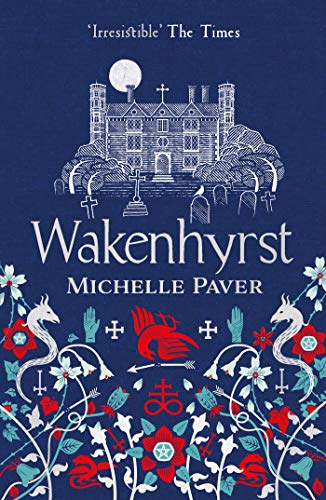
In Edwardian Suffolk, a manor house stands alone in a lost corner of the Fens: a glinting wilderness of water whose whispering reeds guard ancient secrets. Maud is a lonely child growing up without a mother, ruled by her repressive father.
When he finds a painted medieval devil in a graveyard, unhallowed forces are awakened.
Maud’s battle has begun. She must survive a world haunted by witchcraft, the age-old legends of her beloved fen – and the even more nightmarish demons of her father’s past.
Spanning five centuries, Wakenhyrst is a darkly gothic thriller about murderous obsession and one girl’s longing to fly free by the bestselling author of Dark Matter and Thin Air.
Wakenhyrst drew me in because of the blurb and the cover. It might have helped that I’ve just read a few books with a similar theme – supernatural mixed with historical fiction.
Wakenhyrst didn’t disappoint. The character of Maud was immediately engaging, that of her father, quite distant, until we get some way through the book, and the reader begins to realise the story is about the relationship between Maud, her father, the fen and the local church.
What delighted me about this book was just how deeply embedded it was in the distant past – both the Early English period, and the fifteenth century, moving forward to the early 1900s and also stopping off in the 1960s, making use of the pervading attitudes in all four time periods to drive the narrative.
It’s not an easy, pleasant read, but it is a worthwhile read, extremely atmospheric and with a little twist, right at the end, which makes sense of so much more. Recommended.
It was 99p on Kindle when I purchased it, and still was when I wrote this review. You can purchase here.
When Rósa is betrothed to Jón Eiríksson, she is sent to a remote village.
There she finds a man who refuses to speak of his recently deceased first wife, and villagers who view her with suspicion.
Isolated and disturbed by her husband’s strange behaviour, her fears deepen.
What is making the strange sounds in the attic?
Who does the mysterious glass figure she is given represent?
And why do the villagers talk of the coming winter darkness in hushed tones?
The Glass Woman is an intriguing tale of Iceland in the late 1600s.
I make no bones that I am fascinated by Iceland, perhaps not during this time period, but earlier, when the country was being settled. I tried this book on the off-chance – Jane Eyre in Iceland – yes, please.
And indeed, it is a dark tale, told from the viewpoint of Rosa. It is dark, frightening and claustrophobic, and reads very much like a much more modern Icelandic ghost story I read recently. It makes you shiver, it makes you feel for Rosa, but then everything changes and the book is not at all what you think it’s going to be.
I found the story intriguing and engaging, and if it’s not Jane Eyre in Iceland, it’s because the book is actually much harsher.
I decided it was time to take a hard look at myself, and why my very first historical fiction project is proving to be the longest so far.
The Earls of Mercia inspiration
The last century of Early England is a place well-trodden by non-fiction and historical fiction authors, so why did I choose to tell it through the eyes of a handful of people who almost slip through the historical record unnoticed because of the ‘giants’ of the period?
History is filled with those who get swept aside because other events overtake their achievements, and so it is with the Earls of Mercia. They were a family who ‘ruled’ continually from 993 to 1066 – a feat not even achieved by the Wessex royal family, begun by King Alfred, during the same time period. In the annals of the time they’ve been pushed to the side by the likes of Eadric Streona, King Cnut and the family of Godwine, by the events of both 1016 and 1066, and also by the fact that when the family married into royalty, it was destined to be short-lived.
I ‘discovered’ my first character – Ealdorman Leofwine – while meandering down the aisle in a university library. By rights, I shouldn’t have been there, not in that section, and equally, I shouldn’t have gone on to write my dissertation about him, but I did, but only after I’d made him into a fictional character. So just what was it that made him so appealing as a character?
As I read about the family, in Stephen Baxter’s, The Earls of Mercia, Lordship and Power in Late Anglo-Saxon England, I was flabbergasted that this character existed and yet hadn’t been put to good ‘use.’ Ealdorman Leofwine, his sons, grandsons, and great-grandchildren were witnesses to all of the events I’ve mentioned above. Not only did they witness them, but they were involved as well. I remember picking up and reading Frank Barlow’s book on the Godwines and being disgusted that Ealdorman Leofwine, Earl Leofric, Earl Ælfgar and his sons and daughter get little more than the odd mention. The desire to tell a story only about the Godwines excluded the perfect foil for them. I couldn’t allow that to stand.
But, how to tell the story of a century, of four generations? Initially, my idea was to tell a retrospective story, through the eyes of the great-grandson who did survive the tumultuous events of 1066, using the idea of a scribe writing down the family’s history while he was imprisoned at the request of William the Bastard for well over a decade. I still have the words I first wrote. But, that was not the route I eventually went down. No, I wanted to make Ealdorman Leofwine more than just someone’s ancestor, I wanted to make him a person in his own right, even if I do harbour the suspicion that he might have been retrospectively given greater influence than he might have claimed.
And that is the path that I’ve continued to tread. My overarching ambition is to tell the story of the years from 993-1066, but each player must have their own story, they must all be allowed to live, before they die; they must all be people in their own right. And now, as I begin to retell the story that so many are familiar with, that of the reign of Edward the Confessor and the events that led to 1066, I’m pleased by my decision to ensure the Earls of Mercia have their own story to tell – and also by the fact that because of that, other historical characters are also having their story retold a little – the oft-forgotten or misunderstood characters, and that means kings as well as earls and great ladies.
I’m pleased that people who read about the Earls of Mercia are able to consider that the Godwines were not quite the ‘top-dogs’ they might appear to be from such a distance. Not that it doesn’t involve playing around with what some might call the ‘facts’ but that is the joy of historical fiction – in getting to know my characters, in playing around with the information that we do have, I can find other possibilities, and they are not quite as far-fetched as it might be believed.
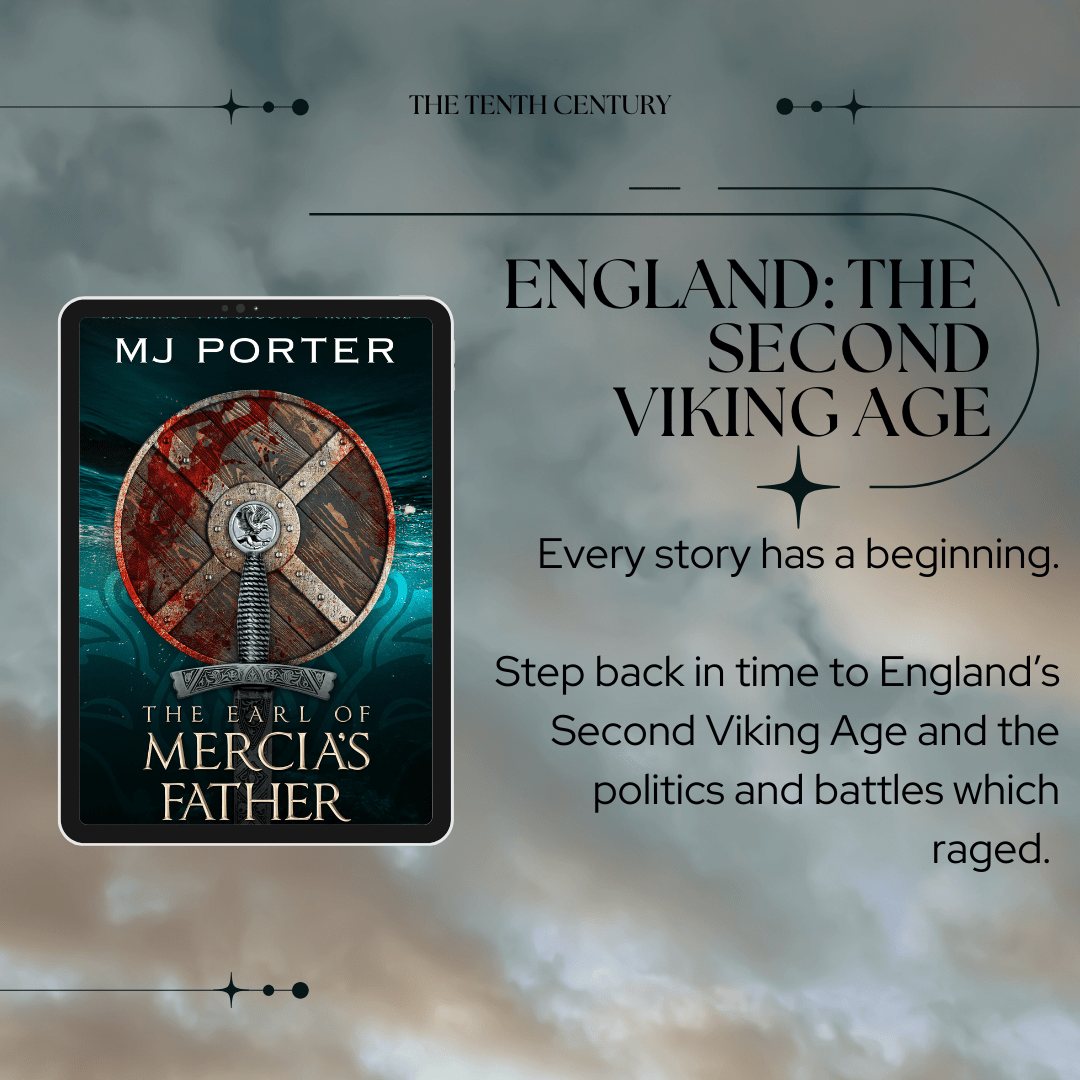
I began writing the first book in the Earls of Mercia series in 2011. Since then, I’ve been slowly working my way backward through Early England and slightly forward through Denmark. This has meant that the first two books in the series have undergone some subtle changes as they’ve been rereleased in paperback and the copyright returned to me by my publisher. So, for those who haven’t started the books yet, starting with book 1 or even book 2 isn’t necessary. You can jump in at book 3, Northman Part 1, or at The Earl of Mercia’s Father, book 6, or even with Viking King, The English King, or The King’s Brother – yes, you might miss some back story but you’ll be able to enjoy the main story.
Enjoy.
Check out the Earls of Mercia series page on the blog for more information.
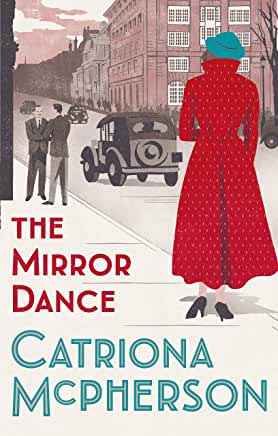
Something sinister is afoot in the streets of Dundee, when a puppeteer is found murdered behind his striped Punch and Judy stand, as children sit cross-legged drinking ginger beer. At once, Dandy Gilver’s semmingly-innocuous investigation into plagiarism takes a darker turn. The gruesome death seems to be inextricably bound to the gloomy offices of Doig’s Publishers, its secrets hidden in the real stories behind their girls’ magazines The Rosie Cheek and The Freckle.
On meeting a mysterious professor from St Andrews, Dandy and her faithful colleague Alex Osbourne are flung into the worlds of academia, the theatre and publishing. Nothing is quite as it seems, and behind the cheerful facades of puppets and comic books, is a troubled history has begun to repeat itself.
The Mirror Dance is my first encounter with Dandy Gilver, even though this is book 15 of a 1930s mystery series.
The story is told from Dandy Gilver’s point of view, and while she does sometimes share thoughts and speech which are a little wordy, it doesn’t detract from the storyline, which is satisfying and quite deliciously complex.
Even though the voice of the narrator, Dandy, gives a few hints that all is not as it seems, I genuinely didn’t work out what had happened until it was revealed at the end.
A really enjoyable and entertaining read. Thank you to Netgalley and the publisher for my review copy.
The Mirror Dance is released on the 21st January 2021 in hardback and ebook and is available here;
“August 1940. On the streets of London, locals watch with growing concern as German fighter planes plague the city’s skyline. But inside the famous Ritz Hotel, the cream of society continues to enjoy all the glamour and comfort that money can buy during wartime – until an anonymous man is discovered with his throat slashed open.
Detective Chief Inspector Coburg is called in to investigate, no stranger himself to the haunts of the upper echelons of society, ably assisted by his trusty colleague, Sergeant Lampson. Yet they soon face a number of obstacles. With the crime committed in rooms in use by an exiled king and his retinue, there are those who fear diplomatic repercussions and would rather the case be forgotten. With mounting pressure from various Intelligence agencies, rival political factions and gang warfare brewing either side of the Thames, Coburg and Lampson must untangle a web of deception if they are to solve the case – and survive.”
Murder at the Ritz is the first book I’ve read by Jim Eldridge, but it won’t be the last.
This was a thoroughly enjoyable 1940s murder-mystery with enough red herrings to keep the reader guessing throughout the story. I loved the way the author embedded the story into the events of the time, with the threat of air bombs, and the tragedies they brought. The book felt quite claustrophobic in places, with the threat of the German invasion never far away.
The story felt very complete, and well researched – the gangsters, the British Fascist party, MI5, MI6, the Foreign Office, and that’s even without the events at the Ritz, and the murder!
Highly recommended. Thank you to the publisher and Netgalley for my review copy.
Murder at the Ritz is available now in ebook and hardback from here.
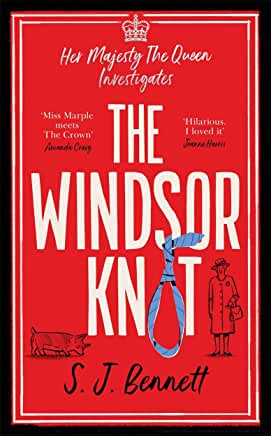
“The first book in a highly original and delightfully clever crime series in which Queen Elizabeth II secretly solves crimes while carrying out her royal duties.
It is the early spring of 2016 and Queen Elizabeth is at Windsor Castle in advance of her 90th birthday celebrations. But the preparations are interrupted when a guest is found dead in one of the Castle bedrooms. The scene suggests the young Russian pianist strangled himself, but a badly tied knot leads MI5 to suspect foul play was involved. The Queen leaves the investigation to the professionals—until their suspicions point them in the wrong direction.
Unhappy at the mishandling of the case and concerned for her staff’s morale, the monarch decides to discreetly take matters into her own hands. With help from her Assistant Private Secretary, Rozie Oshodi, a British Nigerian and recent officer in the Royal Horse Artillery, the Queen secretly begins making inquiries. As she carries out her royal duties with her usual aplomb, no one in the Royal Household, the government, or the public knows that the resolute Elizabeth will use her keen eye, quick mind, and steady nerve to bring a murderer to justice.”
So, this isn’t quite historical fiction, but it’s mainly set at Windsor Castle, so I’m going with it. The Windsor Knot was in the Kindle sale for 99p, and I decided to try it out on a whim, and I’m pleased I did. What I initially thought to be a cosy-mystery is a bit more than that and the plot becomes more and more complex as the queen wades through the information available to her.
What I really enjoyed was the way the author managed to move the queen through the duties of her day to day business and still find time for her to be thinking more than the people at MI5.
Set in 2016, just before her 90th birthday, this book is very much centred around the queen, and the people she trusts who have far more freedom than she does to get to the people and places she needs information about. There are no end of false leads and the two main characters, that of the queen and her personal secretary, Rosie, are well-constructed and engaging. And, although he only makes the odd appearance – Prince Phillip is a delight as well.
If you’re looking for a (reasonably) light-hearted murder-mystery that’s well-grounded in today’s world, then I would recommend this, and for 99p, it’s an absolute steal. Not my usual read but a delight all the same.
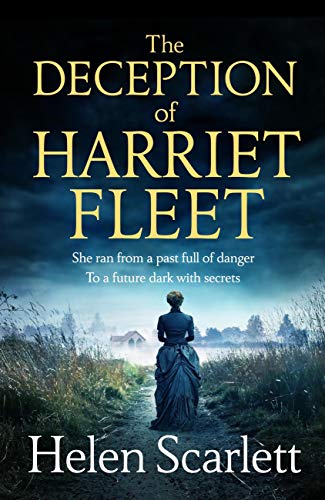
‘1871. An age of discovery and progress. But for the Wainwright family, residents of the gloomy Teesbank Hall in County Durham the secrets of the past continue to overshadow their lives.
Harriet would not have taken the job of governess in such a remote place unless she wanted to hide from something or someone. Her charge is Eleanor, the daughter of the house, a fiercely bright eighteen-year-old, tortured by demons and feared by relations and staff alike. But it soon becomes apparent that Harriet is not there to teach Eleanor, but rather to monitor her erratic and dangerous behaviour – to spy on her.
Worn down by Eleanor’s unpredictable hostility, Harriet soon finds herself embroiled in Eleanor’s obsession – the Wainwright’s dark, tragic history. As family secrets are unearthed, Harriet’s own begin to haunt her and she becomes convinced that ghosts from the past are determined to reveal her shameful story.
For Harriet, like Eleanor, is plagued by deception and untruths.’
The Deception of Harriet Fleet is a deeply atmospheric novel, tightly wrapped up in the injustices of how women were treated in the 1800s, when they were expected to shut up and look pretty. But, none of the women in this story are pretty – they are all haunted – by the events that have befallen them and on which the societal norms of the period can be blamed.
Eleanor is a deeply troubled young woman, Harriet, her governess, is running from her past, and even the household servants are subjected to the whim of their master, Mr Wainwright. Wrap that around a family tragedy that no one will talk about, and the novel becomes engrossing and fascinating, even as it repels. The way the women of the story are so completing misunderstood makes for harrowing reading, and when the double truth is eventually revealed it feels satisfying, even as shocking as it is. I confess, I didn’t predict either of the mysteries.
I picked this book from the Amazon 99p sale, and I’m so glad I did. A well-thought out novel, which doesn’t drop the suspense until near the end – and even then, I think it’s understandable.
I know I won’t have been the only one to have struggled to find books engaging throughout 2020but there are two trends that have mainly characterised my reading throughout the year. I’ve either found myself in Early England (before 1066), or in the loving embrace of cosy 1920s murder mysteries. I don’t think it’s possible to get further apart.
But there are some books that have fallen outside of those two trends, and two of these books, have been my standout books of the year.
I was lucky enough to get an advanced copy from Netgalley so didn’t have to wait until the summer to enjoy it.
Here’s the blurb:
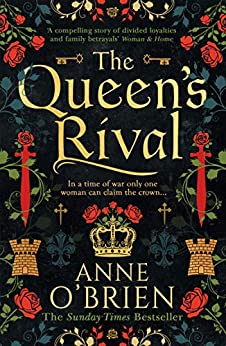
“One family united by blood. Torn apart by war…
England, 1459: Cecily, Duchess of York, is embroiled in a plot to topple the weak-minded King Henry VI from the throne. But when the Yorkists are defeated at the Battle of Ludford Bridge, Cecily’s family flee and abandon her to face a marauding Lancastrian army on her own.
Cecily can only watch as her lands are torn apart and divided up by the ruthless Queen Marguerite. From the towers of her prison in Tonbridge Castle, the Duchess begins to spin a web of deceit – one that will eventually lead to treason, to the fall of King Henry VI, and to her eldest son being crowned King of England.
This is a story of heartbreak, ambition and treachery, of one woman’s quest to claim the throne during the violence and tragedy of the Wars of the Roses.”
I loved this book, and more than that, O’Brien’s choice to tell her story almost exclusively through letters inspired me when I was struggling to write Lady Estrid, and gave me a means to tell a complex family story. But, even without that, I highly recommend this book. Anne O’Brien tells engaging and captivating stories of England’s forgotten women, and that is just the sort of book that appeals to me.
It’s available now in ebook, audiobook and hardback, and when I wrote this, the ebook was only 99p, an absolute steal.
Next up on my list of excellent reads is Camelot by Giles Kristian.
Here’s the blurb:
Britain is a land riven by anarchy, slaughter, famine, filth and darkness. Its armies are destroyed, its heroes dead, or missing. Arthur and Lancelot fell in the last great battle and Merlin has not been these past ten years. But in a small, isolated monastery in the west of England, a young boy is suddenly plucked from his simple existence by the ageing warrior, Gawain. It seems he must come to terms with his legacy and fate as the son of the most celebrated yet most infamous of Arthur’s warriors: Lancelot. For this is the story of Galahad, Lancelot’s son – the reluctant warrior who dared to keep the dream of Camelot alive
Camelot had a wonderful feel to it, and while, I wasn’t quite as enamoured of it as I was Lancelot, the sort-of prequel, I still can’t recommend it enough. The way Kristian evoked the Arthurian legend was amazing. No matter how much I ‘knew’ what was going to happen, I still wanted the characters to triumph, and that, was a little piece of genius.
Camelot is available now in hardback, ebook and audio book.
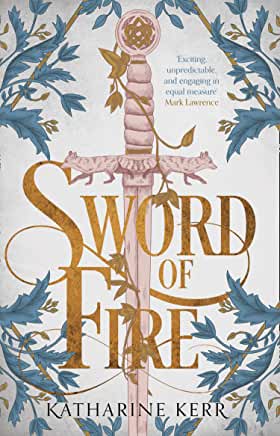
One thing I’ve noticed is that I really didn’t read a lot of fantasy this year, which is strange for me. When I did read, I found solace in some tried and tested favourites, Mark Lawrence’s The Girl and the Stars, Katharine Kerr’s return to Deverry with the wonderful Sword of Fire and Terry Pratchett – I’ve been trying to listen to some audiobooks, and although I’m still not sure I like it, I have found the Terry Pratchett audiobooks to be great entertainment, especially as I’ve read all the books in the past. I have the last book in Peter Newman’s Deathless Trilogy to read as well, but I’ve been saving it up because it’s going to be a real treat.
(I’ve just noticed that Mark Lawrence wrote a review for Sword of Fire on the cover. How funny. But, I’ve been a fan of Katharine Kerr for well over twenty years – maybe that’s why I like Mark Lawrence as he clearly is as well.)
But to return to historical fiction, I have stepped, just once or twice, further back in time than the Early English period to the Romans and the Greeks.
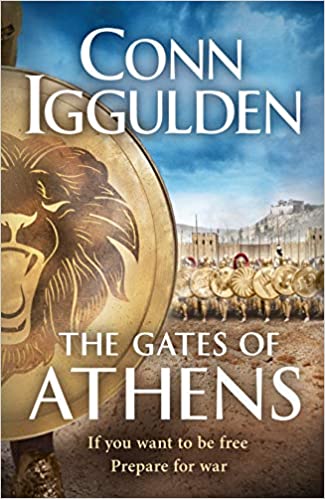
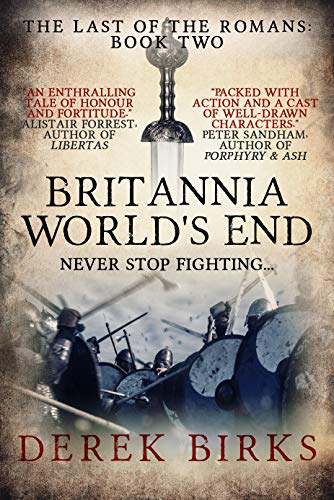
Sons of Rome by Turney and Doherty was a fantastic read, each author taking the part of one of two characters, interchanging their lives in a format that worked so well. I have book 2 to read now and I’m excited about that. And also The Gates of Rome by Conn Iggulden was a stellar read, and I’m still quite cross about the ending! He better put that right if there’s a sequel. I’m also going to give an honourable mention to Derek Birk’s Britannia World’s End. I really, really loved the first book. The second book was not quite as stellar but was still a welcome return to the characters from Book 1.
I’ve also taken on some beta reading projects this year, and have been really impressed by the quality of fiction that people are writing. I’ve been taken to Australia and New Zealand at the time of the gold rush, to Ancient Egypt, to Tudor England, 17th century Paris, 19th century Italy and now I find myself in 19th Century America. I hope these books are released and then I can share my reviews. I read books listed on Netgalley and also on The History Quill. If you love getting your mitts on books before they’re released, I highly recommend both of them, and The History Quill especially if you’re after fresh new voices in historical fiction.
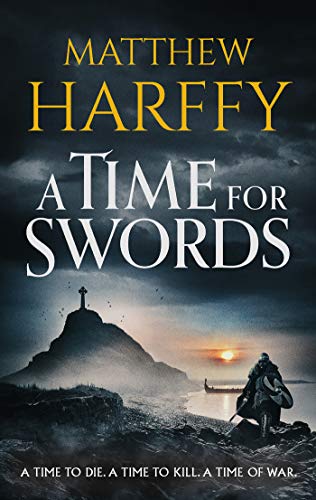
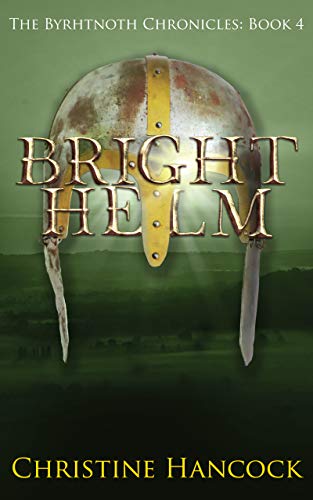
But finally, I will mention the books I’ve read from the Early English period. I’ve not read as widely as I might have liked, but it can be hard to read what you’re writing about at the same time. I’ve spent some time with Matthew Harffy’s creations with Fortress of Fury and A Time For Swords. I’ve also returned to the world of Christine Hancock’s Bright Helm and I can assure that she has a new book, hopefully next year, which readers are going to really, really enjoy – a slight diversion from Byrhtnoth but still very much mentioning him. I’ve been lucky to read a really early copy of it, and I love it already. Bring it on!
I have the last Uhtred book to read, War Lord, but I’ve been saving it up for the holidays.
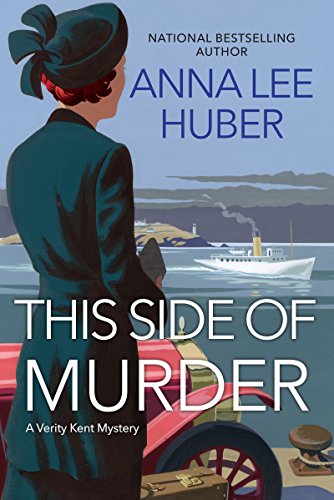
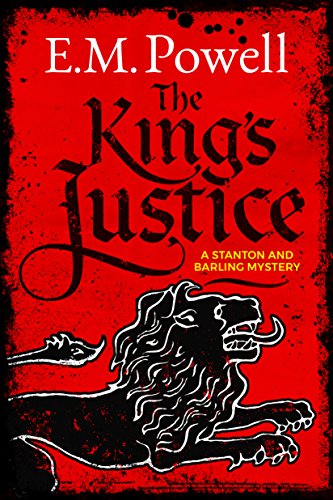
But, the thing that has really got me through the year has been a vast selection of murder mystery books. The majority have been set in the 1920s in the UK, but I have just discovered E M Powell’s Stanton and Barling mysteries set in the 1100s. These are so entertaining, if quite gory, and what I enjoy most about them, is I’ve never yet guessed who actually committed the murders! The same could be said for the Posey Parker mystery books by L B Hathaway which elevate the 1920s murder mystery to a whole new level. The Verity Kent murder mysteries are also excellent, and have a theme that runs through them all.
So, what I can take away from this is that much of the year has been spent reading cosy murder mysteries, although not many of them have been that cosy. It seems that I need a good mystery to help me unwind and one that’s not too gritty, and one that’s certainly set in the past.
Thank you to the authors who’ve kept me entertained this year, and happy reading everyone. I’m looking forward to more in 2021.
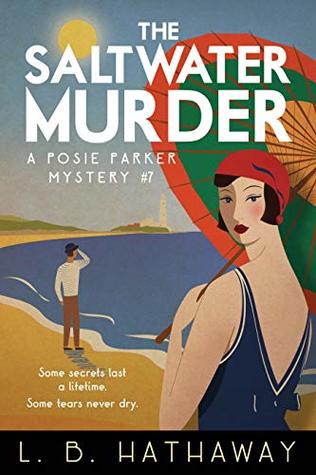
Posie Parker has been called to her most baffling case yet.
Amyas Lyle, London’s top young lawyer, has been found with his head in a box of poisoned saltwater.
It’s the perfect murder. But who hated him enough to do such a thing?
Following a trail of strange notes, all of which speak of the sea, and saltwater, Posie travels from London to the seaside resort of Whitley Bay, looking for answers. But nothing can prepare her for what she finds there.
Can Posie find Amyas Lyle’s cold-blooded killer before further deaths take place? Can she protect those Amyas has left behind?
As Britain celebrates an Olympic summer, will Posie manage to enjoy a holiday romance of her own? And just what is wrong with Inspector Lovelace? Why is he behaving so oddly? Is it anything to do with his new, smart appearance and some very carefully starched shirt collars?
This is a classic murder mystery which will appeal to fans of Agatha Christie and Downton Abbey. The Saltwater Murder is full of intrigue and red herrings, and is the seventh book in the delightfully classic Posie Parker Mystery Series, although this novel can be enjoyed as a stand-alone story in its own right. A clean read, with no graphic violence, sex or strong language.
I have a little bit of a soft-spot for 1920s murder mysteries, and the series featuring Posie Parker is certainly one of the strongest available.
I’ve read all of the books to date, and I think what is so appealing and enjoyable, is that the mysteries are deliciously complex, and the ‘bit part’ characters really come alive. Just like a classic Agatha Christie, you do spend all the time thinking, ‘it was him,’ or ‘it was her.’ Every character always has a motive but the solution is never, ever, the predictable one.
The Saltwater Murder is set in 1924 and is a fantastic addition; twisty, complex, and yet still grounded in the characters that long-time readers love and want to read about. Equally, I am sure that a reader could begin the series from here, and not feel too out of their depths, although they will then want to go back to the beginning and find out how it all started.
The author does a fantastic job of grounding the books in the time period, right down to the mention of Fry’s Chocolate bars and Lyons tea shops, and that’s without even mentioning the accurate weather forecasts and the depiction of events in the wilder world, which in this case are the 1924 Olympics held in Paris.
If you, like me, enjoy a Poirot or a Marple, and fancy something similar, then I highly recommend all of the Posey Parker books.