

Judith Arnopp is sharing a post about the historical research for A Matter of Conscience #blogtour #historicalresearch

Today, I’m delighted to welcome Judith Arnopp to the blog with a guest post about her historical research.

A Matter of Conscience is once more set during the reign of the Tudors, a period about which I know you’ve written extensively. Do you feel comfortable in the Tudor era and can you explain your research process to me, and give an idea of the resources that you rely on the most (other than your imagination, of course) to bring the historical landscape and people of Tudor England to life?

I feel very comfortable in the Tudor era, or at least in the Tudor world I have created, peopled with characters from history. Since we can never visit the past, no author can ever be 100% certain they have got it right so I don’t worry too much, if I can convince my reader, I am happy. 

I’ve enjoyed the Tudor period since I was a young girl, some forty-five years or more. As a teenager I read all I could get my hands on, both fiction and non-fiction, and later when I went to university as a mature student, I learned the importance of thorough research. At the time, I never dreamed I’d ever write a book, let alone be published. A Matter of Conscience: Henry VIII, the Aragon Years is my thirteenth novel set in the Tudor era, so I know the setting quite well by now. 

When I wrote my first Tudor books, The Winchester Goose and The Kiss of the Concubine: the story of Anne Boleyn, I needed to research from the ground up. I examined the living conditions, the law, clothes, historical figures, customs, buildings, and court etiquette. I probably did far more research than necessary, but I wanted to get it right. I spent ages researching and still rely quite heavily on the essays and notes I made then. There is an extensive university library in Lampeter, close to where I lived at the time, and I used that a lot but now I have moved farther away, I can no longer do so. Luckily, the basics are in my head, so I only need to double check the things I am unsure of. Who was where at what time? Birth dates, death dates, things like that, or palaces or castles I’ve not researched before. 

When I wrote The Beaufort Chronicle, I became so wrapped up investigating Margaret Beaufort’s many homes, I fell behind with the rest of my work schedule and had to scramble for the deadline.

As for contemporary sources, they are much easier to get hold of than they used to be. When I first began to write I had to order them via the university library and sometimes it took weeks to get into my hands. British History Online is invaluable for documents and I recently discovered another online resource called Academia that is also proving useful.

I have many key reference books in my own library, and I can’t resist historical biographies. There are a few good historians that I trust to have researched properly and as soon as they release a new book, it goes on my pile.

Each time I begin a new project, I tell myself I will be tidier and more organised but before I am half-way through, the usual chaos has resumed. I make heaps of notes that I often cannot interpret afterwards, which often means I need to look up some things again. I seem to get there in the end though. There is always a pile of books by my favourite historians on my desk for dipping in and out of for reference and another pile I read from cover to cover. For this novel I’ve relied on biographies by Tracy Borman, Alison Weir, Eric Ives, Suzannah Lipscomb, Elizabeth Norton. I think I have all Amy Licence’s books now and her new one, 1520: The Field of the Cloth of Gold was published in timely fashion just as I began work on A Matter of Conscience, and I greatly enjoyed it.  

I also listen to Claire Ridgeway on You Tube while I am sewing in my craft room. She knows all there is to know about Anne Boleyn. There are scenes in nearly all my books of women sewing or embroidering, I can empathise with their sore fingers.

I find it best to absorb a wide variety of opinions and perspectives and then mull it all over and make my own conclusion. But not all the information ends up in the finished book because too much fact in a novel can be dull. I write first person narrative so I don’t tend to over describe the everyday objects they use simply because my character would not have found them extraordinary. My books centre on the psyche, or what I imagine might have been.

When writing in Henry’s voice I must be sure to know only what Henry knew and forget what comes after and the events that occurred behind his back. I live in each moment with Henry, as he lived it. A Matter of Conscience takes place during his childhood, adolescence, and marriage to Catherine of Aragon, so I found Henry quite an easy companion. He might, however, prove harder to live with in Book Two, which will follow shortly.

Do you have a ‘go’ to book/resource that you couldn’t write without having to hand, and if so, what is it (if you don’t mind sharing)?

I use the Tudor timeline as a skeleton so always have a print out of that to hand. Also, my Who’s Who in Tudor England is invaluable for reference. Looking at the pile on my desk at his moment, I’d say I rely on Amy Licence’s books the most. I find her very accessible, concise, and most importantly, accurate. Elizabeth Norton is another name that appears often on my shelves.

But my research isn’t all books or written sources, there are also portraits and again, thanks to technology, there is no real need to visit museums and galleries to do this. I build Pinterest boards with interesting Tudor faces and costumes which helps immensely, not just with my fiction but with my non-fiction writing and actual historical sewing too. I visit castles and monastic buildings, palaces, and manor houses. I’m not a great fan of the sites that add waxworks and reconstructed ‘rooms’. I prefer to let my imagination do the work. I am lucky to live in Wales where we have so many castles. I am a founder member of a Tudor re-enactment group called The Fyne Companye of Cambria and we love to dress up in our lovely gowns and ‘swish’ about the castles. All our events were cancelled last year, for obvious reasons and we haven’t booked any this year but are waiting to see what unfolds. We will be so glad when Covid19 restrictions end and we are able to visit them again.

Thank you so much for inviting me on to your blog. It has been lovely.

Thank you so much for sharing your research with me. I can relate to much of it – I am very untidy as well, and never reference anything correctly so always have to find it again.

So, here’s the blurb for the new book. It sounds fantastic. I’ve always been drawn to this particular episode in the Tudor saga.

‘A king must have sons: strong, healthy sons to rule after him.’
On the unexpected death of Arthur Tudor, Prince of Wales, his brother, Henry, becomes heir to the throne of England. The intensive education that follows offers Henry a model for future excellence; a model that he is doomed to fail.

On his accession, he chooses his brother’s widow, Catalina of Aragon, to be his queen. Together they plan to reinstate the glory of days of old and fill the royal nursery with boys. 

But when their first-born son dies at just a few months old, and subsequent babies are born dead or perish in the womb, the king’s golden dreams are tarnished.

Christendom mocks the virile prince. Catalina’s fertile years are ending yet all he has is one useless living daughter, and a baseborn son.

He needs a solution but stubborn to the end, Catalina refuses to step aside.

As their relationship founders, his eye is caught by a woman newly arrived from the French court. Her name is Anne Boleyn.

A Matter of Conscience: the Aragon Years offers a unique first-person account of the ‘monster’ we love to hate and reveals a man on the edge; an amiable man made dangerous by his own impossible expectation
Amazon UK Amazon US 

Meet the Author

A lifelong history enthusiast and avid reader, Judith holds a BA in English/Creative writing and an MA in Medieval Studies.

She lives on the coast of West Wales where she writes both fiction and non-fiction based in the Medieval and Tudor period. Her main focus is on the perspective of historical women but more recently is writing from the perspective of Henry VIII himself.

Her novels include:

A Matter of Conscience: Henry VIII, the Aragon Years 

The Heretic Wind: the life of Mary Tudor, Queen of England

Sisters of Arden: on the Pilgrimage of Grace

The Beaufort Bride: Book one of The Beaufort Chronicle

The Beaufort Woman: Book two of The Beaufort Chronicle

The King’s Mother: Book three of The Beaufort Chronicle

The Winchester Goose: at the Court of Henry VIII

A Song of Sixpence: the story of Elizabeth of York

Intractable Heart: the story of Katheryn Parr

The Kiss of the Concubine: a story of Anne Boleyn

The Song of Heledd

The Forest Dwellers

Peaceweaver

Judith is also a founder member of a re-enactment group called The Fyne Companye of Cambria and makes historical garments both for the group and others. She is not professionally trained but through trial, error and determination has learned how to make authentic looking, if not strictly HA, clothing. You can find her group Tudor Handmaid on Facebook. You can also find her on Twitter and Instagram.

Website • Blog • Twitter • Instagram • Amazon

Don’t forget to check out the other stops on the blog tour for A Matter of Conscience.

Jennier Anton is sharing a post about the historical research for Under the Light of the Italian Moon #blogtour #historicalresearch

Today, I’m delighted to welcome Jennifer Anton to the blog, with a post about her historical research. (I love finding out all the details).

Your book, Under the Light of the Italian Moon, sounds fascinating, and the cover is beautiful. Can you explain your research process to me, and give an idea of the resources that you rely on the most (other than your imagination, of course) to bring the historical characters to life? 

Thanks for having me on the blog and thank you for your kind words about the synopsis and cover of Under the Light of the Italian Moon

I started researching the novel in 2006. My grandmother, who grew up in Italy and told me stories of her Nazi occupied hometown, got very ill before she could answer all the questions I had for her. Soon after, I had my daughter and ended up in heart failure. By the time I recovered, my grandmother died, never meeting my daughter. It was then that I decided to research her life and get answers to the questions left unanswered. 

The first place I began was with her sister, my aunt, who had lived with her in Italy. Over coffee, we would sit for hours with my tape recorder and notebook. She then introduced me to people in the U.S., Canada and Italy who could tell me more. I spent hours on the phone and then took many trips to Fonzaso, Italy, where the novel takes place. My daughter accompanied me, first as a toddler, then as a little girl and then as a teenager, as we sat speaking to elderly Italians about my family, life under Mussolini and Nazi occupation. When I spoke with them, their stories came to life in my head. I did not see the older person in front of me, with grey hair and age spots. I saw them as my characters, full of life, surviving and living day to day under difficult times. It was a beautiful experience and every detail they gave me, I tried to include in the novel. 

Researching with Aunt

While collecting first-hand accounts, I was also doing extensive research regarding the time frame. The novel covers a long period: starting in 1914, jumping to 1919 and then to 1923 and beyond. It allows the reader to see the progression of political forces in the background while we experience the life of Nina Argenta, the daughter of a strong-willed midwife who falls in love with a boy who has emigrated to the coal mines of America. I laid out the historical moments under the stories I was told and the other first hand research I was doing. A narrative began to form. 

Do you have a ‘go’ to book/resource that you couldn’t write without having to hand, and if so, what is it?

The most important resources for me were both non-fiction and fiction. From a non-fiction perspective, Victoria De Grazia’s How Fascism Ruled Women and Perry Willson’s book about the Massaie Rurali were critical to understanding life for women during this time. Because the novel deals with a midwife as a central character, women’s reproductive rights, pressures and women in society were important for me to understand. As well, documents from Ellis Island, Fonzaso church records and websites documenting the fascist and Nazi atrocities in the area were incredibly useful. 

But to fill the gaps for the historical fiction narrative, I needed to get into the hearts and minds of the characters. Non-fiction doesn’t help in that area. I sought out books from Bassani and Moravia and found a fantastic book of translated women’s stories from the time from Robin Pickering-Iazzi. This helped me sense check the life I was breathing into my characters for authenticity.

Over a fourteen-year period, I watched every film, read every book and generally filled my hours living in this time period. When I shut my office door, or opened my laptop, I was not in the place I sat, I was in Italy during the interwar years. 

Fonzaso

I hope my novel will also transport you into this time, into the life of Nina Argenta, her mother—a force of nature—Adelasia Dalla Santa Argenta and Nina’s beloved Pietro Pante. Come with me to Fonzaso and experience love and women’s resilience during the rise of fascism and WWII.  

Thank you so much for sharing your fascinating journey with me. It sounds as though your research was both very personal and incredibly interesting.

Here’s the blurb;

A promise keeps them apart until WW2 threatens to destroy their love forever

Fonzaso Italy, between two wars

Nina Argenta doesn’t want the traditional life of a rural Italian woman. The daughter of a strong-willed midwife, she is determined to define her own destiny. But when her brother emigrates to America, she promises her mother to never leave.

When childhood friend Pietro Pante briefly returns to their mountain town, passion between them ignites while Mussolini forces political tensions to rise. Just as their romance deepens, Pietro must leave again for work in the coal mines of America. Nina is torn between joining him and her commitment to Italy and her mother.

As Mussolini’s fascists throw the country into chaos and Hitler’s Nazis terrorise their town, each day becomes a struggle to survive greater atrocities. A future with Pietro seems impossible when they lose contact and Nina’s dreams of a life together are threatened by Nazi occupation and an enemy she must face alone…

A gripping historical fiction novel, based on a true story and heartbreaking real events.

Spanning over two decades, Under the Light of the Italian Moon is an epic, emotional and triumphant tale of one woman’s incredible resilience during the rise of fascism and Italy’s collapse into WWII.

AmazonBarnes & NobleWaterstones

Bookshop.org (U.S. only):  I am Books Boston

Meet the Author

Jennifer Anton is an American/Italian dual citizen born in Joliet, Illinois and now lives between London and Lake Como, Italy. A proud advocate for women’s rights and equality, she hopes to rescue women’s stories from history, starting with her Italian family.

WebsiteTwitterFacebookInstagram

PinterestBook BubAmazon Author Page

GoodreadsYoutube

Don’t forget to check out the other stops on the Under the Light of the Italian Moon Blog Tour with The Coffee Pot Book Club

David Loux is sharing some historical research from Chateau Laux #blogtour #historicalresearch #histfic

Today I’m delighted to welcome David Loux to the blog to talk about the research for his new book, Chateau Laux.

Your book, Chateau Laux, is set in a time period I wouldn’t even know how to start writing about. As a historian first and foremost, and then a writer, I’m always interested in how people research their historical stories.

My research did not start out with a novel in mind.  It began with an investigation of the Laux family surname in 2005.  This research resulted in a lot of information related to the provenance of the name, which I presented in a paper addressed to a Laux family reunion in York, Pennsylvania, in 2010.  It subsequently provided the foundational material for Chateau Laux.

Can you explain your research process to me, and give an idea of the resources that you rely on the most (other than your imagination, of course) to bring your historical landscape to life? 

One of the challenges of historical research is that much valuable information is lost over the years—especially the good, warm-blooded stories of individual lives.  Fortunately, interest in the Laux name goes back many years, and I was able to benefit from genealogical publications in 1910 that provided information which would have been increasingly difficult to access over time.  Another very tangible benefit to my research was that the Laux name was of noble origin, which meant that I was able to discover information that went all the way back to the middle ages.  Some of the information was in French and some was in Latin, and the wonderful research assistants at the Bibliothèque Nationale were a big help.  I also benefited from connections made through the Center for Basque Studies at the University of Nevada in Reno, which put me in touch with researchers familiar with Occitan names and pronunciations.  Finally, and most importantly, family group members in southern France were able to provide information from archives that would have been unavailable from other sources.

Do you have a ‘go’ to book/resource that you couldn’t write without having to hand, and if so, what is it (if you don’t mind sharing)?

When I first started my research, I had very little idea of the milieu and other significant associations connected with the name, which means I had to keep an open mind and read anything I could get my hands on.  There were many false starts and dead ends.  As far as critical resources, I would have to say that Chateau Laux would not have been the same without the research assistance of the Bibliothèque Nationale, as they were able to provide context and authenticity that would otherwise have been elusive.  But then again, every resource previously referred to was essential in its own way. It helps that I was able to read French, and to a lesser extent, Spanish, as some of the information was only available in those languages.

Thank you so much for sharing the research you undertook to write your book. It’s so fascinating to find out what makes people write the stories that they do.

Here’s the blurb;

A young entrepreneur from a youthful Philadelphia, chances upon a French aristocrat and his family living on the edge of the frontier. Born to an unwed mother and raised by a disapproving and judgmental grandfather, he is drawn to the close-knit family. As part of his courtship of one of the patriarch’s daughters, he builds a château for her, setting in motion a sequence of events he could not have anticipated.

Amazon UK Amazon US Amazon CA

Amazon AU Barnes and Noble  Kobo

Meet the Author

David Loux is a short story writer who has published under pseudonym and served as past board member of California Poets in the Schools. Chateau Laux is his first novel. He lives in the Eastern Sierra with his wife, Lynn.

Website

Twitter

Goodreads

Amazon Author Page 

Don’t forget to check out the other stops on the Chateau Laux blog tour with The Coffee Pot Book Club.

Virginia Crow is sharing historical research from The Year We Lived #blogtour #historicalresearch #histfic

Today I’m delighted to welcome Virgina Crow to the blog with a post about the historical research she undertook to write The Year We Lived.

Hello and thank you for hosting me and my book on your blog, and for inviting me to share such a fantastic topic with your readers!

I know the research process is slightly different for different writers. The first thing I have to say is that I love research! I would say that, for every statement of historical significance in my book there is about ten-times more research which has gone into the writing of it. In fact, my editor does occasionally point out to me that my readers don’t always need quite so much historiographical details!

Researching so far back in time was quite new to me. Most of the historical fiction I’ve written before has a lot more primary sources to excavate and delve into, especially in those pre-Covid days when a trip to a museum was easily available!

The first thing I had to familiarise myself with was the landscape. I’ve always been surrounded by maps – my dad has a collection of hundreds of them – and some of my favourite books as a child were a massive geography book and the Weetabix atlas! Since my dad is an out-and-out Lincolnshire yellowbelly, I have always known the changing landscape of that particular county! To look at a map of the eleventh century fenlands my characters would have known, it is startlingly different to the lay of the land in the twenty-first century!

This landscape was full of islands, which were often indistinguishable from the rest of the boggy marshes, something which made the hidden Hall in The Year We Lived a very believable concept! When I delved deeper into the case of Hereward, I realised how paranoid William the Conqueror was about the Fens and the threat they posed. It made sense to have the brutal lordship of Henry De Bois situated here in an attempt to crush what William was led to believe were a group of Saxons ready for insurrection.

Next came the characters. For this, I knew I wanted people outside the conventional image of the Normans so, on flicking through various websites and pages about the number of non-Normans on William’s side in the Battle of Hastings, I settled on the possibility of making my French characters Burgundian instead. I loved the headstrong and stubborn trait which seemed to come hand in hand with being from Burgundy, and it’s something I tucked into each of those characters.  But the French court at this time was a topic which was totally new to me. When I was studying for my MLitt, I remember my lecturer saying that it was totally acceptable to use Wikipedia as a first port of call providing you checked out everything which was on there, so this was what I did as I researched the major players.

One of the things I love the most about writing historical fiction is how, providing you read around the family and situation, you can convince your audience – and sometimes yourself – of the existence of your characters. Every single one of my Burgundians came from a real family, all of which are referenced in some sneaky way or another. I love weaving little clues into my writing, and I think doing it in a historical setting just makes it all the more fun (but then I could be biased!).

The final thing, which I found perhaps the most fascinating of all, was exploring the superstitions of the time. These were often localised but some things were pretty generally accepted.  Having been raised on a diet of myths and legends, this was something I absolutely loved exploring. Something I discovered was that many of these superstitions made sense.  A lot of them have their roots in logic, but they were without the understanding of science which we have now.  There is no shortage of these words of wisdom, many of which are still in existence today in some shape or form. Perhaps because of the oral nature of these hand-me-downs and the weirdness they relate, these were easier to place in the map and chronology of my research. I tucked into books and theses to uncover some of the most bizarre anecdotes imaginable, and nestling them into The Year We Lived – I hope – helps the plot and characters come to life.

After all, it’s our idiosyncrasies which make us unique!

Thank you so much for sharing your research with me. It’s always fascinating to discover what prompts people to write the books they do.

Here’s the blurb;

It is 1074, 8 years after the fateful Battle of Hastings. Lord Henry De Bois is determined to find the secret community of Robert, an Anglo-Saxon thane. Despite his fervour, all his attempts are met with failure.

When he captures Robert’s young sister, Edith, events are set in motion, affecting everyone involved. Edith is forced into a terrible world of cruelty and deceit, but finds friendship there too.

Will Robert ever learn why Henry hates him so much? Will Edith’s new-found friendships be enough to save her from De Bois? And who is the mysterious stranger in the reedbed who can disappear at will?

A gripping historical fiction with an astonishing twist!

Amazon UK • Amazon US • Amazon CA • Amazon AU • Barnes and Noble • Waterstones • Kobo • Smashwords • Crowvus

Meet the Author

Virginia grew up in Orkney, using the breath-taking scenery to fuel her imagination and the writing fire within her. Her favourite genres to write are fantasy and historical fiction, sometimes mixing the two together such as her newly-published book “Caledon”. She enjoys swashbuckling stories such as the Three Musketeers by Alexandre Dumas and is still waiting for a screen adaption that lives up to the book!

When she’s not writing, Virginia is usually to be found teaching music, and obtained her MLitt in “History of the Highlands and Islands” last year. She believes wholeheartedly in the power of music, especially as a tool of inspiration. She also helps out with the John O’Groats Book Festival which is celebrating its 3rd year this April.

She now lives in the far flung corner of Scotland, soaking in inspiration from the rugged cliffs and miles of sandy beaches. She loves cheese, music and films, but hates mushrooms.

Connect with Virginia

Website • Twitter • Facebook • Instagram • Publisher • BookBub • Amazon Author Page • Goodreads

Don’t forget to check out the other stops on The Year We Lived Blog Tour.

I’m reviewing for Masters of Rome by Simon Turney and Gordon Doherty #bookreview #histfic #blogtour

I’m sharing my review for Masters of Rome by the combined talents of Simon Turney and Gordon Doherty. This is the second book in the trilogy. Check out my review for book 1, Sons of Rome, here.

Here’s the blurb

Their rivalry will change the world forever.

As competition for the imperial throne intensifies, Constantine and Maxentius realise their childhood friendship cannot last. Each man struggles to control their respective quadrant of empire, battered by currents of politics, religion and personal tragedy, threatened by barbarian forces and enemies within.

With their positions becoming at once stronger and more troubled, the strained threads of their friendship begin to unravel. Unfortunate words and misunderstandings finally sever their ties, leaving them as bitter opponents in the greatest game of all, with the throne of Rome the prize.

It is a matter that can only be settled by outright war…

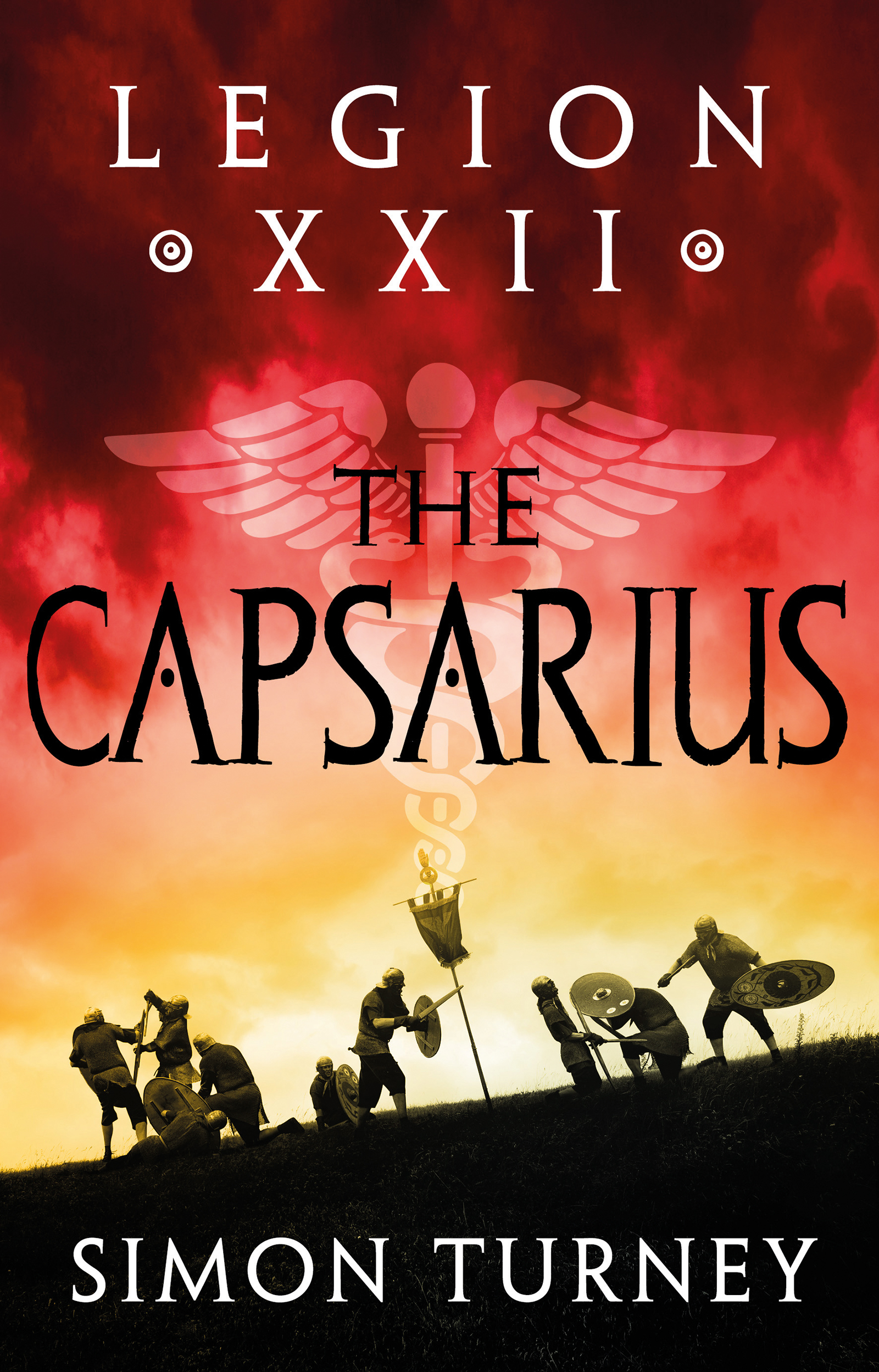
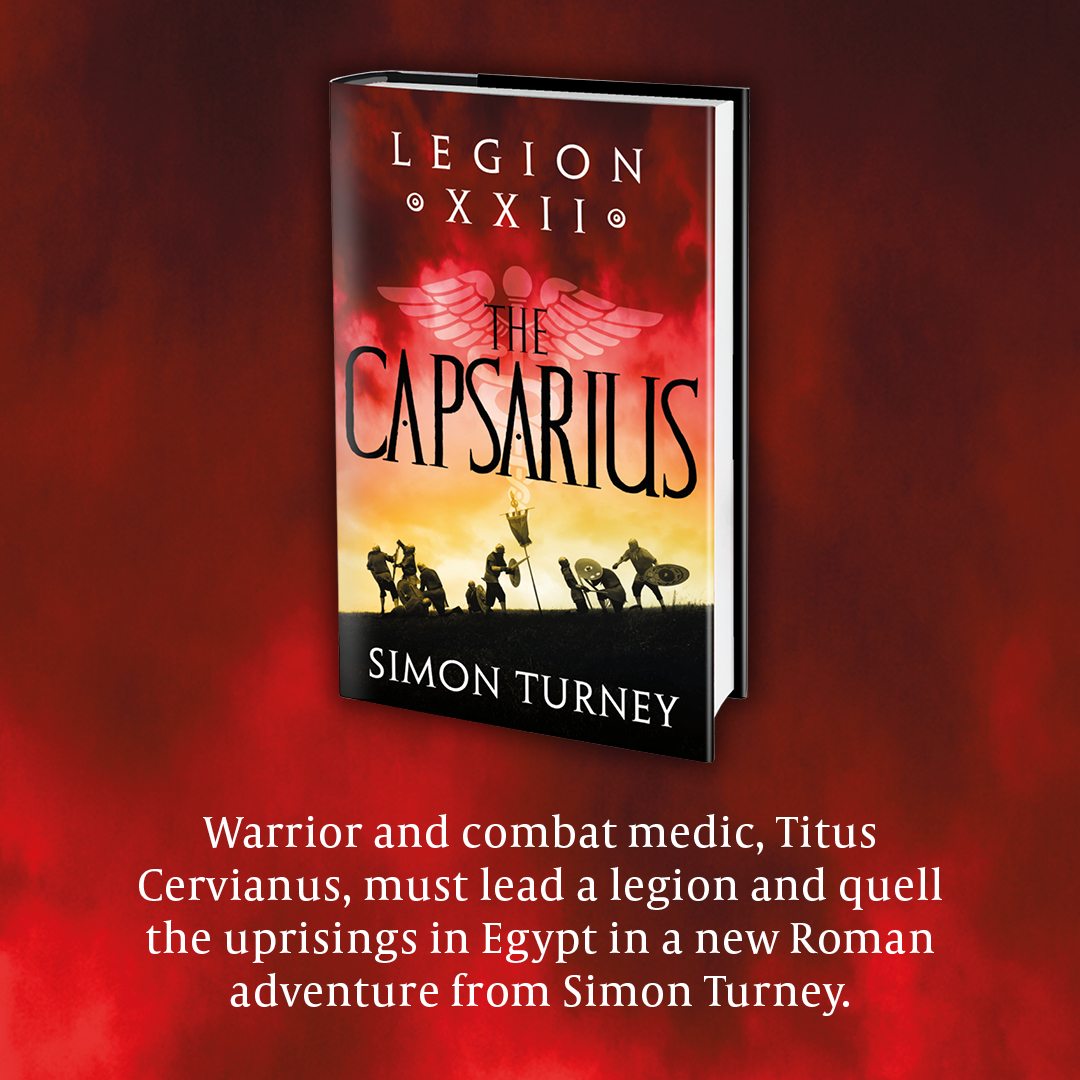
Cover image for Masters of Rome by Doherty and Turney

My Review

Masters of Rome is the stunning sequel to Sons of Rome, and the juicy jam? in this trilogy about Maxentius and Constantine, and the state of the Roman Empire in the early 300’s.


It is a book of vast scope, and yet perfectly held in check by the twin authors, Turney and Doherty, both taking the part of one of the main characters. Taking the reader from Rome to Africa, from Gaul to Rome, the scope of the novel is massive, and yet it never feels it. Never.


I am in awe of the skill of both authors to bring something as complex as this time period to life with such apparent ease (I know it won’t have been easy, but it feels it). Each chapter flows into the next, the desire to give both characters an equal voice, never falters, and quite frankly, I have no idea how the trilogy is ultimately going to end, but I am desperate to know:)


I highly recommend Masters of Rome, especially and particularly for those, who have no knowledge of the history of the period (like me) because it is absolutely fascinating and told with panache and skill, with an eye to detail. And those who do know the period, you’re still in for a treat as we follow the lives of Constantine and Maxentius and the inevitable march to war.

Purchase Link

About the authors

Simon Turney is the author of the Marius’ Mules and Praetorian series, as well as The Damned Emperor series for Orion and Tales of the Empire series for Canelo. He is based in Yorkshire. 

Gordon Doherty is the author of the Legionary and Strategos series, and wrote the Assassin’s Creed tie-in novel Odyssey. He is based in Scotland.

Follow Simon

Website

Simon Turney author image

Follow Gordon

Website

Gordon Doherty author image

Follow Aries

Websitehttp://www.headofzeus.com

Blog tour banner for Masters of Rome by Doherty and Turney

Check out my other reviews for Simon Turney/SJA Turney’s books

Commodus

Domitian

Sons of Rome

The Bear of Byzantium

Loki Unbound

The Earls of Mercia Series – what possessed me? #histfic

The Earls of Mercia Series – what possessed me?

I decided it was time to take a hard look at myself, and why my very first historical fiction project is proving to be the longest so far.

The Earls of Mercia inspiration

The last century of Early England is a place well-trodden by non-fiction and historical fiction authors, so why did I choose to tell it through the eyes of a handful of people who almost slip through the historical record unnoticed because of the ‘giants’ of the period?

History is filled with those who get swept aside because other events overtake their achievements, and so it is with the Earls of Mercia. They were a family who ‘ruled’ continually from 993 to 1066 – a feat not even achieved by the Wessex royal family, begun by King Alfred, during the same time period. In the annals of the time they’ve been pushed to the side by the likes of Eadric Streona, King Cnut and the family of Godwine, by the events of both 1016 and 1066, and also by the fact that when the family married into royalty, it was destined to be short-lived.

I ‘discovered’ my first character – Ealdorman Leofwine – while meandering down the aisle in a university library. By rights, I shouldn’t have been there, not in that section, and equally, I shouldn’t have gone on to write my dissertation about him, but I did, but only after I’d made him into a fictional character. So just what was it that made him so appealing as a character?

As I read about the family, in Stephen Baxter’s, The Earls of Mercia, Lordship and Power in Late Anglo-Saxon England, I was flabbergasted that this character existed and yet hadn’t been put to good ‘use.’ Ealdorman Leofwine, his sons, grandsons, and great-grandchildren were witnesses to all of the events I’ve mentioned above. Not only did they witness them, but they were involved as well. I remember picking up and reading Frank Barlow’s book on the Godwines and being disgusted that Ealdorman Leofwine, Earl Leofric, Earl Ælfgar and his sons and daughter get little more than the odd mention. The desire to tell a story only about the Godwines excluded the perfect foil for them. I couldn’t allow that to stand.

But, how to tell the story of a century, of four generations? Initially, my idea was to tell a retrospective story, through the eyes of the great-grandson who did survive the tumultuous events of 1066, using the idea of a scribe writing down the family’s history while he was imprisoned at the request of William the Bastard for well over a decade. I still have the words I first wrote. But, that was not the route I eventually went down. No, I wanted to make Ealdorman Leofwine more than just someone’s ancestor, I wanted to make him a person in his own right, even if I do harbour the suspicion that he might have been retrospectively given greater influence than he might have claimed. 

And that is the path that I’ve continued to tread. My overarching ambition is to tell the story of the years from 993-1066, but each player must have their own story, they must all be allowed to live, before they die; they must all be people in their own right. And now, as I begin to retell the story that so many are familiar with, that of the reign of Edward the Confessor and the events that led to 1066, I’m pleased by my decision to ensure the Earls of Mercia have their own story to tell – and also by the fact that because of that, other historical characters are also having their story retold a little – the oft-forgotten or misunderstood characters, and that means kings as well as earls and great ladies. 

I’m pleased that people who read about the Earls of Mercia are able to consider that the Godwines were not quite the ‘top-dogs’ they might appear to be from such a distance. Not that it doesn’t involve playing around with what some might call the ‘facts’ but that is the joy of historical fiction – in getting to know my characters, in playing around with the information that we do have, I can find other possibilities, and they are not quite as far-fetched as it might be believed.

I began writing the first book in the Earls of Mercia series in 2011. Since then, I’ve been slowly working my way backward through Early England and slightly forward through Denmark. This has meant that the first two books in the series have undergone some subtle changes as they’ve been rereleased in paperback and the copyright returned to me by my publisher. So, for those who haven’t started the books yet, starting with book 1 or even book 2 isn’t necessary. You can jump in at book 3, Northman Part 1, or at The Earl of Mercia’s Father, book 6, or even with Viking King, The English King, or The King’s Brother – yes, you might miss some back story but you’ll be able to enjoy the main story.

Enjoy.

Check out the Earls of Mercia series page on the blog for more information.

Posts

To celebrate the release of The Last Enemy in 2020, my interviewer unexpectedly caught up with Rudolf, a member of the king’s warband.

Ere, what you up to?

Oh, hello, I’m here to interview King Coelwulf about his latest book.

Really, I wouldn’t think he’d do that. He’s make some excuse about having no time, or some such. Oh wait, did Lady Cyneswith set this up?

Yes, she did, and I’ve already spoken to her. But tell me, do you know the king? You seem to know who everyone is.

Of course I do. I’m Rudolf. His old squire, and now member of his warband. Why?

Would you like to talk to us about his latest book?

Well, I suppose I have the time. If you’re quick, and I don’t get caught. I’m supposed to be showing young Hiltiberht the ropes, and Haden can be a real handful.

Tell me, what’s King Coelwulf like? As a warrior?

Bloody lethal. You don’t want to be facing off against him. I’ve never seen anyone kill so quickly. And the moves he can do? I wish I had even half of his skill. I mean, he says I’m a good warrior and all, but I make up for my lack of skill with speed. And he doesn’t have that because he’s so bloody …. Um, because he doesn’t need to do that. Sometimes, I swear the enemy make it look so easy it’s as though they’re falling onto his seax or sword.

He’s quite good then?

Better than good. I’ve never seen anyone fight the way he does. Well, apart from Icel, and Edmund, and maybe Hereman. But, certainly, the Raiders stand no chance against him.

I hear he even camps in the woodlands and forests? It’s not really the sort of thing a king should do, is it?

Now, you see here. He was a warrior long before he was king. King Coelwulf only has one aim, to kill all the Raiders. To drive them from Mercia and make sure they don’t come back. He’s not into all that fancy clothes, and court etiquette, or sleeping in a bed of silk sheets. They’d be too damn cold, anyway. He’s told me. No, the king of Mercia is a damn warrior, and the only man capable of defeating the Raiders, and the Welsh, if it comes to it. 

And, have you read the new book?

Got no time for reading. I’m sure King Coelwulf told you that, and he’s right. I’d like a good night’s sleep without interruption more than I’d like to read a book. Maybe a scop could tell the tale. But, that would be Edmund and I’d have to listen to him tell the tale. He’s good, of course he’s good, but he probably wouldn’t mention me as much as I might like.

To all the young lads who do read the book, what would your advice be? How could they get into King Coelwulf’s warband?

Well, they should probably have joined it a while ago, and at the moment, there’s a few squires that need training up, so there’s no room, not for a while. So, I’d tell them to wait, and while they’re waiting, learn a few things, like how to clean saddles and seaxs. It’s a mucky job, but someone’s got to do it. And with King Coelwulf, you’ve got to earn his respect first. And then, well, once you’ve got it, you’ve got to keep it. A hard man, but a great man. Mercians should be pleased with their king. He’ll keep them safe, or he’ll die trying. You didn’t find the old king doing that. Far from it in fact. He’s scuttled off to Rome, or somewhere like that. Gone to pray for his soul. He’s got a lot to need forgiveness for, abandoning his kingdom like that.

Oh, sorry, I’ve got to go. 

And there you have it. A few words from Rudolf, King Coelwulf’s old squire. I hear he fights incredibly well, and offers some important advice for any would be members of the king’s warband.

If you haven’t read my earlier interview with King Coelwulf, then you can find it here. And I also interviewed his Aunt, which can be found here.

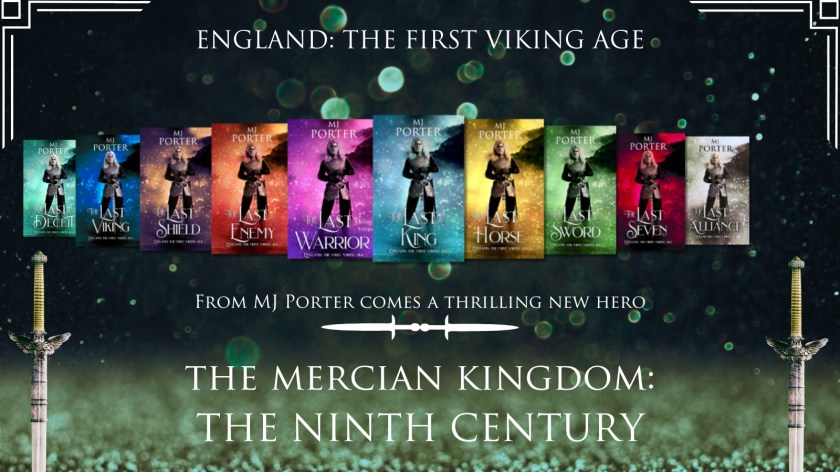
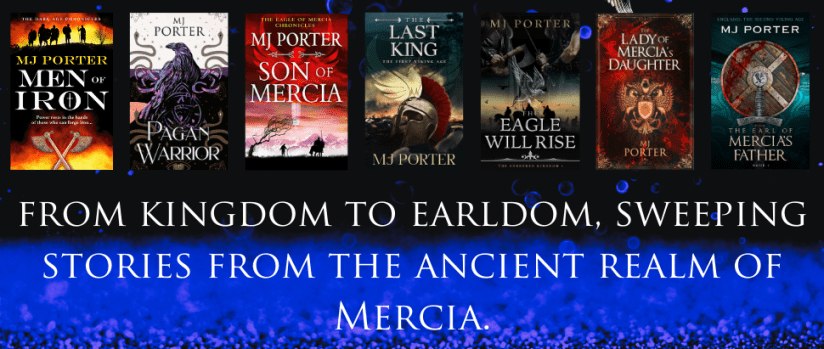
The Ninth Century Mercian series covers for all 9 books

Check out my review for Matthew Harffy’s new release, A Time for Swords #bookreview #histfic #blogtour

Here’s the blurb;

“Lindisfarne, AD793. The life of a novice monk will be changed forever when the Vikings attack in a new historical adventure from Matthew Harffy.

There had been portents – famine, whirlwinds, lightning from clear skies, serpents seen flying through the air. But when the raiders came, no one was prepared.

They came from the North, their dragon-prowed longships gliding out of the dawn mist as they descended on the kingdom’s most sacred site.

It is 8th June AD793, and with the pillage of the monastery on Lindisfarne, the Viking Age has begun.

While his fellow monks flee before the Norse onslaught, one young novice stands his ground. He has been taught to turn the other cheek, but faced with the slaughter of his brothers and the pagan desecration of his church, forgiveness is impossible.

Hunlaf soon learns that there is a time for faith and prayer… and there is a time for swords.”

REVIEW

A Time for Swords is an attempt to retell the story of England’s first recorded Raider (Viking) attack on Lindisfarne which is confidently dated to AD793.

It is an event that demands to be written about, and the beginning of A Time For Swords, which recounts the attack, is thrilling. Our young hero, Hunlaf, is caught up in the attack, but lives to see another day. Others are not as fortunate.

The story progresses at a steady pace, as the shock waves of the attack begin to be felt throughout the kingdom of Northumbria, and people react to the news in different ways. The addition of a captured Norse Raider, Runolf, with his strict code of honour, adds an intriguing dimension to the story, allowing the author to confidently state that the attack on Lindisfarne will not be a singular occurrence, and that the people of Northumbria need to be prepared for such.

Much of the action takes place not at Lindisfarne, but rather at Werceworthe, (Warkworth) which happens to be about 5 miles down the road from where I live. This made the story feel immediate, perhaps helped by a long-ago Sunday afternoon row down the Cocueda (Coquet) River.

I thoroughly enjoyed A Time For Swords. The opening scenes are particularly well told, and the eventual battle, when it comes, makes clever use of the physical landscape of Warkworth.

Thank you to Netgalley and the publisher for my review copy.

A Time for Swords is now available in ebook format, and is available from here. (Isn’t the cover fantastic?)

About the author

Matthew Harffy grew up in Northumberland where the rugged terrain, ruined castles and rocky coastline had a huge impact on him. He now lives in Wiltshire, England, with his wife and their two daughters. 

Connect with Matthew here: Twitter, Website

And check out reviews of previous books by Matthew Harffy here.

The Wolf of Wessex

Fortress of Fury

Follow Aries

Twitter: @AriesFiction

Facebook: Aries Fiction

Website: http://www.headofzeus.com

Lady Estrid is on ‘tour’ with the Coffee Pot Book Club – check out the posts so far

Lady Estrid has taken herself on tour with the fabulous Coffee Pot Book Club. She what she’s been up to, and thank you to everyone for hosting her, and the Coffee Pot Book Club for arranging.

November 2nd Mary’s Tavern (Excerpt)

November 9th Gwendalyn’s Books (Review)

November 16th Judith Arnopp’s Official Blog (Excerpt)

November 23rd Brook Allen’s Official Blog (All about the historical Lady Estrid)

November 30th Sylv.Net (Excerpt)

December 7th Madwoman in the Attic (Review)

December 14th Elizabeth St John’s Official Blog (Interview)

December 21st Let the Words Shine (Five facts you didn’t know about me)

December 28th Candlelight Reading (Excerpt)

January 4th The Writing Desk (Letter writing in the eleventh century)

Lady Estrid is available now in ebook and paperback.

Thank you to all the hosts for allowing Lady Estrid onto their blogs, and to The Coffee Pot Book Club for being so, so, so good at organising everything. Thank you.

(This post contains Amazon affiliate links, which means that at no cost to you, Amazon rewards me.)

To celebrate the release of The Last Enemy, my interviewer caught up with Lady Cyneswith. #histfic #TheLastKing

The first eight covers for The Last King series by MJ Porter
The Last King/The Mercian Ninth Century

I’m very honoured to have caught a few moments with Lady Cyneswith, the aunt of King Coelwulf. Thank you for finding the time to speak to me.

“Well, I’m sure you’ve discovered that my nephew is a very busy man, a bit rough around the edges some times, and so I’m delighted to speak with you on his behalf, smooth away any ruffles he might have caused.

Yes, I confess, I had noticed that he was short on time when I tried to speak with him earlier.

Short on time, and economical with his words. He is the king, you know, but of course, his priorities are with defeating the Raiders. I think there are those who don’t quite appreciate the persistence of the enemy. It takes a strong and decisive leader to defeat them, and we should be pleased to have one. Much better than our previous king, who gave up Mercia in exchange for his life. Shocking.

I speak for the whole of Mercia when I say we are so pleased to have such a man leading us. Some new, vigourous, blood was needed to ensure Mercia stayed together.

Our previous king, Burgred, was not blessed with the military requirements for the post. But then, I won’t be alone in believing that Burgred should never have been king. He only achieved what he did because of the manipulation of the natural right of succession.

So, you believe that all the kings since King Coelwulf, first of his name, were usurpers?

I make no bones about that. Mercia wouldn’t be in such peril if my family line had retained their hold on power, as they should have done. But, now is not the time to dwell on that. It’s important to think of the future, and of what is yet to be achieved, but which will be, and soon.

I asked King Coelwulf if had a few words to explain why people should read the latest book.

I imagine he said something along the lines of, ‘I don’t have time for reading, so I wouldn’t.’ And, of course, he means that, but it is difficult for him to appreciate the fascination others have with what he’s trying to achieve. So, I would say, read it and discover just what risks your king, and his warriors and ealdormen are making to ensure Mercia’s freedom. Read it, and understand the peril and take steps to ensure your freedom as well. 

And, have you read the latest book?

I have yes, and I’m pleased to say there’s a slightly bigger part for me in, than usual. Of course, it’s difficult with all the fighting to find room for the women of Mercia, but I’m sure that one day, in the not too distant future, Mercia will have female warriors to keep her safe. After all, anyone can learn to chop off someone’s head, or slice them through the neck, the skill, of course, is in staying alive afterwards.

Um, yes, quite. Thank you for that. I wondered if I could get a few words from you about King Alfred of Wessex.

No, not really. I don’t speak about neighbouring kings, and I’ve never met the man. Now, if you asked me about the king of Gwent, then I might have something to say about him, but you haven’t, and so, I don’t.

Could I ask you about the language used in the book? It’s quite strong in places.

While I have no particular need to hear such words, I can well appreciate that, on occasion, they might be warranted. After all, our king and his warriors are risking their lives every time they enter a battle against our enemy. I put it down to the rush of adrenaline, and hope everyone else does the same.

I asked King Coelwulf about his warriors, do you have any particular favourite amongst them?

I take pride in teaching all of the men some simple techniques to treat wounds received in battle. It’s important to know how to heal as well as to maim. My favourites are obviously those who listen carefully and learn what I teach them. 

Thank you for taking the time to speak with me.

It is of course, my pleasure, and my duty, as the king’s sole surviving relative. Under his leadership, Mercia will once more be great again.

And there you have it. An interesting interview with Lady Cyneswith, a most formidable woman. I should think she’d be as lethal on the battlefield as her nephew is proving to be.  If you haven’t read my earlier interview with King Coelwulf, then you can find it here.

Visit the Mercian Ninth Century page on the blog.

Posts