Author of Saxon historical fiction and non-fiction, 20th-century historical mysteries, and Norse-inspired historical romantasy. Book reviewer and blog host.
Is the Wedding Between Sir Hewitt Willoughby-Franklin’s Step-Daughter and Billionaire’s Son Off?
Rumours are that the recent death of Kelley Lindsell (29), the personal chef of tycoon Rudy (68) and Sheri Trotman (65) at Sir Hewitt’s Fawstead Manor country estate in Fenshire, has spooked Sybil Bransgrove (36) so badly she’s considering cancelling her nuptials.
Meanwhile the bride and her mother, Lady Grace (61), are being supported by family friend Lady Beatrice (36), the Countess of Rossex, who, alongside her business partner Perry Juke, is currently managing the project to refurbish the Manor House and Lodge on the estate.
Not again! Now that Lady Grace has asked Lady Beatrice to liaise with the police during the investigation into Kelley’s death, she’ll have to cooperate with boorish Detective Chief Inspector Richard Fitzwilliam whether she likes it or not. Her only relief will be solving the murder with the help of her friends Perry and Simon and her dog Daisy to get rid of him faster. But with so many wedding party guests staying on-site, any one of them could be the killer. Can they find out who it is before Sybil calls off the wedding…
For Richer, For Deader is the second in the Right Royal Cozy investigations series, and the series is a bit of a delight.
Lady Beatrice, once more engaged on one of her interior design projects, finds herself at the centre of another strange mystery, with threatening notes, an over-anxious bride, and an even more over-anxious mother-of-the-bride, and that’s before the murder even takes place.
The same cast are here, Perry, Simon, and Daisy the dog, as well as Detective Chief Inspector Richard Fitzwilliam, and that pesky online rag, the Society Page Online stirring up problems.
The mystery is well put together, and again, I didn’t decipher the true culprit thanks to the liberal dosing of red-herrings. And it was a really enjoyable cozy mystery. I’m looking forward to book 3, Not Mushroom for Murder.
Hello. I’m Helen Golden. I write British contemporary cozy whodunnits with a hint of humour. I live in small village in Lincolnshire in the UK with my husband, my step-daughter, her two cats, our two dogs, sometimes my step-son, and our tortoise.
I used to work in senior management, but after my recent job came to a natural end I had the opportunity to follow my dreams and start writing. It’s very early in my life as an author, but so far I’m loving it.
It’s crazy busy at our house, so when I’m writing I retreat to our caravan (an impulsive lockdown purchase) which is mostly parked on our drive. When I really need total peace and quiet, I take it to a lovely site about 15 minutes away and hide there until my family runs out of food or clean clothes
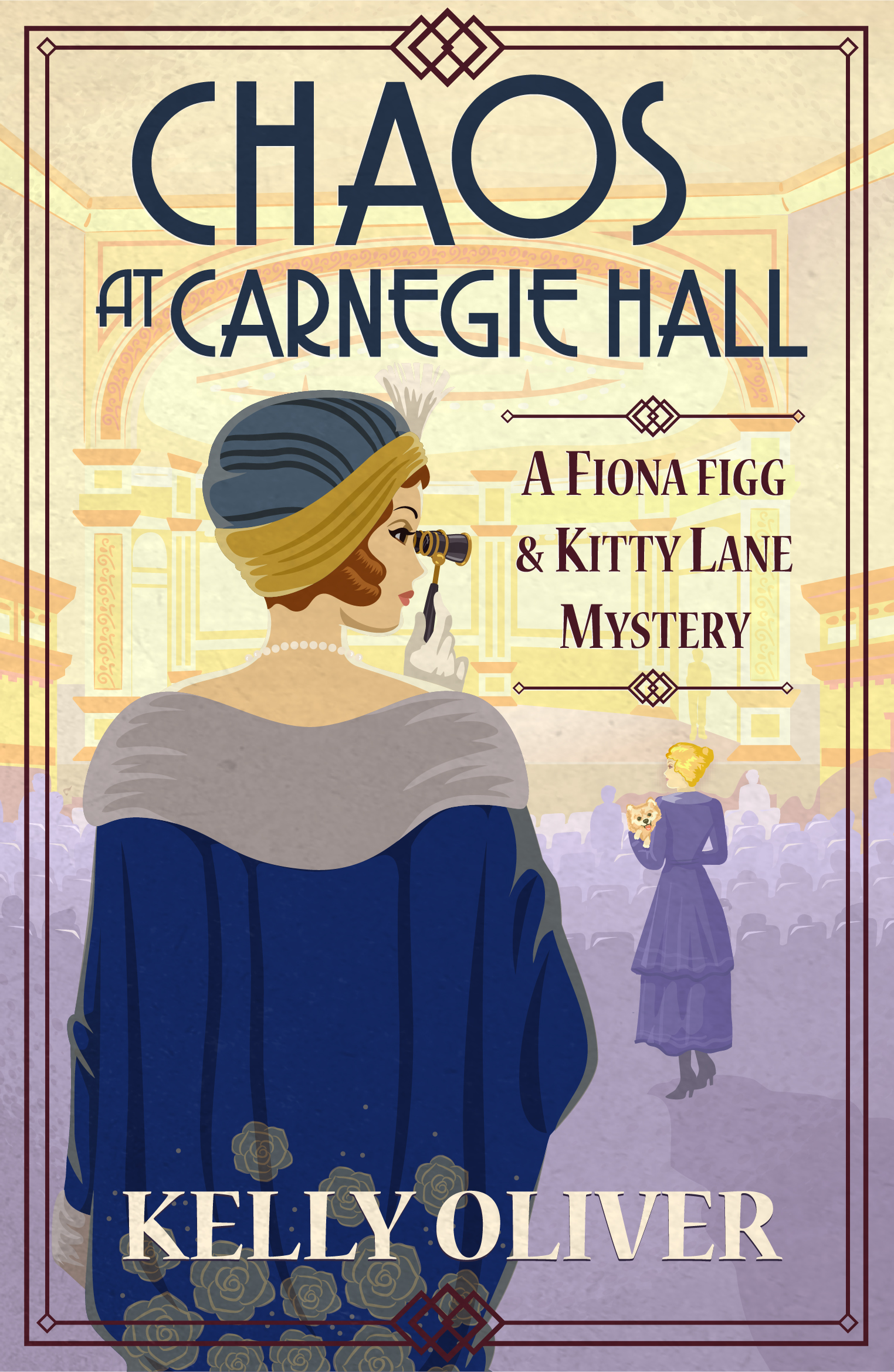
Agatha Christie meets Downton Abbey in the Fiona Figg and Kitty Lane Mystery series opener.
Can Fiona catch a killer and find a decent cup of tea before her mustache wax melts?
1917. New York.
Notorious spy, Fredrick Fredricks, has invited Fiona to Carnegie Hall to hear a famous soprano. It’s an opportunity the War Office can’t turn down. Fiona and Clifford are soon on their way, but not before Fiona is saddled with chaperon duties for Captain Hall’s niece. Is Fiona a spy or a glorified babysitter?
From the minute Fiona meets the soprano aboard the RMS Adriatic it’s treble on the high C’s. Fiona sees something—or someone—thrown overboard, and then she overhears a chemist plotting in German with one of her own countrymen!
And the trouble doesn’t stop when they disembark. Soon Fiona is doing time with a group of suffragettes and investigating America’s most impressive inventor Thomas Edison.
When her number one suspect turns up dead at the opera and Fredrick Fredricks is caught red-handed, it looks like it’s finally curtains for the notorious spy.
But all the evidence points to his innocence. Will Fiona change her tune and clear her nemesis’ name? Or will she do her duty? And just what is she going to do with the pesky Kitty Lane? Not to mention swoon-worthy Archie Somersby . . .
If Fiona’s going to come out on top, she’s going to have to make the most difficult decision of her life: the choice between her head and her heart.
Chaos at Carnegie Hall is a cosy historical mystery set in London, onboard a transatlantic ship during its crossing and also in New York in November 1917. We’re introduced to Fiona Figg, an enterprising young woman, a spy if you would, who is happy to don male costumes to get the answers she seeks.
I did find the beginning of the book a little confusing, but then I discovered why, for Fiona Figg isn’t a new literary creation, but this is her in a new series, complete with references to previous exploits. Once I realised this, I was flying. The backstory isn’t overly relevant, and it adds a wonderful layer of depth to the character. Fiona Figg is not new to this jig, and she knows what she’s about, despite all the men in her life trying to make it more difficult for her.
This story is bursting with historical details – the Suffragettes, events at Carnegie Hall, ‘real’ historical characters, and of course, yellow cabs – which our fine main character informs us makes it much easier to spot a cab in the snowy November conditions she’s enduring. I really enjoyed the way the story is woven around events that actually happened.
The mystery builds really well, and the attendant sidekicks of Clifford, Kitty and, of course, Poppy, the dog, really add to the ongoing mystery.
A thoroughly enjoyable historical mystery recommended for fans of the genre and with just a smidge more historical detail than some other cosy mysteries, which makes it all the more appealing to me.
Meet the Author
Kelly Oliver is the award-winning, bestselling author of three mysteries series: The Jessica James Mysteries, The Pet Detective Mysteries, and the historical cozies The Fiona Figg Mysteries, set in WW1. She is also the Distinguished Professor of Philosophy at Vanderbilt University and lives in Nashville, Tennessee. She is bringing new titles in the Fiona Figg series to Boldwood, the first of which, Chaos in Carnegie Hall, will be published in November 2022.
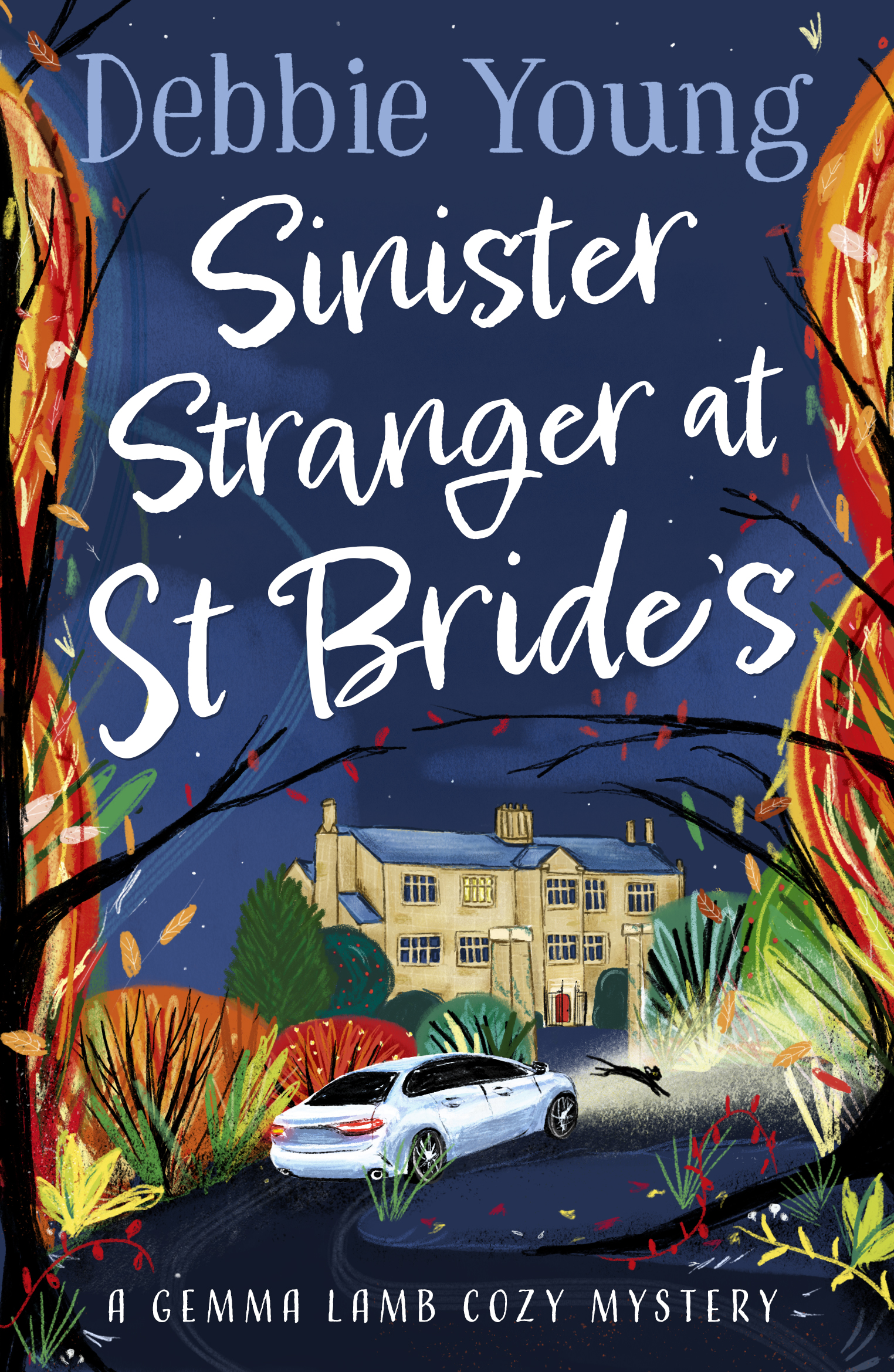
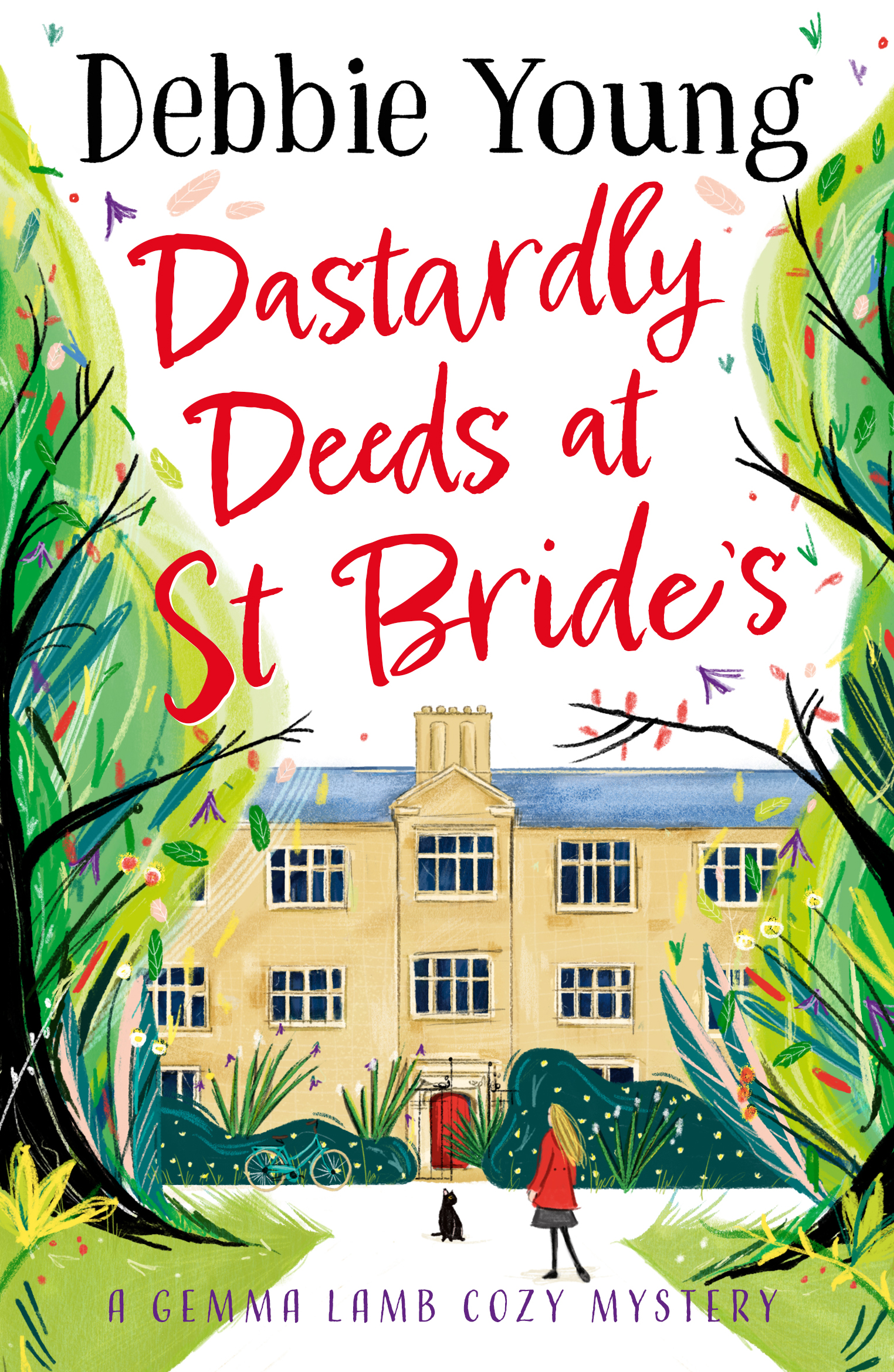
When an American stranger turns up claiming to be the rightful owner of the school’s magnificent country estate it could spell trouble for everyone at St Bride’s . . .
No one can believe it when the headmistress, Hairnet, instantly accepts the stranger’s claim, not:
the put-upon Bursar, ousted from his cosy estate cottage by the stranger
the enigmatic Max Security, raring to engage in a spot of espionage
the sensible Judith Gosling, who knows more about Lord Bunting than she’s letting on
the irrepressible Gemma Lamb, determined to keep the school open
Only fickle maths teacher Oriana Bliss isn’t suspicious of the stranger, after all she can just marry him and secure St Bride’s future forever. That’s if inventive pranks by the girls – and the school cat – don’t drive him away first.
Who will nab the stranger first? Oriana with the parson’s noose? Gemma with sinister secrets? Or could this be the end of St Bride’s?
Sinister Stranger at St Bride’s is a fabulous sequel to Dastardly Deeds, and the villain of the piece, Earl, is sure to almost rouse hatred on a scale of the evil Umbridge in the Harry Potter books.
I love the feel of this series. As someone who did indeed read all the boarding school books as a child, this is a welcome ‘grown-up’ tonic to those long ago days:)
The story for book 2 is, I feel, stronger than for the first book in the series. The answers aren’t quite so easy to fall into the lap of Gemma Lamb, and Max Security has a bigger starring role, as do some of the girls attending the school. But don’t fear, Joe and Oriana, as well as McPhee do still have important roles to play.
I’ll be sharing my review for book 3 on 21st November 2022.
Meet the author
Debbie Young is the much-loved author of the Sophie Sayers and St Brides cosy crime mysteries. She lives in a Cotswold village where she runs the local literary festival, and has worked at Westonbirt School, both of which provide inspiration for her writing. She is bringing both her series to Boldwood in a 13-book contract. They will be publishing several new titles in each series and republishing the backlist, starting in September 2022.
When Gemma Lamb takes a job at a quirky English girls’ boarding school, she believes she’s found the perfect escape route from her controlling boyfriend – until she discovers the rest of the staff are hiding sinister secrets:
Hairnet, the eccentric headmistress who doesn’t hold with academic qualifications
Oriana Bliss, Head of Maths and master of disguise
Joscelyn Spryke, the suspiciously rugged Head of PE
Geography teacher Mavis Brook, surreptitiously selling off the library books
creepy night watchman Max Security, with his network of hidden tunnels
Even McPhee, the school cat, is leading a double life.
Tucked away in the school’s beautiful private estate in the Cotswolds, can Gemma stay safe and build a new independent future, or will past secrets catch up with her and the rest of the staff?
With a little help from her new friends, including some wise pupils, she’s going to give it her best shot…
This one is short and sweet but shouldn’t detract from the fact that I thoroughly enjoyed this cosy mystery with a difference.
Dastardly Deeds at St Bride’s is definitely the book for all those who spent a childhood ensconced with a good boarding school book (The Chalet School, Malory Towers, St Claires etc). Sadly, there is no lacrosse, as the main characters here are all the teachers, but it is a charming story of our main character’s desire to start her life over again following an abusive relationship. There are a few mysteries to solve for her and a lovely cast of supporting characters, who all have their quirky sides, as does the boarding school itself.
I’ve been lucky enough to read book 2 and 3 already, and I will be sharing my reviews over the next few days, but I highly recommend checking out this new series if you love cosy mysteries (and tales of boarding schools).
Meet the Author
Debbie Young is the much-loved author of the Sophie Sayers and St Brides cosy crime mysteries. She lives in a Cotswold village where she runs the local literary festival, and has worked at Westonbirt School, both of which provide inspiration for her writing. She is bringing both her series to Boldwood in a 13-book contract. They will be publishing several new titles in each series and republishing the backlist, starting in September 2022.
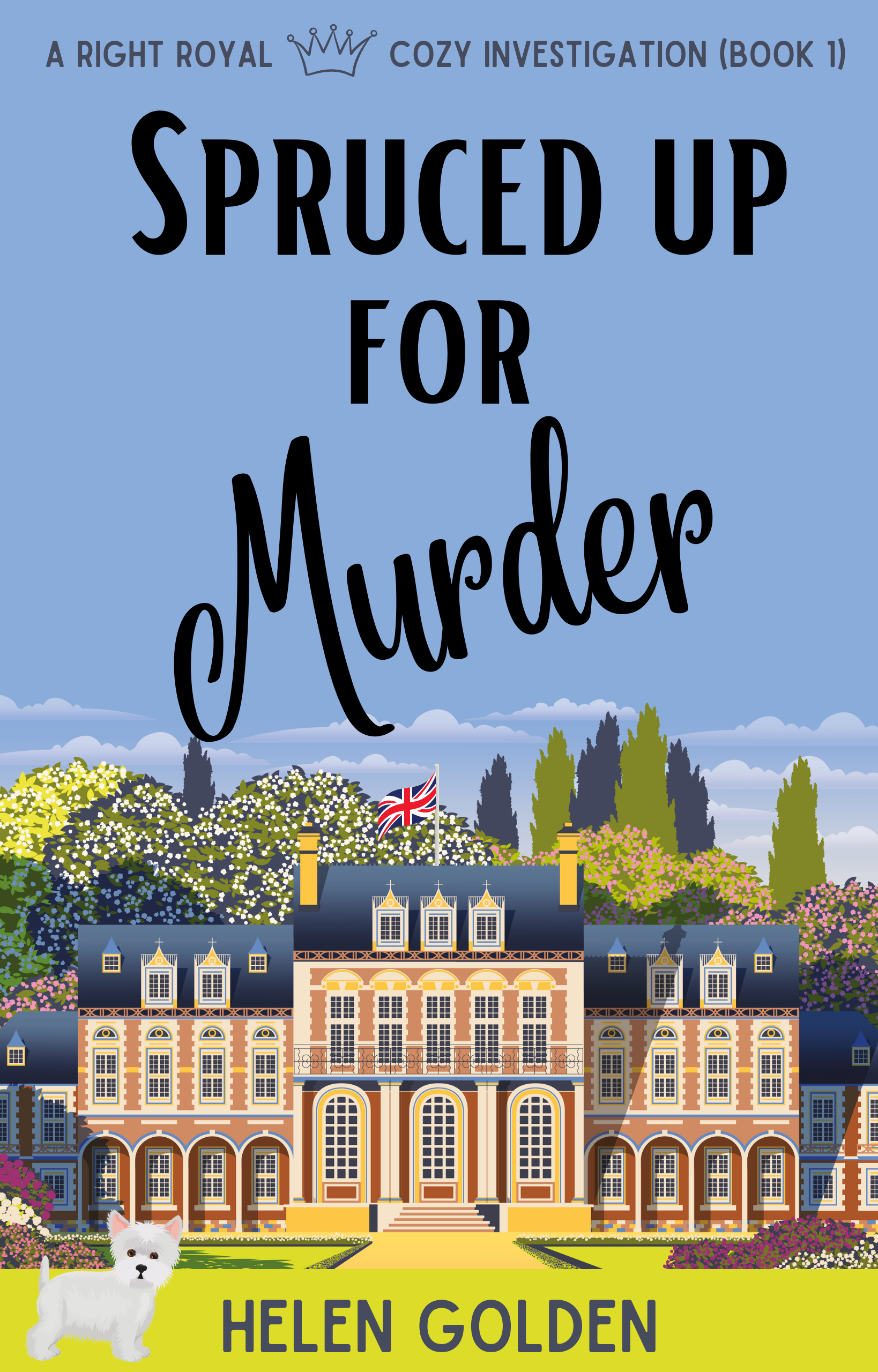
Speculation is rife that the victim, estate manager Alex Sterling (44), was found by Lady Beatrice (35), the Countess of Rossex, niece of King James. Lady Beatrice, who has finally come out of hiding following her son’s departure to boarding school, has been managing the project to refurbish and redesign the Events Suite at Francis Court, alongside Perry Juke.
Heading up the murder investigation is Detective Chief Inspector Richard Fitzwilliam. Rumour has it that he and Lady Beatrice have a fractious history…
Awful man! How dare Fitzwilliam suggest Lady Beatrice’s sister is the number one suspect for Alex’s murder. It could be any one of the staff who were on-site that morning. Well, she’ll show Mr High and Mighty Fitzwilliam! With her attention to detail, her clever dog Daisy, Perry’s imagination, and his partner’s contacts at Fenshire CID, they’ll find the murderer before him.
Spruced up for Murder is a really enjoyable cosy mystery with just the right amount of action and suspense, and I confess, it was one that kept me guessing until almost the end.
Lady Beatrice has been living in semi-seclusion since the death of her husband, some years earlier in mysterious circumstances, concentrating on raising her son. But, now that he’s away to boarding school, her mother and sister have plans afoot to get her out of her seclusion. Only while busily refurbishing one of the event rooms at her family home (open to the public and complete with a cafe – which is very important to this story, as is the local pub) a body is discovered.
The mystery that follows is well thought out, and the author does a really good job of making it quite complex, with a number of really well-fleshed-out characters along the way. There is a skeleton in the closet, which soon worms its way into this investigation, and there are more than enough shady characters for the reader to suspect. As well as a slightly too straight-laced cop who gets right under Lady Beatrice’s skin for reasons that will soon become clear.
I thoroughly enjoyed this book, so much so that I’ve already nabbed books 2 and 3 in the series and will be reviewing them over the next few months. This gets one of my, so I’ve been told, quite rare 5/5 stars over on Goodreads. I really loved the little news snippets the author weaves into the story from the local society rag. If you love a cosy mystery, then you will really enjoy this one:)
Check out my reviews for the other books in the series.
Hello. I’m Helen Golden. I write British contemporary cozy whodunnits with a hint of humour. I live in small village in Lincolnshire in the UK with my husband, my step-daughter, her two cats, our two dogs, sometimes my step-son, and our tortoise.
I used to work in senior management, but after my recent job came to a natural end I had the opportunity to follow my dreams and start writing. It’s very early in my life as an author, but so far I’m loving it.
It’s crazy busy at our house, so when I’m writing I retreat to our caravan (an impulsive lockdown purchase) which is mostly parked on our drive. When I really need total peace and quiet, I take it to a lovely site about 15 minutes away and hide there until my family runs out of food or clean clothes
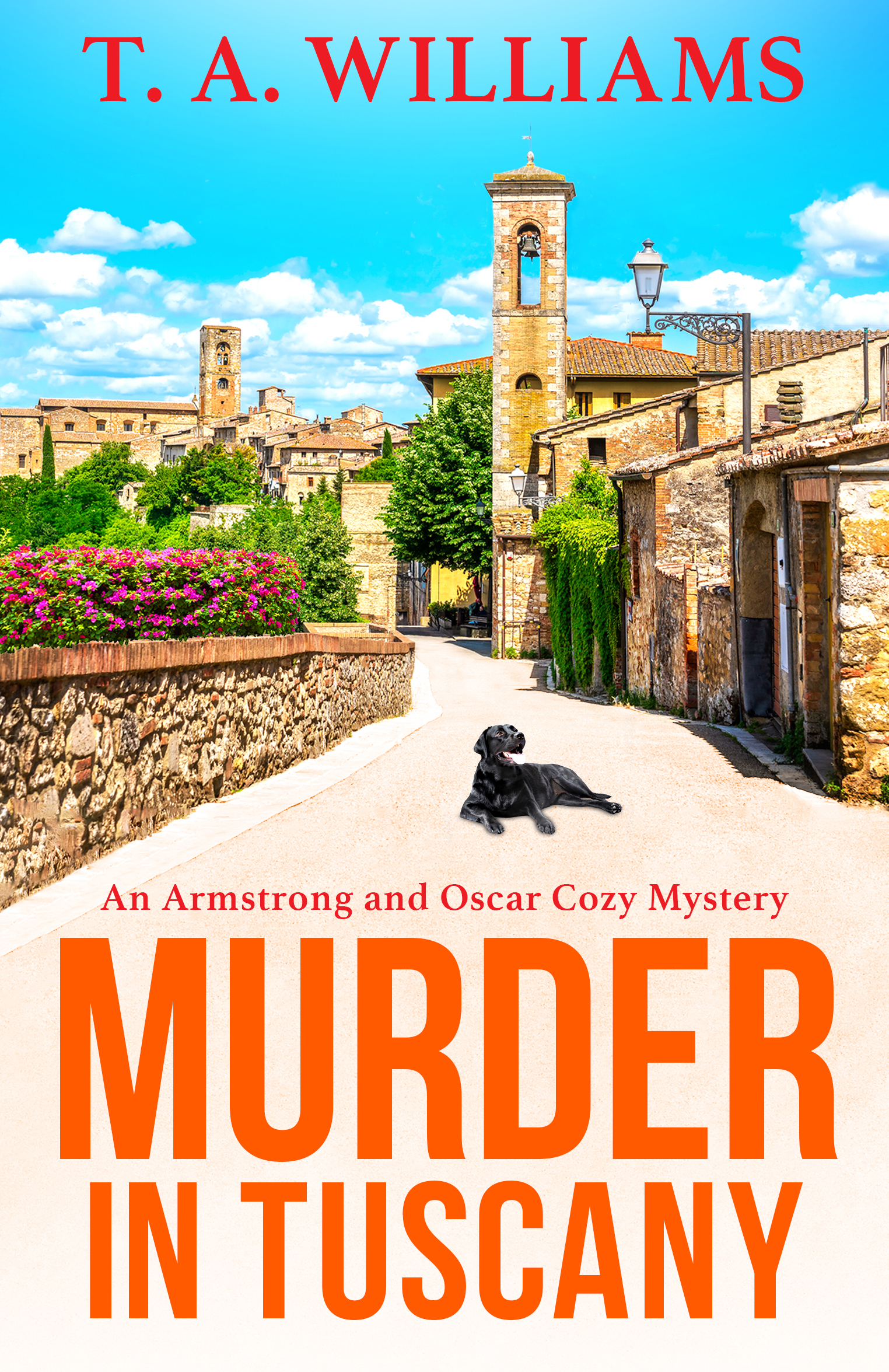
Nestled high in the Tuscan hills lies Villa Volpone, home to renowned crime writer Jonah Moore and his creative writing course. It’s also the last place retired DCI Dan Armstrong expected to spend his retirement! Dan’s no writer, but maybe this break will help him to think about the next chapter in his own life story?
A gruesome murder…
But only days into the course, Jonah Moore is found stabbed to death with his award-winning silver dagger! And Dan finds himself pulled out of retirement with a killer to catch.
Eleven possible suspects.
The other guests all seem shocked by Jonah’s death, but Dan knows that one of them must be lying. And as he and Italian Commissario Virgilio Pisano begin to investigate it quickly becomes clear that everyone at Villa Volpone has secrets to hide…
But can Dan discover who the murderer is before they strike again?
Murder in Tuscany is a sun-drenched tale of an erotic writer’s retreat marred by the murder of the alleged ‘bestselling’ author running the event.
Retired DCI Dan Armstrong, dreaming of writing that bestseller, has been set up by his ‘mates’ in the police force with the unusual retirement gift of a 2-week writing course in Tuscany. The only catch is that it’s for writing erotic fiction when Dan dreams of writing historical fiction about the Medici. What follows is a gentle and engaging tale of writers, would-be-writers, and course leaders, all mixed up with a touch of intrigue, and then, at about 30% through the book, the murder, which Dan ends up feeling honour-bound to help solve, and not just because his Italian counterpart in the police is missing his English speaking deputy. And it is quite a strange murder when the true facts slowly start to reveal themselves.
This is a tale that will amuse writers, but there’s also more than enough in here for fans of cosy mysteries. There’s a lot of eating and descriptions of Italian food as Dan begins to fall in love with the place so that by the end of the book, the soon-to-be-divorced ex-police inspector is making some big changes in his life.
Much of Murder in Tuscany is certainly setting up this character and place for future investigations, but the story still has a very much ‘closed-room’ feel of a country house murder mystery, with some surprisingly modern takes.
I thoroughly enjoyed Murder in Tuscany, and I look forward to reading more in the series.
Meet the author
T A Williams is the author of over twenty bestselling romances for HQ and Canelo and is now turning his hand to cosy crime, set in his beloved Italy, for Boldwood. The series will introduce us to retired DCI Armstrong and his labrador Oscar and the first book, entitled Murder in Tuscany, will be published in October 2022. Trevor lives in Devon with his Italian wife.
Today, I’m welcoming Jane Davis to the blog with a fascinating post about her new book, Small Eden.
In England’s Green and Pleasant Land
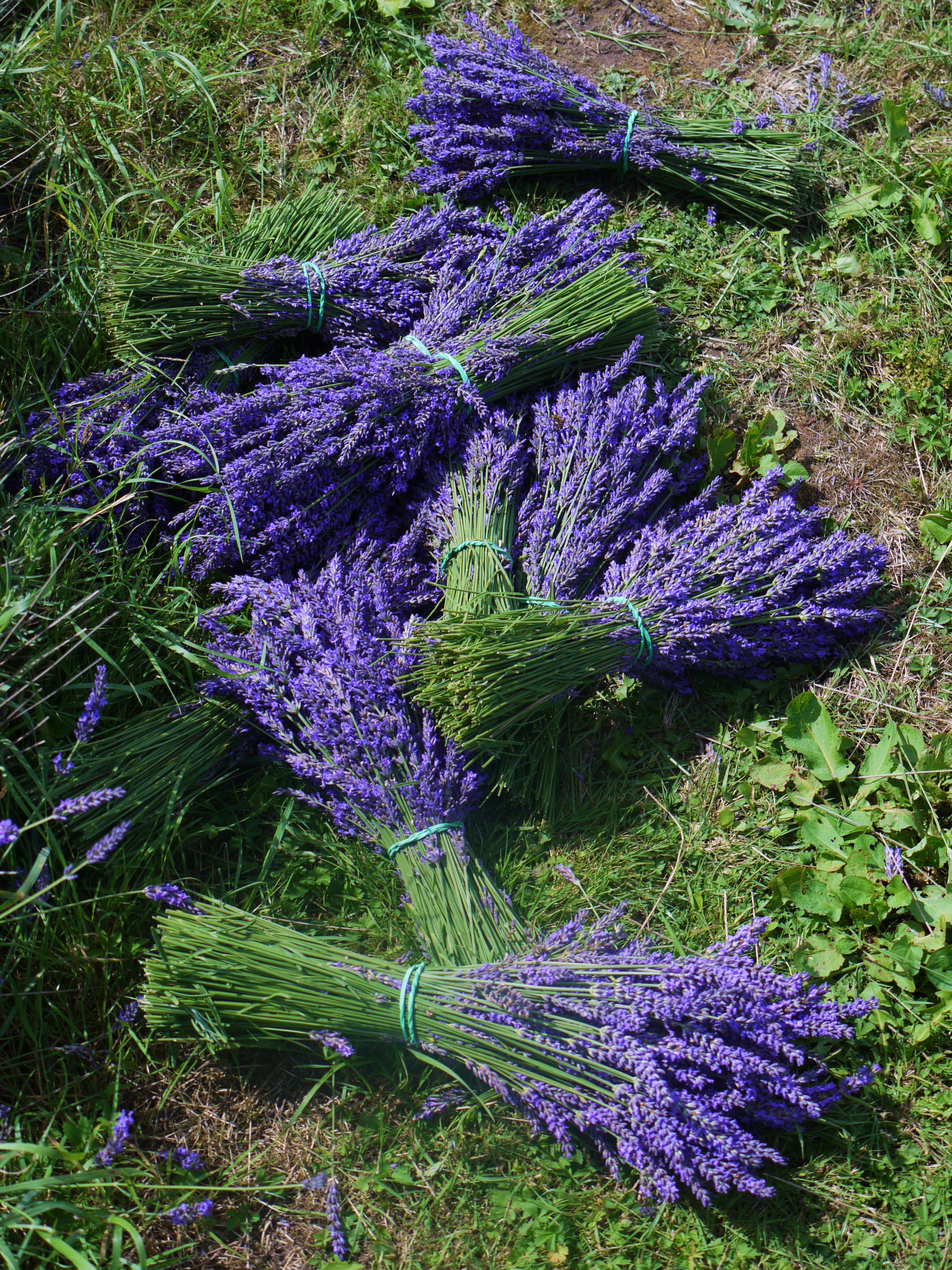
In Victorian England, Carshalton and nearby Mitcham were known for their physic gardens, where plants were grown for medicinal and cosmetic use. Peppermint, lavender, camomile, aniseed, rhubarb, and liquorice were stable crops but today the name Carshalton is best associated with lavender growing. Of the many lavender farms that used to exist, only two remain. Mayfield Lavender is the larger of the two. In the summer months, people come a long way to see it. https://www.mayfieldlavender.com/
Lavender Fields (copyright, author)
At a time when few women ran their own businesses, I was delighted to stumble across the story of Sarah Sprules. Sarah had worked alongside her father in his physic garden and took over his business after he died. Her produce was known worldwide. Her lavender water won medals at exhibitions in Jamaica and Chicago, but the highest accolade she held was her Royal Warrant to supply lavender oil to Queen Victoria, bestowed on her after the Queen and Princess Louise visited her during August 1886. The royal connection proved especially beneficial as Queen Victoria had so many European relatives.
But that wasn’t all. it was the discovery that Mitcham was once the opium-growing capital of the UK that made me decide my leading man, Robert Cooke, should be a physic gardener. This chapter has been written out of the history books, but in the nineteenth century, far from having a seedy reputation, opium use was respectable. Queen Victoria’s household ordered opium from the royal apothecary, and Prime Minister William Gladstone is said to have drunk opium tea before important speeches. It was used an anaesthetic, in sedatives, for the relief of headaches, migraines, sciatica, as a cough suppressant, to treat pneumonia, and for the relief of abdominal complaints and women’s cramps.
Mrs Beeton’s famous Book of Household Management recommended that no household should be without a supply of powdered opium and laudanum, and she included a recipe for laudanum. But awareness of its dangers was beginning to spread.
Opium Poppy or Papaver somniferum, vintage engraved illustration. Trousset encyclopedia (1886 – 1891). (Image licensed to author)
Short Matching Excerpt from Small Eden
It was Freya who first showed him Dr Bull’s Hints to Mothers, a pamphlet highlighting the dangers of opiates in the nursery. Of course he doesn’t agree with the practice of dosing up babies so that they sleep all day, he told his wife, but yes, he’s aware it goes on. Working mothers have little choice but to leave children for hours at a time, so they doctor their gripe-water. And it’s not just the poor. Mothers read the labels that say Infant Preservative and Soothing Syrup. They think that ‘purely herbal’ and ‘natural ingredients’ means that products are safe. Though it was chilling to read about case after case of infant deaths linked to over-use.
As many as a third of infant deaths in industrial cities.
And he, who has buried two sons.
But even Dr Bull didn’t condemn the use of opiates outright. They are medicines, he wrote, and like any medicine, ought to be prepared by pharmacists. The trouble is, Robert told Freya, that until recently any Tom, Dick or Harry could operate a pharmacy. And hasn’t he been vocal in his support for an overhaul of the system?
***
Why did it take so long for opium to be banned?
In the 19th Century, Great Britain fought two wars to crush Chinese efforts to restrict its importation. Why? Because opium was vital to the British economy. And then there was the thorny issue of class. The upper and middle classes saw the heavy use of laudanum among the lower classes as ‘misuse’; however they saw their own use of opiates was seen as necessary, and certainly no more than a ‘habit’. Addiction wasn’t yet recognised. That would come later.
The anti-opium movement
In 1874, a group of Quaker businessmen formed The Society for the Suppression of the Opium Trade. Then in 1888 Benjamin Broomhall formed the Christian Union for the Severance of the British Empire with the Opium Traffic. Together, their efforts ensured that the British public were aware of the anti-opium campaign.
Short Matching Excerpt from Small Eden
“Indulge me if you will while I explain how the Indian trade operates – a system that the House of Commons condemned this April last. The East India Company – with whom I’m sure you are familiar – created the Opium Agency. Two thousand five hundred clerks working from one hundred offices administer the trade. The Agency offers farmers interest-free advances, in return for which they must deliver strict quotas. What’s so wrong with that? you may ask. What is wrong, my friends, is that the very same Agency sets the price farmers are paid for raw opium, and it isn’t enough to cover the cost of rent, manure and irrigation, let alone any labour the farmer needs to hire. And Indian producers don’t have the option of selling to higher bidders. Fail to deliver their allocated quota and they face the destruction of their crops, prosecution and imprisonment. What we have is two thousand five hundred quill-pushers forcing millions of peasants into growing a crop they would be better off without. And this, this, is the Indian Government’s second largest source of revenue. Only land tax brings in more.”
More muttering, louder. The shaking of heads and jowls.
“I propose a motion. That in the opinion of this meeting, traffic in opium is a bountiful source of degradation and a hindrance to the spread of the gospel.” Quakers are not the types to be whipped up into a frenzy of moral indignation, but their agreement is enthusiastic. “Furthermore, I contend that the Indian Government should cease to derive income from its production and sale.”
Robert looks about. Surely he can’t be the only one to wonder what is to replace the income the colonial government derives from opium? Ignoring this – and from a purely selfish perspective, provided discussion is limited to Indian production – his business will be unaffected. Seeing his neighbours raise their hands to vote, Robert lifts his own to half-mast. Beside him, Smithers does likewise.
***
The time comes when Robert Cooke must make a choice. He can either diversify, or he can gamble that the government will ban cheap foreign imports and that the price of domestic produce will rise. Robert Cooke is a risk-taker. He decides to specialise, and that decision will cost him dearly. It may even cost him his family.
Thank you so much for such a fascinating post. Good luck with your new book.
Here’s the blurb:
A boy with his head in the clouds. A man with a head full of dreams.
1884. The symptoms of scarlet fever are easily mistaken for teething, as Robert Cooke and his pregnant wife Freya discover at the cost of their two infant sons. Freya immediately isolates for the safety of their unborn child. Cut off from each other, there is no opportunity for husband and wife to teach each other the language of their loss. By the time they meet again, the subject is taboo. But unspoken grief is a dangerous enemy. It bides its time.
A decade later and now a successful businessman, Robert decides to create a pleasure garden in memory of his sons, in the very same place he found refuge as a boy – a disused chalk quarry in Surrey’s Carshalton. But instead of sharing his vision with his wife, he widens the gulf between them by keeping her in the dark. It is another woman who translates his dreams. An obscure yet talented artist called Florence Hoddy, who lives alone with her unmarried brother, painting only what she sees from her window…
Hailed by The Bookseller as ‘One to Watch’, Jane Davis writes thought-provoking literary page turners.
She spent her twenties and the first half of her thirties chasing promotions in the business world but, frustrated by the lack of a creative outlet, she turned to writing.
Her first novel, ‘Half-Truths and White Lies’, won a national award established with the aim of finding the next Joanne Harris. Further recognition followed in 2016 with ‘An Unknown Woman’ being named Self-Published Book of the Year by Writing Magazine/the David St John Thomas Charitable Trust, as well as being shortlisted in the IAN Awards, and in 2019 with ‘Smash all the Windows’ winning the inaugural Selfies Book Award. Her novel, ‘At the Stroke of Nine O’Clock’ was featured by The Lady Magazine as one of their favourite books set in the 1950s, selected as a Historical Novel Society Editor’s Choice, and shortlisted for the Selfies Book Awards 2021.
Interested in how people behave under pressure, Jane introduces her characters when they are in highly volatile situations and then, in her words, she throws them to the lions. The themes she explores are diverse, ranging from pioneering female photographers, to relatives seeking justice for the victims of a fictional disaster.
Jane Davis lives in Carshalton, Surrey, in what was originally the ticket office for a Victorian pleasure gardens, known locally as ‘the gingerbread house’. Her house frequently features in her fiction. In fact, she burnt it to the ground in the opening chapter of ‘An Unknown Woman’. In her latest release, Small Eden, she asks the question why one man would choose to open a pleasure gardens at a time when so many others were facing bankruptcy?
When she isn’t writing, you may spot Jane disappearing up the side of a mountain with a camera in hand.
It should be a dream come true to serve the Queen of England…
When Violet Parker is told she will be Queen Victoria’s personal housemaid, she cannot believe her good fortune. She finally has the chance to escape her overbearing mother, a servant to the Duchess of Kent.
Violet hopes to explore who she is and what the world has to offer without her mother’s schemes overshadowing her every thought and action.
Then she meets James Greene, assistant to the queen’s chief political adviser, Lord Melbourne. From entirely different backgrounds and social class, Violet and James should have neither need nor desire to speak to one another, yet through their service, their paths cross and their lives merge—as do their feelings.
Only Victoria’s court is not always the place for romance, but rather secrets, scandals, and conspiracies…
Victoria and Violet is a beautifully evoked story of Queen Victoria and her court, in the days before and during her marriage to Prince Albert. I won’t be alone in having read other books and watched film adaptations about the young Victoria, and Victoria and Violet really does capture the feel and mood of the royal court.
Violet is that most typical of women of the era, her life revolving around the will of another, only on this occasion, her mother, and her mother’s employer, Victoria’s mother, the Duchess of Kent. And we all know that’s not going to end well. Only, while she might be sent to spy on Queen Victoria, Victoria quickly strikes up a friendship with her maid and together, the two seem to be able to conquer just about anything the Duchess of Kent puts in their way.
James Greene too is not able to do what he wants, an expectant father, who was also a brutal father, expecting him home to run a prosperous estate, whereas James is keen to continue his work with Melbourne, the Prime Minister, and then Prince Albert himself.
This is a story filled with twists and turns. Will James and Violet fall in love? Will they be able to live their lives together? Or will his father, and her mother, force them apart?
This really is a delightful tale, well researched and very well grounded in the era and period. I’m really pleased I decided to read it:)
Meet the author
Rachel lives in a small town near Bath, England. She is the author of 29 published novels including the Ladies of Carson Street trilogy, the Shop Girl series (Aria Fiction) and the Templeton Cove Stories (Harlequin). Her latest novel, Victoria & Violet is the first book in her new Royal Maids series with the Wild Rose Press.
Rachel is a member of the Romantic Novelists Association as well as the Historical Novel Society and has thousands of social media followers all over the world.
This collection of short stories gives a glimpse into life, love, loss, and the inexplicable in between.
Including themes of grief, finding hope and second chances, facing the consequences of your actions and getting help from the unlikeliest of places.
· As Cecilia helps the dying, she questions what happens to their spirits. But is she ready to find out?
· Can a mother’s race through the New Forest save her son?
· Will visiting a medium bring Christina the closure she needs?
· Can an intruder help an old lady with her loneliness?
· Will the start of another wet and miserable Monday morning end with Maeve’s happy ever after?
This anthology includes the prize-winning flash fiction story – ‘Spirit Song’.
Judge’s critique – ‘Unusual, emotional, warm, surprising — a warm, unusual story. It moved me when I read it.’
Full story list:
Spirit Song
Goodbye Forever
Garden Therapy
Starting Over
A Cat-Shaped Hole
The Phone Call
Knocked Off Her Feet
Catalyst
Not Just For Christmas
A Mermaid’s Tail
From the author of fantasy novels Visions of Zarua and ‘Silent Sea Chronicles trilogy’, this short story collection features multiple genres including romance, supernatural and thriller.
Love, Loss and Life In Between is a really lovely collection of short stories focusing on acceptance, moving on and recovery. I confess, I feared the stories might be upsetting, but they really weren’t. Garden Therapy, with its slight otherworldliness was delightful, and A Mermaid’s Tale was a beautiful account of a young girl coming to terms with the loss of her mother, whereas Catalyst was quite edgy. Not Just for Christmas is a tale many pet owners with feel resonates with them.
This really was a delightful collection of short stories. The author has a lovely turn of phrase and manages to evoke strong feelings in her characters which make them believable, so that in only a few words the reader is already rooting for them. Highly recommended, as was the author’s previous short story collection, of which you can find the review here.
Meet the author
Suzanne lives in Middlesex, England with her husband, two teenagers, a crazy cocker spaniel and an adopted cat that thinks she’s the boss.
Suzanne’s writing journey began at the age of twelve when she completed her first novel. She discovered the fantasy genre in her late teens and has never looked back. Giving up work to raise a family gave her the impetus to take her attempts at novel writing beyond the first draft, and she is lucky enough to have a husband who supports her dream – even if he does occasionally hint that she might think about getting a proper job one day.
Now an author of four novels including the Silent Sea Chronicles trilogy and her debut, Visions of Zarua, Suzanne hopes the dreaded ‘W’ word will never rear its ugly head again!
She loves gardening and has a Hebe (shrub) fetish. She enjoys cooking with ingredients from the garden and regularly feeds unsuspecting guests vegetable-based cakes.
She collects books, is interested in history and enjoys wandering around castles and old ruins whilst being immersed in the past. She likes to combine her love of nature and photography on family walks, but most of all she loves to escape with a great film, binge watch TV shows, or soak in a hot bubble bath with an ice cream and a book.
I’m delighted to feature JULIA PRIMA by Alison Morton, and she’s written a fabulous post about her book.
The dangers of travelling in the fourth century
Historical fiction at its best transports the reader into another time and place – the heat, fear and smell of battle, the celebration of a marriage where fire flickers nearby when the bride’s hair is arranged with a sharp spear point, or a voyage across a cold featureless sea where you feared might drop off the edge of the world into oblivion.
Style, tone and construction may be radically different, and the settings may be frightening or fascinating, but all good historical fiction conveys the impression of being an eyewitness to what is happening around them as well as how they are acting in that context.
One immediate way of anchoring a book in the past is thinking about how people travelled. We are so used to leaping into the car or catching a train or plane that we forget how completely different journeys were for pre-industrial people.
The concept of distance has changed radically over time. Over much of human history, it was measured in days or weeks taken rather than in land measurement such as miles. Depending on modes of transport available, whether imperial courier’s horse, an ox cart or simple trudging on foot, the perception of distance depended on the state of tracks, paths or roads.
JULIA PRIMA features a journey on horseback through mountains, transfer on a coastal barge, a voyage on a trading ship, crossing the Apennines on horseback and finally walking through the city of Rome. Each method presents challenges. Horses must be rested and fed regularly. Roman imperial couriers carrying urgent dispatches would change horses at official way stations every 8-10 miles for this reason. Only in Hollywood films and Netflix series can they gallop on and on all day. Saddles at that time had four horns – two back and two front – which held the rider in securely; there were no stirrups. Then there was the question of whether horses were shod or not . . .
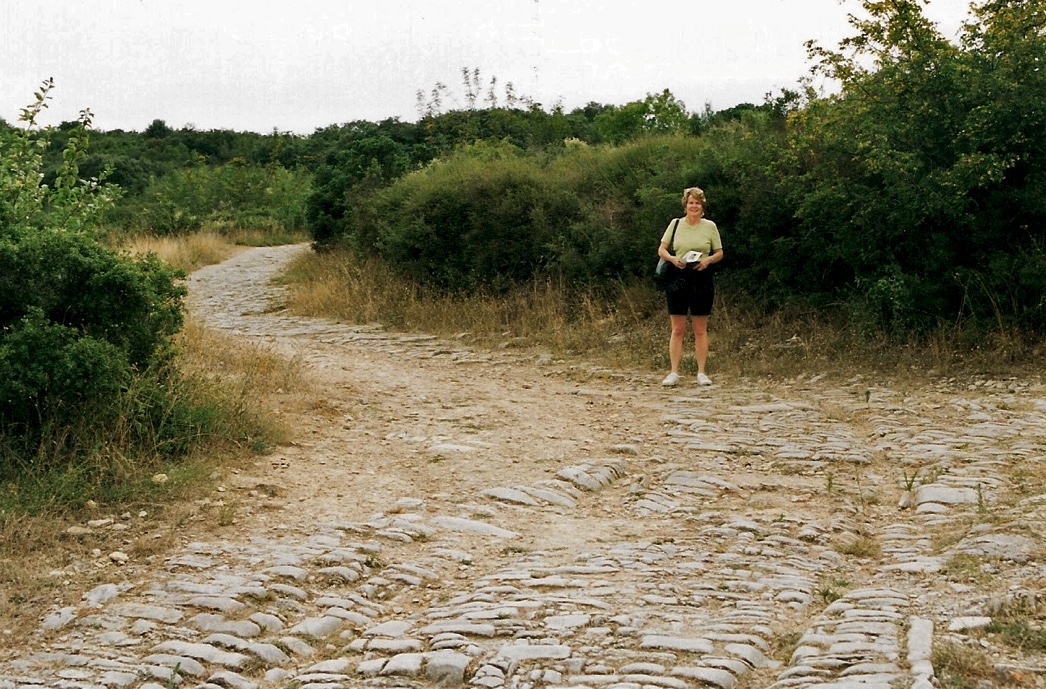
Not all Roman roads were hard metalled and impeccably paved and drained. Primarily, the roads had been built for military use as a quick and efficient means for overland movement of armies and officials. Altogether there were more than 400,000 kilometres (250,000 miles) of roads, of which over 80,500 km (50,000 miles) were stone paved. Many were gravelled, even in towns with some slabbed surfaces in the most important parts such as the forum. Added to these were private roads, rural roads, tracks and link roads. Much more detail here: https://www.alison-morton.com/2020/12/18/on-the-road-to-rome/
Taken together, they allowed the movement of people and goods, and connected isolated communities, helping them to absorb new ideas and influences, sell surplus goods, and buy what they could not produce locally. This trade resulted in an increase of wealth for everyone to a level not seen before and is suggested as a strong reason why many people strove to adopt the lifestyle of their conquerors.
But towards the end of the fourth century, there were potholes, missing slabs and invasive vegetation as local authorities could not afford their upkeep. Bridges built earlier, especially in the time of Augustus nearly two hundred years earlier, were failing, with parapets missing, holes in the surface and even collapsing completely.
Sailings, even for short passages such as across the Adriatic from Trieste to Ancona, were subject to season, usually May to October, and in the late fourth century, the most fearful danger: pirates. The imperial navy was mostly based in Constantinople by the time of JULIA PRIMA in AD 370 and the few ships still based in Ravenna would not offer comprehensive protection. Storms could bring all sea transport to a grinding halt as could a complete lack of wind. Nevertheless, traders still crossed the water, usually in convoys, and if fortunate escorted by a naval ship which gave an appearance, if not the reality, of protection.
Ferries today such as the cross-Channel ones offer cushioned seating, restaurants, shops and even cabins with ensuite bathrooms. Julia and her companions travel on the hard deck of a merchant ship with whatever shelter and comfort, such as light mattresses, they brought with them. The galley could provide hot water, but you brought your own washing bowl, cups and eating dishes and your own food. Once it set sail, a ship was a self-contained and vulnerable world that was lost to all human contact until it docked again. No ship’s radio, GPS, satellite tracking and communication meant that it could disappear without trace and nobody would know its fate. And news of events, e.g. death of an emperor, would only be available once the ship docked.
Many travellers stayed with friends, family or trade colleagues. In larger cities and ports, there was a range of possibilities from well-equipped rooms in top classinns to a bed in a shared dormitory, often also shared with travellers of the insect variety!
At the most simple were private houses offering a room in their property for a fee. They could include stabling for animals and supper for their riders. Perhaps an early form of B&B! Travellers would know these houses by a lamp lit over their entrance door. Often this was the only form of hospitality in rural or remote areas.
A mansio gave accommodation to official visitors and feeding, watering and stables for their animals. They had to produce a travel document/official chit to show their entitlement to gain access to these government-funded facilities or they were back on the road again.
Non-official travellers had a choice, depending on the size of their purse and their inclination. Cauponae were often sited near the mansions and performed the same functions at a lower level of comfort. However, they suffered from a bad reputation as they were frequented by thieves and prostitutes. Tabernae provided hospitality for the more discerning traveller. In early days, they were mere houses along the road, but as Rome grew, so did its tabernae, becoming more luxurious. Of course, some did not, but they were generally above the level of the scruffy cauponae. Many cities of today grew up around a taberna complex, such as Rheinzabern in the Rhineland.
A third system of way stations serviced vehicles and animals: the mutationes (changing stations). In these complexes, the driver could purchase the services of wheelwrights, cartwrights and equarii medici, or vets. Some hostelries had elements of each type above, so historical fiction writers can often use generic descriptions such as inns or lodgings and vary the description of the accommodation as it suits their story.
For travellers in the late imperial period, such as Julia in AD 370, the danger from bandits had increased markedly. Some were dispossessed agricultural workers, some escaped slaves, mercenaries for hire or just criminals. As systems dissolved, the military became less visible and finances to fund them ran out, thereby making travelling increasingly dangerous.
Here’s the blurb:
“You should have trusted me. You should have given me a choice.”
AD 370, Roman frontier province of Noricum. Neither wholly married nor wholly divorced, Julia Bacausa is trapped in the power struggle between the Christian church and her pagan ruler father.
Tribune Lucius Apulius’s career is blighted by his determination to stay faithful to the Roman gods in a Christian empire. Stripped of his command in Britannia, he’s demoted to the backwater of Noricum – and encounters Julia.
Unwittingly, he takes her for a whore. When confronted by who she is, he is overcome with remorse and fear. Despite this disaster, Julia and Lucius are drawn to one another by an irresistible attraction.
But their intensifying bond is broken when Lucius is banished to Rome. Distraught, Julia gambles everything to join him. But a vengeful presence from the past overshadows her perilous journey. Following her heart’s desire brings danger she could never have envisaged…
Alison Morton writes award-winning thrillers featuring tough but compassionate heroines. Her nine-book Roma Nova series is set in an imaginary European country where a remnant of the ancient Roman Empire has survived into the 21stcentury and is ruled by women who face conspiracy, revolution and heartache but with a sharp line in dialogue.
She blends her fascination for Ancient Rome with six years’ military service and a life of reading crime, historical and thriller fiction. On the way, she collected a BA in modern languages and an MA in history.
Alison now lives in Poitou in France, the home of Mélisende, the heroine of her latest two contemporary thrillers, Double Identity and Double Pursuit. Oh, and she’s writing the next Roma Nova story.










































 MJ Porter