Mr. Percy Simmons, leader of London’s Theosophical Order of Odic Forces, is fully aware that his is not a case which Mr. Sherlock Holmes would ordinarily take up.
These are not ordinary times, however.
For something, some unquiet demon within Holmes stirs into discomfiting wakefulness under the occultist’s words. The unassuming Mr. Simmons has spoken of good and evil with the sort of certainty of soul that Sherlock yearns for. A certainty which has eluded Holmes for the three years in which the world thought him dead. While, for all intents, constructions, and purposes, he was dead.
But six months ago, Sherlock Holmes returned to Baker Street, declared himself alive to friend and foe alike, took up his old rooms, his profession, and his partnership with Dr. J. Watson—only to find himself haunted still by questions which had followed him out of the dreadful chasm of Reichenbach Falls:
Why? Why had he survived when his enemy had not? To what end? And had there ever, truly, been such a thing as justice? Such a thing as good or evil?
Sherlock Holmes and the Silver Cord takes place in the aftermath of the events that see Holmes thought dead, alongside Moriarty. Restless after his three years away from Baker Street, Holmes takes every case coming his way until two seem to collide – the one certainly involving magic, the other, perhaps doing the same.
As with all good Holmes stories, the impossible slowly attains some explanation, in these perplexing cases, with Watson on hand to provide some much needed perspective for the ‘ordinary’ reader, as opposed to the brilliance of Holmes. And yet Holmes is bedevilled by his own demons – he has his own questions to ask and perhaps seek answers for – about good and evil and how he fits in the grand scheme of things.
This is perhaps a more perceptive Holmes than we might expect, and yet still very much fitting our expectations of how he acts and thinks, and this novel is, as the author admits, their attempt to answer some of the unsolved questions about Holmes that have bedevilled her about what happened to Holmes after the events with Moriarty.
A really enjoyable read – sure to appeal to fans of Holmes – and while Holmes might be struggling with his inner demons, he’s still able to conclude the mysteries presented to him in Sherlock Holmes and the Silver Cord.
M. K. Wiseman has degrees in Interarts & Technology and Library & Information Studies from the University of Wisconsin-Madison. Her office, therefore, is a curious mix of storyboards and reference materials. Both help immensely in the writing of historical novels. She currently resides in Cedarburg, Wisconsin.
Bristol, 1713. When Philip Rake, pickpocket, smuggler and scoundrel is arrested and thrown in jail, he assumes he has a short walk to the gallows. But his father, a wealthy merchant who has remained a figure of mystery throughout his life, throws him a lifeline; become an indentured man on an expedition to the East Indies led by his friend, Woodes Rogers.
Woodes Rogers is looking for Libertatia – the fabled pirate kingdom of the legendary buccaneer Henry Avery – and the hoard of treasure rumoured to be hidden there. But Philip wants his freedom and when he learns that there are men onboard who once sailed with Henry Avery and plan to take the treasure for themselves, he jumps ship and embarks upon a career of piracy.
Philip’s story takes him from the backstreets of Bristol to the sun-baked hills of Madagascar and on to the tropical islands of the Caribbean in a thrilling tale of adventure in which he rubs shoulders with some of the most notorious pirates of the age including Blackbeard, Charles Vane, Anne Bonny and Mary Read.
Buy Links:
This title will be available to read on #KindleUnlimited.
Chris Thorndycroft’s writing career began with short horror stories which appeared in magazines and anthologies such as Dark Moon Digest and American Nightmare.
His first novel under his own name was A Brother’s Oath, book one in the Hengest and Horsa trilogy, which deals with the beginning of Anglo-Saxon England. He has always had a passion for historical fiction, kindled at the age of six when he first saw Errol Flynn in The Adventures of Robin Hood (1938). His books are deeply grounded in real history but often reimagine legends such as King Arthur and Robin Hood, weaving them in with historical events.
He currently lives in Norway with his wife and two kids.
When English teacher Gemma Lamb’s school flat is wrecked by storms, maverick headmistress Hairnet insists the girls must fund its repair by setting up their own businesses – the start of a series of hilarious unintended consequences.
Meanwhile Gemma’s worries are compounded by the arrival of bossy new girl Frieda Ehrlich, sponsored by a mysterious local tycoon whose wealth is of dubious origins. Fearful for the school’s reputation, Gemma recruits an old friend to help investigate the tycoon’s credentials, jeopardising her romance with sports teacher Joe Spryke.
What is Frieda hiding? Why is her sponsor living in a derelict manor house? Why is his chauffeur such a crazed driver? And what has become of McPhee, Hairnet’s precious black cat? With a little help from her friends, Gemma is determined to solve these mysteries, restore her flat and save the school.
For anyone who loved St Trinian’s – old or new – or read Malory Towers as a kid. St Brides is the perfect read for you!
Artful Antics at St Bride’s is book four in the St Bride’s series of boarding school books for grown-ups.
Taking place immediately after the events of book 3, Gemma returns to work to find her staff flat in turmoil, and she’s not the only one. The old building is in much need of some repair work. And so sets in motion the decision to allow the students to begin their own businesses in the hope of making some money to fund the repairs. And, while that’s happening, a mysterious and rather grumpy new student arrives mid-term and causes a few problems.
What, I hear you say, does all this have to do with art? Well, the new student suggests the Sixth Form hold an art exhibition to sell their work, and of course, her father is invited, alongside the man who’s sponsoring her time at the school.
As we’ve come to expect with a St Bride’s story, not all is as it seems. Gemma is determined to get to the bottom of the story about the ruined house that the new girl’s sponsor and father are currently living in – uninhabitable is not the word – added to which, Max Security is also acting strangely, and then McPhee disappears as well.
I do love the St Bride’s series. The tales are gently told but engaging and keep the reader guessing until the end. Perfect for relaxing after a hard day at work or when you just want a bit of ‘chill time.’ They’re lovely, escapist fiction for all those who grew up on the Chalet School, Malory Towers, Trebizon and St Claires stories.
Read my reviews for the earlier books in the series
Debbie Young is the much-loved author of the Sophie Sayers and St Brides cosy crime mysteries. She lives in a Cotswold village where she runs the local literary festival, and has worked at Westonbirt School, both of which provide inspiration for her writing. She is bringing both her series to Boldwood in a 13-book contract. They will be publishing several new titles in each series and republishing the backlist, starting in September 2022.
I’m delighted to feature an excerpt from Finlay McQuade’s new book, Life and Death in Ephesus, a short story collection.
From “Nestorius.”
The next day, sure enough, the church of the Evangelist was half empty, but the murmurs of protest were twice as loud as the hissing and whispering of the day before. Even so, Nestorius persisted. Desperate to demonstrate the simple logic of his argument, he introduced a new metaphor into his sermon: “Ferment the grape and what do you get? You get a sublime wine that buoys your spirit and lifts you heavenward. Squeeze the olive and what do you get? You get a taste of ancient earth, a hint of delight first tasted in the Garden by our earliest ancestors. But when you mix the two, what do you get? The sublime headiness of wine? No. The rich earthiness of Eden? No. You get a noxious mixture that retains the qualities of neither. Such is not the nature of Jesus Christ. “Jesus was a man and had all the qualities of a man, including the capacity to suffer and die. And he was also and always will be a God, who did not die and did not fear the pains of death as you and I inevitably will. Our Lord Jesus Christ had two natures, the one human and the other divine. The blessed Virgin gave birth to the one, but she did not give birth to the other, because the Son of God already existed and had always existed. That is why I have said and I say again that the blessed Virgin was the Christ-bearer, not the God-bearer. And yet, from that miraculous moment of Incarnation, the God and the man were united as one: human and divine in perfect union.” It seemed at first to have made an impression on his audience, for they were quiet. Later, on reflection, he thought that perhaps they were dazzled by the clarity of his argument, but no closer to accepting its truth. Then a scrawny little monk with a red clean-shaven face in the pew nearest to the altar stood and shouted in a deep bass voice, “HERETIC! HERETIC!” and continued to shout it until he was joined by a scattering of others in the dim interior of the church, and gradually by just about everyone present, “HERETIC! HERETIC! HERETIC!”
Here’s the blurb:

For over a thousand years, Ephesus, on the Aegean coast of what is now Turkey, was a thriving city. It was the site of the Temple of Artemis, one of the Wonders of the World, and a destination for religious pilgrimage long before the advent of Christianity. In the first century CE, St. John and St. Paul introduced Christianity to Ephesus, where it survived its turbulent beginnings and, in the fifth century CE, hosted the God-defining Council of Ephesus.
Life and Death in Ephesus is a collection of stories about major events in the history of Ephesus. Characters appearing in these stories include Herostratus, first to commit a “herostratic crime”; Alexander, the warrior king; Julius Caesar and Mark Antony, both lovers of Cleopatra; Heraclitus, the philosopher who said, “You can’t put your foot in the same river twice”; St. Paul, persona non grata in Ephesus; Nestorius, whose characterization of Jesus split the Eastern and Western church, and others, also important, whose names I have had to make up.
Hilke Thür, a leading archeologist, has said of these stories, “Life and Death in Ephesus will be a delightful and enjoyable accompaniment to the many available guidebooks. Not just tourists, but anyone interested in history will benefit from reading them.”
Finlay McQuade is a retired educator. He was born in Ireland, went to high school in England, and university in the USA. He has a BA in English from Pomona College, an MA in British and American literature from Harvard University, and a PhD in education from the University of Pittsburgh, where he also taught writing courses in the English department. He spent some happy years as a high school English teacher and soccer coach, but after co-authoring the book How to Make a Better School he found himself in demand as a consultant to schools and school improvement projects in the USA and often, also, abroad. He ended his career in education when he retired from Bogazici University in Istanbul, where he had mentored young teachers in the school of education.
For eight years after retirement, he lived in Selcuk, Turkey, among the ruins of the ancient city of Ephesus. The streets and squares of Ephesus became his neighborhood. His companions included archeologists, tour guides, and souvenir sellers. His curiosity about the people who had lived in those empty buildings for over a thousand years resulted in Life and Death in Ephesus, a collection of stories chronicling major events in the city’s history.
Now, back in the USA with time on his hands, he finds himself returning again and again to memories of his boyhood on the coast of Northern Ireland. The result of these forays into his past will be another collection of stories, part memoir, part fiction, called Growing Up in Ulster.
Today, I’m delighted to welcome Juliane Weber, and the Irish Fortune series to the blog. Book 1 is currently on special offer for 99p/99c, so snap it up.
Here’s the blurb
“Under the Emerald Sky reaches another level in storytelling, the kind where the characters remain with you long after you have closed the book.” – The Historical Fiction Company
It’s 1843 and the Englishman Quinton Williams has come to Ireland to oversee the running of his father’s ailing estate and escape his painful past. There he meets the Irishwoman Alannah O’Neill, whose family is one of few to have retained ownership of their land, the rest having been supplanted by the English over the course of the country’s bloody history. Seeing the injustices of Victorian Ireland, Alannah’s brother Kieran has learned to hate the English and imperialism. Aware of Kieran’s hostility towards the English, Alannah keeps her growing relationship with Quin a secret – but it’s a secret that can’t be kept for long from those plotting to end England’s oppression of the Irish people. As Quin and Alannah seek happiness in the face of hate and revenge, an action-packed romance ensues.
But all the while, disaster looms – the Great Famine that would forever change the course of Ireland’s history. With repeated failure of the potato harvest upon which most Irish families depend, thousands will go hungry, with sickness and starvation sweeping through Irish farms, decimating poor populations for years to come.
Can Quin and Alannah find happiness in a land teetering on the brink of disaster?
Buy Links:
This series is available to read on #KindleUnlimited.
*Under the Emerald Sky, Book 1, ebook is on offer at 0.99.*
Juliane Weber is a scientist turned historical fiction writer, and author of the Irish Fortune Series. Her stories take readers on action-packed romantic adventures amid the captivating scenery and folklore of 19th century Ireland.
Under the Emerald Sky, the first book in the Irish Fortune Series, was awarded bronze medals in The Historical Fiction Company 2021 Book of the Year Contest and The Coffee Pot Book Club 2022 Book of the Year Contest. The second book in the series, Beneath the Darkening Clouds, was awarded a bronze medal in The Historical Fiction Company 2022 Book the Year Contest.
Juliane spent most of her life in South Africa, but now lives with her husband and two sons in Hamelin, Germany, the town made famous by the story of the Pied Piper.
I’m delighted to welcome Elizabeth St. John and her new audiobook, The Godmother’s Secret to the blog, with a snippet to read, and to listen to:)
Spring 1483 | Stony Stratford
“Go to Ned’s chamber, Lady Scrope. You can see for yourself—there, upstairs, with the guard on the door.” Gloucester nods across the mud-rutted stable yard of the Rose and Crown in Stony Stratford. “’Struth, but this is a piss-poor place for the King of England to spend the night. But directly on the London road.” He glances at Harry. “I believe you are right. Lord Rivers is preparing for a speedy departure.”
“And that he will have,” responds Harry. “But perhaps not in the direction he planned.” He gestures at me impatiently. “Go now to the king.”
I dismount and walk cautiously up the broken wooden stairs to the outer gallery. Harry’s ranting increased on the brief ride from Northampton, his cursing against the Woodvilles unbearable. I just want to hold Ned, comfort him and give him courage to face the days ahead. The poor boy has lost his father. The rest is men’s talk.
The guard is sleepy, his air distracted.
“I am Lady Scrope. Godmother to King Edward.”
He just stares ahead.
“Let me pass.”
Reluctantly, he moves to one side.
My precious boy stands in the middle of the room, quite alone. He cries in surprise and runs into my arms. Ned’s thin frame is trembling like a stricken rabbit. He is now my king, but he is also my boy, a mere twelve-year-old lad guarded and alone in his chamber in this dilapidated inn.
“My father.” His voice cracks like a broken reed. “Oh, Lady Scrope, I did not get to say good-bye to him.”
“Hush. Hush, my Ned.” His baby name slips out naturally. I hug him for the longest time, feeling his tense shoulders gradually lower. I can feel him struggling not to cry, and I must help him gather his emotions. I hold him at arm’s length to look into his eyes. “Be brave, my darling, take courage. You must be strong, be true to your destiny.”
“But not yet, Lady Scrope. I’m not ready yet.” His eyes well with tears again. My heart breaks.
“Listen to me,” I say fiercely. “Just as Arthur pulled the sword from the stone, kingship has been thrust upon you.”
He looks at me, his head tilted. “And he didn’t even know he would be king.”
I knew I’d capture his imagination. “No, he didn’t. And look how brave he was.”
Ned childishly scrubs his face, a crimson flush on his fair skin. “Our favourite story. Do you think I could be a great king like Arthur?”
“Yes, my darling. Yes. For you have been schooled well in chivalry, Ned. Your father and Lord Rivers have prepared you since your birth for this moment, although it has indeed come too quickly.” I gently wipe a tear from his smooth cheek. “And you have me, Lord Scrope, and your mother, Dickon, and your sisters, your family who loves you so very much, to help you.”
Ned lifts his chin, sucks in a deep shuddering breath. I free the crucifix from my purse and fold it into his palms, pressing his hands around the precious relic.
“From your father, to my care.” I stroke the blond hair that tufts from his damp forehead in the way it has grown since he was four years old. “So you would know he is always with you, Ned. And that he entrusts me with your well-being.”
“An extremely well-written book with depth and complexity to the main characters. The author says she wanted to write a book about family love and tolerance, and a woman’s loyalty and courage. She has done so. This is the best book I’ve read in ages!”
The Ricardian Bulletin, Richard III Society
“The authenticity and historical research displayed within this story is immense and exquisite. Ms. St. John is sure to be a newfound favorite for fans of not only this fractious time in English history, but of all historical fans who adore rich, immersive prose.” Historical Fiction Company 2022 Book of the Year
“A very enjoyable read. The historical veracity is impeccable, and Elysabeth is a likeable, admirable character who faces interesting dilemmas with love and courage.” Historical Novel Society
If you knew the fate of the Princes in the Tower, would you tell? Or forever keep the secret?
May 1483: The Tower of London. When King Edward IV dies and Lady Elysabeth Scrope delivers her young godson, Edward V, into the Tower of London to prepare for his coronation, she is engulfed in political turmoil. Within months, the prince and his brother have disappeared, Richard III is declared king, and Elysabeth’s sister Margaret Beaufort conspires with her son Henry Tudor to invade England and claim the throne.
Desperate to protect her godson, Elysabeth battles the intrigue, betrayal, and power of the last medieval court, defying her Yorkist husband and her Lancastrian sister under her godmother’s sacred oath to keep Prince Edward safe. Bound by blood and rent by honour, Elysabeth is torn between King Richard and Margaret Beaufort, knowing that if her loyalty is questioned, she is in peril of losing everything—including her life.
Were the princes murdered by their uncle, Richard III? Did Margaret Beaufort mastermind their disappearance to usher in the Tudor dynasty? Or did the young boys vanish for their own safety? Of anyone at the royal court, Elysabeth has the most to lose–and the most to gain–by keeping secret the fate of the Princes in the Tower.
Inspired by England’s most enduring historical mystery, Elizabeth St.John blends her family history with known facts and centuries of speculation to create an intriguing story about what happened to the Princes in the Tower.
Elizabeth St.John’s critically acclaimed historical fiction novels tell the stories of her ancestors: extraordinary women whose intriguing kinship with England’s kings and queens brings an intimately unique perspective to Medieval, Tudor, and Stuart times.
Inspired by family archives and residences from Lydiard Park to the Tower of London, Elizabeth spends much of her time exploring ancestral portraits, diaries, and lost gardens. And encountering the occasional ghost. But that’s another story.
Living between California, England, and the past, Elizabeth is the International Ambassador for The Friends of Lydiard Park, an English charity dedicated to conserving and enhancing this beautiful centuries-old country house and park. As a curator for The Lydiard Archives, she is constantly looking for an undiscovered treasure to inspire her next novel.
Elizabeth’s books include her trilogy, The Lydiard Chronicles, set in 17th Century England during the Civil War, and her newest release, The Godmother’s Secret, which explores the medieval mystery of the missing Princes in the Tower of London.
What if the secret alien space station protecting the Earth went PUBLIC?
Hanna Abebe has come far since leaving Ethiopia. All the way to the other end of the galaxy, in fact. And although her course at the Essoona Pilots’ Academy is tough, it’s not as tough as maintaining the ultimate long-distance relationship . . .
Astronaut Dan Simpson is furious. The Galaksi Alliance have exiled him on a remote planet to stop him telling NASA about them before they’re ready. But by the time they come to take him home, Dan has fallen in love with an enigmatic alien and decides to stay. Only then does he discover what a perilous business his new girlfriend is involved in . . .
At last! Captain Joe Llewellyn has permission to initiate first contact via the UN. But if he messes it up, the Galaksi Alliance could cancel the Shantivira’s funding, leaving the Earth defenceless. So, no pressure. All goes well until a rogue Samaritan flies a cargo ship through months of painstaking negotiations . . .
This character-driven eco science fantasy is a must-read for fans of Becky Chambers, Ursula Le Guin, Douglas Adams and Doctor Who.
Fay Abernethy left the UK more than twenty years ago, seeking adventure.
When not diving with sharks or falling off horses, she worked as an engineer in the automotive industry. Later, she started her own translating business and settled down in Germany with the man of her dreams.
Pre-children, they explored the Alps together – on foot in summer and on skis or snowshoes in winter. She now lives the life of a respectable citizen, having discovered that being a parent is the greatest adventure of them all.
Why does she write? To find out what happens next, of course!
Wartime secrets, smugglers’ caves, skeletal remains. And the holiday’s only just begun…
July 1923 – Iris Woodmore travels to Devon with her friends Percy Baverstock and Millicent Nightingale for her father’s wedding to Katherine Keats.
But when Millicent uncovers skeletal remains hidden on the private beach of Katherine’s former home, Iris begins to suspect her future stepmother is not what she seems.
The police reveal the dead man is a smuggler who went missing in 1918, and when a new murder occurs, they realise a killer is in their midst. The link between both murders is Katherine. Could Iris’s own father be in danger?
I adore the Iris Woodmore mystery series, and A Killing at Smugglers Cove does not disappoint.
Moving away from Walden, where many of the previous adventures have taken place, Iris is on holiday, if you can call it a holiday, when it’s for her father’s remarriage. But no sooner does she arrive than a body is discovered, or rather, the skeletal remains of a body.
Iris, of course, can’t help but involve herself, especially as it’s possible her soon-to-be stepmother might somehow be involved, and that might just prevent her father from marrying again – not that she ever quite says as much.
What ensues is a delightfully twisty tale, interwoven with what a holiday in the 1920s might have been like and featuring her trusty sidekicks alongside her.
A Killing At Smugglers Cove is filled with rich period drama, including a lesson in smuggling and avoiding the excise men, and the mystery, as in the first three books, is perfectly staged and well-developed, poignant and unexpected.
I’ve said it before, and I’ll say it again, the Iris Woodmore Mysteries are a firm favourite of mine – rich with period detail but with a damn fine mystery as well. Highly recommended.
Michelle Salter is a historical crime fiction writer based in northeast Hampshire. Many local locations appear in her mystery novels. She’s also a copywriter and has written features for national magazines. When she’s not writing, Michelle can be found knee-deep in mud at her local nature reserve. She enjoys working with a team of volunteers undertaking conservation activities.
First things first, no one actually knows where the battle of Brunanburh took place. No one. There are a number of different sites that historians have suggested from the one I’ve chosen in Kings of War, indeed, upwards of forty of them, although Bromborough in Cheshire, Brinsworth in South Yorkshire and Burnswark in Dumfries and Galloway are the most well-known. It’s worth noting that these different locations range all over Britain, from Devon to Scotland from the east coast to the west.
Frontispiece of Bede’s Life of St Cuthbert, showing King Æthelstan (924–39) presenting a copy of the book to the saint himself. 29.2 x 20cm (11 1/2 x 7 7/8″). Originally from MS 183, f.1v at Corpus Christi College, Cambridge. (Wikimedia Commons)
As one historian has commented, more discussion has taken place about where Brunanburh was located than about its actual historical significance, which is often seen as much less important in the grand scheme of later events. Much of these difficulties arise because of the variety of names given to the location of the battle. Brunandun, in Æthelweard’s Chronicon (a later tenth century Latin copy of the Anglo-Saxon Chronicle), Symeon of Durham suggested Weondune, although known by the name Brunnaneerc or Brunnanbyrig, while Geoffrey Gaimar (another post Conquest source) names it as Bruneswerce. To add to the confusion, are some of the descriptions given about the battle. John of Worcester ( a later source) asserts that Olaf and Constantin entered the mouth of the River Humber something that Symeon of Durham echoes. It’s been suggested that John of Worcester (an Anglo-Norman writing long after the events of 937 took place) took the knowledge that the River Humber was where Harald Hardrada landed in 1066 and Svein Forkbeard in 1069 and extrapolated from it.
As part of the discussion about where the battle took place, another problem needs to be addressed, that of the belief that the English rode down the Norse as they were fleeing from the battlefield to reach their ships. A word, eorodcistum, has been taken to be a reference to horses. Paul Cavill has shown that this word actually refers to gatherings of men and need not mean that horses were involved . This therefore does away with the argument that the Norse ships were far from where the battle took place.
As well as the various sources mentioned above, the battle is also referenced in Welsh, Scottish and Irish sources. It was deemed to be significant. The Chronicles of the Kings of Alba gives a very brief account: ‘And the battle of Dun Brunde in his xxxiii year in which was slain the son of Constantin.’ While the Annals of Ulster tell us: ‘AU 937.6. A great, lamentable and horrible battle was cruelly fought between the Saxons and the Northmen, in which several thousands of Northmen, who are uncounted, fell, but their king, Amlaib, escaped with a few followers. A large number of Saxons fell on the other side, but Æ∂elstan, king of the Saxons, enjoyed a great victory.’ (Alex Woolf, From Pictland to Alba, 789-1070, p.169) (Amlaib was an Irish version of the name Olaf). A later source, that of the Historia Regum Anglorum by Symeon of Durham, tells that ‘Onlaf’ came with 615 ships. There are also many later sources that tell of the battle of Brunanburh, the distance in time to them being written, tending to add more and more details which can’t be confirmed with any accuracy.
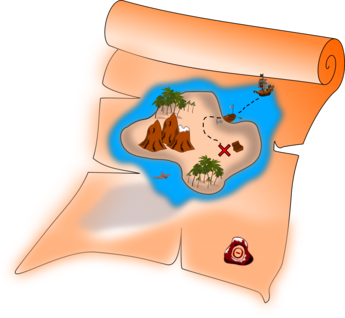
Map design by Flintlock Covers
Pauline Stafford, who has written an extensive account of the actual writing of what we know as The Anglo-Saxon Chronicle, After Alfred:Anglo-Saxon Chronicles and Chroniclers 900-1150, (which survives in nine recensions/or versions, all with slightly different details and emphasis) states that perhaps the most famous account of the battle, the Brunanburh poem, was a retrospective addition, probably written in the twenty years after Athelstan’s death, and certainly before the death of the last son of King Edward the Elder, Eadred, in 955. Some have suggested that Edmund may not actually have been present at the battle but that it was deemed expedient to assign him a part in it, perhaps after his death, to show the sons of King Edward the Elder working together for England.
And there is one final source, which I’ve made no use of, but which many may be aware of, that of the accounting of the battle, named as Vinhei∂r in Egil’s Saga, a thirteenth-century Icelandic saga, which of course, is a tale of Egil’s involvement in the battle and tells us very little about the battle itself.
In recent years, and indeed, before I wrote the initial drafts of this book and its predecessor, there has been a move to accept the Wirral as the possible location. Bernard Cornwell has been instrumental, as has an archaeology group based in Wirral, in trying to find corroborating evidence for this. The results of the work can be found in Never Greater Slaughter by Michael Livingstone. Even now, I find it amusing that it wasn’t until Bernard Cornwell made Brunanburh one of the burhs built by the House of Wessex that I quite realized the significance of that element of the name.
In my role as writer of historical fiction, I chose the site that I thought offered the best opportunity to develop the storyline and the one that intrigued me the most. After all, it does sort of make sense that any battle for York would have taken place close to York, but equally, why would the Dublin Norse have sailed all the way around the tip of Scotland to get to York from the East Coast? If they used one of the portage routes overland then again, we must ask why. And so, I opted for the position which would be the closest way of them stepping foot on English soil.
Britania Saxonica, 17th Century Map, showing Brunanburh north of Bamburgh
Kings of War is available now in ebook, paperback, audio and hardback.
Today, I’m sharing a fab excerpt from Under His Spell.
Fritz stood awkwardly at the nursery door. “Should we really be here?” he asked his mother. “I mean, should the men come to the nursery?”
“Fritz, the Queen asked us to; I think you can tell what is proper,” she said shortly.
“How is my little Godson?” Papa was asking Prince Albert.
“Very well indeed, look at him,” the Prince Albert said. “He is a strong little fellow.”
“Fritz, come and meet your Godbrother,” Papa said.
The little boy stood, wobbling. “Fitz solda?” he asked.
“He is an observant little fellow, to see that we are in uniform,” Fritz said, awkwardly picking up the little boy. He set him back down on his feet after a moment, watching as the little boy reached out his hand toward him. He fell, slapping Fritz’s leg in the process.
“Our little warrior is very strong,” the Queen laughed.
Arthur sat up again. “Fitz, Fitz solda; Ata be solda!” he giggled as he pulled on the spur on Fritz’s boot.
“Yes, I can see you will be a soldier,” Fritz said, sitting down and holding out his cap. “Come here, my little Godbrother.” He liked the sound of that. Godbrother. In Prussia they almost always said “sponsors”, not “Godparents”. Arthur toddled toward him, taking hold of his cap and trying to put it on. It covered his whole head and shoulders. Fritz laughed.
Vicky appeared at the door. “So, you have met my dear little brother,” she said, picking Arthur up and sitting at Fritz’s side. “Isn’t he a darling?”
“He is a precious child,” said Fritz, a little awkwardly. “But – you are used to this?” he said, watching Vicky stroke her little brother’s head.
“Yes, Mama calls me their little mother. You… You only have Vivi. But didn’t you do this with her?”
“No, the older children aren’t allowed back into the nursery once they leave it, in Prussia,” he said. “I mostly saw her when she was brought down after dessert, when the nurse took her out for walks, and for a few minutes in company, until she was about seven.”
“Oh!” Vicky exclaimed. “I can’t imagine that. How lonely you must be!” She slipped her hand into his. “I am your friend now.”
Here’s the blurb
A beautiful love story between the Princess Royal Victoria and Fritz Wilhelm, Frederick III of Prussia
A lonely young man attends the first World’s Fair – the Great Exhibition of 1851 – and meets a family who changes his life forever.
Follow the young Prince Fritz – later Friedrich III – of Prussia and his wife, Queen Victoria’s eldest daughter, Vicky, (parents of Kaiser Wilhelm II) through their courtship and the joys and struggles of their first four years of marriage.
Fritz and Vicky dream of a peaceful united Germany, but Fritz’s uncle Karl has his own dreams of power…
Discover often hinted at but unrevealed secrets of the Prussian Royal court…
Luv Lubker has lived in the Victorian era half her life, making friends with the Brontë sisters and the extended family of Queen Victoria. Now she knows them quite as well as her own family.
Born in a cattle trough in the Appalachian mountains, Luv lives in Texas – when she comes to the modern world.
When she isn’t living in the Victorian era, she enjoys being with her family; making and eating delicious raw food, riding her bike (which she only learned to ride at 25, though she’d ridden a unicycle since she was 7), and watching animals – the passion of her childhood.