Author of Saxon historical fiction and non-fiction, 20th-century historical mysteries, and Norse-inspired historical romantasy. Book reviewer and blog host.
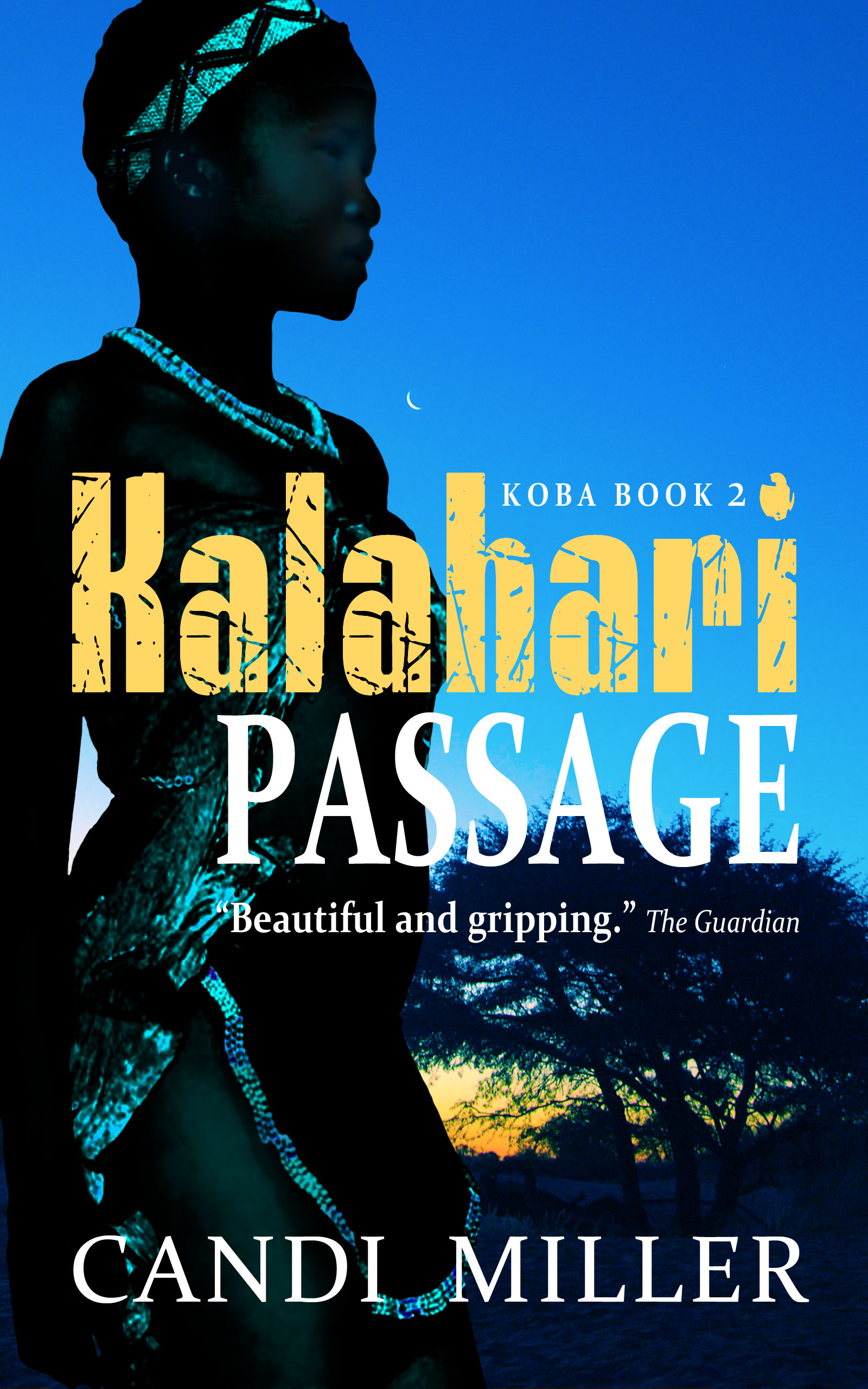
I’m delighted to share my review for Kalahari Passage by Candi Miller #histfic #blogtour #bookreview
Here’s the blurb
Koba and Mannie have been in jail. Their crime, loving each other across the Apartheid colour bar in southern Africa. Koba escapes her captors and using her bush skills, finds her way across the semi-desert to her former tribal home. But adapting to a hunter-gatherer lifestyle after a decade away, has challenges. And her mortal enemy is on her trail.
Meanwhile Mannie absconds during his parole and sets off on a sub-continental road trip to find his beloved Koba. But will his new comrades persuade him to join them across the border for training in deadly guerrilla warfare? And what will that mean for his future with Koba?
Under tragic circumstances the lovers meet, but the danger they are in means they face heart-breaking choices.
Kalahari Passage is an action-packed story of a search for identity and love. Readers will be spellbound by Koba’s world where an ancient culture dances, trances and lives in harmony with the land.
Key ideas
● Unique FMC from world’s oldest living culture, largely unknown outside anthropology. The lineage of Koba’s people goes back to the dawn of humankind.
● Dispossession – ancestral land, cultural identity, freedom
● Interracial love – romantic and family
● Racial discrimination and defiance
● Recent black history – Apartheid South Africa 1960s
Kalahari Passage is the second book in the Koba books. I confess, I was a little perplexed to begin with. But, I took myself into another room, and just sat and read, and I’m so pleased I did (perhaps, my friends, start with the first book). It is a beautiful book, telling the story of people caught up in events they have little control over. It describes a time we should still be horrified to read about, yet it accurately reflects the beliefs of people at that time. It is a richly imagined and intricately recreated world that most of us in the Western world would fail to understand and comprehend, but we should.
The story is both complex and straightforward – will our divided lovers ever meet again, or will people, events and politics play their part in keeping them apart, as well as societal constraints? But all that pales into insignificance as we journey into the Kalahari with Koba. You can taste the sand, feel the heat and grow very thirsty reading this story.
While half of the cast are worrying about being overheard saying something they shouldn’t on ‘party telephone lines’, the other half are simply trying to find drinking water and enough food to eat. The contrast is stark, but essentially, concerns surviving in a harsh world where politics or the environment could see you in a great deal of trouble.
I loved this book. It opened my eyes, it made me think, and it taught me about a past I know very little about. Go read it.
Meet the author
Candi Miller was born in southern Africa and has spent more than twenty years researching the first peoples of the region, a group who have now adopted the exonym of San or Bushmen. She taught creative writing at UK universities. She now lives in Cornwall where she is writing the last book of the Koba trilogy. She is republishing her novels to support a school feeding scheme she co-founded for San children in 2017.
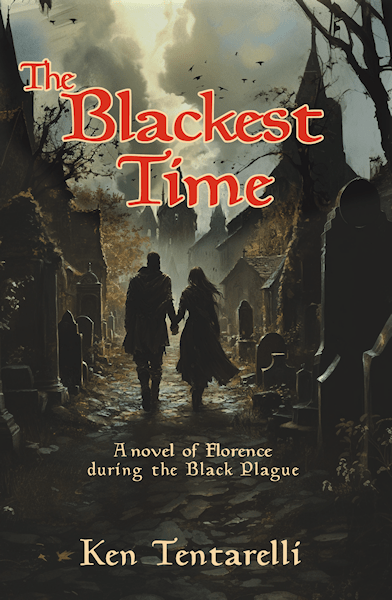
I’m delighted to welcome Ken Tentarelli and his new book, The Blackest Time, to the blog with an excerpt.
Excerpt
Parishioners rise up in anger when a priest declares the Black Plague a divine punishment fortheir sins
.Those attending the morning mass included families living in the parish, lumbermen who had been logging forests in the nearby hills, The lumbermen clustered together near the front of the church, close to the altar. They formed the single largest group. Everyone, Gino included, studied the people nearby, fearful someone close by might show symptoms of the sickness: flushed faces, lumps, or darkened areas on the neck or arms.
While waiting for mass to begin, Gino listened to snatches of conversation. Men raised their voices enough to speak with other men, probably neighbors with whom they had sat elbow-to-elbow in a crowded tavern months ago, and now wouldn’t get within an arm’s length of each other. Women felt it imprudent to speak above a whisper in church, so they merely smiled at each other across the void.
Gino heard some families were absent from mass because they were mourning the death of family members. In one family, it was said, both the mother and father had succumbed, leaving behind three youngsters. No one knew what had become of those children. Stories circulated of entire families having been claimed by the sickness. Most surprising were reports of families fleeing the city to escape the pestilence. For the past two years, people had streamed into Florence from the countryside to seek salvation from the famine. Did the departure of these families mark a turnaround, the beginning of an exodus?
Although the lumbermen were far from him, he sensed hostility in their guttural outbursts. Many had left wives and children in the city while they logged in the hills, so death rampaging unchecked though the city threatened their families and they reacted with anger. They wanted something more tangible than bad air—possibly someone—to blame for the misery.
A small bell sounded when the sacristy door opened, and a priest emerged, followed by two altarboys. When they reached the altar, the priest spread his upraised arms and delivered the opening blessing. Near the midpoint of the service, the priest stepped to the pulpit to deliver his sermon.“We are all God’s children,” he began. “God loves us … all of us. He wants us to love Him, to heed His word, and to obey Him. Our Lord would not cause His children to suffer without reason.” Shifting from a tempered tone, the priest boomed, “This pestilence has been inflicted upon us because we have offended Him. There can be no other explanation.”
Shaken by the indictment, people glanced furtively at those around them as if they were all co-conspirators in a plot against God. “What could we have done to deserve this punishment?” they asked themselves.
Pleased his words had stunned his flock as he had intended, he continued, “We have sinned against God, and only by ending our sinful ways can we expect Him to end this scourge. You may not be an adulterer or a fornicator, but ask yourself, are you committing the sins of envy and pride?”
One lumberman’s face reddened. He bellowed, “My wife was a good, holy, God-fearing woman. She committed no sin worthy of this damnation; yet she suffered a horrible death. She cannot beheld to account for this misery.”
The outcry froze everyone. The priest gripped the lectern so tightly his knuckles turned white; his fingernails dug into the wood. Another lumberman shouted, “My son was barely old enough to walk. He was an innocent child. What sin could he have committed? But he was struck down.”
Family groups moved farther away from the bellicose woodsmen, who began grumbling in support of their comrades. A third man called out, “I wear my best smock when I come to church.” He pointed to its threadbare sleeve and its soiled shoulder. “This is my best! Look at it !It’s frayed and spotted. How could anyone who dresses like this be accused of being prideful?
“Do you know who is prideful?” he asked and raised an arm angled toward the priest. “Thepriests! Look at them. They don’t wear frayed vestments. Before the new bishop came, the priests in this diocese wore plain linen vestments. But now, linen isn’t good enough for them. They all wear expensive silk.” The eyes of all the parishioners shifted to the priest.
The man continued, “The bishop refused to serve communion from a pewter chalice. Now all chalices in the diocese are silver … all except the one used by the bishop. His is gold.” He spread his arms wide. “My wife spends nights in the dark to preserve her lone candle, while this church and others are lit up like brothels.”
He swept his gaze around the church to make eye contact with everyone. “For two years, when rain destroyed the crops, we all struggled to find food for our families. Beggars starved in the streets. But do you know of any priest who went hungry? None of them went to sleep with pangs of hunger. They made sure their bellies were filled.”
“If this terrible disease has been unleashed upon us by the sin of pride, it is the bishop and his minions who brought it upon us.” He ended his tirade in a booming voice, saying, “We need to make the bishop stop his prideful ways and walk in the humble shoes of Saint Francis. I say we go to him now.” He strode the length of the nave and out the door, followed by the other lumbermen.
Here’s the Blurb
Set in the 1300s during the devastating black plague, The Blackest Time is a powerful tale of compassion, love, and the human spirit’s ability to endure immense adversity.
Gino, the central character, is a young man who leaves his family’s farm to find work in a pharmacy in Florence. His experiences show us how people coped in the most horrific time in history.
Shortly after Gino arrived in the city, two years of incessant rain destroyed crops in the countryside, leading to famine and despair in the city. Gino offers hope and help to the suffering— he secures shelter for a woman forced to leave her flooded farm, rescues a young girl orphaned by the plague, and aids others who have lost everything.
The rains had barely ended when the plague hit the city, exposing the true character of its people. While some blamed others for the devastation, the story focuses on the compassionate acts of neighbors helping each other overcome fear and suffering. Doctors bravely risk infection to care for their patients. A woman healer, wrongly accused of witchcraft and driven from the city, finds a new beginning in a village where her skills were appreciated.
Despite the hardships, love blossoms between Gino and a young woman he met at the apothecary. Together they survive, finding strength in each other and hope in a world teetering on the edge.
The Blackest Time is a testament to the strength of the human spirit in overcoming unimaginable tragedy.
Ken Tentarelli is a frequent visitor to Italy. In travels from the Alps to the southern coast of Sicily, he developed a love for its history and its people.
He has studied Italian culture and language in Rome and Perugia, background he used in his award-winning series of historical thrillers set in the Italian Renaissance. He has taught courses in Italian history spanning time from the Etruscans to the Renaissance, and he’s a strong advocate of libraries and has served as a trustee of his local library and officer of the library foundation.
When not traveling, Ken and his wife live in beautiful New Hampshire.
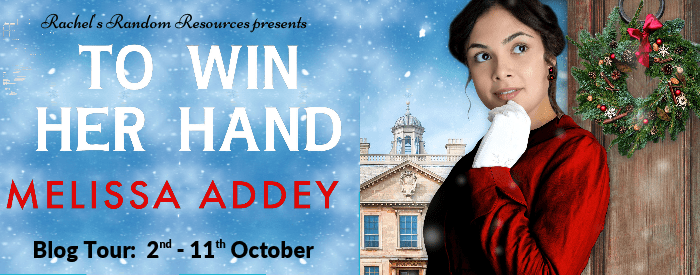
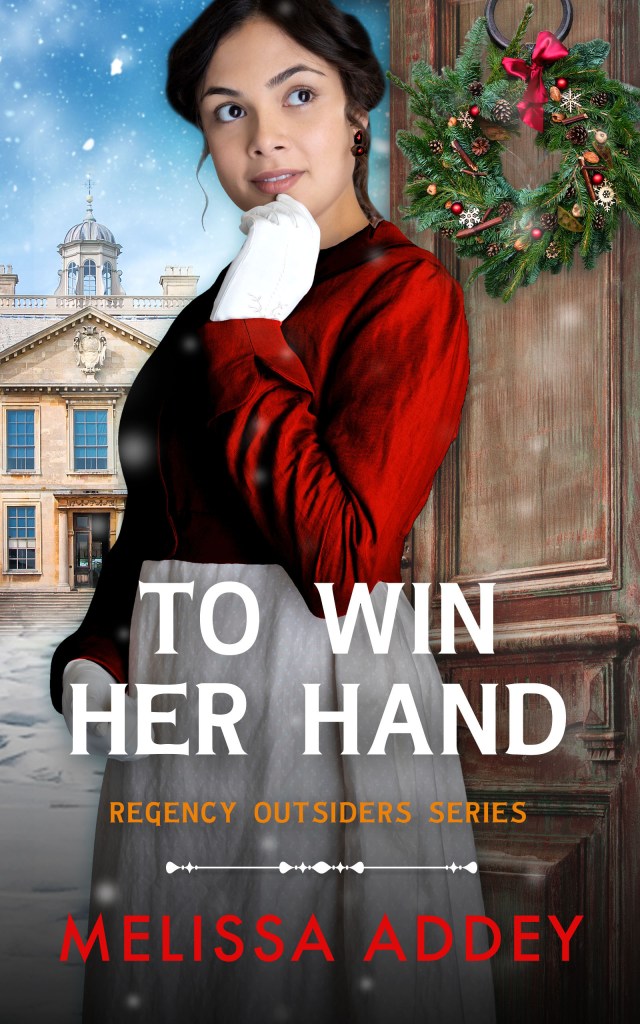
I’m sharing my review for To Win Her Hand by Melissa Addey #regencyromance #blogtour #bookreview #festiveread
Here’s the blurb
They’ve been engaged since they were children, so he sees no need to woo her. She wants a love match and is determined to find an alternative suitor. Perhaps a Christmas trapped together in snowy London will change both their minds.
Lord Comerford has returned from the navy to claim his title, but ton life appears shallow after active service and the woman he has been promised to since birth seems a frivolous child, only interested in parties and clothes.
Lady Celia is hoping her betrothed will make her heart skip a beat – but dour Lord Comerford hardly fits the bill, so she’s planning to call off the wedding just as soon as she can find a better suitor.
Trapped in snow-covered London, the two patch together Christmas celebrations and in so doing find that actions speak louder than words and that an arranged marriage may turn out to contain a spark of romance.
A seasonal Regency romance, full of historical detail and festive fun, as a couple find out that a dutiful promise might be joyful after all. The Season has begun, the ton is gathered… will Christmas work its magic for Alexander and Celia?
To Win Her Hand adopts the old Regency romance storyline of both main characters being unable to speak their minds to one another. Instead, we hear their thoughts as they both manage to completely misunderstand the other, leading to Lady Celia deciding she can’t possibly marry the man she’s been engaged to since she was a child. This is a nice set-up for what comes next (although, I do find myself gnashing my teeth at these people. Grrr. Why can’t they just speak their minds:))
But, all this is to change when Celia and Lord Comerford find themselves ‘thrown’ together and unable to escape one another over the Christmas season. What follows are a charming collection of scenes where both begin to realise they’ve been too hasty. But, of course, it wouldn’t be a Regency romance without more miscommunication between our pair.
To Win Her Hand is another charming Regency romance from Melissa Addey. In her Regency Outsiders series, she offers readers something a little different, with her main characters constrained by a society that misunderstands them. It is quite refreshing, and I’ve thoroughly enjoyed all of the books in the series (although they are standalone novels – you don’t need to read the previous books as each one has new characters – but you would be missing out).
Melissa Addey writes richly researched historical fiction inspired by what she calls “the footnotes of history” – forgotten stories and intriguing lives from the past. Her novels span Ancient Rome, medieval Morocco, 18th-century China, and Regency England. She has a PhD in Creative Writing, was Writer in Residence at the British Library, and lives in London with her family. Discover her books (and get a free novella) at www.melissaaddey.com
Check out my review for From The Ashes, Melissa Addey’s Roman-era historical fiction set around the events of Vesuvius and the building of the Colosseum.
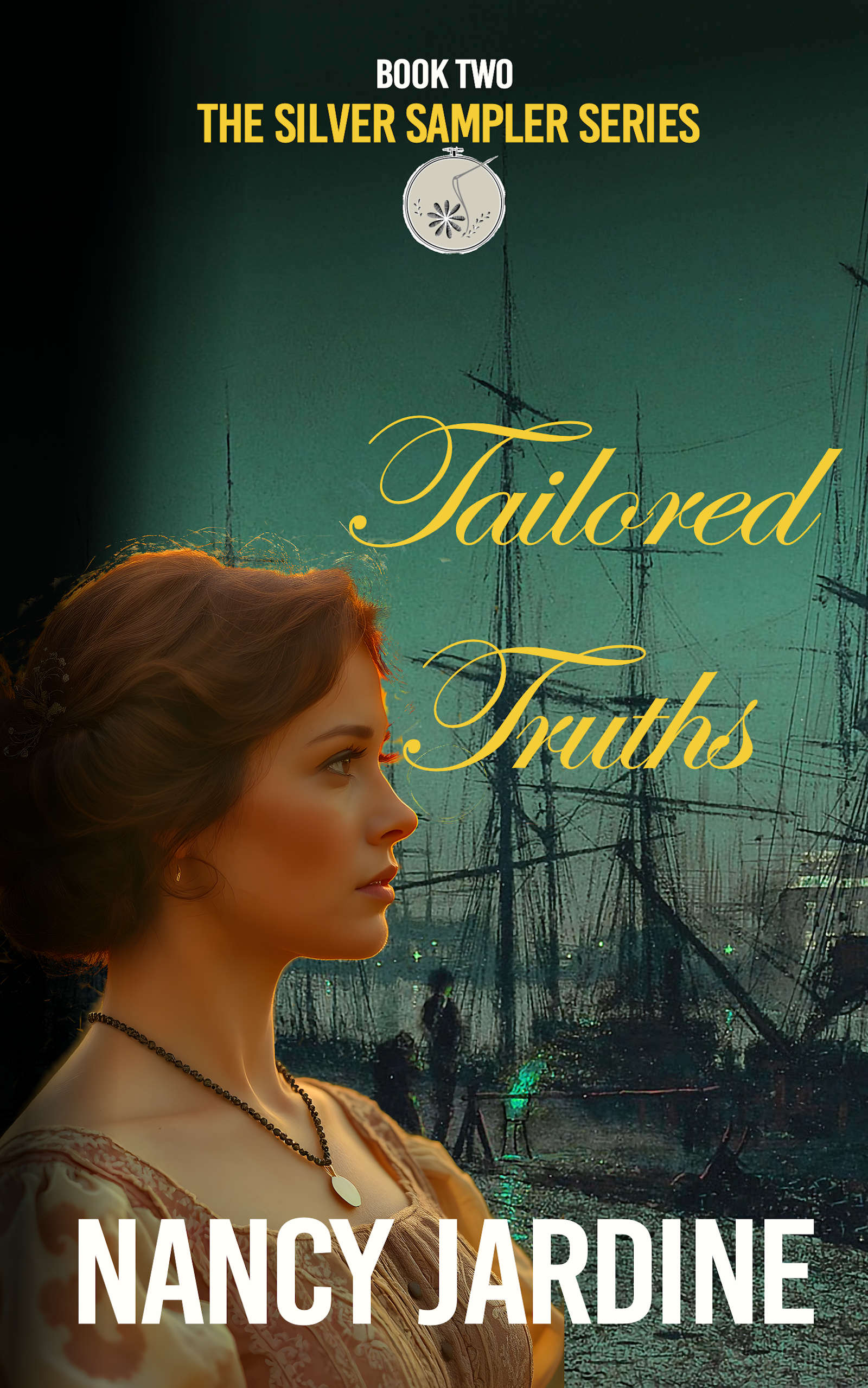
I’m delighted to welcome Nancy Jardine and her new book, Tailored Truths, Book 2 in the Silver Sampler Series, to the blog with a guest post.
Guest Post – Mill Owner Benevolence
My character, Margaret, has a variety of jobs in Tailored Truths. Two of them are in different areas of one of the larger mills in Dundee (Scotland). The time period covered in the book is between 1855 and 1868 when Dundee mills were, at times, highly profitable though the situation was also volatile, markets and sales being unpredictable. Workers were hired when high production was needed and they lost their jobs when things weren’t so rosy in the world markets. Margaret finds herself lucky to have a job when she desperately needs one, even if it pays a pittance!
During the earlier part of the 19th Century, linen was the prime mill product in the Dundee area. Coarse linen weave was highly sought after for sailcloth; for canvas sacks and bags for transporting goods; and a coarse linen weave named Osnaburg was produced for sending to the American plantations to be made into rough clothing for slaves. The main drawback, however, was that the flax (raw product) tended to come from Baltic states. When Britain became embroiled in the Crimean War, between 1853-1856, the flax supplies from the Russian Baltic states were deemed as potentially unreliable. The larger mill owners in Dundee tended to work on a ‘six months’ system where supplies were ordered well in advance, since shipping from the Baltic also relied on an annual short-window of weather good enough for sailing ships. Not having continuous raw supplies presented a huge problem since linen was highly sought after during the Crimean War. The war office bought lots of linen products, the British army and navy requiring constant supplies and replacements to sails; uniforms; sacks; tents etc. Market prices fluctuated but some of the Dundee mills profited very well during the Crimean War, though there were the much leaner years afterwards when the War Office requisitions dwindled.
To offset potential losses from a lack of flax, some of those larger mill owners in Dundee turned to producing jute weaves. Jute wasn’t a new product around Dundee, since some of the smaller weavers had already been producing jute products for decades, but the profit margin for them was low. Initially, the raw jute was grown in Bengal (India) and shipped to Dundee via local Indian dealers but when the larger mill owners saw jute as being profitable they organised the shipping themselves.
The tradition in Bengal had been for jute products to be hand-woven. There were no powered-looms nor any steam machinery in Bengal for spinning and weaving till later in the 1850s and 1860s, so there was no real competition when the big Dundee mills began jute mass production.
The raw jute needed to be softened first before carding and spinning could happen. Whale oil was already known to be a good product for that process and it was highly convenient that the quaysides at Dundee were regularly frequented by the huge whaling ships.
Some of the mill owners weathered the unpredictable markets very well and their bank accounts swelled enormously. Many of them chose to use their wealth to build new mansions for their families in the nearby coastal town of Broughty, or around the city of Dundee. In doing this, they provided much needed construction jobs, and then jobs for inside and outside staff. I used this situation in Tailored Truths, giving Margaret a taste of the high-life when she is taken on as a lady’s maid in one of the new mansions. The ‘family’ are naturally only on the periphery of high society, with Margaret experiencing it from the point of view as an elevated servant, but her situation means a glimpse into how the nouveaux riche of Dundee were living.
Some of the Dundee mill owners took opportunities to use some of their wealth for the benefit of the citizens of Dundee. Whether this was true altruism, or expected of them, could be debated at length but the facts are that some public buildings and facilities would not have been built so readily without hefty donations coming from the mill owners. Some of the still-existing public parks in Dundee came about from extensive donations, Baxter Park being a fine example. The land was acquired, planted up and turned into beautiful walkways for the working people of Dundee to enjoy when freed from their long hours of work. Baxter Park also has a very fine pavilion, currently used as a multi-purpose venue with a tiny daytime café. One of the marvellous aspects of the sandstone pavilion in Baxter Park, designed by Sir Joseph Paxton – a renowned architect and landscaper – is the grand rooftop balustrade. There is a fantastic view from there of the River Tay and the far bank of Fife. When the park was newly planted the view would have been much better than today. It’s still very good since the whole park site is ‘up-the-hill’ from the harbourside but today some of the original and very mature trees, and modern housing slightly obscure the views.
I couldn’t resist adding in a scene where Margaret meets some very handsome lads in my fictitious Baxton park. It didn’t feel authentic to give my Dundee mill family the genuine name of Baxter, but I chose something very close. My fictitious Mister Baxton is, in his own way, remotely instrumental in Margaret’s progress through her late teenage years and into her twenties. How?…Too many spoilers ruin the book (Shh.. I just made that up!)
Here’s the Blurb
An engrossing Victorian Scotland Saga (Silver Sampler Series Book 2)
Is self-supporting success enough for Margaret Law or will her future also include an adoring husband and children? She might secretly yearn for that though how can she avoid a repeat of relationship deceptions that disenchanted her so much during her teenage years?
Employment as a lady’s maid, and then as a private tutor in Liverpool in the 1860s bring thrilling opportunities Margaret could never have envisaged. Though when those posts end, her educational aspirations must be shelved again. Reliance on her sewing skills is paramount for survival when she returns to Dundee.
Meeting Sandy Watson means love, marriage and starting a family – though not necessarily in that order – are a striking development though it entails a move north to Peterhead. Yet, how can Margaret shed her fear of commitment and her independence and take the plunge?
Jessie, her sister-at-heart, is settled in Glasgow. Frequent letters are a life-line between them but when it all goes horribly wrong, the contents of Margaret’s correspondence don’t necessarily mirror her awful day-to-day realities.
This title is available to read on #KindleUnlimited
Meet the Author
Nancy Jardine writes historical adventure fiction, historical saga, time travel historical adventure and contemporary mysteries. Research, grandchildren, gardening fill up her day in the castle country of Aberdeenshire, Scotland, when not writing or promoting her writing. Interacting with readers is a joy at Book and Craft Fairs where she signs/sells paperback versions of her novels. She enjoys giving author presentations on her books and on Ancient Roman Scotland.
Memberships include: Historical Novel Society; Scottish Association of Writers, Federation of Writers Scotland, Romantic Novelists’ Association and the Alliance of Independent Authors. She’s self-published with Ocelot Press.
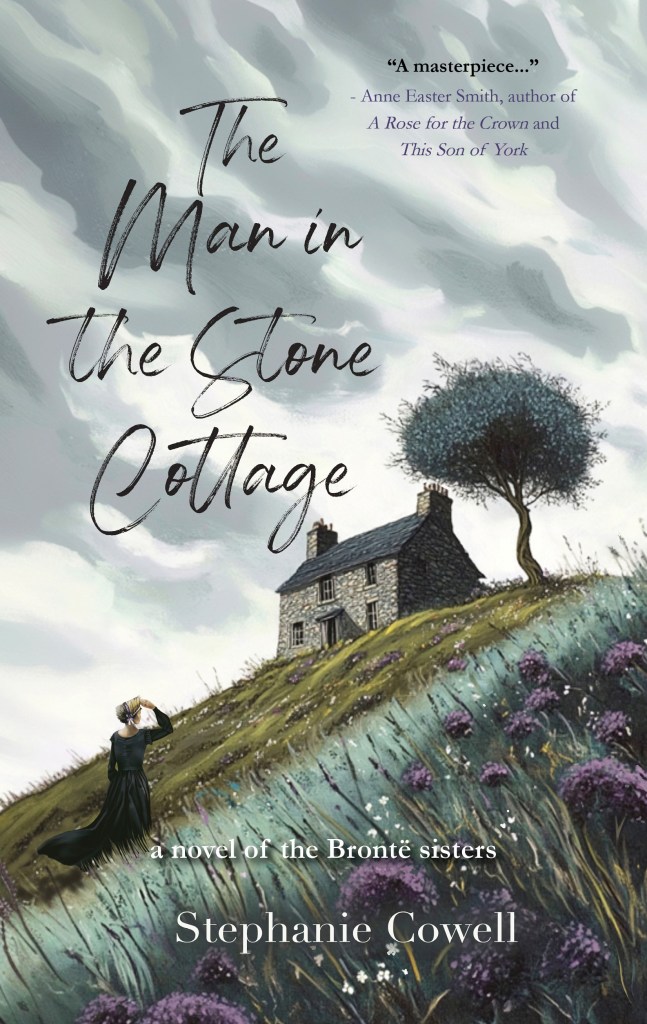
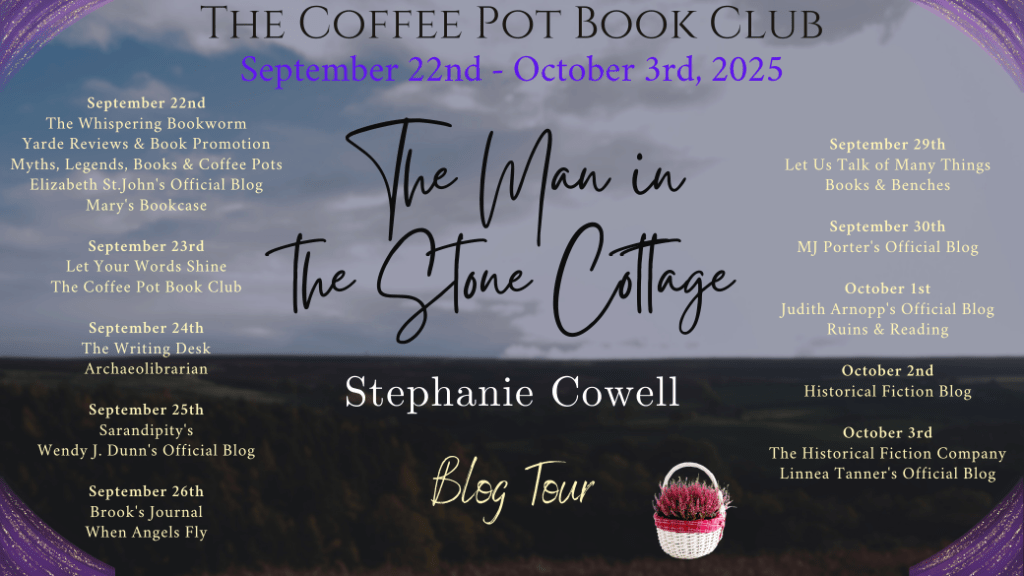
I’m welcoming Stephanie Cowell to the blog with a fascinating post about research for her new novel, The Man in the Stone Cottage: a novel of the Brontë sisters #Brontë #Yorkshire #Victorian #EnglishLiterature #WomenWriters #HistoricalFiction @cathiedunn
@cowell.stephanie @thecoffeepotbookclub
Researching My Novel on the Brontë Sisters by Stephanie Cowell
I simply love research. The opportunity to know more about my beloved historical characters and their surroundings and daily world is thrilling. Researching Charlotte, Anne and Emily Brontë, I had a chance to go to their village in Yorkshire (Haworth) and to the Parsonage where they lived with their clergyman father and wrote their books and what is more thrilling than that? I travelled there three times over many years.
In curated display cases, I could see the needles with which they sewed, the cup they drank from (imagine seeing Emily’s cup and knowing she might have paused in writing bits of Heathcliff to drink a sip of tea!), their clothing, their hand-written childhood magazines. I could walk around the house, climbing the steps they climbed every day. In the parlor/dining room, I marveled at the table where they wrote their books. (After a century or more of searching by scholars, the actual table was found in private hands and in 2015 it was brought back to the Parsonage. Someone has scratched “E” in the wood. Was it our Emily?)
So, my first research was going to the Parsonage, but a great deal of research of course was from biographies and household advice books and letters which describes event and feelings and hopes and fears. They describe loneliness.
Letters are the best! Charlotte wrote the most. She wrote hundreds to her best friend Ellen, pouring out her frustration about working in a teaching job at a boarding school until exhausted. She wrote about her family. She wrote to her publisher’s reader about her sadness over her alcoholic brother who could not keep a job. She wrote her married Belgium professor of her adoration of him. We have these letters almost two hundred years. They are from the writer who penned Jane Eyre’s passionate words, “Do you think, because I am poor, obscure, plain and little, I am soulless and heartless?”
Research! I have two bookshelves of biographies, literary analysis, life in Victorian England, books about the town of Haworth and the house, even a biography of the rather obscure man Charlotte eventually married. I just remembered that at one time my novel was not from the point of view of the two sisters, but only from his point of view. And like the larger part of stories I begin, it was not finished but eventually morphed into the final novel THE MAN IN THE STONE COTTAGE.
I try to keep my research books together also in certain shelves but some wander over the house. When I was a beginning writer and rather poor, I used the library for everything. Now I am afraid I mostly use the internet to buy obscure second-hand books.
It was however in an actual bookshop one day that I glanced at a shelf and found THE book I wanted, THE book I must have. This was in the days before the internet. I gasped so that I am fortunate the salesperson did not come rushing over to see if I was okay. Perhaps he was used to having people gasp over discovered books.
There is a problem with biographies. I went to a bookshop reading of one of Charlotte’s biographers, and someone asked her, “Have you written the definitive biography?” and she replied, “Oh no, I hope not. Every biographer sees her in a different way!” And that is true. Charlotte’s first biographer Mrs. Gaskell made Charlotte into a near saint. Others have emphasized the prickly side of her personality. Who would not be prickly with all her losses and griefs and hardships?
Emily and Anne have several biographies each, but less is known about them. These two sisters were more private and did not pour their heart out on paper, or perhaps fewer paper were kept.
Even when a novel is long finished and gone into the hands of readers, I love and long for the worlds where my beloved characters have walked. So, I go to wander in the streets of York or Paris or Florence, and if I wait, I will see one of my characters coming toward me. And likely he or she will smile and say, “There you are! Welcome back! We’ve been waiting for you!”
Here’s the blurb
“A haunting and atmospheric historical novel.” – Library Journal
In 1846 Yorkshire, the Brontë sisters— Charlotte, Anne, and Emily— navigate precarious lives marked by heartbreak and struggle.
Charlotte faces rejection from the man she loves, while their blind father and troubled brother add to their burdens. Despite their immense talent, no one will publish their poetry or novels.
Amidst this turmoil, Emily encounters a charming shepherd during her solitary walks on the moors, yet he remains unseen by anyone else.
After Emily’ s untimely death, Charlotte— now a successful author with Jane Eyre— stumbles upon hidden letters and a mysterious map. As she stands on the brink of her own marriage, Charlotte is determined to uncover the truth about her sister’ s secret relationship.
The Man in the Stone Cottage is a poignant exploration of sisterly bonds and the complexities of perception, asking whether what feels real to one person can truly be real to another.
Praise for The Man in the Stone Cottage:
“A mesmerizing and heartrending novel of sisterhood, love, and loss in Victorian England.” – Heather Webb, USA Today bestselling author of Queens of London
“Stephanie Cowell has written a masterpiece.” – Anne Easter Smith, author of This Son of York
“With The Man in the Stone Cottage, Stephanie Cowell asks what is real and what is imagined and then masterfully guides her readers on a journey of deciding for themselves.” – Cathy Marie Buchanan, author of The Painted Girls
“The Brontës come alive in this beautiful, poignant, elegant and so very readable tale. Just exquisite.” – NYT bestseller, M.J. Rose
“Cowell’s ability to take readers to time and place is truly wonderful and absorbing.” – Stephanie H. (Netgalley)
“Such a lovely, lovely book!” – Books by Dorothea (Netgalley)
Stephanie Cowell has been an opera singer, balladeer, founder of Strawberry Opera and other arts venues including a Renaissance festival in NYC.
She is the author of seven novels including Marrying Mozart, Claude & Camille: a novel of Monet, The Boy in the Rain and The Man in the Stone Cottage. Her work has been translated into several languages and adapted into an opera. Stephanie is the recipient of an American Book Award.
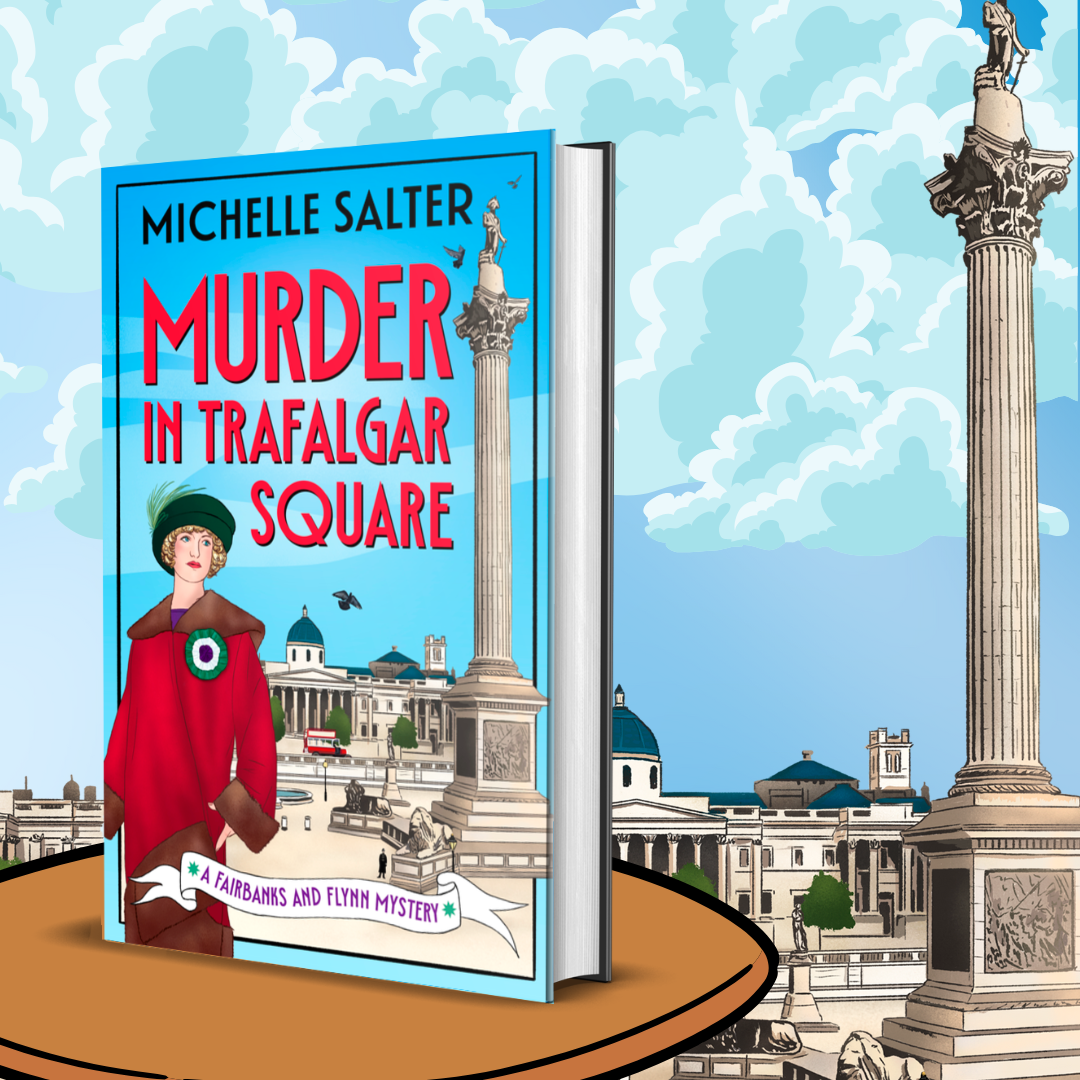
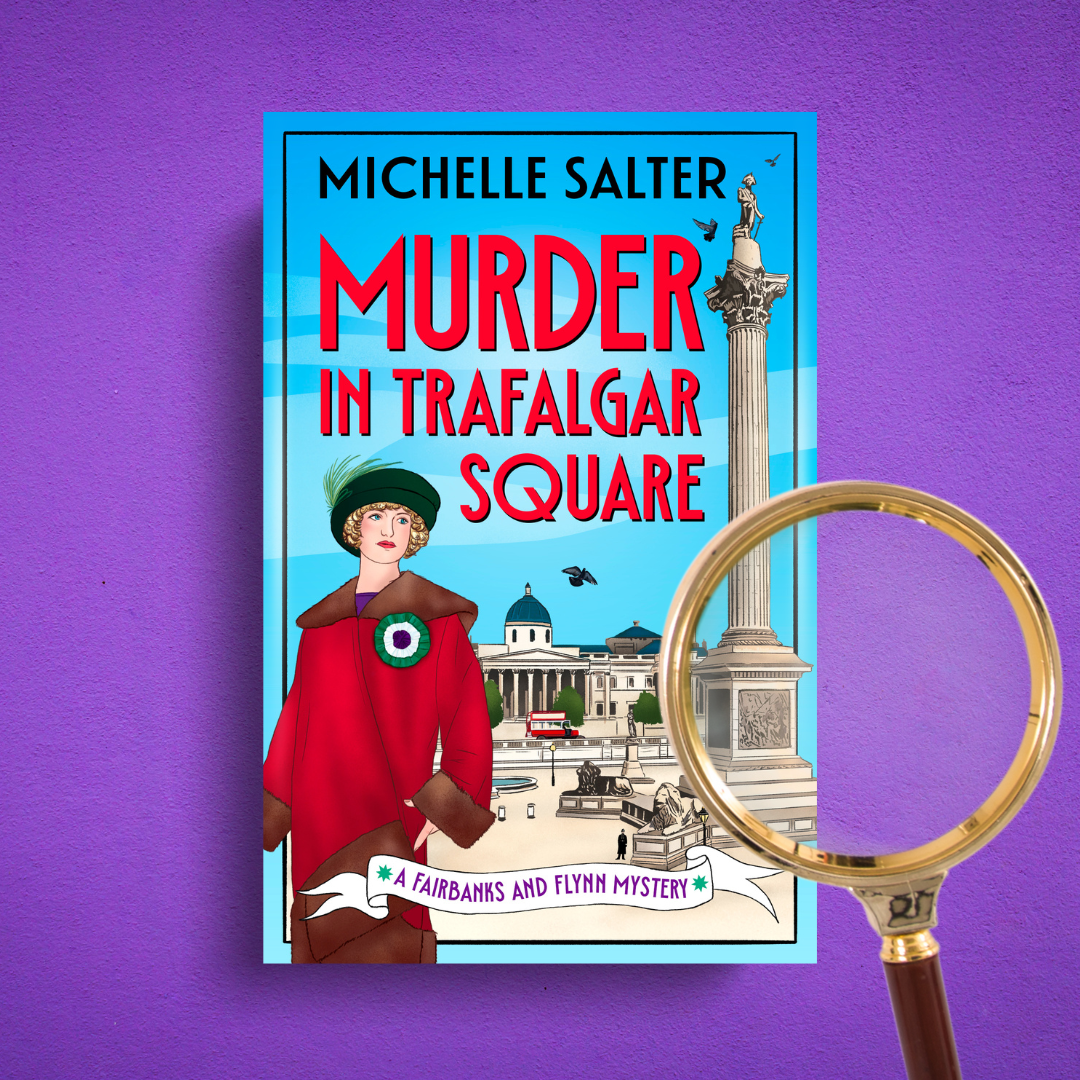
I’m delighted to share my review for Murder in Trafalgar Square by Michelle Salter, the first book in a new historical mystery series #historicalmystery #cosycrime #highlyrecommended
#BoldwoodBloggers @BoldwoodBools #MurderInTragalgarSquare @rararesources @bookandtonic
Here’s the blurb
Discover a BRAND NEW page-turning cosy mystery series from Michelle Salter A murdered suffragette. A missing politician. A stolen artwork.
London, 1910
Coral Fairbanks is a contradiction. As well as a suffragette, she’s a bit-part actress and nude model, earning her the disapproval of her fellow suffragettes.
Guy Flynn is an artist. He’s also a detective inspector at Scotland Yard, who doesn’t always see eye to eye with fellow officers in the Metropolitan Police.
When Home Secretary Winston Churchill orders the police to terrorise the suffragettes during an afternoon of violence that becomes known as Black Friday, the battlelines are drawn – and Coral Fairbanks and Guy Flynn are on different sides.
But when a young suffragette is found murdered in the National Portrait Gallery and one of their paintings is stolen – Fairbanks and Flynn must put their differences aside and combine their knowledge to track down the killer.
Introducing an iconic detective duo in Fairbanks and Flynn, this is an exciting and gripping historical mystery, which will delight fans of Agatha Christie, Benedict Brown and T. E. Kinsey
Murder in Trafalgar Square is the first book in Michelle Salter’s new mystery series, set in 1910, and what a fabulous first entry into a series it is.
For this series we have two main characters, Cora, a young widow who is a suffragette, works in a gallery and has also been an actress but is currently deemed, at 36, to be too old to play the ingenue on stage, and too young to be a harridan. (I sense we’re still not really that far beyond that even now).
Guy Flynn, our detective inspector, is equally a many layered individual, also a widower with a daughter to raise alone, and he’s a painter too. The pair have some lovely facets to their characters and they make for an intriguing duo as we read chapters from alternative points of view. They’re flung together when a body is found at the National Gallery and it makes all the headlines, as opposed to the suffragette stunt with a most amusing painting (I’m not spoiling it).
The mystery unfolds at a good pace, as Cora and Guy endeavour to unpick the information they gain, while endeavouring to stay on the right side of the government.
This is such a fabulous new book, and I’m so excited to read more of Cora and Guy. I love the Iris Woodmore series by the author, but it’s possible I might love this one even more.
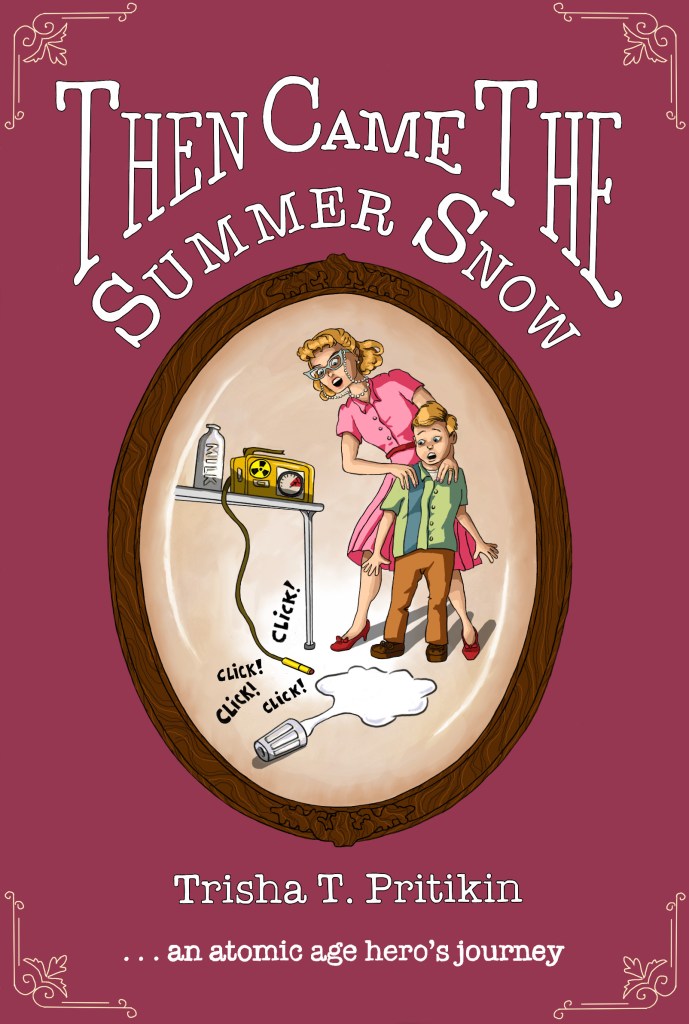
I’m welcoming Then Came The Summer Snow by Trisha T Pritikin to the blog #HistoricalFiction #Downwinders #AtomicJustice #1950s #BlogTour #TheCoffeePotBookClub
Here’s the blurb
In 1958, Edith Higgenbothum, a housewife in Richland, Washington, downwind of the massive Hanford nuclear weapons production site, discovers that the milk her young son Herbie drinks contains radioactive iodine from Hanford’s secret fallout releases. Radioactive iodine can damage the thyroid, especially in children.
When Herbie is diagnosed with aggressive thyroid cancer, Edith allies with mothers of children with thyroid cancer and leukemia in communities blanketed by fallout from Nevada Test Site A-bomb tests on a true atomic age hero’s journey to save the children.
Praise for Then Came the Summer Snow:
“In Trisha Pritikin’s crisp and sweeping novel, the Cold War comes home to live with a family in Richland, Washington. Not the Cold War of ideologies, but the one that included 2,000+ nuclear tests, and the production of hundreds of tons of plutonium; that contaminated our homes, food and communities; that actually took family members.”
~ Robert “Bo” Jacobs, Emeritus Professor of History at the Hiroshima Peace Institute and Hiroshima City University, author of Nuclear Bodies: The Global Hibakusha (Yale 2022).
“Then Came the Summer Snow is like an unexpected gift in its surprise and freshness. Absurdity informs its realism, its poignancy, and its humor. A troubling, hilarious, weird, and wonderful novel.”
~ Mark Spencer, author of An Untimely Frost
Triggers: misogynist culture of 1950s; no violence, but cancers in children are a focus, and thyroid cancer treatment.
This title is available to read on #KindleUnlimited.
Meet the author
Trisha is an internationally known advocate for fallout-exposed populations downwind of nuclear weapons production and testing sites. She is an attorney and former occupational therapist.
Trisha was born and raised in Richland, the government-owned atomic town closest to the Hanford nuclear weapons production facility in southeastern Washington State. Hanford manufactured the plutonium used in the Trinity Test, the world’s first test of an atomic bomb, detonated July 16,1945 at Alamogordo, NM, and for Fat Man, the plutonium bomb that decimated Nagasaki on August 9, 1945. Beginning in late 1944, and for more than forty years thereafter, Hanford operators secretly released millions of curies of radioactive byproducts into the air and to the waters of the Columbia River, exposing civilians downwind and downriver. Hanford’s airborne radiation spread across eastern Washington, northern Oregon, Idaho, Western Montana, and entered British Columbia.
Trisha suffers from significant thyroid damage, hypoparathyroidism, and other disabling health issues caused by exposure to Hanford’s fallout in utero and during childhood. Infants and children are especially susceptible to the damaging effects of radiation exposure.
Trisha’s first book, The Hanford Plaintiffs: Voices from the Fight for Atomic Justice, published in 2020 by the University Press of Kansas, has won multiple awards, including San Francisco Book Festival, 1st place (history); Nautilus Silver award (journalism and investigative reporting); American Book Fest Book Awards Finalist (US History); Eric Hoffer Awards, Shortlist Grand Prize Finalist; and Chanticleer International Book Awards, 1st Place, (longform journalism). The Hanford Plaintiffs was released in Japanese in 2023 by Akashi Shoten Publishing House, Tokyo.
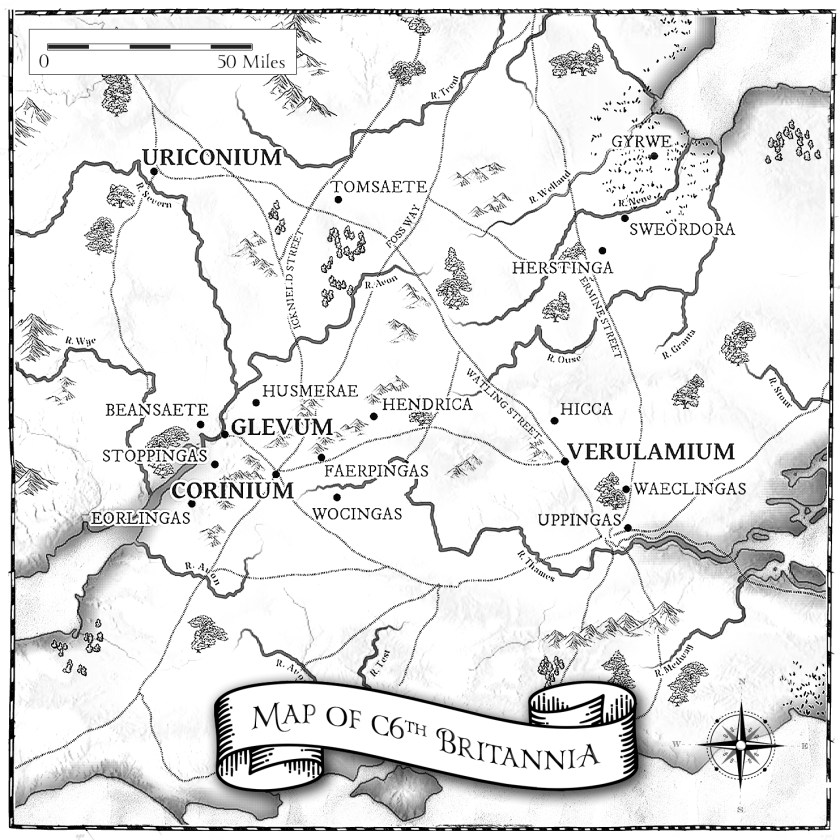
Come with me to Great Witcombe #newrelease #MenOfIron #WarriorsOfIron #histfic
Great Witcombe Roman Villa
Great Witcombe Roman Villa is no longer open to the public, but it is managed by English Heritage, and it’s possible to get a glimpse of it, although you do need to be careful. I think it’s currently closed due to safety concerns, so be mindful, and stay behind all the barriers, especially as the location is pretty remote.
From what I could see of the remains of Great Witcombe Roman Villa, it does seem to have been set in a beautiful place, and it quite appealed to me. I relied heavily on the idea of the location when devising the home for one of the tribes that features in the Dark Age Chronicles. (It probably helped that I visited on a lovely sunny day.)
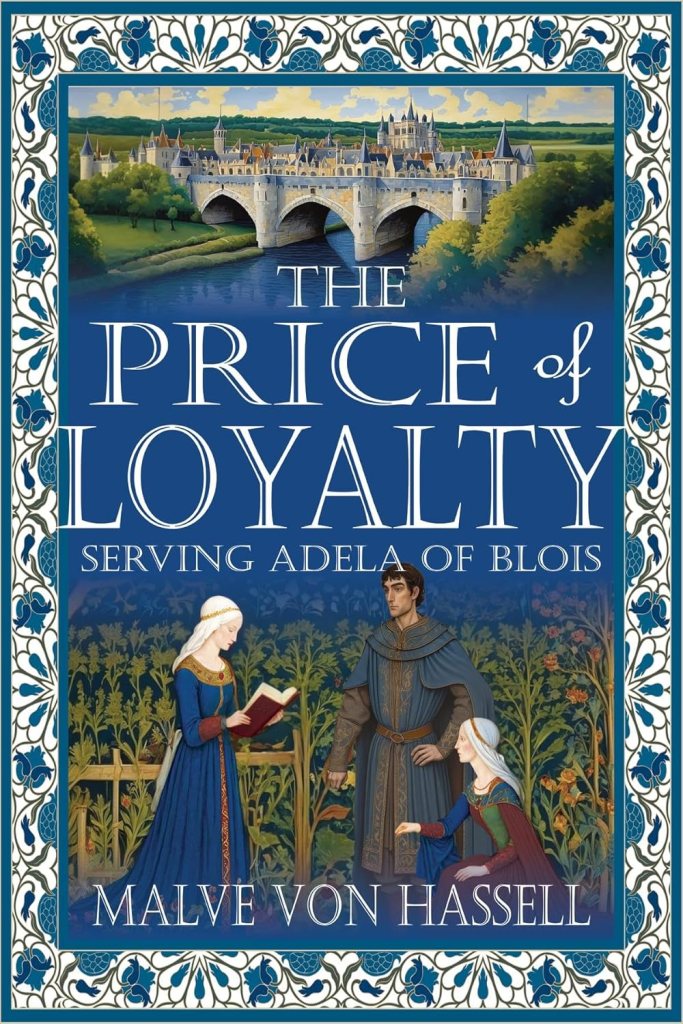
I’m delighted to welcome Malve von Hassell and her new book, The Price of Loyalty, to the blog #HistoricalFiction #medieval #France #crusades #AdelaofBlois #WilliamtheConqueror #StephenHenrydeBlois #BlogTour #TheCoffeePotBookClub
I’m delighted to welcome Malve Von Hassell and her new book, The Price of Loyalty: Serving Adela Bois, to the blog with an excerpt.
Excerpt
Caught In The Snare
1103 Caen
“But, my lady, any of your knights could do this.”
Cerdic had never yet been so frustrated and angry. Adela wanted him to take her son Theobald to her brother-in-law Hugh of Troyes. And she had mentioned another unspecified task. Certainly, she was a widow, and she needed friends around her whom she could trust. But she had other advisors, and for an errand like this, she surely could find someone else. Was he going to be at her back and call indefinitely?
“Theobald has known you all his life. It would be good for him to spend time with you. It has not been easy for him and his brothers.” Adela avoided his eyes. “My brother-in-law is a good man and the right person to take charge of a growing boy, especially now that he has lost his father. Moreover, Hugh and his wife Constance haven’t been blessed with children. Theobald is his heir designate. It is time that Theobald learns everything he needs to know for his future station and duties in life.”
Cerdic stared at her, at a loss for words.
“I can’t and don’t want to ask anybody else. I trust you.”
Cerdic bowed. In truth, he could hardly go on protesting.
Several weeks later, he was back on the road in the company of a surly twelve-year-old boy. For the first hour, they rode in silence. It was early December, and the first hoar frost had turned everything dull and brown. They had to ride north and west toward Troyes; Champagne was a large county, and it would take them about two days.
Theobald had bowed to his mother and ducked out of her embrace. He had mounted his horse without acknowledging Cerdic. He was slender and fine-boned; it didn’t look as if he would have his father’s sturdy build as an adult. His curly hair peeking out underneath his woolen cap was dark brown, not the reddish hue of his grandfather and his uncles. He rode with his head bent and his shoulders hunched.
Guisbert was ten, Cerdic thought with a pang, not much younger than this boy. Would he even recognize his father?
The first words they exchanged were when Cerdic’s horse started limping, and Cerdic had to stop to check the hooves. A stone had worked its way underneath one shoe. Fortunately, Cerdic could pick it out.
“Tell you what.” Cerdic straightened up. The boy’s expression was sullen and slightly hostile. “I don’t trust this shoe, and I don’t want the bay to go lame on me. Let’s walk for a bit. The next village isn’t too far from here, and we’ll find a blacksmith there.”
So they walked, leading the horses. “What are the roads like in the Holy Land?” Theobald asked after a while.
Cerdic didn’t think that the boy really cared about the roads, but it was an opening. “Would you believe it? Some are a lot better than the roads here. Others again are nothing but sand and rocks.”
Theobald was silent. They continued walking.
Then Theobald cleared his throat. “You were with my father, weren’t you?”
“Yes, I was,” Cerdic responded cautiously. “What did your mother tell you?”
“Nothing.” The boy jerked on his horse’s rein so that the surprised animal flung his head up and snorted. “Sorry,” Theobald whispered to the horse. “My mother told me nothing other than that he’s dead. I can’t talk to her about it.”
Cerdic frowned, inwardly cursing Adela. So, that’s why she sent him on this journey.
Here’s the Blurb
In a time of kingdoms and crusades, one man’s heart is the battlefield.
Cerdic, a Saxon knight, serves Count Stephen-Henry of Blois with unwavering loyalty-yet his soul remains divided. Haunted by memories of England, the land of his childhood, and bound by duty to King William, the conqueror who once showed him mercy, Cerdic walks a dangerous line between past and present, longing and loyalty.
At the center of his turmoil stands Adela-daughter of a king, wife of a count, and the first to offer him friendship in a foreign land. But when a political marriage binds him to the spirited and determined Giselle, Cerdic’s world turns again. Giselle, fiercely in love with her stoic husband, follows him across sea and sand to the holy land, hoping to win the heart that still lingers elsewhere.
As the clash of empires looms and a crusade threatens to tear everything apart, Cerdic must confront the deepest truth of all-where does his loyalty lie, and whom does his heart truly belong to?
Malve von Hassell is a freelance writer, researcher, and translator. She holds a Ph.D. in anthropology from the New School for Social Research. Working as an independent scholar, she published The Struggle for Eden: Community Gardens in New York City (Bergin & Garvey 2002) and Homesteading in New York City 1978-1993: The Divided Heart of Loisaida (Bergin & Garvey 1996). She has also edited her grandfather Ulrich von Hassell’s memoirs written in prison in 1944, Der Kreis schließt sich – Aufzeichnungen aus der Haft 1944 (Propylaen Verlag 1994).
Malve has taught at Queens College, Baruch College, Pace University, and Suffolk County Community College, while continuing her work as a translator and writer. She has published two children’s picture books, Tooth Fairy (Amazon KDP 2012 / 2020), and Turtle Crossing (Amazon KDP 2023), and her translation and annotation of a German children’s classic by Tamara Ramsay, Rennefarre: Dott’s Wonderful Travels and Adventures (Two Harbors Press, 2012).
The Falconer’s Apprentice (namelos, 2015 / KDP 2024) was her first historical fiction novel for young adults. She has published Alina: A Song for the Telling (BHC Press, 2020), set in Jerusalem in the time of the crusades, and The Amber Crane (Odyssey Books, 2021), set in Germany in 1645 and 1945, as well as a biographical work about a woman coming of age in Nazi Germany, Tapestryof My Mother’s Life: Stories, Fragments, and Silences (Next Chapter Publishing, 2021), also available in German, Bildteppich Eines Lebens: Erzählungen Meiner Mutter, Fragmente Und Schweigen (Next Chapter Publishing, 2022).
Her latest publication is the historical fiction novel, The Price of Loyalty: Serving Adela of Blois (Historium Press, 2025).
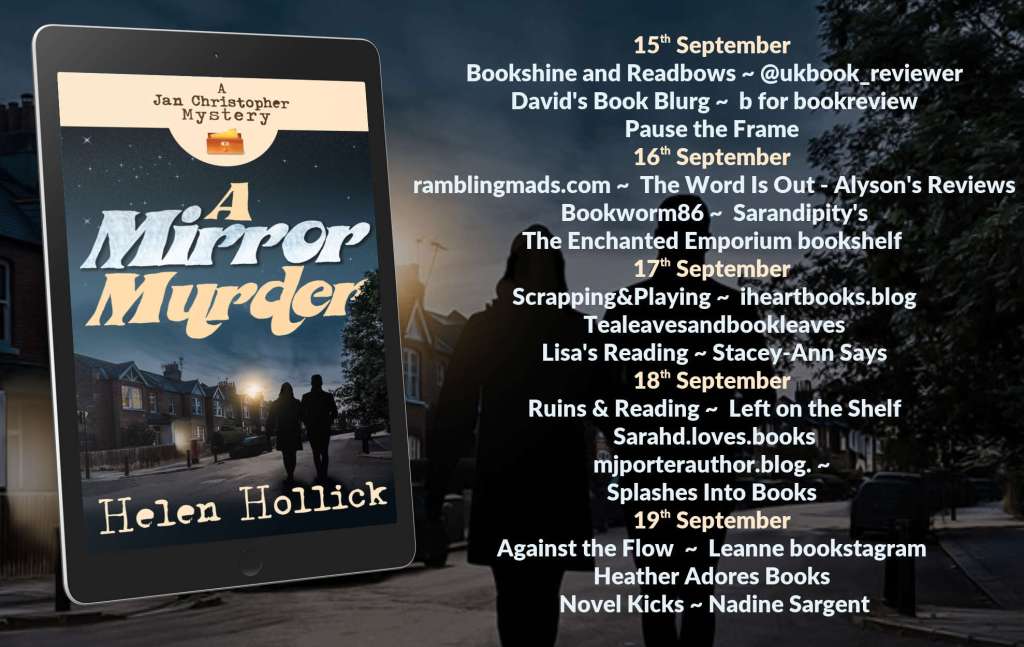
I’m sharing my review for A Mirror Murder, the first book in a delightful 1970s cozy mystery series by Helen Hollick #bookreview #mystery #blogtour
Here’s the blurb
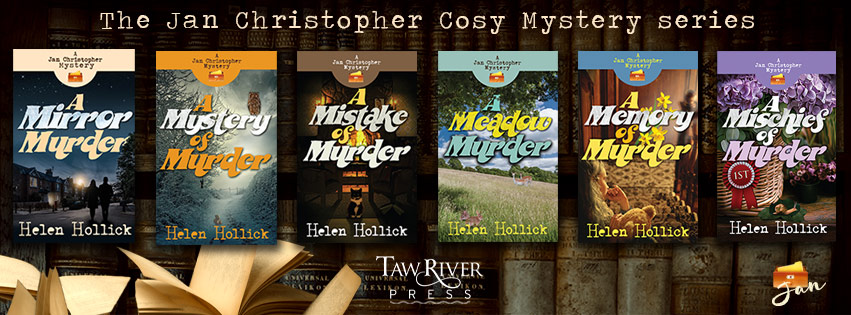
A Mirror Murder – First In The Jan Christopher Cozy Mystery Series
The first in a series of quick-read, cozy mysteries set during the 1970s in North East London and North Devon, featuring the characters of Jan Christopher, her Aunt Madge, her uncle, DCI Toby Christopher and romantic interest DC Lawrence Walker – plus several other endearing, regular characters.
The background of Jan’s career as a library assistant is based on the author’s own library years during the 1970s, using many borrowed (often hilarious!) anecdotes, her life in suburban north east London on the edge of Epping Forest, and her present life in rural North Devon…
July 1971 Eighteen-year-old library assistant Jan Christopher’s life is to change on a rainy evening, when her legal guardian and uncle, DCI Toby Christopher, gives her a lift home after work. Driving the car, is her uncle’s new Detective Constable, Lawrence Walker – and it is love at first sight for the young couple. But romance is soon to take a back seat when a baby boy is taken from his pram, a naked man is scaring young ladies in nearby Epping Forest, and an elderly lady is found, brutally murdered… Are the events related? How will they affect the staff and public of the local library where Jan works – will romance survive and blossom between library assistant Jan Christopher and DC Walker? Or will a brutal murder intervene?
“I sank into this gentle cosy mystery story with the same enthusiasm and relish as I approach a hot bubble bath, (in fact this would be a great book to relax in the bath with!), and really enjoyed getting to know the central character…” Debbie Young (bestselling cozy mystery author)
“Jan is a charming heroine. You feel you get to know her and her love of books and her interest in the people in the library where she works. She’s also funny, and her Aunt Madge bursts with character – the sort of aunt I would love to have had. I remember the 70s very well and Ms Hollick certainly gives a good flavour of the period.”Denise Barnes (bestselling romance author Molly Green)
“A delightful read about an unexpected murder in North East London. Told from the viewpoint of a young library assistant, the author draws on her own experience to weave an intriguing tale”Richard Ashen (South Chingford Community Library)
“Lots of nostalgic, well-researched, detail about life in the 1970s, which readers of a certain age will lap up; plus some wonderful, and occasionally hilarious, ‘behind the counter’ scenes of working in a public library, which any previous or present-day library assistant will recognise!”Reader’s Review
I do love a cozy crime series, and Helen Hollick’s Jan Christopher stories are fabulous.
As I so often do, I have read the series slightly out of order, and all you sensible people will start with A Mirror Murder, and you are in for a real treat as you read your way through the entire series.
The first book, A Mirror Murder, sets the scene for the series and introduces us to the cast. As someone who loves a really well-written and tightly plotted cosy mystery, I adored this book.
Perfectly evoking the early 1970s, with reference to newspaper events and Jackie magazine, including the cost of chocolate and a bus ticket, as well as some evocative pre-electronic library administration, I thoroughly enjoyed this mystery. It did bring back memories of my school days when I was forced to volunteer in the local library, and they sent us to the depths of the library and let us loose on the card filing system.
South Chingford Library Copyright A Morton.
Episode 2: A MYSTERY OF MURDER
set in rural Devon, Christmas 1971
Library Assistant Jan Christopher is to spend Christmas in Devon with her boyfriend, DS Laurie Walker and his family, but when a murder is discovered, followed by a not very accidental accident, the traditional Christmas spirit is somewhat marred…What happened to Laurie’s ex-girlfriend? Where is the vicar’s wife? Who took those old photographs? And will the farmer up the lane ever mend those broken fences?
“There are lots of things to enjoy in the second in the Jan Christopher cosy mystery series” Best-selling cozy mystery author Debbie Young
“A laid back sort of novel, the kind that you can relax while reading, and simply let the story happen. This author has a particularly unique style of writing… this book wasn’t simply a story, but an experience. You almost have the feeling that the author is reading the book to you, and is adding in her own little quips every now and again. I loved every second… The whole mystery is well thought out… utterly amazing!” Review: I Got Lost In A Book Blog
“The pace is gently cosy, despite the murder… Jan is a wonderful character; young, naïve, but also savvy when needed. And Laurie is a gem. All the characters and their foibles and actions stay true to the era… a lovely, warm story.” Review: Ruins & Reading
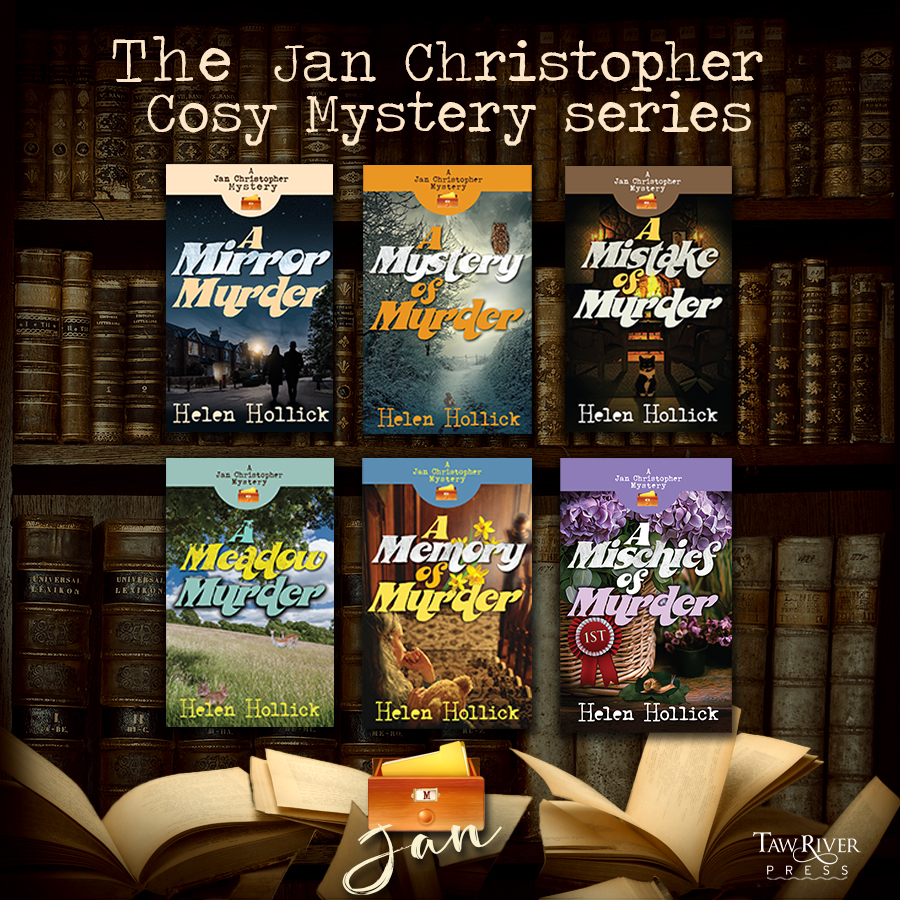
More in the series:
Episode 3 A MISTAKE OF MURDER
Was murder deliberate – or a tragic mistake?
Episode 4 A MEADOW MURDER
Make hay while the sun shines? But what happens when a murder is discovered, and country life is disrupted?
Episode 5 A MEMORY OF MURDER
A missing girl, annoying decorators, circus performers and a wanna-be rock star to deal with. But who remembers the brutal, cold case murder of a policeman?
Episode 6 A MISCHIEF OF MURDER
The village Flower and Veg Show should be a fun annual event – but who added mischief and murder to the traditional schedule?
Known for her captivating storytelling and rich attention to historical detail, Helen’s historical fiction, nautical adventure series, cosy mysteries – and her short stories – skilfully invite readers to step into worlds where the boundaries between fact and fiction blend together.
Helen started writing as a teenager, but after discovering a passion for history, was initially published in 1993 in the UK with her Arthurian Pendragon’s Banner Trilogy and two Anglo-Saxon novels about the events that led to the 1066 Battle of Hastings, one of which, The Forever Queen (USA title – A Hollow Crown in the UK) became a USA Today best-seller. Her Sea Witch Voyages are nautical-based adventures inspired by the Golden Age of Piracy. She also writes the Jan Christopher cosy mystery series set during the 1970s, and based around her, sometimes hilarious, years of working as a North London library assistant. Her 2025 release is Ghost Encounters, a book about the ghosts of North Devon – even if you don’t believe in ghosts you might enjoy the snippets of interesting history and the many location photograhs.
Helen and her family moved from London to Devon after a Lottery win on the opening night of the London Olympics, 2012. She spends her time glowering at the overgrown garden, fending off the geese, chasing the peacocks away from her roses, helping with the horses and wishing the friendly, resident ghosts would occasionally help with the housework…


































































 MJ Porter