
Letter writing in the Eleventh Century, how I recreated Lady Estrid’s connections with her vast family. #non-fiction #histfic

Letter writing in the Eleventh Century, how I recreated Lady Estrid’s connections with her vast family. #non-fiction #histfic

In trying to bring together the narrative for Lady Estrid, I faced a bit of a problem: the vast distances involved. Lady Estrid had family in England, Denmark, Sweden and Norway, many of them she may never have met in person.

Today, we might pick up the phone, or have a quick look on the internet, but in the eleventh century, how would people have communicated?

And so to letter writing. There are two surviving letters from the eleventh-century that were sent by King Cnut, Estrid’s brother, to the English, when he was absent from his newly conquered country, in AD1020 and AD1027. I give a small example below. 

;Be it known therefore to all of you, that I have humbly vowed to the Almighty God himself henceforward to amend my life in all respects, and to rule the kingdoms and the people subject to me with justice and clemency, giving equitable judgments in all matters; and if, through the intemperance of my youth or negligence, I have hitherto exceeded the bounds of justice in any of my acts, I intend by God’s aid to make an entire change for the better.’  From Cnut’s letter to the English from AD1027.

These might well have been an exercise for Cnut in asserting his authority over the English, and giving his regents a little bit of extra support, but they open up the possibility of just who else was busy writing and sending letters to one another. 

There’s always the assumption that unless you were a holy man, you perhaps couldn’t read or write, and in fact, in one of the books I referenced for Lady Estrid, I found a fascinating chart detailing people who are known to have been used by the ruling family of Normandy as messengers, another way that messages could be sent between people. But surely, sometimes, it was just better to write everything down, that way nothing could be lost in translation. 

Without the possibility of Lady Estrid ever meeting some members of her family, using letter writing allowed me to artificially create conversations between the characters, and while it might not have been the ‘norm’ it was certainly something that happened. Indeed, three centuries earlier, there’s a great wealth of information to be found in the letters of Alcuin of York (c735-804), so it wasn’t as though it was a new thing. With Denmark’s conversion to Christianity, there would have been a ready selection of scribes just waiting to note down Lady Estrid’s frustrations and complaints, even if she didn’t pen them herself.

Here’s an example of one of Estrid’s letters I create in the book.

Dearest Mother, Lady Sigrid. Queen of Denmark.’

‘This marriage doesn’t agree with me. How could you agree to it? I trusted you more than any other to understand how difficult it would be to be forced to live amongst strangers. I relied on you to argue with my father about the necessity of the union.’ 

And don’t tell me I will one day be the queen of the Rus, as my father planned. Prince Ilja is not a strong man. I don’t foresee him living long. Not at all. The poor man. He has barely been able to consummate our union. I hope I will not carry his child. It will be weak and feeble, and I will not tolerate such.’ 

My children will be strong and powerful. One day, it is they who will be kings and queens. But these children will not be shared with Prince Ilja. I am sure of it.’

And even if he were to survive, his brothers are a treasonous coven. None of them wishes the other to succeed at their expense. I foresee only bloodshed and paranoia when Ilja’s father is dead.’

Frida is my only friend and ally, reminding me of home. I hope to return to Denmark one day. I never imagined leaving her. I miss her. The kingdom of the Rus is not the same. Not at all.’

Send me news of my father and brothers. I wish to know if my father has finally triumphed in England over King Æthelred. I should like to know that he didn’t callously send me away without so much as seeing me in person for no good reason, because he was absent, in England, as so often the case. If he fails in England again, I will never forgive him for his actions towards me.’

Your despairing daughter, Lady Estrid Sweinsdottir, from Kiev.’

Grab Lady Estrid now to read on.

Check out the Lady Estrid page on the blog for more information.
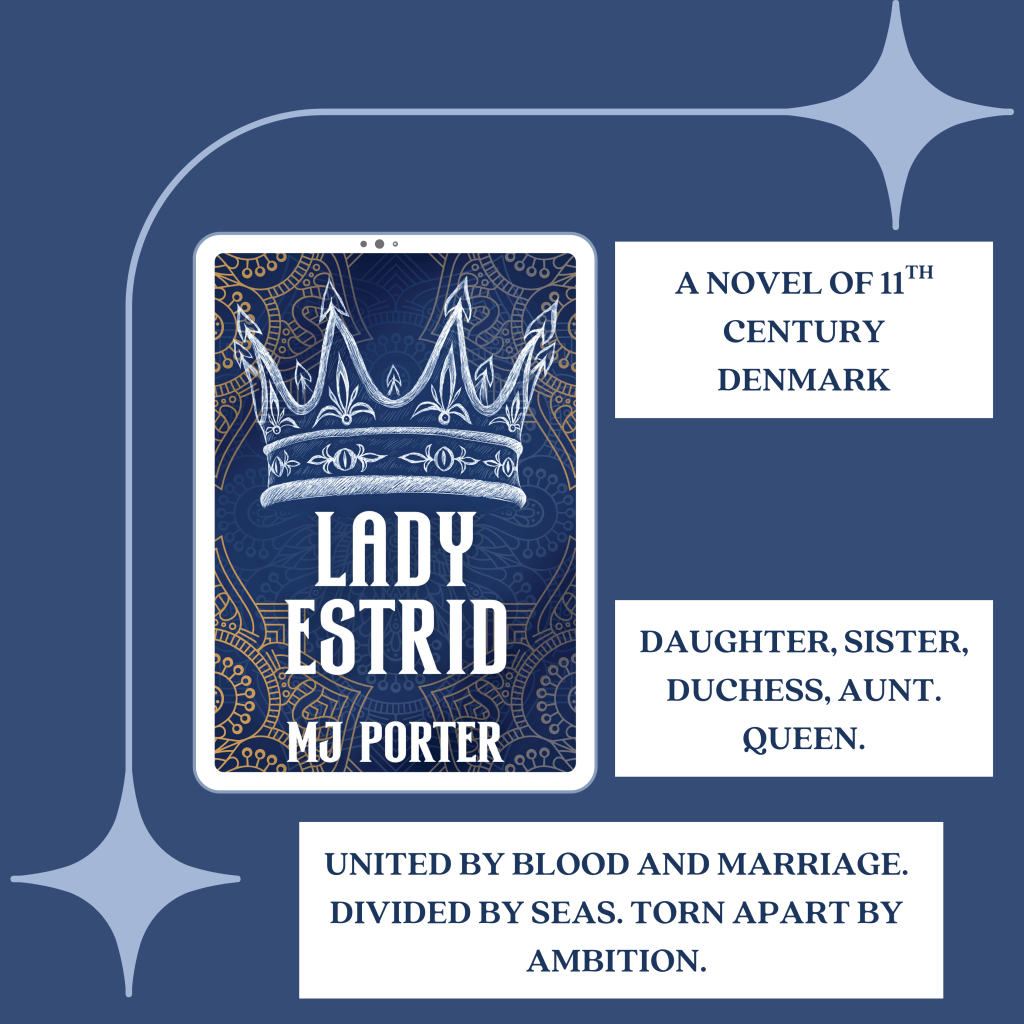
Click on the image to check out Lady Estrid.

Posts

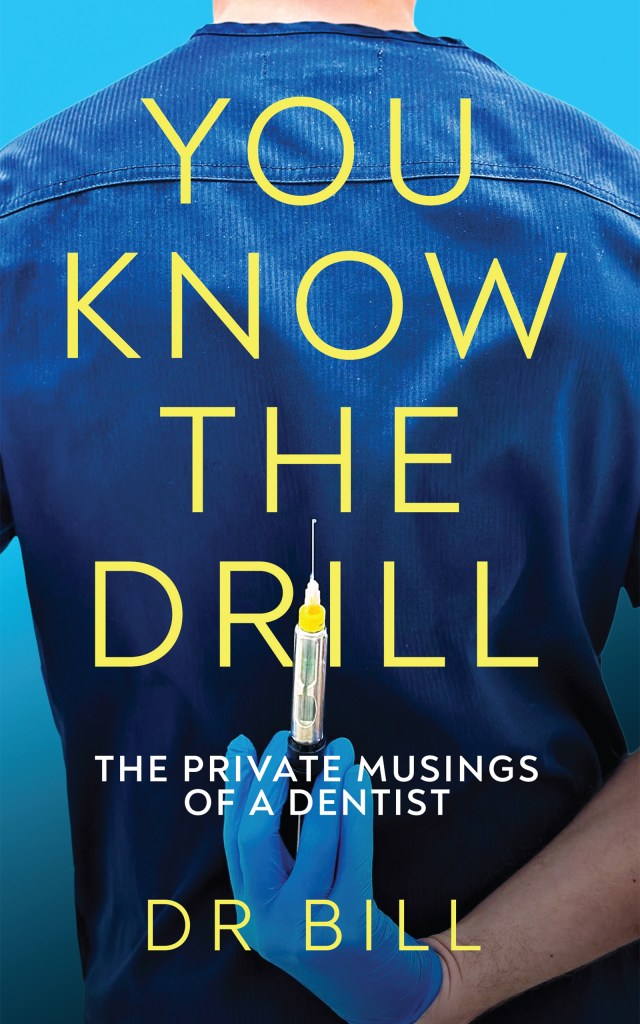
I’m delighted to be reviewing You Know the Drill by Dr Bill – The Private Musings of a Dentist #blogtour #non-fiction

Here’s the blurb

Welcome to my life.  The life of a reluctant dentist.  This book charts the course of a nervous student dealing with people from all walks of life, from exploding angry abscesses to exploding angry people, both in and out of the chair.

When I was a wet-behind-the-ears school sixth former, it seemed like a really good idea to go to university and study the teeth, gums and mouth.  I’m still trying to work out why I thought that was a good idea.

The definition of a dentist mentions competencies in biomedical knowledge, surgical dexterity, and critical thinking. What it fails to include is being an unpaid therapist, getting splattered in pus, coaxing nutters out from under the dental chair, having the police storm your surgery, and dealing with patients who think a crown is something you put on your head, then try and sue you when you say otherwise.

Written as a form of therapy – to offload on paper – this book gives a frank account of life both in and out of the surgery.  So, take a seat in the waiting room and I’ll see you shortly in Chapter One…

Purchase Links

Amazon UK

Amazon US

My Review

So, I hate the dentist (not the person – the idea of it). I’ve had a few nasty experiences with dentists who should perhaps have paid a little more attention to patient care than they did. However, I’ve found a new dentist and he’s lovely and very, very thoughtful. I decided to read this book as a means of understanding what it’s like for the actual person who is the dentist as opposed to the patient, gripping the armrests and leaving imprints in the dentist’s chair. I’m so glad I did. I can’t say it’s going to make my next trip any easier, but I will certainly be a little calmer about the whole thing – probably until the bloody drill comes out:)

This is a delightful collection of stories, from training to working as a dentist. Some of them are funny. Some of them are sad. Some of them are bloody outrageous. All of them paint the picture of a professional working under some very trying circumstances (including during Covid), and sometimes not. I also appreciated the explanations about how the system works in the UK and what dentists are actually doing when they look in your mouth. I was very glad I wasn’t the one in the dentist’s chair for some of the procedures described.

Fans of the dentist and those who aren’t (i.e. me) will enjoy this collection of tales and musings. And, I promise, there are no LAs involved in reading it.

Meet the author

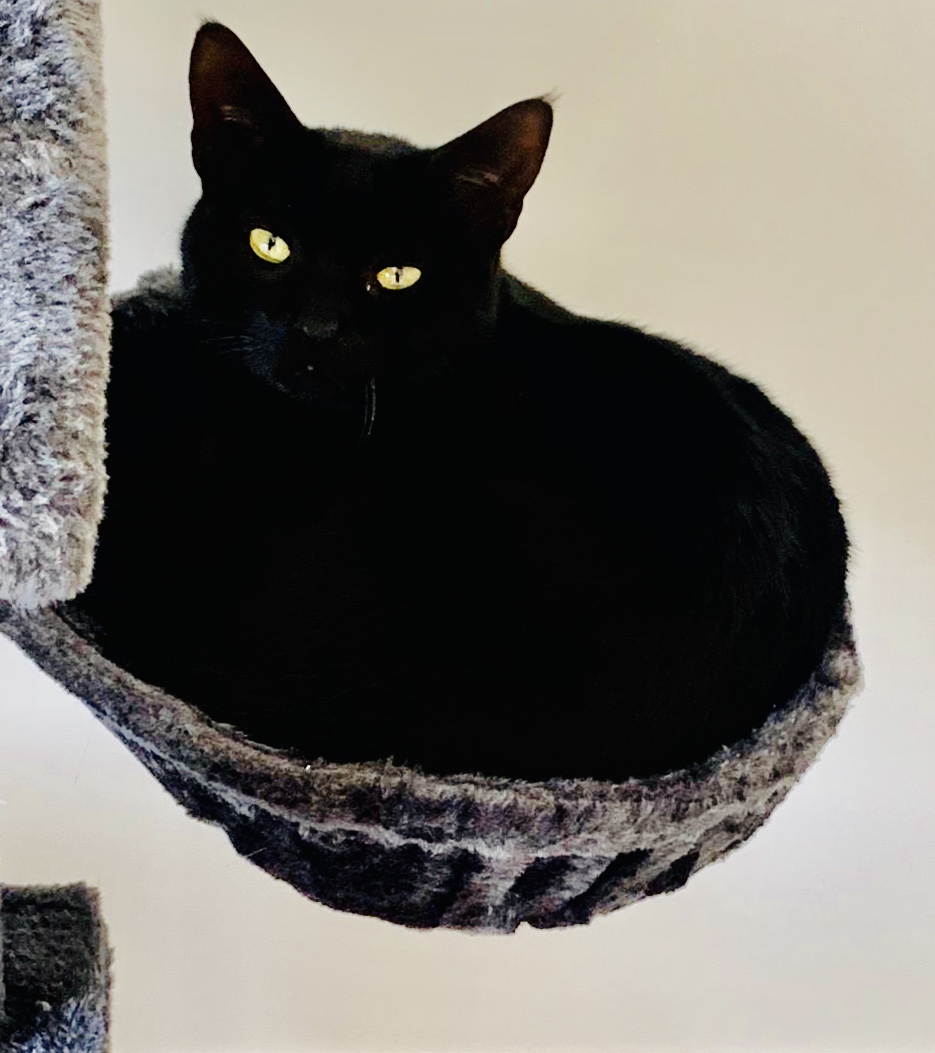
Dr Bill is a reluctant dentist who lives with his kind partner and a neurotic cat.  This is his first book.  There may be another.  This depends on whether Dr Bill’s patients are gracious sweethearts who give him nothing to write about, or cantankerous bastards who provide the fodder for written revenge!

Author image for Dr Bill showing their cat.

Posts

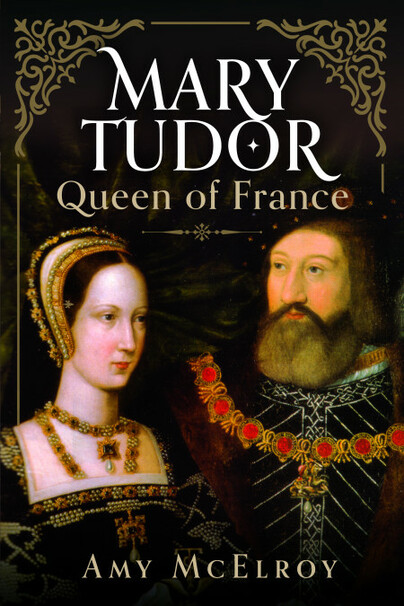
I’m delighted to share my review for Mary Tudor: The French Queen by Amy McElroy #non-fiction #TheTudors

Here’s the blurb

Mary Tudor, Henry VIII’s sister, lived a remarkable life. A princess, duchess and queen, she was known as the English Rose for her beauty. Mary Tudor, Queen of France, aims to explore the life of one of the few who stood up to Henry VIII and lived to tell the tale.

Henry VIII is well known, but his larger-than-life character often overshadows that of his sisters. Mary Tudor was born a princess, married a king and then a duke, and lived an extraordinary life. This book focuses on Mary’s life, her childhood, her relationship with Henry, her marriages and her relationship with her husbands.

Mary grew up in close proximity to Henry, becoming his favourite sister, and later, after her marriage to the French king, she married his best friend, Charles Brandon, 1st Duke of Suffolk. The events impacting the siblings will be reviewed to examine how they may have changed and shaped their relationship.

Purchase Links

Pen and Sword (publisher)

Amazon

My Review

Mary Tudor by Amy McElroy is a fascinating biographical account of the life of Mary, Henry VIII’s sister, and not to be confused with his daughter.

The story is quite remarkable, and while I knew something about her, I didn’t know everything. The chapters, which follow her through the 3 marriage proposals she receives, which result in 2 marriages, are quite astounding. So much time and effort went into trying to wed her to Prince Charles (later Emperor Charles), and then all of a sudden, she married Louis XII of France. I found it most fascinating. If anything, her 2nd marriage seems almost anticlimatic, even though it evidently wasn’t at the time. And, with all we know about Henry and his marital difficulties, Mary appears to have been somewhat serene about everything. I imagine she perhaps had a happier life, if one often troubled by the terrible debt her brother placed upon her (families!).

I really appreciated the author’s desire to keep this narrative to Mary and not to her children and grandchildren. It seems fitting to have a title devoted exclusively to her.

A fine portrayal of Mary’s eventful, if short life, with a lovely writing style.

Meet the author

Amy was born and bred in Liverpool before moving to the Midlands to study criminal justice and eventually becoming a civil servant. She has long been interested in history, reading as much and as often as she could. Her writing journey began with her blog, sharing thoughts on books she had read before developing to writing reviews for Aspects of History. The Lives of Women in the Tudor Era is Amy’s second book. Her first, Educating the Tudors, focused on the educational opportunities of all classes, those who taught them and the pastimes enjoyed by all.

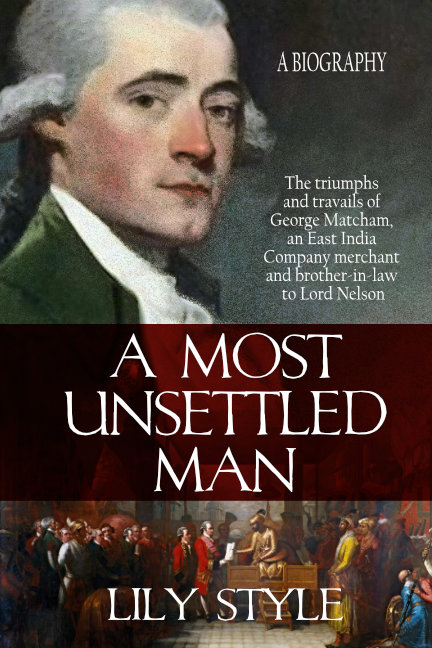
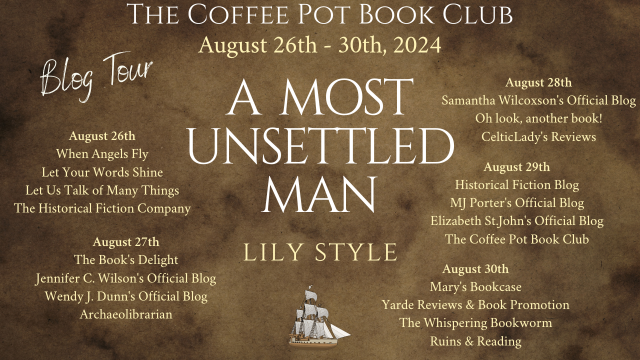
I’m delighted to welcome Lily Style and her new book, A Most Unsettled Man, to the blog #BiographicalNon-Fiction #Biography #HistoricalBiography #BlogTour #TheCoffeePotBookClub

I’m delighted to welcome Lily Style and her new book, A Most Unsettled Man, to the blog with an excerpt.

Excerpt

On the 6th of November 1805, the ring of church bells, near and far, grew and grew like a storm that must soon break. Then did.

George’s copy of the Gazette Extraordinaire bore news that rocked his whole family to the core. Britain’s navy had annihilated the French and Spanish fleets at Cape Trafalgar, off the southern tip of Spain, but Horace’s resounding victory had cost him his life.

Kitty collapsed and, after this, George junior noted that the news of Horace’s death had made his mama very ill.

Details of Horace’s last moments flew around England with great gusto. Brave Lord Nelson had ignored the tradition by which naval officers saved their skins by leading from behind. He’d instead insisted on wearing his full Royal Navy admiral’s uniform on HMS Victory’s open deck, complete with his array of medals and sun-catching gewgaws. Bold and bright, leading from the front, Horace’s uniform had made him an easy mark for a sniper perched on a French tall ship’s mast.

George later reflected that, from Horace’s physical frailty and proneness to melancholy, “it might have been imagined that he was ill-fitted for war & hardship. But … He went a willing victim to his country’s safety and renown”.

George, Kitty and Susanna Bolton, distraught themselves, sped to Merton to support the heart-broken Emma.

Blurb

George Matcham, dubbed the most unsettled man alive, was born in East India Company controlled Bombay and undertook three epic overland treks between Asia and England before marrying the favourite sister of the not yet famous Horatio Nelson. Intimate details about George’s life have been preserved because of his close relationship with Nelson and his famous paramour Emma Hamilton, whose rises and falls he observed first-hand.
Packed with period press clippings and eyewitness accounts, A Most Unsettled Man provides an unprecedented glimpse into the private life of a modest 18th century English gentleman, as well retelling the enduring love story of Nelson and Emma from an entirely new perspective.

Buy Link

Universal Link:

Amazon US (paperback):

Amazon UK (paperback):

Meet the Author

Lily Style is the direct descendant of famed lovers Admiral Lord Nelson and Emma Hamilton and also Nelson’s sister, Kitty Matcham (because their grandchildren married).

Lily is the founder of Emma Hamilton Society and writes regularly for Nelson-related publications. She is also a keen genealogist with an interest in piecing together real human stories lying behind dry facts.

One of these stories is of her 4th great-grandfather, George Matcham, whose story she’s traced from his mid eighteenth-century birth in East India Company controlled Bombay through to his intimate involvement with Nelson and Emma’s rise and fall.

Connect with the Author

Website:

Follow A Most Unsettled Man blog tour with The Coffee Pot Book Club