Blog Posts from MJ Porter, author and reviewer

Today, I’m sharing a fab blog post by Glen Craney about his new novel, The Yanks are Starving, on the blog historicalfiction #BlogTour #TheCoffeePotBookClub

I’m sharing a fabulous post by Glen Craney below regarding the mistakes historical novelists must be wary of making.

Exposing History’s Cracks of Logic

Historical novelists are always prospecting for untapped veins in the strata of the past. Some of the richest lodes can be found in the lapses of logic and analysis that even the most astute of historians are at times prone to commit. Perhaps the best compilation of such errors in judgment and interpretation is Historians’ Fallacies, a treatise published in 1970 by Brandeis University professor David Hackett Fischer.

Readers of history will remember Fischer from Albion’s Seed, his exploration of the impact British folkways had on American society, and Washington’s Crossing, a study of George Washington’s leadership of the Continental Army.

Fischer’s impressive overview of historiography should be kept close at hand on the bookshelf of every historical novelist. Most of the miscalculations he skewers—exemplified by excerpts from the writings of his colleagues, many of whom no doubt chafed at being called to task—apply with equal force to the writing of historical fiction.

The best known of these gaffes gave its name to Fischer’s book: the historian’s fallacy. This refers to the error of assuming that the great leaders and decision-makers of the past possessed the same facts and perspective as we do in hindsight. 

Fischer offered as an exhibit the popular claim that the Japanese attack on Pearl Harbor should have been foreseen from the numerous warning signs. He cautions historians against the tendency of sifting away evidence that, at the time, might have clouded one’s judgment or even supported a contrary opinion.

Likewise, historical novelists must be on their guard against attributing to their characters more knowledge of events than is warranted. It is easy enough for us to chastise Robert E. Lee for ordering Pickett’s charge. The task of both the historian and novelist is to recreate the fog of war at Gettysburg with such verisimilitude that the reader will come to understand why such a decision was rational on July 3, 1863.  

The American Civil War seems to have served as the subject for every fallacy condemned by Fischer. Another infamous example castigated by Fischer is the discovery by Union scouts of the cigar-wrapped copies of Lee’s orders for the Antietam campaign. Every war buff has encountered the contention that this fortuitous (for the Union) incident set into motion a series of cascading events that eventually turned the tide of the war. Fischer dismisses this as a product of the reductive fallacy, which boils a complex soup of causal ingredients down into a single, simplified explanation.

In discussing another error, the fallacy of division (arguing that a quality shared by some in a group is shared by all), Fischer offers a faulty syllogism for our dissection:

Most Calvinists were theological determinists
Most New England Puritans were Calvinists.
Therefore, most New England Puritans were theological determinists.

Fischer observed that then-recent scholarship suggested the Puritans were not determinists, at least not as was commonly assumed. Here one finds a gold nugget, one of many available for the taking by the writer who will persist in combing these fallacies: A novel set in Puritan New England with a main character who believes in free will.

In The Da Vinci Code, Dan Brown made great use of yet another error that comes under special opprobrium from Fischer: the furtive fallacy. This is the assumption that certain events and facts of “special significance” are “dark and dirty things and that history itself is a story of causes mostly insidious and results mostly invidious.”

Of course, some of the best historical fiction would have to be tossed onto Savonarola’s bonfire if a ban on this fallacy were strictly enforced. Fischer doesn’t argue that conspiracies have never taken place. His criticism goes to a more fundamental paranoia that, if left unchallenged, can metastasize into a societal epidemic that weakens the very foundations of institutions.

It begins with the premise that reality is a sordid, secret thing; and that history happens on the back stairs a little after midnight, or else in a smoke-filled room, or a perfumed boudoir, or an executive penthouse or somewhere in the inner sanctum of the Vatican or the Kremlin, or the Reich Chancellery, or the Pentagon. It is something more, and something other than merely a conspiracy theory, though that form of causal reduction is a common component. 

The furtive fallacy is a more profound error, which combines a naïve epistemological assumption that things are never what they seem to be, with a firm attachment to the doctrine of original sin.

Still, Professor Robert Langdon might remind his colleague Dr. Fischer that just because one is paranoid doesn’t mean they aren’t out to get you.

The historical novelist is not only free but compelled to adopt and exploit these rich fallacies to spin out a good story—so long as he does so consciously.

Thank you for sharing:)

Here’s the blurb

Two armies. One flag. No honor.

The most shocking day in American history.

Former political journalist Glen Craney brings to life the little-known story of the Bonus March of 1932, which culminates in a bloody clash between homeless World War I veterans and U.S. Army regulars on the streets of Washington, D.C.

Mired in the Great Depression and on the brink of revolution, the nation holds its collective breath as a rail-riding hobo named Walter Waters leads 40,000 destitute men and their families to the steps of the U.S. Capitol on a desperate quest for economic justice.

This timely epic evokes the historical novels of Jeff Sharra as it sweeps across three decades following eight Americans who survive the fighting in France and come together fourteen years later to determine the fate of a country threatened by communism and fascism.

From the Boxer Rebellion in China to the Plain of West Point, from the persecution of conscientious objectors to the horrors of the Marne, from the Hoovervilles of the heartland to the pitiful Anacostia encampment, here is an unforgettable portrayal of the political intrigue and government betrayal that ignited the only violent conflict between two American armies.

Awards

Foreword Magazine Book-of-the-Year Finalist
Chaucer Award Book-of-the-Year Finalist
indieBRAG Medallion Honoree

Praise for The Yanks are Starving

“[A] wonderful source of historical fact wrapped in a compelling novel.” — Historical Novel Society Reviews

“[A] vivid picture of not only men being deprived of their veterans’ rights, but of their human rights as well.…Craney performs a valuable service by chronicling it in this admirable book.” — Military Writers Society of America

Buy Links

Universal Link:  

Amazon USAmazon UKAmazon CAAmazon AU
Barnes and NobleKoboiBooks

Meet the Author

Glen Craney is an author, screenwriter, journalist, and lawyer. A graduate of Indiana University Law School and Columbia University Graduate School of Journalism, he is the recipient of the Nicholl Fellowship Prize from the Academy of Motion Pictures and the Chaucer and Laramie First-Place Awards for historical fiction. He is also a four-time indieBRAG Medallion winner, a Military Writers Society of America Gold Medalist, a four-time Foreword Magazine Book-of-the-Year Award Finalist, and an Historical Novel Society Reviews Editor’s Choice honoree. He lives in Malibu and has served as the president of the Southern California Chapter of the HNS.

Connect with Glen

WebsiteTwitter

FacebookLinkedInPinterest

BookBubAmazon Author PageGoodreads

Follow The Yanks Are Starving Blog Tour with The Coffee Pot Book Club

Check our Glen’s other visits to the blog.

The Cotillion Brigade

The Virgin of the Wind Rose

Charters and Leofwine, Ealdorman of the Hwicce from c.993-1023. Re-sharing an old blog post about Leofwine I first wrote in 2014. It’s a bit nerdy:)

I always think that the characters of Saxon England are a little too ethereal for people to really connect with.  I think it’s difficult to visualise life before the Norman Conquest, but it doesn’t mean we shouldn’t try.

My current obsession, and victim of my historical fiction endeavours is Leofwine, Ealdorman of the Hwicce during the reign of Æthelred II, who I refuse to call ‘Unready’ because I just don’t think he was. I think, he was a victim of his times, treated harshly by later historians. 

My research is going deeper, examining the evidence of the charter attestations that Leofwine made (where he signs, and therefore, it must be assumes, agrees to whatever the charter is concerned with). Charters from before the Norman Conquest are rare, and have only survived in copies because they benefitted someone in some way, normally the monastery or Church that the copy of the original charter has survived in, or a later lay landowner keen to keep hold of the land.

This effectively means that in determining the validity of the charter, historians need to know about what was happening in the world at large, when the COPY of the charter was made. Effectively, to study Saxon history, you have to also study early Anglo-Norman history to work out just what’s going on and why the charter is so important.

In the records of Sherborne, Leofwine’s name can be found attesting two charters. No original copies of the charters survive, and the record as we have it, is in a twelfth century hand. So, should it be trusted? Should it be used as an historical source? Or as with so much history, can it really only be used as a historical record of the time period that produced it? After all, at least a hundred years and probably more like 150 years, separate the copy of the charter and the date of its alleged drafting and attestation.

It’s an interesting dilemma and one I don’t plan on solving today. Would I use it? Yes, I’d but I’d be standing on the shoulders of those giants of academic history who have studied far more charters than me and who’ve decided that the copies are ‘probably’ genuine as they stand. I’d also be wary of this, and all it might mean.

And how relevant are they to Ealdorman Leofwine? I think very, because they appear to show his standing at the royal court. In charter S933 (1015) he signs as the third ‘dux’ (ealdorman) and in S910 from 1005 he also signs as the third ‘dux’. So what does it all mean? Well, as with everything the picture is wider than just Sherborne. In total Leofwine attests 41 charters whilst an ealdorman. So although I think it’s important to examine the validity of the cartularies that the charters survive in, it’s a bit of a painstaking and picky business. But one I’m enjoying. For anyone really keen to look at Leofwine’s charters in more detail, you can start by having a look at the Electronic Sawyer. And you can see an image of S910 it on The British Library Digitised Manuscripts Website ff. 27v-29r and S933 also on The British Library Digitised Manuscripts Website at ff. 4v-6r. The handwriting is amazing.

Check out The Earls of Mercia Series Page for more information.

Posts

A Conspiracy of Kings turns 3 today. #bookbirthday #TheRoyalWomen

It’s a week of book birthdays! Today, it’s the turn of A Conspiracy of Kings, the sequel to The Lady of Mercia’s Daughter.

Here’s the blurb

Mercia, 918.

Lady Ælfwynn has taken her mother’s place as the Lady of Mercia, to the displeasure of her uncle in Wessex, and against his efforts to subvert it.

King Edward, casts his eye longingly over Mercia, and finds a willing accomplice where none should exist. This time, the threat to Lady Ælfwynn is not as easy to defeat.

This is the continuing story of Lady Ælfwynn, the granddaughter of King Alfred, begun in The Lady of Mercia’s Daughter.

It is intended that The Lady of Mercia’s Daughter should be read before A Conspiracy of Kings.

https://amzn.to/421LHRq

https://amzn.to/46DvlA6

A Conspiracy of Kings was the book I wrote immediately before starting the stories of King Coelwulf, Mercia’s last king. If not for these two books, I’d never have wanted to write about Coelwulf, so I feel I owe this book a lot, and indeed, having just reread it, I can see a lot of details that resonate with me.

If you’ve not thought of reading these two books, then please do. I can assure you, my incarnation of Lady Ælfwynn is a bit bad ass. The new covers are also available in paperback.

These two books are part of my Tales of Mercia series of standalone stories charting the rise and fall of the Saxon kingdom of Mercia.

Check out my post on visiting Gloucester, where Lady Ælfwynn’s mother, Lady Æthelflæd, the lady of Mercia, was buried.

Visit The Tenth Century Royal Women Page.

Posts

Happy Book Birthday to Son of Mercia, which turns 1 today. Enter the competition to win a set of signed copies of the first 3 books in the series.

Happy book birthday to the wonderful Son of Mercia, the first book telling the story of young Icel in early ninth-century Mercia (fans of The Last King will have met Icel before, but it’s not necessary to enjoy Son of Mercia).

The series is now a massive four books long, and I’m busy working on book 5, which doesn’t have a title just yet (or does it?)

I thought today would be a great day to shine a light on all four books, and don’t worry if you’ve not read book 4 yet, Eagle of Mercia is releasing in May 2023. So here goes.

Tamworth, Mercia AD825.

The once-mighty kingdom of Mercia is in perilous danger.

Their King, Beornwulf lies dead and years of bitter in-fighting between the nobles, and cross border wars have left Mercia exposed to her enemies.

King Ecgberht of Wessex senses now is the time for his warriors to strike and exact his long-awaited bloody revenge on Mercia.

King Wiglaf, has claimed his right to rule Mercia, but can he unite a disparate Kingdom against the might of Wessex who are braying for blood and land?

Can King Wiglaf keep the dragons at bay or is Mercia doomed to disappear beneath the wings of the Wessex wyvern?

Can anyone save Mercia from destruction?

books2read.com/u/3R6x7x

Icel is becoming a warrior of Mercia, but King Ecgberht of Wessex still holds the Mercian settlement of Londonia and its valuable mint.

King Wiglaf of Mercia is determined that the last bulwark be reclaimed from his sworn enemy to complete his rehabilitation as Mercia’s rightful ruler.

In the heart of the shield wall, Icel suddenly finds himself on the wrong side of the battle and thrust into the retreating enemy stronghold where he must take on the pretence of a Wessex warrior to survive and exact a cunning plan to bring down the Wessex force cowering behind the ancient walls.

His allegiances are tested and the temptation to make new allies is overwhelming but Icel must succeed if he’s ever to see Tamworth again and bring about King Wiglaf’s victory, or will he be forced to join the enemy?

books2read.com/Wolf-of-Mercia

Icel is a lone wolf no more…

Oath sworn to Wiglaf, King of Mercia and acknowledged as a member of Ealdorman Ælfstan’s warrior band, Icel
continues to forge his own destiny on the path to becoming the Warrior of Mercia.

With King Ecgberht of Wessex defeated and Londonium back under Mercian control, the Wessex invasion of Mercia is over. 

But the Wessex king was never Mercia’s only enemy. An unknown danger lurks in the form of merciless Viking raiders, who set their sights on infiltrating the waterways of the traitorous breakaway kingdom of the East Angles, within touching distance of Mercia’s eastern borders.

Icel must journey to the kingdom of the East Angles and unite against a common enemy to ensure Mercia’s hard-won freedom prevails.

books2read.com/WarriorofMercia

A mercy mission in the heart of Wessex is beset with deadly, bloody dangers.

Tamworth AD831

Icel’s profile continues to rise. Lord of Budworth and warrior of Mercia, he’s acknowledged by King Wiglaf and his comrades to keep Mercia safe from the ravages of Wessex, the king-slayer of the East Angles, and the Viking raiders.
But, danger looms.  Alongside Spring’s arrival comes the almost certain threat of the Viking raiders return. 

When Lord Coenwulf of Kingsholm is apprehended by a Viking and held captive on the Isle of Sheppey in Wessex held Kent, Icel is implored by Lady Cynehild to rescue her husband.

To rescue Lord Coenwulf, Icel and his fellow warriors must risk themselves twice over, for not only must they overpower the Viking raiders, they must also counter the threat of Mercia’s ancient enemy, the kingdom of Wessex as they travel through their lands.

Far from home and threatened on all sides, have Icel and his fellow warriors sworn to carry out an impossible duty

books2read.com/EagleofMercia

Set in the troubled years at the end of the Mercian supremacy, with the advent of the true First Viking Age just around the corner, The Eagle of Mercia Chronicles allow me to explore the kingdoms of Saxon England at the time, while ensuring my focus remains on Mercia, the kingdom in the’Midlands’ of England, with which I’m quite obsessed.

And choosing to write about a very strong character from my The Last King series, also allows me to play with my readers expectations. Icel is a fabulous creation, and one I’m incredibly proud of and pleased that my readers love so much.

Yes, these are bloody and brutal tales, but at the heart of them is a ‘coming of age’ story as young Icel learns about himself, as well as the truth of his heritage and birth.

If you’ve not yet tried The Eagle of Mercia Chronicles, then now is the perfect opportunity. Enjoy.


To win a set of the first three books in paperback – signed and dedicated as you would like, please sign up for my newsletter, or my newsletter with Boldwood Books. (Competition ends on 24th Feb). I send a monthly email. I will contact the winner and arrange postage – I will post worldwide. If you are signed up for both already, then drop me a quick email, and I will enter you into the competition. Good luck.

Happy release day to The Emperor’s Shield by Gordon Doherty #histfic #Romanfiction #NewRelease

Here’s the blurb

Easier to split the sky, than part a soldier from his blade.

386 AD. The Eastern Roman Empire faces a trident of threats. The Gothic truce grows unstable. The standoff with Persia escalates. And the ambitions of the usurper on the Western throne grow dangerously unchecked.

Pavo, a broken veteran of the legions, cares for none of these things. His life is one of pastoral seclusion on his Thracian farm. A life of love, of peace. His wife and young son are his world. Still, every so often, things seen and done in his old life haunt him, like a cold and unwelcome breeze. But that is all they are, echoes of the past…

…until the past rises, like a shade, to rip his world and the Roman Empire apart.

https://amzn.to/3jNrKLi

My Review

The Emperor’s Shield by Gordon Doherty is the ninth book in the Legionary series, and you guessed it, it’s the first book in the series that I’ve read:) (This is somewhat of a theme for me).

That said, I had no problem being gripped by the story. Pavo is a wonderful character, and while to begin with I did think this was ‘his’ story, more characters were quickly introduced, and the world of the late 300s of the Roman Empire sharply come into focus. This isn’t a period I know a great deal about – especially not in the Eastern Empire, but Pavo, his wife, son and Frugilo, make the period come alive. The camaraderie between Pavo and his old friends, add the human touch to the story, which is a complex web of lies and misdirection taking place over vast distances.

This is truly a story on an epic scale. It probably has a cast of thousands, although not all of them are named. There are warriors from all corners of the Roman Empire, East and West, and Pavo is in the thick of it all, as one of the Eastern Emperor’s elite bodyguard.

The tension throughout the final 25% of the book ramps up spectacularly, and I had to stop myself from googling the period to find out what actually happened, before I got to the end.

A thrilling tale of empire and conspiracy, that certainly leaves the reader desperate to go back to book 1, or eagerly waiting for book 10. A true triumph of the genre.

Meet the author

Gordon Doherty is the author of the Legionary and Strategos series, and wrote the Assassin’s Creed tie-in novel Odyssey. He is based in Scotland.

Twitter: @GordonDoherty

Website: https://www.gordondoherty.co.uk/

Check out my reviews for Sons of Rome, Masters of Rome, Gods of Rome written by Gordon Doherty and Simon Turney.

(This post contains an Amazon affiliate link)

King of Kings, the audio is now available, and the large print version too

I’m aware that there’s been a bit of a delay in getting everything shipshape over on Amazon, but everything is now where it should be – the ebook, paperback, audio, and hardback, all linked together. Whoo hoo. You can find them with the link below, which also includes other retailers, with links to the large print version.

books2read.com/King-of-Kings

So, I thought it would be the perfect opportunity to share a few things with you that have happened since release.

As I can’t upload the video here, I’ve done my ‘unboxing’ video and popped it over on TikTok – which I’m trying to learn. You can find it here. The paperback looks amazing:) It’s very smart and the family tree and map are also included. If you’re on TikTok give me a follow, as I’m looking for more content to help me get to grips with it.

I’m also going to share a link for the audiobook, read by the fabulous Matt Coles, which you can also find here, on my website, not my blog. (I can’t upload videos to my blog – who knew).

And, if you missed my blog post yesterday on Historia, you can read it here. It’s an introduction, quite a swift one, into what was happening in the Saxon kingdoms just before the events of King of Kings. And, it’s got some amazing images to go with it. I’m always in awe of someone who knows how all the rules work regarding sharing images on the web. Thank you. (I’ve just been trying to work some of this out for myself, with British Library images – it made my head hurt).

Check out the Brunanburh Series Page for more details.

Posts

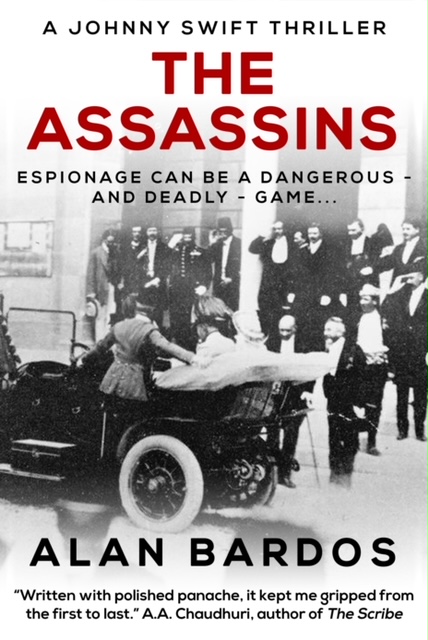
I’m welcoming a returning Alan Bardos to the blog, with a post about The Ladoux Mystery which features in his book, Enemies and Allies #histfic

Today, I’m delighted to welcome a returning Alan Bardos to the blog.

The Ladoux Mystery – the spy who framed Mata Hari?

Marguerite Zelle MacLeod, better known as Mata Hari was a sensation in the last years of the ‘Belle Epoque’ for her wild and exotic dances. However it was her espionage activities that have ensured her name is a household word over a hundred years after her execution in 1917 as a spy. The question as to whether she was actually a double agent is still a contentious issue and may never be resolved.

The Folies Bergère where Mata Hari performed in 1913

By 1914 Mata Hari’s popularity had began to wain in Paris and she had to cast her net further afield and rely more on the favour of rich and powerful men to support her lavish lifestyle. It was this that many of her biographers believe she was ultimately judged on. 

In August 1914 Mata Hari was performing in Berlin with a string of lovers.  When war was declared the mood against foreigners changed. Desperate to return to France and escape the war fever sweeping through Germany, she broke her contracts and fled. Unable to go to France and forced to leave her money and possession behind, she retuned to her native Holland.

282 Boulevard St Germain, where Mata Hari was recruited by French Intelligence.

While there, she was approached by Carl Cremer, an Honorary German consul in Holland who offered her 20,000 Francs to spy for Germany. Mata Hari accepted the money but whether or not she actually considered herself recruited as a spy is questionable. She may actually have taken the money in compensation for everything she left in Germany.

When Mata Hari returned to Paris in 1916 she was recruited to spy for the French, by Captain George Ladoux, the head of French counter Intelligence. She planned to pull off an intelligence coup by going to Belgium and seducing the German Governor-General. She would then cultivate him as an intelligence source and sell the information to Ladoux for a million Francs.

However on her way to Belgium, Mata Hari’s steamer had to pass through British waters and during a routine customs check she was mistaken for the spy Clara Benedix. She was interviewed in Scotland Yard by ‘Blinker’ Hall the head of naval Intelligence and Sir Basil Thompson the head of Special Branch. At the end of it they were convinced that she was not Benedix, but thought she was suspicious. They contacted Ladoux who informed them that he thought she was a spy and that he was pretending to use her in the hope that she might give herself away as a spy. Hall and Thompson released her, but would not allow her to travel onto Belgium and sent her to Spain.

On her own and ignored by Ladoux, Mata Hari used her initiative and seduced Major Arnold Kalle, the German military attaché in Spain. He gave her some low grade information which Ladoux did not consider worth a million francs. She was arrested not long after her return to Paris, Ladoux had by this time compiled a dossier of evidence against her.

The former Élysée Palace Hotel where Mata Hari was arrested

 Kalle had sent telegrams to his superiors in Berlin that incriminated Mata Hari. These telegrams had been intercepted by French intelligence and were the only real evidence presented at her trial that she was a double agent. French detectives followed Mata Hari when she was in Paris, but found no evidence that she actually gathered information or passed it on to Germany. However she admitted to taking their money on the understanding that she would.

France was swept with spy mania at the time, rocked by scandals of German plots to buy newspapers in an effort to undermine Frances will to fight, unrest was rife and the government needed to regain control.

Ladoux was therefore under considerable pressure to catch spies and there is evidence to suggest he doctored the telegrams to make them more incriminating and ensure her conviction. He certainly believed a ‘woman of the world’ like her to be guilty and her promiscuous lifestyle proved it.

However, Ladoux was also arrested as a spy three days after Mata Hari’s execution. This has given rise to speculation that he framed Mata Hari as a way of deflecting attention from his own espionage activities. Ladoux had been denounced by his former driver Pierre Lenoir, who had been arrested for buying a French newspaper with German money. When Lenoir was arrested he claimed that he had been set up by the Germans and that he was working for Ladoux.

While Lenoir was executed Ladoux was subject to extensive investigation, but was never put on trialand after his release continued to serve in the French army after the war. It is therefore unlikely that he was a spy. Nonetheless a cloud has hung over him ever since. 

Vincennes. Mata Hari was executed in the grounds of this castle, Ladoux and Lenoir’s files are in the archive attached to the complex

The investigations into Ladoux and Lenoir are still sealed, over a hundred years after the event, while Mata Hari’s file is now open, giving rise to a lot of speculation, but the truth may never be known.

Here’s the blurb

November 1916.

The war of attrition is taking its toll on the Allied powers and cracks are starting to appear.

Captain ‘Blinker’ Hall, Head of Naval Intelligence, must strive to keep the alliance with France alive – and use all his guile to bring the Americans into the war.

Johnny Swift, a reckless former diplomat turned soldier, is convalescing in London, working for Naval Intelligence.

Hall knows how to use Swift’s talents for duplicity to their fullest and sends him to Paris to flush out a traitor undermining the French war effort.

Room 40, the Royal Navy’s code breaking unit, deciphers a telegram that presents Hall with a dilemma. Its use could recruit America to their cause – but also give away the secret that the codes have been broken and cost Britain the war.

Swift takes up his role in Paris and is soon caught in a web of intrigue involving Mata Hari, the Dreyfus Affair, and the catastrophe of the Nivelle Offensive.

The fate of the conflict rests on a knife edge. 

The traitor still lurks in the shadows of Paris’s Art Nouveau grandeur and Swift must locate him before he can betray the Allied cause.

Purchase Links

Amazon Links UK USA

Meet the author

Writing historical fiction combines the first great love of Alan Bardos’s life, making up stories, with the second, researching historical events and characters. He currently lives in Oxfordshire with his wife… the other great love of his life.

There is still a great deal of mystery and debate surrounding many of the events of the First World War, which he explores in his historical fiction series. Through the eyes of Johnny Swift, a disgraced and degenerate diplomat and soldier.

The series starts with the pivotal event of the twentieth century. The Assassination of Archduke Franz Ferdinand. The second book ‘The Dardanelles Conspiracy’ is based on an attempt by Naval Intelligence to bribe Turkey out of the First World War. In the third book Johnny will be employed as a useful idiot to flush out a traitor working to undermine the Allies.

Connect with Alan

Instagram: Facebook: Twitter:

YouTube Channel

Goodreads: BookBub: Amazon Author Page:
See previous posts here and here.

MJ Porter went to Gloucester, and it didn’t rain

Why, I hear you cry? Well, I was on the trail of the Lady of Mercia, Æthelflæd, and her daughter Ælfwynn. Æthelflæd and her husband were buried in Gloucester, at St Oswald’s Priory, and I’m always writing about Gloucester, and Kingsholm, so I thought it was time I actually visited. Not that St Oswald Priory survives as anything more than a ruin these days.

The plaque telling visitors all about the ruins (I do love an old plaque. They just add to the story of a ruin).
Part of the ruins, with Gloucester Cathedral in the background.
Trying to capture as much of the ruin as possible in one photo.
View of the cathedral through the ruin (a pity about the garden shed)

I also visited the Cathedral, and really wish I’d done a bit more research about what they offer, as I didn’t factor in all the fabulous tours they do, including one up the tower to get a view of Gloucester. Maybe next time. But, I did find this delightful pearl, which must remind us all to make sure our notes are up to the task at hand.

The great window in Gloucester Cathedral

Can you imagine trying to put all those pieces back together after they took them down during WW2? Wow. Well done to those who accomplished the task. If you’re not sure of scale, it’s as big as a tennis court.

But to return to the priory. For those who know their history of the period, we might wonder why we have a St Oswald in Gloucester, which would have been very much in the heart of Mercia. Oswald, of course, was a king of Northumbria, a most Christian king, killed in battle against the might of the famous pagan king, Penda. The story goes that after his death, a band of brave Northumbrians retrieved their dead king, and returned him to Northumbria, where he was buried and revered. Why then would a Northumbrian saint, killed in the seventh century, become so closely associated with the Mercian ruling family?

I find this fascinating, and indeed, some years ago, attended a conference where I asked this question. The answer was enlightening. The Mercians, still facing the threat of the Viking raiders, needed a rallying cry. They needed a sainted figure whose cult they could effectively ‘steal’ or align with themselves, or so I was told, and St Oswald was that man, or rather that body, and so they stole him away from Bardney and took his to Gloucester, where his cult continued, and where Lady Æthelflæd and her husband, Ethelred, were later buried.

I’ve written about Oswald while he was alive, and of course, I’ve written about Mercia, Gloucester, Kingsholm, and Lady Ælfwynn. It was inspiring to finally see where the church once was, even if little remains of it, at least something does remain.

books2read.com/PaganWarrior

books2read.com/u/31RBva

books2read.com/TheLadyMercia

My new book, King of Kings, has a number of main characters. Meet Owain, the king of Strathclyde.

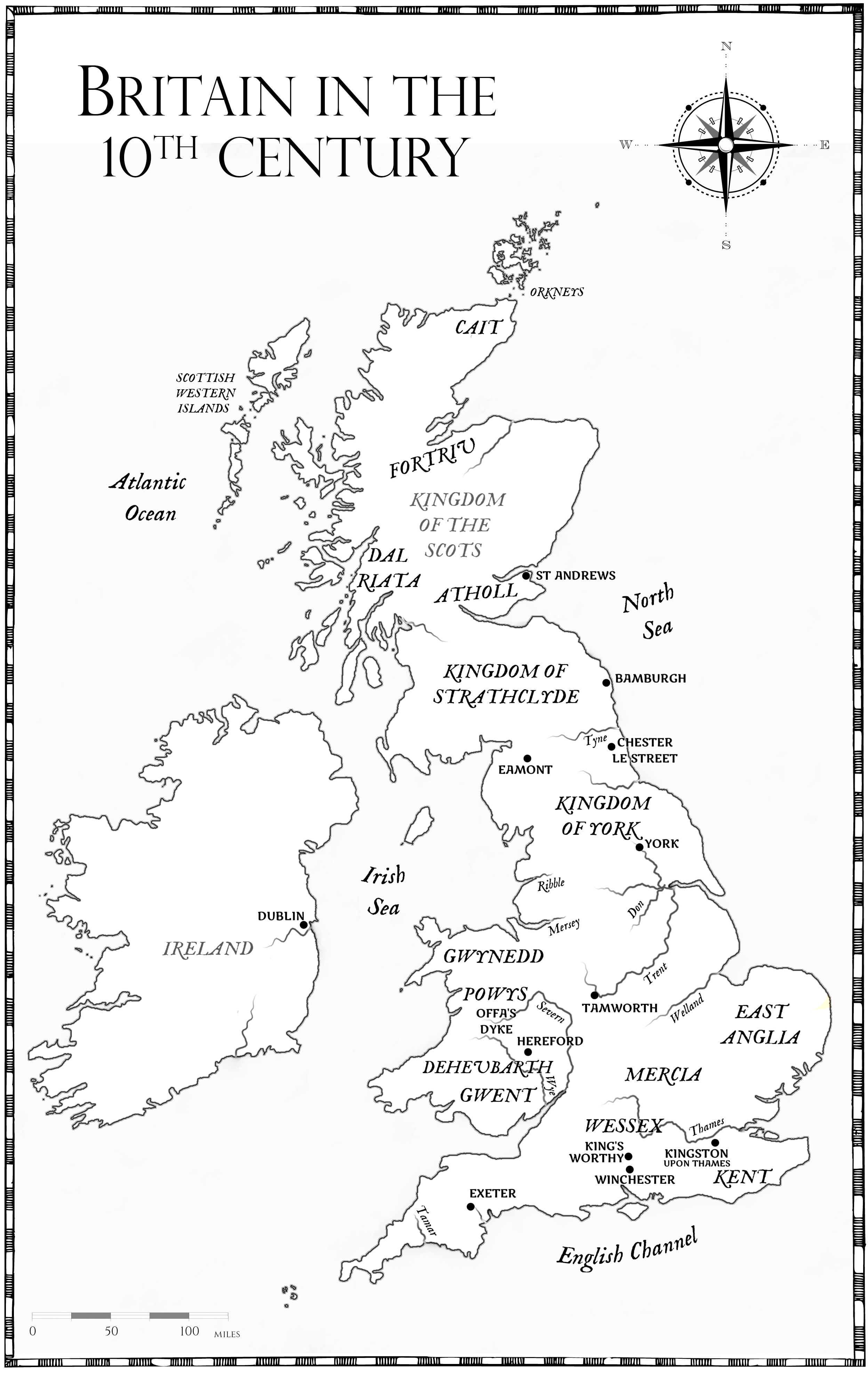
My new book, King of Kings, is a multi-viewpoint novel telling the story of events in Britain from 925-934. I thought it would be good to share details of the historical people my main characters are based on.

Owain of Strathclyde is perhaps the most difficult character in King of Kings to find in the historical record. Indeed, his place in the story is contested by historians, as we don’t know if the scribe of the Anglo-Saxon Chronicle of the time meant Owain of Strathclyde, or an Owain of one of the Welsh kingdoms. I decided to adopt the Owain of Strathclyde, but who exactly was he, and what was Strathclyde?

The kingdom of Strathclyde is also known by another name, that of Cumbria, and there is confusion in the sources and amongst historians about where it is and what it was. Alex Woolf suggests that by the events of 927, Strathclyde/Cumbria encompassed, ‘most of part of Lanarkshire, Dunbartonshire, Renfrewshire, Stirlingshire, Peebleshire, West and Mid-Lothian, eastern Dumfriesshire and Cumberland.’ (Woolf, A. From Pictland to Alba, 789-1070, Edinburgh University Press, 2007) p.155)

So who then were it’s kings? This again is far from as easy to state as might be thought. It’s believed that Owain of Strathclyde, succeeded his father, Donald II, to become king of Strathclyde, and in turn was succeeded by his son.

In 924, we are told that ‘the king of the Strathclyde Britons and all the Strathclyde Britons,’ (Swanton p.104) joined the king of Wessex, Edward the Elder’s alliance by the Anglo-Saxon Chronicle, but Owain isn’t named. Indeed, and as said above, when we do get mention of Owain in the Anglo-Saxon Chronicle, he’s named as ‘king of Gwent,’ (Swanton, M. trans and edit The Anglo-Saxon Chronicles, (Orion Publishing Group, 2000) p.107) even though there was no Welsh king of Gwent named as Owain at the time. It’s therefore difficult to get a feel for who he was, and what he did, but that didn’t mean I couldn’t include him in King of Kings. If anything, it made it all the more intriguing.

Map design by Shaun at Flintlock Covers

Preorder King of Kings

(released 10th February 2023)

books2read.com/King-of-Kings

Meet the Characters from King of Kings

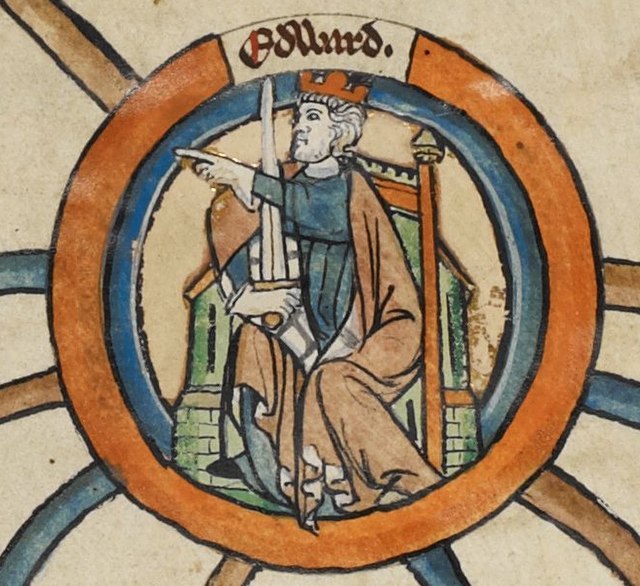
Athelstan, king of the English

Constantin, king of the Scots

Hywel, king of the West Welsh

Ealdred, king of Bamburgh

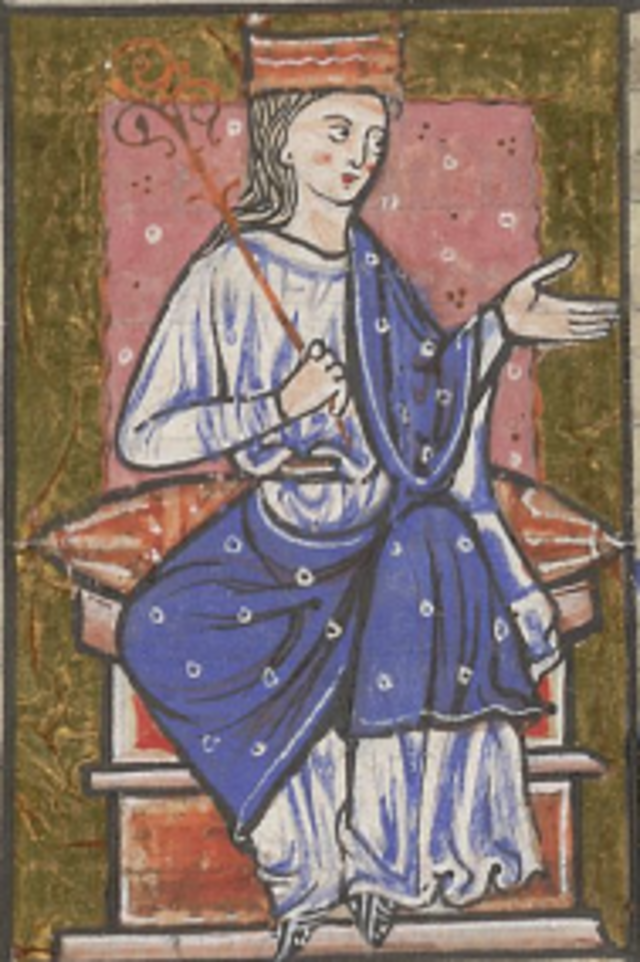
Lady Eadgifu, wife of Edward the Elder

Happy release day to King of Kings #histfic

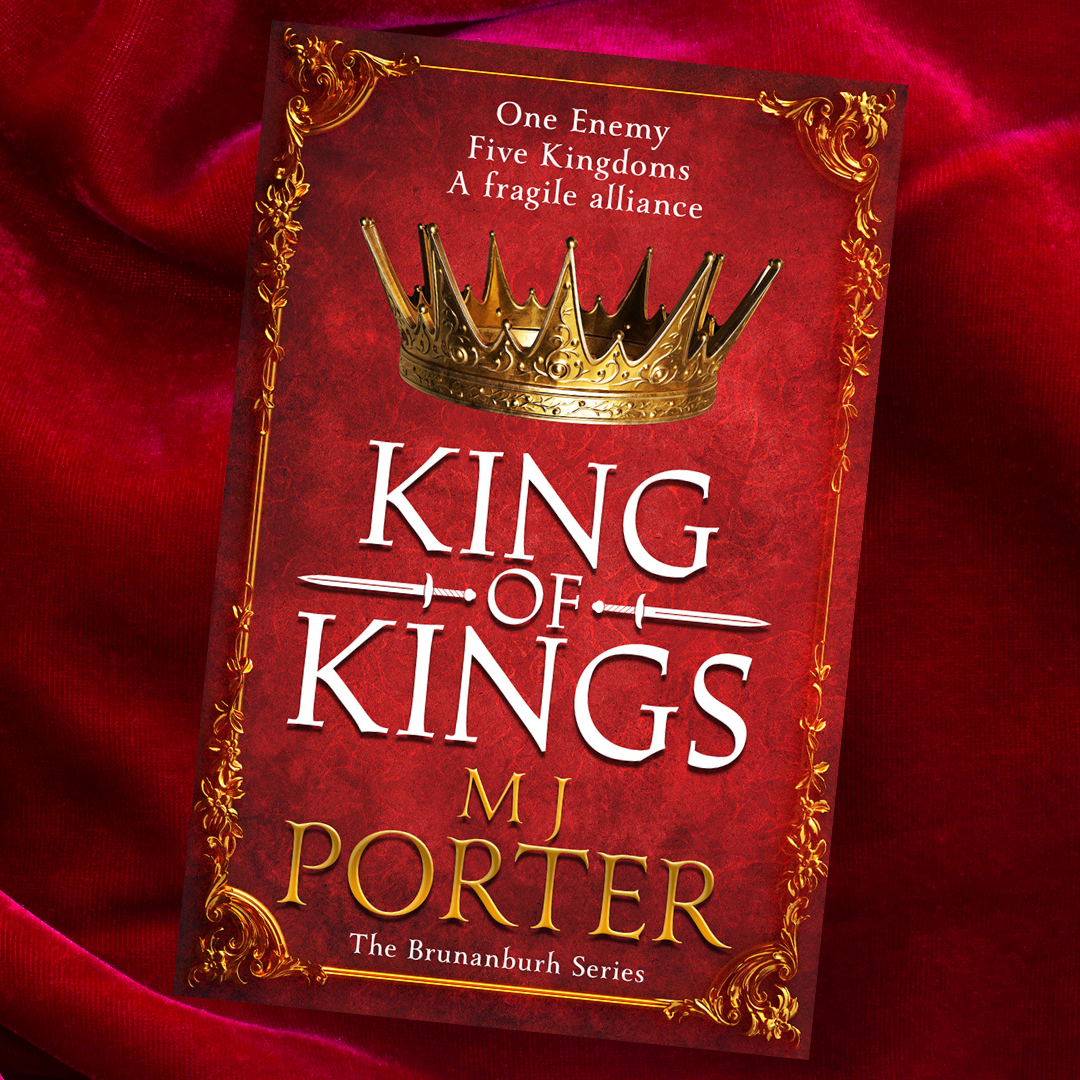
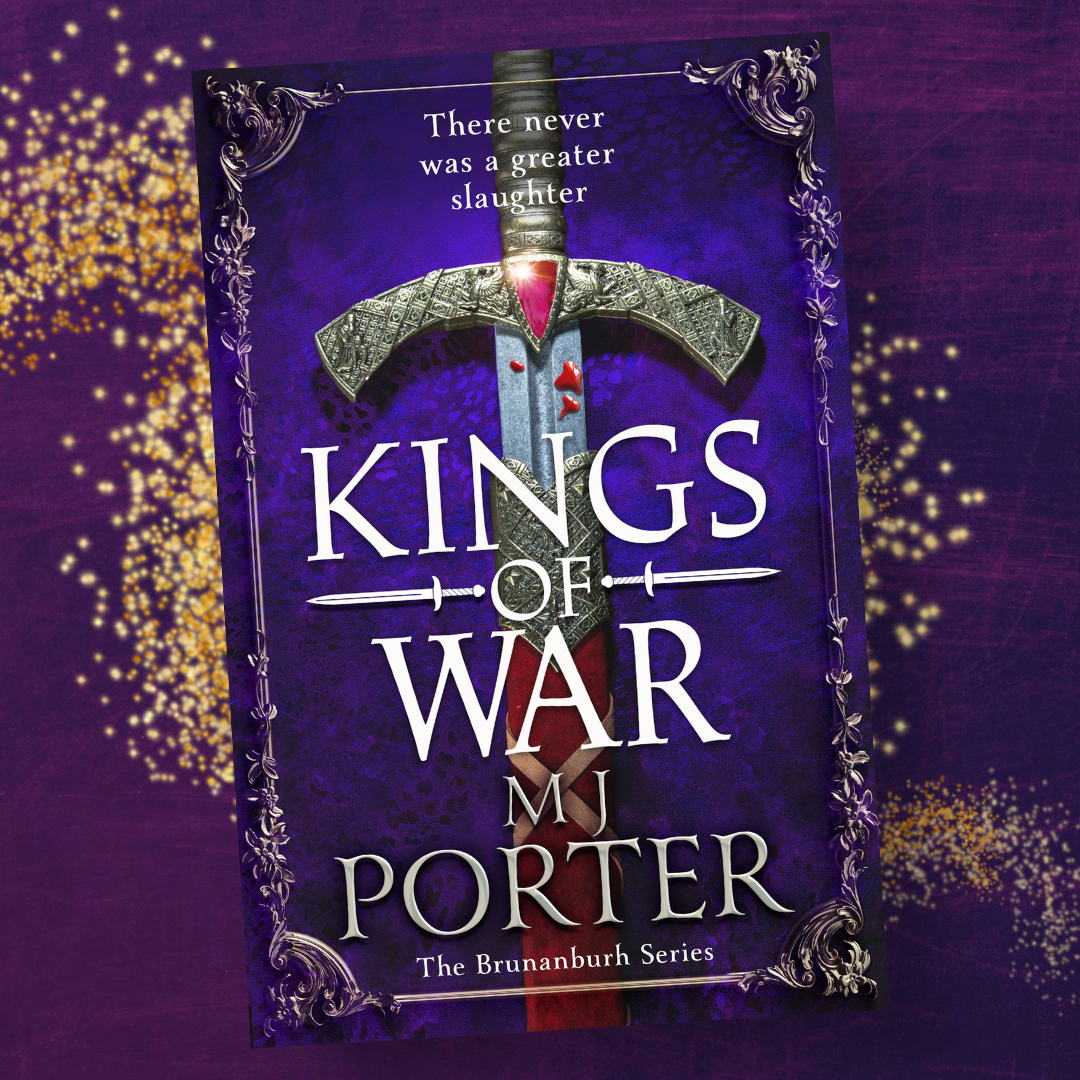
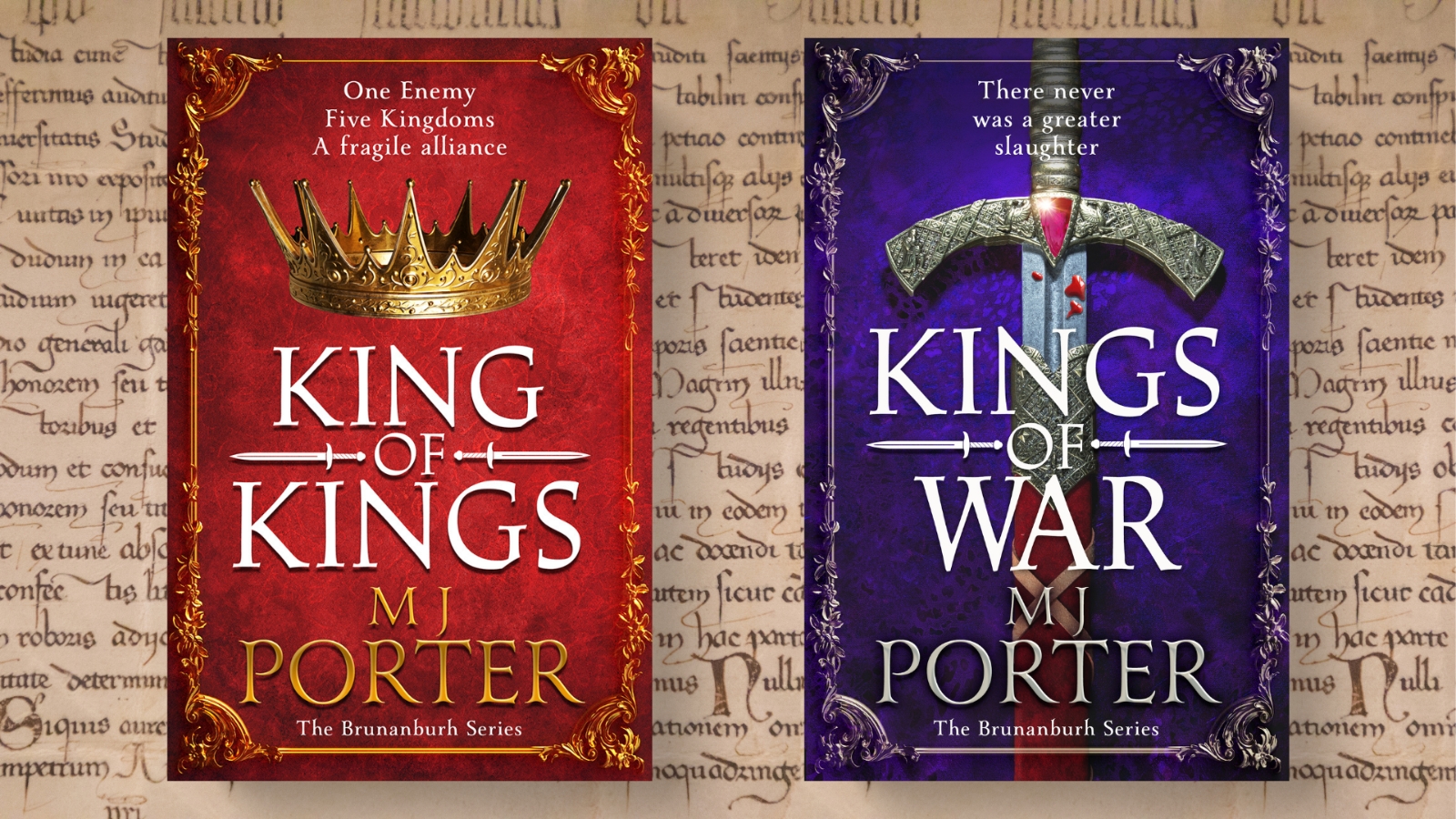
I’m so excited about the release today of King of Kings. This story, the first part in the retelling of the greatest battle on British soil that many have never heard of, Brunanburh, has been long in the making. Building on the original series, begun in 2014, King of Kings is entirely reworked, and it’s so much better:) (I honestly can’t believe how much better it is.)

Here’s the blurb

‘An epic tale of the birth of a nation. Truly mesmerising. Game of Thrones meets The Last Kingdom’ – Gordon Doherty

In the battle for power, there can be only one ruler.

AD925

Athelstan is the king of the English, uniting the petty kingdoms of Wessex, Mercia, the Danish-held Five Boroughs and York following the sudden death of his father, King Edward. 

His vision is to unite the realms of the Scots and the Welsh in a peace accord that will protect their borders from the marauding threat of the Norse Vikings.

Whilst seemingly craving peace and demanding loyalty with an imperium over every kingdom, Athelstan could dream of a much bigger prize.

But danger and betrayal surround his best intentions, namely from his overlooked stepbrother, Edwin, who conspires and vies for what he deems is his rightful place as England’s king. 

As ever, powerful men who wish to rule do not wish to be ruled, and Constantin of the Scots, Owain of Strathclyde, and Ealdred of Bamburgh plot their revenge against the upstart English king, using any means necessary.

An epic story of kingsmanship that will set in motion the pivotal, bloody Battle of Brunanburh where allies have to be chosen wisely…

books2read.com/King-of-Kings

(available in ebook, paperback, hardback and audio, narrated by the wonderful Matt Coles).

King of Kings. with its five kingdoms, and one alliance, might need some explanation. To help my readers understand who everyone is, and importantly, where everyone is, King of Kings has a map and a genealogical table, as well as a cast of characters.

Map designed by Shaun at Flintlock Covers

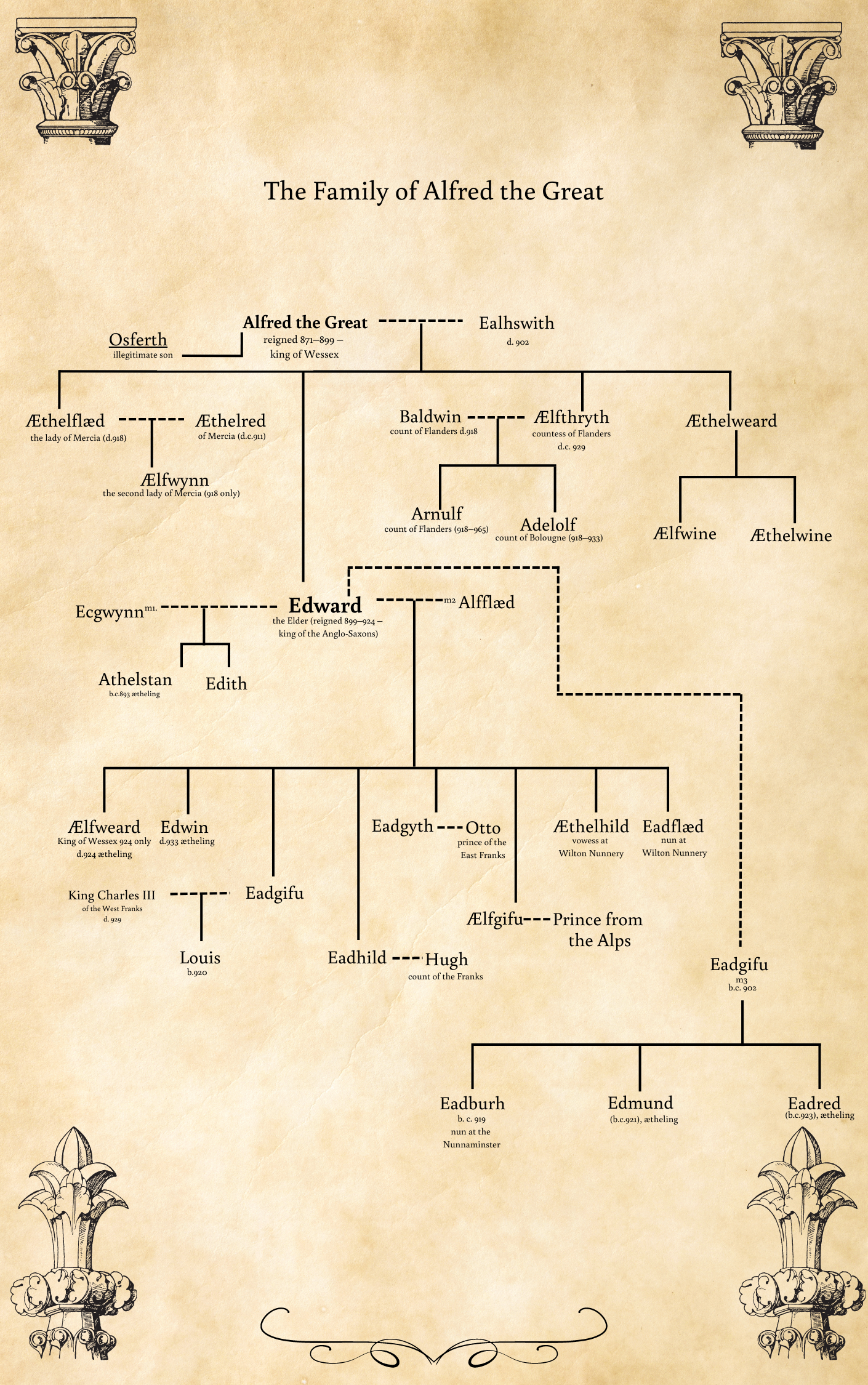
And because the family of King Alfred is so important to the story, I also have a genealogical table to share with my readers.

Design by Boldwood Books

I’ve written some brief introductions for the main cast of characters.

King Athelstan of the English

King Constantin of the Scots

King Hywel of the West Welsh

King Owain of Strathclyde

King Ealdred of Bamburgh

Lady Eadgifu of Wessex


Follow the blog tour with Rachel’s Random Resources

Bookish Jottings

Amy McElroy

David’s Book Blurg

Colin Garrow Blog

Beyond the Books

Ruins and Reading

Diary of a Wannabe Writer

The Magic of War(l)ds

Nerd Girl Loves Books


And for those who are falling in love with the period as much as I am, I wanted to share some non-fiction recommendations, and cautions.

There is no one book that will adequately cover this period (that was one of the reasons that I fictionalised it) but these books (see photos below), along with Dr. Kari Maund’s The Welsh Kings, which I have in ebook, will give you a good grounding of events in Britain and Ireland. So, these are

Alfred’s Britain by Max Adams

Athelstan by Sarah Foot

The Anglo-Saxon Chronicles ed and trans. Michael Swanton (other versions available – I like the formatting of this one -with the different recensions)

The Welsh Kings by Kari Maund

An Atlas of Anglo-Saxon England by David Hill (don’t be put off by the fact this book is from the 1970s – it is invaluable)

From Pictland to Alba 789-1070 by Alex Woolf

Viking Kings of Britain and Ireland by Claire Downham

English Historical Documents ed and trans by Dorothy Whitelock

The Frankish Kingdom under the Carolingians by R McKitterick

Edward the Elder ed. Higham and Hill (not a narrative account, but historians writing papers about their area of interest and expertise).

There are also two very important online resources.

PASE (The Prospography of Anglo-Saxon England)

Electronic Sawyer

MJ Porter

Author of Saxon historical fiction, 20th-century historical mysteries, and Saxon historical non-fiction. Book reviewer and blog host.

Skip to content ↓