Author of Saxon historical fiction and non-fiction, 20th-century historical mysteries, and Norse-inspired historical romantasy. Book reviewer and blog host.
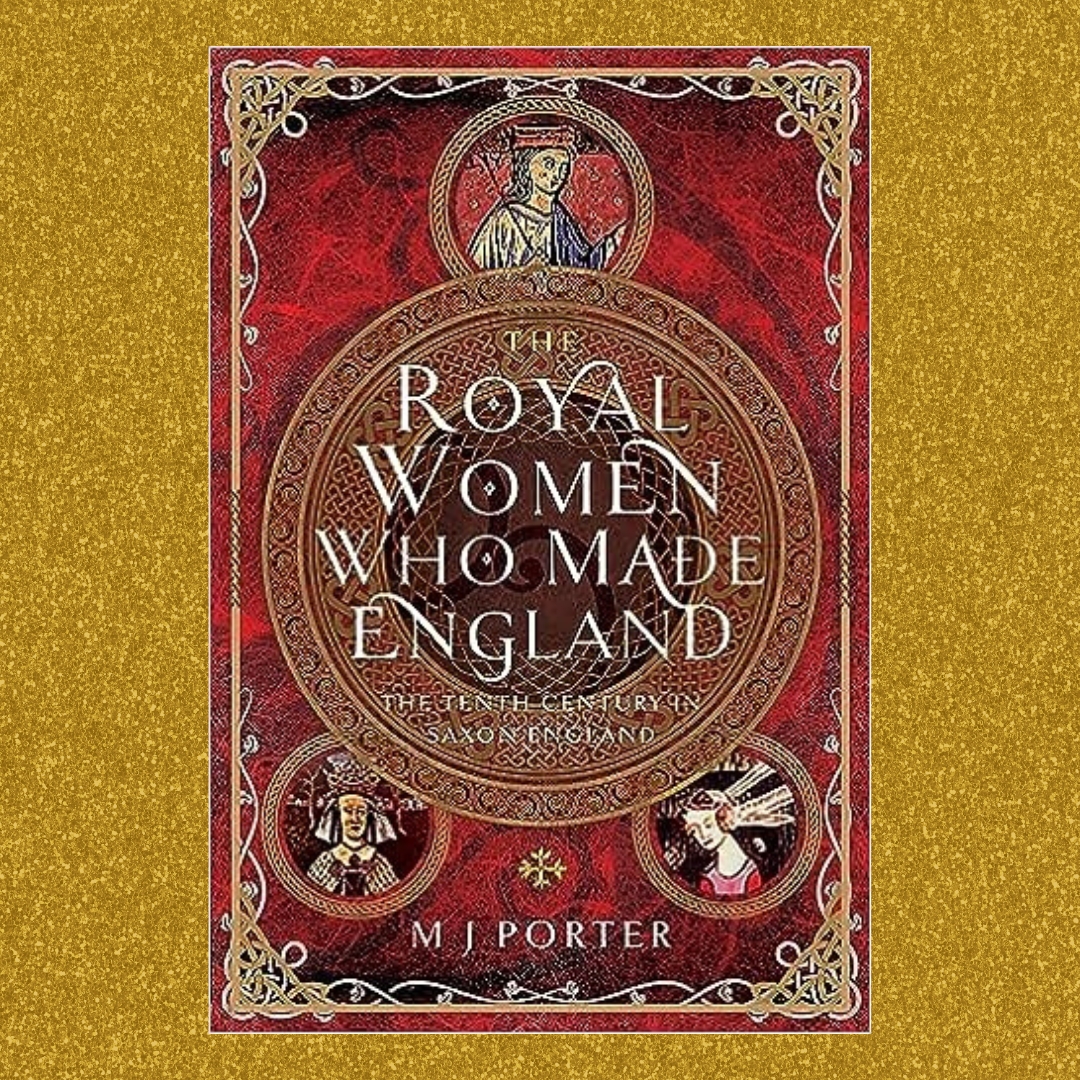
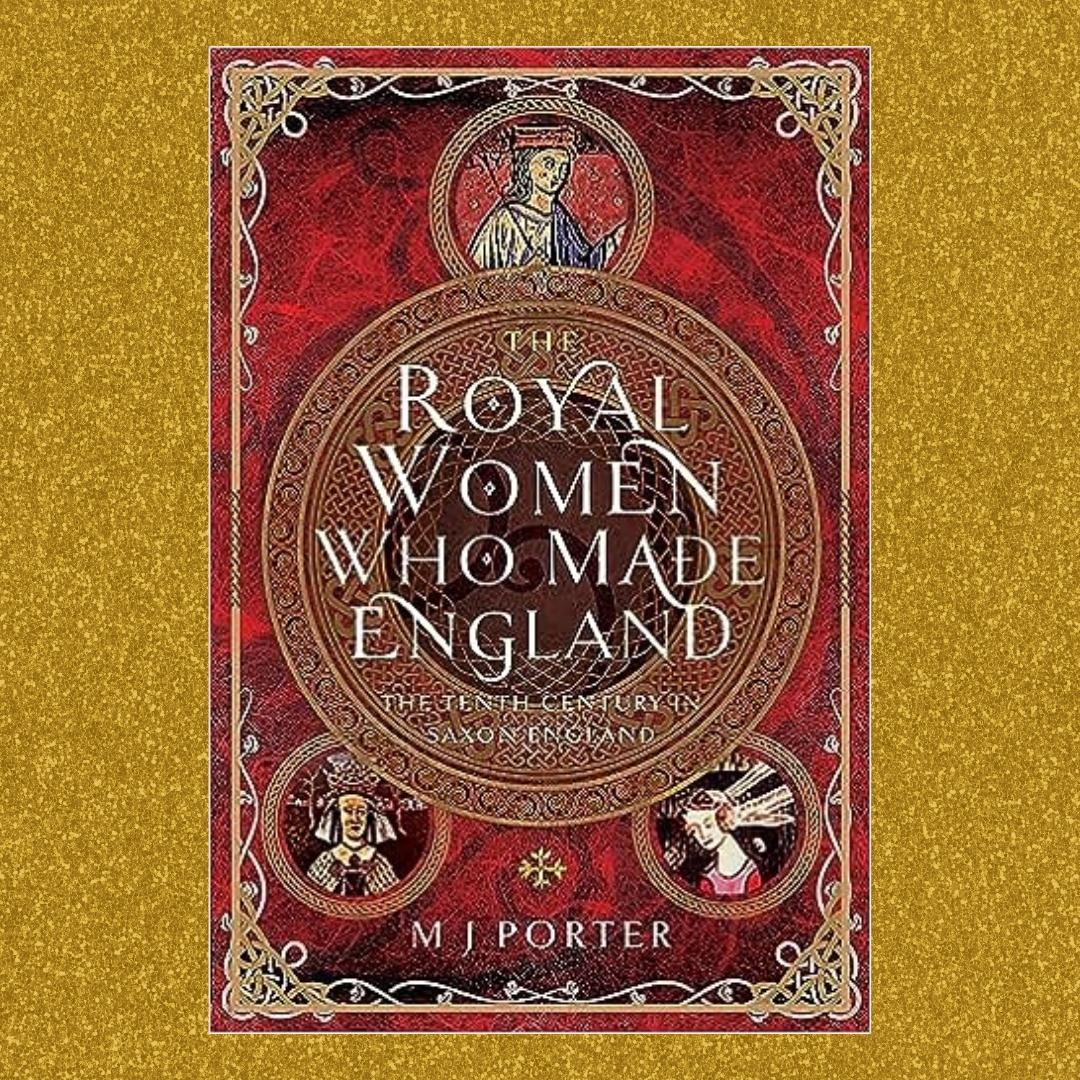
It feels like I’ve been talking about this book forever, but the day is finally upon us. The Royal Women Who Made England is available in hardback in the UK from today. It will be released in the US in March.
If you’ve been hiding from me for the last few months, you might be wondering what this is all about. So here goes.
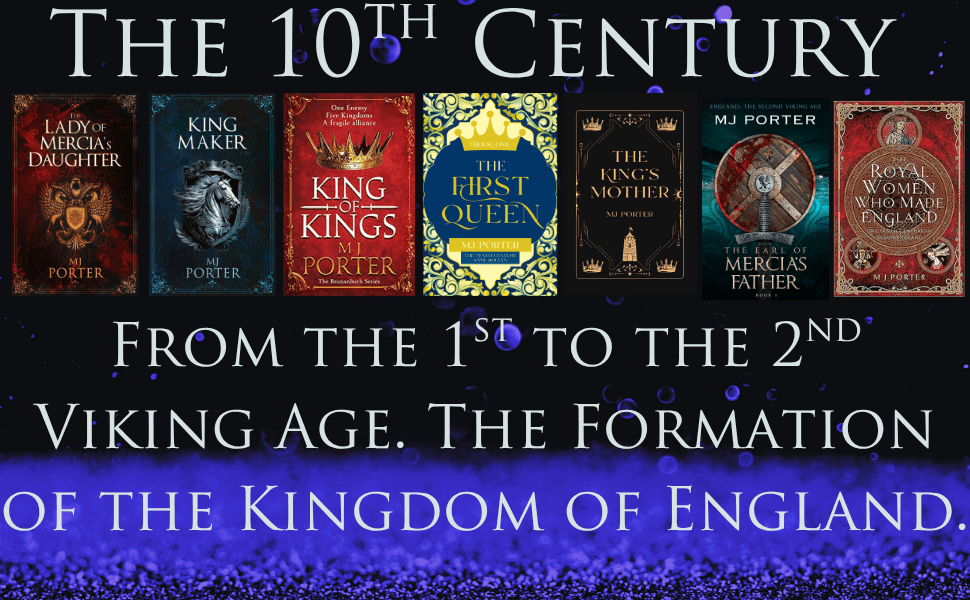
Throughout the tenth century, England, as it would be recognised today, formed. No longer many Saxon kingdoms, but rather, just England. Yet, this development masks much in the century in which the Viking raiders were seemingly driven from England’s shores by Alfred, his children and grandchildren, only to return during the reign of his great, great-grandson, the much-maligned Æthelred II.
Not one but two kings would be murdered, others would die at a young age, and a child would be named king on four occasions. Two kings would never marry, and a third would be forcefully divorced from his wife. Yet, the development towards ‘England’ did not stop. At no point did it truly fracture back into its constituent parts. Who then ensured this stability? To whom did the witan turn when kings died, and children were raised to the kingship?
The royal woman of the House of Wessex came into prominence during the century, perhaps the most well-known being Æthelflæd, daughter of King Alfred. Perhaps the most maligned being Ælfthryth (Elfrida), accused of murdering her stepson to clear the path to the kingdom for her son, Æthelred II, but there were many more women, rich and powerful in their own right, where their names and landholdings can be traced in the scant historical record.
Using contemporary source material, The Royal Women Who Made England can be plucked from the obscurity that has seen their names and deeds lost, even within a generation of their own lives.
So, who were these royal women? While some of us will know Æthelflæd, the Lady of Mercia, either because I think she is one of THE most famous Saxon women, or because of The Last Kingdom TV series and books, but she is merely one of many.
I’ve fictionalised Elfrida and her contemporaries, Eadgifu, the third wife of Edward the Elder and also some of his daughters, as well as Ælfwynn, the daughter of Æthelflæd. My first non-fiction title is me sharing my research that these stories are based upon.
I’ve also ‘found’ many other women of the period who have left some sort of physical reminder, mostly in charters or because their wills have survived.
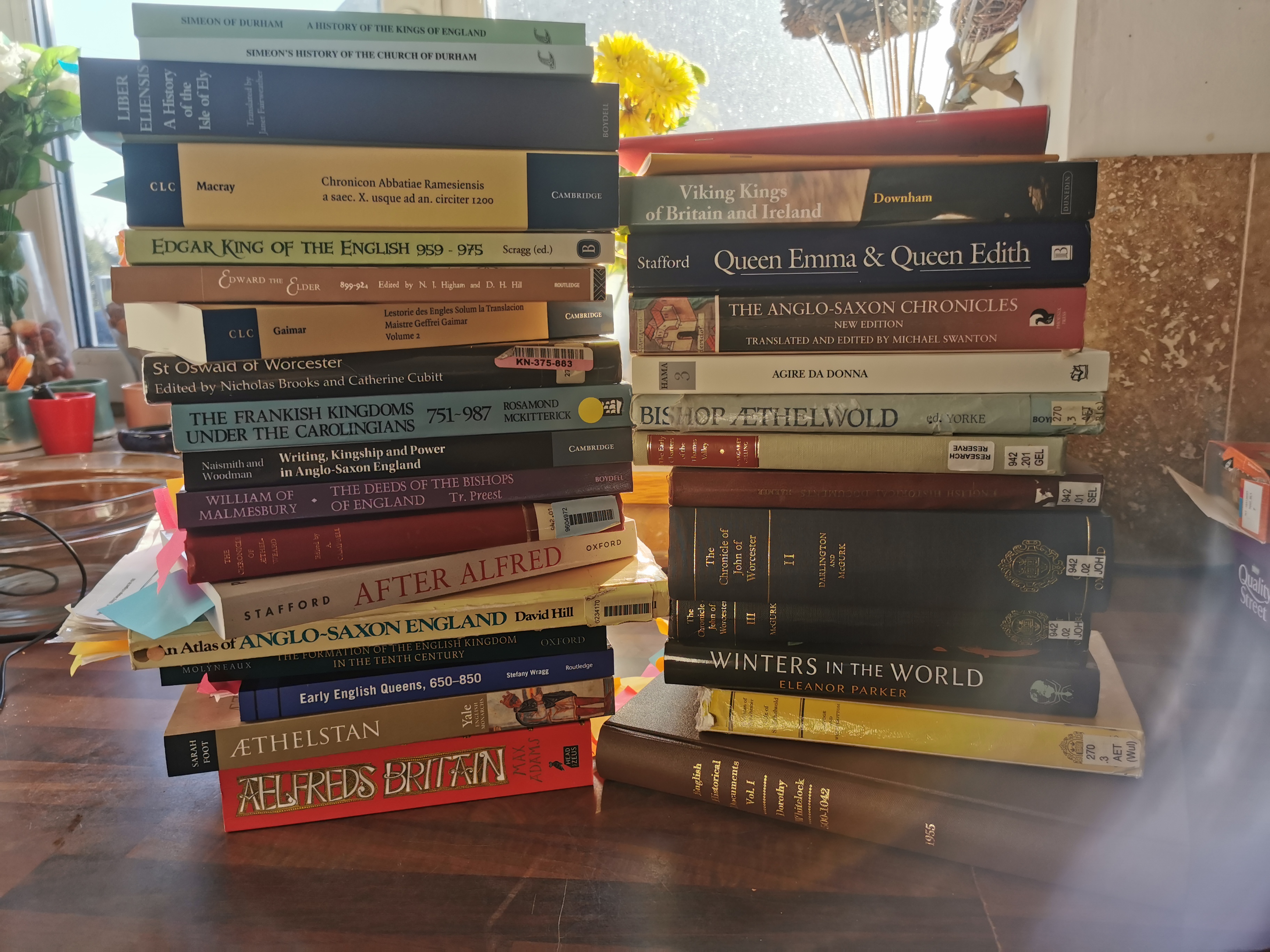
In total, I discuss over twenty women directly involved with the royal family, either by birth or marriage, and also a further forty, who appear in the sources. I also take a good look at what these sources are and how they perhaps aren’t always as reliable as we might hope. I make an attempt to ‘place’ these women in the known historical events of the period. And draw some conclusions, which surprised even me.
You can find some of my blog posts about these women below.
In the online resource, The Prosopography of Anglo-Saxon England (PASE), a database of every known name from the Saxon period, 33,981 male names are listed. There are only 1,460 female names for the 600-year period of Saxon England. Only 4 per cent of entries are women (there are also many anonymous ones which may mask more women). Twenty-one (possibly twenty-two) of these belong to the royal women of the tenth century. So, who were they?
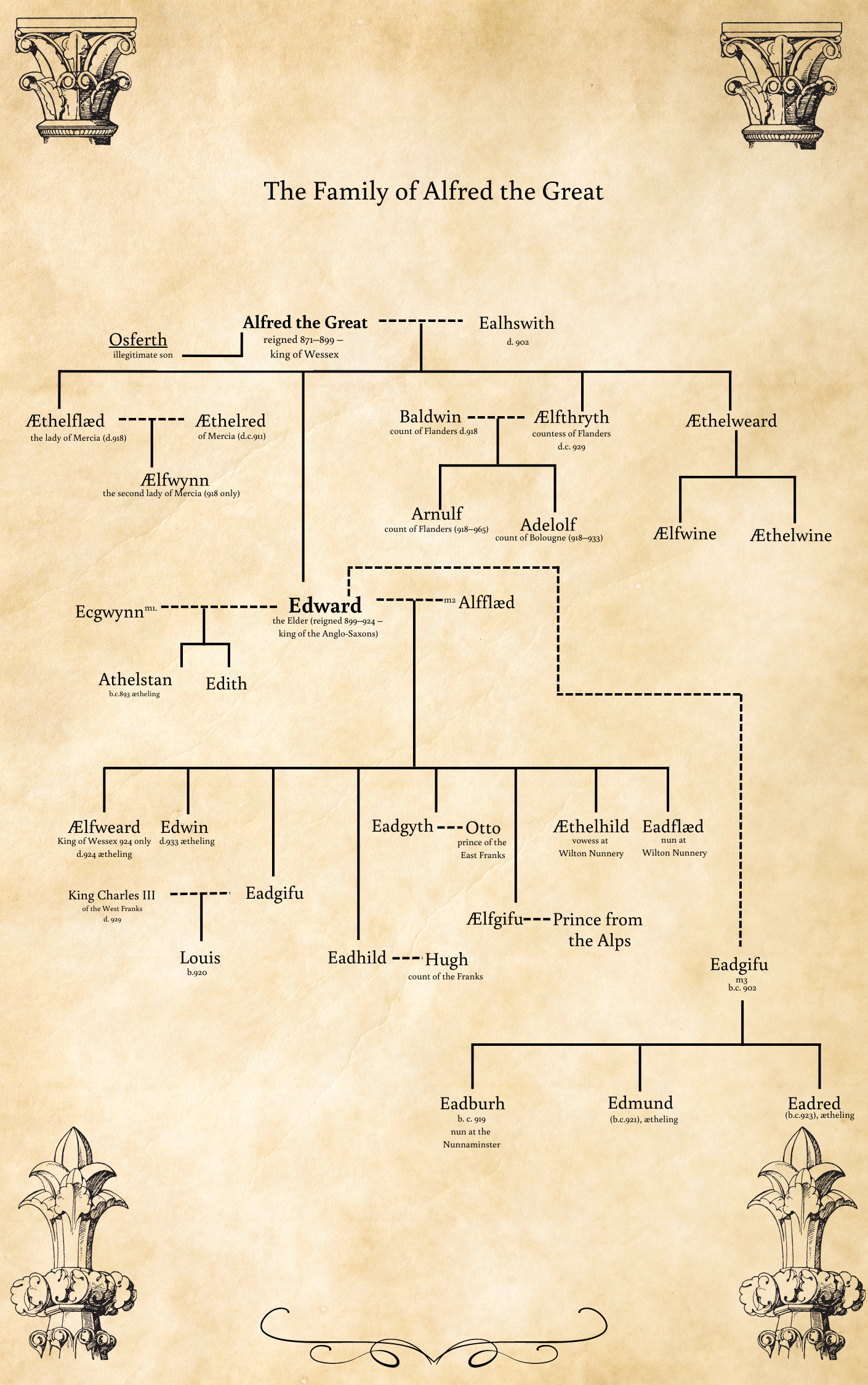
Æthelgifu, Alfred and Ealhswith’s second daughter, the abbess of Shaftesbury.
Ælfthryth, the Countess of Flanders, their third daughter.
Ecgwynn (if that was her name), mother to King Athelstan, and his unnamed sister, given the name of Ecgwynn/Edith in later sources
Lady Ælfflæd the second wife of Edward the Elder. They had many children. Six of them were daughters, Æthelhild, Eadgifu, Eadflæd, Eadhild, Eadgyth and Ælfgifu.
Edward’s third wife, Lady Eadgifu, certainly had one daughter, Eadburh. (There is the possibility that she had two.)
Ælfgifu of Shaftesbury, whose mother Wynflæd is named, was the first wife of Edmund. Æthelflæd of Damerham was Edmund’s second wife.
Edmund’s oldest son, Eadwig, married another Lady Ælfgifu.
Edmund’s youngest son, Edgar, would marry, or have children with no fewer than three women, Æthelflæd, Wulfthryth and Elfrida/Ælfthryth. From these three unions, one daughter was born, Edith/Eadgyth.
Another Ælfgifu was the first wife of Æthelred II. His second wife was Lady Emma of Normandy. At least four daughters were born to Ælfgifu, a daughter (also called Ælfgifu), Eadgyth, Wulfhild and Ælfthryth, while Lady Emma was the mother to Gode.
You can read all about these women in my non-fiction book, and there are also some links to blog posts I’ve written, which may be of interest.
Below you can hear me try and explain the importance of the marriages of some of these women into the West Frankish dynasty. I also forget the title of my non-fiction title, and generally make a bit of a mess of it. Enjoy:)
The Family of Charles III, the king of the West Franks (in my own words)
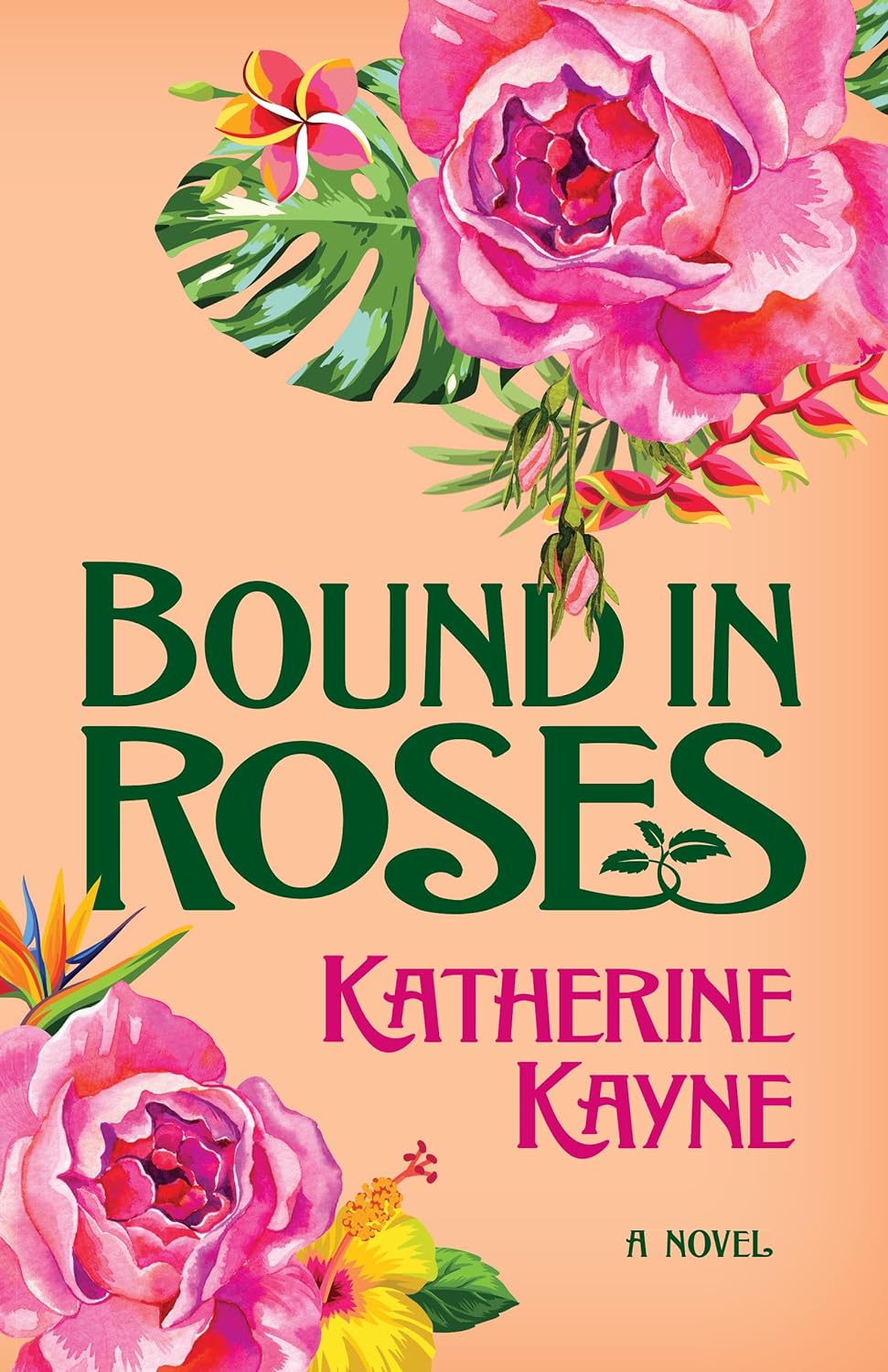
I’m delighted to welcome Katherine Kayne and her new book, Bound in Roses, to the blog.
Here’s the blurb
A red-hot Hawaiian romance blooms for a buttoned-up botanist who must learn to let go and embrace the ancient voice within her.
After a failed engagement to a high-society suitor in San Francisco, Lokelani “Lucky” Letwin returns home to Hawaii, leaving her beloved rosebushes behind. She’s desperate to establish a life of her own-a daunting task for any unmarried female in the early twentieth century but particularly for one passionate about the science of plants. A stubborn, song-filled girl now grown into an accomplished woman Lokelani is haunted by a family tragedy. She is as reluctant to acknowledge her past as she is to accept the supernatural force building inside her, strong and inevitable. She is a mākāhā, a Gate, ever connected to the power of the islands . . . if only she will admit it.
In her quest to retrieve her roses, Lokelani is reunited with Artemus Chang, a childhood friend, who’s now a handsome and successful lawyer. As the spark between them grows, Artemus agrees to help her recover her roses, only to discover her kisses leave him literally breathless. When a mystical teacher enters her life, Lokelani’s embrace of the voice of ancient power bubbling up within her takes on new urgency and new apprehensions.
Will Lokelani continue to be bound by guilt and fear? Or will she learn to reconcile her gifts – as both a practical botanist and a mystical Gate – to sing once more and claim her love?
Buy Link:
This title is also available to read on #KindleUnlimited
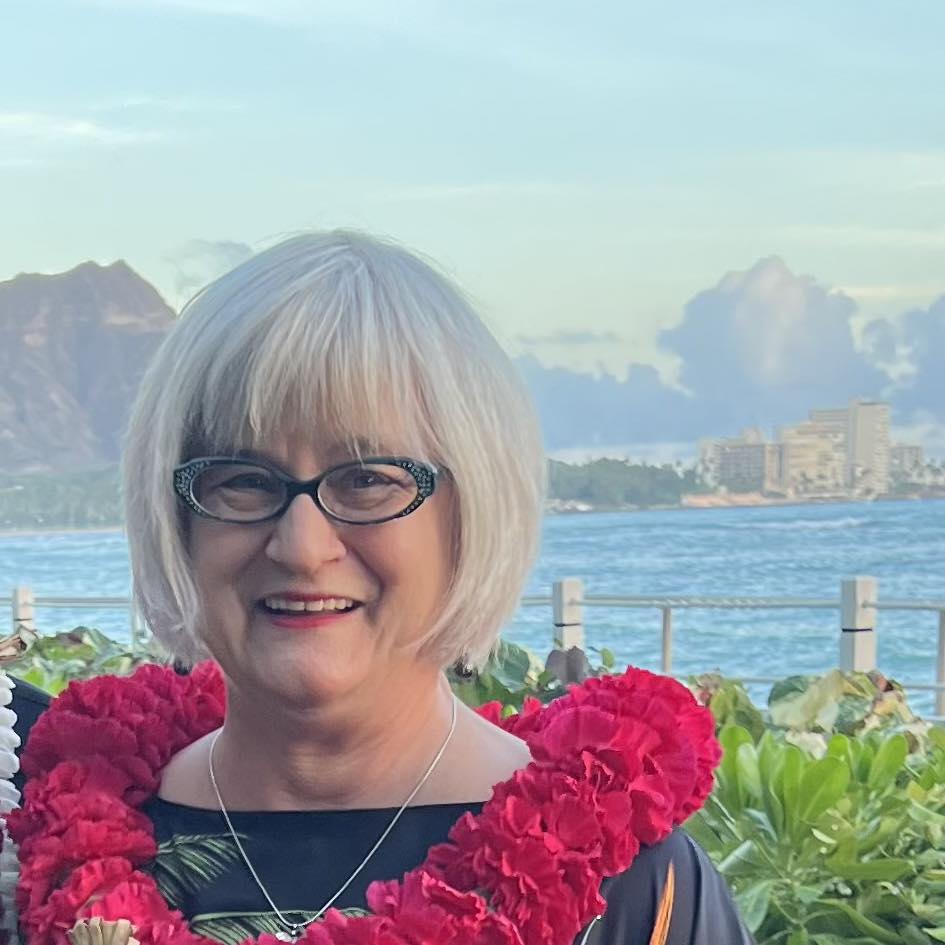
Award winning author Katherine Kayne writes deeply romantic historical fantasy set in old Hawaii. Her critically acclaimed debut novel BOUND IN FLAME delivers myth, magic and all the sparks promised by the title. The next installment in her Hawaiian Ladies’ Riding Society series, BOUND IN ROSES, is available for preorder now.
Katherine’s novels are filled with horses and history and happily ever after . . . and heroes strong enough to follow their heroine’s lead. She spends a part of each year on Hawaii Island immersing herself in Hawaii’s past. Aided of course by the occasional mai tai. Katherine created the world of the Hawaiian Ladies Riding Society to tell the stories of the fearless horsewomen of the islands’ ranches. Because who doesn’t love a suffragist on horseback? With a bullwhip? Wearing flowers?
If you come along for the ride, be prepared for almost anything to happen. Katherine can promise you fiery kisses, charming cowboys, women who ride like the rainbow to save the day, and that rarest of beasts-handsome men who like to dance.
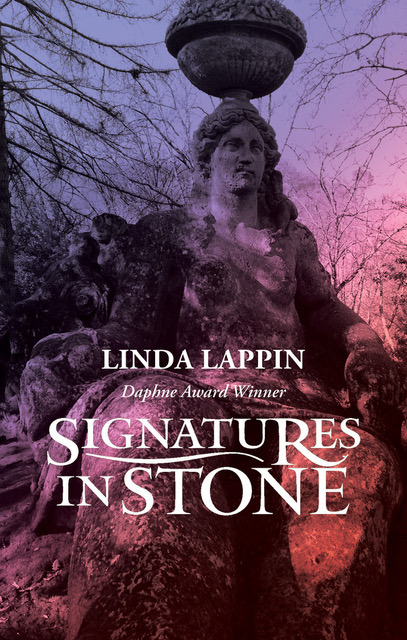
I’m delighted to welcome Linda Lappin and her new book, Signatures in Stone, to the blog, with a snippet.
Snippet
Finestone paused on the threshold, as if waiting to see my reaction, then stepped in behind me, seized my arm, and began my guided tour: “In the mid-sixteenth century,” he began, “when this place was created, parks and gardens were meant to offer more than just an aesthetic experience, a pleasant promenade in the shade or a showcase for flowerbeds. They were models of the cosmos and also tools for altering one’s consciousness, possibly for changing one’s destiny. Entering a place like this was like succumbing to a dream. Every detail was intended to produce a specific effect on the mind and body, to excite and soothe the senses like a drug. To awaken the unconscious self.”
The sculptures came at you helter skelter, truly like images in a dream. Wherever a crest of rock or boulder protruded from the ground, there had the sculptor’s chisel captured another frenzied spirit of the underworld.
Strewn around us were river gods, pouting putti, lustful Pans; ogres, nymphs and beasties; creatures shaken free from the bowels of the earth by some cataclysm, ready to sink back in at a moment’s notice if the earth should heave again.
“The park may conceivably contain an encoded message. Its statues and sculptures may spell out a formula for making gold, or for what gold symbolized to the alchemists: Immortality. Redemption. Eternal Love. Wisdom. Something of a sort dissimulated by private pictograms,” said Finestone.
“So the Monster Park is a sort of book,” I ventured, “a book of emblems hewn in stone, conveying a message, telling a story, revealing an enigma. “
“You mean,” he said, “concealing one.”
Here’s the blurb
Captivating critics and readers, SIGNATURES IN STONE, was the OVERALL WINNER in the DAPHNE DU MAURIER AWARDS for Excellence in Mystery and Suspense Writing – best mystery of 2013
Rome, Italy – November 2023 – Pleasure Boat Studio is thrilled to announce the release of the second edition of Linda Lappin’s celebrated novel, SIGNATURES IN STONE: A BOMARZO MYSTERY. This captivating suspense tale takes readers on a thrilling journey through the enigmatic Monster Park of Bomarzo, also known as the Sacred Wood, an extraordinary Baroque sculpture garden in Italy. With the 500th anniversary of the park’s creation, this edition is accompanied by a magnificent new cover and a series of Tarot card illustrations by Santa Fe artist Carolyn Florek.
In SIGNATURES IN STONE, readers are transported to the atmospheric setting of the Monster Park of Bomarzo, a sixteenth-century garden adorned with mythical creatures believed to represent a terrifying journey into the realm of nightmares. Against this backdrop, four travelers find themselves intertwined in a fate-driven Italian holiday. Daphne, a British writer of occult mysteries, her down-on-his-luck aristocratic publisher Nigel, the aspiring artist and American gigolo Clive, and the art historian Professor Finestone, all converge in a dilapidated villa near the park. They are attended by rustic servants who harbor secrets of their own.
Professor Finestone has made a groundbreaking discovery, revealing that the garden was designed by one of Italy’s greatest artists as a transformative experience that delves into the shadow side of life. Over the centuries, the park’s meanders continue to influence the minds and destinies of those who venture within. As the group explores their heart’s desires amidst the haunting sculptures, they become entangled in a web of intrigue and danger. When Daphne, renowned for writing cozy murder tales, becomes the prime suspect in a shocking homicide, she must confront her own darkness and rely on her sleuthing skills to uncover the terrifying truth.
Linda Lappin’s gripping tale presents an intriguing exploration of gardens in Renaissance Italy, where they were regarded as tools for altering consciousness and changing destiny. The Monster Park of Bomarzo becomes the backdrop for a “Gothic-in-Wonderland” phantasmagoria, immersing readers in a suspenseful and thrilling journey.
New Edition of Linda Lappin’s Award-Winning SIGNATURES IN STONE: A BOMARZO MYSTERY Commemorates the 500th Anniversary of the Monster Park.
Praise for Signatures in Stone:
“Layers of mystery are woven into Linda Lappin’s beautifully written and atmospheric historical novel set in Bomarzo, Italy’s enigmatic park of stone monsters.”
~ Gigi Pandian, author of The Accidental Alchemist.
“Deftly mixing fascinating art history and murder with an exotic atmospheric setting (the Bomarzo garden actually exists), dramatic historical period (1928 fascist Italy), and fully fleshed characters, Lappin (The Etruscan) has written a hallucinatory gothic mystery in which no one is as they appear. Daphne is a most memorable, if a bit unreliable narrator. Readers looking for an intelligent summer mystery will find much to savor here.”
Linda Lappin, poet, translator, novelist, and travel writer is the prize-winning author of four novels: The Etruscan (Wynkin deWorde, 2004); Katherine’s Wish (Wordcraft, 2008), dealing with the last five years of Katherine Mansfield’s life; Signatures in Stone: A Bomarzo Mystery (Pleasureboat Studio, 2013,2023), overall winner of the Daphne Du Maurier award for best mystery novel of 2013; and Loving Modigliani: The Afterlife of Jeanne Hébuterne (Serving House Books, 2020), 2021 Daphne Du Maurier award finalist and shortlisted for the 2021 Montaigne Medal for Books of Distinction.
She is also the author of The Soul of Place: Ideas and Exercises for Conjuring the Genius Loci, (Travelers Tales, 2015), winner of a Nautilus Award in the category of creativity in 2015.
A former Fulbright scholar to Italy, she has lived mainly in Rome for over thirty years. She is at work on a second Daphne Dublanc mystery novel, Melusine, set in Bolsena. The second edition of Signatures in Stone (2023) has been issued to commemorate the 500th anniversary of the Monster Park.
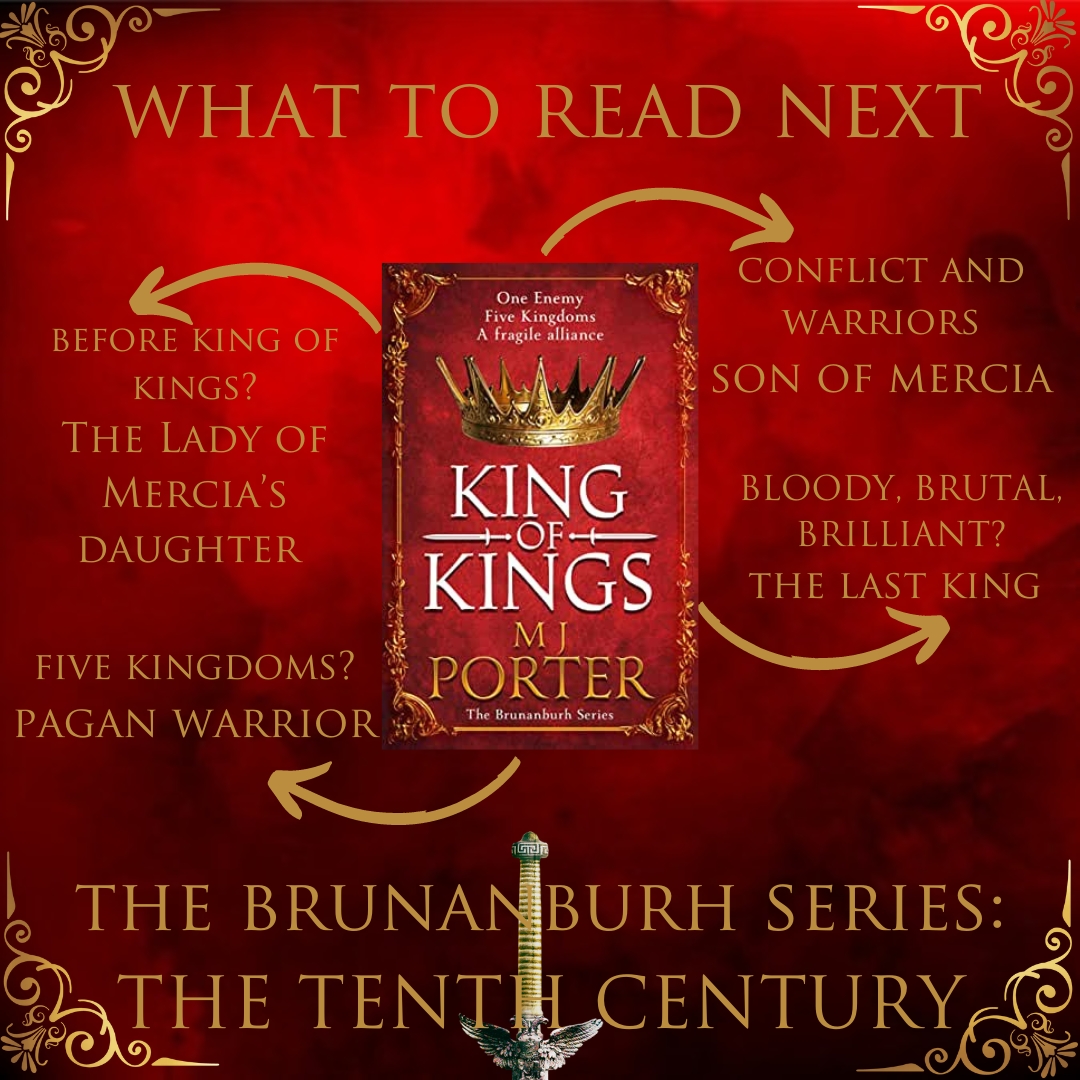
I do appreciate that it’s not exactly a bad problem to have, but I am sometimes concerned that readers are not altogether sure where to go after finishing one of my series and hopefully, enjoying it. Never fear, for I have put together a handy little guide, hopefully picking out the elements that readers might have enjoyed in one particular series, and applying them to other ones.
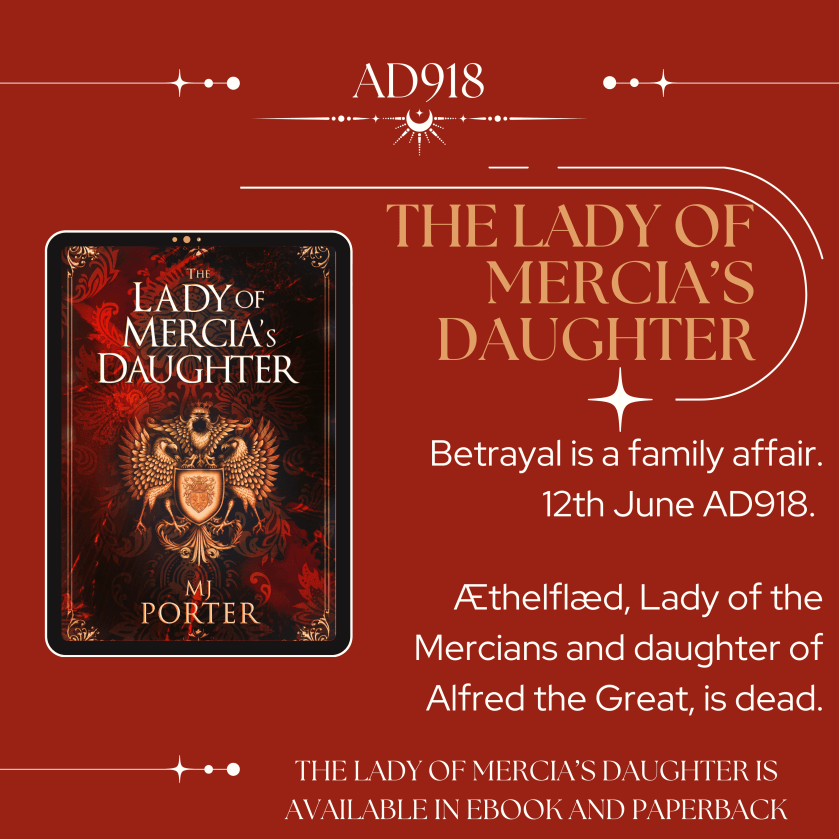
So, for readers interested in what happened before King of Kings, The Lady of Mercia’s Daughter and its sequel, A Conspiracy of Kings, offer a retelling of the Lady Ælfwynn’s life. The books also feature a younger Athelstan, and there may be a few other figures from the Brunanburh series in there as well.
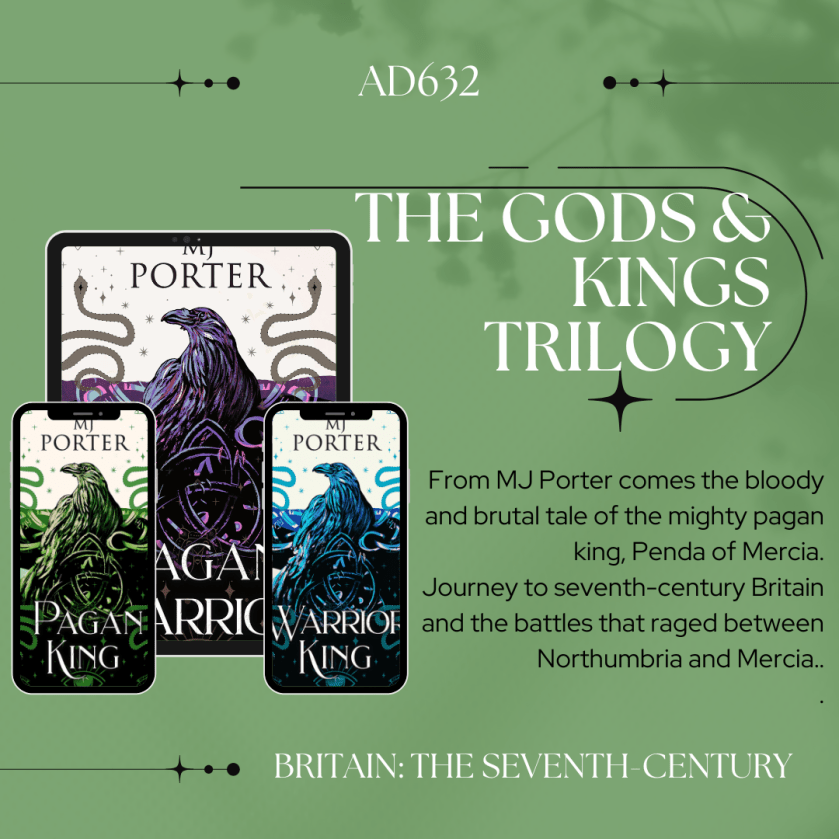
For those interested in England before it was England, or rather the idea of Five kingdoms, then the Gods and Kings trilogy, starting with Pagan Warrior, is really where you want to be. Step back to the seventh century, a time before Viking raiders, but with just as many ambition and brutal warrior kings.
And if it is the conflict and band of warriors that interests you, then the Eagle of Mercia Chronicles might well be where you could go next. Follow young Icel as he realises he must become a warrior, not a healer if he is to protect Mercia from her enemies beginning with Son of Mercia, set nearly a hundred years before the events of Brunanburh.
If you want books with a very healthy dose of violence, (and swearing), then The Mercian Ninth Century is the series for you, beginning with The Last King. Also set before the events of Brunanburh, (in the 870s) this series is all about warriors, violence, and overcoming (hopefully) all the odds.
I hope you find something you like, and don’t forget, to sign up for my mailing list to keep up to date with all things Saxon England and to receive a free ebook download via Bookfunnel.
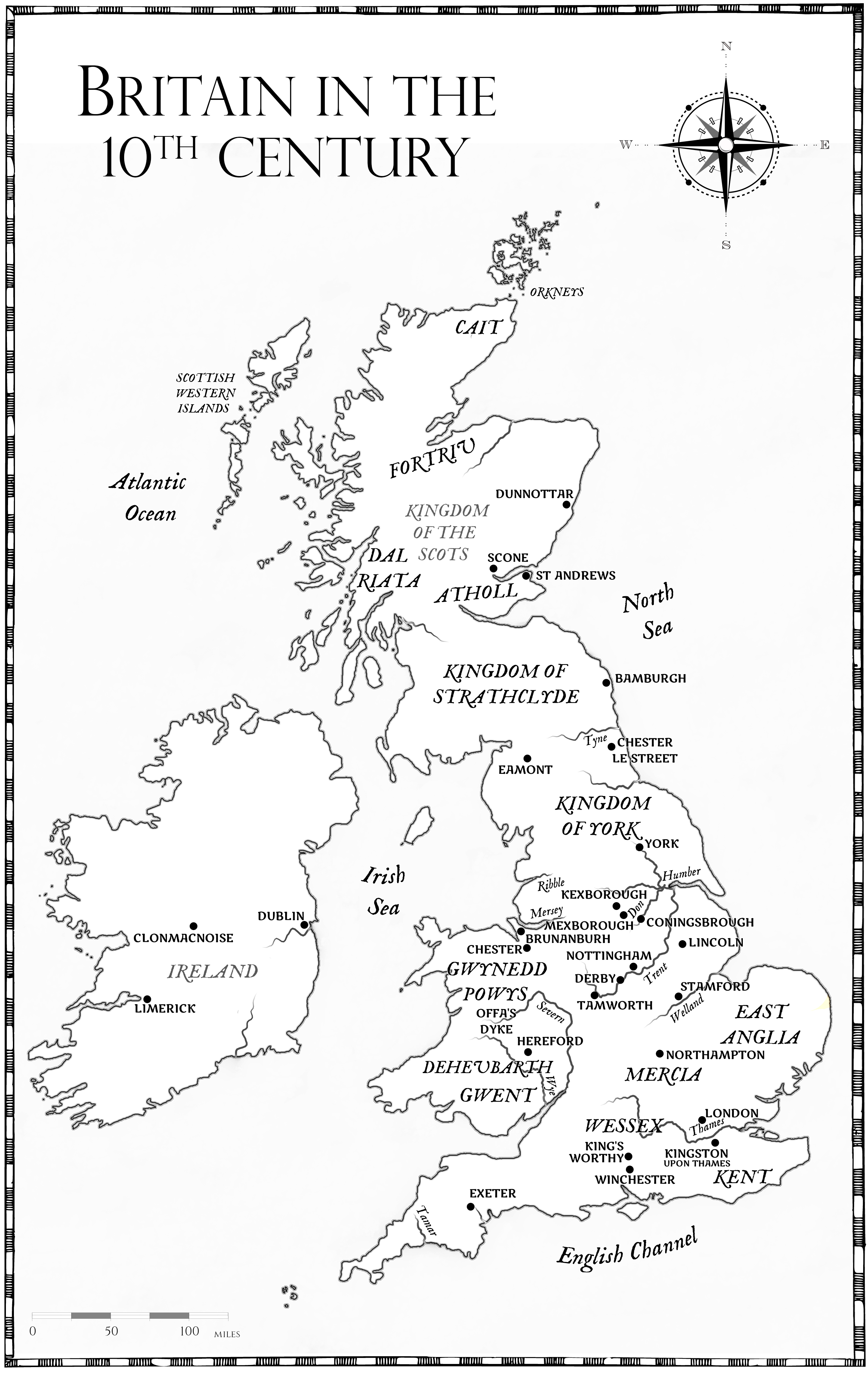
I’m delighted to share details of the A Slice of Medieval Podcast I’m featured on this week. I hope you enjoy the discussion about Brunanburh, King Athelstan and not forgetting, Olaf Scabbyhead.
I’ve added the map below so you can see where I’m talking about during the podcast.
‘Angelica had always known her lack of high birth, fortune or influence debarred her from being presented as an eligible young woman worthy of marriage. To cap it all, being an actress assured she was utterly beyond the pale of respectability.’
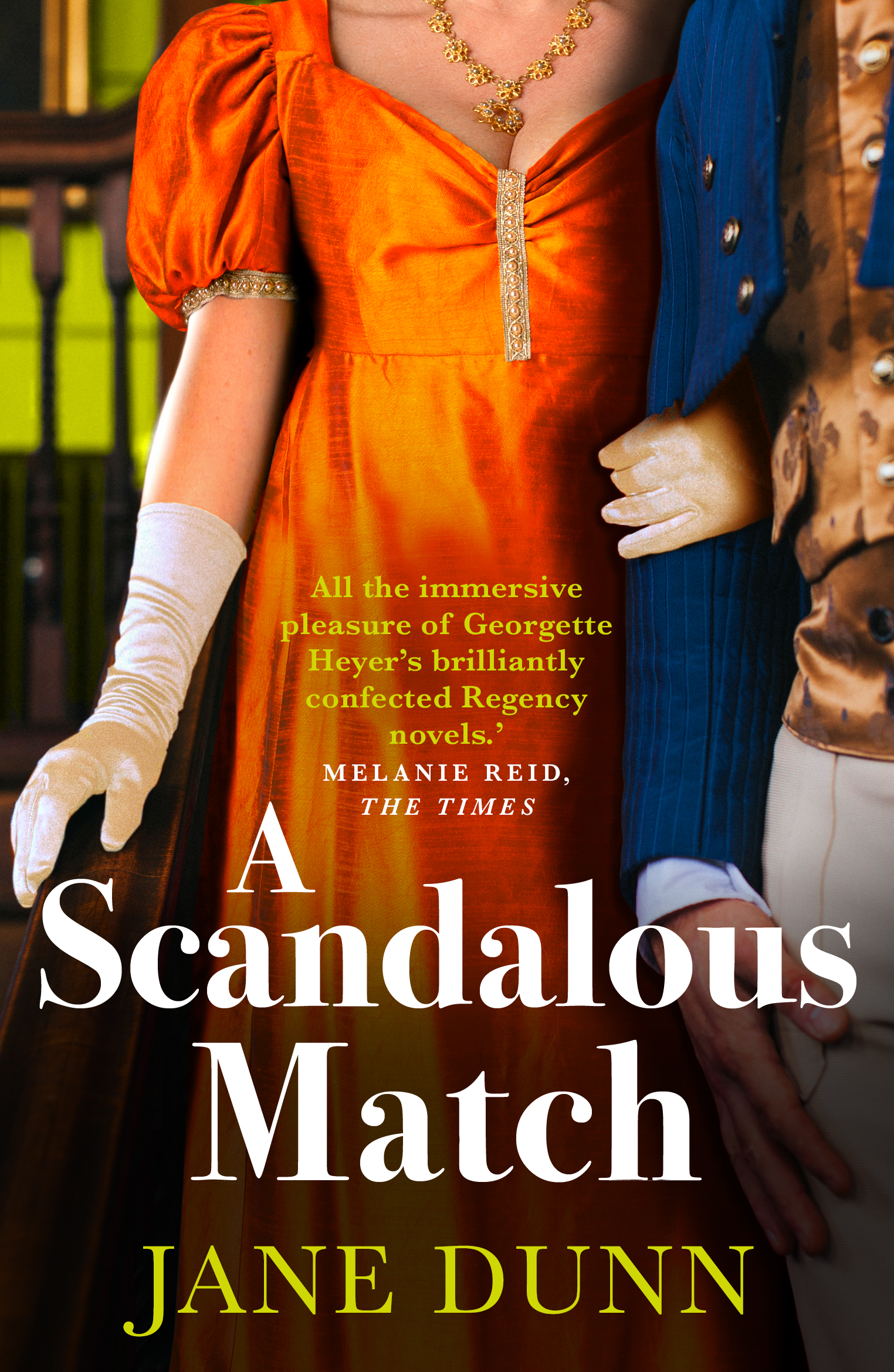
Nightly at the Covent Garden Theatre in London, an enchanting actress is wowing the crowds with her affecting portrayal of Ophelia. Preyed on by rakes and opportunistic young bucks, feted by dukes and earls, even the Prince Regent himself, Angelica Leigh is a sensation.
But in Regency England, beauty and talent are not enough to be considered marriage material, so when the eminently eligible Lord Charles Latimer sets his heart on Angelica, his uncle is sent to intervene.
As a highly respected, hard-working and wealthy lawmaker, The Honourable Ivor Asprey, is himself seen as desirable husband material, but widowed with an eleven-year-old daughter Elinor, he has forsaken all thoughts of romance. Lord Latimer’s mother, the Duchess of Arlington, despairs of her son, despite being reassured by Ivor that his infatuation with the actress will pass. But there is something about Angelica Leigh that demands attention, and even the austere and upstanding Mr Asprey isn’t immune to her charms.
Sunday Times bestselling author Jane Dunn brings the Regency period irresistibly to life. Perfect for fans of Jane Austen. Janice Hadlow, Gill Hornby, and anyone with a Bridgerton-shaped hole in their lives.
A Scandalous Match returns us to Jane Dunn’s wonderful reimagining of Regency England. Our heroine this time is Angelica, our hero Ivor. Both of them are very different characters. The chemistry between them takes some time to develop, but when it does, it is quite explosive.
A Scandalous Match contains all the elements of a Regency romance we would expect, including the stubborn heroine and equally stubborn hero, their failure to speak plainly, and the reach of society that endeavours to keep them apart. But, as with Jane’s previous books, there is the fascinating element of ‘other’ in there as well. The servants aren’t faceless and nameless. The conventions of the times are laid bare, and the peripheral characters also ‘buck’ against the trends we might expect. It all adds a delicious quantity to the books, which I adore, from the ‘cant’ of the servants to the slightly risqué relationship of Angelica’s mother and her ‘keeper.’ I also adore how the obsession with horses is constantly explored, just as in today’s day and age, we might brag about our high-end cars.
Another thrilling and enthralling read. Readers of Regency Romance, and romance in general, will delight in travelling to Jane’s Regency England.
Jane Dunn is an historian and biographer and the author of seven acclaimed biographies, including Daphne du Maurier and her Sisters and the Sunday Times and NYT bestseller, Elizabeth & Mary: Cousins, Rivals, Queens. She comes to Boldwood with her first fiction outing – a trilogy of novels set in the Regency period, the first of which is to be published in January 2023. She lives in Berkshire with her husband, the linguist Nicholas Ostler.
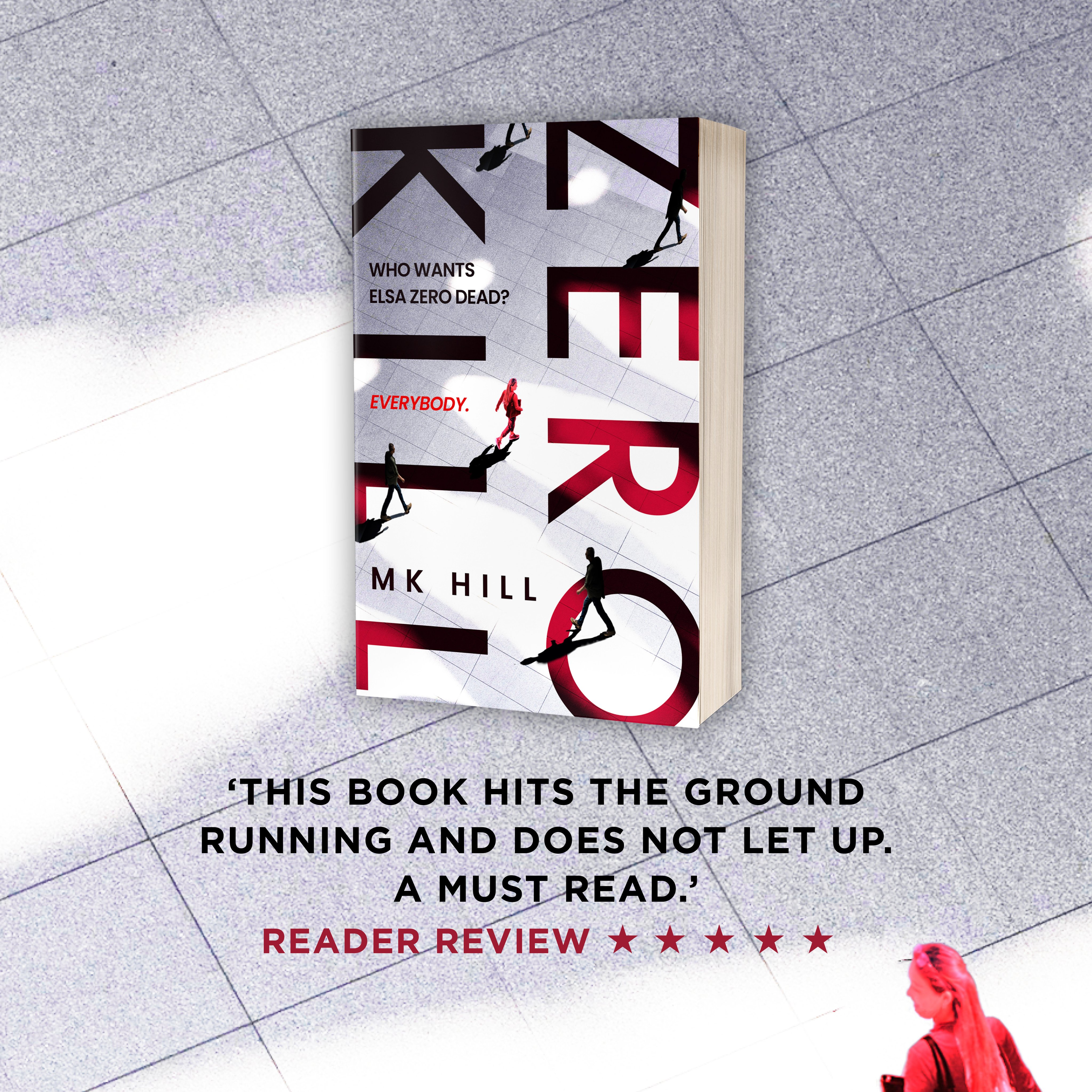
‘Runs at breakneck speed through a dark and dangerous universe populated with characters who are never what they seem’ KATHLEEN KENT, author of Black Wolf ‘A perfect thriller – page-turning excitement, expert plotting, a good dose of wit, and above all a fierce heroine you can’t get enough of.’ ASIA MACKAY, author of Killing It
Meet Elsa Zero: Bad neighbour. Single mother. Ex-deep cover agent. And right now, the most dangerous person on Earth.
When Elsa’s dull but dedicated boyfriend proposes in a packed restaurant, she doesn’t think her evening can get any worse. But as the clock strikes midnight, her world is turned upside down.
Suddenly Elsa is running for her life, trying to keep her children safe, and desperate to discover what the hell is going on.
Every intelligence agency in the world wants her dead because she’s in possession of a deadly secret – she just has to stay alive long enough to figure out what it is.
But this is Elsa Zero we’re talking about. And it’s a very bad idea to get on her wrong side.
Bursting with tension, twists and humour, this is a brilliantly unique action-thriller perfect for fans of Killing Eve, Lee Child and people who loved watching Nobody and Hunted.
Zero Kill has a fabulous premise, dropping the reader immediately into a scene filled with unexpected violence. It’s not often a character spirals from a proposal to flinging a hot frying pan at the head of her fiancé.
The story gets a little crazy from there. Our main character, Elsa, has no idea why she’s being targeted. Admittedly, we quickly learn she’s a former deepcover agent, but retired for 9 years, why is she suddenly a person of interest once more?
The story fluctuates between two timelines, and also between a few other characters, but Elsa remains the focus as she tries to gather enough intelligence to determine what’s happening and why she should trust anyone apart from her old pal, now a drunk and a bit of a mess.
Zero Kill builds well to its conclusion, and if it doesn’t quite match the rather brilliant premise (I’m not entirely sure how it could), it’s still a really fun read and sure to appeal to fans of Mission Impossible and Jack Reacher.
Meet the author
M.K. Hill worked as a journalist and an award-winning music radio producer before becoming a full-time writer. He’s written the Sasha Dawson series, Ray Drake series and the highly-acclaimed psychological thriller One Bad Thing. He lives in London. Visit him at http://www.mkhill.uk or find him on Twitter @markhillwriter
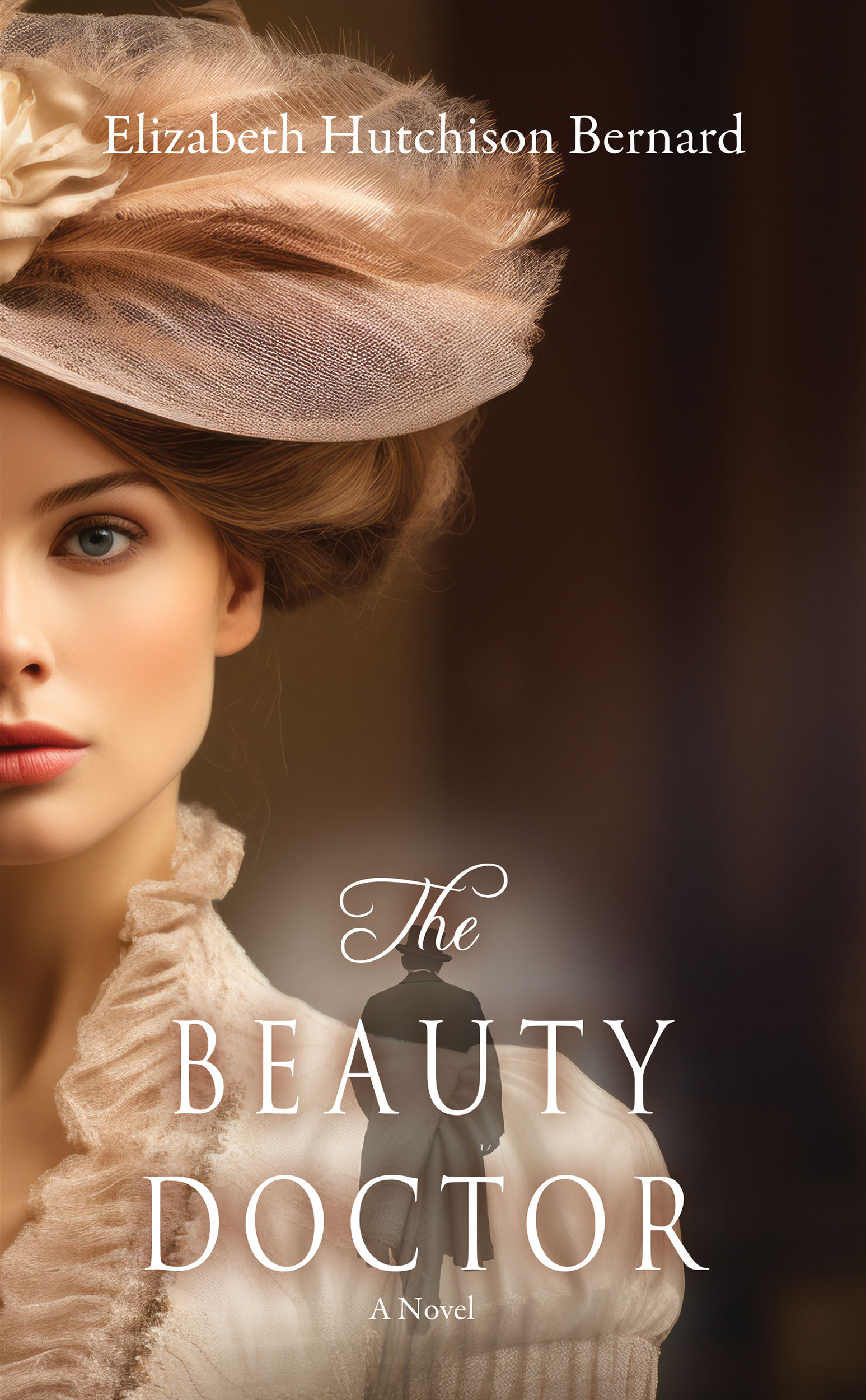
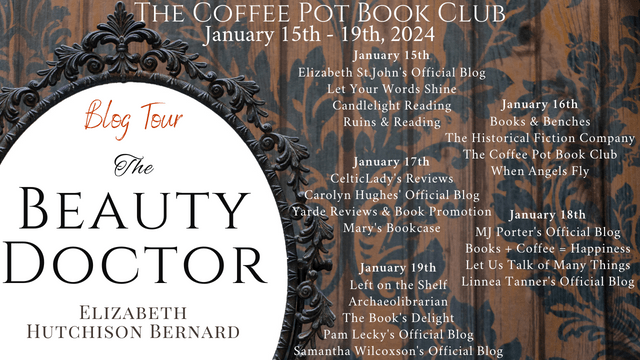
I’m delighted to welcome Elizabeth Hutchison Bernard and her new book, The Beauty Doctor, to the blog, with an excerpt.
Chapter 2
On the chance Dr. Rome was still attending to Mr. Kilroy, she lay in wait. He was clearly surprised to find her loitering in front of the Kilroys’ townhome. She explained that she was calling off her engagement and needed to find employment. He seemed interested. It wasn’t until they were sitting across from each other at Café Le Jour on Forty-sixth Street that Abigail began to think she’d made yet another terrible mistake.
“You are a very beautiful young woman,” he said, smiling at her over his coffee cup. “I suppose people tell you that all the time.”
“Not so often, actually.” That he had begun on such a personal note, and with the same overabundance of charm he’d displayed at the Hennessys’ banquet, had an unsettling effect on her. As did his gaze, which was direct and insistent.
“I’m sure you’re only being modest, but you need not be around me. I appreciate beauty for what it is and for the entitlements it brings to those lucky enough to have it.”
\“I’ve never been one to think much about entitlements. I was taught that if you desire something, you work for it. Which is why I wanted to speak with you—”
“There are lots of women who work very hard at being beautiful and still they can’t hold a candle to you. I’d even go so far as to say that you, Miss Platford, are the embodiment of everything I hope to achieve for my patients. That’s why you may actually be the perfect one to assist me with my new practice. You see, what I really need,” he said, the excitement in his voice building, “is a foil. A stunningly beautiful foil.”
“A foil?” She wasn’t sure what the word meant, but didn’t like the way it sounded.
“Yes. Someone to make the rounds with me at parties and events, anywhere we can meet women—the kind of women with both the desire and the means to avail themselves of my services.” This was not what she’d expected, nor was it a welcome development. Her purpose in approaching Dr. Rome was a far more serious one than his words implied. She had imagined herself working at his side, much as she had done with her father, helping to put patients at ease, assisting with their care. And though it was not her favorite duty, she would readily have consented to manage his schedule and fulfill the required paperwork if he were to ask her. But this business of attending parties and events—what did it have to do with doctoring?
“You speak of meeting women in need of your services, but surely you plan to take care of men as well. Mr. Kilroy is your patient, isn’t he?”
“For the moment, yes—though that was only a favor. But let me explain.” He took a hasty gulp of his coffee and set down the cup. “I’m about to embark on a new facet of my career, a new field. Transformative surgery. Have you heard of it?”
“I don’t believe I have.”
“Some call it beauty surgery.”
She instantly recalled splashy advertisements she’d seen in the newspapers for practitioners who claimed to specialize in straightening noses, pinning back ears, and plumping up wrinkles with paraffin. At best, such solicitations had struck her as tasteless. At worst … might Dr. Rome be nothing more than a charlatan?
“Oh—you’re a beauty doctor.” The inflection in her voice no doubt came across as somewhat disparaging. She dipped her head, hoping to obscure the visual evidence of her skepticism beneath the plethora of ostrich feathers on the brim of her blue velvet hat.
“Just imagine it for a moment, Miss Platford,” he said, seeming not to have found anything disturbing in her reaction. “Your mere presence by my side would stimulate, in any average woman, an intense longing for beauty; then, arising quite naturally from that, a burning curiosity. With just a hint, she would be eager to learn what I offer in the way of beautifying procedures. That’s how one goes about building a thriving beauty practice. Stimulate the need, offer the solution. Or, if you prefer, think of it this way: You would be helping to enlighten women about advances that can greatly enhance their lives. No different from selling a product. A product that people would certainly buy if they only knew its benefits.”
So, he wanted her to help him sell the concept of beauty surgery to other women? That was not what a doctor does! To take part in such activities would compromise everything she believed in. “Your idea is to use me as a sort of walking advertisement?”
“I wouldn’t put it like that.”
“Forgive me for being blunt, but are you really a doctor?”
He shoved aside his coffee cup, almost knocking it over. “Would I call myself a doctor if I wasn’t one?”
“I don’t mean to offend you. It’s just that I don’t know any other doctors who are engaged in your kind of work.”
“Because no medical school in this country has the foresight to embrace transformative surgery. That’s why it was necessary for me to receive advanced training in Europe. I returned from Paris only recently.”
“But you did train in medicine? Here in America?”
“Certainly, but the typical doctor’s training only goes so far. The medical establishment is very set in its ways. It resists anything that might challenge the status quo. And that is exactly what transformative surgery does. The social implications are immense. It represents possibly the greatest force for the empowerment of women in all of human history.”
“Empowerment of women?” Despite her disappointment, she had to smile. “I’m sorry, but I don’t see what your transformative surgery could have to do with the movement for women’s rights.”
“Maybe you’ve never thought of it this way, but beauty is power,” Dr. Rome said, with the calm certainty of a man who knows he speaks the truth. “And with enough power, Miss Platford, a woman can achieve anything.”
Here’s the blurb
A Bone-Chilling Mystery-Suspense-Thriller Set in the Edwardian Era
Finalist, Eric Hoffer Book Award
“Beauty is power,” Dr. Rome told her. “And with enough power, one can achieve anything.”
Straightening noses, trimming eyelids, lifting jowls . . . In the year 1907, his revolutionary beauty surgery is considered daring, perhaps dangerous. Still, women want what Dr. Rome promises. Neither is his young assistant Abigail Platford immune to Dr. Rome’s persuasive charm.
Abigail once dreamed of becoming a doctor, though of a much different sort. That dream ended with her father’s tragic death from a medical error for which she holds herself responsible. Dr. Rome, who proudly displays his medical degree from Johns Hopkins, seems to believe in her. If he were willing to act as her mentor, might there still be a chance to realize her dream of someday becoming a doctor serving New York City’s poor?
But something feels terribly wrong, as though an insidious evil is closing in. Broken promises, lies, and intrigues abound. The powerful are threatening to destroy the weak, and a doctor’s sacred duty hangs in the balance. Abigail no longer knows who to believe; but with Dr. Rome now her mentor and her lover, she desperately wants to trust him.
Even when she discovers that one of their patients has mysteriously disappeared.
From bestselling author Elizabeth Hutchison Bernard, a suspenseful work of historical fiction grounded in the social and moral issues of the Edwardian era in America. Second Edition with Author’s Preface.
Elizabeth Hutchison Bernard is the author of bestselling historical novels. Her 2023 release, Sisters of Castle Leod, is an Amazon Kindle #1 Bestseller (Historical Biographical Fiction, Historical Literary Fiction), winner of the 2023 Maxy Award for Historical and Adventure Fiction, and an Editors’ Choice of the Historical Novel Society. Her biographical novel Temptation Rag (2018) was hailed by Publishers Weekly as a “resonant novel . . . about the birth and demise of ragtime . . . in which romance and creative passions abound.” Elizabeth’s 2017 historical mystery-suspense-thriller, The Beauty Doctor, was a finalist for the prestigious Eric Hoffer Book Award. The book’s re-release (Jan. 4, 2024) features a stunning new cover and an Author Preface with insights into social and moral issues of the Edwardian era that frame this shocking fictional story set in the early days of cosmetic surgery. Before becoming a full-time author, Elizabeth was executive editor of an international aesthetic surgery journal, and senior consultant to the National Cosmetic Network in conjunction with Johns Hopkins University’s plastic surgery educational program. Learn more about Elizabeth and her books at www.EHBernard.com.
Idwal of Gwynedd has long been a character in the Brunanburh series, but it appears I’ve been remiss in not writing a blog about him. So here goes.
I confess, I’ve had quite a lot of fun with Idwal, pitching him against Hywel. But, I’m not sure that’s actually very wide of the mark.
Idwal of Gwynedd and Hywel were cousins. Their fathers were both sons of perhaps the second most well-known king of Wales, Rhodri Mawr. Hywel being the first (at least in my mind). Rhodri Mawr had held much of Wales, and was accorded the title King of the Britons. On his death, at the hands of King Alfred of Wessex, the kingdoms fractured back into their constituent parts. Idwal’s father ruled in Gwynedd. Hywel’s in Seisyllwg. Hywel succeeded his father while very young and quickly grew his power base. Idwal became king of Gwynedd in 916.
We first met Idwal in King of Kings in 927. He was, unwillingly, signing the accord with Athelstan at Hereford after the one agreed with the northern kings at the treaty of Eamont. Idwal visited England on multiple occasions, according to the surviving charter evidence, where he’s shown attesting Athelstan’s charters in 928, 931, 934 and 935. (S400, S413, S416, S417, S425, S407, S1792 and S434 – see the Electronic Sawyer for more information about these charters).
In my interpretation of him, he’s a very unwilling participant, more likely to look to the Norse for an alliance than the English, or indeed, his cousin, Hywel.
When we return to him, in Clash of Kings, Idwal, is once more, a man aggrieved by the success of the English king. Read Clash of Kings to discover what fate has in store for Idwal.
He is perhaps one of the most fun characters in Brunanburh – a grouchy man who is happy to do all he can to disrupt the more staid approach of King Athelstan of the English, and who resents his cousin’s influence with the English.