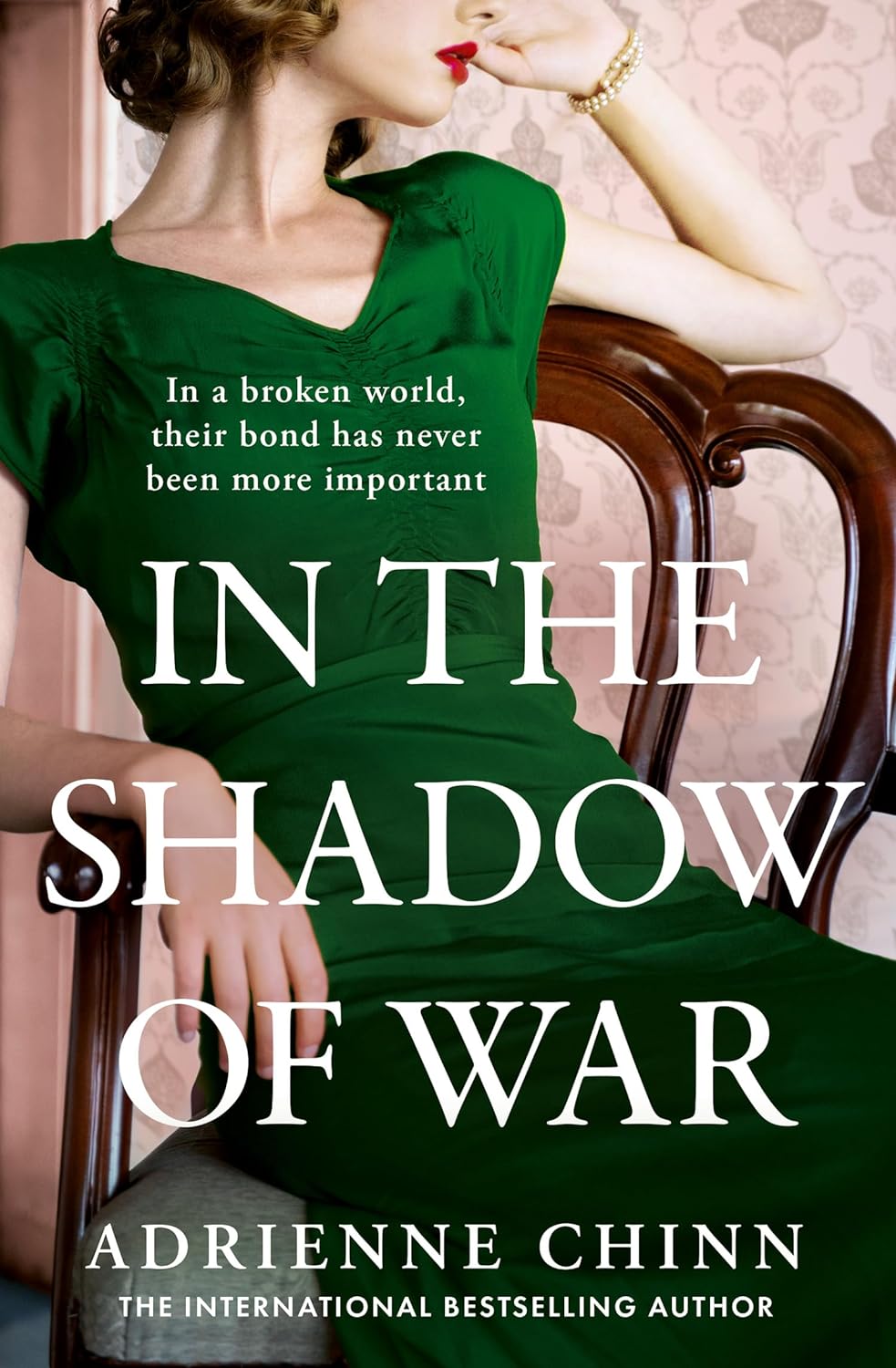
Adrienne has written a fabulous post about her new book, In The Shadow of War. Welcome Adrienne.
Down on the Farm in 1930s Canada
In 1921, my grandfather, Frank Chinn, who had spent five years fighting in France in the British infantry – surviving shrapnel wounds and mustard gas – told his wife, Edith née Fry, that he’d had enough of Britain and Europe and had applied for them to emigrate to either Canada, Australia or South Africa on the Soldiers’ Land Settlement Scheme for British war veterans.
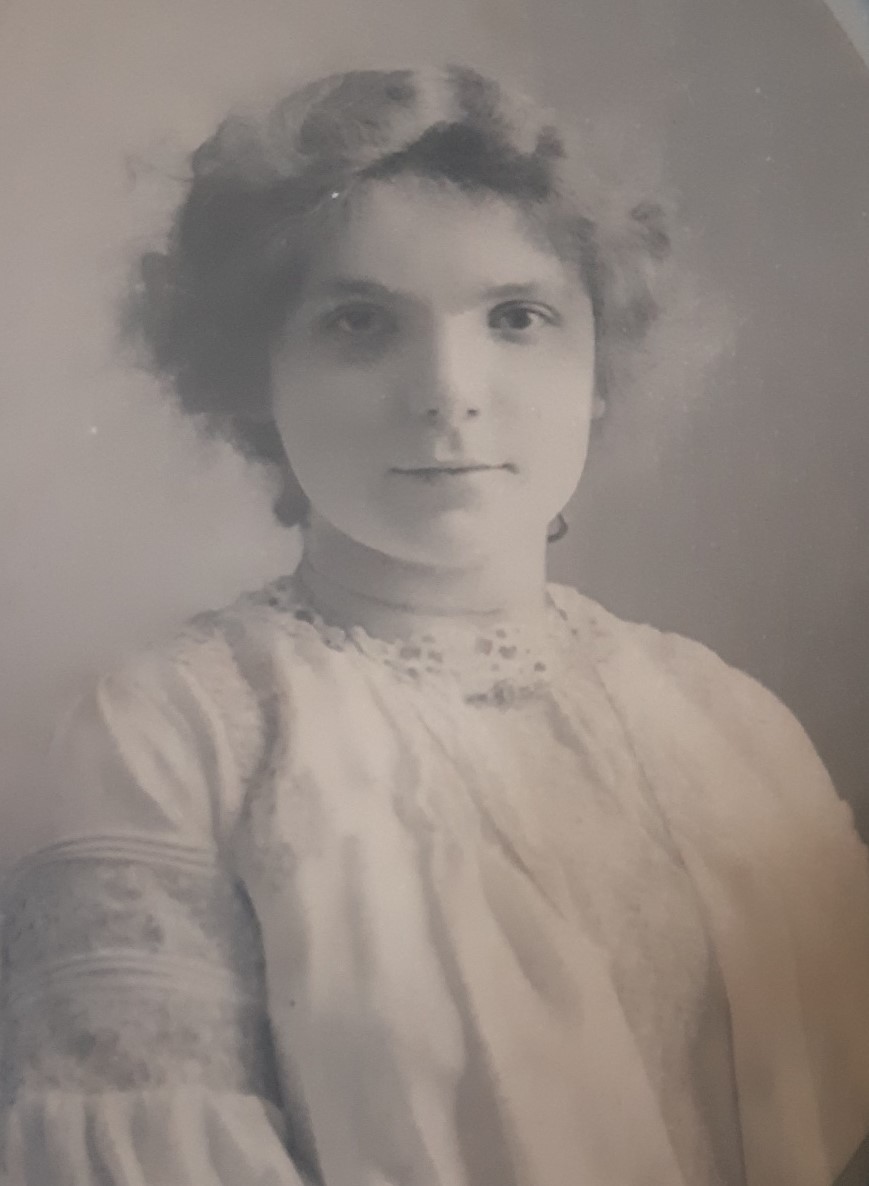
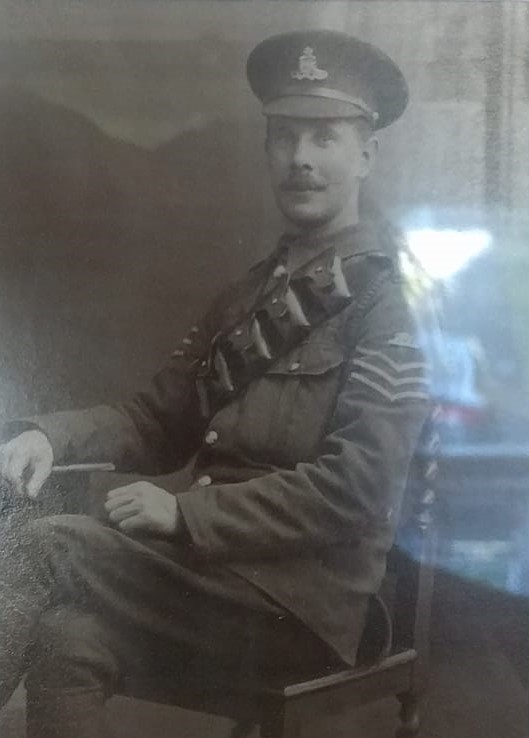
Edith Adelaide Fry Chinn and Staff Sargeant Frank Thomas Chinn, British Infantry 1914-1919
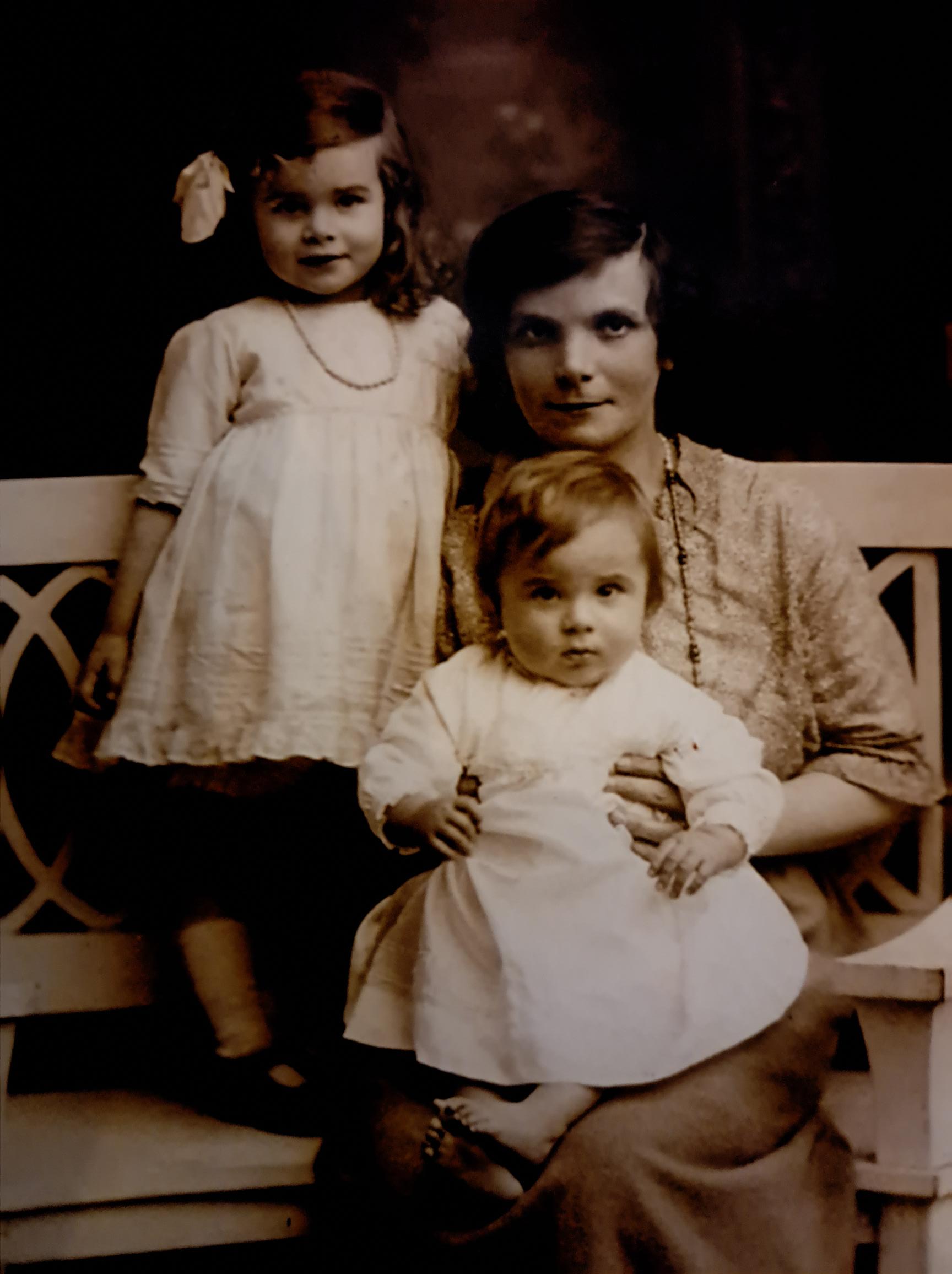
They had two young children, my Aunt Betty who had been born in 1918, and my father, Geoffrey, who was only two. Frank was allocated virgin land in Alberta, Canada to make into a farm, so off to Canada they went. My grandmother would never see her family in Britain again.
Edith in England in 1920 with my Aunt Betty (2) and my father Geoffrey (not yet 1)
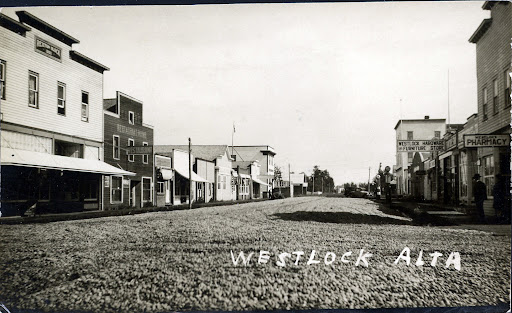
As I grew up, my father and aunt told me and my brothers and sisters many stories about their early lives on a wheat farm in the small farming community of Westlock, Alberta during the years of the Great Depression in the 1930s.
Westlock, Alberta, Canada 1930s
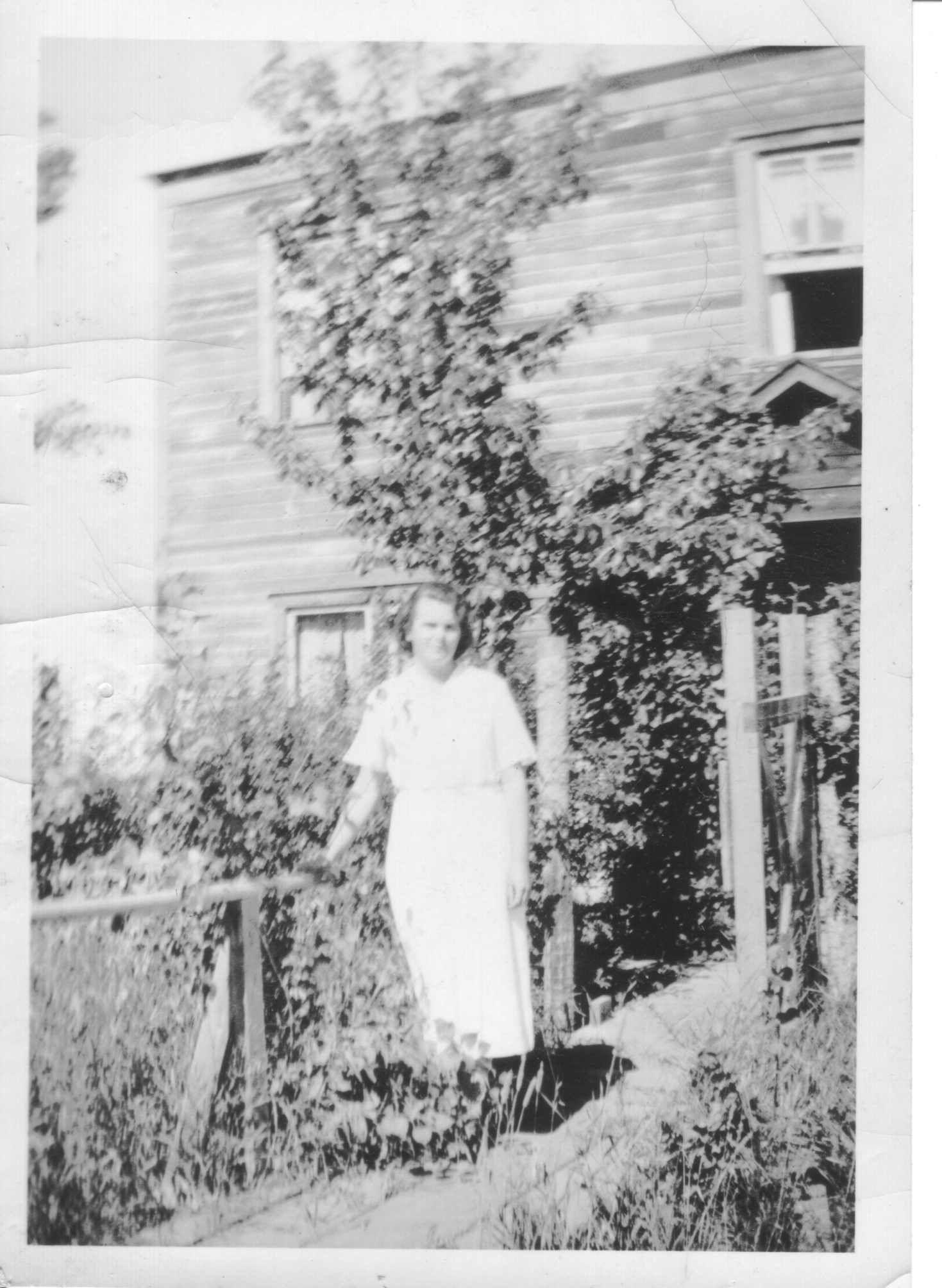
Edith in front of the Chinn farmhouse, Westlock, Alberta, 1930s
Edith in front of the farmhouse – the inspiration for Sweet Briar Farm.
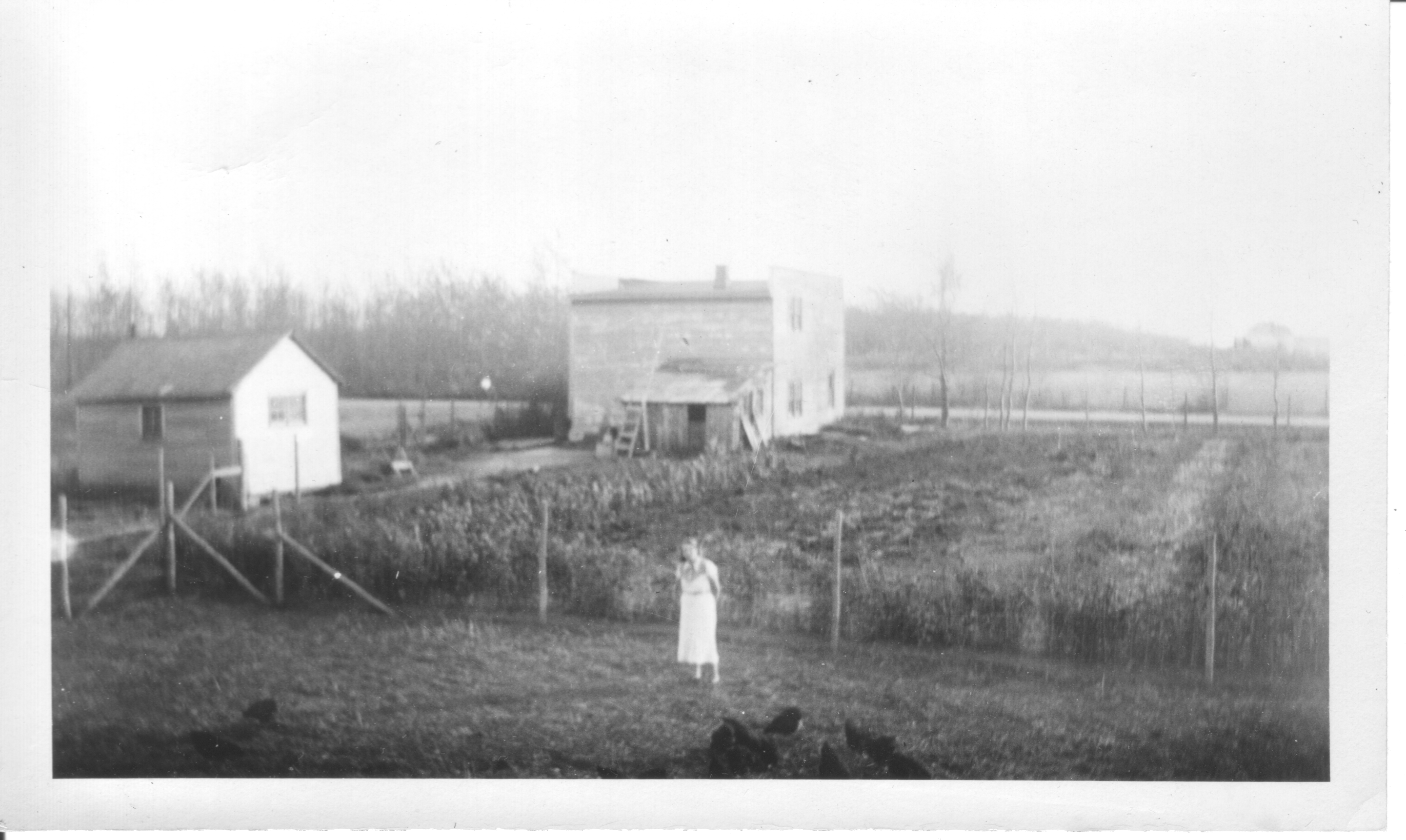
As it turned out, my auctioneer grandfather from Nuneaton, England was no wheat farmer. In 1935, after 14 years of struggle, the bank foreclosed on the farm and they lost everything. They moved into a small shack by the railway which my grandfather called the Chicken Coop, and managed to scrape out an existence until my grandmother had squirreled away enough money for them to move to Victoria, British Columbia where she ran a boarding house with my aunt; my father became an apprentice butcher; and my grandfather gardened and joined the local veteran’s association. In 1939, both my aunt and father enlisted – Aunt Betty as a nurse and my father in the Royal Canadian Air Force – and their lives changed forever.
The “Chicken Coop”, Westlock, Alberta, 1935.
I wanted to explore the experiences and resilience of people like my grandfather’s family trying to eke out a living on farms in North America during the Dust Bowl years of the 1930s, so I placed eldest Fry sister Celie, her war veteran husband Frank, and their young daughter Lulu on Sweet Briar Farm in the fictional West Lake, Alberta, which was very much inspired by family stories and photos.
Wow, thank you for sharing such a fabulous post. The photos are fabulous.
Here’s the blurb
One war may be over, but their fight for survival continues…
For sisters Etta, Jessie and Celie Fry, the Great War and the hardships of the years that followed have taken a heavy toll.
Determined to leave her painful past behind her, Etta heads to the bright lights of Hollywood whilst Jessie, determined to train as a doctor and use her skills to help others, is hampered by the men who dominate her profession. On the vast, empty plains of the Canadian prairies, Celie and her small family stand on the brink of losing everything.
As whispers of a new war make their way to each sister, each must face the possibility of the unthinkable happening again…
Adrienne Chinn was born in Grand Falls, Newfoundland, grew up in Quebec, and eventually made her way to London, England after a career as a journalist. In England she worked as a TV and film researcher before embarking on a career as an interior designer, lecturer, and writer. When not up a ladder or at the computer writing, she often can be found rummaging through flea markets or haggling in the Marrakech souk. Her second novel, The English Wife — a timeslip story set in World War II England and contemporary Newfoundland — was published in June 2020 and has become an international bestseller. Her debut novel, The Lost Letter, was published by Avon Books UK in 2019. Love in a Time of War, the first in a series of four books in The Three Fry Sisters series, was published in February 2022. The second in the series, The ParisSister, was published in February 2023, and the third book in the series, In the Shadow of War, was published in March 2024.
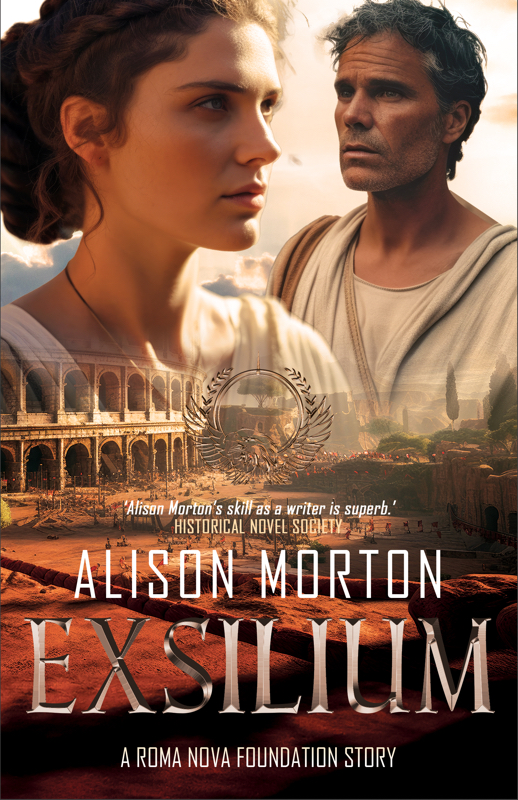
I’m delighted to welcome Alison Morton and her new book, EXSILIUM, part of the Roma Nova series, to the blog with a guest post.
Guest Post
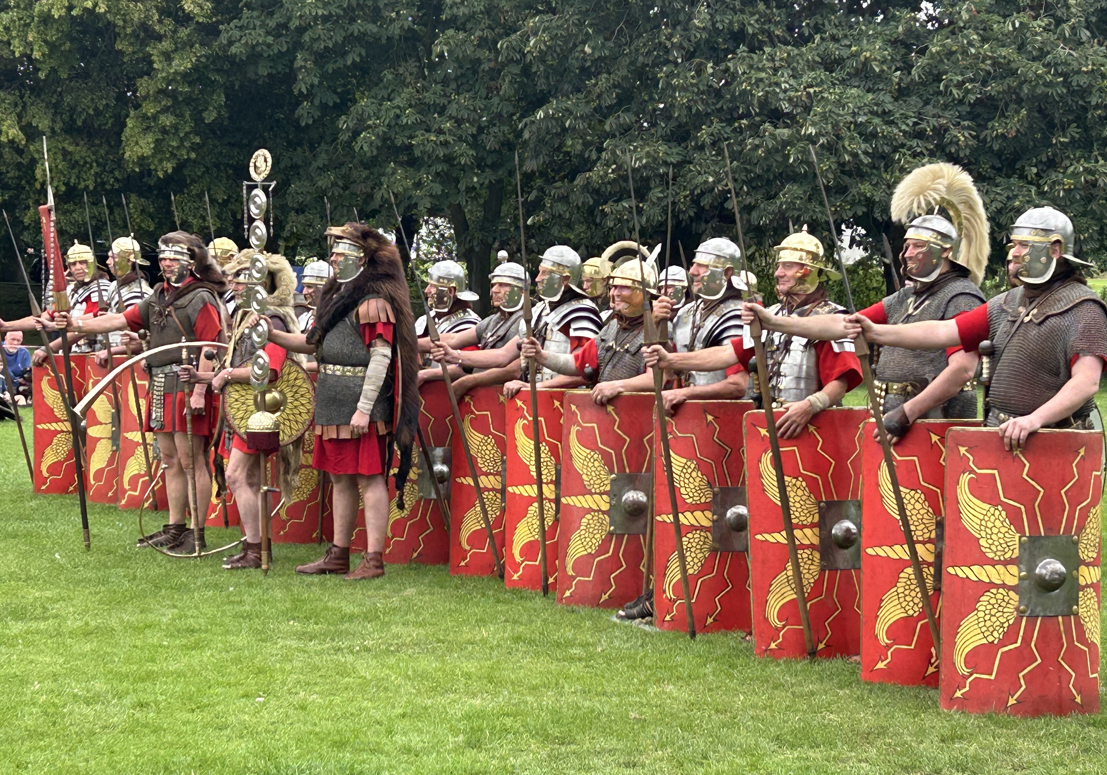
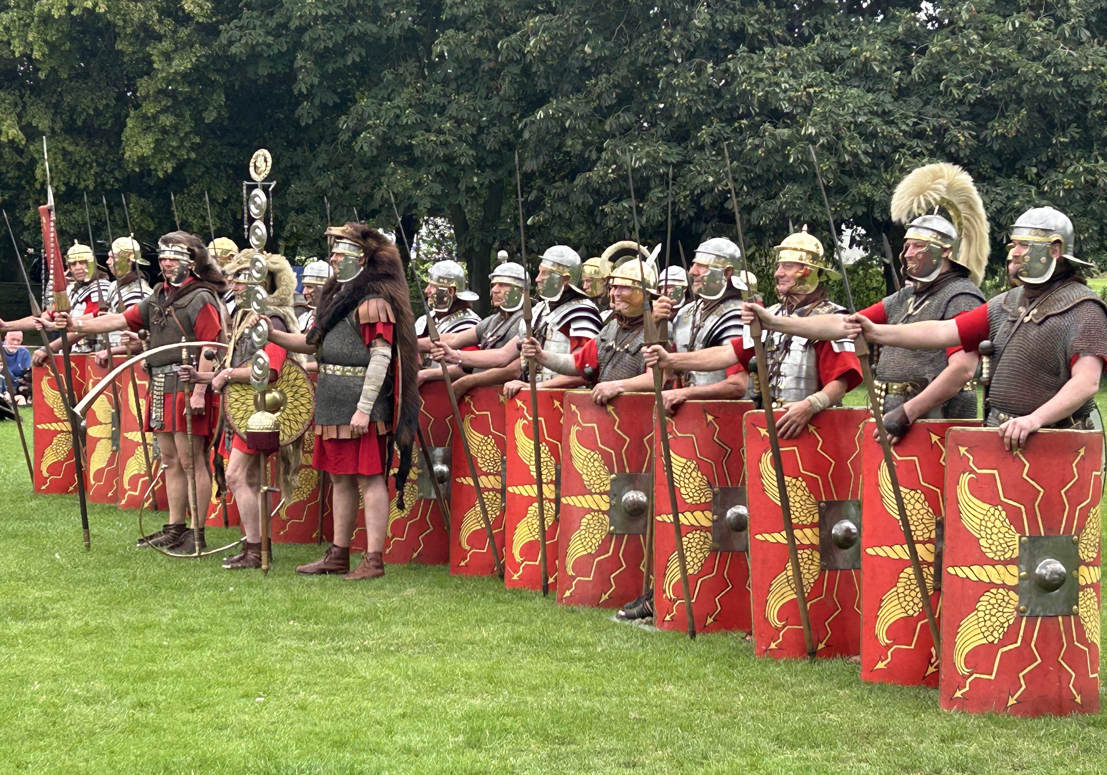
When we think of Romans, two images immediately spring to mind. The first is a fierce helmeted solder wearing iron bands of segmented armour across his torso over a red tunic that only just covers his knees and with hobnail marching boots on his feet. He carries a spear, gladius ad dagger as weapons and a large rectangular shield which he uses in clever formations with his comrades.
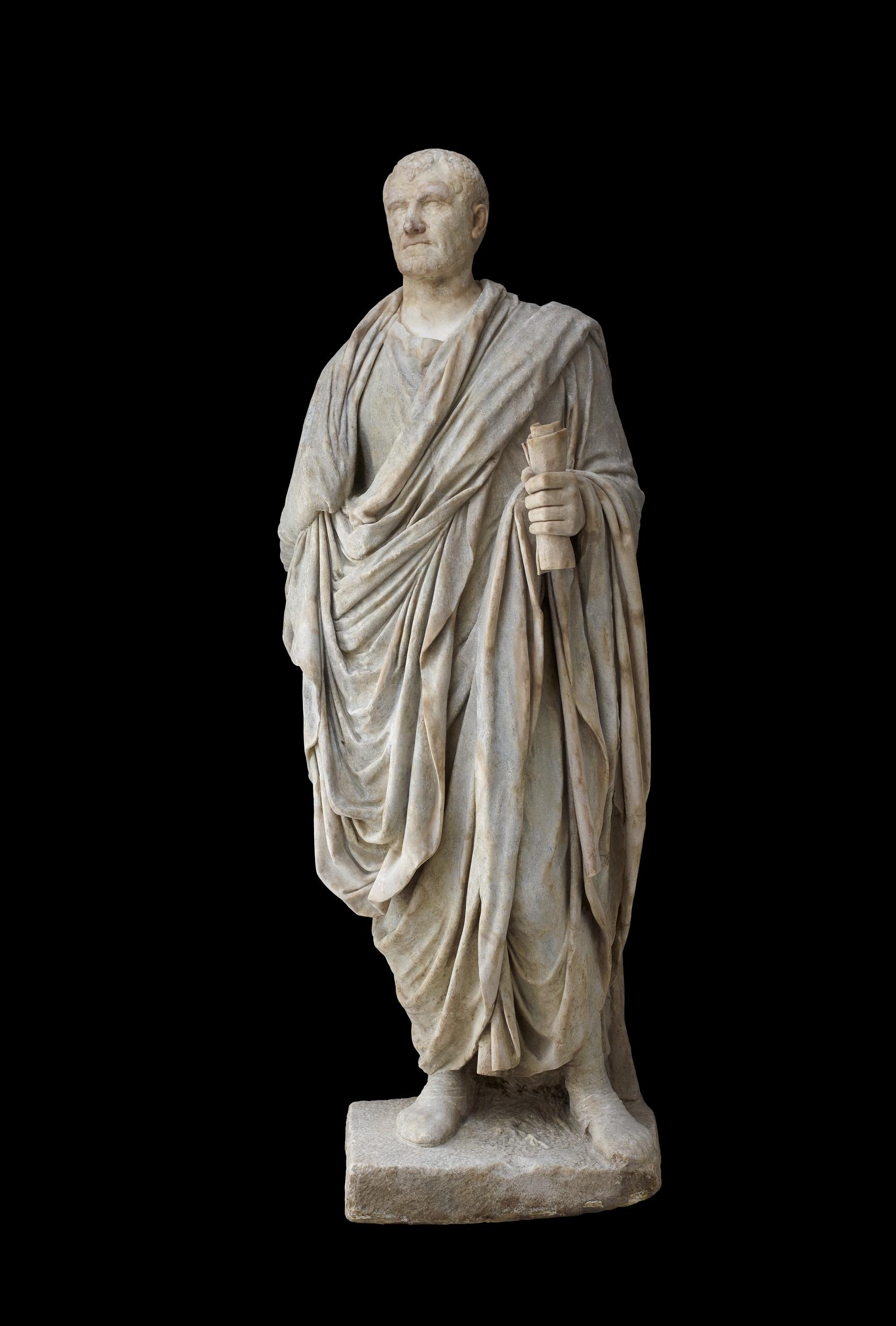
The second is a man draped in a splendid toga making a clever speech in the Senate. His ‘womenfolk’ would be demurely dressed in tunic and mantle, often accompanied by a slave in a simple tunic.
Well, yes and no.
Let’s look at the military
The earliest proven use of this segmented armour is in 9 BC with a suggestion of possibly as early as 53 BC; the latest in the last quarter of the third century AD. In some later depictions, such as on the Arch of Constantine (AD 315), segmented armour is seen, but scholars seem to think it was more for ceremonial show rather than reflecting what was used at the time by soldiers in the field.
Rome had become a republic in 509 BC after throwing out its kings who had – according to legend – reigned for two hundred and fifty years before that. So for the first seven centuries of its history, there was no ‘typically Roman’ segmented armour. The very early republican soldiers would probably have worn bronze helmets, breastplate and greaves and carried a round leather or large circular bronze-plated wooden shield, and fought with a spear, sword and dagger.
According to the ancient Greek historian Polybius, whose Histories written around the 140s BC are the earliest substantial account still existing of the Republic, Roman cavalry was originally unarmoured; the soldiers only wore a tunic and were armed with a light spear and ox-hide shield which were of low quality and quickly deteriorated in action.
In contrast to the lorica segmentata beloved by Hollywood, the more pedestrian and expensive chain mail (lorica hamata) was in use for over 600 years (3rd century BC to 4th century AD) and scale armour (lorica squamata) during the Roman Republic and in later periods. The latter was made from small metal scales sewn to a fabric backing and is typically seen on depictions of signiferes (standard bearers), centurions, cavalry troops, and auxiliary infantry, as well as ordinary legionaries. On occasion, even the emperor would be depicted wearing the lorica squamata. It’s not known exactly when the Romans adopted this type of armour, but it remained in use for about eight centuries.
Fast forward to the fourth century… In contrast to the earlier segmentata plate armour, which afforded no protection for the arms or below the hips, some pictorial and sculptural representations of Late Roman soldiers show mail or scale armour giving more extensive protection. These types of armour had full-length sleeves and were long enough to protect the thighs and other essential parts of the body(!).
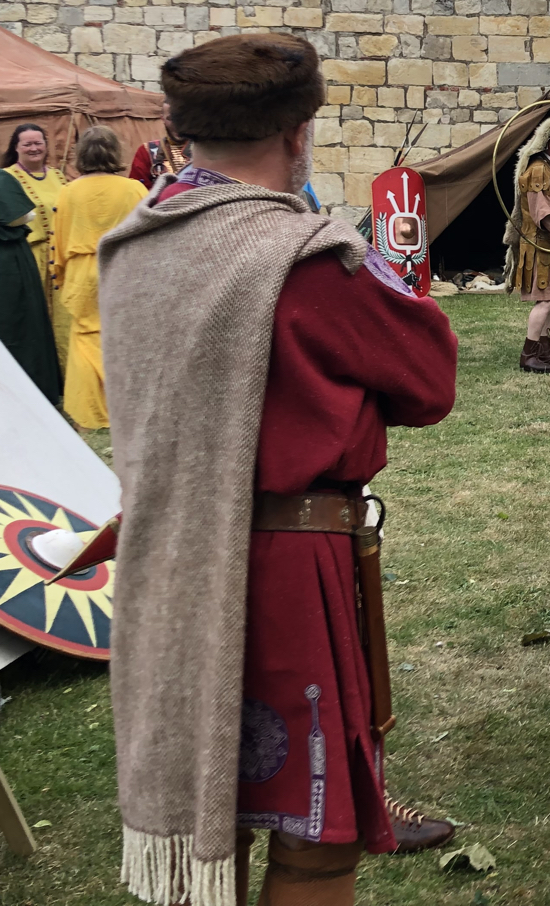
In northern Europe, long-sleeved tunics, trousers (bracae), socks (worn inside the caligae) and laced boots had been commonly worn in winter from the 1st century onwards. During the 3rd century, these became much more widespread, with the alternative of leggings, even in Mediterranean provinces also. By the late fourth century, both were standard wear. Apart from more colourful and decorated clothing generally, a distinctive part of a soldier’s fourth century costume was a type of round, brimless hat known as the pannonian cap (pileus pannonicus).
All change for civilian men
In the Republican and early imperial periods, Roman men typically wore short-sleeved or sleeveless, knee-length tunics. On formal occasions, adult male citizens could wear a woollen toga draped over their tunic. But from at least the late Republic onward, the upper classes favoured ever longer and larger togas, increasingly unsuited to manual work or physically active leisure. Togas were expensive, heavy, hot and sweaty, hard to keep clean, costly to launder and challenging to wear correctly. They were best suited to stately processions, oratory, sitting in the theatre or circus, and self-display among peers and inferiors. The vast majority of citizens had to work for a living, and avoided wearing the toga whenever possible. Several emperors tried to compel its use as the public dress of true Romanitas but none were particularly successful. The aristocracy clung to it as a mark of their prestige, but eventually abandoned it for the more comfortable and practical pallium.
By the end of the fourth century, clothing looked radically different and didn’t conform to our idea of ‘typically Roman’. In such a diverse empire, the adoption of provincial fashions perceived was viewed as attractively exotic, or simply more practical than traditional Italian Roman forms of dress. Clothing worn by soldiers and non-military government bureaucrats became highly decorated, with woven or embellished strips, clavi, and circular roundels, orbiculi, added to tunics and cloaks. These decorative elements usually comprised geometrical patterns and stylised plant motifs, but could include human or animal figures. The use of silk also increased steadily and most courtiers in late antiquity wore elaborate silk robes. Court officials as well as soldiers wore heavy military-style belts, revealing the increased militarisation of late Roman government. Trousers and leggings – considered barbarous garments worn by Germans and Persians – became more more common for civilian men in the latter days of the empire, although regarded by conservatives as a sign of cultural decay.
The toga, traditionally seen as the sign of a proper Roman, had never in reality been popular or practical. Most likely, its replacement in the East by the more comfortable pallium or paenula (a wool cloak) was a simple acknowledgement that the toga was generally no longer worn. However, it remained the official formal costume of the Roman senatorial elite. A law issued by co-emperors Gratian, Valentinian II and Theodosius I in 382 AD stated that while senators in the city of Rome may wear the paenula in daily life, they must wear the toga when attending their official duties. Failure to do so would result in the senator being stripped of rank and authority, and of the right to enter the Senate House. But it’s worth noting that in early medieval Europe, kings and aristocrats who dressed like the late Roman generals they sought to emulate, did not display themselves draped in togas.
And the women?
In early Republican Rome, both men and women wore togas but in mid-Republican times, the toga became a male-only garment. Only prostitutes wore a toga as a sign of their ‘infamy’. Typically, women and girls wore a longer, usually sleeved tunic for and married citizen women wore a mantle, usually wool, known as a palla, over a stola, a simple, long-sleeved, voluminous garment fastened at the shoulders that fell to cover the feet. In the early Roman Republic, the stola was reserved for patrician, i.e. aristocratic women as a sign of their status. Shortly before the Second Punic War (218-201 BC), the right to wear it was extended to plebeian matrons, and to freedwomen who had acquired the status of matron through marriage to a citizen.
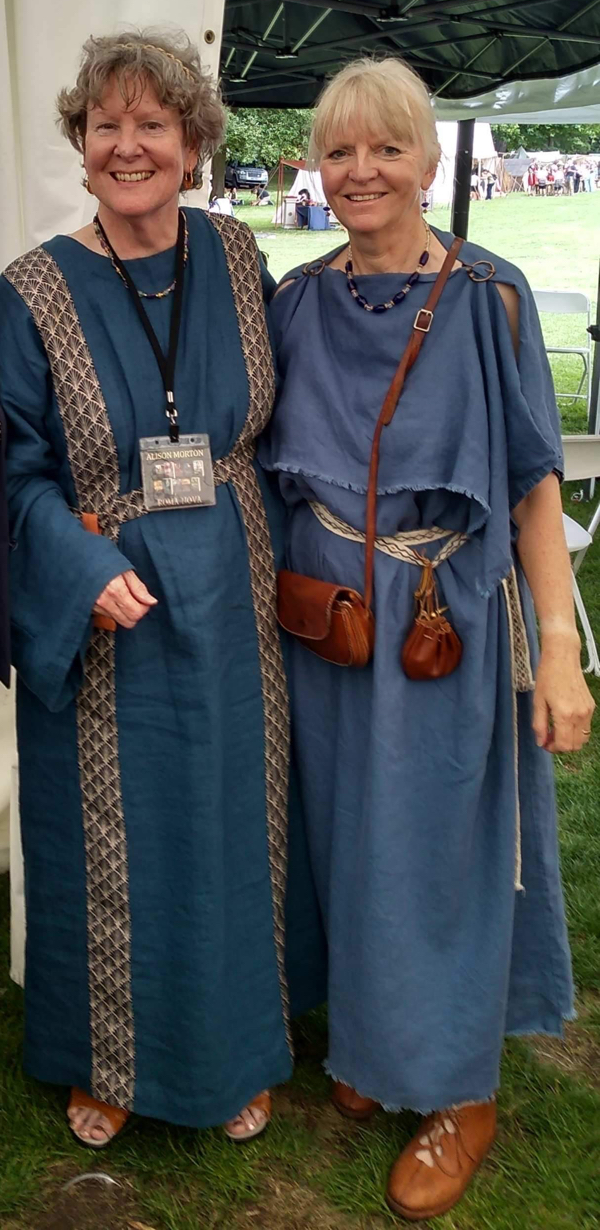
But things had changed dramatically by the end of the fourth century. Women of that time wore belted long tunics decorated with full-length contrasting stripes – clavi – and braiding, with generous sleeves and, in cooler climates, narrow-sleeved underdresses. That Late Roman tunic, or dalmatica, was a generously cut T-shaped tunic with a slit neck, typically falling in (hopefully) graceful folds. Sleeves could be short, three-quarter or long and rectangular, which could be fairly narrow or quite wide. Wide sleeves were sometimes tied back, presumably for work, giving a butterfly’s wing effect.
The belt, worn under the bust, was often just a tied cord, or could be of plain or decoratively woven cloth and could have a central jewel, perhaps a brooch. As weather protection and ornament, ladies would, like their Republican predecessors, wear various sizes of mantle (palla or the smaller palliola), a rectangular piece of material cast elegantly over the shoulder like a scarf or draped around the body.
Some literature suggests both traditional pagan and Christian respectable ladies would cover their hair in the street but this was not universal.
Ladies would prefer mantles for travel rather than sagum style cloaks, but rural women and athletes were known to wear practical gear for weather protection and presumably camp followers might wear spare military cloaks. The expensive birrus britannicus, mentioned in Diocletian’s edict on maximum prices, was probably a heavy, long semi-circular hooded cape with front opening.
Clothing depended on the wearer’s wealth or poverty, their social status, on the ability to find or make fabric and on personal preference. Sometimes you took what was given when cast off by an older sibling. But over twelve centuries, while some things like tunics performed the same function, how Romans looked changed much more than we might imagine.
Here’s the Blurb
Exile – Living death to a Roman
AD 395. In a Christian Roman Empire, the penalty for holding true to the traditional gods is execution.
Maelia Mitela, her dead husband condemned as a pagan traitor, leaving her on the brink of ruin, grieves for her son lost to the Christians and is fearful of committing to another man.
Lucius Apulius, ex-military tribune, faithful to the old gods and fixed on his memories of his wife Julia’s homeland of Noricum, will risk everything to protect his children’s future.
Galla Apulia, loyal to her father and only too aware of not being the desired son, is desperate to escape Rome after the humiliation of betrayal by her feckless husband.
For all of them, the only way to survive is exile.
Alison Morton writes award-winning thrillers featuring tough but compassionate heroines. Her ten-book Roma Nova series is set in an imaginary European country where a remnant of the Roman Empire has survived into the 21st century and is ruled by women who face conspiracy, revolution and heartache but use a sharp line in dialogue. The latest, EXSILIUM, plunges us back to the late 4th century, to the very foundation of Roma Nova.
She blends her fascination for Ancient Rome with six years’ military service and a life of reading crime, historical and thriller fiction. On the way, she collected a BA in modern languages and an MA in history.
Alison now lives in Poitou in France, the home of Mélisende, the heroine of her two contemporary thrillers, Double Identity and Double Pursuit.
A GLORIOUS SHERLOCK HOLMES-INSPIRED MYSTERY FOR FANS OF NITA PROSE AND JANICE HALLETT
London, 1932.
When Harriet White rebuffs the advances of her boss at the Baker Street building society where she works, she finds herself demoted to a new position… a very unusual position. Deep in the postal department beneath the bank, she is tasked with working her way through a mountain of correspondence addressed to Baker Street’s most famous resident: Mr Sherlock Holmes.
Seemingly undeterred by the fact that Sherlock Holmes doesn’t exist, letter after letter arrives, beseeching him to help solve mysteries, and Harry diligently replies to each writer with the same response: Mr Holmes has retired from detective work and now lives in Sussex, keeping bees.
Until one entreaty catches her eye. It’s from a village around five miles from Harry’s family estate, about a young woman who went to London to work as a domestic, then disappeared soon afterwards in strange circumstances. Intrigued, Harry decides, just this once, to take matters into her own hands.
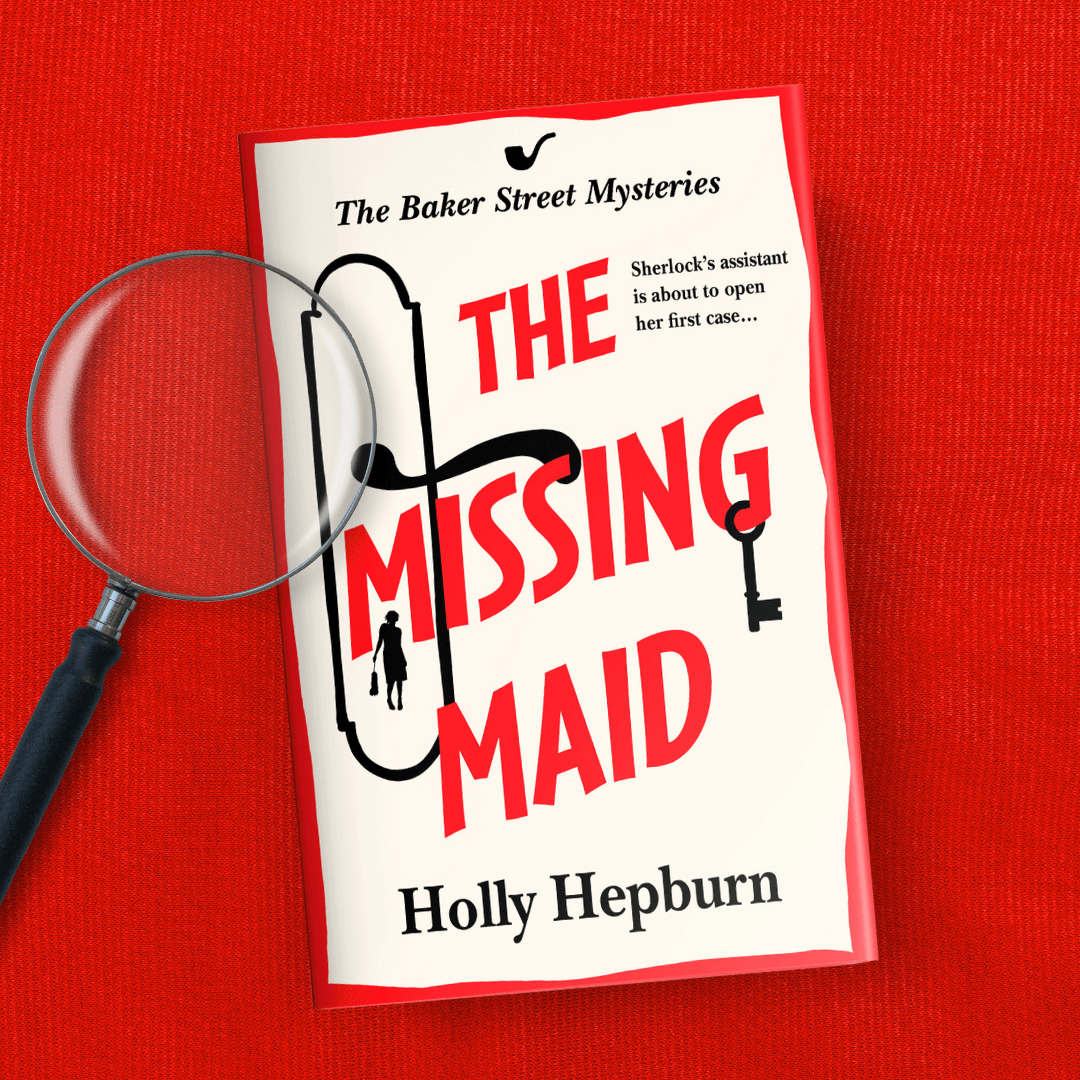
The Missing Maid by Holly Hepburn is a cosy crime with a rather delightful premise involving 221B Baker Street and Sherlock Holmes.
When our heroine finds herself somewhat unceremoniously ejected from her plush office in the bank, she’s somewhat wary of being redirected to the post room, but once there, she discovers her job is, if anything, somewhat tedious. However, as she types standard replies to the requests asking Sherlock Holmes to resolve problems for those writing to him, she finds herself struck by one of the requests. She is determined to do all she can to help the family while pretending to be Mr Holmes’ secretary.
The mystery leads her to some rather dodgy places in 1930s London, and she gets involved with some rather shady characters as well. She also discovers that the talent for solving crimes is not as easy as she might have hoped.
Harriet, or Harry as she’s called throughout the book, is a fun character with the fiery determination to be expected from a well-to-do young lady trying to make her way in the world in the 1930s when most seem to think all she should do is settle down and marry someone who can keep her in the way she’s accustomed. And that includes her mother.
Her wealthy background both opens doors and precludes her from gaining entry to everywhere she might wish to go. She also has to rely on a family friend for legal advice. This feels quite true to the period.
The mystery’s resolution is well constructed, and I particularly liked that it’s not ‘easy’ for Harry to solve the crime. It takes determination and acknowledging that she can’t do everything herself.
A delightful, cosy crime sure to appeal to fans of Sherlock Holmes and Golden-era crime novels.
Meet the author
Holly Hepburn has wanted to write books for as long she can remember but she was too scared to try. One day she decided to be brave and dipped a toe into the bubble bath of romantic fiction with her first novella, Cupidity, and she’s never looked back. She often tries to be funny to be funny, except for when faced with traffic wardens and border control staff. Her favourite things are making people smile and Aidan Turner.
She’s tried many jobs over the years, from barmaid to market researcher and she even had a brief flirtation with modelling. These days she is mostly found writing.
She lives near London with her grey tabby cat, Portia. They both have an unhealthy obsession with Marmite.
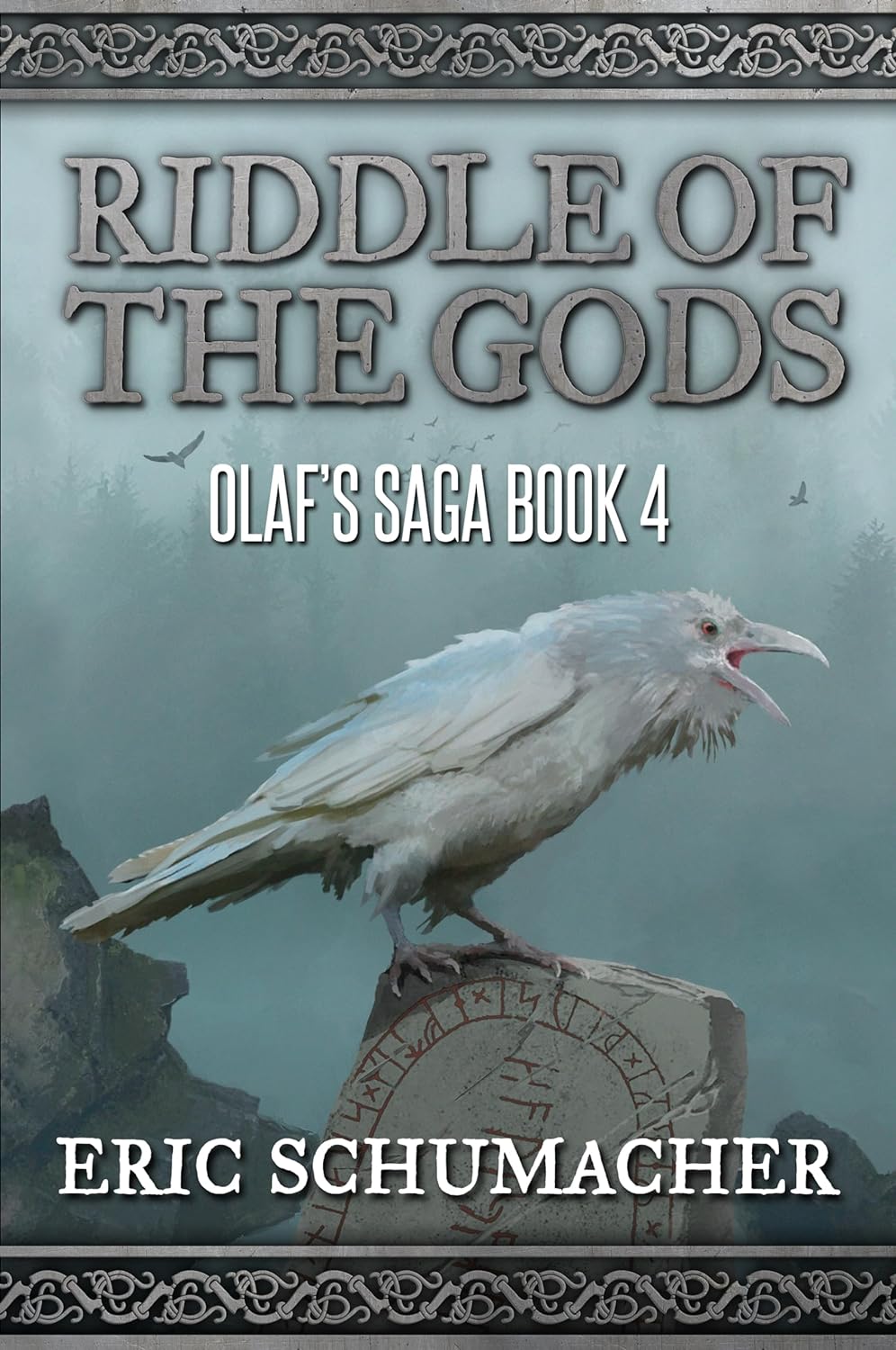
Riddle of the Gods is the riveting fourth novel in the best-selling series chronicling the life and adventures of one of Norway’s most controversial kings, Olaf Tryggvason.
It is AD 976. Olaf Tryggvason, the renegade prince of Norway, has lost his beloved wife to a tragedy that turns the lords of the land he rules against him. With his family gone and his future uncertain, Olaf leaves his realm and embarks on a decades-long quest to discover his course in life.
Though his journey brings him power and wealth, it is not until he encounters the strange man in the streets of Dublin that his path to fame unfolds. And in that moment, he is forced to make a choice as the gods look on – a choice that could, at worst, destroy him and at best, ensure his name lives on forever.
Riddle of the Gods is the fourth book in the Olaf’s Saga series of novels detailing the life of the famous Olaf Tryggvason (the man whose name I can never spell correctly). Riddle of the Gods begins in Wagaria, where Olaf is married and expecting his first child, only for tragedy to strike. Deciding to jump ship rather than being forced out, Olaf leaves Wagaria and determines to change his future by taking up raiding.
Fast forward about six years, and Olaf and his warriors arrive in Ireland to continue their pursuit of wealth. While we hear little of Olaf’s life for the preceding six years, our narrator, Torgil, offers some insights into just how they’ve been growing their wealth. With it, we begin to realise that Olaf is perhaps not the hero we might expect him to be, taking part in enslaving people who fall foul of his blades, even though he was once enslaved himself.
Torgil is our narrator for Olaf’s tale, having once sworn an oath to Olaf’s father to protect a man he considers as his friend. But this friendship is tested as Olaf casts aside any belief that stands in his way of growing wealthy and powerful, and earning himself an enemy in the form of Torgil.
While Torgil returns to Dublin on Olaf’s remarriage, seemingly cast out by his powerful friend, Olaf continues to grow richer and more influential in northern England, although we only hear about this from Torgil’s old ship brothers. Olaf, it transpires, has no problem being less than honest with his fellow warriors, casting Torgil as a traitor when he’s not. The book’s final act follows Torgil as he understands just how far Olaf has fallen in his estimations but also how Olaf isn’t the only one to have put ambition above all else. There will be more to follow in continuing books.
Torgil is an engaging character, and his part in Olaf’s tale is that of an honourable friend pushed to the limits of his endurance. While the two don’t meet again in the final act of the book, it’s to be assumed that they will once more come into conflict with one another in subsequent stories. Olaf himself is a slippery character – knowing full well what lies in Olaf’s future – it’s intriguing to encounter him as a younger warrior, hellbent on achieving as much as he can no matter what.
Riddle of the Gods is sure to appeal to readers of the era and genre—and yes, it might be book 4 in a series—but like me, readers could pick up the tale here quite easily. It is an engaging and confident story that takes the reader from Wagaria to Norway to Ireland and England at the advent of the Second Viking Age.
Eric Schumacher discovered his love for writing and medieval European history at a very early age, as well as authors like J.R.R. Tolkien, C.S. Lewis, Bernard Cornwell, Jack Whyte, and Wilbur Smith. Those discoveries fueled his imagination and continue to influence the stories he tells. His first novel, God’s Hammer, was published in 2005.
At the edge of the world, the clouds of war are gathering…
1034AD
Cast out from the Kyivan Rus, Harald Sigurdsson’s quest for fame and fortune takes him to the far reaches of Europe; the lands of the Eastern Roman empire.
The empire is dying the slow death of decay and corruption. In desperation to fend off a myriad of foes, the emperor turns to the legendary Varangian guard for salvation. These deadly warriors from the far north, famed for their fearsome steel and battle skill, have become the empire’s greatest protectors.
From the golden gate of Constantinople to the holy waters of the river Jordan, Harald will march with the emperor’s finest. Joining their ranks promises him all the gold and glory he can desire, if only he can survive the desperate battles, the hostile land, and the ruthless ambition of a vengeful queen.
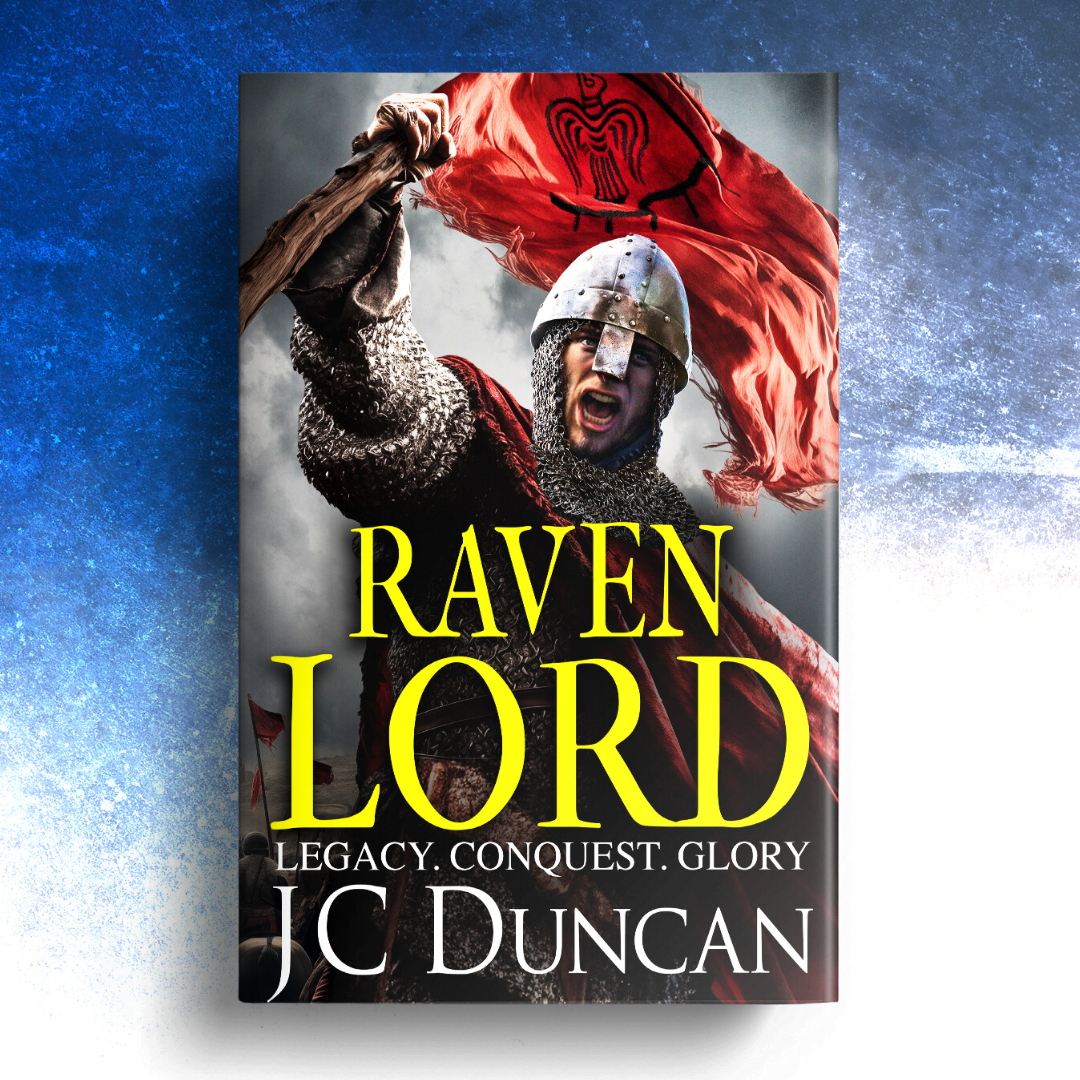
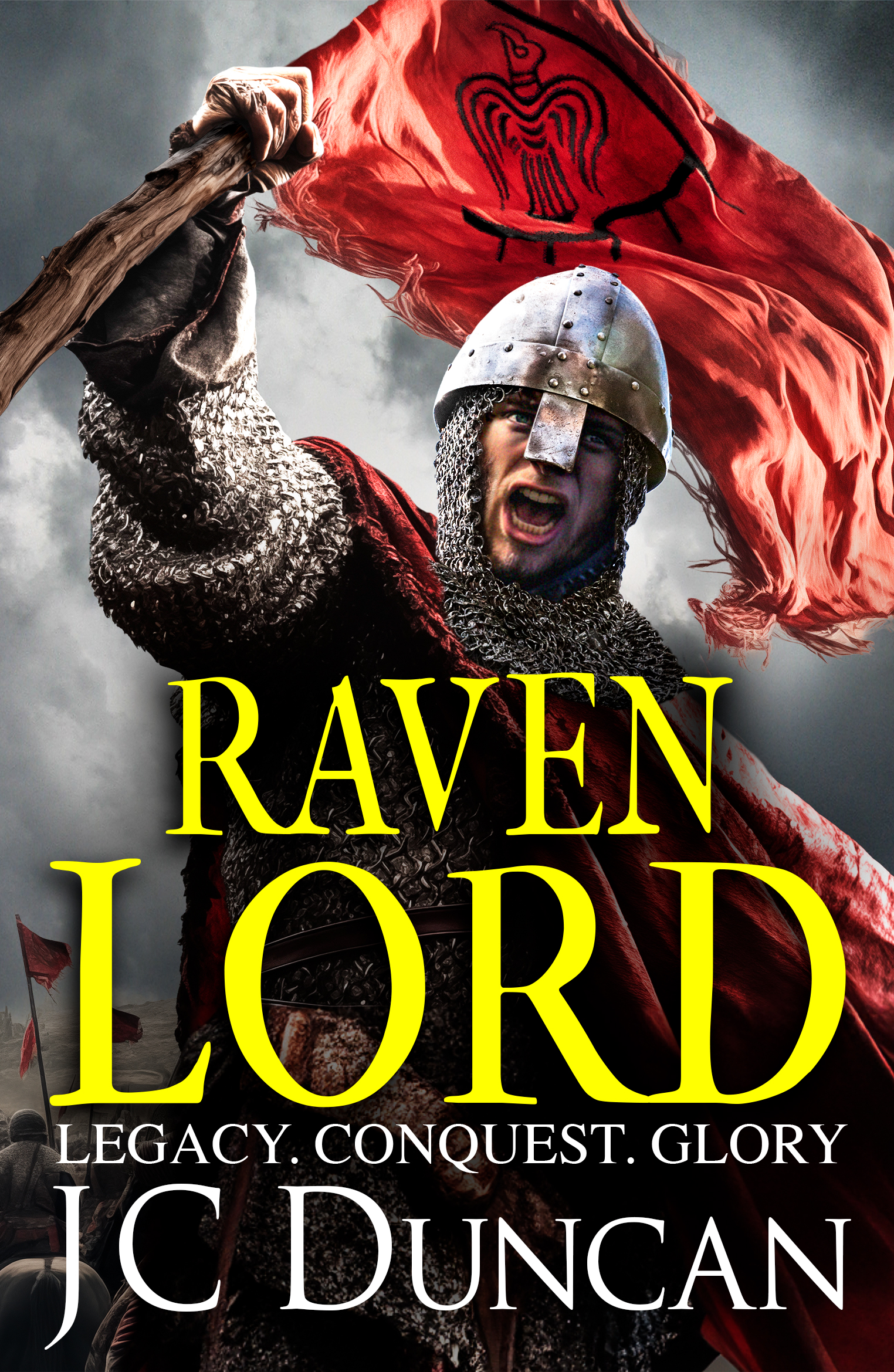
Raven Lord is book two in JC Duncan’s epic retelling of Harald Hardrada’s life. I have read book 1.
Harald has found his way to Constantinople with his band of brothers. Now he must learn the ways of politics, elevated to a whole new art in the Eastern Roman Empire, where the new emperor, Michael, and his wife, Zoe, the empress, are a far cry from allies working together to protect their vast empire. And Harald, a man more at home with a blade to hand, must discover how he and his men can not only survive but thrive in this new environment.
Raven Lord is a thrilling tale that takes readers from Constantinople to Edessa and then Jerusalem in the 1030s. It is narrated by Harald’s trusty friend, Eric, who regales his audience with tales of daring deeds as well as his own failures and faults. As Harald’s friend, Eric is often marginalised in the story of Harald’s life, but in recounting the story to a new audience, he achieves something different. I very much enjoyed this minor but important element of the story. I think we can all see where Eric’s leaning!
Harald, still as arrogant and hard-hearted as in book 1, is also shown to be a man with a weakness for a certain woman, and this facet of the story is also very well crafted. For all his battle prowess and willingness to speak his mind and to hell with the consequences, he still has his foibles.
A fabulously entertaining and well-paced tale. A real delight. It is sure to appeal to fans of the genre.
James has a 5 book historical fiction series ‘The Last Viking’ about the extraordinary life of Harald Hardrada being published with Boldwood books starting with ‘Warrior Prince’. When he isn’t writing or doing his full-time engineering job, James is happiest being an amateur bladesmith, forging knives in the shed he built in his garden.
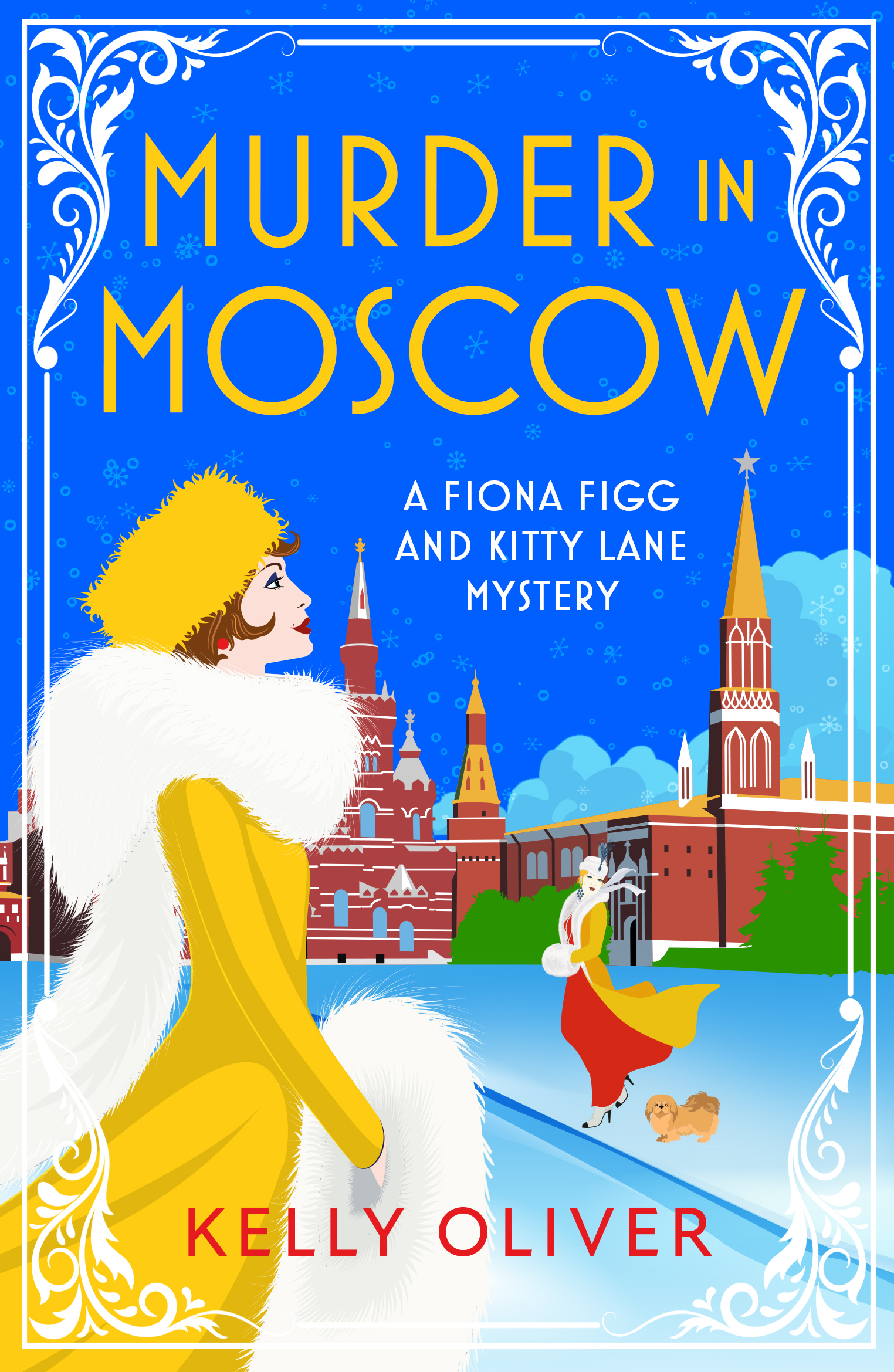
Journey into the heart of 20th Century Russia in this fun and funny historical mystery, perfect for fans of Verity Bright and Helena Dixon.
1918 Moscow
Will following her heart mean losing her head? It could mean losing her job.
Fiona Figg trails her nemesis Fredrick Fredricks to Moscow. But when she arrives at the grand Metropol Hotel, the bounder has vanished.
After Fiona doesn’t show up for work at the War Office, Kitty Lane raises a red flag and tracks her to Russia. Seeking haven at the British Embassy, Kitty and Fiona become embroiled in a plot to overthrow the Bolshevik government.
But the plot turns deadly when Fiona goes undercover as a governess in the household of Iron Viktor, the Bolsheviks’ Head of Secret Police. And when Viktor turns up dead in his study, Fiona finds herself wanted for murder and on the lam.
Can Fiona and Kitty find the real killer and escape the Kremlin before it’s too late? Or will this dangerous game of Russian roulette be their last?
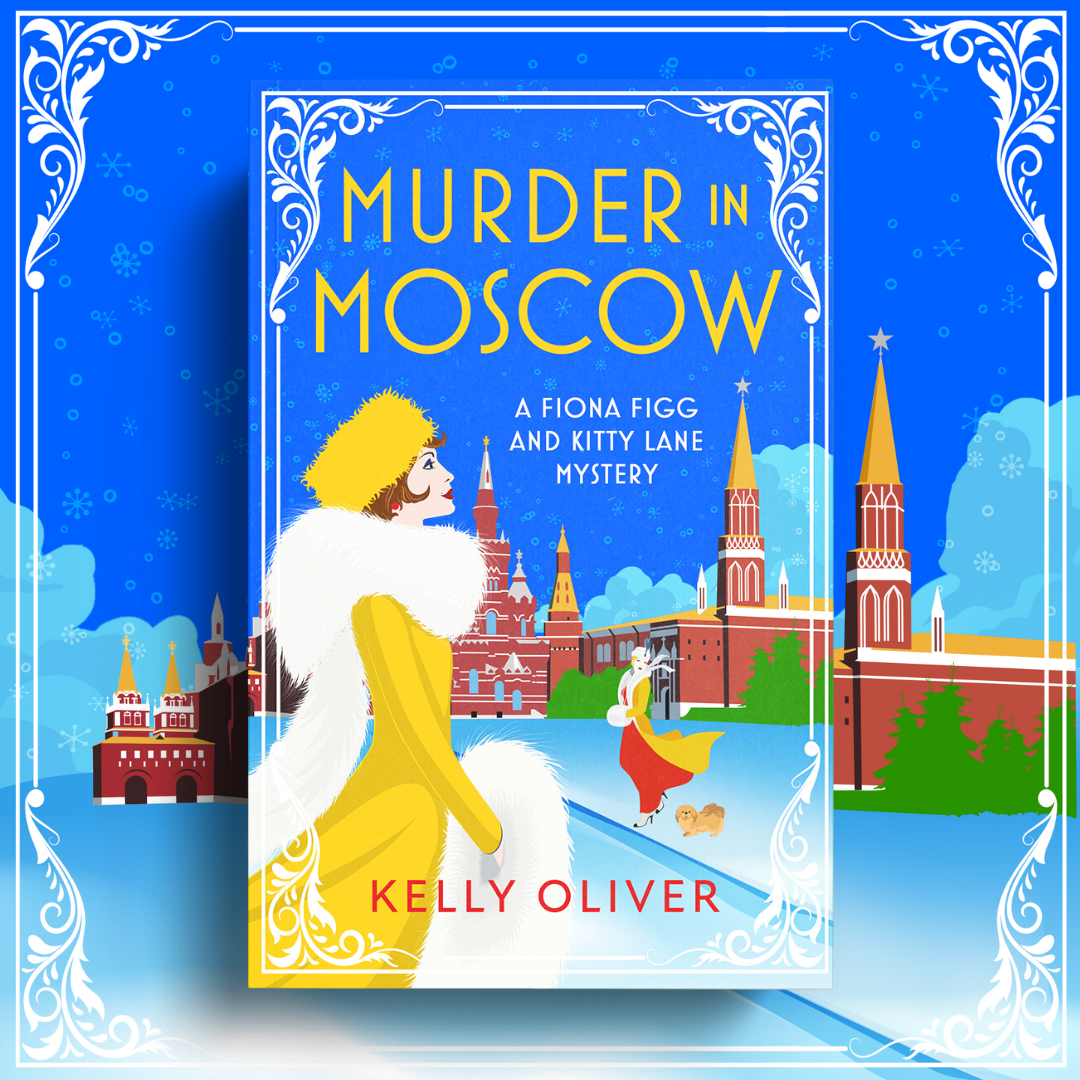
Murder in Moscow is the latest instalment in the Fiona Figg and Kitty Lane cosy historical mystery series.
We’ve been to Egypt, Italy, the UK and now we’re off to 1918 Moscow. What could possibly go wrong?
Everything, or so it seems. Kitty, following Frederick Fredericks to Moscow, find herself marooned in an freezing cold Moscow in March, and that’s just the beginning of her problems, as she faces arrest and all sorts of other problems in this fun addition to the series.
What I loved about this new book is that Kitty gets her own part in it. So far, (I think), the narratives have been from Fiona’s point of view. In Murder in Moscow, Kitty gets to have her say and we learn some intriguing information about her. And, as Kitty can speak Russian a whole lot better than Fiona, Fiona really needs her help.
With the Bolsheviks, the Cheka, and the terrible problems facing the Russian royal family, Moscow is rife with conspiracy. As ever, Fiona walks right into it, and not even her disguises can necessarily help her.
This is, as I said, a fun addition to the series, which is going from strength to strength. Fiona is a single-minded woman, hell bent on making a name for herself, and her overconfidence means she gets into some very tricky situations. Her ability to get out of these situations is one of the appealing qualities of the series, told with a pinch of humour.
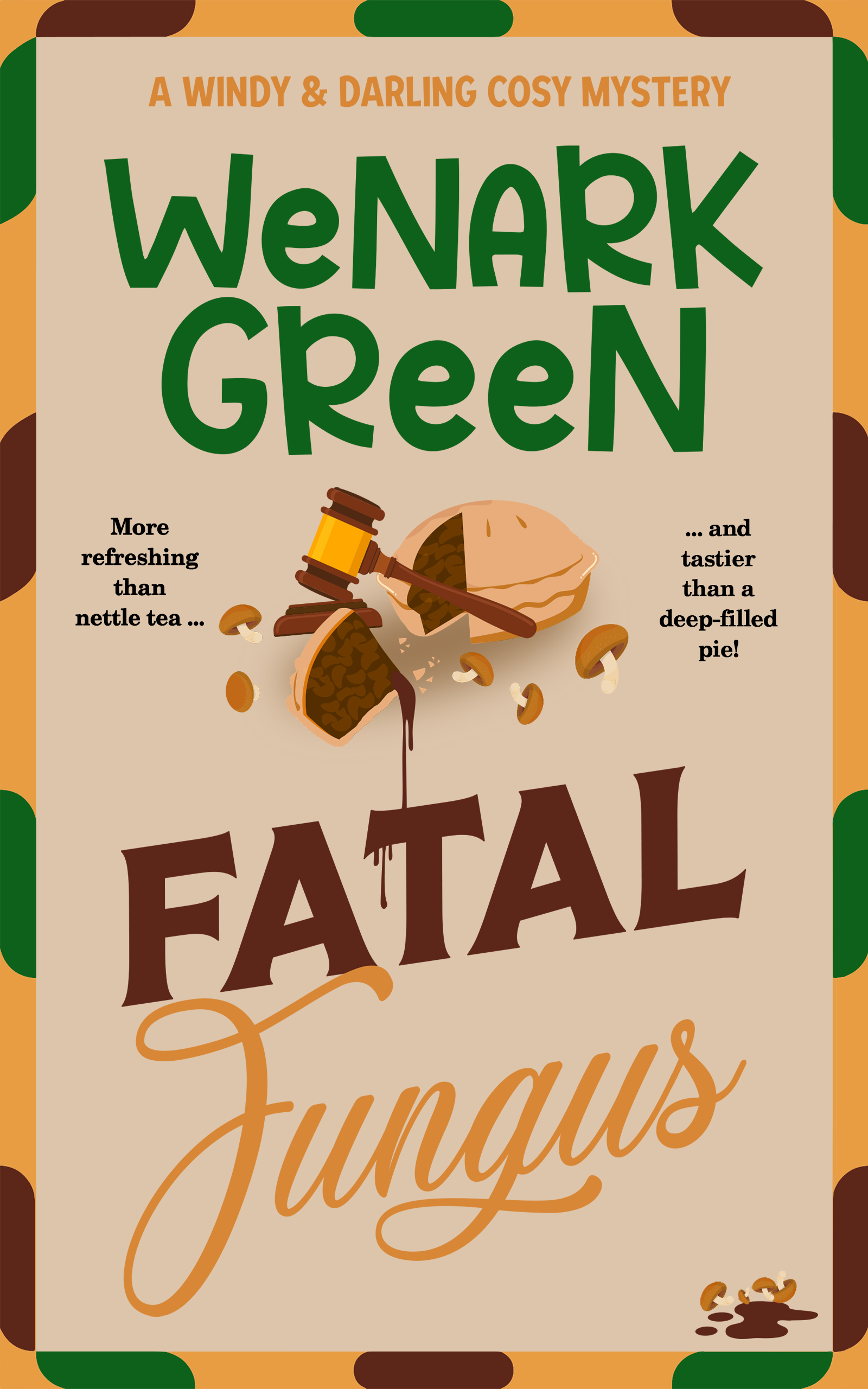
One great bake-off. Twelve golden pies. Two lovable, dogged amateur sleuths back in stride.
On a crisp, autumn evening, in quaint Bogus Hole, the village committee proposes a pie-and-buy charity auction to celebrate the first anniversary of Sycamore Medical Practice. Twelve bakes will make the coveted gingham table for a doctor-only bidding war, thus setting the scene for a memorable day.
The next week, when a doctor collapses at the annual Christmas fair and later dies, the gossip train rumbles with the burning question. Who baked a poisonous mushroom into their pie?
Team Awesome truffle hogs, Windy & Darling, are hot on the fatal fungus trail. Can our daring duo sniff out the killer of the not-so-fun guy?
Creativity’s a must for Scottish-raised, environmental science graduate Mark, who co-manages a self-publishing house, is formidable at book formatting, and writes cosy crime and sci-fi. He also makes music and fancies himself as a cartographer. A self-confessed geek, Mark’s hopelessly devoted to maps and roads, and his fondness for tree-hugging or pondering pylons takes whimsical to a new level. High on his priorities are reading, laughter, healthy food, and nature bathing. Mark adores animals, especially cats. Just ask Tahlula, his fussy old tuxedo puss.
Ironically, a cruel plot twist kick-started Wendy’s writing career. She’d always wanted to be an author but an MS diagnosis said no. Believing she’d never write again, Wendy swapped wallowing for blue sky thinking and, with drive and dedication, followed her vision by writing cosy mysteries and thrillers. Born in the original Washington, NE England, Wendy has a diverse CV. A serial word nerd, she’s now an erudite editor, and co-owns a self-publishing house, ensuring her lust for all things alphabetical and grammatical never wanes. She devours dictionaries, adding a prized new gem to her repertoire every day. When not nitpicking, mentoring, or critiquing, Wendy’s a sworn bookworm. Her other loves are music, cooking, yoga, and comedy. She’s a hat freak, animal qwackers, loves a good quiz, and is a devoted nature buff.
Deadly Dough is the couple’s feature-length debut.
I’m delighted to welcome back David Fitz-Gerald and his new book, Stay with the Wagons: A Pioneer Western Adventure, Ghosts Along the Oregon Trail, to the blog with a series trailer.
Series Trailer
Ghosts Along the Oregon Trail Series Trailer
Here’s the blurb
Venture deep into the uncharted wilderness and crest the continental divide.
Stay with the Wagons is the enthralling third chapter in the Ghosts Along the Oregon Trail series. Dorcas Moon has discarded her mourning dress and yearns for freedom and independence amidst the vast frontier. But a perilous world and a commanding wagon master keep her tethered. Ultimately, it’s a brutal bout of fever and ague that confine her to camp.
Relentless disasters and beguiling challenges unfold in this installment. A young man is crushed beneath a wagon wheel. Dorcas’ son breaks an arm, a grizzly bear attacks the wagon train, and the looming threat of attacking outlaws whips the emigrants into a worried frenzy. How many must perish before they reach the end of the trail?
As chaos reigns, her troubled daughter, Rose, disappears once again, leading Dorcas on a perilous quest. Tracking Rose to a sacred site, they encounter a blind seer and a legendary leader, Chief Washakie. Rose’s enchantment with Native American adornments sparks Dorcas’ concern about an unexpected suitor and raises worries about Rose’s age.
Stay with the Wagons is bursting with action, adventure, and survival. It is a story of resilience and empowerment on the Oregon Trail. Claim your copy now and re-immerse yourself in a tale of high-stakes survival, unexpected alliances, and the indomitable spirit of Dorcas Moon.
This title/series is available to read on#KindleUnlimited
Meet the Author
David Fitz-Gerald writes westerns and historical fiction. He is the author of twelve books, including the brand-new series, Ghosts Along the Oregon Trail set in 1850. Dave is a multiple Laramie Award, first place, best in category winner; a Blue Ribbon Chanticleerian; a member of Western Writers of America; and a member of the Historical Novel Society.
Alpine landscapes and flashy horses always catch Dave’s eye and turn his head. He is also an Adirondack 46-er, which means that he has hiked to the summit of the range’s highest peaks. As a mountaineer, he’s happiest at an elevation of over four thousand feet above sea level.
Dave is a lifelong fan of western fiction, landscapes, movies, and music. It should be no surprise that Dave delights in placing memorable characters on treacherous trails, mountain tops, and on the backs of wild horses.
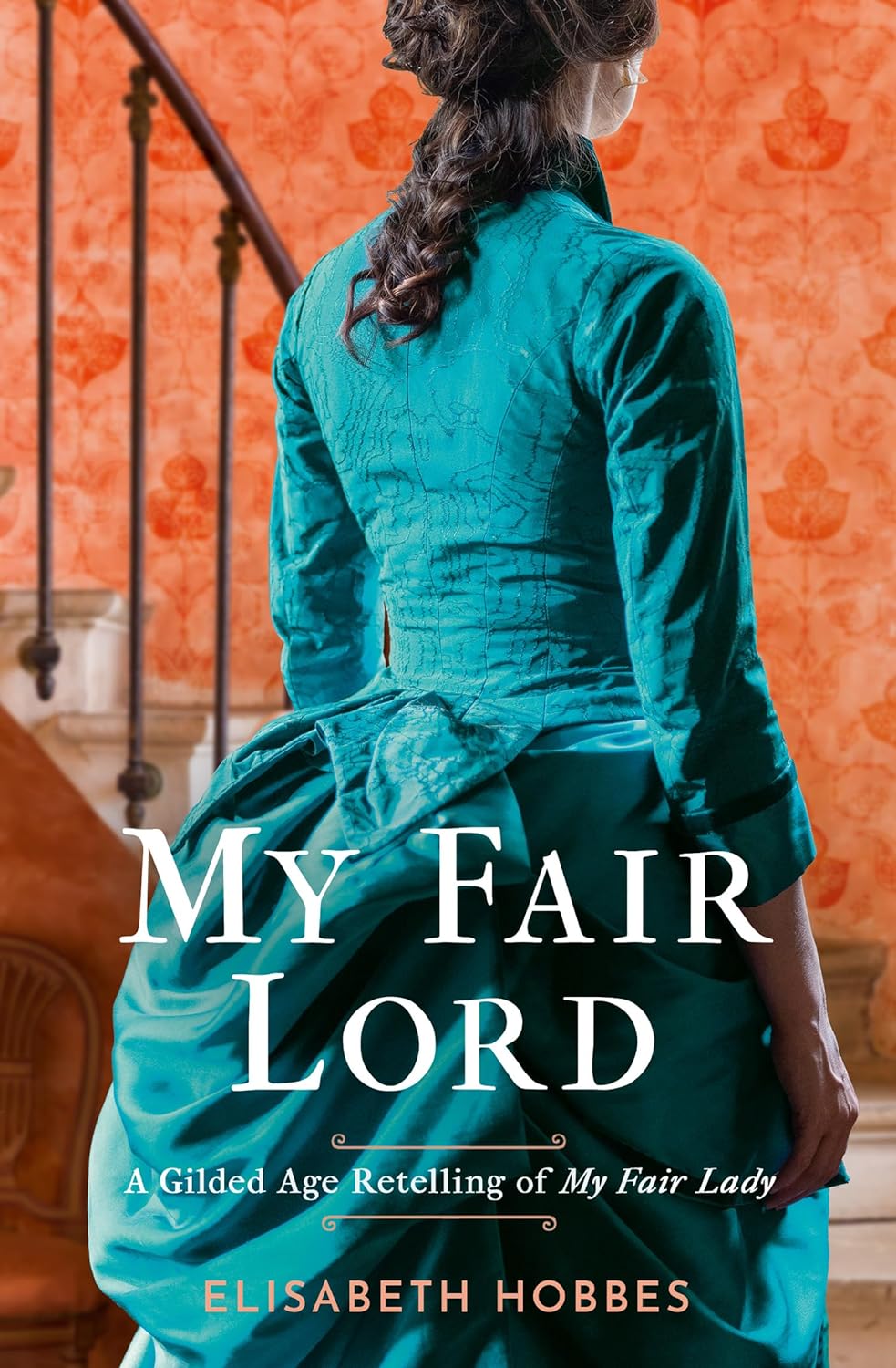
Arriving into English society from the drawing rooms of New York, Miss Florence Wakechild desires nothing less than the marriage her father is so desperately seeking for her. Clayton Wakechild desires nothing more than finding a suitable husband for his daughter – a husband of noble birth and title no less. No ‘new money’ here.
Frustrated with her father’s obsession with the British aristocracy, Florence comes up with a plan. If she can train an ordinary working man to behave like a viscount and fool her father, she can prove to him a title is meaningless.
It’s a straightforward plan, but the man Florence chooses is Ned Blake, a man who will open her eyes in a way she couldn’t have imagined. As Ned’s hands gently guide her across the ballroom floor, the last thing Florence expects to feel is something… real.
With his past catching up with him, Ned seizes the opportunity to lie low, if only briefly, but will the secrets he’s keeping destroy the chance of happiness he’d never imagined?
My Fair Lord is an engaging romance set, in the later 19th century.
Our two main characters meet in the first sentence, and their tale then takes us from Liverpool to New York. Elizabeth Wakechild is an outspoken young, wealthy American woman, determined against marrying a British titled lord with no money. Ned is somewhat of a mystery – a man who can move in quite exulted company but is also not out of place in a dockyard pub. Elizabeth’s desire to show her father’s determination that she marry into a title is based on little more than conceit, bringing them together. With the aid of Ned, Elizabeth intends to show her father that a man can be taught about manners and societal norms without having been born to them and sets about teaching him with forthright determination.
Both hot-headed, and with agendas of their own, the two but heads, but also remain determined to fulfil their respective bargains, no matter what, and even if it means travelling to New York. The narrative is split between the pair and moves at quite a brisk pace.
Ned and Elizabeth are both fun characters. Elizabeth is educated in the correct forms of address for every member of British society; Ned isn’t, or at least, he pretends not to be. They fall in love with one another, which accounts for why they refuse to part ways, even if it might be better for them to do so, even though, as it stands, they could never be together.
I enjoyed the story. Elizabeth is perhaps the more-rounded character. Her secrets are freely shared with the reader, whereas Ned’s aren’t. This does allow for the ending to be quite unexpected.
This is sure to appeal to fans of historical romance of all time periods.
Meet the author
Elisabeth writes romantic Historical fiction as Elisabeth Hobbes and Historical folklore/fantasy romance as Elisabeth J. Hobbes.
She teaches Primary school but would love to write full time because unlike five-year-olds her characters generally do what she tells them. She spends most of her spare time reading and is a pro at cooking one-handed while holding a book.
Elisabeth hails from York but lives in Cheshire because the car broke down there in 1999 and she never left. Elisabeth has two almost grown kids, two cats, two dogs and a husband. The whole family are on the autistic spectrum and that probably includes the pets! She dreams of having a tidy house one day.
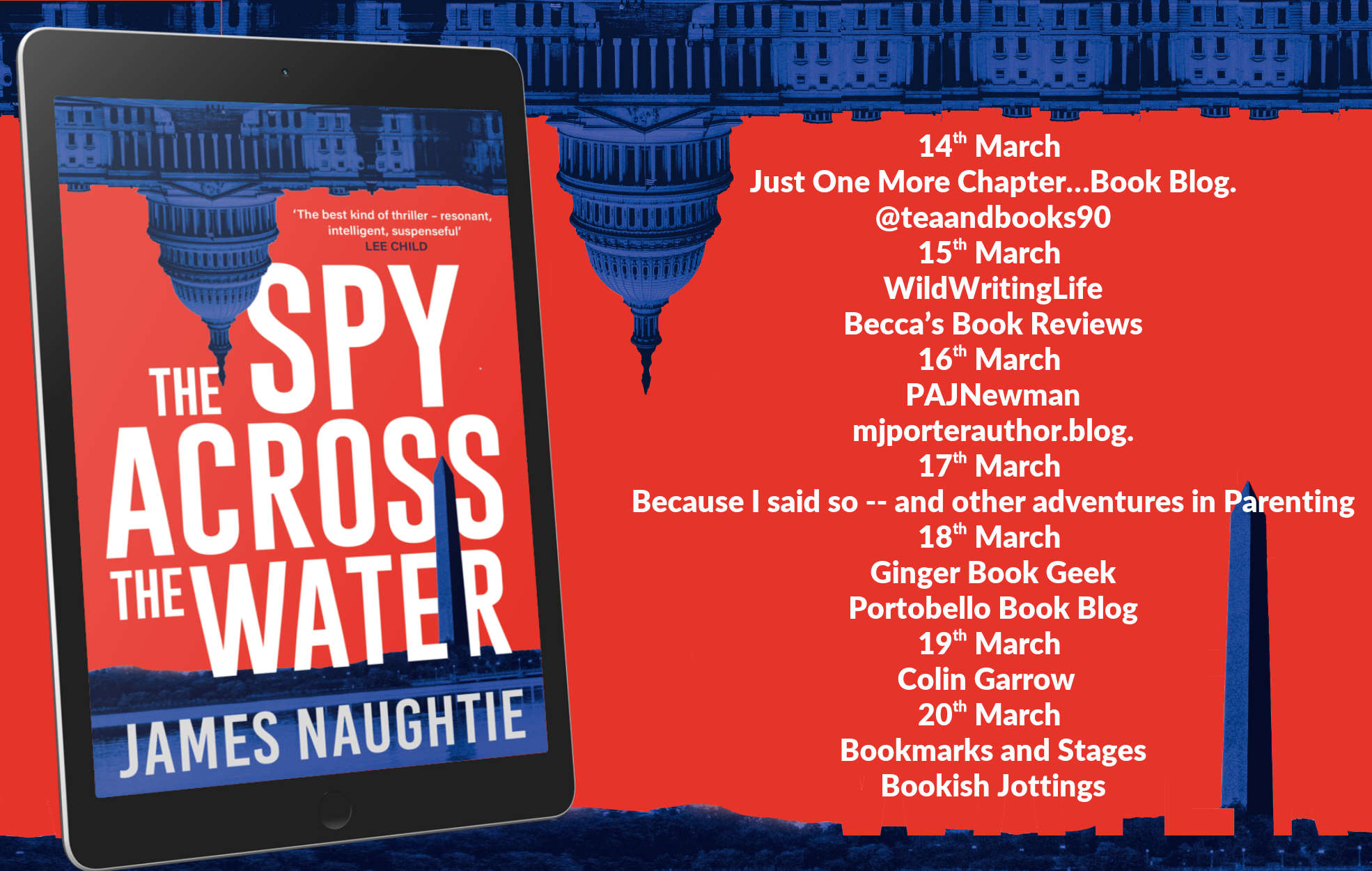
From one of our most treasured BBC broadcasters, The Spy Across the Water is the third instalment in James Naughtie’s brilliant spy series, woven around three brothers bound together through espionage.
We live with our history, but it can kill us.
Faces from the past appear from nowhere at a family funeral, and Will Flemyng, spy-turned-ambassador, is drawn into twin mysteries that threaten everything he holds dear.
From Washington, he’s pitched back into the Troubles in Northern Ireland and an explosive secret hidden deep in the most dangerous but fulfilling friendship he has known.
And while he confronts shadowy adversaries in American streets, and looks for solace at home in the Scottish Highlands, he discovers that his government’s most precious Cold War agent is in mortal danger and needs his help to survive.
In an electric story of courage and betrayal, Flemyng learns the truth that his life has left him a man with many friends, but still alone.
The Spy Across the Water is a complex political thriller set in 1985. As such, it is ‘almost’ historical fiction, my ‘go to genre.’
Not so much a fast-paced spy thriller, this is instead a slow and somewhat dense read, following Flemyng and also others of his associates as they uncover a web of secrets surrounding his youngest brother’s murder, and other events which are about to culminate. There is a great deal of obfuscation. Our main character knows everything, or at least, nearly everything, but details are only fed slowly to the reader. Key names and details are not given, which, while adding to the conspiracy, also managed to confuse me on more than one occasion.
The author has adopted a somewhat ‘quirky’ writing style – there is much conversation, and equally, much summarising of some elements of the same discussions. I found it jolted me from the narrative, and often just as things were getting interesting.
The narrative slowly sucked me in as the web of lies and politicking reaches another level. It recreates a real sense of the ‘time,’ ‘place’ and the snail-like speed of passing information to those who need to know, while doing away with our more modern apparatus of mobile phones, allowing the sharing of intelligence to be immediate.
An intriguing novel of ‘what-ifs’ and ‘might have beens’ deeply embedded in the era of heightened tensions as the Soviet Union draws to an end, while matters in Ireland ‘could’ be resolved to the satisfaction of everyone. This is a novel that will appeal to fans of ‘old school’ spy stories.
Meet the author
James Naughtie is a special correspondent for BBC News, for which he has reported from around the world. He presented Today on BBC Radio 4 for 21 years. This his third novel, and his most recent book is an account of five decades of travel and work in the United States – On the Road: American Adventures from Nixon to Trump. He lives in Edinburgh and London.






















 MJ Porter