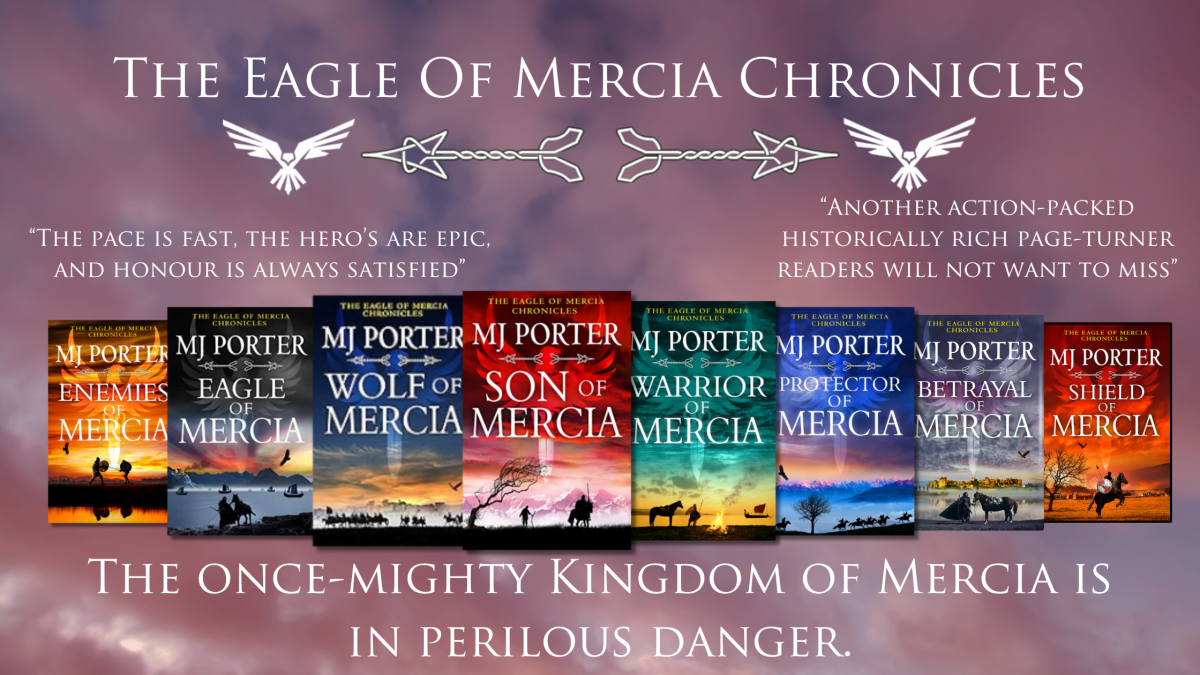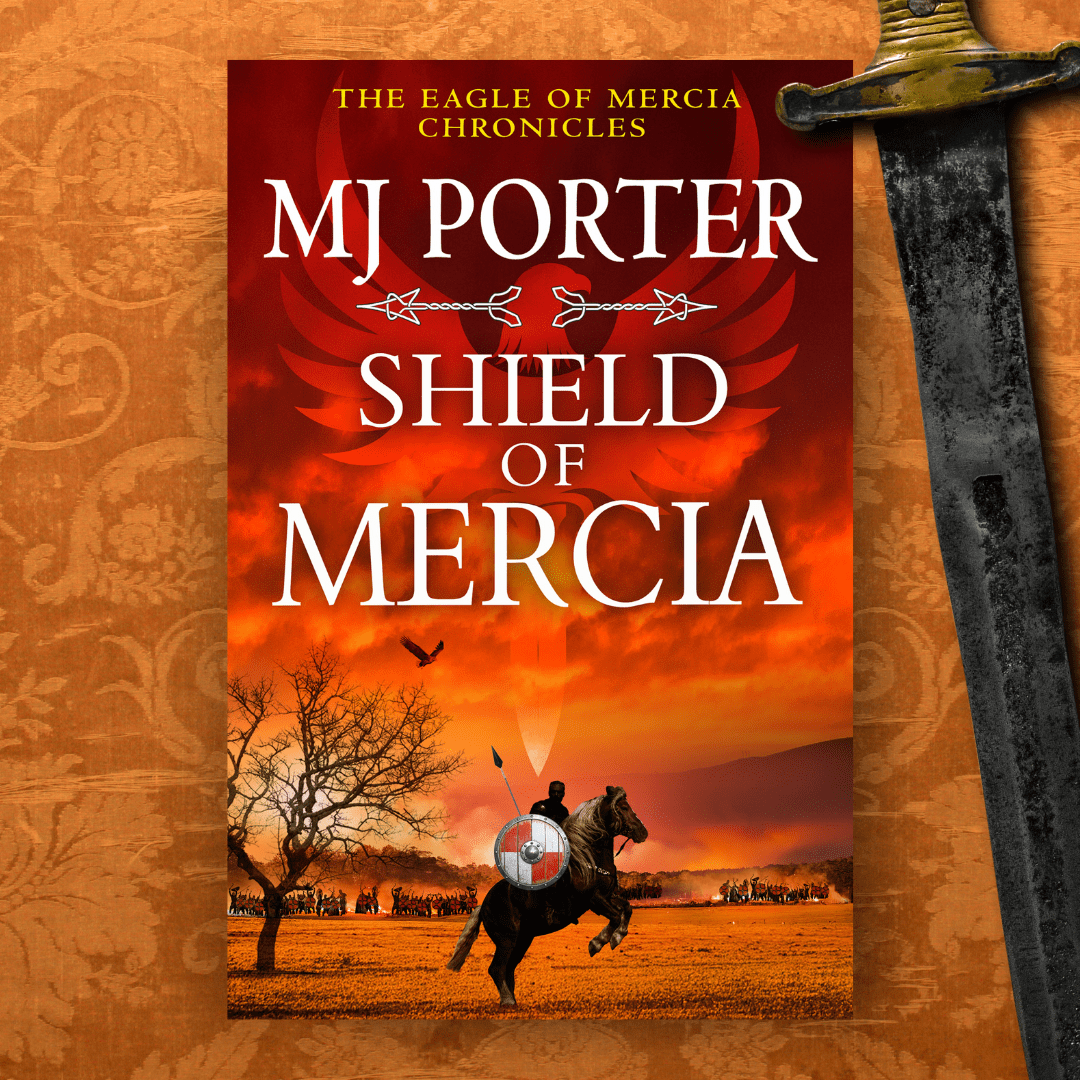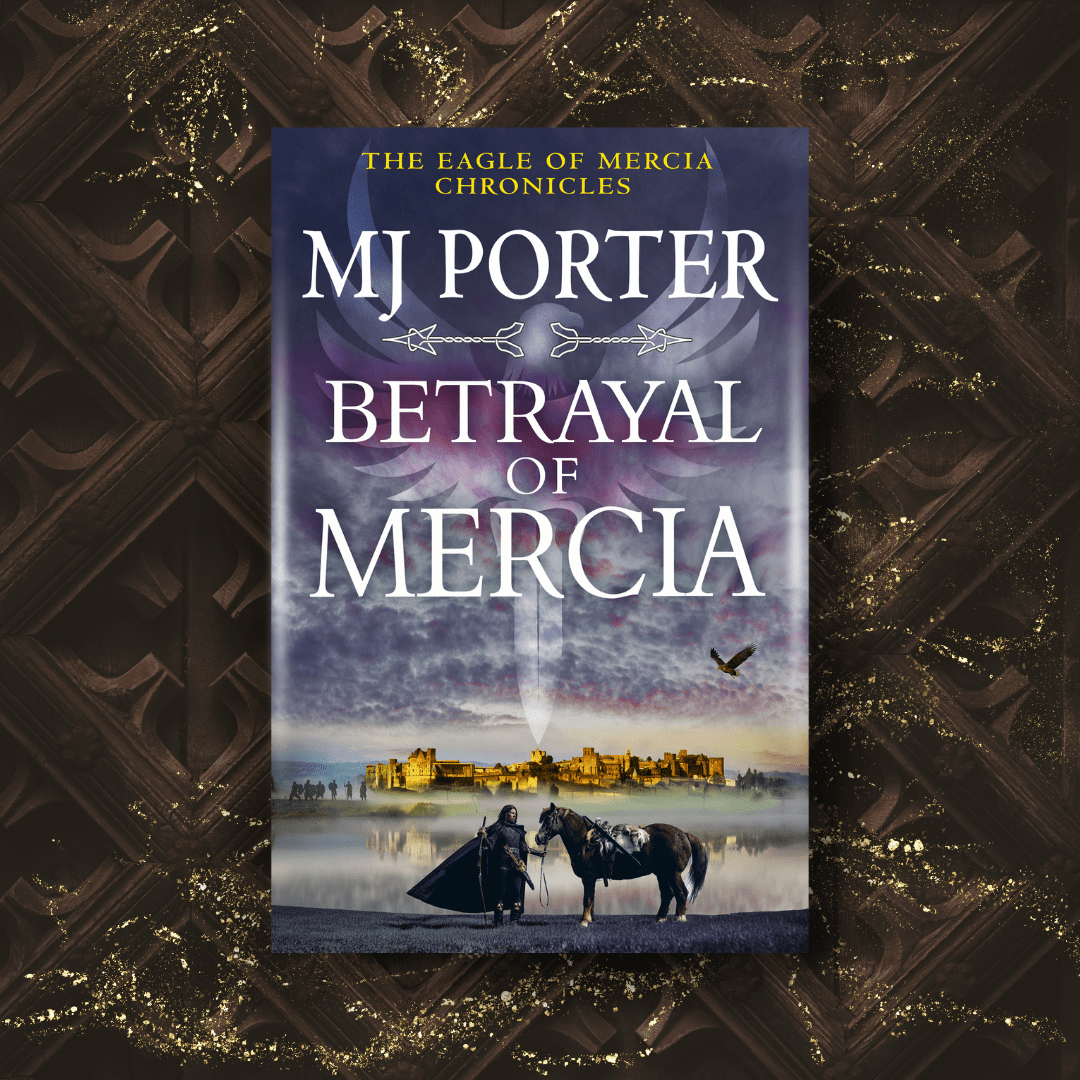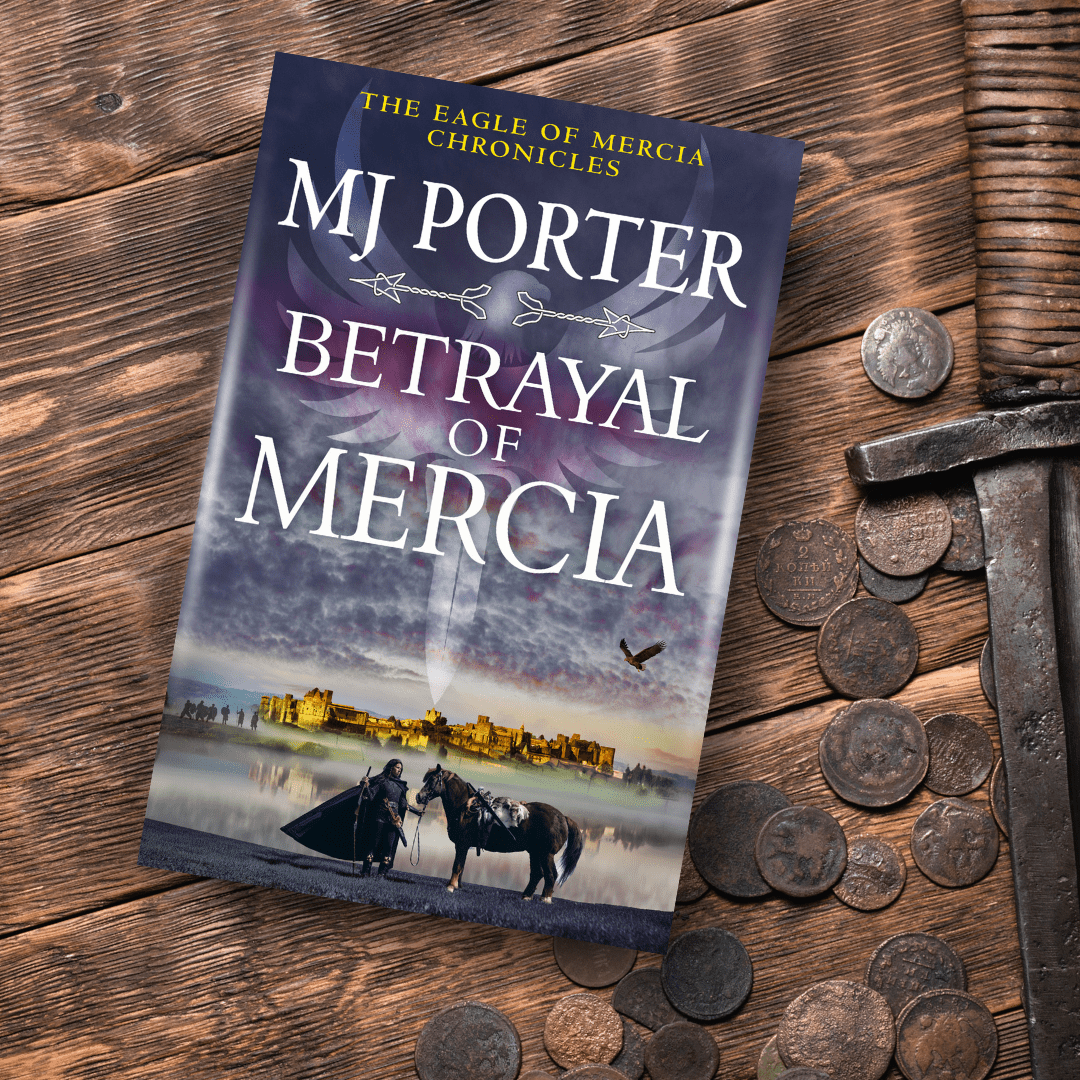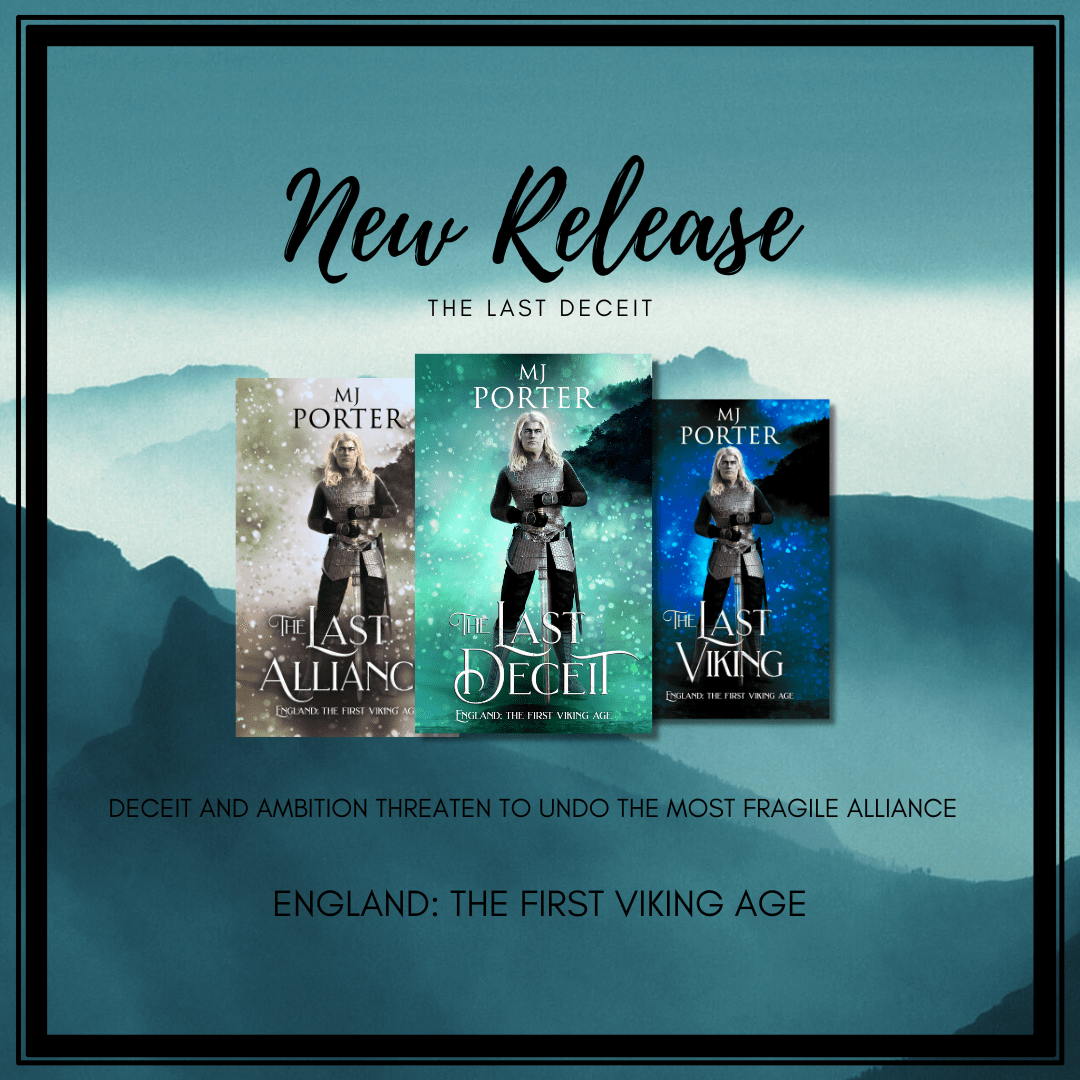
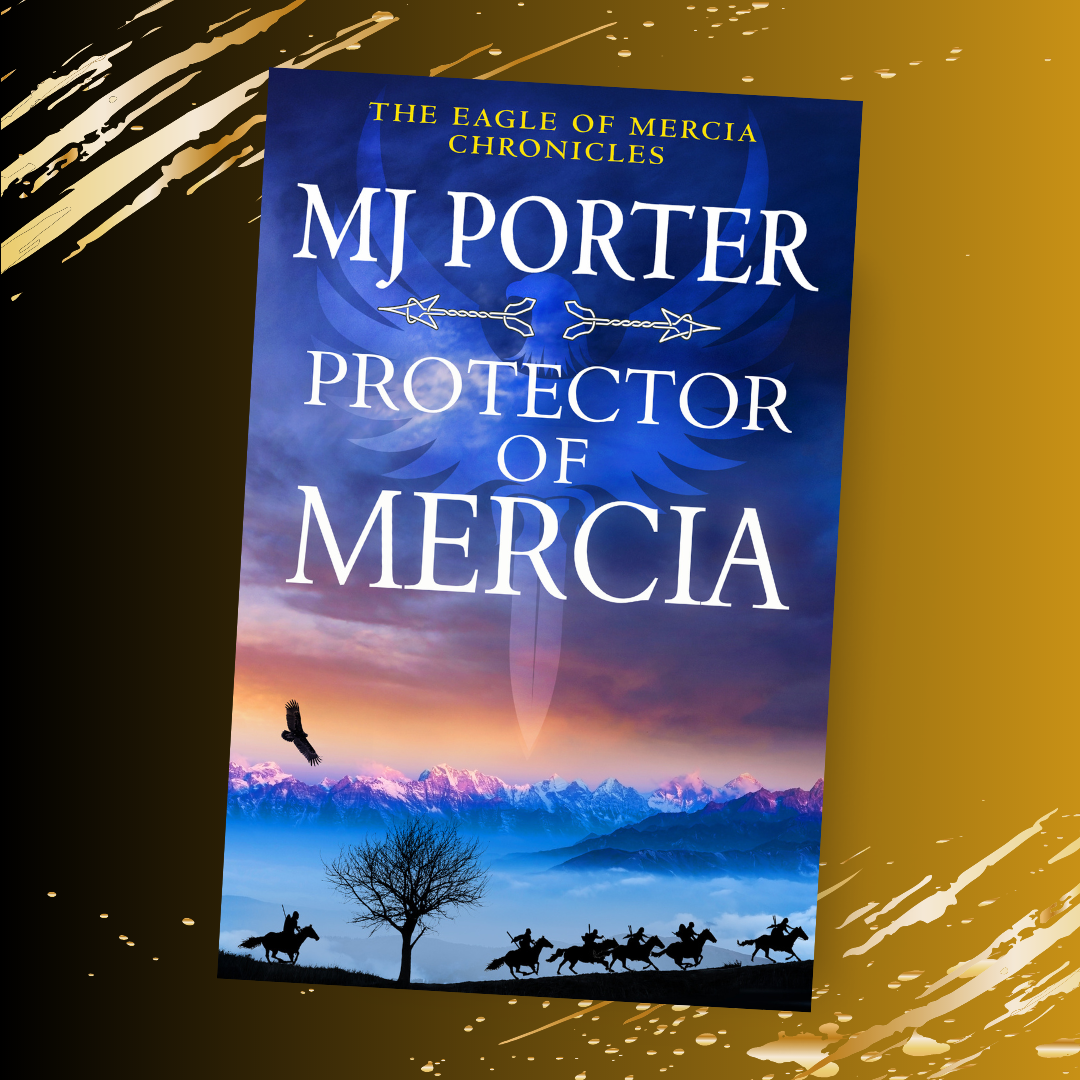
Today is the day, book 5 in The Eagle of Mercia Chronicles is released into the wild.
Here’s the blurb:
A deathbed oath leaves the lives of two infants hanging in the balance.
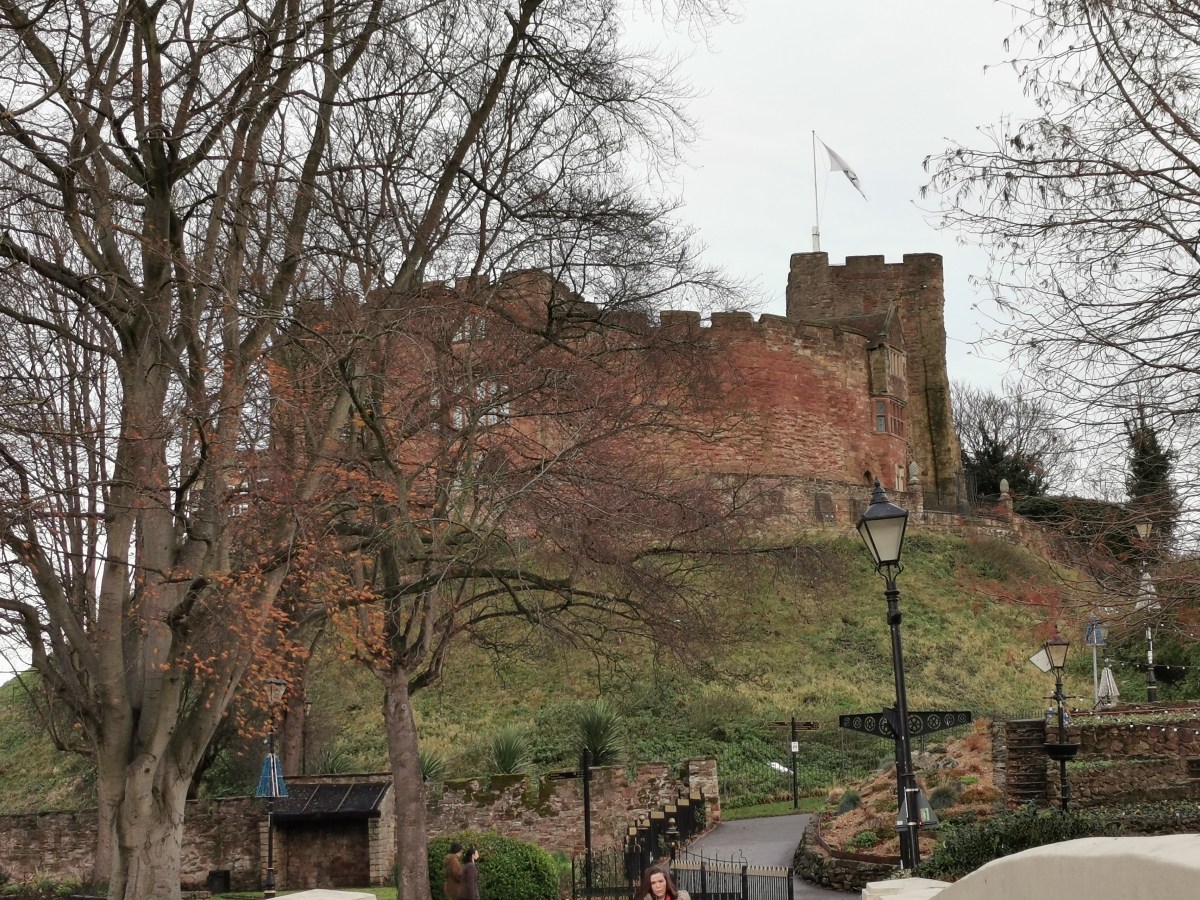
Tamworth AD833 After successfully rescuing her husband from the Island of Sheppey, Icel hears the deathbed confession of Lady Cynehild which leaves him questioning what he knows about his past, as well as his future.
In the unenviable position of being oath sworn to protect their two atheling sons when Lord Coenwulf is punished and banished for his treason against the Mercian ruler, King Wiglaf, Icel is once more torn between his oaths and the secret he knows.
When the two children are kidnapped, Icel, good to his word, and fearing for their safety, pursues their abductors into the dangerous Northern lands, fearing to discover who is behind the audacious attempt on their lives: the queen, the king’s son, or even Lady Ælflæd, a friend to him in the past, but now wed to the king’s son and aunt to the two abandoned children.
Alone in the Northern lands, Icel finds himself facing his worse fears. Can he rescue the children from their captor, or will he fail and lose his life in the process?
Read all about Protector of Mercia over on my publisher’s Facebook account.
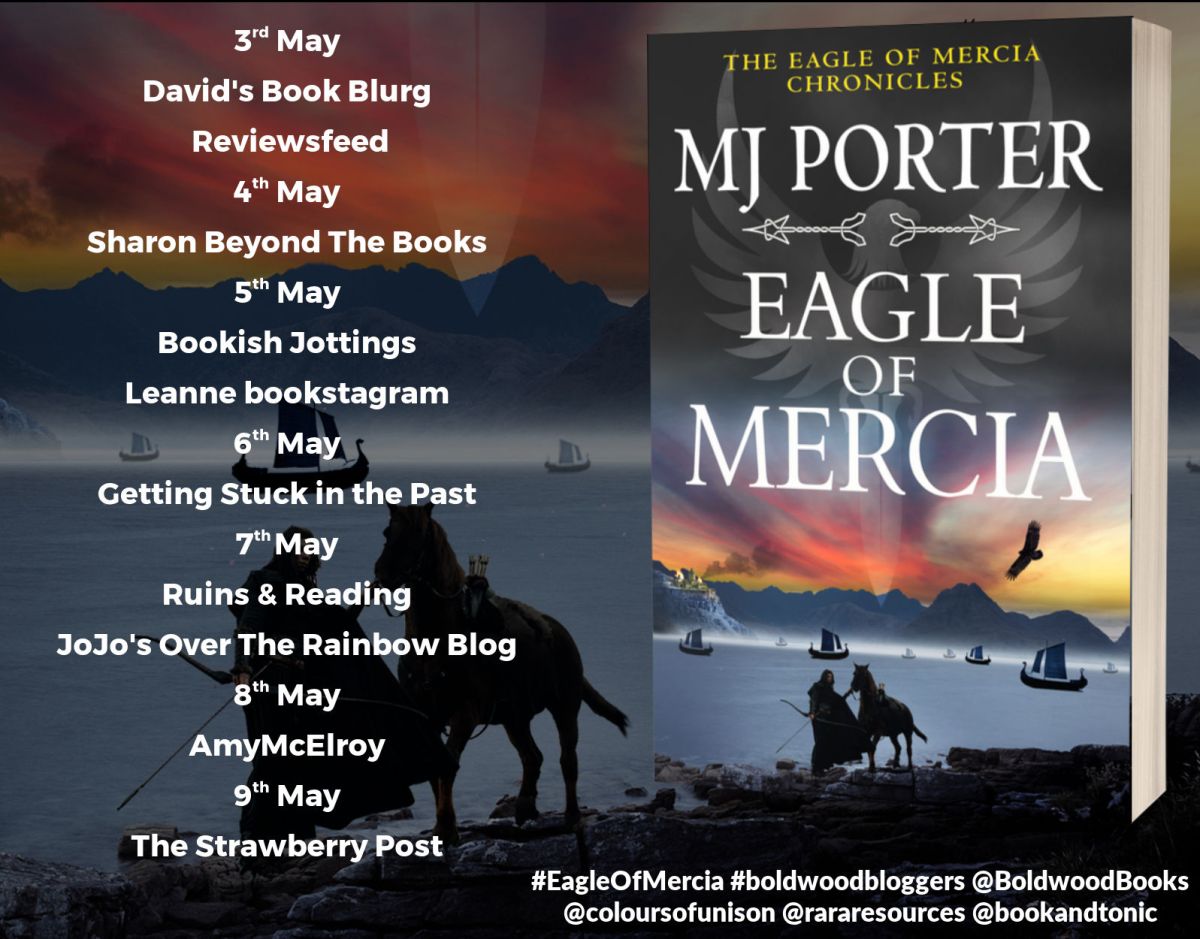
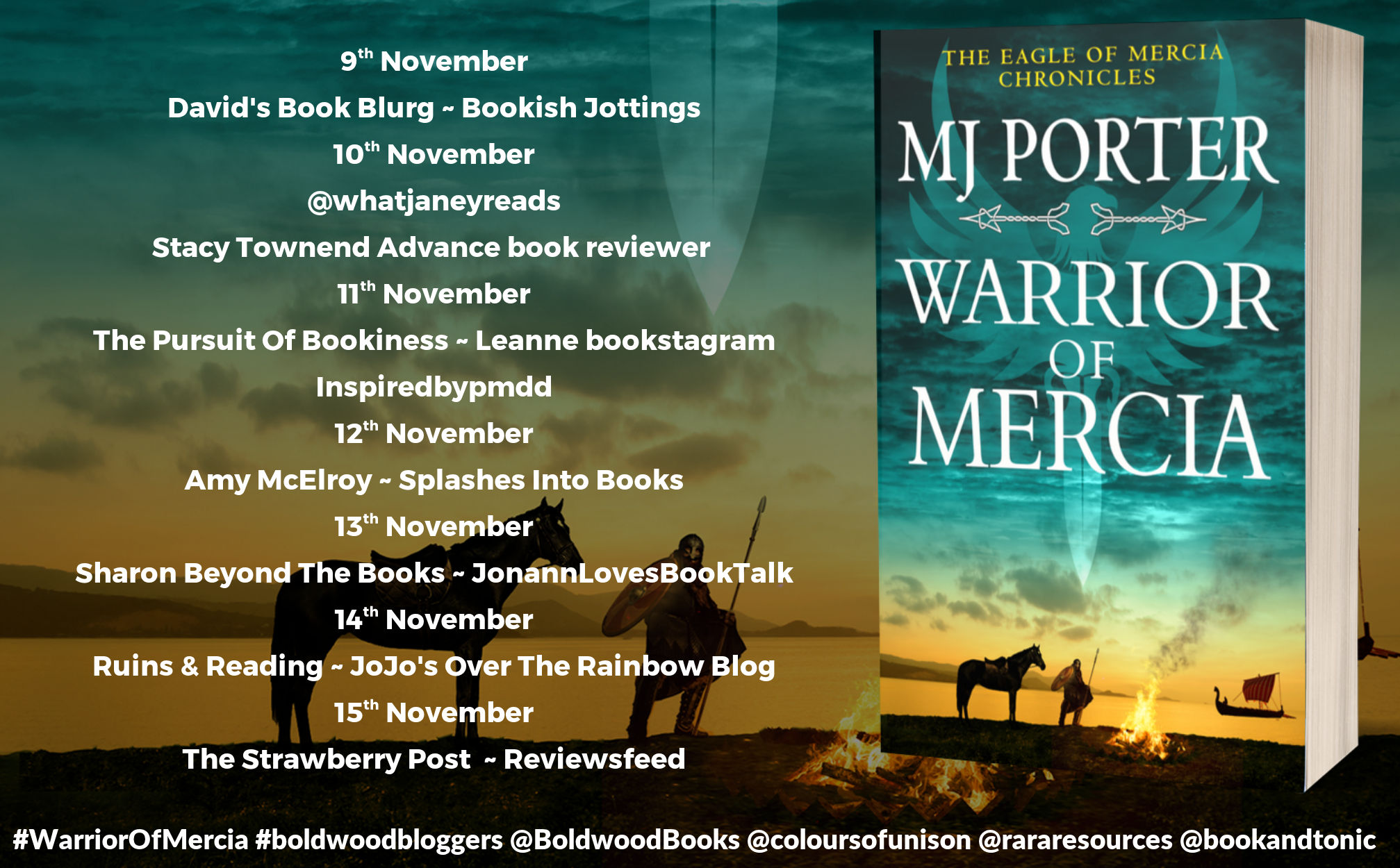
Protector of Mercia is on blog tour. My thanks to Rachel at Rachel’s Random Resources for organising and all the hosts for taking part. I will add the links each day.
Check out the reviews below. I’ll be updating as the blog tour progresses.
To celebrate Boldwood Books 4th birthday (yay), I shared four writing tips the other day, but as I’m currently in the ‘writing’ stage of a new book, I thought I’d share some more. But below is what I said as one of my four writing tips.
WRITE – it sounds stupid, but I do think it’s important to write, if not every day, then when you can fit it in. Routine is super important. As is setting yourself boundaries and deadlines. So, if you want to be a writer, you must write. It doesn’t have to be every day. It doesn’t have to be loads. If you’re struggling with the element of being an author that is writing, then I highly recommend taking part in NaNoWriMo in November of each year. I’ve been taking part for about ten years now. The lessons learned about routine will stay with you – and when they don’t – well, you can hop back on the NaNoWriMo train the following year.
So, last week I wrote a post about starting my newest writing project, which is Icel book 6. I said I planned on writing 5 days this week, with the intention to write 5K every day, having written for 3 days the week before, so I thought I’d let you know how I got on.
I had a very busy weekend with family and so as Monday came around, I was a bit tired. But, I had arranged to see a friend in the afternoon, and so I knew I had to get my writing done in the morning, or I’d be starting the week on a bit of a downer – I don’t like to mess up my writing goals. Luckily, I accomplished my 5K and had a great afternoon out, but then Tuesday came around, and I sort of forgot that I’d arranged to go out again. Oh no! I managed 1k only because I was out for much of the day. I was a bit annoyed with myself, but it was great to take a day off. I did think I might make up those missing 4k over the next few days. And you know what, I did. I pushed myself and managed to write an extra 2k on Wednesday and Thursday, so that on Friday I only had to write 5k.
This all sounds great, but I had a tough day on Wednesday. I was a bit tired, and grumpy from not hitting my writing goals the day before (even though I really enjoyed my trip to the cinema – it’s not very local – about a 70 miles round trip – the curse of living in the countryside) but what was making it worse was that I didn’t think my writing was working, and it still might not be, but I pushed on regardless. I had to take some time to do some research and check a few details – I don’t always do this when I’m writing as I know I can fill these sorts of things in when I’m editing – and I spent a frustrated few hours trying to work out something, and only the next day did I realise I already had the information to hand somewhere else.
All the same, and with all the ups and downs of virtually chaining myself to my desk all week, I’m still feeling good about this story. I’ve already discovered a few things I need to amend and add in as I beginning the editing process, but as I’ve said before, at the moment, I’m just telling myself the story before I start making sure that everything makes sense, and I’ve not forgotten a few characters.
Next week, I hope to write on at least four days – it’s Results Day on Thursday – so I’ll be at the local school – which should give me a word count of 60k – if I can keep up my momentum throughout the coming week. I’ll let you know how I get on, but I want to assure anyone reading this that the art to writing is writing, and that’s even on the days when you think everything’s rubbish. It’s those days – which are really hard to push through – that make your story great.
To celebrate Boldwood Books 4th birthday (yay), I shared four writing tips the other day, but as I’m currently in the ‘writing’ stage of a new book, I thought I’d share some more. But below is what I said as one of my four writing tips.
WRITE – it sounds stupid, but I do think it’s important to write, if not every day, then when you can fit it in. Routine is super important. As is setting yourself boundaries and deadlines. So, if you want to be a writer, you must write. It doesn’t have to be every day. It doesn’t have to be loads. If you’re struggling with the element of being an author that is writing, then I highly recommend taking part in NaNoWriMo in November of each year. I’ve been taking part for about ten years now. The lessons learned about routine will stay with you – and when they don’t – well, you can hop back on the NaNoWriMo train the following year.
Now, I’ve not been in a writing phase since April this year. That’s four long months that I’ve been busy editing what feels like book after book after book. Obviously, as part of editing, I have written new chapters and made lots of adjustments but I’ve not started FRESH with a new idea since I wrote Protector of Mercia. But, it’s August – I’ve finally caught up (Protector, Clash, non-fiction etc etc.) so now I can write. And this has reminded me that writing is my ‘happy place.’ I love the writing element. I love forging a new storyline. I’m a pantser – I make it up as I go (mostly) – and so this is where my imagination tends to roam somewhat free.
But, to accomplish my writing goals, I’m really strict with myself, even while being creative. My writing routine is 5k words a day – when I’m having a writing day – that’s not every day. For instance, this week, I wrote on the 1st, 2nd and 3rd August. I’m not writing on Friday because I have other commitments. But, next week, my aim is to write Monday-Friday. This is because I need to be kind to myself and ease myself into a new protect – so 3 days in a row – and also because I want to accomplish my goal of a horribly rough, first draft written in August. (Then I can move onto the dreaded editing – which I also enjoy – just not as much as writing). But, three days in a row will also give me a ‘feel’ for the story I want to tell. I also don’t tend to write at weekends, even though I could. Weekends are for blogging and advertising, unless I’m close to finishing and then I might well write anyway.
I often approach a new book with a very firm idea of the first chapter, or the last chapter, but not often the bit in the middle. This means that the first few days of writing can be quite ‘easy’ or quite ‘hard,’ depending on which bit I’m writing, and how long it’s been since I wrote about these characters – my most recent Earls of Mercia book was really hard as it had been 3 years since I last wrote about them.
Everything will be massively reedited – but this is me telling myself the story and so I have to tell it how I think it. After that, if my idea isn’t working, I’ll need to reset a little – and then work this retrospectively into what I’ve already written when I edit – not at this part of the process.
The other point to this is that when I’ve written so much, it’s easier to press on through the tough bits. By the time I hit 40k in a novel, I’m NOT going to give up on it even if I’m not entirely happy with it. That’s half a book – roughly. That’s a lot of thought and creativity. I will make it work. (Usually – I have some stories that aren’t historical fiction that have hit massive brick walls at this stage.)
I know a lot of people will be horrified by such an approach (I’m looking at you planners) but it’s what works for me. As much as planning might make the process easier (and I do think it would make the editing easier), after more books than I can remember off the top of my head, this is my approach in all its messy, horrible glory. As an aside – I’ve never been able to plan my writing – I can remember at school that I struggled to structure an essay because I’d just end up writing it, so what was the point, I may as well just write it.
That said, it’s taken me time to refine my approach and it does change from book to book. It used to take me all day to write 5k words (with breaks). Now I try and write them in the morning. I get up, I write. I take a short break. I write again. By the time I’ve written 3k words, I’ll have some momentum and be able to write the next 2k quite quickly. I rarely, if ever these days, push on beyond 5k because by that stage, even if I’m really keen, I tend to have exhausted my creativity and I need to do something else. It’s not easy, but I can convince myself that it is – if that makes sense. It also helps that I am a fast typist! I also set rules for myself – at a minimum I want to write 1K every hour – it shouldn’t take me so long – but it’s a good rule of thumb.
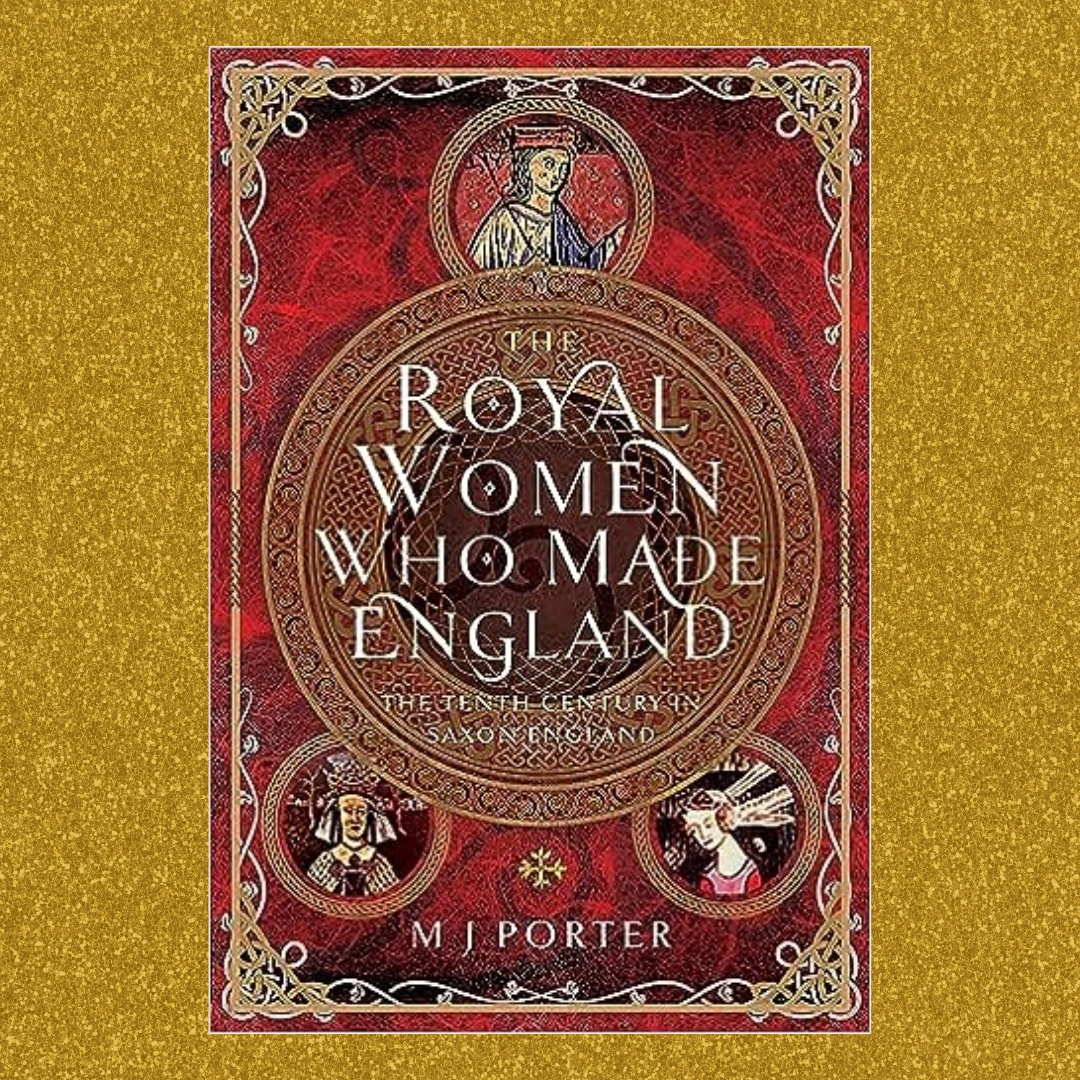
When I wrote my non-fiction book, this was all a bit different, because aside from deciding how to present my book, the creativity was much less – I was telling the story using the available source documentation. And so, throughout the whole of last August my problem wasn’t that my brain was tired from being creative – it was that it wasn’t. I found it difficult to stop, but with all the copying of sources – the process was slower.
I sometimes write to music – headphones on – music on – transporting myself to ‘my’ time and place. These days I don’t always need the music. I’ve trained myself to do the thing that needs doing with as little conscious thought as possible. To prove this, when I edit, I’ve often forgotten elements that I’ve written, especially if a few months have gone by since I wrote it. And, I have to write down my characters names because I always forget those who aren’t the main characters.
I’m massively motivated by having a ‘finished’ draft. There’s the old saying about enjoying the journey but I really do want to reach the ‘end.’ I mean, I really enjoy it as well. I’ve been smiley and jolly for the last three days. I’ve felt reinvigorated and ‘on it.’ It’s my happy place, but I still have to work at it.
So writers, remember writing is your ‘happy place’, and whether you want to linger on the sites and sounds, or get to the end, do what works for you, because it certainly isn’t the same for everyone.
I’m currently working on Icel 6, for those who might be curious. And after this, I’ll be getting back to Coelwulf 8. It no doubt helps that I really love writing these characters.
And here are some of my favourite moments in the novel, as Icel marvels at what’s been left behind by those who came before him.
And then we come to a stop. In front of me, there’s a structure I can hardly comprehend. All around it are smaller piles of stones, no doubt the remains of other buildings. Beneath my feet, I walk on gravel and tufted grasses. Lifting my feet to peer down, I question whether the whole place was once laid with stone upon which to walk? I pause, gaze around me. In the distance, almost further than the entire settlement of Tamworth, are hints of more walls, more random pieces of white stone, discarded and abandoned. I don’t see any crops or greenery, only shrivelled weeds and little else. If I were to live here, where would I grow my food? Where would Wynflæd harvest her herbs from? The place is dusty and barren, just as Wulfheard told me.
There’s a forest of stone plinths guiding us towards the smell of campfires, with some immobile figures on them, all missing arms, or legs, or feet or even heads, their whiteness attesting to being made from some sort of priceless stone. To me, they look so similar to the bodies of the dead that, for a moment, I can’t quite decipher the intent behind them. And Brihtwold is no help. I can hardly ask what this place is because I should already know.
‘They’re in the centre of the settlement, in a stone-built building, one of the few that still stands to two levels. We head towards the east, and it’s in the centre. It’s difficult to miss it during the daytime, what with the ruined columns that still stand, and the statues that guide our steps towards it, but in the darkness of night, it might be a little more tricky.’
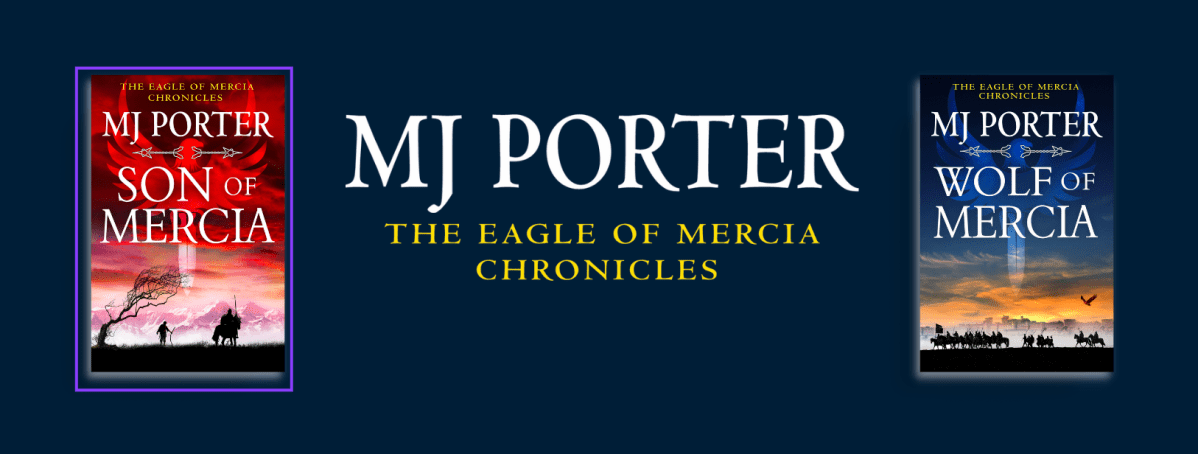
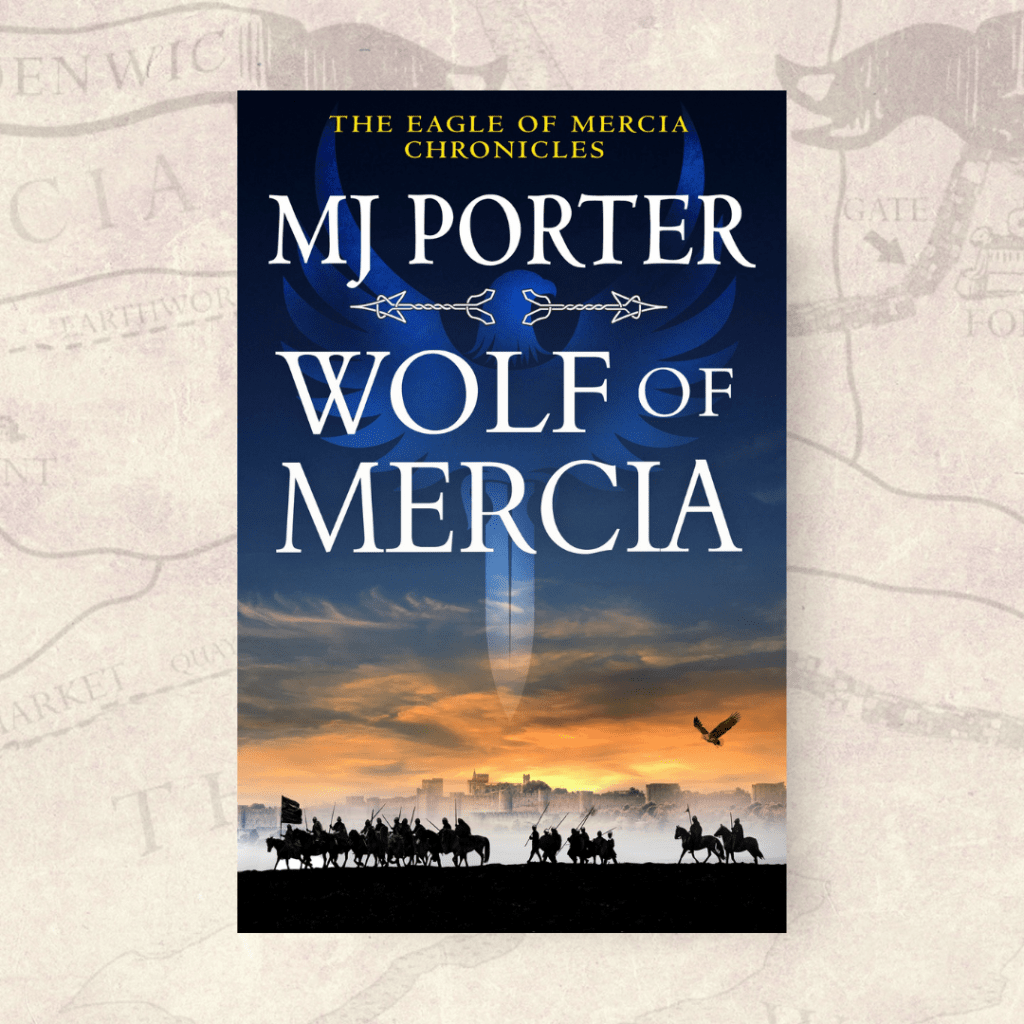
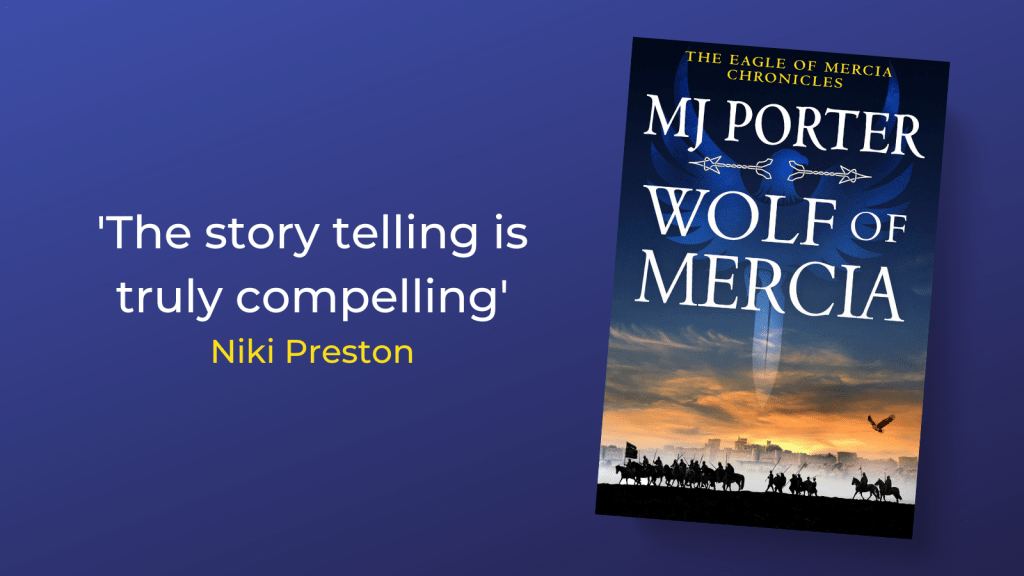
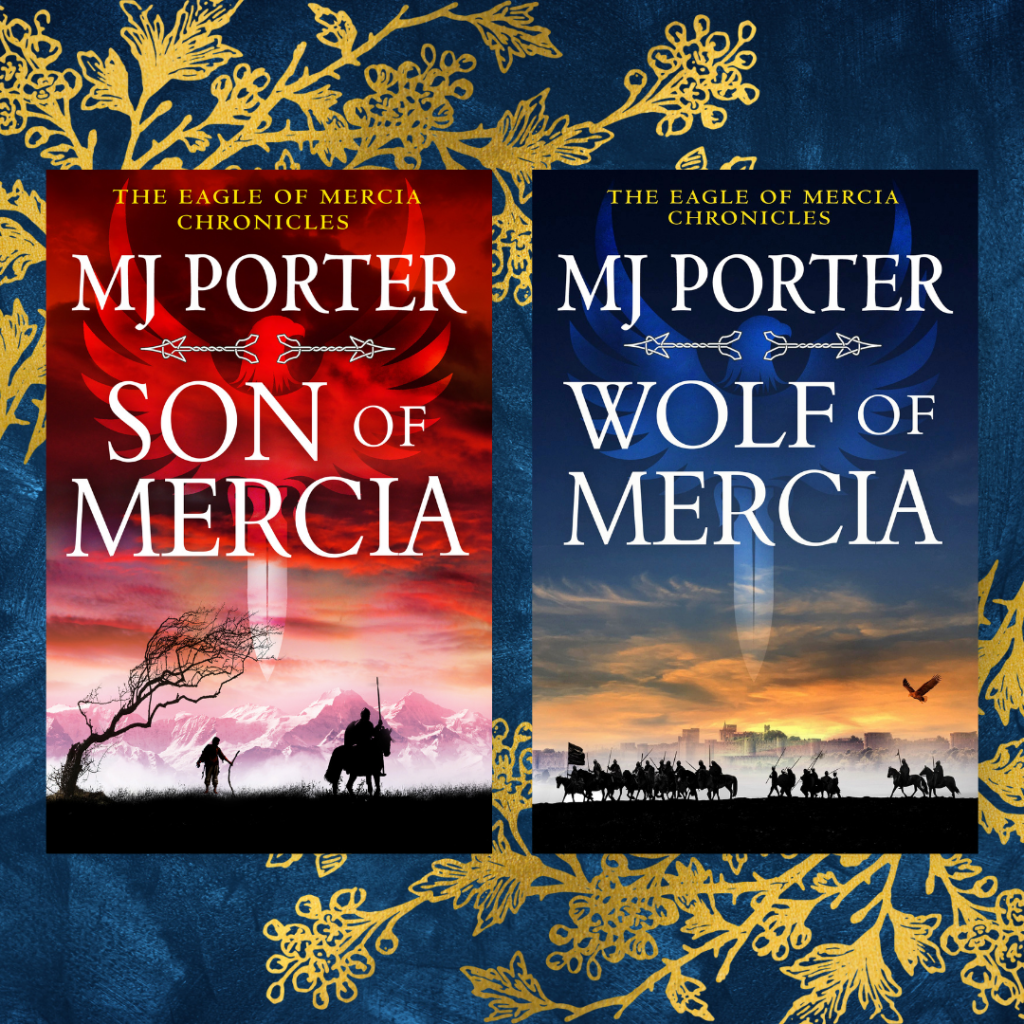
Wolf of Mercia is book 2 in The Eagle of Mercia Chronicles, and I had a lot of fun thinking about what the settlement might have looked like in the 830s, hundreds of years after Londinium was abandoned.
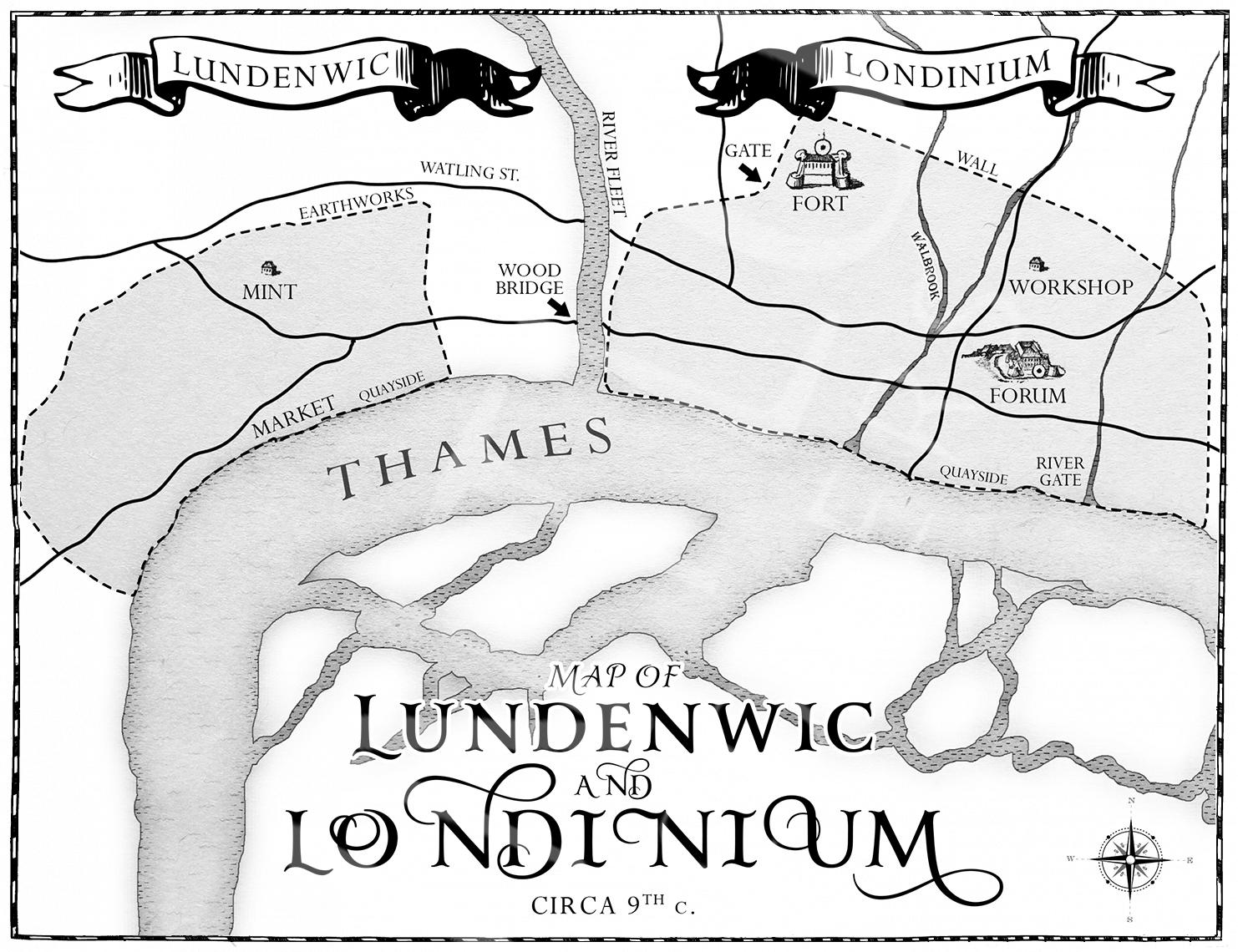
You can read all about Londonia below.
Londonia, the setting for Wolf Of Mercia
I’ve been avoiding taking my Saxon characters to London for quite some time. Bernard Cornwell, I feel, has done a fine job of explaining London to readers of his The Last Kingdom books. I wasn’t sure I had a great deal more to offer. But how wrong I was.
Londonia, the name suggested by Rory Naismith in his Citadel of the Saxons, for the combined settlement of the seventh century, seems a neat and tidy way of referencing both settlements, the Roman Londinium, and the Saxon Lundenwic. And yet, both settlements were so very different, it seems wrong to try and make them appear unified, at a time when they really weren’t. The ‘wic’ element of the name means it refers to a market site, somewhere where trade took place.
The River Fleet, now a lost river of London, once divided these two settlements, the one built of stone with high walls that may have been as tall as six metres, and the other, built of wattle and daub, and entirely open to the River Thames. It’s believed the lost River Fleet might have been substantial enough over 1200 years ago that a bridge was built over it. And this reminds travellers to the past of the mistake of assuming landscapes haven’t altered. It’s often easy to remember that buildings and roads might have changed, even that rivers might have changed course, and that sea levels might have risen or fallen, but an entirely lost river is a new one for me.
Neither should we consider Londinium, the Roman fort, to always have appeared as we imagine it. A brief look through the archaeological details for Roman Londinium, reveal that it changed dramatically over time. Most obviously, the walls for which it’s so famous, were not part of the original structure, they weren’t built until AD180-220. The earliest timbers so far found on the site date to nearly one hundred and fifty years earlier.
The number of inhabitants inside those stone walls seems to have waxed and waned throughout the period of Roman Britain, and there is some suggestion that it might have been abandoned as early as the fourth century, and therefore, much before the acknowledged ‘end of Roman Britain’ came in the early years of the fifth century. The bridge crossing from Londinium to Southwark, on the southern shore, may also have disappeared by the fourth century. There is therefore, a great deal to unpick. And for my characters, in the ninth century, just what would they have walked through? It’s an intriguing question. Would there have been abandoned statues, half-collapsed buildings, an eerie quiet, or would much of that have already disappeared, perhaps even been ‘robbed out’ as we know happened in other places, most notably along Hadrian’s Wall where stone often appears in the fabric of later churches.
As to Lundenwic? Are we to truly believe that it was little more than a boggy riverfront site? In fact, the location was chosen precisely to miss the boggy area from where the River Fleet would have joined the River Thames. But why move from behind those stone walls? The huge area of Londinium, was simply too vast for a much diminished population to attempt to control. The settlement that developed in Lundenwic was half as big as that of the Roman site, with a population of around 7000 (compared to an estimated 25,000-30,000 in Londinium at its peak). It consisted of small buildings, tightly packed together with small alleyways leading off from a few main roads. But, these main roads were fitted with wooden drainage ditches. While it might not have been the majestic sweep of a huge walled city, it wasn’t quite the hovel it’s often been betrayed as.
And, these two separate settlements, didn’t last for that long individually. But, in the year AD830, it’s just possible that young Icel may have walked through a serviceable, if abandoned Roman settlement when he visited Londinium, and that was too good an opportunity not to incorporate into the new book, Wolf of Mercia.
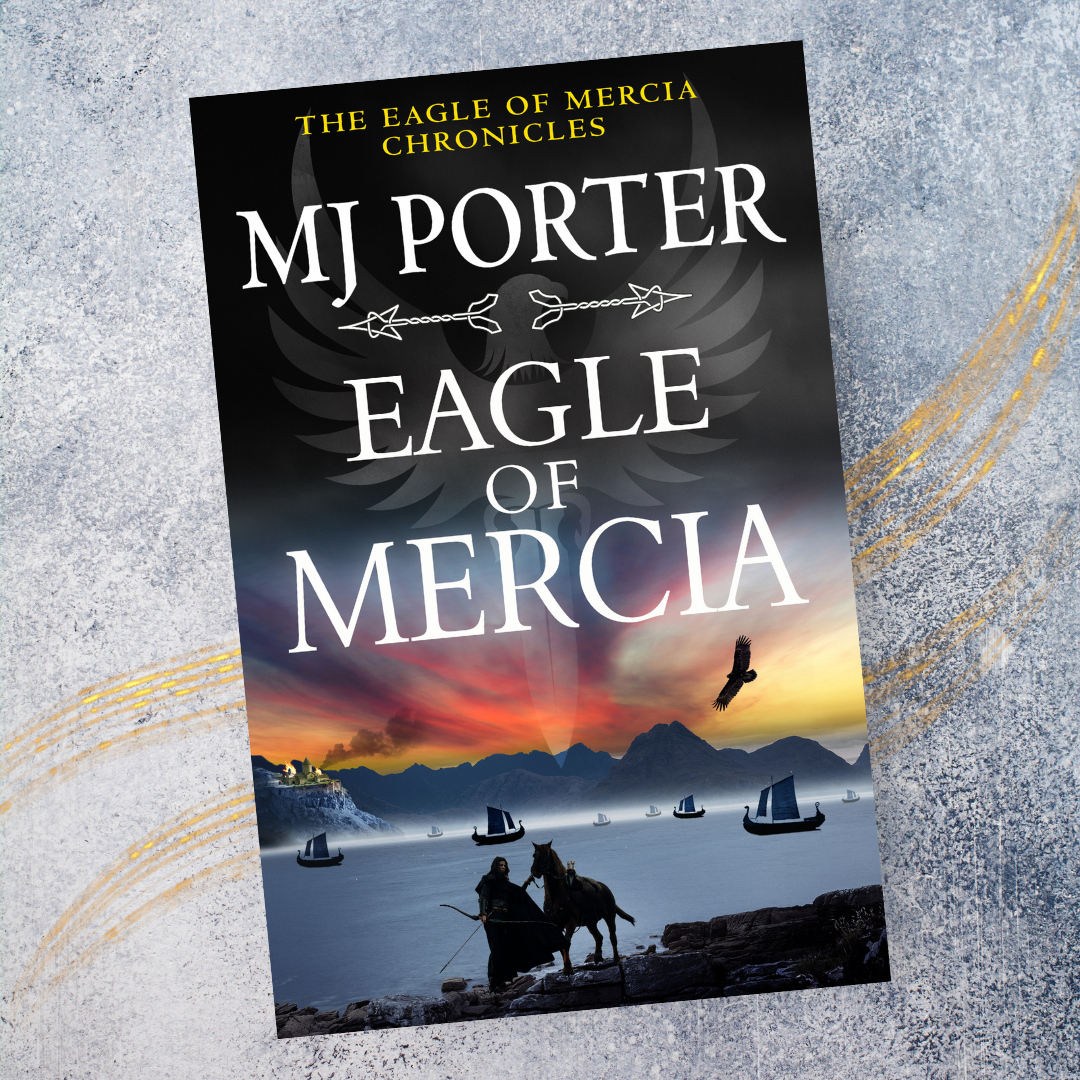
I’m excited to share the cover for book 5 in The Eagle of Mercia Chronicles, Protector of Mercia.
Releasing on September 5th 2023, here’s the blurb.
A deathbed oath leaves the lives of two infants hanging in the balance.
Tamworth AD833
After successfully rescuing her husband from the Island of Sheppey, Icel hears the deathbed confession of Lady Cynehild which leaves him questioning what he knows about his past, as well as his future.
In the unenviable position of being oath sworn to protect their two atheling sons when Lord Coenwulf is punished and banished for his treason against the Mercian ruler, King Wiglaf, Icel is once more torn between his oaths and the secret he knows.
When the two children are kidnapped, Icel, good to his word, and fearing for their safety, pursues their abductors into the dangerous Northern lands, fearing to discover who is behind the audacious attempt on their lives: the queen, the king’s son, or even Lady Ælflæd, a friend to him in the past, but now wed to the king’s son and aunt to the two abandoned children.
Alone in the Northern lands, Icel finds himself facing his worse fears. Can he rescue the children from their captor, or will he fail and lose his life in the process?
In Eagle of Mercia, young Icel and his allies are busily guarding the River Thames against a potential Viking raider attack. The Viking raiders certainly made use of the many rivers running through England at the time (and throughout the British Isles), but the river was also significant as a very definitive and solid boundary between the Saxon kingdoms of Wessex and Mercia, which to the west, where the River Thames doesn’t flow, was continued by the earthworks known as the Wansdyke.
London, now the capital of the United Kingdom, wasn’t always as important as we might assume, and indeed, it wasn’t ever the capital of Wessex or Mercia. These two kingdoms fought most fiercely over the settlement. It wasn’t even overly important to the Romans, either. And this is why I’ve perhaps been remiss in not truly considering its significance. As rivers have changed their course over the years, so has the River Thames. And what’s most fascinating about the River Thames is that, seemingly for long periods during the Saxon era, it wasn’t navigable, as we might expect it to have been.
Map of Early England by Flintlock Covers
‘During this period, as perhaps as other times, there may well have been a division between use of the Thames in its today reach and use of it above the tidal head. Paleoenvironmental evidence suggests that a relative drop in river levels during the Roman period meant that the tidal head was perhaps as low as Londinium itself, but that it (and thereby the range of easy navigability) generally moved upstream during the Anglo-Saxon period. This trend was not, however, uniform, and there were also brief periods (such as the late tenth to eleventh centuries) when the tidal reach shifted back downstream again.’ p. 271
It seems then, that when considering London, or Londinium/Lundenwic/Londonia, we also need to be mindful of the era in the Saxon period that we’re writing about. For the first Viking age,
‘A combination of the seasonal (and presumably climatic) unreliability of riverine travel and the need on many occasions to travel upstream cannot have made it easy for the Vikings to use the Thames for shock offensives… and there is no clear example of a Viking force travelling by water up the Thames further than Fulham.’ p.278
Clues to how passable the River Thames might have been can be traced.
‘Without the construction of bridges, the river would have been impassable except by ferry, from its estuary as far as the lowest fording point, perhaps as low as Halliford near Shepperton, and between the various fording points. Even where the middle and upper stretches could be forded, such crossings were not guaranteed to be easy. Lechlade and Cricklade, two potentially treacherous upper Thames crossings, severely affected by flooding in winter were named Old English (ge)lad ‘difficult river crossing.’ p.279
As with all things, we should be wary of assuming that current conditions would have been prevalent in the past. The River Thames certainly falls into that category. So while, yes, it was certainly a decisive boundary between the Saxon kingdoms of Wessex and Mercia, on occasion, it wouldn’t have been as decisive as at others. This, I find fascinating, and just another of those ‘facts’ travellers to the Saxon era should be wary about. While we know (hopefully not a spoiler) that London was attacked in the 840s and 850s, prior to this, it might well have been impossible for the Viking raiders to attack in the way they were used to. This, perhaps, accounts for why they chose more coastal locations, such as the Isle of Sh.
Map by Flintlock Covers for Wolf of Mercia
(Quotes taken from Beyond the Burghal Hidage by Baker and Brookes)
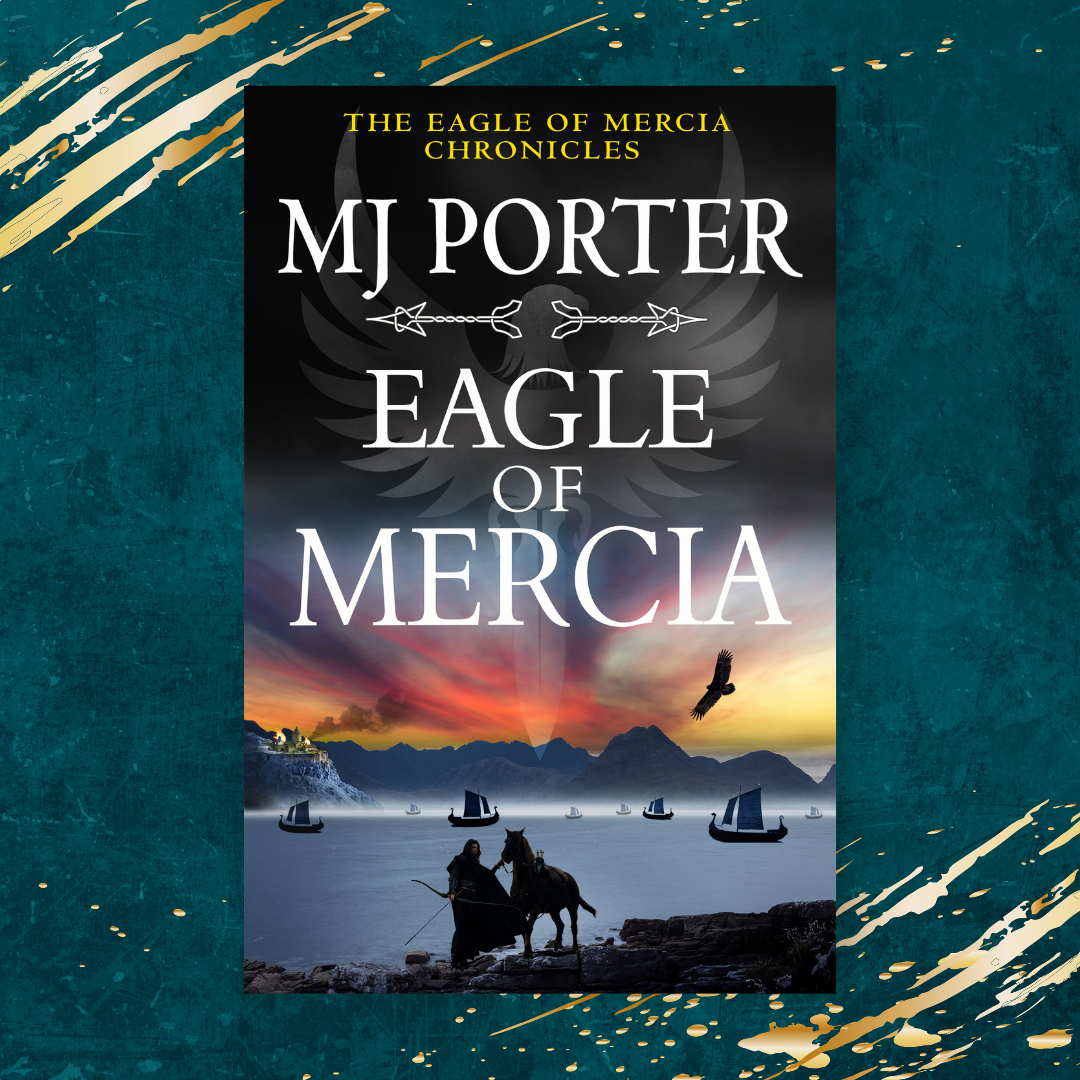
Today is the day, book 4 in The Eagle of Mercia Chronicles is released into the wild. I’m really excited about this one:) And I can’t believe we’re already onto book 4.
Here’s the blurb:
A mercy mission in the heart of Wessex is beset with deadly, bloody dangers.
Tamworth AD831
Icel’s profile continues to rise. Lord of Budworth and warrior of Mercia, he’s acknowledged by King Wiglaf and his comrades to keep Mercia safe from the ravages of Wessex, the king-slayer of the East Angles, and the Viking raiders. But, danger looms. Alongside Spring’s arrival comes the almost certain threat of the Viking raiders return.
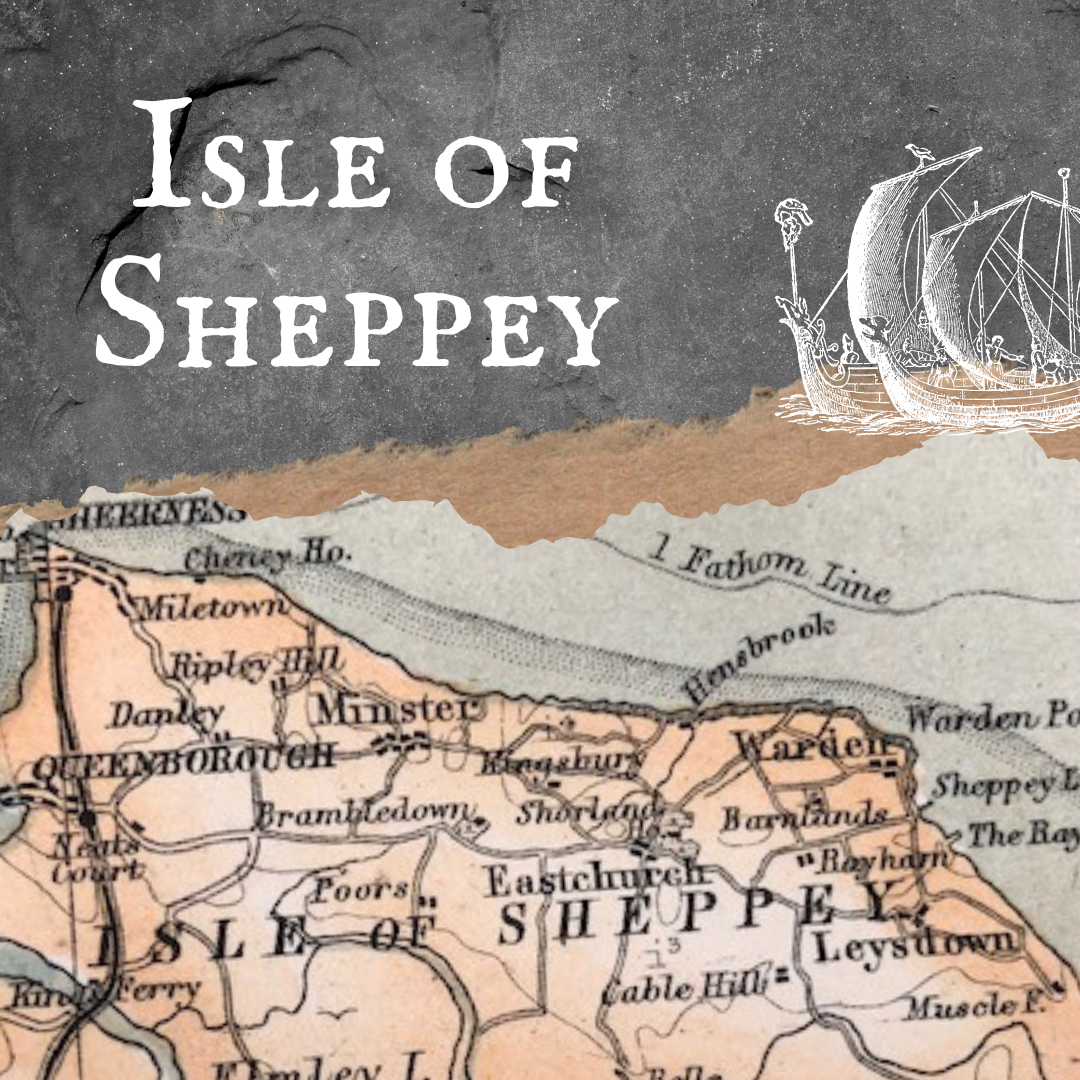
When Lord Coenwulf of Kingsholm is apprehended by a Viking and held captive on the Isle of Sheppey in Wessex held Kent, Icel is implored by Lady Cynehild to rescue her husband.
To rescue Lord Coenwulf, Icel and his fellow warriors must risk themselves twice over, for not only must they overpower the Viking raiders, they must also counter the threat of Mercia’s ancient enemy, the kingdom of Wessex as they travel through their lands.
Far from home and threatened on all sides, have Icel and his fellow warriors sworn to carry out an impossible duty?
I can let you know that book 5 is mostly written, and I know the title and I’ve seen the cover – I know, I’m such a tease. I will update when I can share more.
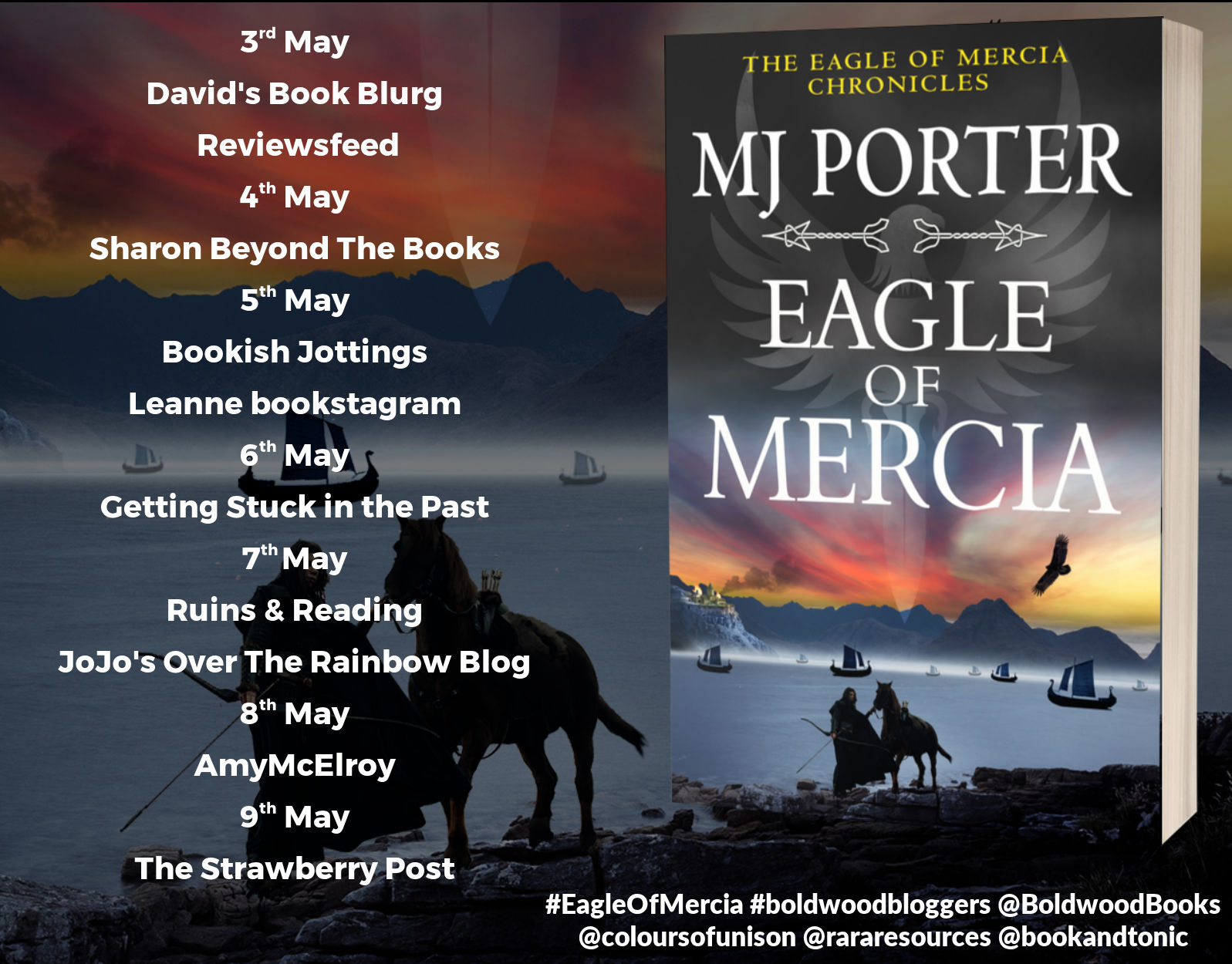
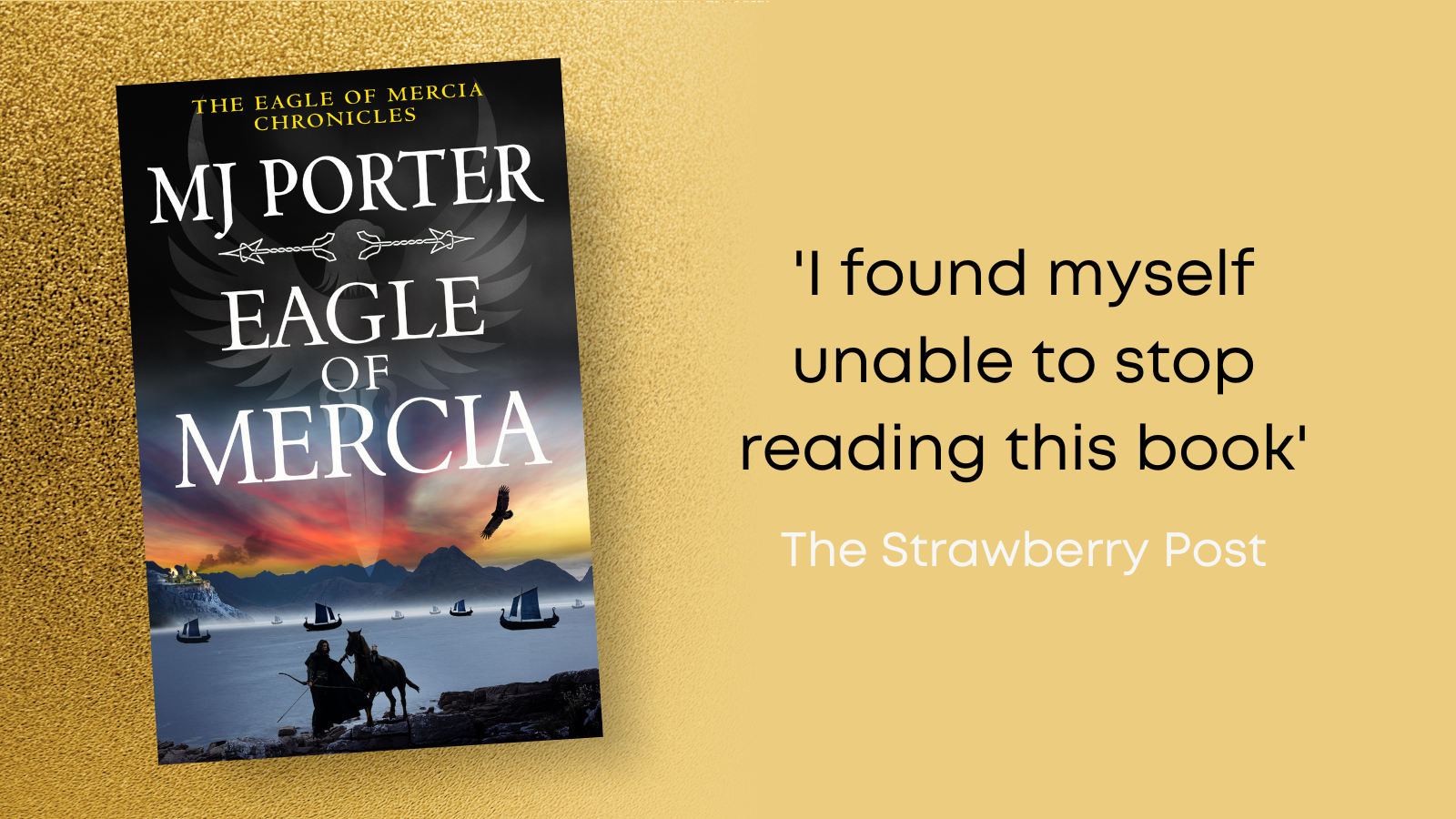
Check out the blog tour for Eagle of Mercia. My thanks to Rachel at Rachel’s Random Resources for organising and all the hosts for taking part. I will add the links each day. The initial reviews for Eagle are very positive, so I hope you’ll enjoy it too.
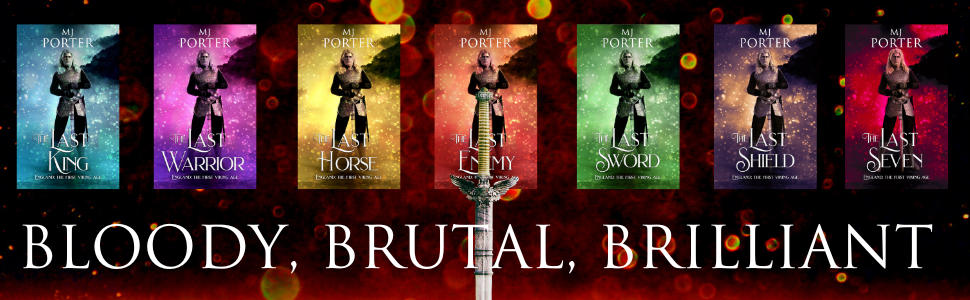
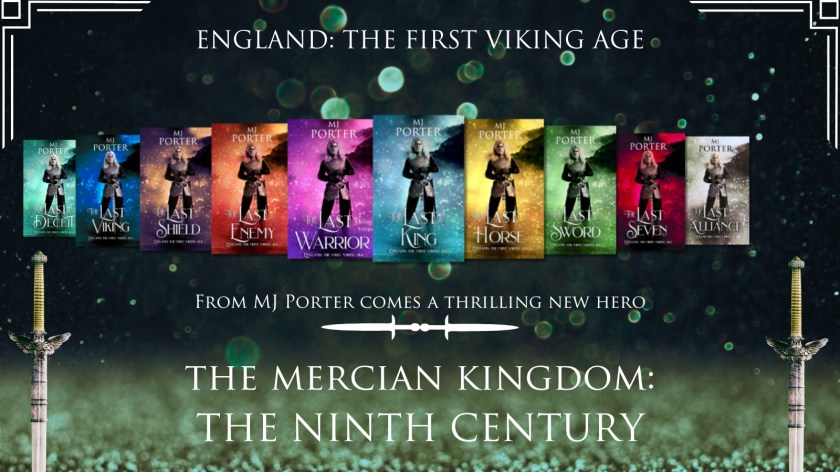
If you’ve been with Coelwulf, Rudolf, Icel, Edmund and Pybba since the beginning, then you’re probably with me in trying to work out how 3 years have gone by since the release of the first book. There are now seven books in all, the most recent, somewhat jokingly called The Last Seven, a name that stuck, as well as a short story collection, Coelwulf’s Company. Book 8, will hopefully, wind its way to you by the end of 2023 – unfortunately, young Icel has somewhat claimed my attention for much of the last 18 months with his own series, The Eagle of Mercia Chronicles.
If you’ve not yet discovered The Mercian Kingdom: The Ninth Century series, then you’ve in for a treat, as long as you’re not easily offended by foul language and violence.
Don’t forget to check out the short story collection, Coelwulf’s Company.
If you follow the link, here (to Bookfunnel) you can also download a copy of The New Recruit, a short story I wrote while working on The Last Seven.
The Last King books are available in ebook, paperback and hardback, and The Last King (book 1 ) is also available in audio.
The Last King is currently 99p/99c on Amazon UK/US for a limited time only.
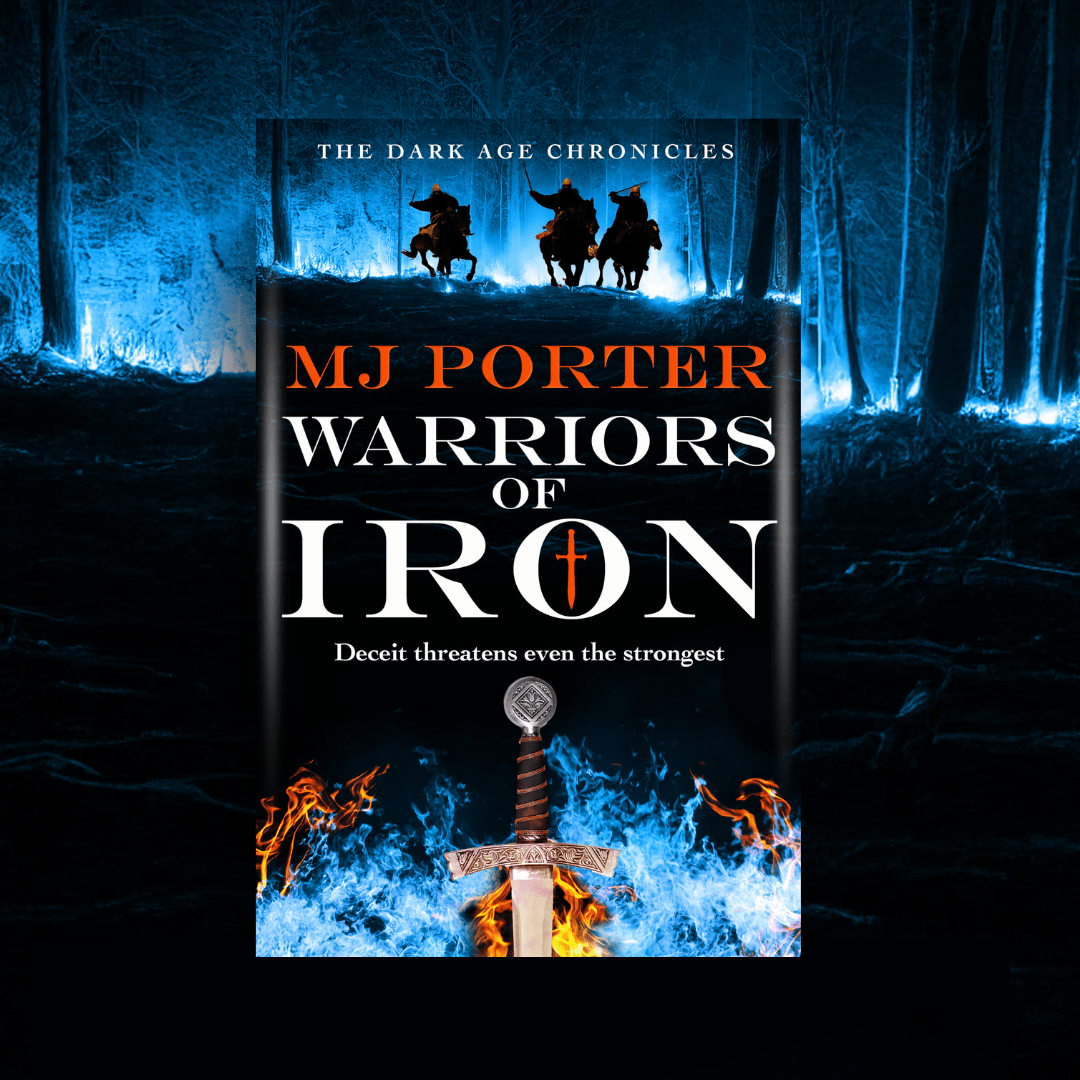
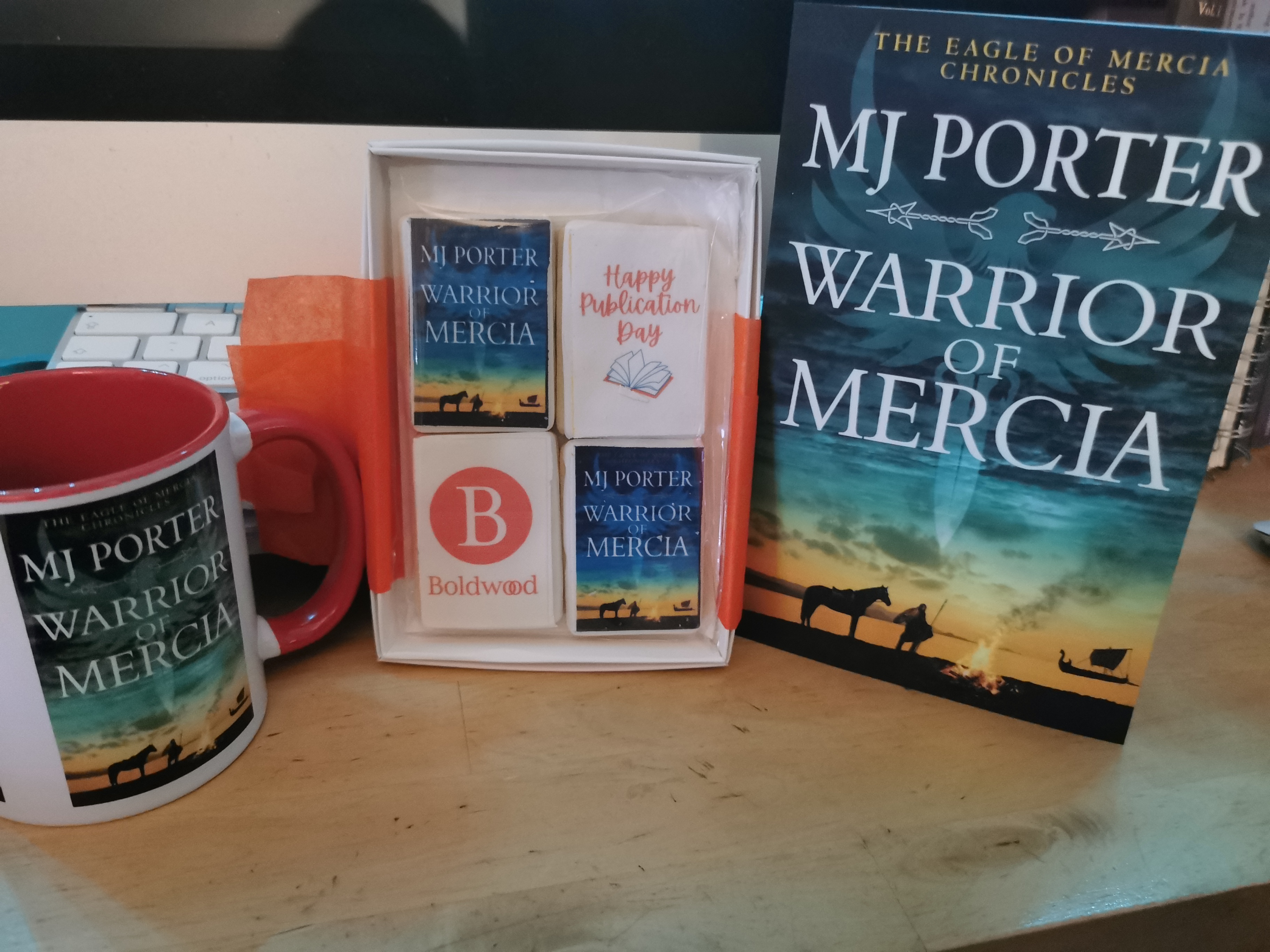
With the release of Eagle of Mercia, book 4 in the Eagle of Mercia Chronicles, only two weeks away, what better time to snap up book 3, Warrior of Mercia. The ebook is currently reduced to 99p/99c in the UK, Canada and Australia.
Icel is a lone wolf no more…
Oath sworn to Wiglaf, King of Mercia and acknowledged as a member of Ealdorman Ælfstan’s warrior band, Icel continues to forge his own destiny on the path to becoming the Warrior of Mercia.
With King Ecgberht of Wessex defeated and Londonium back under Mercian control, the Wessex invasion of Mercia is over.
But the Wessex king was never Mercia’s only enemy. An unknown danger lurks in the form of merciless Viking raiders, who set their sights on infiltrating the waterways of the traitorous breakaway kingdom of the East Angles, within touching distance of Mercia’s eastern borders.
Icel must journey to the kingdom of the East Angles and unite against a common enemy to ensure Mercia’s hard-won freedom prevails.
If you’ve already read Warrior of Mercia (thank you), then check out book 4, Eagle of Mercia, released on 3rd May 2023 and available to preorder now.
A mercy mission in the heart of Wessex is beset with deadly, bloody dangers.
Tamworth AD831
Icel’s profile continues to rise. Lord of Budworth and warrior of Mercia, he’s acknowledged by King Wiglaf and his comrades to keep Mercia safe from the ravages of Wessex, the king-slayer of the East Angles, and the Viking raiders. But, danger looms. Alongside Spring’s arrival comes the almost certain threat of the Viking raiders return.
When Lord Coenwulf of Kingsholm is apprehended by a Viking and held captive on the Isle of Sheppey in Wessex held Kent, Icel is implored by Lady Cynehild to rescue her husband.
To rescue Lord Coenwulf, Icel and his fellow warriors must risk themselves twice over, for not only must they overpower the Viking raiders, they must also counter the threat of Mercia’s ancient enemy, the kingdom of Wessex as they travel through their lands.
Far from home and threatened on all sides, have Icel and his fellow warriors sworn to carry out an impossible duty?
Today sees the release of book 3 in my series about young Icel, a much-loved character from my The Ninth Century series featuring King Coelwulf, the last king of Mercia. And so, now that Icel as a young man, and Icel as a crotchety older man are both firmly in reader’s minds, I thought I’d share more about the idea for the Eagle of Mercia Chronicles series.
My characters in the Ninth Century series feel like they very much arrived in my head fully formed. Coelwulf was obviously the first, but others quickly followed, and Icel, with his derisive comments about any of their accomplishments, was an early fan favourite, and one of my favourites as well. Surly, and outspoken, while offering little of his life before the period that my characters knew him, he really did speak to me when I was deciding on a new series to write for Boldwood Books. All those little comments he makes. I think the below is our first introduction to his character;
“In the reign of King Wiglaf I first became a man,” he’s fond of saying, although he never explains what act made him a man. Again, I’ve stopped questioning him. Edmund likes to when he’s either drunk too much, or is trying to distract himself from whatever attack we’re about to begin. And of course Rudolf hangs on Icel’s every word. They’re an excellent match for each other, the boy who never runs out of questions, and the man who never answers them.’ (The Last King)
All these hints at what he might really have been like when he was perhaps no older than Rudolf, another firm fan favourite, made me want to tell his story. It did help that Mercia, at the time he would have been a boy was in political turmoil. It also helped that the Viking Raiders were making an appearance in Saxon England as well throughout the 830s. But Icel is a fictional character, and while fictionalising my Saxon characters, the men and women I normally write about did actually exist, even if we only have their names. But Mercia, in the 820s and 830s suffered a series of successive kingships, many of which failed, and so while Icel is fictitious, he does allow me to give a more rounded view of the entirety of events. He will live through these tumultuous times, and that’s important when I wanted to write about these events as well as all the kings.
It also helped that, in my contrary nature as a writer of historical fiction, that I always want to offer something a little different to the oft-taken paths when authors write about Saxon England – the Vikings, the reign of Alfred, Ethelred the Unready and the Norman Conquest, as well as the Golden Age of Northumbria, are often chosen but there is just so much more in these six hundred years to write about. So, no one else was writing about Mercia as it begins to falter in the 820s and 830s, and so I thought, why not:)
I really, really hope you’ll enjoy book 3, Warrior of Mercia, which follows Icel to the kingdom of the East Angles. I can also assure you that Book 4 is well underway as well.
Icel is a lone wolf no more…
Oath sworn to Wiglaf, King of Mercia and acknowledged as a member of Ealdorman Ælfstan’s warrior band, Icel continues to forge his own destiny on the path to becoming the Warrior of Mercia.
With King Ecgberht of Wessex defeated and Londonium back under Mercian control, the Wessex invasion of Mercia is over.
But the Wessex king was never Mercia’s only enemy. An unknown danger lurks in the form of merciless Viking raiders, who set their sights on infiltrating the waterways of the traitorous breakaway kingdom of the East Angles, within touching distance of Mercia’s eastern borders.
Icel must journey to the kingdom of the East Angles and unite against a common enemy to ensure Mercia’s hard-won freedom prevails.
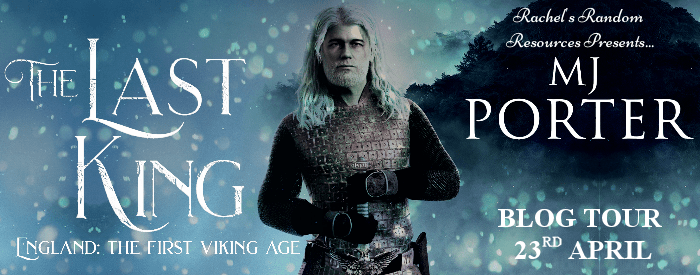
And you can follow the blog tour with Rachel’s Random Resources too. I’ll be updating with links to reviews, and I’d like to say a huge thank you to my blog tour hosts and usual reviewers for going out of their way to make release day so special.