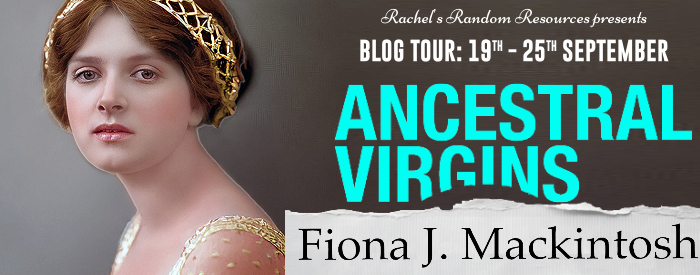
I’m welcoming Ancestral Virgins by Fiona J MacKintosh to the blog, with a fab guest post #historicalfiction #blogtour #nonfiction
Why Write about the Past?
Historical fiction has been around as long as there have been novels. In 1859, Charles Dickens published The Tale of Two Cities, which was set during the French Revolution. Thackeray’s Vanity Fair came out in 1849, 34 years after the historic events it portrayed including the Battle of Waterloo. And Walter Scott went even further back in his 1819 novel Ivanhoe to the reign of Richard the Lionheart in 12th century England.
My recently published historical novel, Ancestral Virgins, is set in Britain a little over a century ago in the period before, during, and after the Great War. It was a time – like now – when new technologies were overturning the old realities at a rapid pace as the telephone, the car, and the airplane came into regular use. In one scene in the novel, the guests at a dinner party in a Sussex manor house rush outside to look up at the night sky, trying to spot a Zeppelin on a test flight above southern England.
“Someone shouted ‘Look!’ and a long slim shadow moved out from behind a cloud and stole very slowly across the open sky, sliding out of sight behind another cloud. ‘How can there be people up there in that thing?’ Tessa whispered.”
Today, most of us see planes crisscrossing the sky every day, but for those people in 1914, who would never before have seen anything up there but birds, the sight of that metal tube bearing humans high above the earth must have been both amazing and terrifying.
Capturing that lost sense of newness about things we now take for granted is one reason why I write historical fiction.
Another reason is that as the Spanish-American philosopher George Santayana famously said, “Those who cannot remember the past are condemned to repeat it.” History can be reexamined just as legitimately by the novelist as by the non-fiction writer, because fiction can take us deep into the minds and emotions of people who lived through real events of the past.
To take an example from Ancestral Virgins, George Ingham, a young British explosives expert working for the de Beers diamond company in South Africa, finds himself trapped in Kimberley during its long siege by the Boers. Food supplies run short, and soon the townspeople are barely getting by on “mealie pap, horseflesh, and the occasional vegetable from the de Beers kitchen garden.” Ingham and the woman with whom he’s in love lie awake at nights talking about the meals that they’re craving.
“Ingham described the Sunday dinners his mother made on special occasions – roast beef, a little pink, with roasted potatoes, carrots, and parsnips in parsley and gravy, with warm yeasty bread crowned with knobs of melting butter. In the moonlight, he could see a gleam of saliva at the corner of Ottilie’s mouth.”
The starvation during the siege is a historical fact; the fantasies of food are how I imagined that it was experienced by those who lived through it.
But imagination alone is not enough when writing realist historical fiction. It must always build on what is already there – otherwise known as the facts. I can attest that my descriptions of the historical events in Ancestral Virgins are based on a huge amount of research. For that Kimberley chapter alone, I memorized the entire map of the town by heart as well as a week-by-week digest of what happened during the four-month siege and bombardment. It’s not the quickest way to write a novel, but you learn an enormous amount and the grounding that the research gives you is invaluable for imagining your way inside the heads of your characters and to experience the sights, sounds, and smells that they would have seen, heard, and smelled.
I do this work because I hope that you, the reader, can also feel like you’re in that Sussex garden in 1914 looking up at the night sky or in that dusty South African wartime town in 1899. I want us to go back there together, right alongside the characters I’ve made up from my imagination.
This is my overriding motivation for why I write historical fiction – so that, however briefly, we can feel the way our ancestors felt within their own lifetimes when they had no conception of all the history that was still to come.
Here’s the blurb
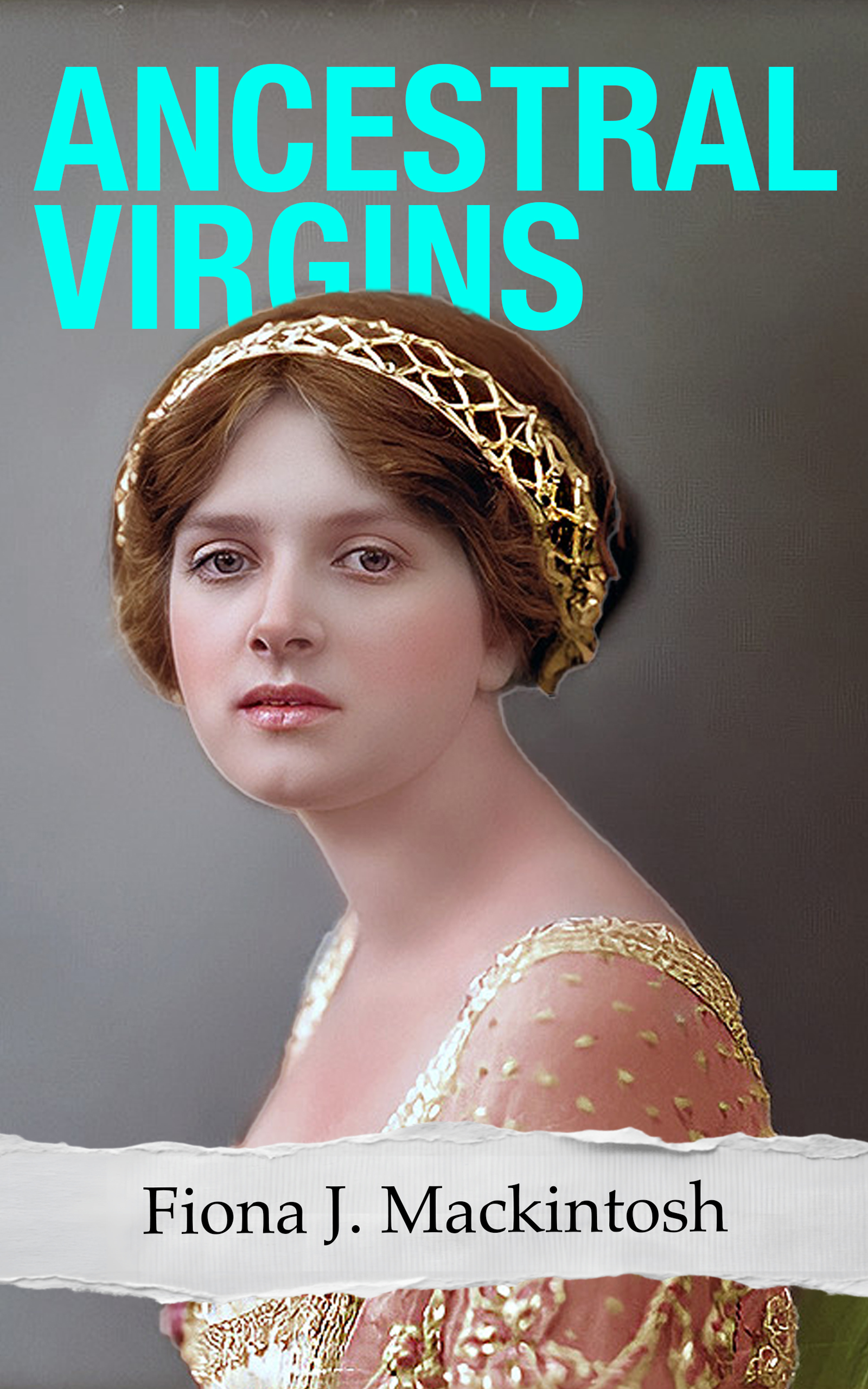
In early 20th century Britain, society was changing rapidly, but not much was changing for women. From different ends of the social spectrum, Celia Mapperley and May Hallam wrestle with rules and circumstances beyond their control and must navigate love, sex, war, and the thin line between conformity and scandal. As they each bear the shame of a devastating family secret, their stories come together in ways that neither could have imagined.
Purchase Link
https://books2read.com/rl/ancestralvirgins
Meet the author
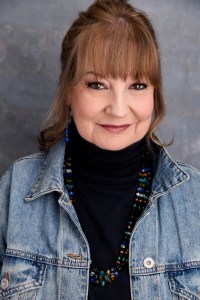
Fiona J. Mackintosh is a Scottish-American author living in Washington D.C. whose fiction draws from both sides of the Atlantic. Her flash fiction collection, The Yet Unknowing World (Ad Hoc Fiction, 2021), was a runner-up for the 2021 Saboteur Award for best short story collection, and her debut novel Ancestral Virgins will be published on June 26, 2026. Her flashes were selected for Best Small Fictions in 2023 and 2019, and her short stories have been finalists in the Cairde Word, Colm Toíbín, Bristol, Galley Beggar, Exeter, and Fish Short Story Prizes. She is a proud recipient of an Individual Artist’s Award from the Maryland State Arts Council. www.fionajmackintosh.com
https://linktr.ee/Fionajanemack
Posts
Stay up to date with the latest from the blog.