
Mercia: Exploring the Heartland of Saxon England and Its Lasting Influence

Having written more books than I probably should about the Saxon kingdom of Mercia, and with more planned, I’ve somewhat belatedly realised I’ve never explained what Mercia actually was. I’m going to correct that now.

Having grown up within the ancient kingdom of Mercia, still referenced today in such titles as the West Mercia Police, I feel I’ve always been aware of the heritage of the Midlands of England. But that doesn’t mean everyone else is.

Where was Mercia?

Simply put, the kingdom of Mercia, in existence from c.550 to about c.925 (and then continuing as an ealdordom, and then earldom) covered the area in the English Midlands, perhaps most easily described as the area north of the River Thames, and south of the Humber Estuary – indeed, nerdy historians, and Bede, call the area the kingdom of the Southumbrians, in contrast to the kingdom of the Northumbrians – do you see what Bede did there?

While it was not always that contained, and while it was not always that large, Mercia was essentially a land-locked state (if you ignore all the rivers that gave easy access to the sea), in the heartland of what we now know as England.
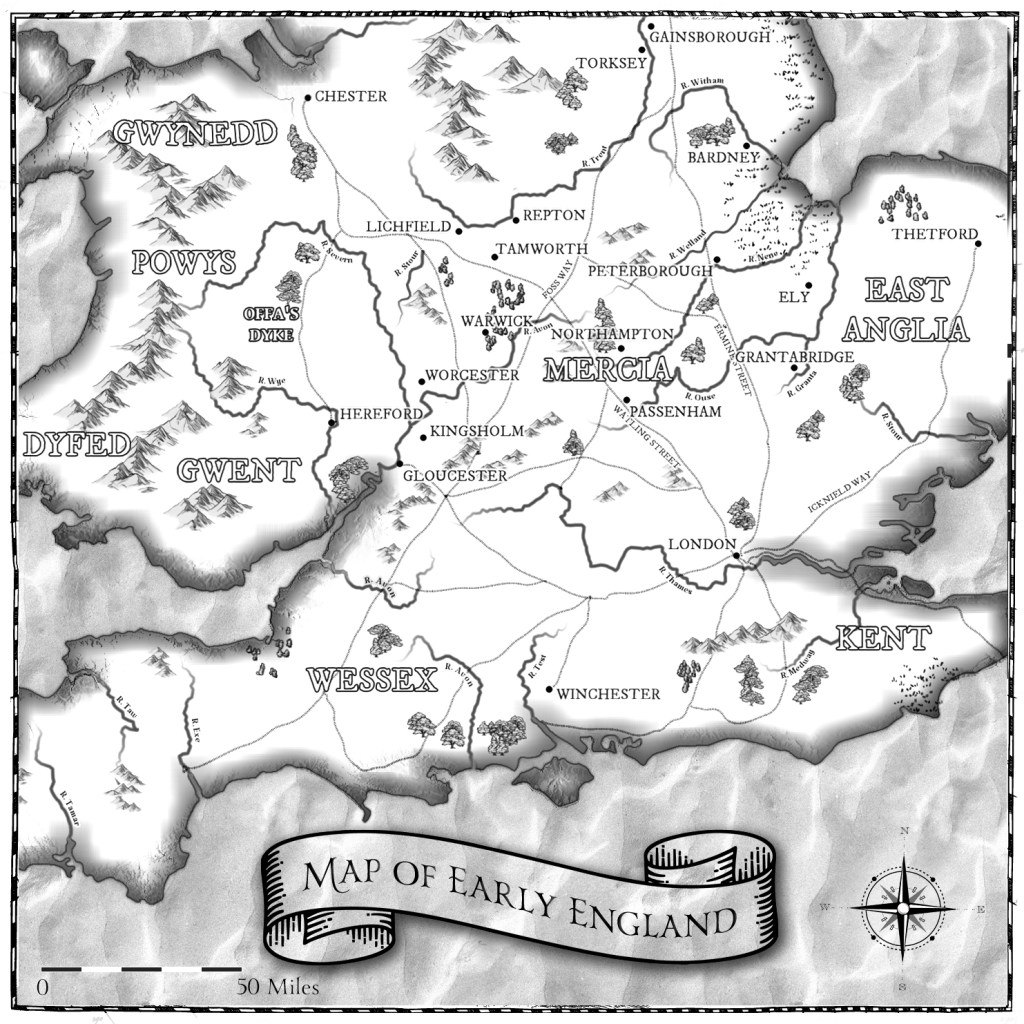
Map of Early England, showing the location of Mercia for the post What was the ancient kingdom of Mercia?

What was Mercia?

Mercia was one of the Heptarchy—the seven ancient kingdoms that came to dominate Saxon England – Mercia, Wessex (West Saxons), the East Angles, Essex (East Saxons), Sussex (South Saxons) and Kent.

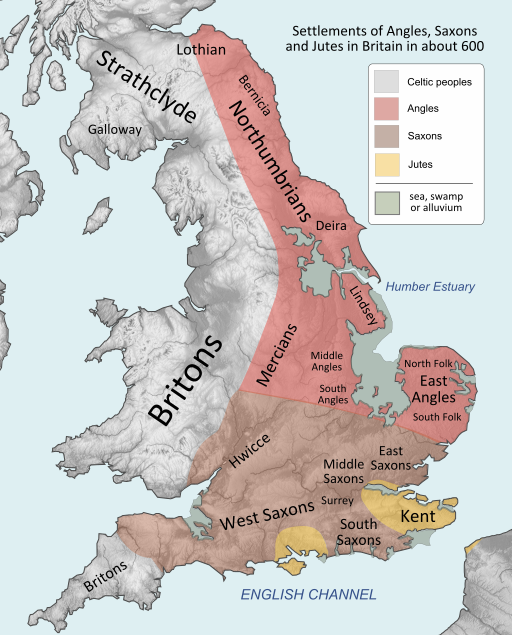
Map showing the settlement of England in about the year 600, showing Mercians, Angles, Saxons and Kent
User:Hel-hama, CC BY-SA 3.0 <http://creativecommons.org/licenses/by-sa/3.0/&gt;, via Wikimedia Commons

In time, it would be one of only four to survive the infighting and amalgamation of the smaller kingdoms, alongside Northumbria, the kingdom of the East Angles, Mercia, and Wessex (the West Saxons).

The End of Mercia?

Subsequently, it has traditionally been said to have been subsumed by the kingdom of Wessex, which then grew to become all of ‘England’ as we know it.

This argument is subject to some current debate, especially as the king credited with doing this, Athelstan, the first and only of his name, might well have been born into the West Saxon dynasty but was potentially raised in Mercia, by his aunt, Lady Æthelflæd, and was, indeed, declared king of Mercia on the death of his father, King Edward the Elder in July 924, and only subsequently became king of Wessex, and eventually, king of all England.
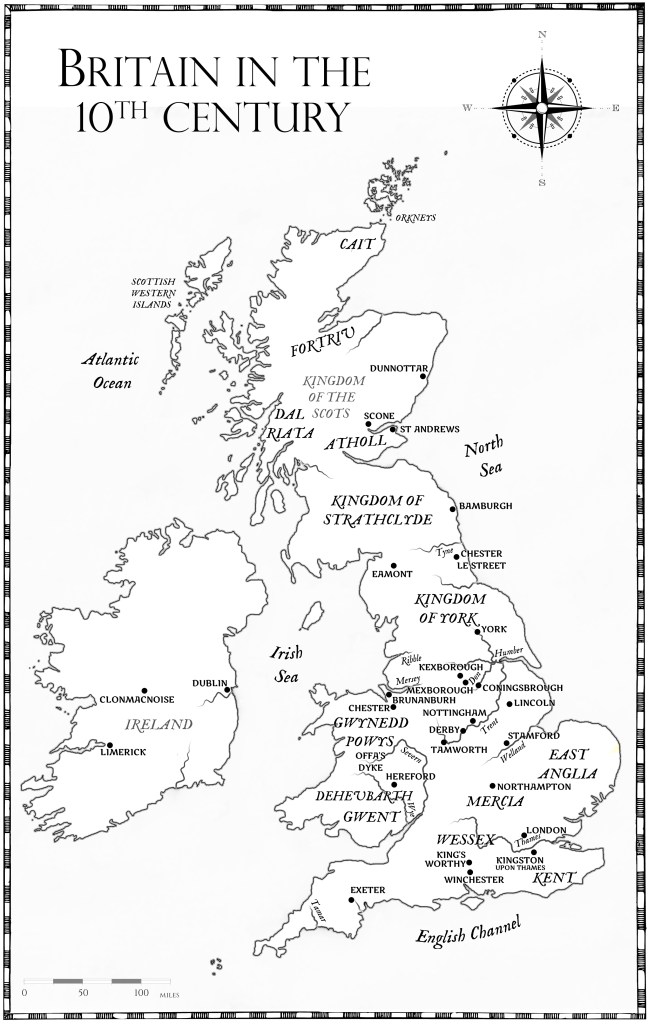
Map of Britain in the tenth century, showing Mercia, Wessex, Kent and the kingdom of York.

Mercia’s kings

But, before all that, Mercia had its own kings. One of the earliest, and perhaps most well-known, was Penda, in the mid-7th century, the alleged last great pagan king. (Penda features in my Gods and Kings trilogy). Throughout the eighth century, Mercia had two more powerful kings, Æthelbald and Offa (of Offa’s Dyke fame), and then the ninth century saw kings Wiglaf and Coelwulf II (both of whom feature as characters in my later series, The Eagle of Mercia Chronicles and the Mercian Ninth Century), before the events of the last 800s saw Æthelflæd, one of the most famous rulers, leading the kingdom against the Viking raiders.

The Earldom of Mercia

And even when the kingdom itself ceased to exist, it persisted in the ealdordom and earldom of Mercia, (sometimes subdivided further), and I’ve also written about the House of Leofwine, who were ealdormen and then earls of Mercia throughout the final century of Saxon England, a steadfast family not outmatched by any other family, even the ruling line of the House of Wessex.

In fact, Mercia, as I said above, persists as an idea today even though it’s been many years since the end of Saxon England. And indeed, my two Erdington Mysteries, are also set in a place that would have been part of Mercia a thousand years before:) (I may be a little bit obsessed with the place).
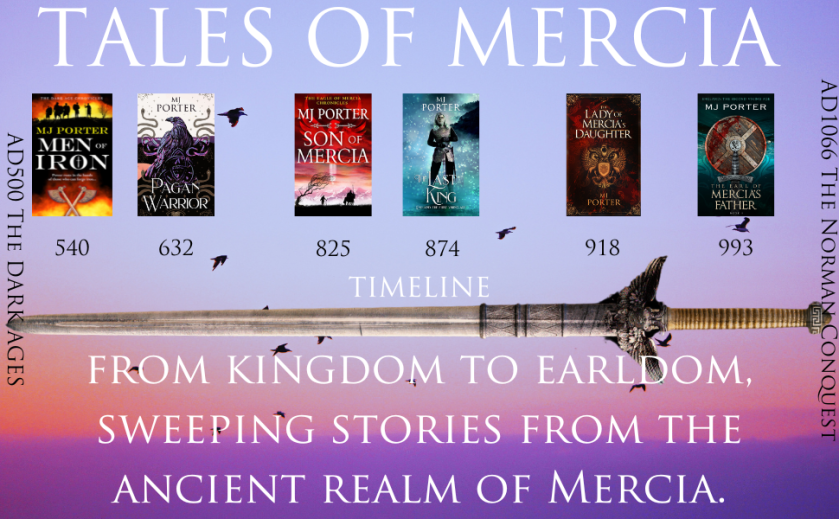
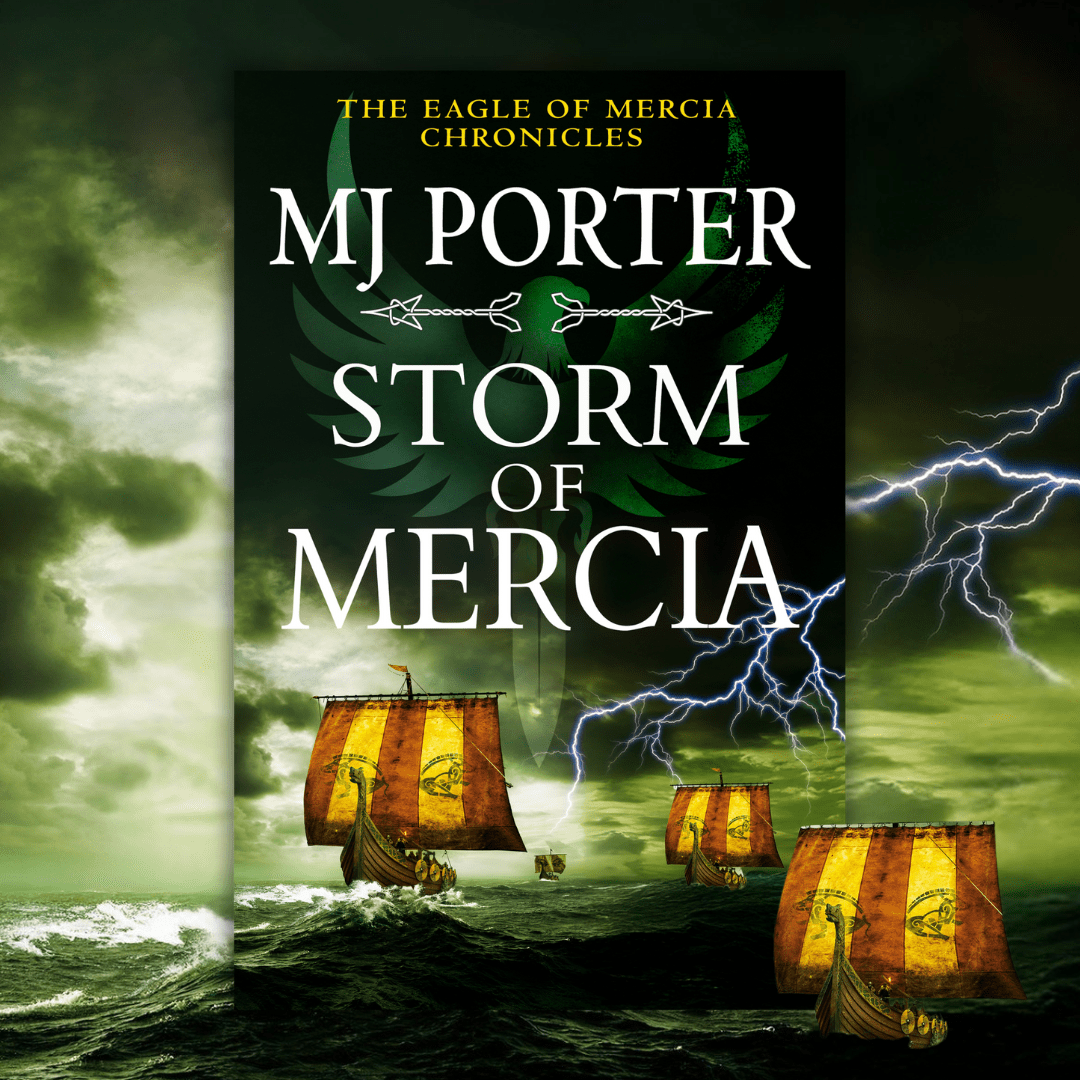
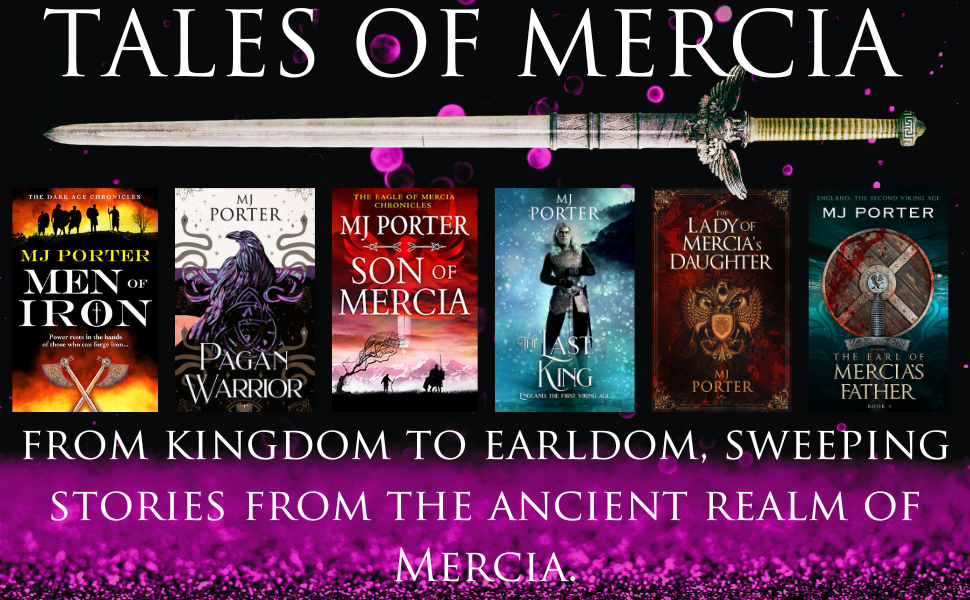
Image shows the 6 book cover titles in the Tales of Mercia series of interconnected tales by historical fiction author MJ Porter
The Tales of Mercia
Timeline of MJ Porter's Tales of Mercia series, starting with the Dark Age Chronicles and ending with The Earl of Mercia's Father

Posts

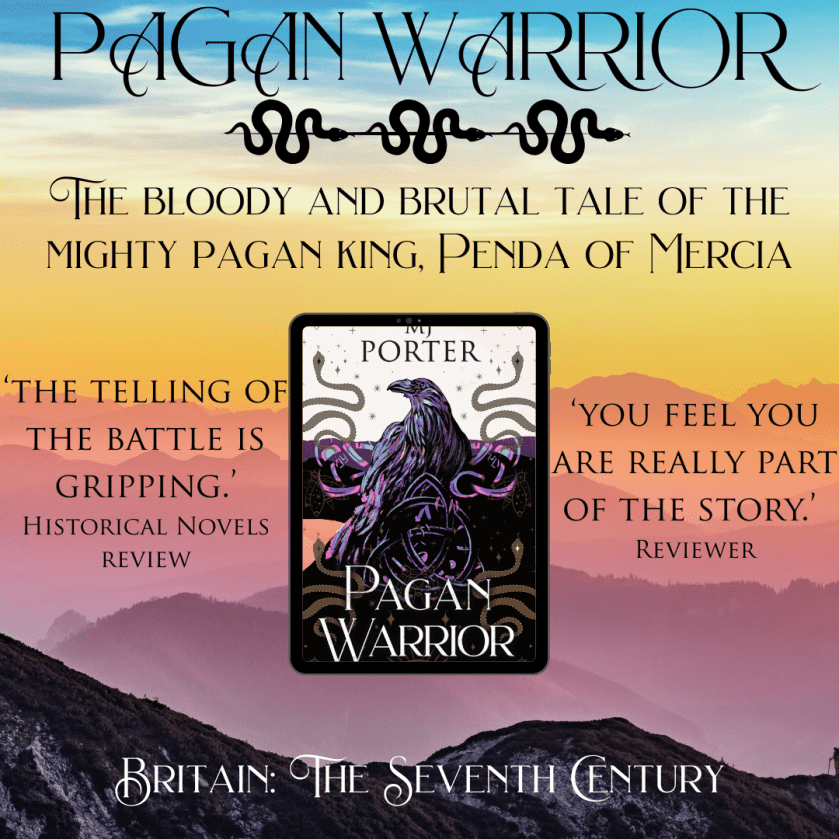
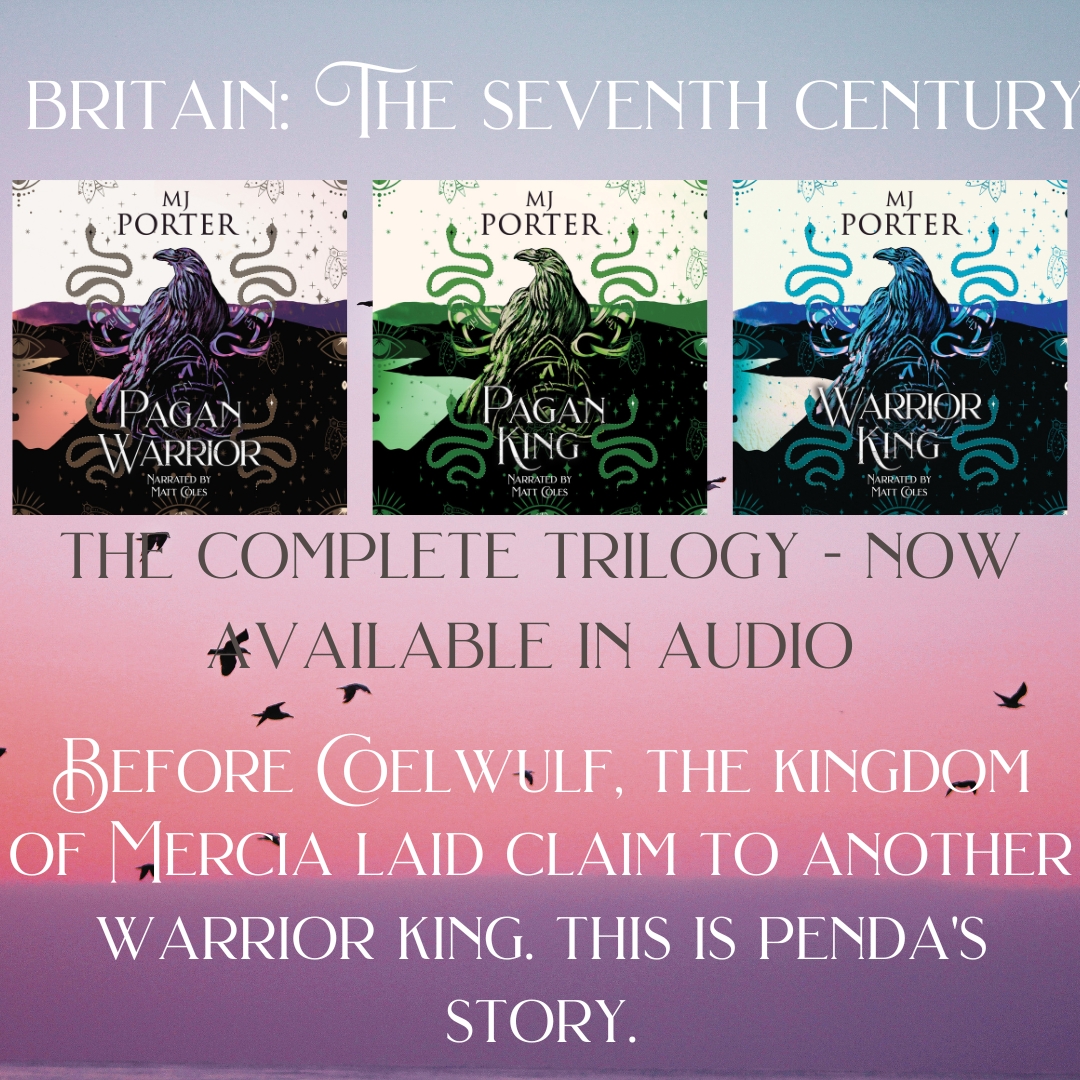
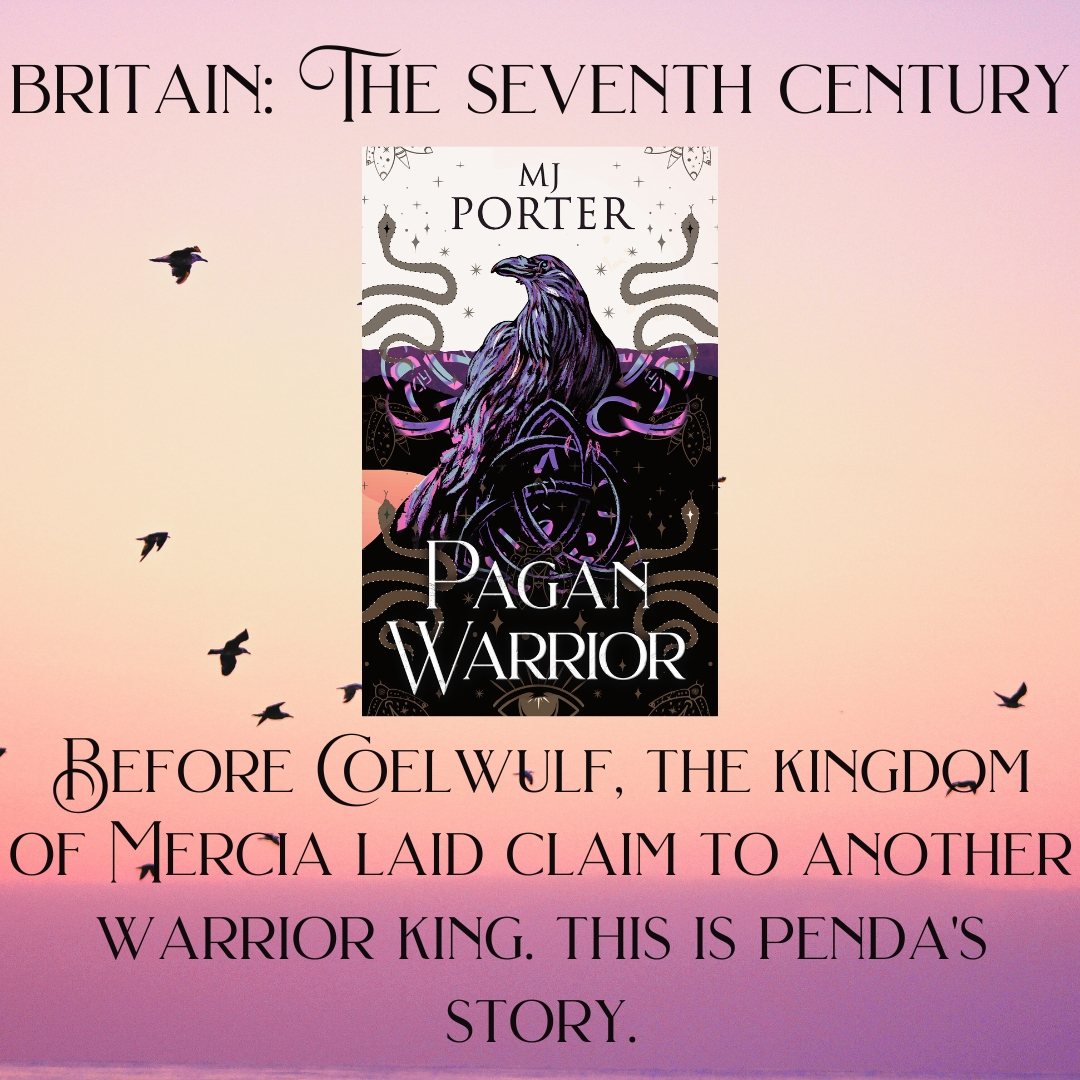
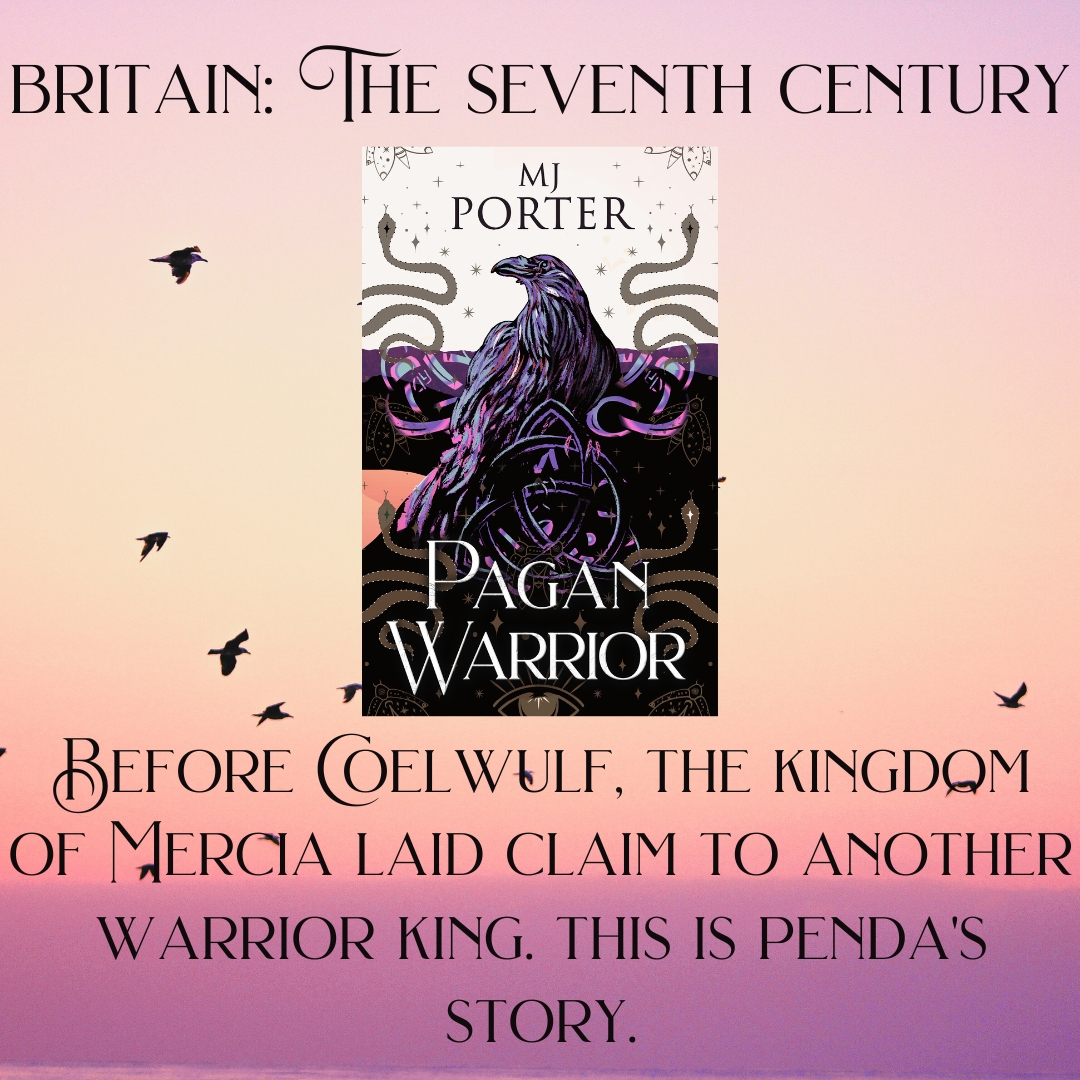
I’m sharing a post about Britain in the Seventh Century, the setting for #PaganWarrior, the first book in the #GodsAndKings trilogy #histfic #PendaThePagan

Here’s the blurb

Britain. AD632.

Penda, a warrior of immense renown, has much to prove if he is to rule the Mercian kingdom of his dead father and prevent the neighbouring king of Northumbria from claiming it.

Unexpectedly allying with the British kings, Penda races to battle the alliance of the Northumbrian king, unsure if his brother stands with him or against him as they seek battle glory for themselves, and the right to rule gained through bloody conquest.

There will be a victor and a bloody loser, and a king will rise from the ashes of the great and terrible battle of Hædfeld.

books2read.com/PaganWarrior

Britain in the Seventh Century – a patchwork of kingdoms

One of the hardest processes when writing about this very early period of Britain is to get an idea of what the kingdoms might have looked like and to explain this to the reader. The seventh century is often seen as the period when the Heptarchy, the seven very well-known kingdoms of the Saxon period, emerged and formed, ultimately derived from potentially very many much smaller kingdoms, the names of which are only rarely still known.

The Heptarchy consisted of the kingdoms of Northumbria (itself derived from the uniting of Deira and Bernicia), Mercia, the kingdom of the East Angles, Wessex, Sussex, Kent, and Essex. In later centuries, these kingdoms would merge until only four main kingdoms remained, and then, from the early middle of the tenth century, England emerged. But the battle of Hædfeld with which Pagan Warrior concludes was a British-wide battle set as this process was formalising in the seventh century, and there are yet more kingdoms that must be mentioned which didn’t form part of Saxon England.

Scotland didn’t yet exist, but Dal Riata, Pictland and Alt Clut (sometimes called Strathclyde) did. Wales didn’t exist, although the kingdoms of Gwynedd, Deheubarth, Ceredigion and Powys did, The kingdom of Dumnonia (modern-day Cornwall), was also in existence and very much not part of Saxon England. Indeed, these kingdoms are often termed British, as opposed to Saxon. As someone woeful at geography – I purposefully don’t adopt the names of places from this period because it confuses me – I’m only too well aware of how much I’m asking from my reader as it is without adding weird place names to already strange sounding personal names, and yet it was necessary to add a whole host of strange names, which often, have no relation to the current names of counties, let alone kingdoms.

All of these different kingdoms, we’re told, were involved in some way in the battle of Hædfeld. Some of the kingdoms joined the alliance, spear-headed by Cadwallon of Gwynedd, Edwin’s foster-brother. Others joined that of Edwin of Northumbria. Almost all of them took one side or another in the mighty battle of Hædfeld fought in 632 or 633 (there is some confusion about the exact date) between the two sides. To ensure my readers have some idea of who’s who, I’ve termed all of the character’s as being ‘of’ their kingdom, although I’m unsure if that’s actually how they might have been named.

I was surprised by how many individuals could be named from the seventh century, particularly for the build-up to the battle of Hædfeld. The cast is not Game of Thrones huge, but it was larger than I expected. Not just Penda of the Hwicce, only later could he be termed of Mercia, and Cadwallon of Gwynedd in the British ‘alliance’, but also Cloten of Deheubarth, Clydog of Ceredigion, Eiludd of Powys, Clemen of Dumnonia, Domnall Brecc of Dal Riata, Beli of Alt Clut and Eanfrith of Bernicia. While on the Northumbrian led alliance were Edwin of Northumbria, alongside his children, Osfrith and Eadfrith, as well as Eowa of the Hwicce, Osric of Deira – Edwin’s cousin, Cynegils of Wessex, Sigeberht of the East Angles and Oswald of Bernicia – Edwin’s nephew. At least, that’s how I stack the two sides as the battle is about to commence. In later periods, it is sometimes a struggle to find who was king of where and when that might have been, so to find so many characters, even if it can seem a little overwhelming, was fantastic and ensured that the British-wide battle of Hædfeld could be retold in Pagan Warrior with a nod to each of these kings, and the part they might, or might not, have played in the events that played out on that fateful day in October 632 or 633. 

Map of Britain in the 600s, User:Hel-hama, CC BY-SA 3.0 <http://creativecommons.org/licenses/by-sa/3.0/&gt;, via Wikimedia Commons


Posts

Who was the Lady of Mercia, Æthelflæd? #non-fiction #Mercia

Who was Lady Æthelflæd, and what do we know about her from the contemporary sources?

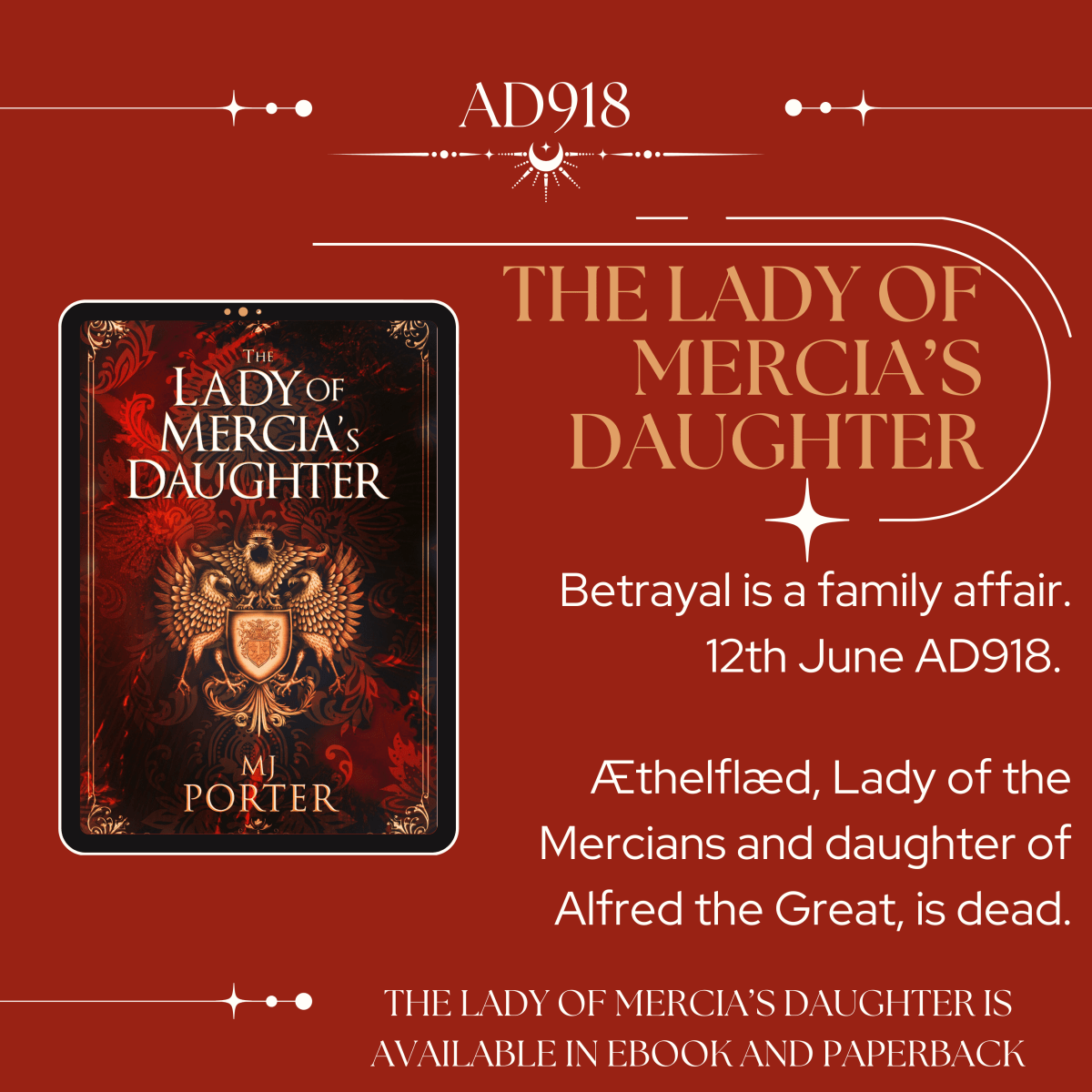
Æthelflæd,[i] said to be the oldest of the children of King Alfred, and his wife, Lady Eahlswith, was born around 866, the exact details are unknown, although the date of her death is well attested as 12 June 918.[ii]

She was married to Lord Æthelred of the Mercians at some point during the 880s, although an exact date cannot be given. The first mention of this union occurs in a charter dated to 887,[iii] although the date may not be reliable. There is also little information about who Lord Æthelred might have been, and his subsequent military successes should not be dismissed, as they often are. Lord Æthelred is assumed to have been a nobleman from Mercia, and one with enough of a reputation to secure the marriage alliance with the Wessex royal family (and it must be assumed, unrelated to her mother’s birth family, and also her father’s family through his sister’s union to Burgred). 
Their marriage was a success, and yet there was only one child, a daughter, Ælfwynn, born to the union, perhaps quite soon after the marriage occurred.
During her lifetime, Æthelflæd’s name appears on fifteen surviving charters. These are a real collection, some promulgated by her father, her brother, her husband and then, in her name alone. The earliest to feature her name is S223 dated to 884×9, so between 884 and 889, which survives in two manuscripts, and discussed the building of the burh at Worcester.  In her final charters, she’s the sole promulgator, her husband no doubt having already died. It is believed he died in 911. S224 and S225 date to 914 and 915. S225 names Æthelflæd as the ruler of Mercia, something which The Anglo-Saxon Chronicle mirrors in some versions. 

In 912, the C text records, ‘Here, on the eve of the Invention of the Holy Cross, Æthelflæd, Lady of the Mercians came to Scergeat and built a stronghold there, and the same year, that at Bridgnorth.’[xxvii]

In 913, the C text further records, ‘Here, God helping, Æthelflæd, Lady of the Mercians, went with all the Mercians to Tamworth, and then built the stronghold there early in the summer, and afterwards before Lammas that at Stafford.’[xxviii]

In 917, the C text writes, ‘Here, before Lammas, God helping, Æthelflæd, Lady of the Mercians took possession of the stronghold which is called Derby, together with all that belonged to it.’[xxxi]

Æthelflæd’s death is recorded in the A and C editions of the Anglo-Saxon Chronicle and also in the E version of the Anglo-Saxon Chronicle, even if only in passing. ‘Here Æthelflæd, Lady of the Mercians, passed away.’[xxxii]

A text states: ‘and then when he (Edward) was settled in the seat there, his sister Æthelflæd at Tamworth, died 12 days before midsummer … and all the nation of the land of Mercia which was earlier subject to Æthelflæd turned to him.’

The C text of 918 offers:

Here in the early part of this year, with God’s help, she [Æthelflæd] peaceably got in her control the stronghold at Leicester and the most part of the raiding-armies that belonged to it were subjected. And also the York-folk had promised her – and some of them granted so by pledge, some confirmed with oaths – that they would be at her disposition. But very quickly after they had done that, she departed, twelve days before midsummer, inside Tamworth, the eighth year that she held control of Mercia, with rightful lordship; and her body lies inside Gloucester in the east side-chapel of St Peter’s Church.[xxxiii]

It seems highly probable that Æthelflæd’s death, when it came, was unexpected, occurring in the middle of an advance into the Danelaw and the Five Boroughs (Derby, Nottingham, Lincoln, Stamford, Leicester). It was left to her daughter, and also her brother, to continue her work, and you can read their story in The Lady of Mercia’s Daughter and A Conspiracy of Kings.

Or you can read about the historical women in my non-fiction title, The Royal Women Who Made England.


You can can read all about her daughter, the historical Ælfwynn here.

https://amzn.to/3JnZoDC

[i] PASE Æthelflæd (4)

[ii] Swanton, M. ed. and trans. The Anglo-Saxon Chronicles, (Orion Publishing Group, 2000), AD 918

[iii] S217, surviving in two manuscripts

[xviii] Baker, N. and Holt, R. ‘The city of Worcester in the tenth century’, in St Oswald of Worcester: Life and InfluenceBrooks, N. and Cubitt, C. ed, (Leicester University Press, 1996), pp.134–5

[xix] Sawyer, P.H. (ed.), Anglo-Saxon charters: An annotated list and bibliography, rev. Kelly, S.E., Rushforth, R., (2022). http://www.esawyer.org.uk/, S1446

[xxi] Sawyer, P.H. (ed.), Anglo-Saxon charters: An annotated list and bibliography, rev. Kelly, S.E., Rushforth, R., (2022). http://www.esawyer.org.uk/, S1282

[xxii] Hart, C.R. The Early Charters of Northern England and the North Midlands (Leicester University Press, 1975), p.102 (100)

[xxvi] Swanton, M. ed. and trans. The Anglo-Saxon Chronicles, (Orion Publishing Group, 2000) Ibid., p.94

[xxvii] Ibid., p.96

[xxviii] Ibid., p.96

[xxix] Ibid., p.97

[xxx] Ibid., p.100

[xxxi] Ibid., p.101

[xxxii] Ibid., p.103

[xxxiii] Ibid., p.105

[xxxv] See Stafford, P. After Alfred. Anglo-Saxon Chronicles and Chroniclers 900–1150, (Oxford University Press, 2020), for a full discussion of the Æthelflæd and Edward Chronicles.

Posts

I’m sharing a blog post about Penda, king of the Mercians.

Penda of Mercia

Penda of Mercia is famous for many things, including killing two Northumbrian kings throughout his life. He’s also famous for being a pagan at a time when Roman Christianity was asserting itself from the southern kingdom of Kent. But who was he?

Who was Penda of Mercia?

Penda’s origins are unclear. We don’t know when he was born or where he came from, although it must be assumed he was a member of a family from which the growing kingdom of Mercia might look for its kings. He’s often associated with the subkingdom of the Hwicce, centered around Gloucester. The later source, the Anglo-Saxon Chronicle, written at least two hundred and fifty years after his life records,

626 ‘And Penda had the kingdom for 30 years; and he was 50 years old when he succeeded to the kingdom.’ ASC A p24

626 ‘And here Penda succeeded to the kingdom, and ruled 30 years.’ ASC E p25

Knowing, as we do, that he died in 655, this would have made Penda over eighty years old at his death, a fact that is much debated. Was his age just part of the allure of the legend? A mighty pagan warrior, fighting well into his eighties? Sadly, we may never know the truth of that, but it is disputed, and there are intricate problems with the sources that boggle the brain.

Hædfeld, Maserfeld and Winwæd

Suffice it to say, we don’t know Penda’s age or origins clearly, but we do know that he was involved in three very famous battles throughout the middle years of the seventh century, that at Hædfeld in 632/33 fought somewhere close to the River Don, in which King Edwin of Northumbria was killed. That of Maserfeld, in 641/2 in which King Oswald of Northumbria was killed, close to Oswestry, not far from today’s Welsh border. And Penda’s final battle, that of Winwæd in 655 in which he was killed while fighting in the north, perhaps close to Leeds. While these are the battles we know a great deal about, thanks to the writings of Bede and his Ecclesiastical History of the English People, a Northumbrian monk, with an interest in Northumbria’s religious conversion, who completed his work in 731, Penda was a warrior through and through. He fought the kingdoms to the south, the West Saxons, or Wessex as we might know it. He fought in the kingdom of the East Angles. He allied with Welsh kings. He meddled in affairs in Northumbria, and had he not died in 655, it is possible that Northumbria’s Golden Age would have ended much sooner than it did. His son married a Northumbrian princess. His daughter married a Northumbrian prince. Penda was either brokering an alliance with Northumbria or perhaps using marriage as a means of assimilating a kingdom that he was clear to overrun. 

Bede

Our narrator of Penda’s reign, is sadly a Christian monk writing up to seventy years after his death. His commentary is biased, and his story is focused on the triumph of religion and Northumbria, probably in that order. And yet, as Bede’s work was coming to its conclusion, even he understood that the Golden Age of Northumbria was coming to an end. A later king, Æthelbald, related not to Penda, but to his brother, Eowa, killed at the battle of Maserfeld, although whether fighting beside his brother or for the enemy is unknown, was the force in Saxon England at the time. How those words must have burned to write when Bede couldn’t skewer the contemporary narrative as he might have liked.

But while Penda’s reign is so closely tied to the words of Bede, our only real source from the period in Saxon England, although there are sources that exist from Wales and Ireland, Penda’s achievements aren’t to be ignored.

Penda’s reputation

Recent historians cast Penda in a complimentary light. D.P. Kirby calls him ‘without question the most powerful Mercian ruler so far to have emerged in the Midlands.’ Frank Stenton has gone further, ‘the most formidable king in England.’ While N J Higham accords him ‘a pre-eminent reputation as a god-protected, warrior king.’ These aren’t hastily given words from men who’ve studied Saxon England to a much greater degree than I have. Penda and his reputation need a thorough reassessment.

After his death, his children ruled after him, but in time, it was to his brother’s side of the family that later kings claimed their descent, both King Æthelbald and King Offa of the eighth-century Mercian supremacy are said to have descended from Eowa.


Check out the Gods and Kings page for more information.

I’m sharing a blog post about what we do and don’t know about warfare in the Saxon era. #GodsAndKingsTrilogy #histfic #PaganKing

I’m sharing a blog post about what we do and don’t know about warfare in the Saxon era. #GodsAndKingsTrilogy #histfic #PaganKing

Here’s the blurb for Pagan King

Britain. AD641.

The year is AD641, and the great Oswald of Northumbria, bretwalda over England, must battle against an alliance of the old Britons and the Saxons led by Penda of the Hwicce, the victor of Hæ∂feld nine years before, the only Saxon leader seemingly immune to Oswald’s beguiling talk of the new Christianity spreading through England from both the north and the south.

Alliances will be made and broken, and the victory will go to the man most skilled in warcraft and statecraft.

The ebb and flow of battle will once more redraw the lines of the petty kingdoms stretching across the British Isles.

There will be another victor and another bloody loser.

books2read.com/PaganKing

Warfare during the Saxon period. What we know and what we don’t know about the battle of Hædfeld.

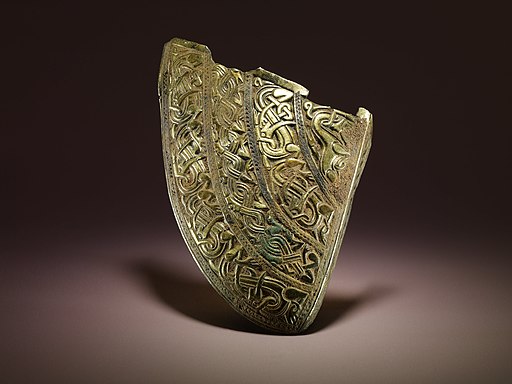
Thanks to some spectacular archaeological finds, we can visualise how a Saxon warrior might have looked. The reconstructions of the Sutton Hoo helm, and that found with the Staffordshire Horde (as well as a few others), present us with elaborate helmets crested with dyed-horse hair in a way very reminiscent of the Roman era. They glitter, and they seem to be festooned in gold and silver work, but whether these were actually worn in battle or not is debatable. Firstly, they would have made the kings or noblemen very noticeable to their enemy. Secondly, they were so valuable it’s impossible to consider the loss of one of them should they fall and their goods be taken by their enemy. Bad enough for their king and leader to die in battle, but to also lose such precious wealth as well seems unlikely. That said, of course, the Sutton Hoo helm was buried, and the fragments of the Staffordshire Hoard helmet were buried and lost. An image of the Staffordshire Helmet can be found here: https://www.stokemuseums.org.uk/pmag/collections/archaeology/the-staffordshire-hoard/

The monograph on the Staffordshire Hoard is also available for free download from https://library.oapen.org/handle/20.500.12657/39941

But there is another reason why these helmets might have existed, and that’s because they were for ceremonial purposes. Kings, before the reign of Athelstan (925-937) are not known to have undergone consecration with a crown but rather with a helmet. After all, they were warrior kings. Perhaps then, these survivals are more akin to that worn by a warrior-king when appearing before his people or for ceremonial reasons.

What then might have been the more usual garb for a warrior of the Saxon era, which at nearly six hundred years is bound to offer some variations? Shield, spear, seax, sword and byrnie. We get a feel for these items and how valuable they were from wills that survive from the later Saxon era, hundreds of years after the events of Pagan Warrior. Ealdormen had horses, both saddled and unsaddled, shields, spears, swords, helmets, byrnies, seax, scabbards and spears. The will of Æthelmær, an ealdorman in the later tenth century, records that he’s granting his king, ‘four swords and eight horses, four with trappings and four without, and four helmets and four coats of mail and eight spears and eight shields,’[1] as part of his heriot, a contentious term for something that some argue was an eleventh-century development, and others argue, is merely reflecting earlier practice on the death of a man.

There would also have been thegns and king thegns, who had their own weapons, as well as the men of the fyrd, the free-men who could be called upon to perform military service each year, as and when required. It’s often assumed they would have been less well-armed, although this begs the question of whether kings and their warrior nobility were prepared to sacrifice those they relied on to provide them with food to gain more wealth. They might have found themselves with the money to pay for food but without the opportunity to do so.

There are very few representations of warriors, but the surviving strands of the Gododdin, a sixth-century lament to the fallen of Catraeth gives an idea of how these warrior men thought of one another. There is much talk of killing many enemies, drinking mead, and being mourned by those they leave behind.

Flickr user “Portable Antiquities Scheme”, CC BY 2.0 <https://creativecommons.org/licenses/by/2.0&gt;, via Wikimedia Commons

Battle tactics from the period are impossible to determine fully. Before writing my books which are blood-filled and violent, I read a fascinating account, by a military historian, on how he thought the Battle of Hastings might have been won or lost. The overwhelming sense I came away from the book with was that local features, hillocks, streams, field boundaries even perhaps the path of a sheep track might well be the very thing that won or lost a battle for these opposing sides. The land that kings chose to go to war on was incredibly important,

When trying to reconstruct the battlefield for the battle of Hædfeld, which concludes Pagan Warrior, I encountered a problem that will be familiar to writers of the Saxon era. The place where the battle is believed to have taken place, on the south bank of the River Don (although this has been disputed and work continues to discover whether the other location could be the correct one), has been much changed by later developments. It was drained in the 1600s and therefore, it doesn’t look today as it would have done when the battle took place. 

I had very little information to work on. The River Don, the River Idle, the River Ouse, the belief that the ground would have been marshy, and that many men fell in the battle. And the words of Bede in his Ecclesiastical History, ‘A great battle being fought in the plain that is called Heathfield.’[2] Much of the rest is my imagination.


[1] Dorothy Whitelock, Anglo-Saxon Wills 1930, reprinted edition. Cambridge University Press. p27

[2] http://legacy.fordham.edu/halsall/basis/bede-book2.asp


Posts

It’s the anniversary of the battle of Hædfeld, and I’m sharing a post about Britain in the Seventh Century

Here’s the blurb

Britain. AD632.

Penda, a warrior of immense renown, has much to prove if he is to rule the Mercian kingdom of his dead father and prevent the neighbouring king of Northumbria from claiming it.

Unexpectedly allying with the British kings, Penda races to battle the alliance of the Northumbrian king, unsure if his brother stands with him or against him as they seek battle glory for themselves, and the right to rule gained through bloody conquest.

There will be a victor and a bloody loser, and a king will rise from the ashes of the great and terrible battle of Hædfeld.

books2read.com/PaganWarrior

(Nook readers, use code BNPWARRIOR75 to get 75% off the ebook cost)

Britain in the Seventh Century – a patchwork of kingdoms

One of the hardest processes when writing about this very early period of Britain is to get an idea of what the kingdoms might have looked like and to explain this to the reader. The seventh century is often seen as the period when the Heptarchy, the seven very well-known kingdoms of the Saxon period, emerged and formed, ultimately derived from potentially very many much smaller kingdoms, the names of which are only rarely still known.

The Heptarchy consisted of the kingdoms of Northumbria (itself derived from the uniting of Deira and Bernicia), Mercia, the kingdom of the East Angles, Wessex, Sussex, Kent, and Essex. In later centuries, these kingdoms would merge until only four main kingdoms remained, and then, from the early middle of the tenth century, England emerged. But the battle of Hædfeld with which Pagan Warrior concludes was a British-wide battle set as this process was formalising in the seventh century, and there are yet more kingdoms that must be mentioned which didn’t form part of Saxon England.

Scotland didn’t yet exist, but Dal Riata, Pictland and Alt Clut (sometimes called Strathclyde) did. Wales didn’t exist, although the kingdoms of Gwynedd, Deheubarth, Ceredigion and Powys did, The kingdom of Dumnonia (modern-day Cornwall), was also in existence and very much not part of Saxon England. Indeed, these kingdoms are often termed British, as opposed to Saxon. As someone woeful at geography – I purposefully don’t adopt the names of places from this period because it confuses me – I’m only too well aware of how much I’m asking from my reader as it is without adding weird place names to already strange sounding personal names, and yet it was necessary to add a whole host of strange names, which often, have no relation to the current names of counties, let alone kingdoms.

All of these different kingdoms, we’re told, were involved in some way in the battle of Hædfeld. Some of the kingdoms joined the alliance, spear-headed by Cadwallon of Gwynedd, Edwin’s foster-brother. Others joined that of Edwin of Northumbria. Almost all of them took one side or another in the mighty battle of Hædfeld fought in 632 or 633 (there is some confusion about the exact date) between the two sides. To ensure my readers have some idea of who’s who, I’ve termed all of the character’s as being ‘of’ their kingdom, although I’m unsure if that’s actually how they might have been named.

I was surprised by how many individuals could be named from the seventh century, particularly for the build-up to the battle of Hædfeld. The cast is not Game of Thrones huge, but it was larger than I expected. Not just Penda of the Hwicce, only later could he be termed of Mercia, and Cadwallon of Gwynedd in the British ‘alliance’, but also Cloten of Deheubarth, Clydog of Ceredigion, Eiludd of Powys, Clemen of Dumnonia, Domnall Brecc of Dal Riata, Beli of Alt Clut and Eanfrith of Bernicia. While on the Northumbrian led alliance were Edwin of Northumbria, alongside his children, Osfrith and Eadfrith, as well as Eowa of the Hwicce, Osric of Deira – Edwin’s cousin, Cynegils of Wessex, Sigeberht of the East Angles and Oswald of Bernicia – Edwin’s nephew. At least, that’s how I stack the two sides as the battle is about to commence. In later periods, it is sometimes a struggle to find who was king of where and when that might have been, so to find so many characters, even if it can seem a little overwhelming, was fantastic and ensured that the British-wide battle of Hædfeld could be retold in Pagan Warrior with a nod to each of these kings, and the part they might, or might not, have played in the events that played out on that fateful day in October 632 or 633. 

Map of Britain in the 600s, User:Hel-hama, CC BY-SA 3.0 <http://creativecommons.org/licenses/by-sa/3.0/&gt;, via Wikimedia Commons


Sign up to my monthly newsletter to learn more about my writing journey, new releases and special offers, and receive a free short story collection featuring many stories of Saxon England.

I’ve found an interview that King Coelwulf gave a few years ago to share with you:)

A few weeks ago, I was granted exclusive access to King Coelwulf.

A few weeks ago, I was granted exclusive access to King Coelwulf. Here’s what the enigmatic king of Mercia had to say.

King Coelwulf, thanks for allowing me entry into your stronghold at Northampton. It’s quite interesting to be at the heart of the Mercian defence against the Raiders. Now, can you tell me why people should want to read about you?

“Well, I’m not saying that they will. I mean, if they’re like me, then they probably don’t have time to be reading a story. I’ve got bodies to bury, Raiders to hunt down, and a kingdom to rule. I would tell anyone to spend their time more wisely than reading a book. That sort of thing is for the monks and the clerics, not warriors trying to defend a kingdom.”

Ah, well, in that case, thank you for finding the time to speak to me.

“I didn’t have much choice. Or rather, I was advised it would be a good use of my time, by my Aunt, Lady Cyneswith.”

Well, Lady Cyneswith is a wise woman, and I’m grateful that she’s encouraged you to speak to me.

“She is a highly intelligent woman. Braver than many men when it comes to the Raiders, and skilled when it comes to healing injuries of the body, as well as the mind.”

And her dogs have very interesting names, what was it again? Wiglaf and Berhtwulf, surely the names of old Mercian kings? Men who usurped the ruling line from your family?

“Oh really. I’d never realised. Funny, that.”

Ah, well, moving on, could you tell me about your books? I’m sure my readers would love to hear about it.

“Nothing to say really. Same old, same old. Raiders to evade, Raiders to find, Raiders to kill, a kingdom to keep whole. It’s a grand old bloody mess. I swear, I’ve barely managed to scrub the grime and body fluids from my sword and seax. Or rather, Wulfhere has. He’s a good lad. Quick on his feet. He’s one of my squires. Couldn’t do it without him.

That’s interesting that you should mention your squire, did you say? I wouldn’t have expected you to even know the lad’s name. After all, you are the king of Mercia, surely your squire is beneath you. Are there any more of your warriors you’d like to mention by name?

“Of course there are. I’d name them all if I had the time, which I don’t, just to make you aware. I’ve got to go to a crown-wearing ceremony shortly. But, I’ll mention a few, just to keep you happy. And you should know that no man is ever above knowing the names of those who serve him. Remember that. 

But, I’ll mention some of my warriors by name. If only because it’ll infuriate some of them. Edmund, he’s my right-hand man, a skilled warrior, missing an eye these days, but it’s not stopped him, not at all. His brother, Hereman. Well, where do I start? Hereman does things no one would consider, in the heat of battle, and he’s a lucky b……. man, sorry, he’s a lucky man. And then there’s Icel. He’s lived through more battles than any of the rest of my warriors. I almost pity the Raiders who come against him. None of them live for much longer. 

And Pybba. You know, he fights one handed now, and the Raiders seem to think he’s easy picking, but he’s not. Not at all. And, I can’t not mention Rudolf. He’s the youngest of my warriors, but his skill is phenomenal, not that you can tell him that. Cheeky b……, sorry cheeky young man. But, all of my warriors are good men, and we mourn them when they fall in battle, but more importantly, we avenge them all. All of them. No Raider should take the life of a Mercian without realising they’ve just ensured their own death.

Yes, I’ve heard that you avenge your men, with quite bloody means. And Edmund, there’s a suggestion that he’s a scop, a man who commits the deeds of the fallen to words? That fascinates me, as someone who also makes a living from using words.

“Well, Edmund has some small skills with words, but he honours our fallen warriors by weaving them into the song of my warriors. In fifty years, when we’re all dead and gone, our legend will live on, thanks to Edmund, and his words.

Can I ask you about Alfred, in Wessex? Have you met him? Do you think he’s doing a good job in keeping the Raiders out of Wessex?

“I’ve never met him. Couldn’t say either way. It’s not for me to comment on a fellow king. We’re all after the same thing. Kill the f……, sorry, kill the b……., sorry, kill the enemy. All of them, until Mercia is safe once more. And Wessex, if you’re from there.”

Well, it looks like you’re needed. Is that your crown?

“Yes, and now I need to go and perform some ceremonial task. It’ll take a long time, no doubt. Make sure you have an escort when you leave here. I wouldn’t put it passed the f……, sorry, the Raiders, to be keeping a keen eye on the bridge over the Nene. 

Thank you for your concern, and yes, I’ll make sure I do. Good luck with the new book.

“I don’t need luck. I just need to kill all the b……., sorry, Raiders. 

As you can tell, King Coelwulf was a very busy man. But I found him to be honourable and worthy of leading the Mercians against our persistent enemy. Long live the king.

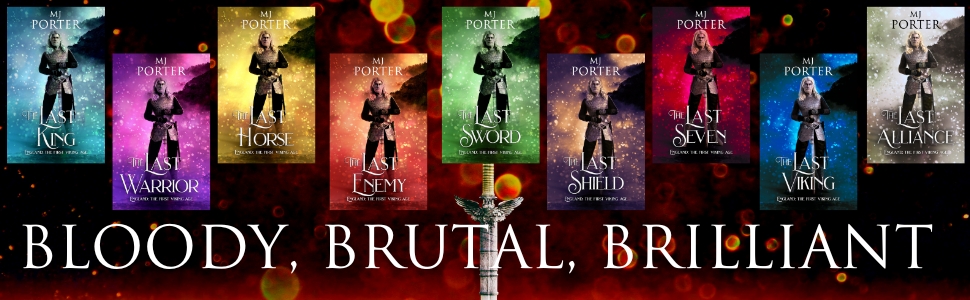
The Ninth Century Mercian series covers for all 9 books

Rudolf from The Last King/Mercian Ninth Century series gives an interview #TheLastKing

An interview with Rudolf

Ere, what you up to?

Oh, hello, I’m here to interview King Coelwulf about his latest book.

Really, I wouldn’t think he’d do that. He’ll make some excuse about having no time, or some such. Oh wait, did Lady Cyneswith set this up?

Yes, she did, and I’ve already spoken to her. But tell me, do you know the king? You seem to know who everyone is.

Of course I do. I’m Rudolf. His old squire, and now member of his warband. Why?

Would you like to talk to us about his latest book?

Well, I suppose I have the time. If you’re quick, and I don’t get caught. I’m supposed to be showing young Hiltiberht the ropes, and Haden can be a real handful.

Tell me, what’s King Coelwulf like? As a warrior?

Bloody lethal. You don’t want to be facing off against him. I’ve never seen anyone kill so quickly. And the moves he can do? I wish I had even half of his skill. I mean, he says I’m a good warrior and all, but I make up for my lack of skill with speed. And he doesn’t have that because he’s so bloody …. Um, because he doesn’t need to do that. Sometimes, I swear the enemy make it look so easy it’s as though they’re falling onto his seax or sword.

He’s quite good then?

Better than good. I’ve never seen anyone fight the way he does. Well, apart from Icel, and Edmund, and maybe Hereman. But, certainly, the Raiders stand no chance against him.

I hear he even camps in the woodlands and forests? It’s not really the sort of thing a king should do, is it?

Now, you see here. He was a warrior long before he was king. King Coelwulf only has one aim, to kill all the Raiders. To drive them from Mercia and make sure they don’t come back. He’s not into all that fancy clothes, and court etiquette, or sleeping in a bed of silk sheets. They’d be too damn cold, anyway. He’s told me. No, the king of Mercia is a damn warrior, and the only man capable of defeating the Raiders, and the Welsh, if it comes to it. 

And, have you read the new book?

Got no time for reading. I’m sure King Coelwulf told you that, and he’s right. I’d like a good night’s sleep without interruption more than I’d like to read a book. Maybe a scop could tell the tale. But, that would be Edmund and I’d have to listen to him tell the tale. He’s good, of course he’s good, but he probably wouldn’t mention me as much as I might like.

To all the young lads who do read the book, what would your advice be? How could they get into King Coelwulf’s warband?

Well, they should probably have joined it a while ago, and at the moment, there’s a few squires that need training up, so there’s no room, not for a while. So, I’d tell them to wait, and while they’re waiting, learn a few things, like how to clean saddles and seaxs. It’s a mucky job, but someone’s got to do it. And with King Coelwulf, you’ve got to earn his respect first. And then, well, once you’ve got it, you’ve got to keep it. A hard man, but a great man. Mercians should be pleased with their king. He’ll keep them safe, or he’ll die trying. You didn’t find the old king doing that. Far from it in fact. He’s scuttled off to Rome, or somewhere like that. Gone to pray for his soul. He’s got a lot to need forgiveness for, abandoning his kingdom like that.

Oh, sorry, I’ve got to go. 

And there you have it. A few words from Rudolf, King Coelwulf’s old squire. I hear he fights incredibly well, and offers some important advice for any would be members of the king’s warband.

The Ninth Century Mercian series covers for all 9 books

Posts

Who was the historical Coelwulf who is the main character in The Last King/The Mercian Ninth Century series?

The ‘historical’ Coelwulf

The hero of the Mercian Ninth Century Series, King Coelwulf, has not been treated kindly by history.

He appears in the Anglo-Saxon Chronicle (the main narrative source for the period) as a ‘foolish king’s thegn’ (in the ASC E Version, although not in the older A version) and not actually a king at all.

´Here the raiding army went from Lindsey to Repton and took winter-quarters there, and [[874] drove the king Burhred across the sea 22 years after he had the kingdom; and conquered all that land…And the same year they granted the kingdom of Mercia to be held by a foolish king’s thegn, and he swore them oaths and granted hostages, that it should be ready for them whichever day they might want it, and he himself should be ready with all who would follow him, at the service of the raiding-army. (A) 874 [873]

´Here the raiding-army went from Lindsey to Repton, and there took winter quarters, and drove the king Burhred across the sea 22 years after he had the kingdom, and conquered all that land. And he went to Rome and settled there, and his body lies at St Mary’s church in the English Quarter. And the same year they granted the kingdom of Mercia to be held by Ceolwulf, a foolish king’s thegn.’ (E)874 [873] (Both quotes from M Swanton ed. and trans. The Anglo-Saxon Chronicles).

His ‘reign’ has been explained as being entirely dependent on Viking overlords who really ruled Mercia, from their ‘base’ at Repton. He was a ‘puppet king,’ a sop to assist the independent Mercians as they struggled to come to terms with their new warlords.

The survival of two charters, carrying Coelwulf’s name, and witnessed by the ealdormen and bishops of Mercia, have not been given the attention they deserve because they suggest a different interpretation to that of King Alfred (the Great) single-handedly defeating the Vikings, and making ‘England,’ as does the discovery of the Watlington Hoard of coins which suggests that Coelwulf and Alfred were ruling jointly.

So, if we put aside the problems of what Coelwulf did, or didn’t achieve, who might he actually be, and why might he have been named as king?

Coelwulf’s name leads historians of the period to suggest he was a member of a branch of the Mercian royal family whose last ruler was King Coelwulf I, who ruled in Mercia from AD821-823. He succeeded his brother, Coenwulf, who ruled from AD796-821. They were descended from the brother of the mighty seventh-century king, Penda, most famously known for being pagan, warlike and terrorising the Northumbrian kingdom during its ‘Golden Age.’ (Read about Penda and the Northumbrian kingdom in my Gods and Kings trilogy). He was therefore a member of a long-lived ruling dynasty that could trace its descendants all the way back to the early 600s.

This identification of Coelwulf helps to explain why he was accepted as king following King Burgred’s abdication. He was no foolish king’s thegn. He was a member of a ruling dynasty, who, for one reason or another, were no longer the ruling family in Mercia in the 870’s. (And what was happening in Mercia before the 870’s is just as fascinating as what came after it – you can read about that in The Eagle of Mercia Chronicles).

The Ninth Century Mercian series covers for all 9 books

Posts

Happy Release Day to Protector of Mercia #TheEagleofMerciaChronicles #YoungIcel #histfic

Today is the day, book 5 in The Eagle of Mercia Chronicles is released into the wild.

Here’s the blurb:

A deathbed oath leaves the lives of two infants hanging in the balance.

Tamworth AD833 After successfully rescuing her husband from the Island of Sheppey, Icel hears the deathbed confession of Lady Cynehild which leaves him questioning what he knows about his past, as well as his future.

In the unenviable position of being oath sworn to protect their two atheling sons when Lord Coenwulf is punished and banished for his treason against the Mercian ruler, King Wiglaf, Icel is once more torn between his oaths and the secret he knows.

When the two children are kidnapped, Icel, good to his word, and fearing for their safety, pursues their abductors into the dangerous Northern lands, fearing to discover who is behind the audacious attempt on their lives: the queen, the king’s son, or even Lady Ælflæd, a friend to him in the past, but now wed to the king’s son and aunt to the two abandoned children.

Alone in the Northern lands, Icel finds himself facing his worse fears. Can he rescue the children from their captor, or will he fail and lose his life in the process?

https://books2read.com/protectorofmercia

Available now in ebook, paperback, hardback and audio.

Read my release day post about travelling into the north-west of England in the 830s and about the brother kings, Coenwulf and Coelwulf.


If you’ve not yet started the Eagle of Mercia Chronicles, check out the release day posts for

Son of Mercia

Wolf of Mercia

Warrior of Mercia

Eagle of Mercia


Read all about Protector of Mercia over on my publisher’s Facebook account.


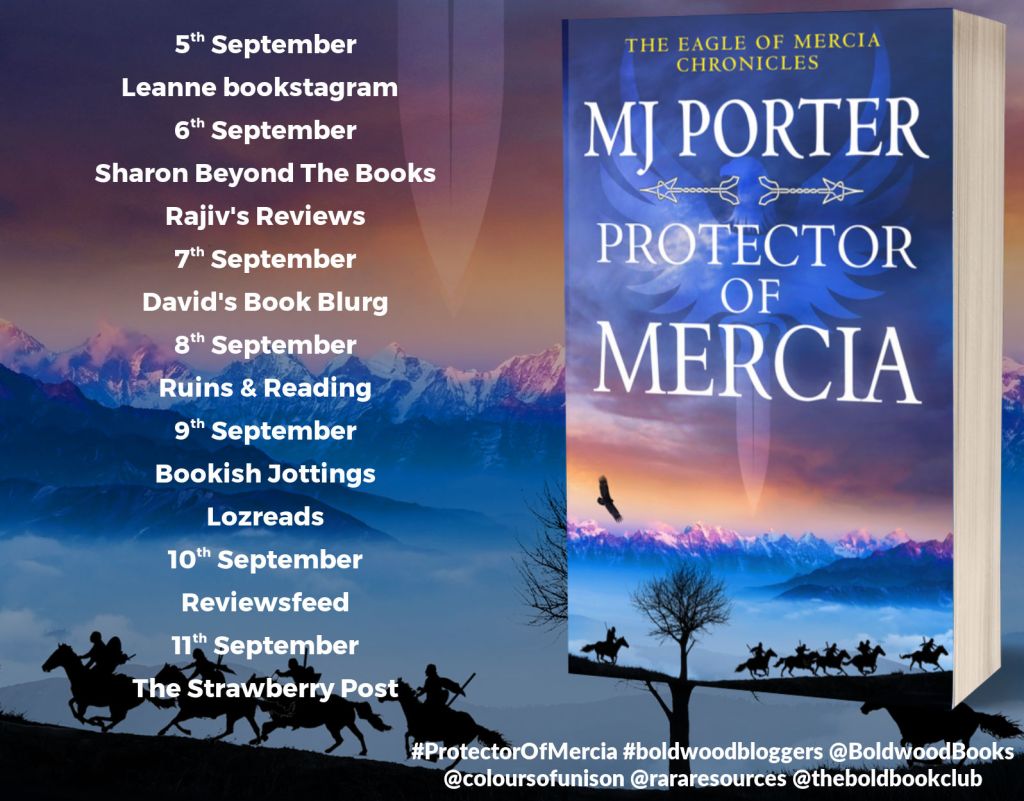
Protector of Mercia is on blog tour. My thanks to Rachel at Rachel’s Random Resources for organising and all the hosts for taking part. I will add the links each day.

Check out the reviews below. I’ll be updating as the blog tour progresses.

Leanne bookstagram

Sharon Beyond the Books

Rajiv’s Reviews

David’s Book Blurg

Ruins & Reading

Bookish Jottings

Reviewsfeed

Loz Reads

The Strawberry Post

Posts